Open Competition and Fairness Act of 2003
Legislative Activity
Stay on top of the latest movement without scrolling through every action
Referred to the Subcommittee on Employer-Employee Relations.
February 21, 2003
View full timeline
Introduced in House
January 7, 2003
Referred to the House Committee on Education and the Workforce.
January 7, 2003
Referred to the Subcommittee on Employer-Employee Relations.
February 21, 2003
Floor Debate
20 membersWhat members said about H.R. 106 on the floor
 JPM
JPM BF
BF TD
TD MT
MT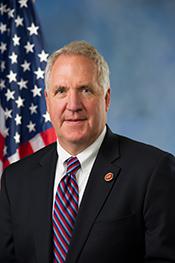 JS+15
JS+15
Floor Debate
20 membersWhat members said about H.R. 106 on the floor
Mr. Speaker, I thank the gentlewoman from North Carolina (Mrs. Myrick) for yielding me the customary 30 minutes, and I yield myself such time as I may consume. Mr. Speaker, this is another sad day…
Mr. Speaker, I thank the gentlewoman from North Carolina (Mrs. Myrick) for yielding me the customary 30 minutes, and I yield myself such time as I may consume.
Mr. Speaker, this is another sad day for the House of Representatives and for the people that we serve. Once again, some in the leadership of this House, including and especially the majority leader, have brought a divisive, unnecessary, and just plain mean-spirited bill to the floor in order to advance their own partisan political interests.
Once again, they have decided to ignore unemployment, ignore the health care crisis, ignore record deficits, ignore national security, in short to ignore the real concerns of the American people. Why?
You can find the answer just by looking at the calendar. We are 5 weeks from an election and there are some, not all, but some Members on the other side of the aisle who have chosen to put aside the important work we need to do.
By today, the 13 appropriation bills should have been signed into law. So far, only one has the President's signature. Where is the Homeland Security appropriation bill? Can anyone really say with a straight face that a constitutional amendment beating up on gay people is more important than funding our Homeland Security needs? How about the recommendations of the bipartisan 9/11 Commission, or the transportation bill? How about funding for schools and hospitals and veterans? They are nowhere to be found. Instead, we get legislative gay bashing. Another sad day.
Today, we are being asked to consider H.J. Res. 106, which would amend the United States Constitution to ban gay marriage, to ban civil unions, and to abolish the ability of States to interpret their own State constitutions. So this is no small matter.
It is important to note at the outset that the Constitution clearly prohibits the government from interfering with the marriages performed by religious institutions. Our Founding Fathers were very clear about this. The government cannot force any church or synagogue or mosque to perform a religious marriage. That will not change, no matter what happens today.
Now, there are several fundamental problems with this amendment. First, it has long been the tradition in this country that States, not the Federal Government, have the right to regulate marriage and other issues of family law. And States are already addressing same-sex marriage. When the Hawaii Supreme Court held that denying same-sex couples the right to marriage violated the Hawaii constitution, the voters of Hawaii passed a constitutional amendment allowing the State legislature to limit marriage to different-sex couples.
The people of Alaska amended their constitution to define marriage as a union between one man and one woman after an Alaskan trial court held denying the right of marriage to same-sex couples violated the Alaskan constitution.
States all across the country are moving in similar directions, but that is not good enough for the supporters of this amendment. They believe that the only way to address this issue is to add discrimination to the United States Constitution.
Of course, the irony in all of this is that the Defense of Marriage Act, or DOMA, was signed by President Clinton and is already the law of the land. Under DOMA, States can already refuse to recognize marriages from States with different policies.
I guess that fact does not make for very good press releases or 30- second political attack ads.
Second, if this amendment becomes the law of the land, civil union and domestic partnership laws all across the country will be thrown out the window. Things like hospital visitation rights, family medical leave, and inheritance rights can be taken away.
According to the Coalition Against Discrimination in the Constitution, an organization of civil-rights groups, labor unions, and religious organizations, this constitutional amendment would likely prevent the civil unions enacted by the States of Vermont and California.
Now, we will hear a lot of talk from people on the other side of the debate today about Massachusetts, so let me talk about my home State. Our State Supreme Court decided in favor of same-sex marriage last year. And right now there is a legislative process underway in which the people of Massachusetts will have the opportunity to change our own State constitution to prohibit same-sex marriage, if they so choose.
The interesting thing is that I doubt that it will succeed in Massachusetts. Starting on May 17, 2004, gay men and women in Massachusetts got married, and guess what? The world kept spinning on its axis, the sun came up the next day, people went to work, sent their kids to school and cheered for the Red Sox. So we are doing just fine in Massachusetts, thank you very much. And we certainly do not need anyone from Colorado or Georgia or Texas telling us how to handle the marriage issue in our own State.
The impeccably conservative Vice President of the United States, Dick Cheney, said it well in 2000, and I have his words right here, and I quote, ``The fact of the matter is that we live in a free society, and freedom means freedom for everybody. And I think that means that people should be free to enter into any kind of relationship they want to enter into. It's really no one else's business in terms of trying to regulate or prohibit behaviors in that regard. I think different States are likely to come to different conclusions, and that's appropriate. I don't think there should necessarily be a Federal policy in that area.''
And those are the words of the Vice President of the United States, Dick Cheney. The Vice President speaks from very personal experience. He loves someone who is gay, not because she chose to be gay but because that is just who she is.
Mr. Speaker, if this amendment passes, discrimination against a group of people will be written into the Constitution of the United States. If this amendment passes, we will be taking a step backward in our march toward equal protection under the law. All of us take an oath to uphold and defend the Constitution not to use it as a political weapon.
There are some who say that this is about protecting future generations, our kids. Well, let me tell you in this chamber today, I have two beautiful children, a 6-year-old son and a 3-year-old daughter, who I love more than anything, and I do not want them to grow up in a country where an entire group of people is treated as second class citizens.
To those, like the gentlewoman from Colorado (Ms. Musgrave), who say this is about protecting marriage, let me ask, just whose marriage are you trying to protect? I am happily married, and I do not need Members of Congress to protect my marriage. Please do not use my marriage to promote homophobia and discrimination.
Mr. Speaker, this amendment is wrong. And to those of my colleagues who support this amendment today, let me state clearly that you are on the wrong side of history. It is wrong to tarnish our most sacred document, our Constitution, with discrimination. It is wrong to take a beautiful institution like marriage and use it as an instrument of division and hostility.
Mr. Speaker, I urge my colleagues to do the right thing. Help secure the blessings of liberty for all Americans. Vote ``no'' on this amendment.
Mr. Speaker, I reserve the balance of my time.
Mr. Speaker, I yield 5 minutes to the gentleman from Massachusetts (Mr. Frank).
Mr. Speaker, I yield myself such time as I may consume.
Mr. Speaker, before I yield to the next speaker, I would like to point out one thing which I find particularly interesting, and that is at the recent Republican National Convention in New York City, all of the featured prime-time speakers that the party decided to put on display for us, Rudy Giuliani and George Pataki and Arnold Schwarzenegger, all oppose what is trying to be done today. They all oppose this constitutional amendment.
Mr. Speaker, I yield 3 minutes to the gentleman from Virginia (Mr. Moran).
Mr. Speaker, I yield myself such time as I may consume.
Let me first say to the gentleman who just spoke, I guess I must obviously have more confidence in our State legislatures across this country than he does because State legislatures all across this country are acting on this issue. I think they are closer to the people of the States than in many respects we are. It seems to me that this process is working. When he says that we are forced to be here, that we cannot talk about getting a real highway bill, that we cannot talk about health care, that we cannot talk about national security issues or veterans benefits or education, but we have to be here and debate this right now, the fact of the matter is this debate is going on all across this country, and we should let that process make its way through.
Mr. Speaker, I yield 3 minutes to the gentleman from Massachusetts (Mr. Olver).
Mr. Speaker, the Log Cabin Republicans, which is a very well-known group to all of us here in the Congress, a group that voted to endorse Bob Dole in 1996 and George Bush again in 2000, has issued a statement entitled ``Log Cabin Republicans Vote to Withhold Their Endorsement from President Bush.''
The statement says that it is impossible to overstate the depth of anger and disappointment caused by the President's support for an anti- family constitutional amendment. It goes on to say that using gays and lesbians as wedge issues in an election year is unacceptable to Log Cabin, and they conclude by saying that this year they will withhold their endorsement of President Bush.
Mr. Speaker, I yield myself such time as I may consume.
I would just point out to the gentleman who just spoke that there is no law in this country that forces any given religion to recognize any particular marriage. Religions are separate from what we are talking about here today. I just want to remind the gentleman that there are non-Christians who live in this Nation as well, and I would hope that he would believe that this country is equally theirs as well.
Mr. Speaker, I yield myself such time as I may consume.
I would like to read a Q and A between Vice President Dick Cheney and a questioner in Davenport, Iowa, on August 24, 2004, because I think it helps to kind of put this in perspective, and maybe some of my colleagues should listen to this.
The question was: ``We have a battle here on this land as well. And I would like to know, sir, from your heart, I don't want to know what your advisors say or even what your top advisor thinks, but I need to know, what do you think about homosexual marriages?''
And the Vice President responded: ``Well, the question has come up obviously in the past with respect to the question of gay marriage. Lynn and I have a gay daughter, so it's an issue that our family is very familiar with. We have two daughters, and we have enormous pride in both of them. They're both fine young women. They do a superb job, frankly, of supporting us. And we are blessed with both our daughters.
``With respect to the question of relationships, my general view is that freedom means freedom for everyone. People ought to be able to be free, ought to be free to enter into any kind of relationship they want to. The question that comes up with respect to the issue of marriage is what kind of official sanction or approval is going to be granted by government, if you will, to particular relationships. Historically, that's been a relationship that has been handled by the States. The States have made that basic fundamental decision in terms of defining what constitutes a marriage. I made clear 4
years ago, when I ran and this question came up in the debate I had with Joe Lieberman, that my view was that that's appropriately a matter for the States to decide and that's how it ought to be best handled.''
I very rarely agree with the Vice President of the United States, but I think he makes an awful lot of sense on this issue, and I think he makes a compelling case why we should not be moving forward with a constitutional amendment.
Mr. Speaker, I reserve the balance of my time.
Mr. Speaker, I yield myself such time as I may consume.
I would just like to read a couple of other quotes here which I think are enlightening. One from John McCain, Republican Senator from Arizona where he said: ``The constitutional amendment we're debating today strikes me as antithetical in every way to the core philosophy of Republicans.'' He added, the amendment ``usurps from the States a fundamental authority they have always possessed and imposes a federal remedy for a problem that most States do not believe confronts them.''
Let me read one other quote here. ``It seems to me that the power to regulate 'commerce' can by no means encompass authority over mere gun possession any more than it empowers the Federal Government to regulate marriage, littering, or cruelty to animals throughout the 50 States. Our Constitution quite properly leaves such matters to the individual States.'' And that is from the words of Supreme Court Justice Clarence Thomas in U.S. v. Lopez.
Mr. Speaker, today, we have the opportunity to do the right thing. We have the opportunity to reject the politics of division and discrimination. We have the opportunity to protect the Constitution of the United States, to stay on the path toward equal protection under the law for every single American. We have the opportunity to act in a way that reflects well on this institution and the people we are elected to serve.
I am encouraged, Mr. Speaker, by the number of Republicans who will vote ``no'' on this misguided constitutional amendment today. And I am proud to stand with them.
We will hear a lot about Massachusetts today. A son of our State named John F. Kennedy once said, ``The heart of the question is whether all Americans are to be afforded equal opportunities, whether we are going to treat our fellow Americans as we want to be treated.'' Mr. Speaker, that is indeed the heart of the question.
I urge my colleagues to seize this opportunity, vote ``no'' on this constitutional amendment.
Mr. Speaker, I yield back the balance of my time.
Mr. Speaker, to begin as the majority leader leaves, I must say when he says that the timing of this, 1 month before an election when the issue has been pending all year, when he says the timing was…
Mr. Speaker, to begin as the majority leader leaves, I must say when he says that the timing of this, 1 month before an election when the issue has been pending all year, when he says the timing was forced upon him and is not effected by political considerations, he violates what I would recommend to the gentleman is an important rule of political debate: No matter how advantageous one thinks it is, try hard to believe something no one believes; it does not really help your cause.
Beyond that, we have the most seriously misdescribed constitutional amendment I have ever seen. Actually if the Republicans go forward with their proposal, having created the largest deficits in our history, to require a balanced budget some time in the far distant future, that may be an even greater one at variance with reality. But here is the problem: They describe an amendment very different than the one they bring forward.
We have heard the gentlewoman from North Carolina and the gentleman from Texas say this is aimed at preventing judges from forcing one State to do what another State does. It does far more than that. At its core what it does is say that no State, by whatever process it chooses, may find that two women being willing to commit themselves to each other legally as well as emotionally is a good thing and not a bad thing, because that is the core of the issue.
In the State of Massachusetts, it is true we began with a court decision. Since then, it has been debated in our legislature. The legislature of Massachusetts very narrowly approved an amendment that would have said no to same-sex marriages but would have mandated full civil unions, which may also be thrown out by this amendment. That amendment will now be debated next year.
An election is going on in Massachusetts today in which how people voted on this is a major issue. We just had a change in the leadership of the Massachusetts House. A speaker who opposed same-sex marriage has been replaced by a speaker elected by the House of Representatives of Massachusetts, in turn elected by the people, who support same-sex marriage.
I think the question is very much in doubt, but the point is undeniable; the political process in Massachusetts, the democratic process in Massachusetts, is now deciding whether or not to allow same- sex marriage.
Mr. Speaker, the other side comes with an amendment that would cancel any decision made on this that they do not like by the people of Massachusetts. This is not an amendment that says one State cannot do something to another State. There would be an amendment possible. I would not be for it, but if that is really what is meant, then we would have an amendment that took DOMA and made it a constitutional principle. Such an amendment would be possible. I think it would be a mistake. I do not think it would be a good idea to freeze that, because then we would have some real difficulties, but it would be at least in accordance with what the other side is saying because this amendment does far more than has been described.
It has been a rule that I have found when people in political debate will not
be completely open about what they are trying to do, it is because they really know it is not defensible. Why do you not acknowledge that this amendment would cancel a democratic decision by the people of Massachusetts? Indeed, if the legislature decides to get rid of this, there will be a referendum. If the legislature does not decide to get rid of it, then a fairly small number of people can force a referendum and we will have a referendum, very likely, in 2008.
We will have had by that time the benefit of 4 years in which same- sex marriages happened. I understand why the opponents of same-sex marriage are so upset. They have made a number of predictions about what will come after same-sex marriage, none of which will be proven true, so they are desperately trying to cut this off before it happens. We have already had nearly 5 months of same-sex marriage. None of their predictions were proven true, as none of their predictions were proven true when they talked about the chaos in Vermont.
But let us understand what the House is being asked to do. If the concern was to say judges could not decide this, if the concern was to say full faith and credit does not apply, there would be amendments that could be narrowly drafted to deal with that, although I would not support them. But that is not what is here. This amendment says no State, Vermont, Massachusetts, by whatever process, by referendum, by vote of the legislature, by whatever process, can decide that it would like to have same-sex marriage for its own citizens.
I will say that on behalf of the citizens of Massachusetts, who do not share the distaste for love that is expressed in a way in which you do not disapprove that Members of the majority have, please do not impose your views on the people of Massachusetts. If your concern is genuinely to prevent one State from forcing another, deal with that. But this is an undemocratic effort to say no State may differ in this intimate matter of public policy with your views.
Mr. Speaker, I thank the gentlewoman for yielding me this time, and I rise in support of the rule before us and in support of the marriage protection amendment itself. I am well aware that this is…
Mr. Speaker, I thank the gentlewoman for yielding me this time, and I rise in support of the rule before us and in support of the marriage protection amendment itself.
I am well aware that this is not a day many of us in this House relish. Many of us who support the marriage protection amendment are saddened that the need for this amendment exists at all. The definition of marriage seems to us, and the vast majority of the American people, as a matter of common sense and social reality. And many who oppose the amendment, most I would say, see the movement to protect marriage as mean spirited and unnecessary. In either case, most of us in this House would prefer not to have this debate. We would prefer to live in a society in which such debates were unnecessary, but, unfortunately, we do not.
The question of the future of marriage in America has been forced upon us by activist judges trying to legislate from the bench and forced upon us in such a way that the only remaining answer is to amend the Constitution of the United States. These are the facts, Mr. Speaker. The majority of the American people want to protect traditional marriage for reasons ranging from the political to the religious to the practical. But a minority of our citizens, a vocal and sincere minority, wish to alter the definition of marriage to include relationships outside the union of one man and one woman.
In response to this minority opinion, the American people asserted their consensus in 1996 when a Republican Congress and a Democrat President worked together to enact the Defense of Marriage Act. Its support was and remains bipartisan and overwhelming across the country.
DOMA says two things: First, that for the purposes of Federal law, the term marriage describes a union between one man and one woman. And, second, it says that no State, including Massachusetts, can force their will on the rest of us. And no State under its own laws can be required to recognize homosexual unions licensed in other States.
That is the law as it currently stands: fair, straightforward, and representative of an overwhelming consensus among the American people.
One would think this would be the end of the story, but it is not. DOMA is under an incessant and coordinated constitutional attack in the Federal courts. Despite DOMA's obvious constitutionality, those activist judges, who feel a greater responsibility to their own political ideology than the Constitution, seem not to care. Indeed, inventing rights out of whole cloth, in direct violation of the will of the people, too often seems to be the coin of the realm on the Federal bench these days.
In such an environment, it is no surprise to me that legal scholars on both sides of this issue, from Lawrence Tribe to Robert Bork, all but concede DOMA will eventually be struck down because it contradicts the tortured jurisprudence of activist judges.
Mr. Speaker, in other words, the definition of marriage will be a matter of constitutional law one day very soon. The question before us is whether that definition will be radical and arbitrary, or based on the experience of human civilization dating back to the origin of our species; whether that definition will be written by individual judges imposing their political biases on the Nation or written by the people of the United States through their elected Representatives in Congress and State legislatures.
DOMA passed with broad bipartisan support. To date, 44 States have defined marriage as the union between a man and a woman. Consensus exists today. And yet the runaway courts keep coming, bent on replacing Congress as the legislative authority of the United States. Let me be plain: The status quo is not an option. Avoiding this issue is not an option, not anymore, not since the Supreme Judicial Court of Massachusetts invented a right to homosexual marriage out of thin air, and not since a State court judge invented a similar right in Washington State, not since 11 States face court challenges to their marriage laws. This issue is not going away.
Those who know me know I am not a fan of constitutional amendments in general. And at first I resisted this amendment in particular. But the fact can no longer be denied. If marriage is to be protected in this country, it can only be protected by a constitutional amendment. The timing, substance and necessity of the marriage protection amendment have been forced by the courts and their refusal to be bound by the clear and absolute limits of their constitutional authority to interpret the law. This amendment is the only way marriage will be protected.
Now I know it is a difficult issue, and I know it is an emotional issue for people across the political spectrum and across this country, but it is an issue that has been forced. The people must be heard. Congress must assume its responsibility and must respond. This debate today will begin with that response, and, I hope, do so as it should, with civility, respect and sensitivity to all points of view.
Mr. Speaker, for some time, I have believed that it is essential to transform our military so that the United States is better able to deal with the enormous security challenges of the 21st century.…
Mr. Speaker, for some time, I have believed that it is essential to transform our military so that the United States is better able to deal with the enormous security challenges of the 21st century. Since my first term in Congress, I have worked to develop a more flexible, adaptable military with a ``culture of innovation'' that will ensure that our security is protected as the threats against us, our allies, and our values grow in number and complexity. But at the same time, I recognize that American national security does not rest solely on the shoulders of the U.S. military.
Based on my work in defense transformation, I became convinced that homeland security was a vital area requiring not just more money, but a major reorganization of the government agencies charged with protecting the American homeland. I introduced the first bill creating a new organization to better protect the homeland on March 21, 2001, and that new Department is now up and running.
I also believe that a transformation is needed at the Department of State so that it is better able to formulate and implement American foreign policy in the coming years. On September 18, 1998, I introduced H.R. 4065 in the 105th Congress to require that an independent, non- partisan panel review all the facets and functions of the Department of State and to provide Congress with its findings and with a plan for reorganizing the Department. The bill was reintroduced as H.R. 106 in the 106th Congress and as H.R. 304 in the 107th Congress.
I believe that the events of the past two years only add a greater degree of urgency to the need for such a transformation. It is time for Congress to take action.
The gentleman from Arkansas, Mr. Snyder, has also been working on these issues for some time. He has suggested a number of improvements in my previous proposals, and today we are introducing the revised version of the bill. It does not prescribe in legislative language exactly how the Department of State should be reorganized despite the many studies and reports which have recommended various actions. It does establish the framework for a serious study of all of the recommendations and requires that a proposal be submitted to Congress. We would then have to act upon the legislation in the normal order.
There have been a number of outside studies which recommend reform in very strong terms. For example, in January 2001, a study cosponsored by the Council on Foreign Relations and the Center for Strategic and International Studies and chaired by former Secretary of Defense and career foreign service officer, Frank Carlucci, issued ``a scathing report,'' warning that ``the United States will soon face serious dangers and enormous costs because its foreign policy establishment has not come to terms with global changes a full decade after the Cold War ended.'' (Los Angeles Times, January 30, 2001). ``No government bureaucracy is in greater need of reform than the Department of State,'' the report found.
In March 2001, the United States Commission on National Security/21st Century, better known as the Hart-Rudman Commission, found that ``The Department of State is a crippled institution that is starved for resources by Congress because of its inadequacies and is thereby weakened further. The department suffers in particular from an ineffective organizational structure in which regional and functional goals compete, and in which sound management, accountability, and leadership are lacking (p. 47).'' Other studies and reports have reached similar conclusions.
This bill requires a serious study of the organization of the Department of State and our diplomatic structure. The Commission created by the bill will examine all levels of the Department, from the organization chart of bureaus and offices to staffing at embassies around the world. It will also look at issues such as public diplomacy--whether we are organized to wage the battle over ideas, which is so critical to the ultimate success of the war on terrorism-- and use of foreign assistance--whether we are prepared to use effectively innovative new programs, such as the Millennium Challenge Account.
There may be a variety of opinions on what the Department of State should be doing and on exactly what organizational and process changes should be made, but we should all be able to agree that how decisions are made, and especially how they are implemented, needs drastic improvement.
Mr. Speaker, change is always difficult, and we should not impose change without a good reason for doing so. We also have an obligation, I think, to seek better, more effective ways to advance American interests, and no Department should be exempt from penetrating examination in pursuit of those larger interests.
Mr. Speaker, I thank the chairman for bringing this piece of legislation rapidly to the floor. As my kids went to school yesterday, I got a chance to drop them off and in front was a big banner…
Mr. Speaker, I thank the chairman for bringing this piece of legislation rapidly to the floor. As my kids went to school yesterday, I got a chance to drop them off and in front was a big banner saying ``Lutheran Schools Week.'' So I got to do it officially yesterday and I get to do it, I guess, officially now on the floor today; but I rise today in recognition of National Lutheran Schools Week, which began on March 2 of this week.
Mr. Speaker, I am a graduate of a Lutheran school, Holy Cross Lutheran School, in my hometown of Collinsville, Illinois. My father also attended this school. And a known fact is that my first grade teacher was my father's first grade teacher, a patriarch of education in Collinsville, Miss Bohland. It is a story I like to tell quite a lot. I also had a fifth grade teacher, Mrs. Richter, who taught me and who I tried to keep from retiring so that I could tell the same story for my sons, or so they could tell the same story. But she retired to an enjoyable life and is still very active in the church.
That is really something to be said, when you have that longevity in a teacher in a grade school. Two generations. And it is something that makes Lutheran schools a critical aspect of our society. My three sons now attend. David is 10, Joshua is 7, and Daniel will be attending next year in the preschool program, but who does get involved in the Sunday school program on Sunday and the weekends. My wife even teaches music at Holy Cross Lutheran School with the church programs and the choirs and all that stuff. So Lutheran schools have been a key component of my life for many, many years.
Before I became a Member of Congress, I returned to Illinois to teach government history at a Lutheran high school, Metro-East High School in Edwardsville, Illinois. As a teacher, I had the opportunity to instill the fundamental values and morals of the Christian faith, which is involved in the total educational aspect of the school. Parental involvement is key in Christian education; and Lutheran doctrine talks a lot about law and gospel, how we are condemned by the law but saved through God's saving grace, which is a critical aspect of the Christian faith, but it ties very neatly into the educational program.
In teaching kids to achieve all they can achieve, we know that you can never get 100 percent all the time, and there are failures along the way. That is where in the law and gospel aspect of education, the foundational principle of what makes Lutheran schools an exciting place to be, is that the constant love and compassion and actually the gospel aspect of forgiveness is involved in the educational setting.
Today, approximately 572,877 students attend Lutheran schools; and over 40,000 teachers provide an environment that encourages honesty, trust, respect, and responsibility. This also is a benefit to society because that are half a million kids that are not burdening, if we would call it a burden, to society. It is not an additional cost to the public school system. So the parents who choose Lutheran education, or perhaps Catholic education or other types of private schooling, take these kids out of the public school arena where more of the tax dollars can then work in public education, which I think is an additional benefit. Sometimes we forget that.
I am proud of the education that the students are able to receive from dedicated parents and teachers because of the efforts of Lutheran educators. Students throughout my district in central and southern Illinois receive spiritual guidance through an outstanding learning environment. I would like to congratulate the Lutheran schools, parents, teachers, administrators, and congregations across the Nation for their outstanding work in educating our youth.
One of the primary aspects of Martin Luther, when he changed the course of history, in essence the Protestant revolution, was education of the great masses, actually the education of children and youth. That is why the Lutheran faith education has a critical pillar in what we do on a day-to-day basis.
Mr. Speaker, I thank the gentleman for yielding me this time, and I also thank the sponsor for bringing this legislation forward.
Show 8 more

Mr. Speaker, by direction of the Committee on Rules, I call up House Resolution 801 and ask for its immediate consideration. Mr. Speaker, for the purposes of debate only, I yield the customary 30…
Mr. Speaker, by direction of the Committee on Rules, I call up House Resolution 801 and ask for its immediate consideration.
Mr. Speaker, for the purposes of debate only, I yield the customary 30 minutes to the gentleman from Massachusetts (Mr. McGovern), pending which I yield myself such time as I may consume. During consideration of this resolution, all time yielded is for the purpose of debate only.
Mr. Speaker, on Tuesday, the Committee on Rules met and granted a closed rule for H.R. 106, the marriage protection amendment. The rule provides 2 hours and 30 minutes of debate, equally divided and controlled by the majority leader and the minority leader or their designees.
H.J. Res. 106 proposes an amendment to the Constitution of the United States relating to marriage. The amendment states that ``Marriage in the United States shall consist solely of the union of a man and a woman. Neither this constitution, nor the constitution of any State, shall be construed to require that marriage or the legal incidents thereof be conferred upon any union other than a man and a woman.''
The constitutional amendment process is the most democratic process in our Federal system, and it requires approval from two-thirds of each House of Congress and three-quarters of the States by votes of their State legislators.
This bill has come up because same-sex marriage advocates have been using the courts and even local officials who have intentionally violated the law to circumvent the democratic process. Passing a constitutional amendment will place the debate where it belongs, with the American people.
Forty-four States have already enacted laws that provide that marriage
shall consist only of the union of a man and a woman. Those forty-four States represent 88 percent of all the States and 86 percent of the population.
As President Bush said in his State of the Union address, if judges insist on forcing their arbitrary will upon the people, the only alternative left to the people would be the constitutional process. To that end, I urge my colleagues to support the rule and the underlying bill.
Mr. Speaker, I reserve the balance of my time.
Mr. Speaker, I yield myself such time as I may consume to say that the gentleman from Massachusetts is aware that the Homeland Security bill, a very complicated bill, is going through, I believe, five committees, and it is in that committee process this week and we are going to have it on the floor next week. So it is not that the Homeland Security bill is not going to be dealt with.
Mr. Speaker, I yield 3 minutes to the gentleman from Texas (Mr. DeLay), the majority leader.
Mr. Speaker, I yield 3 minutes to the gentleman from Indiana (Mr. Pence).
(Mr. PENCE asked and was given permission to revise and extend his remarks.)
Mr. Speaker, I yield 3\1/2\ minutes to the gentleman from Missouri (Mr. Akin).
Mr. Speaker, I yield 3 minutes to the gentleman from Ohio (Mr. Chabot).
Mr. Speaker, I yield 2\1/2\ minutes to the gentleman from Maryland (Mr. Bartlett).
(Mr. BARTLETT of Maryland asked and was given permission to revise and extend his remarks.)
Mr. Speaker, I yield 1 minute to the gentleman from Maryland (Mr. Bartlett).
Mr. Speaker, I yield 2 minutes to the gentleman from Florida (Mr. Feeney).
Mr. Speaker, I yield 2 minutes to the gentleman from South Carolina (Mr. Barrett).
Mr. Speaker, I yield back the balance of my time, and I move the previous question on the resolution.
The previous question was ordered.

Mr. Speaker, I am pleased to rise today in support of the Marriage Protection Amendment rule. We did not ask for this debate. It was brought on us by activist judges who have chosen to impose on the…
Mr. Speaker, I am pleased to rise today in support of the Marriage Protection Amendment rule. We did not ask for this debate. It was brought on us by activist judges who have chosen to impose on the will of the people this redefinition of marriage.
Sociologists, psychologists, and other experts can give us all sorts of technical explanations, but we all know from experience that kids are best off when they have a mom and a dad. And kids are what this debate is all about. It is not about civil rights or the rights of same-sex couples. Same-sex couples are free to live as they choose. This amendment does not change that. Instead, this amendment simply defines what marriage is, the union of one man and one woman.
There are some here that would claim that traditional marriage is discriminating. But my question is this: Did 342 Members of this House and former President Clinton in their support of the Defense of Marriage Act discriminate when they voted that marriage is between one man and one woman? Are we saying that 70 percent of the voters of my State that just said that marriage is between one man and one woman, are they discriminating? How about 80 percent of the voters of Louisiana, are they discriminating? I do not think so.
Activist judges are trying to institutionalize a lie, that marriage is just about big people's relationships. But they forget the little people, about the children, the whole generation of kids who will struggle because of the terrible precedent set by changing the institution of marriage.
We do not have to look very far to see the results of family deterioration. Whole cities have suffered terrible poverty and crime because the model of traditional families has been weakened. Should we now stand idly by while a mere handful of activist judges seek to institutionalize the lie that marriage is disconnected from child rearing? Certainly the experience in the Netherlands would tell us that we should not. When they changed the definition of marriage, they had many more children born out of wedlock.
The other night I went to dinner, and there was a beautiful little 16-year-old girl there. She had never had a family. She said that there was one thing that she had wanted all of her life and there was only one thing she had ever wanted and that was she wanted a family. Her heart was telling her the truth. Think about what she had lost. Have you ever been completely lonely? No mom? No dad? Nobody to turn to? Think about what a family provides: the love, the affection, the security when you have a bad dream at night, self-discipline and obedience and the grace of forgiveness and sharing as opposed to selfishness.
I remember as a kid riding a bicycle. I was trying to learn. My dad ran along beside. He was so big and strong. I got it to go a ways and crashed into a bush. I came up all crying and scratched. He put me back on the bike and taught me something about persevering.
That is what this whole story is about. It is about little people and whether they are going to have a mother and a father. The real discrimination here is the activist judges who would deny children the rich advantages of a mom and a dad. If this Congress does not act to protect families, it is a gross dereliction of our duty.
Vote to protect our children and vote to protect marriage.
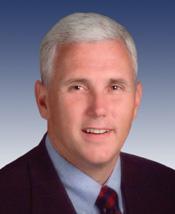
Mr. Speaker, I rise in strong support of the rule and of the underlying Marriage Protection Act, and consider this to be an extremely important day in the life of this institution and the life of…
Mr. Speaker, I rise in strong support of the rule and of the underlying Marriage Protection Act, and consider this to be an extremely important day in the life of this institution and the life of this Nation.
Let me say to the gentleman from Massachusetts (Mr. Frank) who just spoke, who I respect greatly as the national leader that he is, although I am a conservative and although I support a constitutional amendment to define marriage in the terms which the overwhelming majority of the American people wish to continue to define it, I have no distaste for love; and neither is it my desire to impose views or attack any individual or anyone in a relationship in America.
I am from south of Highway 40 in Indiana, but I do know the difference between defending and attacking. And the truth is, as legal scholars and millions of Americans know, the institution of marriage is under attack by activist judges; and it brings us, as the majority leader said so eloquently, to this place, by necessity, where a constitutional amendment is the only way we can express the will of 3 out of 4 or more Americans who desire to continue to have this fundamental institution of marriage defined as it has been throughout the millennia.
Activist judges have had successes since 1999 when they convinced the Vermont Supreme Court that they should order the State legislature to legalize same-sex marriage. A second major victory came when they convinced the Massachusetts Supreme Judicial Court to force that State to give full marriage licenses.
The activists have literally plotted a State-by-State strategy to increase the number of judicial decisions mandating same-sex marriage, and the U.S. Supreme Court provided potent ammunition to activists when they decided the Lawrence v. Texas case in June of last year. In that case dealing with same-sex sodomy, the court strongly signaled that a right to same-sex marriage could be found in the Constitution. Scholars ranging from Supreme Court Justice Scalia all the way to Harvard liberal scholar and author Lawrence Tribe agree that the Lawrence v. Texas case paves the way for this Supreme Court in this Nation's Capital to recognize same-sex marriage. Same-sex couples are now challenging marriage laws in States across the Union, including my own little State of Indiana.
So we come here not to attack but, rather, in a spirit of civility to defend an institution that is cherished and is so essential to the American people in the life of our Nation.
In closing, we are here today because marriage matters; because, like millions of Americans, I believe it was ordained by God, instituted in the law, it is the glue of the American people, and the safest harbor to raise children. Let us adopt the rule, defend the institution of marriage, and ensure that our society's most cherished social institution is defined by we the people and not unelected judges.
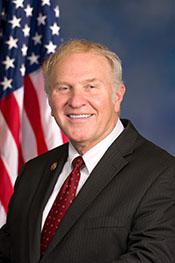
I thank the gentlewoman for yielding me this time. Mr. Speaker, my comments would be generally around an article which appeared by one of my colleagues whom I greatly respect, the gentleman from…
I thank the gentlewoman for yielding me this time.
Mr. Speaker, my comments would be generally around an article which appeared by one of my colleagues whom I greatly respect, the gentleman from California (Mr. Cox), who spoke out against this amendment. I generally agree with the gentleman from California (Mr. Cox), but I have to respectfully disagree with him on this particular item.
Traditional marriage, let us face it, is under attack for the very reasons that my colleague from California (Mr. Cox) had cited in that article. We need a constitutional amendment to protect traditional marriage from the courts. For the reasons cited by the Massachusetts Supreme Court and the logic of the U.S. Supreme Court in Lawrence v. Texas, we cannot trust the courts to interpret the law as it was intended.
As the gentleman from California (Mr. Cox) cited in the article: ``The judicial imagination continues to thrive.'' While I believe that rights under the 14th amendment should evolve, there must be checks. The Marriage Protection Amendment will check this imagination and protect marriage as it was intended.
The need for a Federal marriage amendment is simple. The traditional institution of marriage is under Federal constitutional attack in the courts. Legal experts across the political spectrum agree that the only way to guarantee and preserve the status quo, and the traditional institution of marriage, is a Federal constitutional amendment.
Immediately after the U.S. Supreme Court announced its decision in Lawrence v. Texas in June of 2003, legal experts predicted that courts would begin to strike down traditional marriage laws around the country. Indeed, one justice, Ruth Bader Ginsburg, has already written, while serving as general counsel to the American Civil Liberties Union, that traditional marriage laws such as anti-bigamy laws are unconstitutional and must be struck down by the courts.
A State constitutional amendment cannot solve this problem. Just ask Nebraska, whose State constitutional
amendment is currently under Federal constitutional attack. And as the gentleman from California (Mr. Cox) had acknowledged, even the Massachusetts Supreme Judicial Court relied on the 14th amendment, a Federal constitutional provision, to invalidate traditional marriage laws in that State.
At least six Federal constitutional challenges to the Federal Defense of Marriage Act, DOMA, are now pending in four States: Florida, Minnesota, Washington, and California. A representative of the Lambda Legal organization, a champion of the nationwide litigation campaign to abolish traditional marriage laws in every State, recently stated, ``We won't stop until we have same-sex marriage nationwide.''
The only way to stop the lawsuits and to ensure the protection of traditional marriage is a constitutional amendment.
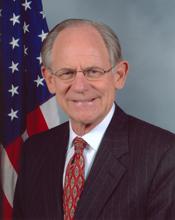
Mr. Speaker, I move to suspend the rules and agree to the resolution (H. Res. 106) congratulating Lutheran schools, students, parents, teachers, administrators, and congregations across the Nation…
Mr. Speaker, I move to suspend the rules and agree to the resolution (H. Res. 106) congratulating Lutheran schools, students, parents, teachers, administrators, and congregations across the Nation for their ongoing contributions to education, and for other purposes.
Mr. Speaker, I ask unanimous consent that all Members may have 5 legislative days within which to revise and extend their remarks on H. Res. 106.
Mr. Speaker, I yield myself such time as I may consume.
I rise today in support of H.R. 106. This resolution honors Lutheran schools and their students, parents, teachers, administrators and congregations for their ongoing contributions to education.
I would like to thank the sponsor of the legislation, the gentleman from Nebraska (Mr. Bereuter) and the gentleman from Ohio (Mr. Boehner), the Chairman of the Committee on Education, and the Workforce for bringing this resolution to the floor today.
In 1524, Martin Luther said that a city's best and greatest welfare, safety and strength consists rather in its having abled, learned, wise, honorable and well-educated citizens. Lutheran churches and schools have long been active in meeting this mission by providing education opportunities as early as 1640 in what is now Delaware, my home State.
In Delaware, I am proud of the contributions of the nine Lutheran schools, the names of which I will submit here for the Record.
Concordia Lutheran Preschool, 3003 Silverside Rd,
Wilmington, DE 19610, 302.478.3876.
Faith Lutheran Preschool, 2265 Red Lion Rd, Bear, DE 19701-
1849, 302.834.3417.
Our Redeemer Preschool, 10 Johnson Rd, Newark, DE 19713,
302,737.617.
Little Ones Lutheran Preschool, 7 Bay Vista Road, Rehoboth
Beach, DE, 302.226.7860.
St. John's Elementary School, 1156 Walker Rd, Dover, DE
19904, 302.734.3767.
St. John's Early Learning Center and Day Care, 119 Lotus
St, Dover, DE 19901, 302.734.1211.
Hope Lutheran Child Care, 230 Christiana Rd., New Castle,
Mr. Speaker, I yield such time as he may consume to the gentleman from Nebraska (Mr. Bereuter).
(Mr. BEREUTER asked and was given permission to revise and extend his remarks.)
Mr. Speaker, I yield such time as he may consume to the gentleman from Illinois (Mr. Shimkus).
Mr. Speaker, I yield myself such time as I may consume to thank the sponsor of the legislation and the other cosponsors with him, as well as all those who came to the floor to speak today about this subject of a great deal of significance in terms of education in this country; part of the overall global education that means so much to our young people. I encourage everybody to support this legislation.
Mr. Speaker, I have no further requests for time, and I yield back the balance of my time.
Mr. Speaker, on that I demand the yeas and nays.
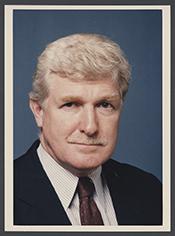
Mr. Speaker, today we stand on the floor of the people's body, the United States House of Representatives, with the intention of writing discrimination into the U.S. Constitution for the first time…
Mr. Speaker, today we stand on the floor of the people's body, the United States House of Representatives, with the intention of writing discrimination into the U.S. Constitution for the first time in our Nation's history.
It is not so troubling that this is politically driven, what is so troubling is the mean-spirited nature of this legislation. The marriage protection amendment; what a cruel joke. It does not do anything to protect marriage in this country. It does not suggest to individuals the importance of communication in a successful relationship. It does not reduce promiscuity or stop unwanted pregnancies. It does not strengthen people's resolve to work through the difficulties that always come within a marriage. It does not do any of that.
What it does do is to single out one group of people for discrimination, declaring them forever unworthy of the same legal protection that all other Americans enjoy. Further, this amendment would usurp the will of the people in States that have used their traditional States rights authority to define civil marriage and civil union laws. State laws passed by elected representatives in places like Vermont will be wiped clean off the books. In situations where a loved one is sick in the hospital, same-sex couples will once again lose the right to sit bedside and help nurse their partner back to health. These couples' ability to plan their financial future together and to share health care benefits will also be forever taken away.
Mr. Speaker, we already have sufficient legislation to allow individual States the ability to retain and structure marriage laws the way they see fit. I opposed and continue to oppose the Defense of Marriage Act which passed the House back in 1996, but this law is still fully functional and in effect. No State in the Union has to accept any other State's laws with respect to same-sex marriage. Since the bill's enactment 8 years ago, it has not been successfully challenged in any court anywhere in the country.
Why, then, do we need to preemptively amend our Constitution? Our Constitution was meant to be a sacred document by which we protect and expand individual rights, not to take them away, not to restrict them. That is not what our country is about, and thus that is not what the Constitution is about. That is why we ought to stand in opposition to this crass attempt to politically divide the American public in an election year. We ought to vote against this. We ought to vote for the Constitution. We ought to uphold the vision of our forefathers and expand the Constitution, use it as a document to protect individual rights, not to restrict and destroy them.

Mr. Speaker, I rise in strong support of the resolution. I thank the gentleman for yielding me this time, and I thank the leadership of the committee for bringing this resolution to the floor in such…
Mr. Speaker, I rise in strong support of the resolution. I thank the gentleman for yielding me this time, and I thank the leadership of the committee for bringing this resolution to the floor in such a timely fashion.
Mr. Speaker, as a graduate of a Lutheran Elementary School myself, St. Paul's Lutheran School of Utica, Nebraska, and an individual well acquainted with the many first-rate Lutheran educational institutions in his congressional district, this Member rises today to congratulate Lutheran schools, students, parents, teachers, administrators and congregations across the Nation for their ongoing contributions to education.
Lutherans have long been active in providing education for children. As mentioned by the distinguished gentleman from Delaware (Mr. Castle), the first Lutheran school was established in the colonies in 1640 by Swedish Lutherans, and it was located in the State of Delaware. There is evidence that Lutherans from Salzburg, Austria, started schools in what is now the southern part of the United States in the 1730s.
Pastor Henry Muhlenberg, known as the patriarch of the Lutheran Church and father of two members of the 1st
Congress, one the first Speaker of the House, established a significant number of Lutheran churches and schools in Pennsylvania.
By 1800, some 400 Lutheran schools dotted the east coast from New York to Georgia.
Today, our Nation has a total of 4,842 Lutheran schools, which are served by 40,076 teachers. This Member is proud of the 122 Lutheran early-education centers, elementary schools, and secondary schools in Nebraska, as well as the three Lutheran colleges and universities in this Member's district, and those Lutheran schools located throughout the Nation which deliver high-quality education opportunities and challenges students to reach their full academic and spiritual potential.
Not only are Lutheran schools known for their academic quality but for their ability to aid in their students' moral development. These institutions provide spiritual guidance to students, instilling fundamental values that are crucial to personal development. Through their education, Lutheran schoolchildren gain an appreciation of the importance in their lives of family values, community service, and in their religious faith. This in turn has helped shape students of Lutheran schools into good civic and educational leaders for America, past, present and future.
Mr. Speaker, in closing, this Member urges his colleagues to support the resolution honoring the contributions of Lutheran schools in American education; and I thank the cosponsors of the resolution, which are numerous.
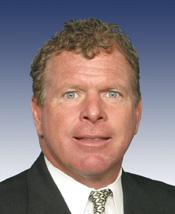
Mr. Speaker, I thank the gentlewoman for yielding me this time. I have to tell the Members I cannot imagine a more important debate, sadly, that we must have. The question is whether or not the…
Mr. Speaker, I thank the gentlewoman for yielding me this time.
I have to tell the Members I cannot imagine a more important debate, sadly, that we must have. The question is whether or not the United States House of Representatives is going to sit idly by and be silent while activist radical judges unravel the very fabric of our society by undoing the basic building block that has made this and every civilization that has ever been successful a success.
What we have got to recognize is that we have an obligation as a Congress here. Yes, there are three separate and equal branches of government in the United States under our wonderful Constitution given to us from the Founders. However, it is unfortunate that all too often lately, the judicial branch has essentially forced legislature into drafting reactions to what they have invaded, which is the territory of the Congress in making laws for the country. And thus this constitutional amendment is absolutely necessary.
Of course, a healthy jealousy between the three branches is always a good thing. It was designed by Madison and the Framers in order to have a give and take between the three branches. But it is emphatically within the province of the Congress to make laws that affect the people of the United States of America, and all too often courts are trying to do that for us.
Today, we are here to protect the very definition of marriage. The American people have spoken very clearly time after time about the importance of defending the traditional view of marriage. This amendment does not prohibit any consensual behavior between any two American citizens. It does not prevent any two people from behaving however they would like. What it does do is to defend for our children, for our posterity, the traditional, historic definition of marriage.
It is unfortunate that the will of the people increasingly is being violated by activist judges so that they can impose like philosopher- kings their view of a better way to do things, and they have certainly come up with a better way to do traditional family life. And they are going to, as they did in Massachusetts, try to impose it on all Americans.
Thomas Jefferson, near the end of his life, wrote in a letter to Edward Livingston on March 25, 1825: ``One single object . . . will merit the endless gratitude of society: that of restraining the judges from usurping legislation.''
Mr. Speaker, with that, I beg Congress to protect marriage, protect our children, protect our future. Vote for this amendment.
Show 7 more
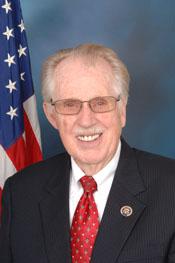
Mr. Speaker, there seems to be some confusion as to what constitutes marriage. In the Christian community, and we are a Christian Nation, you can affirm that by going back to our Founding Fathers and…
Mr. Speaker, there seems to be some confusion as to what constitutes marriage. In the Christian community, and we are a Christian Nation, you can affirm that by going back to our Founding Fathers and their belief in how we started, among Christians, marriage is generally recognized as having started in the Garden of Eden. You may go back to Genesis to find that and you will note there that God created Adam and Eve. He did not create Adam and Steve. A union between other than a man and a woman may be something legally, but it just cannot be a marriage, because marriage through 5,000 years of recorded history has always been a relationship between a man and a woman.
More than just Christian societies have marriage. And why would every recorded society through 5,000 years of recorded history, why would they all have marriage as a union between a man and a woman? It is because societies, one and all, have recognized that marriage is a very important institution. And why is it important? It is because the usual product of marriage is children. And the state, or the tribe or whatever the organization is, all through history recognized that there is a responsibility for the assurance that the children brought into the world as a result of marriage are going to be cared for, which is why all of these societies have recognized that children should not be born out of that relationship, and that relationship is fundamentally there to make sure that their society is going to be perpetuated because children are going to be cared for, if not by the parents, then by the society that has recognized this relationship.
I think that a society is at risk when the institution of marriage, so fundamental to the stability of society, is put at risk.
So I am in strong support of this rule and the bill that follows.
Mr. Speaker, I would note that I had mentioned that not only Christian nations but every society through 5,000 years of recorded history has recognized the institution of marriage as being essential to the stability of their society. We are a Christian society, but I recognize that every other society, no matter what their origin, has certified that marriage is important to the stability of their society. It is to ours. It was to theirs.
I support the rule, and I support the bill.

Mr. Speaker, I rise in strong opposition to this rule and to the underlying amendment. Mr. Speaker, soldiers and innocent civilians are dying every single day in Iraq, 45 million Americans are…
Mr. Speaker, I rise in strong opposition to this rule and to the underlying amendment.
Mr. Speaker, soldiers and innocent civilians are dying every single day in Iraq, 45 million Americans are without health insurance, over 35 million Americans are living in poverty, and 8 million are unemployed and looking for work. Yet with only 10 days until recess, the leadership of this House wastes time on a constitutional amendment that does nothing to stop the deaths of our courageous young people in Iraq, nothing to implement the recommendations of the 9/11 Commission, nothing to address the health care crisis in this country, and nothing to create jobs for unemployed workers and our growing population.
Instead, they bring forward a constitutional amendment which, if ratified, would enshrine discrimination in the United States Constitution, this country's most treasured document. Our Constitution has never been amended to discriminate against a particular group of Americans.
Gay and lesbian Americans deserve the same rights, responsibilities, and protections as other citizens. This amendment would deny same-sex couples the right to make medical decisions for a sick spouse, to share health insurance, to collect Social Security death benefits, all rights that married couples take for granted. We all have family members or friends whose hopes and dreams this amendment would shatter, good people whose lives should not be used as an election-year tactic to distract attention from the incompetence of the Bush administration's planning for and the conduct of the dismal, dismal aftermath of President Bush's war on Iraq and to distract attention from 4 years of deteriorating fiscal stability here at home, with record yearly deficits, exploding national debt, and puny job growth.
Mr. Speaker, we should reject this rule and this divisive, discriminatory amendment.

Mr. Speaker, I yield myself as much time as I may consume, and I rise in support of this resolution. Mr. Speaker, I want to thank my colleague the gentleman from Nebraska (Mr. Bereuter) for…
Mr. Speaker, I yield myself as much time as I may consume, and I rise in support of this resolution.
Mr. Speaker, I want to thank my colleague the gentleman from Nebraska (Mr. Bereuter) for introducing this resolution because it is a good resolution, and it gives me an opportunity to highlight the importance and value of education in our Nation.
H. Res. 106 recognizes the contribution of Lutheran schools to the mix of fine educational opportunities available to American children. We are very fortunate in the United States to have such a diverse system of education.
The goal of the education system in America, both public and private, is to give every child in every State the opportunity to succeed, and that recipe for success, Mr. Speaker, certainly includes Lutheran schools, as well as other religious schools, non-religious private schools and, of course, our public schools. It is this variety, this diversity that makes our education system a success and makes America a strong, strong Nation.
Mr. Speaker, as we recognize the educational contributions that Lutheran schools make to our Nation, let us recognize, too, the importance and value of all the many different types of schools in America and the contributions they make to the lives of our children and our Nation.
Mr. Speaker, I reserve the balance of my time.
Mr. Speaker, I have no further requests for time, and I reserve the balance of my time.
Mr. Speaker, I yield such time as he may consume to the gentleman from Illinois (Mr. Davis), a new member of the Committee on Education and the Workforce.
Mr. Speaker, I yield myself such time as I may consume to simply say that we support this resolution, and I am proud to be here doing that.
Mr. Speaker, I have no further requests for time, and I yield back the balance of my time.

Mr. Speaker, I thank the gentlewoman for yielding me this time. Mr. Speaker, this afternoon, we will debate and vote on the Marriage Protection Amendment. And let us be clear. This debate today is…
Mr. Speaker, I thank the gentlewoman for yielding me this time.
Mr. Speaker, this afternoon, we will debate and vote on the Marriage Protection Amendment. And let us be clear. This debate today is not about denying anyone rights. This is ensuring that the will of the people is protected.
My home State of South Carolina is one of 44 States that has already enacted laws defining marriage as a union between a man and a woman. They voted, and they decided how marriage should be defined. So I stand here today as their representative, wondering why that will and that the will of over 70 percent of Americans nationwide should be tossed aside because a few activist judges disagree.
Unfortunately, as we stand here today, we are faced with the fact that a handful of these judges have taken it upon themselves to hand down rulings that in effect amend the Constitution of the United States. They have circumvented the democratic process with their rulings. Therefore, the decision we are now left with is not whether the Constitution will be amended but who will amend it, activist judges or the American people.
Every American should have the opportunity to vote on this important issue. The institution of marriage deserves protection. It is our most basic social institution for protecting children. Preserving it sends a message to our children about marriage and traditional family life and values.
Mr. Speaker, I hope my colleagues will join me today in supporting the marriage protection amendment. It is time to get the debate back where it belongs, with the American people.
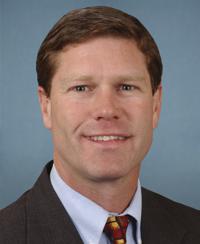
Mr. Speaker, I thank the gentleman from California for allowing me to offer my comments congratulating Lutheran schools. In his 1524 letter, ``to the councilmen of all cities in Germany that they…
Mr. Speaker, I thank the gentleman from California for allowing me to offer my comments congratulating Lutheran schools.
In his 1524 letter, ``to the councilmen of all cities in Germany that they establish and maintain Christian schools,'' Martin Luther wrote, ``My dear sirs, if we have to spend such large sums every year on guns, roads, bridges and dams, and countless items to ensure the temporal peace and prosperity of a city, why should not more be devoted to the poor neglected youth--at least enough to engage one or two competent men to teach school?''
Since this very humble request, the Lutheran Church's role in educating our young has flourished. There are currently 4,821 Lutheran schools operating in America, instructing over half a million students. These schools not only provide a traditional education, but also produce students strongly dedicated to their faith, values, and morals by providing an environment that encourages honesty, trust, respect, and responsibility.
In a world which faces such grave social, political, and economic choices as ours today, it is especially important to remember the words of Martin Luther and recognize the contribution that the Lutheran Church has made to education in our own Nation and around the world. I congratulate our Lutheran schools and I thank them for all that they have done for the spiritual and educational well-being of our youth.

Mr. Speaker, I rise today to honor Lutheran Schools for their continuing contributions to educating young Americans. Lutheran schools impact not only the intellectual life of our Nation's youth but…
Mr. Speaker, I rise today to honor Lutheran Schools for their continuing contributions to educating young Americans. Lutheran schools impact not only the intellectual life of our Nation's youth but also their moral, physical, and social lives.
The Lutheran schools in Louisiana deliver high-quality education and challenge students to reach their potential. The administrators and faculty provide students an environment that encourages honesty, trust and responsibility.
This year more than half a million students in the United States will be enriched by their Lutheran school education. America's Lutheran schools are internationally acclaimed for their academic excellence and can boast a student-teacher ration of 14 to 1.
During National Lutheran Schools Week and throughout the year, I salute the Lutheran schools, students, parents, teachers, administrators, and congregations across the Nation for their ongoing contributions to education.
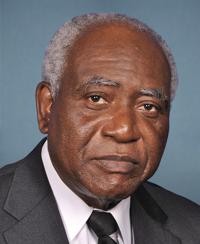
Mr. Speaker, I want to thank the gentlewoman for yielding me this time, and I too want to join with my colleagues in congratulating Lutheran schools, students, parents, teachers, and members of the…
Mr. Speaker, I want to thank the gentlewoman for yielding me this time, and I too want to join with my colleagues in congratulating Lutheran schools, students, parents, teachers, and members of the congregation for outstanding contributions they have made and continue to make in education.
In my congressional district, they are indeed the mainstay for early childhood education. Lutheran Family Services provides any number of early childhood education programs; and we are fortunate to have one of the top high schools in the State, Trinity Lutheran, in our congressional district, where practically all of the young people who come through end up going to college. It has been, and continues to be, an outstanding institution.
I want to commend and congratulate all of those who are a part of the Lutheran congregations for the outstanding contributions that they have made and continue to make to education.
Bill Text
Latest available legislative text
        [Congressional Bills 108th Congress]
[From the U.S. Government Publishing Office]
[H.R. 106 Introduced in House (IH)]

108th CONGRESS
1st Session
H. R. 106

To prohibit discrimination in contracting on federally funded projects
on the basis of certain labor policies of potential contractors.

_______________________________________________________________________

IN THE HOUSE OF REPRESENTATIVES

January 7, 2003

Mr. Hayworth introduced the following bill; which was referred to the
Committee on Education and the Workforce

_______________________________________________________________________

A BILL

To prohibit discrimination in contracting on federally funded projects
on the basis of certain labor policies of potential contractors.

Be it enacted by the Senate and House of Representatives of the
United States of America in Congress assembled,

SECTION 1. SHORT TITLE.

This Act may be cited as the ``Open Competition and Fairness Act
of 2003''.

SEC. 2. PROHIBITION REGARDING CONSIDERATION OF CERTAIN LABOR RELATIONS
POLICIES OF OFFERORS ON FEDERALLY FUNDED CONTRACTS.

Section 8(e) of the National Labor Relations Act (29 U.S.C.
158(e)) is amended by adding at the end the following:
``Notwithstanding any other provision of this Act, no person may be
discriminated against when bidding on a prime contract, funded in whole
or in part with funds provided by the Federal Government, if such
discrimination is based in whole or in part on a requirement that such
person enter into or adhere to a collective bargaining agreement or any
similar agreement as a condition of performing work under the
contract.''.

SEC. 3. CONSTRUCTION.

The amendment made by section 2 shall not be construed--
(1) to apply to subcontractors; or
(2)(A) to prohibit a contractor from voluntarily entering
into a lawful agreement with a labor organization; or
(B) to discourage contractors who have entered into such an
agreement from bidding on Federal or federally assisted
contracts.

SEC. 4. APPLICATION.

The amendment made by section 2 shall apply to contracts made
directly with any agency of the Federal Government and to contracts
made with any entity that is managing or operating a facility owned or
controlled by the Federal Government on behalf of the Federal
Government.
<all>