Medical Malpractice Reform Act of 2003
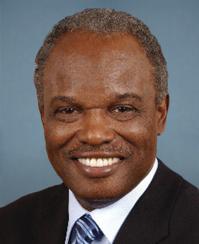
 Rep. John D. Dingell (D-MI)
Legislative Activity
Stay on top of the latest movement without scrolling through every action
Referred to the Subcommittee on Health.
March 17, 2003
View full timeline
Introduced in House
March 6, 2003
Referred to the Committee on Energy and Commerce, and in addition to the Committee on the Judiciary, for a period to be subsequently determined by the Speaker, in each case for consideration of such provisions as fall within the jurisdiction of the committee concerned.
March 6, 2003
Floor Debate
23 membersWhat members said about H.R. 1124 on the floor



 +18
+18
Floor Debate
23 membersWhat members said about H.R. 1124 on the floor
Mr. Speaker, pursuant to House Resolution 139, I call up the bill (H.R. 5) to improve patient access to health care services and provide improved medical care by reducing the excessive burden the…
Mr. Speaker, I yield myself such time as I may consume. Mr. Speaker, I rise today in strong support of H.R. 5. I am joined by every major medical association representing the doctors of America…
Mr. Speaker, I ask unanimous consent to control the time of the gentleman from Michigan (Mr. Conyers). Mr. Speaker, it is my pleasure to yield 3 minutes to the distinguished gentlewoman from…
Mr. Speaker, I thank the gentleman very much for yielding that time. I am very delighted to stand before a distinguished House of Representatives to make this plea. I support this measure. I come…
Mr. Speaker, I thank the gentlewoman for yielding me the time. Today, I rise in strong opposition to H.R. 5, the HEALTH Act, because this unhealthy act would severely limit the ability of patients to…
Show 8 more

Mr. Speaker, I rise in strong opposition to H.R. 5, legislation that would undermine the right of patients and their families to seek appropriate compensation and penalties when they, or a loved one,…

Mr. Speaker, I thank the gentleman for yielding me time. Mr. Speaker, next week we will be considering most likely on the floor of the House a bill dealing with bankruptcy. Today we are considering a…

Mr. Speaker, this past December in West Virginia, doctors at four hospitals went on a 30-day strike to protest climbing malpractice insurance rates. Following, in January 2003, Pennsylvania narrowly…

Mr. Speaker, as an OB-GYN with over 30 years in private practice, I understand better than perhaps any other member of Congress the burden imposed on both medical practitioners and patients by…

Mr. Speaker, I speak on the floor today in opposition to H.R. 5 and in opposition to the closed rule under which we are debating the bill. I have heard from doctors and hospitals throughout my…
Mr. Speaker, I speak on the floor today in opposition to H.R. 5 and in opposition to the closed rule under which we are debating the bill. I have heard from doctors and hospitals throughout my…

Mr. Speaker, I rise today in strong opposition to H.R. 5, the ``Medical Malpractice and Insurance Reform Act of 2003.'' Furthermore, I fervently object to the House Rules Committee's prohibition of…

Mr. Speaker, I thank the gentleman for yielding me this time. The majority of our doctors are hardworking and professional and serve their patients with the utmost ability. Only a few doctors are bad…
Show 11 more

Mr. Speaker, I yield myself 3 minutes. Mr. Speaker, I want Members on both sides of the aisle to be aware of three unanswered questions about H.R. 5. First, if the authors of this bill are sure that…

Mr. Speaker, I am here to give a clear example from my home congressional district, a Dr. Joseph Hildner, a board-certified family-practice specialist in Belleview, Florida. He had a patient that was…

Mr. Speaker, I rise today to express my support for H.R. 5, the Help Efficient, Accessible, Low-Cost, Timely Healthcare Act of 2003. Our healthcare system is currently in a crisis. Medical…

Mr. Speaker, I am going to put a longer statement in the Record, but I want to say this, that this bill is a flawed approach. It has a one-size-fits-all approach to every State, and it ought to be up…

Mr. Speaker, I think we all agree that there is a crisis in medical malpractice insurance rates. Unfortunately, this bill does not mention insurance rates or offer solutions for the doctors who are…

Mr. Speaker, I am pleased to start the debate off on our side by yielding 3 minutes to the gentleman from North Carolina (Mr. Watt), the ranking member of the Subcommittee on Commercial and…

Mr. Speaker, H.R. 5 is but another wolf in lamb's clothing, pretending to help doctors and patients, but really only helping the large health care corporations and doing nothing to help lift the…

Mr. Speaker, for a nation that boasts about being the wealthiest in the world, claiming liberty and justice for all, the fact that there are over 40 million people without health insurance is a…

Mr. Speaker I rise in opposition to H.R. 5 and in favor of the motion to recommit. Mr. Speaker, I rise today in opposition to H.R. 5, a measure which restricts the rights of legitimately injured…
I thank the gentleman for yielding me this time. Mr. Speaker, we are witnessing a sorry spectacle today. Not only are we denied opportunity to properly debate but also to properly amend. And the…

Mr. Speaker, H.R. 5 is the Republican's quick fix to the health care crisis across the nation. They address the problem of increased insurance cost for medical malpractice, but have proposed a…
Bill Text
Latest available legislative text
        [Congressional Bills 108th Congress]
[From the U.S. Government Publishing Office]
[H.R. 1124 Introduced in House (IH)]

108th CONGRESS
1st Session
H. R. 1124

To reduce the cost of medical malpractice insurance, to enhance patient
access to medical care, and for other purposes.

_______________________________________________________________________

IN THE HOUSE OF REPRESENTATIVES

March 6, 2003

Mr. Dingell (for himself, Mr. Brown of Ohio, Mr. Towns, Mr. Pallone,
Mr. Deutsch, Mr. Rush, Ms. Eshoo, Mr. Engel, Mr. Green of Texas, Ms.
McCarthy of Missouri, Ms. DeGette, Mrs. Capps, Ms. Solis, Mr. Andrews,
and Mr. DeFazio) introduced the following bill; which was referred to
the Committee on Energy and Commerce, and in addition to the Committee
on the Judiciary, for a period to be subsequently determined by the
Speaker, in each case for consideration of such provisions as fall
within the jurisdiction of the committee concerned

_______________________________________________________________________

A BILL

To reduce the cost of medical malpractice insurance, to enhance patient
access to medical care, and for other purposes.

Be it enacted by the Senate and House of Representatives of the
United States of America in Congress assembled,

SECTION 1. SHORT TITLE.

This Act may be cited as the ``Medical Malpractice Reform Act of
2003''.

TITLE I--HEALTH PROVIDER SHORTAGES RESULTING FROM COSTS OF MEDICAL
MALPRACTICE INSURANCE

SEC. 101. GRANTS AND CONTRACTS REGARDING HEALTH PROVIDER SHORTAGES.

Subpart I of part D of title III of the Public Health Service Act
(42 U.S.C. 254b et seq.) is amended by adding at the end the following
section.

``SEC. 330L. HEALTH PROVIDER SHORTAGES RESULTING FROM COSTS OF MEDICAL
MALPRACTICE INSURANCE.

``(a) In General.--The Secretary, acting through the Administrator
of the Health Resources and Services Administration, may make awards of
grants or contracts in accordance with this section for geographic
areas that, as determined by the Secretary, have a shortage of one or
more types of health providers as a result of the providers making the
decision to cease or curtail providing health services in the
geographic areas because of the costs of maintaining malpractice
insurance.
``(b) Recipients of Awards; Expenditure.--In accordance with such
criteria as the Secretary may establish:
``(1) Awards under subsection (a) may be made to health
providers who agree to provide health services (or to continue
providing health services, as the case may be) in geographic
areas described in such subsection for the period during which
payments under the awards are made to the health providers.
``(2) Health providers who receive such awards may expend
the awards to assist the providers with the costs of
maintaining medical malpractice insurance for providing health
services in the geographic area for which the award is made.
``(c) Definition.--For purposes of this section, the term `health
providers' means physicians and other health professionals, and
organizations that provide health services (including hospitals,
clinics, and group practices), that meet applicable legal requirements
to provide the health services involved.''.

SEC. 102. HEALTH PROFESSIONAL ASSIGNMENTS TO TRAUMA CENTERS THROUGH
NATIONAL HEALTH SERVICE CORPS.

Section 338H of the Public Health Service Act (42 U.S.C. 254q) is
amended by adding at the end the following subsection:
``(d) Trauma Centers; Separate Authorization Regarding Shortages
Resulting From Costs of Medical Malpractice Insurance.--
``(1) In general.--For the purpose of assigning Corps
surgeons, obstetricians/gynecologists, and other health
professionals to trauma centers in health professional shortage
areas described in paragraph (2), there are authorized to be
appropriated such sums as may be necessary for each of the
fiscal years 2003 through 2006. Such authorization is in
addition to any other authorization of appropriations that is
available for such purpose.
``(2) Description of areas.--A health professional shortage
area referred to in paragraph (1) is such an area in which, as
determined by the Secretary, a medical facility in the area has
lost its designation as a trauma center or as a particular
level of trauma center, or is at significant risk of losing
such a designation, as a result of one or more surgeons,
obstetricians/gynecologists, or other health professionals
making the decision to cease or curtail practicing at the
facility because of the costs of maintaining malpractice
insurance. For purposes of paragraph (1), (A) the term `trauma
center' includes such a medical facility; and (B) the Secretary
may adjust the criteria for designation as a health
professional shortage area to the extent necessary to make
funds appropriated under paragraph (1) available with respect
to any medical facility to ensure that the facility does not
lose any such designation as a result of such decisions by
health professionals.''.

TITLE II--TORT REFORM REGARDING MEDICAL MALPRACTICE

Subtitle A--Medical Malpractice Litigation Reform

SEC. 201. STATUTE OF LIMITATIONS.

(a) In General.--In any State or Federal court, a medical
malpractice action shall be barred unless the complaint is filed within
3 years after the right of action accrues.
(b) Accrual.--A right of action referred to in subsection (a)
accrues upon the last to occur of the following dates:
(1) The date of the injury.
(2) The date on which the claimant discovers, or through
the use of reasonable diligence should have discovered, the
injury.
(3) The date on which the claimant became 18 years of age.
(c) Applicability.--This section shall apply to any injury
occurring after the date of the enactment of this Act.

SEC. 202. ATTORNEY CERTIFICATE OF MERIT.

(a) In General.--In any State or Federal court, a medical
malpractice action shall be dismissed unless the attorney or
unrepresented party presenting the complaint certifies that, to the
best of the person's knowledge, information, and belief, formed after
an inquiry reasonable under the circumstances,--
(1) it is not being presented for any improper purpose,
such as to harass or to cause unnecessary delay or needless
increase in the cost of litigation;
(2) the claims and other legal contentions therein are
warranted by existing law or by a nonfrivolous argument for the
extension, modification, or reversal of existing law or the
establishment of new law; and
(3) the allegations and other factual contentions have
evidentiary support or, if specifically so identified, are
likely to have evidentiary support after a reasonable
opportunity for further investigation and discovery.
(b) Sanctions.--If, after notice and a reasonable opportunity to
respond, the court determines that a person, in certifying under
subsection (a), has violated that subsection, the court shall impose an
appropriate sanction upon the attorneys, law firms, or parties that
have violated that subsection or are responsible for the violation. Any
sanction or relief available under Rule 11 of the Federal Rules of
Civil Procedure shall be available under this section.
(c) Coordination With Other Sanctions.--A sanction imposed under
this section shall be in addition to any other sanction available under
any other law.
(d) Applicability.--This section shall apply to any complaint filed
after the date of the enactment of this Act.

SEC. 203. LIMITATION ON PUNITIVE DAMAGES.

(a) In General.--In any State or Federal court, punitive damages
may not be awarded on a medical malpractice action, except upon proof
of--
(1) gross negligence;
(2) reckless indifference to life; or
(3) an intentional act, such as voluntary intoxication or
impairment by a physician, sexual abuse or misconduct, assault
and battery, or falsification of records.
(b) Allocation.--In such a case, the award of punitive damages
shall be allocated 50 percent to the claimant and 50 percent to a
trustee appointed by the court, to be used by such trustee in the
manner specified in subtitle B. The court shall appoint the Secretary
of Health and Human Services as such trustee.
(c) Exception.--This subsection shall not apply with respect to an
action if the applicable State law provides (or has been construed to
provide) for damages in such an action that are only punitive or
exemplary in nature.

SEC. 204. REDUCTION IN PREMIUMS PAID BY PHYSICIANS FOR MEDICAL
MALPRACTICE INSURANCE COVERAGE.

(a) In General.--Not later than 180 days after the date of the
enactment of this Act, each medical malpractice liability insurance
company shall--
(1) develop a reasonable estimate of the annual amount of
financial savings that will be achieved by the company as a
result of this subtitle;
(2) develop and implement a plan to annually dedicate at
least 50 percent of such annual savings to reduce the amount of
premiums that the company charges physicians for medical
malpractice liability coverage; and
(3) submit to the Secretary of Health and Human Services
(referred to in this section as the ``Secretary'') a written
certification that the company has complied with paragraphs (1)
and (2).
(b) Reports.--Not later than one year after the date of the
enactment of this Act and annually thereafter, each medical malpractice
liability insurance company shall submit to the Secretary a report that
identifies the percentage by which the company has reduced medical
malpractice coverage premiums relative to the date of the enactment of
this Act.
(c) Enforcement.--A medical malpractice liability insurance company
that violates a provision of this section is liable to the United
States for a civil penalty in an amount assessed by the Secretary, not
to exceed $11,000 for each such violation. The provisions of paragraphs
(3) through (5) of section 303(g) of the Federal Food, Drug, and
Cosmetic Act apply to such a civil penalty to the same extent and in
the same manner as such paragraphs apply to a civil penalty under such
section.
(d) Definition.--For purposes of this section, the term ``medical
malpractice liability insurance company'' means an entity in the
business of providing an insurance policy under which the entity makes
payment in settlement (or partial settlement) of, or in satisfaction of
a judgment in, a medical malpractice action or claim.

SEC. 205. DEFINITIONS.

In this subtitle:
(1) The term ``State'' means each of the several States,
the District of Columbia, the Commonwealth of Puerto Rico,
American Samoa, Guam, the Commonwealth of the Northern Mariana
Islands, the Virgin Islands, and any other territory or
possession of the United States.
(2) The term ``medical malpractice action'' means an action
against a physician, or other health professional, who is
licensed in accordance with the requirements of the State
involved that--
(A) arises under the law of the State involved;
(B) alleges the failure of such physician or other
health professional to adhere to the relevant
professional standard of care for the service and
specialty involved;
(C) alleges death or injury proximately caused by
such failure; and
(D) seeks monetary damages, whether compensatory or
punitive, as relief for such death or injury.

Subtitle B--Use of Amounts Recovered as Punitive Damages in Medical
Malpractice Actions

SEC. 221. AMOUNTS COVERED.

(a) In General.--This subtitle applies to amounts allocated to the
Secretary of Health and Human Services as trustee under section 203.
(b) Availability.--Such amounts shall be available for use by the
Secretary of Health and Human Services under section 222 and shall
remain so available until expended.

SEC. 222. USE OF AMOUNTS.

(a) In General.--Subject to subsection (b), the Secretary of Health
and Human Services, acting through the Director of the Agency for
Healthcare Research and Quality, shall use the amounts to which this
subtitle applies for activities to reduce medical errors and improve
patient safety.
(b) No Funds for Mandatory Reporting System.--The Secretary of
Health and Human Services may not use any part of such amounts to
establish or maintain any system that requires mandatory reporting of
medical errors.
(c) Regulations.--The Secretary of Health and Human Services shall
promulgate regulations to establish programs and procedures for
carrying out this section.

SEC. 223. INVESTMENT.

(a) In General.--The Secretary of Health and Human Services shall
invest the amounts to which this subtitle applies in such amounts as
such Secretary determines are not required to meet current withdrawals.
Such investments may be made only in interest-bearing obligations of
the United States. For such purpose, such obligations may be acquired
on original issue at the issue price, or by purchase of outstanding
obligations at the market price.
(b) Sale of Obligations.--Any obligation acquired by the Secretary
in such Secretary's capacity as trustee of such amounts may be sold by
the Secretary at the market price.

TITLE III--INDEPENDENT ADVISORY COMMISSION ON MEDICAL MALPRACTICE
INSURANCE

SEC. 301. ESTABLISHMENT.

(a) Findings.--The Congress finds as follows:
(1) The sudden rise in medical malpractice premiums in
regions of the United States can threaten patient access to
doctors and other health providers.
(2) Improving patient access to doctors and other health
providers is a national priority.
(b) Establishment.--There is established a national commission to
be known as the ``Independent Advisory Commission on Medical
Malpractice Insurance'' (in this title referred to as the
``Commission'').

SEC. 302. DUTIES.

(a) In General.--The Commission shall evaluate the causes and scope
of the recent and dramatic increases in medical malpractice insurance
premiums and formulate additional proposals to reduce such medical
malpractice premiums and make recommendations to avoid any dramatic
increases in medical malpractice premiums in the future, in light of
proposals for tort reform regarding medical malpractice.
(b) Considerations.--In formulating proposals under this section,
the Commission shall, at a minimum, consider the following:
(1) Alternatives to the current medical malpractice tort
system that would ensure adequate compensation for patients,
preserve access to providers, and improve health care safety
and quality.
(2) The effect of Federal laws on the pricing of medical
malpractice insurance.
(3) Modifications of, and alternatives to, the existing
State and Federal regulations and oversight that affect, or
could affect, medical malpractice lines of insurance.
(4) State and Federal reforms that would distribute the
risk of medical malpractice more equitably among health care
providers.
(5) State and Federal reforms that would more evenly
distribute the risk of medical malpractice across various
categories of providers.
(6) The effect of a Federal medical malpractice reinsurance
program administered by the Department of Health and Human
Services.
(7) Programs that would reduce medical errors and increase
patient safety, including new innovations in technology and
management.

SEC. 303. REPORT.

(a) In General.--The Commission shall transmit to Congress--
(1) an initial report not later than 180 days after the
date of the initial meeting of the Commission; and
(2) a report not less than each year thereafter until the
Commission terminates.
(b) Contents.--Each report transmitted under this section shall
contain a detailed statement of the findings and conclusions of the
Commission, including proposals for addressing the current dramatic
increases in medical malpractice insurance rates and recommendations
for avoiding any such dramatic increases in the future.
(c) Voting and Reporting Requirements.--With respect to each
proposal or recommendation contained in the report submitted under
subsection (a), each member of the Commission shall vote on the
proposal or recommendation, and the Commission shall include, by
member, the results of that vote in the report.

SEC. 304. MEMBERSHIP.

(a) Number and Appointment.--The Commission shall be composed of 15
members appointed by the Comptroller General of the United States.
(b) Membership.--
(1) In general.--The membership of the Commission shall
include individuals with national recognition for their
expertise in health finance and economics, actuarial science,
medical malpractice insurance, insurance regulation, health
care law, health care policy, health care access, allopathic
and osteopathic physicians, other providers of health care
services, patient advocacy, and other related fields, who
provide a mix of different professionals, broad geographic
representations, and a balance between urban and rural
representatives.
(2) Inclusion.--The membership of the Commission shall
include the following:
(A) Two individuals with expertise in health
finance and economics, including one with expertise in
consumer protections in the area of health finance and
economics.
(B) Two individuals with expertise in medical
malpractice insurance, representing both commercial
insurance carriers and physician-sponsored insurance
carriers.
(C) An individual with expertise in State insurance
regulation and State insurance markets.
(D) An individual representing physicians.
(E) An individual with expertise in issues
affecting hospitals, nursing homes, nurses, and other
providers.
(F) Two individuals representing patient interests.
(G) Two individuals with expertise in health care
law or health care policy.
(H) An individual with expertise in representing
patients in malpractice lawsuits.
(3) Majority.--The total number of individuals who are
directly involved with the provision or management of
malpractice insurance, representing physicians or other
providers, or representing physicians or other providers in
malpractice lawsuits, shall not constitute a majority of the
membership of the Commission.
(4) Ethical disclosure.--The Comptroller General of the
United States shall establish a system for public disclosure by
members of the Commission of financial or other potential
conflicts of interest relating to such members.
(c) Terms.--
(1) In general.--The terms of the members of the Commission
shall be for 3 years except that the Comptroller General of the
United States shall designate staggered terms for the members
first appointed.
(2) Vacancies.--Any member appointed to fill a vacancy
occurring before the expiration of the term for which the
member's predecessor was appointed shall be appointed only for
the remainder of that term. A member may serve after the
expiration of that member's term until a successor has taken
office. A vacancy in the Commission shall be filled in the
manner in which the original appointment was made.
(3) Compensation.--Members of the Commission shall be
compensated in accordance with section 1805(c)(4) of the Social
Security Act.
(4) Chairman; vice chairman.--The Comptroller General of
the United States shall designate at the time of appointment a
member of the Commission as Chairman and a member as Vice
Chairman. In the case of vacancy of the Chairmanship or Vice
Chairmanship, the Comptroller General may designate another
member for the remainder of that member's term.
(5) Meetings.--
(A) In general.--The Commission shall meet at the
call of the Chairman.
(B) Initial meeting.--The Commission shall hold an
initial meeting not later than the date that is 1 year
after the date of the enactment of this title, or the
date that is 3 months after the appointment of all the
members of the Commission, whichever occurs earlier.

SEC. 305. DIRECTOR AND STAFF; EXPERTS AND CONSULTANTS.

Subject to such review as the Comptroller General of the United
States deems necessary to assure the efficient administration of the
Commission, the Commission may--
(1) employ and fix the compensation of an Executive
Director (subject to the approval of the Comptroller General)
and such other personnel as may be necessary to carry out its
duties (without regard to the provisions of title 5, United
States Code, governing appointments in the competitive
service);
(2) seek such assistance and support as may be required in
the performance of its duties from appropriate Federal
departments and agencies;
(3) enter into contracts or make other arrangements, as may
be necessary for the conduct of the work of the Commission
(without regard to section 3709 of the Revised Statutes (41
U.S.C. 5));
(4) make advance, progress, and other payments which relate
to the work of the Commission;
(5) provide transportation and subsistence for persons
serving without compensation; and
(6) prescribe such rules and regulations as it deems
necessary with respect to the internal organization and
operation of the Commission.

SEC. 306. POWERS.

(a) Obtaining Official Data.--The Commission may secure directly
from any department or agency of the United States information
necessary to enable it to carry out this section. Upon request of the
Chairman, the head of that department or agency shall furnish that
information to the Commission on an agreed upon schedule.
(b) Data Collection.--In order to carry out its functions, the
Commission shall--
(1) utilize existing information, both published and
unpublished, where possible, collected and assessed either by
its own staff or under other arrangements made in accordance
with this section;
(2) carry out, or award grants or contracts for, original
research and experimentation, where existing information is
inadequate; and
(3) adopt procedures allowing any interested party to
submit information for the Commission's use in making reports
and recommendations.
(c) Access of General Accounting Office to Information.--The
Comptroller General of the United States shall have unrestricted access
to all deliberations, records, and nonproprietary data of the
Commission, immediately upon request.
(d) Periodic Audit.--The Commission shall be subject to periodic
audit by the Comptroller General of the United States.

SEC. 307. AUTHORIZATION OF APPROPRIATIONS.

(a) In General.--There are authorized to be appropriated such sums
as may be necessary to carry out this title for each of fiscal years
2004 through 2008.
(b) Requests for Appropriations.--The Commission shall submit
requests for appropriations in the same manner as the Comptroller
General of the United States submits requests for appropriations, but
amounts appropriated for the Commission shall be separate from amounts
appropriated for the Comptroller General.
<all>