To provide that transit pass transportation fringe benefits be made available to all qualified Federal employees in the National Capital Region; to allow passenger carriers which are owned or leased by the Government to be used to transport Government employees between their place of employment and mass transit facilities, and for other purposes.
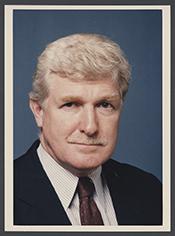 Rep. James P. Moran (D-VA)
Legislative Activity
Stay on top of the latest movement without scrolling through every action
Placed on the Union Calendar, Calendar No. 412.
September 9, 2004
View full timeline
Introduced in House
March 6, 2003
Referred to the House Committee on Government Reform.
March 6, 2003
Referred to the Subcommittee on Civil Service and Agency Organization.
March 25, 2003
Subcommittee Consideration and Mark-up Session Held.
July 16, 2003
Forwarded by Subcommittee to Full Committee by Voice Vote.
July 16, 2003
Committee Consideration and Mark-up Session Held.
September 25, 2003
Ordered to be Reported by Voice Vote.
September 25, 2003
Reported by the Committee on Government Reform. H. Rept. 108-673.
September 9, 2004
Placed on the Union Calendar, Calendar No. 412.
September 9, 2004
Floor Debate
11 membersWhat members said about H.R. 1151 on the floor

 +6
+6
Floor Debate
11 membersWhat members said about H.R. 1151 on the floor
Mr. President, I rise tonight to introduce, along with my good friend from Utah, Senator Hatch, the distinguished Chairman of the Judiciary Committee, the ``Anabolic Steroid Control Act of 2003.''…
Mr. President, I am pleased to introduce the Federal Employee Commuter Benefits Act of 2003, which is cosponsored by my colleagues Senators Mikulski, Warner, and Allen. This bill will guarantee…
Mr. President, I rise today to introduce the ``Methamphetamine Blister Pack Loophole Elimination Act of 2003,'' along with my colleagues Senators Grassley, Kohl, Biden, Kyl and Harkin. This is a…
Mr. President, I am introducing today the Medicare Indian Health Fairness Act of 2003 with Senators Inouye, Daschle, Murray, Dayton, Johnson, Cantwell, and Stabenow. This legislation would take a…
Mr. President, I am pleased to join Senator Biden and Senator Hatch as a co-sponsor of the Steroid Control Act of 2003. Our youth need to understand that while the short-term use of steroids may seem…
Show 6 more

Mr. President, today I introduce along with my colleague, Senator Stevens, an important bill that will facilitate Forest Service land management on Prince of Wales Island and help community expansion…
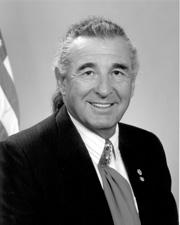
Mr. President, today I am introducing the Intermodal Equipment Safety and Responsibility Act of 2003. This bill is a companion bill to language originally brought to the floor of the House of…

Mr. President, I rise to introduce legislation that is designed to eliminate tariffs on certain tuna products imported into the United States from member nations of the Association of Southeast Asian…
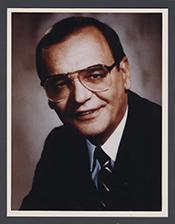
Mr. Speaker, I rise today to call the attention of the House of Representatives to the long record of service to the community of a constituent of mine, my good friend John Kebles. John is president…
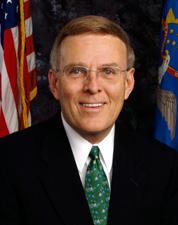
Mr. President, today I am introducing the Pharmaceutical Market Access Act of 2003 in the Senate, along with my colleagues, Senators Snowe, Stabenow, Johnson, Pryor, Dayton, Leahy, Levin, Feingold,…
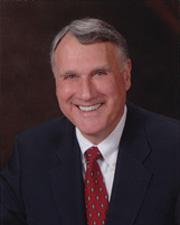
Mr. President, today I am introducing a Sense of the Senate resolution that states that Congress should add to the number of years that repeal of the death tax will last until we archive its…
Bill Text
2 versions available
        [Congressional Bills 108th Congress]
[From the U.S. Government Publishing Office]
[H.R. 1151 Reported in House (RH)]

Union Calendar No. 412
108th CONGRESS
2d Session
H. R. 1151

[Report No. 108-673]

To provide that transit pass transportation fringe benefits be made
available to all qualified Federal employees in the National Capital
Region; to allow passenger carriers which are owned or leased by the
Government to be used to transport Government employees between their
place of employment and mass transit facilities, and for other
purposes.

_______________________________________________________________________

IN THE HOUSE OF REPRESENTATIVES

March 6, 2003

Mr. Moran of Virginia (for himself, Ms. Norton, Mr. Wynn, Mr. Van
Hollen, Mr. Tom Davis of Virginia, and Mr. Hoyer) introduced the
following bill; which was referred to the Committee on Government
Reform

September 9, 2004

Additional sponsors: Mr. Wolf and Mr. Blumenauer

September 9, 2004

Committed to the Committee of the Whole House on the State of the Union
and ordered to be printed

_______________________________________________________________________

A BILL

To provide that transit pass transportation fringe benefits be made
available to all qualified Federal employees in the National Capital
Region; to allow passenger carriers which are owned or leased by the
Government to be used to transport Government employees between their
place of employment and mass transit facilities, and for other
purposes.

Be it enacted by the Senate and House of Representatives of the
United States of America in Congress assembled,

SECTION 1. TRANSIT PASS TRANSPORTATION FRINGE BENEFITS.

(a) In General.--Effective as of the first day of the next fiscal
year beginning after the date of the enactment of this Act, each
covered agency shall implement a program under which all qualified
Federal employees serving in or under such agency shall be offered
transit pass transportation fringe benefits, as described in subsection
(b).
(b) Benefits Described.--The benefits described in this subsection
are, as of any given date, the transit pass transportation fringe
benefits which, under section 2 of Executive Order 13150, are then
currently required to be offered by Federal agencies in the National
Capital Region.
(c) Definitions.--For purposes of this Act--
(1) the term ``covered agency'' means any agency, to the
extent of its facilities in the National Capital Region;
(2) the term ``agency'' means any agency (as defined by
7905(a)(2) of title 5, United States Code) not otherwise
covered by section 2 of Executive Order 13150, the United
States Postal Service, the Postal Rate Commission, and the
Smithsonian Institution;
(3) the term ``National Capital Region'' includes the
District of Columbia and every county or other geographic area
covered by section 2 of Executive Order 13150;
(4) the term ``Executive Order 13150'' refers to Executive
Order 13150 (5 U.S.C. 7905 note);
(5) the term ``Federal agency'' is used in the same way as
under section 2 of Executive Order 13150; and
(6) any determination as to whether or not one is a
``qualified Federal employee'' shall be made applying the same
criteria as would apply under section 2 of Executive Order
13150.
(d) Rule of Construction.--Nothing in this section shall be
considered to require that a covered agency--
(1) terminate any program or benefits in existence on the
date of the enactment of this Act, or postpone any plans to
implement (before the effective date referred to in subsection
(a)) any program or benefits permitted or required under any
other provision of law; or
(2) discontinue (on or after the effective date referred to
in subsection (a)) any program or benefits referred to in
paragraph (1), so long as such program or benefits satisfy the
requirements of subsections (a)-(c).

SEC. 2. AUTHORITY TO USE GOVERNMENT VEHICLES TO TRANSPORT FEDERAL
EMPLOYEES BETWEEN THEIR PLACE OF EMPLOYMENT AND MASS
TRANSIT FACILITIES.

(a) In General.--Section 1344 of title 31, United States Code, is
amended--
(1) by redesignating subsections (g) and (h) as subsections
(h) and (i), respectively; and
(2) by inserting after subsection (f) the following:
``(g)(1) A passenger carrier may be used to transport an officer or
employee of a Government agency between the officer's or employee's
place of employment and a mass transit facility (whether or not
publicly owned) in accordance with succeeding provisions of this
subsection.
``(2) A Government agency that provides transportation services
under this subsection shall absorb the costs of such services using any
funds available to such agency, whether by appropriation or otherwise.
``(3) In carrying out this subsection, a Government agency shall--
``(A) to the maximum extent practicable, use alternative
fuel vehicles to provide transportation services;
``(B) to the extent consistent with the purposes of this
subsection, provide transportation services in a manner that
does not result in additional gross income for Federal income
tax purposes; and
``(C) coordinate with other Government agencies to share,
and otherwise avoid duplication of, transportation services
provided under this subsection.
``(4) For purposes of any determination under chapter 81 of title
5, an individual shall not be considered to be in the `performance of
duty' by virtue of the fact that such individual is receiving
transportation services under this subsection.
``(5)(A) The Administrator of General Services, after consultation
with the National Capital Planning Commission and other appropriate
agencies, shall prescribe any regulations necessary to carry out this
subsection.
``(B) Transportation services under this subsection shall be
subject neither to the last sentence of subsection (d)(3) nor to any
regulations under the last sentence of subsection (e)(1).
``(6) As used in this subsection--
``(A) the term `Government agency' means a Federal agency
and the government of the District of Columbia; and
``(B) the term `passenger carrier' means a passenger motor
vehicle, aircraft, boat, ship, or other similar means of
transportation that is owned or leased by the United States
Government or the government of the District of Columbia.''.
(b) Funds for Maintenance, Repair, etc.--Subsection (a) of section
1344 of title 31, United States Code, is amended by adding at the end
the following:
``(3) For purposes of paragraph (1)--
``(A) the transportation of an individual between such
individual's place of employment and a mass transit facility
pursuant to subsection (g) is transportation for an official
purpose; and
``(B) the term `Federal agency', as used in such paragraph,
shall be considered to mean a Government agency (as defined by
subsection (g)), to the extent that the passenger carriers
involved are used in the provision of transportation services
under such subsection.''.
(c) Coordination.--The authority to provide transportation services
under section 1344(g) of title 31, United States Code (as amended by
subsection (a)) shall be in addition to any authority otherwise
available to the agency involved.

Union Calendar No. 412

108th CONGRESS

2d Session

H. R. 1151

[Report No. 108-673]

_______________________________________________________________________

A BILL

To provide that transit pass transportation fringe benefits be made
available to all qualified Federal employees in the National Capital
Region; to allow passenger carriers which are owned or leased by the
Government to be used to transport Government employees between their
place of employment and mass transit facilities, and for other
purposes.

_______________________________________________________________________

September 9, 2004

Committed to the Committee of the Whole House on the State of the Union
and ordered to be printed