Eastern Band of Cherokee Indians Land Exchange Act of 2003
Legislative Activity
Stay on top of the latest movement without scrolling through every action
Received in the Senate and Read twice and referred to the Committee on Energy and Natural Resources.
September 24, 2003
View full timeline
Introduced in House
March 20, 2003
Referred to the House Committee on Resources.
March 20, 2003
Committee Consideration and Mark-up Session Held.
July 15, 2003
Reported by the Committee on Resources. H. Rept. 108-254.
September 3, 2003
Placed on the Union Calendar, Calendar No. 144.
September 3, 2003
Mr. Renzi moved to suspend the rules and pass the bill.
September 23, 2003 • 2:48 PM
Considered under suspension of the rules. (consideration: CR H8416-8421)
September 23, 2003 • 2:48 PM
DEBATE - The House proceeded with forty minutes of debate on H.R. 1409.
September 23, 2003 • 2:48 PM
DEBATE - The House continued with debate on H.R. 1409.
September 23, 2003 • 3:12 PM
At the conclusion of debate, the Yeas and Nays were demanded and ordered. Pursuant to the provisions of clause 8, rule XX, the Chair announced that further proceedings on the motion would be postponed.
September 23, 2003 • 3:18 PM
Considered as unfinished business. (consideration: CR H8466-8467)
September 23, 2003 • 7:13 PM
Passed/agreed to in House: On motion to suspend the rules and pass the bill Agreed to by the Yeas and Nays: (2/3 required): 288 - 127 (Roll no. 512).(text: CR H8416-8417)
September 23, 2003 • 7:22 PM
On motion to suspend the rules and pass the bill Agreed to by the Yeas and Nays: (2/3 required): 288 - 127 (Roll no. 512). (text: CR H8416-8417)
September 23, 2003 • 7:22 PM
Motion to reconsider laid on the table Agreed to without objection.
September 23, 2003 • 7:22 PM
Received in the Senate and Read twice and referred to the Committee on Energy and Natural Resources.
September 24, 2003
Voting History
1 vote recorded • Roll call available
Floor Debate
24 membersWhat members said about H.R. 1409 on the floor
CHT LC
LC NDD
NDD RR
RR RR+19
RR+19
Floor Debate
24 membersWhat members said about H.R. 1409 on the floor
Mr. Chairman, I yield myself such time as I may consume. Mr. Chairman, today we bring before the House for fiscal year 2004 appropriations a bill for the Department of the Interior and related…
Mr. Chairman, I yield myself such time as I may consume.
Mr. Chairman, today we bring before the House for fiscal year 2004 appropriations a bill for the Department of the Interior and related agencies. This is a good bill that balances many competing needs and stays within the 302(b) allocations for budget authority.
Mr. Chairman, this bill is fiscally responsible, providing about $100 million more than the budget request but nearly $200 million less than the fiscal year 2003 level. The bill takes care of our public lands, the national parks, wildlife refuges, forests, and lands managed by the Bureau of Land Management. It has been increased not as much as some would like; and I pledge that in conference, we will try to increase that as much as possible.
The bill focuses on conservation initiatives, including operation and maintenance of Federal lands, stateside grants for land preservation and recreation, State wildlife grants, habitat improvements on both public and private lands, eradication of invasive species, and protection of endangered species.
We hear arguments that we are not doing enough for the conservation program in this bill. I disagree. There is nearly $1 billion in the bill for programs in the conservation spending category. But more to the point, there are a great number of critically important conservation programs in this bill that have never been included in the conservation spending category but are equally important.
We provide increases of $73 million for national parks, $30 million for national wildlife refuges, and $93 million for wildlife restoration and forest health. I would argue that most of the funding in this bill is for conservation activities.
Some Members will argue that we need to buy more Federal lands. What we really need is to do a better job of taking care of lands we have and this bill does that.
Fire fighting needs are addressed in this bill. In addition to providing the necessary funding for suppressing wildfires, we continue support for the National Fire Plan with the investment of $2.5 billion. We support preparedness activities so that we have the people and equipment in place to handle wildfires. We provide funding increases for hazardous fuels reduction, State fire assistance, and forest health programs. I am proud of the balance we have achieved in these critical programs that are important to all Americans.
The bill ensures that energy research programs are adequately funded and that we maintain a proper mix between research on improvements to existing technologies and longer-term higher-risk research on new technologies. We need to keep all of our options open and not fall into the trap of picking winners and losers.
When it comes to energy research, ultimately the consumer and not the government will determine what energy technologies will be successful in the marketplace.
The bill provides for the continued construction of critically needed schools and hospitals for the American Indians and Alaskan Natives. It is included in a resolution to the contentious litigation between the United States and the American Indians dealing with the individual Indian trust monies. This bill provides prompt, fair, and reasonable resolution of those long-standing claims. This lawsuit has been diverting scarce resources away from critical programs that benefit the Indian people. We need to stop spending hundreds of millions of dollars, if not billions, on litigation support and redirect those funds to Indian education, health, wildlife, law enforcement and other important Indian programs.
My good friend, the gentleman from California (Mr. Pombo), chairman of the Committee on Resources, will move to strike this provision on jurisdictional grounds. He has committed to resolving this conflict through the authorizing process. Mr. Chairman, if we do not do this, we will literally be spending perhaps $2.4 billion in continuous accounting measures that will do nothing to solve this problem. It will be taken away from Indian health and education.
Finally, the bill takes care of our cultural agencies and provides the funding needed to ensure that the Smithsonian Institution maintains its responsibility for providing quality visitor services and world- renowned research. It provides the administration's request for the National Gallery of Art and for the National Endowment for the Arts.
The Interior and Related Agencies Appropriations bill for fiscal year 2004 is a bill that I believe strikes an appropriate balance among competing funding needs, and I ask for support for the bill.
[GRAPHIC] [TIFF OMITTED] TH16JY03.001
[GRAPHIC] [TIFF OMITTED] TH16JY03.002
[GRAPHIC] [TIFF OMITTED] TH16JY03.003
[GRAPHIC] [TIFF OMITTED] TH16JY03.004
[GRAPHIC] [TIFF OMITTED] TH16JY03.005
Mr. Chairman, I reserve the balance of my time.
Mr. Chairman, I yield 2 minutes to the gentleman from Pennsylvania (Mr. Sherwood), a valued member of the committee.
Mr. Chairman, I yield 3 minutes to the gentleman from New York (Mr. Boehlert).
(Mr. BOEHLERT asked and was given permission to revise and extend his remarks.)
Mr. Chairman, I yield 30 seconds to the gentleman from New York (Mr. Boehlert).
Mr. Chairman, I yield 5 minutes to the gentleman from Ohio (Mr. Regula) former chairman and valued member of the subcommittee.
(Mr. REGULA asked and was given permission to revise and extend his remarks.)
Mr. Chairman, I yield myself 1 minute to enter into a colloquy with the gentleman from Pennsylvania.
I yield to the gentleman from Pennsylvania.
Mr. Chairman, reclaiming my time, the gentleman, as usual, is correct in his assessment of the situation. It has been restored.
Mr. Chairman, will the gentleman yield?
Mr. Chairman, I thank the gentleman from New Jersey for his leadership on this program. The Hackensack Meadowlands are indeed an important resource and a reasonable priority for the service.
I am advised that the unanticipated budgetary delays have hindered the prompt hiring of the personnel the gentleman mentioned. I will look forward to working with the gentleman as we move forward towards conference to ensure that the service has the resources it needs to continue its consultative role on the Army Corps' meadowlands ecosystem restoration study.
Mr. Chairman, I yield 2 minutes to the gentlewoman from Kentucky (Mrs. Northup).
Mr. Chairman, will the gentlewoman yield?
Mr. Chairman, I would say to the gentlewoman from Kentucky that I know she has worked long and hard on this project, and it will be my intent to see that it is funded, working with her and the Senate.
Mr. Chairman, I wish to assure the gentleman that I agree with his assessment of the situation. I am not sure that the interior bill is the appropriate place to provide this funding, but I will work with the gentleman to address these needs in future appropriations bills.
Mr. Chairman, I reserve the balance of my time.
Mr. Chairman, I yield myself such time as I may consume.
Mr. Chairman, I was a member of the Subcommittee on the Interior, was not a member of this agreement that Members are talking about being made. No Congress can bind another Congress to an agreement because each Congress changes.
I would point out that given our funds, we have done a great deal in the area of conservation spending. We are putting in more than $1 billion in this program. In addition, we have spending categories that were not even established in 2001, and there are many billions of dollars in this bill that address conservation. Neither this administration nor this committee has failed in our effort to address the question of conservation. We have, however, tried to balance the bill given the fact that we have a deficit this year.
I am sure the gentleman will soon be addressing us and criticizing us in a few months about the deficit. This is the only time we can address it in our appropriations area.
Mr. Chairman, I yield 3 minutes to the gentleman from Maryland (Mr. Gilchrest) for a colloquy.
Mr. Chairman, I thank the gentleman for his interest in the Chesapeake Bay and his leadership in addressing the threat posed by invasive species to our public. The committee intends that the funds appropriated for the Nutria Eradication and Control Project in Maryland be applied to the eradication strategy, as authorized, and not to be limited to activities within the boundaries of the refuge.
Mr. Chairman, I yield 1 minute to the gentleman from Oregon (Mr. Walden).
Let me assure the gentleman that I will convey his concerns to the Department of the Interior. I agree with his assessment of the situation relating to access to private inholdings.
Within the current budget constraints we will do our best to address the gentleman's concerns.
Mr. Chairman, I yield myself such time as I may consume.
We have a lot of concerns about all legislation that comes before Congress. There is never enough money, we feel, to spend all the money for all the needs that we have. This year we have a deficit. We have a balanced bill in this Interior bill. We think it addresses adequately all concerns within our ability to spend. I want to thank the gentleman from Washington (Mr. Dicks) and the committee, both the majority and the minority, for the work that they have done on this.
I urge my colleagues to support this bill.
Mr. Chairman, I yield back the balance of my time.
Mr. Chairman, I reserve a point of order on the amendment.
Mr. Chairman, I make a point of order against the amendment because it proposes to change existing law and constitutes legislation in an appropriations bill and, therefore, violates clause 2 of rule XXI.
I ask for a ruling from the Chair.
Mr. Chairman, I ask unanimous consent that the remainder of the bill through page 92, line 14, be considered as read, printed in the Record, and open to amendment at any point.
Mr. Chairman, I concede the point of order.
Mr. Chairman, the gentleman raises a legitimate point. The Indian trust settlement language is an authorizing issue, but before I concede the point of order, let me point out the rationale behind this important provision.
Last year, this House debated a provision limiting funding for the historical accounting of the individual Indian money accounts. During debate over this provision, both the majority and the minority members of the authorizing committee assured us that legislation would be developed forthwith to address the Indian trust issues. This did not happen.
However, this year, the new chairman of the Committee on Resources, which is the legislative committee of jurisdiction for Native American issues, has held a hearing on this critical issue and has informed me of his intention to develop legislation to resolve the Indian trust issue this year. I am convinced that, without intervention by the Congress, this issue will continue to drag on for years at the expense of other important programs in the Interior bill.
The committee proposed what I believe is a prompt, fair and reasonable resolution of these long-standing claims. To date, hundreds of millions of dollars have been spent on lawyers and accountants and not a single dollar has gone to Indian country.
Mr. Chairman, if this contentious litigation continues, we will be forced to redirect resources away from Indian education, health, wildlife, law enforcement and other important Indian programs.
Let me point out a few facts for Members to keep in mind as legislation is developed to resolve this litigation. Of the approximately 260,000 individual Indian accounts, 68 percent have balances of less than $100. Thousands of accounts have less than $1 and often less than one penny. Since 1909, a total of $13 billion has flowed through these accounts, with the majority of the money deposited after 1970. This is a far cry from the $137 billion claimed by the litigants.
Today, there are 4 million different owners of the 10 million acres of individually-owned trust lands, which makes the management of trust assets very difficult. It is important that we finally tackle this issue. I pledge my help in crafting a legislative solution.
Mr. Chairman, we have no objection to the amendment.
Mr. Chairman, I rise in opposition to this amendment.
Mr. Chairman, the bill maintains the largest increases to NEA and NEH since 2002 and provides small increases for fixed costs this year. We also provide a $10 million increase for the NEH American History initiative.
Mr. Chairman, this bill must take care of our huge responsibilities for
managing Federal lands. Now, this amendment reduces administrative costs, and I would remind my colleagues that over the past 10 years we have reduced the number of personnel in departmental management by 40 percent. I would like to cut overhead further, but this amendment would damage the government's ability to properly manage our lands and programs.
This amendment would impair on-the-ground operations for environmental protection and Indian programs. It would reduce the Department's funding, including hearings and appeals in support for Indian trust reform.
My committee is watching carefully the use of funding for travel and other excessive administrative costs, and my colleagues can count on our oversight, but this amendment will not help. The bill strikes a fair balance between the needs of the arts and humanities programs and our responsibility to land management, Indian programs, and industry bills. I ask my colleagues to join me in opposition to the amendment.
Mr. Chairman, I demand a recorded vote.
Mr. Chairman, I move that the Committee do now rise.
Mr. Chairman, I move to strike the requisite number of words. Mr. Chairman, today it is my pleasure to join with my colleagues in strong support of this critical amendment to increase funding for the…
Mr. Chairman, I move to strike the requisite number of words.
Mr. Chairman, today it is my pleasure to join with my colleagues in strong support of this critical amendment to increase funding for the National Endowment for the Arts and the National Endowment for the Humanities; and I thank my colleagues, the gentlewoman from New York (Ms. Slaughter), the gentleman from Connecticut (Mr. Shays), the gentleman from Washington (Mr. Dicks) and the gentleman from Iowa (Mr. Leach), for their leadership on this amendment to the Interior appropriations bill.
The arts are our cultural language. They bring our communities together. They serve to define who we are as a people, as a society, and they help us to link with other communities around the world our cultural heritages and our vast resources of our diversity.
Both the NEA and the NEH broaden public access to the arts and the humanities for all Americans. They improve the quality of our lives, those of ourselves and our children and our families.
I have spent a good deal of my career in our public schools. I have seen firsthand the positive impacts that arts have in our children's education. The arts teach our children rhythm, design, creativity and critical thinking skills. The arts have also been shown to deter delinquent behavior of at-risk youth, to help dramatically improve the academic performance, truancy rates and other critical skills, crucial skills, among our young people.
Today's economy demands a workforce that can think and work innovatively. Arts education provides a crucial part of those skills, skills that are not learned in academics of other kinds, in college, but in the child's elementary school class trip to the museum, art projects, experience with musical instruments and all of the vast array of art opportunities.
In my district on the central coast of California, students have been exposed to the virtues of music, art, poetry and dance as a result of NEA and NEH support through a grant, for example, to Art Resources Transfer in New York. The Distribution to Underserved Communities program places books on art and culture into public schools and libraries free of charge. To help rebuild collections diminished from budget cuts, local librarians choose from a long list of available books, videos and interactive materials. The Laguna Middle School Library in San Luis Obispo receives materials from this program, and they are grateful for them.
A grant to the University of California at Santa Barbara supports a partnership project of artist-led activities that provides positive alternatives for youth. I have seen our young college students interact with our elementary students in Santa Barbara, and it is a wonderful sight to behold.
Through a partnership with the American Architectural Foundation in Washington, D.C., the Mayor's Institute on City Design hosts a series of symposiums attended by mayors, urban designers and developers. The Institute is designed to provide mayors with new perspectives on creative solutions to design issues in their communities. The mayor, Marty Blum of Santa Barbara, participates in this program.
Finally, through a grant to California-based L.A. Theatre Works, audio plays that serve the visually impaired are distributed to libraries throughout the country. L.A. Theatre Works records in front of live studio audiences and features classic and contemporary works, for example, Arthur Miller's The Crucible and Zoot Suit by Luis Valdez. L.A. Theatre Works distributes these audio recordings to the Buena High School in Ventura, California.
These examples illustrate to me and to my constituents the value of the dollars we appropriate here that are multiplied as they are extended into partnerships throughout our country. I urge my colleagues to vote for our children, to support the Slaughter-Shays-Dicks-Leach amendment to strengthen both the NEA and the NEH.
I will include a document about the arts programs in my district at this point in the Record.
Congressional District 22
A partnership grant to the California Arts Council in
Sacramento supports statewide programming in arts education,
cultural development, artistic preservation, increased access
to the arts in underserved areas, and funding for artists and
arts organizations throughout the state.
new cuyama
Through a grant to Art Resources Transfer in New York, the
Distribution to Underserved Communities program places books
on art and culture into public and school libraries free of
charge. To help rebuild collections diminished from budget
cuts, local librarians choose from a long list of available
books, videos and interactive materials. The Cuyama Valley
High School Library in New Cuyama receives materials from
this program.
san luis obispo
Through a grant to the Group I Acting Company in New York
City, a touring production of Mark Twain's comedy Pudd'nhead
Wilson is performed at the Performing Arts Center in San Luis
Obispo.
In partnership with regional arts organizations, the NEA
Regional Touring Program (RTP) support high-quality
performances and related educational activities in
communities across the country. As part of this program,
Elizabeth Streb and Company perform contemporary dance at
California Polytechnic State University in San Luis Obispo.
Through a grant to Art Resources Transfer in New York, the
Distribution to Underserved Communities program places books
on art and culture into public and school libraries free of
charge. To help rebuild collections diminished from budget
cuts, local librarians choose from a long list of available
books, videos and interactive materials. The Laguna Middle
School Library in San Luis Obispo receives materials from
this program.
santa barbara
A grant to the University of California at Santa Barbara
supports the post-production phase of Mary Anthony: A Life in
Modern Dance.
A grant to the University of California at Santa Barbara
supports a partnership project of artist-led activities that
provides positive alternatives for youth.
Through a grant to the Herbert F. Johnson Museum of Art at
Cornell University, the touring exhibition Byrdcliffe: An
American Arts and Crafts Colony celebrates the centennial of
Byrdcliffe, a colony founded as a center for artists and
craftsmen in Woodstock, NY, in 1902. The exhibition travels
to the Santa Barbara Museum of Art.
Through a grant to New York's Orpheus Chamber Orchestra,
the orchestra tours with guest artists Dawn Upshaw and
Richard Goode to national venues such as the Arlington
Theatre in Santa Barbara.
Through a grant to the Group I Acting Company in New York
City, a touring production of Mark Twain's comedy Pudd'nhead
Wilson is performed at Campbell Hall at the University of
California in Santa Barbara.
Through a grant to California-based L.A. Theatre Works,
audio plays that serve the visually impaired are distributed
to libraries throughout the country. L.A. Theatre Works
records in front of live studio audiences and features
classic and contemporary works (e.g., Arthur Miller's The
Crucible and Zoot Suit by Luis Valdez). L.A. Theatre Works
distributes these audio recordings to the Eastside Branch
Library in Santa Barbara.
In partnership with regional arts organizations, the NEA
Regional Touring Program (RTP) supports high-quality
performances and related educational activities in
communities across the country. As part of this program,
Anoushka Shankar performs Indian sitar music at University of
California in Santa Barbara.
Through a grant to the New England Foundation for the Arts
in Boston, the National Dance Project supports touring
performances of contemporary dance. As part of this project,
the Bill T. Jones/Arnie Zane Dance Company and the Orion
String Quartet perform at University of California in Santa
Barbara.
Through a grant to New York's Meet the Composer for its
Commissioning Music/USA program, composer Miles Green and
choreographer Elizabeth Streb present their new work Ripped
at the University of California in Santa Barbara.
Through a grant to Ballet Hispanico of New York, the
company travels on a nationwide tour. Known as the foremost
dance interpreter of Latino culture in the United States,
Ballet Hispanico's innovative repertory blends ballet and
ethnic dance forms into a spirited image of contemporary
Hispanic-American culture. The company's tour includes
performances at the University of California in Santa
Barbara.
Through a grant to L.A. Freewaves in Los Angeles, the
experimental media arts festival Appropriate/Appropriated
showcases artists working in the medium of film, video, web
sites, and multimedia installations. Films screen for the
general public in galleries, museums and other venues across
Southern California, including the Contemporary Arts Forum in
Santa Barbara.
Through a partnership with the American Architectural
Foundation in Washington, D.C., the Mayor's Institute on City
Design hosts a series of symposiums attended by mayors, urban
designers, and developers. The Institute is designed to
provide mayors with new perspectives on creative solutions to
design issues in their communities. Marty Blum, Mayor of
Santa Barbara, participates in this program.
Congressional District 23
A partnership grant to the California Arts Council in
Sacramento supports statewide programming in arts education,
cultural development, artistic preservation, increased access
to the arts in underserved areas, and funding for artists and
arts organizations throughout the state.
Camarillo
Through a grant to California-based L.A. Theatre Works,
audio plays that serve the visually impaired are distributed
to libraries throughout the country. L.A. Theatre Works
records in front of live studio audiences and features
classic and contemporary works (e.g., Arthur Miller's The
Crucible and Zoot Suit by Luis Valdez). L.A. Theatre Works
distributes these audio recordings to the Frontier High
School in Camarillo.
Through a grant to Ririe-Woodbury Dance in Salt Lake City,
the company offers creative movement classes, performance
demonstrations and teacher workshops at Camarillo High
School.
In partnership with regional arts organizations, the NEA
Regional Touring Program (RTP) supports high-quality
performances and related educational activities in
communities across the country. In Camarillo, the Ventura
County Superintendent of Schools presents the Footworks
Percussive Dance Company and the Ririe-Woodbury Dance
Company.
coalinga
Through a grant to Art Resources Transfer in New York, the
Distribution to Underserved Communities program places books
on art and culture into public and school libraries free of
charge. To help rebuild collections diminished from budget
cuts, local librarians choose from a long list of available
books, videos and interactive materials. The Coalinga
District Library receives materials from this program.
malibu
Through a grant to Inside Out Community Arts in Venice, the
School Project program is an after-school theater-based arts
program serving middle and high school students. Students
participating in the program attend a camping/rehearsal
retreat at Grindling Hilltop Camp in Malibu.
ojai
A grant to the Ojai Festival supports the 2002 Ojai Music
Festival and the theme Last Thoughts: Beethoven, Shostakovich
and Others.
In partnership with regional arts organizations, the NEA
Regional Touring Program (RTP) supports high-quality
performances and related educational activities in
communities across the country. In Ojai, Performances To Grow
On presents the Princely Players, who sing and recite poetry
from the earliest sources of African-American music in this
country to the civil war and the civil rights movement.
simi valley
Through a grant to Jazz at Lincoln Center in New York City,
the Essentially Ellington High School Jazz Band Competition
and Festival distributes, free of charge, specially arranged
compositions of Duke Ellington's music and related
educational materials to schools throughout the country,
including Santa Susana High School in Simi Valley.
Through a grant to California-based L.A. Theatre Works,
audio plays that serve the visually impaired are distributed
to libraries throughout the country. L.A. Theatre Works
records in front of live studio audiences and features
classic and contemporary works (e.g., Arthur Miller's The
Crucible and Zoot Suit by Luis Valdez). L.A. Theatre Works
distributes these audio recordings to the Santa Susana High
School in Simi Valley.
ventura
Through a grant to California-based L.A. Theatre Works,
audio plays that serve the visually impaired are distributed
to libraries throughout the country. L.A. Theatre Works
records in front of live studio audiences and features
classic and contemporary works (e.g., Arthur Miller's The
Crucible and Zoot Suit by Luis Valdez). L.A. Theatre Works
distributes these audio recordings to the Buena High School
in Ventura.
Through a grant to Art Resources Transfer in New York, the
Distribution to Underserved Communities program places books
on art and culture into public and school libraries free of
charge. To help rebuild collections diminished from budget
cuts, local librarians choose from a long list of available
books, videos and interactive materials. The Ventura County
Library receives materials from this program.
Mr. Chairman, I yield myself 5 minutes. Mr. Chairman, I want to again thank our new chairman, the gentleman from North Carolina (Mr. Taylor), for the way he has approached the process this year. He…
Mr. Chairman, I yield myself 5 minutes.
Mr. Chairman, I want to again thank our new chairman, the gentleman from North Carolina (Mr. Taylor), for the way he has approached the process this year. He and the staff have worked with us and tried to craft a balanced bill within a limited allocation. And I want to also commend the staff of the committee, Debbie Weatherly, Chris Topic, Loretta Bowman, Joel Kaplan, Greg Kanadle, Mike Stevens and Lesley Turner. We have a very collegial working relationship, and it is something that, I think, the House would be proud of.
During committee consideration, I offered two important amendments that I felt would have significantly improved this bill. The first amendment sought to add money for wildland fire accounts in an attempt to lessen the massive borrowing to fight forest fires. I was extremely pleased that the administration came forward last week with a $289 million request as part of an emergency supplemental, and I plan to strongly support those funds being provided as quickly as possible.
The second amendment that I offered related to the conservation funding and the shortfall in the Conservation Trust Fund. The amendment was not adopted, and the Committee on Rules would not allow a similar amendment to be offered by the gentleman from Wisconsin (Mr. Obey) on the House floor today. I find that unfortunate because the issue of the Conservation Trust Fund is enormously important to the gentleman from Wisconsin (Mr. Obey) and I, as co-authors of the trust fund with the former chairman, the gentleman from Ohio (Mr. Regula).
We reached a deal in 2000 as a compromise to the CARA legislation that would have created a new $3 billion mandatory program and instead created this trust fund to elevate funding levels for critical programs without a new entitlement.
The new trust fund raised conservation spending for key programs in this bill from $514 million up to $1.2 billion and added built-in increases that would have brought conservation spending in this bill to $2 billion in 2006. I was pleased that the committee stuck to its word for the first 2 years of the agreement.
This year, however, the interior bill falls $569 million short. The shortfall impacts each and every program under the trust fund: both Federal and State programs under Land and Water Conservation Fund; the Forest Legacy Program; Cooperative Endangered Species; the North American Wetlands Conservation Fund; State Wildlife Grants, Historic Preservation, Payments in Lieu of Taxes; and the Urban Parks Program.
Most of these programs are either below the President's request or below last year, despite the fact that the trust funds provided for increases. And while I am deeply disappointed in the funding levels for conservation programs, there are other aspects of this bill that I strongly support.
The bill provides $115 million above the President's request for the National Fire Plan, which I strongly support. It includes money to continue two national environmental restoration projects by the National Park Service, the Everglades Restoration Project in Florida and the Elwha River Recovery Project in the State of Washington.
Additionally, the bill contains important language related to the Everglades that protects the Federal interest and ensures that the State of Florida is meeting its obligations to improve the quality of water entering the Everglades.
The bill also contains language relating to competitive sourcing that I believe is necessary to ensure that Congress has a clear understanding of what the administration's intentions are in this area. This committee recently learned that both the National Park Service and the U.S. Forest Service had plans to spend several million dollars on these activities without following standard reprogramming guidelines and without clear direction from Congress.
I consider this bill a work in progress and am hopeful that we can work together on areas of this bill that I believe still need improvement.
At the appropriate time, I intend to offer an amendment with my colleague, the gentlewoman from New York (Ms. Slaughter), to increase money for the National Endowment for the Arts and the National Endowment for the Humanities. We were successful with a similar amendment last year, and I hope this year we can again come together and show the full support of the House for the two endowments.
Mr. Chairman, I reserve the balance of my time.
Mr. Chairman, I yield 5 minutes to the gentleman from Wisconsin (Mr. Obey), the ranking Democratic member of the full committee.
Mr. Chairman, I yield 4 minutes to the gentleman from New York (Mr. Hinchey), a member of the subcommittee.
Mr. Chairman, I yield 3 minutes to the gentleman from Oregon (Mr. Blumenauer), a valued member of the House and a person who is very interested in environmental issues in the Pacific Northwest.
Mr. Chairman, I yield 2\1/2\ minutes to the gentleman from New Jersey (Mr. Rothman), a valued member of the Committee on Appropriations to engage in a colloquy with the chairman of the subcommittee.
Mr. Chairman, I yield 2 minutes to the gentleman from New Jersey (Mr. Pallone).
Mr. Chairman, I yield 3 minutes to the gentleman from Massachusetts (Mr. Olver), our distinguished colleague and member of the Committee on Appropriations.
Mr. Chairman, I yield 5 minutes to the gentleman from California (Mr. George Miller), one of the leading environmental advocates in the House of Representatives.
Mr. Chairman, will the gentleman yield?
Mr. Chairman, I ask the gentleman if it is true that the President of the United States when he ran for President said we were going to have full funding of the Land and Water Conservation Fund, $450 million for Federal, $450 million for state-side, and now we are down at $197 million for both programs?
Mr. Chairman, I yield 1 minute to the gentleman from Texas (Mr. Hall).
(Mr. HALL asked and was given permission to revise and extend his remarks.)
Mr. Chairman, I want to be heard on the point of order.
I would just say that I, first of all, want to associate myself with the remarks of the chairman. I think he has made very clear why the committee felt it must do what it did do. I would also say to the new chairman of the authorizing committee, it is time for action on this issue. We can no longer let this slide or neglect or not bring this to attention, because millions and millions of dollars are being wasted on lawyers and accountants instead of going out for Indian health service and all the other issues.
I concur with the chairman. We have to concede the point of order, but I would urge the chairman, please do not let us down again this year. We need action on this issue. I know the gentleman has taken over, and I urge him to take action and get a settlement. We cannot let this thing go on and on and on. I concede the point of order.
Mr. Chairman, I rise in support of the amendment.
I want to commend the delegation from Florida for working on this issue. This has been something that I have personally taken an interest in, gone down to Florida, seen the work on this incredible project, the work of the Park Service and all of the Federal agencies. This is truly a national environmental restoration objective, and many of us were concerned who followed this issue about the actions of the Florida legislature earlier this year; but I want to commend the gentleman from Florida (Chairman Young) and the gentleman from Florida (Mr. Goss) and the gentleman from Florida (Mr. Shaw) and the gentleman from Florida (Mr. Mario Diaz-Balart), our new member, for the work they have done in crafting this legislation. We even out in the West are concerned about the Everglades, and we want to see them restored; and we want to see the commitments kept between the State and Federal Government. We need to go year by year, and I think the funding for this project depends on moving the ball forward and keeping things moving in the right direction. So I commend all of the work that has been done to straighten this out, and we look forward to the first report.
Mr. Chairman, I move to strike the requisite number of words, and I rise in support of the Slaughter amendment and am proud to be a cosponsor of this amendment.
We have offered this amendment successfully over the last 4 years, and I just want to say to my colleagues that I was on this committee when we were funding the arts and humanities at a much more robust level, and I agree, it is amazing that the endowments do as well as they do with the reduced funding that Congress has given them.
This modest amendment, in my judgment, will do a great deal with the Challenge America program and at the Endowment for Humanities. In fact, the President asked for more money in humanities than we are giving him this year. So I think this is a very modest amendment.
I can tell from my own State of Washington the appreciation of the arts organizations for the grants that they get from the National Endowment for the Arts, the universities, the people, the professors, teachers, all those who apply to the National Endowment for the Humanities, who also does an outstanding job, but at a time when our country needs to support job creation, the charts that were shown earlier, the number of people that are employed by the nonprofits that work in the arts is very substantial.
This is an important part of our economy. This is not just in New York or Chicago or San Francisco. This is also in many of the smaller communities like my hometown of Bremerton, Washington. The Admiral Theater, they are having a group come in from Missoula, Montana.
Arts education was mentioned. I can remember Jane Alexander taking me to Garfield High School in Seattle to see a whole group of African American youth working in an arts program. Dale Chihuly with glass in Tacoma, his hometown, one of the most prolific glass artists in the world.
I think this is such a small part of the budget but such an important part,
and I am so pleased that so many of my colleagues stayed this evening after the last vote to express their support. I hope that tomorrow morning we will be able to have another victory, and I urge everyone to be here early and to help work the body and get the same great vote that we had last year when we won by 42 votes, with bipartisan support.
I urge everyone who is watching this back in their offices to be here early to support this amendment tomorrow morning when we will vote on it.
Mr. Chairman, I thank the chairman of the subcommittee for yielding me the time. I want to express my strong support for the fiscal year 2004 Interior appropriations bill. As a member of the…
Mr. Chairman, I thank the chairman of the subcommittee for yielding me the time.
I want to express my strong support for the fiscal year 2004 Interior appropriations bill. As a member of the Subcommittee on Interior and Related Agencies, I believe this is a balanced bill that addresses many of our most urgent needs. I want to express my appreciation to the gentleman from North Carolina (Mr. Taylor) and his staff for their hard work in putting together a good bill under very tight budget constraints.
Mr. Chairman, this bill addresses a number of important national priorities. It provides funding increases for our four land management agencies, the National Park Service, the Fish and Wildlife Service, the Forest Service and the Bureau of Land Management, which provide wonderful recreation opportunities for the American people.
To improve the visitor experience, the bill provides focused funding to address the continuing backlog of maintenance on these public lands, including $682 million for our national parks and a restoration of $47 million for our national forests.
During my past tenure as chairman of the committee, I made reducing of the maintenance backlog a top priority. We created the Recreational Fee Demonstration Program, which allows the land management agencies to raise additional revenues to further address their maintenance needs. Most of the fee stays at the site where it is collected and is used for maintenance and other enhancements to the visitor's experience.
This demo program, which would be extended under this bill, continues to be a success. We have collected over $1 billion thus far, which was put most largely into maintenance and enhancing the visitor's experience. It has provided a real benefit for those Americans who have visited our parks, forests and other public lands.
The bill restores deep cuts made in the President's budget to the U.S. Geological Survey and further provides a $16 million increase over the fiscal year 2003 level. This funding will enable USGS scientists to better understand the Earth's processes and allow them to provide first-rate scientific data to those responsible for managing and conserving our natural resources.
In particular, I want to highlight funding included for the America View program which allows universities to collect remote sensing data and analyze it for both educational and land planning purposes.
This bill continues our strong support in Congress for the restoration of the Everglades, providing $68 million toward this project. However, I remain concerned that recent actions taken by the Florida legislature undermine the Federal-State commitment, and it is a Federal-State commitment, to restoration. It is my understanding that we will consider an amendment to condition Federal funding on assurances that the State of Florida is meeting its prior commitments to improve water quality. I ask my colleagues to support this amendment when it is considered.
I am pleased that the committee has worked to restore a number of serious cuts in the President's budget for important programs at the Department of Energy. The bill specifically restores funding for fuel cell research in fossil energy to current enacted levels. This will allow the Solid State Energy Conversion Alliance initiative, which is developing standardized fuel cell components that would be used in many different types of fuel cell applications, to continue to move forward.
I also appreciate the committee's efforts to restore cuts in the President's budget to the Industries of the Future program within Energy Conservation, particularly those relating to steel and metal- casting.
These programs support technological advances that make our domestic industries more energy efficient and, as a result, more competitive in the global marketplace.
The bill continues our commitment in Congress to implement the National Fire Plan, which is very timely given the serious situation in the West. It provides $115 million above the President's request, including substantive increases for readiness, hazard fuels reduction and forest health. These are commonsense measures that will help us both prevent and more adequately contain wildfires.
Lastly, I am encouraged by the committee's work to develop a coordinated national plan for the acquisition of Federal lands. I believe the Federal Government needs to focus less on acquiring new lands and more on taking care of the property and facilities it already has. Under this bill, the Secretaries of Interior and Agriculture would develop a plan outlining clear acreage goals and conservation objectives for lands acquisition. I believe this reevaluation will provide for better and more focused use of limited funding resources.
Mr. Chairman, this is a very balanced bill that Chairman Taylor has produced in the subcommittee, and it
funds many important national priorities. I urge its expeditious consideration and passage.
Mr. Chairman, I move to strike the requisite number of words.
Mr. Chairman, I rise in support of this compromise amendment, which I believe will help ensure that the efforts of Congress to restore the Everglades will be successful. In agreeing to the Comprehensive Everglades Restoration Plan, the Federal Government and the State of Florida made an $8 billion commitment, equally cost shared, to restore this national treasure. Congress, on behalf of the American people, has already committed $1 billion over the last 9 years toward this effort, and throughout this process the subcommittee has maintained strong oversight of the project to ensure that these funds are spent wisely and true environmental restoration will be achieved.
Mr. Chairman, water quality is an absolute key to the success of this restoration. If we fail to address water quality issues upfront, we could potentially invest $20 billion of the taxpayers' dollars on a new plumbing system that pours tainted water into the
Everglades, and that is of course why this compromise is vitally important.
This amendment was crafted in response to the passage of a law in Florida. It seeks to ensure that the State of Florida will not fail to meet its water quality goals. It will put a string on the Federal dollars that Congress has approved, tying them to compliance with agreements the State has already made. Every year the Secretary of the Interior, the Secretary of the Army, the Attorney General, and the EPA administrator will have to file a joint report certifying that the State of Florida is meeting its prior commitments to improve water quality. If the report indicates that the State is failing to work toward that goal, they have to take another look at the funding issue.
It is unfortunate that Congress has been put into a place that they are requiring these new assurances. However, in order to ensure that Federal funds are truly going towards our shared goal, and this is the money of all the people in these United States and this is a treasure that belongs to all the people, that the environmental restoration, we have to condition their release on assurances that the State of Florida is living up to agreements it has already made. Otherwise, we risk not only wasting billions of taxpayer dollars but also further polluting the Everglades. And I commend the gentleman from Florida for agreeing to this amendment. I realize this is his district, but it is a treasure of all the American people, and I would urge support of the amendment.
Mr. Speaker, I move to suspend the rules and pass the bill (H.R. 1409) to provide for a Federal land exchange for the environmental, educational, and cultural benefit of the American public and the…
Mr. Speaker, I move to suspend the rules and pass the bill (H.R. 1409) to provide for a Federal land exchange for the environmental, educational, and cultural benefit of the American public and the Eastern Band of Cherokee Indians, and for other purposes.
Mr. Speaker, I yield myself such time as I may consume.
Mr. Speaker, H.R. 1409 provides a land exchange between the National Park Service and the Eastern Band of Cherokee Indians whose reservation is located in western North Carolina. The bill is sponsored by the tribe's Congressman, the gentleman from North Carolina (Mr. Taylor). The bill was the subject of a full Committee on Resources hearing on June 18, 2003, and was ordered reported on a unanimous voice vote.
The purpose of the land exchange is to enable the construction of a new school, which is necessary to replace the overcrowded, outdated and unsafe school that the Cherokee students are presently forced to attend.
Under the legislation, the Eastern Band will give the American public 218 acres of high-value, pristine land along the Blue Ridge Parkway. This land has high habitat value for several endangered species. Because this land is private property, it would otherwise be open to future development. Instead, it will be made part of the National Park System.
In return, only 143 acres of lower-value land in the Great Smoky Mountains National Park, called the Ravensford tract, will be placed in a trust for the Tribe. This property is adjacent to the Cherokee Reservation and is part of the Tribe's ancestral land area.
On this site, a new educational campus emphasizing traditional Cherokee values, including the preservation of the natural environment, would be constructed. The bill upholds a strict set of construction standards to minimize environmental impact.
In short, this is an education bill, an education bill for Native American youth on the Eastern Cherokee Reservation. The Tribe is setting an example that ought to be followed by local, State and Tribal governments who care about providing America's youth with a high- quality learning environment.
During the committee hearing on H.R. 1409, we heard from Cherokee student Cory Blankenship, who traveled to Washington, D.C. and spoke on the need for this land exchange. He said, ``In the last decade, over 3.5 million acres of land nationwide have been placed under the protection of the National Park Service. We are asking only for 143 acres to help us build our school and preserve our culture.''
The Eastern Band has already spent over $1.5 million to carefully evaluate this proposal. The Ravensford Tract was determined to be the ideal site for a new Cherokee school. The terrain is flat, accessible, and located away from the dangerous intersection where the existing school is situated. In the past, this site was used as a site of a lumber mill, and it is now nowhere near the pristine state that the other tract that is being offered for it is.
More important, the Eastern Cherokee people have a moral claim to the Ravensford Tract. In the 1940s, the parcel in question was supposed to be conveyed to the Cherokee as part of a deal in which the Indians gave up land so that the government could build the Blue Ridge Parkway through their Reservation, but Congress deleted this parcel after the deal was agreed to. Therefore, in addition to this being a bill about building a new school for the Tribe's children, we need to uphold our end of the bargain made in good faith with sovereign Indian Nations.
It is hard to believe that some could oppose this legislation. The Eastern Band is a Tribe of Native Americans who were barely able to avoid the Trail of Tears. Yet there are some groups that want to deny them an opportunity to build a new school for their children.
We have an obligation to pass this bill. The vote on H.R. 1409 is simple: Let us support an Indian Tribe that wants to educate its children and preserve its culture.
Mr. Speaker, I reserve the balance of my time.
Mr. Speaker, I want to thank the gentleman from New Jersey for his stalwart advocacy on behalf of Native Americans, particularly in the East.
Mr. Speaker, I yield 5 minutes to the gentleman from North Carolina (Mr. Jones).
Mr. Speaker, I thank the gentleman from Michigan, and I yield 3 minutes to the gentleman from California (Mr. BACA).
(Mr. BACA asked and was given permission to revise and extend his remarks.)
Mr. Speaker, I yield myself such time as I may consume.
I want to thank the gentleman from California for his passion and fighting spirit on behalf of the Native Americans nationwide.
Mr. Speaker, I have no other speakers; and I reserve the balance of my time.
Mr. Speaker, I yield myself such time as I may consume.
I want to take this moment to thank the gentleman from Oklahoma, particularly for his personal knowledge, the firsthand experiences that he shared, and the fact that he has actually lived right in the same area where we are discussing and debating here today.
Mr. Speaker, again, I have no speakers, and I reserve the balance of my time.
Mr. Speaker, I yield myself such time as I may consume.
In closing, I just state simply that the Eastern Band of Cherokees has spent 3\1/2\ years, $1.5 million to study this, to thoroughly research, to provide one of the cleanest and fairest land exchanges we have seen in this House in many years. I would ask that the colleagues who spoke on both sides please help influence the other colleagues in their own parties to vote in favor of this legislation, to not any longer delay the education of these children, to not obstruct any longer the possibility that they can have a bright future and a brand new school.
Mr. Speaker, I yield back the balance of my time.
Show 8 more
Mr. Speaker, I ask unanimous consent to revise and extend my remarks. I yield myself such time as I may consume. In the time that I have had the honor to serve as the ranking member on the Resources…
Mr. Speaker, I ask unanimous consent to revise and extend my remarks. I yield myself such time as I may consume.
In the time that I have had the honor to serve as the ranking member on the Resources Committee, I have never had to come to the floor to oppose a bill reported by the committee being considered under suspension of the rules.
Indeed, under former Chairman Jim Hansen, and during this Congress, under Chairman Richard Pombo, we have instilled a greater degree of bipartisanship when conducting committee business.
I realize some may not want to hear that.
Those who manipulate this body's schedule seeking to make political points--even if they last for a nano-second or do not even register in the public's mind--by overt partisanship maneuvers, no, they do not want to hear that.
The fact of the matter is that Chairman Pombo has been fair in his dealings with all Members. He has been extremely fair with me. So I do not believe that it was through his will that H.R. 1409 is being considered under suspension today.
This bill has been placed on the suspension calendar over my objection. It is a controversial measure and should be considered under regular order, with opportunities for Members to offer amendments and a full and open debate.
I suspect that some in the majority are eager to push this bill because they hope to make Democrats in the House choose between our friends in the Native American community and our passion for our National Parks. This is a false choice and we refuse to make it.
The condition of the facilities found on many Indian reservations is unacceptable. Far too often, Native Americans are forced to endure housing, medical facilities and educational facilities that many Americans would find shocking. However, carving out large chunks from the middle of our national parks, as H.R. 1409 would have us do, is not the solution to this problem.
H.R. 1409 purports to deal with the Eastern Band, but of course a lack of quality educational opportunities is a problem that plagues Native Americans across the land. We are eager to work with the chairman of the
Interior Appropriations Subcommittee--for whom I have a great deal of respect--to devise a solution to this problem that might help all Native American children. And we must find solutions that do not destroy our National Parks.
What the pending bill does is carve out a huge chunk of land from the heart of the Great Smokey Mountains National Park valued at more than $3 million and trades it to the Eastern Band for land 30 miles away, not even within the park's boundaries, valued at $600,000. The bill is an attempt to shortchange the administrative process that is currently underway.
The National Park Service and a coalition of nonprofit environmental organizations are examining this proposed exchange as we speak. The NPS is putting the finishing touches on an Environmental Impact Statement that will address the obvious impacts this planned construction will have on the Park's resources, as well as the possibility of building the schools elsewhere.
The nonprofit groups have also publicly pledged to work with the Tribe to find an alternative site.
Once we have gathered all the facts, we could move forward with carefully crafted legislation if necessary to resolve the educational needs of the children of the Eastern Band without impacting a national treasure. And yet we are moving full steam ahead with this legislation, cutting off the NEPA process and abandoning any attempt at compromise.
This is particularly ironic given that language was included in the House-passed Interior Appropriations bill requiring further study of this proposal. Apparently, as recently as July, the supporters of this legislation felt that this proposed exchange raised concerns serious enough to warrant further study. To ram it through the House 2 months later is unwise and unwarranted.
I would raise one additional issue. It is passing strange that tomorrow the Resources Committee is scheduled to consider another bill concerning lands Indians lay claim to, but in that case, the proposed solution is to pay them off rather than cede them the land. Why the difference in approaches?
Simply put, the land in question in that case is rich in gold. It is valuable to the mining industry. Yet, the claims by the Western Shoshone to this land is well established.
I have to wonder whether the inconsistent approach between these two bills is related to the fact that the land taken from the Western Shoshone is known to be extremely valuable to mining companies, while in the case of H.R. 1409, the land in question is in a National Park.
To the Eastern Bank of the Cherokee, I understand that your history is one of broken treaties and stolen lands. It is the story of a great Indian nation hunted by the U.S. Cavalry, split at the seams, and forced either to escape to the mountains or to trudge along on a death march to a strange land.
The Eastern Band were able to escape the Trail of Tears and live in the mountains of North Carolina. They stayed together and rebuilt their nation.
I have nothing but respect for the Eastern Band, however, I must object to the consideration of H.R. 1409 under the suspension of the rules. If the administrative process underway is to be trammeled upon, I say to the proponents of this bill, at least bring it up under regular order.
I urge my colleagues to defeat this measure on suspension.
Mr. Chairman, I offer an amendment. Mr. Chairman, I rise to offer an amendment that by all rights should provoke no argument from the body. Last year a strong bipartisan majority voted for a modest…
Mr. Chairman, I offer an amendment.
Mr. Chairman, I rise to offer an amendment that by all rights should provoke no argument from the body. Last year a strong bipartisan majority voted for a modest increase for two Federal agencies that provide critical support for the arts organizations and its activities across the country. To keep the arts vibrant and flourishing, 234 Members of Congress agreed that the National Endowment for the Arts should receive a $10 million increase and that the National Endowment for the Humanities should receive an increase of $5 million. It is indeed regrettable that in the fiscal year 2003 Omnibus Appropriations bill, the will of the House was ignored and these increases for both NEA and NEH were rejected.
Now the time has come to rectify that mistake. This amendment simply restores the funding that the House agreed to last year. Meanwhile, I want to remind my colleagues that these agencies remain well below the funding level of a decade ago. As the chart clearly shows, in 1992 both NEA and NEH received $176 million in funding. That is $60 million more than NEA receives today and some $50 million more than NEH receives. Yet a majority of this body also recognizes that the nonprofit, and I emphasize nonprofit, arts industry has become an economic engine that drives $134 billion into our national economy every year.
This chart, which shows a recent economic impact study conducted by the Americans for the Arts, illustrates some very important figures. The nonprofit arts industry is responsible for almost 5 million full- time jobs, $89.4 billion in household income, $7.3 billion in State government tax revenues, and $56.6 billion in local government tax revenues.
Here is the most impressive figure of all: The arts community contributes $10.5 billion in Federal income tax revenues. So for the very small amount of money that we put in, $10.5 billion comes back to the Federal Treasury. The arts mean business. They mean big business for every district in this country.
It is critical to remember that this funding will help build local economies across America. NEA nurtures artistic excellence in every corner of the country, as its grants flow to each of the 50 States and to each of the 435 congressional districts. Because NEA requires State and local arts agencies as well as private organizations to provide matching funds, the process ensures that dollars will continue to flow to the arts even during difficult economic times.
Now, a word about these difficult times, and we know that they are. With our economic recovery stalled and the largest job loss in 20 years, one would think that people responsible for rebuilding State and local economies would put fuel into this enormously successful arts engine. But, unfortunately, that is not so. But the lesson for us is obvious. In the era of declining State funds when corporate and charitable giving is dangerously low, the money we provide will not only safeguard the organizations but help them to spark our local economies back into black ink. In fact, what the House should really do is triple our funding for the arts, considering all of the money that we get back and what it does for local governments. As it is, we are only asking to restore the funding that the fiscal year 2003 conference took away.
Give back the $10 million we voted for last year for NEA. It will be used to expand the Challenge America grants to make the arts more widely available in communities throughout the country.
The program has a special emphasis on extending the arts to the underserved populations, those whose opportunities to experience the arts are limited by geography, ethnicity, economics, or disability.
Give back the $5 million we voted last year for NEH. Along with the $10 million increase provided by the Interior Committee on Appropriations, it will be used to support the We the People initiative which will advance the understanding of America's history, culture, and civics, a thing we sorely need. The President has requested a total of $100 million for We the People over the coming years, and this will be just a small down payment on his request.
Please restore the funds we provided last year, and the rewards will be boundless. I do not mean just economic rewards, although they are incredible. I will not have enough time to talk about how the arts contribute to the lives of every American citizen, how they enrich our lives, spark our imagination, inspire our dreams, and calm our fears. There is not time to discuss how much better our children learn to read and write and add and subtract when the arts are part of the core curriculum.
Let me just remind my colleagues that SAT scores go up some 57 parts, just think of that, when art is part of a student's high school experience. That is a cheap price. If we really want to leave no child behind, we will send them all ahead with the arts leading their way.
Voting for this amendment is the right thing to do, and it is also the smart thing to do. I urge my colleagues to vote for this amendment cosponsored by my good friends, the gentleman from Connecticut (Mr. Shays) and the gentleman from Iowa (Mr. Leach), and also by the ranking member of the Committee on Appropriations Subcommittee on Interior and Related Agencies, the gentleman from Washington (Mr. Dicks), who fights very hard every single year. Please, please, vote yes on this amendment.

Mr. Chairman, I thank the gentleman for yielding me time. Mr. Chairman, I am simply going to repeat most of what I said about 40 minutes ago with the sure understanding that almost nobody was…
Mr. Chairman, I thank the gentleman for yielding me time.
Mr. Chairman, I am simply going to repeat most of what I said about 40 minutes ago with the sure understanding that almost nobody was listening the first time and perhaps I might catch some more ears this time.
I would very much like to vote for this bill. It has, through the years, been one of my favorite bills in this place; but I am not able to and still keep my word to this institution.
As I said earlier to the House, in 1964 when the country decided that we were going to begin offshore oil drilling, an agreement was made to put about $900 million dollars a year of that revenue into preservation of key pieces of land around the country with the Federal Government and the States both participating in protecting that land.
The problem is over the years that commitment was not kept and gradually about a $13 billion surplus was built up in that funds. That is why 3 years ago 315 Members of this House passed what was known as the CARA legislation. And what that was was an attempt to make that prior understanding finally a reality by turning
funding for a number of those conservation programs into entitlements.
I opposed that. I thought we ought to be able to make conservation a high priority without turning it into an entitlement superior on claims to the Treasury on items like education or health care for that matter. I did not think they were superior. I thought they should be considered equal. And folks who had those beliefs, folks who had my beliefs essentially won the debate or at least we won the argument, and we shook hands on an agreement. And under that agreement, the gentleman from Washington (Mr. Dicks), myself, and the gentleman from Ohio (Mr. Regula) on the minority side of the aisle, at that time serving as chairman of this subcommittee, agreed that we would double funding for those conservation programs and then over time have increments that would raise funding to $2.4 billion.
We did that in order to stave off an entitlement; and for the first 2 years this committee stuck to the agreement. But in the omnibus appropriations bill last year, the committee backed away from that agreement; and this bill takes us some $570 million below that agreement; and that is why I cannot support the bill as it stands.
We tried in the rule to have the rule defeated so that we would have an opportunity to add that $570 million to the bill and to pay for it by reducing by $3,000 the tax cut that is scheduled to go to people who make over a million dollars a year in this country. We would have reduced that tax cut from $88,000 to $85,000, making hardly a dent in it. I think most people in that bracket would have gladly said, look, the national parks and national forests are a high priority. By all means, make those changes. But the House did not do it; and so in my view at this point, this bill cannot be repaired as far as I am concerned because I believe, above all else, in keeping my word.
I promised people on the other side of the debate 3 years ago that if the Committee on Appropriations did not stick to the deal that I would change my position and instead support making these programs an entitlement, and so from this point on that is where I stand on this issue.
I must say I am deeply distressed that my committee saw fit not to keep the agreement they entered into 3 years ago. That was not an authorization agreement that was entered into 3 years ago. That was an appropriations agreement. And the Committee on Appropriations, as one of the great committees of this House, ought to keep its word. It has not on this bill, and that is why, regardless of other changes in the bill, I cannot vote for this bill as it presently stands.
I recognize some people have other considerations, but I believe it is important that we keep our word to each other and that we keep our word to the American people. This bill is going to be seriously short; and, as a result, we will lose our ability to preserve and set aside forever key pieces of land in places such as Yellowstone, Grand Teton, nine key acres in Valley Forge. It is a shame, but that is what this House has come to on this issue.
Mr. Chairman, I offer amendments.
Yes, Mr. Chairman, I do.
Mr. Chairman, I have already described in my previous remarks the content of this amendment. This amendment seeks to restore funding consistent with the agreement that the Congress entered into 3 years ago with respect to the conservation programs that I cited earlier. The rule that was adopted for consideration of this bill did not protect this amendment from a point of order. Nonetheless, I would like to proceed.
It is up to the majority to decide whether they want to exercise their ability under the rule to preclude the consideration of this amendment by objecting. I would hope they would not because I think that it is in the interest of this House to keep its word and I think it is in the interest of this country to fund these conservation programs. But if the gentleman does lodge a point of order against the amendment, I will have to readily concede the point of order.
Point of Order
Mr. Chairman, I regret that the point of order has been lodged because I think the committee ought to live up to its word, but I concede the point of order in light of the rule adopted by the House.
Mr. Speaker, I thank the gentlewoman for yielding me this time. I rise in strong support of H.R. 1409, a bipartisan land exchange bill, which will allow the Eastern Band of Cherokee to build new…
Mr. Speaker, I thank the gentlewoman for yielding me this time.
I rise in strong support of H.R. 1409, a bipartisan land exchange bill, which will allow the Eastern Band of Cherokee to build new schools for their children.
This bill passed out of the Committee on Resources on July 15, 2003, by a voice vote. During the markup, several Members from both sides of the aisle expressed strong support for the bill to move forward.
I am aware of the environmental concerns that the gentleman from West Virginia has raised about this bill. I am a strong supporter for the National Environmental Policy Act, NEPA. I am a strong supporter of that process, and I do not believe that passage of this bill circumvents that process. The public comment period on the land exchange ended last month, and the National Park Service will complete review of this environmental impact statement regardless of this legislation.
In addition, in its draft environmental impact statement, the Park Service determined that the exchange will have no impairment on the experience of visitors to the Great Smoky Mountains and determined there will be no impairment to the biodiversity based on mitigation efforts. The Park Service will receive pristine land that it selects, which will result in a net increase of national parklands.
Mr. Speaker, the Eastern Cherokee face an educational crisis of having condemned, overcrowded classrooms we would not house criminals in. I have traveled throughout this country, and I have seen schools that are horrible, and these buildings are not fit for human habitation.
The tribes' mountainous reservation has no more available flatland suitable
for building new schools. This is the kind of environment which many of our Indian children have been forced to learn in. This is unacceptable. Through this legislation, we can help the Eastern Band of Cherokee move forward with its commitment to educate its children.
In my years of elected office, Mr. Speaker, I have enjoyed the support of the environmental community. I have one of the highest environmental records in this Congress because of my commitment to protecting our Nation's precious resources. That is something of which I am very proud. I know that some of my environmental friends have concerns about this legislation and feel that no land should ever be exchanged for the National Park Service, but in this instance I must disagree. The Park Service will get more land and will get better land, and the land of their choosing. I believe that this bill is consistent with proenvironmental principles and with Indian sovereignty.
Congress is the one that makes this decision. Article I, Section 8, all of which we have taken an oath to uphold, says the Congress shall have power to regulate commerce with foreign nations, and among the sovereign States, and with the Indian tribes. This Cherokee Nation, this sovereign nation, all they want is some land to educate their children. The Park Service has selected more land, land of their choosing in exchange. I urge the passage of this bill.
Mr. Speaker, I rise in strong support of H.R. 1409. a bipartisan land exchange bill which will allow the Eastern Band of Cherokee to build new schools for their children.
This bill passed out of the Resources Committee on July 15, 2003, by voice vote.
During the markup several members from both sides of the aisle expressed strong support for the bill to move forward.
I am aware of the environmental concerns that the gentleman from West Virginia has raised about this bill.
I am a strong supporter of the National Environmental Policy Act (NEPA) process and do not believe that passage of this bill circumvents that process.
The public comment period on the land exchange ended last month. And the National Park Service (Park Service) will complete review the environmental impact statement (EIS) regardless of this legislation.
In addition, in it draft EIS, the Park Service determined that the exchange will have no impairment on the experience of visitors to the Great Smokey Mountains and determined there will no impairment to the biodiversity based on mitigation efforts.
The Park Service will receive pristine land that it selected which will result in a net increase of national park lands.
Mr. Speaker, the Eastern Cherokee face an educational crisis of having condemned, overcrowded classrooms we would not house criminals in.
The tribe's mountainous reservation has no more available flat land suitable for building new schools.
This is the kind of environment in which many of our Indian children have been forced to learn.
That is unacceptable. Through this legislation we can help the Eastern Band of Cherokee move forward with its commitment to educate its children.
In my years of elected office, I have enjoyed the support of the environmental community for my commitment to protecting our nation's precious resources. That is something for which I am very proud.
I know that some of my environmental friends have concerns with this legislation and feel that no land should ever be exchanged from the National Park Service.
But in this instance, I must disagree. I believe that this bill is consistent with pro-environmental principles, and with Indian Sovereignty--two principles dear to me.
I urge my colleagues to vote ``yes'' on this bill.
Mr. Chairman, I am a bit mystified by the statement that was just made by my friend and colleague from New York. The Democrat party is not in the majority in this House. We do not control the agenda.…
Mr. Chairman, I am a bit mystified by the statement that was just made by my friend and colleague from New York. The Democrat party is not in the majority in this House. We do not control the agenda. That is controlled by the Republican party, and there is no reason why an amendment that a Republican Member wants to bring forward should not be brought forward and everybody has an opportunity to vote on it. I am sure I would have voted for it if the gentleman had brought it out here.
It is not too late. Let us bring the amendment out here, discuss it. If the amendment has merit, then it will pass. I do not see any reason why it is not going to be brought forward. It is your amendment. You are in control of the House. You bring it forward.
I want to thank the gentleman from Washington (Mr. Dicks), the ranking member, for yielding me the time; and I appreciate his leadership and hard work on this bill.
I also want to express my appreciation to the gentleman from North Carolina (Mr. Taylor), our chairman, for his hard work. I have enjoyed working with our chairman on the process that put this bill together. We had a good series of hearings earlier this year that led to some spirited discussions among the members of the subcommittee, and I want to thank the professional staff on both sides for all the good work that they have done.
There are some very good initiatives in this bill. Very importantly, the subcommittee's vigorous oversight of Everglades restoration is reflected here.
Despite admonishments from me and several subcommittee members, including the chairman and the chairman of the full committee, the State of Florida enacted legislation earlier this year that casts considerable doubt on the commitment to Everglades restoration. The provisions contained in this bill will ensure that the Federal interest in restoration is maintained by protecting the water quality that is crucial to the healthy functioning of the Everglades ecosystem.
The increased funding for Indian health and education in the bill is commendable, as is the subcommittee's concern with the administration's rush to contract out jobs within the Park Service and the Forest Service. A good job was done there.
Again, to the gentleman from North Carolina's (Mr. Taylor) credit, the bill restores some of the most egregious cuts proposed by the administration, such as those that would have crippled the important scientific research at both the Forest Service and the Geological Survey.
I recognize that the gentleman from North Carolina (Mr. Taylor) is working with an insufficient allocation that is the direct result of the Republican tax cuts, and that is a problem that has devilled this process throughout. My colleagues cannot take $3 trillion out of the Treasury and then expect to have enough money to meet the needs of the country, and this is what we are facing throughout this appropriations process, and it is unfortunately reflected in this bill as well.
Arts funding is still frozen at 30 percent below what it was 10 years ago, and energy research lacks the necessary resource and vision to put us on a path to energy independence. But beyond the low allocation, even more troubling is the ideologically driven opposition to conservation funding that permeates the bill, particularly land acquisition. This bill completely walks away from our responsibilities to protect and conserve lands.
The tilt of this bill towards the notion that the Federal Government somehow owns too much land runs counter to the desire of the American people to preserve open space and natural resources. While I certainly agree that we should take care of what we already own, we have got an obligation to protect the best of what remains, sensitive and threatened forests, coastal lands, mountains, plains and wetlands that provide ecological, scenic and recreational values of national significance.
Federal land acquisition programs in this bill are funded at $100 million. This is $213 million below last year's level, more than a 50 percent cut, and even $87 million below the President's request. The lack of land acquisition funding in this bill means lands that could otherwise be protected may now be lost forever.
These cuts are incredibly shortsighted. The demand for open space and protected areas will only continue to grow as our population swells and land development pressures increase.
So the bill contains a number of important provisions, but so far as the land acquisition and conservation measures are concerned it is inadequate.
Mr. Chairman, if the gentleman would yield, that would be a mistake; and I urge my colleague to bring that amendment out here so we could debate it. Bring it out.
Mr. Speaker, I thank the gentleman from Arizona for yielding me this time, and I thank my good friend, the gentleman from New Jersey (Mr. Pallone) for his comments. He well stated the case for this…
Mr. Speaker, I thank the gentleman from Arizona for yielding me this time, and I thank my good friend, the gentleman from New Jersey (Mr. Pallone) for his comments. He well stated the case for this land transfer.
Mr. Speaker, I think many times that we all, no matter which side we are on, Democrat or Republican, we want to do what we think is right for the people of this country, as well as the environment. And as the gentleman from New Jersey said, my friend, and the gentleman from Arizona previously, this is a win-win for the Park Service and the taxpayers. Very seldom do we have debates on the floor where we can have both parties coming together and saying that this is a win for the taxpayer and this is a win for the Park Service.
I want to just share with my colleagues, I have three or four photographs I would like to show. I have had the pleasure of getting to know these wonderful people from the Cherokee Tribe in Cherokee, North Carolina, the home of the gentleman from North Carolina (Mr. Taylor), who wanted to be here today, but is running late because of his flight. These are the people that I think, and the gentleman from Michigan (Mr. Kildee) can speak to this better than I when he speaks in a few minutes, that of all of the people in this country that have been neglected, it has to be the Indians. I have never met such nice people, and meek and easy-going, intelligent people.
As was said by the gentleman from Arizona, the young student from Cherokee High School that came down and testified before the committee, I had an opportunity to meet with Cory and some of his classmates in my office in the Cannon Building. They were saying to me, Congressman, it does not make any sense about this land transfer. We have tried to transfer this land for 3 or 4 years now, and nothing has ever come of it. And it is time that our kids, our children, K through 12, have a better environment to learn.
This photograph, Mr. Speaker, to my left is a gym wall that is cracked and pushing inward. I will hold this up. This, in itself, shows us that the buildings are in a terrible situation. This is just one of three or four photographs I would like to show.
Mr. Speaker, this is a photograph, it says, high school, major cracks in walls. This is just a regular classroom, and we can see the major cracks that have already developed in this building. As the gentleman from New Jersey (Mr. Pallone) said, this school is over 40 years old, 40 years old. All we are asking for today is a land swap. The Indians, by God, have given the Federal Government more than they have ever received from the Federal Government. That is a known history of this country. But in this case, this is a swap that is to the benefit of the environment and to the Park Service. But there again, I want to show this to the Members on the House Floor today, this is a major structural problem that the high school has in Cherokee, North Carolina.
Mr. Speaker, this is another, if you will, crack at the school that I want everyone to see. I imagine anyone that is watching today can see that fairly well. But to my friends on the Democratic side, that is just another example of just how deplorable this school is and why this land swap needs to take place. Again, this land swap is supported by the majority on both sides.
We all know about trailers. The Cherokee Indians are spending a lot of their time in trailers, but we know that is true outside of the Cherokee Tribe. That is one of the problems that we as a Nation need to address as it relates to other schools. But, Mr. Speaker, this actually comes down to the fact that these school buildings are structurally unsafe and have been condemned. I am not sure if the gentleman from New Jersey (Mr. Pallone), my friend, might have said that, but I want to reaffirm if he did say it, these buildings have been condemned. So this is the only opportunity and option that these students have.
The Cherokee leadership has been for 4 and 5 years coming here to Washington, meeting with the gentleman from North Carolina (Mr. Taylor) and the two Senators from North Carolina, just asking the Interior Department to just transfer this land, to swap it. And we, the American Government, get a better deal when it comes to the cost and the price of the land.
As the gentleman from New Jersey (Mr. Pallone) said, and I will close in just a second, that 218 acres of pristine land that contains two endangered species, that is now owned by the Cherokees, will be transferred to the Federal Government. In turn, the Federal Government will transfer 143 acres of nonpristine land and has no endangered species on that land.
So, Mr. Speaker, I see this as a win.
Mr. Chairman, I thank the gentleman for yielding me this time, and I thank him for all of his work on this bill and to the chairman of the committee for all of their time and effort to bring this…
Mr. Chairman, I thank the gentleman for yielding me this time, and I thank him for all of his work on this bill and to the chairman of the committee for all of their time and effort to bring this bill to the floor.
But I do want to say how disappointed I am with this legislation in terms of its treatment of the conservation spending and the conservation accounts. As previous speakers have noted, these accounts were created based upon a bipartisan agreement and an agreement to fund them when we had under consideration the CARA legislation, which was really designed to redeem the promise that this government made to the people of this country that, in exchange for offshore oil drilling, we would create an account, the Land and Water Conservation Account, and those monies would be used for the acquisition and protection of public and local lands, stateside land and water conservation for State and local governments to acquire land and communities to acquire land, and the Federal account for Federal lands.
That was the agreement. There were overwhelming votes in the committee on a bipartisan basis; there were overwhelming votes on the floor of the House. The Committee on Appropriations responded with the funding of these accounts, and now we see that those accounts were savaged. This was a promise. This was an account that was created for the acquisition of these lands, both federally and locally. That account has several billion dollars in it in surplus, and yet we see what happens; those accounts were taken down from $450 million on the Federal side and $450 million on the state side.
It is just unacceptable, because what do these Federal dollars do at the local level? They attract corporate money, they attract foundation money, local people make contributions. The fastest-growing organizations in the environmental movement are land trusts where communities come together to try to protect the natural assets of their communities, to protect the values in their communities, to create open space so that people can enjoy a quality of life. That is what those Federal dollars do. They are all matched at the local level.
Now we see instead of $450 million, we are going to have around $100 million. It is breaking a promise. It is breaking a promise with the people of this country. We tried to offer, the gentleman from Wisconsin (Mr. Obey) and the gentleman from Washington (Mr. Dicks) were going to offer an amendment; but it would not be made in order to restore the funding for those accounts. And those accounts should be restored in toto.
Maybe what we should do is we should object to every suspension bill where a Member of the Republican Party is asking to acquire additional land. I sit on the Committee on Resources; and we pass bill after bill where Members of the other party want to acquire land, another 10 acres, another 20 acres, move the boundary east, west, add to this national park, add to this wilderness area. Why do they do that? Because the communities they represent want this done. They are responding to the desires of their constituents. And now instead of $450 million being available, there will be $100 million. If the Republicans dislike the program this much, they should not put in any more requests. There should at least be enough money in this bill to fund the Republican requests for land acquisition. That ought to be the minimum.
I yield to the gentleman from Washington.
Mr. Chairman, that was his promise during the campaign, and it was his promise after he was elected. He was asked by the supporters of CARA in the campaign. I hate to say this, but he endorsed the bill and the concept and the money before the Democratic nominee did. He was out there saying this is important. Why? Because he understands this is community-driven. This is the best in our Federal system. Local people have these needs; they have raised local money. The Federal Government provides a catalyst from an account that was set aside specifically for that purpose. The gentleman has done an incredible job on these conservation accounts over the last several years, but now all of a sudden it looks like they just got in the car and drove over the cliff on this one.
We will see who puts in the requests for the dollars. So no more Federal land, and yet bill after bill is passed out of the Committee on Resources, and then the Committee on Appropriations is supposed to fund it.
Mr. Speaker, let me indicate my strong support for this legislation. It is an important piece of legislation that I think deserves bipartisan support. The bill, as we know, seeks to secure land for…
Mr. Speaker, let me indicate my strong support for this legislation. It is an important piece of legislation that I think deserves bipartisan support.
The bill, as we know, seeks to secure land for Native Americans so they can provide desperately needed educational facilities to their young people. I believe that investing in education and Native American youth is something we can all agree upon.
Specifically, the bill would direct the Secretary of the Interior to exchange approximately 143 acres, and I stress 143 acres, of land now under the control of the National Park Service for approximately 218 acres of land controlled by the Eastern Band of Cherokee Tribe.
I would point out, and I know my colleague from Arizona mentioned part of this, in my opinion the National Park Service is actually benefiting from this land exchange because effectively they are getting more land. They are getting 218 acres, as opposed to having to give back to the Cherokee Nation 143 acres of land.
In addition to that, the land that the National Park Service is getting is pristine. One could argue, it is actually better, and in a more pristine state, than the land that they are giving to the Cherokee Nation. As was mentioned by my colleague from Arizona, the land that the Park Service would obtain actually has two endangered species, where there is no indication that the land that the Cherokee Nation is going to receive has any endangered species.
In addition to the fact that there is more land going to the Park Service, also the appraiser, and it was an independent appraiser who has done this type of appraisal for the Park Service before, indicated that the land that the Park Service is going to get is worth more and has a higher appraised value than the land that the Cherokee Nation is actually going to receive. So from an environmental point of view, as well as from a cost point of view, the Park Service is actually benefiting from the exchange. I want to stress that.
If approved, the bill would provide the Tribe with the flat land necessary to build badly needed schools, as well as to add pristine land, as I said, to the National Park Service.
There is an educational crisis now on the Eastern Cherokee Reservation. There is only one Cherokee elementary school, and it is in extremely poor condition. It was built almost 40 years ago by the Interior Department. It was designed for only 480 students.
Today, over 700 students are housed in a dilapidated building that is run down and in dire need of repair. But most important, because of the school's location on a main road and its proximity to other buildings, the current facility cannot be expanded. The tribe needs this additional land to expand the school because they cannot physically do it now, and this road, this highway, is very congested. We heard testimony in the committee about the potential danger to the students from the existing facility, and that is why we need to have the land exchange.
There are a number of reasons. I am just trying to make the case, Mr. Speaker, if I can, that there are a number of reasons why this should be done and why this bill should be passed today.
Mr. Speaker, for too long Indian country has suffered from high unemployment and poverty. The only way to improve the lives of Indian children is to ensure that they receive the best education possible. I believe that one of the best ways to achieve this is to give students the best conditions for learning. I believe strongly that passage of this bill will help the Cherokee children achieve this goal. I do not really see any downside to the bill, and I urge my colleagues to support this bill and pass it today.
Show 11 more
Mr. Chairman, I move to strike the requisite number of words. Mr. Chairman, I rise in very strong support of the Slaughter amendment. I appreciate the gentlewoman offering this bipartisan amendment.…
Mr. Chairman, I move to strike the requisite number of words.
Mr. Chairman, I rise in very strong support of the Slaughter amendment. I appreciate the gentlewoman offering this bipartisan amendment. One of the highlights for me of the last school year was watching my 10-year-old daughter, Jackie, who took flute lessons for the first time, excel in a school musical. At this hour as we speak, my 8-year-old daughter, Josie, is in a rehearsal for her role in community theater for ``Man of La Mancha.''
The arts are an important part of our family, and we are a privileged family to have that involvement. But without the NEA and the NEH, there are many families in many corners of America who never experience the delight of the arts. The NEA and the NEH are about the democratization of arts in our country.
Now, I have heard four arguments against amendments like that of my friend, the gentlewoman from New York (Ms. Slaughter). The first is it is too expensive to fund the NEA and the NEH. That is incorrect. The economic loss of withdrawal of support for the arts would be far greater than the modest cost of this amendment. Jobs that are created in tourism, in the hospitality industry, and directly through the arts themselves generate tax revenues that more than offset the very modest costs of this amendment.
The second argument I have heard against the arts is sometimes the NEA or NEH funds a particular work of art that some Members here do not like. Let me say for the record, I hope the NEA and NEH always fund arts that some politicians find objectionable. That is the nature of the artistic process. The power of the NEA and the NEH is its peer- driven mechanism, where decisions are made by people in the arts in consultation with their peers and not through the political process. May it always be that way. I commend the gentlewoman from New York (Ms. Slaughter) for maintaining that tradition.
The third argument that I hear is that this is an elitist segment of the Federal budget, that by funding the arts we are somehow propagating an elitism. The exact opposite is true. There are so many people in urban and rural low-income areas around our country who would never get the chance to experience the delight of a piece of theater by Shakespeare, the grace of a ballet, the innate beauty of a painting or sculpture were it not for the extension of the arts that was provided by NEA and NEH. In my district at Camden, New Jersey, at the Leap Charter School this summer there is a program in the arts in Greek mythology and Greek drama for children, most of whom come from the very lowest echelon on the economic ladder. But they are experiencing the arts in a positive and creative way for the very first time.
Finally, we hear the argument that the amount of money is so modest that it really does not do arts organizations much good and that because there is so much money flowing into the coffers of arts organizations, they do not really need the money. Mr. Chairman, anybody who makes that argument has never been involved in a nonprofit arts organization. They have never known that that extra $10,000 or that extra $15,000 is make or break. It is the seed money that lets the organization get started so it can generate ticket revenues, so it can generate corporate and charitable contributions. It is the seed money that gives rise to the possibility of all the other revenues.
In a country that spends over $2 trillion for its governance, this is frankly an embarrassingly modest commitment to the arts and humanities. It is wise. It is just, and it is one that should enjoy the bipartisan support of this House. I urge the adoption of the amendment.
Mr. Chairman, I move to strike the requisite number of words. Mr. Chairman, I want to applaud our colleagues, the gentlewoman from New York (Ms. Slaughter) and the gentleman from Connecticut (Mr.…
Mr. Chairman, I move to strike the requisite number of words.
Mr. Chairman, I want to applaud our colleagues, the gentlewoman from New York (Ms. Slaughter) and the gentleman from Connecticut (Mr. Shays), co-chairs of the Arts Caucus, and their staff for their leadership on this issue of national importance, and I rise today also in strong support of this amendment.
Congress has the responsibility to provide adequate funding to the National Endowment for the Humanities, which is the largest single funder of humanities programs in our country; and the National Endowment for the Arts, the infrastructure for private nonprofit and Federal arts initiatives.
The current state of the economy has stifled private funding which subsidizes many arts and humanities programs nationwide. The economic downturn and our budget crisis is crippling arts initiatives in many, many States, especially in my home State of California. For example, in Oakland, one of the cities in my district, most of the arts education programs are facing real extinction. The result is the gradual disappearance of arts initiatives for people of all ages, ethnic backgrounds, social and economic backgrounds.
In the vibrant, very diverse Ninth Congressional District of California, this strikes a significant blow at the foundation of our community.
It is imperative that we support funding for the NEH, which is at the forefront of preservation of our historical and cultural heritage. For more than 20 years, the NEH has supported efforts to stabilize historical materials such as crumbling books, archives, newspapers, sound recordings, films, photographs, and archeological and ethnographic objects. These are treasures which will be lost forever.
Mr. Chairman, I wish you could listen to the stories of my constituents in the Bay area. Art and music teachers have been laid off. For example, Ms. Bonnie Noble, an art teacher at McClymonds High School in Oakland, explained that students tend to take art courses to escape the harsh reality of violence which has escalated with the downfall of the economy. Already she has difficulty convincing students to pursue arts in their postsecondary studies for fear that it will distract them from securing a good job in an apparently vicious competitive market.
Mr. Chairman, every year Members of Congress proudly exhibit the art work of the winners of the Artistic Discovery Arts Competition from their districts in the halls which provide the foundation of the United States Capitol. It seems contradictory to cut funding to the programs which support creativity in our community. We enjoy the fruits of their works and witness the products of this young talent every time we walk through the tunnel for a vote when we come over to this Capitol. Can you imagine walking through those dreary tunnels with bare walls simply because we refused to adequately fund arts and humanities programs and there were no teachers left to instruct our students?
This amendment also provides funding for the NEA, which is an investment in the economic growth of communities with grants reaching every congressional district in the country. During the last 14 years, the NEA has provided funding for over 123 programs in my district alone, including the Berkley Symphony Orchestra, the Axis Dance Company, and the East Bay Institute for Urban Arts and the Museum of Children's Art.
Clearly, a vote against this amendment, which is endorsed by the bipartisan Arts Caucus, is really an action against the vital thread which sustains the pulse of American culture. I urge all Members to support this amendment.
Mr. Chairman, I move to strike the last word. Mr. Chairman, I rise in strong support of this much-deserved and long-overdue increase for the National Endowment for the Arts and the National Endowment…
Mr. Chairman, I move to strike the last word.
Mr. Chairman, I rise in strong support of this much-deserved and long-overdue increase for the National Endowment for the Arts and the National Endowment for the Humanities.
For years, Mr. Chairman, we have been told by opponents of government funding for the arts that the private sector could easily step in if government funds were cut or flat-funded. That may have sounded reasonable during the flush economy of the 1990s, but now, with the economy mired in recession, we are seeing private sector support drying up and nonprofit arts companies withering away.
Cities and States across the country faced with deep budget deficits are being forced to cut their support for the arts as well, and it is having real consequences for the arts organizations that rely on these funds for their survival. That makes it even more critical that we increase the Federal commitment to the arts today.
Funding for the arts is one of the best investments our government makes. In purely economic terms, it generates a return that would make any Wall Street investor jealous. For just a fraction of 1 percent of the entire Federal budget, the NEA supports a thriving nonprofit arts industry which generates more than $134 billion annually, nearly 5 million full-time jobs, and returns $10.5 billion in Federal taxes each year.
With grants that touch every congressional district in the country, the NEA supports educational programs that teach children valuable lifelong skills, allows new and innovative art to find an audience, helps bring the arts to underserved communities, enables organizations to share their exhibitions and performances with the rest of the Nation through national tours and, most important, provides crucial seed money for organizations to leverage private donations.
Yet the NEA continues to suffer from the shortsighted decision by this Congress to slash its funding back in 1996 after an attempt at its outright elimination. The NEA has been forced to do more with far, far less; and, despite consistent underfunding, it has been an efficient and a productive agency. But we should at least restore the NEA to its pre-1996 levels; and we should, in fact, be considering an increase over that level, not simply the paltry funding it has had since then. Only through increased public support can the arts continue to be as vibrant as they are through the Nation.
The NEH, too, is a vital industry, but without additional funding the important work of interpreting and preserving our Nation's heritage will go unrealized. The NEH is at the forefront of preserving endangered recordings of folk music, jazz and blues; bringing Shakespeare to inner-city youth; promoting research into immigrant life and culture; and helping disseminate this information into our communities through technologies such as the Internet and CD-ROM.
The arts inspire us, challenge us, spark our creativity. They make us think, laugh, and cry. The humanities teach us about ourselves and our history and foster cultural understanding. We should be ashamed at the tiny investment we make in such important activities.
Mr. Chairman, this amendment asks only to restore the funding level that the House supported last year without any increase for inflation. The level that we supported last year, but that was unfortunately stripped during the conference. This is the very least we should do today. I urge my colleagues to support this amendment and to vote against any attempts to slash NEA funding that may be made by others.

Mr. Chairman, I rise in strong support of the Slaughter Amendment to increase funding to the National Endowment for the Arts and the National Endowment for the Humanities. NEA is a great investment…
Mr. Chairman, I rise in strong support of the Slaughter Amendment to increase funding to the National Endowment for the Arts and the National Endowment for the Humanities.
NEA is a great investment in the economic growth of communities. The nonprofit arts industry alone generates $134 billion annually in economic activity and $10.5 billion in federal tax revenue.
NEA's Challenge America program has strong bipartisan support and has helped broaden access to the arts and provide funds to first-time grant recipients in small & rural towns. All forms of support for the arts and humanities--State and local government, foundation, corporate, and individual donations--are down from last year, but needs are greater than ever.
NEA requires state and local arts agencies as well as private organizations to provide matching funds, ensuring that dollars continue to flow to the arts even during difficult economic times. NEA nurtures artistic excellence in every corner of the country, with grants reaching every state and every congressional district, including my own district, in Houston, Texas.
Funding for the arts and humanities is more than making pretty paintings or sculptures. It is now about national security. I serve on the Science Committee and push hard to ensure that America stays on the cutting edge in math and science--fields that we usually think of as being the bedrock upon which a strong economy are built. We spend much time and resources pushing ``back to the basics'' campaigns in our educational systems, to improve reading, writing, and arithmetic. But perhaps the tragic events of September 11th, and some of the struggles we have been grappling with since, indicate that in our quest to improve the basics, we have under-emphasized other critical areas of intellectual and spiritual growth.
It seems that many of the challenges we are facing overseas are exacerbated by the fact that we, as a nation, tend to be ignorant of other cultures, languages, and religions. In our haste to drive our children and young adults toward technology and mechanical work, we have neglected the importance of helping them understand people. Perhaps, this has contributed to the distance between us and our allies, and perhaps it has increased the hatred felt for us by our enemies.
In the fight against terrorism, it is important that we truly understand the motivations of our enemies, and the cultural needs of our friends. In the aftermath of 9/11, we found that we have a shortage of Americans who speak Arabic, and various dialects, or who could speak persuasively to Afghanis. These things must change.
The NEA and NEH are two of many organizations that raise our cultural competence. I serve on the Select Committee on Homeland Security, and in the scheme of our anti-terrorist efforts, it is an inexpensive part. But it is a critical part. Adding $15 million to budgets of the NEA and NEH is a small but important step in the right direction.
The next generation of Americans needs to be culturally aware. They need to understand the history, art, culture, literature, sociology, archaeology--all of the cultural components that make people what they are and that drive people to do the things they do. As the President has said, this is going to be a different kind of battle, and it will take a long time to win it.
The NEA should be part of that long-term strategy. It would be difficult to overspend on this enriching program.
Mr. Speaker, I yield myself such time as I may consume. (Mrs. CHRISTENSEN asked and was given permission to revise and extend her remarks.) Mr. Speaker, H.R. 1409, which would provide for a land…
Mr. Speaker, I yield myself such time as I may consume.
(Mrs. CHRISTENSEN asked and was given permission to revise and extend her remarks.)
Mr. Speaker, H.R. 1409, which would provide for a land exchange for a school for the Eastern Band of the Cherokee Tribe which everyone would otherwise support, however, is in the middle of the most visited National Park and cannot be, by any stretch of the imagination, considered a noncontroversial bill. It, therefore, does not belong on the suspension calendar. In addition to this, its appearance on the floor is premature, given that the National Park Service has not completed its environmental impact statement and that a further study on alternative sites is also not finished.
I do support the need for a school for the Eastern Band of the Cherokee Tribe, but with so many unanswered questions and the importance of the site in question, as well as the bad precedent that I think it sets, I regrettably must ask my colleagues to vote no on this measure on suspension today.
Mr. Speaker, I yield 5 minutes to the gentleman from New Jersey (Mr. Pallone).
Mr. Speaker, I yield 5 minutes to the gentleman from Michigan (Mr. Kildee), a senior member of the Committee on Resources.
Mr. Speaker, may I inquire how much time we have remaining.
Mr. Speaker, I yield 5 minutes to the gentleman from Oklahoma (Mr. Carson).
(Mr. CARSON of Oklahoma asked and was given permission to revise and extend his remarks.)
Mr. Speaker, I yield myself such time as I might consume.
Mr. Speaker, native people, both Native Americans as well as people of different ethnicities, have been displaced during the settlement of most of the U.S. This is a sad, but true, chapter in our history. I would say, though, that if we are serious about returning lands to native people, and we should be, then let us look at developing a nationwide, consistent policy. We cannot start carving up our national parks piece by piece, case by case. This does a disservice to the parks, the tribes, and the American people.
Mr. Speaker, it has been said that environmental groups support the exchange. In fact, most, if not all, are against this exchange but are willing to work with the tribe on a suitable alternative site. We recognize that the condition of the school is poor and should be unacceptable; but as I recall from the hearing, there was $8 million there for years that had never been used to repair the schools in all of this time.
Those of us who object do not object on the basis of need. The tribe's children and all of this country's children need, deserve, and should have good, safe, well-equipped and well-staffed schools. We want the Eastern Band of Cherokees to have the educational complex that they should have. The question that remains is where is that facility best placed.
Even, Mr. Speaker, the Subcommittee on Interior and Related Agencies of the Committee on Appropriations of this body, chaired by the gentleman from North Carolina (Mr. Taylor), just 2 months ago called for a study before this exchange should be decided on because of the yet-unanswered questions. We should honor this and do the land exchange in the right way.
Therefore, I join the gentleman from West Virginia (Mr. Rahall), the ranking member, in opposition to the passage of this bill on the suspension calendar.
Mr. Speaker, I yield back the balance of my time.
Mr. Speaker, on that I demand the yeas and nays.
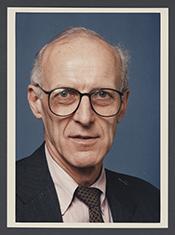
Mr. Chairman, I thank the gentleman for yielding me this time. First of all, I want to thank the chairman, the gentleman from North Carolina (Mr. Taylor), and the ranking member, the gentleman from…
Mr. Chairman, I thank the gentleman for yielding me this time.
First of all, I want to thank the chairman, the gentleman from North Carolina (Mr. Taylor), and the ranking member, the gentleman from Washington (Mr. Dicks), for their very hard work in bringing forward this bill. And I particularly thank both the staffs, the majority led by Deb Weatherly and the minority led by Mike Stephens, because the work of bringing forward the bill, the difficult work, is really done by them.
I appreciate very much that the bill includes important increases in many areas. For instance, there is a $335 million increase over the fiscal 2003 base funding for the National Fire Plan, which is critically important to the Nation's ability to both fight and prevent catastrophic forest fires. And I think it is very commendable that we have a $240-some million increase for Indian health education and trust reform, while that still is probably a good deal less than is needed.
Unfortunately, despite the positive aspects, and those are only a couple of them, the 2004 appropriations bill remains flawed in key areas. These failings include, first, a continuing policy of freezing funding for the National Endowment for the Arts at levels 30 percent less than provided a decade ago, despite repeated votes on the floor of the House in support of increased funding. Second, the rejection of the President's request to increase funding for the Department of Energy's weatherization program, which is critical in helping poor families reduce their energy costs and is funded at a level $63 million below the President's request.
But most particularly, I regret the retreat from the committee's previous commitment to adequately fund conservation programs to protect public lands and cultural artifacts, to preserve endangered and threatened species, and to assist States in their own conservation and recreation programs.
These conservation programs are funded at a level which is $208 million below the current year and $569 million below the level authorized in the Conservation Trust Agreement reached less than 3 years ago. These conservation programs include, and I will just mention a couple, the Forest Legacy Program, where 93 Members of the House wrote the committee in support of the Forest Legacy Program. These 93 Members asked for an increase from $68 million to $158 million. Instead, this bill funds Forest Legacy grants to the States at $45 million, which is a level 30 percent less, lower, than last year.
Secondly, the North American Wetlands Conservation Fund where 225 Members of the House wrote the committee and encouraged us to increase funding for the Wetlands Conservation Program. Instead, that level is less than half the President's request. Instead of increasing the program modestly, we have in fact cut it by a third.
The Stateside Assistance Program which is funded at $98 million, about a 40 percent reduction from the President's request, and the Urban Parks Program where no funding is provided. The Urban Parks Program has been in place for 30 years, and it was zeroed out. It was part of the same CARA agreement made 3 years ago which is not being maintained under this bill.
I certainly hope I will be able to vote for this legislation after the final conference report. It is my intent to do so if some of these failings have been corrected along the way.
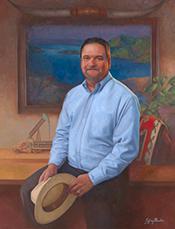
Mr. Chairman, I make a point of order against section 139 of the bill found on page 90, lines 4 through 9. This section clearly violates clause 2(b) of rule XXI as it constitutes legislation on an…
Mr. Chairman, I make a point of order against section 139 of the bill found on page 90, lines 4 through 9. This section clearly violates clause 2(b) of rule XXI as it constitutes legislation on an appropriations bill by changing existing law.
Section 139 permanently establishes an unlimited U.S. Fish and Wildlife Service ``slush fund'' for expenses related to encouraging public participation in Fish and Wildlife Service programs. The very first sentence waives existing law regarding any current limitations that the Service may have regarding these activities. For example, existing volunteer and public participation in the National Wildlife Refuge System is governed by the National Wildlife Refuge System Volunteer and Community Partnership Enhancement Act of 1998.
The Service's use of administrative funds from other programs, such as those authorized under the Pittman-Robertson Act, the African Elephant Conservation Act, the Neo-Tropical Migratory Bird Conservation Act, the Great Ape Conservation Act, and the Rhinoceros and Tiger Conservation Act are also circumscribed in scope and funding levels. Section 139 waives these limits and expands the uses of these funds. Therefore, this language constitutes legislation on an appropriations bill.
This fact was recognized by the Committee on Appropriations, which lists this section in the report accompanying this bill under ``Changes in Application of Existing Law'' on page 153. Therefore, I ask that the Chair sustain my point of order.
Mr. Chairman, I make a point of order against section 137 of the bill, found at page 84, line 21, through page 89, line 24.
This section clearly violates clause 2(b) of rule XXI, as it constitutes legislation on an appropriations bill. This six-page section establishes a separate legal mechanism for the determination and settlement of claims regarding individual Indian money accounts maintained by the Department of the Interior as part of the Secretary of the Interior's trust responsibilities for Native Americans. The section requires the Secretary to formulate a statistical sampling evaluation for individual Indian accounts opened during a certain time frame.
This evaluation is to take place over 4 years, and the Secretary is then required to publish a notice in the Federal Register certifying the evaluation. The Secretary must then adjust certified accounts but only for increases as a result of the evaluation. The Secretary is also authorized to issue regulations to implement the section.
Finally, the section provides a judicial review mechanism for the Secretary's actions taken under this section.
These are all new substantial duties on the part of the Secretary of the Interior. The section mandates new expenditures to adjust individual Indian accounts upwards.
In addition, the very first sentence of section 137 explicitly waives existing law and regulations regarding these accounts. Therefore, the section fails at least three tests for determining whether the language constitutes legislation on an appropriations bill. This fact was recognized by the Committee on Appropriations, which lists this section in the report accompanying this bill under ``Changes in Application of Existing Law'' on page 153.
I ask that the Chair sustain my point of order.
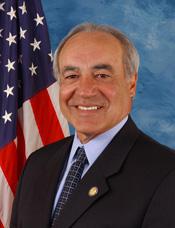
Mr. Speaker, I rise today in strong support of H.R. 1409, the Eastern Band of Cherokee Indians Land Exchange. This land exchange is urgent for the Eastern Band community because it would allow them…
Mr. Speaker, I rise today in strong support of H.R. 1409, the Eastern Band of Cherokee Indians Land Exchange. This land exchange is urgent for the Eastern Band community because it would allow them to build a new K-through-12 complex in Cherokee, North Carolina, that they desperately need.
We owe it to our children. We owe it to each one of us to make sure that every child has an opportunity to learn, to be in a safe environment. So when we look at where these tribes are and the kids are, they are in overcrowded classrooms right now. How can our children learn in an overcrowded classroom? We cannot even have wiring. We say leave no child behind, and our President has said leave no child behind. The only way we can do that is if we build new schools, modernize schools so we are able to put the kind of technology that we need to make sure that our children are able to meet the 21st century in computer and technology, and that they are in a safe environment.
When you are in a safe climate and a safe environment, it adds to your attitude and you behavior in the classrooms. You feel good about yourself; your self-esteem is built. Well, if we do not allow for this land exchange, how can we then say that we are building for our future? How can we say that every child, regardless of whether you are in a sovereign country or in another country, that you do not deserve the right to learn, that you do not deserve the right to be in that kind of environment? We owe that to every one of our children.
Let me tell my colleagues, we should all be proud of this kind of legislation that has come before us, because it has given someone an opportunity to build the kind of schools that our children need; an opportunity to allow them to grow and to develop; an opportunity for them to be proud not only of themselves, but of the school that they are doing to. When we saw the photos earlier. It is very difficult to be proud to be in that kind of environment, to say that I am in a classroom where there are potholes that are there, when we see that there are faucets that are not working, water that is not flowing. Well, it is difficult. And then when we begin to compete and bring other individuals to compete in our schools, we want to stand up and say we are proud of this school. We are proud of this school. And we should allow them to build that school.
They are overcrowded, as I stated. They have 800 students right now, and they are putting them into a 400 classroom capacity at this point. We must not forget the rights and the needs of the Americans, and that is our first Americans. This tribe that survived the Trail of Tears in the 1830s, this is a tribe that was promised this land, that was promised this land. This tribe was promised this land many years ago. This tribe deserves better than what they have been given.
Native Americans, including Eastern Band Cherokee Indians, are working hard to become self-sufficient, and we must offer them our help. This proposal is a perfect example of that. I am proud of the tribe's efforts to improve educational, cultural, and economic development in their communities. I support this bill. I applaud the efforts of the Eastern Band. I urge all of my colleagues to do the same.
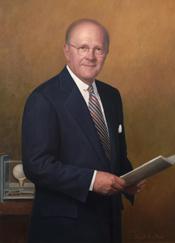
Mr. Chairman, I rise in support of this bill. Overall, this is a reasonable bill, given the budgetary constraints. It could have been an even better bill if my colleagues on the other side of the…
Mr. Chairman, I rise in support of this bill. Overall, this is a reasonable bill, given the budgetary constraints. It could have been an even better bill if my colleagues on the other side of the aisle had not decided that it was more important to make a political statement, to score political points than to make progress.
As was mentioned earlier in the debate on the rule, I was prepared to offer an amendment that would have moved $95 million from fossil fuel research and development, money that the administration did not request, into a range of conservation accounts.
The impact of my amendment would have been to free up more money for such popular and important programs as the Federal and State Land and Water Conservation Fund, State wildlife conservation programs, historic preservation, forest legacy, and urban parks and recreation. This money is desperately needed for these important programs, and the amendment was backed by just about every single environmental and sportsmen's group. So this was an amendment that would have done some real good for the American people, real people.
But my colleagues on the other side of the aisle decided they did not want the amendment to pass. Why not? Was it because they opposed putting more money into conservation programs? No. Was it because they thought the amendment would cause any harm to the public? No. Was it because they thought the amendment was bad for the environment? No.
The only reason this amendment was being vociferously opposed is because that seemed like a way to score political points. They did not want anything to pass that would demonstrate Republican support for conservation and the environment. What a sad commentary on the state of American politics.
So, instead of a good debate on conservation that would have led to an increase in spending for programs that benefit the American people, we are going to have a pathetic and pointless debate about a make- believe proposal that would reduce the tax cut. My colleagues know and I know that is going nowhere.
I hasten to remind my friends on the other side of the aisle that the tax cut battle is over. The bill was passed by the Congress, signed by the President.
Here are the choices we face. Either go with the Boehlert amendment, adding $95 million to very important programs in the area of conservation and protecting the environment, or do nothing. The other side opted to do nothing because they wanted to have a political advertisement. We all know about the obscene cost of political advertising, but $95 million per statement is pretty darn expensive, and the American people are the losers. Sad day.
Mr. Chairman, the gentleman in the aisle makes a good point. We have worked well together across the center aisle, Republicans and Democrats. We have to work across the center aisle. We have worked well over the years. This time that cooperation stopped at the center aisle because a conscious decision was made not to go forward with a $95 million add-on which we could embrace warmly but rather to go forward with nothing because they want a partisan statement.
Mr. Chairman, I rise in strong support of the interior appropriations bill, and I want to commend the gentleman from North Carolina (Chairman Taylor) for putting together a balanced and fiscally…
Mr. Chairman, I rise in strong support of the interior appropriations bill, and I want to commend the gentleman from North Carolina (Chairman Taylor) for putting together a balanced and fiscally responsible bill that meets the natural resources, recreational, energy and cultural needs of all Americans.
This bill does its part to contain Federal spending in that it adheres to the 302(b) budget allocation and provides nearly $200 million less than what was contained in the FY 2003 bill. At the same time, it sets priorities with increases in national parks operations and backlog maintenance, the national wildlife refuges and the national forest system. It provides funds for the weatherization program and increases the administration's request for the abandoned landmines program that is so important to Pennsylvania.
The bill provides $2.5 billion, with a B, for the National Fire Plan and includes substantial increases for fire fighting readiness, hazardous fuels reduction and State and community assistance.
I am particularly pleased that the bill provides $33 million dollars for Forest Service forest health initiatives, including funds to control and manage adelgids in the East.
The bill also contains language I support regarding the operation of the Northeast Home Heating Oil Reserve. I feel that the reserve has not been responsive enough to winter heating needs in the Northeast and may too narrowly define supply disruptions. The bill's report language will direct the committee on the circumstances and the various scenarios on which the reserve will be used.
To those who say the bill does not contain enough money for conservation and land acquisition, I would point out that the bill contains $1 billion for programs funded under the conservation spending category as well as other programs in the National Parks Wildlife Refuges, Federal forests and other areas that are important conservation efforts but do not technically fall under the conservation category.
In regard to land acquisition, we already own one-third of the United States. We need to manage that better before we buy new things. This is a balanced and responsible bill, and I commend the chairman for his leadership and urge my colleagues to give it their full support.
Mr. Chairman, will the gentleman yield?
Mr. Chairman, regarding funding for the U.S. Geological Survey's Minerals Assessment Team, there was confusion regarding whether this important activity was included in the bill. I have been informed that when the gentleman restored the mineral program, it also included the restoration of the Mineral Information Team Commodity reports.
Minerals and mineral products accounted for over $370 billion to the economy in 2002. This survey is the only institution, either public or private, that provides these important resource assessments, and I would ask the chairman if this is his understanding regarding the restoration of this important program.
Mr. Chairman, I appreciate the gentleman's yielding me this time. I have great sympathy for the hard work that the subcommittee has done, both the chairman and ranking member; but I appreciate also…
Mr. Chairman, I appreciate the gentleman's yielding me this time. I have great sympathy for the hard work that the subcommittee has done, both the chairman and ranking member; but I appreciate also what the gentleman from Washington (Mr. Dicks) said about this being a work in progress, and I sincerely hope that it will be.
I heard the gentleman from New York (Mr. Boehlert) talk about his concern that there was not great enthusiasm for an amendment that would restore approximately $90 million for Conservation Trust Fund activities. Mr. Chairman, I can understand the reticence on behalf of a number of Members of this Chamber to embrace that, but we had an agreement.
A bill passed overwhelmingly under the leadership of the gentleman from Florida (Mr. Young) and the gentleman from California (Mr. George Miller) that passed by a veto-proof margin through the House and had tremendous momentum in the Senate. There was an agreement. The gentleman from Ohio (Mr. Regula), I was pleased to see here, was part of this artful effort to put together an agreement that solved the problem in the short term. Now we have seen this agreement shattered.
Because of the continuing resolution and what is in the bill that is before us today, we would shortchange what that agreement was overwhelmingly supported by this Chamber by almost $1 billion. I do not think that there are very many people here who are going to embrace with great enthusiasm a 10 percent solution when we have massive unfunded commitments to the state-side portion of that.
In my community, where the committee has visited the Columbia River Gorge, there is priceless land in a conservation area where there are willing sellers that want to complete the deal, but there is not money available. There is underfunding in the arts. And I am convinced that there will be action in this work in progress that will bring people together and the will of this body will be heard, I think in a bipartisan majority, that hopefully will restore that funding for the arts.
Mr. Chairman, it is not any lack of interest in true bipartisanship. I think the agreement that the gentleman from Ohio (Mr. Regula), the gentleman from Washington (Mr. Dicks), the gentleman from Florida (Mr. Young), and the gentleman from Wisconsin (Mr. Obey) were a part of was a classic example of that bipartisanship. It is time to reach back, restore it in this work in progress.
Now, one specific that I would make reference to. I will be offering in the course of the debate on this bill an amendment that would reduce water-intensive agriculture in the one wildlife refuge in the United States where there is unregulated agriculture practicing on leased land dealing with the Klamath basin. I hope we will be able as a Chamber to come forward to solve that problem. But in the meantime, I commend the subcommittee for its hard work and look forward to this work in progress solving the CARA problem.
Bill Text
4 versions available
        [Congressional Bills 108th Congress]
[From the U.S. Government Publishing Office]
[H.R. 1409 Referred in Senate (RFS)]

1st Session
H. R. 1409

_______________________________________________________________________

IN THE SENATE OF THE UNITED STATES

September 24, 2003

Received; read twice and referred to the Committee on Energy and
Natural Resources

_______________________________________________________________________

AN ACT

To provide for a Federal land exchange for the environmental,
educational, and cultural benefit of the American public and the
Eastern Band of Cherokee Indians, and for other purposes.

Be it enacted by the Senate and House of Representatives of the
United States of America in Congress assembled,

SECTION 1. SHORT TITLE.

This Act may be cited as the ``Eastern Band of Cherokee Indians
Land Exchange Act of 2003''.

SEC. 2. FINDINGS AND PURPOSES.

(a) Findings.--Congress finds the following:
(1) Since time immemorial, the ancestors of the Eastern
Band of Cherokee Indians have lived in the Great Smoky
Mountains of North Carolina. The Eastern Band's ancestral
homeland includes substantial parts of seven eastern States and
the land that now constitutes the Great Smoky Mountains
National Park.
(2) The Eastern Band has proposed a land exchange with the
National Park Service and has spent over $1,500,000 for studies
to thoroughly inventory the environmental and cultural
resources of the proposed land exchange parcels.
(3) Such land exchange would benefit the American public by
enabling the National Park Service to acquire the Yellow Face
tract, comprising 218 acres of land adjacent to the Blue Ridge
Parkway.
(4) Acquisition of the Yellow Face tract for protection by
the National Park Service would serve the public interest by
preserving important views for Blue Ridge Parkway visitors,
preserving habitat for endangered species and threatened
species including the northern flying squirrel and the rock
gnome lichen, preserving valuable high altitude wetland seeps,
and preserving the property from rapidly advancing residential
development.
(5) The proposed land exchange would also benefit the
Eastern Band by allowing it to acquire the Ravensford tract,
comprising 143 acres adjacent to the Tribe's trust territory in
Cherokee, North Carolina, and currently within the Great Smoky
Mountains National Park and Blue Ridge Parkway. The Ravensford
tract is part of the Tribe's ancestral homeland as evidenced by
archaeological finds dating back no less than 6,000 years.
(6) The Eastern Band has a critical need to replace the
current Cherokee Elementary School, which was built by the
Department of the Interior over 40 years ago with a capacity of
480 students. The school now hosts 794 students in dilapidated
buildings and mobile classrooms at a dangerous highway
intersection in downtown Cherokee, North Carolina.
(7) The Eastern Band ultimately intends to build a new
three-school campus to serve as an environmental, cultural, and
educational ``village,'' where Cherokee language and culture
can be taught alongside the standard curriculum.
(8) The land exchange and construction of this educational
village will benefit the American public by preserving Cherokee
traditions and fostering a vibrant, modern, and well-educated
Indian nation.
(9) The land exchange will also reunify tribal reservation
lands now separated between the Big Cove Community and the
balance of the Qualla Boundary, reestablishing the territorial
integrity of the Eastern Band.
(10) The Ravensford tract contains no threatened species or
endangered species listed pursuant to the Endangered Species
Act of 1973. The 218-acre Yellow Face tract has a number of
listed threatened species and endangered species and a higher
appraised value than the 143-acre Ravensford tract.
(11) The American public will benefit from the Eastern
Band's commitment to mitigate any impacts on natural and
cultural resources on the Ravensford tract, by among other
things reducing the requested acreage from 168 to 143 acres.
(12) The Congress and the Department of the Interior have
approved land exchanges in the past when the benefits to the
public and requesting party are clear, as they are in this
case.
(b) Purposes.--The purposes of this Act are the following:
(1) To acquire the Yellow Face tract for protection by the
National Park Service, in order to preserve the Waterrock Knob
area's spectacular views, endangered species and high altitude
wetland seeps from encroachment by housing development, for the
benefit and enjoyment of the American public.
(2) To transfer the Ravensford tract, to be held in trust
by the United States for the benefit of the Eastern Band of
Cherokee Indians, in order to provide for an education facility
that promotes the cultural integrity of the Eastern Band and to
reunify two Cherokee communities that were historically
contiguous, while mitigating any impacts on natural and
cultural resources on the tract.
(3) To promote cooperative activities and partnerships
between the Eastern band and the National Park Service within
the Eastern Band's ancestral homelands.

SEC. 3. LAND EXCHANGE.

(a) In General.--The Secretary of the Interior (``Secretary'')
shall exchange the Ravensford tract, currently in the Great Smoky
Mountains National Park and the Blue Ridge Parkway, for the Yellow Face
tract adjacent to the Waterrock Knob Visitor Center on the Blue Ridge
Parkway.
(b) Treatment of Exchanged Lands.--Effective upon receipt by the
Secretary of a deed or deeds satisfactory to the Secretary for the
lands comprising the Yellow Face tract (as described in subsection (c))
to the United States, all right, title, and interest of the United
States in and to the Ravensford tract (as described in subsection (d)),
including all improvements and appurtenances, are declared to be held
in trust by the United States for the benefit of the Eastern Band of
Cherokee Indians as part of the Cherokee Indian Reservation.
(c) Yellow Face Tract.--The Yellow Face tract shall contain Parcels
88 and 89 of the Hornbuckle Tract, Yellow Face Section, Qualla
Township, Jackson County, North Carolina, which consist altogether of
approximately 218 acres and are depicted as the ``Yellow Face Tract''
on the map entitled ``Land Exchange Between the National Park Service
and the Eastern Band of Cherokee Indians,'' numbered 133/80020A, and
dated November 2002. The map shall be on file and available for public
inspection in the appropriate offices of the National Park Service and
the Bureau of Indian Affairs. Upon completion of the land exchange, the
Secretary shall adjust the boundary of the Blue Ridge Parkway to
include such lands and shall manage the lands as part of the parkway.
(d) Ravensford Tract.--The lands declared by subsection (b) to be
held in trust for the Eastern Band of Cherokee Indians shall consist of
approximately 143 acres depicted as the ``Ravensford Tract'' on the map
identified in subsection (c). Upon completion of the land exchange, the
Secretary shall adjust the boundaries of Great Smoky Mountains National
Park and the Blue Ridge Parkway to exclude such lands.
(e) Legal Descriptions.--Not later than 1 year after the date of
enactment of this Act, the Secretary of the Interior shall file a legal
description of the areas described in subsections (c) and (d) with the
Committee on Resources of the House of Representatives and the
Committee on Indian Affairs and the Committee on Energy and Natural
Resources of the Senate. Such legal descriptions shall have the same
force and effect as if the information contained in the description
were included in those subsections except that the Secretary may
correct clerical and typographical errors in such legal descriptions.
The legal descriptions shall be on file and available for public
inspection in the offices of the National Park Service and the Bureau
of Indian Affairs.

SEC. 4. IMPLEMENTATION PROCESS.

(a) Government-to-Government Agreements.--In order to fulfill the
purposes of this Act and to establish cooperative partnerships for
purposes of this Act the Director of the National Park Service and the
Eastern Band of Cherokee Indians shall enter into government-to-
government consultations and shall develop protocols to review planned
construction on the Ravensford tract. The Director of the National Park
Service is authorized to enter into cooperative agreements with the
Eastern Band for the purpose of providing training, management,
protection, preservation, and interpretation of the natural and
cultural resources on the Ravensford tract.
(b) Construction Standards.--Recognizing the mutual interests and
responsibilities of the Eastern Band of Cherokee Indians and the
National Park Service for the conservation and protection of the
resources on the Ravensford tract, the National Park Service and the
Eastern Band shall develop mutually agreed upon standards for size,
impact, and design of construction consistent with the purposes of this
Act on the Ravensford tract. The standards shall be consistent with the
Eastern Band's need to develop educational facilities and support
infrastructure adequate for current and future generations and shall
otherwise minimize or mitigate any adverse impacts on natural or
cultural resources. The standards shall be based on recognized best
practices for environmental sustainability and shall be reviewed
periodically and revised as necessary. Development of the tract shall
be limited to a road and utility corridor, an educational campus, and
the infrastructure necessary to support such development. No new
structures shall be constructed on the part of the Ravensford tract
depicted as the ``No New Construction'' area on the map referred to in
Section 3(c), which is generally the area north of the point where Big
Cove Road crosses the Raven Fork River. All development on the
Ravensford tract shall be conducted in a manner consistent with this
section and such development standards.

SEC. 5. GAMING PROHIBITION.

Gaming as defined and regulated by the Indian Gaming Regulatory Act
(25 U.S.C. 2701 et seq.) shall be prohibited on the Ravensford tract.

Passed the House of Representatives September 23, 2003.

Attest:

JEFF TRANDAHL,

Clerk.