Higher Education Relief Opportunities for Students Act of 2003
 Rep. John Kline (R-MN)
Legislative Activity
Stay on top of the latest movement without scrolling through every action
Became Public Law No: 108-76.
August 18, 2003
View full timeline
Introduced in House
March 25, 2003
Sponsor introductory remarks on measure. (CR E561)
March 25, 2003
Referred to the House Committee on Education and the Workforce.
March 25, 2003
Mr. Kline moved to suspend the rules and pass the bill.
April 1, 2003 • 12:17 PM
Considered under suspension of the rules. (consideration: CR H2522-2527)
April 1, 2003 • 12:17 PM
DEBATE - The House proceeded with forty minutes of debate on H.R. 1412.
April 1, 2003 • 12:17 PM
At the conclusion of debate, the Yeas and Nays were demanded and ordered. Pursuant to the provisions of clause 8, rule XX, the Chair announced that further proceedings on the motion would be postponed.
April 1, 2003 • 12:46 PM
Considered as unfinished business. (consideration: CR H2553-2554)
April 1, 2003 • 3:52 PM
Passed/agreed to in House: On motion to suspend the rules and pass the bill Agreed to by the Yeas and Nays: (2/3 required): 421 - 1 (Roll no. 96).(text: CR H2522-2523)
April 1, 2003 • 3:57 PM
On motion to suspend the rules and pass the bill Agreed to by the Yeas and Nays: (2/3 required): 421 - 1 (Roll no. 96). (text: CR H2522-2523)
April 1, 2003 • 3:57 PM
Motion to reconsider laid on the table Agreed to without objection.
April 1, 2003 • 3:57 PM
Received in the Senate and Read twice and referred to the Committee on Health, Education, Labor, and Pensions.
April 2, 2003
Senate Committee on Health, Education, Labor, and Pensions discharged by Unanimous Consent.(consideration: CR 8/1/2003 S10866)
July 31, 2003
Senate Committee on Health, Education, Labor, and Pensions discharged by Unanimous Consent. (consideration: CR 8/1/2003 S10866)
July 31, 2003
Passed Senate without amendment by Unanimous Consent.
July 31, 2003
Message on Senate action sent to the House.
August 1, 2003
Presented to President.
August 7, 2003
Signed by President.
August 18, 2003
Became Public Law No: 108-76.
August 18, 2003
Voting History
1 vote recorded • Roll call available
Floor Debate
23 membersWhat members said about H.R. 1412 on the floor

 +18
+18
Floor Debate
23 membersWhat members said about H.R. 1412 on the floor
Mr. Chairman, I yield 2 minutes to the distinguished gentleman from Pennsylvania (Mr. Weldon), chairman of the Subcommittee on Tactical Air and Land Forces, and the vice-chairman of the full…
Madam Speaker, I yield myself such time as I may consume. Madam Speaker, I rise today in support of the HEROES Act introduced by my colleague, the gentleman from Minnesota (Mr. Kline), and thank him…
Mr. Chairman, I thank the gentleman for yielding me time. I support this amendment wholeheartedly in part because it contains a provision requesting a report from the Secretary of Defense which I…
Mr. Chairman, I rise in opposition to the amendment. This amendment makes a number of unnecessary and potentially harmful changes to Federal procurement law in the name of fighting terrorism. Most…
Madam Speaker, I move to suspend the rules and pass the bill (H.R. 1412) to provide the Secretary of Education with specific waiver authority to respond to a war or other military operation or…
Show 8 more

Mr. Chairman, I thank my chairman for yielding time to me. If for no other reason, I would ask my colleagues to look at this amendment en bloc because it contains perhaps one of the most significant…

Mr. Chairman, the rule did not make in order an amendment that I sought with respect to cooperative threat reduction, but it does make in order an amendment offered by my good friend, the gentleman…

Mr. Chairman, I offer amendment No. 4 made in order under the rule. Mr. Chairman, I yield myself such time as I may consume, and I rise to offer an amendment to authorize the establishment of a Human…
Mr. Chairman, I have an important story to tell in a very brief time. The person you will see here is named Hannan Shahib, a young girl, 15 years old, was injured, burned severely in coalition…

Madam Speaker, I rise in strong support of H.R. 1412, the Higher Education Relief Opportunity for Student Act of 2003, or more appropriately called the HEROES Act. I want to thank my colleague from…

Mr. Chairman, I offer an amendment. Mr. Chairman, I ask unanimous consent to yield 5 minutes of my time to the gentlewoman from California (Ms. Lofgren), the coauthor of the amendment, and that she…

Mr. Chairman, I rise today to urge the support of my amendment that would assist in our efforts to ensure that militarily useful United States flag commercial vessels crewed by American citizens are…
Mr. Chairman, I yield myself such time as I may consume. Mr. Chairman, I think this is a good amendment, and I think it is important for Members to know that the administration supports the…
Show 11 more

Mr. Chairman, I rise today to thank the chairman for including my amendment. The Defense Department conducts studies on the effects of perchlorate on human beings. Perchlorate, a major ingredient in…

Mr. Speaker, I rise to introduce the Asbestos Claims Tax Fairness Act. Asbestos liability issues have reached crisis stage. The costs of the current and potential lawsuits filed against these…

Mr. Chairman, I rise in support of the Dreier-Lofgren amendment, which would repeal the requirement to use MTOPS as the metric for restricting exports of high-powered computers and authorize the…
Mr. Speaker, I am pleased to introduce, along with several of my colleagues, the Higher Education Relief Opportunities for Students Act, HEROES, of 2003. This is a bill that expresses the support and…
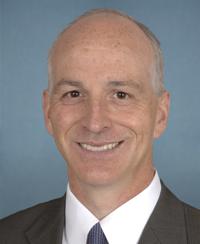
Mr. Chairman, I think the most telling thing about this debate thus far is that those who oppose this amendment have said virtually nothing about the amendment itself. We absolutely completely agree…

Mr. Chairman, I want to thank the chairman and the ranking member. The amendment I am offering today is straightforward and noncontroversial. It would authorize the Secretary of the Navy to transfer…

Madam Speaker, I would like to join those congratulating the gentleman from Minnesota (Mr. Kline) for his introduction of H.R. 1412. Madam Speaker, a high percentage of our military personnel are…

Mr. Chairman, I would like to thank the fine gentleman from Missouri (Mr. Skelton) for yielding me time, the ranking member on Defense, and also the chairman, my good friend, the gentleman from…
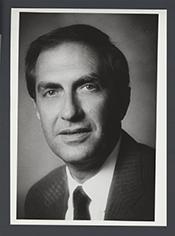
Mr. Chairman, I would like to be recognized for the purpose of a colloquy with the gentleman from Montana (Mr. Rehberg). I have an amendment in here that is trying to get rid of the bureaucratic…

Madam Speaker, I thank my colleague for yielding time to me, and congratulate the gentleman from Minnesota (Mr. Kline), one of our freshman members of the committee, for the introduction of this…

Madam Speaker, I want to thank the gentleman from Minnesota (Mr. Kline) for introducing this important piece of legislation. Last Friday in Atlanta, Georgia, at our State Capitol, and along with the…
Bill Text
5 versions available
        [Congressional Bills 108th Congress]
[From the U.S. Government Publishing Office]
[H.R. 1412 Enrolled Bill (ENR)]

H.R.1412

One Hundred Eighth Congress

of the

United States of America

AT THE FIRST SESSION

Begun and held at the City of Washington on Tuesday,
the seventh day of January, two thousand and three

An Act

To provide the Secretary of Education with specific waiver authority to
respond to a war or other military operation or national emergency.

Be it enacted by the Senate and House of Representatives of the
United States of America in Congress assembled,

SECTION 1. SHORT TITLE; FINDINGS; REFERENCE.

(a) Short Title.--This Act may be cited as the ``Higher Education
Relief Opportunities for Students Act of 2003''.
(b) Findings.--The Congress finds the following:
(1) There is no more important cause than that of our nation's
defense.
(2) The United States will protect the freedom and secure the
safety of its citizens.
(3) The United States military is the finest in the world and
its personnel are determined to lead the world in pursuit of peace.
(4) Hundreds of thousands of Army, Air Force, Marine Corps,
Navy, and Coast Guard reservists and members of the National Guard
have been called to active duty or active service.
(5) The men and women of the United States military put their
lives on hold, leave their families, jobs, and postsecondary
education in order to serve their country and do so with
distinction.
(6) There is no more important cause for this Congress than to
support the members of the United States military and provide
assistance with their transition into and out of active duty and
active service.
(c) Reference.--References in this Act to ``the Act'' are
references to the Higher Education Act of 1965 (20 U.S.C. 1001 et
seq.).

SEC. 2. WAIVER AUTHORITY FOR RESPONSE TO MILITARY CONTINGENCIES AND
NATIONAL EMERGENCIES.

(a) Waivers and Modifications.--
(1) In general.--Notwithstanding any other provision of law,
unless enacted with specific reference to this section, the
Secretary of Education (referred to in this Act as the
``Secretary'') may waive or modify any statutory or regulatory
provision applicable to the student financial assistance programs
under title IV of the Act as the Secretary deems necessary in
connection with a war or other military operation or national
emergency to provide the waivers or modifications authorized by
paragraph (2).
(2) Actions authorized.--The Secretary is authorized to waive
or modify any provision described in paragraph (1) as may be
necessary to ensure that--
(A) recipients of student financial assistance under title
IV of the Act who are affected individuals are not placed in a
worse position financially in relation to that financial
assistance because of their status as affected individuals;
(B) administrative requirements placed on affected
individuals who are recipients of student financial assistance
are minimized, to the extent possible without impairing the
integrity of the student financial assistance programs, to ease
the burden on such students and avoid inadvertent, technical
violations or defaults;
(C) the calculation of ``annual adjusted family income''
and ``available income'', as used in the determination of need
for student financial assistance under title IV of the Act for
any such affected individual (and the determination of such
need for his or her spouse and dependents, if applicable), may
be modified to mean the sums received in the first calendar
year of the award year for which such determination is made, in
order to reflect more accurately the financial condition of
such affected individual and his or her family;
(D) the calculation under section 484B(b)(2) of the Act (20
U.S.C. 1091b(b)(2)) of the amount a student is required to
return in the case of an affected individual may be modified so
that no overpayment will be required to be returned or repaid
if the institution has documented (i) the student's status as
an affected individual in the student's file, and (ii) the
amount of any overpayment discharged; and
(E) institutions of higher education, eligible lenders,
guaranty agencies, and other entities participating in the
student assistance programs under title IV of the Act that are
located in areas that are declared disaster areas by any
Federal, State or local official in connection with a national
emergency, or whose operations are significantly affected by
such a disaster, may be granted temporary relief from
requirements that are rendered infeasible or unreasonable by a
national emergency, including due diligence requirements and
reporting deadlines.
(b) Notice of Waivers or Modifications.--
(1) In general.--Notwithstanding section 437 of the General
Education Provisions Act (20 U.S.C. 1232) and section 553 of title
5, United States Code, the Secretary shall, by notice in the
Federal Register, publish the waivers or modifications of statutory
and regulatory provisions the Secretary deems necessary to achieve
the purposes of this section.
(2) Terms and conditions.--The notice under paragraph (1) shall
include the terms and conditions to be applied in lieu of such
statutory and regulatory provisions.
(3) Case-by-case basis.--The Secretary is not required to
exercise the waiver or modification authority under this section on
a case-by-case basis.
(c) Impact Report.--The Secretary shall, not later than 15 months
after first exercising any authority to issue a waiver or modification
under subsection (a), report to the Committee on Education and the
Workforce of the House of Representatives and the Committee on Health,
Education, Labor and Pensions of the Senate on the impact of any
waivers or modifications issued pursuant to subsection (a) on affected
individuals and the programs under title IV of the Act, and the basis
for such determination, and include in such report the Secretary's
recommendations for changes to the statutory or regulatory provisions
that were the subject of such waiver or modification.
(d) No Delay in Waivers and Modifications.--Sections 482(c) and 492
of the Higher Education Act of 1965 (20 U.S.C. 1089(c), 1098a) shall
not apply to the waivers and modifications authorized or required by
this Act.

SEC. 3. TUITION REFUNDS OR CREDITS FOR MEMBERS OF ARMED FORCES.

(a) Sense of Congress.--It is the sense of Congress that--
(1) all institutions offering postsecondary education should
provide a full refund to students who are affected individuals for
that portion of a period of instruction such student was unable to
complete, or for which such individual did not receive academic
credit, because he or she was called up for active duty or active
service; and
(2) if affected individuals withdraw from a course of study as
a result of such active duty or active service, such institutions
should make every effort to minimize deferral of enrollment or
reapplication requirements and should provide the greatest
flexibility possible with administrative deadlines related to those
applications.
(b) Definition of Full Refund.--For purposes of this section, a
full refund includes a refund of required tuition and fees, or a credit
in a comparable amount against future tuition and fees.

SEC. 4. USE OF PROFESSIONAL JUDGMENT.

A financial aid administrator shall be considered to be making a
necessary adjustment in accordance with section 479A(a) of the Act if
the administrator makes adjustments with respect to the calculation of
the expected student or parent contribution (or both) of an affected
individual, and adequately documents the need for the adjustment.

SEC. 5. DEFINITIONS.

In this Act:
(1) Active duty.--The term ``active duty'' has the meaning
given such term in section 101(d)(1) of title 10, United States
Code, except that such term does not include active duty for
training or attendance at a service school.
(2) Affected individual.--The term ``affected individual''
means an individual who--
(A) is serving on active duty during a war or other
military operation or national emergency;
(B) is performing qualifying National Guard duty during a
war or other military operation or national emergency;
(C) resides or is employed in an area that is declared a
disaster area by any Federal, State, or local official in
connection with a national emergency; or
(D) suffered direct economic hardship as a direct result of
a war or other military operation or national emergency, as
determined by the Secretary.
(3) Military operation.--The term ``military operation'' means
a contingency operation as such term is defined in section
101(a)(13) of title 10, United States Code.
(4) National emergency.--The term ``national emergency'' means
a national emergency declared by the President of the United
States.
(5) Serving on active duty.--The term ``serving on active duty
during a war or other military operation or national emergency''
shall include service by an individual who is--
(A) a Reserve of an Armed Force ordered to active duty
under section 12301(a), 12301(g), 12302, 12304, or 12306 of
title 10, United States Code, or any retired member of an Armed
Force ordered to active duty under section 688 of such title,
for service in connection with a war or other military
operation or national emergency, regardless of the location at
which such active duty service is performed; and
(B) any other member of an Armed Force on active duty in
connection with such war, operation, or emergency or subsequent
actions or conditions who has been assigned to a duty station
at a location other than the location at which such member is
normally assigned.
(6) Qualifying national guard duty.--The term ``qualifying
National Guard duty during a war or other military operation or
national emergency'' means service as a member of the National
Guard on full-time National Guard duty (as defined in section
101(d)(5) of title 10, United States Code) under a call to active
service authorized by the President or the Secretary of Defense for
a period of more than 30 consecutive days under section 502(f) of
title 32, United States Code, in connection with a war, another
military operation, or a national emergency declared by the
President and supported by Federal funds.

SEC. 6. TERMINATION OF AUTHORITY.

The provisions of this Act shall cease to be effective at the close
of September 30, 2005.

Speaker of the House of Representatives.

Vice President of the United States and
President of the Senate.