Women's Cancer Recovery Act of 2003
To require that health plans provide coverage for a minimum hospital stay for mastectomies and lymph node dissection for the treatment of breast cancer and coverage for secondary consultations.
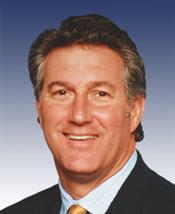
 Rep. Frank A. LoBiondo (R-NJ)
Legislative Activity
Stay on top of the latest movement without scrolling through every action
Referred to the Subcommittee on Employer-Employee Relations.
May 2, 2003
View full timeline
Introduced in House
March 26, 2003
Sponsor introductory remarks on measure. (CR E583)
March 26, 2003
Referred to the Committee on Energy and Commerce, and in addition to the Committees on Education and the Workforce, and Ways and Means, for a period to be subsequently determined by the Speaker, in each case for consideration of such provisions as fall within the jurisdiction of the committee concerned.
March 26, 2003
Referred to the Subcommittee on Employer-Employee Relations.
May 2, 2003
Floor Debate
3 membersWhat members said about H.R. 1448 on the floor


Floor Debate
3 membersWhat members said about H.R. 1448 on the floor
Mr. Speaker, I rise to express my sense of appreciation to the gentleman from Arizona (Mr. Renzi) and the gentleman from New Mexico (Mr. Udall) who are both managing several pieces of legislation…
Mr. Speaker, I move to suspend the rules and pass the bill (H.R. 982) to clarify the tax treatment of bonds and other obligations issued by the Government of American Samoa. Mr. Speaker, I ask…
Mr. Speaker, I yield myself such time as I may consume. (Mr. UDALL of New Mexico asked and was given permission to revise and extend his remarks.) Mr. Speaker, H.R. 982, sponsored by our…
Bill Text
Latest available legislative text
        [Congressional Bills 108th Congress]
[From the U.S. Government Publishing Office]
[H.R. 1448 Introduced in House (IH)]

<DOC>

108th CONGRESS
1st Session
H. R. 1448

To require that health plans provide coverage for a minimum hospital
stay for mastectomies and lymph node dissection for the treatment of
breast cancer and coverage for secondary consultations.

_______________________________________________________________________

IN THE HOUSE OF REPRESENTATIVES

March 26, 2003

Mr. LoBiondo (for himself, Mrs. Myrick, Mr. Smith of New Jersey, Mr.
Payne, Mr. Conyers, Mr. Frost, Mrs. McCarthy of New York, Ms. Hooley of
Oregon, Mr. Wynn, Mrs. Jo Ann Davis of Virginia, Mr. McIntyre, Mr.
Baca, Mrs. Capps, Mr. McHugh, Mr. Oberstar, and Mrs. Maloney)
introduced the following bill; which was referred to the Committee on
Energy and Commerce, and in addition to the Committees on Education and
the Workforce, and Ways and Means, for a period to be subsequently
determined by the Speaker, in each case for consideration of such
provisions as fall within the jurisdiction of the committee concerned

_______________________________________________________________________

A BILL

To require that health plans provide coverage for a minimum hospital
stay for mastectomies and lymph node dissection for the treatment of
breast cancer and coverage for secondary consultations.

Be it enacted by the Senate and House of Representatives of the
United States of America in Congress assembled,

SECTION 1. SHORT TITLE.

This Act may be cited as the ``Women's Cancer Recovery Act of
2003''.

SEC. 2. AMENDMENTS TO THE EMPLOYEE RETIREMENT INCOME SECURITY ACT OF
1974.

(a) In General.--Subpart B of part 7 of subtitle B of title I of
the Employee Retirement Income Security Act of 1974 is amended by
adding at the end the following new section:

``SEC. 714. REQUIRED COVERAGE FOR MINIMUM HOSPITAL STAY FOR
MASTECTOMIES AND LYMPH NODE DISSECTIONS FOR THE TREATMENT
OF BREAST CANCER AND COVERAGE FOR SECONDARY
CONSULTATIONS.

``(a) Inpatient Care.--
``(1) In general.--A group health plan, and a health
insurance issuer providing health insurance coverage in
connection with a group health plan, that provides medical and
surgical benefits shall ensure that inpatient coverage with
respect to the surgical treatment of breast cancer (including a
mastectomy, lumpectomy, or lymph node dissection for the
treatment of breast cancer) is provided for a period of time as
is determined by the attending physician, in the physician's
professional judgment consistent with generally accepted
principles of professional medical practice, in consultation
with the patient, to be medically necessary or appropriate.
``(2) Exception.--Nothing in this section shall be
construed as requiring the provision of inpatient coverage if
the attending physician in consultation with the patient
determines that a shorter period of hospital stay is medically
necessary or appropriate.
``(b) Prohibition on Certain Modifications.--In implementing the
requirements of this section, a group health plan, and a health
insurance issuer providing health insurance coverage in connection with
a group health plan, may not modify the terms and conditions of
coverage based on the determination by a participant or beneficiary to
request less than the minimum coverage required under subsection (a).
``(c) Notice Requirement.--The imposition of the requirements of
this section shall be treated as a material modification in the terms
of the plan described in section 102(a)(1), for purposes of assuring
notice of such requirements under the plan; except that the summary
description required to be provided under the last sentence of section
104(b)(1) with respect to such modification shall be provided by not
later than 60 days after the first day of the first plan year in which
such requirements apply and shall be made available at the time of
initial coverage and at any time upon request of a participant or
beneficiary.
``(d) Secondary Consultations.--
``(1) In general.--A group health plan, and a health
insurance issuer providing health insurance coverage in
connection with a group health plan, that provides coverage
with respect to medical and surgical services provided in
relation to the diagnosis and treatment of cancer shall ensure
that full coverage is provided for secondary consultations by
specialists in the appropriate medical fields (including
pathology, radiology, and oncology) to confirm or refute such
diagnosis. Such plan or issuer shall ensure that full coverage
is provided for such secondary consultation whether such
consultation is based on a positive or negative initial
diagnosis. In any case in which the attending physician
certifies in writing that services necessary for such a
secondary consultation are not sufficiently available from
specialists operating under the plan with respect to whose
services coverage is otherwise provided under such plan or by
such issuer, such plan or issuer shall ensure that coverage is
provided with respect to the services necessary for the
secondary consultation with any other specialist selected by
the attending physician for such purpose at no additional cost
to the individual beyond that which the individual would have
paid if the specialist was participating in the network of the
plan.
``(2) Exception.--Nothing in paragraph (1) shall be
construed as requiring the provision of secondary consultations
where there is a financial relationship (including an ownership
or investment interest or compensation arrangement) between the
specialist and the attending physician or where the patient
determines not to seek such a consultation.
``(e) Prohibition on Penalties or Incentives.--A group health plan,
and a health insurance issuer providing health insurance coverage in
connection with a group health plan, may not--
``(1) penalize or otherwise reduce or limit the
reimbursement of a provider or specialist because the provider
or specialist provided care to a participant or beneficiary in
accordance with this section;
``(2) provide financial or other incentives to a physician
or specialist to induce the physician or specialist to keep the
length of inpatient stays of patients following a mastectomy,
lumpectomy, or a lymph node dissection for the treatment of
breast cancer below certain limits or to limit referrals for
secondary consultations; or
``(3) provide financial or other incentives to a physician
or specialist to induce the physician or specialist to refrain
from referring a participant or beneficiary for a secondary
consultation that would otherwise be covered by the plan or
coverage involved under subsection (d).
``(f) Preemption; Exception for Health Insurance Coverage in
Certain States.--
``(1) In general.--The requirements of this section shall
not apply with respect to health insurance coverage if there is
a State law (as defined in section 731(d)(1)) for a State that
regulates such coverage that is described in any of the
following subparagraphs:
``(A) Such State law requires such coverage to
provide for at least a 48-hour hospital length of stay
following a mastectomy performed for treatment of
breast cancer and at least a 24-hour hospital length of
stay following a lymph node dissection for treatment of
breast cancer.
``(B) Such State law requires, in connection with
such coverage for surgical treatment of breast cancer,
that the hospital length of stay for such care is left
to the decision of (or required to be made by) the
attending provider in consultation with the woman
involved.
``(2) Construction.--Section 731(a)(1) shall not be
construed as superseding a State law described in paragraph
(1).''.
(b) Conforming Amendment.--Section 731(c) of such Act (29 U.S.C.
1191(c)) is amended by striking ``section 711'' and inserting
``sections 711 and 714''.
(c) Clerical Amendment.--The table of contents in section 1 of such
Act is amended by inserting after the item relating to section 713 the
following new item:

``Sec. 714. Required coverage for minimum hospital stay for
mastectomies and lymph node dissections for
the treatment of breast cancer and coverage
for secondary consultations.''.
(d) Effective Dates.--
(1) In general.--The amendments made by this section shall
apply with respect to plan years beginning on or after the date
of enactment of this Act.
(2) Special rule for collective bargaining agreements.--In
the case of a group health plan maintained pursuant to 1 or
more collective bargaining agreements between employee
representatives and 1 or more employers ratified before the
date of enactment of this Act, the amendments made by this
section shall not apply to plan years beginning before the
later of--
(A) the date on which the last collective
bargaining agreements relating to the plan terminates
(determined without regard to any extension thereof
agreed to after the date of enactment of this Act), or
(B) January 1, 2004.
For purposes of subparagraph (A), any plan amendment made
pursuant to a collective bargaining agreement relating to the
plan which amends the plan solely to conform to any requirement
added by this section shall not be treated as a termination of
such collective bargaining agreement.

SEC. 3. AMENDMENTS TO THE PUBLIC HEALTH SERVICE ACT RELATING TO THE
GROUP MARKET.

(a) In General.--Subpart 2 of part A of title XXVII of the Public
Health Service Act is amended by adding at the end the following new
section:

``SEC. 2707. REQUIRED COVERAGE FOR MINIMUM HOSPITAL STAY FOR
MASTECTOMIES AND LYMPH NODE DISSECTIONS FOR THE TREATMENT
OF BREAST CANCER AND COVERAGE FOR SECONDARY
CONSULTATIONS.

``(a) Inpatient Care.--
``(1) In general.--A group health plan, and a health
insurance issuer providing health insurance coverage in
connection with a group health plan, that provides medical and
surgical benefits shall ensure that inpatient coverage with
respect to the surgical treatment of breast cancer (including a
mastectomy, lumpectomy, or lymph node dissection for the
treatment of breast cancer) is provided for a period of time as
is determined by the attending physician, in the physician's
professional judgment consistent with generally accepted
principles of professional medical practice, in consultation
with the patient, to be medically necessary or appropriate.
``(2) Exception.--Nothing in this section shall be
construed as requiring the provision of inpatient coverage if
the attending physician in consultation with the patient
determines that a shorter period of hospital stay is medically
necessary or appropriate.
``(b) Prohibition on Certain Modifications.--In implementing the
requirements of this section, a group health plan, and a health
insurance issuer providing health insurance coverage in connection with
a group health plan, may not modify the terms and conditions of
coverage based on the determination by a participant or beneficiary to
request less than the minimum coverage required under subsection (a).
``(c) Notice Requirement.--A group health plan under this part
shall comply with the notice requirement under section 714(c) of the
Employee Retirement Income Security Act of 1974 with respect to the
requirements of this section as if such section applied to such plan.
``(d) Secondary Consultations.--
``(1) In general.--A group health plan, and a health
insurance issuer providing health insurance coverage in
connection with a group health plan that provides coverage with
respect to medical and surgical services provided in relation
to the diagnosis and treatment of cancer shall ensure that full
coverage is provided for secondary consultations by specialists
in the appropriate medical fields (including pathology,
radiology, and oncology) to confirm or refute such diagnosis.
Such plan or issuer shall ensure that full coverage is provided
for such secondary consultation whether such consultation is
based on a positive or negative initial diagnosis. In any case
in which the attending physician certifies in writing that
services necessary for such a secondary consultation are not
sufficiently available from specialists operating under the
plan with respect to whose services coverage is otherwise
provided under such plan or by such issuer, such plan or issuer
shall ensure that coverage is provided with respect to the
services necessary for the secondary consultation with any
other specialist selected by the attending physician for such
purpose at no additional cost to the individual beyond that
which the individual would have paid if the specialist was
participating in the network of the plan.
``(2) Exception.--Nothing in paragraph (1) shall be
construed as requiring the provision of secondary consultations
where there is a financial relationship (including an ownership
or investment interest or compensation arrangement) between the
specialist and the attending physician or where the patient
determines not to seek such a consultation.
``(e) Prohibition on Penalties or Incentives.--A group health plan,
and a health insurance issuer providing health insurance coverage in
connection with a group health plan, may not--
``(1) penalize or otherwise reduce or limit the
reimbursement of a provider or specialist because the provider
or specialist provided care to a participant or beneficiary in
accordance with this section;
``(2) provide financial or other incentives to a physician
or specialist to induce the physician or specialist to keep the
length of inpatient stays of patients following a mastectomy,
lumpectomy, or a lymph node dissection for the treatment of
breast cancer below certain limits or to limit referrals for
secondary consultations; or
``(3) provide financial or other incentives to a physician
or specialist to induce the physician or specialist to refrain
from referring a participant or beneficiary for a secondary
consultation that would otherwise be covered by the plan or
coverage involved under subsection (d).
``(f) Exception for Health Insurance Coverage in Certain States.--
``(1) In general.--The requirements of this section shall
not apply with respect to health insurance coverage if there is
a State law (as defined in section 2723(d)(1) of the Public
Health Service Act) for a State that regulates such coverage
that is described in any of the following subparagraphs:
``(A) Such State law requires such coverage to
provide for at least a 48-hour hospital length of stay
following a mastectomy performed for treatment of
breast cancer and at least a 24-hour hospital length of
stay following a lymph node dissection for treatment of
breast cancer.
``(B) Such State law requires, in connection with
such coverage for surgical treatment of breast cancer,
that the hospital length of stay for such care is left
to the decision of (or required to be made by) the
attending provider in consultation with the woman
involved.
``(2) Construction.--Section 2723(a)(1) shall not be
construed as superseding a State law described in paragraph
(1).''.
(b) Conforming Amendment.--Section 2723(c) of such Act (42 U.S.C.
300gg0923(c)) is amended by striking ``section 2704'' and inserting
``sections 2704 and 2707''.
(c) Effective Dates.--
(1) In general.--The amendments made by this section shall
apply to group health plans for plan years beginning on or
after the date of enactment of this Act.
(2) Special rule for collective bargaining agreements.--In
the case of a group health plan maintained pursuant to 1 or
more collective bargaining agreements between employee
representatives and 1 or more employers ratified before the
date of enactment of this Act, the amendments made by this
section shall not apply to plan years beginning before the
later of--
(A) the date on which the last collective
bargaining agreements relating to the plan terminates
(determined without regard to any extension thereof
agreed to after the date of enactment of this Act), or
(B) January 1, 2004.
For purposes of subparagraph (A), any plan amendment made
pursuant to a collective bargaining agreement relating to the
plan which amends the plan solely to conform to any requirement
added by this section shall not be treated as a termination of
such collective bargaining agreement.

SEC. 4. AMENDMENT TO THE PUBLIC HEALTH SERVICE ACT RELATING TO THE
INDIVIDUAL MARKET.

(a) In General.--Subpart 3 of part B of title XXVII of the Public
Health Service Act is amended by adding at the end the following new
section:

``SEC. 2753. REQUIRED COVERAGE FOR MINIMUM HOSPITAL STAY FOR
MASTECTOMIES AND LYMPH NODE DISSECTIONS FOR THE TREATMENT
OF BREAST CANCER AND SECONDARY CONSULTATIONS.

``(a) In General.--The provisions of section 2707 (other than
subsection (c)) shall apply to health insurance coverage offered by a
health insurance issuer in the individual market in the same manner as
they apply to health insurance coverage offered by a health insurance
issuer in connection with a group health plan in the small or large
group market.
``(b) Requirement.--A health insurance issuer under this part shall
comply with the notice requirement under section 714(c) of the Employee
Retirement Income Security Act of 1974 with respect to the requirements
referred to in subsection (a) as if such section applied to such issuer
and such issuer were a group health plan.
``(c) Exception for Health Insurance Coverage in Certain States.--
``(1) In general.--The requirements of this section shall
not apply with respect to health insurance coverage if there is
a State law (as defined in section 2723(d)(1) of the Public
Health Service Act) for a State that regulates such coverage
that is described in any of the following subparagraphs:
``(A) Such State law requires such coverage to
provide for at least a 48-hour hospital length of stay
following a mastectomy performed for treatment of
breast cancer and at least a 24-hour hospital length of
stay following a lymph node dissection for treatment of
breast cancer.
``(B) Such State law requires, in connection with
such coverage for surgical treatment of breast cancer,
that the hospital length of stay for such care is left
to the decision of (or required to be made by) the
attending provider in consultation with the woman
involved.
``(2) Construction.--Section 2762(a) shall not be construed
as superseding a State law described in paragraph (1).''.
(b) Conforming Amendment.--Section 2762(b)(2) of such Act (42
U.S.C. 300gg0962(b)(2)) is amended by striking ``section 2751'' and
inserting ``sections 2751 and 2753''.
(c) Effective Date.--The amendments made by this section shall
apply with respect to health insurance coverage offered, sold, issued,
renewed, in effect, or operated in the individual market on or after
the date of enactment of this Act.

SEC. 5. AMENDMENTS TO THE INTERNAL REVENUE CODE OF 1986.

(a) In General.--Subchapter B of chapter 100 of the Internal
Revenue Code of 1986 (relating to other requirements) is amended by
inserting after section 9812 the following new section:

``SEC. 9813. REQUIRED COVERAGE FOR MINIMUM HOSPITAL STAY FOR
MASTECTOMIES AND LYMPH NODE DISSECTIONS FOR THE TREATMENT
OF BREAST CANCER AND COVERAGE FOR SECONDARY
CONSULTATIONS.

``(a) Inpatient Care.--
``(1) In general.--A group health plan that provides
medical and surgical benefits shall ensure that inpatient
coverage with respect to the surgical treatment of breast
cancer (including a mastectomy, lumpectomy, or lymph node
dissection for the treatment of breast cancer) is provided for
a period of time as is determined by the attending physician,
in the physician's professional judgment consistent with
generally accepted principles of professional medical practice,
in consultation with the patient, to be medically necessary or
appropriate.
``(2) Exception.--Nothing in this section shall be
construed as requiring the provision of inpatient coverage if
the attending physician in consultation with the patient
determines that a shorter period of hospital stay is medically
necessary or appropriate.
``(b) Prohibition on Certain Modifications.--In implementing the
requirements of this section, a group health plan may not modify the
terms and conditions of coverage based on the determination by a
participant or beneficiary to request less than the minimum coverage
required under subsection (a).
``(c) Secondary Consultations.--
``(1) In general.--A group health plan that provides
coverage with respect to medical and surgical services provided
in relation to the diagnosis and treatment of cancer shall
ensure that full coverage is provided for secondary
consultations by specialists in the appropriate medical fields
(including pathology, radiology, and oncology) to confirm or
refute such diagnosis. Such plan or issuer shall ensure that
full coverage is provided for such secondary consultation
whether such consultation is based on a positive or negative
initial diagnosis. In any case in which the attending physician
certifies in writing that services necessary for such a
secondary consultation are not sufficiently available from
specialists operating under the plan with respect to whose
services coverage is otherwise provided under such plan or by
such issuer, such plan or issuer shall ensure that coverage is
provided with respect to the services necessary for the
secondary consultation with any other specialist selected by
the attending physician for such purpose at no additional cost
to the individual beyond that which the individual would have
paid if the specialist was participating in the network of the plan.
``(2) Exception.--Nothing in paragraph (1) shall be
construed as requiring the provision of secondary consultations
where there is a financial relationship (including an ownership
or investment interest or compensation arrangement) between the
specialist and the attending physician or where the patient
determines not to seek such a consultation.
``(d) Prohibition on Penalties.--A group health plan may not--
``(1) penalize or otherwise reduce or limit the
reimbursement of a provider or specialist because the provider
or specialist provided care to a participant or beneficiary in
accordance with this section;
``(2) provide financial or other incentives to a physician
or specialist to induce the physician or specialist to keep the
length of inpatient stays of patients following a mastectomy,
lumpectomy, or a lymph node dissection for the treatment of
breast cancer below certain limits or to limit referrals for
secondary consultations; or
``(3) provide financial or other incentives to a physician
or specialist to induce the physician or specialist to refrain
from referring a participant or beneficiary for a secondary
consultation that would otherwise be covered by the plan
involved under subsection (d).
``(e) Exception for Health Insurance Coverage in Certain States.--
The requirements of this section shall not apply with respect to health
insurance coverage if there is a State law (including a decision, rule,
regulation, or other State action having the effect of law) for a State
that regulates such coverage that is described in any of the following
paragraphs:
``(1) Such State law requires such coverage to provide for
at least a 48-hour hospital length of stay following a
mastectomy performed for treatment of breast cancer and at
least a 24-hour hospital length of stay following a lymph node
dissection for treatment of breast cancer.
``(2) Such State law requires, in connection with such
coverage for surgical treatment of breast cancer, that the
hospital length of stay for such care is left to the decision
of (or required to be made by) the attending provider in
consultation with the woman involved.''.
(b) Clerical Amendment.--The table of sections for such subchapter
is amended by adding at the end the following new item:

``Sec. 9813. Required coverage for minimum hospital stay for
mastectomies and lymph node dissections for
the treatment of breast cancer and coverage
for secondary consultations.''.
(c) Effective Dates.--
(1) In general.--The amendments made by this section shall
apply with respect to plan years beginning on or after the date
of enactment of this Act.
(2) Special rule for collective bargaining agreements.--In
the case of a group health plan maintained pursuant to 1 or
more collective bargaining agreements between employee
representatives and 1 or more employers ratified before the
date of enactment of this Act, the amendments made by this
section shall not apply to plan years beginning before the
later of--
(A) the date on which the last collective
bargaining agreements relating to the plan terminates
(determined without regard to any extension thereof
agreed to after the date of enactment of this Act), or
(B) January 1, 2004.
For purposes of subparagraph (A), any plan amendment made
pursuant to a collective bargaining agreement relating to the
plan which amends the plan solely to conform to any requirement
added by this section shall not be treated as a termination of
such collective bargaining agreement.

SEC. 6. COORDINATION OF ADMINISTRATION.

The Secretary of Labor, the Secretary of the Treasury, and the
Secretary of Health and Human Services shall ensure, through the
execution of an interagency memorandum of understanding among such
Secretaries, that--
(1) regulations, rulings, and interpretations issued by
such Secretaries relating to the same matter over which two or
more such Secretaries have responsibility under the provisions
of this Act (and the amendments made thereby) are administered
so as to have the same effect at all times; and
(2) coordination of policies relating to enforcing the same
requirements through such Secretaries in order to have a
coordinated enforcement strategy that avoids duplication of
enforcement efforts and assigns priorities in enforcement.
<all>