Internet Growth and Freedom Act of 2003

Legislative Activity
Stay on top of the latest movement without scrolling through every action
Referred to the Subcommittee on Commercial and Administrative Law.
April 1, 2003
View full timeline
Introduced in House
March 27, 2003
Referred to the House Committee on the Judiciary.
March 27, 2003
Referred to the Subcommittee on Commercial and Administrative Law.
April 1, 2003
Floor Debate
14 membersWhat members said about H.R. 1481 on the floor
 FJS
FJS BD
BD CC
CC MLW
MLW CC+9
CC+9
Floor Debate
14 membersWhat members said about H.R. 1481 on the floor
Mr. Speaker, I move to suspend the rules and pass the bill (H.R. 49) to permanently extend the moratorium enacted by the Internet Tax Freedom Act, and for other purposes, as amended. Mr. Speaker, I…
Mr. Speaker, I move to suspend the rules and pass the bill (H.R. 49) to permanently extend the moratorium enacted by the Internet Tax Freedom Act, and for other purposes, as amended.
Mr. Speaker, I ask unanimous consent that all Members may have 5 legislative days within which to revise and extend their remarks and include extraneous material on H.R. 49, the bill currently under consideration.
Mr. Speaker, I yield myself such time as I may consume.
Mr. Speaker, I rise in support of H.R. 49, the Internet Tax Nondiscrimination Act. Over the last several years, the Internet has revolutionized commerce, become an economic engine and is a major source of information for Americans in virtually every segment of the population. It has expanded consumer choices, enhanced competition and enabled individuals as well as brick and mortar retailers to participate in a national marketplace once reserved to a privileged few.
In 1998, Congress passed the Internet Tax Freedom Act to facilitate the commercial development of the Internet, and in 2001 this body voted to extend the moratorium through this year. This act prohibits States from imposing multiple and discriminatory taxes on electronic commerce and shields consumers from new Internet access taxes. However, it does not exempt Internet retailers from collecting and remitting sales taxes to the States.
Introduced by the gentleman from California (Mr. Cox), H.R. 49 makes permanent the ban on taxes that target the Internet for discriminatory treatment as well as all taxes on Internet access by States and localities. This sound policy reflects the experience and insights gained over the last 5 years and represents the position of a wide bipartisan cosponsorship.
The Subcommittee on Commercial and Administrative Law conducted a hearing on this bill in April. On July 16, the full Judiciary Committee reported the bill favorably by voice vote with one bipartisan amendment in the nature of a substitute offered by the subcommittee's ranking member, the gentleman from North Carolina, and
its chairman, the gentleman from Utah. This amendment ensures that the original intent of the law, to provide tax freedom for all forms of Internet access, is preserved. I commend the gentleman from Utah and the gentleman from North Carolina for their work to clarify in this amendment that tax freedom must be tech neutral.
If H.R. 49 is not passed, Internet commerce will be subject to State and local taxes in thousands of jurisdictions. Failure to make the moratorium permanent could result in the imposition of a complex web of taxes that would create uncertainty for the information technology industry, a sector of the economy which can ill afford further setbacks.
Further, we must encourage equal participation in the digital age by keeping Internet access as affordable as possible. A recent survey confirmed that poorer Americans and those in rural or urban areas are most likely to cite cost pressures as a major reason why they would not avail themselves of the resources found online. Taxes on Internet access would only deepen the digital divide between those who have access to the Internet and those who do not. This bill has had virtually unanimous support in the Committee on the Judiciary and it has more than 130 bipartisan cosponsors. It is supported by the administration and has garnered the endorsement of numerous IT businesses and organizations.
Last Congress, the House and Senate passed a temporary extension of the moratorium by voice vote. These limited protections expire November 1 of this year. It is now time to make the benefits created by the moratorium permanent. Doing so will vitalize the IT economy, assist consumers and stimulate equal access to the invaluable resource that is the Internet.
I urge my colleagues to support this bill.
Mr. Speaker, I reserve the balance of my time.
Mr. Speaker, I yield 4 minutes to the gentleman from Utah (Mr. Cannon), the chairman of the subcommittee.
Mr. Speaker, I yield 4 minutes to the gentleman from California (Mr. Cox), the author of the bill.
Mr. Speaker, I yield 3 minutes to the gentleman from Virginia (Mr. Goodlatte), the chairman of the Committee on Agriculture.
(Mr. GOODLATTE asked and was given permission to revise and extend his remarks.)
Mr. Speaker, I yield myself such time as I may consume.
Mr. Speaker, I appreciate the support of the gentleman from Massachusetts (Mr. Delahunt) on this bill. Lest people only heard part of his statement, let me say very clearly that this legislation has nothing whatsoever to do with the issue of the assessment and collection of sales taxes on remote sellers. It only has to do with banning multiple and discriminatory taxes on Internet access. The sales tax issue will be dealt with another day and in the context of another bill.
Since the gentleman from Massachusetts has raised this, I would like to make the following observations:
First, most States that assess sales taxes also assess use taxes, so an in-state resident who purchases goods out of state and is exempt from the sales tax because the goods are shipped from one State to the other, the sales tax of the State where the seller is located, is still liable for a use tax in his or her State of residency.
There is a line on the Wisconsin State income tax form that asks how much in use taxes you have to pay to the State of Wisconsin. If you put down zero and you really owe taxes, you filed a false tax return. I am sure that is the case in practically every other State that has got a sales or a use tax.
So when we are dealing with this issue, we are dealing with the failure of States to adequately and efficiently enforce their own use tax law. I do not know why States have failed to do this. That is something that Governors and legislators and State taxation department officials ought to explain.
But I can see the two-step being put on the Congress, that if we pass what the gentleman from Massachusetts wants us to at a later date, then that becomes our sales tax increase of billions of dollars on the taxpayers of Massachusetts and Texas and North Carolina.
I have told my Governors, Republican and Democrat, that have talked to me about this, as I said, your laws are already on the books. Why do you want us to enforce your law through an act of Congress, when you have the means to enforce your law by yourselves as responsibilities of the State government?
I hope that when we debate this issue of how to tax remote sales, we do not forget that.
Mr. Speaker, I am happy to yield 2 minutes to the gentleman from Texas (Mr. Smith).
Mr. Speaker, I yield 1 minute to the gentleman from New Hampshire (Mr. Bass).
Mr. Speaker, I yield myself the balance of the time.
Mr. Speaker, in response to the gentleman from New Hampshire, the States have been on notice for 5 years that national policy disfavors taxing access to the Internet. While it is true that the grandfather clause is repealed by this bill, in the State of New Hampshire in 2002 $2\1/2\ million was collected through Internet access taxes. That is 13/100ths of 1 percent of the total revenues of the State of New Hampshire.
Obviously, getting rid of this multiple and discriminatory and regressive tax is something that should be a national policy.
I think the Internet is interstate commerce, not intrastate commerce. And, thus, I believe that the bill ought to be approved.
Mr. Speaker, I urge support for the bill and I yield back the balance of my time.
Mr. Speaker, I thank the gentleman for yielding me time, and I rise in support of H.R. 49 for the reasons that have been enumerated by the subcommittee Chair and the gentleman from Wisconsin (Mr.…
Mr. Speaker, I thank the gentleman for yielding me time, and I rise in support of H.R. 49 for the reasons that have been enumerated by the subcommittee Chair and the gentleman from Wisconsin (Mr. Sensenbrenner), the Chair of the full committee. I want to acknowledge the leadership of the gentleman from Wisconsin (Mr. Sensenbrenner), the Chair of the full committee.
I also want to express my appreciation to the subcommittee Chair, my good friend, the gentleman from Utah (Mr. Cannon), for his kind words and his sincere efforts to see that Congress gives full consideration to the issue of taxation of remote sales. I thank him for scheduling a hearing on this issue and look forward to working with him to see that it is a productive exercise. As the gentleman knows, I will be introducing legislation in the near future, together with the gentleman from Oklahoma (Mr. Istook) and the gentleman from Alabama (Mr. Bachus), which would authorize the States that have worked so hard to simplify their sales taxes to collect sales taxes on remote sales to in-state purchases.
As we all know, the States are confronting their worst budget crises since the Great Depression. A declining economy, spiralling Medicaid costs, and the erosion of their tax base have left them with a collective deficit of some $100 billion. Governors of both political parties face a difficult choice between unpopular tax increases and drastic cuts in Medicaid, education, public safety and other essential services, or all of the above.
I appreciate the concern of the sponsors of the bill, that without a continuation of the moratorium on Internet access taxes, some States might be tempted to help make up their shortfalls by enacting such taxes. At the same time, we should be as concerned about the fact that States are losing tens of billions of dollars each year because taxable transactions on which they rely for half their revenues are increasingly taking place over the Internet. Some are not concerned, such as one individual, Mr. Grover Norquist, who testified at a hearing in support of this bill, and said that he wants to ``shrink government until we can drown it in the bathtub.'' He stated, ``I hope a State goes bankrupt.''
Well, unless you agree with him, the money has to come from somewhere. Uncollected sales taxes on Internet purchases cost the States more than $16 billion in 2001. Unless there is a system in place that enables States and local governments to collect these taxes, their annual losses from online sales will grow to some $45 billion by 2006 and $66 billion by 2011, with total losses coming to nearly half a trillion dollars by that date.
What does this mean for individual States? Well, just to cite a few examples, my home State of Massachusetts lost $256 million in 2001, and its losses will climb to over $1 billion by 2011. Tennessee lost $450 million in 2001, and by 2011 its annual losses will grow to $1.8 billion. Florida, which relies on the sales tax for more than one-half of its annual revenues, lost $1.2 billion in 2001, with its losses estimated to quadruple to nearly $5 billion just 10 years from now. Texas lost $1.4 billion in 2001 and stands to lose $5.6 billion by 2011.
These losses are magnifying the fiscal problems of the States, which are already experiencing, because of increased costs and shrinking revenues, losses. Additionally, by failing to ensure sales tax equity and fairness between remote sellers and Main Street merchants, we are putting at risk the thousands of small businesses that sustain our economy and contribute so much to our neighborhoods and our communities.
As former Governor Engler of Michigan said the last time we considered this issue, ``It is time to close ranks, come together and stand up for Main Street America. Fairness requires that remote sellers collect and pay the same taxes that our friends and neighbors on Main Street have to collect and pay.''
So, Mr. Speaker, while I support the moratorium on Internet access taxes and I support H.R. 49, I think it is important that we get our priorities straight. The Quill decision, which prompted this particular proposal, prohibited a State from collecting sales taxes from out-of- state businesses that do not have a physical presence in that State. But the court said that Congress could authorize the States to collect these taxes once they have modified their taxing systems to alleviate the burdens placed on Internet commerce by multiple taxing jurisdictions.
The States have made substantial progress over the past year in developing a simplified, efficient, and technologically neutral system for the taxation of goods and services that can meet that test. Once a sufficient number of States have implemented the streamlined sales and tax agreement, Congress should move expeditiously to consider our legislation authorizing them to require remote sellers to collect and remit sales and use taxes on in-state sales. The States, I believe, are meeting their responsibilities, and hopefully we will meet ours.
Mr. Speaker, I thank the gentleman for yielding me this time. I would also like to thank the gentleman from North Carolina (Mr. Watt), the distinguished ranking member of the subcommittee, for his…
Mr. Speaker, I thank the gentleman for yielding me this time. I would also like to thank the gentleman from North Carolina (Mr. Watt), the distinguished ranking member of the subcommittee, for his long hours and hard work on this issue. We appreciate that very much. Also, the gentleman from Massachusetts (Mr. Delahunt), who has been very clear and very helpful in setting up the issue of the Streamlined Sales Tax Project, and others who have worked on this bill who I will mention during my speech; but I also want to mention the gentleman from Virginia (Mr. Goodlatte), chairman of the Committee on Agriculture, who for years has worked on this issue.
Mr. Speaker, I rise in support of H.R. 49. I would like to thank the gentleman from Wisconsin (Mr. Sensenbrenner), chairman of this committee, the Committee on the Judiciary, and the gentleman from Michigan (Mr. Conyers) for their constant support of preventing taxation on Internet access. I also want to thank the gentleman from California (Mr. Cox) for championing this issue since he, together with Senator Wyden, first introduced this legislation.
I also wish to recognize the efforts of my friend from Virginia, Senator Allen, on companion legislation in the other body. I look forward to working with him and others to guide our product to the President's desk for signature.
This body has debated Internet tax moratorium bills several times since 1998. In the past, efforts were made to link these moratoria to consideration of whether Congress should adopt legislation authorizing States to compel the collection of sales taxes from remote vendors. This effort, known as the ``Streamlined Sales Tax Project,'' or SSTP, has made progress without Federal intervention. But as we know, before interstate compacts can become effective, the Constitution requires congressional approval.
I thank the gentleman from Massachusetts (Mr. Delahunt) for his attention to the SSTP and assure him of my cooperation in considering all facets of this effort. My subcommittee has scheduled a hearing on the project for October 1 in order to give Members an opportunity to examine this issue fully.
Mr. Speaker, I support H.R. 49. This bill would broaden access to the Internet, expand consumer choice, promote certainty in growth in the IT sector of our economy, and encourage deployment of broadband services at lower prices.
The bill puts to rest the ``grandfather'' clause and makes tax-free Internet access a national policy. As I stated during committee consideration of this bill, the amount of tax revenue that certain States collect as a result of the grandfather clause pales in comparison to the amounts of aid these States receive under President Bush's economic package. We established a consistent national policy of not taxing Internet access through this bill.
H.R. 49 was amended in the Committee on the Judiciary to ensure that the moratorium is equally applied to all forms of Internet access. The gentleman from North Carolina (Mr. Watt), my good friend, and I were alerted to the fact that since 1998, the ITFA tax protections were not being fairly applied by the States. In particular, some States have begun to tax DSL Internet access in plain circumvention of the intent of the ITFA.
I supported the gentleman from North Carolina (Mr. Watt) in an
amendment at the committee to achieve what we believe is a fair and sound policy; parity of tax treatment for all forms of Internet access. This bipartisan effort, led by the gentleman from North Carolina (Mr. Watt) and the gentleman from Michigan (Mr. Conyers), underscores the importance of the Internet to our economy. The result is a thoughtful and necessary clarification restoring the ITFA to its original intent. It strikes a careful balance between those who tax and those who are taxed.
I want to emphasize that telecommunications services not used to provide Internet access remain outside the moratorium and that voice services over traditional telephone lines, therefore, remain taxable. Not taxable are the DSL, cable, dial-up, or other Internet access technologies that may run over those lines.
This bill, cosponsored by more than 130 Members of this body, is endorsed by administration and supported by numerous technology companies and organizations. Mr. Speaker, this bill makes sense for an economy that, while improving, needs clarity of tax policy by encouraging investment in broadband.
Finally, I want to thank again the gentleman from Wisconsin (Chairman Sensenbrenner) for his consistent support as we move toward permanent tax freedom for Internet access. His work has been invaluable. I urge my colleagues to support H.R. 49 as amended.
Mr. Speaker, I yield myself such time as I may consume. Mr. Speaker, I rise in support of H.R. 49, the Internet Tax Nondiscrimination Act. H.R. 49 would permanently extend the existing moratorium…
Mr. Speaker, I yield myself such time as I may consume.
Mr. Speaker, I rise in support of H.R. 49, the Internet Tax Nondiscrimination Act. H.R. 49 would permanently extend the existing moratorium against taxes on Internet access by all State and local governments, including those that were previously grandfathered by the Internet Tax Freedom Act. Although this bill will necessarily result in the loss or potential loss of revenue to some States, it will promote the continued development, emergence and widespread access to the Internet and it will do so in a fair and technologically neutral manner.
During the full committee markup of H.R. 49, I, together with the chairman of the Subcommittee on Commercial and Administrative Law, the gentleman from Utah, offered an amendment to help clarify the meaning of Internet access and to put an end to the current confusion that has led to discriminatory and inconsistent State taxation on Internet access. The bill before us today incorporates that amendment and is the product of industry-wide and bipartisan negotiations. The principle I pursued in offering the amendment was simple. If we are to prohibit taxes on Internet access, we must do so regardless of how that access is provided. Otherwise, we would give a competitive advantage to those providers covered by the moratorium over those providers that remained subject to taxation. This would limit the choices of consumers and raise the costs of alternative means of accessing the Internet, such as DSL. By making the moratorium applicable to all Internet service providers, we have created a level playing field for the consumer. In the process, we have had no intention to otherwise undermine State and local telecommunications tax bases.
Indeed, I, along with the gentleman from Massachusetts (Mr. Delahunt) and other colleagues on the subcommittee, have insisted throughout that we remain mindful of the fiscal crisis currently confronting many of our States. Toward that end, Chairman Cannon has agreed to conduct hearings this month on the States' attempt to establish a unified tax system that would enable them to impose and collect sales taxes on transactions over the Internet in a manner that is fair and manageable. I commend Chairman Cannon for his commitment to those hearings and look forward to working toward a solution to the streamlining issue.
In closing, I believe that H.R. 49 ensures that the ban on Internet access taxes is neutral as to technology, speed and provider.
I believe that the bill will lower costs to the consumer, enhance competition, clarify for State and local governments the type of services subject to tax, and facilitate narrowing the digital divide that presently impedes access to the Internet in disadvantaged communities. I urge my colleagues to support H.R. 49.
Mr. Speaker, I reserve the balance of my time.
Mr. Speaker, I yield 2 minutes to the gentleman from Michigan (Mr. Conyers), ranking member of the full committee.
Mr. Speaker, I yield 2\1/2\ minutes to the gentlewoman from Texas (Ms. Jackson-Lee), a member of the Committee on the Judiciary.
(Ms. JACKSON-LEE of Texas asked and was given permission to revise and extend her remarks.)
Mr. Speaker, I yield such time as he may consume to the gentleman from Massachusetts (Mr. Delahunt).
Mr. Speaker, I yield 2\1/2\ minutes to the gentleman from Texas (Mr. Green).
Mr. Speaker, I also yield to the gentleman from New Hampshire (Mr. Bass) for 1 minute.
The SPEAKER pro tempore (Mr. Ose.) The gentleman from New Hampshire (Mr. Bass) is recognized for 2 minutes.
Mr. Speaker, I have no further requests for time, and I yield back the balance of my time.
Mr. Speaker, I thank the Chairman for yielding me this time. I thank the gentleman from Michigan (Mr. Conyers). I thank the gentleman from Utah (Chairman Cannon) and the gentleman from North Carolina…
Mr. Speaker, I thank the Chairman for yielding me this time. I thank the gentleman from Michigan (Mr. Conyers). I thank the gentleman from Utah (Chairman Cannon) and the gentleman from North Carolina (Mr. Watt), ranking member.
This is an extraordinary moment because the Internet Tax Freedom Act, which was originally enacted 5 years ago, was something of an experiment. We debated it aggressively in both Chambers. We were not sure whether it was going to work as intended. It clearly has. And so having extended it twice, we are now back here to make it permanent. The benefits to our economy are manifest. It is estimated that the expansion of the Internet, the anticipated continued rollout of broadband and perhaps the next generation of broadband will add as much as $500 billion in gross domestic product every year in each of the next 10 years for our country. This is an extraordinary potential.
The University of California at Los Angeles, UCLA, in a January, 2003, survey has found that for consumers in the 21st century, right now the Internet is the most important source of information, but not everybody can afford it. Not everybody yet has the Internet. It is still expensive. There is about a $10 difference, perhaps more or less in some areas, between dial-up and broadband, and people have not been converting from dial-up to broadband, in part, because of that price point. It is just a little bit too expensive for a lot of people. Adding new taxes to Internet access, taxing e-mails, taxing the bits transmitted or the bandwidth would be a profoundly bad idea for our country. And as the gentleman from Michigan (Mr. Conyers) mentioned, there is such a potential for multiple taxes from many jurisdictions, all claiming that because there is a server located in their jurisdiction, they can tax a piece of this, that even a nick here and a little bit of nickels and dimes there would add up to a very serious amount of taxation for most people, and it would destroy what the Internet can become.
We are now going to put this behind us. We are going to move on. We are going to find that this becomes one of the invisible parts of the legal infrastructure that makes our economy great. It is going to help consumers. It is going to help technological innovation. It is going to help our economy and our country. And having worked for so long with Senator Wyden on this, I want to thank him, Senator Allen, Senator McCain as well. In this Chamber, though, there has been such leadership from the Committee on the Judiciary, from the gentleman from Wisconsin (Chairman Sensenbrenner), from the gentleman from Utah (Chairman Cannon), from the ranking members of the full committee and the subcommittee, as I mentioned, the gentleman from North Carolina (Mr. Watt) and the gentleman from Michigan (Mr. Conyers), and from the gentleman from Virginia (Mr. Goodlatte), whom I think we will hear from next that, I can safely say without that kind of leadership in this House, the American people would not be seeing this victory today.
Show 8 more

Mr. Speaker, I thank the gentleman from North Carolina (Mr. Watt), ranking member, for yielding me this time, and to the members of the Committee on the Judiciary. I rise on the point of a simple…
Mr. Speaker, I thank the gentleman from North Carolina (Mr. Watt), ranking member, for yielding me this time, and to the members of the Committee on the Judiciary.
I rise on the point of a simple principle in terms of the bill under discussion. I rise against multiple and discriminatory taxes of any kind and especially in this area of the Internet. Secondly, I congratulate the authors of the Watt-Cannon amendment that attempts to clarify the ban on Internet access taxes, and it applies not only to dial-up Internet service, but also to high-speed cable. When we passed the ban on access taxes in the mid 1990's, no one considered that we could access the Internet over other than the telephone. This bill resolves the ambiguity, and I have other reasons to commend the authors of Watt-Cannon, but right now I support the bill.
Mr. Speaker, I rise in support of this legislation. This bill makes permanent a moratorium on internet access taxes as well as multiple and discriminatory taxes on the internet that we first passed as part of the Telecommunications Act of 1996. It is difficult to justify multiple and discriminatory taxes under any circumstances, on the Internet or otherwise, so I am glad to join in bipartisan support of this legislation.
In addition to making the moratorium permanent, the bill before us incorporates the Watt-Cannon amendment to clarify that the ban on internet access taxes applies to not only dial up internet service but also high speed cable, ``DSL,'' and other technologies. When we passed the ban on access taxes in the mid-90's, none of us considered that we could access the internet other than over the phone. This bill resolves that ambiguity. It is in no way intended to otherwise undermine state and local tax bases.
My support for this bill is premised in part on commitments made by the majority that we will be able to turn to another issue involving interstate taxes--streamlining the sales tax system. Under current law, the traditional brick and mortar sellers are required to collect sales tax while the electronic retailers have no such requirement, creating what many believe to be an unlevel playing field between the two.
I am pleased to note that both Chairman Sensenbrenner and Subcommittee Chairman Cannon have slated hearings on the streamlining hearing for October. I am hopeful that we will then be able to consider provisions to provide states that simplify their sales tax systems with the authority to collect sales taxes equitably from all retailers. I believe that a simplified streamlined tax compact would increase our nation's economic efficiency, facilitate the growth of electronic commerce, and help our states maintain financial support for public education, health and safety.
So I am glad we are able to pass this bill today, and look forward to working on the streamlining issue in the not too distant future. I urge a ``yes'' vote.

Mr. Speaker, I rise in strong support of H.R. 49, the Internet Tax and Nondiscrimination Act, and commend the gentleman from Wisconsin (Chairman Sensenbrenner) and the gentleman from Utah (Chairman…
Mr. Speaker, I rise in strong support of H.R. 49, the Internet Tax and Nondiscrimination Act, and commend the gentleman from Wisconsin (Chairman Sensenbrenner) and the gentleman from Utah (Chairman Cannon) for their leadership in moving this legislation forward, the gentleman from California (Mr. Cox), who has been leading this effort for many years, and my colleagues on the other side of the aisle for working together on this.
I would point out that this has absolutely nothing to do with the collection of sale taxes on the Internet, which is an issue to be dealt with on another day in another way.
As cochairman of the Congressional Internet Caucus and Chairman of the House Republican High Technology Working Group, I have long supported efforts to eliminate Internet access taxes and other discriminatory taxes on electronic commerce. During the 107th Congress, I introduced the Internet Tax Fairness Act, legislation that sought in part to permanently ban Internet access taxes and discriminatory taxes on electronic commerce.
In 2001, the ban on these taxes was temporarily continued until November of 2003. Now it is with great pleasure that I stand here today to urge support of this legislation to permanently ban these burdensome taxes.
Excessive taxation and regulation will hamper the Internet's tremendous growth and stifle investment in small businesses that utilize this tremendous medium. The last thing that consumers need is for the puzzling array of taxes on their phone bills to be repeated on their Internet service bills.
In addition, excessive taxation of Internet access will increase the costs of households going online and result in a greater disparity between those households that can afford to go online and those that cannot.
H.R. 49, the Internet Tax Nondiscrimination Act, will encourage continued investment in and utilization of the Internet by permanently banning all Internet access taxes and eliminating the grandfather clause in the current law that allows certain States to continue imposing these crippling taxes on the Internet. The bill also contains language that makes it clear that protections in the bill apply equally to all providers of Internet access, regardless of the technologies used to provide that access.
This bill is forward-looking and will provide the certainty that businesses need to make calculated decisions regarding the ways in which they will utilize and invest in Internet technologies. I urge each of my colleagues to support this important legislation to permanently ban all Internet access taxes and discriminatory taxes on electronic commerce.

Mr. Speaker, I rise today in opposition to H.R. 49, the Internet Tax Nondiscrimination Act. My opposition stems not from wanting to tax the Internet access or to impose dual taxes on e-commerce. I…
Mr. Speaker, I rise today in opposition to H.R. 49, the Internet Tax Nondiscrimination Act.
My opposition stems not from wanting to tax the Internet access or to impose dual taxes on e-commerce. I oppose the bill because it does not follow the precedent set by previous Internet tax moratorium legislation in holding harmless States that have enacted access taxes previous to 1998.
This bill would have what I consider an enormous impact on the State of Texas. The effect of this bill would be felt as early as November of this year. I do not need to remind my colleagues of the fiscal crises that our States are currently finding themselves in, including the State of Texas.
The State of Texas is one of those States facing a budget problem, and I cannot support legislation that would take away $45 million in annual revenue in our State, that my State has been depending on for the last 5 years. The $45 million in funds are needed for critical State programs, such as children's health care. Our last legislative session, because of our budget problem, dropped 175,000 children off of children's health care. So what are we going to do about taking a hit from this, drop even more children?
My State is not the only one. Connecticut would lose $15 million; Ohio, $12 million; Wisconsin, $7.5 million; Tennessee, $4 million; North Dakota, $2.5 million; South Dakota, $1.7 million; and New Mexico, $1 million.
I oppose the bill for procedural reasons, because I hoped to be able to consider this under an open rule that would allow Members from these States adversely affected by the grandfathering provision to allow amendments to protect their State laws. Without that opportunity, I have no choice but to vote in the best interests of my own State, as I assume a lot of other Members from States losing money will, and, again, taking away the States' ability to do it, to tax what they have already done.
I guess my frustration is that in Texas we in 1999 changed our taxes to where everything under $25 is exempt for your access to Internet service. But for some reason we still have State taxes and Federal taxes on access to our telephones.
On the point I am concerned about, I hope we can adopt the 3-year extension language that is similar to the Senate bill so that we can continue to hold harmless those States that are depending on this crucial revenue, particularly in this time of budget shortfalls and the disaster that is happening to some of our State programs because of State budget cuts.

Mr. Speaker, I am pleased to support H.R. 49, the Internet Tax Non-Discrimination Act. This bill would make permanent the national moratorium on Internet access taxes and multiple and discriminatory…
Mr. Speaker, I am pleased to support H.R. 49, the Internet Tax Non-Discrimination Act. This bill would make permanent the national moratorium on Internet access taxes and multiple and discriminatory taxes on e-commerce.
The United States has made great strides in the goal of achieving Internet access for all Americans. As I travel throughout my district in western Wisconsin, I am constantly amazed to see the continued use of the Internet in public libraries, schools and hospitals, as well as individual homes and businesses. As the telephone did 100 years ago, the Internet is improving our lives and bringing us closer together as a world community.
Mr. Speaker, the previous legislation dealing with Internet taxation grandfathered existing laws in 10 states, including Wisconsin that imposed taxes on Internet access. The revenue from the taxes was used to pay for police officers, firefighters, hospital personnel, and elementary and secondary school teachers.
In these times of tight state budgets and fiscal uncertainty, every tax dollar is crucial to deliver needed services to citizens throughout the country. However, when the Federal Government unilaterally removes tax revenue by superceding state laws, state budgets take the hit. Congress must take state government needs and budget schedules when passing laws that supercede state taxation laws.
Mr. Speaker, the language in the Senate version of this bill includes a provision providing for a 3-year delay in the implementation of the law in those states with previous Internet access tax laws. This provision will afford those states the opportunity to plan for the loss of revenue from H.R. 49.
I am voting for H.R. 49 because I believe it is important to keep Internet access affordable so all Americans across the economic spectrum. However, I think it is only fair to state governments that they have proper notice about the lost of tax revenue dollars. Thus, I will be urging conferees to adopt the Senate language allowing for a 3- year delay of this law in those 10 states with Internet access tax laws.

Mr. Speaker, as an original co-sponsor of H.R. 49, the Internet Tax Nondiscrimination Act, I want to congratulate Chairman Cox and Chairman Sensenbrenner for their work in bringing before us this…
Mr. Speaker, as an original co-sponsor of H.R. 49, the Internet Tax Nondiscrimination Act, I want to congratulate Chairman Cox and Chairman Sensenbrenner for their work in bringing before us this very significant electronic commerce bill. After two temporary moratoriums in the last 5 years, we have the opportunity today to finally pass a permanent ban on Internet access taxes, as well as multiple and discriminatory State and local taxes on electronic commerce.
It is important to note that the primary reason it took us 5 years to make this moratorium permanent was the linkage between two issues that are truly unrelated: (1) keeping down the cost of consumer access to the Internet; and (2) the issue of streamlined sales taxes and remote tax collection authority by States. H.R. 49 now moves us away from that linkage.
However, during Judiciary Committee debate on this bill, a number of Members continued to voice their belief that we still need to address the State tax simplification issue and ``level the playing field'' between brick-and-mortar and online sellers.
While the State sales tax simplification debate should be considered in Congress--and I know that Chairman Cannon will be holding
hearings on that issue--I want to caution my colleagues who believe that leveling the playing field between offline and online sellers is a quick and easy policy decision. We need to be very careful that we do not create a precedent that would allow States and localities to tax a transaction, simply because the seller sells something to a purchaser in their jurisdiction.
One of the fundamental principles motivating America's struggle for independence from Britain was the idea that citizens should to face taxation without representation. To require that sellers pay taxes to a governmental body that in no way represents its interests is contrary to that basic premise of our democracy. In continuing to pursue a resolut8inon of the streamlined State sales tax issue, it is important that we continue to be guided by that principle.
Mr. Speaker, earlier this year, I introduced H.R. 1481, which would have extended the Internet tax moratorium for another 5 years. I introduced a 5-year extension because at the time, I believed that…
Mr. Speaker, earlier this year, I introduced H.R. 1481, which would have extended the Internet tax moratorium for another 5 years. I introduced a 5-year extension because at the time, I believed that politically, it was the longest extension that we could get. But I am now convinced that we must make every effort to extend the moratorium permanently. That's why I am a strong supporter and cosponsor of H.R. 49.
Let's be clear on what H.R. 49 does and does not do. It prohibits states from taxing people for simply logging onto the Internet. This is absolutely essential to the growth of the Internet. It is also important because access taxes hit those with lower incomes the hardest. We need to find ways to bridge the digital divide in this country, not make it harder for lower income Americans to get online.
H.R. 49 also prohibits multiple and discriminatory taxes on Internet transactions. This is simply a matter of fairness. If I buy a CD on the Internet, it should not be taxed at a higher rate than if I buy that CD in a store. There should be an even playing field.
That's what H.R. 49 does. What it doesn't do is affect the ability of a State to impose and collect sales taxes on Internet transactions. Over the years, there has been a lot of confusion on this point. Some have tried to link the moratorium with the sales tax issue. But they are separate and distinct issues. The ability of states to impose sales taxes is not limited by H.R. 49, it is limited by the Supreme Court's Quill decision, which prevents taxes on remote sellers unless they have a ``substantial nexus'' to the taxing authority.
We cannot risk harming the future of the Internet by conditioning an extension of the moratorium on resolution of the sales tax issue. Let's deal with the separate sales tax issue separately.
A toll to enter the information superhighway is not good policy today, and it won't be good policy in a year, two years, or 5 years. I urge my colleagues to support a permanent extension.
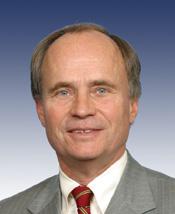
Mr. Speaker, I rise in opposition to this bill. I am against taxation of the Internet. There is no question about that. What concerns me is the fact that this legislation eliminates the grandfather…
Mr. Speaker, I rise in opposition to this bill. I am against taxation of the Internet. There is no question about that. What concerns me is the fact that this legislation eliminates the grandfather clause of those nine States that currently collect a communications tax.
In my State of New Hampshire we have a 7 percent tax on access for intrastate communications, not interstate but intrastate. It does not matter whether it is fax, Internet communications, any other mechanism.
What this bill does is eliminate the ability of the State of New Hampshire and eight other States to collect revenue on what is justifiably a State-centered tax.
Now, we do not regulate sales taxes or State income taxes, what they should do. There is a provision in this bill that would allow sales taxes to be collected but New Hampshire does not have a sales tax. So we get hit twice through the passage of this.
Mr. Speaker, the Senate bill has a 3-year extension of this moratorium and there is no such extension in the House. Ultimately what this bill does is it creates $100 million unfunded Federal mandate to States.
I am not for taxation of the Internet, but what the bill is doing is it is proposing to affect tax policy within States and their ability to tax within their open telecommunications system. And, as I said a minute ago, it is an unfunded Federal mandate.
I hope that the Committee on the Judiciary will look carefully at what the Senate has done with this 3-year extension and will include that 3-year extension in the House version of the bill.
It is a solution that is bad for New Hampshire and it is unfair. I plan to vote against this bill and I urge my colleagues in the States of Texas, Connecticut, Ohio, Wisconsin, Tennessee, North Dakota, South Dakota, New Mexico and Washington, those States that will be losing revenue on this with no balancing make-up from the Federal Government, to join me in opposition to this bill.

Mr. Speaker. Today, I rise in support of H.R. 49, the Internet Tax Nondiscrimination Act. This bill is the result of a bipartisan compromise to the benefit of consumers in Rhode Island and around the…
Mr. Speaker. Today, I rise in support of H.R. 49, the Internet Tax Nondiscrimination Act. This bill is the result of a bipartisan compromise to the benefit of consumers in Rhode Island and around the country.
H.R. 49 makes permanent the current moratorium on Internet access taxes, which was scheduled to expire on November 1, 2003. This moratorium, in effect since October 1998, has greatly contributed to the rapid expansion of the Internet.
For the second quarter of 2003, e-commerce accounted for only 1.5 percent of total goods and services sold in the country, but this is an increase of 28 percent from the previous year. By 2005, worldwide online sales are expected to total $8.6 trillion online, up from $3.6 trillion this year. This bill will maintain the United States' position as a leader in online commerce because H.R. 49 protects consumers from double taxation of online purchases, which would slow the growth of Internet sales.
I am pleased to see that the Judiciary Committee adopted the Watts- Cannon amendment, which ensures that all technologies, including traditional modem, cable modem, DSL, wireless, and future access methods, are subject to the same tax treatment. In addition, this bill ensures a nondiscriminatory tax system, which neither encourages nor discourages purchases online. The legislation is fair to existing brick and mortar businesses, while continuing to foster the expansion of e- commerce.
I urge my colleagues to support H.R. 49, this bipartisan legislation that benefits consumers and businesses.
Show 1 more

Mr. Speaker, I thank the chairman of the Committee on the Judiciary for yielding me time. Mr. Speaker, I support H.R. 49, the Internet Tax and Nondiscrimination Act. This legislation would…
Mr. Speaker, I thank the chairman of the Committee on the Judiciary for yielding me time.
Mr. Speaker, I support H.R. 49, the Internet Tax and Nondiscrimination Act. This legislation would permanently extend the current moratorium on Internet access taxation, as well as taxes on electronic commerce. It would not prohibit States from imposing sales tax on sales conducted over the Internet. However, it does prevent States or localities from imposing a sales tax that only applies to Internet transactions.
Mr. Speaker, Internet commerce is still relatively new and has yet to reach its full potential. The imposition of taxes would threaten the future growth of e-commerce and would discourage companies from using the Internet to conduct business. Internet taxation would create regional and international barriers to global trade.
The Internet is also a major source of information for many individuals and families. Taxes would reduce the number of Americans who could afford Internet access. Our goal in Congress should be to encourage and promote Internet access, rather than to widen the digital divide.
Mr. Speaker, Americans should be able to access the Internet without being subject to State and local taxes.
Bill Text
Latest available legislative text
        [Congressional Bills 108th Congress]
[From the U.S. Government Publishing Office]
[H.R. 1481 Introduced in House (IH)]

108th CONGRESS
1st Session
H. R. 1481

To extend the moratorium enacted by the Internet Tax Freedom Act.

_______________________________________________________________________

IN THE HOUSE OF REPRESENTATIVES

March 27, 2003

Ms. Lofgren introduced the following bill; which was referred to the
Committee on the Judiciary

_______________________________________________________________________

A BILL

To extend the moratorium enacted by the Internet Tax Freedom Act.

Be it enacted by the Senate and House of Representatives of the
United States of America in Congress assembled,

SECTION 1. SHORT TITLE.

This Act may be cited as the ``Internet Growth and Freedom Act of
2003''.

SEC. 2. AMENDMENT.

Section 1101(a) of the Internet Tax Freedom Act (47 U.S.C. 151
note) is amended by striking ``2003'' and inserting ``2008''.
<all>