To award a congressional gold medal to Prime Minister Tony Blair.
Legislative Activity
Stay on top of the latest movement without scrolling through every action
Received in the Senate and Read twice and referred to the Committee on Banking, Housing, and Urban Affairs.
June 26, 2003
View full timeline
Introduced in House
March 31, 2003
Referred to the House Committee on Financial Services.
March 31, 2003
Mr. King (NY) moved to suspend the rules and pass the bill.
June 25, 2003 • 11:15 AM
Considered under suspension of the rules. (consideration: CR H5830-5837)
June 25, 2003 • 11:15 AM
DEBATE - The House proceeded with forty minutes of debate on H.R. 1511.
June 25, 2003 • 11:15 AM
Passed/agreed to in House: On motion to suspend the rules and pass the bill Agreed to by voice vote.(text: CR H5830)
June 25, 2003 • 11:59 AM
On motion to suspend the rules and pass the bill Agreed to by voice vote. (text: CR H5830)
June 25, 2003 • 11:59 AM
Motion to reconsider laid on the table Agreed to without objection.
June 25, 2003 • 11:59 AM
Received in the Senate and Read twice and referred to the Committee on Banking, Housing, and Urban Affairs.
June 26, 2003
Floor Debate
13 membersWhat members said about H.R. 1511 on the floor
 BF
BF PTK
PTK CBM
CBM JMH
JMH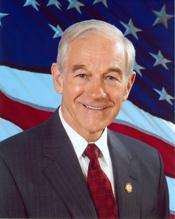 RP+8
RP+8
Floor Debate
13 membersWhat members said about H.R. 1511 on the floor
Mr. Speaker, I am pleased to yield 5 minutes to the gentlewoman from New York (Mrs. Maloney), the ranking member of the subcommittee, who is the cosponsor of this resolution. Mr. Speaker, I yield 3…
Mr. Speaker, I am pleased to yield 5 minutes to the gentlewoman from New York (Mrs. Maloney), the ranking member of the subcommittee, who is the cosponsor of this resolution.
Mr. Speaker, I yield 3 minutes to the gentleman from Washington (Mr. McDermott).
Mr. Speaker, I yield myself such time as I may consume.
I am genuinely moved by the breadth of spirit of my colleagues in the great praise they are heaping on this man of the left who presides proudly over a socialized health system and does so much else to show that government has an important positive role in our life, and I appreciate this kind of bipartisanship. Perhaps it will develop a certain trans-Atlantic quality and some of what they so vigorously praise in England might creep into their views about maybe doing something for the American people along the lines of what Mr. Blair does domestically for the British people.
Mr. Speaker, I yield 4 minutes to the gentleman from Pennsylvania (Mr. Hoeffel), who has been a leader in trying to formulate an appropriate American approach to some important questions.
Mr. Speaker, will the gentleman yield?
Mr. Speaker, I very much agree with many of the specifics, but the gentleman misstates British politics when he says he has moved them from left to the right. Blair would himself repudiate that. What he has done is to move them from a position that he thought was too far to the left to a more mainstream position, but still very much on the left, still very much socialized medicine. So, yes, I think that the direction that the Labor Party has moved in, which is very much a reasonable and responsible position on the left, is a good one; but to characterize that as having moved to the right, I think Mr. Blair would give back his gold medal if the price of accepting it was to become a rightist in the gentleman's mind.
Mr. Speaker, the gentleman once again misstates British politics because two of his sharpest critics were people who were in his government supporting his moves on domestic policy, supporting his repositioning towards New Labor. Two, Robin Cook and Claire Short, they resigned from the government specifically over Iraq. So the notion that criticism of his position on Iraq is also criticism of his movement towards the New Labor position is simply factually incorrect.
What about Robin Cook? Who was the foreign minister and who resigned only over misuse of intelligence and not over anything domestic.
Would that also be true of the British public, which was opposed to his going to the war?
Mr. Speaker, I yield 4 minutes to the gentleman from Massachusetts (Mr. Markey).
Mr. Speaker, will the gentleman yield for one question?
Can we anticipate a gold medal for Vice President Gore too? Are you going to give a gold medal to Al Gore too, anybody who helps you out?
Mr. Speaker, I yield myself the remainder of my time.
Tony Blair is an embattled politician, as many people are. He will be facing an election within some period of years from his right wing, and he will be defending the positions that he holds. He is a strong defender of a continuation of socialized medicine. He believes that global warming should be addressed by international treaty. I support the British position on allowing gay and lesbian people to serve in the military. So there is a great deal about Tony Blair's record which seems admirable, and I am glad to see my Republican colleagues setting aside what might be some minor differences to them to intervene in a British election by basically giving him this big boost. I am not sure that their fellow conservatives in England are quite so happy.
I do want to say, though, that I differ with those who suggested that somehow we should not have used this to debate the question of whether or not Americans ought to know whether intelligence was misused or how it was misused. I agree there would be better places to debate it. Unfortunately, the Republican leadership has consistently done everything possible to keep that debate off the floor. The intelligence authorization will be coming up, and that would have been a good time to debate it. Our colleague, the gentlewoman from California (Mrs. Tauscher), had an amendment that would have allowed a debate on whether or not to have a select committee. We cannot have that debate today at the regular ordered time because the Republican leadership ordered the Committee on Rules to kill it.
So yes, I will agree; I saw this and said, let us use this as a chance to at least have some debate on this issue, since the Republican leadership will not allow it. In fact, what I most admire about Tony Blair right now is that as the Prime Minister and the head of the House of Commons, he has not even tried to use his control to shut off a debate. Unlike the Republican administration and the Republican leadership here, Tony Blair is allowing the British people and the British political system to have a thorough debate about the extent to which there was misuse of evidence on weapons of mass destruction, and I envy the British. I do not just envy them the Gold Medal, I envy them the fact that democracy is functioning in England today on this critical question of whether and to what extent intelligence was misused in a way that is not being allowed to happen in America.
Now, the gentleman from New York managing this bill referred to the article by Kenneth Pollack. I will submit Mr. Pollack's article for the Record, because he said I am sure there were weapons of mass destruction, and he goes on in that article to be very critical of this administration's misuse of the evidence. It is a very interesting article, and I appreciate once again the gentleman citing it, because he talks about very important questions about the misuse of intelligence, the exaggeration, the manipulation. This is an administration that argued, in part, that the weapons of mass destruction were a major reason to go to war, and that a Rosanna Danna Banana ``nevermind'' is not an appropriate response in a democracy.
That is what we are getting. We are getting from them bait and switch: Let us go to war because of weapons of mass destruction, and now it is because, well, he was a terrible man. Yes, he was a terrible man. Terrible people are killing people in the Congo. Terrible people run Liberia. Terrible people run Burma. If, in fact, we are going to become the ones that go to the rescue of people misused and abused by their government, there are a lot more that we can go to.
Weapons of mass destruction was the critical argument used to justify a war, and it now appears that they were grossly exaggerated. The very article by Kenneth Pollack that the gentleman from New York cited is in fact harshly critical of this administration for its misuse of that.
So thanking Tony Blair because he came to the President's defense at a tough time is a reasonable thing to do. Going to Tony Blair's defense in a tough time for him, that is a reasonable thing to do. Certainly politicians are not unused to helping each other out in tough times and reciprocating.
But let us look at the contrast. I wish, in addition to the Gold Medal for Tony Blair, we were doing something for the American people. I would just propose to my friends on the other side, given your admiration for Tony Blair, a simple proposition: Let us duplicate here in the United States the procedures that are now being undertaken in the British Parliament, let us give the American people the same exposure to an open debate and investigation that the British people are giving. Let us do something for the American people while we give Tony Blair the Gold Medal, and thus show respect for democracy in our own country.
(By Kenneth M. Pollack)
Washington.--Where are Iraq's weapons of mass destructions?
It's a good question, and unfortunately we don't yet have a
good answer. There is hope that the capture of Abid Hamid
Mahmoud al-Tikriti, Saddam Hussein's closet aide, will
provide the first solid
clues. In any event, the mystery will be solved in good time;
the search for Iraq's nonconvential weapons program has only
just begun.
In the meantime, accusations are mounting that the Bush
administration made up the whole Iraqi weapons threat to
justify an invasion. That is just not the case--America and
its allies had plenty of evidence before the war, and before
President Bush took office, indicating that Iraq was
retaining its illegal weapons programs.
As for allegations that some in the administration may have
used slanted intelligence claims in making their case against
Saddam Hussein, they seem to have merit and demand further
investigation. But if the truth was stretched, it seems to
have been done primarily to justify the timing of an
invasion, not the merits of one.
The fact that the sites we suspected of containing hidden
weapons before the war turned out to have nothing in them is
not very significant. American intelligence agencies never
claimed to know exactly where or how the Iraqis were hiding
what they had--not in 1995, not in 1999 and not six months
ago. It is very possible that the ``missing'' facilities,
weaponized agents, precursor materials and even stored
munitions all could still be hidden in places we never would
have thought to look. This is exactly why, before the war, so
few former weapons inspectors had confidence that a new round
of United Nations inspections would find the items they were
convinced Iraq was hiding.
At the heart of the mystery lies the fact that the Iraqis
do not seem to have deployed any stocks of munitions filled
with nonconventional weapons. Why did Saddam Hussein not hit
coalition troops with a barrage of chemical and biological
weapons rather than allow his regime to fall? Why did we not
find them in ammunition dumps, ready to be fired?
Actually, there are many possible explanations. Saddam
Hussein may have underestimated the likelihood of war and not
filled any chemical weapons before the invasion. He may have
been killed or gravely wounded in the ``decapitation'' strike
on the eve of the invasion and unable to give the orders. Or
he may have just been surprised by the extremely rapid pace
of the coalition's ground advance and the sudden collapse of
the Republican Guard divisions surrounding Baghdad. It is
also possible that Iraq did not have the capacity to make
the weapons, but given the prewar evidence, this is still
the least likely explanation.
The one potentially important discovery made so far by
American troops--two tractor-trailers found in April and May
that fit the descriptions of mobile germ-warfare labs given
by Iraqi defectors over the years--might well point to a
likely explanation for at least part of the mystery: Iraq may
have decided to keep only a chemical and biological warfare
production capability rather than large stockpiles of the
munitions themselves. This would square with the fact that
several dozen chemical warfare factories were rebuilt after
the first gulf war to produce civilian pharmaceuticals, but
were widely believed to be dual-use plants capable of quickly
being converted back to chemical warfare production.
In truth, this was always the most likely scenario.
Chemical and biological warfare munitions, especially the
crude varieties that Iraq developed during the Iran-Iraq War,
are dangerous to store and handle and they deteriorate
quickly. But they can be manufactured and put in warheads
relatively rapidly--meaning that there is little reason to
have thousands of filled rounds sitting around where they
might be found by international inspectors. It would have
been logical for Iraq to retain only some means of
production, which could be hidden with relative ease and then
used to churn out the munitions whenever Saddam Hussein gave
the word.
Still, no matter what the trailers turn out to be, the
failure so far to find weapons of mass destruction in no ways
invalidates the prewar intelligence data indicating that Iraq
had the clandestine capacity to build them. There has long
been an extremely strong case--based on evidence that largely
predates the Bush administration--that Iraq maintained
programs in weapons of mass destruction. It was this
evidence, along with reports showing the clear failure of
United Nations efforts to impede Iraq's progress, that led
the Clinton administration to declare a policy of ``regime
change'' for Iraq in 1998.
In 1995, for example, United Nations inspectors found
Russian-made ballistic-missile gyroscopes at the bottom of
the Tigris River; Jordanian officials intercepted others
being smuggled into Iraq that same year. In July 1998,
international inspectors discovered an Iraqi document that
showed Baghdad had lied about the number of chemical bombs it
had dropped during the Iran-Iraq War, leaving some 6,000 such
weapons unaccounted for. Iraq simply refused to concede that
the document even existed.
These episodes, and others like them, explain why many
former Clinton administration officials, including myself (I
was on the staff of the National Security Council in the
90's), agreed with the Bush administration that a war would
likely be necessary to prevent Iraq from acquiring nuclear
and other weapons. We may not have agreed with the Bush
team's timing or tactics, but none of us doubted the
fundamental intelligence basis of its concerns about the
Iraqi threat.
As for the estimates the Bush administration presented
regarding Iraq's holdings of weapons-related materials, they
came from unchallenged evidence gathered by United Nations
inspectors (in many cases, from records of the companies that
sold the materials to Iraq in the first place). For instance,
Iraq admitted importing 200 to 250 tons of precursor agents
for VX nerve gas; it claimed to have destroyed these
chemicals but never proved that it had done so. Even Hans
Blix, the last head weapons inspector and a leading skeptic
of the need for an invasion, admitted that the Iraqis refused
to provide a credible accounting for these materials.
And it wasn't just the United States that was concerned
about Iraq's efforts. By 2002, British, Israeli and German
intelligence services had also concluded that Iraq was
probably far enough along in its nuclear weapons program that
it would be able to put together one or more bombs at some
point in the second half of this decade. The Germans were
actually the most fearful of all--in 2001 they leaked their
estimate that Iraq might be able to develop its first
workable nuclear device in 2004.
Nor was it just government agencies that were alarmed. In
the summer of 2002 I attended a meeting with more than a
dozen former weapons inspectors from half a dozen countries,
along with another dozen experts on Iraq's weapons programs.
Those present were asked whether they believed Iraq had a
clandestine centrifuge lab operating somewhere; everyone did.
Several even said they believed the Iraqis had a covert
calutron program going as well. (Centrifuge and calutron
operations allow a country to enrich uranium and produce the
fissile material for a nuclear bomb.)
At no point before the war did the French, the Russians,
the Chinese or any other country with an intelligence
operation capable of collecting information in Iraq say it
doubted that Baghdad was maintaining a clandestine weapons
capability. All that these countries ever disagreed with the
United States on was what to do about it.
Which raises the real crux of the slanted-intelligence
debate: the timing of the war. Why was it necessary to put
aside all of our other foreign policy priorities to go to war
with Iraq in the spring of 2003? It was always the hardest
part of the Bush administration's argument to square with the
evidence. And, distressingly, there seems to be more than a
little truth to claims that some members of the
administration skewed, exaggerated and even distorted raw
intelligence to coax the American people and reluctant
allies into going to war against Iraq this year.
Before the war, some administration officials clearly
tended to emphasize in public only the most dire aspects of
the intelligence agencies' predictions. For example, of
greatest importance were the estimates of how close Iraq was
to obtaining a nuclear weapon. The major Western intelligence
services essentially agreed that Iraq could acquire one or
more nuclear bombs within about four to six years. However,
all also indicated that it was possible Baghdad might be able
to do so in as few as one or two years if, and only if, it
were able to acquire fissile materials on the black market.
This latter prospect was not very likely. The Iraqis has
been trying to buy fissile material since the 1970's and had
never been able to do so. Nevertheless, some Bush
administration officials chose to stress that one-to-two-year
possibility rather than the more likely four-to-six year
scenario. Needless to say, if the public felt Iraq was still
several years away from acquiring a nuclear weapon rather
than just a matter of months, there probably would have been
much less support for war this spring.
Moreover, before the war I heard many complaints from
friends still in government that some Bush officials were
mounting a ruthless campaign over intelligence estimates. I
was told that when government analysts wrote cautious
assessments of Iraq's capabilities, they were grilled and
forced to go to unusual lengths to defend their judgments and
some were chastised for failing to come to more alarming
conclusions. None of this is illegal, but it was perceived as
an attempt to browbeat analysts into either changing their
estimates for shutting up and ceding the field to their more
hawkish colleagues.
More damning than the claims of my former colleagues has
been some of the investigative reporting done since the war.
Particularly troubling are reports that the administration
knew its contention that Iraq tried to purchase uranium from
Niger was based on forged documents. If true, it would be a
serious indictment of the administration's handling of the
war.
As important as this debate is, what may ultimately turn
out to be the biggest concern over the Iraqi weapons program
is the question of whose hands it is now in. If we do confirm
that those two trailers are mobile biological warfare labs,
we are faced with a tremendous problem. If the defectors'
reports about the rates at which such mobile labs were
supposedly constructed are correct, there are probably 22
more trailers still out there. Where are they? Syria? Iran?
Jordan? Still somewhere in Iraq? Or have they found their way
into the hands of those most covetous--Osama bin Laden and
his confederates?
Nor can we allow our consideration of weapons of mass
destruction and politicized intelligence to be a distraction
from the most important task at hand: rebuilding Iraq.
History may forgive the United States if we don't find the
arsenal we thought we
would. No one will forgive us if we botch the reconstruction
and leave Iraq a worse mess than we found it.
I would be willing to stand with the Senate on this if we could stand with them on the child tax credit. Can we make some kind of deal here on standing with the Senate?
Mr. Speaker, I move to suspend the rules and pass the bill (H.R. 1511) to award a congressional gold medal to Prime Minister Tony Blair. Mr. Speaker, I ask unanimous consent that all Members may have…
Mr. Speaker, I move to suspend the rules and pass the bill (H.R. 1511) to award a congressional gold medal to Prime Minister Tony Blair.
Mr. Speaker, I ask unanimous consent that all Members may have 5 legislative days within which to revise and extend their remarks on this legislation and to insert extraneous material thereon.
Mr. Speaker, I yield myself such time as I may consume.
Mr. Speaker, it is a distinct privilege today to be able to move this bill awarding a Congressional Gold Medal to British Prime Minister Tony Blair. Throughout our history, there has probably been no country that the United States has had a closer relationship with than Great Britain. Certainly we share certain immutable, transcendent values. Throughout our history we have stood together in a number of noble causes, probably dramatically manifested during World War II when Prime Minister Churchill and President Roosevelt stood together to defeat the forces of fascism and Naziism. But there is probably no British Prime Minister who has been there when America needs him more than Tony Blair.
Certainly during the Clinton administration, it was Prime Minister Blair who stood shoulder to shoulder with President Clinton in the war in Kosovo against Serb aggression, against the dictator Milosevic. But nothing more illustrated the unique relationship between the United States and Britain and the immense courage and dedication of Tony Blair than what happened after our Nation was attacked on September 11, 2001. The first foreign leader to come to this country to express his regrets while the smoke was still there, while the flames were still burning, visited the World Trade Center, visited New York and came here to our Nation's capital was British Prime Minister Tony Blair.
When President Bush addressed a joint session of Congress on September 20, 2001, just 9 days after the brutal attack on the World Trade Center, it was Prime Minister Blair who sat here in the gallery expressing his solidarity with the United States. On that evening, President Bush said, ``Once again we are joined together in a great cause and we are so honored the British Prime Minister has crossed an ocean to show his unity of purpose with America. Thank you for coming, friend.''
Indeed, Tony Blair has been a friend of the United States but, just as important as that, he has been a friend and supporter of democratic values. He realizes the unique nature and relationship of the bonds between the United States and Britain and indeed between the United States and Europe. He has been a strong friend of the United States. Certainly in the recent war against Iraq, it was Tony Blair who resisted pressure both from the media, his own party and his own parliament to stand up and be with the United States.
For all those reasons, and I am sure this debate will go on for a while, probably longer than we anticipated it would today, I stand in support of this legislation.
Mr. Speaker, I reserve the balance of my time.
Mr. Speaker, I yield myself such time as I may consume. Let me at the outset commend the ranking member the gentlewoman from New York (Mrs. Maloney) for the tremendous assistance she has given me on this as she has on so many other issues that come before our subcommittee and also the work that she does for the State of New York.
Mr. Speaker, one thing I should bring out is that on a personal level, I had the privilege of working with Prime Minister Blair several years ago on the Irish peace process. I saw firsthand at that time the sense of vision that he had, the sense of daring he had and the courage he had to do the right thing and the fact that he was the first British Prime Minister in history to be able to bring a settlement, to bring an agreement involving all the parties in the north of Ireland. To work with the Republic of Ireland and also to work closely with the United States is just one more demonstration of his courage and his ability to stand up and do what is right.
Mr. Speaker, I reserve the balance of my time.
Mr. Speaker, I yield myself such time as I may consume.
Without getting into all of the merits or demerits of the gentleman's statement, I would note that if there is one person in the world who does not care what his poll ratings are, it is Prime Minister Blair. The fact that his disapproval numbers may be high is exactly one of the reasons why he has demonstrated courage. He stands up for what is right. He is not concerned about the naysayers. He is not concerned about the tides of public opinion as they may be that day.
I would just again remind my colleagues that when the United States was at its darkest moment on September 11, 2001, the one leader who stood with us more than anyone else was Prime Minister Blair. He continues to stand with us. He can be proud of his record and we can be proud of our record if we do indeed award him this honor.
Mr. Speaker, I yield 2 minutes to the gentlewoman from Michigan (Mrs. Miller).
(Mrs. MILLER of Michigan asked and was given permission to revise and extend her remarks.)
Mr. Speaker, I yield myself such time as I may consume.
It is really interesting listening to how certain people on the other side who are trying to turn this into a debate of weapons of mass destruction are raising the issue of credibility when their statements themselves seem to be at least lacking some credibility, to put it mildly. I would just emphasize we are talking about what was known and what was not known.
Let us go back to last September when Vice President Gore said based at the time he was Vice President, he had absolutely no doubt that Iraq had an advanced program of weapons of mass destruction and those weapons were hidden throughout Iraq. That was Vice President Gore based on his access to intelligence. Just last month, President Clinton said he does not in any way fault President Bush on the issue of weapons of mass destruction because that is exactly what he was told when he was President of the United States. Just last Friday in the New York Times, Kenneth Pollack who was probably leading spokesman in the Clinton administration on the issue of Iraq said there was absolutely no doubt among any of the intelligence agencies in the world nor in the United States nor in the Clinton and Bush administrations that there were indeed weapons of mass destruction in Iraq.
And it really is ironic that we have to look to a British foreign minister to stand with our government and give the United States the presumption of the doubt over Saddam Hussein when certain Members of the opposition party do not show that same level of support that Prime Minister Blair is showing, which I think is very significant; and it also demonstrates more than ever why Americans have such a high opinion of Prime Minister Blair.
I would also say to the gentleman from Massachusetts, who was heaping
praise on the Republicans for trying to set up this trans-Atlantic relationship with the British and was hoping that perhaps this may manifest itself here on the floor, I would also remind the gentleman and ask him if he supports the fact that Tony Blair is bringing the Labor Party from the left to the right and is certainly being criticized by those in the left in Britain. I wonder if he will also share that in his party and move his party more toward the center.
I yield to the gentleman from Massachusetts.
Mr. Speaker, reclaiming my time, I would say that the same critics in Britain who are criticizing Tony Blair's policy on the war would in fact be saying that he is moving his party to the right. So really I was quoting the equivalent critics in the British Parliament who are equivalent to those in this House. Those who oppose Blair's policy on Iraq, very similar to those on the other side who are opposing President Bush's policy on Iraq, are the same ones who are saying that he is moving his party toward the right. So I was just really quoting some of the ideological kinsmen of some of the opponents here today.
Reclaiming my time, it is very accurate. In fact, anyone who knows Claire Short, and I have known her for over 20 years, can say she was in the far left of the Labor Party. She was in the Blair cabinet very reluctantly, and she was one of those who was critical not just of his war policy but also of his domestic policies.
Mr. Speaker, reclaiming my time, actually this has turned into the House of Commons. This is great. But reclaiming my time, I would say that the overwhelming, absolutely categorically overwhelming majority of those in the Labor Party who are opposed to Tony Blair resent also the fact that he is moving the party towards the center.
Reclaiming my time, the beauty of Tony Blair is unlike certain politicians he does not follow the polls. The fact is he stands up for what is right. In the fullness of time he will be vindicated.
Mr. Speaker, I reserve the balance of my time.
Mr. Speaker, I yield myself such time as I may consume.
Mr. Speaker, I would suggest to the gentleman that there was another option left out and that is the option that Vice President Gore spoke about last September, that the weapons are there, the weapons are hidden, and we will find them.
Reclaiming my time, I would say to the ranking member if he wants to introduce that legislation and obtain 290 signatures,
certainly we will give it consideration at that time. We are very open- minded. We are very liberal on this side of the aisle.
Mr. Speaker, I yield such time as he may consume to the gentleman from Ohio (Mr. Oxley), the chairman of the full committee.
Mr. Speaker, I yield 1 minute to the gentleman from Florida (Mr. Goss), the chairman of the Permanent Select Committee on Intelligence.
(Mr. GOSS asked and was given permission to revise and extend his remarks.)
Mr. Speaker, I yield myself such time as I may consume.
As I said at the outset, it is a great honor for me personally to be able to stand here and move this legislation today. I must say that I am sure some of my Irish ancestors are appreciating the improbability of this moment that I would be making such an impassioned defense for a British Prime Minister.
The fact is, Tony Blair transcends national politics. He transcends pettiness and partisanship, and that is what we have tried to do here. Yes, obviously, there are differences between Members on this side of the aisle and certain policies of Tony Blair. We are not talking about his policies per se; we are talking about his courage, we are talking about his unique sense of dedication to democratic values and the fact that he is such a close ally of the United States, and that does transcend whatever differences there may be, and that should also transcend whatever differences we might have in recognizing the greatness of an individual and realizing the uniqueness of a very special relationship.
But, if I could just add in closing, because I know there is going to be a record of this and we have gone over different debates, I would just thank the gentleman from Massachusetts for introducing the full column by Mr. Pollack. I would stand by that, and I would say that anyone reading that, any balanced person reading that would see that as an affirmation that weapons of mass destruction did indeed exist, and also honest differences as far as nuclear weapons. It is all there. I will allow the public to look at that, to read it, and come to their judgment. It certainly went far beyond as far as being reasoned, as far as being rational, some of the overheated rhetoric that has been coming forth from others here. And that to me is the type of debate we should be having, an intelligent debate.
Also, I would say there is a difference between a parliamentary system and the system that we have. Indeed we fought a revolution in 1776 to establish our type of government.
But in conclusion, let us get back to the main point. Tony Blair is a unique world leader, an outstanding world leader, a long and dear and absolutely loyal friend of the United States. For that, Mr. Speaker, he deserves this Gold Medal as much as any world leader ever has. I stand with him. I would hope that the overwhelming majority of this Congress would stand with him, stand with the United States Senate in acknowledging the uniqueness and the unique loyalty and sense of courage that Tony Blair has demonstrated.
Reclaiming my time, I would say that when Tony Blair is here, that if we can arrange a private meeting with the ranking member from Massachusetts, I am sure he can impart unique wisdom to the Prime Minister of Great Britain, and that would really mean that the Prime Minister has earned his gold medal.
Mr. Speaker, I have no further requests for time, and I yield back the balance of my time.
Mr. Speaker, I thank the gentleman for yielding me this time, and I rise in support of this legislation that awards the Congressional Gold Medal, the highest honor Congress can award, to Prime…
Mr. Speaker, I thank the gentleman for yielding me this time, and I rise in support of this legislation that awards the Congressional Gold Medal, the highest honor Congress can award, to Prime Minister Tony Blair. Past recipients include Presidents George Washington and Harry Truman; heroic figures such as Charles Lindbergh, Rosa Parks, and Mother Teresa; and Prime Minister Winston Churchill, who led England through the dark hours of World War II.
Mr. Speaker, just as Prime Minister Churchill stood with President Roosevelt to defeat the Nazis, Prime Minister Blair has offered steadfast support for the United States since the terror attacks of 9/ 11. The American people will never forget that the Prime Minister traveled across an ocean to be in the gallery of the House in a sign of solidarity with our country as President Bush addressed our Nation after the terrorist attacks.
More recently, prior to the war in Iraq, the Prime Minister and his U.N. envoy, Sir Jeremy Greenstock, worked tirelessly to exhaust every diplomatic channel to build consensus in the United Nations. It was Prime Minister Blair who tried to bridge differences with our traditional European allies up until the wee hours before the war began. Additionally, Prime Minister Blair pushed our own administration to use its political capital to fully engage in the Middle East peace process.
While that effort continues to face very substantial obstacles, most notably the unceasing suicide attacks against Israel citizens, the Prime Minister deserves credit for putting Mideast Peace on the table as does the Administration for its efforts to implement the ``road map.''
While the Prime Minister has demonstrated considerable political courage in recent months, his stand with our country should not be surprising.
As a political leader in Britain the Prime Minister has spent this life leading the Labour Party out of oblivion and into its current dominant position in the Parliament.
At age 30 he was elected to Parliament. Later as a member of John Smith's shadow cabinet he worked to transform Labour into a party tough on crime and while still committed to its social causes.
After being elected Labour leader in 1994, Blair moved the party to the political center and redrafted the party constitution in his image of ``New Labour''--much life President Clinton successfully moved the Democratic party to a position where it has won the popular vote in the last three Presidential elections.
As leader of the Labor Party, the British people rewarded the Prime Minister with a landslide victory in 1997, ending 18 years of conservative rule. At 43, Blair became the youngest Prime Minister since 1812. As Prime Minister, he has continued to change his country for the better. He has taken on the right to hereditary positions in the House of Lords, allowed the de-evolution of Scotland and Wales, and implemented a massive investment program in the areas of health care and education.
For the Prime Minister, education is the best economic policy and his government has followed this commitment.
I have great admiration for the Prime Minister's commitment to governing from the middle ground rather than trying to divide his country by playing to extreme groups on either side of the political spectrum.
Mr. Speaker, Congress could find no more deserving recipient of this high honor than Prime Minister Blair. In fighting terrorism, standing with the U.S. against Saddam and with the U.S. for Middle East peace, he has truly shown what it means for Britain to be our staunchest ally.
A recent Washington Post article well characterized Prime Minister Blair's current standing in the world. ``After the terrorist attacks of September 11, he has found himself playing a pivotal role in reshaping international relations and winning points for standing on principle, even from some of his most vehement critics.''
I recognize that some of my colleagues had strong reservations about the war in Iraq and I respect their opinions, but I urge that all Members stand and support this award in recognition of Tony Blair the man, as a leader of an inclusive political movement that has benefited all Britons.
Mr. Speaker, the deaths of six more British soldiers in Iraq this week remind us of the common sacrifice our troops are making serving side by side around the world. This is just one more example of the special relationship between the United States and the United Kingdom. I urge my colleagues to support this legislation in recognition of the man who has contributed so much to upholding this common bond.
I would like to note that this bill passed the Senate unanimously with 78 cosponsors and that we have 290 Members of the House that have cosponsored this important legislation. I thank the gentleman from Massachusetts (Mr. Frank), the gentleman from New York (Mr. King), the gentlewoman from Florida (Ms. Ginny Brown-Waite) and all who have worked to pass and to get this bill to the floor. I urge my colleagues to support it.
Mr. Speaker, I thank the gentleman for yielding me this time. I am pleased to rise in support of this resolution today, awarding the Congressional Gold Medal to a great leader of a great country who…
Mr. Speaker, I thank the gentleman for yielding me this time.
I am pleased to rise in support of this resolution today, awarding the Congressional Gold Medal to a great leader of a great country who is and has been a great ally of ours. But it is true that Prime Minister Blair, as President Bush, both have a credibility problem regarding weapons of mass destruction. And it is interesting to see how England is dealing with this problem. They are dealing with it forthrightly, openly. The Parliament has held hearings. Two members of the British Cabinet who resigned in protest have testified. The Prime Minister has subjected himself to questions and they are dealing with this, I believe from a far, it seems to be a very open process, a very forthright process; and the public in England will get the information they need to make a judgment about whether their intelligence was on the mark, whether the intelligence was given to their leaders based upon what they thought the leaders might want to hear. Was the intelligence misused by the British leadership? Was it inaccurate? And I think they have dealt with it very forthrightly.
Unfortunately, Mr. Speaker, that is not happening in this country. We are not seeing the administration stepping forward to deal with the growing credibility gap that has arisen because we cannot find the weapons of mass destruction. We know that Saddam Hussein had weapons of mass destruction and he used them in the past against his own people in a very murderous way, no question about it; but we cannot find them now. We may find them next week, and I hope we do because our credibility is on the line; but we need a full accounting of how we have dealt with this issue. We need to know where those weapons are. We need to maintain safe custody of them. We need to dismantle them. If they are buried in the desert or given to another country, we need to know what is going on and make sure that they cannot be used by anybody else in the future that has evil intent.
But we also need a full accounting of our intelligence operation. What were our leaders told? I know what I was told, Mr. Speaker. I was told publicly and privately by the leading senior advisors to the President, with great certainty I was told that Saddam Hussein last fall had weapons of mass destruction, at the very time it turns out that the Defense Intelligence Agency was circulating a memo that there was no credible evidence that Saddam Hussein then had weapons of mass destruction.
That is not the public comments nor the private assurances that Members of Congress or the American public were being given at the time of the President's Rose Garden speech September 26, 2002, and several other statements made. Was the President told what the intelligence agencies thought he wanted to hear? Did the President demand just one side of the story? We need an accounting of what has happened. Our credibility is at stake. If we are ever again to embrace the notion of preemptive use of military force which may be necessary in an age of terror when we are dealing with an adversary who does not have a country to defend or a capital city to defend, if we are ever going to use a preemptive strategy again, we must know our intelligence is accurate; otherwise, the doctrine of preemption is unusable.
If we are going to keep this country safe, we have to know what happened. We have to know how well or how poorly our intelligence operation functioned. We need an accounting. We are not getting it from the international relations committee, which last week refused to call for documents. We are not getting it on the floor with the intelligence bill because amendments to have an investigation have been ruled out of order. We have got a document dump at the intelligence committee. I am going to go over and look at those documents, but I do not think that is enough. We need to have an accounting. We need to know what happened.
Mr. Speaker, I rise in strong opposition to this legislation for a number of reasons. First, to force the American people to pay tens of thousands of dollars to give a gold medal to a foreign leader…
Mr. Speaker, I rise in strong opposition to this legislation for a number of reasons. First, to force the American people to pay tens of thousands of dollars to give a gold medal to a foreign leader is immoral and unconstitutional. I will continue in my uncompromising opposition to appropriations not authorized within the enumerated powers of the Constitution--a Constitution that each member of Congress swore to uphold.
Second, though these gold medals are an unconstitutional appropriation of American tax dollars, at least in the past we have awarded them to great humanitarians and leaders like Mother Theresa, President Reagan, Pope John Paul II, and others. These medals have generally been proposed to recognize a life of service and leadership, and not for political reasons--as evidenced by the overwhelming bipartisan support for awarding President Reagan, a Republican, a gold medal. That these awards have generally gone to these types of otherwise deserving individuals is why I have many times offered to contribute $100 of my own money, to be matched by other Members, to finance these medals.
I sense that this current proposal is different, however. No one is claiming that British Prime Minister Tony Blair has given a lifetime of humanitarian service like Mother Theresa, or demonstrated the historical leadership of a Ronald Reagan. No one suggests that British Prime Minister, leading the avowedly socialist Labour Party, has embraced American values such as freedom and limited governments and imported those to Great Britain--as Margaret Thatcher had attempted before him. No, Tony Blair is being proposed for his medal for one reason: he provided political support when international allies were sought in advance of America's attack on Iraq. Does this overtly political justification for awarding this medal not cheapen both the medal itself and the achievements of those who have been awarded it previously?
I find it particularly odd that this Republican-controlled Congress would nominate one such as Tony Blair to receive this award. His political party is socialist: Britain under Blair has a system of socialized medicine and government intervention in all aspects of the commercial and personal lives of its citizens. Socialism is an enemy of freedom and liberty--as the 20th century taught us so well. It is the philosophical basis of a century of mass-murder and impoverishment.
In May, a British television poll found that Prime Minister Blair is the most unpopular man in Great Britain. A brief look at his rules leaves little question why this is so. He has eroded Britain's constitutional base--recently abolishing the ancient position of Lord Chancellor without any debate. He has overseen a massive expansion of government with the creation of costly ``assemblies'' in Wales and Scotland. He has also overseen changes in Britain's voting system that many have claimed has opened the door to widespread voting fraud. In short, he is no Margaret Thatcher and certainly no Winston Churchill. Yet today Congress is voting to give him its highest honor.
Mr. Speaker, it is very easy to be generous with the people's money. I believe the politicization of this medal, as we are seeing here today, really makes my own point on such matters: Congress should not be spending the people's money for appropriations not authorized within the enumerated powers of the Constitution. When it does so, it charts a dangerous course away from the rule of law and away from liberty. I urge a ``no'' vote on this unfortunate bill.
Show 8 more
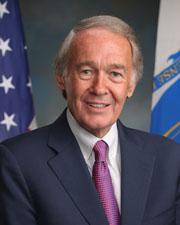
Mr. Speaker, I thank the gentleman for yielding me this time. I want to begin first by agreeing with the gentleman from New York (Mr. King) that Tony Blair has been historically courageous in…
Mr. Speaker, I thank the gentleman for yielding me this time.
I want to begin first by agreeing with the gentleman from New York (Mr. King) that Tony Blair has been historically courageous in Northern Ireland in helping to reconcile two sides that for 500 years have not been able to see eye to eye, and he deserves enormous historic credit for that. And on the issue of Iraq, but for Tony Blair, but for Tony Blair's insistence, President Bush would have never gone to the United Nations. It was he, Tony Blair, who made the precondition to his support that the United States would go to the United Nations in order to secure a vote, and for that he deserves enormous credit.
But at the same time in England, Great Britain, the Parliament right now, there is an ongoing investigation of the information that was used as to justification for the war in Iraq; and it is to the credit of the Parliament, it is to the credit of Tony Blair, that he is accepting the responsibility of the examination of the information which was used with regard to the weapons of mass destruction that was produced by the intelligence community in Great Britain and in the United States as a rationale for the war. It is to the credit of Tony Blair that he is accepting that examination.
In our country, just the opposite is the case. There are essentially three options that the American people, the British people are now presented with. One, that the intelligence was correct, that the weapons of mass destruction existed, and that the weapons of mass destruction are now in the hands of al Qaeda, Baathist separatist activity groups, other terrorist groups, or in Syria. All of those options are horrific and not a consequence that we thought would be a result of this war.
Secondly, that the intelligence was plain wrong right from the beginning. There was never any information and that they botched it right from the beginning. That is horrible.
Or, third, that the intelligence was correct; but they were told, the intelligence community, to change the information, to change the information. They were told deliberately to alter it in order to argue that there were weapons of mass destruction, that Vice President Cheney did visit the CIA, did try to influence the intelligence community to change the information, to leave out key documents. In Britain they are now looking at that very issue. They are being told that the information with regard to the uranium from Africa was not correct, that the academic paper that was used rather than real intelligence was wrong and should not have been relied upon. We need the same kind of examination in our country.
There is now sufficient evidence that is being produced that there has been a compromise of the total intelligence package that the Congress should have had but, more importantly, that the American people should have had as the basis of their judgment.
I voted for the resolution last October. I voted for it, and I believe that the American people and this Congress deserve all of the information. We need a blue ribbon commission to examine all of the intelligence that was used. England is doing it right now. Tony Blair is accepting that examination. We should have the courage in our own country to give all of the information to the American public. The intelligence in this country is right now not complete with regard to what our government knew before we voted on the floor of this Congress.
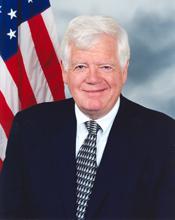
Mr. Speaker, I oppose the awarding of this gold medal now. We have awarded gold medals to many people in our history since 1776, but on only one occasion have we ever awarded a Congressional Medal of…
Mr. Speaker, I oppose the awarding of this gold medal now. We have awarded gold medals to many people in our history since 1776, but on only one occasion have we ever awarded a Congressional Medal of Honor to a sitting head of state: Nelson Mandela, when he was 80 years old and in his last months in office. I suppose it is possible that these are the last months in office for Prime Minister Blair, but that is not clear just at the moment.
At this moment he is fighting for his political future against accusations that he misled the public about British intelligence findings on Iraq. Mr. Blair's Foreign Secretary, Jack Straw, was brought up before the Foreign Affairs Select Committee in the House of Commons yesterday. He was asked, among other things, why Mr. Blair's influential January dossier on Iraq's capabilities was so reliant on the uncredited 12-year-old writings of an American graduate student. Today Alastair Campbell, his doctor of spin, will be up there and he will be answering accusations that it was he who inserted in a dossier the astonishing information that Iraq not only possessed fully developed, operational chemical and biological weapons but was capable of delivering them within 45 minutes of a command order. Foreign Secretary Straw said yesterday there were substantial errors. He said that lessons have been learned, but he blamed the demands of the media. That very media, of course, made sure that the false papers issued by Prime Minister Blair's government deceived others around the world as well as the Britons. The influential information and errors may have even influenced Members of this body.
If this award to Mr. Blair is appropriate, it is either too late or too soon. If the medal had been awarded when it was first introduced, before these deceptions were discovered, it would have had smooth sailing. If it were brought up later, perhaps Mr. Blair will have cleared his name. At this moment, however, we are prejudging and perhaps trying to influence the outcome of some very serious investigations going on in Britain. We are trying to prop up Mr. Blair. The White House has sent up another one of those rubber stamp bills. I do not dispute that he needs propping up. His job rating at home is minus 13 which means his disapproval exceeds his approval by 13 points. What I dispute is whether the Congressional Medal of Honor should become a prop in the strategy of the British Prime Minister to regain his people's trust.
I ask the Members of this body to consider carefully whether they wish to risk cheapening the Congressional Medal of Honor by awarding it to an embattled politician. Let us not rush to judgment. Let us revisit this resolution another day. Even Winston Churchill was not awarded a Congressional Medal of Honor at any point in his tumultuous political career, though there were times when it would have come in quite handy. His medal was posthumous. With all due respect, Prime Minister Blair is not Winston Churchill.
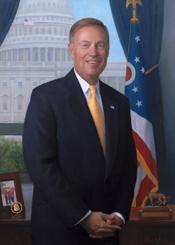
Mr. Speaker, Members should speak for themselves about being liberal on this side of the aisle. Let me try to draw the debate back to what we had initially anticipated, which was to honor Tony Blair…
Mr. Speaker, Members should speak for themselves about being liberal on this side of the aisle.
Let me try to draw the debate back to what we had initially anticipated, which was to honor Tony Blair with a Congressional Gold Medal and discuss exactly why we were able to secure 290 co-sponsors for this legislation. It is because Tony Blair represents all that is good.
It is because of that that the gentlewoman from Florida (Ms. Brown- Waite), a distinguished member of our committee, introduced this legislation and worked very hard, along with our friend, the gentlewoman from New York (Mrs. Maloney) to gather 290 signatures, and under the leadership of the gentleman from New York (Mr. King), the chairman of the subcommittee, that we are here today. That means that this House will go on record as supporting, with a strong bipartisan vote, exactly what Tony Blair means to the process and what he means to our country.
We have had a special relationship with Great Britain for so many years, after we got the initial argument out of the way some 200 plus years ago, and since that time have worked harmoniously with Great Britain, no matter who was in charge over here, or who was in charge over there. And here we have a situation where the Prime Minister of the Labor Party is being supported by a Republican Congress and a Republican President, because of what he brings to our relationship and what he means to all of us.
I think all of us were thrilled when almost a week after the terrible events of September 11, 2001, when President Bush spoke to the Nation from this very spot and said, America has no truer friend than Great Britain. And then, looking up to Tony Blair in the gallery right up behind me, and said, ``Thank you for coming, friend,'' meaning not just the Prime Minister, but all of his countrymen. That is the special relationship that we enjoy through good times and bad with Great Britain.
My family on my dad's side was from England, and I have a great deal of respect for their traditions, and I certainly have a great deal of respect for their current leadership.
So despite all of the arguments about weapons of mass destruction, despite all of the differences that we displayed over Iraq, it was Great Britain in the presence of Tony Blair who came to our defense. It was Tony Blair who made a special trip over to the United States to bring us condolences and talk about unification and working together with Great Britain, and yes, it was Tony Blair who defied public opinion, who did not stick his finger up in the wind and see which way the wind was blowing, to say that he was going to do something right and support the United States in our efforts against the brutal dictator, Saddam Hussein.
For that and many, many other reasons, he deserves these accolades, and he deserves this Congressional Gold Medal. I urge all of my colleagues to support this meaningful tribute to a great world leader, Tony Blair.
Mr. Speaker, I rise today in strong support of H.R. 1511, to award the Congressional Gold Medal to Tony Blair, Prime Minister of Great Britain. The Congressional Gold Medal is the highest honor…
Mr. Speaker, I rise today in strong support of H.R. 1511, to award the Congressional Gold Medal to Tony Blair, Prime Minister of Great Britain.
The Congressional Gold Medal is the highest honor Congress can bestow to civilians and foreign leaders in recognition of their outstanding and enduring contributions to the
United States. It is fitting that we consider Prime Minister Blair for this award in the wake of a challenging and historic period for our two nations.
Upon the terrorist attacks of September 11, Prime Minister Blair was the first leader to rush to America's side to provide assistance. His expression of solidarity assured us that we were not alone in the world as a victim of terrorism, and that attacks on our soil were also as assault on the sovereignty of Great Britain, which lost more of its own citizens in the World Trade Center than any other foreign nation. In a very difficult time for our country, Mr. Blair has courageously demonstrated that the U.K. is our staunchest and most steadfast ally by helping us lead the coalition of democratic nations in the defense of our mutual security from terrorism and the proliferation of weapons of mass destruction.
Together with Great Britain we have made progress toward dismantling the global network of state sponsored terrorism. However, despite considerable public opposition and political fallout in his own country, Prime Minister Blair never wavered from his commitment to the United States and the international coalition to determine whether the existence of weapons of mass destruction in Iraq presented an imminent threat to its neighbors and our troops based on the Middle East. Under the Prime Minister's leadership, Great Britain contributed troops and meaningful support for Operations Enduring Freedom and Iraqi Freedom. As British troops fought shoulder to shoulder with American troops in Iraq, Mr. Blair made it clear all along that the U.K. shared our values and principles for the mission, particularly when he said, ``We go to liberate not conquer . . . and the only flag which will be flown in that ancient land is their own.''
Mr. Speaker, I applaud Prime Minister Tony Blair's extraordinary leadership and his nation's enduring commitment to our mutual support of liberty and democracy. I am proud to support H.R. 1511 to authorize the President, on behalf of Congress, to award the Gold Medal to Prime Minister Blair. I also wish to thank the people of Great Britain, the members of the royal armed forces, and their families for their shared commitment and many sacrifices for the preservation of democracy and liberty in a world allied against terror.
Mr. Speaker, since September 11 our Nation has faced very trying times. For the first time in decades we have been threatened on our very own soil. We have seen American lives and the lives of others…
Mr. Speaker, since September 11 our Nation has faced very trying times. For the first time in decades we have been threatened on our very own soil. We
have seen American lives and the lives of others tragically lost. Proud symbols of the American dream and our prosperity have also been lost.
But thankfully the American spirit was not. We have seen heroes rise from the dust where the World Trade Center towers once stood. American willpower and determination have united a Nation precisely when evildoers sought to divide us. We are resilient, proud, and since that fateful day, determined as ever. One nation, the United Kingdom, has stood proudly with us, shoulder to shoulder and shown solidarity and support as we vowed to end terrorism worldwide. The United States has no better friend than the United Kingdom and its leader, Prime Minister Tony Blair. Since day one, he has been a steadfast supporter of America in the war on terrorism and the ensuing campaigns in Afghanistan and Iraq.
In recognition of his unconditional support of our Nation, I strongly encourage my colleagues to join me in passing legislation to award Tony Blair the Congressional Gold Medal. There are no words to express America's deep-felt appreciation towards Mr. Blair; and while this award esteems a well-deserved honor to Mr. Blair, it hardly scratches the surface at how grateful we are for his support and the support of his country. The Congressional Gold Medal has a long history of recognizing military leaders, from its first recipient, George Washington, to Mother Teresa, Prime Minister Winston Churchill and current leaders like then-General Colin Powell and now Secretary of State.
Prime Minister Blair has certainly demonstrated the bravery, the dedication and conviction to join this elite group of awardees. Moreover, he has shown himself to be a true friend; and for that I commend him, and I look forward to voting ``yes'' on H.R. 1511.
Mr. Speaker, it is with great disappointment that I cannot be present today to speak and vote in favor of H.R. 1511, a bill to award Prime Minister Tony Blair the Congressional Gold Medal. I…
Mr. Speaker, it is with great disappointment that I cannot be present today to speak and vote in favor of H.R. 1511, a bill to award Prime Minister Tony Blair the Congressional Gold Medal. I introduced this legislation on March 31 and have since been working with my colleagues to obtain the necessary 290 cosponsors for floor action. I would like to commend Chairman Oxley and the Financial Services Committee, as well as Rep. Richard Baker and Rep. Carolyn Maloney for their tireless efforts in getting this bill to the floor today.
As we emerge successfully from Operation Iraqi Freedom, it is important to remember that we did not fight this war alone. The brave men and women of the British military have fought and died, side by side, with our American soldiers. Just yesterday, 6 British soldiers were killed in an attack north of Basra. Great Britain, under the leadership of Tony Blair, has paid the ultimate sacrifice.
Prime Minister Blair has ignored political expediency and risked his own career to stand up for what he knows is right. Operation Iraqi Freedom has freed millions of Iraqis from the oppression of Saddam Hussein's brutal dictatorship. The Operation has ousted a regime bent on securing and then distributing weapons of mass destruction to those who would use them against the United States, our friends, and the people of Iraq. Despite attempts by many of our ``allies'' to thwart this noble effort, Prime Minister Blair and Great Britain have remained strong and active players in Operation Iraqi Freedom.
I am deeply honored to play a role in awarding Prime Minister Tony Blair the Congressional Gold Medal and I thank my colleagues in the House of Representatives for joining me.
Mr. Speaker, I rise today to commend British Prime Minister Tony Blair. I am proud to be a consponsor of this legislation to award Mr. Blair with the Congressional Gold Medal. I would like to…
Mr. Speaker, I rise today to commend British Prime Minister Tony Blair.
I am proud to be a consponsor of this legislation to award Mr. Blair with the Congressional Gold Medal. I would like to recognize Mr. Blair's--and Britain's--longstanding staunch support of our nation's democratic ideals.
Whether one supported or opposed the war in Iraq, it is true that under Blair's leadership, Britain has provided extensive military support in the war in Iraq. He has argued passionately and consistently about the threats Saddam Hussein posed in the Persian Gulf and ultimately to the Western world. Honoring Prime Minister Blair with the Congressional Gold Medal would be a fitting tribute to him, the people of Great Britain, and the thousands of British troops who fought valiantly alongside American soldiers in Iraq. We now have a historic opportunity to reaffirm our Nation's friendship with Great Britain, and our mutual commitment to freedom and democracy.
I hope that the occasion of Mr. Blair being awarded the Congressional Gold Medal will be an opportunity to invite Mr. Blair to address a joint session of Congress. I have worked with my colleague Mr. Royce to encourage our Congressional leaders to invite Mr. Blair to do so, and I can think of no occasion more fitting. In light of Mr. Blair's enduring friendship with the United States, I look forward to hearing his views on the future of Iraq and the Middle East.
Mr. Speaker, I thank the distinguished gentleman for yielding me this time. Mr. Speaker, I rise this morning to celebrate the purpose of the Medal, which is the great leadership of Tony Blair. The…
Mr. Speaker, I thank the distinguished gentleman for yielding me this time.
Mr. Speaker, I rise this morning to celebrate the purpose of the Medal, which is the great leadership of Tony Blair. The world needs civilized leaders. The world is a scary place. There are a lot of things going on, and all that is necessary for evil to triumph is for good men to do nothing. Good men are not infallible. Mistakes can be made. But good men acting on good judgment, doing the best they can with what they have is what we are celebrating here today.
Tony Blair as Prime Minister has been a great friend to our country, which has a special relationship, of course, with the United Kingdom, of which we are very proud, and an especially strong relationship in the area of intelligence. He has been a great friend with President Clinton when he was President of our country, and with President Bush. Who is currently the President of our country.
I think that friendship has gone through a lot of activity in the past several years, and Tony Blair has been there standing strong. He is a proud person to be associated with, in my view. I am pleased that the gentlewoman from Florida (Ms. Brown-Waite), the gentleman from New York (Chairman King), the gentlewoman from New York (Mrs. Maloney) and others have had the good sense to bring this forward at this time, and I thank them for doing it, and I urge strong support.
Show 1 more
Mr. Speaker, I rise today to tell my colleagues about a bill I introduced 2 days ago. It is H.R. 1511. The purpose is to honor British Prime Minister Tony Blair with a Congressional Gold Medal. Mr.…
Mr. Speaker, I rise today to tell my colleagues about a bill I introduced 2 days ago. It is H.R. 1511. The purpose is to honor British Prime Minister Tony Blair with a Congressional Gold Medal.
Mr. Blair is a true ally and friend to this country and has shown incredible leadership, resolve, and solidarity with the United States in recent months. I thank him for his friendship, and I want to honor his commitment and contribution to this country by bestowing him with this honor.
The Congressional Gold Medal is the highest expression of national appreciation for distinguished achievement and contributions to the United States that Congress can offer to any individual. The Congressional Gold Medal of Honor was originally created by this body in 1776 to recognize military leaders, and the first recipient was George Washington.
Since that time, the award has evolved to include world leaders and humanitarians as well. Great Britain has long been one of America's closest friends and staunchest allies. I thank the Prime Minister and Great Britain for the loyalty, resolve, and support they have shown throughout this most recent conflict. I ask my colleagues to join me in supporting this resolution to pay tribute to a great man and a great leader.
Bill Text
2 versions available
        [Congressional Bills 108th Congress]
[From the U.S. Government Publishing Office]
[H.R. 1511 Referred in Senate (RFS)]

108th CONGRESS
1st Session
H.R. 1511

_______________________________________________________________________

IN THE SENATE OF THE UNITED STATES

June 26, 2003

Received; read twice and referred to the Committee on Banking, Housing,
and Urban Affairs

_______________________________________________________________________

AN ACT

To award a congressional gold medal to Prime Minister Tony Blair.

Be it enacted by the Senate and House of Representatives of the
United States of America in Congress assembled,

SECTION 1. FINDING.

The Congress finds that Prime Minister Tony Blair of the United
Kingdom has clearly demonstrated, during a very trying and historic
time for our 2 countries, that he is a staunch and steadfast ally of
the United States of America.

SEC. 2. CONGRESSIONAL GOLD MEDAL.

(a) Presentation Authorized.--The Speaker of the House of
Representatives and the President Pro Tempore of the Senate shall make
appropriate arrangements for the presentation, on behalf of the
Congress, of a gold medal of appropriate design, to Prime Minister Tony
Blair, in recognition of his outstanding and enduring contributions to
maintaining the security of all freedom-loving nations.
(b) Design and Striking.--For purposes of the presentation referred
to in subsection (a), the Secretary of the Treasury (referred to in
this Act as the `Secretary') shall strike a gold medal with suitable
emblems, devices, and inscriptions to be determined by the Secretary.

SEC. 3. DUPLICATE MEDALS.

The Secretary may strike and sell duplicates in bronze of the gold
medal struck pursuant to section 2 under such regulations as the
Secretary may prescribe, at a price sufficient to cover the cost
thereof, including labor, materials, dies, use of machinery, and
overhead expenses, and the cost of the gold medal.

SEC. 4. STATUS OF MEDALS.

(a) National Medals.--The medals struck pursuant to this Act are
national medals for purposes of chapter 51 of title 31, United States
Code.
(b) Numismatic Items.--For purposes of section 5134 of title 31,
United States Code, all medals struck under this Act shall be
considered to be numismatic items.

SEC. 5. AUTHORITY TO USE FUND AMOUNTS; PROCEEDS OF SALE.

(a) Authority to use Fund Amounts.--There is authorized to be
charged against the United States Mint Public Enterprise Fund such
amounts as may be necessary to pay for the costs of the medals struck
pursuant to this Act.
(b) Proceeds of Sale.--Amounts received from the sale of duplicate
bronze medals authorized under section 3 shall be deposited into the
United States Mint Public Enterprise Fund.

Passed the House of Representatives June 25, 2003.

Attest:

JEFF TRANDAHL,

Clerk.