Bulletproof Vest Partnership Grant Act of 2003
Legislative Activity
Stay on top of the latest movement without scrolling through every action
Referred to the Subcommittee on Crime, Terrorism, and Homeland Security.
May 5, 2003
View full timeline
Introduced in House
April 10, 2003
Referred to the House Committee on the Judiciary.
April 10, 2003
Referred to the Subcommittee on Crime, Terrorism, and Homeland Security.
May 5, 2003
Floor Debate
9 membersWhat members said about H.R. 1708 on the floor
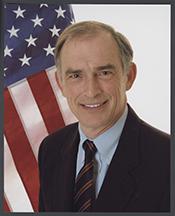
PJV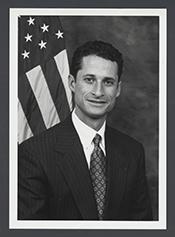 ADW
ADW FJS
FJS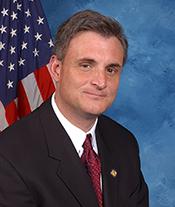 REA
REA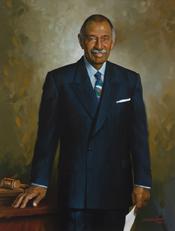 JCJ+4
JCJ+4
Floor Debate
9 membersWhat members said about H.R. 1708 on the floor
Madam Speaker, I thank the gentleman for yielding me the time. Madam Speaker, I rise today in strong support of the Department of Justice Reauthorization Act, which includes the text of H.R. 1708,…
Madam Speaker, I thank the gentleman for yielding me the time.
Madam Speaker, I rise today in strong support of the Department of Justice Reauthorization Act, which includes the text of H.R. 1708, the Bulletproof Vest Partnership Grant program.
I would begin my remarks by thanking my dear colleague, the gentleman from New Jersey (Mr. LoBiondo), the sponsor of H.R. 1708. I have given him my heartfelt gratitude for his leadership on this issue.
I also want to thank the gentleman from Wisconsin (Chairman Sensenbrenner) and the gentleman from South Carolina (Chairman Coble), the gentleman from Michigan (Mr. Conyers), the ranking members, as well as the gentleman from Virginia (Mr. Scott), for all of their support and cooperation in this endeavor.
Madam Speaker, I first authored and introduced the Bulletproof Vest Partnership Grant Act with the gentleman from New Jersey (Mr. LoBiondo) in 1997 after meeting with northwest Indiana police officers and hearing that many gang members and drug dealers had the bulletproof vests while many police officers did not. I was even more troubled to learn that the reasons so many officers did not have access to bulletproof vests was because of their prohibitive expense.
As my colleagues know, the purpose of the Bulletproof Vest Partnership Grant program is to protect the lives of law enforcement officers by helping States and local governments equip them with vests. Many departments simply cannot afford to purchase vests for all of their officers, a fact which sometimes forces officers to purchase their own.
Unfortunately, between 1992 and the year 2001, 594 police officers were shot and killed in the line of duty. Of those slain, roughly half were not wearing bulletproof vests because their departments could not afford them.
This act, among other things, recognizes that the lack of protective body armor is even more evident not only in large cities, but in small rural departments. Statistics show that officers in smaller departments are much less likely to have vests than their counterparts in large metropolitan departments. That is why, in order to make sure that no community is left out, half of the funds in the vest partnership act are reserved for jurisdictions with fewer than 100,000 residents.
In closing, the police officers who risk their lives for all of us are mothers and fathers. They are sons and daughters. It is our obligation to the officers and their families to give them access
to the equipment that will safeguard them; and, again, I appreciate the gentleman from New Jersey's (Mr. LoBiondo) leadership and the chairman's leadership on this issue and ask for support of the legislation.
Madam Speaker. I rise today in strong support of H.R. 3036, the Department of Justice Reauthorization Act, which includes the text of my legislation, H.R. 1708, the reauthorization of the successful Bulletproof Vest Partnership Grant Program.
At the outset of my remarks, I would like to thank Chairman Sensenbrenner and Chairman Coble as well as Ranking Member of the full Committee Mr. Conyers and the Ranking Member of the Crime Subcommittee Mr. Scott for their past support and efforts on behalf of this important legislation. I would also be remiss if I did not express my heartfelt gratification and thanks to the gentleman from New Jersey, Mr. LoBiondo, the lead cosponsor of H.R. 1708.
Madam Speaker, I am very excited to be on the floor of the House once again to reauthorize the Bulletproof Vest Partnership Grant Act for a second time. As you know, the original measure was approved by this body with an overwhelming majority in the 105th Congress. Due to the success of the program, it was reauthorized for an additional 3 years in the 106th Congress. Section 207 of today's measure will reauthorize this program, once again, through fiscal year 2007.
If could take a step back Mr. Speaker, I first authored and introduced the Bulletproof Vest Partnership Grant Act in November 1997 after meeting with Northwest Indiana police chiefs and hearing that many gang members and drug dealers had the protection of bulletproof vests, while many police officers did not. I was even more troubled to learn the reason why so many officers do not have access to bulletproof vests. During a visit I made to the local chapter of the Fraternal Order of Police in Dyer, Indiana, officers explained to me that bulletproof vests are prohibitively expensive. A good vest can cost upwards of $500. Many small departments, as well as some larger ones, simply cannot afford to purchase vests for all of their officers, a fact which sometimes forces officers to purchase their own. My original legislation quickly gained overwhelming bipartisan support in this body, due to the fact that similar problems were being experienced by local police departments all across the United States and President Clinton signed the legislation into law in June of 1998 as P.L. 105- 181.
Northwest Indiana's police officers work hard to keep the public safe, often at great personal risk to themselves. I am committed to securing the safety equipment these brave men and women need, so they can do their jobs and keep our communities safe. The Bulletproof Vest Partnership Grant Program has been effective in saving the lives of law enforcement officers. According to statistics provided by the Lake County, Indiana, Sheriff's Department, bulletproof vests secured under this program have saved the lives of 18 police officers in that county alone.
Between 1999 through the end of 2003, 23 different law enforcement entities throughout my District have purchased a total of 1,119 vests to protect their police officers. Whether it is the largest city in my District, Gary, with a population of nearly 103,000 people and a current force of 296 police officers purchasing 678 vests, the Town of Merrillville, with a population of 30,500 and a current force of 52 police officers purchasing 89 vests, or in the cases of a smaller police department, like St. John Indiana, with a population of 8,300 and a force of 14 fulltime officers purchasing 34 vests for their officers, this program has worked to protect the lives of those who protect us.
As you know, the purpose of the Bulletproof Vest Partnership Grant Program is to protect the lives of law enforcement officers by helping States and local governments equip them
with bulletproof vests. Bulletproof vests and body armor have saved thousands of lives since the introduction of the modern bulletproof material, however, they cannot protect the lives of those who do not have access to them. Unfortunately, between 1992 and 2001, 594 police officers were gunned down in the line of duty. Of those slain, roughly half were not wearing bulletproof vests because sadly, their departments could not afford to provide them with these lifesaving pieces of equipment. The Federal Bureau of Investigation has estimated that the risk of fatality from a firearm for officers not wearing body armor is 14 times higher than for officers wearing body armor. The Fraternal Order of Police have stated that, ``body armor is one of the most important pieces of equipment an officer can have and often mean the difference between life and death.'' According to the IACP/Dupont Kevlar Survivors Club, there are over 2,750 law enforcement officers in the United States who are alive today thanks to the bulletproof vests they were wearing.
The Bulletproof Vest Partnership Grant Program has directly benefited every State and territory of the United States. This critical program provides State, local, and tribal law enforcement officers with needed protection by aiding the purchase of protective equipment. More than 700,000 bulletproof vests are worn today as a direct result of this program.
The Act also recognizes that the lack of protective body armor is even more evident in small, rural police departments. Statistics show that officers in smaller departments are much less likely to have vests than their counterparts in large metropolitan departments. H.R. 1708, the text of which is included in Section 207 of this legislation, would meet the goal of saving officers' lives by reauthorizing the current grant program within the Justice Department for an additional 3 years, providing 50-50 matching grants to State and local law enforcement agencies. These grants are targeted to jurisdictions where most officers do not currently have access to vests, and they are designed to be free of the red tape that often characterizes other grant programs. That is why, in order to make sure that no community is left out of the program, half of the funds are reserved for jurisdictions with fewer than 100,000 residents.
In closing, the police officers who risk their lives are mothers and fathers, and they are sons and daughters. It is our obligation, to the officers and their families, to give them access to the equipment that will safeguard their lives. This legislation is intended to create a partnership with State and local law enforcement agencies in order to make sure that every police officer who needs a bulletproof vest gets one.
I thank Madam Speaker and urge my colleagues to support the underlying bill.
Madam Speaker, I yield myself such time as I may consume. Madam Speaker, first I would like to extend my thanks and gratitude to the chairman, the gentleman from Wisconsin (Mr. Sensenbrenner), for…
Madam Speaker, I yield myself such time as I may consume.
Madam Speaker, first I would like to extend my thanks and gratitude to the chairman, the gentleman from Wisconsin (Mr. Sensenbrenner), for making this part of the hallmark of the
Committee on the Judiciary that we are going to start to continue to have reauthorization bills on the floor for DOJ. I think that is an important thing. For too long it has gone without.
This is a large, important bill and an important part of our government. Now the next step is to have it under regular orders, to have the bill open for amendments, to have the people have the opportunity to offer suggestions. They are a diverse element of this bill. I think it would serve this body well to have an active debate about some of the elements therein and be able to go through the regular process of amendments to perfect the bill even further.
This bill has some very excellent provisions, not the least of which, as the chairman mentioned, is the reauthorization for the first time in a while of the COPS program. The COPS program is by just about every measure a success. It is one of those programs that is extraordinarily democratic, with a small D. Small towns, big cities have all benefited from the police hirings that have gone on.
This is something that transcends politics. It transcends regions. While we can have a debate, and we often do, where criminologists suggest why crime might be going down nationwide, we have academics that have taken a look at it, at the end of the day I believe it is because we in the Federal Government got off the sidelines with the COPS program and started to provide funding for States and localities to provide law enforcement officials.
Now we have a situation where there are over 110,000 cops presently funded to walk the beat all over the country with funding provided by this Congress. This bill would reauthorize it and improve it.
It is not an accident that this has broad bipartisan support. A coalition of Members just recently wrote to the Appropriations Committee urging that the COPS components be fully funded. It includes the gentleman from Michigan (Mr. Stupak), the gentleman from Minnesota (Mr. Ramstad), the gentleman from New Jersey (Mr. Andrews), the gentleman from Pennsylvania (Mr. Platts), the gentleman from Pennsylvania (Mr. Holden), the gentleman from Florida (Mr. Keller), the gentleman from New York (Mr. Quinn), and myself.
It should be pointed out, though, that the President for the second year in a row included zero dollars and zero cents in his budget for the hiring components of the COPS program.
We have heard over and over again the Attorney General and the Deputy of Homeland Security Secretary say homeland security starts in our home towns. We go periodically to higher levels of alert where we tell our local law enforcement officials, our local first responders, you have got to absorb more responsibility. Yet, at the same time, we in the Federal Government have been reluctant to provide that funding. This authorization bill changes that with a program that would provide over the course of the bill $3 billion worth of funding.
Another provision that is included in this bill that is long overdue is getting our Department of Justice off the sidelines in another issue, and that is, that increasingly, by dint of terrorism overseas, U.S. citizens are dying. And simply put, the enforcement, the indictment, the investigation of those crimes is not happening.
We have seen 36 Americans murdered by Palestinian terrorists alone since the Oslo Accords have been signed; yet there have been zero indictments. There have been no real rewards. Suspects' names and faces have not been listed by the Justice Department. The Koby Mandell Act, which was authored by the gentleman from New Jersey (Mr. Andrews) and included in this bill, changes that; but there are things that are not included in this bill that if it would have been open rule, we would have had an opportunity to include
In 2000, we in this Congress recognized that we had a real problem after a GAO study showed that increasingly very realistic-looking badges were falling into the hands of those that should not have them. This is before September 11. A person can today go on to the Internet and search for collectible badges, and they can find realistic ones that are so realistic that they can pass for NYPD badges, Customs Department, FBI and all kinds of others. The reason is, although it is illegal to possess a badge like that, there are some very big loopholes that you can drive a truck through.
For example, if you are a collector and you certify that you are, you can purchase one of these badges. If you are someone that is using it for a movie or an entertainment purpose, you can get one of these badges. There is even an exemption in the law, a loophole in the law, if you want to use the badge for recreational purposes. Now I do not know how sophisticated a game of cops and robbers someone is interested in playing, but this is a very serious issue in the context of so many check points that we have now, so many security lines that people have to cross. These badges have caused a problem.
Over 1,200 times in New York City alone, someone has used a fake badge for illicit purposes. This is a very easy loophole to close. I would have liked the provision to have been included in the bill. It would have been a nice thing to offer, and I believe it would have had the support of this House.
If you are a collector, you can still get a badge. It has to be encased in Lucite, very simple. If you are someone who is in a movie or a film production, you have to go to the law enforcement authority wherever you are shooting and get them to sign off that you are using this badge for that purpose, and there absolutely should not be an exemption for ``recreational purposes.'' These badges are being used in some cases by true collectors; but in many cases, they are being used for illegal and illicit purposes.
Madam Speaker, I yield 4 minutes to the gentleman from Indiana (Mr. Visclosky).
Madam Speaker, I yield 3 minutes to the gentlewoman from Texas (Ms. Jackson-Lee).
Madam Speaker, I yield such time as he may consume to the gentleman from New Jersey (Mr. Andrews).
(Mr. ANDREWS asked and was given permission to revise and extend his remarks.)
Madam Speaker, I yield myself such time as I may consume.
I wanted to conclude the way I began, by offering my thanks to Chairman Sensenbrenner. He has made this Committee on the Judiciary one that functions in a no-nonsense fashion. We legislate. We very often disagree on issues, but they are all heard. And I think he has also done an excellent job in protecting the prerogatives of the committee, making sure that important things like the funding of the Judiciary, of the Justice Department, is not left entirely to the appropriators and that we have an opportunity to craft a bill.
I would now encourage our colleagues in the other body to get going. They have many of these provisions they are also looking at. I understand they are going to take up this bill. I would urge them to do so quickly. And I think that we should, as the chairman said, get in the habit of treating this agency like others. There are sticky issues, but I think we have shown in the Committee on the Judiciary that we can navigate them.
I do want to make reference to one point, because many of my colleagues have mentioned it in passing. There is a great deal of controversy, I think much of it overblown, about the PATRIOT Act. I think supporters of the PATRIOT Act have wildly overstated its impact, and detractors have wildly overstated the impositions put on Americans. But I think the chairman deserves credit for fully funding the Inspector General's Office, with particular attention being paid to making sure that PATRIOT Act investigations are being done in an aboveboard way that does not violate the rights of Americans and that as we review the PATRIOT Act as it prepares to sunset that we have a full arsenal of information at our disposal.
I wanted to also offer my thanks to some members of the staff here at the on the Democratic side of the Committee on the Judiciary, Sampak Garg, Perry Apelbaum, Ted Kalo, Bobby Vassar, Greg Barnes, and Marc Dunkelman of my staff. In particular, I would like to offer my gratitude to Lamar Robertson, who has been my counsel on the Committee on the Judiciary for years now and has done so with remarkable aplomb, remarkable intellect, with a great sense of humor. He will be missed by those of us with whom he serves in the House, and this part in particular that deals with the COPS program is a testament to his hard work.
With that, I offer my thanks to the chairman, and I urge a ``yes'' vote.
Madam Speaker, I have no further requests for time. I yield back the balance of my time.
Madam Speaker, I move to suspend the rules and pass the bill (H.R. 3036) to authorize appropriations for the Department of Justice for fiscal years 2004 through 2006, and for other purposes, as…
Madam Speaker, I move to suspend the rules and pass the bill (H.R. 3036) to authorize appropriations for the Department of Justice for fiscal years 2004 through 2006, and for other purposes, as amended.
Madam Speaker, I ask unanimous consent that all Members may have 5 legislative days within which to revise and extend their remarks and include extraneous material on H.R. 3036 currently under consideration.
Madam Speaker, I yield myself such time as I may consume.
Madam Speaker, I rise in support of H.R. 3036, the Department of Justice Appropriations Authorization Act for Fiscal Years 2004 through 2006.
During the 107th Congress, I was pleased to secure bipartisan passage of the 21st century Department of Justice Authorization Appropriations Act, which comprehensibly reauthorized the Department of Justice for the first time since 1979. During consideration of that legislation, I committed to pursuing a regular authorization process to ensure that the Committee on the Judiciary provides the Department of Justice with clear guidance and continuing oversight.
With an annual budget of around $20 billion and a workforce of more than 100,000 employees, the Department of Justice is an enormous institution. Its importance has only increased since the tragic events of September 11, 2001.
As chairman of the Committee on the Judiciary, I have worked to provide the Department with the necessary resources to assess, prevent, and punish terrorist acts that threaten America's domestic security while preserving our civil liberties. The committee has also worked to ensure that the Department's structure, management, and priorities are tailored to best fulfill its numerous other missions.
Over the last several months, the committee has conducted several hearings to identify the needs and priorities of the department. These hearings reflected the committee's continuing commitment to oversee all of the Department's activities. This bill reflects the information obtained in those hearings.
H.R. 3036 is divided into five titles. The first title authorizes the Department of Justice appropriations for fiscal years 2004 through 2006. With minor exceptions, these authorizations generally reflect the President's budget request.
Title II makes numerous improvement and upgrades to the Department's grant program. Most importantly, it combines the current Byrne formula grant, Byrne discretionary grant, and Local Law Enforcement Block Grant programs into one Byrne Memorial Justice Assistance Grant Program with an authorization similar to the amount appropriated for all three programs in recent years and a formula that closely follows current law. The administration has requested this consolidation as a way of better serving State and local governments.
It reauthorizes the COPS program while recasting it as one single block grant program covering all of its current purposes so local governments will need only to file one COPS application for any of these purposes. I believe that this will greatly improve the efficiency of the COPS program.
Among other changes, title II provides for new auditing and training capacity for all DOJ grant programs to eliminate waste, fraud, and abuse. It provides the first statutory authorization for the Weed and Seed Program. It establishes a congressional medal and plaque for individuals in units that responded to the 9/11 attacks. And, finally, this reauthorizes the bulletproof vest program.
Title III makes a variety of miscellaneous changes to other aspects of the Department of Justice. It requires DOJ to use existing Federal facilities for training and conferences as opposed to paying for private facilities. It also establishes a dedicated privacy officer at the Department to ensure that the Department utilizes technologies that do not erode privacy protection relating to the use, collection and disclosure of personally identifiable information.
Modeled after the privacy officer this committee established in the Department of Homeland Security, this provision advances the committee's uncompromising commitment to the preservation of civil liberties at the Department.
Title IV establishes a new office within DOJ designed to assist in the capture of terrorists who harm Americans overseas.
Title V provides a statutory authorization to the already existing FBI Office of Counterintelligence.
I introduce this legislation with the support of the gentleman from Michigan (Mr. Conyers), and I have worked closely with him on it in every step of the way. Bipartisan cooperation was the hallmark of this legislation in the last Congress, and I am pleased that this spirit of bipartisanship continued in this Congress. We have also worked closely with the appropriators to meet their concerns.
H.R. 3036 provides the Department with the tools, resources and direction necessary to operate efficiently and effectively. By identifying solutions to the growing challenges faced by Federal law enforcement, this committee and Congress will be the strong partner the Department needs as we work for the safety and security of all Americans.
I urge my colleagues to support this bill.
Madam Speaker, I reserve the balance of my time.
Madam Speaker, I yield 2 minutes to the gentleman from New Jersey (Mr. LoBiondo).
Madam Speaker, I yield 2 minutes to the gentleman from California (Mr. Cox), the chairman of the Select Committee on Homeland Security.
Madam Speaker, will the gentleman yield?
The answer to the gentleman's question is yes.
Madam Speaker, I yield myself the balance of my time.
Madam speaker, I, too, would like to thank the staff that worked very hard to negotiate this bill to get the overwhelming bipartisan support that it receives.
Let me say that this is a work in progress, as was the DOJ reauthorization bill that the Congress passed and the President signed last Congress, which was the first Department of Justice reauthorization that had been done since 1979.
The gentleman from New York has a legitimate concern about the sale of fake law enforcement badges. Let me say that we had hoped to include some language relative to that issue in this bill, but the devil was in the details and we could not agree upon the details before the bill came to the floor.
That does not put the issue to bed forever. When we deal with this issue in conference, I am hopeful that we will be able to get some language inserted into the final bill that goes down to the White House that deals with fake badges, because this is a very legitimate issue and there ought to be additional penalties for those who use fake badges over and above the penalties for impersonating a police officer.
So I am hopeful that the other body will deal with this issue promptly.
It does make some very beneficial improvements to how the Department of Justice deals with its grant programs, particularly with relationship to law enforcement. It does reauthorize the bulletproof vest program. And the material that has been inserted in the bill that the gentleman from New Jersey (Mr. Andrews) talked about, about an extraterritorial application when crimes are committed against a United States citizen and the law enforcement of the host country will not deal with that issue, I think are vitally important.
So this bill is a tremendous step in the right direction. It is a good bill. It will be made better as we continue working on it, and I am hopeful that before this Congress adjourns that it will be signed into law. I urge a ``yes'' vote.
Madam Speaker, yield back the balance of my time.
Madam Speaker, I thank my friend from New York for yielding me the time. I would like to express my appreciation to the gentleman from Wisconsin (Chairman Sensenbrenner), the gentleman from Michigan…
Madam Speaker, I thank my friend from New York for yielding me the time.
I would like to express my appreciation to the gentleman from Wisconsin (Chairman Sensenbrenner), the gentleman from Michigan (Ranking Member Conyers), and especially the gentleman from New York (Mr. Weiner) for the outstanding efforts in including in this worthy piece of legislation a provision that has been called the Koby Mandell Act.
Koby Mandell was a 13-year-old boy in May of 2001 who until he was in fourth grade had lived in the United States in Maryland and his family moved to Israel. In May of 2001, Kolbe and a friend of his went hiking, and they were never to return.
During their youthful enjoyment of a hiking outing, Kolbe and his friend were stoned to death by Palestinian terrorists. Now, when an American citizen leaves this country for purposes of living somewhere else, he or she certainly should not leave behind the protection of justice.
Unfortunately for Koby Mandell and his family, the concept that passes for justice in the occupied territories did not protect him. Because since the time of his murder, there has been no meaningful investigation or prosecution to bring to justice those who committed this murder. When our citizens travel around the world and are not protected by the law of other places, it is our responsibility to step forward and protect them. That is what this language does.
I especially want to thank the gentleman from New York (Mr. Weiner), without whose active participation this would not have happened. He used his considerable legislative skills to shepherd through the committee, with the cooperation of the chairman and ranking member, this language.
Here is what it means. The Department of Justice will set up an office that will offer and enforce rewards for those who murder Americans when they are on foreign soil, irrespective of where they are on foreign soil. This office will monitor the outcome of any prosecution or incarceration of a person who has murdered an American citizen. If such a person is released from a prison in another land or is not properly dealt with in another land, this office will have responsibility to extradite and bring to trial in this country a person who has committed a crime against an American citizen, to the extent that our laws would permit such a prosecution.
This office will be, further, responsible for making sure that if any official authorities that may have been complicit in the murder of the American are still in place, that is to say, if people who are security agents or police officers responsible for the murder of an American citizen are still in place, that appropriate diplomatic and economic actions would be taken against the government that sponsors those authorities. Sadly, in many parts of the world, those who wear the cloak of authority are responsible for criminal acts, murderous acts against Americans and other innocent people.
This provision will by no means stop the murder of innocent Americans when they travel abroad, but it will provide us with a new and meaningful tool that will bring to justice those who would commit such heinous acts against innocent people. It is sad that a 13-year-old boy had to give his life, but it is inspiring that his sacrifice of his life has led this institution to consider this very worthy provision.
Again, I am very grateful to the chairman, the gentleman from Wisconsin (Mr. Sensenbrenner), to the
ranking member, the gentleman from Michigan (Mr. Conyers), and especially to the gentleman from New York (Mr. Weiner) for their skill in including this measure in the underlying legislation. I hope that we will continue to work together as Republicans and Democrats to see that this newly created office will be properly funded so that it may do the job I just talked about.
No American should be without the protection of justice, irrespective of where he or she travels in the world. I believe this is an important provision to help ensure that promise. Once again, I thank the leaders for including it in the bill.
Madam Speaker, I rise in support of this legislation. I first would like to commend Chairman Sensenbrenner for reasserting the Judiciary Committee's jurisdiction over the Department of Justice with…
Madam Speaker, I rise in support of this legislation. I first would like to commend Chairman Sensenbrenner for reasserting the Judiciary Committee's jurisdiction over the Department of Justice with this bill. In the past few years, the Justice Department has become increasingly resistant to congressional oversight, either refusing to answer questions or answering them vaguely at best. Fortunately, we worked together at the Committee level to address our concerns with the Department and arrived at the bill before us today.
While the bill has numerous provisions that are worth notice, I would like to concentrate on a few. First, the bill reauthorizes the COPS office. We all know that this Clinton administration program has been increasingly vital in day-to-day crime prevention and crime solving. That is why COPS has received the praise of the Fraternal Order of Police, the largest law enforcement organization in the country. Local policing also is the backbone in our war on terrorism, as community officers are more likely to know the witnesses and more likely to be trusted by community residents who have information about potential attacks. This bill provides over $1 billion per year for three fiscal years for this important program.
The bill also includes language offered by my colleague Rep. Adam Schiff to require the Attorney General to submit reports to Congress on the number of persons detained on suspicion of terrorism. This is important because the Department has thwarted congressional and judicial efforts to obtain justification for terrorism detainees. In the past few years, the Department's Office of the Inspector General has found that the Department and its components had abused terrorism suspects, pushing them into walls, leaving them in legal limbo, and depriving them of access to family or counsel. With these reports, elected representatives can better determine whether the Department is overstepping its bounds again.
Third, the bill gives the Office of the Inspector General over $70 million for its responsibilities. In the past few years, the OIG has been diligent in overseeing the Department's war on terrorism, issuing reports on 9/11 detainees and pushing the Department to change how its procedures for handling terrorism suspects. The bill provides that the increased funding should be used largely for continuing their PATRIOT Act-related functions.
Finally, the bill recognizes the 40th anniversary of the founding of the Lawyers' Committee for Civil Rights Under Law. It was President Kennedy's vision that brought members of the bar together to fight for the civil rights of all Americans. The Lawyers' Committee continues that fight and deserves our recognition and thanks.
I urge my colleagues to vote ``yes'' on this legislation.
Show 4 more
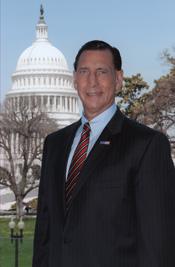
Madam Speaker, I thank the gentleman from Wisconsin (Mr. Sensenbrenner) very much for his leadership on this, and I thank the gentleman from Indiana (Mr. Visclosky) for his partnership. We joined in…
Madam Speaker, I thank the gentleman from Wisconsin (Mr. Sensenbrenner) very much for his leadership on this, and I thank the gentleman from Indiana (Mr. Visclosky) for his partnership.
We joined in 1997 after similar incidents in our districts, totally separated, joined us together on this particular issue. I urge my colleagues to support this. It is something that will make a difference in real terms in people's lives.
The legislation reauthorizes the grant program until 2007. The current authorization is set to expire this year.
Congress has overwhelmingly approved the program twice before, first in the 105th and then in the 106th. In the 105th Congress, at that point in time, I had two groups within my district, Vest-A-Cop and Shield of Blue, that were raising money to provide vests for police officers basically by sub sales and bake sales and raising a dollar at a time. We recognized through a very tragic incident where a corrections officer at Bayside State Prison, Officer Fred Baker, while on duty was stabbed in the back by an inmate. He did not have a protective vest. We can only speculate if Officer Baker would be alive today, but many of us believe that he would be.
After that incident, the gentleman from Indiana (Mr. Visclosky) and I got together, drafted the legislation and went to work on it; and we are very pleased that our colleagues were able to support it.
This Bulletproof Vest Partnership Act program has directly benefited every U.S. State and territory. A bulletproof vest is one of the most important pieces of equipment an officer can have. Many times, it can mean the difference between life and death.
Every day, law enforcement officers are confronted by violent criminals armed with deadly weapons. While many officers wear vests to protect themselves, an alarming number of officers across the United States are not afforded the same protection because of budget constraints.
The Bulletproof Vest Partnership Act Grant program has helped State and local law enforcement purchase these vests and in response has saved countless thousands of lives. In 2002 alone, the Bulletproof Vest Partnership Grant Act has provided $25 million to State law enforcement agencies across America. This program has provided more than 700,000 of these life-saving vests since its inception in the beginning of the program; and in turn, in this last year, the program has helped fund more than 188,000 new vests, giving vital protection to thousands of law enforcement officers nationwide.
I again thank the gentleman from Wisconsin (Mr. Sensenbrenner) for his support and the gentleman from Indiana (Mr. Visclosky), and I urge my colleagues to support the legislation.
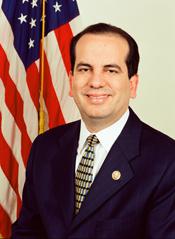
Madam Speaker, I rise in strong support of the Department of Justice Reauthorization Act. I commend Judiciary Chairman Sensenbrenner, Ranking Member Conyers, and other members of the Judiciary…
Madam Speaker, I rise in strong support of the Department of Justice Reauthorization Act. I commend Judiciary Chairman Sensenbrenner, Ranking Member Conyers, and other members of the Judiciary Committee for their diligent work on this bill. This bill makes important changes and adjustments to current law, which I believe will bring greater safety to our communities and ensure better and more efficient administration of crime-fighting programs.
There are two specific provisions of this Act that I would like to highlight.
The Reauthorization of the Bulletproof Vest Partnership Grant Act is an important step in assuring the safety of law enforcement officers throughout the Nation. It has been through this program that thousands of police officers, including many in Puerto Rico, have received the critical personal safety protection of bulletproof vests. While the threat of gun violence will continue to endanger our police, the reauthorization of this grant program will continue the reduction of firearms injuries and deaths to our Nation's law enforcement officers.
Additionally, there is language in H.R. 3036 that is of great importance to Puerto Rico. Unlike in the States, the Commonwealth government centrally carries out the vast majority of law enforcement functions. The Commonwealth's budget for 2005 calls for $752 million to support the 22,500 Commonwealth police officers who have the primary responsibility for law enforcement on the island, and they are joined by approximately 4,000 officers at the municipal level. For this reason, the disbursement of funds under law enforcement grant programs, such as the local law enforcement block grant and the Byrne Memorial Justice Assistance Grant, should be to the Commonwealth government. Under this scenario, the Commonwealth government then disburses funds to the municipal police forces as appropriate. This bill recognizes this unique structure, and includes language that appropriately directs the local law enforcement grants to the Commonwealth government.
Again, I greatly appreciate the leadership of Chairman Sensenbrenner and his colleagues on the Judiciary Committee in bringing this important bill to the floor. I strongly support this legislation, and urge my colleagues to do likewise.

Madam Speaker, I rise in strong support of the Department of Justice authorization bill, and I commend the gentleman from Wisconsin (Chairman Sensenbrenner) and the gentleman from Michigan (Ranking…
Madam Speaker, I rise in strong support of the Department of Justice authorization bill, and I commend the gentleman from Wisconsin (Chairman Sensenbrenner) and the gentleman from Michigan (Ranking Member Conyers) for their leadership and their bipartisan cooperation on this vital function of our national government.
Madam Speaker, I also rise for the purpose of engaging in a colloquy with my good friend, the chairman of the Committee on the Judiciary.
The Department of Justice bill contains a provision which limits the Federal Bureau of Investigation's participation in the Terrorism Threat Integration Center as follows: the provision states that funding will be provided ``as may be necessary to assign employees to the Terrorism Threat Integration Center: provided, that such amounts may only be expended for analyzing intelligence information.''
I understand the intent of this language is to ensure that TTIC does not become a domestic surveillance or collection agency. However, I want to be clear that there was no intention to create barriers to information sharing between the FBI and TTIC and between and among other partners in TTIC, such as the Department of Homeland Security.
Since September 11, Congress and the gentleman from Wisconsin (Chairman Sensenbrenner) have worked tirelessly to tear down these information-sharing barriers. I want to be sure that this provision will in no way interfere with TTIC's right to receive information from the FBI or its responsibility to provide information to the FBI and the Department of Homeland Security. TTIC's partnership with DHS is critical to the Department's mission to prevent terrorist attacks.
In addition, it may be appropriate for the FBI to assign employees to TTIC to assist in the administration and management of TTIC, and I understand that it is not the chairman's intent through this language to limit such FBI's participation and assistance. Is my understanding of this provision accurate?
I yield to the gentleman from Wisconsin.
Madam Speaker, I thank the chairman.
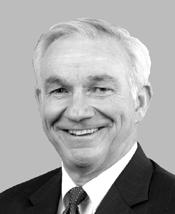
Mr. Speaker, I rise today in support of our Nation's police officers. They champion homeland security every day, and quite often they stand in the line of fire. Between 1992 and 2001, 594 police…
Mr. Speaker, I rise today in support of our Nation's police officers. They champion homeland security every day, and quite often they stand in the line of fire.
Between 1992 and 2001, 594 police officers were shot in the line of duty. Of those officers, half were not wearing body armor. Their agency could not afford it. They were not wearing the bulletproof vest that could have saved their lives.
Thanks to the Bulletproof Vest Partnership Grant program, 700,000 more officers are wearing life-saving body armor today than just 4 years ago. This initiative provides police officers an additional degree of safety in their job that they deserve. I ask my colleagues to cosponsor H.R. 1708 to help us continue this vital program and keep our police officers protected as they protect us.
Bill Text
Latest available legislative text
        [Congressional Bills 108th Congress]
[From the U.S. Government Publishing Office]
[H.R. 1708 Introduced in House (IH)]

108th CONGRESS
1st Session
H. R. 1708

To extend the authorization of the Bulletproof Vest Partnership Grant
Program.

_______________________________________________________________________

IN THE HOUSE OF REPRESENTATIVES

April 10, 2003

Mr. Visclosky (for himself, Mr. LoBiondo, Mr. McIntyre, Mr. Grijalva,
Mr. Holden, Mr. Bishop of New York, Mr. Ford, Ms. Hooley of Oregon, Mr.
Larson of Connecticut, Ms. Harman, Mr. Kildee, Mrs. Maloney, Mr.
McDermott, Mr. Serrano, Mr. McNulty, Mr. Menendez, Mr. Moran of
Virginia, Ms. Baldwin, Mr. Frank of Massachusetts, Mr. Kennedy of Rhode
Island, and Mr. Kanjorski) introduced the following bill; which was
referred to the Committee on the Judiciary

_______________________________________________________________________

A BILL

To extend the authorization of the Bulletproof Vest Partnership Grant
Program.

Be it enacted by the Senate and House of Representatives of the
United States of America in Congress assembled,

SECTION 1. SHORT TITLE.

This Act may be cited as the ``Bulletproof Vest Partnership Grant
Act of 2003''.

SEC. 2. AUTHORIZATION OF APPROPRIATIONS.

Section 1001(a)(23) of title I of the Omnibus Crime Control and
Safe Streets Act of 1968 (42 U.S.C. 3793(a)(23)) is amended by striking
``2004'' and inserting ``2007''.
<all>