To amend the Internal Revenue Code of 1986 to allow amounts elected for reimbursement of medical care expenses under a health flexible spending arrangement that are unused during a plan year to be carried over for such use for subsequent plan years.
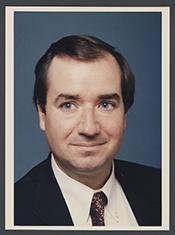 Rep. Edward R. Royce (R-CA)
Legislative Activity
Stay on top of the latest movement without scrolling through every action
Referred to the House Committee on Ways and Means.
January 7, 2003
View full timeline
Introduced in House
January 7, 2003
Referred to the House Committee on Ways and Means.
January 7, 2003
Floor Debate
20 membersWhat members said about H.R. 176 on the floor
 +15
+15
Floor Debate
20 membersWhat members said about H.R. 176 on the floor
Mr. Speaker, I reserve the balance of my time. Mr. Speaker, I yield myself such time as I may consume. Mr. Speaker, I just heard the ranking member say this is not a health bill, that this is a tax…
Mr. Speaker, I yield myself 3 minutes. (Mr. STARK asked and was given permission to revise and extend his remarks.) Mr. Speaker, I will start with an apology to all my Republican colleagues. For, oh,…
Mr. Speaker, pursuant to House Resolution 299, I call up the bill (H.R. 2596) to amend the Internal Revenue Code of 1986 to allow a deduction to individuals for amounts contributed to health savings…
Mr. Speaker, once again Republicans insist on a fiscally irresponsible bill that will benefit the wealthiest and in this case the healthiest at the cost of at least $174 billion added to our already…
Mr. Speaker, I thank the gentleman for yielding me this time. Mr. Speaker, in the next few hours, the Republicans in the Congress will engage in the greatest raid and diminishment on middle-class…
Show 8 more
Mr. Speaker, I yield myself such time as I may consume. The chairman of the Committee on Ways and Means connected this bill with senior citizens' inability to plan for their future. Well, I am glad…
Mr. Speaker, I really wish more of the American public were watching this debate because they would be able to fully appreciate how marginal the left has become to any serious debate about the…
Mr. Speaker, I think it is important to realize that last night a miracle occurred in this body, a bill that left the committee costing $73 billion sometime after midnight suddenly became $173…
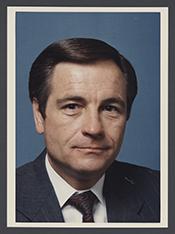
Mr. Speaker, let me thank the gentleman from California for yielding me this time. Mr. Speaker, I really do not know where to start, to start answering some of the critics and the proponents of this…
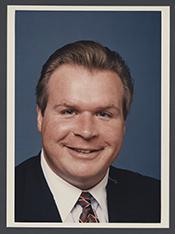
Parliamentary inquiry, Mr. Speaker. Mr. Speaker, parliamentary inquiry. Mr. Speaker, is it appropriate for a Member to address his comments directly to another Member, or should those comments be…
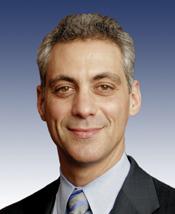
Mr. Speaker, I thank my colleague from California for yielding me this time. Earlier the speaker before me talked about choice. In the prescription drug debate we are having, I have talked about…
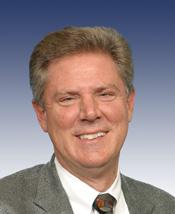
Mr. Speaker, I just do not know how many tricks or hoaxes the Republican leadership is going to play on us tonight and on the American people. It is unbelievable. I listened to the gentleman from…
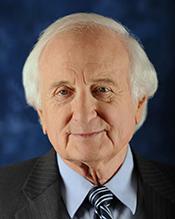
Mr. Speaker, this came out of the wee hours of this morning, but I want Members to realize how radical a move this is. We are going to have later today a radical effort to dismantle Medicare. What…
Show 7 more
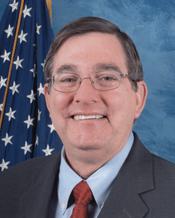
Mr. Speaker, I thank the gentleman from Wisconsin for yielding me this time. H.R. 2596 will increase access to consumer-based health coverage to all Americans regardless of income. Under H.R. 2596…

Mr. Speaker, today the House of Representative stands at the threshold of passing landmark legislation that protects and improves Medicare while providing our seniors with a real prescription drug…
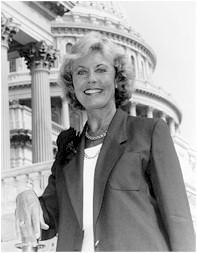
Mr. Speaker, I am very happy that we have this bill on the floor finally. I think it serves a real need, and it provides total flexibility to people who want to provide for the coverage of their…
Mr. Speaker, I thank the gentleman for yielding me this time. This measure will make it easier for employers to offer health care to their employees. It is also going to help Americans save for their…
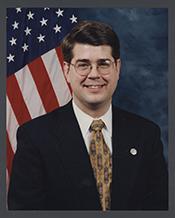
Mr. Speaker, when will it end? I am saddened by the arguments from the left that fail to recognize that there are more people in America that want to have choices. They do not want just the offering…
Mr. Speaker, in regard to the Medicare bill we will be considering this evening, I thought about coming down to the House and asserting that this bill was a Trojan horse, but I think it is worse than…
Mr. Speaker, the immediate preceding speaker, the gentleman from Illinois (Mr. Emanuel), spoke about the free market and letting free market forces work with respect to prescription drugs, and his…
Bill Text
Latest available legislative text
        [Congressional Bills 108th Congress]
[From the U.S. Government Publishing Office]
[H.R. 176 Introduced in House (IH)]

108th CONGRESS
1st Session
H. R. 176

To amend the Internal Revenue Code of 1986 to allow amounts elected for
reimbursement of medical care expenses under a health flexible spending
arrangement that are unused during a plan year to be carried over for
such use for subsequent plan years.

_______________________________________________________________________

IN THE HOUSE OF REPRESENTATIVES

January 7, 2003

Mr. Royce (for himself and Mr. Kennedy of Minnesota) introduced the
following bill; which was referred to the Committee on Ways and Means

_______________________________________________________________________

A BILL

To amend the Internal Revenue Code of 1986 to allow amounts elected for
reimbursement of medical care expenses under a health flexible spending
arrangement that are unused during a plan year to be carried over for
such use for subsequent plan years.

Be it enacted by the Senate and House of Representatives of the
United States of America in Congress assembled,

SECTION 1. CARRYOVER OF UNUSED BENEFITS FROM HEALTH FLEXIBLE SPENDING
ARRANGEMENTS.

(a) In General.--Section 125 of the Internal Revenue Code of 1986
(relating to cafeteria plans) is amended by redesignating subsections
(h) and (i) as subsections (i) and (j), respectively, and by inserting
after subsection (g) the following new subsection:
``(h) Allowance of Carryovers of Unused Funds to Subsequent Taxable
Years.--
``(1) In general.--For purposes of this title--
``(A) a plan or other arrangement shall not fail to
be treated as a cafeteria plan or health flexible
spending arrangement, and
``(B) no amount shall be required to be included in
gross income by reason of this section or any other
provision of this chapter,
solely because under such plan or other arrangement any amounts
elected for reimbursement of eligible medical care expenses
under a health flexible spending arrangement which are unused
during a plan year may be carried forward to one or more
succeeding plan years.
``(2) Amounts included in gross income.--Any carryover
amount described in paragraph (1) shall be included in gross
income for purposes of subtitle and subtitle B (relating to
withholding and employment taxes). Any such carryover shall be
treated as wages for the taxable year from which the amount was
carried.
``(3) Treatment of and limitation on rollover amounts.--
Amounts carried over under paragraph (1) shall be limited as
follows:
``(A) Amounts carried forward pursuant to paragraph
(1) shall be limited to $2,000 per plan year (as
indexed for future years by the cost of living
adjustment determined under section 1(f)(3)). Any
unused amounts during any plan year in excess of this
amount shall be forfeited and shall be treated in
accordance with the applicable regulations issued under
section 125.
``(B) Amounts carried forward pursuant to paragraph
(1) shall be used only for reimbursement of qualified
medical care expenses (as defined in paragraph (5)).
``(C) The employer may invest such carryover
amounts in guaranteed principal and interest
investments which provide 100 percent liquidity within
the account.
``(4) Forfeitures for terminating participants permitted.--
Nothing in this subsection shall preclude the application of
the requirement set forth in the regulations promulgated under
section 125 that participants who terminate participation prior
to the end of the plan year must forfeit any health flexible
spending arrangement account balance provided such amounts do
not consist of carry over amounts described in paragraph (1).
``(5) Qualified medical expenses.--
``(A) In general.--The term `qualified medical
expenses' means amounts paid for medical care (as
defined in section 213(d)) for such individual, the
spouse of such individual, and any dependent (as
defined in section 152) of such individual, but only to
the extent such amounts are not compensated for by
insurance or otherwise.
``(B) Health insurance expenses.--
``(i) In general.--Subparagraph (A) shall
not apply to any payment for coverage under a
group health plan of an employer of the health
flexible spending arrangement participant or
the spouse of the participant.
``(ii) Exceptions.--Clause (i) shall not
apply to any expense for coverage under--
``(I) a group health plan during
any period of continuation coverage
required under any Federal law,
``(II) a qualified long-term care
insurance contract (as defined in
section 7702B(b)),
``(III) a Medicare supplemental
policy under section 1882 of the Social
Security Act, or
``(IV) an individual health
insurance policy.
``(6) Carryover amounts to be expended after health
flexible spending arrangement contribution.--All qualified
medical care expenses that are submitted for reimbursement must
be reimbursed first from amounts in the participant's health
care flexible spending arrangement that do not constitute
carryover amounts described in paragraph (1), to the extent
such amounts may be reimbursed from the portion of the health
flexible spending arrangement that does not consist of
carryover amounts pursuant to rules set forth in the
regulations promulgated under section 125 relative to health
flexible spending arrangements.
``(7) Treatment of carryover amounts following termination
of employment or other loss of eligibility.--Upon a termination
of employment or other loss of eligibility under the health
care flexible spending arrangement, the employer must provide
for one or more of the following methods of distribution of a
participant's accumulated carryover amount plus interest earned
and allocated to such participant pursuant to paragraph (3)(C):
``(A) The participant's accumulated carryover
amount, including any interest earned and allocated to
such health care spending arrangement balance pursuant
to paragraph (3)(C), may be retained by the employer to
be used to reimburse qualifying medical care expenses
of the former participant and the former employee's
spouse or dependents incurred after the date of
termination;
``(B) The carryover amount calculated as of the day
of the termination of employment or other loss of
eligibility may be transferred to the subsequent
employer to be used by the former participant in a
manner consistent with the rule of this subsection,
provided the subsequent employer provides a similar
arrangement and agrees in writing; or
``(C) The employer may distribute the carryover
amount, including any interest earned and allocated to
such account pursuant to paragraph (3)(C), to any
appropriate vehicle as defined by the Department of
Treasury in regulations or to the participant in cash.
If carryover amounts are received in cash, the interest
earned and allocated to such participant pursuant to
paragraph (3)(C) shall be treated as ordinary income
for purposes of this subtitle.
The employer must offer at least one of the options set forth
above; however, nothing in this subsection requires the
employer to offer more than one option. If the employer offers
more than one of the options listed above, the employee must
choose the applicable option within 60 days of the date of
termination of employment or loss of eligibility. Should no
election be made, the funds will revert to the employer
consistent with Federal regulations. If the termination of
employment or loss of eligibility is a result of the
participant's death, the surviving spouse, or dependents, if no
surviving spouse, will receive the participant's carry over
funds in a manner consistent with paragraph (7)(C).''.
(b) Effective Date.--The amendments made by this section shall
apply to taxable years beginning after December 31, 2003.
<all>