Freedom Flat Tax Act
 Rep. Michael C. Burgess (R-TX)
Legislative Activity
Stay on top of the latest movement without scrolling through every action
Sponsor introductory remarks on measure. (CR H2166-2167)
April 20, 2004
View full timeline
Introduced in House
April 11, 2003
Referred to the House Committee on Ways and Means.
April 11, 2003
Sponsor introductory remarks on measure. (CR E781)
April 12, 2003
Sponsor introductory remarks on measure. (CR H2166-2167)
April 20, 2004
Floor Debate
7 membersWhat members said about H.R. 1783 on the floor

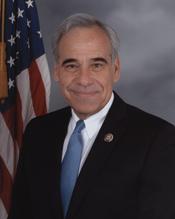


 +2
+2
Floor Debate
7 membersWhat members said about H.R. 1783 on the floor
Mr. Speaker, I want to say to the gentleman from Michigan that I was very interested in his remarks, and I agreed with a lot of his remarks. Where we would disagree is our responsibility is if we are…
Mr. Speaker, I thank the gentleman. It is a pleasure joining the gentleman on such an important topic. It may be late at night, as someone observed, but I think most American families, they are used…
Mr. Speaker, I would like to thank the leader for doing this, although again it is late at night; but many times when families have to fill out the 1040, these are the hours they are working at their…
Mr. Speaker, I first off want to thank the distinguished minority whip for his leadership of the entire United States Congress on the issue of tax simplification and fairness, an issue that affects…
Mr. Speaker, I thank the gentleman from Maryland. This is an auspicious night tonight. The President had a dinner downtown and raised $25 million from some of his closest friends. In the recent…
Show 2 more
Mr. Speaker, during these last 2 weeks back home in my district, I had a lot of discussion about income tax, because, of course, April 15 fell during our recess this year. A lot of people are asking…
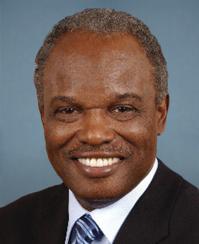
Mr. Speaker, I rise today to discuss what in my opinion is the absolute heaviest burden on the American people and the American family today, and that is this costly, confusing, complex and…
Bill Text
Latest available legislative text
        [Congressional Bills 108th Congress]
[From the U.S. Government Publishing Office]
[H.R. 1783 Introduced in House (IH)]

108th CONGRESS
1st Session
H. R. 1783

To amend the Internal Revenue Code of 1986 to provide taxpayers a flat
tax alternative to the current income tax system.

_______________________________________________________________________

IN THE HOUSE OF REPRESENTATIVES

April 11, 2003

Mr. Burgess (for himself, Mr. Kingston, Mr. Burton of Indiana, Mr.
Boehner, Mr. Bartlett of Maryland, Mr. Hall, Mr. Young of Alaska, Mr.
Weldon of Florida, Mr. Sessions, Mr. Bonilla, Mr. Smith of Texas, and
Mr. Scott of Georgia) introduced the following bill; which was referred
to the Committee on Ways and Means

_______________________________________________________________________

A BILL

To amend the Internal Revenue Code of 1986 to provide taxpayers a flat
tax alternative to the current income tax system.

Be it enacted by the Senate and House of Representatives of the
United States of America in Congress assembled,

SECTION 1. SHORT TITLE.

This Act may be cited as the ``Freedom Flat Tax Act''.

SEC. 2. FREEDOM FLAT TAX.

(a) In General.--Subchapter A of chapter 1 is amended by inserting
after part VII the following new part:

``PART VIII-FREEDOM FLAT TAX

``Sec. 60. Irrevocable election to be
subject to flat tax.
``Sec. 60A. Tax imposed on individuals.
``Sec. 60B. Tax imposed on business
activities.
``Sec. 60C. Tax on noncash compensation
provided to employees not
engaged in business activity.

``SEC. 60. IRREVOCABLE ELECTION TO BE SUBJECT TO FLAT TAX.

``(a) Individual.--
``(1) In general.--Except as provided in paragraph (2), in
lieu of the tax imposed by sections 1 and 55, under regulations
prescribed by the Secretary, an individual may make an
irrevocable election to be subject to the tax imposed by this
part.
``(2) Innocent spouse exception.--An individual who has
made an election under paragraph (1) and who subsequently
obtains relief of liability for tax under section 6015(b) may,
not later than 1 year after the date such relief is granted,
revoke the election made under paragraph (1).
``(b) Person Engaged in Business Activity.--In lieu of the tax
imposed by sections 11 and 55, under regulations prescribed by the
Secretary, a person engaged in business activity may make an
irrevocable election to be subject to the tax imposed by this part.

``SEC. 60A. TAX IMPOSED ON INDIVIDUALS.

``(a) In General.--There is hereby imposed on the taxable income of
every individual who makes an election to be subject to this part a tax
equal to--
``(1) 19 percent of the taxable income of such individual
for such taxable year in the case of the first 2 taxable years
of the individual beginning with the taxable year for which the
election is made, and
``(2) 17 percent of the taxable income of such individual
for such taxable year in the case of all taxable years
subsequent to the taxable years described in paragraph (1).
``(b) Taxable Income.--For purposes of this part, the term `taxable
income' means the excess of--
``(1) the sum of--
``(A) wages (as defined in section 3121(a) without
regard to paragraph (1) thereof) which are paid in cash
and which are received during the taxable year for
services performed in the United States,
``(B) retirement distributions which are includible
in gross income for such taxable year, plus
``(C) amounts received under any law of the United
States or of any State which is in the nature of
unemployment compensation, over
``(2) the standard deduction.
``(c) Standard Deduction.--For purposes of this part--
``(1) In general.--The term `standard deduction' means the
sum of--
``(A) the basic standard deduction, plus
``(B) the additional standard deduction.
``(2) Basic standard deduction.--For purposes of paragraph
(1), the basic standard deduction is--
``(A) $25,580 in the case of--
``(i) a joint return, or
``(ii) a surviving spouse (as defined in
section 2(a)),
``(B) $16,330 in the case of a head of household
(as defined in section 2(b)), and
``(C) $12,790 in the case of an individual--
``(i) who is not married and who is not a
surviving spouse or head of household, or
``(ii) who is a married individual filing a
separate return.
``(3) Additional standard deduction.--For purposes of
paragraph (1), the additional standard deduction is $5,510 for
each dependent (as defined in section 152) who is described in
section 151(c)(1) for the taxable year and who is not required
to file a return for such taxable year.
``(d) Retirement Distributions.--For purposes of this section, the
term `retirement distribution' means any distribution from--
``(1) a plan described in section 401(a) which includes a
trust exempt from tax under section 501(a),
``(2) an annuity plan described in section 403(a),
``(3) an annuity contract described in section 403(b),
``(4) an individual retirement account described in section
408(a),
``(5) an individual retirement annuity described in section
408(b),
``(6) an eligible deferred compensation plan (as defined in
section 457),
``(7) a governmental plan (as defined in section 414(d)),
or
``(8) a trust described in section 501(c)(18).
Such term includes any plan, contract, account, annuity, or trust
which, at any time, has been determined by the Secretary to be such a
plan, contract, account, annuity, or trust.
``(e) Income of Certain Children.--For purposes of this part--
``(1) an individual's taxable income shall include the
taxable income of each dependent child of such individual who
has not attained age 14 as of the close of such taxable year,
and
``(2) such dependent child shall have no liability for tax
imposed by this section with respect to such income and shall
not be required to file a return for such taxable year.
``(f) Inflation Adjustment.--
``(1) In general.--In the case of any taxable year
beginning in a calendar year after 2004, each dollar amount
contained in subsection (c) shall be increased by an amount
determined by the Secretary to be equal to--
``(A) such dollar amount, multiplied by
``(B) the cost-of-living adjustment for such
calendar year.
``(2) Cost-of-living adjustment.--For purposes of paragraph
(1), the cost-of-living adjustment for any calendar year is the
percentage (if any) by which--
``(A) the CPI for the preceding calendar year,
exceeds
``(B) the CPI for the calendar year 2003.
``(3) CPI for any calendar year.--For purposes of paragraph
(2), the CPI for any calendar year is the average of the
Consumer Price Index as of the close of the 12-month period
ending on August 31 of such calendar year.
``(4) Consumer price index.--For purposes of paragraph (3),
the term `Consumer Price Index' means the last Consumer Price
Index for all-urban consumers published by the Department of
Labor. For purposes of the preceding sentence, the revision of
the Consumer Price Index which is most consistent with the
Consumer Price Index for calendar year 1986 shall be used.
``(5) Rounding.--If any increase determined under paragraph
(1) is not a multiple of $10, such increase shall be rounded to
the next highest multiple of $10.
``(g) Marital Status.--For purposes of this section, marital status
shall be determined under section 7703.

``SEC. 60B. TAX IMPOSED ON BUSINESS ACTIVITIES.

``(a) Tax Imposed.--There is hereby imposed on every person engaged
in a business activity who makes an election to be taxed under this
part a tax equal to--
``(1) 19 percent of the business taxable income of such
person for such taxable year in the case of the first 2 taxable
years of the individual beginning with the taxable year for
which the election is made, and
``(2) 17 percent of the business taxable income of such
person for such taxable year in the case of all taxable years
subsequent to the taxable years described in paragraph (1).
``(b) Liability for Tax.--The tax imposed by this section shall be
paid by the person engaged in the business activity, whether such
person is an individual, partnership, corporation, or otherwise.
``(c) Business Taxable Income.--For purposes of this section--
``(1) In general.--The term `business taxable income' means
gross active income reduced by the deductions specified in
subsection (d).
``(2) Gross active income.--
``(A) In general.--For purposes of paragraph (1),
the term `gross active income' means gross receipts
from--
``(i) the sale or exchange of property or
services in the United States by any person in
connection with a business activity, and
``(ii) the export of property or services
from the United States in connection with a
business activity.
``(B) Exchanges.--For purposes of this section, the
amount treated as gross receipts from the exchange of
property or services is the fair market value of the
property or services received, plus any money received.
``(C) Coordination with special rules for financial
services, etc.--Except as provided in subsection (e)--
``(i) the term `property' does not include
money or any financial instrument, and
``(ii) the term `services' does not include
financial services.
``(3) Exemption from tax for activities of governmental
entities and tax-exempt organizations.--For purposes of this
section, the term `business activity' does not include any
activity of a governmental entity or of any other organization
which is exempt from tax under this chapter.
``(d) Deductions.--
``(1) In general.--The deductions specified in this
subsection are--
``(A) the cost of business inputs for the business
activity,
``(B) wages (as defined in section 3121(a) without
regard to paragraph (1) thereof) which are paid in cash
for services performed in the United States as an
employee, and
``(C) retirement contributions to or under any plan
or arrangement which makes retirement distributions (as
defined in section 63(c)) for the benefit of such
employees to the extent such contributions are allowed
as a deduction under section 404.
``(2) Business inputs.--
``(A) In general.--For purposes of paragraph (1),
the term `cost of business inputs' means--
``(i) the amount paid for property sold or
used in connection with a business activity,
``(ii) the amount paid for services (other
than for the services of employees, including
fringe benefits paid by reason of such
services) in connection with a business
activity, and
``(iii) any excise tax, sales tax, customs
duty, or other separately stated levy imposed
by a Federal, State, or local government on the
purchase of property or services which are for
use in connection with a business activity.
Such term shall not include any tax imposed by chapter
2 or 21.
``(B) Exceptions.--Such term shall not include--
``(i) items described in subparagraphs (B)
and (C) of paragraph (1), and
``(ii) items for personal use not in
connection with any business activity.
``(C) Exchanges.--For purposes of this section, the
amount treated as paid in connection with the exchange
of property or services is the fair market value of the
property or services exchanged, plus any money paid.
``(e) Special Rules for Financial Inter-
mediation Service Activities.--In the case of the business activity of
providing financial intermediation services, the taxable income from
such activity shall be equal to the value of the intermediation
services provided in such activity.
``(f) Exception for Services Performed as Employee.--For purposes
of this section, the term `business activity' does not include the
performance of services by an employee for the employee's employer.
``(g) Carryover of Credit-Equivalent of Excess Deductions.--
``(1) In general.--If the aggregate deductions for any
taxable year exceed the gross active income for such taxable
year, the credit-equivalent of such excess shall be allowed as
a credit against the tax imposed by this section for the
following taxable year.
``(2) Credit-equivalent of excess deductions.--For purposes
of paragraph (1), the credit-equivalent of the excess described
in paragraph (1) for any taxable year is an amount equal to--
``(A) the sum of--
``(i) such excess, plus
``(ii) the product of such excess and the
3-month Treasury rate for the last month of
such taxable year, multiplied by
``(B) the rate of the tax imposed by subsection (a)
for such taxable year.
``(3) Carryover of unused credit.--If the credit allowable
for any taxable year by reason of this subsection exceeds the
tax imposed by this section for such year, then (in lieu of
treating such excess as an overpayment) the sum of--
``(A) such excess, plus
``(B) the product of such excess and the 3-month
Treasury rate for the last month of such taxable year,
shall be allowed as a credit against the tax imposed by this
section for the following taxable year.
``(4) 3-month treasury rate.--For purposes of this
subsection, the 3-month Treasury rate is the rate determined by
the Secretary based on the average market yield (during any 1-
month period selected by the Secretary and ending in the
calendar month in which the determination is made) on
outstanding marketable obligations of the United States with
remaining periods to maturity of 3 months or less.

``SEC. 60C. TAX ON NONCASH COMPENSATION PROVIDED TO EMPLOYEES NOT
ENGAGED IN BUSINESS ACTIVITY.

``(a) Imposition of Tax.--There is hereby imposed a tax equal to 19
percent (17 percent in the case of calendar years beginning after
December 31, 2004) of the value of excludable compensation provided
during the calendar year by an employer for the benefit of employees to
whom this section applies.
``(b) Liability for Tax.--The tax imposed by this section shall be
paid by the employer.
``(c) Excludable Compensation.--For purposes of subsection (a), the
term `excludable compensation' means any remuneration for services
performed as an employee other than--
``(1) wages (as defined in section 3121(a) without regard
to paragraph (1) thereof) which are paid in cash,
``(2) remuneration for services performed outside the
United States, and
``(3) retirement contributions to or under any plan or
arrangement which makes retirement distributions (as defined in
section 63(c)).
``(d) Employees to Whom Section Applies.--This section shall apply
to an employee who is employed in any activity by--
``(1) any organization which is exempt from taxation under
this chapter, or
``(2) any agency or instrumentality of the United States,
any State or political subdivision of a State, or the District
of Columbia.''
(b) Clerical Amendment.--The table of parts for subchapter A of
chapter 1 of such Code is amended by adding at the end the following
new item:

``Part VIII. Freedom Flat Tax.''.

(c) Effective Date.--The amendments made by this title shall apply
to taxable years beginning after December 31, 2003.
<all>