H.R. 1824House108th Congress (2003-2005)In Committee
Fire Sprinkler Incentive Act of 2003
To amend the Internal Revenue Code of 1986 to classify automatic fire sprinkler systems as 5-year property for purposes of depreciation.
Sponsored by 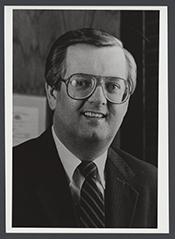 Rep. Curt Weldon (R-PA)
Introduced April 11, 2003
Legislative Activity
Stay on top of the latest movement without scrolling through every action
HouseIntro Referral
Latest Action
Referred to the House Committee on Ways and Means.
April 11, 2003
View full timeline
HouseIntro Referral
Introduced in House
April 11, 2003
HouseIntro Referral
Referred to the House Committee on Ways and Means.
April 11, 2003
Floor Debate
1 memberWhat members said about H.R. 1824 on the floor

Floor Debate
1 memberWhat members said about H.R. 1824 on the floor
1 Democrat
Rep. James R. LangevinD-RI-2 · Jul 11, 2003
Mr. Speaker, I rise today to applaud the work of the Rhode Island General Assembly for passage of the Comprehensive Fire Safety Act and to urge other States to update their fire codes to modern…
Bill Text
Latest available legislative text
Introduced in HouseIssued April 11, 2003
        [Congressional Bills 108th Congress]
[From the U.S. Government Publishing Office]
[H.R. 1824 Introduced in House (IH)]

108th CONGRESS
1st Session
H. R. 1824

To amend the Internal Revenue Code of 1986 to classify automatic fire
sprinkler systems as 5-year property for purposes of depreciation.

_______________________________________________________________________

IN THE HOUSE OF REPRESENTATIVES

April 11, 2003

Mr. Weldon of Pennsylvania (for himself and Mr. Langevin) introduced
the following bill; which was referred to the Committee on Ways and
Means

_______________________________________________________________________

A BILL

To amend the Internal Revenue Code of 1986 to classify automatic fire
sprinkler systems as 5-year property for purposes of depreciation.

Be it enacted by the Senate and House of Representatives of the
United States of America in Congress assembled,

SECTION 1. SHORT TITLE.

This Act may be cited as the ``Fire Sprinkler Incentive Act of
2003''.

SEC. 2. FINDINGS.

The Congress finds that--
(1) since the publication of the original study and
comprehensive list of recommendations in America Burning,
written in 1974, requested advances in fire prevention through
the installation of automatic sprinkler systems in existing
buildings have yet to be fully implemented;
(2) fire departments responded to approximately 1.7 million
fires in 2001;
(3) there were 3,745 non-terrorist related deaths in the
United States and almost 21,000 civilian injuries resulting
from fire in 2001;
(4) 99 firefighters were killed in 2001, excluding the
terrorist acts on September 11th;
(5) fire caused $8.9 billion in direct property damage in
2001, and sprinklers are responsible for a 43 to 70 percent
reduction in property damage from fires in public assembly,
educational, residential, commercial, industrial and
manufacturing buildings;
(6) fire departments respond to a fire every 18 seconds, a
fire breaks out in a structure every 60 seconds and in a
residential structure every 80 seconds in the United States;
(7) the Station Nightclub in West Warwick, Rhode Island,
did not contain an automated sprinkler system and burned down,
killing 99 people on February 20, 2003;
(8) due to an automated sprinkler system, not a single
person was injured from a fire beginning in the Fine Line Music
Cafe in Minneapolis after the use of pyrotechnics on February
17, 2003;
(9) the National Fire Protection Association has no record
of a fire killing more than two people in a completely
sprinklered public assembly, educational, institutional or
residential building where the system was properly installed
and fully operational;
(10) sprinkler systems dramatically improve the chances of
survival of those who cannot save themselves, specifically
older adults, young children and people with disabilities;
(11) most property owners are incapable of upgrading fire
counter measures in buildings built prior to fire safety codes
due to the financial cost of retrofitting;
(12) many State and local governments lack any requirements
for new structures to contain automatic sprinkler systems;
(13) under the present straight-line method of
depreciation, there is a disincentive for building safety
improvements due to an extremely low rate of return on
investment; and
(14) the Nation is in need of incentives for the voluntary
installation and retrofitting of buildings with automated
sprinkler systems to save the lives of countless individuals
and responding firefighters as well as drastically reduce the
costs from property damage.

SEC. 3. CLASSIFICATION OF AUTOMATIC FIRE SPRINKLER SYSTEMS.

(a) In General.--Subparagraph (B) of section 168(e)(3) of the
Internal Revenue Code of 1986 (relating to 5-year property) is amended
by striking ``and'' at the end of clause (v), by striking the period at
the end of clause (vi) and inserting ``, and'', and by adding at the
end the following:
``(vii) any automatic fire sprinkler
system.''.
(b) Alternative System.--The table contained in section
168(g)(3)(B) of such Code is amended by inserting after the third item
the following:

``(B)(vii)..................................................       7''.
(c) Definition of Automatic Fire Sprinkler System.--Subsection (i)
of section 168 of such Code is amended by adding at the end the
following:
``(15)  Automated fire sprinkler system.--The term
`automated fire sprinkler system' means those sprinkler systems
classified under one or more of the following publications of
the National Fire Protection Association--
``(A) NFPA 13, Installation of Sprinkler Systems,
``(B) NFPA 13 D, Installation of Sprinkler Systems
in One and Two Family Dwellings and Manufactured Homes,
and
``(C) NFPA 13 R, Installation of Sprinkler Systems
in Residential Occupancies up to and Including Four
Stories in Height.''.
(d) Effective Date.--The amendments made by this section shall
apply to property placed in service after the date of the enactment of
this Act.
<all>