Project BioShield Act of 2003
 Rep. W. J. (Billy) Tauzin (R-LA)
Legislative Activity
Stay on top of the latest movement without scrolling through every action
Received in the Senate. Read twice. Placed on Senate Legislative Calendar under General Orders. Calendar No. 214.
July 17, 2003
View full timeline
Introduced in House
May 15, 2003
Referred to the Committee on Energy and Commerce, and in addition to the Committees on Government Reform, and Homeland Security (Select), for a period to be subsequently determined by the Speaker, in each case for consideration of such provisions as fall within the jurisdiction of the committee concerned.
May 15, 2003
Committee Consideration and Mark-up Session Held.
May 22, 2003
Ordered to be Reported (Amended) by Voice Vote.
May 22, 2003
Reported by the Committee on Energy and Commerce. H. Rept. 108-147, Part I.
June 10, 2003
House Committee on Government Reform Granted an extension for further consideration ending not later than June 13, 2003.
June 10, 2003
House Committee on Homeland Security (Select) Granted an extension for further consideration ending not later than June 13, 2003.
June 10, 2003
Referred sequentially to the House Committee on Armed Services for a period ending not later than June 11, 2003 pursuant to clause 1(c), rule X.
June 10, 2003
Reported (Amended) by the Committee on Government Reform. H. Rept. 108-147, Part II.
June 12, 2003
House Committee on Homeland Security (Select) Granted an extension for further consideration ending not later than June 27, 2003.
June 13, 2003
Committee Consideration and Mark-up Session Held.
June 26, 2003
Ordered to be Reported (Amended) by the Yeas and Nays: 29 - 0.
June 26, 2003
House Committee on Homeland Security (Select) Granted an extension for further consideration ending not later than July 8, 2003.
June 27, 2003
Reported (Amended) by the Committee on Homeland Security (Select). H. Rept. 108-147, Part III.
July 8, 2003
Placed on the Union Calendar, Calendar No. 98.
July 8, 2003
Consideration initiated by previous order of the House.
July 16, 2003 • 2:02 PM
Considered by previous order of the House. (consideration: CR H6908-6941; text as reported in House: CR H6908-6920)
July 16, 2003 • 2:02 PM
DEBATE - The House proceeded with 90 minutes of debate on H.R. 2122, equally divided and controlled.
July 16, 2003 • 2:03 PM
The previous question was ordered pursuant to a previous order of the House. (consideration: CR H6946; text: CR H6946)
July 16, 2003 • 3:43 PM
POSTPONED ROLL CALL VOTE - At the conclusion of debate on H.R. 2122, as amended, the Chair put the question on passage of the bill, as amended, and by voice vote, announced that the ayes had prevailed. Mr. Cox demanded the yeas and nays and the Chair postponed further proceedings on the question of passage until later in the legislative day.
July 16, 2003 • 3:44 PM
Considered as unfinished business. (consideration: CR H6947-6948)
July 16, 2003 • 5:00 PM
Passed/agreed to in House: On passage Passed by the Yeas and Nays: 421 - 2 (Roll no. 373).
July 16, 2003 • 5:07 PM
On passage Passed by the Yeas and Nays: 421 - 2 (Roll no. 373).
July 16, 2003 • 5:07 PM
Motion to reconsider laid on the table Agreed to without objection.
July 16, 2003 • 5:08 PM
Received in the Senate. Read twice. Placed on Senate Legislative Calendar under General Orders. Calendar No. 214.
July 17, 2003
Voting History
1 vote recorded • Roll call available
Floor Debate
24 membersWhat members said about H.R. 2122 on the floor

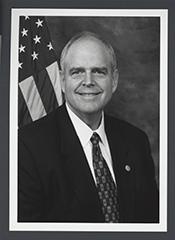

 +19
+19
Floor Debate
24 membersWhat members said about H.R. 2122 on the floor
Mr. Speaker, pursuant to the order of the House of Tuesday, July 15, 2003, I call up the bill (H.R. 2122) to enhance research, development, procurement, and use of biomedical countermeasures to…
Mr. Speaker, I thank the distinguished gentleman from Texas for yielding me this time. This is an important statement, if you will, an actuality of the work that the Select Committee on Homeland…
Mr. Speaker, I thank the gentlewoman for yielding me this time. Mr. Speaker, today I rise in support of the rule that will allow for consideration of H.R. 1588, the National Defense Authorization Act…
Mr. Speaker, I want to thank the chairman not only for yielding time but for the exceptional work that the Committee on Government Reform has done both on the majority and minority sides to bring us…
Mr. Speaker, I thank the gentlewoman for yielding me time. Let me say to all my colleagues, this is a great defense bill that is coming to the floor, and I hope everybody supports it. It does a lot…
Show 8 more

Mr. Speaker, I yield myself such time as I may consume. (Mr. Frost asked and was given permission to revise and extend his remarks.) Mr. Speaker, when it comes to supporting America's troops, there…

Mr. Speaker, I yield myself such time as I may consume. To win the war on terror, we must do everything we can to protect the American people from the threat posed by terrorists using weapons of mass…

Yes, I do. Mr. Speaker, I yield 3 minutes to the distinguished gentleman from Maryland (Mr. Hoyer), our minority whip. It looks like you have plenty of time. I just have a question that requires a…

Mr. Speaker, I yield myself 3\1/2\ minutes. Mr. Speaker, this legislation is the product of a good-faith bipartisan process. I want to thank the gentleman from Louisiana (Mr. Tauzin), the gentleman…

Mr. Speaker, by direction of the Committee on Rules, I call up House Resolution 245 and ask for its immediate consideration. Mr. Speaker, for purposes of debate only, I yield the customary 30 minutes…

Mr. Speaker, as I understand it, I would have the time yielded to the Committee on Government Reform in addition to the time yielded to me by the Committee on Energy and Commerce? Mr. Speaker, I…

Mr. Speaker, I yield myself such time as I may consume; and I thank my friend, the gentleman from Ohio (Mr. Brown), for yielding me this time. I assure my colleagues I will not personally take all 24…

Mr. Speaker, I rise in strong support of this rule, and I really am somewhat perplexed to hear all of the criticism of our attempts to be bipartisan on this legislation. Someone's been shut out in…
Show 11 more

Mr. Speaker, I yield myself such time as I may consume, and I thank the gentleman from Washington for yielding me the customary 30 minutes. (Ms. SLAUGHTER asked and was given permission to revise and…

Mr. Speaker, I rise to engage the chairman of the Committee on Energy and Commerce, the gentleman from Louisiana (Mr. Tauzin), in a colloquy. Mr. Speaker, I am concerned that certain provisions of…
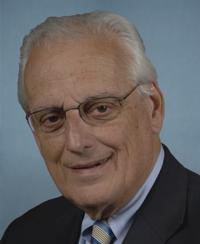
Mr. Speaker, the tragic events of September 11, and the anthrax attacks shortly thereafter, reinforced the possibility of a widespread bioterrorist strike on America; and that is very real. There was…

Mr. Speaker, in 1964 when this country decided to allow oil drilling in the offshore oil lands, the decision was made to dedicate about $900 million a year from those receipts to what was called the…

Mr. Speaker, by direction of the Committee on Rules, I call up House Resolution 319 and ask for its immediate consideration. Mr. Speaker, for the purpose of debate only, I yield the customary 30…

Mr. Speaker, I thank the gentleman for yielding me this time. Once again, once again, this Republican majority shows no compunction about turning even the most bipartisan legislation into a vehicle…

Mr. Speaker, I rise today as a member of the Select Committee on Homeland Security and also of the Subcommittee on Emergency Preparedness and Response in qualified support of the Project BioShield…

Mr. Speaker, I certainly associate myself with the comments the distinguished dean of the House, the gentleman from Michigan (Mr. Dingell). Therefore, I also rise against this rule. As many Members…

Mr. Speaker, I thank the gentleman for yielding time to me. I have had the opportunity to review this legislation from the prospect of two committees, as a member of the Committee on Energy and…
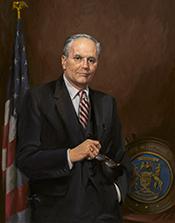
Mr. Speaker, this is a bad rule. It should be defeated. My Republican colleagues have done the same thing that they usually do. They have gagged the minority. They have denied us a right to discuss…
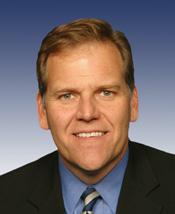
Mr. Speaker, will the gentleman yield? Mr. Speaker, I thank the gentleman for yielding to me. Mr. Speaker, the House will convene on Monday at 10:30 a.m. for morning hour and 12 p.m. for legislative…
Bill Text
4 versions available
        [Congressional Bills 108th Congress]
[From the U.S. Government Publishing Office]
[H.R. 2122 Placed on Calendar Senate (PCS)]

Calendar No. 214
108th CONGRESS
1st Session
H. R. 2122

_______________________________________________________________________

IN THE SENATE OF THE UNITED STATES

July 17, 2003

Received; read twice and placed on the calendar

_______________________________________________________________________

AN ACT

To enhance research, development, procurement, and use of biomedical
countermeasures to respond to public health threats affecting national
security, and for other purposes.

Be it enacted by the Senate and House of Representatives of the
United States of America in Congress assembled,

SECTION 1. SHORT TITLE.

This Act may be cited as the ``Project BioShield Act of 2003''.

SEC. 2. BIOMEDICAL COUNTERMEASURE RESEARCH AND DEVELOPMENT ---
AUTHORITIES.

(a) In General.--Part B of title III of the Public Health Service
Act (42 U.S.C. 243 et seq.) is amended by inserting after section 319F
the following section:

``SEC. 319F-1. AUTHORITY FOR USE OF CERTAIN PROCEDURES REGARDING
QUALIFIED COUNTERMEASURE RESEARCH AND DEVELOPMENT
ACTIVITIES.

``(a) In General.--
``(1) Authority.--In conducting and supporting research and
development activities regarding biomedical countermeasures
under section 319F(h), the Secretary may conduct and support
such activities in accordance with this section if the
activities concern qualified countermeasures.
``(2) Qualified countermeasure.--For purposes of this
section, the term `qualified countermeasure' means a priority
countermeasure (as defined in section 319F(h) and as determined
by the Secretary in accordance with such section and consistent
with sections 302(2) and 304(a) of the Homeland Security Act of
2002) against a chemical, biological, radiological, or nuclear
agent that may cause a public health emergency affecting
national security.
``(3) Interagency cooperation.--
``(A) In general.--In carrying out activities under
this section, the Secretary is authorized, subject to
subparagraph (B), to enter into interagency agreements
and other collaborative undertakings with other
agencies of the United States Government.
``(B) Limitation.--An agreement or undertaking
under this paragraph shall not authorize another agency
to exercise the authorities provided by this section.
``(4) Availability of facilities to the secretary.--In any
grant, contract, or cooperative agreement entered into under
the authority provided in this section with respect to a
biocontainment laboratory or other related or ancillary
specialized research facility that the Secretary determines
necessary for the purpose of performing, administering, or
supporting qualified countermeasure research and development,
the Secretary may provide that the facility that is the object
of such grant, contract, or cooperative agreement shall be
available as needed to the Secretary to respond to public
health emergencies affecting national security.
``(5) Transfers of qualified countermeasures.--Each
agreement for an award of a grant, contract, or cooperative
agreement under section 319F(h) for the development of a
qualified countermeasure shall provide that the recipient of
the award will comply with all applicable export-related
controls with respect to such countermeasure.
``(b) Expedited Procurement Authority.--
``(1) Increased simplified acquisition threshold for
qualified countermeasure procurements.--
``(A) In general.--For any procurement by the
Secretary of property or services for use (as
determined by the Secretary) in performing,
administering, or supporting qualified countermeasure
research or development activities under this section
that the Secretary determines necessary to respond to
pressing research and development needs under this
section, the amount specified in section 4(11) of the
Office of Federal Procurement Policy Act (41 U.S.C.
403(11)), as applicable pursuant to section 302A(a) of
the Federal Property and Administrative Services Act of
1949 (41 U.S.C. 252a(a)), shall be deemed to be
$25,000,000 in the administration, with respect to such
procurement, of--
``(i) section 303(g)(1)(A) of the Federal
Property and Administrative Services Act of
1949 (41 U.S.C. 253(g)(1)(A)) and its
implementing regulations; and
``(ii) section 302A(b) of such Act (41
U.S.C. 252a(b)) and its implementing
regulations.
``(B) Application of certain provisions.--
Notwithstanding subparagraph (A) and the provision of
law and regulations referred to in such subparagraph,
each of the following provisions shall apply to
procurements described in this paragraph to the same
extent that such provisions would apply to such
procurements in the absence of subparagraph (A):
``(i) Chapter 37 of title 40, United States
Code (relating to contract work hours and
safety standards).
``(ii) Subsections (a) and (b) of section 7
of the Anti-Kickback Act of 1986 (41 U.S.C.
57(a) and (b)).
``(iii) Section 304C of the Federal
Property and Administrative Services Act of
1949 (41 U.S.C. 254d) (relating to the ---
examination of contractor records).
``(C) Internal controls to be instituted.--The
Secretary shall institute appropriate internal controls
for procurements that are under this paragraph,
including requirements with regard to documenting the
justification for use of the authority in this
paragraph.
``(2) Procedures other than full and open competition.--
``(A) In general.--In using the authority provided
in section 303(c)(1) of title III of the Federal
Property and Administrative Services Act of 1949 (41
U.S.C. 253(c)(1)) to use procedures other than
competitive procedures in the case of a procurement
described in paragraph (1) of this subsection, the
phrase `available from only one responsible source' in
such section 303(c)(1) shall be deemed to mean
`available from only one responsible source or only
from a limited number of responsible sources'.
``(B) Relation to other authorities.--The authority
under subparagraph (A) is in addition to any other
authority to use procedures other than competitive
procedures.
``(C) Applicable government-wide regulations.--The
Secretary shall implement this paragraph in accordance
with applicable government-wide regulations, including
requirements that offers be solicited from as many
potential sources as is practicable under the
circumstances, that required notices be published, and
that submitted offers be considered.
``(3) Increased micropurchase threshold.--
``(A) In general.--For a procurement described by
paragraph (1), the amount specified in subsections (c),
(d), and (f) of section 32 of the Office of Federal
Procurement Policy Act (41 U.S.C. 428) shall be deemed
to be $15,000 in the administration of that section
with respect to such procurement.
``(B) Internal controls to be instituted.--The
Secretary shall institute appropriate internal controls
for purchases that are under this paragraph and that
are greater than $2,500.
``(C) Exception to preference for purchase card
mechanism.--No provision of law establishing a
preference for using a Government purchase card method
for purchases shall apply to purchases that are under
this paragraph and that are greater than $2,500.
``(4) Review.--
``(A) Review allowed.--Notwithstanding any other
provision of law, including subsection (f), review of a
contracting agency decision relating to a procurement
described in paragraph (1) may be had only by filing a
protest--
``(i) with a contracting agency; or
``(ii) with the Comptroller General under
subchapter V of chapter 35 of title 31, United
States Code.
``(B) Override of stay of contract award or
performance committed to agency discretion.--
Notwithstanding any other provision of law, the
following authorizations by the head of a procuring
activity are committed to agency discretion:
``(i) An authorization under section
3553(c)(2) of title 31, United States Code, to
award a contract for a procurement described in
paragraph (1) of this subsection.
``(ii) An authorization under section
3553(d)(3)(C) of such title to perform a
contract for a procurement described in
paragraph (1) of this subsection.
``(c) Authority to Expedite Peer Review.--
``(1) In general.--The Secretary may, as the Secretary
determines necessary to respond to pressing qualified
countermeasure research and development needs under this
section, employ such expedited peer review procedures
(including consultation with appropriate scientific experts) as
the Secretary, in consultation with the Director of NIH, deems
appropriate to obtain assessment of scientific and technical
merit and likely contribution to the field of qualified
countermeasure research, in place of the peer review and
advisory council review procedures that would be required under
sections 301(a)(3), 405(b)(1)(B), 405(b)(2), 406(a)(3)(A), 492,
and 494, as applicable to a grant, contract, or cooperative
agreement--
``(A) that is for performing, administering, or
supporting qualified countermeasure research and
development activities; and
``(B) the amount of which is not greater than
$1,500,000.
``(2) Subsequent phases of research.--The Secretary's
determination of whether to employ expedited peer review with
respect to subsequent phases of a research grant, contract, or
cooperative agreement under this section shall be determined
without regard to the peer review procedures used for any prior
peer review of that same grant, contract, or cooperative
agreement.
``(d) Authority for Personal Services Contracts.--
``(1) In general.--For the purpose of performing,
administering, or supporting qualified countermeasure research
and development activities, the Secretary may, as the Secretary
determines necessary to respond to pressing qualified
countermeasure research and development needs under this
section, obtain by contract (in accordance with section 3109 of
title 5, United States Code, but without regard to the
limitations in such section on the period of service and on
pay) the personal services of experts or consultants who have
scientific or other professional qualifications, except that in
no case shall the compensation provided to any such expert or
consultant exceed the daily equivalent of the annual rate of
compensation for the President.
``(2) Federal tort claims act coverage.--
``(A) In general.--A person carrying out a contract
under paragraph (1), and an officer, employee, or
governing board member of such person, shall be deemed
to be an employee of the Department of Health and Human
Services for purposes of claims under sections 1346(b)
and 2672 of title 28, United States Code, for money
damages for personal injury, including death, resulting
from performance of functions under such contract.
``(B) Exclusivity of remedy.--The remedy provided
by subparagraph (A) shall be exclusive of any other
civil action or proceeding by reason of the same
subject matter against the person, officer, employee,
or governing board member.
``(3) Internal controls to be instituted.--
``(A) In general.--The Secretary shall institute
appropriate internal controls for contracts under this
subsection, including procedures for the Secretary to
make a determination of whether a person, or an
officer, employee, or governing board member of a
person, is deemed to be an employee of the Department
of Health and Human Services pursuant to paragraph (2).
``(B) Determination of employee status to be
final.--A determination by the Secretary under
subparagraph (A) that a person, or an officer,
employee, or governing board member of a person, is or
is not deemed to be an employee of the Department of
Health and Human Services shall be final and binding on
the Secretary and the Attorney General and other
parties to any civil action or proceeding.
``(4) Number of personal services contracts limited.--The
number of experts and consultants whose personal services are
obtained under paragraph (1) shall not exceed 30 at any time.
``(e) Streamlined Personnel Authority.--
``(1) In general.--In addition to any other personnel
authorities, the Secretary may, as the Secretary determines
necessary to respond to pressing qualified countermeasure
research and development needs under this section, without
regard to such provisions of title 5, United States Code,
governing appointments in the competitive service, and without
regard to the provisions of chapter 51 and subchapter III of
chapter 53 of such title relating to classification and General
Schedule pay rates, appoint professional and technical
employees, not to exceed 30 such employees at any time, to
positions in the National Institutes of Health to perform,
administer, or support qualified countermeasure research and
development activities in carrying out this section.
``(2) Internal controls to be instituted.--The Secretary
shall institute appropriate internal controls for appointments
under this subsection.
``(f) Actions Committed to Agency Discretion.--Actions by the
Secretary under the authority of this section are committed to agency
discretion.''.
(b) Technical Amendment.--Section 481A of the Public Health Service
Act (42 U.S.C. 287a-2) is amended--
(1) in subsection (a)(1)--
(A) by inserting ``or the Director of the National
Institute of Allergy and Infectious Diseases'' after
``Director of the Center''; and
(B) by inserting ``, or in the case of the
Institute, to any qualified public or private entity,''
after ``private entities'';
(2) in subsection (c)--
(A) in paragraph (1), by inserting ``or the
Director of the National Institute of Allergy and
Infectious Diseases'' after ``Director of the Center'';
and
(B) in paragraph (2), in the matter preceding
subparagraph (A), by striking ``subsection (i)'' and
inserting ``subsection (i)(1)'';
(3) in subsection (d), by inserting ``or the Director of
the National Institute of Allergy and Infectious Diseases''
after ``Director of the Center'';
(4) in subsection (e)--
(A) in paragraph (1)--
(i) in the matter preceding subparagraph
(A), by inserting ``or the Director of the
National Institute of Allergy and Infectious
Diseases'' after ``Director of the Center'';
(ii) in subparagraph (A), by inserting
``(or, in the case of the Institute, 75
percent)'' after ``50 percent''; and
(iii) in subparagraph (B), by inserting
``(or, in the case of the Institute, 75
percent)'' after ``40 percent'';
(B) in paragraph (2), by inserting ``or the
Director of the National Institute of Allergy and
Infectious Diseases'' after ``Director of the Center'';
and
(C) in paragraph (4), by inserting ``of the Center
or the Director of the National Institute of Allergy
and Infectious Diseases'' after ``Director'';
(5) in subsection (f)--
(A) in paragraph (1), by inserting ``in the case of
an award by the Director of the Center,'' before ``the
applicant''; and
(B) in paragraph (2), by inserting ``of the Center
or the Director of the National Institute of Allergy
and Infectious Diseases'' after ``Director''; and
(6) in subsection (i)--
(A) by striking ``Appropriations.--For the purpose
of carrying out this section,'' and inserting the
following: ``Appropriations.--
``(1) Center.--For the purpose of carrying out this section
with respect to the Center,''; and
(B) by adding at the end the following:
``(2) National institute of allergy and infectious
diseases.--For the purpose of carrying out this section with
respect to the National Institute of Allergy and Infectious
Diseases, there are authorized to be appropriated such sums as
may be necessary for each of the fiscal years 2003 and 2004.''.
(c) Additional Authority.--Section 319F of the Public Health
Service Act (42 U.S.C. 247d-6) is amended--
(1) by redesignating subsections (i) and (j) as subsections
(j) and (k), respectively; and
(2) by inserting after subsection (h) the following
subsection:
``(i) Priority Countermeasures for Strategic National Stockpile.--
``(1) In general.--The Secretary, taking into consideration
any recommendations of the working group under subsection (a),
may initiate and sustain a program that results in the delivery
of priority countermeasures for placement in the stockpile
under section 319F-2.
``(2) Authorization of appropriations.--For the purpose of
carrying out paragraph (1), there are authorized to be
appropriated such sums as may be necessary for each of the
fiscal years 2004 through 2013.''.
(d) Additional Authorizations of Appropriations.--Section 2106 of
the Public Health Service Act (42 U.S.C. 300aa-6) is amended--
(1) in subsection (a), by striking ``authorized to be
appropriated'' and all that follows and inserting the
following: ``authorized to be appropriated such sums as may be
necessary for each of the fiscal years 2004 through 2013.'';
and
(2) in subsection (b), by striking ``authorized to be
appropriated'' and all that follows and inserting the
following: ``authorized to be appropriated such sums as may be
necessary for each of the fiscal years 2004 through 2013.''.
(e) Technical Amendments.--Section 319F of the Public Health
Service Act (42 U.S.C. 247d-6) is amended--
(1) in subsection (a), by inserting ``the Secretary of
Homeland Security,'' after ``Management Agency,''; and
(2) in subsection (h)(4)(B), by striking ``to diagnose
conditions'' and inserting ``to treat, identify, or prevent
conditions''.
(f) Rule of Construction.--Nothing in this section has any legal
effect on sections 302(2), 302(4), 304(a), or 304(b) of the Homeland
Security Act of 2002.

SEC. 3. BIOMEDICAL COUNTERMEASURES PROCUREMENT.

(a) Additional Authority Regarding Strategic National Stockpile.--
(1) Transfer of program.--Section 121 of the Public Health
Security and Bioterrorism Preparedness and Response Act of 2002
(116 Stat. 611; 42 U.S.C. 300hh-12) is transferred from such
Act to the Public Health Service Act, is redesignated as
section 319F-2, and is inserted after section 319F-1 of the
Public Health Service Act (as added by section 2 of this Act).
(2) Additional authority.--Section 319F-2 of the Public
Health Service Act, as added by paragraph (1), is amended to
read as follows:

``SEC. 319F-2. STRATEGIC NATIONAL STOCKPILE.

``(a) Strategic National Stockpile.--
``(1) In general.--The Secretary of Homeland Security
(referred to in this section as the `Homeland Security
Secretary'), in coordination with the Secretary and the
Secretary of Veterans Affairs, shall maintain a stockpile or
stockpiles of drugs, vaccines and other biological products,
medical devices, and other supplies in such numbers, types, and
amounts as are determined by the Secretary to be appropriate
and practicable, taking into account other available sources,
to provide for the emergency health security of the United
States, including the emergency health security of children and
other vulnerable populations, in the event of a bioterrorist
attack or other public health emergency.
``(2) Procedures.--The Secretary, in managing the stockpile
under paragraph (1), shall--
``(A) consult with the working group under section
319F(a);
``(B) ensure that adequate procedures are followed
with respect to such stockpile for inventory management
and accounting, and for the physical security of the
stockpile;
``(C) in consultation with Federal, State, and
local officials, take into consideration the timing and
location of special events;
``(D) review and revise, as appropriate, the
contents of the stockpile on a regular basis to ensure
that emerging threats, advanced technologies, and new
countermeasures are adequately considered;
``(E) devise plans for the effective and timely
supply-chain management of the stockpile, in
consultation with appropriate Federal, State and local
agencies, and the public and private health care
infrastructure; and
``(F) ensure the adequate physical security of the
stockpile.
``(b) Smallpox Vaccine Development.--
``(1) In general.--The Secretary shall award contracts,
enter into cooperative agreements, or carry out such other
activities as may reasonably be required in order to ensure
that the stockpile under subsection (a) includes an amount of
vaccine against smallpox as determined by such Secretary to be
sufficient to meet the health security needs of the United
States.
``(2) Rule of construction.--Nothing in this section shall
be construed to limit the private distribution, purchase, or
sale of vaccines from sources other than the stockpile
described in subsection (a).
``(c) Additional Authority Regarding Procurement of Certain
Biomedical Countermeasures; Availability of Special Reserve Fund.--
``(1) In general.--
``(A) Use of fund.--A security countermeasure may,
in accordance with this subsection, be procured with
amounts in the special reserve fund under paragraph
(10).
``(B) Security countermeasure.--For purposes of
this subsection, the term `security countermeasure'
means a priority countermeasure (as defined in section
319F(h) and as determined by the Secretary in
accordance with such section and consistent with
sections 302(2) and 304(a) of the Homeland Security Act
of 2002) that--
``(i)(I) is against a chemical, biological,
radiological, or nuclear agent identified as a
material threat under paragraph (2)(A)(ii);
``(II) is determined under paragraph
(2)(B)(ii) to be a necessary countermeasure;
and
``(III)(aa) is approved or cleared under
chapter V of the Federal Food, Drug, and
Cosmetic Act, or licensed under section 351 of
this Act, for use as a countermeasure to a
chemical, biological, radiological, or nuclear
agent identified as a material threat under
paragraph (2)(A)(ii); or
``(bb) is a priority countermeasure for
which the Secretary determines that sufficient
and satisfactory clinical experience or
research data (including data, if available,
from pre-clinical and clinical trials) support
a reasonable conclusion that the countermeasure
will qualify for approval or licensing after
the date of a determination under paragraph
(5); or
``(ii) is authorized under section 564 of
the Federal Food, Drug, and Cosmetic Act for
emergency use.
``(2) Determination of material threats.--
``(A) Material threat.--The Homeland Security
Secretary, in consultation with the heads of other
agencies as appropriate, shall on an ongoing basis--
``(i) assess current and emerging threats
of chemical, biological, radiological, and
nuclear agents; and
``(ii) determine which of such agents
present a material threat against the United
States population.
``(B) Public health impact; necessary
countermeasures.--The Secretary shall on an ongoing
basis--
``(i) assess the potential public health
consequences of use against the United States
population of agents identified under
subparagraph (A)(ii); and
``(ii) determine, on the basis of such
assessment, the agents for which priority
countermeasures are necessary to protect the
public health from a material threat.
``(C) Notice to congress.--The Secretary and the
Homeland Security Secretary shall promptly notify the
designated congressional committees (as defined in
paragraph (10) that a determination has been made
pursuant to subparagraph (A) or (B). Such notice shall
be in unclassified or, if necessary, classified form.
``(D) Assuring access to threat information.--In
making the assessment and determination required under
subparagraph (A), the Homeland Security Secretary shall
use all information to which such Secretary is entitled
under section 202 of the Homeland Security Act of 2002,
including but not limited to information, regardless of
its level of classification, relating to current and
emerging threats of chemical, biological, radiological,
and nuclear agents.
``(3) Assessment of availability and appropriateness of
countermeasures.--The Secretary, in consultation with the
Homeland Security Secretary, shall assess on an ongoing basis
the availability and appropriateness of specific
countermeasures to address specific threats identified under
paragraph (2).
``(4) Call for development of countermeasures; commitment
for recommendation for procurement.--
``(A) Proposal to the president.--If, pursuant to
an assessment under paragraph (3), the Homeland
Security Secretary and the Secretary make a
determination that a countermeasure would be
appropriate but is either currently unavailable for
procurement as a security countermeasure or is
approved, licensed, or cleared only for alternative
uses, such Secretaries may jointly submit to the
President a proposal to--
``(i) issue a call for the development of
such countermeasure; and
``(ii) make a commitment that, upon the
first development of such countermeasure that
meets the conditions for procurement under
paragraph (5), the Secretaries will, based in
part on information obtained pursuant to such
call, make a recommendation under paragraph (6)
that the special reserve fund under paragraph
(10) be made available for the procurement of
such countermeasure.
``(B) Countermeasure specifications.--The Homeland
Security Secretary and the Secretary shall, to the
extent practicable, include in the proposal under
subparagraph (A)--
``(i) estimated quantity of purchase (in
the form of number of doses or number of
effective courses of treatments regardless of
dosage form);
``(ii) necessary measures of minimum safety
and effectiveness;
``(iii) estimated price for each dose or
effective course of treatment regardless of
dosage form; and
``(iv) other information that may be
necessary to encourage and facilitate research,
development, and manufacture of the
countermeasure or to provide specifications for
the countermeasure.
``(C) Presidential approval.--If the President
approves a proposal under subparagraph (A), the
Homeland Security Secretary and the Secretary shall
make known to persons who may respond to a call for the
countermeasure involved--
``(i) the call for the countermeasure;
``(ii) specifications for the
countermeasure under subparagraph (B); and
``(iii) the commitment described in
subparagraph (A)(ii).
``(5) Secretary's determination of countermeasures
appropriate for funding from special reserve fund.--
``(A) In general.--The Secretary, in accordance
with the provisions of this paragraph, shall identify
specific security countermeasures that the Secretary
determines, in consultation with the Homeland Security
Secretary, to be appropriate for inclusion in the
stockpile under subsection (a) pursuant to procurements
made with amounts in the special reserve fund under
paragraph (10) (referred to in this subsection
individually as a `procurement under this subsection').
``(B) Requirements.--In making a determination
under subparagraph (A) with respect to a security
countermeasure, the Secretary shall determine and
consider the following:
``(i) The quantities of the product that
will be needed to meet the needs of the
stockpile.
``(ii) The feasibility of production and
delivery within five years of sufficient
quantities of the product.
``(iii) Whether there is a lack of a
significant commercial market for the product
at the time of procurement, other than as a
security countermeasure.
``(6) Recommendation for president's approval.--
``(A) Recommendation for procurement.--In the case
of a security countermeasure that the Secretary has, in
accordance with paragraphs (3) and (5), determined to
be appropriate for procurement under this subsection,
the Homeland Security Secretary and the Secretary shall
jointly submit to the President, in coordination with
the Director of the Office of Management and Budget, a
recommendation that the special reserve fund under
paragraph (10) be made available for the procurement of
such countermeasure.
``(B) Presidential approval.--The special reserve
fund under paragraph (10) is available for a
procurement of a security countermeasure only if the
President has approved a recommendation under
subparagraph (A) regarding the countermeasure.
``(C) Notice to designated congressional
committees.--The Secretary and the Homeland Security
Secretary shall notify the designated congressional
committees of each decision of the President to approve
a recommendation under subparagraph (A). Such notice
shall include an explanation of the decision to make
available the special reserve fund under paragraph (10)
for procurement of such a countermeasure, including,
where available, the identification of the potential
supplier or suppliers of such countermeasure, and
whether other potential suppliers of the same or
similar countermeasures were considered and rejected
for procurement under this section and the reasons
therefor.
``(D) Subsequent specific countermeasures.--
Procurement under this subsection of a security
countermeasure for a particular purpose does not
preclude the subsequent procurement under this
subsection of any other security countermeasure for
such purpose if the Secretary has determined under
paragraph (5)(A) that such countermeasure is
appropriate for inclusion in the stockpile and if, as
determined by the Secretary, such countermeasure
provides improved safety or effectiveness, or for other
reasons enhances preparedness to respond to threats of
use of a biological, chemical, radiological, or nuclear
agent. Such a determination by the Secretary is
committed to agency discretion.
``(E) Rule of construction.--Recommendations and
approvals under this paragraph apply solely to
determinations that the special reserve fund under
paragraph (10) will be made available for a procurement
of a security countermeasure, and not to the substance
of contracts for such procurement or other matters
relating to awards of such contracts.
``(7) Procurement.--
``(A) In general.--For purposes of a procurement
under this subsection that is approved by the President
under paragraph (6), the Homeland Security Secretary
and the Secretary shall have responsibilities in
accordance with subparagraphs (B) and (C).
``(B) Interagency agreements.--
``(i) For procurement.--The Homeland
Security Secretary shall enter into an
agreement with the Secretary for procurement of
a security countermeasure in accordance with
the provisions of this paragraph. The special
reserve fund under paragraph (10) shall be
available for the Secretary's costs of such
procurement, other than as provided in clause
(ii).
``(ii) For administrative costs.--The
agreement entered into between the Homeland
Security Secretary and the Secretary for
managing the stockpile under subsection (a)
shall provide for reimbursement of the
Secretary's administrative costs relating to
procurements under this subsection.
``(C) Procurement.--
``(i) In general.--The Secretary shall be
responsible for--
``(I) arranging for procurement of
a security countermeasure, including
negotiating terms (including quantity,
production schedule, and price) of, and
entering into, contracts and
cooperative agreements, and for
carrying out such other activities as
may reasonably be required, in
accordance with the provisions of this
subparagraph; and
``(II) promulgating such
regulations as the Secretary determines
necessary to implement the provisions
of this subsection.
``(ii) Contract terms.--A contract for
procurements under this subsection shall (or,
as specified below, may) include the following
terms:
``(I) Payment conditioned on
substantial delivery.--The contract
shall provide that no payment may be
made until delivery has been made of a
substantial portion (as determined by
the Secretary) of the total number of
units contracted for, except that,
notwithstanding any other provision of
law, the contract may provide that, if
the Secretary determines (in the
Secretary's discretion) that an advance
payment is necessary to ensure success
of a project, the Secretary may pay an
amount, not to exceed 10 percent of the
contract amount, in advance of
delivery. The contract shall provide
that such advance payment is required
to be repaid if there is a failure to
perform under the contract, except in
special circumstances as determined by
the Secretary on a contract by contract
basis. Nothing in this subclause may be
construed as affecting rights of
vendors under provisions of law or
regulation (including the Federal
Acquisition Regulation) relating to
termination of contracts for the
convenience of the Government.
``(II) Contract duration.--The
contract shall be for a period not to
exceed five years, except that, in
first awarding the contract, the
Secretary may provide for a longer
duration, not exceeding eight years, if
the Secretary determines that
complexities or other difficulties in
performance under the contract justify
such a period. The contract shall be
renewable for additional periods, none
of which shall exceed five years.
``(III) Storage by vendor.--The
contract may provide that the vendor
will provide storage for stocks of a
product delivered to the ownership of
the Federal Government under the
contract, for such period and under
such terms and conditions as the
Secretary may specify, and in such case
amounts from the special reserve fund
under paragraph (10) shall be available
for costs of shipping, handling,
storage, and related costs for such
product.
``(IV) Non-stockpile transfers of
security countermeasures.--The contract
shall provide that the vendor will
comply with all applicable export-
related controls with respect to such
countermeasure.
``(iii) Availability of simplified
acquisition procedures.--
``(I) In general.--If the Secretary
determines that there is a pressing
need for a procurement of a specific
countermeasure, the amount of the
procurement under this subsection shall
be deemed to be below the threshold
amount specified in section 4(11) of
the Office of Federal Procurement
Policy Act (41 U.S.C. 403(11)), for
purposes of application to such
procurement, pursuant to section
302A(a) of the Federal Property and
Administrative Services Act of 1949 (41
U.S.C. 252a(a)), of--
``(aa) section 303(g)(1)(A)
of the Federal Property and
Administrative Services Act of
1949 (41 U.S.C. 253(g)(1)(A))
and its implementing
regulations; and
``(bb) section 302A(b) of
such Act (41 U.S.C. 252a(b))
and its implementing
regulations.
``(II) Application of certain
provisions.--Notwithstanding subclause
(I) and the provision of law and
regulations referred to in such clause,
each of the following provisions shall
apply to procurements described in this
clause to the same extent that such
provisions would apply to such
procurements in the absence of
subclause (I):
``(aa) Chapter 37 of title
40, United States Code
(relating to contract work
hours and safety standards).
``(bb) Subsections (a) and
(b) of section 7 of the Anti-
Kickback Act of 1986 (41 U.S.C.
57(a) and (b)).
``(cc) Section 304C of the
Federal Property and
Administrative Services Act of
1949 (41 U.S.C. 254d) (relating
to the --- examination of
contractor records).
``(iv) Procedures other than full and open
competition.--
``(I) In general.--In using the
authority provided in section 303(c)(1)
of title III of the Federal Property
and Administrative Services Act of 1949
(41 U.S.C. 253(c)(1)) to use procedures
other than competitive procedures in
the case of a procurement under this
subsection, the phrase `available from
only one responsible source' in such
section 303(c)(1) shall be deemed to
mean `available from only one
responsible source or only from a
limited number of responsible sources'.
``(II) Relation to other
authorities.--The authority under
subclause (I) is in addition to any
other authority to use procedures other
than competitive procedures.
``(III) Applicable government-wide
regulations.--The Secretary shall
implement this clause in accordance
with applicable government-wide
regulations, including requirements
that offers be solicited from as many
potential sources as is practicable
under the circumstances, that required
notices be published, and that
submitted offers be considered.
``(v) Premium provision in multiple award
contracts.--
``(I) In general.--If, under this
subsection, the Secretary enters into
contracts with more than one vendor to
procure a security countermeasure, such
Secretary may, notwithstanding any
other provision of law, include in each
of such contracts a provision that--
``(aa) identifies an
increment of the total quantity
of security countermeasure
required, whether by percentage
or by numbers of units; and
``(bb) promises to pay one
or more specified premiums
based on the priority of such
vendors' production and
delivery of the increment
identified under item (aa), in
accordance with the terms and
conditions of the contract.
``(II) Determination of
government's requirement not
reviewable.--If the Secretary includes
in each of a set of contracts a
provision as described in subclause
(I), such Secretary's determination of
the total quantity of security
countermeasure required, and any
amendment of such determination, is
committed to agency discretion.
``(vi) Extension of closing date for
receipt of proposals not reviewable.--A
decision by the Secretary to extend the closing
date for receipt of proposals for a procurement
under this subsection is committed to agency
discretion.
``(vii) Limiting competition to sources
responding to request for information.--In
conducting a procurement under this subsection,
the Secretary may exclude a source that has not
responded to a request for information under
section 303A(a)(1)(B) of the Federal Property
and Administrative Services Act of 1949 (41
U.S.C. 253a(a)(1)(B)) if such request has given
notice that the Secretary may so exclude such a
source.
``(8) Interagency cooperation.--
``(A) In general.--In carrying out activities under
this section, the Homeland Security Secretary and the
Secretary are authorized, subject to subparagraph (B),
to enter into interagency agreements and other
collaborative undertakings with other agencies of the
United States Government.
``(B) Limitation.--An agreement or undertaking
under this paragraph shall not authorize another agency
to exercise the authorities provided by this section to
the Homeland Security Secretary or to the Secretary.
``(9) Restrictions on use of funds.--Amounts in the special
reserve fund under paragraph (10) shall not be used to pay--
``(A) costs for the purchase of vaccines under
procurement contracts entered into before the date of
the enactment of the Project BioShield Act of 2003; or
``(B) administrative costs.
``(10) Definitions.--
``(A) Special reserve fund.--For purposes of this
subsection, the term `special reserve fund' has the
meaning given such term in section 510 of the Homeland
Security Act of 2002.
``(B) Designated congressional committees.--For
purposes of this section, the term `designated
congressional committees' means the following
committees of the Congress:
``(i) In the House of Representatives: the
Committee on Energy and Commerce, the Committee
on Appropriations, the Committee on Government
Reform, and the Select Committee on Homeland
Security (or any successor to the Select
Committee).
``(ii) In the Senate: the Committee on
Health, Education, Labor, and Pensions, the
Committee on Appropriations, and the Committee
on Government Affairs.
``(d) Disclosures.--No Federal agency shall disclose under section
552 of title 5, United States Code, any information identifying the
location at which materials in the stockpile under subsection (a) are
stored.
``(e) Definition.--For purposes of subsection (a), the term
`stockpile' includes--
``(1) a physical accumulation (at one or more locations) of
the supplies described in subsection (a); or
``(2) a contractual agreement between the Secretary and a
vendor or vendors under which such vendor or vendors agree to
provide to such Secretary supplies described in subsection (a).
``(f) Authorization of Appropriations.--
``(1) Strategic national stockpile.--For the purpose of
carrying out subsection (a), there are authorized to be
appropriated $640,000,000 for fiscal year 2002, and such sums
as may be necessary for each of fiscal years 2003 through 2006.
Such authorization is in addition to amounts in the special
reserve fund under subsection (c)(10).
``(2) Smallpox vaccine development.--For the purpose of
carrying out subsection (b), there are authorized to be
appropriated $509,000,000 for fiscal year 2002, and such sums
as may be necessary for each of fiscal years 2003 through
2006.''.
(b) Amendment to Homeland Security Act of 2002.--Title V of the
Homeland Security Act of 2002 (116 Stat. 2212; 6 U.S.C. 311 et seq.) is
amended by adding at the end the following:

``SEC. 510. PROCUREMENT OF SECURITY COUNTERMEASURES FOR STRATEGIC
NATIONAL STOCKPILE.

``(a) Authorization of Appropriations.--For the procurement of
security countermeasures under section 319F-2(c) of the Public Health
Service Act (referred to in this section as the `security
countermeasures program'), there is authorized to be appropriated up to
$5,593,000,000 for the fiscal years 2004 through 2013. Of the amounts
appropriated under the preceding sentence, not to exceed $3,418,000,000
may be obligated during the fiscal years 2004 through 2008, of which
not to exceed $890,000,000 may be obligated during fiscal year 2004.
``(b) Special Reserve Fund.--For purposes of the security
countermeasures program, the term `special reserve fund' means the
appropriations account established as a result of any appropriations
made under subsection (a).
``(c) Availability.--
``(1) Integrity of special reserve fund; limitation of
obligational authority to fund purposes; intent of congress
against reprogramming.--Subject to paragraph (2), all amounts
appropriated under subsection (a) are available for obligation
through the end of fiscal year 2013 and only for the specific
purposes set forth in the security countermeasures program. It
is the intent of the Congress that no portion of such amount
that remains unobligated for such purposes shall be applied,
through reprogramming or otherwise, to any other purpose.
``(2) Initial availability for particular procurements.--
Amounts appropriated under subsection (a) become available for
a procurement under the security countermeasures program only
upon the approval by the President of such availability for the
procurement in accordance with paragraph (6)(B) of such
program.
``(d) Related Authorizations of Appropriations.--
``(1) Threat assessment capabilities.--For the purpose of
carrying out the responsibilities of the Secretary for terror
threat assessment under the security countermeasures program,
there are authorized to be appropriated $5,000,000 for fiscal
year 2003, and such sums as may be necessary for each of the
fiscal years 2004 through 2006, for the hiring of professional
personnel within the Directorate for Information Analysis and
Infrastructure Protection, who shall be analysts responsible
for chemical, biological, radiological, and nuclear threat
assessment (including but not limited to analysis of chemical,
biological, radiological, and nuclear agents, the means by
which such agents could be weaponized or used in a terrorist
attack, and the capabilities, plans, and intentions of
terrorists and other non-state actors who may have or acquire
such agents). All such analysts shall meet the applicable
standards and qualifications for the performance of
intelligence activities promulgated by the Director of Central
Intelligence pursuant to section 104 of the National Security
Act of 1947.
``(2) Intelligence sharing infrastructure.--For the purpose
of carrying out the acquisition and deployment of secure
facilities (including information technology and physical
infrastructure, whether mobile and temporary, or permanent)
sufficient to permit the Secretary to receive, not later than
December 31, 2003, all classified information and products to
which the Under Secretary for Information Analysis and
Infrastructure Protection is entitled under subtitle A of title
II, there are authorized to be appropriated such sums as may be
necessary for each of the fiscal years 2003 through 2006.''.

SEC. 4. AUTHORIZATION FOR MEDICAL PRODUCTS FOR USE IN EMERGENCIES.

Subchapter E of chapter V of the Federal Food, Drug, and Cosmetic
Act (21 U.S.C. 360bbb et seq.) is amended by adding at the end the
following section:

``SEC. 564. AUTHORIZATION FOR MEDICAL PRODUCTS FOR USE IN EMERGENCIES.

``(a) In General.--
``(1) Emergency uses.--Notwithstanding sections 505,
510(k), and 515 of this Act and section 351 of the Public
Health Service Act, and subject to the provisions of this
section, the Secretary may authorize the introduction into
interstate commerce, during the effective period of a
declaration under subsection (b), of a drug, device, or
biological product intended for use in an actual or potential
emergency (referred to in this section as an `emergency use').
``(2) Approval status of product.--An authorization under
paragraph (1) may authorize an emergency use of a product
that--
``(A) is not approved, licensed, or cleared for
commercial distribution under a provision of law
referred to in such paragraph (referred to in this
section as an `unapproved product'); or
``(B) is approved, licensed, or cleared under such
a provision, but which use is not under such provision
an approved, licensed, or cleared use of the product
(referred to in this section as an `unapproved use of
an approved product').
``(3) Relation to other uses.--An emergency use authorized
under paragraph (1) for a product is in addition to any other
use that is authorized for the product under a provision of law
referred to in such paragraph.
``(4) Definitions.--For purposes of this section:
``(A) The term `biological product' has the meaning
given such term in section 351 of the Public Health
Service Act.
``(B) The term `emergency use' has the meaning
indicated for such term in paragraph (1).
``(C) The term `product' means a drug, device, or
biological product.
``(D) The term `unapproved product' has the meaning
indicated for such term in paragraph (2)(A).
``(E) The term `unapproved use of an approved
product' has the meaning indicated for such term in
paragraph (2)(B).
``(b) Declaration of Emergency.--
``(1) In general.--The Secretary may declare an emergency
justifying the authorization under this subsection for a
product on the basis of--
``(A) a determination by the Secretary of Homeland
Security that there is a national emergency, or a
significant potential for a national emergency,
involving a heightened risk of attack with a specified
biological, chemical, radiological, or nuclear agent or
agents;
``(B) a determination by the Secretary of Defense
that there is a military emergency, or a significant
potential for a military emergency, involving a
heightened risk to United States military forces of
attack with a biological, chemical, radiological, or
nuclear agent or agents; or
``(C) a determination by the Secretary of a public
health emergency under section 319 of the Public Health
Service Act, affecting national security and involving
a specified biological, chemical, radiological, or
nuclear agent or agents, or a specified disease or
condition that may be attributable to such agent or
agents.
``(2) Termination of declaration.--
``(A) In general.--A declaration under this
subsection shall terminate upon the earlier of--
``(i) a determination by the Secretary, in
consultation as appropriate with the Secretary
of Homeland Security or the Secretary of
Defense, that the circumstances described in
paragraph (1) have ceased to exist; or
``(ii) the expiration of the one-year
period beginning on the date on which the
declaration is made.
``(B) Renewal.--Notwithstanding subparagraph (A),
the Secretary may renew a declaration under this
subsection, and this paragraph shall apply to any such
renewal.
``(3) Advance notice of termination.--In terminating a
declaration under this section, the Secretary shall provide
advance notice that the declaration will be terminated. The
period of advance notice shall be a period reasonably
determined to provide--
``(A) in the case of an unapproved product, a
sufficient period for disposition of shipments of the
product, including the return of such shipments to the
manufacturer (in the case of a manufacturer that
chooses to have the shipments returned); and
``(B) in the case of unapproved uses of approved
products, a sufficient period for the disposition of
any labeling that was provided with respect to the
emergency use involved.
``(4) Publication.--The Secretary shall promptly publish in
the Federal Register each declaration, determination, and
renewal under this subsection.
``(c) Criteria for Issuance of Authorization.--The Secretary may
issue an authorization under this section with respect to the emergency
use of a product only if, after consultation with the Director of the
National Institutes of Health and the Director of the Centers for
Disease Control and Prevention, to the extent feasible and appropriate
given the circumstances of the emergency involved, the Secretary
concludes--
``(1) that an agent specified in a declaration under
subsection (b) can cause a serious or life-threatening disease
or condition;
``(2) that, based on the totality of scientific evidence
available to the Secretary, including data from adequate and
well-controlled clinical trials, if available, it is reasonable
to believe that--
``(A) the product may be effective in detecting,
diagnosing, treating, or preventing--
``(i) such disease or condition; or
``(ii) a serious or life-threatening
disease or condition caused by a product
authorized under this section or approved under
this Act or the Public Health Service Act, for
detecting, diagnosing, treating, or preventing
such a disease or condition caused by such an
agent; and
``(B) the known and potential benefits of the
product, when used to detect, diagnose, prevent, or
treat such disease or condition, outweigh the known and
potential risks of the product;
``(3) that there is no adequate, approved, and available
alternative to the product for detecting, diagnosing,
preventing, or treating such disease or condition; and
``(4) that such other criteria as the Secretary may by
regulation prescribe are satisfied.
``(d) Scope of Authorization.--
``(1) In general.--An authorization of a product under this
section shall state--
``(A) each disease or condition that the product
may be used to detect, diagnose, prevent, or treat
within the scope of the authorization;
``(B) the Secretary's conclusions, made under
subsection (c)(2)(B), that the known and potential
benefits of the product, when used to detect, diagnose,
prevent, or treat such disease or condition, outweigh
the known and potential risks of the product; and
``(C) the Secretary's conclusions, made under
subsection (c), concerning the safety and potential
effectiveness of the product in detecting, diagnosing,
preventing, or treating such diseases or conditions,
including an assessment of the available scientific
evidence.
``(2) Confidential information.--Nothing in this section
alters or amends section 1905 of title 18, United States Code,
or section 552(b)(4) of title 5 of such Code.
``(e) Conditions of Authorization.--
``(1) Unapproved product.--
``(A) Required conditions.--With respect to the
emergency use of an unapproved product, the Secretary,
to the extent feasible given the circumstances of the
emergency, shall, for persons who choose to carry out
one or more activities for which the authorization is
issued, establish such conditions on an authorization
under this section as the Secretary finds necessary or
appropriate to protect the public health, including the
following:
``(i) Appropriate conditions designed to
ensure that, to the extent feasible given the
circumstances of the emergency, health care
professionals administering the product are
informed--
``(I) that the Secretary has
authorized the emergency use of the
product;
``(II) of the significant known and
potential benefits and risks of the
emergency use of the product, and of
the extent to which such benefits and
risks are unknown; and
``(III) of the alternatives to the
product that are available, and of
their benefits and risks.
``(ii) Appropriate conditions designed to
ensure that, to the extent feasible given the
circumstances of the emergency, individuals to
whom the product is administered are informed--
``(I) that the Secretary has
authorized the emergency use of the
product;
``(II) of the significant known and
potential benefits and risks of such
use, and of the extent to which such
benefits and risks are unknown; and
``(III) of the option to accept or
refuse administration of the product,
of the consequences, if any, of
refusing administration of the product,
and of the alternatives to the product
that are available and of their
benefits and risks.
``(iii) Appropriate conditions for the
monitoring and reporting of adverse events
associated with the emergency use of the
product.
``(iv) For manufacturers of the product,
appropriate conditions concerning recordkeeping
and reporting, including records access by the
Secretary, with respect to the emergency use of
the product.
``(B) Authority for additional conditions.--With
respect to the emergency use of an unapproved product,
the Secretary, to the extent feasible given the
circumstances of the emergency, may, for persons who
choose to carry out one or more activities for which
the authorization is issued, establish such conditions
on an authorization under this section as the Secretary
finds necessary or appropriate to protect the public
health, including the following:
``(i) Appropriate conditions on which
entities may distribute the product with
respect to the emergency use of the product
(including limitation to distribution by
government entities), and on how distribution
is to be performed.
``(ii) Appropriate conditions on who may
administer the product with respect to the
emergency use of the product, and on the
categories of individuals to whom, and the
circumstances under which, the product may be
administered with respect to such use.
``(iii) For persons other than
manufacturers of the product, appropriate
conditions concerning recordkeeping and
reporting, including records access by the
Secretary, with respect to the emergency use of
the product.
``(iv) With respect to the emergency use of
the product, waive or limit, to the extent
appropriate given the circumstances of the
emergency, conditions regarding current good
manufacturing practice otherwise applicable to
the manufacture, processing, packing, or
holding of products subject to regulation under
this Act, including such requirements
established in section 501.
``(2) Unapproved use.--With respect to the emergency use of
a product that is an unapproved use of an approved product:
``(A) The Secretary may, for manufacturers of the
product who choose to carry out one or more activities
for which the authorization is issued, establish any of
the conditions described in clauses (i) through (iv) of
paragraph (1)(A).
``(B)(i) If the authorization under this section
regarding the emergency use authorizes a change in the
labeling of the product, but the manufacturer of the
product chooses not to make such change, such
authorization may not authorize distributors of the
product or any other person to alter or obscure the
labeling provided by the manufacturer.
``(ii) In the circumstances described in clause
(i), an authorization under this section regarding the
emergency use may, for persons who do not manufacture
the product and who choose to act under this clause,
authorize such persons to provide information on the
product in addition to the labeling provided by the
manufacturer, subject to compliance with clause (i).
Such additional information shall not be considered
labeling for purposes of section 502.
``(f) Duration of Authorization.--
``(1) In general.--Except as provided in paragraph (2), an
authorization under this section shall be effective until the
earlier of the termination of the declaration under subsection
(b) or a revocation under subsection (g).
``(2) Continued use after end of effective period.--
Notwithstanding the termination of the declaration under
subsection (b) or a revocation under subsection (g), an
authorization shall continue to be effective for continued use
with respect to patients to whom it was administered during the
period described by paragraph (1), to the extent found
necessary by such patients' attending physicians.
``(g) Revocation of Authorization.--
``(1) Review.--The Secretary shall periodically review the
circumstances and the appropriateness of an authorization under
this section.
``(2) Revocation.--The Secretary may revoke an
authorization under this section if, in the Secretary's
unreviewable discretion, the criteria under subsection (c) for
issuance of such authorization are no longer met.
``(h) Publication.--The Secretary shall promptly publish in the
Federal Register a notice of each authorization, and each termination
or revocation of an authorization, and an explanation of the reasons
therefor, under this section.
``(i) Actions Committed to Agency Discretion.--Actions under the
authority of this section by the Secretary, by the Secretary of
Defense, or by the Secretary of Homeland Security are committed to
agency discretion.
``(j) Rules of Construction.--Nothing in this section shall be
construed to impair or otherwise affect--
``(1) the authority of the President as Commander in Chief
of the Armed Forces of the United States under article II,
section 2 of the United States Constitution;
``(2) the authority of the Secretary of Defense with
respect to the Department of Defense, including the armed
forces, under other provisions of Federal law; or
``(3) the authority of the Secretary under section 319F-2
to manage the stockpile under such section.
``(k) Application to Members of Armed Forces.--
``(1) Waiver of requirement relating to option to refuse.--
In the case of administration of a countermeasure to members of
the armed forces, a requirement, under subsection
(e)(1)(A)(ii)(III), designed to ensure that individuals are
informed of an option to accept or refuse administration of a
product, may be waived by the President if the President
determines, in writing, that complying with such requirement is
not feasible, is contrary to the best interests of the members
affected, or is not in the interests of national security.
``(2) Provision of information to member of the armed
forces.--If the Secretary makes a determination that it is not
feasible for the information required by subsection
(e)(1)(A)(ii) to be provided to a member of the armed forces
prior to the administration of the product, such information
shall be provided to such member of the armed forces (or next-
of-kin in the case of the death of a member) to whom the
product was administered as soon as possible, but not later
than 30 days, after such administration. Information concerning
the administration of the product shall be recorded in the
medical record of the member.
``(3) Effect on statute pertaining to investigational new
drugs.--In the case of an authorization based on a
determination by the Secretary of Defense under subsection
(b)(1)(B), section 1107 of title 10, United States Code, shall
not apply to use of a product that is the subject of such
authorization, within the scope of such authorization and while
such authorization is effective.
``(l) Relation to Other Provisions.--If a product is the subject of
an authorization under this section, the use of such product within the
scope of the authorization --
``(1) shall not be subject to any requirements pursuant to
section 505(i) or 520(g); and
``(2) shall not be subject to any requirements otherwise
applicable to clinical investigations pursuant to other
provisions of this Act.
``(m) Discretion Regarding Use of Authorization.--Nothing in this
section provides the Secretary any authority to require any person to
carry out any activity that becomes lawful pursuant to an authorization
under this section, and no person is required to inform the Secretary
that the person will not be carrying out such activity, except that a
manufacturer of a sole-source unapproved product authorized for
emergency use shall notify the Secretary within a reasonable period of
time after the issuance by the Secretary of such authorization if such
manufacturer does not intend to carry out an activity or activities
under the authorization. This section does not have any legal effect on
a person who does not carry out any activity for which an authorization
under this section is issued, or who carries out such an activity
pursuant to other provisions of this Act or section 351 of the Public
Health Service Act.
``(n) Enforcement.--A person who carries out an activity pursuant
to an authorization under this section, but who fails to comply with
applicable conditions under subsection (e), is with respect to that act
of noncompliance subject to the provisions of law specified in
subsection (a) and to the enforcement of such provisions under section
301.''.

SEC. 5. REPORTS REGARDING AUTHORITIES UNDER THIS ACT.

(a) Secretary of Health and Human Services.--
(1) Annual reports on particular exercises of authority.--
(A) Relevant authorities.--The Secretary of Health
and Human Services (referred to in this subsection as
the ``Secretary'') shall submit reports in accordance
with subparagraph (B) regarding the exercise of
authority under the following provisions of law:
(i) With respect to section 319F-1 of the
Public Health Service Act (as added by section
2 of this Act):
(I) Subsection (b)(1) (relating to
increased simplified acquisition
threshold).
(II) Subsection (b)(2) (relating to
procedures other than full and open
competition).
(III) Subsection (c) (relating to
expedited peer review procedures).
(ii) With respect to section 319F-2 of the
Public Health Service Act (as added by section
3 of this Act):
(I) Subsection (c)(7)(C)(iii)
(relating to simplified acquisition
procedures).
(II) Subsection (c)(7)(C)(iv)
(relating to procedures other than full
and open competition).
(III) Subsection (c)(7)(C)(v)
(relating to premium provision in
multiple-award contracts).
(iii) With respect to section 564 of the
Federal Food, Drug, and Cosmetic Act (as added
by section 4 of this Act):
(I) Subsection (a)(1) (relating to
emergency uses of certain drugs and
devices).
(II) Subsection (b)(1) (relating to
a declaration of an emergency).
(III) Subsection (e) (relating to
conditions on authorization).
(B) Contents of reports.--The Secretary shall
annually submit to the designated congressional
committees a report that summarizes--
(i) the particular actions that were taken
under the authorities specified in subparagraph
(A), including, as applicable, the
identification of the threat agent, emergency,
or the biomedical countermeasure with respect
to which the authority was used;
(ii) the reasons underlying the decision to
use such authorities, including, as applicable,
the options that were considered and rejected
with respect to the use of such authorities;
(iii) the identification of each person or
entity that received, or was considered and
rejected for, grants, cooperative agreements,
or contracts pursuant to the use of such
authorities; and
(iv) whether, with respect to each
procurement that is approved by the President
under section 319F-2(c)(6) of the Public Health
Service Act (as added by section 3 of this
Act), a contract was entered into within one
year after such approval by the President.
(2) Annual summaries regarding certain activity.--The
Secretary shall annually submit to the designated congressional
committees a report that summarizes the activity undertaken
pursuant to the following authorities under section 319F-1 of
the Public Health Service Act (as added by section 2 of this
Act):
(A) Subsection (b)(3) (relating to increased
micropurchase threshold).
(B) Subsection (d) (relating to authority for
personal services contracts).
(C) Subsection (e) (relating to streamlined
personnel authority).
With respect to subparagraph (B), the report shall include a
provision specifying, for the one-year period for which the
report is submitted, the number of persons who were paid
amounts greater than $100,000 and the number of persons who
were paid amounts between $50,000 and $100,000.
(b) National Academy of Sciences Review.--
(1) In general.--Not later than four years after the date
of the enactment of this Act, the Secretary of Health and Human
Services shall request the National Academy of Sciences to
enter into an agreement for a review of the biomedical
countermeasure research and development authorities established
in this Act to determine whether and to what extent activities
undertaken pursuant to such authorities have enhanced the
development of biomedical countermeasures affecting national
security, and to recommend any legislative or administrative
changes necessary to improve the ability of the Secretary to
carry out these activities in the future. The Secretary shall
ensure that the results of the study are submitted to the
designated congressional committees not later than five years
after such date of enactment.
(2) Certain contents.--The report under paragraph (1) shall
include--
(A) a summary of the most recent analysis by the
Department of Homeland Security and the intelligence
community of the domestic threat from chemical,
biological, radiological, and nuclear agents;
(B) the Academy's assessment of the current
availability of countermeasures to address such
threats;
(C) the Academy's assessment of the extent to which
programs and activities under this Act will reduce any
gap between the threat and the availability of
countermeasures to an acceptable level of risk; and
(D)(i) the Academy's assessment of threats to
national security that are posed by technology that
will enable, during the 10-year period beginning on the
date of the enactment of this Act, the development of
antibiotic resistant, mutated, or bioengineered strains
of biological agents; and
(ii) recommendations on short-term and long-term
governmental strategies for addressing such threats,
including recommendations for Federal policies
regarding research priorities, the development of
countermeasures, and investments in technology.
(c) General Accounting Office Review.--Four years after the date of
the enactment of this Act, the Comptroller General of the United States
shall initiate a study--
(1)(A) to review the Secretary of Health and Human
Services' utilization of the authorities granted under this Act
with respect to simplified acquisition procedures, procedures
other than full and open competition, increased micropurchase
thresholds, personal services contracts, streamlined personnel
authority, and the purchase of security countermeasures under
the special reserve fund; and
(B) to recommend any legislative or administrative changes
necessary to improve the utilization or effectiveness of such
authorities in the future;
(2)(A) to review the internal controls instituted by such
Secretary with respect to such authorities, where required by
this Act; and
(B) to recommend any legislative or administrative changes
necessary to improve the effectiveness of such controls; and
(3)(A) to review such Secretary's utilization of the
authority granted under this Act to authorize an emergency use
of a biomedical countermeasure, including the means by which
the Secretary determines whether and under what conditions any
such authorizations should be granted and the benefits and
adverse impacts, if any, resulting from the use of such
authority; and
(B) to recommend any legislative or administrative changes
necessary to improve the utilization or effectiveness of such
authority and to enhance protection of the public health.
The results of the study shall be submitted to the designated
congressional committees not later than five years after the date of
the enactment of this Act.
(d) Report Regarding Barriers to Procurement of Security
Countermeasures.--
(1) Biocontainment facilities.--Not later than 120 days
after the date of the enactment of this Act, the Secretary of
Homeland Security and the Secretary of Health and Human
Services shall jointly report to the designated congressional
committees whether there is a lack of adequate large-scale
biocontainment facilities necessary for the testing of security
countermeasures in accordance with Food and Drug Administration
requirements.
(2) Additional barriers.--Not later than one year after the
date of enactment of this Act, such Secretaries shall jointly
report to the designated congressional committees any other
potential barriers to the procurement of security
countermeasures that have not been addressed by this Act.
(e) Status of Program for Chemical Terrorism Preparedness.--Not
later than 270 days after the date of the enactment of this Act, the
Secretary of Homeland Security shall submit to the designated
congressional committees a report describing the status of the program
carried out by the Secretary to enhance the preparedness of the United
States to respond to terrorist attacks involving chemical agents.
(f) Designated Congressional Committees.--For purposes of this
section, the term ``designated congressional committees'' means the
following committees of the Congress:
(1) In the House of Representatives: the Committee on
Energy and Commerce, the Committee on Appropriations, the
Committee on Government Reform, and the Select Committee on
Homeland Security (or any successor to the Select Committee).
(2) In the Senate: the Committee on Health, Education,
Labor, and Pensions, the Committee on Appropriations, and the
Committee on Government Affairs.

SEC. 6. OUTREACH.

The Secretary of Health and Human Services shall develop outreach
measures to ensure to the extent practicable that diverse institutions,
including Historically Black Colleges and Universities and those
serving large proportions of Hispanics, Native Americans, Asian-Pacific
Americans, or other underrepresented populations, are meaningfully
aware of available research and development grants, contracts,
cooperative agreements, and procurements conducted under sections 2 and
3 of this Act.

SEC. 7. RECOMMENDATION FOR EXPORT CONTROLS ON CERTAIN BIOMEDICAL
COUNTERMEASURES.

Upon the award of any grant, contract, or cooperative agreement
under section 2 or 3 of this Act for the research, development, or
procurement of a qualified countermeasure or a security countermeasure
(as those terms are defined in this Act), the Secretary of Health and
Human Services shall, in consultation with the heads of other
appropriate Federal agencies, determine whether the countermeasure
involved in such grant, contract, or cooperative agreement is subject
to existing export-related controls and, if not, may make a
recommendation to the appropriate Federal agency or agencies that such
countermeasure should be included on the list of controlled items
subject to such controls.

SEC. 8. ENSURING COORDINATION, COOPERATION AND THE ELIMINATION OF
UNNECESSARY DUPLICATION IN PROGRAMS DESIGNED TO PROTECT
THE HOMELAND FROM BIOLOGICAL, CHEMICAL, RADIOLOGICAL, AND
NUCLEAR AGENTS.

(a) Ensuring Coordination of Programs.--The Secretary of Health and
Human Services, the Secretary of Homeland Security, and the Secretary
of Defense shall ensure that the activities of their respective
Departments coordinate, complement, and do not unnecessarily duplicate
programs to identify potential domestic threats from biological,
chemical, radiological or nuclear agents, detect domestic incidents
involving such agents, analyze such incidents, and develop necessary
countermeasures. The aforementioned Secretaries shall further ensure
that information and technology possessed by the Departments relevant
to these activities are shared with the other Departments.
(b) Designation of Agency Coordination Officer.--The Secretary of
Health and Human Services, the Secretary of Homeland Security, and the
Secretary of Defense shall each designate an officer or employee of
their respective Departments who shall coordinate, through regular
meetings and communications, with the other aforementioned Departments
such programs and activities carried out by their Departments.

Passed the House of Representatives July 16, 2003.

Attest:

JEFF TRANDAHL,

Clerk.

Calendar No. 214

108th CONGRESS

1st Session

H. R. 2122

_______________________________________________________________________

AN ACT

To enhance research, development, procurement, and use of biomedical
countermeasures to respond to public health threats affecting national
security, and for other purposes.

_______________________________________________________________________

July 17, 2003

Received; read twice and placed on the calendar