Public Safety Ex-Offender Self-Sufficiency Act of 2003
To amend the Internal Revenue Code of 1986 to provide for a temporary ex-offender low-income housing credit to encourage the provision of housing, job training, and other essential services to ex-offenders through a structured living environment designed to assist the ex-offenders in becoming self-sufficient.
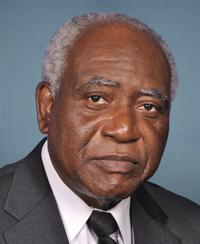 Rep. Danny K. Davis (D-IL)
Legislative Activity
Stay on top of the latest movement without scrolling through every action
Sponsor introductory remarks on measure. (CR H6540)
July 21, 2004
View full timeline
Introduced in House
May 20, 2003
Referred to the House Committee on Ways and Means.
May 20, 2003
Sponsor introductory remarks on measure. (CR H130)
January 28, 2004
Sponsor introductory remarks on measure. (CR H6540)
July 21, 2004
Floor Debate
1 memberWhat members said about H.R. 2166 on the floor
Floor Debate
1 memberWhat members said about H.R. 2166 on the floor
Mr. Speaker, I listened with great interest last week as the President gave his State of the Union address and was quite pleased at one point when he mentioned the need to establish programs for…
Bill Text
Latest available legislative text
        [Congressional Bills 108th Congress]
[From the U.S. Government Publishing Office]
[H.R. 2166 Introduced in House (IH)]

108th CONGRESS
1st Session
H. R. 2166

To amend the Internal Revenue Code of 1986 to provide for a temporary
ex-offender low-income housing credit to encourage the provision of
housing, job training, and other essential services to ex-offenders
through a structured living environment designed to assist the ex-
offenders in becoming self-sufficient.

_______________________________________________________________________

IN THE HOUSE OF REPRESENTATIVES

May 20, 2003

Mr. Davis of Illinois (for himself, Mr. Souder, Mr. Rangel, Ms. Norton,
Mr. Filner, Mr. Cummings, Mr. Jefferson, Mr. Jackson of Illinois, Ms.
Lee, Mr. Owens, Ms. Jackson-Lee of Texas, and Mrs. Jones of Ohio)
introduced the following bill; which was referred to the Committee on
Ways and Means

_______________________________________________________________________

A BILL

To amend the Internal Revenue Code of 1986 to provide for a temporary
ex-offender low-income housing credit to encourage the provision of
housing, job training, and other essential services to ex-offenders
through a structured living environment designed to assist the ex-
offenders in becoming self-sufficient.

Be it enacted by the Senate and House of Representatives of the
United States of America in Congress assembled,

SECTION 1. SHORT TITLE.

This Act may be cited as the ``Public Safety Ex-Offender Self-
Sufficiency Act of 2003''.

SEC. 2. TEMPORARY EX-OFFENDER LOW-INCOME HOUSING CREDIT.

(a) In General.--Subpart D of part IV of subchapter A of chapter 1
of the Internal Revenue Code of 1986 is amended by adding at the end
the following new section:

``SEC. 45G. EX-OFFENDER LOW-INCOME HOUSING CREDIT.

``(a) In General.--For purposes of section 38, the amount of the
ex-offender low-income housing credit determined under this section for
any taxable year in the credit period shall be an amount equal to--
``(1) the applicable percentage of
``(2) the qualified basis of each qualified ex-offender
residential building.
``(b) Applicable Percentage.--In the case of any qualified ex-
offender residential building, the term `applicable percentage' has the
meaning given such term in section 42(b)(2) with respect to qualified
low-income buildings, except that, for the purposes of this subsection,
the percentages prescribed by the Secretary under section 42(b)(2)(B)
shall yield amounts of credit which have a present value equal to 70
percent of the qualified basis of any qualified ex-offender residential
building.
``(c) Qualified Basis.--
``(1) In general.--For purposes of subsection (a) and
except as otherwise provided in this subsection, the term
`qualified basis' means the adjusted basis of a qualified ex-
offender residential building as of the close of the 1st
taxable year of the credit period.
``(2) Qualified basis to include portion of building used
to provide ex-offender support services.--The qualified basis
of any qualified ex-offender residential building for any
taxable year shall be increased by the lesser of--
``(A) so much of the qualified basis of such
building as is used throughout the year to provide ex-
offender support services, or
``(B) 20 percent of the qualified basis of such
building (determined without regard to this paragraph).
``(3) Special rules.--Rules similar to the rules of
paragraphs (4), (5) (other than subparagraph (A) thereof), and
(7) of section 42(d) shall apply in determining the adjusted
basis of any qualified ex-offender residential building.
``(d) Rehabilitation Expenditures.--Rules similar to the rules of
section 42(e) shall apply in determining the treatment of
rehabilitation expenditures paid or incurred by the taxpayer with
respect to a qualified ex-offender residential building.
``(e) Credit Period.--For purposes of this section, rules similar
to the rules of section 42(f) shall apply in determining the credit
period with respect to any qualified ex-offender residential building.
``(f) Qualified Ex-Offender Residential Building.--For purposes of
this section, the term `qualified ex-offender residential building'
means any building which, at all times during the compliance period,
meets the following requirements:
``(1) Ex-offender residential units.--
``(A) In general.--Each residential unit in such
building shall be made available for occupancy to not
more than 1 ex-offender.
``(B) Residency requirements.--Such ex-offender
must--
``(i) meet the residency requirements under
subsection (g);
``(ii) have failed to meet such
requirements for fewer than 14 days; or
``(iii) be in the process of being evicted
from such building for failing to meet such
requirements.
``(C) Flexibility.--A building shall not be
determined to fail to satisfy the requirements of this
paragraph solely because--
``(i) some or all of the residential units
in such building are single room occupancy (as
defined in section (8)(n) of the United States
Housing Act of 1937 (42 U.S.C. 1437f(n))), or
``(ii) any unit made available to an ex-
offender is also made available to one or more
of the ex-offender's sons, daughters, step-
sons, or step-daughters.
``(2) Self-sufficiency centers for ex-offenders.--The
building shall include a self-sufficiency center for ex-
offenders that--
``(A) is specifically designed to accommodate, and
reserved for, the provision of ex-offender support
services to residents of the facility and other ex-
offenders;
``(B) is made available for rental by providers of
such services at a rate determined by the owner of the
facility; and
``(C) provides an array of such services sufficient
to meet a significant portion of the needs of ex-
offenders for ex-offender support services.
``(3) Rent limitations.--The portion of the monthly rent
payable by the occupant of each unit in the building may not
exceed 30 percent of the adjusted monthly income (as such term
is defined in section 3(b) of the United States Housing Act of
1937 (42 U.S.C. 1437a(b)) of the occupant.
``(g) Residency Requirements.--
``(1) In general.--An ex-offender meets the residency
requirements for a qualified ex-offender residential building
if such ex-offender--
``(A) has a low income;
``(B) is participating in an ex-offender support
services program as described in paragraph (3)(B);
``(C) has not been prohibited from residency under
paragraph (4); and
``(D) commences occupancy of a unit in a qualified
ex-offender residential building on a date that is not
later than--
``(i) in the case of an ex-offender who has
been discharged from prison, jail, a half-way
house, or any other correctional facility, 12
months after such discharge; or
``(ii) in the case of any ex-offender whose
sentence did not include confinement to a
correctional facility, 12 months after the date
of the ex-offender's conviction.
``(2) Low-income.--For purposes of this section, an ex-
offender is considered to have a low income if, at the
commencement of the ex-offender's occupancy of a residential
unit, the income (if any) of the ex-offender does not exceed 60
percent of area median gross income (as determined consistent
with section 8 of the United States Housing Act of 1937).
``(3) Participation in ex-offender support services
program.--
``(A) Program.--For purposes of this section, an
ex-offender support services program is a program for
the provision of specific ex-offender support services
for an ex-offender that--
``(i) is created and managed by a
coordinating individual or entity having
education, training, and experience with ex-
offenders and their support services needs;
``(ii) is specifically designed to meet the
needs of the particular ex-offender for ex-
offender support services;
``(iii) sets forth a specific duration over
which the ex-offender support services are to
be provided and goals by which to assess the
progress of the ex-offender; and
``(iv) provides for continual oversight to
monitor the progress and needs of the ex-
offender and to ensure that the ex-offender is
being provided the appropriate ex-offender
support services and is complying with the
requirements of the program.
``(B) Participation.--For purposes of this section,
an ex-offender is considered to be participating in an
ex-offender support services program if the ex-
offender--
``(i) has entered into a written agreement
with the coordinator for the program that--
``(I) sets forth the ex-offender
support services that are appropriate
for, and will be made available to, the
ex-offender and the duration of the
program for the ex-offender; and
``(II) provides that the ex-
offender's continued attendance at
scheduled program meetings and events
and obtaining of program services are a
condition of the ex-offender's
continued residency in the facility;
and
``(ii) is not in default with regard to the
ex-offender's obligations under such agreement.
``(C) Ex-offender support services.--For purposes
of this section, the term `ex-offender support
services' means services that assist ex-offenders to
develop skills necessary for life outside of the
environment of a correctional institution, and
includes--
``(i) job training;
``(ii) employment counseling and placement;
``(iii) entrepreneurial training;
``(iv) financial management training;
``(v) homeownership and rental counseling;
``(vi) drug and alcohol abuse counseling;
``(vii) self-esteem and peer development
assistance;
``(viii) anger management counseling;
``(ix) health care services, including
mental health services and behavioral
counseling;
``(x) probation services;
``(xi) family and crisis management
counseling; and
``(xii) general educational assistance and
counseling.
``(4) Limitation on term of residency.--An ex-offender may
not reside in an ex-offender residential facility at any time
after the expiration of the 2-year period beginning upon the
commencement of the ex-offender's occupancy in the ex-offender
residential facility.
``(h) Ex-Offender.--For purposes of this section, the term `ex-
offender' means any individual who has been convicted of a crime under
State or Federal law which is punishable by imprisonment for a maximum
term of 6 months or longer.
``(i) Allocation and Determination of Credit.--
``(1) In general.--Except as otherwise provided in this
subsection, rules similar to the rules of section 42(h) (other
than subparagraphs (E) and (F) of paragraph (1) thereof) shall
apply with respect to allocating and determining any credit
under this section.
``(2) State housing credit ceiling.--For purposes of this
section:
``(A) In general.--The State housing credit ceiling
shall be calculated by substituting the amount
determined under section 42(h)(3)(C)(ii) with the State
allocation.
``(B) State allocation.--
``(i) Competitive process.--The State
allocation for any State shall be determined by
the Secretary, utilizing a competitive
application process.
``(ii) Basis for competition.--In
determining the State allocation for any State,
the Secretary shall consider the following:
``(I) Need, as determined by the
ratio between the reported number of
sentenced prisoners released from State
or Federal jurisdiction in the
applicant State during the most recent
year for which information is
available, and the total population of
the applicant State.
``(II) The commitment of Federal
and other funds within the applicant
State for operating costs and ex-
offender support services in projects
that are to be funded by the State
temporary ex-offender low-income
housing credit.
``(III) The applicant's plan to
collect available information about the
success of the program with respect to
increased housing stability and lack of
additional incarceration of ex-offeder
participants.
``(IV) The applicant's
organizational capacity for the
successful development or operation of
qualified ex-offender residential
buildings.
``(V) The goal of making
allocations to the largest feasible
number of States.
``(iii) Aggregate amount.--The aggregate
amount of State allocations for any year shall
be $85,000,000.
``(C) Building allocations.--The Secretary may
allocate a housing credit dollar amount to any
building. In making such allocations, the Secretary
shall utilize a competitive application process and
shall consider the factors described in subparagraph
(B)(ii). Any allocation made under this subparagraph
shall be treated for purposes of this subsection as
part of the State allocation for the State in which
such building is located.
``(D) Unused housing credit carryovers.--
``(i) In general.--The State housing credit
ceiling shall be calculated by substituting the
amount determined under section 42(h)(3)(C)(iv)
with the State carryover allocation.
``(ii) State carryover allocation.--The
State carryover allocation for any State shall
be determined by the Secretary in a manner
similar to the manner in which the State
allocation is determined under subparagraph
(B). The aggregate amount of State carryover
allocations for any year shall be equal to the
aggregate unused housing credit carryovers
(within the meaning of section 42(h)(3)(D)) of
all States for the preceding calendar year.
``(4) Required involvement of qualified non-profit
organizations.--For purposes of this section, section
42(h)(5)(A) shall be applied by substituting `0' for `90'.
``(j) Recapture of Credit.--Rules similar to the rules of
subsections (i)(1) and (j) of section 42 shall apply for purposes of
this section.
``(k) Application of At-Risk Rules.--Rules similar to the rules of
section 42(k) shall apply for purposes of this section.
``(l) Certification and Other Reports to Secretary.--Subject to
such regulations as the Secretary may prescribe, rules similar to the
rules of section 42(l) shall apply for purposes of this section.
``(m) Responsibilities of the Secretary and Housing Credit
Agencies.--Rules similar to the rules of subsections (m) and (n) of
section 42 shall apply for purposes of this section.''.
(b) Inclusion as Current Year Business Credit.--Section 38(b) of
the Internal Revenue Code of 1986 is amended by adding at the end the
following new paragraph:
``(13) the ex-offender low-income housing credit under
section 45G(a).''.
(c) Clerical Amendment.--The table of sections for subpart D of
part IV of subchapter A of chapter 1 of the Internal Revenue Code of
1986 is amended by adding at the end the following new item:

``Sec. 45G. Ex-offender low-income
housing credit.''.
(d) Effective Date.--The amendments made by this section shall
apply to property placed in service during taxable years beginning
after the date of the enactment of this Act.
<all>