Human Cloning Prohibition Act of 2003
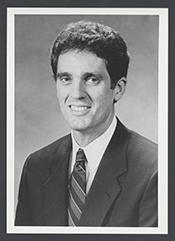 Rep. Dave Weldon (R-FL)
Legislative Activity
Stay on top of the latest movement without scrolling through every action
Referred to the Subcommittee on Crime, Terrorism, and Homeland Security.
March 6, 2003
View full timeline
Introduced in House
January 8, 2003
Sponsor introductory remarks on measure. (CR S234)
January 8, 2003
Referred to the Committee on the Judiciary, and in addition to the Committee on Energy and Commerce, for a period to be subsequently determined by the Speaker, in each case for consideration of such provisions as fall within the jurisdiction of the committee concerned.
January 8, 2003
Referred to the Subcommittee on Health, for a period to be subsequently determined by the Chairman.
February 3, 2003
Sponsor introductory remarks on measure. (CR H1307-1311)
February 25, 2003
Referred to the Subcommittee on Crime, Terrorism, and Homeland Security.
March 6, 2003
Bill Text
Latest available legislative text
        [Congressional Bills 108th Congress]
[From the U.S. Government Publishing Office]
[H.R. 234 Introduced in House (IH)]

108th CONGRESS
1st Session
H. R. 234

To amend title 18, United States Code, to prohibit human cloning.

_______________________________________________________________________

IN THE HOUSE OF REPRESENTATIVES

January 8, 2003

Mr. Weldon of Florida (for himself, Mr. Stupak, Mr. Sensenbrenner, Mr.
Kucinich, Mr. Smith of Texas, Mr. Doyle, Mr. Chabot, Mr. Sanders, Mr.
Cannon, Mr. Hall, Mr. Keller, Mr. Flake, Ms. Hart, Mr. DeLay, Mrs.
Myrick, Mr. Bachus, Mr. Taylor of Mississippi, Mr. Lucas of Kentucky,
Mr. Murtha, Mr. Blunt, Mr. McIntyre, Mr. Ortiz, Mr. Mollohan, Mr.
Fletcher, Mr. Bilirakis, Mr. Norwood, Mr. Pitts, Mr. Shimkus, Mr.
Stearns, Mr. Smith of New Jersey, Mr. Vitter, Mr. Goode, Mr. Wolf, Mr.
Stenholm, Mr. Brady of Texas, Mr. John, Mr. Souder, Mr. Peterson of
Minnesota, Mr. Hoekstra, Mr. Kildee, Mr. Aderholt, Mr. Skelton, Mr.
Wicker, Mr. Costello, Mr. Lewis of Kentucky, Mr. Turner of Texas, Mr.
Sam Johnson of Texas, Mr. McNulty, Mr. Ehlers, Mr. Rahall, Mr.
Lipinski, Mr. Shuster, Mr. Goodlatte, Mr. Pickering, Mr. Burton of
Indiana, Mr. Hunter, Mr. Cantor, Mr. Nethercutt, Mr. Gutknecht, Mr.
Hayworth, Mr. Miller of Florida, Mr. McCrery, Mr. Ryun of Kansas, Mrs.
Jo Ann Davis of Virginia, Mr. Wilson of South Carolina, Mr. Boozman,
Mr. Linder, Mr. Mica, Mr. Shadegg, Mr. Terry, Mr. Collins, Mrs.
Musgrave, Mr. Kennedy of Minnesota, Mr. Pence, Mr. Rogers of Michigan,
Mr. Tiberi, Mr. Ryan of Wisconsin, Mr. Forbes, Mr. King of Iowa, Mr.
Everett, Mr. Akin, Mr. Osborne, Mr. Tancredo, Mr. Jones of North
Carolina, Mr. Camp, Mr. Duncan, Mr. Crenshaw, Mr. Peterson of
Pennsylvania, Mr. King of New York, Mr. Wamp, Mr. Fossella, Mr.
Combest, Mr. Hayes, Mr. Tiahrt, Mr. Burns, Mr. Hostettler, Mrs.
Emerson, Mr. Issa, Mr. Manzullo, Mr. Crane, Mr. Feeney, Mr. Buyer, and
Mr. Ferguson) introduced the following bill; which was referred to the
Committee on the Judiciary, and in addition to the Committee on Energy
and Commerce, for a period to be subsequently determined by the
Speaker, in each case for consideration of such provisions as fall
within the jurisdiction of the committee concerned

_______________________________________________________________________

A BILL

To amend title 18, United States Code, to prohibit human cloning.

Be it enacted by the Senate and House of Representatives of the
United States of America in Congress assembled,

SECTION 1. SHORT TITLE.

This Act may be cited as the ``Human Cloning Prohibition Act of
2003''.

SEC. 2. PROHIBITION ON HUMAN CLONING.

(a) In General.--Title 18, United States Code, is amended by
inserting after chapter 15, the following:

``CHAPTER 16--HUMAN CLONING

``Sec.
``301. Definitions.
``302. Prohibition on human cloning.
``Sec. 301. Definitions
``In this chapter:
``(1) Human cloning.--The term `human cloning' means human
asexual reproduction, accomplished by introducing nuclear
material from one or more human somatic cells into a fertilized
or unfertilized oocyte whose nuclear material has been removed
or inactivated so as to produce a living organism (at any stage
of development) that is genetically virtually identical to an
existing or previously existing human organism.
``(2) Asexual reproduction.--The term `asexual
reproduction' means reproduction not initiated by the union of
oocyte and sperm.
``(3) Somatic cell.--The term `somatic cell' means a
diploid cell (having a complete set of chromosomes) obtained or
derived from a living or deceased human body at any stage of
development.
``Sec. 302. Prohibition on human cloning
``(a) In General.--It shall be unlawful for any person or entity,
public or private, in or affecting interstate commerce, knowingly--
``(1) to perform or attempt to perform human cloning;
``(2) to participate in an attempt to perform human
cloning; or
``(3) to ship or receive for any purpose an embryo produced
by human cloning.
``(b) Importation.--It shall be unlawful for any person or entity,
public or private, knowingly to import for any purpose an embryo
produced by human cloning.
``(c) Penalties.--
``(1) Criminal penalty.--Any person or entity that violates
this section shall be fined under this title or imprisoned not
more than 10 years, or both.
``(2) Civil penalty.--Any person or entity that violates
any provision of this section shall be subject to, in the case
of a violation that involves the derivation of a pecuniary
gain, a civil penalty of not less than $1,000,000 and not more
than an amount equal to the amount of the gross gain multiplied
by 2, if that amount is greater than $1,000,000.
``(d) Scientific Research.--Nothing in this section restricts areas
of scientific research not specifically prohibited by this section,
including research in the use of nuclear transfer or other cloning
techniques to produce molecules, DNA, cells other than human embryos,
tissues, organs, plants, or animals other than humans.''.
(b) Clerical Amendment.--The table of chapters for part I of title
18, United States Code, is amended by inserting after the item relating
to chapter 15 the following:

``16. Human Cloning.........................................     301''.

SEC. 3. STUDY BY GENERAL ACCOUNTING OFFICE.

(a) In General.--The General Accounting Office shall conduct a
study to assess the need (if any) for amendment of the prohibition on
human cloning, as defined in section 301 of title 18, United States
Code, as added by this Act, which study should include--
(1) a discussion of new developments in medical technology
concerning human cloning and somatic cell nuclear transfer, the
need (if any) for somatic cell nuclear transfer to produce
medical advances, current public attitudes and prevailing
ethical views concerning the use of somatic cell nuclear
transfer, and potential legal implications of research in
somatic cell nuclear transfer; and
(2) a review of any technological developments that may
require that technical changes be made to section 2 of this
Act.
(b) Report.--The General Accounting Office shall transmit to the
Congress, within 4 years after the date of enactment of this Act, a
report containing the findings and conclusions of its study, together
with recommendations for any legislation or administrative actions
which it considers appropriate.
<all>