Veterans Health Care Improvement Act of 2003
Legislative Activity
Stay on top of the latest movement without scrolling through every action
Received in the Senate and Read twice and referred to the Committee on Veterans' Affairs.
July 22, 2003
View full timeline
Introduced in House
June 5, 2003
Sponsor introductory remarks on measure. (CR H5032-5033)
June 5, 2003
Referred to the House Committee on Veterans' Affairs.
June 5, 2003
Forwarded by Subcommittee to Full Committee in the Nature of a Substitute by Voice Vote.
June 24, 2003
Committee Consideration and Mark-up Session Held.
June 26, 2003
Ordered to be Reported (Amended) by Voice Vote.
June 26, 2003
Reported (Amended) by the Committee on Veterans' Affairs. H. Rept. 108-198.
July 10, 2003
Placed on the Union Calendar, Calendar No. 102.
July 10, 2003
Mr. Simmons moved to suspend the rules and pass the bill, as amended.
July 21, 2003 • 3:18 PM
Considered under suspension of the rules. (consideration: CR H7187-7189)
July 21, 2003 • 3:19 PM
DEBATE - The House proceeded with forty minutes of debate on H.R. 2357.
July 21, 2003 • 3:19 PM
Passed/agreed to in House: On motion to suspend the rules and pass the bill, as amended Agreed to by voice vote.(text: CR H7187)
July 21, 2003 • 3:29 PM
On motion to suspend the rules and pass the bill, as amended Agreed to by voice vote. (text: CR H7187)
July 21, 2003 • 3:29 PM
Motion to reconsider laid on the table Agreed to without objection.
July 21, 2003 • 3:29 PM
The title of the measure was amended. Agreed to without objection.
July 21, 2003 • 3:29 PM
Received in the Senate and Read twice and referred to the Committee on Veterans' Affairs.
July 22, 2003
Floor Debate
19 membersWhat members said about H.R. 2357 on the floor
 CDR
CDR LE
LE EC
EC CHS
CHS BF+14
BF+14
Floor Debate
19 membersWhat members said about H.R. 2357 on the floor
Madam Speaker, I yield myself such time as I may consume. Madam Speaker, I rise in support of S. 1156, as amended, the Veterans Health Care, Capital Assets and Business Improvement Act of 2003. This…
Madam Speaker, I yield myself such time as I may consume.
Madam Speaker, I rise in support of S. 1156, as amended, the Veterans Health Care, Capital Assets and Business Improvement Act of 2003.
This legislation draws the best from provisions offered in this body and the Senate. I have worked closely on the bill with the chairman of the Subcommittee on Health, the gentleman from Connecticut (Mr. Simmons). I want to thank him for his graciousness and the hard work. I would also like to thank the gentleman from New Jersey (Mr. Smith) and also the ranking member, the gentleman from Illinois (Mr. Evans), for their assistance in finalizing this bill.
I am very pleased that the bill includes important provisions from H.R. 2433, as amended, a bill I introduced with the support of the gentleman from Connecticut (Mr. Simmons). I also appreciate the persistence of the gentleman from California (Mr. Thompson), who will be speaking, in ensuring that these tests were brought to light in the items that we would be bringing before in this piece of legislation.
This bill will take important steps to remedy the serious wrong done to some of our veterans during the Cold War era. The military conducted a series of about 50 tests over almost a decade to determine the effects of the number of biological and chemical exposures to military operations and whether such exposures could be adequately protected. Many of these veterans participated without their knowledge, and too often veterans who participated in these tests were not properly protected from exposure to the number of stimulants as well as, occasionally, live agents. These agents included sarin and VX nerve gas, as well as biological war agents including Q fever and rabbit fever.
The military has now completed a number of investigations into the operations of the Deseret Test Center and concluded that as many as 6,000 veterans may have been involved. Veteran participation is unacceptable, and we recognize this, and we are concerned; and we want to assure them that if they are suffering lasting health consequence that we will do something about this.
I am very pleased that this legislation does something about that. This bill provides high-priority eligibility for the next 2 years to allow them to seek and receive VA treatment for the health problems including those that may be related to the problems, especially to the exposure of these hazardous agents.
This authority will allow them, and it will not adequately compensate them for what they have gone through, but we are at least beginning to try to correct the situation that we find ourselves in. Allowing them to have their health care concerns addressed may begin to give them the peace of mind this Nation owes them.
I am also pleased the final bill includes many provisions on the bill H.R. 1720, as amended. Madam Speaker, this bill authorizes many worthy construction projects to which the VA has given high priority. Unfortunately, the VA major medical construction has suffered for years as Congress has waited for the results of the CARES program, which is Capital Assets Realignment for Enhanced Services. I hope now that VA is about to approve a final plan, Congress will see fit to provide the appropriations VA requires to invest in its outdated infrastructure that we know is lacking. So we are hoping that we can do more as the report comes out.
A provision in our bill is designed to assure Congress that we are also adequately informed of some less positive developments that may result from this process, facility closures, staff realignments, as well as consolidations that may affect many veterans.
I am also pleased that this bill would give us both the assurance of this notification and the time to respond to these developments. Regardless of its outcome, CARES gave us at least one thing of value and that is the information that it has provided us. Last fall, the VA came forward with data that confirmed the ongoing concerns. I, along with my good friend, the gentleman from Texas (Mr. Ortiz), have talked about the veterans of south
Texas. I know the gentleman from Texas (Mr. Ortiz) will be speaking today. They suffered long, miserable journeys, up to 6 hours one way, to receive hospital care and some specialized services. And I do not think that anyone knew many of our veterans had the worst access to acute hospital care in the Nation like in south Texas.
I am pleased this bill will require the VA to report to us on the steps it intends to take to resolve this long-lasting problem in south Texas.
This bill will also provide new benefits to former prisoners of war. Under the current law, neither Jessica Lynch nor her comrades who suffered internment in Iraq would be eligible to receive outpatient dental care from the VA. Why? Because they were in captivity for fewer than 90 days. Veterans who have experienced the trauma associated with being prisoners of war deserve dental care regardless of the time of the captivity.
This bill will also do away with these veterans medication co- payments. Surely we can all agree that these veterans have paid enough. This bill will extend and enhance long-term care and mental health programs. The VA continues to study how it will provide care in the future. Congress must remain vigilant about the programs that are needed by some of the most vulnerable veterans in the system.
I am pleased we have continued to support two internal watchdogs to monitor and report to Congress on the methods of improving mental health programs within the VA for the seriously mentally ill and for victims of post-traumatic stress disorder.
With troops who have seen the consequences of combat still in the field, we need the VA permanent programs to be available to both men and women who have trouble readjusting to civilian life.
Madam Speaker, there are numerous additional provisions in the bill that will allow the VA to provide better care to our veterans. I would like to thank the committee leadership and the staff for their hard work on this bill.
Madam Speaker, I rise in support of S. 1156, as amended, the Veterans Health Care, Capital Asset And Business Improvement Act of 2003. The bill draws the best from provisions offered in this body and in the Senate. I have worked closely on this bill with the Chairman of the Health Subcommittee, Mr. Simmons. I would also like to thank Chairman Smith and Ranking Member Evans for their assistance in finalizing this bill.
I am most pleased that the bill includes important provisions from H.R. 2433, as amended, a bill I introduced with the support of my Chairman, Mr. Simmons. I also appreciate the persistence of the gentleman from California, Mike Thompson in ensuring that these tests were brought to light. This bill will take important steps to remedy a serious wrong done to some veterans during the Cold War era. The military conducted a series of about 50 tests over almost a decade to determine the effect of a number of biological and chemical exposures on military operations and whether such exposures could be adequately detected. Too often veterans who participated, sometimes unwittingly, in these tests were not properly protected from exposures to a number of stimulants and, occasionally, live agents. These agents included Sarin and VX nerve gas as well as biological war agents including Q fever and rabbit fever.
The military has now completed a number of investigations into the operations of the Deseret Test Center and concluded that as many as 6000 veterans may have been involved. Veteran participants are understandably concerned and want assurances that they are not suffering lasting health consequences related to these tests. This bill provides high-priority health care eligibility to these veterans for the next two years to allow them to seek and receive VA treatment for any health problems, including those they believe may be related to exposures to these hazardous agents. This authority will never adequately compensate veterans for their participation in dangerous tests, but allowing them to have their health care concerns addressed may begin to give them the peace-of-mind the nation owes them.
I am also pleased that the final bill includes many of the provisions from H.R. 1720, as amended. Madam Speaker, this bill authorizes many worthy construction projects to which VA has given high priority. Unfortunately, VA's major medical construction has languished for years as Congress has waited for the results of the Capital Assets Realignment for Enhanced Services (CARES) study. I hope now that VA is about to approve a final plan, Congress will see fit to provide the appropriations VA requires to invest in its outdated infrastructure. If so, this will be a positive outcome of CARES. A provision of our bill is designed to ensure Congress that we are also adequately informed of some less positive developments that may result from this process-- facility closures, staff reassignments and consolidations that may affect many veterans. I am pleased that this bill will give us both the assurance of this notification and the time to respond to these developments.
Regardless of its outcomes, CARES gave us at least one thing of value--information. Last fall, VA came forward with data that confirm ongoing concerns I, along with my good friend Solomon Ortiz, have had about the veterans of South Texas. We knew they often suffered long, miserable journeys--up to 6 hours one way--to receive hospital care and some specialized services, but I don't think anyone knew many of our veterans had the worst access to acute hospital care in the nation! I am pleased this bill will require VA to report to us on steps it intends to take to resolve this longstanding problem.
This bill will provide new benefits to former prisoners-of-war. Under current law, neither Jessica Lynch nor her comrades who suffered internment in Iraq would be eligible to receive outpatient dental care from the VA. Why? Because they were in captivity for fewer than 90 days. While this limitation on eligibility was based on a rationale, it now seems capricious. Veterans who have experienced the trauma associated with being a prisoner of war deserve dental care regardless of their time in captivity. This bill will also do away with these veterans' medication copayments. Surely we can all agree that these veterans have paid enough.
This bill will extend and enhance long-term care and mental health problems. As VA continues to study how it will provide health care in the future Congress must remain vigilant about these programs that consume many resources but are needed by some of the most vulnerable veterans in the system. I am pleased we will also require two internal watchdogs that have made solid recommendations for improving mental health programs to continue to report to Congress on the VA's services for the seriously mentally ill and for veterans with Post-Traumatic Stress Disorder. With troops who have seen the consequences of combat still in the field we will need VA's pre-eminent programs to be available to the men and women who have trouble readjusting to civilian life.
Madam Speaker, there are a number of additional provisions in this bill that will allow VA to provide better care to our veterans. I thank the Committee leadership and the staff for their hard work on the bill and want to commend it to all of my colleagues.
Madam Speaker, I reserve the balance of my time.
Madam Speaker, I yield 2 minutes to the gentleman from Illinois (Mr. Evans), the ranking Democrat.
Madam Speaker, I yield 3 minutes to the gentleman from California (Mr. Filner).
Mr. Speaker, I yield 3\1/2\ minutes to the gentlewoman from Nevada (Ms. Berkley), a member of the committee.
Mr. Speaker, I yield 3 minutes to the gentlewoman from California (Ms. Millender-McDonald).
Mr. Speaker, I yield 3 minutes to the gentleman from California (Mr. Thompson), who has been in the forefront of the issue of Project SHAD and Project 112.
Mr. Speaker, I yield 2 minutes to the gentleman from Texas (Mr. Ortiz), whom we consider our dean, who is also responsible for some of this legislation.
(Mr. ORTIZ asked and was given permission to revise and extend his remarks.)
Mr. Speaker, I yield myself such time as I may consume.
Mr. Speaker, let me take this opportunity, first of all, to thank the gentleman from New Jersey (Chairman Smith) and the gentleman from Illinois (Chairman Simmons) for their hard work on this particular bill.
I also want to take time to also recognize our leading Democrat, the gentleman from Illinois (Mr. Evans), for his hard work on this specific bill. I also want to take this opportunity to thank all the Members who participated to make this happen, such as the gentleman from Texas (Mr. Ortiz) and the gentleman from California (Mr. Thompson), as well as those on the Republican side.
Mr. Speaker, I have no further requests for time, and I yield back the balance of my time.
Madam Speaker, I rise to support the Veterans Health Care, Capital Asset and Business Improvement Act of 2003. I want to start out by thanking the gentleman from New Jersey (Mr. Smith) again for his…
Madam Speaker, I rise to support the Veterans Health Care, Capital Asset and Business Improvement Act of 2003. I want to start out by thanking the gentleman from New Jersey (Mr. Smith) again for his willingness to work closely with me and the Democratic members of the committee to develop this as a final package. Credit goes to the gentleman from Connecticut (Mr. Simmons) and the ranking member, the gentleman from Texas (Mr. Rodriguez), for moving these measures to the floor today.
The bill anticipates the final approval of the CARES plan, identifying Congress's priorities requiring notification of major initiatives that come before the plan. I will continue to work behind the curtain and in front of the public to get this legislation passed.
The bill memorializes two great friends of mine: Bob Stump, who was an advocate for veterans throughout his career. We truly miss him not being on the committee anymore. He was a great American, and we salute his courage in standing up for what he believed in. Also, Jesse Brown, a veterans advocate as well, the former Secretary of Veterans Affairs for veterans. And we recognize these contributions of these two veterans with the passage of this bill.
This is a laudable effort for improving services for elderly and mentally-ill veterans. It strives to make VA the first choice. I am proud of the committee's work.
Madam Speaker, I rise to support the Veterans Health Care, Capital Asset and Business Improvement Act of 2003. I want to thank Chairman Smith for his ongoing commitment to veterans and his willingness to work closely with us on the development of this final package.
There are many important provisions in this bill. I appreciate the good bipartisan work of Chairman Simmons and Ranking Member Rodriguez in shepherding these measures from the Health Subcommittee to our consideration of a final conference package on the floor today.
This bill anticipates the final approval of the National Capital Asset Realignment for Enhanced Services (CARES) Plan. This Plan may set the framework for the first significant investment in the VA medical care system's infrastructure in several years. We are now way behind in making the needed investments--some estimate that the deficit is as high as $6 billion in delayed VA projects. VA's Phase I Study in VISN 12 has offered interested parties a view to the future under a CARES- like process. I had to look no further than upstate Illinois to see how the administration might handle the hundreds of new proposals it has on tap if most of the recommendations in the Draft CARES Plan are adopted.
The answers I received about the plan for VISN 12 were unsettling. This is particularly true since this Phase I study is the prototype for the larger National plan. VA planned to close one of the divisions of VA Chicago without sure funding for a modern new bed tower at the other division. This replacement facility was, in my view and many others, the linchpin to a successful integration. There are still no plans to develop the on-site multispecialty outpatient clinic veterans were promised.
This spring I introduced H.R. 2349 which authorized funds to construct the new bed tower at the West Side division of VA in Chicago. It also attempted to hold VA's feet to the fire to fund and build the new bed tower by prohibiting VA from disposing of the closed facility until it began construction on its replacement. Instead of the restrictions I put on VA in my bill, I have agreed to establish priorities for spending appropriations designated for CARES projects. This conference package gives the highest priority to facilities, such as West Side, that are needed to replace capacity at facilities that CARES will recommend closing, consolidating or converting in some fashion. It also gives high priorities to projects that remedy life safety and seismic deficiencies.
My bill contained additional projects that are worthy of our appropriators' consideration. It authorizes $48,600,000 for the correction of seismic deficiencies in San Diego, California, and $50,000,000 for medical care and research renovations in West Haven, Connecticut. My bill included lease authority for Las Vegas. We have since learned that VA's needs there may be evolving and settled on appropriating advance planning funds in the amount of $25,000,000 for a major medical facility project there.
The bill also adopts language inspired by a provision introduced by my friend from Kansas, Dennis Moore. His bill has tremendous and broad- based support in this body. The provision requires VA to notify Congress in writing of actions proposed under the CARES initiative that would result in medical facility closures, significant staff realignments or medical facility consolidations and prohibits VA from taking these actions before 45 days following the notification or 30 days of continuous session of Congress.
I plan to continue to look behind the CARES process to ensure that VA is making its decisions in the best interest of veterans--not the bottom line.
In addition to honoring my friend, the late Jesse Brown, the former Secretary ``for'' Veterans Affairs by naming the VA Medical Center (West Side Division) in Chicago for him, this final package will name the Prescott VA Medical Center for our Committee's former Chairman, and my personal friend, the late Bob Stump. We honor two true veterans' advocates with the passage of this bill, and I am pleased to be associated with it.
Madam Speaker, I am pleased that we are finally able to authorize VA to provide health care to certain Filipino World War II veterans of the Philippines Commonwealth Army and former Philippines ``New Scouts'' who permanently reside in the United States, in the same manner as provided to U.S. veterans. I commend my colleague, Mr. Filner, for his persistence in seeing this to fruition.
Several years ago, my friend from California, Mike Thompson, discovered that many veterans had participated in a series of dangerous tests to identify the military's ability to detect and protect itself from biological and chemical attacks. His doggedness led the military to admit responsibility for conducting these tests which involved spraying American troops with agents that were, in some cases, extremely potent. The ranking member of the Health Subcommittee, Ciro Rodriguez, saw an opportunity to do some justice for these veterans by giving them access to VA health care for any condition for two years. This will allow these veterans to seek care for conditions they believe may be related to their exposures. I am pleased to support this provision.
This bill is laudable for improving services for elderly and mentally ill veterans. One provision allows VA authority to provide work skills training and development services, employment support services and job development and placement services as part of a more comprehensive rehabilitation package. This is likely to improve the therapeutic outcomes for seriously mentally ill veterans, homeless veterans and veterans with substance use disorders--those who can truly benefit from hands-on job coaching services. It extends authority for VA to provide properties foreclosed under its home loan program to nonprofit homeless service providers. VA has made extensive use of this authority and nonprofits have provided many nights of care to homeless veterans as a result.
The bill extend VA's authority to provide a range of non- institutional extended care services and a mandate to provide medically necessary, institutional nursing care services to severely service- connected disabled veterans through December 31, 2008. It allows VA to extend and add a site to its important pilot program on assisted living for veterans. It provides earmarked funding for specialized mental health services for veterans in each of the next three fiscal years. It also continues the reports of two important VA advisory groups who have made a series of solid recommendations to the Under Secretary for Health and the Congress about programs for seriously mentally ill veterans and veterans with post-traumatic stress disorder.
Finally, this bill strives to make VA an employer of choice. We have reached one of those rare compromises that seem to offer something to everyone by creating a new appointment and promotion authority for certain clinical personnel, such as clinical psychologists, social workers, audiologists, kinesiologists, and others in the Veterans Health Administration (VHA). This authority will allow these employees to enjoy some of the same protections other Federal workers have, but will also provide VA with greater hiring and promotion flexibility. Some health care workers, mostly nursing assistants, will enjoy Saturday premium pay under this bill. It will allow VA to appoint employees of the Veterans' Canteen Service taking into consideration their time in service in that capacity. We have offered VHA the authority to hire chiropractors to enhance the types of health care services it routinely offers veterans.
Madam Speaker, I am proud of the Committee's work on this bill and encourage all of my colleagues to approve it.
Mr. Speaker, and colleagues, good evening, aloha and mabuhay! I rise tonight, on this occasion of national Filipino Veterans Action Day, to express my strong and affectionate support for our great…
Mr. Speaker, and colleagues, good evening, aloha and mabuhay! I rise tonight, on this occasion of national Filipino Veterans Action Day, to express my strong and affectionate support for our great Filipino-American community, as well as for our honored Filipino veterans, both here and in the Philippines, who are so well represented by the American Council on Filipino Veterans, and to highlight just some of the challenges these communities still face and the opportunities we have to address them.
First let us remember that the relationship between the Philippines and our United States has never been stronger. Our modern-day bond began after the 1898 Spanish American War, continued through the commonwealth period into 1946, and strengthened when the independent Republic of the Philippines came into existence on July 4th of that year. For nearly 40 years, from 1907 to 1946, the Philippines in fact was represented in the U.S. Congress through nearly 15 different resident commissioners. Currently, we have a Filipino-American, Congressman Bobby Scott, representing the 3rd District of Virginia. And one year ago, I was proud to be a charter member of the Congressional Philippines Caucus, which today boasts over seventy members.
Apart from the Philippines' continuing vital role in U.S. national security and economic interests in the Asia-Pacific region, our country also has a special relationship with the people of the Philippines. Many have migrated to the United States, in particular my home state of Hawaii, which commemorates the 100th anniversary of our first Filipino immigrants in 2006.
In fact, there are now nearly 2.5 million Filipino-Americans, with significant populations in California, Hawaii, Illinois, New York, New Jersey, Washington, Texas, and Florida. In Hawaii alone there are nearly 300,000 Filipino-Americans, including roughly 140,000 in my Second Congressional District, the largest number of any congressional district in our country.
This community's contributions just in Hawaii are notable, in all facets of our society, from politics to business, from teaching to sports and movie stars, you name it. Former Hawaii Governor Ben Cayetano was the first Filipino-American governor ever elected in the United States; our state legislature today has 12 members: 6 senators and 6 representatives. Angela Baraquio became Miss America in 2001. We had Ben Agbayani in professional baseball and Tia Carrera in Hollywood. And let us not forget native daughters Jasmine Trias and Camile Velasco, two of just twelve of 2004's American Idol final contestants.
But perhaps the most vital and painful contribution of Filipinos to our country was the service, and sacrifice, of our Filipino veterans, who fought alongside our troops in World War II. Their heroic efforts were indispensable to the liberation of the Philippines led by General MacArthur and thus to Allied success in that great conflagration, and earned them a place in legend at the same table as, for example, our Japanese-Americans' 100th Infantry Battalion/442nd Regimental Combat Team.
Therefore, the contribution of the American Coalition for Filipino Veterans to designate today as Filipino Veterans Action Day is invaluable to assuring that we never forget. There have been similar efforts in Hawaii from community leaders like Hawaii State Representative Jun Abinsay, Joe Gonzales and Artemio Caleda, former and new presidents, respectively, of the World War II Fil-Am Vets and Ladies Auxilliary Hawaii Chapter, and Domingo Los Banos, a Sergeant with the 1st Filipino Infantry Regiment, U.S. Army, who later worked collaboratively with many others in Hawaii and the mainland in molding that great documentary on the Filipino veterans: ``An Untold Triumph.''
Let me turn now from what has been to what needs to be. Specifically, there are two issues which I believe Congress must address for both Filipino veterans and our Filipino-American community at large. One is veterans' benefits and the other is immigration.
veterans benefits
We know that in 1941, President Franklin Delano Roosevelt made a promise to the members of the Philippine Army and the Philippine Scouts who had fought and would fight for the Allies in World War II. Because they had made and would make the same sacrifices as U.S. servicemembers, President Roosevelt promised that they would receive the same veteran's benefits as those received by American veterans.
However, in the spring of 1946, just one year after the death of our 32nd President, the United States Congress went back on its promise. And that injustice stands uncorrected from that day to this, as these veterans pass increasingly from this earth along with their comrades- in-arms.
Last year, we did make some measure of progress by enacting into law H.R. 2297, legislation increasing VA benefits for U.S. resident Filipino veterans and making New Philippine Scouts living in the U.S. eligible for burial in VA national cemeteries. The House also passed H.R. 2357, which would provide VA nursing home and medical services to Commonwealth Army veterans and New Philippine Scouts residing in the U.S., assuming they-meet the same eligibility requirements as U.S. veterans.
But this is clearly not enough. That is why I am a cosponsor of H.R. 677, the Filipino Veterans Equity Act, which will deem all members of the Philippine Scouts and Philippine Army as qualified to receive the full benefits denied them nearly six decades ago.
As Secretary of Veterans' Affairs Anthony J. Principi wrote: ``The United States is indebted to Filipino veterans, whose heroism and self- sacrifice helped allies emerge victorious from World War II.'' As we all know, our Filipino World War II veterans are entering the sunset years of their lives. I implore my colleagues to get this bill out of committee and bring it to the floor for a vote this year.
immigration
Our country has benefited from the fruits of a century-plus influx of Filipinos as new and productive citizens, and we can and should continue this rich heritage. However, our overall immigration policy has fallen particularly harshly and unfairly on legitimate Filipino immigration of late.
For example, in 1990, we provided a waiver from certain naturalization requirements for Filipino veterans, and many thereafter became proud citizens our country. But a huge gap was created when we did not also permit naturalization of the sons and daughters of these same veterans.
These are real-life issues, for the stories of families who have waited years to be reunited are heartbreaking. For example, a veteran and his wife living in Hawaii filed immigration petitions for two of their six adult children; they have waited over ten years for a visa to be issued to either. Another veteran petitioned successfully for his wife's immigration visa, but has not been as successful with the applications for their five adult children. Again, this family has been holding on for ten years with the hope that they will one day live in the U.S. as a complete family.
H.R. 3587, a bill I introduced in November of last year, would provide these sons and
daughters with priority in their respective immigration categories. I urge its passage.
Two other bills I have introduced also would correct deficiencies in our immigration system which impact Filipino-Americans disproportionately. H.R. 3306, The Compassionate Visitor Visa Act, would facilitate the temporary admission of nonimmigrant aliens in circumstances of family emergency of U.S. citizens or permanent residents. H.R. 4018, introduced yesterday, would ensure that family members who have petitioned to immigrate into the United States are not penalized as a result of an award of citizenship to a sponsoring parent or spouse.
Both bills recognize the basic concept that our country can ensure our national security, while providing flexibility for immigrants from certain countries that have longstanding close relationships with our country. The Philippines is certainly very high on that list.
In summary, Mr. Speaker, both Filipino veterans and our larger Filipino-American community have contributed immensely to our country, and I believe that the best is yet to come. On this Filipino Veterans Action Day, let us recognize that we do what is right for both the past and the future by acknowledging their contributions and committing ourselves to the unfinished business at hand.
Mahalo!
Mr. Speaker, I move to suspend the rules and pass the bill (H.R. 2297) to amend title 38, United States Code, to modify and improve certain benefits for veterans, and for other purposes, as amended.…
Mr. Speaker, I move to suspend the rules and pass the bill (H.R. 2297) to amend title 38, United States Code, to modify and improve certain benefits for veterans, and for other purposes, as amended.
Mr. Speaker, I yield myself such time as I may consume.
Mr. Speaker, H.R. 2297 as amended, the Veterans Benefit Act of 2003, contains 20 substantive provisions and is a diverse and comprehensive measure with very broad bipartisan support.
This bill will affect veterans and survivors alike.
Among the education provisions, the bill provides for an expansion of the Montgomery GI Bill, the college program, by authorizing educational assistance for on-job training in certain 6-month self-employment training programs. It provides an extension of the delimiting date for survivors' and dependents' education benefits when the eligible individual is involuntarily ordered to full-time National Guard duty. It provides for an extension of the VA's Veterans' Advisory Committee on education through December 31 of 2009 and for the repeal of the VA's obsolete education loan program authorization. This program has not made a loan in the past several years because of other better options in the public and private sector.
The bill would also provide that the remarriage of the surviving spouse of a veteran after attaining the age of 55 would not result in the termination of Dependency and Indemnity Compensation, or the DIC program. It allows a remarried surviving spouse to attain eligibility for burial in a national cemetery based on his or her marriage to a veteran. It makes permanent the State Cemetery Grants Program. It reinstates a VA pilot program to provide vocational training to newly eligible VA nonservice-connected pension recipients.
It increases, Mr. Speaker, the specially adapted automobile grant from $9,000 to $11,000 and increases the specially adapted housing grant from $48,000 to $50,000 for the most severely disabled veterans and from $9,350 to $10,000 for less severely disabled veterans.
The bill also adds cirrhosis of the liver to the list of presumed service-connected disabilities for former prisoners of war.
It eliminates the requirement that a POW be held for 30 days or more to qualify for presumptions of service-connection for certain disabilities: psychosis and any of the anxiety states, organic residuals of frostbite, and post-traumatic osteoarthritis.
It expands benefits eligibility to those children with spina bifida who were born to Vietnam-era veterans who served in an area of Korea near the demilitarized zone between October 1 of 1967 and May 7 of 1975.
Out of concern about spina bifida, Mr. Speaker, I would note parenthetically that the gentleman from Michigan (Mr. Stupak) and I formed the Congressional Spina Bifida Caucus, which we now co-chair. This caucus is dedicated to improving the health care and overall quality of life for the some 70,000 Americans and their families living with spina bifida, and in a very short time I would again note to my colleagues we have about 20 Members who have joined. And just a little push here in promotion, if they would like to join that spina bifida caucus, we would very much like to have them as part of it.
Let me continue with the bill.
H.R. 2297, as amended, would also make permanent the VA home loan program for members of the Selected Reserve. It reinstates the Department of Veterans Affairs' vendee loan program and provides the full amount of compensation and Dependency and Indemnity Compensation for eligible members of the New Philippine Scouts, who served just after World War II, who are legal residents of the United States. It also provides the full amount of DIC for service in the organized military forces of the Commonwealth of the Philippines, including organized guerrilla units, to individuals who are legal residents of the United States. It extends eligibility for burial in a national cemetery to New Philippine Scouts, as well as eligibility for burial benefits to those who lawfully reside in the United States. It extends the authority of the Secretary of Veterans Affairs to maintain a regional office in Manila, Philippines, through December 31 also of 2009.
It mandates that the Department of Labor place staff in veterans' assistance offices at oversees military installations 90 days after the date of enactment, and it expands the list of serious Federal criminal offenses a conviction of which would result in a bar to all VA benefits.
As I mentioned, Mr. Speaker, the bill addresses the needs for former prisoners of war. Current law requires former POWs to have been confined for at least 30 days before they qualify for a presumption of service-connection for certain disabilities. Prisoners of war in more recent conflicts, however, have been interred for shorter periods of time. All the POWs from Operation Iraqi Freedom were confined for less than 30 days, for example.
Because physical and psychological trauma can indeed occur within minutes of capture, let alone days or weeks, H.R. 2297, as amended, would provide a presumption of service-connection disability without regard to length of confinement for certain psychiatric disabilities as well as cold-weather-related injuries and traumatic osteoarthritis.
The bill would also, as I said, add a number of other aspects, and I hopefully have outlined those adequately to the committee.
Let me just say, finally, Mr. Speaker, I really want to congratulate the gentleman from South Carolina (Mr. Brown), the subcommittee chair of our Subcommittee on Benefits, and the gentleman from Maine (Mr. Michaud), his ranking member, for their outstanding work on this legislation, for doing the hard work, holding the hearings, working out all the different disparate provisions, and then working to bring it together in a bipartisan way so that we can present to this body a bill that we can all be proud of that will tangibly advance the ball when it comes to our veterans. I want to thank them very much for their good hard work and also the gentleman from Illinois (Mr. Evans), my good friend and colleague, on whom we have partnered for years now as chairman and ranking member, working on bills to benefit our veterans both on the health care area and benefits area. I want to thank him as well.
Mr. Speaker, I reserve the balance of my time.
Mr. Speaker, I yield such time as he may consume to the gentleman from South Carolina (Mr. Brown), our distinguished chairman of the Subcommittee on Benefits, and again I want to thank him for his good work on this bill.
Mr. Speaker, I yield such time as he may consume to the gentleman from Florida (Mr. Bilirakis) who is the vice chairman of the committee and has been, and as the gentleman from South Carolina (Mr. Brown) pointed out, seven times he has now tried to get the Gold Star Wives' compensation not lost if they were to remarry, and this time we have it in the bill. Last year when we sent it over to the Senate, we lost it, but this time I think the seventh time is the charm, and I thank him for his leadership.
Mr. Speaker, before yielding back, I do want to thank and commend the hard work of committee staff, Devon Seibert, Paige McManus, Darryl Kehrer, Patrick Ryan, Kingston Smith, Jim Holley, Mary Ellen McCarthy, Geoffrey Collver, Leah Booth and so many others who have made this legislation and all the bills that we work cooperatively on with my friend and colleague, the gentleman from Illinois (Mr. Evans), to bring to the floor what we think are quality, well-vetted, very thoughtful pieces of legislation that make the difference in the lives of veterans and their families.
This is another example of that kind of cooperation. This is the way this
body should work, and it is so good to see us again working hand-in- glove in this partnership. Again, I want to thank the gentleman from South Carolina (Mr. Brown) and the gentleman from Maine (Mr. Michaud) for their good work as chairman and ranking member of the subcommittee. I urge all Members to support this bill.
Mr. Speaker, I yield back the balance of my time.
Mr. Speaker, on that I demand the yeas and nays.
Mr. Speaker, today, along with Representative Rob Simmons of Connecticut, Chairman of the Veterans' Affairs Subcommittee on Health, and three dozen other cosponsors, I am introducing H.R. 2475, the…
Mr. Speaker, today, along with Representative Rob Simmons of Connecticut, Chairman of the Veterans' Affairs Subcommittee on Health, and three dozen other cosponsors, I am introducing H.R. 2475, the Veterans Health Care Full Funding Act, legislation to ensure full funding for the Department of Veterans Affairs' health care system.-
This bill would fulfill the central recommendation of the President's Task Force To Improve Delivery of Health Care for Our Nation's Veterans, which reported an alarming mismatch between demand for services and available resources that threatened the quality of VA health care. The Task Force recommended that the veterans' health care funding process should be overhauled in order to achieve full funding.
As early as 1993, national veterans organizations were calling for guaranteed funding for VA health care. Last year I introduced H.R. 5250, legislation to achieve that goal by funding VA health care through a permanently fixed formula, one possible approach recommended by the President's Task Force.
The legislation we are introducing today takes the other major approach identified by the Task Force, establishing an independent board of experts on health care economics, with an independent budget and staff, to determine the annual funding levels necessary for veterans' medical care and to be included in the Administration's budget.
Under our legislation, a three-member Funding Review Board would be appointed by the Secretary of Veterans Affairs for staggered 15-year terms. The Board would have full access to VA's economic, actuarial and other data relevant to determining health care funding, as well as the Office of Management and Budget's (OMB) economic and forecasting analysis, but would be independent of both.
The Board would produce an annual budget request and a budget forecast for funding necessary to provide full health care benefits in a timely and cost-efficient fashion to all enrolled veterans in Priority Groups 1-7, primarily those injured or disabled while serving their nation, or with low income levels. The amount calculated by the Board for the next fiscal year would become the President's budget request submitted to Congress. From that point forward, the congressional budget and appropriations process would remain unchanged.
To ensure that veterans are receiving timely care, the legislation would require VA to provide care in a timely manner; if VA is unable to furnish care to veterans who need it within reasonable timeframes, it would be obligated to contract for that care with private sector health care providers.
In order to promote fiscal discipline within VA health care, the Board would be required to identify areas where VA program efficiencies and savings can be achieved, as well as be required to consider recommendations from OMB.
Mr. Speaker, for at least the past five years, veterans' usage of VA health care services has surpassed every Administration estimate-- Republican and Democrat. The continuing rise in demand for VA health care services has been driven by many factors, including VA's establishment of over 650 new and more convenient VA community-based outpatient clinics for primary care, improved safety and quality of care, and the availability of VA prescription drug benefits. VA has become an increasingly important supplier of prescription drugs to veterans, particularly senior veterans who lack a drug benefit from the Medicare program.
Further evidence of the urgent funding needs of VA health care comes from a report issued last year measuring the amount of time veterans are waiting for medical services. According to VA's report, there were nearly 300,000 veterans waiting for initial medical appointments, half of whom were waiting 6 months or more; and the other half having no appointment at all. While the VA has indicated progress is being made to reduce this waiting list, the Secretary's decision to halt enrollment of Priority 8 veterans for the remainder of this year is another clear indicator that VA is not properly equipped to handle the current demand for medical services because it lacks the funding to do so.
The President's Task Force (PTF) was established in May, 2001 to improve collaboration and resource sharing between the Departments of Defense and Veterans Affairs health care systems. Within months of the start of its deliberations, the Task Force discovered that a mismatch between demand for VA health care services and available resources prevented VA and DOD from achieving the full advantages of sharing and threatened the quality of VA health care. The PTF recommended in its report that the current budget and appropriations process be reformed. Let me quote from the report:
The Federal Government should provide full funding to
ensure that enrolled veterans in Priority Groups 1 through 7
(new) are provided the current comprehensive benefit in
accordance with VA's established access standards. Full
funding should occur through modifications to the current
budget and appropriations process, by using a mandatory
funding mechanism, or by some other changes in the process
that achieve the desired goal.
The PTF identified two possible approaches to addressing current problems with the funding process: make veterans health care funding a mandatory budgetary item, or create an independent Board of experts, actuaries, or other outside officials to dispassionately review needs and determine funding levels. Both approaches would have the same goal: to achieve full funding to meet demand in a timely manner.
Mr. Speaker, the Veterans Health Care Full Funding Act would accomplish this goal by establishing a funding process similar to one already used by the Department of Defense. Our legislation is modeled on a provision in the 2001 Floyd Spence Defense Authorization Act, Public Law 106-398, popularly known as ``TRICARE for Life.'' Under this legislation, an outside panel of experts and actuaries was established to determine future funding levels to meet health care needs of military retirees and their families in the TRICARE program. Our legislation is modeled on this successful program.
In addition, our legislation would codify standards for veterans' access to health care. Without a requirement that VA meet reasonable access standards, veterans could continue to be denied access to care regardless of any funding. I would like to recognize and thank my colleague on the Veterans' Affairs Committee, Representative Ginny Brown-Waite, who has introduced separate legislation, H.R. 2357, to achieve this very goal. The standards established in the Brown-Waite bill are incorporated in the legislation we are introducing today.
The VA budget for fiscal year 2003 contained a record $2.6 billion increase in the funding of medical care for our Nation's veterans and this year, based upon our Committee's recommendations, the House approved another record veterans budget, increasing overall veterans spending by $6.2 billion, including about a $3 billion increase for medical care. But even with these historic increases,
VA may not be able to meet demand for medical services.
Mr. Speaker, with the introduction of the Veterans Health Care Full Funding Act, H.R. 2475, we hope to move beyond debate and discussion and finally get on the fast track to legislative action. It's time to fix the funding system for veterans' health care. I urge all my colleagues to carefully review and consider supporting the Veterans Health Care Full Funding Act, H.R. 2475, to provide dependable, stable and sustained funding to meet the health care needs of veterans of our armed forces. They deserve no less from a grateful nation.
Show 8 more
Madam Speaker, I move to suspend the rules and pass the Senate bill (S. 1156) to amend title 38, United States Code, to improve and enhance provision of health care for veterans, to authorize major…
Madam Speaker, I move to suspend the rules and pass the Senate bill (S. 1156) to amend title 38, United States Code, to improve and enhance provision of health care for veterans, to authorize major construction projects and other facilities matters for the Department of Veterans Affairs, to enhance and improve authorities relating to the administration of personnel of the Department of Veterans Affairs, and for other purposes.
Madam Speaker, I yield such time as he may consume to the gentleman from Connecticut (Mr. Simmons), the chairman of our Subcommittee on Health, who is the prime author of this legislation.
Madam Speaker, I yield 3 minutes to the gentleman from Indiana (Mr. Buyer), the distinguished chairman of our Subcommittee on Oversight and Investigations.
(Mr. BUYER asked and was given permission to revise and extend his remarks.)
Madam Speaker, I yield 2 minutes to the distinguished gentleman from Arizona (Mr. Renzi), a member of the committee, and a very active one at that.
(Mr. RENZI asked and was given permission to revise and extend his remarks.)
Mr. Speaker, because there have been so many requests for time on our side, as well as on the Democratic side, I ask unanimous consent that we extend this debate by 10 minutes equally divided between the minority and majority.
Mr. Speaker, I yield 2 minutes to the gentleman from Colorado (Mr. Hefley), the distinguished chairman of the Committee on Standards of Official Conduct.
Mr. Speaker, I yield 2 minutes to the distinguished gentleman from Colorado (Mr. Beauprez), who along with the gentleman from Colorado (Mr. Hefley) worked very, very hard for the Fitzsimons Hospital, and I am very grateful for their help.
(Mr. BEAUPREZ asked and was given permission to revise and extend his remarks.)
Mr. Speaker, I yield 1 minute to my good friend, the gentleman from Nevada (Mr. Gibbons).
(Mr. GIBBONS asked and was given permission to revise and extend his remarks.)
Mr. Speaker, I yield 2 minutes to the distinguished gentleman from Nebraska (Mr. Osborne).
Mr. Speaker, I yield 2 minutes to the distinguished gentleman from Florida (Mr. Miller), and thank him for the great work he did on the Pensacola Outpatient Clinic, the $45 million that he was instrumental in putting in there.
Mr. Speaker, I yield 1 minute to the gentleman from Ohio (Mr. Tiberi), and thank the gentleman for his work on the Columbus, Ohio project which has advance planning funds to the tune of $9 million in this bill.
Mr. Speaker, I yield 1 minute to the gentleman from Connecticut (Mr. Simmons).
Mr. Speaker, I yield myself the balance of my time.
Mr. Speaker, first of all, I thank the gentleman from Illinois (Mr. Evans). Again, we have collaborated on a bill working with the subcommittee chairman, the gentleman from Connecticut (Mr. Simmons), and the ranking member, the gentleman from Texas (Mr. Rodriguez), and we have produced an extraordinarily good piece of legislation.
We worked with the other body, and I want to thank Senator Arlen Specter, the chairman, and the ranking member, Senator Graham. There was give and take, obviously. We began working on this very comprehensive product last spring. Again, this is a combination of a number of bills rolled and packaged into one bill. Project Shad was mentioned earlier by my colleague from California, and the gentleman from Texas (Mr. Rodriguez) mentioned it as well. This bill is not everything we would like. The next time I find a bill on this floor that is will be the first time.
We did pass over to the other body the full money for the Columbus project, and we got back advance planning funding from the other body. While it is not everything we wanted, it certainly will ensure that that project goes forward. The $9 million is not chump change and will be sufficient to get the job done. I want to assure my colleagues we have done our due diligence. This is a very good piece of veterans legislation.
I want to thank our staff, Pat Ryan; John Bradley, who is the staff director for the subcommittee; Kingston Smith, our deputy chief counsel; Jeannie McNally; Mary McDermott; Peter Dickinson; Steve Kirkland; Bernie Dotson; Summer Larson; Kathleen Greve; Delores Dunn; Paige McManus; Devon Seibert; and Veronica Crowe. As my colleague mentioned, we have had great cooperation with our friends on the other side of the aisle.
Again, this is a quintessential bipartisan piece of legislation, something that this entire body can be proud of, and it will advance the ball significantly when it comes to veterans health care as well as the construction project.
Let me also remind my colleagues that we have passed over to the other body H.R. 11 and another bill that I sponsored and a bill that the gentleman from Kansas (Mr. Moran) sponsored in the last Congress, and they never came back. They listed a number of projects that should have but did not get funded and were not authorized. Now, finally in this Congress, under the great leadership of the gentleman from Connecticut (Mr. Simmons), we have gotten that product back from the Senate, and it will go to President Bush for his signature. This is a great day for veterans. Again, I thank all of my colleagues for their cooperation and leadership.
Mr. Speaker, I include for the Record a joint explanatory statement.
Explanatory Statement on S. 1156, as Amended, Veterans Health Care,
Capital Asset, and Business Improvement Act of 2003
S. 1156, as amended, the Veterans Health Care, Capital
Asset, and Business Improvement Act of 2003 (``Compromise
Agreement'') reflects a negotiated agreement reached by the
Senate and House of Representatives Committees on Veterans'
Affairs concerning provisions in a number of bills considered
by the House and Senate during the 1st session of the 108th
Congress. The measures considered in this compromise are: S.
1156, as amended, as reported by the Senate Committee on
Veterans' Affairs on November 10, 2003; S. 1815 introduced on
November 4, 2003 (``Senate Bill''); H.R. 2357, as amended,
passed the House on July 21, 2003; H.R. 2433,
as amended, passed the House on September 10, 2003; H.R.
1720, as amended, passed the House on October 29, 2003; H.R.
3260, as introduced in the House on October 8, 2003; and H.R.
3387, as introduced in the House on October 29, 2003 (``House
Bill'').
The House and Senate Committees on Veterans' Affairs have
prepared the following explanation of the Compromise
Agreement. Differences between the provisions contained in
the Compromise Agreement and the related provisions of the
Senate bill and the House bills are noted, except for
clerical corrections, conforming changes made necessary by
the Compromise Agreement, and minor drafting, technical, and
clarifying changes.
Mr. Speaker, I yield back the balance of my time.
Mr. Speaker, on that I demand the yeas and nays.
Mr. Speaker, I rise today in support of H.R. 2297, the Veterans Benefits Act of 2003. This bill contains many improvements in the benefits for our Nation's veterans and for their survivors and…
Mr. Speaker, I rise today in support of H.R. 2297, the Veterans Benefits Act of 2003. This bill contains many improvements in the benefits for our Nation's veterans and for their survivors and dependents.
One important provision of this legislation that I would like to highlight will positively affect many Filipino veterans of World War II who are living in the United States, as well as their survivors. Many of my colleagues know that in 1946, Congress unfairly rescinded the benefits of many Filipino veterans and cut in half the benefits of many others--those who were service-connected disabled veterans. This limitation on compensation benefits was intended to reflect the difference in the cost of living between the Philippines and the United States.
But in the 60 years since World War II, a large number of Filipino veterans and their dependents have immigrated to our country. As citizens or permanent residents, these disabled Filipino veterans face living expenses comparable to those of United States veterans. Limiting their benefits has caused hardships for these disabled veterans and for their survivors who are receiving DIC (disability indemnity compensation). To fix this inequity, this bill eliminates the ``50 cents on the dollar amount'' that they are currently receiving and restores full payment of their compensation benefits.
In addition, it extends burial benefits in national cemeteries for the Filipino World War II veterans living in the United States who, to this date, did not have these benefits--namely, the New Philippine Scouts. And the bill provides other in-kind and monetary burial benefits to these deserving veterans.
I am elated that, with this legislation, my colleagues are addressing the 60-year-long injustice to Filipino soldiers who lived in a territory of the United States and fought side-by-side with our soldiers from the mainland during World War II. Without their vital participation in this war, the outcome might have been entirely different!
Combined with H.R. 2357, which has passed the House and which improves access to VA medical facilities for Filipino World War II veterans who live in the United States, we are clearly making progress. I sincerely thank the Chairman of the House Veterans Affairs Committee (Mr. Smith) and the Chairmen and Ranking Members of the House VA Benefits and Health Subcommittees (Mr. Simmons, Mr. Brown, Mr. Rodriguez, and Mr. Michaud) for their assistance in putting these bills forward. And a special thank you to my colleague, VA Committee Ranking Member Lane Evans who, with me, at a Veterans Town Hall Meeting in San Diego County ten years ago, heard first-hand the moving story of the injustices affecting Filipino World War II veterans, voted into law by the 1946 Congress. We heard this story from one veteran who had survived the Bataan Death March. From that moment, he has been my ally in this fight to restore justice and equity. I thank him for his unfailing support.
My colleagues, please join me in voting for H.R. 2297.
Ms. CORRINE BR0WN of Florida. Mr. Speaker, H.R. 2297, the Veterans Benefits Act of 2003, would expand the Montgomery GI Bill program to provide veterans considering self-employment with improved access to training benefits, including training related to franchises. Allowing veterans to use their MGIB benefit in this manner gives the flexibility necessary so that veterans can pursue an educational path that best suits their talents and interests.
Additionally, this legislation would allow a surviving spouse of a veteran to be eligible for burial in a VA national cemetery regardless of the status of a subsequent marriage. In many cases, the veteran's children and grandchildren, and often the most recent spouse of the veteran, support this burial eligibility.
This legislation also makes important strides in including more disabilities as service-connected. The VA Advisory Committee on Former Prisoners of War recommended that the original 30-day requirement for service-connection be eliminated for all psychiatric conditions, cold weather related injuries and post traumatic arthritis. No durational criteria exist for post-traumatic stress syndrome or frostbite. PTSD is common in former prisoners of war. And frostbite can occur within hours if the temperature is low enough. Post-traumatic arthritis is a condition that comes from trauma--which can occur in seconds. Removing the 30-day requirement is the right thing to do in order to make these disabilities presumptive.
H.R. 2297 also expands benefits eligibility to children with spina bifida who were born to veterans who served in an area of Korea near the demilitarized zone between October 1, 1967 and May 7, 1975. The Department of Defense estimates that approximately 12,056 service members were potentially exposed to Agent Orange and other herbicides while serving in the Republic of Korea between 1968 and 1969. This legislation is similar to other legislation that covers the children of members of the Armed Forces that serve in Vietnam.
This legislation also provides for uniformity of home loan guaranty fees between reserve and active duty members of the Armed Forces. Reservists have traditionally been paying a funding fee that is 75 percent higher than active duty members, although reservists have a lower foreclosure rate than other loan guaranty beneficiaries.
H.R. 2297 includes many other benefits that will help us to meet our veterans' needs. This is a step in the right direction. However, time and time again, our veterans' needs are being ignored.
Not only do America's veterans face issues with concurrent receipt, but they also face long waiting periods to see a VA doctor and prescription drug copayments. Also, VA still
needs $1.8 billion to bring the fiscal year 2004 appropriation to the level set forth by the Budget Resolution. Where are our priorities?
On average, 14,000 veterans have been waiting more than 15 months for their disability claims to be finalized. And 200,000 veterans wait for six months or more for an appointment at VA hospitals. This shabby treatment of our veterans is intolerable. If we can come up with an $87 billion supplemental appropriation for the war in Iraq, in addition to the $63 billion already provided by Congress, then surely we can give VA the $1.8 billion that is necessary to minimally provide for our veterans. We should be ashamed of ourselves.
At this time, more than every, we need to show our veterans that we appreciate them. We first need to pass H.R. 2297, the Veterans Benefits Act of 2003; then we need to give VA the $1.8 billion it still needs to bring the fiscal year 2004 appropriation to the level set forth by the Budget Resolution. Our veterans should not have to come begging at our doors.
Madam Speaker, I thank the gentleman from New Jersey (Mr. Smith) the distinguished chairman of the Committee on Veterans' Affairs, for all the hard work that he has done over the course of this year,…
Madam Speaker, I thank the gentleman from New Jersey (Mr. Smith) the distinguished chairman of the Committee on Veterans' Affairs, for all the hard work that he has done over the course of this year, and in previous years, in an effort to bring this legislation to final passage today. He is truly a friend of America's veterans.
Madam Speaker, the bill before us combines substantial portions of seven House and Senate bills dealing with veterans health care matters. As the Subcommittee on Health chairman, I am pleased that we are proposing to rebuild substantial portions of the Department of Veterans Affairs aging capital infrastructure, which is a fancy way of saying their hospital and health care facilities.
Most Members know that America cares for her veterans more than any other country in the world and has provided health care facilities for her veterans for over 100 years. That is the good news. Regrettably, the bad news is that many of these facilities, which provide excellent health care services to our veterans, show signs of aging. They need upgrading or replacement, and that is one of the purposes of the bill before us today.
This legislation is the result of compromise between the House and the Senate. It is the product of many minds. And I am grateful to my ranking member, the gentleman from Texas (Mr. Rodriguez) for all of his help in bringing us to this point here today.
In summary, the bill would authorize six new medical building probables at a total cost of $276.6 million in Chicago, San Diego, West Haven, Lebanon, Beckley, and Pensacola. It also authorizes advance planning of $86.5 million for the Veterans Administration to design five new projects in Denver, Colorado, Columbus, Ohio, Pittsburgh, Pennsylvania, Las Vegas, Nevada, and East Central, Florida. I am confident these projects will be funded once they are fully designed with the authorization provided in this bill.
The Denver project, for example, is a joint venture involving the Veterans Administration and the Air Force to establish a new Fitzsimmons Hospital Center. We believe this project will move forward with $26 million from the VA added to $4 million from the Air Force. And I thank my colleagues, the gentleman from Colorado (Mr. Beauprez) and the gentleman from Colorado (Mr. Hefley) for all of their hard work on this project.
Another very important planning project in our bill is for Columbus, Ohio. It would relocate and expand an existing VA clinic to available Federal property. And while this committee wanted to provide the full authorization this year, and, in fact, this body did so, that was opposed by the other body. In the spirit of compromise the committees agreed to provide $9 million for advance planning for the new clinic in Columbus. I thank the gentleman from Ohio (Mr. Hobson) for his leadership and help with this matter. I personally look forward to going out to Ohio, hopefully, in the company of Secretary Principi, to review the project.
In Pittsburgh, Pennsylvania, the VA needs a new health facility to replace two aging hospitals, both of which are over 50 years old. The committee has agreed to provide planning funds of $9 million for this project as well.
In addition to these projects, the bill with also delegate to Secretary Principi the ability to prioritize construction projects coming out of VA's so-called ``CARES'' process, provided appropriations to support these projects would be available. And we are confident this approach is a responsible way to proceed. With this delegation of authority to the Secretary, however, we also impose some limits on the VA in this bill. If, for example, as a result of CARES, the Secretary is closing VA medical facilities, or significantly reducing health care staff or consolidating two or more hospitals, we request that VA report these plans to Congress and wait 60 days before proceeding.
In closing, Madam Speaker, I would like to mention two hospital or facility naming pieces of this legislation. First of all, I had the honor as a member of the Committee on Armed Services to serve under Chairman Bob Stump, who also was a distinguished chairman of the Committee on Veterans' Affairs. There is no truer friend to America's veterans than Bob Stump. And we lost him earlier this year, unfortunately, to a long illness. But we wanted to memorialize his service to American veterans in an appropriate and respectful way, which is why our bill names the Prescott, Arizona, VA Medical Center the Bob Stump Department of Veterans Affairs Medical Center.
As well, I want to honor a very distinguished veteran from my own district, John McGuirk, a native of Connecticut, who enlisted in the United States Navy during World War II, serving as a salvage diver. He hazarded death and injury every day of his service, serving in the South Pacific from Pearl Harbor to Manila in the Philippines, including service aboard the salvage ship U.S.S. Laysan Island.
John McGuirk was instrumental in establishing a community-based outreach clinic in New London, Connecticut, on the grounds of the U.S. Coast Guard Academy. And this legislation will memorialize him by naming this clinic after him.
Madam Speaker, I urge all Members to vote in support of final passage of this legislation, the Veterans Health Care Capital Asset and Business Improvement Act of 2003.
Mr. Speaker, I would like to briefly respond to the gentleman from Ohio (Mr. Tiberi) to say that it is a start, it is a good start, and we are going to be with the gentleman all the way. I look forward to coming to Ohio with Secretary Principi to visit the facility.
I would also like to thank the subcommittee staff director, John Bradley, and the minority staff director, Susan Edgerton for their hard work, and I would like to make a comment. Over 100 years ago, the U.S. Marine Corps was dispatched to China to relieve the diplomatic legations in that country that were under great pressure from the Boxer Rebellion, and when they came back, they adopted the term ``gung-ho.'' To be gung-ho, to be enthusiastic, to be filled with vigor for something. But the term ``gung-ho'' comes from the Chinese. I see the gentleman from Illinois (Mr. Evans) is smiling, he probably knows, which means work together.
Under the leadership of the chairman and the ranking member, we have worked together on this legislation, and we have accomplished something that we have not accomplished for 5 years, which is an authorization bill, hopefully, heading to the White House for the President's signature.
Mr. Speaker, I thank the gentleman for yielding me the time. Mr. Speaker, I am proud to speak today in support of the Veterans Health Care Capital Asset and Business Improvement Act of 2003. Like…
Mr. Speaker, I thank the gentleman for yielding me the time.
Mr. Speaker, I am proud to speak today in support of the Veterans Health Care Capital Asset and Business Improvement Act of 2003.
Like many systems in the VA, the Denver Medical Veterans Center in Colorado was constructed about 50 years ago primarily to provide low- volume inpatient care to our veteran population in Colorado. Today, we have an opportunity to provide health care in a much more efficient manner.
This legislation, as has already been mentioned, will allow for the relocation of the VA hospital to the new Fitzsimons campus. Such relocation would allow for a modern facility to deliver modern health care on a state-of-the-art medical campus. The VA would be able to continue the synergistic University of Colorado partnership which will provide numerous operational efficiencies, as well as access to an extensive staff of doctors, technicians and specialists. S. 1156 would authorize this critical relocation.
It is my belief that the savings in operational efficiencies at Fitzsimons in itself will pay for the construction of the new hospital. Construction of a new hospital at Fitzsimons also allows for the ability to build a much-needed spinal cord injury center.
This new hospital and the strengthened partnership holds potential for cutting edge enhancements in veteran health care through collaborative research with the university. The unparalleled quality of health care that will be afforded to our veterans with this unique partnership is not something that we should deny our veterans. In addition to the university and the VA, this legislation authorizes the DOD to join the Fitzsimons VA partnership to provide health care to the nearby Buckley Air Force Base. Many of us believe that the new Fitzsimons VA Hospital may become a new model for delivery of health care for our veteran population.
Regardless of where our veterans happen to live, they deserve the best care possible, and as the House votes today on this measure, I ask that we all keep in mind the long-term planning mission of the VA, which is to improve access to and the quality and
cost-effectiveness of veteran health care.
I want to particularly thank and commend my colleagues, the gentleman from Colorado (Mr. Hefley), especially the gentleman from New Jersey (Mr. Smith), the chairman; and the gentleman from Connecticut (Mr. Simmons), subcommittee chairman; the gentleman from Texas (Mr. Rodriguez), the subcommittee ranking member, and the gentleman from Illinois (Mr. Evans), the ranking member, for their passionate, unrelenting service on behalf of our veterans and for bringing this legislation to the floor. I commend them, and I also thank my colleagues in the other body for looking favorably on this critical project. I strongly support the passage of S. 1156.
Mr. Speaker, I am proud to speak today in support of S. 1156, the Veterans Health Care Capital Asset and Business Improvement Act of 2003. Many facilities in the VA healthcare system are run-down, decrepit buildings that are not conducive to providing quality healthcare to our veterans.
The Denver Veterans Medical Center in Colorado was constructed about 50 years ago primarily to provide low-volume inpatient care to our veteran population. In Colorado today, we have an opportunity to provide health care in a much more efficient manner.
The Denver Veterans Medical Center in its decaying state is faced with two main alternatives with regard to their facility. The first alternative is to invest in the renovation of this facility to make it capable of handling the medical needs of our current veteran population, and the changing needs of that population over the next 20 years. After such a renovation, not only would the VA still be left with a 50-year old buildings, but it would also be an orphaned medical center, as the University of Colorado Health Science Center--the VA partner for 50 years--is relocating to the redeveloping Fitzsimons Army Base.
The second alternative is to relocate the VA Hospital to the new Fitzsimons campus, as well. Such relocation would allow for a modern facility to deliver modern health care on a state of the art medical campus. The VA would be able to continue the synergistic University of Colorado partnership, which will provide numerous operational efficiencies as well as access to an extensive staff of doctors, technicians, and specialists. S. 1156 would authorize this critical relocation.
It is my belief that the savings in operational efficiencies at Fitzsimons in itself will pay for the construction of the new hospital. Construction of a new hospital at Fitzsimons also allows for the ability to build a much-needed Spinal Cord Injury center.
One final reason construction of a new VA hospital at Fitzsimons is a better option, lies in the hospital's potential for cutting-edge enhancements in veteran health care through collaborative research with the university. The unparallel quality of healthcare that will be afforded to veterans with this unique partnership is not something we can deny to our veterans. Additionally, this legislation authorizes the DOD to join in the Fitzsimons VA partnership to provide healthcare to the nearby Buckley Air Force Base. Many of us believe that the new Fitzsimons VA Hospital may become a new model for delivery of healthcare for our military veterans.
Regardless of where our veterans happen to live, they deserve the best care possible. As the House votes on this measure today, I ask that we all keep in mind the long-term planning mission of the VA: ``to improve access to, and the quality and cost effectiveness of, veterans health care.'' I would like to thank my colleagues Mr. Hefley, Chairman Smith and Chairman Simmons for their leadership on their efforts to bring this measure to the floor. I also thank my colleagues in the other body for looking favorably on this critical project. I strongly support S. 1156 and hope my colleagues will join me in passing this important legislation.
Madam President, I rise today to urge swift passage of S. 1156, which is essentially a conference report on various veterans' health care measures. This bill will dramatically assist the Department…
Madam President, I rise today to urge swift passage of S. 1156, which is essentially a conference report on various veterans' health care measures. This bill will dramatically assist the Department of Veterans Affairs in providing quality health care to our Nation's veterans. I would like to highlight some of the key provisions.
The compromise agreement would authorize $17.5 million in advanced planning funds for a new medical facility in East-Central Florida. While this is only an authorization, I note that the VA-HUD appropriations bill will likely contain an unspecified pot of construction funding--up to $600 million total. These funds will likely be used for East-Central Florida and other worthy projects stemming from VA's realignment effort.
Veterans living in East-Central Florida are in dire need of a full- fledged VA hospital. One VA report found that since 1996, ``the Central Florida market sustained the greatest workload expansion of the entire VA system--105 percent.'' Other VA studies have deemed the region as ``the logical choice for infrastructure investment for all major Inpatient and Outpatient categories.'' The decision about where to place a new VA hospital in this region falls to VA, but I encourage Secretary Principi to carefully study all the options to ensure that the most appropriate location is chosen.
The demand for care in East-Central Florida heretofore has also been validated by the Capital Asset Realignment for Enhanced Services (CARES) process. CARES is a multi-stage analysis that VA has undertaken of its assets and infrastructure nationwide, for the purposes of making according adjustments to meet the projected health
care needs of veterans over the next 20 years. The process has reached its final stages, with the release of a Draft National Plan currently under review by a commission.
The CARES initiative will have profound ramifications for hospitals all across the country. As such, the compromise agreement includes a provision that I fought for, granting Congress a 60-day notice and wait period before commencing any closures or consolidations that result from CARES recommendations. It is imperative that Congress have a role in this process, as the delivery of health care to our nation's veterans will be greatly affected by its outcome. This became particularly apparent when the Draft National Plan was unveiled, revealing the targeting for closure of up to 6,000 beds nationwide-- including some 1,500 long-term care and 800 psychiatry beds. As long- term care and mental health were not factored into the original CARES model, many questions were raised about the validity of the process.
The Veterans Health Care, Capital Asset, and Business Improvement Act of 2003 would also authorize the construction of a comprehensive outpatient medical care facility at the Pensacola Naval Air Station, in Pensacola, FL. The clinic, as envisioned, would be a joint venture between VA and the Department of the Navy. This area of my home state is greatly underserved in terms of medical facilities for servicemembers and veterans, and I am pleased to be a part of bringing vital health care services to the region.
Because of the need for quality, accessible hospital services for veterans in the Pensacola area and surrounding counties, this bill would require VA to develop a plan to meet their inpatient needs. While there is no doubt that the VA-Navy clinic would provide vital outpatient services, inpatient care will still be lacking. This provision seeks to address that facet of the health care continuum for veterans in the Panhandle.
Another important provision of the compromise agreement would expand VA's assisted living pilot program to one additional site. The assisted living pilot program is designed to help the large numbers of men and women in the VA system over the age of 65, who either need long-term care now or potentially will need it in the future. The pilot program was first established through The Veterans Millennium Health Care and Benefits Act, which gave VA clear authority to furnish an assisted living service, including to the spouses of veterans.
The CARES Draft National Plan also puts emphasis on assisted living programs. No fewer than 19 sites are proposed to be converted into assisted living facilities. The assisted living pilot program seeks to help VA address inequities in availability of noninstitutional services by developing models for proliferating the program nationwide. I am hopeful that Network 8 will apply to be the next pilot program. There is a great need for long-term care services in my home state of Florida.
I am proud to have worked on this valuable piece of legislation for our Nation's veterans, and I urge my colleagues to support it.
Mr. Speaker, I move to suspend the rules and pass the bill (H.R. 2357) to amend title 38, United States Code, to establish standards of access to care for veterans seeking health care from the…
Mr. Speaker, I move to suspend the rules and pass the bill (H.R. 2357) to amend title 38, United States Code, to establish standards of access to care for veterans seeking health care from the Department of Veterans Affairs, and for other purposes, as amended.
Mr. Speaker, I yield myself such time as I may consume.
Mr. Speaker, I rise in strong support of H.R. 2357, as amended, the Veterans Health Care Improvement Act of 2003. H.R. 2357 would provide two important new health services to veterans. First, the bill would clearly establish the authority of the Department of Veterans Affairs to appoint chiropractors within its health care system, allowing veterans to receive this care in VA facilities. Currently, veterans are not receiving this specialty care from VA because the VA has decided that chiropractic care is not necessary and duplicates services already provided by physicians, nurses, and physical therapists.
For nearly 3 years, the Committee on Veterans' Affairs has been working to include chiropractic care as part of the VA's health care system. Through provisions in the Veterans Millennium Health Care and Benefits Act, the Department of Veterans Affairs Health Care Programs Enhancement Act of 2001, the VA has been required to establish a policy for the role of chiropractic care for veterans and to provide chiropractic care and services for veterans in its health care system. By law, VA has also been required to establish a Chiropractic Advisory Committee within the Department.
Although some progress has been made by the Advisory Committee on chiropractic care, veterans are dissatisfied with the VA's reluctance to fulfill its obligations under law. The gentleman from Kansas (Mr. Moran), our former Health Subcommittee chairman, has spearheaded this important effort for our veterans, and I thank him for his leadership on this issue.
Mr. Speaker, our bill would also authorize VA to provide health care services to Filipino World War II veterans who legally reside in the United States. During World War II, the Commonwealth of the Philippines army was called to serve with the U.S. Armed Forces. Tens of thousands of Filipino soldiers served alongside U.S. soldiers during World War II, exhibiting great courage and determination at the epic battles of Bataan and Corregidor and contributing to the successful outcome of the war.
After the Philippines became an independent Nation, Congress passed the Rescission Act of 1946, reducing or eliminating many of the benefits that Filipino veterans had been eligible for
based on service in the Commonwealth army. Today, almost 60 years later, 60,000 World War II Filipino veterans are alive and continue to seek restoration of these benefits. Approximately 14,000 Filipino veterans in the U.S. would be eligible for the VA health care services this bill would authorize.
Today, Commonwealth army veterans and new Philippine Scouts residing in United States are only eligible for VA health care services if they are in receipt of a disability compensation. This legislation before us today would broaden eligibility for VA health care for all Filipino veterans residing in the United States. Commonwealth army veterans and new Philippine Scouts living in the United States would be subject to the same eligibility and means test requirements as American veterans.
This bill would honor our commitment to those veterans by covering hospital, nursing home, and medical care services.
I want to commend the gentleman from New Jersey, my chairman, the chairman of the full Committee on Veterans' Affairs, for his leadership in bringing this legislation forward; and I also commend the gentleman from California (Mr. Filner) who has championed the cause of Filipino veterans for years and is due a great deal of credit for the legislation we put before the House today.
Mr. Speaker, I reserve the balance of my time.
Mr. Speaker, I yield 4 minutes to the distinguished gentleman from Kansas (Mr. Moran), formerly the chairman of the Health Subcommittee of the Committee on Veterans' Affairs, currently serving as vice chairman of that subcommittee and a tireless advocate for chiropractic care for our veterans.
Mr. Speaker, I urge my colleagues to support the Veterans Health Care Improvement Act of 2003.
Mr. Speaker, I have no further requests for time, and I yield back the balance of my time.
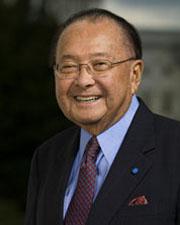
Madam President, I commend Senator Arlen Specter and the Committee on Veterans Affairs for their efforts in support of S. 1156, the Veterans Health Care Authorities Extension and Improvement Act of…
Madam President, I commend Senator Arlen Specter and the Committee on Veterans Affairs for their efforts in support of S. 1156, the Veterans Health Care Authorities Extension and Improvement Act of 2003, which would improve the provision of long-term health care for veterans by the Department of Veterans Affairs.
I would like to take this opportunity to comment on the section of S. 1156 that authorizes the VA to provide Filipino veterans residing in the United States the same medical benefits that are currently provided to veterans of the Armed Forces of the United States. Approximately 9,500 Filipino veterans residing in the United States would be eligible for these benefits.
Many of you are aware of my continued support and advocacy on behalf of the Filipino World War II veterans, and the importance of addressing their plight. As an American, I believe the treatment of Filipino World War II veterans is bleak and shameful. Throughout the years, I have sponsored several measures to rectify the wrongs committed against these World War II veterans, and I am grateful to the committee for the assistance and consideration given to my past initiatives. While some strides have been made, I believe more needs to be done to assist these veterans who are in their twilight years. Of the 120,000 who originally served in the Commonwealth Army during World War II, approximately 59,899 Filipino veterans currently reside in the United States and the Philippines. According to the Department of Veterans Affairs, the Filipino veteran population is expected to decrease to approximately 20,000, or roughly one-third of the current population, by 2010.
I support the provision in S. 1156 that authorizes the VA to provide Filipino veterans residing in the United States the same medical benefits that are currently provided to veterans of the Armed Forces of the United States. However, I remain concerned that these benefits are restricted to only those veterans residing in the United States. In my view, a distinction should not be made between veterans residing in the United States and those residing in the Philippines.
As a result of a citizenship statute enacted by the Congress in 1990, some Filipino veterans who were able to travel came to the United States to become United States citizens. At the same time, many other Filipino World War II veterans were unable to travel to the United States and take advantage of the naturalization benefit because of their advanced age. The law was subsequently amended in the Fiscal Year 1993 Departments of State, Justice, Commerce and the Judiciary Appropriations Act, Public Law 102-395, to allow the naturalization process for these veterans to occur in the Philippines. Since then, a distinction has been made, and benefits have been provided to only those Filipino veterans residing in the United States.
I believe it is unfair to make this distinction. The Commonwealth Army of the Philippines was called to serve with the United States Armed Forces in the Far East during World War II under President Roosevelt's July 26, 1941, military order. Together, these gallant men and women stood in harm's way with our American soldiers to fight our common enemies during World War II. Because all Filipino veterans stood in equal jeopardy during World War II, I do not believe we should draw a distinction based on their current residency in the U.S. or in the Philippines. All of them were at equal risk, and so all should receive equal benefits.
Accordingly, I introduced S. 68, the Filipino Veterans' Benefits Improvements Act of 2003, which provides health and disability compensation benefits that are similar to the provision included in S. 1156, but without limitations based on the residency of the veterans. I strongly urge Chairman Specter and members of the Committee to give consideration to S. 68, and to work with me in the coming year to provide health benefits to veterans residing in the Philippines.
Heroes should never be forgotten or ignored, so let us not turn our backs on those who sacrificed so much. Many of the Filipinos who fought so hard for our nation have been honored with American citizenship. Let us now work to repay all of these brave men and women for their sacrifices by providing them the veterans' benefits they deserve.
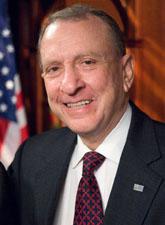
Madam President, I have sought recognition today to explain briefly the provisions of S. 1156, the proposed Veterans Health Care, Capital Asset, and Business Improvement Act of 2003, as the ranking…
Madam President, I have sought recognition today to explain briefly the provisions of S. 1156, the proposed Veterans Health Care, Capital Asset, and Business Improvement Act of 2003, as the ranking member of the Committee on Veterans Affairs, Senator Graham of Florida, and I propose be amended to incorporate provisions contained in S. 1156 as reported by the Committee on Veterans Affairs on November 10, 2003, and also to contain provisions derived from H.R. 1720, passed by the House on October 29, 2003, H.R. 2357, passed by the House on July 21, 2003, H.R. 2433, passed by the House on September 10, 2003, H.R. 3260, passed by the House on October 8, 2003, and H.R. 3387, passed by the House October 29, 2003.
This bill, as so amended, incorporates agreements reached between the Senate Committee on Veterans' Affairs, which I am privileged to chair, and our counterpart committee in the House of Representatives, on legislation relating to the provision of health care services by the Department of Veterans Affairs. I thank the Ranking Member, Senator Graham of Florida, and the Chairman and Ranking Member of the House Committee on Veterans Affairs, Representative Chris Smith of New Jersey and Representative Lane Evans of Illinois, for their advocacy for veterans and for their cooperation in resolving issues raised by the bills considered in our respective bodies. Inasmuch as S. 1156, as reported by the Committee on Veterans' Affairs, itself incorporated provisions drawn from nine separate Senate bills, S. 1156 as presented to the Senate today is properly viewed as a bill that incorporates provisions from 14 separate pieces of legislation. A bill containing such a range of material would not have been knitted together, as this one has been, without a spirit of cooperation and bipartisanship from the other body. The Ranking Member, Senator Graham of Florida, and I appreciate the leadership of the House Committee on Veterans Affairs.
Since this is a lengthy bill--over 50 pages--I will not endeavor in this statement to explain in detail each and every provision. Rather, I will discuss the highlights briefly in this statement, and refer my colleagues to a Joint Explanatory Statement, which I ask be incorporated into the Record as if read, for a detailed explanation of the bill as amended.
The starting point for S. 1156, as presented to the Senate today, was S. 1156, the proposed Veterans' Health Care Authorities Extension and Improvement Act of 2003. That bill was marked up by the Senate Committee on Veterans' Affairs on September 30, 2003, and reported on November 10, 2003. S. 1156, as reported, contained a number of elements; its key provisions would have extended mandates that VA provide nursing home care and outpatient-based long term care services to our senior veterans; improved VA assisted living and mental health programs; modified VA personnel provisions relating to non-physician providers of healthcare services and employees of VA's Veterans Canteen Service; and authorized major medical facility projects and projects related to VA's Capital Assets Realignment for Enhanced Services, CARES, initiative. Each and all of these provisions, with some modifications as appropriate, are contained in S. 1156 as presented to the Senate today.
The major change between the bill, as reported, and the current bill is the addition of provisions contained in House-passed legislation. House-approved provisions incorporated into the bill would allow radiation-exposed veterans higher priority access to VA
health care; exempt former prisoners-of-war from pharmaceutical copayments; create in VA an Office of Research Oversight; authorize VA to allow ``Saturday premium pay'' to licensed practical nurses and nursing assistants; and authorize additional needed VA construction projects. All of these added provisions are constructive and useful.
I ask that my colleagues in the Senate approve this legislation. It is good bipartisan legislation that is supported by VA's extraordinary Secretary, the Honorable Anthony J. Principi, and by the major veterans service organizations.
I ask unanimous consent that the Joint Explanatory Statement that accompanies my statement today be printed in the Record.
Show 11 more
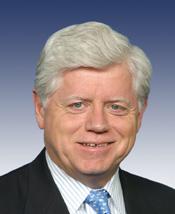
Mr. Speaker, I rise today in support of H.R. 2357. This legislation was originally drafted to establish standards of care for veterans seeking health care from the Department of Veterans Affairs. I…
Mr. Speaker, I rise today in support of H.R. 2357. This legislation was originally drafted to establish standards of care for veterans seeking health care from the Department of Veterans Affairs. I commend the gentlewoman from Florida (Ms. Brown- Waite) for introducing this legislation that, when introduced, would have ensured that veterans receive health care within thirty days of their initial request for appointments at VA facilities or if the VA could not meet this requirement, allow veterans to receive care at non- VA facilities. In its original form, this legislation closely resembled a bill that I first introduced in the 107th Congress and reintroduced in February. Like the bill the gentlewoman from Florida introduced, the 21st Century Veterans Equitable Treatment Act, H.R. 890, would establish standards for appointments at VA facilities and allow veterans to receive care at non-VA facilities if the VA was not able to meet its obligation. Additionally, my legislation recommends the used of ``smart card'' technology to expedite reimbursements for services and reduce complicated paperwork.
As you may know, the President's Task Force to Improve Health Care Delivery for Our Nation's Veterans recently released its final report and found that due to the number of veterans seeking access to the VA and Department of Defense health care system, those with service- connected disabilities and indigent veterans have been faced with diminished access to care. I agree with the Task Force that this situation is unacceptable and concur with one of their recommendations that ``VA facilities should be held accountable to meet the VA's access standards for enrolled Priority Groups 1 through 7 (new). In instances where an appointment cannot be offered within the access standard, VA should be required to arrange for care with a non-VA provider, unless the veteran elects to wait for an available appointment with VA.'' The bill introduced by the gentlewoman from Florida, as well as my legislation, was created to accomplish this.
Unfortunately, during markup of this legislation in the Veterans' Affairs Committee, this
provision was removed from H.R. 2357. The bill that we are debating now would no longer ``establish standards of access to care for veterans seeking health care from the Department of Veterans Affairs'' as is indicated by its title but instead authorizes the Secretary to hire chiropractors and makes certain Filipino World War II veterans living in the United States eligible for VA health care. I am very disappointed that this critical issue in veterans' health care access and element of the President's Task Force recommendations is not being voted on by the House today. However, I am encouraged to hear of the possibility that the Committee will hold a hearing on this very important issue when we return from the August recess. I wholeheartedly support further debate and would look forward to testifying before the Committee.
While disappointed that the appointment standards for the VA have been stripped from this bill, I am pleased that this legislation will give the Secretary of Veterans Affairs the authority to hire chiropractors. Congress has passed legislation numerous times to ensure that veterans have access to chiropractic care and I hope that this bill will clear any final hurdles that have prevented veterans from receiving this type of care.
Mr. Speaker, I ask my colleagues to join me today in supporting this legislation that is a small, yet important, step to meeting our commitment to those Americans who made the sacrifice to serve their nation in the armed forces. As future veterans face combat in Iraq, we in Congress must live up to our pledge by providing health care to all veterans, by ensuring that it is accessible, and by fully funding the VA health care system. I urge my colleagues to join me in calling for additional legislation to meet these goals so that we may return to this floor in the near future and step closer to meeting our promise.
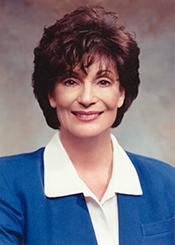
Mr. Speaker, I thank the gentleman from Texas for his leadership in this issue. Mr. Speaker, I rise today in support of this legislation which contains so many worthwhile VA medical construction…
Mr. Speaker, I thank the gentleman from Texas for his leadership in this issue.
Mr. Speaker, I rise today in support of this legislation which contains so many worthwhile VA medical construction projects across the country, including a medical complex in southern Nevada. I would like to thank the gentleman from New Jersey (Mr. Smith), the Committee on Veterans' Affairs chairman, and the gentleman from Illinois (Mr. Evans), the ranking member, for working closely with me and other members on this important measure.
Southern Nevada's veterans population is one of the fastest growing in the United States. The VA predicts that the number of annual visits by veterans in the Las Vegas Valley to their primary health care clinic will rise from 200,000 to more than a half a million by 2010. That is a mere 7 years from now, and the number of hospital beds needed to serve the veterans in my community will increase by 50 percent.
The VA is already struggling to address and meet the current demands on the VA health care structure in the Las Vegas valley. Last year, 1,500 southern Nevada veterans were sent to neighboring States because we could not provide the needed services locally. This is a terrible burden on those veterans and their families. They should not have to travel hundreds of miles across the country for needed care.
In addition, due to the decrepit conditions and structural deficiencies, the VA evacuated the Addelier D. Guy VA Clinic in Las Vegas after only 5 years in operation, forcing veterans to rely on a string of temporary clinics scattered across the Las Vegas Valley. I cannot tell my colleagues what a travesty it is when I see 80-year-old veterans waiting for a shuttle in 110 degree temperature in the middle of Las Vegas summers, waiting for a shuttle to pick them up to take them from one location to another for their health care needs. It is a horrible sight to see and must be corrected as quickly as possible.
In short, southern Nevada is facing a veterans health care crisis. Recently, the Department of Veterans' Affairs released the CARES document which proposes $4.6 billion worth of VA construction projects across the country. The CARES initiative directs funding to construct new facilities in areas where veterans populations are growing such as the Las Vegas Valley. Because of the explosive growth in the number of veterans living in and around Las Vegas, the CARES initiative calls for the construction of a full-scale medical facility, including a full- service patient care hospital and outpatient clinic and a comprehensive long-term care nursing facility of which we have none of those.
To fully understand the current health and medical care needs of the 5 million veterans and veteran services that will be needed in the next 20 years, the CARES Commission evaluated the plan and heard testimony in 38 public hearings across the country, including Las Vegas, from veterans, Members of Congress, VA employees, local government officials and veteran service groups. I commend the work of the CARES Commission. This process was done with our veterans squarely in mind, focused not only on those areas that have multiple facilities but also on the fastest growing regions, like southern Nevada, which lack the facilities needed to keep pace with the sudden influx of veterans from other areas of the country. Any plan to address shortcomings in veterans' care must reflect the need to expand services in areas where our veterans live.
This bill that I speak of, and that we are here today to discuss, authorizes the Secretary of the VA to provide $25 million to carry out the advance planning of a full-scale VA medical complex in Las Vegas, Nevada, as outlined through the draft of the CARES plan. This authorization is the first step in addressing the health care crisis of the veterans in southern Nevada.
I urge my colleagues to support this legislation. I cannot tell my colleagues how important it is to the veterans across the country.
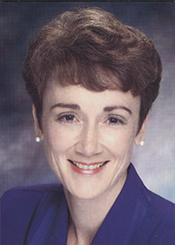
Mr. Speaker, I rise today in support of H.R. 2297. Within the bill there is a provision which is very special to me personally. Millions of men and women have served honorably in the United States…
Mr. Speaker, I rise today in support of H.R. 2297. Within the bill there is a provision which is very special to me personally.
Millions of men and women have served honorably in the United States military. One of the promises we make to veterans is that they may be laid to rest in a national cemetery, if they so choose, and that their spouse can be buried with them.
Today there are 26 million living United States veterans. Behind each of these veterans is a husband or wife who has carried a greater burden than most of us ask our husbands or wives to carry. These spouses are just as important to our Nation as the veterans to whom they are, and were, married. But there is a glitch in the law which denies them their right, as the surviving spouse of a veteran, to be buried in a national cemetery with their husband or wife, in some circumstances.
The law also says that if a veteran's spouse dies and he or she remarries, both spouses are eligible for burial in a national cemetery. But, if a veteran dies and the spouse remarries a non-veteran, the spouse can't be buried with their first spouse in a national cemetery. It is this problem that this bill, H.R. 2297, seeks to remedy.
Kay Brown is a constituent of mine. She told me the story of her mother, Francis Gilkerson.
E.T. Gilkerson met and married Kay Brown's mother, Francis, some 66 years ago. It was during World War II and E.T. signed up as an enlisted volunteer for the Air Force. He was an X-Ray technician stationed in Fresno, California, for three years. After he got out of the service, he and Francis were married for 56 years until he died at the age of 84 in 1993.
Some years went by and Francis met an 80-year-old fellow who was also a widower and a neighbor in the mobile home park where they both lived. The two of them were both very lonely and they found comfort and friendship in each others company. Francis was of a generation who would never consider living with somebody unless they were married. She was very concerned that she should be buried with her first husband and did not want to get married for a second time if that right was to be taken away from her. So Kay contacted the local VA on her mother's behalf to check. According to Kay, the VA asked her if her mother and father were still married at the time of his death. The answer was ``yes,'' and the VA said that it wouldn't be a problem for Kay's mom to be buried at the national cemetery in Santa Fe.
Francis married her second husband and lived very happily until her death in September of 2000. When Kay Brown was at the mortuary making arrangements for her mothers' cremation, the mortician asked her where she was to be buried. Kay said that she was to be buried at the national cemetery in Santa Fe with her husband of 56 years. The mortician shook his head and said that wasn't possible because her second husband was not a veteran.
When Kay called the VA again after her mother's death, they told her that the law prohibited her mother from being buried with her father because she had remarried a non-veteran who was living when Kay's mom died.
The VA gave Kay the wrong information when she first asked, and their error has caused heartache for Kay and her family. But the prohibition is in the law.
The ashes of Kay's mother, Francis, are still in a closet at Kay's house. But there are thousands of other widows and widowers in the same situation. The law gives the surviving veteran's spouse (many of them elderly women) a Hobson's choice: live alone in order to keep your burial right, or give up your right to be buried with your first spouse, to have companionship in your sunset years.
H.R. 2297 would allow surviving spouses to remarry and still be buried in a national cemetery with their first spouse if they choose.
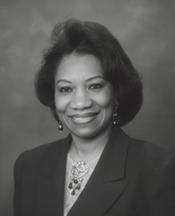
Mr. Speaker, I rise in strong support of the Department of Veterans Affairs Long-Term Care and Personnel Authorities Enhancement Act of 2003. I would like to thank the gentleman from New Jersey…
Mr. Speaker, I rise in strong support of the Department of Veterans Affairs Long-Term Care and Personnel Authorities Enhancement Act of 2003. I would like to thank the gentleman from New Jersey (Chairman Smith) and the gentleman from Illinois (Ranking Member Evans) for their commitment to veterans issues and their steadfast leadership and dedication to those men and women who have served us admirably in this country and throughout the world.
I want to also thank the gentleman from Connecticut (Mr. Simmons), subcommittee chair, and the gentleman from Texas (Mr. Rodriguez), the ranking member, for their dedication and leadership. They are all steadfast in ensuring that veterans have their proper stay in terms of care.
Another person who has worked tirelessly for the committee and for Filipino veterans is my colleague and friend from California (Mr. Filner). His commitment and resolve has been stellar on behalf of these veterans whom we both serve.
This bill, Mr. Speaker, is a long time coming. There are many, many good measures in this bill. I applaud the committee for doing good and timely work.
Mr. Speaker, addressing the current and future needs of our veterans must continue to be a national top priority. There is one important measure in this bill, though, that has been particularly close to me for the past several years. I want to applaud and thank members of the Committee on Veterans' Affairs for including the authorization to provide hospital and nursing home care and medical services to Filipino World War II veterans of the Philippines Commonwealth Army and former Philippines New Scouts in the same manner that is provided for other U.S. veterans and who reside permanently in the United States.
Currently, there are 11,000 World War II Filipino veterans who are citizens or legal residents of the United States. Many of these brave veterans are in their seventies and eighties and in desperate need of health benefits, and I am proud to represent many of them in my district. Passage of this language provides health benefits to these brave men, as well as benefiting our communities across the country.
I represent a district with approximately 35,000 Filipinos, the largest population of Filipino veterans in America. And for several years now, I have put my heart and soul into the welfare of many Filipino veterans who have asked me to help them in their struggle for recognition and equity in acquiring benefits.
I have witnessed firsthand how providing these long overdue health benefits will affect our families, our neighborhoods, our friends and, ultimately, our communities. I urge my colleagues to support this very important legislation on behalf of all of our veterans, and especially these Filipino veterans who have waited long enough.
Finally, I want to commend the committee on H.R. 2297, the Veterans Benefit Act of 2003, which passed the floor last night. This legislation addressed many issues that are also very important to the Filipino community. H.R. 2297 included language that extended eligibility for burial in the National Cemeteries to new Filipino scouts.
For this, Mr. Speaker, and for all other reasons and the great provisions of this bill, I want to thank the committee, and especially thank the Secretary of Veterans Affairs, Secretary Principi, for his leadership and guidance.
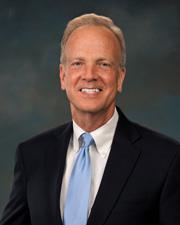
Mr. Speaker, I thank the gentleman from Connecticut (Mr. Simmons) for yielding me this time. Mr. Speaker, I am pleased to be here today as provisions of H.R. 2414, the Department of Veterans Affairs…
Mr. Speaker, I thank the gentleman from Connecticut (Mr. Simmons) for yielding me this time.
Mr. Speaker, I am pleased to be here today as provisions of H.R. 2414, the Department of Veterans Affairs Chiropractic Employment Act, a bill that I introduced earlier this year, are included in this bill now before the House.
I thank the gentleman from New Jersey (Mr. Smith), chairman of the full committee, as well as the gentleman from Connecticut (Mr. Simmons), my predecessor as the chairman of the Health Subcommittee for their leadership and assistance in advancing this measure to the House floor today.
Mr. Speaker, these provisions will prompt the Department of Veterans Affairs to make chiropractic care available to America's veterans in VA facilities by granting specific employment authority in VA for chiropractic care as clinicians under title 38 of the United States Code.
Millions of Americans use the services of doctors of chiropractic. However, veterans who are enrolled in the VA health care system are unable to receive this specialty care. Numerous studies have demonstrated that chiropractic care can and is an effective therapy.
Mr. Speaker, Congress has acted twice before on chiropractic care in the VA health care system, but our intent has not yet been implemented by the Department of Veterans Affairs. Signed into law in 1999, section 303 of Public Law 106-117 required the VA Under Secretary for Health to establish a defined policy regarding the role of chiropractic care for veterans enrolled in the Veterans Health Administration. Almost a year later, the VA established what it deemed to be a ``policy'' on chiropractic care. However, the Committee on Veterans' Affairs found the VA's response to be inadequate.
As a result, in 2001, 2 years later, Congress enacted section 204 of Public Law 107-135. This legislation required the Secretary of VA to create a program of chiropractic care and services for veterans who are enrolled in the VA health care system and specified that each of the VA's health care networks put at least one program in place. This law also required the establishment of a Chiropractic Advisory Committee within the Department and charged the committee to provide assistance to the Secretary in developing and implementing the chiropractic health care program.
While some progress has been made by the VA's Advisory Committee, the Department is now contending that formal organizational, qualification, and classification studies are needed due to the VA's lack of a specified employment authority in title 38 of the United States Code. Such an undertaking by the VA would probably require extensive use of specialized resources and more bureaucracy on the part of the Central Office, the Advisory Committee, the Office of Personnel Management, as well as outside consultants. We can remedy this situation with the bill before the House today to speed the VA's decision-making on establishing chiropractic clinical care positions within the Department.
Mr. Speaker, I urge my colleagues to support this legislation. Our bill will provide a specialty care program for our Nation's veterans, who are most deserving of this benefit.
I again thank the chairman for his leadership.
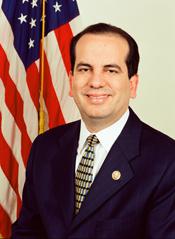
Mr. Speaker, I rise today to urge my colleagues to vote in favor of S. 1156--Department of Veterans Affairs Long-Term Personnel Authorities Act of 2003. This bill represents a step in the right…
Mr. Speaker, I rise today to urge my colleagues to vote in favor of S. 1156--Department of Veterans Affairs Long-Term Personnel Authorities Act of 2003. This bill represents a step in the right direction for many of our veteran communities.
In the interest of my constituents, this bill and the language contained within brings to the forefront the problems at the San Juan VA Medical Center and opens opportunities to provide immediate relief for the Veterans in Puerto Rico to receive the care they need and deserve.
Through the actions of these two committees, the Democrats and Republicans alike, they have sent a clear message of appreciation to the over 140,000 Puerto Rican veterans for their service in defense of our shared values. Puerto Ricans have served proudly in every armed conflict since the First World War. The language in this bill acknowledges the value of their service.
Currently, there are over 5,000 Puerto Rican men and women who are serving in the armed forces in Iraq, Afghanistan, Guantanamo and many other regions throughout the world. The language in this bill sends the right message to these young men and women that when they serve their Nation well, the United States Congress will serve them well.
I congratulate my colleagues on a job well done. Through long hours of deliberation and patient listening and understanding, both chambers of this Congress have come to what I believe is an impressive piece of bipartisan work. Now, it is my hope that the Secretary will move swiftly to reprogram the necessary funds to build a new bed tower at the San Juan VA Medical Center. Without the additional dollars mentioned in this bill, the San Juan VA Medical Center would have been forced to provide services with a bed loss of 120. This would have put additional burdens on a facility, which the C.A.R.E.S. Committee has deemed to be spatially deficient. The Committees understood this and worked to include language to encourage the Secretary to move forward.
The construction of the new bed tower will allow the San Juan VA Medical Center to provide safer and more modern services for the immediate future to the veterans and the service people returning from Iraq and Afghanistan.
I would like to personally thank Chairman Smith, the Ranking Member, Mr. Filner, Ms. Corrine Brown and the other members of the committee for working with me on these vital projects. The report language is more than a listing of projects--it is sending the right message to the 140,000 veterans in Puerto Rico; it sends the right message to the 5,000 Puerto Ricans who have been called to active service in Iraq, and it certainly sends the right message to the families of the 13 Puerto Ricans who have sacrificed their lives this year in service of the United States against the war on terror.
I look forward to continually working with my colleagues in both chambers to provide for the veterans in Puerto Rico. Again, I thank my colleagues for working so diligently on these first steps to improve healthcare for our veterans and urge my colleagues to vote ``yes'' to approve this bill.
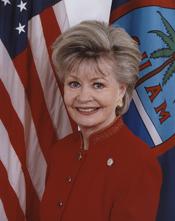
Mr. Speaker, I rise today in support of H.R. 2297, a bill that will significantly improve the quality of benefits offered to Guam's veterans. In addition to offering enhanced education, disability…
Mr. Speaker, I rise today in support of H.R. 2297, a bill that will significantly improve the quality of benefits offered to Guam's veterans.
In addition to offering enhanced education, disability and home loan benefits to veterans and their families. H.R. recognizes the efforts of veterans of the Philippine Commonwealth Army or new Philippine Scouts by ensuring their right to be buried at Arlington National Cemetery. I am pleased that H.R. 2297 will honor these brave soldiers whose contributions helped secure victory in the Pacific.
Mr. Speaker, it is important that we demonstrate to our men and women in uniform our nation's continued commitment to members of the armed services, past, present and future. I am committed to improve the conditions of veterans in Guam. They need access to affordable housing and vocational training. Disabled veterans need assistance that recognizes the struggle of daily life they must endure for having served their country.
I commend Chairman Smith and Ranking Member Evans for their leadership on this important legislation that will reiterate our nation's commitment to veterans. I look forward to reporting to the people of Guam that this legislation has become law and that we have taken another step in honoring our commitment to veterans.
Mr. REYES, Mr. Speaker, I rise today in support of H.R. 2297, the Veterans Benefits Act of 2003. This bill will provide an overdue expansion of several benefits already available to many veterans.
Mr. Speaker I have long been an advocate for expansion of benefits to those veterans who suffered as a result of environmental exposures during military service. Because we now have the acknowledgment from the Department of Defense that Agent Orange and other similar herbicides were used near the Korean Demilitarized Zone (DMZ) in the late 1960's, this bill will allow the children of veterans who were exposed to herbicides in Korea to receive the same benefits from the Department of Veterans' Affairs (VA) as those provided for children whose parents were exposed in Vietnam.
As you know, the members of the 507th Maintenance Company that were recently interned as prisoners of war in Iraq hailed from the district that I represent. This situation impacted our entire community. I am proud to say that as a member of the House Veterans Affairs Committee, I pushed for the removal of the 30-day internment requirement for former prisoners of war (POWs) with certain presumptive service- connection disabilities. These disabilities suffered by these POWs may have occurred within minutes or hours of their internment. I am glad that this issue will be addressed and included in this legislation. Mr. Speaker, this is merely a small recognition of former POWs who deserve more that what we are providing for them.
Mr. Speaker, I would like to thank the Chairman and sponsor of this bill, Mr. Chris Smith, as well as Ranking Member Lane Evans for working with me and for the rapid consideration of this important legislation. I strongly urge my colleagues to join me in support of passage of this bill.
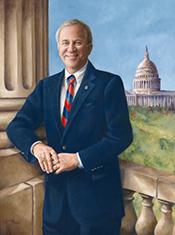
Madam Speaker, this is excellent bipartisan legislation, not only between the Members of this body but also between the House and the Senate. This is a good compromise, not only with regard to major…
Madam Speaker, this is excellent bipartisan legislation, not only between the Members of this body but also between the House and the Senate. This is a good compromise, not only with regard to major facility construction, whether it is to improve, renovate, replace, update and establish new health care facilities around the country. That is an excellent portion of this bill.
I would like to bring to my colleagues' attention that included in this compromise package is some legislation I authored to ensure the ethical treatment and safety of veterans who participate in VA medical research. We spend a lot of money on VA medical research, and there have been some incidents over the years whereby veterans have been harmed. And just the title of what it is called, Human Subject Protection, by calling humans subjects, it even sort of desensitizes the issue that there is a human being here at stake.
The VA medical research human subject protections section of this bill does the following:
We will establish an independent office to oversee research and compliance and assurance.
This bill will also provide that the new office counsels the Under Secretary for Health on all matters related to the protection of human research subjects, research misconduct and impropriety, and also the ethical conduct of research, and research safety.
That office shall investigate allegations of research, misconduct and impropriety; suspend or restrict research
to ensure the safety and ethical treatment of human subjects; and assure compliance in the conduct of research.
The director of the office shall conduct periodic inspections at research facilities, observe external accreditation site visits, investigate allegations of research misconduct and improprieties.
This bill also requires the immediate notification of the Under Secretary for Health when endangerment of human research subjects is evident or suspected and requires that Congress be notified when research misconduct or impropriety has been discovered.
This bill provides that funding for the new office would be independent from the Office of Research and Development.
Finally, the bill mandates that the Comptroller General of the United States conduct a study of the effectiveness of this new office and submit a report to Congress by January 1, 2006.
I want to thank all Members of the House Committee on Veterans' Affairs and the Senate for including this language in section IV of the bill. In particular, I want to thank the gentleman from New Jersey (Mr. Smith) and the ranking member, the gentleman from Illinois (Mr. Evans), and the ranking member of the Subcommittee on Oversight and Investigations, the gentlewoman from Oregon (Ms. Hooley), for co- sponsoring the legislation. Also, in particular, the gentleman from Connecticut (Mr. Simmons) and the ranking member, the gentleman from Texas (Mr. Rodriguez), for this bill at the subcommittee level, for bringing this to the attention of all of our colleagues. This is good legislation and good work, and I thank everyone for their efforts.
Mr. Speaker, Filipino veterans have waited nearly 60 years for Congress to take the first steps to undo an injustice inflicted upon them. I was pleased to see our Nation finally begin to take those…
Mr. Speaker, Filipino veterans have waited nearly 60 years for Congress to take the first steps to undo an injustice inflicted upon them. I was pleased to see our Nation finally begin to take those steps by passing H.R. 2357.
When the United States asked the Philippines to help America fight the long and difficult battles of World War II, nearly 200,000 Filipinos responded. They responded without hesitation to defend their homeland and to answer the call for help. In return, President Roosevelt promised that Filipino veterans would become U.S. citizens and thus have the same benefits given to all other U.S. veterans. In October 1945 General Omar Bradley, Administrator of the Veterans Administration, reaffirmed that they were to be treated like all other American veterans and would receive full benefits.
Yet, in 1946, the U.S. Congress broke this promise to the Commonwealth Army and the recognized guerrilla forces by enacting the Rescission Act (Public Law 79-301). Congress broke the same promise made to the New Philippine Scouts when it passed the Second Rescission Act (Public Law 79-391). The Rescission Acts stated that the World War II service of Filipinos would not be treated as recognizable military service. These acts took away their benefits.
I am pleased to add my voice to those in this Chamber, both today and for decades past, that want us to face up to this injustice. The legislation (H.R. 2357) passed by the House on July 21, 2003 authorizes the Department of Veterans' Affairs to provide hospital and nursing home care and medical services to certain Filipino World War II veterans of the Philippines Commonwealth Army and former Philippines New Scout veterans who permanently reside in the United States, in the same manner as provided to U.S. veterans. The bill would provide health care benefits to approximately 14,000 Commonwealth Army and New Philippines Scout veterans who are permanent and legal residents of the United States.
I support this legislation, but it is time for this Congress to turn its attention to the approximately 30,000 Commonwealth Army and New Philippines Scout veterans living in the Philippines who served alongside American soldiers, risked their lives during World War II, yet were denied the veterans' benefits that were promised to them. The passage of H.R. 2357 does not release the United States from its moral obligation to provide Filipino veterans, regardless of where they live, the benefits that were unfairly taken away from them in 1946.
Filipino veterans are now in their 70s and 80s, and we lose approximately five Filipino veterans each day. They are in desperate need of health care. It is time for this Congress to do the right thing and provide them with the benefits they earned during the World War II campaigns.
I thank my colleagues for passing H.R. 2357, and urge them to continue to push toward full equity for Filipino veterans.
Madam Speaker, I also rise in support of S. 1156 as it comes to the House. As I said yesterday on the floor of the House and I will say again to the chairman of the Committee on Veterans' Affairs and…
Madam Speaker, I also rise in support of S. 1156 as it comes to the House.
As I said yesterday on the floor of the House and I will say again to the chairman of the Committee on Veterans' Affairs and the ranking member, the gentleman from New Jersey (Mr. Smith) and the gentleman from Illinois (Mr. Evans), if we take the benefits package that we passed yesterday and the health package that we will pass today, the sum together of these make this year one of the most productive years ever for benefits and health care for our Nation's veterans.
I want to congratulate our leadership on that.
Let me just speak quickly to two of the provisions in this bill. One of them provides access to the veterans medical facilities to all Filipino World War II veterans who legally reside in the United States. This is a benefit that comes from my bill, H.R. 664, and for which I have been fighting for many years, and I thank all the folks involved, the gentleman from Connecticut (Chairman Simmons), the gentleman from Texas (Ranking Member Rodriguez), as well as Veterans' Affairs Secretary Principi for bringing this to the floor today.
The Filipino soldiers during World War II helped us win the war in the Pacific, and their brave, courageous stands in the epic battles of Bataan and Corregidor, their critical participation in guerrilla warfare that slowed up the Japanese advance, caused them to suffer greatly after the war when the Congress of 1946 deprived them of the very benefits in both health and benefits that they had been promised.
These veterans are now in their seventies and eighties. Their most urgent need is health care. So it is with great joy that I urge my colleagues to vote for this bill. It will restore dignity and honor to these brave veterans where over 50 years of injustice burns in their hearts. Their sons and daughters and they themselves, I know, are watching this floor today and are going to have great celebration when we pass this bill later on.
What we are saying here today is that these veterans are indeed United States veterans, and we are going to begin remedying the historical injustice that we inflicted upon them. We will make good on the promise of America for these brave veterans.
In addition, as has been mentioned, this bill contains major medical investments in many areas of this country, including San Diego, California. The average health care facility in the VA is more than 50 years old. So we have to update these buildings. The building in San Diego is in dire need of seismic correction, and it is one of 60 projects that the VA has identified that need these seismic corrections. So we cannot turn our heads away without acting any longer. We cannot continue to leave VA patients and employees in harm's way.
For all these reasons and more, I urge passage of Senate bill 1156.
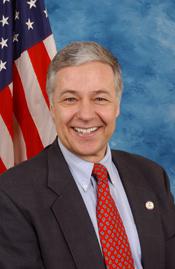
Mr. Speaker, I yield myself such time as I may consume. Mr. Speaker, I rise today in strong support of H.R. 2297, the Veterans Benefits Act of 2003. I would like to thank the gentleman from New…
Mr. Speaker, I yield myself such time as I may consume.
Mr. Speaker, I rise today in strong support of H.R. 2297, the Veterans Benefits Act of 2003. I would like to thank the gentleman from New Jersey (Chairman Smith) and the gentleman from Illinois (Mr. Evans), ranking member, for their leadership on the full committee on this important measure.
I would also like to thank personally the gentleman from South Carolina (Chairman Brown) for his leadership and professionalism on our subcommittee as well as staff on both sides of the aisle who have worked so hard during this session.
The Veterans Benefits Package of 2003 includes provisions drawn from many bills considered by the Subcommittee on Benefits this year. I am especially pleased that this legislation includes bills introduced by Members of both sides of the aisle.
Our Nation's service members and veterans have earned, and their family deserve, all the benefits provided under H.R. 2297. Indeed, they deserve so much more as well. I am pleased that this package takes a strong step in the right direction.
Mr. Speaker, I am proud to sponsor many of the measures that were incorporated in H.R. 2297, including provisions aimed to equalize home loan benefits for members of the Guard and Reserve, improve veterans' education benefits, enhance self-employment opportunities, and expand employment counseling and job search assistance for service members returning to civilian life after separating from military installations overseas.
H.R. 2297 provides for more equitable and rational treatment of surviving spouses and Filipino World War II veterans, which I fully support. It allows former prisoners of war to qualify for certain presumptions of service-connection and adds cirrhosis of the liver to the disease considered presumptively disabling for POWs. It also allows the Gold Star Wives to remarry after age 55 without losing the Dependency and Indemnity Compensation benefits which they currently receive.
This measure is long overdue.
Mr. Speaker, the provisions in this package will benefit the service members and veterans from my State of Maine and all around the country. It will also help others. I fully support H.R. 2297 and urge my colleagues to do the same.
Mr. Speaker, I reserve the balance of my time.
Mr. Speaker, I yield 3 minutes to the gentleman from Illinois (Mr. Evans), ranking member of the full committee, a gentleman who has fought for veterans issues as long as he has been in Congress.
Mr. Speaker, I yield 3 minutes to the gentleman from Illinois (Mr. Davis).
Mr. Speaker, I have no further requests for time, and I yield back the balance of my time.
Bill Text
4 versions available
        [Congressional Bills 108th Congress]
[From the U.S. Government Publishing Office]
[H.R. 2357 Referred in Senate (RFS)]

1st Session
H. R. 2357

_______________________________________________________________________

IN THE SENATE OF THE UNITED STATES

July 22 (legislative day, July 21), 2003

Received; read twice and referred to the Committee on Veterans' Affairs

_______________________________________________________________________

AN ACT

To amend title 38, United States Code, to provide for the appointment
of chiropractors in the Veterans Health Administration of the
Department of Veterans Affairs and to provide eligibility for
Department of Veterans Affairs health care for certain Filipino World
War II veterans residing in the United States.

Be it enacted by the Senate and House of Representatives of the
United States of America in Congress assembled,

SECTION 1. SHORT TITLE.

This Act may be cited as the ``Veterans Health Care Improvement Act
of 2003''.

SEC. 2. APPOINTMENT OF CHIROPRACTORS IN THE VETERANS HEALTH
ADMINISTRATION.

(a) Appointments.--Section 7401 of title 38, United States Code, is
amended--
(1) by inserting ``and chiropractic care'' in the matter
preceding paragraph (1) after ``medical care''; and
(2) by inserting ``chiropractors,'' in paragraph (1) after
``podiatrists,''.
(b) Qualifications of Appointees.--Section 7402(b) of such title is
amended--
(1) by redesignating paragraph (10) as paragraph (11); and
(2) by inserting after paragraph (9) the following new
paragraph (10):
``(10) Chiropractor.--To be eligible to be appointed to a
chiropractor position, a person must--
``(A) hold the degree of doctor of chiropractic, or its
equivalent, from a college of chiropractic approved by the
Secretary; and
``(B) be licensed to practice chiropractic in a State.''.
(c) Period of Appointments and Promotions.--Section 7403(a)(2) of
such title is amended by adding at the end the following new
subparagraph:
``(H) Chiropractors.''.
(d) Grades and Pay Scales.--Section 7404(b)(1) of such title is
amended by striking the third center heading in the table and inserting
the following:

``CLINICAL PODIATRIST, CHIROPRACTOR, AND OPTOMETRIST SCHEDULE''.

(e) Temporary and Part-Time Appointments.--Section 7405(a) of such
title is amended--
(1) by adding at the end of paragraph (1) the following new
subparagraph:
``(E) Chiropractors.''; and
(2) by adding at the end of paragraph (2) the following new
subparagraph:
``(D) Chiropractors.''.
(f) Residencies and Internships.--Section 7406(c) of such title is
amended--
(1) in paragraph (1)--
(A) by inserting ``and chiropractic'' after
``medical'' the first place it appears; and
(B) by inserting ``or chiropractic'' after
``medical'' the second place it appears;
(2) in paragraph (2)(B), by inserting ``or chiropractic''
after ``medical'' the first place it appears; and
(3) in paragraph (3)(A), by inserting ``or chiropractic''
after ``medical''.
(g) Malpractice and Negligence Protection.--Section 7316(a) of such
title is amended--
(1) in paragraph (1), by inserting ``or chiropractic''
after ``medical'' each place it appears; and
(2) in paragraph (2)--
(A) by inserting ``or chiropractic'' after
``medical'' the first place it appears; and
(B) by inserting ``chiropractor,'' after
``podiatrist,''.
(h) Treatment as Scarce Medical Specialists for Contracting
Purposes.--Section 7409(a) of such title is amended by inserting
``chiropractors,'' in the second sentence after ``optometrists,''.
(i) Reimbursement of Continuing Professional Education Expenses.--
Section 7411 of such title is amended by striking ``or dentist'' and
inserting ``, dentist, or chiropractic''.
(j) Collective Bargaining Exemption.--Section 7421(b) of such title
is amended by adding at the end the following new paragraph:
``(8) Chiropractors.''.
(k) Effective Date.--The amendments made by this section shall take
effect at the end of the 180-day period beginning on the date of the
enactment of this Act.

SEC. 3. ELIGIBILITY FOR DEPARTMENT OF VETERANS AFFAIRS HEALTH CARE OF
CERTAIN FILIPINO WORLD WAR II VETERANS RESIDING IN THE
UNITED STATES.

(a) Eligibility.--The text of section 1734 of title 38, United
States Code, is amended to read as follows:
``(a) The Secretary shall furnish hospital and nursing home care
and medical services to any individual described in subsection (b) in
the same manner, and subject to the same terms and conditions, as apply
to the furnishing of such care and services to individuals who are
veterans as defined in section 101(2) of this title. Any disability of
an individual described in subsection (b) that is a service-connected
disability for purposes of this subchapter (as provided for under
section 1735(2) of this title) shall be considered to be a service-
connected disability for purposes of furnishing care and services under
the preceding sentence.
``(b) Subsection (a) applies to any individual who is a
Commonwealth Army veteran or new Philippine Scout and who--
``(1) is residing in the United States; and
``(2) is a citizen of the United States or an alien
lawfully admitted to the United States for permanent
residence.''.
(b) Limitation.--(1) The amendment made by subsection (a) shall
take effect on the date on which the Secretary of Veterans Affairs
submits to the Committees on Veterans' Affairs of the Senate and House
of Representatives and publishes in the Federal Register a
certification described in paragraph (2).
(2) A certification referred to in paragraph (1) is a certification
that sufficient resources are available for the fiscal year during
which the certification is submitted to carry out section 1734 of title
38, United States Code, as amended by such amendment, during that
fiscal year at each significantly affected health care facility of the
Department of Veterans Affairs.
(3) For purposes of paragraph (2), the term ``significantly
affected health care facility'' means a health care facility at which,
as determined by the Secretary, it is reasonably foreseeable that the
implementation of the provisions of section 1734 of title 38, United
States Code, as amended by subsection (a), will result in a significant
increase in the use of health care resources due to the number of
veterans described in subsection (b) of that section who are considered
to be likely to seek hospital or nursing home care or medical services,
as authorized by subsection (a) of that section, at that facility.

Passed the House of Representatives July 21, 2003.

Attest:

JEFF TRANDAHL,

Clerk.