Student Bill of Rights
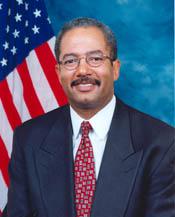 Rep. Chaka Fattah (D-PA)
Legislative Activity
Stay on top of the latest movement without scrolling through every action
Referred to the Subcommittee on Education Reform.
February 21, 2003
View full timeline
Introduced in House
January 8, 2003
Referred to the House Committee on Education and the Workforce.
January 8, 2003
Referred to the Subcommittee on Education Reform.
February 21, 2003
Floor Debate
7 membersWhat members said about H.R. 236 on the floor
 +2
+2
Floor Debate
7 membersWhat members said about H.R. 236 on the floor
Mr. Speaker, I rise this evening to begin the Congressional Black Caucus Special Order to commemorate the 49th anniversary of the United States Supreme Court's Brown v. Board of Education decision.…
Mr. Speaker, I thank the gentleman so much for yielding to me. Mr. Speaker, I come to the floor tonight because I am a little bit concerned about where we are and how we got here. Over the next year,…
Mr. Speaker, I thank the gentleman for yielding to me. Mr. Speaker, tonight we look back nearly a half century to the 1954 case to Brown v. Board of Education of Topeka and the impact on this Nation.…
Mr. Speaker, I thank the gentleman for yielding to me, and I am honored today to praise the NAACP Legal Defense Fund for inaugurating the Red, White, Blue and Brown Campaign to commemorate next…
Mr. Speaker, I would like to thank the gentleman from Maryland (Mr. Cummings), our distinguished chairman of the Congressional Black Caucus, so much, and I am happy to stand with him tonight as we…
Show 2 more

I thank the gentleman from Maryland (Mr. Cummings), the Chair of the Congressional Black Caucus, for organizing this special order and yielding to me. I join with him this evening to recognize a…
Mr. Speaker, I want to thank the gentleman for yielding to me and also for his leadership as chairman of the Congressional Black Caucus. We gather here this evening to mark the 49th anniversary of…
Bill Text
Latest available legislative text
        [Congressional Bills 108th Congress]
[From the U.S. Government Publishing Office]
[H.R. 236 Introduced in House (IH)]

108th CONGRESS
1st Session
H. R. 236

To provide for adequate and equitable educational opportunities for
students in State public school systems, and for other purposes.

_______________________________________________________________________

IN THE HOUSE OF REPRESENTATIVES

January 8, 2003

Mr. Fattah (for himself, Mr. George Miller of California, Mr. Conyers,
Ms. Corrine Brown of Florida, Mr. Jackson of Illinois, Mr. Rush, Mr.
Holden, Mr. Serrano, Ms. Watson, Mr. Towns, Mr. Hoeffel, Mr. Reyes, Mr.
Israel, Ms. Millender-McDonald, Mr. Cummings, Mr. Crowley, Mr. Hinchey,
Mr. Scott of Virginia, Ms. Eddie Bernice Johnson of Texas, Mr. Olver,
Mr. Delahunt, Mr. Filner, Mr. Owens, Ms. Woolsey, Mr. Acevedo-Vila, Mr.
Rahall, Mr. Brady of Pennsylvania, Mr. Neal of Massachusetts, Mrs.
McCarthy of New York, Mr. Doyle, Mr. McNulty, Mr. Lynch, Mr. Meehan,
Mr. Honda, Mrs. Christensen, Ms. Roybal-Allard, Mr. Davis of Alabama,
Mr. Gutierrez, Mr. Ford, Mrs. Jones of Ohio, Mr. Davis of Illinois, Mr.
Clay, Mr. Clyburn, Ms. Jackson-Lee of Texas, Mr. Rangel, Mr. Jefferson,
Ms. Norton, Mr. Thompson of Mississippi, Ms. Lee, and Mr. Watt)
introduced the following bill; which was referred to the Committee on
Education and the Workforce

_______________________________________________________________________

A BILL

To provide for adequate and equitable educational opportunities for
students in State public school systems, and for other purposes.

Be it enacted by the Senate and House of Representatives of the
United States of America in Congress assembled,

SECTION 1. SHORT TITLE.

This Act may be cited as the ``Student Bill of Rights''.

SEC. 2. TABLE OF CONTENTS.

The table of contents for this Act is as follows:

Sec. 1. Short title.
Sec. 2. Table of contents.
Sec. 3. Findings and purposes.
TITLE I--EDUCATIONAL OPPORTUNITY IN STATE PUBLIC SCHOOL SYSTEMS

Subtitle A--Access to Educational Opportunity

Sec. 111. Adequate and equitable State public school systems.
Sec. 112. State educational adequacy and equity requirements.
Sec. 113. State-established standards for access to educational
opportunity.
Subtitle B--State Accountability

Sec. 121. Determination of educationally adequate and inequitable State
public school systems.
Sec. 122. State accountability for improvement of educational
opportunity.
Sec. 123. Consequences of nonremediation.
Subtitle C--Public Reporting and Remedy

Sec. 131. Annual report by Secretary on adequacy and equity in State
public school systems.
Sec. 132. Civil action for enforcement.
TITLE II--EFFECTS OF EDUCATIONAL DISPARITIES ON ECONOMIC GROWTH AND
NATIONAL DEFENSE

Sec. 201. Effects on economic growth and productivity.
Sec. 202. Effects on national defense.
TITLE III--GENERAL PROVISIONS

Sec. 301. Definitions.
Sec. 302. Notice and opportunity for hearing.
Sec. 303. Rulemaking.
Sec. 304. Rule of construction.

SEC. 3. FINDINGS AND PURPOSES.

(a) Findings.--The Congress finds the following:
(1) A high-quality, highly competitive education for all
students is imperative for the economic growth and productivity
of the United States, for its effective national defense, and
for achievement of the historical aspiration to be one Nation
of equal citizens. It is therefore necessary and proper to
overcome the nationwide phenomenon of educationally inadequate
or inequitable State public school systems, in which high-
quality public schools serve high-income communities and poor-
quality schools serve low-income, urban, rural, and minority
communities.
(2) There exists in the States an ever-widening educational
opportunity gap for low-income, urban, rural, and minority
students characterized by the following:
(A) Highly differential educational expenditures
among public school districts within States.
(B) Continuing disparities within the States in
students' access to the fundamentals of educational
opportunity described in section 112(a).
(C) Radically differential educational achievement
among public school districts within the States, as
measured by the following:
(i) Achievement in mathematics, reading or
language arts, and science on State academic
achievement tests and measures, including the
academic assessments described in section
113(b)(1).
(ii) Advanced placement courses offered and
taken.
(iii) Scholastic Aptitude Test (SAT) and
ACT Assessment scores.
(iv) Dropout rates and graduation rates.
(v) College-going and college-completion
rates.
(vi) Job placement and retention rates and
indices of job quality.
(3) As a consequence of this educational opportunity gap,
the quality of a child's education depends largely upon where
the child's family lives, and the detriments of lower quality
public education are imposed particularly on--
(A) children from low-income families;
(B) children living in urban and rural areas; and
(C) minority children.
(4) Since 1785, the Congress of the United States,
exercising the power to admit new States under article IV,
section 3 of the Constitution (and previously, the Congress of
the Confederation of States under the Articles of
Confederation), has imposed upon every State, as a fundamental
condition of the State's admission, the following requirements:
(A) One, and sometimes two, square-mile lots in
every township were to be ``granted and . . . reserved
for the maintenance and use of public schools''.
(B) ``[S]chools and the means of education [are to]
be forever encouraged''.
(C) ``State conventions [were to] provide, by
ordinances irrevocable without the consent of the
United States and the people of said States . . . that
provision . . . be made for the establishment and
maintenance of systems of public schools which shall be
open to all children of said States''.
(See Ordinances of May 20, 1785, and July 13, 1787; Act of
March 3, 1845, 28th Cong. 2d Sess., 5 Stat. 789, Chap. 76
(admitting Iowa and Florida); Act of February 22, 1889, 50th
Cong., 2d Sess., Chap. 180 (admitting States created from the
Dakota Territories); and the Acts of Congress pertaining to the
admission of each of the States.)
(5) Over the years since the landmark ruling in Brown v.
Board of Education, when a unanimous United States Supreme
Court held that ``the opportunity of an education . . . , where the
state has undertaken to provide it, is a right which must be made
available to all on equal terms'', courts in 44 of the States have
heard challenges to the establishment, maintenance, and operation of
educationally inadequate or inequitable State public school systems.
(347 U.S. 483, 493 (1954).
(6) In 1970, the Presidential Commission on School Finance
found that significant disparities in the distribution of
educational resources existed among public school districts
within States because the States relied too significantly on
local district financing for educational revenues, and that
reforms in systems of school financing would increase the
Nation's ability to serve the educational needs of all
children.
(7) In 1999, the National Research Council of the National
Academy of Sciences published a report entitled ``Making Money
Matter, Financing America's Schools'', which found that the
concept of funding adequacy, which moves beyond the more
traditional concepts of finance equity to focus attention on
the sufficiency of funding for desired educational outcomes, is
an important step in developing a fair and productive
educational system.
(8) In 2001, the Executive order establishing the
President's Commission on Educational Resource Equity declared,
``A quality education is essential to the success of every
child in the 21st century and to the continued strength and
prosperity of our Nation. . . . [L]ong-standing gaps in access
to educational resources exist, including disparities based on
race and ethnicity.'' (Executive Order 13190, Sec. 1 (January
15, 2001); 66 Fed. Reg. 5424.)
(9) According to the Secretary of Education, as stated in a
letter (with enclosures) dated January 19, 2002, from the
Secretary to States--
(A) racial and ethnic minorities continue to suffer
from lack of access to educational resources, including
``experienced and qualified teachers, adequate
facilities, and instructional programs and support,
including technology, as well as . . . the funding
necessary to secure these resources''; and
(B) these inadequacies are ``particularly acute in
high-poverty schools, including urban schools, where
many students of color are isolated and where the
effect of the resource gaps may be cumulative. In other
words, students who need the most may often receive the
least, and these students often are students of
color''.
(10) The Elementary and Secondary Education Act of 1965 (20
U.S.C. 6301 et seq.), as amended by the No Child Left Behind
Act of 2001 (Public Law 107-110), provides that--
(A) States must establish standards and assessments
in mathematics, reading or language arts, and science;
(B) elementary schools and secondary schools must
ensure that all students are proficient in such
subjects within 12 years after the end of the 2001-2002
school year; and
(C) elementary schools and secondary schools will
be held accountable for the students' progress.
(11) The standards and accountability movement will succeed
only if, in addition to standards and accountability, all
schools have access to the educational resources necessary to
enable students to achieve.
(12) Raising standards without ensuring adequate and
equitable access to educational resources may, in fact,
exacerbate achievement gaps and set children up for failure.
(13) According to the World Economic Forum's Global
Competitiveness Report 2001-2002, the United States ranks last
among developed countries in the difference in the quality of
schools available to rich and poor children.
(14) Each State Government has ultimate authority in
determining every important aspect and priority of the public
school system that provides elementary and secondary education
to children in the State, including whether children throughout
the State have high access to the fundamentals of educational
opportunity described in section 112(a).
(15) Since 1965, the Congress, in exercising its spending
authority, has provided substantial Federal financial
assistance to the States for the improvement of their public
school systems. In their expenditure and oversight of this
assistance, the States have failed systematically to achieve
the purpose of the Congress in providing the assistance, namely
the effective education of all the children of the United
States.
(16) Because a well-educated populace is critical to the
Nation's political and economic well-being and national
security, the Federal Government has a substantial interest in
ensuring that States provide a high-quality education by
ensuring that all children have access to the fundamentals of
educational opportunity described in section 112(a) to enable
the children to succeed academically and in life.
(b) Purposes.--The purposes of this Act are the following:
(1) To further the goals of the No Child Left Behind Act of
2001 (Public Law 107-110) and the Elementary and Secondary
Education Act of 1965 (20 U.S.C. 6301 et seq.) by holding
States accountable for providing all students access to the
fundamentals of educational opportunity described in section
112(a).
(2) To ensure that all students in public elementary
schools and secondary schools receive educational opportunities
that enable the students--
(A) to acquire the knowledge and skills necessary
for responsible citizenship, including the ability to
participate fully in the political process through
informed electoral choice;
(B) to meet challenging State student academic
achievement standards; and
(C) to be able to compete and succeed in a global
economy.
(3) To end the pervasive pattern of educationally
inadequate or inequitable State public school systems.

TITLE I--EDUCATIONAL OPPORTUNITY IN STATE PUBLIC SCHOOL SYSTEMS

Subtitle A--Access to Educational Opportunity

SEC. 111. ADEQUATE AND EQUITABLE STATE PUBLIC SCHOOL SYSTEMS.

Each State receiving Federal financial assistance for elementary or
secondary education shall maintain a public school system that meets
the requirements of section 112 and provides all students in the State
with--
(1) the educational resources needed to succeed
academically and in life; and
(2) an education that enables the students--
(A) to acquire the knowledge and skills necessary
for responsible citizenship;
(B) to participate fully in the political process
through informed electoral choice; and
(C) to be able to compete and succeed in a global
economy.

SEC. 112. STATE EDUCATIONAL ADEQUACY AND EQUITY REQUIREMENTS.

(a) Fundamentals of Educational Opportunity.--A State shall provide
for all public schools in the State access, at levels defined by the
State under section 113 as ideal or adequate, to each of the following
fundamentals of educational opportunity:
(1) High-quality classroom teachers and school
administrators.--High-quality classroom instruction and school-
level administrators, as measured by the following:
(A) The proportion of teachers in core academic
subjects who are highly qualified (as that term is
defined in section 9101 of the Elementary and Secondary
Education Act of 1965 (20 U.S.C. 7801)).
(B) Leadership, management, and guidance from
school principals (and other school-level
administrators) certified under an applicable State or
national program.
(2) Rigorous academic standards, curricula, and methods of
instruction.--Rigorous academic standards, curricula, and
methods of instruction, as measured by the extent to which each
public school district succeeds in providing high-quality
academic standards, curricula, and methods of instruction to
students in each public elementary school and secondary school
within the district.
(3) Small class sizes.--Small class sizes, as measured by
the following:
(A) The average class size and the range of class
sizes.
(B) The proportion of classes with 17 or fewer
students.
(4) Quality facilities, textbooks, and instructional
materials and supplies.--Quality school facilities, textbooks,
and instructional materials and supplies, as measured by the
following:
(A)(i) The physical condition of school buildings
and major school building features.
(ii) Environmental conditions in school buildings.
(iii) The quality of instructional space.
(B) The proportion of students who begin the school
year with school-issued textbooks.
(C) The average age of textbooks and instructional
materials and supplies used in core academic subjects.
(5) Up-to-date library resources.--High-quality, up-to-
date, and state-of-the-art library resources, as measured by
the following:
(A) The size and qualifications of library staff,
including whether the library is staffed by a full-time
librarian certified under an applicable State or
national program.
(B) The size (relative to the number of students)
and quality of the library's collection of books and
periodicals.
(C) Hours of library operation.
(6) Up-to-date computer technology.--Computer technology,
as measured by the following:
(A) The ratio of computers to students.
(B) The quality of computers and software available
to students at school, including the type, processing
speed, age, or version of such computers or software.
(C) The availability of Internet access.
(D) The quality of system maintenance and technical
assistance for the computers.
(E) The number of computer laboratory courses
taught by qualified computer instructors.
(7) Quality guidance counseling.--Access to the services of
qualified school counselors, as measured by the ratio of
students to school counselors who have obtained certification
under an applicable State or national program (which should be
250 to 1 or more), and the percentage of time spent by school
counselors in providing direct services to students.
(b) Comparable Educational Services.--A State shall provide
educational services in public school districts that receive funds
under part A of title I of the Elementary and Secondary Education Act
of 1965 (20 U.S.C. 6311 et seq.) that are, taken as a whole, at least
comparable to educational services provided in public school districts
not receiving such funds.
(c) Compliance With Court Orders.--A State shall comply with any
substantive Federal or State court order in any matter concerning the
adequacy or equity of the State's public school system, to the extent
required in the order.

SEC. 113. STATE-ESTABLISHED STANDARDS FOR ACCESS TO EDUCATIONAL
OPPORTUNITY.

(a) Establishment.--In carrying out section 112(a), a State
educational agency, in consultation with local educational agencies,
teachers, principals, pupil services personnel, administrators, other
staff, and parents, shall develop standards to describe and measure the
extent to which the State provides to the students in each public
school and school district in the State each of the fundamentals of
educational opportunity described in section 112(a) in terms of ideal,
adequate, and basic levels of such access.
(b) Factors for Consideration.--In defining the levels of access
required under subsection (a), the State shall consider, in addition to
the factors described in section 112(a)--
(1) the access available to students in schools in the
highest achieving decile of public elementary schools and
secondary schools in the State, as determined on the basis of
student performance on statewide student academic assessments,
including--
(A) student academic assessments in reading or
language arts, mathematics, and science under section
1111(b)(3) of the Elementary and Secondary Education
Act of 1965 (20 U.S.C. 6311(b)(3));
(B) national student academic assessments of
reading and mathematics under the National Assessment
of Educational Progress carried out under section
303(a) of the National Assessment of Educational
Progress Authorization Act (20 U.S.C. 9622(a)); and
(C) State student academic assessments of reading
and mathematics under the National Assessment of
Educational Progress carried out under section
303(b)(3) of the National Assessment of Educational
Progress Authorization Act (20 U.S.C. 9622(b)(3));
(2) the unique needs of low-income, urban and rural, and
minority students; and
(3) other educationally appropriate factors.
(c) Challenging Standards.--The levels of access required under
subsection (a) shall be aligned with the challenging State academic
content and achievement standards, and the high-quality academic
assessments, required under the Elementary and Secondary Education Act
of 1965 (20 U.S.C. 6301 et seq.).
(d) Submission to Secretary.--A State educational agency shall
submit to the Secretary--
(1) a description of each of the levels of access required
under subsection (a);
(2) a description of the level of access of each public
school district, elementary school, and secondary school in the
State to each of the fundamentals of educational opportunity
described in section 112(a), including identification of any
such schools that do not provide ideal or adequate levels of
access (as defined under subsection (a));
(3) an estimate of the additional cost, if any, of ensuring
that the public school system meets the requirements of section
112; and
(4) the information required under subparagraphs (B) and
(C) of paragraph (1) and paragraph (2)(B) of section 131(b).
(e) Publication and Dissemination to Parents.--The State annually
shall publish the information submitted under subsection (d) and shall
disseminate the information to the public and the parents of children
attending (or who may attend) public schools in the State, in an
understandable and uniform format and, to the extent practicable, in a
language that the parents can understand, through such means as the
Internet, the media, and public agencies.

Subtitle B--State Accountability

SEC. 121. DETERMINATION OF EDUCATIONALLY ADEQUATE AND INEQUITABLE STATE
PUBLIC SCHOOL SYSTEMS.

(a) Annual Determination by Secretary.--Beginning not later than
October 1 of the first full school year after the date of enactment of
this Act, the Secretary shall annually determine whether each State
meets each of the requirements of section 112.
(b) Publication by Secretary.--The Secretary shall publish and make
available to the general public (including by means of the Internet)
the determinations under subsection (a).

SEC. 122. STATE ACCOUNTABILITY FOR IMPROVEMENT OF EDUCATIONAL
OPPORTUNITY.

(a) State Remediation Plan.--A State determined under section 121
not to meet the requirements of section 112 shall develop and submit to
the Secretary, by not later than 1 year after the determination, a
remediation plan (which the State may amend to improve the plan or to
take into account significantly changed circumstances), as follows:
(1) Long-term remediation for access to fundamentals of
educational opportunity.--If the State is determined not to
meet the requirements under section 112(a) (relating to access
to the fundamentals of educational opportunity), the plan shall
provide for the following:
(A) A description of the actions the State will
take to meet the requirements of section 112(a), by not
later than 12 years after the end of the 2003-2004
school year, to provide ideal or adequate access (as
defined by the State under section 113) to the
fundamentals of educational opportunity for each public
school in the State.
(B) A timeline for improvement that includes annual
interim goals for increasing the number of public
schools and school districts in the State that have
ideal or adequate levels of access (as defined by the
State under section 113) to each of the fundamentals of
educational opportunity, in order to achieve the
required levels of access within the time described in
subparagraph (A).
(C) Implementation of a single, statewide
accountability system to ensure that the State achieves
the interim goals described in subparagraph (B).
(2) 2-year remediation for comparable educational
services.--If the State is determined not to meet the
requirements of section 112(b) (relating to comparable
educational services), the plan shall describe the actions the
State will take to meet the requirements of such section by not
later than 2 school years after submission of the plan.
(b) Disapproval of Plan.--The Secretary may disapprove a plan (or
amendment) submitted under subsection (a) that the Secretary determines
does not meet the requirements of such subsection.

SEC. 123. CONSEQUENCES OF NONREMEDIATION.

(a) Failure To Meet Annual Interim Access Goals.--Notwithstanding
any other provision of law and in addition to any other consequence
under this section, the Secretary shall withhold 2.75 percent of any
funds otherwise available to a State (or a State educational agency)
for administration of Federal elementary and secondary education
programs for each annual interim goal established under section
122(a)(1)(B) for a fiscal year, or a prior fiscal year, that the
Secretary determines the State fails to meet.
(b) Continuing Failure To Provide Comparable Educational
Services.--Notwithstanding any other provision of law and in addition
to any other consequence under this section, the Secretary shall
withhold from a State determined by the Secretary to continue to fail
to meet the requirements of section 112(b) (relating to comparable
educational services) at the end of the second school year after a plan
is required to be submitted under section 122, up to 33\1/3\ percent of
funds otherwise available to the State for administration of Federal
elementary and secondary education programs.
(c) Noncompliance With Court Orders.--Notwithstanding any other
provision of law and in addition to any other consequence under this
section, the Secretary shall withhold from a State determined by the
Secretary to fail to meet the requirements of section 112(c) (relating
to compliance with court orders) up to 33\1/3\ percent of funds
otherwise available to the State for the administration of Federal
elementary and secondary education programs.
(d) Disposition of Withheld Funds.--For each State from which funds
are withheld under this section, the Secretary shall make a
determination whether the State, by not later than 1 year after a
determination under subsection (a), (b), or (c), has corrected the
condition leading to a withholding of funds and shall distribute
withheld funds as follows:
(1) If the State corrects a condition leading to a
withholding of funds, the Secretary shall make the applicable
withheld funds available to the State (or State educational
agency).
(2) If the State fails to correct a condition leading to a
withholding of funds, the Secretary shall allocate the
applicable withheld funds to public schools or school districts
affected by the State's failure to make adequate remediation,
for the purpose of enabling the school or school district to
correct such condition.
(e) Temporary Waiver.--The Secretary may grant a request by a State
for a waiver of the withholding provisions of subsections (a) through
(c) for a total period of not more than 1 year if--
(1) the Secretary is satisfied that exceptional
circumstances (such as a precipitous decrease in State
revenues) prevent a State from complying with the requirements
of section 112; and
(2) the State's request describes the manner in which the
State will comply with the requirements of section 112 by the
end of the waiver period.

Subtitle C--Public Reporting and Remedy

SEC. 131. ANNUAL REPORT BY SECRETARY ON ADEQUACY AND EQUITY IN STATE
PUBLIC SCHOOL SYSTEMS.

(a) Annual Report to Congress.--Not later than October 1 of the
first full school year after the date of enactment of this Act, the
Secretary shall transmit to the Congress a report that provides a
detailed analysis of the public school system of each State.
(b) Contents of Report.--The analysis under subsection (a) shall
include the following information with respect to each State's public
school system:
(1) Basic public school system information.--
(A) The number of students, elementary schools,
secondary schools, and school districts in the public
school system.
(B) For each such school and school district, the
number and percentage of--
(i) children counted under section 1124(c)
of the Elementary and Secondary Education Act
of 1965 (20 U.S.C. 6333(c)); and
(ii) students, disaggregated by groups
described in section 1111(b)(3)(C)(xiii) of the
Elementary and Secondary Education Act of 1965
(20 U.S.C. 6311(b)(3)(C)(xiii)).
(C) For each such school, a statement whether the
school is an urban, rural, or mixed school (as defined
by the Commissioner for Education Statistics).
(D) The average per-pupil expenditure (in actual
dollars and adjusted for cost and need) for the State
and for each school and school district.
(E) The decile ranking of each school district, as
measured by achievement in mathematics, reading or
language arts, and science on the academic assessments
described in subparagraphs (A) and (C) of section
113(b)(1).
(2) Success in providing fundamentals of educational
opportunity.--
(A) A description of the ideal, adequate, and basic
levels of access established by the State under section
113 to each of the fundamentals of educational
opportunity described under section 112(a).
(B) For each school and school district, the
following information:
(i) The level of access (as established
under section 113) of the school or school
district to each of the fundamentals of
educational opportunity described in section
112(a).
(ii) The percentage of students proficient
in mathematics, reading or language arts, and
science, as measured through assessments under
section 1111(b)(3)(C)(v) of the Elementary and
Secondary Education Act of 1965 (20 U.S.C.
6311(b)(3)(C)(v)).
(iii) Whether the school or school district
is making adequate yearly progress under
section 1111(b)(2) of the Elementary and
Secondary Education Act of 1965 (20 U.S.C.
6311(b)(2)).
(C) The number and names of each school in the
State that does not provide each of the fundamentals of
educational opportunity described in section 112(a) at
an ideal or adequate level (as established under
section 113).
(3) State remediation actions.--If the State is determined
under section 121 not to meet the requirements of section 112--
(A) a detailed description and evaluation of--
(i) the State's success in carrying out any
remediation plan required to be submitted by
the State under section 122; and
(ii) any other actions taken, or measures
proposed to be taken, by the State to meet the
requirements of section 112; and
(B) a copy of any remediation plan required to be
submitted by the State under section 122 (including any
amendments).
(4) Effects on academic achievement.--An analysis of the
effects of the average per-pupil expenditure, and the level of
access (as provided by the State under section 113) to each of
the fundamentals of educational opportunity described in
section 112(a) provided to students in each school and school
district on the outcomes of the academic assessments identified
in section 113(b)(1).
(5) Other information.--
(A) The most recent information submitted by the
State under section 113(d).
(B) For the year covered by the report, a summary
of any changes in the data required in paragraphs (1)
and (2) for each of the preceding 3 years (which may be
based on such data as are available for the first 3
reports under subsection (a)).
(C) Such other information as the Secretary
considers useful and appropriate to include.
(c) Scope of Report.--The report required under subsection (a)
shall cover the school year ending in the calendar year in which the
report is required to be submitted.
(d) Submission of Data to Secretary.--Each State receiving Federal
financial assistance for elementary and secondary education shall
submit to the Secretary, at such time and in such manner as the
Secretary may reasonably require, such data as the Secretary deems
necessary to make a determination under section 121 and to submit the
report under this section. Such data shall include the information used
to measure the State's success in providing the fundamentals of
educational opportunity described in section 112(a).
(e) Failure To Submit Data.--If a State fails to submit the data
required to make a determination under section 121--
(1) the State shall be deemed to have been determined under
such section not to meet the applicable requirements of section
112, until the State submits the data and the Secretary is able
to make a determination under such section based on such data;
and
(2) the Secretary shall--
(A) provide, to the extent practicable, the
analysis required in subsection (a) for the State based
on the best data available to the Secretary; and
(B) update the analysis, as necessary, after
submission of the data by the State.
(f) Publication.--The Secretary shall publish and make available to
the general public (including by means of the Internet) the report
required under subsection (a).

SEC. 132. CIVIL ACTION FOR ENFORCEMENT.

A student or parent of a student aggrieved by a violation of this
Act may bring a civil action against an appropriate official in an
appropriate United States district court seeking declaratory and
injunctive relief to enforce the requirements of this Act, together
with reasonable attorney fees and the costs of the action, without
regard to the citizenship of the parties or the amount in controversy.

TITLE II--EFFECTS OF EDUCATIONAL DISPARITIES ON ECONOMIC GROWTH AND
NATIONAL DEFENSE

SEC. 201. EFFECTS ON ECONOMIC GROWTH AND PRODUCTIVITY.

(a) Study.--The Commissioner for Education Statistics, in
consultation with the Secretaries of Commerce, Labor, and the Treasury,
shall conduct a comprehensive study concerning the effects on economic
growth and productivity of eliminating disparities in public school
systems that do not meet the requirements of section 112. Such study
shall include the following:
(1) The economic costs to the Nation resulting from the
maintenance by States of public school systems that do not meet
the requirements of section 112.
(2) The economic gains to be expected from the elimination
of disparities in public school systems that do not meet the
requirements of section 112.
(b) Report to Congress.--Not later than 1 year after the date of
enactment of this Act, the Commissioner for Education Statistics shall
submit to the Congress a final report detailing the results of the
study required under subsection (a).

SEC. 202. EFFECTS ON NATIONAL DEFENSE.

(a) Study.--The Commissioner for Education Statistics, in
consultation with the Secretary of Defense, shall conduct a
comprehensive study concerning the effects on national defense of
eliminating disparities in public school systems that do not meet the
requirements of section 112. Such study shall include the following:
(1) The detriments to national defense resulting from the
maintenance by States of public school systems that do not meet
the requirements of section 112, including the effects of
education deficits arising from low-quality schools on--
(A) knowledge and skills necessary for the
effective functioning of the Armed Forces;
(B) the costs to the Armed Forces of training; and
(C) efficiency resulting from the use of
sophisticated equipment and information technology.
(2) The gains to national defense to be expected from the
elimination of disparities in public school systems that do not
meet the requirements of section 112.
(b) Report to Congress.--Not later than 1 year after the date of
enactment of this Act, the Commissioner for Education Statistics shall
submit to the Congress a final report detailing the results of the
study required under subsection (a).

TITLE III--GENERAL PROVISIONS

SEC. 301. DEFINITIONS.

In this Act:
(1) The terms ``elementary school'', ``secondary school'',
``local educational agency'', ``State educational agency'',
``core academic subjects'', ``highly qualified'', ``parent'',
and ``average per-pupil expenditure'' each have the meanings
given those terms in section 9101 of the Elementary and
Secondary Education Act of 1965 (20 U.S.C. 7801).
(2) The term ``public school system'' means a State's
system of public elementary and secondary education.
(3) The term ``Federal elementary and secondary education
programs'' means programs providing Federal financial
assistance for elementary or secondary education, other than
programs under the following provisions of law:
(A) The Individuals with Disabilities Education Act
(20 U.S.C. 1400 et seq.).
(B) Title III of the Elementary and Secondary
Education Act of 1965 (20 U.S.C. 6801 et seq.).
(C) The Richard B. Russell National School Lunch
Act (42 U.S.C. 1751 et seq.).
(D) The Child Nutrition Act of 1966 (42 U.S.C. 1771
et seq.).
(4) The term ``State'' means the several States, the
District of Columbia, and the Commonwealth of Puerto Rico.

SEC. 302. NOTICE AND OPPORTUNITY FOR HEARING.

The Secretary may make an adverse determination under this Act only
after notice and opportunity for hearing.

SEC. 303. RULEMAKING.

The Secretary may prescribe regulations to carry out this Act.

SEC. 304. RULE OF CONSTRUCTION.

Nothing in this Act may be construed to require a jurisdiction to
increase property tax or other tax rates or to redistribute revenues
from such taxes.
<all>