Intellectual Property Protection Act of 2004
 Rep. Lamar Smith (R-TX)
Legislative Activity
Stay on top of the latest movement without scrolling through every action
Placed on Senate Legislative Calendar under General Orders. Calendar No. 781.
October 7, 2004
View full timeline
Introduced in House
June 9, 2003
Referred to the Subcommittee on Courts, the Internet, and Intellectual Property.
June 9, 2003
Subcommittee Hearings Held.
June 10, 2003
Subcommittee Consideration and Mark-up Session Held.
July 22, 2003
Forwarded by Subcommittee to Full Committee (Amended) by Voice Vote.
July 22, 2003
Reported (Amended) by the Committee on Judiciary. H. Rept. 108-425.
February 24, 2004
Placed on the Union Calendar, Calendar No. 245.
February 24, 2004
Mr. Sensenbrenner moved to suspend the rules and pass the bill, as amended.
March 10, 2004 • 12:06 PM
Considered under suspension of the rules. (consideration: CR H944-946)
March 10, 2004 • 12:07 PM
DEBATE - The House proceeded with forty minutes of debate on H.R. 2391.
March 10, 2004 • 12:07 PM
Passed/agreed to in House: On motion to suspend the rules and pass the bill, as amended Agreed to by voice vote.(text: CR H944)
March 10, 2004 • 12:21 PM
On motion to suspend the rules and pass the bill, as amended Agreed to by voice vote. (text: CR H944)
March 10, 2004 • 12:21 PM
Motion to reconsider laid on the table Agreed to without objection.
March 10, 2004 • 12:21 PM
The title of the measure was amended. Agreed to without objection.
March 10, 2004 • 12:21 PM
Received in the Senate and Read twice and referred to the Committee on the Judiciary.
March 11, 2004
Committee on the Judiciary. Ordered to be reported with an amendment in the nature of a substitute favorably.
October 7, 2004
Committee on the Judiciary. Reported by Senator Hatch with an amendment in the nature of a substitute. Without written report.
October 7, 2004
Placed on Senate Legislative Calendar under General Orders. Calendar No. 781.
October 7, 2004
Floor Debate
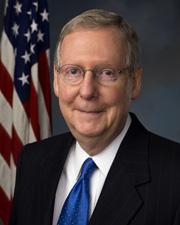
11 membersWhat members said about H.R. 2391 on the floor



 +6
+6
Floor Debate
11 membersWhat members said about H.R. 2391 on the floor
Madam President, I rise today to support passage of S. 2192, the Cooperative Research and Technology Enhancement Act of 2004 or CREATE Act. I am pleased that the Senate is considering this important…
Mr. Speaker, I move to suspend the rules and pass the bill (H.R. 2391) to amend title 35, United States Code, to promote research among universities, the public sector, and private enterprise, as…
Mr. President, I ask unanimous consent that the Committee on Energy and Natural Resources be authorized to meet during the session of the Senate on Thursday, September 30 at 10:30 a.m. to receive…
Mr. Speaker, I ask unanimous consent to take from the Speaker's table the Senate bill (S. 2192) to amend title 35, United States Code, to promote cooperative research involving universities, the…
Mr. President, I ask unanimous consent that the Committee on the Judiciary be authorized to meet to continue its markup of Thursday, September 30, 2004 on Monday, October 4, 2004 immediately…
Show 8 more
Mr. President, I ask unanimous consent that the Committee on Banking, Housing, and Urban Affairs be authorized to meet during the session of the Senate on October 7, 2004, at a time to be determined,…
I am pleased that today the Senate will pass the Cooperative Research and Technology Enhancement Act, the CREATE Act of 2004. As I have noted before, the United States Congress has a long history of…
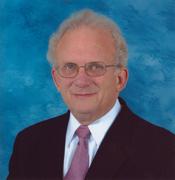
Mr. Speaker, I yield myself such time as I may consume. Mr. Speaker, I rise in support of H.R. 2391, the CREATE Act, and ask my colleagues to support it as well. The CREATE Act is a rare legislative…
Mr. Speaker, the CREATE Act, which I introduced along with the gentleman from California (Mr. Berman), allows researchers and inventors who work for different organizations and collaborate on…
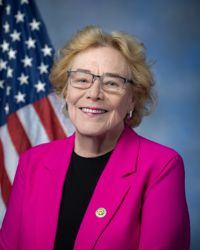
Mr. Speaker, cooperative research among private, public, and nonprofit entities has become a common feature of modern research and development. Many technology start-ups in my home in Silicon Valley…
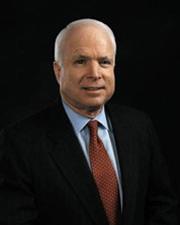
Mr. President, I wish to briefly remark on H.R. 2391 and H.R. 4077, a package of bills referred to as the Intellectual Property Protection Act of 2004. I have objected to the further consideration or…
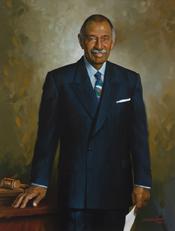
Mr. Speaker, I rise in support of this legislation. I cannot overstate the importance of encouraging collaboration when it comes to developing new technologies, particularly in the medical field.…
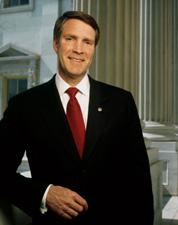
Madam President, I ask unanimous consent that the Senate proceed to the immediate consideration of Calendar No. 484, S. 2192. I further ask consent that the bill be read the third time and passed,…
Bill Text
5 versions available
        [Congressional Bills 108th Congress]
[From the U.S. Government Publishing Office]
[H.R. 2391 Reported in Senate (RS)]

Calendar No. 781
108th CONGRESS
2d Session
H. R. 2391

_______________________________________________________________________

IN THE SENATE OF THE UNITED STATES

March 11, 2004

Received; read twice and referred to the Committee on the Judiciary

October 7, 2004

Reported by Mr. Hatch, with an amendment
[Strike out all after the enacting clause and insert the part printed
in italic]

_______________________________________________________________________

AN ACT

To amend title 35, United States Code, to promote cooperative research
involving universities, the public sector, and private enterprises.

Be it enacted by the Senate and House of Representatives of the
United States of America in Congress assembled,

<DELETED>SECTION 1. SHORT TITLE.</DELETED>

<DELETED>    This Act may be cited as the ``Cooperative Research and
Technology Enhancement (CREATE) Act of 2004''.</DELETED>

<DELETED>SEC. 2. COLLABORATIVE EFFORTS ON CLAIMED INVENTIONS.</DELETED>

<DELETED>    Section 103(c) of title 35, United States Code, is amended
to read as follows:</DELETED>
<DELETED>    ``(c)(1) Subject matter developed by another person, which
qualifies as prior art only under one or more of subsections (e), (f),
and (g) of section 102 of this title, shall not preclude patentability
under this section where the subject matter and the claimed invention
were, at the time the claimed invention was made, owned by the same
person or subject to an obligation of assignment to the same
person.</DELETED>
<DELETED>    ``(2) For purposes of this subsection, subject matter
developed by another person and a claimed invention shall be deemed to
have been owned by the same person or subject to an obligation of
assignment to the same person if--</DELETED>
<DELETED>    ``(A) the claimed invention was made by or on
behalf of parties to a joint research agreement that was in
effect on or before the date the claimed invention was
made;</DELETED>
<DELETED>    ``(B) the claimed invention was made as a result
of activities undertaken within the scope of the joint research
agreement; and</DELETED>
<DELETED>    ``(C) the application for patent for the claimed
invention discloses or is amended to disclose the names of the
parties to the joint research agreement.</DELETED>
<DELETED>    ``(3) For purposes of paragraph (2), the term `joint
research agreement' means a written contract, grant, or cooperative
agreement entered into by two or more persons or entities for the
performance of experimental, developmental, or research work in the
field of the claimed invention.''.</DELETED>

<DELETED>SEC. 3. EFFECTIVE DATE.</DELETED>

<DELETED>    (a) In General.--The amendments made by this Act shall
apply to any patent granted on or after the date of the enactment of
this Act.</DELETED>
<DELETED>    (b) Special Rule.--The amendments made by this Act shall
not affect any final decision of a court or the United States Patent
and Trademark Office rendered before the date of the enactment of this
Act, and shall not affect the right of any party in any action pending
before the United States Patent and Trademark Office or a court on the
date of the enactment of this Act to have that party's rights
determined on the basis of the provisions of title 35, United States
Code, in effect on the day before the date of the enactment of this
Act.</DELETED>

SECTION 1. SHORT TITLE.

This Act may be cited as the ``Intellectual Property Protection Act
of 2004''.

TITLE I--COOPERATIVE RESEARCH AND TECHNOLOGY ENHANCEMENT

SEC. 101. SHORT TITLE.

This title may be cited as the ``Cooperative Research and
Technology Enhancement (CREATE) Act of 2004''.

SEC. 102. COLLABORATIVE EFFORTS ON CLAIMED INVENTIONS.

Section 103(c) of title 35, United States Code, is amended to read
as follows:
``(c)(1) Subject matter developed by another person, which
qualifies as prior art only under one or more of subsections (e), (f),
and (g) of section 102 of this title, shall not preclude patentability
under this section where the subject matter and the claimed invention
were, at the time the claimed invention was made, owned by the same
person or subject to an obligation of assignment to the same person.
``(2) For purposes of this subsection, subject matter developed by
another person and a claimed invention shall be deemed to have been
owned by the same person or subject to an obligation of assignment to
the same person if--
``(A) the claimed invention was made by or on behalf of
parties to a joint research agreement that was in effect on or
before the date the claimed invention was made;
``(B) the claimed invention was made as a result of
activities undertaken within the scope of the joint research
agreement; and
``(C) the application for patent for the claimed invention
discloses or is amended to disclose the names of the parties to
the joint research agreement.
``(3) For purposes of paragraph (2), the term `joint research
agreement' means a written contract, grant, or cooperative agreement
entered into by two or more persons or entities for the performance of
experimental, developmental, or research work in the field of the
claimed invention.''.

SEC. 103. EFFECTIVE DATE.

(a) In General.--The amendments made by this title shall apply to
any patent granted on or after the date of the enactment of this Act.
(b) Special Rule.--The amendments made by this title shall not
affect any final decision of a court or the United States Patent and
Trademark Office rendered before the date of the enactment of this Act,
and shall not affect the right of any party in any action pending
before the United States Patent and Trademark Office or a court on the
date of the enactment of this Act to have that party's rights
determined on the basis of the provisions of title 35, United States
Code, in effect on the day before the date of the enactment of this
Act.

TITLE II--PIRACY DETERRENCE IN EDUCATION

SEC. 201. SHORT TITLE.

This title may be cited as the ``Piracy Deterrence and Education
Act of 2004''.

SEC. 202. FINDINGS.

Congress finds as follows:
(1) The Internet, while changing the way our society
communicates, has also changed the nature of many crimes,
including the theft of intellectual property.
(2) Trafficking in infringing copyrighted works through
increasingly sophisticated electronic means, including peer-to-
peer file trading networks, Internet chat rooms, and news
groups, threatens lost jobs, lost income for creators, lower
tax revenue, and higher prices for honest purchasers.
(3) The most popular peer-to-peer file trading software
programs have been downloaded by computer users over
600,000,000 times. At any one time there are over 3,000,000
users simultaneously using just one of these services. Each
month, on average, over 2,300,000,000 digital-media files are
transferred among users of peer-to-peer systems.
(4) Many computer users simply believe that they will not
be caught or prosecuted for their conduct.
(5) The security and privacy threats posed by certain peer-
to-peer networks extend beyond users inadvertently enabling a
hacker to access files. Millions of copies of one of the most
popular peer-to-peer networks contain software that could allow
an independent company to take over portions of users'
computers and Internet connections and has the capacity to keep
track of users' online habits.
(6) In light of these considerations, Federal law
enforcement agencies should actively pursue criminals who steal
the copyrighted works of others, and prevent such activity
through enforcement and awareness. The public should be
educated about the security and privacy risks associated with
being connected to certain peer-to-peer networks.

SEC. 203. VOLUNTARY PROGRAM OF DEPARTMENT OF JUSTICE.

(a) Voluntary Program.--The Attorney General is authorized to
establish a program under which the Department of Justice, in cases
where persons who are subscribers of Internet service providers appear
to the Department of Justice to be engaging in copyright infringing
conduct in the course of using such Internet service, would send to the
Internet service providers warning letters that warn such persons of
the penalties for such copyright infringement. The Internet service
providers may forward the warning letters to such persons.
(b) Limitations on Program.--
(1) Extent and length of program.--The program under
subsection (a) shall terminate at the end of the 18-month
period beginning on the date of the enactment of this Act and
shall be limited to not more than 10,000 warning letters.
(2) Privacy protections.--No Internet service provider that
receives a warning letter from the Department of Justice under
subsection (a) may disclose to the Department any identifying
information about the subscriber that is the subject of the
warning letter except pursuant to court order or other
applicable legal process that requires such disclosure.
(c) Reimbursement of Internet Service Providers.--The Department of
Justice shall reimburse Internet service providers for all reasonable
direct costs incurred by such service providers in identifying the
proper recipients of the warning letters under subsection (a) and
forwarding the letters.
(d) Reports to Congress.--The Attorney General shall submit to
Congress a report on the program established under subsection (a) both
at the time the program is initiated and at the conclusion of the
program.
(e) Inadmissibility of Evidence.--The fact that an Internet service
provider participated in the program under subsection (a), received a
warning letter from the Department of Justice, was aware of the
contents of the warning letter, or forwarded the warning letter to a
subscriber, shall not be admissible in any legal proceeding brought
against the Internet service provider.
(f) Construction.--Nothing in this section shall be construed to
affect the ability of a court to consider, in a legal proceeding
brought against an Internet service provider, notifications of claimed
infringement as described in section 512(c)(3) of title 17, United
States Code, or any other relevant evidence, other than that described
in subsection (e).

SEC. 204. DESIGNATION AND TRAINING OF AGENTS IN COMPUTER HACKING AND
INTELLECTUAL PROPERTY UNITS.

(a) Designation of Agents in CHIPs Units.--The Attorney General
shall ensure that any unit in the Department of Justice responsible for
investigating computer hacking or responsible for investigating
intellectual property crimes is assigned at least one agent to support
such unit for the purpose of investigating crimes relating to the theft
of intellectual property.
(b) Training.--The Attorney General shall ensure that each agent
assigned under subsection (a) has received training in the
investigation and enforcement of intellectual property crimes.

SEC. 205. EDUCATION PROGRAM.

(a) Establishment.--There shall be established within the Office of
the Associate Attorney General of the United States an Internet Use
Education Program.
(b) Purpose.--The purpose of the Internet Use Education Program
shall be to--
(1) educate the general public concerning the value of
copyrighted works and the effects of the theft of such works on
those who create them; and
(2) educate the general public concerning the privacy,
security, and other risks of using the Internet to obtain
illegal copies of copyrighted works.
(c) Sector Specific Materials.--The Internet Use Educational
Program shall, to the extent appropriate, develop materials appropriate
to Internet users in different sectors of the general public where
criminal copyright infringement is a concern. The Attorney General
shall consult with appropriate interested parties in developing such
sector-specific materials.
(d) Consultations.--The Attorney General shall consult with the
Register of Copyrights and the Secretary of Commerce in developing the
Internet Use Education Program under this section.
(e) Prohibition on Use of Certain Funds.--The program created under
this section shall not use funds or resources of the Department of
Justice allocated for criminal investigation or prosecution.
(f) Additional Prohibition on the Use of Funds.--The program
created under this section shall not use any funds or resources of the
Department of Justice allocated for the Civil Rights Division of the
Department, including any funds allocated for the enforcement of civil
rights or the Voting Rights Act of 1965.

SEC. 206. ACTIONS BY THE GOVERNMENT OF THE UNITED STATES.

Section 411(a) of title 17, United States Code, is amended in the
first sentence by striking ``Except for'' and inserting ``Except for an
action brought by the Government of the United States or by any agency
or instrumentality thereof, or'' .

SEC. 207. AUTHORIZED APPROPRIATIONS.

There are authorized to be appropriated to the Department of
Justice for fiscal year 2005 not less than $15,000,000 for the
investigation and prosecution of violations of title 17, United States
Code.

SEC. 208. CRIMINAL PENALTIES FOR UNAUTHORIZED RECORDING OF MOTION
PICTURES IN A MOTION PICTURE EXHIBITION FACILITY.

(a) In General.--Chapter 113 of title 18, United States Code, is
amended by adding after section 2319A the following new section:
``Sec. 2319B. Unauthorized recording of motion pictures in a motion
picture exhibition facility
``(a) Offense.--Any person who, without the authorization of the
copyright owner, knowingly uses or attempts to use an audiovisual
recording device to transmit or make a copy of a motion picture or
other audiovisual work protected under title 17, or any part thereof,
from a performance of such work in a motion picture exhibition
facility, shall--
``(1) be imprisoned for not more than 3 years, fined under
this title, or both; or
``(2) if the offense is a second or subsequent offense, be
imprisoned for no more than 6 years, fined under this title, or
both.
The possession by a person of an audiovisual recording device in a
motion picture exhibition facility may be considered as evidence in any
proceeding to determine whether that person committed an offense under
this subsection, but shall not, by itself, be sufficient to support a
conviction of that person for such offense.
``(b) Forfeiture and Destruction.--When a person is convicted of an
offense under subsection (a), the court in its judgment of conviction
shall, in addition to any penalty provided, order the forfeiture and
destruction or other disposition of all unauthorized copies of motion
pictures or other audiovisual works protected under title 17, or parts
thereof, and any audiovisual recording devices or other equipment used
in connection with the offense.
``(c) Authorized Activities.--This section does not prevent any
lawfully authorized investigative, protective, or intelligence activity
by an officer, agent, or employee of the United States, a State, or a
political subdivision of a State, or by a person acting under a
contract with the United States, a State, or a political subdivision of
a State.
``(d) Immunity for Theaters and Authorized Persons.--With
reasonable cause, the owner or lessee of a motion picture facility
where a motion picture is being exhibited, the authorized agent or
employee of such owner or lessee, the licensor of the motion picture
being exhibited, or the agent or employee of such licensor--
``(1) may detain, in a reasonable manner and for a
reasonable time, any person suspected of committing an offense
under this section for the purpose of questioning that person
or summoning a law enforcement officer; and
``(2) shall not be held liable in any civil or criminal
action by reason of a detention under paragraph (1).
``(e) Victim Impact Statement.--
``(1) In general.--During the preparation of the
presentence report under rule 32(c) of the Federal Rules of
Criminal Procedure, victims of an offense under this section
shall be permitted to submit to the probation officer a victim
impact statement that identifies the victim of the offense and
the extent and scope of the injury and loss suffered by the
victim, including the estimated economic impact of the offense
on that victim.
``(2) Contents.--A victim impact statement submitted under
this subsection shall include--
``(A) producers and sellers of legitimate works
affected by conduct involved in the offense;
``(B) holders of intellectual property rights in
the works described in subparagraph (A); and
``(C) the legal representatives of such producers,
sellers, and holders.
``(f) Definitions.--In this section:
``(1) Audiovisual work, copy, etc.--The terms `audiovisual
work', `copy', `copyright owner', `motion picture', and
`transmit' have, respectively, the meanings given those terms
in section 101 of title 17.
``(2) Audiovisual recording device.--The term `audiovisual
recording device' means a digital or analog photographic or
video camera, or any other technology or device capable of
enabling the recording or transmission of a copyrighted motion
picture or other audiovisual work, or any part thereof,
regardless of whether audiovisual recording is the sole or
primary purpose of the device.
``(3) Motion picture exhibition facility.--The term `motion
picture exhibition facility' means a movie theater, screening
room, or other venue that is being used primarily for the
exhibition of a copyrighted motion picture, if such exhibition
is open to the public or is made to an assembled group of
viewers outside of a normal circle of a family and its social
acquaintances.
``(g) State Law Not Preempted.--Nothing in this section may be
construed to annul or limit any rights or remedies under the laws of
any State.''.
(b) Clerical Amendment.--The table of sections at the beginning of
chapter 113 of title 18, United States Code, is amended by inserting
after the item relating to section 2319A the following:

``2319B. Unauthorized recording of motion pictures in a motion picture
exhibition facility.''.

SEC. 209. SENSE OF CONGRESS ON NEED TO TAKE STEPS TO PREVENT ILLEGAL
ACTIVITY ON PEER-TO-PEER SERVICES.

(a) Findings.--Congress finds as follows:
(1) The most popular publicly accessible peer-to-peer file
sharing software programs combined have been downloaded
worldwide over 600,000,000 times.
(2) The vast majority of software products, including peer-
to-peer technology, do not pose an inherent risk. Responsible
persons making software products should be encouraged and
commended for the due diligence and reasonable care they take
including by providing instructions, relevant information in
the documentation, disseminating patches, updates, and other
appropriate modifications to the software.
(3) Massive volumes of illegal activity, including the
distribution of child pornography, viruses, and confidential
personal information, and copyright infringement occur on publicly
accessible peer-to-peer file sharing services every day. Some publicly
accessible peer-to-peer file sharing services expose consumers,
particularly children, to serious risks, including legal liability,
loss of privacy, threats to computer security, and exposure to illegal
and inappropriate material.
(4) Several studies and reports demonstrate that
pornography, including child pornography, is prevalent on
publicly available peer-to-peer file sharing services, and
children are regularly exposed to pornography when using such
peer-to-peer file sharing services.
(5) The full potential of peer-to-peer technology to
benefit consumers has yet to be realized and will not be
achieved until these problems are adequately addressed.
(6) To date, the businesses that run publicly accessible
file-sharing services have refused or failed to voluntarily and
sufficiently address these problems.
(7) Many users of publicly available peer-to-peer file-
sharing services are drawn to these systems by the lure of
obtaining ``free'' music and movies.
(8) While some users use parental controls to protect
children from pornography available on the Internet and search
engines, not all such controls work on publicly accessible
peer-to-peer networks.
(9) Businesses that run publicly accessible peer-to-peer
file sharing services have openly acknowledged, and numerous
studies and reports have established, that these services
facilitate and profit from massive amounts of copyright
infringement, causing enormous damage to the economic well-
being of the copyright industries whose works are being
illegally ``shared'' and downloaded.
(10) The legitimate digital music marketplace offers
consumers a wide and growing array of choices for obtaining
music legally, without exposure to the risks posed by publicly
accessible peer-to-peer file sharing services.
(11) The Federal Trade Commission issued a Consumer Alert
in July of 2003 warning consumers that some file-sharing
services contain damaging viruses and worms and, without the
computer user's knowledge or consent, install spyware to
monitor a user's browsing habits and send data to third parties
or automatically open network connections.
(12) Publicly available peer-to-peer file-sharing services
can and should adopt reasonable business practices and use
technology in the marketplace to address the existing risks
posed to consumers by their services and facilitate the
legitimate use of peer-to-peer file sharing technology and
software.
(b) Sense of Congress.--It is the sense of Congress that--
(1) responsible software developers should be commended,
recognized, and encouraged for their efforts to protect
consumers;
(2) currently the level of ongoing and persistent illegal
and dangerous activity on publicly accessible peer-to-peer file
sharing services is harmful to consumers, minors, and the
economy; and
(3) therefore, Congress and the executive branch should
consider all appropriate measures to protect consumers and
children, and prevent such illegal activity.

SEC. 210. ENHANCEMENT OF CRIMINAL COPYRIGHT INFRINGEMENT.

(a) Criminal Infringement.--Section 506 of title 17, United States
Code, is amended--
(1) by amending subsection (a) to read as follows:
``(a) Criminal Infringement.--Any person who--
``(1) infringes a copyright willfully and for purposes of
commercial advantage or private financial gain,
``(2) infringes a copyright willfully by the reproduction
or distribution, including by the offering for distribution to
the public by electronic means, during any 180-day period, of 1
or more copies or phonorecords of 1 or more copyrighted works,
which have a total retail value of more than $1,000, or
``(3) infringes a copyright by the knowing distribution,
including by the offering for distribution to the public by
electronic means, with reckless disregard of the risk of
further infringement, during any 180-day period, of--
``(A) 1,000 or more copies or phonorecords of 1 or
more copyrighted works,
``(B) 1 or more copies or phonorecords of 1 or more
copyrighted works with a total retail value of more
than $10,000, or
``(C) 1 or more copies or phonorecords of 1 or more
copyrighted pre-release works,
shall be punished as provided under section 2319 of title 18. For
purposes of this subsection, evidence of reproduction or distribution
of a copyrighted work, by itself, shall not be sufficient to establish
the necessary level of intent under this subsection.''; and
(2) by adding at the end the following:
``(g) Limitation on Liability of Service Providers.--No legal
entity shall be liable for a violation of subsection (a)(3) by reason
of performing any function described in subsection (a), (b), (c), or
(d) of section 512 if such legal entity would not be liable for
monetary relief under section 512 by reason of performing such
function. Except for purposes of determining whether an entity
qualifies for the limitation on liability under subsection (a)(3) of
this section, the legal conclusion of whether an entity qualifies for a
limitation on liability under section 512 shall not be considered in a
judicial determination of whether the entity violates subsection (a) of
this section.
``(h) Definitions.--In this section:
``(1) Pre-release work.--The term `pre-release work' refers
to a work protected under this title which has a commercial and
economic value and which, at the time of the act of
infringement that is the basis for the offense under subsection
(a)(3), the defendant knew or should have known had not yet
been made available by the copyright owner to individual
members of the general public in copies or phonorecords for
sale, license, or rental.
``(2) Retail value.--The `retail value' of a copyrighted
work is the retail price of that work in the market in which it
is sold. In the case of an infringement of a copyright by
distribution, if the retail price does not adequately reflect
the economic value of the infringement, then the retail value
may be determined using other factors, including but not
limited to suggested retail price, wholesale price, replacement
cost of the item, licensing, or distribution-related fees.''.
(b) Penalties.--Section 2319 of title 18, United States Code, is
amended--
(1) by redesignating subsections (d) and (e) as subsections
(e) and (f), respectively;
(2) by inserting after subsection (c) the following:
``(d) Any person who commits an offense under section 506(a)(3) of
title 17--
``(1) shall be imprisoned not more than 3 years, or fined
in the amount set forth in this title, or both, or, if the
offense was committed for purposes of commercial advantage or
private financial gain, imprisoned for not more than 5 years,
or fined in the amount set forth in this title, or both; and
``(2) shall, if the offense is a second or subsequent
offense under paragraph (1), be imprisoned not more than 6
years, or fined in the amount set forth in this title, or both,
or, if the offense was committed for purposes of commercial
advantage or private financial gain, imprisoned for not more
than 10 years, or fined in the amount set forth in this title,
or both.''; and
(3) in subsection (f), as so redesignated--
(A) in paragraph (1), by striking ``and'' after the
semicolon;
(B) in paragraph (2), by striking the period and
inserting ``; and''; and
(C) by adding at the end the following:
``(3) the term `financial gain' has the meaning given that
term in section 101 (relating to definitions) of title 17.''.
(c) Civil Remedies for Infringement of a Work Being Prepared for
Commercial Distribution.--
(1) Preregistration.--Section 408 of title 17, United
States Code, is amended by adding at the end the following:
``(f) Preregistration of Works Being Prepared for Commercial
Distribution.--
``(1) Rulemaking.--Not later than 180 days after the date
of enactment of this subsection, the Register of Copyrights
shall issue regulations to establish procedures for
preregistration of a work that is being prepared for commercial
distribution and has not been published.
``(2) Class of works.--The regulations established under
paragraph (1) shall permit preregistration for any work that is
in a class of works that the Register determines has had a
history of infringement prior to authorized commercial
distribution.
``(3) Application for Registration.--Not later than 3
months after the first publication of the work, the applicant
shall submit to the Copyright Office--
``(A) an application for registration of the work;
``(B) a deposit; and
``(C) the applicable fee.
``(4) Effect of untimely application.--An action for
infringement under this chapter shall be dismissed, and no
award of statutory damages or attorney fees shall be made for a
preregistered work, if the items described in paragraph (3) are
not submitted to the Copyright Office in proper form within the
earlier of--
``(A) 3 months after the first publication of the
work; or
``(B) 1 month after the copyright owner has learned
of the infringement.''.
(2) Infringement actions.--Section 411(a) of title 17,
United States Code, is amended by inserting ``preregistration
or'' after ``shall be instituted until''.
(3) Exclusion.--Section 412 of title 17, United States
Code, is amended by inserting ``, an action for infringement of
the copyright of a work that has been preregistered under
section 408(f) before the commencement of the infringement,''
after ``section 106A(a)''.

SEC. 211. AMENDMENT OF FEDERAL SENTENCING GUIDELINES REGARDING THE
INFRINGEMENT OF COPYRIGHTED WORKS AND RELATED CRIMES.

(a) Amendment to the Sentencing Guidelines.--Pursuant to its
authority under section 994 of title 28, United States Code, and in
accordance with this section, the United States Sentencing Commission
shall review and, if appropriate, amend the sentencing guidelines and
policy statements applicable to persons convicted of intellectual
property rights crimes, including sections 2318, 2319, 2319A, 2319B,
2320 of title 18, United States Code, and sections 506, 1201, and 1202
of title 17, United States Code.
(b) Factors.--In carrying out this section, the Sentencing
Commission shall--
(1) take all appropriate measures to ensure that the
sentencing guidelines and policy statements applicable to the
offenses described in subsection (a) are sufficiently stringent
to deter and adequately reflect the nature of such offenses;
(2) consider whether to provide a sentencing enhancement
for those convicted of the offenses described in subsection (a)
when the conduct involves the display, performance,
publication, reproduction, or distribution of a copyrighted
work before the time when the copyright owner has authorized
the display, performance, publication, reproduction, or
distribution of the original work, whether in the media format
used by the infringing good or in any other media format;
(3) consider whether the definition of ``uploading''
contained in Application Note 3 to Guideline 2B5.3 is adequate
to address the loss attributable to people broadly distributing
copyrighted works over the Internet without authorization; and
(4) consider whether the sentencing guidelines and policy
statements applicable to the offenses described in subsection
(a) adequately reflect any harm to victims from infringement in
circumstances where law enforcement cannot determine how many
times copyrighted material is reproduced or distributed.
(c) Promulgation.--The Commission may promulgate the guidelines or
amendments under this section in accordance with the procedures set
forth in section 21(a) of the Sentencing Act of 1987, as though the
authority under that Act had not expired.

SEC. 212. EXEMPTION FROM INFRINGEMENT FOR SKIPPING AUDIO AND VIDEO
CONTENT IN MOTION PICTURES.

(a) Short Title.--This section may be cited as the ``Family Movie
Act of 2004''.
(b) Exemption From Copyright and Trademark Infringement for
Skipping of Audio or Video Content of Motion Pictures.--Section 110 of
title 17, United States Code, is amended--
(1) in paragraph (9), by striking ``and'' after the
semicolon at the end;
(2) in paragraph (10), by striking the period at the end
and inserting ``; and'';
(3) by inserting after paragraph (10) the following:
``(11) the making imperceptible, by or at the direction of
a member of a private household, of limited portions of audio
or video content of a motion picture, during a performance in
or transmitted to that household for private home viewing, from
an authorized copy of the motion picture, or the creation or
provision of a computer program or other technology that
enables such making imperceptible and that is designed and
marketed for such use at the direction of a member of a private
household, if--
``(A) no fixed copy of the altered version of the
motion picture is created by such computer program or
other technology; and
``(B) no changes, deletions or additions are made
by such computer program or other technology to
commercial advertisements, or to network or station
promotional announcements, that would otherwise be
performed or displayed before, during or after the
performance of the motion picture.''; and
(4) by adding at the end the following:
``For purposes of paragraph (11), the term `making imperceptible'
does not include the addition of audio or video content that is
performed or displayed over or in place of existing content in a motion
picture.''.
(c) Exemption From Trademark Infringement.--Section 32 of the
Trademark Act of 1946 (15 U.S.C. 1114) is amended by adding at the end
the following:
``(3)(A) Any person who engages in the conduct described in
paragraph (11) of section 110 of title 17, United States Code, and who
complies with the requirements set forth in that paragraph is not
liable on account of such conduct for a violation of any right under
this Act. This subparagraph does not preclude liability of a person for
conduct not described in paragraph (11) of section 110 of title 17,
United States Code, even if that person also engages in conduct
described in paragraph (11) of section 110 of such title.
``(B) A manufacturer, licensee, or licensor of technology that
enables the making of limited portions of audio or video content of a
motion picture imperceptible as described in subparagraph (A) is not
liable on account of such manufacture or license for a violation of any
right under this Act, if such manufacturer, licensee, or licensor
ensures that the technology provides a clear and conspicuous notice at
the beginning of each performance that the performance of the motion
picture is altered from the performance intended by the director or
copyright holder of the motion picture. The limitations on liability in
subparagraphs (A) and (B) shall not apply to a manufacturer, licensee,
or licensor of technology that fails to comply with this paragraph.
``(C) The requirement under subparagraph (B) to provide notice
shall apply only with respect to technology manufactured after the end
of the 180-day period beginning on the date of the enactment of the
Family Movie Act of 2004.''.
(d) Definition.--In this section, the term ``Trademark Act of
1946'' means the Act entitled ``An Act to provide for the registration
and protection of trademarks used in commerce, to carry out the
provisions of certain international conventions, and for other
purposes'', approved July 5, 1946 (15 U.S.C. 1051 et seq.).

TITLE III--PROTECTING INTELLECTUAL RIGHTS AGAINST THEFT AND
EXPROPRIATION

SEC. 301. SHORT TITLE.

This title may be cited as the ``Protecting Intellectual Rights
Against Theft and Expropriation Act of 2004''.

SEC. 302. AUTHORIZATION OF CIVIL COPYRIGHT ENFORCEMENT BY ATTORNEY
GENERAL.

(a) In General.--Chapter 5 of title 17, United States Code, is
amended by inserting after section 506 the following:
``Sec. 506a. Civil penalties for violations of section 506
``(a) In General.--In lieu of a criminal action under section 506,
the Attorney General may commence a civil action in the appropriate
United States district court against any person who engages in conduct
constituting an offense under section 506. Upon proof of such conduct
by a preponderance of the evidence, such person shall be subject to a
civil penalty under section 504 which shall be in an amount equal to
the amount which would be awarded under section 3663(a)(1)(B) of title
18 and restitution to the copyright owner aggrieved by the conduct.
``(b) Other Remedies.--
``(1) In general.--Imposition of a civil penalty under this
section does not preclude any other criminal or civil
statutory, injunctive, common law or administrative remedy,
which is available by law to the United States or any other
person.
``(2) Offset.--Any restitution received by a copyright
owner as a result of a civil action brought under this section
shall be offset against any award of damages in a subsequent
copyright infringement civil action by that copyright owner for
the conduct that gave rise to the civil action brought under
this section.''.
(b) Damages and Profits.--Section 504 of title 17, United States
Code, is amended--
(1) in subsection (b)--
(A) in the first sentence--
(i) by inserting ``, or the Attorney
General in a civil action,'' after ``The
copyright owner''; and
(ii) by striking ``him or her'' and
inserting ``the copyright owner''; and
(B) in the second sentence by inserting ``, or the
Attorney General in a civil action,'' after ``the
copyright owner''; and
(2) in subsection (c)--
(A) in paragraph (1), by inserting ``, or the
Attorney General in a civil action,'' after ``the
copyright owner''; and
(B) in paragraph (2), by inserting ``, or the
Attorney General in a civil action,'' after ``the
copyright owner''.
(c) Technical and Conforming Amendment.--The table of sections for
chapter 5 of title 17, United States Code, is amended by inserting
after the item relating to section 506 the following:

``506a. Civil penalties for violation of section 506.''.

SEC. 303. AUTHORIZATION OF FUNDING FOR TRAINING AND PILOT PROGRAM.

(a) Training and Pilot Program.--Not later than 180 days after
enactment of this Act, the Attorney General shall develop a program to
ensure effective implementation and use of the authority for civil
enforcement of the copyright laws by--
(1) establishing training programs, including practical
training and written materials, for qualified personnel from
the Department of Justice and United States Attorneys Offices
to educate and inform such personnel about--
(A) resource information on intellectual property
and the legal framework established both to protect and
encourage creative works as well as legitimate uses of
information and rights under the first amendment of the
United States Constitution;
(B) the technological challenges to protecting
digital copyrighted works from online piracy;
(C) guidance on and support for bringing copyright
enforcement actions against persons engaging in
infringing conduct, including model charging documents
and related litigation materials;
(D) strategic issues in copyright enforcement
actions, including whether to proceed in a criminal or
a civil action;
(E) how to employ and leverage the expertise of
technical experts in computer forensics;
(F) the collection and preservation of electronic
data in a forensically sound manner for use in court
proceedings;
(G) the role of the victim copyright owner in
providing relevant information for enforcement actions
and in the computation of damages; and
(H) the appropriate use of injunctions,
impoundment, forfeiture, and related authorities in
copyright law;
(2) designating personnel from at least 4 United States
Attorneys Offices to participate in a pilot program designed to
implement the civil enforcement authority of the Attorney
General under section 506a of title 17, United States Code, as
added by this title; and
(3) reporting to Congress annually on--
(A) the use of the civil enforcement authority of
the Attorney General under section 506a of title 17,
United States Code, as added by this title; and
(B) the progress made in implementing the training
and pilot programs described under paragraphs (1) and
(2) of this subsection.
(b) Annual Report.--The report under subsection (a)(3) may be
included in the annual performance report of the Department of Justice
and shall include--
(1) with respect to civil actions filed under section 506a
of title 17, United States Code, as added by this title--
(A) the number of investigative matters received by
the Department of Justice and United States Attorneys
Offices;
(B) the number of defendants involved in those
matters;
(C) the number of civil actions filed and the
number of defendants involved;
(D) the number of civil actions resolved or
terminated;
(E) the number of defendants involved in those
civil actions;
(F) the disposition of those civil actions,
including whether the civil actions were settled,
dismissed, or resolved after a trial;
(G) the dollar value of any civil penalty imposed
and the amount remitted to any copyright owner; and
(H) other information that the Attorney General may
consider relevant to inform Congress on the effective
use of the civil enforcement authority;
(2) a description of the training program and the number of
personnel who participated in the program; and
(3) the locations of the United States Attorneys Offices
designated to participate in the pilot program.
(c) Authorization of Appropriations.--There are authorized to be
appropriated $2,000,000 for fiscal year 2005 to carry out this section.

TITLE IV--NATIONAL FILM PRESERVATION ACT OF 2004

Subtitle A--Reauthorization of the National Film Preservation Board

SEC. 401. SHORT TITLE.

This subtitle may be cited as the ``National Film Preservation Act
of 2004''.

SEC. 402. REAUTHORIZATION AND AMENDMENT.

(a) Duties of the Librarian of Congress.--Section 103 of the
National Film Preservation Act of 1996 (2 U.S.C. 179m) is amended--
(1) in subsection (b)--
(A) by striking ``film copy'' each place that term
appears and inserting ``film or other approved copy'';
(B) by striking ``film copies'' each place that
term appears and inserting ``film or other approved
copies''; and
(C) in the third sentence, by striking
``copyrighted'' and inserting ``copyrighted, mass
distributed, broadcast, or published''; and
(2) by adding at the end the following:
``(c) Coordination of Program With Other Collection, Preservation,
and Accessibility Activities.--In carrying out the comprehensive
national film preservation program for motion pictures established
under the National Film Preservation Act of 1992, the Librarian, in
consultation with the Board established pursuant to section 104, and in
accordance with title 17, United States Code, shall--
``(1) carry out activities to make films included in the
National Film registry more broadly accessible for research and
educational purposes, and to generate public awareness and
support of the Registry and the comprehensive national film
preservation program;
``(2) review the comprehensive national film preservation
plan, and amend it to the extent necessary to ensure that it
addresses technological advances in the preservation and
storage of, and access to film collections in multiple formats;
and
``(3) wherever possible, undertake expanded initiatives to
ensure the preservation of the moving image heritage of the
United States, including film, videotape, television, and born
digital moving image formats, by supporting the work of the
National Audio-Visual Conservation Center of the Library of
Congress, and other appropriate nonprofit archival and
preservation organizations.''.
(b) National Film Preservation Board.--Section 104 of the National
Film Preservation Act of 1996 (2 U.S.C. 179n) is amended--
(1) in subsection (a)(1), by striking ``20'' and inserting
``22'';
(2) in subsection (a)(2), by striking ``three'' and
inserting ``5'';
(3) in subsection (d), by striking ``11'' and inserting
``12''; and
(4) by striking subsection (e) and inserting the following:
``(e) Reimbursement of Expenses.--Members of the Board shall serve
without pay, but may receive travel expenses, including per diem in
lieu of subsistence, in accordance with sections 5702 and 5703 of title
5, United States Code.''.
(c) National Film Registry.--Section 106 of the National Film
Preservation Act of 1996 (2 U.S.C. 179q) is amended by adding at the
end the following:
``(e) National Audio-Visual Conservation Center.--The Librarian
shall utilize the National Audio-Visual Conservation Center of the
Library of Congress at Culpeper, Virginia, to ensure that preserved
films included in the National Film Registry are stored in a proper
manner, and disseminated to researchers, scholars, and the public as
may be appropriate in accordance with--
``(1) title 17 of the United States Code; and
``(2) the terms of any agreements between the Librarian and
persons who hold copyrights to such audiovisual works.''.
(d) Use of Seal.--Section 107 (a) of the National Film Preservation
Act of 1996 (2 U.S.C. 179q) is amended--
(1) in paragraph (1), by inserting ``in any format'' after
``or any copy''; and
(2) in paragraph (2), by striking ``or film copy'' and
inserting ``in any format''.
(e) Authorization of Appropriations.--Section 112 of the National
Film Preservation Act of 1996 (2 U.S.C. 179v) is amended by striking
``$250,000'' and inserting ``$200,000''.
(f) Effective Date.--Section 113 of the National Film Preservation
Act of 1996 (2 U.S.C. 179w) is amended by striking ``7'' and inserting
``11''.

Subtitle B--Reauthorization of the National Film Preservation
Foundation

SEC. 411. SHORT TITLE.

This subtitle may be cited as the ``National Film Preservation
Foundation Reauthorization Act of 2004''.

SEC. 412. REAUTHORIZATION AND AMENDMENT.

(a) Board of Directors.--Section 151703 of title 36, United States
Code, is amended--
(1) in subsection (b)(2)(A), by striking ``nine'' and
inserting ``12''; and
(2) in subsection (b)(4), by striking the second sentence
and inserting ``There shall be no limit to the number of terms
to which any individual may be appointed.''.
(b) Powers.--Section 151705 of title 36, United States Code, is
amended in subsection (b) by striking ``District of Columbia'' and
inserting ``the jurisdiction in which the principal office of the
corporation is located''.
(c) Principal Office.--Section 151706 of title 36, United States
Code, is amended by inserting ``, or another place as determined by the
board of directors'' after ``District of Columbia''.
(d) Authorization of Appropriations.--Section 151711 of title 36,
United States Code, is amended by striking subsections (a) and (b) and
inserting the following:
``(a) Authorization of Appropriations.--There are authorized to be
appropriated to the Library of Congress amounts necessary to carry out
this chapter, not to exceed $250,000 for each of the fiscal years 2005
and 2006, and not to exceed $400,000 for fiscal year 2007. These
amounts are to be made available to the corporation to match any
private contributions (whether in currency, services, or property) made
to the corporation by private persons and State and local governments.
``(b) Limitation Related to Administrative Expenses.--Amounts
authorized under this section may not be used by the corporation for
management and general or fundraising expenses as reported to the
Internal Revenue Service as part of an annual information return
required under the Internal Revenue Code of 1986.''.

TITLE V--PRESERVATION OF ORPHAN WORKS

SEC. 501. SHORT TITLE.

This title may be cited as the `` Preservation of Orphan Works
Act''.

SEC. 502. REPRODUCTION OF COPYRIGHTED WORKS BY LIBRARIES AND ARCHIVES.

Section 108(i) of title 17, United States Code, is amended by
striking ``(b) and (c)'' and inserting ``(b), (c), and (h)''.

TITLE VI--ENHANCING FEDERAL OBSCENITY REPORTING AND COPYRIGHT
ENFORCEMENT

SEC. 601. SHORT TITLE.

This title may be cited as the ``Enhancing Federal Obscenity
Reporting and Copyright Enforcement Act of 2004''.

SEC. 602. HARMLESS ERRORS IN REGISTRATION CERTIFICATES.

(a) In General.--Section 411 of title 17, United States Code, is
amended--
(1) by redesignating subsection (b) as subsection (c); and
(2) inserting after subsection (a) the following:
``(b)(1) A certificate of registration shall satisfy the
requirements of this section and section 412 irrespective of any
inaccurate information therein, unless--
``(A) the inaccurate information was included on the
application for copyright registration with knowledge that it
was inaccurate; and
``(B) the inaccuracy of the information, if known, would
have caused the Register of Copyrights to refuse registration.
``(2) In any case in which inaccuracies described under paragraph
(1) are alleged, the court shall request the Register of Copyrights to
advise the court whether the inaccuracy of the information, if known,
would have caused the Register of Copyrights to refuse registration.''.
(b) Technical and Conforming Amendment.--Section 412 of title 17,
United States Code, is amended by striking ``section 411(b)'' and
inserting ``section 411(c)''.

SEC. 603. COMPUTATION OF STATUTORY DAMAGES.

Section 504(c)(1) of title 17, United States Code, is amended in
the second sentence by inserting before the period ``, except that the
court in its discretion may determine that such parts are separate
works if the court concludes that they are distinct works having
independent economic value''.

SEC. 604. REPORT TO CONGRESS.

The Attorney General shall include in the report of the Attorney
General to Congress on the business of the Department of Justice,
prepared under section 522 of title 28, United States Code, the number
of misdemeanor prosecutions and the number of felony prosecutions under
sections 1462, 1464, 1465, 1466, 1466A, 1470, 2252, 2252A, 2252B, 2260,
2318, 2319, 2319A, and 2320 of title 18, United States Code, commenced
and concluded during the last preceding fiscal year, including, in the
case of those offenses where applicable, detailed information
concerning--
(1) the types of works involved;
(2) the tangible media of expression and means of
reproduction and distribution involved; and
(3) in the case of prosecutions concluded, the disposition
of such prosecutions, such as the number of convictions and
acquittals, and the sentences imposed.
Calendar No. 781

108th CONGRESS

2d Session

H. R. 2391

_______________________________________________________________________

AN ACT

To amend title 35, United States Code, to promote cooperative research
involving universities, the public sector, and private enterprises.

_______________________________________________________________________

October 7, 2004

Reported with an amendment