Mutual Funds Integrity and Fee Transparency Act of 2003
 Rep. Richard H. Baker (R-LA)
Legislative Activity
Stay on top of the latest movement without scrolling through every action
Received in the Senate and Read twice and referred to the Committee on Banking, Housing, and Urban Affairs.
November 20, 2003
View full timeline
Introduced in House
June 11, 2003
Referred to the House Committee on Financial Services.
June 11, 2003
Referred to the Subcommittee on Capital Markets, Insurance and Government Sponsored Enterprises.
June 18, 2003
Subcommittee on Capital Markets, Insurance and Government Sponsored Enterprises Discharged.
July 23, 2003
Committee Consideration and Mark-up Session Held.
July 23, 2003
Ordered to be Reported (Amended) by Voice Vote.
July 23, 2003
Reported (Amended) by the Committee on Financial Services. H. Rept. 108-351.
November 4, 2003
Placed on the Union Calendar, Calendar No. 205.
November 4, 2003
Mr. Oxley moved to suspend the rules and pass the bill, as amended.
November 19, 2003 • 11:59 AM
Considered under suspension of the rules. (consideration: CR H11533-11547)
November 19, 2003 • 12:00 PM
DEBATE - The House proceeded with forty minutes of debate on H.R. 2420.
November 19, 2003 • 12:00 PM
At the conclusion of debate, the Yeas and Nays were demanded and ordered. Pursuant to the provisions of clause 8, rule XX, the Chair announced that further proceedings on the motion would be postponed.
November 19, 2003 • 12:45 PM
Considered as unfinished business. (consideration: CR H11572-11573)
November 19, 2003 • 3:56 PM
Passed/agreed to in House: On motion to suspend the rules and pass the bill, as amended Agreed to by the Yeas and Nays: (2/3 required): 418 - 2 (Roll no. 638).(text: CR H11533-11537)
November 19, 2003 • 4:18 PM
On motion to suspend the rules and pass the bill, as amended Agreed to by the Yeas and Nays: (2/3 required): 418 - 2 (Roll no. 638). (text: CR H11533-11537)
November 19, 2003 • 4:18 PM
Motion to reconsider laid on the table Agreed to without objection.
November 19, 2003 • 4:19 PM
Received in the Senate and Read twice and referred to the Committee on Banking, Housing, and Urban Affairs.
November 20, 2003
Voting History
1 vote recorded • Roll call available
Floor Debate
24 membersWhat members said about H.R. 2420 on the floor



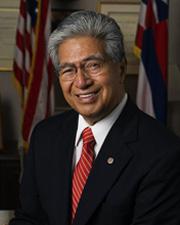
 +19
Floor Debate
24 membersWhat members said about H.R. 2420 on the floor
Mr. President, I rise today to introduce the ``Advancing Justice Through DNA Technology Act of 2003.'' This bill consists of the President's DNA initiative, which will expand and improve DNA…
Mr. President, we have 17 dead astronauts on our plate--3 from Apollo I, all preventable; 7 from the Challenger, all preventable; and 7 from the Columbia, all preventable. What we are trying to do on…
Mr. Speaker, I thank the chairman, not just for yielding to me, but for the great work that he and the gentleman from Louisiana (Mr. Baker) have done on this and also the gentleman from Pennsylvania…
Mr. President, I rise today to introduce legislation intended to restore public trust in mutual funds, the Mutual Fund Transparency Act of 2003. I thank Senator Fitzgerald and Senator Lieberman for…
Mr. President, I rise today to join with my colleagues Senator Daniel Akaka and Senator Peter Fitzgerald and cosponsor legislation that would begin the crucial process of reforming the mutual fund…
Show 8 more

Mr. Speaker, I rise in support of this legislation. Mr. Speaker, I would like to commend the gentleman from Ohio (Mr. Oxley) and the gentleman from Louisiana (Mr. Baker), the gentleman from…

Mr. Speaker, as a member of the Financial Services Committee, I rise in support of H.R. 2420, the Mutual Fund Integrity and Fee Transparency Act of 2003, which I joined in cosponsoring after our…

Mr. Speaker, I move to suspend the rules and pass the bill (H.R. 2420) to improve transparency relating to the fees and costs that mutual fund investors incur and to improve corporate governance of…
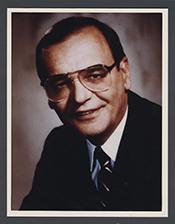
Mr. Speaker, I yield myself such time as I may consume. Mr. Speaker, with approximately 95 million investors and $7 trillion in assets, mutual funds constitute a major component of our securities…

Mr. Speaker, as a cosponsor of this legislation I am pleased to rise in support of it, but I regret that it did not include the SEC recommendations that the Democrats supported. Since the demise of…

Mr. President, I rise to say a few words about the continuity of Government. More than 2 years since the terrible events of September 11, Congress has not taken any steps necessary to protect the…

Mr. President, as I visit with veterans in North Dakota and here in Washington, too often I hear that waiting periods for medical care, and particularly for specialty care, are too long. We owe an…
Mr. Speaker, I thank the gentleman for yielding me this time. I certainly want to start by commending the chairman for his leadership on this important issue. He has been committed to the principle…
Show 11 more
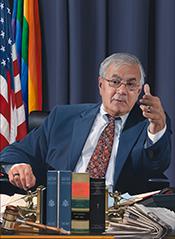
Mr. Speaker, the gentleman from Pennsylvania (Mr. Kanjorski) has played a very important role in this. I am glad to be here in support of his efforts. I agree that this is a bill that is a good set…

Mr. President, sometime, when the opportunity arises, I am going to introduce, for myself and Senator Ensign, the Dandini Research Park Transfer Act, which will transfer an important tract of land in…

Mr. President, today I rise to introduce the Mutual Fund Reform Act of 2004. This legislation would make fund governance truly accountable, require genuinely transparent total fund costs, enhance…

Mr. Speaker, I would like to enter into a colloquy with the chairman of the committee. Section 202 of the manager's amendment requires the commission to issue rules that will protect mutual fund…

Mr. Speaker, I rise today to urge my colleagues to support H.R. 2420 and remove any question that U.S. mutual funds are a sound investment. ``The Mutual Funds Integrity and Fee Transparency Act of…

Mr. President, I rise today, to introduce the Safe Intersections Act of 2003. This bill would criminalize the unauthorized sale and possession of a mobile infrared transmitter, MIRT. A MIRT is a…
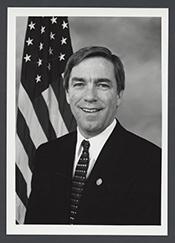
Mr. Speaker, I rise today in strong support of H.R. 2420, the Mutual Funds Integrity and Fee Transparency Act of 2003. As a Member of the Financial Services Committee I am proud to be an original…
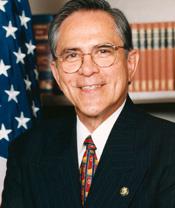
Mr. Speaker, I thank the gentleman from Pennsylvania (Mr. Kanjorski) for yielding me time. Mr. Speaker, I commend the gentleman from Ohio (Mr. Oxley) and the ranking member, the gentleman from…

Mr. Speaker, mutual funds are how America's middle class saves. It is how young couples save for their first home. It is how middle class families save for their children's education, for their…

Mr. Speaker, I rise to express my vigorous support for H.R. 2420, the Mutual Fund Integrity and Fee Transparency Act. Mutual funds have become a vital tool that millions of Americans rely on. In…

Mr. Speaker, I rise today in strong support of H.R. 2420, the Mutual Funds Integrity and Fee Transparency Act, and congratulate Chairman Oxley and Chairman Baker for bringing this needed legislation…
Bill Text
4 versions available
        [Congressional Bills 108th Congress]
[From the U.S. Government Publishing Office]
[H.R. 2420 Referred in Senate (RFS)]

1st Session
H. R. 2420

_______________________________________________________________________

IN THE SENATE OF THE UNITED STATES

November 20, 2003

Received; read twice and referred to the Committee on Banking, Housing,
and Urban Affairs

_______________________________________________________________________

AN ACT

To improve transparency relating to the fees and costs that mutual fund
investors incur and to improve corporate governance of mutual funds.

Be it enacted by the Senate and House of Representatives of the
United States of America in Congress assembled,

SECTION 1. SHORT TITLE.

(a) Short Title.--This Act may be cited as the ``Mutual Funds
Integrity and Fee Transparency Act of 2003''.
(b) Table of Contents.--

Sec. 1. Short title.
TITLE I--INTEGRITY AND FEE TRANSPARENCY

Sec. 101. Improved transparency of mutual fund costs.
Sec. 102. Obligations regarding certain distribution and soft dollar
arrangements.
Sec. 103. Mutual fund governance.
Sec. 104. Audit committee requirements for investment companies.
Sec. 105. Trading restrictions.
Sec. 106. Definition of no-load mutual fund.
Sec. 107. Informing directors of significant deficiencies.
Sec. 108. Exemption from in person meeting requirements.
Sec. 109. Proxy voting disclosure.
Sec. 110. Incentive compensation and mutual fund sales.
Sec. 111. Commission study and report regulating soft dollar
arrangements.
Sec. 112. Study of arbitration claims.
TITLE II--PREVENTION OF ABUSIVE MUTUAL FUND PRACTICES

Sec. 201. Prevention of fraud; internal compliance and control
procedures.
Sec. 202. Ban on joint management of mutual funds and hedge funds.
Sec. 203. Short term trading by interested persons prohibited.
Sec. 204. Elimination of stale prices.
Sec. 205. Prevention of unfair after-hours trading.
Sec. 206. Report on adequacy of remedial actions.

TITLE I--INTEGRITY AND FEE TRANSPARENCY

SEC. 101. IMPROVED TRANSPARENCY OF MUTUAL FUND COSTS.

(a) Regulation Revision Required.--Within 270 days after the date
of enactment of this Act, the Securities and Exchange Commission shall
revise regulations under the Securities Act of 1933, the Securities
Exchange Act of 1934, or the Investment Company Act of 1940, or any
combination thereof, to require, consistent with the protection of
investors and the public interest, improved disclosure with respect to
an open-end management investment company, in the quarterly statement
or other periodic report to shareholders or other appropriate
disclosure document, of the following:
(1) The estimated amount, in dollars for each $1,000 of
investment in the company, of the operating expenses of the
company that are borne by shareholders.
(2) The structure of, or method used to determine, the
compensation of individuals employed by the investment adviser
of the company to manage the portfolio of the company, and the
ownership interest of such individuals in the securities of the
company.
(3) The portfolio turnover rate of the company, set forth
in a manner that facilitates comparison among investment
companies, and a description of the implications of a high
turnover rate for portfolio transaction costs and performance.
(4) Information concerning the company's policies and
practices with respect to the payment of commissions for
effecting securities transactions to a member of an exchange,
broker, or dealer who--
(A) furnishes advice, either directly or through
publications or writings, as to the value of
securities, the advisability of investing in,
purchasing, or selling securities, and the availability
of securities or purchasers or sellers of securities;
(B) furnishes analyses and reports concerning
issuers, industries, securities, economic factors and
trends, portfolio strategy, and the performance of
accounts; or
(C) facilitates the sale and distribution of the
company's shares.
(5) Information concerning payments by any person other
than the company that are intended to facilitate the sale and
distribution of the company's shares.
(6) Information concerning discounts on front-end sales
loads for which investors may be eligible, including the
minimum purchase amounts required for such discounts.
(b) Appropriate Disclosure Document.--
(1) In general.--For purposes of subsection (a), a
disclosure shall not be considered to be made in an appropriate
disclosure document if the disclosure is made exclusively in a
prospectus or statement of additional information, or both such
documents.
(2) Exceptions.--Notwithstanding paragraph (1), the
disclosures required by paragraph (2) and (4) of subsection (a)
may be considered to be made in an appropriate disclosure
document if the disclosure is made exclusively in a prospectus
or statement of additional information, or both such documents.
(c) Concept Release Required.--
(1) In general.--The Commission shall issue a concept
release examining the issue of portfolio transaction costs
incurred by investment companies, including commission, spread,
opportunity, and market impact costs, with respect to trading
of portfolio securities and how such costs may be disclosed to
mutual fund investors in a manner that will enable investors to
compare such costs among funds.
(2) Report and recommendations required.--The Commission
shall submit a report on the findings from the concept release
required by paragraph (1), as well as legislative and
regulatory recommendations, if any, to the Committee on
Financial Services of the House of Representatives and the
Committee on Banking, Housing, and Urban Affairs of the Senate,
no later than 270 days after the date of enactment of this Act.
(d) Additional Requirement for Fee Statement.--
(1) In general.--Not later than 270 days after the date of
enactment of this Act, the Commission shall prescribe a rule to
require, with respect to an open-end management investment
company, in the quarterly statement or other periodic report,
or other appropriate disclosure document, a statement informing
shareholders that such shareholders have paid fees on their
investments, that such fees have been deducted from the amounts
shown on the statements, and where such shareholders may find
additional information regarding the amount of these fees.
(2) Appropriate disclosure document.--The statement
required by paragraph (1) shall not be considered to be made in
an appropriate disclosure document unless such statement is--
(A) made in each periodic statement to a
shareholder that discloses the value of the holdings of
the shareholder in the securities of the company; and
(B) prominently displayed, in a location in close
proximity to the statement of the shares account value.
(e) Reducing Burdens on Small Funds.--In prescribing rules under
this section, the Commission shall give consideration to methods for
reducing for small investment companies the burdens of making the
disclosures required by such rules, consistent with the public interest
and the protection of investors.

SEC. 102. OBLIGATIONS REGARDING CERTAIN DISTRIBUTION AND SOFT DOLLAR
ARRANGEMENTS.

(a) Reporting Requirement.--Section 15 of the Investment Company
Act of 1940 (15 U.S.C. 80a-15) is amended by adding at the end the
following new subsection:
``(g) Obligations Regarding Certain Distribution and Soft Dollar
Arrangements.--
``(1) Reporting requirements.--Each investment adviser to a
registered investment company shall, no less frequently than
annually, submit to the board of directors of the company a
report on--
``(A) payments during the reporting period by the
adviser (or an affiliated person of the adviser) that
were directly or indirectly made for the purpose of
promoting the sale of shares of the investment company
(referred to in paragraph (2) as a `revenue sharing
arrangement');
``(B) services to the company provided or paid for
by a broker or dealer or an affiliated person of the
broker or dealer (other than brokerage and research
services) in exchange for the direction of brokerage to
the broker or dealer (referred to in paragraph (2) as a
`directed brokerage arrangement'); and
``(C) research services obtained by the adviser (or
an affiliated person of the adviser) during the
reporting period from a broker or dealer the receipt of
which may reasonably be attributed to securities
transactions effected on behalf of the company or any
other company that is a member of the same group of
investment companies (referred to in paragraph (2) as a
`soft dollar arrangement').
``(2) Fiduciary duty of board of directors.--The board of
directors of a registered investment company shall have a
fiduciary duty--
``(A) to review the investment adviser's direction
of the company's brokerage transactions, including
directed brokerage arrangements and soft dollar
arrangements, and to determine that the direction of
such brokerage is in the best interests of the
shareholders of the company; and
``(B) to review any revenue sharing arrangements to
ensure compliance with this Act and the rules adopted
thereunder, and to determine that such revenue sharing
arrangements are in the best interests of the
shareholders of the company.
``(3) Summaries of reports in annual reports to
shareholders.--In accordance with regulations prescribed by the
Commission under paragraph (4), annual reports to shareholders
of a registered investment company shall include a summary of
the most recent report submitted to the board of directors
under paragraph (1).
``(4) Regulations.--The Commission shall adopt rules and
regulations implementing this section, which rules and
regulations shall, among other things, prescribe the content of
the required reports.
``(5) Definition.--For purposes of this subsection--
``(A) the term `brokerage and research services'
has the same meaning as in section 28(e)(3) of the
Securities Exchange Act of 1934; and
``(B) the term `research services' means the
services described in subparagraphs (A) and (B) of such
section.''.
(b) Contractual Records.--Within 270 days after the date of
enactment of this Act, the Securities and Exchange Commission shall, by
rule prescribed pursuant to section 28(e) of the Securities Exchange
Act of 1934 (15 U.S.C. 78bb(e)), require that--
(1) if any research services (as such term is defined in
section 15(g)(5)(B) of the Investment Company Act of 1940, as
amended by subsection (a) of this section)--
(A) are provided by a member of an exchange,
broker, or dealer who effects securities transactions
in an account, and
(B) are prepared or provided by a party that is
unaffiliated with such member, broker, or dealer,
any person exercising investment discretion with respect to
such account shall maintain a copy of the written contract
between the person preparing such research and the member of an
exchange, broker, or dealer; and
(2) such contract shall describe the nature and value of
the services provided.

SEC. 103. MUTUAL FUND GOVERNANCE.

(a) Director Independence.--Section 10(a) of the Investment Company
Act of 1940 (15 U.S.C. 80a-10) is amended by striking ``60 per centum''
and inserting ``one-third''.
(b) Definition of Interested Person.--Section 2(a)(19) of the
Investment Company Act of 1940 (15 U.S.C. 80a-2(a)(19)) is amended--
(1) in subparagraph (A)--
(A) by striking clause (vi) and redesignating
clause (vii) as clause (vi); and
(B) by amending clause (v) to read as follows:
``(v) any natural person who is a member of
a class of persons who the Commission, by rule
or regulation, determines are unlikely to
exercise an appropriate degree of independence
as a result of--
``(I) a material business or
professional relationship with the
company or any affiliated person of the
company, or
``(II) a close familial
relationship with any natural person
who is an affiliated person of the
company,''; and
(2) in subparagraph (B)--
(A) by striking clause (vi) and redesignating
clause (vii) as clause (vi); and
(B) by amending clause (v) to read as follows:
``(v) any natural person who is a member of
a class of persons who the Commission, by rule
or regulation, determines are unlikely to
exercise an appropriate degree of independence
as a result of--
``(I) a material business or
professional relationship with such
investment adviser or principal
underwriter (or affiliated person
thereof), or
``(II) a close familial
relationship with a natural person who
is such investment adviser or principal
underwriter (or affiliated person
thereof),''.

SEC. 104. AUDIT COMMITTEE REQUIREMENTS FOR INVESTMENT COMPANIES.

(a) Amendments.--Section 32 of the Investment Company Act of 1940
(15 U.S.C. 80a-31) is amended--
(1) in subsection (a)--
(A) by striking paragraphs (1) and (2) and
inserting the following:
``(1) such accountant shall have been selected at a meeting
held within 30 days before or after the beginning of the fiscal
year or before the annual meeting of stockholders in that year
by the vote, cast in person, of a majority of the members of
the audit committee of such registered company;
``(2) such selection shall have been submitted for
ratification or rejection at the next succeeding annual meeting
of stockholders if such meeting be held, except that any
vacancy occurring between annual meetings, due to the death or
resignation of the accountant, may be filled by the vote of a
majority of the members of the audit committee of such
registered company, cast in person at a meeting called for the
purpose of voting on such action;''; and
(B) by adding at the end the following new
sentence: ``The Commission, by rule, regulation, or
order, may exempt a registered management company or
registered face-amount certificate company subject to
this subsection from the requirement in paragraph (1)
that the votes by the members of the audit committee be
cast at a meeting in person when such a requirement is
impracticable, subject to such conditions as the
Commission may require.''; and
(2) by adding at the end the following new subsection:
``(d) Audit Committee Requirements.--
``(1) Requirements as prerequisite to filing financial
statements.--Any registered management company or registered
face-amount certificate company that files with the Commission
any financial statement signed or certified by an independent
public accountant shall comply with the requirements of
paragraphs (2) through (6) of this subsection and any rule or
regulation of the Commission issued thereunder.
``(2) Responsibility relating to independent public
accountants.--The audit committee of the registered company, in
its capacity as a committee of the board of directors, shall be
directly responsible for the appointment, compensation, and
oversight of the work of any independent public accountant
employed by such registered company (including resolution of
disagreements between management and the auditor regarding
financial reporting) for the purpose of preparing or issuing
the audit report or related work, and each such independent
public accountant shall report directly to the audit committee.
``(3) Independence.--
``(A) In general.--Each member of the audit
committee of the registered company shall be a member
of the board of directors of the company, and shall
otherwise be independent.
``(B) Criteria.--In order to be considered to be
independent for purposes of this paragraph, a member of
an audit committee of a registered company may not,
other than in his or her capacity as a member of the
audit committee, the board of directors, or any other
board committee--
``(i) accept any consulting, advisory, or
other compensatory fee from the registered
company or the investment adviser or principal
underwriter of the registered company; or
``(ii) be an `interested person' of the
registered company, as such term is defined in
section 2(a)(19).
``(4) Complaints.--The audit committee of the registered
company shall establish procedures for--
``(A) the receipt, retention, and treatment of
complaints received by the registered company regarding
accounting, internal accounting controls, or auditing
matters; and
``(B) the confidential, anonymous submission by
employees of the registered company and its investment
adviser or principal underwriter of concerns regarding
questionable accounting or auditing matters.
``(5) Authority to engage advisers.--The audit committee of
the registered company shall have the authority to engage
independent counsel and other advisers, as it determines
necessary to carry out its duties.
``(6) Funding.--The registered company shall provide
appropriate funding, as determined by the audit committee, in
its capacity as a committee of the board of directors, for
payment of compensation--
``(A) to the independent public accountant employed
by the registered company for the purpose of rendering
or issuing the audit report; and
``(B) to any advisers employed by the audit
committee under paragraph (5).
``(7) Audit committee.--For purposes of this subsection,
the term `audit committee' means--
``(A) a committee (or equivalent body) established
by and amongst the board of directors of a registered
investment company for the purpose of overseeing the
accounting and financial reporting processes of the
company and audits of the financial statements of the
company; and
``(B) if no such committee exists with respect to a
registered investment company, the entire board of
directors of the company.''.
(b) Conforming Amendment.--Section 10A(m) of the Securities
Exchange Act of 1934 is amended by adding at the end the following new
paragraph:
``(7) Exemption for investment companies.--Effective one
year after the date of enactment of the Mutual Funds Integrity
and Fee Transparency Act of 2003, for purposes of this
subsection, the term `issuer' shall not include any investment
company that is registered under section 8 of the Investment
Company Act of 1940.''.
(c) Implementation.--Not later than 180 days after the date of
enactment of this Act, the Securities and Exchange Commission shall
issue final regulations to carry out section 32(d) of the Investment
Company Act of 1940, as added by subsection (a) of this section.

SEC. 105. TRADING RESTRICTIONS.

Subsection (e) of section 22 of the Investment Company Act of 1940
(15 U.S.C. 80a-22(e)) is amended to read as follows:
``(e) Trading Restrictions.--
``(1) Prohibition and exceptions.--No registered investment
company shall suspend the right of redemption, or postpone the
date of payment or satisfaction upon redemption of any
redeemable security in accordance with its terms for more than
seven days after the tender of such security to the company or
its agents designated for that purpose for redemption, except--
``(A) for any period (i) during which the principal
market for the securities in which the company invests
is closed, other than customary week-end and holiday
closings; or (ii) during which trading on such exchange
is restricted;
``(B) for any period during which an emergency
exists as a result of which (i) disposal by the company
of securities owned by it is not reasonably
practicable; or (ii) it is not reasonably practicable
for such company fairly to determine the value of its
net assets; or
``(C) for such other periods as the Commission may
by order permit for the protection of security holders
of the company.
``(2) Commission rules.--The Commission shall by rules and
regulations--
``(A) determine the conditions under which trading
shall be deemed to be restricted;
``(B) determine the conditions under which an
emergency shall be deemed to exist; and
``(C) provide for the determination by each
company, subject to such limitations as the Commission
shall determine are necessary and appropriate for the
protection of investors, of the principal market for
the securities in which the company invests.''.

SEC. 106. DEFINITION OF NO-LOAD MUTUAL FUND.

Within 270 days after the date of enactment of this Act, the
Securities and Exchange Commission shall, by rule adopted by the
Commission or a self-regulatory organization (or both)--
(1) clarify the definition of ``no-load'' as such term is
used by investment companies that impose any fee under a plan
adopted pursuant to rule 12b-1 of the Commission's rules (17
C.F.R. 270.12b-1); and
(2) require disclosure to prevent investors from being
misled by the use of such terminology by the company or its
adviser or principal underwriter.

SEC. 107. INFORMING DIRECTORS OF SIGNIFICANT DEFICIENCIES.

Section 42 of the Investment Company Act of 1940 (15 U.S.C. 80a-41)
is amended by adding at the end the following new subsection:
``(f) Informing Directors of Significant Deficiencies.--If the
report of an inspection by the Commission of a registered investment
company identifies significant deficiencies in the operations of such
company, or of its investment adviser or principal underwriter, the
company shall provide such report to the directors of such company.''.

SEC. 108. EXEMPTION FROM IN PERSON MEETING REQUIREMENTS.

Section 15(c) of the of the Investment Company Act of 1940 (15
U.S.C. 80a-15(c)) is amended by adding at the end the following new
sentence: ``The Commission, by rule, regulation, or order, may exempt a
registered investment company subject to this subsection from the
requirement that the votes of its directors be cast at a meeting in
person when such a requirement is impracticable, subject to such
conditions as the Commission may require.''.

SEC. 109. PROXY VOTING DISCLOSURE.

Section 30 of the Investment Company Act of 1940 (15 U.S.C. 80a-29)
is amended by adding at the end the following new subsection:
``(k) Proxy Voting Disclosure.--Every registered management
investment company, other than a small business investment company,
shall file with the Commission not later than August 31 of each year an
annual report, on a form prescribed by the Commission by rule,
containing the registrant's proxy voting record for the most recent
twelve-month period ending on June 30. The financial statements of
every such company shall state that information regarding how the
company voted proxies relating to portfolio securities during the most
recent 12-month period ending on June 30 is available--
``(1) without charge, upon request, by calling a specified
toll-free (or collect) telephone number; or on or through the
company's website at a specified Internet address; or both; and
``(2) on the Commission's website.''.

SEC. 110. INCENTIVE COMPENSATION AND MUTUAL FUND SALES.

(a) Commission Rule Required.--Within 270 days after the date of
enactment of this Act, the Commission shall by rule prohibit, as a
means reasonably designed to prevent fraudulent, deceptive, or
manipulative acts and practices, the sale of the securities of an
investment company or of municipal fund securities by a broker or
dealer or by a municipal securities broker or dealer without the
disclosure of--
(1) the amount and source of sales fees, payments by
persons other than the investment company that are intended to
facilitate the sale and distribution of the securities, and
commissions for effecting portfolio securities transactions, or
other payments, paid to such broker or dealer, or municipal
securities broker or dealer, or associated person thereof in
connection with such sale;
(2) any commission or other fees or charges the investor
has paid or will or might be subject to, including as a result
of purchases or redemptions;
(3) any conflicts of interest that any associated person of
the investor's broker or dealer or municipal securities broker
or dealer may face due to the receipt of differential
compensation in connection with such sale; and
(4) information about the estimated amount of any asset-
based distribution expenses incurred, or to be incurred, by the
investment company in connection with the investor's purchase
of the securities.
(b) Benchmarks.--In connection with the rule required by subsection
(a), the Commission shall, to the extent practical, establish standards
for such disclosures.
(c) Definitions.--
(1) Differential compensation.--For purposes of this
section, an associated person of a broker or dealer shall be
considered to receive differential compensation if such person
receives any increased or additional remuneration, in whatever
form--
(A) for sales of the securities of an investment
company or municipal fund security that is affiliated
with, or otherwise specifically designated by, such
broker or dealer or municipal securities broker or
dealer, as compared with the remuneration for sales of
securities of an investment company or municipal fund
security offered by such broker or dealer or municipal
securities broker or dealer that are not so affiliated
or designated; or
(B) for the sale of any class of securities of an
investment company or municipal fund security as
compared with the remuneration for the sale of a class
of securities of such investment company or municipal
fund security (offered by such broker or dealer or
municipal securities broker or dealer) that charges a
sales load (as defined in section 2(a)(35) of the
Investment Company Act of 1940 (15 U.S.C. 80a-2(a)(35))
only at the time of such a sale.
(2) Municipal fund security.--For purposes of this section,
a municipal fund security is any municipal security issued by
an issuer that, but for the application of section 2(b) of the
Investment Company Act of 1940 (15 U.S.C. 80a-2(b)), would
constitute an investment company within the meaning of section
3 of the Investment Company Act of 1940 (15 U.S.C. 80a-3).

SEC. 111. COMMISSION STUDY AND REPORT REGULATING SOFT DOLLAR
ARRANGEMENTS.

(a) Study Required.--
(1) In general.--The Commission shall conduct a study of
the use of soft dollar arrangements by investment advisers as
contemplated by section 28(e) of the Securities Exchange Act of
1934 (15 U.S.C. 78bb(e)).
(2) Areas of consideration.--The study required by this
section shall examine--
(A) the trends in the average amounts of soft
dollar commissions paid by investment advisers and
investment companies in the past 3 years;
(B) the types of services provided through soft
dollar arrangements;
(C) the benefits and disadvantages of the use of
soft dollars for investors, including the extent to
which use of soft dollar arrangements affects the
ability of mutual fund investors to evaluate and
compare the expenses of different mutual funds;
(D) the potential or actual conflicts of interest
(or both potential and actual conflicts) created by
soft dollar arrangements, including whether certain
potential conflicts are being managed effectively by
other laws and regulations specifically addressing
those situations, the role of the board of directors in
managing these potential or actual (or both) conflicts,
and the effectiveness of the board in this capacity;
(E) the transparency of such soft dollar
arrangements to investment company shareholders and
investment advisory clients of investment advisers, the
extent to which enhanced disclosure is necessary or
appropriate to enable investors to better understand
the impact of these arrangements, and an assessment of
whether the cost of any enhanced disclosure or other
regulatory change would result in benefits to the
investor; and
(F) whether such section 28(e) should be modified,
and whether other regulatory or legislative changes
should be considered and adopted to benefit investors.
(b) Report Required.--The Commission shall submit a report on the
study required by subsection (a) to the Committee on Financial Services
of the House of Representatives and the Committee on Banking, Housing,
and Urban Affairs of the Senate, no later than one year after the date
of enactment of this Act.

SEC. 112. STUDY OF ARBITRATION CLAIMS.

(a) Study Required.--The Securities and Exchange Commission shall
conduct a study of the increased rate of arbitration claims and
decisions involving mutual funds since 1995 for the purposes of
identifying trends in arbitration claim rates and, if applicable, the
causes of such increased rates and the means to avert such causes.
(b) Report.--The Securities and Exchange Commission shall submit a
report on the study required by subsection (a) to the Committee on
Financial Services of the House of Representatives and the Committee on
Banking, Housing, and Urban Affairs of the Senate not later than one
year after the date of enactment of this Act.

TITLE II--PREVENTION OF ABUSIVE MUTUAL FUND PRACTICES

SEC. 201. PREVENTION OF FRAUD; INTERNAL COMPLIANCE AND CONTROL
PROCEDURES.

(a) Amendment.--Subsection (j) of section 17 of the Investment
Company Act of 1940 (15 U.S.C. 80a-17(j)) is amended to read as
follows:
``(j) Detection and Prevention of Fraud.--
``(1) Commission rules to prohibit fraud, deception, and
manipulation.--It shall be unlawful for any affiliated person
of or principal underwriter for a registered investment company
or any affiliated person of an investment adviser of or
principal underwriter for a registered investment company, to
engage in any act, practice, or course of business in
connection with the purchase or sale, directly or indirectly,
by such person of any security held or to be acquired by such
registered investment company, or any security issued by such
registered investment company or by an affiliated registered
investment company, in contravention of such rules and
regulations as the Commission may adopt to define, and
prescribe means reasonably necessary to prevent, such acts,
practices, or courses of business as are fraudulent, deceptive
or manipulative.
``(2) Codes of ethics.--Such rules and regulations shall
include requirements for the adoption of codes of ethics by
registered investment companies and investment advisers of, and
principal underwriters for, such investment companies
establishing such standards as are reasonably necessary to
prevent such acts, practices, or courses of business. Such
rules and regulations shall require each such registered
investment company to disclose such codes of ethics (and any
changes therein) in the periodic report to shareholders of such
company, and to disclose such code of ethics and any waivers
and material violations thereof on a readily accessible
electronic public information facility of such company and in
such additional form and manner as the Commission shall require
by rule or regulation.
``(3) Additional compliance procedures.--Such rules and
regulations shall--
``(A) require each investment company and
investment adviser registered with the Commission to
adopt and implement policies and procedures reasonably
designed to prevent violation of the Securities Act of
1933 (15 U.S.C. 78a et seq.), the Securities Exchange
Act of 1934 (15 U.S.C. 78a et seq.), the Sarbanes-Oxley
Act of 2002 (15 U.S.C. 7201 et seq.), the Trust
Indenture Act of 1939 (15 U.S.C. 77aaa et seq.), the
Investment Company Act of 1940 (15 U.S.C. 80a-1 et
seq.), the Investment Advisers Act of 1940 (15 U.S.C.
80b et seq.), the Securities Investor Protection Act of
1970 (15 U.S.C. 78aaa et seq.), subchapter II of
chapter 53 of title 31, United States Code, chapter 2
of title I of Public Law 91-508 (12 U.S.C. 1951 et
seq.), or section 21 of the Federal Deposit Insurance
Act (12 U.S.C. 1829b);
``(B) require each such company and adviser to
review such policies and procedures annually for their
adequacy and the effectiveness of their implementation;
``(C) require each such company to appoint a chief
compliance officer to be responsible for overseeing
such policies and procedures--
``(i) whose compensation shall be approved
by the members of the board of directors of the
company who are not interested persons of such
company;
``(ii) who shall report directly to the
members of the board of directors of the
company who are not interested persons of such
company, privately as such members request, but
no less frequently than annually; and
``(iii) whose report to such members shall
include any violations or waivers of, and any
other significant issues arising under, such
policies and procedures; and
``(D) require each such company to establish
policies and procedures reasonably designed to protect
any officer, director, employee, contractor,
subcontractor, or agent of such company from
retaliation, including discharge, demotion, suspension,
harassment, or any other manner of discrimination in
the terms and conditions of employment, because of any
lawful act done by such officer, director, employee,
contractor, subcontractor, or agent to provide
information, cause information to be provided, or
otherwise assist in an investigation that relates to
any conduct which such officer, director, employee,
contractor, subcontractor, or agent reasonably believes
constitutes a violation of the securities laws or the
code of ethics of such investment company.
``(4) Self-certification.--Such rules and regulations shall
require the members of the board of directors who are not
interested persons of each registered open-end investment
company to certify, in the periodic report to shareholders, or
other appropriate disclosure document, that--
``(A) procedures are in place for verifying that
the determination of current net asset value of any
redeemable security issued by the company used in
computing periodically the current price for the
purpose of purchase, redemption, and sale complies with
the requirements of the Investment Company Act of 1940
and the rules and regulations thereunder, and the
company is in compliance with such procedures;
``(B) procedures are in place for the oversight of
the flow of funds into and out of the securities of the
company, and the company is in compliance with such
procedures;
``(C) procedures are in place to ensure that
investors are receiving any applicable discounts on
front-end sales loads that are disclosed in the
company's prospectus;
``(D) procedures are in place to ensure that, if
the company's shares are offered as different classes
of shares, such classes are designed in the interests
of investors, and could reasonably be an appropriate
investment option for an investor;
``(E) procedures are in place to ensure that
information about the company's portfolio securities is
not disclosed in violation of the securities laws or
the company's code of ethics;
``(F) the members of the board of directors who are
not interested persons of the company have reviewed and
approved the compensation of the company's portfolio
manager in connection with their consideration of the
investment advisory contract under section 15(c);
``(G) the company has established and enforces a
code of ethics as required by paragraph (2) of this
subsection; and
``(H) the company is in compliance with the
additional requirements of paragraph (3) of this
subsection.''.
(b) Deadline for Rules.--The Securities and Exchange Commission
shall prescribe rules to implement the amendment made by subsection (a)
of this section within 90 days after the date of enactment of this Act.

SEC. 202. BAN ON JOINT MANAGEMENT OF MUTUAL FUNDS AND HEDGE FUNDS.

(a) Amendment.--Section 15 of the Investment Company Act of 1940
(15 U.S.C. 80a-15) is further amended by adding at the end the
following new subsection:
``(h)  Ban on Joint Management of Mutual Funds and Hedge Funds.--
``(1) Prohibition of joint management.--It shall be
unlawful for any individual to serve or act as the portfolio
manager or investment adviser of a registered open-end
investment company if such individual also serves or acts as
the portfolio manager or investment adviser of an investment
company that is not registered or of such other categories of
companies as the Commission shall prescribe by rule in order to
prohibit conflicts of interest, such as conflicts in the
selection of the portfolio securities.
``(2) Exceptions.--Notwithstanding paragraph (1), the
Commission may, by rule, regulation, or order, permit joint
management by a portfolio manager in exceptional circumstances
when necessary to protect the interest of investors, provided
that such rule, regulation, or order requires--
``(A) enhanced disclosure by the registered open-
end investment company to investors of any conflicts of
interest raised by such joint management; and
``(B) fair and equitable policies and procedures
for the allocation of securities to the portfolios of
the jointly managed companies, and certification by the
members of the board of directors who are not
interested persons of such registered open-end
investment company, in the periodic report to
shareholders, or other appropriate disclosure document,
that such policies and procedures of such company are
fair and equitable.
``(3) Definition.--For purposes of this subsection, the
term `portfolio manager' means the individual or individuals
who are designated as responsible for decision-making in
connection with the securities purchased and sold on behalf of
a registered open-end investment company, but shall not include
individuals who participate only in making research
recommendations or executing transactions on behalf of such
company.''.
(b) Deadline for Rules.--The Securities and Exchange Commission
shall prescribe rules to implement the amendment made by subsection (a)
of this section within 90 days after the date of enactment of this Act.

SEC. 203. SHORT TERM TRADING BY INTERESTED PERSONS PROHIBITED.

(a) Short Term Trading Prohibited.--Section 17 of the Investment
Company Act of 1940 (15 U.S.C. 80a-17) is further amended by adding at
the end the following new subsection:
``(k) Short Term Trading Prohibited.--It shall be unlawful for any
officer, director, partner, or employee of a registered investment
company, any affiliated person, investment adviser, or principal
underwriter of such company, or any officer, director, partner, or
employee of such an affiliated person, investment adviser, or principal
underwriter, to engage in short-term transactions, as such term is
defined by the Commission by rule, in any securities of which such
company, or any affiliate of such company, is the issuer, except that
this subsection shall not prohibit transactions in money market funds,
other funds the investment policy of which expressly permits short-term
transactions, or such other categories of registered investment
companies as the Commission shall specify by rule.''.
(b) Increased Redemption Fees Permitted for Short Term Trading.--
Within 90 days after the date of enactment of this Act, the Securities
and Exchange Commission shall revise rule 11a-3 of its rules under the
Investment Company Act of 1940 (17 CFR 270.11a-30), or other rules of
the Commission, as necessary to permit an investment company to charge
redemption fees in excess of 2 percent upon the redemption of any
securities of such company that are redeemed within such period after
their purchase as the Commission specifies in such rule to prevent
short term trading that is unfair to the shareholders of such company.
(c) Deadline for Rules.--The Securities and Exchange Commission
shall prescribe rules to implement the amendment made by subsection (a)
of this section within 90 days after the date of enactment of this Act.

SEC. 204. ELIMINATION OF STALE PRICES.

Within 90 days after the date of enactment of this Act, the
Securities and Exchange Commission shall prescribe, by rule or
regulation, standards concerning the obligation of registered open-end
investment companies under the Investment Company Act of 1940 to apply
and use fair value methods of determination of net asset value when
market quotations are unavailable or do not accurately reflect the fair
market value of the companies' portfolio securities, in order to
prevent dilution of the interests of long-term investors or as
necessary in the other interests of investors. Such rule or regulation
shall identify, in addition to significant events, the conditions or
circumstances from which such obligation will arise, such as the need
to value securities traded on foreign exchanges, and the methods by
which fair value methods shall be applied in such events, conditions,
and circumstances.

SEC. 205. PREVENTION OF UNFAIR AFTER-HOURS TRADING.

(a) Additional Rules Required.--Within 90 days after the date of
enactment of this Act, the Securities and Exchange Commission shall
issue rules to prevent transactions in the securities of any registered
open-end investment company in violation of section 22 of the
Investment Company Act of 1940 (15 U.S.C. 80a-22), including after-
hours trades that are executed at a price based on a net asset value
that was determined as of a time prior to the actual execution of the
transaction.
(b) Trades Collected by Intermediaries.--Such rules shall permit
execution of such after-hours trades that are provided to the
registered open-end investment company by a broker-dealer, retirement
plan administrator, or other intermediary, after the time as of which
such net asset value was determined, if such trades are collected by
such intermediaries subject to procedures that are--
(1) designed to prevent the acceptance of trades by such
intermediaries after the time as of which net asset value was
determined; and
(2) subject to an independent annual audit to verify that
the procedures do not permit the acceptance of trades after the
time as of which such net asset value was determined.
(c) Independently Maintained Systems.--Such rules shall permit
firms that utilize computer systems and procedures provided by
unaffiliated entities to collect transactions to satisfy the
independent audit requirements under subsection (b)(2) by means of an
independent audit obtained by such unaffiliated entity.

SEC. 206. REPORT ON ADEQUACY OF REMEDIAL ACTIONS.

(a) Report Required.--Within 180 days of enactment, the Securities
and Exchange Commission shall submit a report to the Committee on
Financial Services of the House of Representatives and the Committee on
Banking, Housing, and Urban Affairs of the Senate on market timing and
late trading of mutual funds.
(b) Required Contents of Report.--The report required by this
section shall include the following:
(1) The economic harm of market timing and late trading of
mutual fund shares on long-term mutual fund shareholders.
(2) The findings by the Commission's Office of Compliance,
Inspections and Examinations, and the actions taken by the
Commission's Division of Enforcement, regarding--
(A) illegal late trading practices;
(B) illegal market timing practices; and
(C) market timing practices that are not in
violation of prospectus disclosures.
(3) When the Commission became aware that the use of market
timing practices was harming long-term shareholders, and the
circumstances surrounding the Commission's discovery of that
activity.
(4) The steps the Commission has taken since becoming aware
of market timing practices to protect long-term mutual fund
investors.
(5) Any additional legislative or regulatory action that is
necessary to protect long-term mutual fund shareholders against
the detrimental effects of late trading and market timing
practices.

Passed the House of Representatives November 19, 2003.

Attest:

JEFF TRANDAHL,

Clerk.