Paperwork and Regulatory Improvements Act of 2004
Legislative Activity
Stay on top of the latest movement without scrolling through every action
Pursuant to the provisions of H. Res. 645, H.R. 2432 is laid on the table.
May 18, 2004 • 7:36 PM
View full timeline
Introduced in House
June 11, 2003
Sponsor introductory remarks on measure. (CR E1221-1222)
June 11, 2003
Referred to the Subcommittee on Energy Policy, Natural Resources and Regulatory Affairs.
June 11, 2003
Referred to the Committee on Government Reform, and in addition to the Committee on the Budget, for a period to be subsequently determined by the Speaker, in each case for consideration of such provisions as fall within the jurisdiction of the committee concerned.
June 11, 2003
Subcommittee on Energy Policy, Natural Resources and Regulatory Affairs Discharged.
May 12, 2004
Committee Consideration and Mark-up Session Held.
May 12, 2004
Ordered to be Reported (Amended) by Voice Vote.
May 12, 2004
Reported (Amended) by the Committee on Government Reform. H. Rept. 108-490, Part I.
May 14, 2004
House Committee on The Budget Granted an extension for further consideration ending not later than May 14, 2004.
May 14, 2004
Placed on the Union Calendar, Calendar No. 277.
May 14, 2004
PERMISSION TO FILE REPORT - Mr. Murphy asked unanimous consent that the Committee on Government Reform be permitted to file a supplemental report on H.R. 2432. Agreed to without objection.
May 17, 2004 • 4:11 PM
Supplemental report filed by the Committee on Government Reform, H. Rept. 108-490, Part II.
May 17, 2004
Rules Committee Resolution H. Res. 645 Reported to House. Rule provides for consideration of H.R. 2728, H.R. 2729, H.R. 2730, H.R. 2731 and H.R. 2432.
May 17, 2004 • 10:24 PM
Rule H. Res. 645 passed House.
May 18, 2004 • 11:52 AM
Considered under the provisions of rule H. Res. 645. (consideration: CR H3141-3160; text of measure as reported in House: CR H3152-3153)
May 18, 2004 • 5:09 PM
Rule provides for consideration of H.R. 2728, H.R. 2729, H.R. 2730, H.R. 2731 and H.R. 2432.
May 18, 2004 • 5:09 PM
House resolved itself into the Committee of the Whole House on the state of the Union pursuant to H. Res. 645 and Rule XVIII.
May 18, 2004 • 5:10 PM
The Speaker designated the Honorable Robert B. Aderholt to act as Chairman of the Committee.
May 18, 2004 • 5:10 PM
GENERAL DEBATE - The Committee of the Whole proceeded with one hour of general debate on H.R. 2432.
May 18, 2004 • 5:11 PM
DEBATE - The Committee of the Whole proceeded with 10 minutes of debate on the Ose amendment.
May 18, 2004 • 6:15 PM
DEBATE - The Committee of the Whole proceeded with 20 minutes of debate on the Waxman amendment.
May 18, 2004 • 6:25 PM
The House rose from the Committee of the Whole House on the state of the Union to report H.R. 2432.
May 18, 2004 • 7:09 PM
The previous question was ordered pursuant to the rule. (consideration: CR H3160)
May 18, 2004 • 7:10 PM
The House adopted the amendment in the nature of a substitute as agreed to by the Committee of the Whole House on the state of the Union.
May 18, 2004 • 7:10 PM
Passed/agreed to in House: On passage Passed by the Yeas and Nays: 373 - 54 (Roll no. 188).
May 18, 2004 • 7:29 PM
On passage Passed by the Yeas and Nays: 373 - 54 (Roll no. 188).
May 18, 2004 • 7:29 PM
Motion to reconsider laid on the table Agreed to without objection.
May 18, 2004 • 7:29 PM
Pursuant to the provisions of H. Res. 645, H.R. 2432 is laid on the table.
May 18, 2004 • 7:36 PM
Voting History
2 votes recorded • Roll call available
Amendments
2 amendmentsOffered to this bill
Amendments
2 amendmentsOffered to this bill
No matches
An amendment numbered 2 printed in part D of House Report 108-497 to create an expert commission to study the politicization of science and make recommendations for how to protect science in the regulatory process from political and ideological manipulation and interference. The amendment also seeks to improve the regulatory process by protecting the integrity of science in federal desision making.
On agreeing to the Waxman amendment (A002) Failed by recorded vote: 201 - 226 (Roll no. 187). · Sponsored by Henry A. Waxman
An amendment numbered 1 printed in part D of House Report 108-497. The amendment makes no changes in sections 1, 2, 3, and 4 of H.R. 2432, as reported by the Committee on Government Reform on May 12, 2004. It makes changes in Sections 5 and 6. In section 5, the amendment authorizes annual funding for the General Accounting Office's regulatory analysis function, and provides an effective date. In section 6, the amendment removes the requirement for the Office of Management and Budget (OMB) to integrate its annual regulatory accounting statement and associated report into the President's fiscal budget documents. Current lawwhich requires submission `with' the President's fiscal budget documents, is unaltered. Ensures that, before submitting its regulatory budgeting study, OMB will consult with the key Congressional Committees: the Committees on the Budget and on Government Reform in the House and the Committees on the Budget and on Government Affairs in the Senate.
On agreeing to the Ose amendment (A001) Agreed to by voice vote. · Sponsored by Doug Ose
Floor Debate
24 membersWhat members said about H.R. 2432 on the floor
 TT
TT HAW
HAW JFTDO
JFTDO PS+19
PS+19
Floor Debate
24 membersWhat members said about H.R. 2432 on the floor
Mr. Speaker, lately, in a rare turn of events, House Democrats have adopted the old adage of Republican leaders and, in floor communications, they have posed the famous question from Reagan, Are you…
Mr. Speaker, lately, in a rare turn of events, House Democrats have adopted the old adage of Republican leaders and, in floor communications, they have posed the famous question from Reagan, Are you better off than you were 4 years ago?
Well, when the quote came, I think Democrats have found a moment of despair. We will welcome their call for comparison of today's economic, international and domestic status to that of 4 years. Yes, we are better off now.
Just look at the war on terror. The attacks on September 11 awakened the Nation to the threat of terror. Republicans have a clear strategy to keep Americans safe and to spread freedom and peace throughout the world.
In the past 3 years, we have seen great progress. Afghanistan is free, Libya is now disarmed, Saddam Hussein is no longer in power. Iraq is becoming a free country, making the heart of the Middle East more stable and America more secure.
The Republican-controlled House quickly passed legislation creating the Department of Homeland Security in 2002. All border activity has been consolidated into the Department of Homeland Security, a single agency, doing away with the fallible INS, or Immigration and Naturalization Service, that allowed the September 11 hijackers to slip through our borders, rent apartments, find employment and train in flight schools, only to have their visas approved by INS after they carried out attacks on the Twin Towers and the Pentagon.
The Department of Homeland Security is implementing background checks on 100 percent of applications for U.S. citizenship and has registered over 1.5 million travelers into the United States VISIT program.
Over 500,000 first responders have been trained in weapons of mass destruction, awareness and response since September 11, 2001.
The USA PATRIOT Act has broken down unnecessary barriers between intelligence and law enforcement officers, ensuring that the best available information about terrorist threats is provided to people who need it most.
After two rounds of across-the-board, Republican-led tax cuts in 2001 and 2003, America's economy is strong and growing stronger, and we have overcome the triple shock of terrorist attacks, corporate scandals and recession.
Americans are seeing the benefit of the Republican progrowth agenda. In the eighth straight month of growth, the economy created 288,000 jobs in April, bringing the total increase since August to more than 1.1 million jobs created.
The real gross domestic product has grown at its fastest rate in almost 20 years over the last three-quarters. Productivity has grown at its fastest rate in 40 years. Homeownership is at an all-time high, 68.6 percent, with substantial gains among minority homeowners. We have the highest total number of people working in the history of America. Let me repeat that. We have the highest number of workers in the entire history of America on the payroll today. Unemployment today is at its lowest rate, lower than at the average of the 1970s, 1980s, and 1990s. The average earnings by American workers is up, higher than it has ever been before. These are high-paying jobs that are coming to America. Manufacturing jobs have also increased for the first time in a long time, 1.1 million jobs in total since August.
Now, we have had some really good news on the economy, but we need to do much more; and we will talk about that later. First, let me talk about health care. Republicans have been working to see that the rising costs of health care are capped and lowered, accessibility to quality care is expanded, and jobs for more Americans are created in the process.
Millions of Americans are benefiting from lower prescription drug costs and increased access to health care. In December 2003, a prescription drug benefit was signed into law that will make Medicare prescription drug coverage available to millions of seniors and people with disabilities for the first time since Medicare's inception.
Health savings accounts were signed into law to give employees more control over their health care decisions and the opportunity to save tax-free income for future health care costs.
The number of children enrolled in the State Children's Health Insurance Program increased from 4.6 million in 2001 to 5.8 million in 2003.
Now, let us talk about education. Under President Bush and the Republican-led Congress, No Child Left Behind was signed into law to ensure that all students become proficient at reading and math and to close the achievement gap that exists between students of different socioeconomic backgrounds. Students, teachers, and parents have seen the prospective effects of accountability, challenge, and incentive.
No Child Left Behind, or NCLB, funding for K through 12 has increased by 35 percent, and title I funding has increased 41 percent, the largest investment in education to date. While only 11 States are in full compliance with previous Federal education accountability standards in January of 2001, NCLB ensured that by June 2003 all 50 States had approved accountability plans to ensure that students become proficient in reading and math. Under NCLB, math scores have increased by 9 points for fourth graders and by 5 points for eighth graders since the 2000 National Assessment of Education Progress.
Under a Democrat watch, we would not be better off. With the Democrats in the majority, 34 million working families would not have received an average of $1,549 in tax relief each year; 47 million families would not have received the $1,000 child tax credit last summer for each child; 35 million Americans would still be paying the unfair double taxation on dividend income, discouraging them from investing in our economy; the defense of our homeland would still be spread among 22 different Federal agencies; 50,000 highly trained Federal screeners would not be protecting America's airports; 24 million Iraqis would still be living in fear under Saddam Hussein's hostile regime; more than 15 million Afghan citizens would still live under the oppressive brutal regime of the Taliban; two-thirds of al Qaeda's top leaders would still be on the loose, plotting attacks, while congressional Democrats treat terrorism as a law enforcement problem; millions of seniors would not benefit from access to discounted prescription drugs, and an eventual prescription drug benefit under Medicare; and millions of American employees would not be able to save pre-tax income towards future health care costs in personal health savings accounts.
The largest number in education to date, a 42.5 percent increase in funding, would never have seen its day in American classrooms; and only 11 out of 50 States would meet acceptable accountability standards in education today.
But things are better off under Republicans this year than they were 4 years ago. Now, every day we hear about how American jobs are going overseas. We have a chart here that reflects some of the issues that are going to be coming up and that I want to start talking about. But there is a reason why jobs have been going overseas. It is not Benedict CEOs, as we have heard before. It is not the wage levels in America. The responsibility lies right here in Congress.
Over the last generation, Congress has passed laws that have come back to haunt this generation and future generations, unless we act now. Republicans have divided these barriers that prevent Americans from keeping and creating jobs into eight categories. We have already acted on two of these categories. The first one was health care security. We have voted to limit health care costs and help provide health care security in America. This week we have dealt with the cost of bureaucratic red tape in our Bureaucratic Red Tape Termination group of bills, these five bills which I will discuss later on.
In the weeks that follow, House Republicans will bring up to the floor and vote on issues that address lifelong learning, so that we can have a skilled and talented workforce that focuses on math, science, and engineering skills.
We are going to deal with trade fairness and opportunity, so that we have fair trade policies to help assure jobs here in America. We are going to deal with tax relief and simplification so we can provide tax relief and tax simplification for Americans. We are going to move forward on an energy self-sufficiency and security plan. And we are going to encourage research and development by bringing legislation to the floor for research and development innovation. And we are going to end lawsuit abuse and deal with litigation management, which is the last issue we will deal with.
This is how we will make America more competitive. This is how we are going to ensure that our children and grandchildren have a strong economy, with opportunities to get a job if they want or start a business if they choose.
This week, we focused on bureaucratic red tape, and I want to read some facts. There are 65 words in The Lord's Prayer. There are 286 words in the Gettysburg Address. There are 1,322 words in the Declaration of Independence. And there are 26,911 words in the Federal regulation governing the sale of cabbage. This was made in a speech by FDIC Vice Chairman John M. Reich. He said this because he wanted to emphasize that bureaucratic red tape termination is vital for U.S. competitiveness in a global economy.
Bureaucratic red tape termination means less government not only by granting the freedom to allow Americans to pursue their dreams, but it also means providing space for businesses to thrive. Instead, our Federal Government has become a creeping ivy of regulations that strangle enterprise. Unrealistic, impractical, unnecessary environmental prohibitions, OSHA mandates and the like are literally driving our industries and small businesses and our health care system to a grinding halt.
How can we expect our economy to develop when bureaucracy prevents businesses from starting or expanding; when doctors cannot even keep up with the ever-changing codes, and teachers are forced to spend more time filling out paperwork than teaching in the classroom? The total compliance burden on our economy of environmental,
economic, workplace, and tax compliance regulations is $850 billion; $160 billion on manufacturers alone, which is the equivalent of a 12 percent excise tax.
Of the $860 billion, we can see in the chart that it is spread between four categories: tax compliance, the total is $132 billion; workplace compliance is $84 billion; environmental regulations are $201 billion; and economic regulatory costs are $444 billion.
Now, if we compare that $860 billion to the gross domestic product of Mexico, we can see that the $860 billion is higher than the $574 billion that is the entire gross national product of Mexico. Our regulatory burden is higher than the $701 billion, which is the entire gross national product of Canada. It is a tremendous burden on our businesses.
The regulatory costs compared with individual income taxes and corporate taxes and corporate pretax profits, here again is the $860 billion of regulatory costs, the total individual income taxes that were paid last year were $949 billion, the corporate income taxes were $201 billion, and the corporate profits were $699 billion. So we can see this is a tremendous regulatory burden on our businesses, and it is keeping us from creating and holding jobs here in America.
But the Bush administration has made great strides in curbing the growth of regulations and is making a concerted effort to review existing regulations to the extent possible. They have utilized the Office of Information and Regulatory Affairs and its administrator, Dr. John Graham, more than any other administration. We must support them in our efforts and encourage them to do even more.
Congress should also do a better job of oversight. Too often my colleagues and I are overburdened with committee work and we do not have the time or the staff to completely review how agencies operate within what cumbersome and unnecessary regulations they are placing on our citizens. I hope, myself, to work with leadership and refocus the committees' efforts to take time to review what is in place as we do the work that must be done immediately.
I have come up with a bill called CARFA, that I will explain more later, but it is called the Commission on Accountability and Review of Federal Agencies. It is a base realignment-type committee, a BRAC-like effort. BRAC was used for the military to determine which bases should be closed. CARFA would be used by this commission to find out which parts of the Federal Government should be closed, but I will explain more about that later.
House Republicans are taking on these problems of regulations and overburdening of rules. Over the last generation, legislation has been passed with good intentions, but the disastrous consequences have come in the form of these regulations and policies. These regulations and policies have made it difficult to stay competitive; and Congress, the Republicans in Congress, intend to do something about it.
We divided these into eight categories, and we are going to continue for the next 6 weeks, after we return from recess, to take one issue a week in order to reach the compliance that we need. Our goal is more high-quality, high-paying jobs today and for future generations.
The Heritage Foundation asserts that regulatory costs are killing our jobs. They say that reducing the regulatory burden would do much to speed the economic recovery and create jobs as well as help consumers. There are opportunities for reform in a number of areas, ranging from the burdensome telecommunication rules that are slowing progress for the next generation of Internet technologies, to unnecessary costly environmental regulations that make economic growth difficult. It goes to outdated workplace regulations that also discourage job creation.
OMB, or the Office of Management and Budget, recently reported to Congress that the annual cost to society of major Federal regulations, just issued between 1992 and 2002, in other words for a decade, are estimated to range between $38 billion and $44 billion. Now these are dollars that are going to compliance and not towards investment. This estimate suggests that Americans spend about $1.50 in compliance costs for every dollar in tax costs devoted to regulation.
For firms employing fewer than 20 employees, the annual regulatory burden in 2000 was estimated to be $6,975 per employee, nearly 60 percent higher than the $4,463 estimated for firms with more than 500 employees. In other words, it is the most difficult for small businesses.
Instead of spending more on wages or health care for these employees, they have to spend nearly $7,000 per employee just complying with the paperwork that the Federal Government requires.
Over the last decade, small firms have accounted for 60 to 80 percent of the net new jobs in the U.S. economy. During and coming out of the last two recession periods, 1990 through 1992, and 2000 through 2001, small businesses created all of the new net jobs.
According to the Mercatus Center at George Mason University, the budgetary cost to taxpayers for funding regulatory agencies topped $25 billion in 2002 alone. The Code of Federal Regulations extends 19 feet. If you can imagine that, that is more than three times my height. If it was stacked from the floor up towards the ceiling, 19 feet high. From 1991 to 2000, the number of pages in the Code of Federal Regulations increased 28 percent.
This Republican Congress has made regulatory reform a priority. It started back in the 104th Congress when we passed the Federal bureaucratic reforms under the Job Creation and Wage Enhancement Act, which was part of the contract with America. That, among other things, has Federal agencies assess the risk and cost imposed by regulations.
To mark the passage of H.R. 1375, the Financial Services Regulatory Relief Act, had a myriad of bills and amendments that aimed at cutting red tape. According to the Congressional Research Service, the average number of rules issued each year, proposed and final, declined sharply during the Reagan administration, and dropped even further during the Bush administration, rose slightly during the Clinton administration, and has declined even further during the first 3 years of George W. Bush.
The average number of rules issued each year during the current Bush administration is 6,712. It is just over half as many issued, on average, each year during the Carter administration; that was 12,325. They have utilized the Office of Information Regulatory Affairs to do this through Dr. John Graham, and the U.S. Small Business Administration's Office of Advocacy has gone out of its way to stand up for small businesses and encourage fellow agencies to reduce the red tape and the regulatory burdens.
Bolstered by the President's commitment to remove regulatory barriers that can stifle entrepreneurial growth and job creation, it has incorporated the views of small businesses into hundreds of agency decisions. Those efforts have changed regulations and curbed new mandates resulting in over $31 billion of savings. Those savings have been reinvested back into the economy, and we are starting to see the improvement with a number of jobs. I support the administration's efforts and encourage them to do more.
Let me talk about competitiveness, because compliance costs can be regarded as the silent killer of manufacturing competitiveness. According to the Heritage Foundation, a global CEO survey shows six of ten company heads view regulations as a serious threat to the growth of their business, topping exchange rates, corporate governance issues, and even terrorism. Small business is leading America's economic recovery, but an overwhelming burden of Federal paperwork rules and regulations threatens their competitiveness and their ability to spur job creation.
Regulation imposes its heaviest burden on small- and medium-sized businesses because it is even harder for them to handle the necessary paperwork and overhead costs, and the attorney and the accountant fees that go along with it. Richard Vedder, an economist at the Center For the Study of American Business, finds that Federal regulations cause $1.3 trillion in economic output to be lost each year.
In order to give an idea of what a trillion dollars is, let us assume you started a business the day after Christ
rose from the dead, and you made a million dollars that day and each day until today. In other words, your profit was a million dollars a day for nearly 2,000 years; by that time you would not yet have made a trillion dollars. You would only be three-quarters of the way to earning a trillion dollars.
So the cost of $1.3 trillion to economic output is a tremendous cost to our economy. This is roughly equivalent to the entire output of the Midatlantic region which includes Delaware, the District of Columbia, Maryland, New Jersey, New York, and Pennsylvania.
According to a study done by the Manufacturing Alliance, entitled ``How Structural Costs Imposed on U.S. Manufacturers Harm Workers and Threaten Competitiveness,'' in terms of compliance, three areas of regulation are hit particularly hard: consumer safety, workplace safety and environmental protection.
The total compliance burden is the $850 billion we have been talking about. And again, for manufacturers, that is equivalent to a 12 percent excise tax. That means we are 12 percent less competitive. If we could cut that in half, we could make ourselves 6 percent more competitive worldwide.
The burden on the pollution abatement expenditures alone reduces the cost of competitiveness by 3.5 percentage points, in comparison with our nine largest trading partners.
In a recent working paper by the Mercatus Center, which surveyed 100 manufacturing companies and estimated that the total cost of complying with the 25 statutes and executive orders, just 25 statutes and executive orders that encompass workplace regulation, it was about a $32 billion cost in the year 2000. That is equivalent to a 1.6 percent excise tax on manufactured goods.
In addition to the problem of adding to the number of uninsured and employers losing work due to the inability to provide coverage, health care costs are making America uncompetitive in the global market as well. While I do not advocate socialized medicine, most foreign nations provide health care coverage through their government and this is a huge cost that our companies have to worry about, but foreign companies do not have to worry about.
The National Association of Manufacturers calculated that the benefit costs put American companies at a 5.5 percent disadvantage compared to our nine largest trading partners. Not only does the United States spend more on health care annually, but 7.7 percent of our gross domestic product is the private sector contribution to health care coverage, and that far exceeds those of our foreign competitors. If we add the public sector to that, it is 14 percent of our gross domestic product.
America has been blessed with the best health care system. However, we must keep working to make it available and affordable, and the bureaucratic red tape tied to it is driving the cost of health care up. The Kansas Hospital Association has told me that for every hour of health care they provide, there is an additional hour required for paperwork compliance. We must improve access to health care and reduce the demands on paperwork so the quality of health care does not diminish.
Now, this week we have dealt with four OSHA bills and one paperwork reduction bill and we are committed, the Republicans are committed to reduce the cost of bureaucratic red tape. Congress established OSHA in 1970. OSHA, which is the Occupational Safety and Health Administration, OSHA's mandate was to ensure for all workers safe and healthful working conditions, I am quoting from the original law which says, ``by encouraging employers and employees in their efforts to reduce the number of occupational, safety and health hazards at their place of employment.''
Yet, unsurprisingly, OSHA's 30-year record has been marred by failure. According to the regulatory analysis performed by the Cato Institute, while OSHA's supporters cite evidence attesting to the agency's effectiveness, the vast majority of studies have found no statistical significance in the reduction of workplace fatalities or injuries due to OSHA. Interventionists are hard pressed to maintain that OSHA meets even the minimum criteria for any government program. That criteria is, does it have any desirable effect on the problem it is supposed to solve.
OSHA's failure has been bad for business. A 1995 study by the Employment Policy Foundation found that 19 percent of the productivity slow-downs in the 1970s was directly attributable to regulations imposed by OSHA, and nearly half of those slow-downs in long-term productivity can be explained by rising governmental regulatory activity.
OSHA's poor track record even forced Vice President Gore to admit that the agency ``does not work well enough.'' Yet despite its failures, OSHA continues to intimidate businesses with the heavy hand of regulation, and it continues to make us worse off. As with almost any form of persistent government meddling, regulation stifles the very forces that drive growth and enhance prosperity here at home.
OSHA was created to ensure a safe and healthy workplace for workers throughout our Nation. Over the past 30 years, America's workplace has become safer and more secure than any time in our history, much of it through initiatives through the private sector. But in the last 3 decades, OSHA has developed an affliction which many Federal agencies share. Those same Federal agencies, while created to do good, have become unwelcome visitors, bearing gifts such as regulation and misguided oversight. The affliction to which I am referring is an insatiable appetite for too much control of the day-to-day lives of American workers and the companies they have worked hard to build.
This is particularly true in the residential construction industry. A few months ago, OSHA seemed to unfairly target the residential industry in Sedgwick County, Kansas. In June, I was contacted by the home builders from Wichita who were terrified by the prospect of having to stop work in order to avoid fines by OSHA. OSHA had targeted three counties in Kansas and they flooded these OSHA employees into those areas.
My constituents told me that OSHA was planning to fine builders for having plastic coffee cups on the ground and workers' failure to wear ear plugs while operating a wet-vac. These fines could be as high as $50,000, and would effectively put these small businessmen out of business.
OSHA claimed these reports were exaggerated, but there is no way I can exaggerate the impact of OSHA's hostility and excessive regulation on the fragile economy in Wichita. Allow me to explain, and prevent further harm to the small business sector.
As the Air Capital of the World, nowhere else do you find so many top-name general aviation aircraft manufacturers located in such close proximity. We also manufacture structural components for large commercial airlines. It has been said that what Detroit is to the automobile and what Silicon Valley is to the computer chip, Wichita, Kansas, is to the airplane.
Wichita proudly claims as corporate residents the Boeing Company, Cessna, Raytheon, Bombardier Aerospace's Learjet division. As a result, Wichita supplies components of two-thirds of the world's commercial airlines and manufactures 60 percent of the world's general aviation aircraft.
As you are aware, the aviation industry is the first to feel the effects of an economic downturn and the last to recover from it, and that is exactly what happened after the terrorist attacks on September 11, 2001. Wichita and surrounding area lost more jobs as a percentage of the total number of jobs than any other community in the United States. That resulted in the layoff of over 12,000 aircraft manufacturing workers.
The last thing Wichita needs is a Federal agency running around harassing small business and operating as though it would rather push paper and impose fines than working with employers to create a safe and healthy work environment.
In the case of the residential construction companies, OSHA chose surprise visits, ill-conceived compliance guidelines, and an adversarial demeanor to achieve everyone's goal of a safer, more secure workplace. Many small contractors were forced to stop working in order to avoid unfair fines which could have been as much as $7,000 per infraction, no matter how insignificant the infraction was.
Under this approach, OSHA was doing more to hurt employees than to help them by threatening the ability of the men and women in the residential construction industry to make a living. The work environment was safer; it was safe because there was nobody there. They were afraid to go to the work site in fear of being find by OSHA.
The gentleman from Georgia (Mr. Norwood) has been a leader in the fight to keep American businesses competitive without sacrificing workplace safety and health protections. As a part of our Bureaucratic Red Tape Reduction Week, the gentleman brought to the floor this week several bills which are aimed at establishing the basic principles of fairness, reducing regulatory burdens and expediting administrative reviews that will increase business productivity among America's small businesses.
These four bills are H.R. 2728, the Occupational and Safety Health Small Business Day in Court Act; H.R. 2729, the Occupational Safety and Health Review Commission Efficiency Act; H.R. 2730, the Occupational Safety and Health Independent Review of OSHA Citations Act; and H.R. 2731, the Occupational Safety and Health Small Employer Access to Justice Act. I am pleased to say that the House passed all four measures despite overwhelming Democratic opposition to the measures.
As we continue to focus on Bureaucratic Red Tape Termination week, I would like to share with my colleagues legislation that I will be introducing to assist small businesses in their latest battle against Big Government. My legislation accomplishes five goals. First, the bill will streamline the amount of time businesses have to contest citations and the amount of time OSHA has to issue citations. Today, businesses have 15 days to contest citations while OSHA has 6 months to issue them. Under my bill, OSHA will have 30 days to issue citations and provide employers with 30 days to contest it.
Secondly, this legislation allows businesses the right to correct OSHA violations without immediate monetary penalty. Under my plan, safety would be improved because employers would be given the incentive to promptly correct conditions that violate OSHA standards, except in the case of willful violations where the employer had knowledge of the violation and made no reasonable effort to correct it.
This section of the bill would give employers 72 hours to correct a violation following an OSHA inspection. Once corrected, the employer must provide an abatement certification to OSHA of the correction. Upon completion of the correction and certification, OSHA would not issue a monetary penalty for the citation, although the citation would be kept on record.
Third, my bill addresses the multi-employer citation policy issue by more narrowly defining the multi-employer citation policy at OSHA.
OSHA's recent enforcement of this policy has potentially overstepped their statutory authority that was authorized by Congress in the Occupational Safety and Heath Act. The legislation that I will be proposing clarifies to whom OSHA can issue citations on work sites where multiple employers are operating and allows OSHA to issue citations for a violation only to the employer who has exposed their employee to that given condition.
Fourth, my legislation will change the criteria for issuing subsequent repeat citations by stating that ``other than serious'' citations cannot be used as a basis for repeat or subsequent citations.
Finally, the bill will require OSHA inspectors to provide to employers a written statement or summary at the conclusion of the inspection that lists the items which OSHA inspectors noticed during the inspection. OSHA must then use these summary items as the basis for their citations. Requiring a summary at the end of the inspection would provide employers with prompt notification of hazardous conditions on their job site, thereby improving safety on the work site by providing employers with the opportunity to correct hazardous conditions immediately.
Currently, employers are often unaware of what the inspector's concerns were until they receive the citation, sometimes up to 6 months after the inspection. The bill also includes the added benefit of providing OSHA with the incentive to ensure that their inspectors are well versed and educated on OSHA regulations prior to conducting the site inspection.
Mr. Speaker, I believe that OSHA's first approach to those who provide jobs in our communities should be cooperative and not combative. This agency should be driven to work with, and not against, America's businesses.
Since 1971, OSHA's safety guidelines have accomplished some decline in occupational injuries and illness rates, and workplace fatalities have been cut in half. And I am convinced that it is possible to continue job protection for the American worker while at the same time create a climate for more jobs and economic growth.
The fifth bill that was passed this week to reduce bureaucratic red tape and paperwork was called the Paperwork and Regulatory Improvements Act. It was H.R. 2432, and it requires the Office of Management and Budget, in concert with the Internal Revenue Service, to conduct a review and then report to Congress on possible actions to reduce tax paperwork burden imposed on small businesses. H.R. 2432 provides Congress with a needed permanent analytic capability to serve as a check and balance on the executive branch's cost-benefit estimates of its proposed and final regulations and their consistency with congressional intent. Under the current law, OMB is required to submit an annual regulatory accounting statement with the President's fiscal budget.
To date, the usefulness of these reports has been undermined since they have not been integrated with the budget. In other words, they do not permit Congress to review simultaneously the on-budget and off- budget costs associated with each Federal agency and each Federal agency program that imposes regulatory or paperwork burdens on the public. H.R. 2432 improves the utility of these reports to Congress by ensuring we have this simultaneous review.
Currently, there is no end to regulatory burdens imposed on the public including both large and small businesses, but H.R. 2432 requires the first-ever multi-agency study of regulatory budgeting to determine if agencies can better manage regulatory burdens on the public. This is a good government bill which makes incremental improvements in the existing processes governing paperwork and regulatory reviews, including strengthening tools for those of us here in Congress.
Mr. Speaker, tonight I also want to discuss another tool that I think can be used in eliminating unwanted and unneeded regulation and regulatory bodies in our Federal Government, and that is the creation of the Commission on the Accountability and Review of Federal Agencies or CARFA.
It is certainly no secret that the Federal budget is filled with examples of duplicative, inefficient, and failed Federal agencies and programs. Many of these programs and agencies share regulatory oversight which very often ties the hands of businesses and employers due to the outrageous compliance costs these businesses must bear. I have introduced legislation that I believe would eliminate much of the fraud, abuse, and unnecessary regulation that persists in our Federal Government in a politically visible manner.
It has become increasingly clear that Congress's normal procedures cannot address the spending and waste problems that persist within our Federal Government. Time and again we see congressionally authorized programs become institutionalized, ultimately becoming a permanent fixture at the expense of taxpayers. This ties up precious Federal resources that could be used towards paying down the national debt or higher congressional priorities. By cutting out unnecessary Federal programs and agencies, we will send a strong message that we are serious about exercising fiscal responsibility and controlling government spending.
A first step towards a stable financial future for this country certainly can be found in H.R. 3213, the CARFA bill, which is also known as the Commission on the Accountability and Review of Federal Agencies Act. CARFA is based on a process with an established record of successful program elimination and
prioritizing of spending. The Base Realignment and Closure Commission, or BRAC as it is called, is similar only it deals strictly with military bases, whereas H.R. 3213 will establish a commission to conduct a comprehensive review of Federal agencies and programs and recommend the elimination or the realignment of duplicative, wasteful, and outdated functions.
CARFA provides for a disciplined spending review process for nondefense, nonentitlement programs. Congress will simply have to vote up or down on the commission's recommendations in their entirety. The congressional log-rolling that normally bogs down the process will be short-circuited. In this way, real reform can emerge and the deficit and debt program can be brought under control. H.R. 3213 offers Congress and the administration a unique opportunity rather than simply re-fund and increase funding for every Federal program. CARFA will eliminate unproductive, duplicative, and outdated programs.
Here is how CARFA would work. The commission would consist of 12 members appointed by the President no later than 90 days after the enactment of this bill. Members would be appointed for the life of the commission and would be required to meet no later than 30 days after the date on which all the members of the commission have been appointed. CARFA's duties would then include conducting a top to bottom review of all Federal programs and agencies, excepting the Department of Defense and any agency that solely administers entitlement programs.
CARFA would seek to identify those programs or agencies that could be considered duplicative in mission, grossly wasteful or inefficient, outdated, irrelevant, or simply failed. The assessment of these programs would be based primarily on the achievement of common performance measures, financial management, and other factors determined by the President. No later than 2 years after the enactment of this act, the commission would be required to submit to the President and Congress a plan with recommendations of the agencies and programs that should be realigned or eliminated and propose legislation to implement this plan. CARFA would require congressional consideration of the review's findings under the expedited legislative rules. In short, Congress would be voting up or down to continue or stop wasteful spending.
CARFA's main focus would be to make our government smarter and more effective and also to ensure that taxpayer dollars are not used to support programs such as the Federal Tea-taster, who until 1995 headed the Board of Tea Experts, which was created by the Imported Tea Act of 1897. Until this program's elimination just 8 short years ago, the Federal Government was spending $120,000 in salary and operating expenses per year to taste tea.
Obviously, this is only one example of the type of program that CARFA would target, but I am convinced that our Federal Government is replete with programs such as this that make a mockery out of our hard-earned tax dollars and that dramatically increase the costs of doing business in this country. Other examples of government waste that CARFA would target include surplus lands owned by the Department of Energy, which if sold would save taxpayers $12 million over 5 years. In addition, eliminating four duplicative bilingual education programs at the Department of Education would save taxpayers $800 million over a 5-year period. We could save $1 million every year by simply eliminating overlapping responsibilities and reducing administrative positions at the Consumer Product Safety Commission. The examples of inefficiency and wasteful government practices that CARFA could target are far too numerous to cite in this short amount of time. However, it is clear to me that the need for CARFA is very real.
The strict time limits governing the commission which would expire shortly after submitting its findings would ensure that its costs are kept to a minimum. I believe that the savings that would occur as a result of the commission's findings will more than justify the minimal expenses the study might incur. In addition, it is worth noting that CARFA requires that all funds saved by implementation of this plan can only, only, be used for supporting other domestic programs or paying down the national debt.
H.R. 3213 offers Congress and the administration a test: Can we address a real and present problem by adopting a method that has been successful in the past? CARFA is a realistic plan that will make genuine reform possible. We welcome support of this politically viable solution to government spending gone awry. If the CARFA commission comes to fruition, it will give Congress arms-length distance to do the right thing and vote down ridiculous, redundant, and outdated programs. Over 65 of my colleagues in the House have agreed to cosponsor this legislation, and our numbers are growing stronger. We hope to see the CARFA commission hard at work cutting wasteful spending and eliminating burdensome overregulation by this time next year if not sooner.
So in summary, Mr. Speaker, we have seen that, over the last generation, Congress through good intentions has created barriers to keeping and creating jobs in America. Republicans in the House have come up with a plan of dividing these barriers into eight issues, and over a period of 8 weeks we are going to address each one of these issues with the purpose of creating high-quality, high-paying jobs right here in America and bringing jobs home, jobs that we have lost due to the acts of Congress and the regulations and policies and rules that have followed these acts of Congress.
Again, Mr. Speaker, those eight issues are health care security, bureaucratic red tape termination, lifelong learning, trade fairness and opportunity, tax relief and simplification, energy self-sufficiency and security, spurring innovation, and ending lawsuit abuse.
Last week we dealt with health care security by passing health care liability reform and by passing Flexible Savings Accounts and Medical Savings Accounts.
This week we have dealt with bureaucratic red tape termination. We passed four bills relating to OSHA and the Paperwork and Regulatory Improvement Act 2030.
Next week we are in recess, so the following week we are going to deal with lifelong learning. It is our intent during that week to focus on those types of training and education that we believe will bring more jobs into America. We want to focus on math, on science, on engineering. We want to develop a system where we can teach our young men and women to be technical in their training, so they can be innovative and ready to accept the jobs that will be created by reducing these other burdens. So lifelong learning will be the week next after we are on recess.
So, Mr. Speaker, these eight issues are going to be dealt with. They are not easily overcome by businesses, small and large, because they are things they cannot control. Businesses can control wages, they can control overhead, but they cannot control their health care costs, they cannot control the bureaucratic red tape that burdens them down every day, they cannot control the trade issues and policies, they cannot control the energy policy we have and they cannot control the lawsuits that come and haunt them. So we intend to address these issues.
This is the debate that we should be having on the floor of the House now. This is how we are going to secure a future for our children and our grandchildren. We are going to, if successful, create a strong economy in the future, where they can either start a business or get a job.
For those who are in opposition to these issues, I want to ask you, why would you oppose an energy policy that would create 700,000 more jobs in America? Why would you oppose reducing red tape so we can create additional work in areas where we do not have jobs now? Why would you want to oppose lawsuit reform, because right now it is driving jobs overseas?
The Republicans in the House want to bring jobs back into America. This is our plan. It is the most aggressive and organized plan that we have ever had for bringing jobs back to America. I am very proud to head up this effort through a Jobs Action Team.
Mr. Speaker, I think we are going to be successful in bringing jobs back.
Mr. Chairman, today we are debating a bill that claims to improve Federal regulations, reduce red tape and paperwork. Unfortunately, the substance and the timing of this bill make it clear that we…
Mr. Chairman, today we are debating a bill that claims to improve Federal regulations, reduce red tape and paperwork. Unfortunately, the substance and the timing of this bill make it clear that we are engaged not in public policy but in public relations.
This bill is part of the congressional Republicans' Hire Our Workers plan, also called the HOW plan. This is a public relations strategy designed to make the public think that Republicans in Congress have a plan to increase jobs and revive the economy, but in reality the plan is all show and no substance.
My Republican colleagues are going to spend a lot of time today talking about their opposition to paperwork, but here is what they will not tell us. The Bush administration and the Republican Congress have presided over record increases in paperwork. President Bush consistently rails against paperwork. He urged paperwork reductions as a Presidential candidate, as President-elect, in every year of his administration, and on at least seven separate occasions thus far this year. Just 2 months ago, President Bush said: ``We need to stop harassing small business owners and entrepreneurs with endless amounts of regulation and paperwork.''
So how do his policies match up? Last year Americans spent 700 million more hours filling out government forms than they did during the last year of the Clinton administration. This was not an accident, and it was not the product of an out-of-control bureaucracy. Most of the increase came from legislation supported by the administration and passed by the Republican majority in the Congress. In fact, the major culprits are the tax bills that President Bush promoted and Congress passed.
The administration and the Republican leadership are putting this bill before the Congress so they proclaim they are doing something about governmental red tape.
They are doing something. They are increasing record levels of the amount of paperwork that we have to deal with.
The gentleman from Massachusetts (Mr. Tierney) and I released a reported today that documents how paperwork has increased under the Bush administration, and I am going to insert this report with my comments today. What is happening on paperwork is just like what has happened on so many other issues. The President says he is a fiscal conservative, but he has driven our Nation deep into debt. The President says he is behind education, he is the Education President, but he will not fund the No Child Left Behind Act.
And with this bill we see that when the President says he will cut paperwork, what actually happens is that he increases paperwork.
This public relations campaign on paperwork is especially distressing because there are real regulatory problems this Congress is ignoring. These include the increased politicization of science and the undue influence of special interests. But unless we adopt the amendment that the gentleman from Massachusetts (Mr. Tierney) and I will be offering, this bill will do nothing to address these fundamental problems. This legislation will not improve the economy, reduce paperwork, or enhance the well-being of this country. It will only make it harder for agencies to carry out their mandates to protect public health, the environment, and other values. This Congress should be taking real action to address real problems.
I urge my colleagues to vote for our amendment when we offer it later in the debate.
House of Representatives, Committee on Government Reform--Minority
Staff, Special Investigations Division, Revised May 2004
Government Paperwork Burdens Have Increased Substantially Under the
Bush Administration
(Prepared for Representative John F. Tierney, Representative Henry A.
Waxman)
Executive Summary
President Bush has made reducing the burdens of completing
government paperwork a key item in his economic agenda. In
speech after speech, he emphasizes that ``we must reduce
unnecessary government regulation and red tape so businesses
can focus on consumers and customers, not paperwork.''
Contrary to the President's rhetoric, however, total
government paperwork has increased substantially under the
Bush Administration to an estimated 8.1 billion hours in
fiscal year 2003. Last year, Americans spent over 700 million
more hours filing out government paperwork than in the last
year of the Clinton Administration. The largest annual
increase in paperwork burden ever measured occurred under the
Bush Administration in fiscal year 2002.
Government paperwork increased again in fiscal year 2003.
In its most recent data on paperwork burdens, the Bush
Administration relies on ``adjustments'' to show a nominal
reduction in the federal paperwork burden in fiscal year
2003. However, adjustments in agency paperwork estimates do
not necessarily reflect any actual reduction in the number of
hours that Americans spend filling out paperwork. Focusing on
the real impacts on Americans, GAO reports that ``[d]uring
fiscal year 2003, the total paperwork burden, exclusive of
adjustments, increased again by about 72 million burden
hours.''
Statutory changes promoted by President Bush and enacted by
Congress, particularly to the tax code, are among the largest
sources of the increased paperwork burden. The Administration
is also pursuing new regulatory changes that will impose
additional paperwork burdens on Americans, including
increased paperwork requirements for low-income families.
I. President Bush's Promises To Reduce Paperwork
President George W. Bush has frequently criticized the
amount of ``paperwork'' required by the federal government.
From the very outset of his campaign for the presidency,
President Bush emphasized his commitment to reduce government
paperwork. In an address in Los Angeles in September 1999,
for example, President Bush said:
``The only thing we know for sure is that federal money
comes with a lot of regulations and paperwork. By one
estimate, this consumes about 50 million hours each year--the
equivalent of 25,000 full-time employees just to process the
forms. . . . New layers of federal mandates and procedures
have been added to the old until their original purpose is
long forgotten. It is a sad story of high hopes, how
achievement, grand plans, and unmet goals. My administration
will do things differently.''
Since being elected, President Bush has continued to
promise to reduce government paperwork burdens. He argues
that paperwork ``stifle[s] innovation and the entrepreneurial
spirit,'' and he has said that ``we must reduce unnecessary
government regulation and red tape so businesses can focus on
consumers and customers, not paperwork.''
In a speech last December, President Bush stated:
``And a lot of times government has a tendency to over-
regulate, which is a non-productive cost to these small
business owners who would rather be employing people and
making it easier for somebody to find work, than filling out
reams of paperwork that probably doesn't get read anyway.''
President Bush has repeatedly stated his commitment to
reducing federal paperwork requirements and he made doing so
a key element of his ``Six-Point Plan for the Economy.'' In
September 2003, President Bush stated: ``We need to
continue to work for regulatory relief on small and large
businesses, so that instead of filing needless paperwork,
you're working to make your work force more productive and
to meet the needs of your customers.'' In November 2003,
he stated: ``We've got to cut useless government
regulations. We need to do it at the federal level. . . .
We need to make sure our entrepreneurs are focused on job
creation, not filling out needless paperwork.'' In March
2004, President Bush reiterated these points:
I bet you spend a lot of time filling out paperwork. I bet
not much of your paperwork is ever read. The government needs
to let you focus on your business, on developing goods and
services. It needs to let you focus on hiring people, rather
than spending hours filling out paperwork. In order for us to
keep jobs here at home and expand the job base, we need
better regulatory policy at the federal, state, and local
level.
Just over a month ago, President Bush said: ``We need to
stop harassing small business owners and entrepreneurs with
endless amounts of regulation and paperwork.''
President Bush has also touted actions he has taken to
reduce paperwork. In May 2003, he highlighted the
establishment of a task force on reducing paperwork:
To enhance economic security for working people throughout
the economy we must reduce the burden of regulation and
litigation on small businesses as well. Employers don't want
to spend their time and resources filling out forms or
fighting junk lawsuits. They want to be out on the shop floor
or behind the cash register creating profits and jobs. And
that is why this administration has launched a task force to
find ways to reduce paperwork and small-business owners in
America. We must enact regulatory and lawsuit reforms so that
our business owners can do what they do best: create jobs.
In June 2003, President Bush took credit for an executive
order that purported to reduce paperwork burdens, stating:
``I'm concerned and mindful about what paperwork and
regulations do to small businesses. So I put down an
executive order that requires all federal regulatory agencies
to minimize the burden on our small businesses.''
II. Paperwork increase under the Bush Administration
There is a large gap between President Bush's rhetoric
about the need for paperwork reduction and the performance of
his Administration. According to data from the General
Accounting Office and the Office of Management and Budget,
the burden of government paperwork on American citizens has
actually increased substantially under the Bush
Administration. At the same time as President Bush has been
promising to reduce paperwork burdens, Americans are actually
spending more time doing paperwork than ever before.
A. The Requirements of the Paperwork Reduction Act
The primary tool for measuring and controlling paperwork
requirements imposed by federal law and regulations is the
Paperwork Reduction Act. Collecting information is essential
for the government to collect taxes, administer programs, and
enforce laws. The Paperwork Reduction Act aims to make these
information collections as efficient as possible. It requires
agencies to estimate the time it will take to fill out a form
or otherwise provide information to the government, obtain
approvals of larger information collection requests from the
Office of Management and Budget, and reduce the overall hours
of paperwork by a given percent each year.
Each agency is required to submit a report each year
providing the number of paperwork burden hours that the
agency imposed during the previous year. The annual PRA
reports from each federal agency provide a picture of the
total hours of paperwork required by the federal government.
For the past several years, GAO has analyzed these reports
annually at Congress' request. This report relies on the
analyses provided by GAO, as well as data provided to
Congress from the Office of Management and Budget.
B. Total Paperwork Burdens
The annual paperwork burden today is over 700 million
burden hours higher than it was when President Bush took
office. In fiscal year 2000, the annual paperwork burden
imposed by the federal government was measured at about 7.4
billion hours. By the end of fiscal year 2003, the annual
paperwork burden stood at 8.1 billion burden hours. This is
an increase of nearly 10%.
The Internal Revenue Service (IRS) accounts for more
paperwork than any other federal agency, with 81% of the
total paperwork hours. In contrast, EPA currently accounts
for only 1.8% of federal paperwork burden, and the Department
of Labor, including OSHA, accounts for only 2.0% of federal
paperwork burden.
C. A Record Increase in Paperwork Burdens in Fiscal Year 2002
The first two years of the Bush Administration saw large
increases in the number of hours of paperwork burden. In
fiscal year 2001, the federal government required 7.6 billion
hours of paperwork, an increase of 290 million hours from the
year before.
In fiscal year 2002, the increase in the paperwork burden
was approximately 570 million hours. Almost 300 million hours
of this increase was due to program changes that added or
reinstated paperwork obligations. This was the largest
increase in paperwork since the Paperwork Reduction Act was
amended in 1995. The total paperwork burden for fiscal year
2002 was 8.2 billion hours.
D. Increases in Paperwork Burdens in Fiscal Year 2003
This year, the Administration is reporting a small decline
in the overall number of reported paperwork burden hours from
last year's record high of 8.2 billion hours to 8.1 billion
hours.
According to the General Accounting Office, however,
``[t]his year, the story, while on the surface may appear
encouraging, is not.'' GAO's analysis reveals that the
purported drop in government paperwork is entirely due to
``adjustments'' that ``are not the result of direct federal
government action but rather are caused by factors such as .
. . agency reestimates of the burden associated with a
collection of information.'' GAO concludes that ``[d]uring
fiscal year 2003 the total paperwork burden, exclusive of
adjustments, increased again by about 72 million burden
hours.''
E. Causes of the Paperwork Increases
Much of the increases in paperwork burden since fiscal year
2000 has been driven by statutory changes proposed by the
Administration and passed by Congress.
The largest sources of statutory increases in paperwork
have been the recent tax law changes, which have introduced
substantial additional complexity and burden for individuals
and small businesses in filling out
their tax forms. For example, Americans spent an additional
330 million hours filling out tax paperwork in fiscal year
2002, with the implementation of the Economic Growth and Tax
Relief Reconciliation Act of 2001 and other IRS regulations.
Similarly, the IRS reports that its implementation of the
Jobs and Growth Tax Relief Reconciliation Act of 2003
``generated an estimated 113.9 million additional hours of
burden.''
One example of the increased paperwork is the changes to
the taxation of capital gains in the Jobs and Growth Tax
Relief Reconciliation Act of 2003. To implement these
provisions, the IRS made numerous changes to Form 1040, Form
1040A, and associated schedules. Among other changes, the IRS
added 13 extra lines to Schedule D, which taxpayers must file
to report their capital gains and losses. Overall, just this
portion of the paperwork changes driven by the Jobs and
Growth Tax Relief Reconciliation Act of 2003 increased the
paperwork burden for individual taxpayers by over 16 million
hours in fiscal year 2003. For families with modest incomes
and few capital gains, the increased paperwork burdens
significantly offset any benefit from the capital gains tax
reductions.
The paperwork increases have also hit small businesses.
Together the Jobs and Growth Tax Relief Reconciliation Act of
2003 and the 2000 Community Renewal Act added complexity to
Form 1120S and its associated schedules. These forms are used
by S corporations, which are often small businesses or the
self-employed. Due to these added complexities, S corporation
filers spent almost 12 million additional hours filling out
tax forms in fiscal year 2003.
F. Increases in Future Paperwork Burdens
Additional paperwork increases are likely in fiscal year
2004 and future years under policies being pursued by the
Bush Administration. For example, the Bush Administration
will require labor unions to report extensive new financial
information starting in fiscal year 2004. Under the new rule,
all unions with annual receipts of at least $250,000 will be
required to report almost all of their receipts and
disbursements. It is estimated that roughly 4,500 labor
organizations will have to comply with this requirement, only
65 of which are large international unions. One union, the
Airline Pilots Association, estimates that the required
reports will produce 15,863 pages, or about five-and-a-half
feet of paper, each year.
Based on a survey of unions, the new reporting requirements
were estimated to cost unions somewhere in the range of $700
million to $1.1 billion per year. The same report estimated
that fullfilling the new reporting requirements would require
on average, roughly 353 hours per union employee, per year.
The Bush Administration is also currently testing new
paperwork requirements for low- and moderate-income families
to demonstrate their eligibility for the Child Tax Credit
portion of the Earned Income Tax Credit. This is an important
tax credit for workers in low wage jobs and the recently
unemployed who have children to support.
Under the pilot program that applies to 50,000 individuals,
persons seeking the credit must supply proof from a third
party that the child they are claiming under the Earned
Income Tax Credit lived with them for more than six months in
that year. The individual must produce official records
meeting the proof requirements, an affidavit from a third
party, signed under penalty of perjury, or a letter on
official letterhead from a third party, such as a landlord or
social service agency employee. The IRS estimates that this
new requirement imposes an additional 40 minutes of paperwork
burden for each person filling out these forms.
III. Conclusion
As a candidate, George Bush railed against government
paperwork burdens and promised that ``[m]y administration
will do things differently.'' As President, Mr. Bush
continues to urge reductions in government paperwork burdens.
But in practice, the Bush Administration has actually
increased paperwork burdens. Today, Americans are filling out
far more paperwork under the Bush Administration than ever
before.
Mr. Chairman, I offer an amendment.
Mr. Chairman, I yield myself 4 minutes of debate time.
H.R. 2432, the bill that is before us today, is intended to improve the way that Federal agencies create and implement regulations, but in its current form this legislation will do nothing to address the most serious threat to the integrity of the regulatory process: political interference with science.
Without good science for policymakers, we cannot make the best policy judgments. We as policymakers or the regulatory agencies need good science, science that has not been interfered with by politicians. That is why the gentleman from Massachusetts (Mr. Tierney) and I are offering this amendment to establish an independent commission to investigate whether science is being politicized and to make recommendations to Congress to protect scientific integrity.
This amendment responds to the concerns of the scientific community. Twenty Nobel Laureates, major scientific organizations, and leading scientific and medical journals have protested a pattern of political interference with science by the Bush administration. This pattern has involved gagging scientists, suppressing research, and rewriting reports to eliminate scientific answers that conflict with the administration's political or ideological agenda. It has also involved misleading the public and Congress on key scientific facts, manipulating performance measures for ideologically favored programs, and stacking advisory committees, scientific advisory committees stacked with people who will come up with the right political answer.
The Bush administration's interference with science has undermined efforts to protect the public's health, safeguard the environment, and even provide accurate information about the war on terrorism. We have a report that we have prepared called ``Politics and Science in the Bush Administration,'' and it goes through a whole pattern of interference with scientific decisions.
We have heard about the interference with scientific research at the National Institutes of Health. We have heard about suppression of information where the environmental scientist wanted to talk about the global warming issue, but their report was taken out of the overall category of information about environmental problems in this country. We know that this administration favors the kinds of programs that would talk about abstinence for sex for teenagers, and they do not want to really talk about some of the other programs that have a broader perspective, including family planning.
But even in the last couple of days, we have another example where we even are seeing that accurate information that is needed for us to have about the war on terrorism is being stopped. The State Department did a report on patterns of global terrorism; and according to the report, terrorist attacks fell to a record low in 2003. At the press conference releasing the report, Deputy Secretary Armitage said: ``You will find in these pages clear evidence that we are prevailing in the fight.''
But this is a fabrication resulting from manipulation of the data. In fact, significant terrorist attacks reached a 20-year high in 2003. It is deplorable
that this administration would manipulate data to make it seem like terrorism is less a threat than ever when, in reality, the very opposite is true.
I ask my colleagues today to join me in supporting this amendment. It is supported by a wide range of groups, including the League of Conservation Voters, Planned Parenthood, and the Union of Concerned Scientists.
Respect for evidence and the scientific process is not a partisan issue. I urge that we take the responsible step of supporting an independent bipartisan commission to investigate the politicization of science and restore scientific integrity across the Federal Government.
Mr. Chairman, I reserve the balance of my time.
Mr. Chairman, will the gentleman yield?
Mr. Chairman, the August report was updated on November 13, 2003. They are practically identical reports.
Whatever the amendment provides. It does not make too much difference. It is the same report with the same substance outlining the political interference with science by the Bush administration.
Mr. Chairman, I yield myself 1 minute.
Mr. Chairman, I would like to point out that science has already been politicized by the Bush administration, and that is what our report has pointed out. This report was favorably received in the leading scientific journal Nature. It was cited dozens of times in scientific and medical literature, including the New England Journal of Medicine and Science.
The issue that we pointed out is named the fifth most important story of 2003 by Discover magazine. When we point out how the Bush administration has politicized science, we are accused of being supporters of left-wing organizations and we should not politicize science.
Let us get an independent, bipartisan commission to review whether science has been manipulated and distorted and otherwise subjected to political pressures by this administration.
Mr. Chairman, I yield 3 minutes to the gentleman from Massachusetts (Mr. Tierney).
Mr. Chairman, I yield myself the balance of my time.
There is no transparency when this administration appoints people to a lead poisoning scientific committee and puts a person on who represents the industry point of view, comes right from the industry, and then comes in and recommends a level of lead that is harmful to kids.
It is not transparency when references to global warming are taken out at the insistence of the White House, the EPA administrator is forced to drop it out of his or her analysis of overall problems.
It is not transparency when we have Web sites that say to women, you should worry about having an abortion because it could lead to breast cancer when there is no scientific basis for it.
What we have is continuous interference in scientific decisions by the political people in this administration.
We need to respond to the concerns that have been raised by 20 Nobel laureates, by Science Magazine, Nature Magazine, New England Journal of Medicine, leading scientific organizations, including the American Academy For the Advancement of Science, by making sure that we have good scientific data, not politicized scientific data.
We are calling for a bipartisan commission to examine this politicization of science that we are now seeing so frequently by this administration, so that we can stop it and let the policymakers make the decision based on good science.
Our country is losing its edge as a leader in science because scientists do not want to work in an atmosphere where an administration wants to just do favors for the right-wing religious extremists who want to stop science that might offend their notions of what they think is appropriate. And they do not want to work for an administration in the scientific area where industry groups that reward this administration with campaign contributions are rewarded by having the science distorted to suit their needs.
I ask for support for the amendment.
Mr. Chairman, I demand a recorded vote.
Mr. Chairman, I yield myself such time as I may consume. I rise to address H.R. 2432, the Paperwork and Regulatory Improvements Act of 2004. We are talking about this bill today because House…
Mr. Chairman, I yield myself such time as I may consume.
I rise to address H.R. 2432, the Paperwork and Regulatory Improvements Act of 2004. We are talking about this bill today because House Republicans are concerned that they are being criticized for the millions of jobs that have been lost under this administration.
House Republicans have decided that instead of taking action to create jobs, they would make a plan to talk about taking action to create jobs. Each week they have a different theme. This week they are talking about cutting red tape. The bill we are considering, however, does nothing to cut red tape.
As we will hear later from the gentleman from California (Mr. Waxman), this bill does nothing to reduce the hours that Americans spend filling out paperwork. In fact, the hours Americans must spend filling out paperwork has increased dramatically under the Bush administration.
This bill will also do nothing to improve the regulations issued by the Bush administration. In fact, some provisions of the bill will actually make the regulatory process worse.
I have a letter that I would like to enter into the Record to appear after my statement, Mr. Chairman, from the League of Conservation Voters opposing this bill. This letter states, ``At best, this bill would result in a waste of money at a time when Federal resources are shrinking; at worst, it would contribute to a loss of vital protections for millions of Americans.''
The League of Conservation Voters also expresses in their letter support for an amendment the gentleman from California (Mr. Waxman) and I are offering that would establish an independent commission of distinguished experts to investigate the politicization of science in the regulatory process. The League of Conservation Voters thinks this is such an
important issue that Members may find their votes in the League of Conservation Voters scorecard.
Leading scientists, including 20 Nobel Laureates, have said the political and ideological distortion of science is a major block to effective government action on a wide range of health and environmental issues. This administration is injecting itself into the regulatory process to manipulate science and to manipulate agency regulations to suit industry.
Over and over we hear about agency proposals that are rewritten by the Office of Management and Budget to fit the needs of industry without regard to the expertise of agency scientists and other experts. The administration's proposal on mercury pollution is one recent example. The gentleman from Maine (Mr. Allen) will describe these particular problems in more detail at a later time.
We should not be here just talking about cutting red tape, Mr. Chairman. We should not be passing legislation that will weaken important regulatory protections that aim to ensure a safe and healthy environment for our children. What we should be doing is taking positive steps to make the regulatory process better for all Americans.
League of Conservation Voters,
May 18, 2004.
Re: Oppose H.R. 2342, Support the Waxman (D-CA)/Tierney (D-
MA) Amendment
U.S. House of Representatives,
Washington, DC.
Dear Representatives: The League of Conservation Voters
(LCV) is the political voice of the national environmental
community. Each year, LCV publishes the National
Environmental Scorecard, which details the voting records of
Members of Congress on environmental legislation. The
Scorecard is distributed to LCV members, concerned voters
nationwide, and the press.
LCV urges you to oppose H.R. 2432, which would require the
Office of Management and Budget (OMB) to assess the
feasibility of imposing regulatory budgeting on major
agencies. Regulatory budgeting is a misguided concept that
elevates the interests of regulated industries over all other
considerations. At best, this bill would result in a waste of
money at a time when federal resources are shrinking; at
worst, it would contribute to a loss of vital protections for
millions of Americans.
Regulatory budgeting caps the costs that government can
impose on the private sector each year, regardless of the
need for public protections. Under this system, once the
``budgeted'' cap has been reached, agencies must cease
fulfilling their mandates--polluters get a free pass,
workplaces go unprotected, and hazardous foods move into
commerce.
OMB should be directed to account for actions that have
taken place over the past three years as scores of critical
safeguards have been weakened, rescinded, or abandoned in
progress. LCV has noted with alarm the accumulating threat to
public health and the environment caused by the rollback of
regulations intended, to prevent destruction of the ozone
layer, reduce air pollution, prevent neurological harm to
children, reduce public exposure to toxins and contaminants,
preserve crucial habitat for endangered species, ensure clean
drinking water.
LCV supports the Waxman-Tierney Amendment to create a
Commission on Politicization of Science in the Regulatory
Process. The Commission would evaluate regulatory activities
to determine the extent to which political considerations
have undermined the quality and use of the science, and
report within 18 months. This commission will address
concerns among scientists and government professionals that
political considerations are unduly influencing regulatory
decisions.
Americans expect that the science used in development of
regulations is not colored by politics. Please oppose H.R.
2432 and support the Waxman Amendment. LCV's Political
Advisory Committee may consider including votes on this issue
in compiling LCV's 2003 Scorecard. If you need more
information, please call Betsy Loyless in my office at (202)
785-8683.
Sincerely,
Deb Callahan,
President.
Mr. Chairman, I reserve the balance of my time.
Mr. Chairman, I yield 4 minutes to the gentleman from California (Mr. Waxman), the ranking member of the full committee.
Mr. Chairman, I yield 3\1/2\ minutes to the gentleman from Ohio (Mr. Brown).
Mr. Chairman, I yield 3\1/2\ minutes to the gentleman from Maine (Mr. Allen).
Mr. Chairman, I yield myself such time as I may consume.
Mr. Chairman, as I noted, under this administration, we have had the largest increases in the number of hours of paperwork burden ever.
Mr. Chairman, I yield 3 minutes to the gentlewoman from Texas (Mrs. Eddie Bernice Johnson).
Mr. Chairman, I urge my colleague to stay around for the amendment that the gentleman from California (Mr. Waxman) and I will present to talk about politicization of particular projects and policies.
Mr. Chairman, I yield 3 minutes to the gentlewoman from New York (Mrs. Maloney).
Mr. Chairman, I yield myself 1 minute.
Mr. Chairman, I continue to be amused by the railing on the other side of all this paperwork burden as if they did not understand that the cause of that was their own administration. The President ran on a platform of cutting back the regulatory burden on businesses; and if you go back in history during that period of time before 2000, you can see speech after speech telling us how terrible the paperwork burden was and what he was going to do to improve it. But the fact of the matter is if you look at the report done for the gentleman from California (Mr. Waxman) and for me, it states clearly, ``The annual paperwork hours today is over 700 million burden hours higher than it was when President Bush took office.'' In the year 2000, it increased by 7.4 billion hours. In 2003 it went up to 8.1 billion hours. It is an increase of over 10 percent.
The Internal Revenue Service accounts for more paperwork than any other Federal agency with 81 percent of the total paperwork burden hours. Yet that is exactly where most of the increases came. The largest sources of statutory increases in paperwork have been the recent tax law changes. They have been introduced and made a substantial additional complexity and burden for individuals and small businesses in filling out their tax forms.
And that, Mr. Chairman, is the reason for the increase.
Mr. Chairman, I reserve the balance of my time.
Yes, I have additional speakers coming.
Mr. Chairman, I have two more speakers on their way over.
Mr. Chairman, how much time do I have remaining?
Mr. Chairman, I yield myself 1\1/4\ minutes.
Mr. Chairman, let me reiterate some of the things I may have touched on earlier and maybe one new point. The bill that we are talking about here today really does not reduce paperwork or improve the regulatory process. One of the problems it has, it talks about a study on regulatory budgeting, but yet it does not define the term ``regulatory budget.''
In prior hearings, the subcommittee chairman indicated he thought this was going to set a cap on the cost that an agency's combined regulations could impose on the public. An agency with a regulatory budget would then face an arbitrarily set cap on how much its regulations could cost industry in any given year; and under that system, no consideration whatsoever would be given to why the regulation was needed. Once the agency hit that cost cap, it cannot issue any more regulations even if another regulation is needed to save lives, prevent injuries, protect our environment, or improve homeland security.
One good example of this is the EPA recently announced its new clean air, nonroad diesel rule that, according to the EPA, will cut emissions from industrial and other diesel-powered equipment by over 90 percent. If the EPA had a regulatory budget and had reached its cap for the year, it would not have been able to issue that rule, no matter how necessary the rule or how much pollution it would have cleaned up. That essentially is one of the major problems with this bill.
Mr. Chairman, I think that we cannot allow that type of a study to even start down that path. We do not want to be measuring things just on costs, without factoring in safety obligations and other improvements in homeland security, our environment and preventing injuries.
Mr. Chairman, I reserve the balance of my time.
Mr. Chairman, I yield 2 minutes to the gentlewoman from the District of Columbia (Ms. Norton).
Mr. Chairman, I yield 2\1/2\ minutes to the gentlewoman from California (Ms. Solis).
Mr. Chairman, I yield 2\1/4\ minutes to the gentleman from Maryland (Mr. Cummings).
Mr. Chairman, I yield myself the balance of the time.
I just say, Mr. Chairman, I think we have heard adequate reasons here why this bill comes up short in what would be a help in any sense in types of burden relief. It does have to be a situation where we are concerned about who is responsible.
One of the colleagues on the other side of the aisle raised that issue that we should not be, but hopefully, we need to enlist the support of this administration and a majority here to help get the burden down, and this administration has had record increases in paperwork burdens, mostly because of the Internal Revenue Code changes that they have made, which have substantially added to that situation.
Not only did it not address the recession and not address the job losses, which have been historic, it also failed to do anything about reducing paperwork burdens and, in fact, increased that substantially.
So I think that this debate has made that clear, Mr. Chairman. I would advise folks to please read the report the gentleman from California (Mr. Waxman) and I had done and introduced in the Record and vote against this bill.
Mr. Chairman, I claim the time in opposition; and though I rise to claim the time in opposition, we do not oppose the amendment.
Mr. Chairman, Congress did create a 3-year pilot program in the Truth in Regulating Act, the so-called TIRA act, of 2000. That required the General Accounting Office to report on economically significant rules, if asked by the chairman or the ranking minority member. Authorization for funding was included in the bill; but, unfortunately, during the entire 3-year pilot program, Congress never appropriated any money to fund the project. Because of this, the pilot program never happened.
The bill before us today would make this pilot project permanent, oddly enough. The amendment of the gentleman from California (Mr. Ose) would provide authorization of $5 million each year to fund the project; but the General Accounting Office has said it would need $8 million in actual funds,
not just promised funds, in order to perform the extra work required in this provision.
What the General Accounting Office really supports is making this provision a pilot project instead of making it permanent, which seems to make eminent sense, given the fact that the original pilot program was not able to be conducted. We should fund the pilot program and find out whether it even works before we make it permanent.
Mr. Chairman, I submit for the Record a May 11, 2004, letter from the General Accounting Office comptroller, David Walker, to the ranking member, the gentleman from California (Mr. Waxman). In this letter, Mr. Walker writes, and I quote, ``If Congress wants TIRA to continue, we believe it should do so as a pilot project rather than as permanent authority.''
The entire letter is as follows, Mr. Chairman:
United States General
Accounting Office,
Washington, DC, May 11, 2004.
Hon. Tom Davis,
Chairman, Committee on Government Reform, House of
Representatives.
Dear Mr. Chairman: The Truth in Regulating Act of 2000
(TIRA), Pub. L. No. 106-312, 114 Stat. 1248 (Oct. 17, 2000),
became effective on January 15, 2001. (Codified at 5 U.S.C.
Sec. 801 note.) TIRA contemplated a 3-year pilot project,
during which GAO would perform independent evaluations of
``economically significant'' agency rules when requested by a
chairman or ranking member of a committee of jurisdiction of
either House of Congress. The independent evaluation would
include an evaluation of the agency's analysis of the
potential benefits, potential costs, and alternative
approaches considered during the rulemaking proceeding. Under
TIRA, GAO was required to report on our evaluations within
180 calendar days after we received a committee request.
Section 6(b) of the Act, however, provided that the pilot
project would continue only if, in each fiscal year, ``a
specific annual appropriation not less than $5,200,000 or the
pro-rated equivalent thereof shall have been made for the
pilot project.'' Section 6(c) of the Act directed GAO to
submit to Congress, before the conclusion of the 3-year
period, ``a report reviewing the effectiveness of the pilot
project and recommending whether or not Congress should
permanently authorize the pilot project.'' During the 3-year
period contemplated for the pilot project, Congress did not
enact any specific appropriation to cover TIRA evaluations.
The authority for the 3-year pilot project expired on January
15, 2004.
On June 11, 2003, Congressman Ose introduced H.R. 2432
that, in section 5, would make TIRA's pilot permanent. In
August 2003, GAO provided staff of Congressman Ose with
amendments to H.R. 2432 to make clear that the same
limitation enacted in TIRA would continue if H.R. 2432 was
enacted, that is, GAO could not conduct any TIRA evaluations
without a specific appropriation enacted by Congress. (GAO's
proposed amendment enclosed.)
The GAO has conducted no TIRA evaluation. Therefore, in our
view, if Congress wants TIRA to continue, we believe it
should do so as a pilot project rather than as a permanent
authority. Moreover, we cannot support any proposal to make
TIRA permanent, such as H.R. 2432, without the inclusion of
language that makes clear that a specific appropriation must
be enacted before GAO can conduct TIRA reviews. In a recent
GAO report, we noted that the Office of Information and
Regulatory Analysis within the Office of Management and
Budget (OMB) has reviewed approximately 600 ``economically
significant'' rules a year since 1994. While realistically
GAO would only be asked to review selected rules, any
expansion of GAO's scope without additional dedicated
resources would pose a serious problem for us, especially in
light of what will likely be increasing budgetary
constraints. It would also likely serve to adversely affect
our ability to provide the same level of service to the
Congress in connection with our existing statutory
authorities.
TIRA evaluations will require a significant amount of
resources that cannot be absorbed within, for example, GAO's
fiscal year 2004 appropriation, given the substantial present
workload at GAO, our current backlog of pending requests, and
the anticipated need for contracting for specialized
expertise to assist us in our evaluations of particular
rules. Accordingly, we respectfully request that H.R. 24321
be amended to condition GAO's obligation to conduct
independent evaluations on the enactment of a separate and
specific annual appropriation. To cover the cost of such work
we propose an amendment to H.R. 2432 authorizing an annual
appropriation of $8,000,000 for fiscal year 2005.
Thank you for your consideration of this important matter.
Sincerely yours,
David M. Walker,
Comptroller General of the United States.
Enclosure.
amendments to the truth in lending regulating act
Section 5 of Public Law 106-312 is amending by striking
everything after the heading and inserting the following:
(a) There are authorized to be appropriated to the General
Accounting Office to carry out this Act $8,000,000 for fiscal
year 2005.
(b) For each fiscal year thereafter, there are authorized
to be appropriated an amount equal to the prior fiscal year's
authorization plus an amount calculated by multiplying the
prior year's authorization by the change in the Consumer
Price Index as prepared by the Department of Labor for that
fiscal year.
Section 6 of Public Law 106-312 is amended by striking
subsection (b) and inserting the following new subsection
(b):
(b)(1) Absent a specific annual line item appropriation in
the General Accounting Office's appropriation for fiscal year
2005 of not less than $8,000,000 for this purpose, the
General Accounting Office shall not conduct in fiscal year
2005 any independent evaluations as authorized by this Act.
(2) Absent a specific annual line item appropriation in the
General Accounting Office's appropriation for each fiscal
year thereafter of not less than the amount authorized for
that fiscal year by section 5(b) for that purpose, the
General Accounting Office shall not conduct in that fiscal
year any independent evaluations as authorized by this Act.
The underlying bill that we are considering has other problems also, Mr. Chairman, and I will mention those briefly.
One is the provision that would require targeted agencies to participate in a study on regulatory budgeting. And I talked a little about this in the last session we had. An agency with a regulatory budget faces an arbitrary cap on how much its regulations can cost industry. The benefits of regulation, such as saving lives or preventing injuries, are not even considered under such a regulatory budget.
A study of regulatory budgeting may seem harmless enough, but it actually is not. It is one step down the path of regulatory budgeting that would be a step too far. The underlying bill requires every agency to submit every year to the Office of Management and Budget the annual costs and benefits of all rules and paperwork, to the extent feasible, for the entire agency and every program.
Mr. Chairman, I am concerned the committee report states this provision, and I quote, ``requires Federal agencies to submit annual estimates of the costs and benefits associated with the Federal rules and paperwork for each of their agency programs.''
We have not offered an amendment to strike this provision because the committee majority informed us before we considered the bill that this provision is not intended to require agencies to conduct any extra cost-benefit evaluation beyond that which they already prepare. Expanding the use of cost-benefit analysis would divert resources from the work that agencies are supposed to be doing to carry out their core missions, and it would not add value or improve the quality of decision-making in the regulatory process.
I could go on, Mr. Chairman, with the problems in this bill; but the bottom line is this bill does nothing to improve the regulatory process and could, in fact, result in a worsening of the regulatory process.
Mr. Chairman, I reserve the balance of my time.
Mr. Chairman, I yield myself such time as I may consume, and I will just use the couple of remaining moments to talk about something that both of the last speakers raised.
I think it is important to note that while we are all concerned about paperwork burdens, especially on small businesses, the Internal Revenue Service accounts for more paperwork than any other Federal agency. It is 81 percent of the total paperwork hours. In contrast, the Environmental Protection Agency only accounts for 1.8 percent of Federal paperwork burden; the Department of Labor, including OSHA, only accounts for 2 percent of the Federal paperwork burden. So, again, we get back to the point that if we really want to do something about this, we could look at the tax bills that were passed by this administration which increased the paperwork burden 290 million hours in one year and 570 million in another year and continue to be going at a record pace.
We should be concerned about that, and we should be concerned again about the regulatory budget aspect that is being suggested in this bill. Again, it does not do enough to take care of the issue of regulations needing to be in place to save lives, to prevent injuries, to protect our environment, or to improve homeland security. All of those things must be factored in every bit as much as the dollar cost. And this whole idea of regulatory budgeting would not allow for that. It would in that sense be counterproductive and against the interests of the American people.
Mr. Chairman, I yield back the balance of my time.
Mr. Chairman, I am always amazed to see how frightening it is for our colleagues to be confronted with a nonpartisan study, and that would be by a commission that was appointed by the President and by members of that party and members of this party.
One of the speakers talked about this being political and partisan. Basically, we are in an atmosphere here that is political by nature. It is our obligation, if the President is putting a twist onto different regulations and either avoiding their implementation or manipulating them and missing science altogether, our obligation is to make sure this is set right; and a commission should look at it to make sure that all regulations are either enforced or implemented based on good, hard science and not ideology and politics, as many are accusing the President of doing.
We should not stop with the Atlanta Journal-Constitution. We should go on to the New York Times that editorialized that ``the administration belittled, misrepresented, altered, or quashed multiple reports suggesting a clear link between greenhouse gas emissions and the burning of fossil fuels like coal and oil.''
The Chattanooga Free Press wrote that ``the Bush administration has elevated its political agenda, ideology and vested interests over substantive scientific concerns about the environmental and health consequences of its policies.''
Citing the manipulation of data on caribou in the ANWR and the firing of qualified experts from a lead poisoning advisory committee, the Boston Globe concluded ``at a time when so many issues are grounded in laboratory or field work, this corrupting of scientific evidence misinforms lawmakers and the public and could make scientists unwilling to work for the government.''
And the Philadelphia Inquirer concluded that ``the Bush administration is risking public trust in vital government agencies by putting scientific findings through a political and ideological shredder.''
The Kansas City Star declared that ``it is time for a thorough review.''
So it is not just the Democratic Party over here. I would assume there are members in the Republican Party who are sensible enough to want to have a good analysis of this done, and want to put aside all of the political shenanigans of this administration.
Across the country, editorial page after editorial page acknowledges this is the most political White House we have ever had on these issues; and everybody wants it to stop, stop taking these regulations and manipulating them to say something that is not true or accurate. Let us get the science right.
This is the perfect bill for this to be brought forward in. We are talking about regulations, and it is imperative that regulations are implemented in a proper way based on scientific evidence and not politics.
This White House has politicized this, not this party. I would think my colleagues on the other side of the aisle, if they have a shred of desire to see the integrity of this institution maintained, would join us and vote for this amendment.
Mr. Chairman, I yield myself such time as I may consume. I want to start by expressing my thanks to Chairman Davis for his kind remarks and for his generosity in allowing us to proceed on this work.…
Mr. Chairman, I yield myself such time as I may consume.
I want to start by expressing my thanks to Chairman Davis for his kind remarks and for his generosity in allowing us to proceed on this work. I want to add the compliments to my good friend and ranking member from Massachusetts, who has endured the past number of years through hearing after hearing after hearing and whose insights and suggestions have been most helpful. I am grateful to Chairman Davis for his becoming an original cosponsor of this bill.
As I mentioned in my support for today's rule, last June, with bipartisan cosponsorship, I introduced this bill. It makes incremental improvements in the existing processes governing paperwork and regulations instead of fundamentally changing the role of Congress in its oversight of agency rules.
As to the bill itself, it includes the following legislative changes. First, it seeks to ensure reduction in tax paperwork burdens on small business. It seeks to assist Congress in its review of agency regulatory proposals. And it seeks to improve public and congressional understanding of the true costs and benefits of regulations. My manager's amendment makes no changes to sections 1, 2, 3 and 4 of the reported bill.
I will discuss the changes to sections 5 and 6, which I included based on specific requests from the General Accounting Office and the Office of Management and Budget.
As to section 3, let me offer that the overall burden of Federal paperwork and regulatory requirements is staggering and it is a real drain on job growth, productivity, and American competitiveness. Incredibly, Federal paperwork and regulatory burdens have increased, not decreased, in each of the last 8 years. This occurs irrespective of who is in the White House and who is in control of Congress. Currently, the Internal Revenue Service accounts for 80 percent of the total government-wide paperwork burden on the public of over 8 billion hours; that is billion with a ``b.'' To reduce paperwork, section 3 requires that OMB, after consultation with the IRS and two other identified Federal offices, review and report to Congress on actions that the IRS can take to reduce the paperwork burden imposed on small business. For example, the IRS could introduce thresholds below which reporting is not required, they change existing threshold levels, or they could change the reporting frequency, the periodicity at which reports must be submitted.
Section 5 provides for assistance to Congress in its review of agency regulatory proposals. It permanently establishes a regulatory analysis function in the General Accounting Office. In the Truth in Regulating Act of 2000, Congress authorized a 3-year pilot test for this regulatory analysis function, but unfortunately it was never funded. This was partly due to the fact that GAO intended to use contractors instead of in-house expert staff during the test period, which is understandable. They did not want to tool up and then have the pilot test not be funded in the future; so they chose, frankly, a more prudent manner in doing it. The problem is the work never got done because it never got funded. This bill would ensure that the GAO has the in-house expertise comparable to the expertise in the OMB's Office of Information and Regulatory Affairs and that such services can be provided to Congress as proposals come forward.
On the eve of last Wednesday's full committee markup, GAO submitted a letter requesting various changes in the bill. I did not include these changes in my manager's amendment during the markup because GAO had not provided certain information that my subcommittee had previously requested and which was important to the bill.
OMB's current line item budget for OIRA is $7 million. That is an annual budget. But OIRA has multiple functions besides review of agency paperwork and regulatory proposals and analyses. For example, OIRA is responsible for government-wide statistical policy, information policy, and information technology policy. Since GAO had not provided information about the share of OIRA's budget devoted to regulatory analysis activities, after the full committee markup I asked OMB what proportion of its budget is devoted to review of agency paperwork and regulatory proposals and the related regulatory analyses. The estimate came back at 65 to 70 percent.
As a consequence, my manager's amendment authorizes $5 million in fiscal year 2005 and each year thereafter for GAO to perform its independent evaluations at the request of Congress of certain economically significant rules. GAO will be reviewing the various agency analyses such as its regulatory impact analysis and its regulatory flexibility analysis, the regulatory alternatives considered by the
agency, and the legislative history to ensure that the proposed and final agency rules are consistent with congressional intent.
In addition, GAO asked me to include a delayed effective date of 90 days after enactment, and this provision is included in a new section 5(b).
Section 6 requires certain changes to improve regulatory accounting. In 1996 Congress required OMB to submit its first regulatory accounting report. In 1998 and 2000, Congress enacted additional legislation to make OMB's regulatory accounting reports more useful. Currently, OMB is required to estimate the total annual costs and benefits for all Federal rules and paperwork in the aggregate, by agency, by agency program, and by major rule, and to prepare an associated report on the impacts of Federal rules and paperwork on certain groups such as small business.
To date, OMB has issued six final and a seventh draft regulatory accounting report. Each of the seven did not meet one or more of the content requirements under current statute. Part of the reason for this incompleteness is that OMB has not requested agency estimates, as it does annually for its Information Collection Budget for paperwork and for the President's budget, the fiscal budget of the United States. Section 6(a) requires Federal agencies to annually submit estimates of the costs and benefits associated with the Federal rules and paperwork for each of their agency programs. The caveat for agency input to be provided ``to the extent feasible'' was added to ensure that no further burden on or cost to the agencies occurred.
Currently, the economic impacts of Federal regulation receive much less scrutiny than programs in the fiscal budget. Both the introduced and reported bill versions of H.R. 2432 required OMB to integrate its annual regulatory accounting statement into the fiscal budget so that Congress can review simultaneously both the on-budget and off-budget costs associated with each Federal agency imposing regulatory or paperwork burdens on the public.
Current law requires OMB to submit its regulatory accounting report ``with'' the budget instead of ``as part of'' the budget. However, OMB has never submitted its final accounting statement with the budget. In fact, only once has OMB even published its draft in the Federal Register on the same day as the budget was submitted to Congress. Not submitting the regulatory accounting statement at the same time as the budget or publishing it separately from the budget in the Federal Register has precluded a timely side-by-side comparison for analytic purposes of the on-budget and off-budget costs associated with each major regulatory agency and each of its regulatory programs.
Last July, OMB's OIRA administrator testified that ``OMB believes it could be feasible to issue a separate volume with the budget that contains the final regulatory accounting report and perhaps some related budget information for comparison purposes.''
Nonetheless, at the insistence of OMB, in a letter submitted yesterday to the gentleman from Virginia (Chairman Tom Davis), my manager's amendment reluctantly removes the integration requirement, taking from it the ``as part of'' language and leaving it as the ``with'' language. Congress still expects OMB to comply with the law, that is, to issue its final regulatory accounting statement and associated report at the same time as and in a document that accompanies the fiscal budget documents. The House report accompanying H.R. 2432, which is this legislation, provides ample justification for integration, including witness testimony in support of integration and my 9-page April 22, 2004, comment letter to OMB on its draft seventh regulatory accounting report.
Section 6(b) requires OMB to designate not less than three agencies, or perhaps offices within an agency, to participate in a study of regulatory accounting for fiscal years 2006 and 2007 and then report to Congress on this study. These test will determine if agencies can better manage regulatory burdens on the public. My manager's amendment ensures that OMB will consult with key congressional committees, the Committee on the Budget and the Committee on Government Reform in the House and the Committees on the Budget and Governmental Affairs in the Senate.
H.R. 2432 focuses on process and should result in needed paperwork and regulatory relief especially for small business, and it will help Congress fulfill its constitutional role as a co-equal branch of government.
Mr. Chairman, I reserve the balance of my time.
Mr. Chairman, I yield 5 minutes to the gentleman from Missouri (Mr. Blunt).
Mr. Chairman, I yield 2 minutes to the gentlewoman from Illinois (Mrs. Biggert).
Mr. Chairman, I yield myself such time as I may consume.
Mr. Chairman, I would just remind Members that this bill does not speak to any agency in specificity, but only to process.
Mr. Chairman, I yield 2 minutes to the gentleman from Virginia (Mr. Schrock), who also happens to be the distinguished vice chairman of the Subcommittee on Energy Policy, Natural Resources and Regulatory Affairs.
Mr. Chairman, how much time remains?
Mr. Chairman, I yield 3 minutes to the gentlewoman from New York (Mrs. Kelly).
Mr. Chairman, I yield 2 minutes to the gentlewoman from Florida (Ms. Ginny Brown-Waite).
Mr. Chairman, how much time remains on our side?
Mr. Chairman, may I inquire of the gentleman from Massachusetts (Mr. Tierney) as to whether he has additional speakers.
Mr. Chairman, we are down to 3 minutes on our side.
Mr. Chairman, I would ask unanimous consent for an additional 5 minutes for each side for the purpose of debate on this bill.
Parliamentary inquiry, Mr. Chairman. Under the general rules of debate within the Committee of the Whole, how might we address a shortage of time here treating each side equally?
Mr. Chairman, I yield 2 minutes to the gentleman from Illinois (Mr. Manzullo).
Mr. Chairman, might I inquire, I believe I have but 1 minute left?
Mr. Chairman, it is my understanding that I have the right to close?
Mr. Chairman, I yield the balance of the time to the gentleman from Wisconsin (Mr. Ryan) for the purpose of closing.
Mr. Chairman, I offer an amendment.
Mr. Chairman, I yield myself 1 minute.
Mr. Chairman, this particular amendment is technical in nature. It conforms the text that was sent over from the committee to the expectations of everybody here on the floor. Specifically, it changes the applicable dates. In section 5, it changes the effective date of the GAO requirement to 90 days after the date of enactment. It deletes the integration requirement of the budget and regulatory accounting statement, and it includes consultation with the Committee on the Budget and the Committee on Government Reform of the House and the Budget and Governmental Affairs Committees in the Senate.
Mr. Chairman, I reserve the balance of my time.
Mr. Chairman, I yield 2\1/2\ minutes to the gentleman from Connecticut (Mr. Shays).
Mr. Chairman, might I inquire how much time remains.
If I understand correctly, the gentleman from Massachusetts has the right to close on this? It is my amendment.
Mr. Chairman, I yield myself the balance of my time.
Regarding the amendment at the desk, it is a technical amendment. It conforms to the actual writing of the bill reported from the committee to the representations we have made here on the floor.
I thank the gentleman from Massachusetts for his kind remarks on the amendment, and I urge its passage.
Mr. Chairman, I yield back the balance of my time.
Mr. Chairman, I claim the time in opposition to the amendment.
Mr. Chairman, I yield myself such time as I may consume.
Mr. Chairman, this is not the first iteration of this amendment we have seen. We also saw this in committee. While I would describe its purpose as well-meaning and well-intended, my position in the committee and my position today are the same, and that is that this piece of legislation dealing with regulatory processes and paperwork burden is not the proper vehicle to establish a commission dealing with the quality of science that this or any other administration might otherwise wish to entertain.
I would ask the gentleman from California (Mr. Waxman) just for clarification. The amendment mentions a report dated August 2003, and yet I have a copy here that is updated November 13. Might I inquire as to which report we are working off of?
I yield to the gentleman from California.
Mr. Chairman, are we working off the August report or the November report?
Mr. Chairman, reclaiming my time, regardless of the date, I would still register my opposition on the basis that this regulatory process and paperwork reduction legislation is not the vehicle by which we should properly discuss the quality of science that this or any other administration might wish to use in the deliberative decisions that they make.
Mr. Chairman, I yield 3 minutes to the gentleman from Michigan (Mr. Smith).
Mr. Chairman, I yield 3 minutes to the gentleman from Georgia (Mr. Gingrey).
Mr. Chairman, I yield 1 minute to the gentleman from North Carolina (Mr. Hayes).
Mr. Chairman, I yield myself the balance of my time.
I just want to reiterate my rationale for not supporting the amendment. If my colleagues look at the amendment, it refers to a report put out by the minority staff entitled ``Politics and Science in the Bush Administration.'' We have not had that report vetted. It was issued by the minority staff. There has been no input by the majority staff or review.
I daresay that that would be a very, very dangerous template to set for this Congress, because who knows what other committees might adopt majority or minority reports and then just jam them down the other side's throat.
I would urge my colleagues to oppose this amendment and instead seek to have it discussed under the purview of the Committee on Science. This particular piece of legislation dealing with regulatory process and paperwork reduction is not the vehicle that should properly deal with this issue. This may well be a very serious issue, but this is not the vehicle where it should properly be discussed.
I urge my colleagues to vote ``no'' on the amendment.
Mr. Speaker, on that I demand the yeas and nays.
Mr. Speaker, by direction of the Committee on Rules, I call up House Resolution 645 and ask for its immediate consideration. Mr. Speaker, for the purpose of debate only, I yield the customary 30…
Mr. Speaker, by direction of the Committee on Rules, I call up House Resolution 645 and ask for its immediate consideration.
Mr. Speaker, for the purpose of debate only, I yield the customary 30 minutes to my friend, the gentleman from Florida (Mr. Hastings), pending which I yield myself such time as I may consume. During consideration of this resolution, all time yielded is for the purpose of debate only.
Mr. Speaker, the resolution before us is a rule for consideration of a package of bills, H.R. 2728, H.R. 2729, H.R. 2730, H.R. 2731 and H.R. 2432, which are all being brought to the floor today by the House Republican leadership, that will help to cut the cost of burdensome regulations for American small businesses and help create new jobs in America.
H. Res. 645 provides for the separate consideration of each of these five measures. Each bill covered under this rule will have its own debate time and the opportunity to be voted on by this body.
Finally, the rule also provides, at the close of consideration of these measures, the Clerk of the House will be directed to combine the text of each of these bills that passes the House under this rule as one engrossed bill and send it to the other body.
Mr. Speaker, we are here today to consider a rule for a number of common-sense bills that will eliminate unnecessary paperwork and bring some much-needed flexibility to the regulatory process for American small business. This legislation will also improve worker safety by making it easier for employers to work voluntarily and proactively with OSHA to ensure safe and secure workplaces.
While this may seem like a complicated rule, its effect is quite simple: It will help to cut down on wasteful costs that many small businesses face as a result of burdensome, one-size-fits-all government regulations.
The bills brought up for consideration under this rule will allow small businesses to focus more of their time and energy on competing in the marketplace, providing their customers with better goods and services and creating new jobs all across America, rather than spending their time filling out forms or arguing with some distant, nameless, faceless bureaucrat.
One of the Republican Party's top priorities is to create an environment that empowers small businesses and their employees to succeed, which has been proved by the House's agenda over the last few weeks. Last week, the House took up and overwhelmingly passed legislation to allow low- and middle-income Americans to keep more of what they earn by permanently extending the 10 percent tax bracket created by President Bush's 2001 tax relief plan.
The House also took up the opportunity to pass legislation that improves upon and strengthens Flexible Spending Accounts, addresses the skyrocketing cost of medical liability insurance and allows small businesses to join together to provide their employees with health insurance through Association Health Plans.
This week, the House will be considering yet another tax relief bill on behalf of working families and will expand and make permanent the child tax credit. And we will also be considering these five bills to make it easier for our Nation's small businesses to create jobs that will help sustain our economy's growth.
H.R. 2728, the Occupational Safety and Health Small Business Day in Court Act, amends the Occupational Safety and Health Act of 1970 to provide flexibility to employers filling out responses to OSHA citations. Currently, the law sets a strict and arbitrary deadline of 15 days for businesses to respond to an OSHA citation, despite the fact that since the 1980s, a Federal rule of procedure has granted employers relief in cases where an employer filed a late notice of contest because of ``mistake, inadvertence, surprise or excusable neglect.'' H.R. 2728 would simply codify this common-sense practice in law and give OSHA some direction in handling cases where a business misses its 15-day window.
H.R. 2729, the Occupational Safety and Health Review Commission Efficiency Act, would create greater efficiency at the Occupational Safety and Health Review Commission by adding two additional members to this board so that it may complete its work in a more timely fashion on behalf of employers and employees all across the United States.
Under current law, the membership of the Commission is set at three appointed members. Two members are required to constitute a quorum, and the Commission can only take action on an affirmative vote of two members, regardless of whether these seats are vacant or filled.
For over two-thirds of its existence, the Commission has been paralyzed by frequent vacancies that have resulted in several critical and well-documented inefficiencies, rendering the entire regulatory scheme devised by Congress for resolving OSHA disputes unworkable.
By creating two new seats on the Commission, Congress can protect against the chance that an extended vacancy on the Commission will prevent this body from resolving disputes in a timely fashion.
H.R. 2730, the Occupational Safety and Health Independent Review of OSHA Citations Act, will provide for the fair and independent review of citations issued by OSHA. Legislative history and practice have made it clear that while OSHA is responsible for rule-making, enforcement and adjudication of issues pertinent to workplace safety, the Occupational Safety and Health Review Commission is intended to provide an independent review of OSHA's functions and act as a check on any prosecutorial excess.
This bill would simply restore responsible checks and balances to the current system by making it clear that the Commission's legal interpretations are given the proper judicial deference.
H.R. 2731, the Occupational Safety and Health Small Employer Access to Justice Act, provides for the payment of attorney's fees and costs to very small employers when they prevail in legislation prompted by the issuance of citations by OSHA.
The reason for this legislation is simple: The government should not be able to intimidate small businesses into blindly following their mandates simply because the business thinks it cannot afford to fight in a case where it might otherwise prevail.
This bill will put American small businesses on a more level playing field with large and powerful government bureaucracies and give them the courage to speak up for themselves when they are right by removing the financial penalties that currently exist for defending themselves.
Finally, H.R. 2432, the Paperwork and Regulatory Improvement Act, reduces Federal regulatory paperwork and red tape by requiring OMB to devote more effort to identifying ways to simplify Federal laws. This bill would also make permanent GAO's authorization to analyze major rules proposed by Federal agencies and require OMB to integrate its regulatory accounting reports with its annual budget report, so that lawmakers can compare the on-budget and off-budget costs associated with each agency requiring paperwork by the public.
Like all the other bills being considered on this rule today, it would help create jobs and allow America's business men and women to spend less of their own time on resources, on complicated regulatory and taxes paperwork that hurts the economy, instead of running their own businesses.
Mr. Speaker, I am proud of this legislation that Congress has passed and will continue to pass to promote the Republican competitiveness agenda. I think it is important that we come to the floor today with a full discussion on legislation that will give Americans more time to spend running their businesses or with their families or however they choose to spend it.
I think it is important to remember that every single time that we pass one-size-fits-all legislation giving a great deal of authority to the Washington-based bureaucracies, our small businesses bear the brunt of this inefficiency.
OMB recently report to Congress that the annual cost of major Federal regulations issued between 1992 and
2002 are estimated to cost between $38 billion and $44 billion. This means that Americans spend about $1.50 in compliance cost for every one dollar in tax cost devoted to regulation. Moreover, it means that every dollar of direct budget expenditure devoted to regulatory activity, the private sector spends $45 dollars in compliance. This overregulation of businesses puts us at a competitive disadvantage with the rest of the world and places an unnecessary limit on our economy.
Finally, Mr. Speaker, the code of Federal regulations extends 19 feet, and from 1991 to 2000 the number of pages in the CFR increased by 28.1 percent. I am glad Congress is looking at ways to pare back this overwhelming bureaucracy, and I urge all of my colleagues to support this rule for these five bills to keep American businesses competitive in the global marketplace and to keep American jobs here at home. I urge all of my colleagues to support this rule and the underlying bill.
Mr. Speaker, I reserve the balance of my time.
Mr. Speaker, I yield myself such time as I may consume.
Mr. Speaker, I appreciate the gentleman talking about the true colors that the Republican Party presents not only today but every single day that we are on this floor of the House of Representatives, because our special interest is our taxpayers and the working men and women of this country who keep it going and will continue to work for the special interests of the Republican Party to ensure that America has not only a sound economy but opportunities to where people can live the American dream.
Mr. Speaker, I yield 4 minutes to the gentleman from Ohio (Mr. Boehner), the gentleman that leads our party in this effort, the gentleman who is the chairman of the Committee on Education and the Workforce.
Mr. Speaker, I yield 5 minutes to the gentleman from Virginia Beach, Virginia (Mr. Schrock).
Mr. Speaker, I yield such time as he may consume to the gentleman from Georgia (Mr. Norwood).
Mr. Speaker, I yield myself such time as I may consume.
Mr. Speaker, we began this debate today by talking about doing the things the Republican Party has as an idea and a vision, about making businesses more efficient and effective and working closer on the things that will encourage not only us to be more productive but to employ more people. The gentleman from Florida earlier asked a very simple question: Who would possibly support this bill? Who are they? Well, I provided the gentleman a list of some 38.
I yield to the gentleman from Florida.
Mr. Speaker, I thank the gentleman for his clarification and accept that.
I would like to run through very quickly the organizations that do support this commonsense OSHA reform, and I am just going to run through a few:
The National Center For Assisted Living, National Council on Chain Restaurants, National Federation of Independent Businesses, United States Chamber, National Restaurant Association, National Retail Federation, National Soft Drink Association.
And, Mr. Speaker, I will submit this list at this point for the Record.
Committee on Education and the Workforce, House of
Representatives,
May 18, 2004.
Organizations Supporting Common Sense OSHA Reforms
Dear Colleague: The House today will consider four common
sense OSHA reform measures (H.R. 2728, H.R. 2729, H.R. 2730,
and H.R. 2731) to ensure OSHA enforcement efforts are fair
for small businesses that make good faith efforts to comply
with all health and safety laws. These reforms will improve
worker safety by making it easier for employers to work
voluntarily and proactively with OSHA to ensure safe and
secure workplaces. Following are a list of organizations
supporting these reforms:
Air Conditioning Contractors of America
American Bakers Association
American Hotel & Lodging Association
American Farm Bureau Federation
American Furniture Manufacturers
Associated Builders & Contractors
Associated General Contractors of America
American Health Care Association
American Trucking Associations
Food Marketing Institute
Independent Electrical Contractors
International Foodservice Distributors Association
IPC--The Association Connecting Electronics Industries
Management Advisers, LLC
Mason Contractors Association
National Association of Home Builders
National Association of Manufacturers
National Beer Wholesalers Association
National Center for Assisted Living
National Council of Aagricultural Employers
National Council of Chain Restaurants
National Electrical Contractors Association
National Federation of Independent Business
National Funeral Directors Association
National Oilseed Processors Association
National Ready Mixed Concrete Association
National Restaurant Association
National Retail Federation
National Roofing Contractors Association
National Small Business Association
National Soft Drink Association
Printing Industries of America Inc.
Retail Industry Leaders Association
Society of American Florists
Society for Human Resource Management
The American Coke and Coal Chemicals Institute
The Brick Industry Association
U.S. Chamber of Commerce
Developing better cooperation between OSHA and employers
will improve workplace safety, enhance business
competitiveness, and foster more job creation to spur the
economy. We encourage you to help improve workplace safety
and enhance small business competitiveness by voting YES on
these important OSHA reform measures. For more information,
please contact the Education & the Workforce Committee at x5-
4527.
Sincerely,
John Boehner (R-OH),
Chairman, Education & the Workforce Committee.
Charlie Norwood (R-GA),
Chairman, Workforce Protections Subcommittee.
Mr. Speaker, I would say to my colleagues who are listening to this debate, who want to do the right thing for small businesses, that it is always interesting to me that as we enter debates on the floor of the House of Representatives, and one of the biggest debates we have had has been about manufacturing, yet almost every single time as the Republican Party stands up for those organizations that are engaged in manufacturing, about jobs in this country, we vote for those bills and our colleagues on the other side vote against them. Yet all we hear about is loss of jobs.
I would like to say that today this vote is about small business and the ability for small business to compete effectively, efficiently, and to give them more fair footing. I support this rule and I support this underlying legislation.
Mr. Speaker, I yield back the balance of my time, and I move the previous question on the resolution.
The previous question was ordered.
Show 8 more

Mr. Speaker, I yield myself such time as I may consume, and I thank the gentleman from Texas (Mr. Sessions) for yielding me time. Mr. Speaker, just as a very brief response to my colleague from…
Mr. Speaker, I yield myself such time as I may consume, and I thank the gentleman from Texas (Mr. Sessions) for yielding me time.
Mr. Speaker, just as a very brief response to my colleague from Texas, I find it strange that he would use the term that the regulatory measures that are set in place to protect American workers puts us at some competitive disadvantage; and I would just wonder, are we at a competitive disadvantage with countries that have children as young as 9 and 10, 11 years old working? Are we at a competitive disadvantage with countries that have no concern for their workers who die in substantial numbers in plants and mines? That is what separates us from the rest of the world. We are better than that.
Mr. Speaker, I rise today in strong opposition to this closed rule and all five of the underlying pieces of legislation that it encompasses. For those who did not hear me the first time, I said five pieces of legislation under one rule.
This is sort of the blue light special or the supersized rule, Mr. Speaker, five for the price of one. When we look at the number of amendments made in order under this rule, they total five as well and only one is from a Democrat. Republicans have taken their sheer wrong- headedness to a whole new level with this rule. My outrage and the outrage of all in the minority is as much about process as it is about policy. Pure partisan politics never produces sound public policy, and election year politics and messaging have no place in the people's House. Yet that is all the majority seems interested in.
The political score Republicans are seeking to settle with their barrage of anti-working class legislation is not going to be fulfilled by stifling debate and blocking Democrats out of the process. Republicans are calling this the ``OSHA Fairness Package.'' Fair for whom? The only victims I see here are not only the Democratic Party; it is the American worker that it is unfair to.
For the last 3 weeks, Republicans have come to the floor to pass what they call middle-class tax relief. They said they were the party of the middle class and they stand for working-class values. They said they care about the well-being of America's working families. How disingenuous they are, Mr. Speaker.
Four of the five underlying pieces of legislation represent a buffet of roll-backs in our laws governing working conditions. To quote the United Auto Workers on just one of the four bills: ``This legislation would give unprecedented and unwarranted authority to the Occupational Safety and Health Review Council to take away workers workplace health and safety.''
Mr. Speaker, do we have an overwhelming epidemic in this country of unfair workplace lawsuits that I do not know about? The judicial process for violations in workplace health and safety standards has been in place in this country of ours for nearly 30 years. It is fair and most importantly it protects the rights of workers. Yet two of the four underlying bills affecting OSHA standards are coming as a direct result of recent court rulings that Republicans and their corporate friends do not agree with. The other two are aimed at stacking the OSHA commission with anti-worker commissioners and creating a system where only those who can afford legal representation will be permitted to file a complaint with the workplace safety and health board. A direct attack on American juris prudence is one of the measures that would allow that, if OSHA brings a complaint, OSHA must pay if it loses. I think that is also the American taxpayer.
Apparently, Republicans' new policy is when the courts rule against you, legislate against the courts. When one of the senior Democrats of the Committee on Education and the Workforce, my good friend, the gentleman from Michigan (Mr. Kildee), came before this body, and he has served here for 30 years and is known throughout the country as a champion of working-class Americans, he came to the Committee on Rules yesterday on behalf of the gentleman from California (Mr. George Miller), the ranking member, and Republicans denied him the opportunity to offer a substitute to legislate what came out of his committee.
The majority protects their chairman's amendment, but they fail to extend the same courtesy and respect to the ranking member. Had the majority made the Miller substitute in order or the Kildee substitute in order, the House could have done something today that would have actually benefited working-class Americans. We could have had a real debate about the minimum wage, and we could have taken a vote and found out where Members really stand on the issue on whether workers in this country ought to get incrementally over a period of time $7 an hour instead of the current $5.15 cents an hour.
It is kind of hard to make ends meet with gasoline being $2 a gallon and a person is being paid $5.15, while we here in the House have raised our wages six times since people that work at the minimum wage have had an increase. Perhaps the majority is blocking what it knows it cannot defeat; or better yet, perhaps the majority is just protecting its Members from taking a vote that will show their true colors. Shame on them and shame on this body if it allows this assault on American workers to continue.
Some may suggest that it is just class warfare. Mr. Speaker, I simply point out that Democrats do not rule in this town, and we certainly did not start the fight. But if the majority thinks that we are going to sit idly by and allow this barrage of attacks on America's working class, then they have another thought coming to them. We are just not quite ready to give up on our country yet and certainly not ready to give up on our workers and the least among us who are working-class Americans, many of whom, 33 million or 44 million uninsured people in this country, are working Americans and here we are taking measures that are likely to impact all of them.
I urge my colleagues to oppose this closed rule. And this is the 25th of our rules with only one being open, and I ask my colleagues to reject the underlying piece of legislation.
Mr. Speaker, I reserve the balance of my time.
Mr. Speaker, I yield myself such time as I may consume.
Mr. Speaker, before I yield to my friend, I will just respond to the chairman that if this is such a great worker-protection measure, why is it that no group that is a proponent of worker protection favors this measure? I just find that passing strange. I yield to the chairman to answer me if there is any worker group that I do not know about.
I yield to the gentleman from Ohio.
Mr. Speaker, reclaiming my time, the gentleman did not answer my question. Is there a group of proponents of workers' rights that support these measures? Is the answer yes or no?
Mr. Speaker, I think I know the answer. The answer is ``no,'' and I thank the gentleman.
Mr. Speaker, I yield 7 minutes to the gentleman from New York (Mr. Owens), who does know something about this measure as the ranking member of the Subcommittee on Workforce Protections, my good friend.
(Mr. OWENS asked and was given permission to revise and extend his remarks.)
Mr. Speaker, at this time I have no further speakers that have come to the floor, and I reserve the balance of my time.
Mr. Speaker, I yield myself such time as I may consume. I have great respect and admiration for my friend, the chairman of the Subcommittee on Workforce Protections, and I speak often about working families. I am mindful that many of those working families are members of labor organizations, and I am supportive of them.
The statistic the gentleman quoted was somewhere in the neighborhood of 6 to 8 percent. But that leaves us a whole lot of other people who are working at the minimum wage who are also working families who may be injured, who may be killed in these workplaces. And I rather suspect, as one who has the third largest number of small businesses among the 435 of us in the House of Representatives, that I am certainly interested in those businesses flourishing and continuing to provide for the workers.
I can assure my colleague that one thing we could be doing here that would help everybody would be to incentivize those small businesses with the necessary funds for tax protection that would allow them to be able to provide insurance for their workers, and I cite several of them that I visited recently that say that is particularly important. It is also particularly important to them that the regulatory measures be reduced, and there is some currency in our being able to do that. But at the expense of people who are likely to be injured, and at the expense of people who are likely to be killed on their jobs, I simply do not believe that any business wishes to be in a position of not having the necessary regulation to protect their workers.
We do not do a very good job here in Congress, and I suggest we might want to look at the atmosphere that some of these people work in and the kinds of injuries they receive right here on Capitol Hill; the kind of long hours the people that transcribe our words here on the House floor work; the people that protect us in law enforcement and the helter-skelter schedules they are confronted with. There are a lot of workers that do not have fair protection. And for us to cut back on opportunities to protect them, in my view, is unwarranted, unsound, bad policy, and bad politics.
Mr. Speaker, I yield back the balance of my time.
Mr. Speaker, will the gentleman yield?
I did not say who; I said which of the worker proponent organizations supported the bill. And I thank the gentleman for providing me this list of outstanding organizations that support this measure. But name me the work proponent organizations that support this measure, and I do not think any are on the gentleman's list.
Mr. Speaker, I object to the vote on the ground that a quorum is not present and make the point of order that a quorum is not present.

Mr. Chairman, I yield myself such time as I may consume. There can be little question that sometime in the last decade, the United States entered a new and very different phase of its economic…
Mr. Chairman, I yield myself such time as I may consume.
There can be little question that sometime in the last decade, the United States entered a new and very different phase of its economic history. In this new phase of global competitiveness, this Nation is being challenged to step up once again and set new standards for innovation and efficiency. At the outset, it should be said that this country welcomes this challenge and we are confident that we have the tools necessary to succeed in this new economy that was largely created at our insistence.
The Paperwork and Regulatory Improvements Act of 2004 is designed to give Congress the tools it needs to respond to the challenge of a global open economy. This bill was originally sponsored by the gentleman from California (Mr. Ose) and is the result of 4 years of ongoing and consistent oversight by his Subcommittee on Energy Policy, Natural Resources and Regulatory Affairs under the leadership of the gentleman from California. Oftentimes this work has been done with little fanfare, but his consistent hard work has borne great fruit. So before I say anything about the bill, I want to commend the gentleman from California for his commitment and dedication to great legislative oversight.
There is no doubt that the Nation's regulatory regime can achieve a great deal of good in the areas of environmental protection and worker health and safety. Beyond that, government has a legitimate need to know a great deal about the corporate and, to a degree, even the personal financial activity of the Nation. Consequently, there will always be paperwork and regulatory demands.
However, when we look at the vast system of paperwork and regulatory demands that exist today, we see that this system is biased in favor of the good we hope to achieve and against the cost of achieving that good to society. Every rule or reporting requirement has a cost, but Congress is severely hampered in its efforts to understand these costs.
We in the Congress have grown comfortable throwing around huge statistics listing millions of hours to describe the paperwork burden government places on the Nation. But we seem to forget that these hours are spent one by one. It is as if we cannot see the forest for the regulatory trees. We may be numb to the burden we have created, but individuals and businesses are not.
When an American businesswoman spends several hours filling out a tax form, that is time she is not spending on her family or her clients. When a business has to hire an environmental specialist to complete an overly complicated, required report, that revenue is not spent in research and development or expansion of the business and hiring more people. These millions of hours are not just hours taken out of the business day; they are hours taken out of people's lives, and the loss of these hours should be taken seriously.
In the decades before the open global economy, Congress could lay these new burdens, one over the other, on the American worker with little concern about what the overall effect would be. But those days are gone. As the world has gradually opened its markets, this country has asked our workers to compete head to head on a global basis with highly skilled and motivated workers from all around the world.
This is a good thing. This competition will require our corporate community to be as efficient and as competitive as ever. But global competition requires our government to be more efficient as well. If we are going to ask the workers of this Nation to compete globally, then we must free them to be as competitive as possible.
Congress has an obligation to do the hard work to understand the costs of regulation as realistically as possible. This bill will give us some of the tools we need to make better decisions on the paperwork and regulatory burdens we place on our workers and businesses.
The bill requires the Office of Management and Budget, OMB, to submit a report to Congress identifying specific actions that the Internal Revenue Service can take to reduce the tax paperwork burden on small businesses. It assists Congress in its review of agency rules by establishing a permanent analytical function in the General Accounting Office to review proposed and final rules for consistency with congressional intent and to ensure the accuracy and completeness of agency accompanying analyses.
Lastly, the bill requires a study to determine the feasibility of regulatory budgeting as a better way to manage regulatory burdens on the public.
The gentleman from California, the subcommittee chairman, has put in many years working on this important issue.
Mr. Chairman, I yield the balance of my time to the gentleman from California (Mr. Ose) and ask unanimous consent that he be permitted to manage that time.
Mr. Chairman, please include the attached exchange of letters between Chairman Bob Goodlatte of the Committee on Agriculture, Chairman Jim Nussle of the Committee on the Budget and myself in the Congressional Record at the end of the debate on H.R. 2432 under general leave.
House of Representatives,
Committee on Agriculture,
Washington, DC, May 14, 2004.
Hon. Tom Davis,
Chairman, House Committee on Government Reform, Rayburn House
Office Building, Washington, DC.
Dear Mr. Chairman: This correspondence is in regard to H.R.
2432, the Paperwork and Regulatory Improvements Act of 2003.
As you are aware, the Committee on Agriculture was granted a
sequential referral of H.R. 2432 because of its
jurisdictional interest in agriculture commodity programs
created and reauthorized in the Farm Security and Rural
Investment Act of 2002.
Section 4 of H.R. 2432 amends the Farm Security and Rural
Investment Act of 2002 (Public Law 107-171) by eliminating
provisions that were inserted to ensure the farm bill
programs and payments would apply to the crops of the 2002
crop year.
Knowing of your interest in expediting this legislation, I
will discharge H.R. 2432 from further consideration by the
Committee on Agriculture. I do so with the understanding that
by discharging the bill the Committee on Agriculture does not
waive any future jurisdictional claim over this or similar
measures. In addition, in the event a conference with the
Senate is requested on this matter, the Committee on
Agriculture reserves the
right to seek appointment of conferees, if one should become
necessary.
Thank you very much for your courtesy in this matter and I
look forward to continued cooperation between our Committees
as we deal with these issues in the future.
Sincerely,
Bob Goodlatte,
Chairman.
Mr. Chairman, I rise in opposition to this amendment. We had a very similar measure at the committee markup and defeated it there.
The amendment is supposed to create an expert commission to study the politicization of science and make recommendations for how to protect science in the regulatory process from political and ideological manipulation and interference.
The problem with a commission like this is it is designed to find a problem and highlight it. Whether the problem is real or serious the commission fails if it finds nothing at all.
This is the kind of unfair fishing expedition that can only harm and destroy public faith in the Federal rulemaking process.
Even worse than being unnecessary, the commission is expensive and duplicative, and
its powers are questionable. It will cost $5 million. The commission will also duplicate the work of the permanent congressional office of regulatory affairs the base bill creates. And, the commission would have the authority to enter into contracts, but it is unclear if such contracts could be awarded without any competition. Certainly my colleague didn't intend to provide sole source authority to the commission.
There is no question that the Bush administration is surpassing previous administrations in its commitment to good science. Under this administration, OMB has issued the first information quality guidelines that establish rigorous quality standards for using science when developing regulations.
Mr. Chairman, it does not make sense to fund an unneeded commission with a predetermined finding that will misrepresent the good work of this administration. I'm opposed to this amendment and I ask that all Members vote to defeat it.

Mr. Speaker, I yield to the distinguished majority leader for the purposes of informing us of the schedule for the week to come. On the last issue, the Child Credit Preservation and Expansion Act to…
Mr. Speaker, I yield to the distinguished majority leader for the purposes of informing us of the schedule for the week to come.
On the last issue, the Child Credit Preservation and Expansion Act to which the gentleman referred, and he indicates that it will expand the number of families eligible for the credit, we had discussed this last week. Am I correct in presuming that that means that those under $26,000 will be covered as well as those over $26,000. As was the case with the Senate amendment that came over to the House?
Mr. Speaker, reclaiming my time, if it does we will be pleased, and I presume the Senate would be ready to approve that, assuming that it is paid for.
Under the procedures of these bills, in terms of the OSHA legislation and the paperwork reduction, can the gentleman tell us under what procedures they will be considered, and will substitute amendments be allowed?
I yield to the gentleman from Texas.
I am sorry. Declined or inclined?
I thank the gentleman. I was not quite sure whether it was an ``in'' or a ``de.''
The articulation I missed. That was the problem.
With respect to the budget, do we expect to see a budget next week? It is not on the list, and I know we have been waiting with bated breath for many weeks now for the budget, as has the leader. Can the leader comment on the status of the budget?
Mr. Speaker, I thank the gentleman for that information. Clearly, all of us know that the pay-as-you-go provision has been apparently the stumbling block in the reaching of an agreement between the two Houses. There was, as I understand it, our expectation was that there would be a freestanding bill coming to the floor on the pay-go issue. Can the leader tell us whether that is still contemplated or whether we might see that at any time in the near future?
I yield to the gentleman.
Mr. Speaker, I thank the gentleman for that information.
If one assumes that perhaps we do not adopt a budget resolution, would it still be the intent of the majority to bring forth an enforcement bill, the one that has been considered in committee, or is it a condition for that bill coming to the floor that the budget pass?
I yield to the gentleman.
Mr. Speaker, I thank the gentleman for that information. I share his view on that issue that whether or not we have a budget or not, the enforcement bill ought to come to the floor.
Can I ask him another question about that particular bill? Would the gentleman know or be inclined to assure us that we would have an alternative? As he knows, the dispute on the pay-as-you-go is whether it affects taxes as well as spending. We believe that is a very substantive issue that ought to be considered and voted upon by all the Members. Would the majority leader be inclined to ensure that that alternative will be in order for us to offer at the time, if it is not included in the bill that is reported out of committee, at the time it is considered on the floor?
Mr. Speaker, I thank the leader for that representation.
Lastly, Mr. Speaker, we passed some weeks ago the transportation reauthorization bill. I think both sides feel that is a critical piece of legislation. We have noted that there seems to be some disagreement between the White House and the House and the Senate on this piece of legislation, but we are very concerned that it has not moved forward. We believe that this is, as the gentleman knows, the single most important piece of jobs legislation that we have under consideration by this Congress. And I am wondering if he can give us some thought as to when that bill may come to the floor and under what form it will come to the floor. We would very much like to see it on the floor, and we think, frankly, that given the votes on the bill as it passed the House, with well over 300 voting for it and with a very substantial vote in the other body, that clearly we have the votes to pass a bill, whether it is at 275, 318, or, frankly, the gentleman from Alaska's (Mr. Young) 375.
But I would like to have some information because we think this is, and I know the gentleman does as well, a very critical piece of legislation which is now 6 months, 7 months, 8 months, I guess, past the date that we hoped to pass it on and we are in 60-day extensions, which we have a very distinguished Governor on the floor. I do not know whether I am in order by saying this, but I am going to say it anyway. I want to acknowledge the presence of our former colleague, Governor Ehrlich, on the floor, but I know he is very concerned about it because he and I have worked on a lot of transportation issues in our State, and I am sure that as soon as we finish the colloquy, he would like to talk to the gentleman about this bill.
I yield to the gentleman on his response to where the bill is.
Mr. Speaker, reclaiming my time, I appreciate the leader's observation. It is my understanding that the Senate, certainly on the minority side, will agree to go to conference as soon as we are given a number as to what we are going to conference. My understanding is, however, that the gentleman's side of the aisle cannot agree with the White House on what that number ought to be. So in fairness, there seems to be a disagreement on the number that the President will sign, and, I think accurately, that is the reason for the hold-up because I think, frankly, the Senate could agree to the 318 and I would hope we can agree to the 318. I would be for a higher number personally, but I would hope that we could agree to that. The problem is, I understand, the executive does not.
But I would suggest to the leader, with all due respect, that this body can and should act independently and send the legislation that it deems to be appropriate and if the executive disagrees, he has the option of vetoing that bill and sending it back to the House. As one of the Senators on the gentleman's side of the aisle observed, that is the way the process is supposed to work. And I would think, because we share the view that this is very important, we believe it is a jobs bill, that we could pass a bill relatively easily with overwhelming votes and certainly votes significant enough to show the President that at least two-thirds of the Members of this body and the other body believe it is an appropriate bill to pass forthwith.
Mr. Speaker, reclaiming my time, quoting the majority leader of last week, I do not see it that way. Clearly, as the gentleman has just pointed out, there is not agreement. I think we could get agreement if we could allow the minority to have some
sense that they knew the parameters of where we were going, and I think that is all the minority is asking for. I think that is a fair request. But in any event, I think we ought to move this bill, and the gentleman's side is in charge and we would hope that would happen.
Reclaiming my time, I want the leader to know how happy I am to hear that that is the purpose of conferences and that nobody would want to reach outside deals outside of the configuration of a conference. He will recall, I think, we had months of discussion about the prescription drug conference to which no Democrats on this side were invited. That is the concern. Mr. Daschle was not invited. Mr. Reid was not invited. Other Members were not invited. There were a couple of people who participated. But that is our concern. We could go back and forth.
Reclaiming my time just for a minute for accuracy's sake, all of them wanted a Medicare prescription bill. They wanted a different kind of bill. That is what he says conference is trying to iron out. That is my point. I think he makes it.
As was yours almost, as I recall.
The hope is that we will, in fact, move this piece of legislation and that there will be a bipartisan attempt made to move this legislation which is critical to our country, and a bipartisan agreement would be reached, as the leader points out, with the minority, giving them confidence that they will play a full role in the conference. I am hopeful that that happens.
I thank the gentleman for his observations.
Mr. Speaker, I thank the gentleman from Maryland for yielding to me. Mr. Speaker, I would like to make all the Members aware that the House has completed voting for the day and the week. Regarding…
Mr. Speaker, I thank the gentleman from Maryland for yielding to me.
Mr. Speaker, I would like to make all the Members aware that the House has completed voting for the day and the week.
Regarding next week's schedule, the House will convene on Monday at 12:30 p.m. for morning hour and 2 p.m. for legislative business. We will consider several measures under suspension of the rules. A final list of those bills will be sent to Members' offices by the end of this week. Any votes called on these measures will be rolled until 6:30 p.m.
For Tuesday and the balance of the week, we may consider additional legislation under suspension of the rules. We also plan to consider several bills that would amend the Occupational Safety and Health Act of 1970: H.R. 2728, the Small Business Day in Court Act; H.R. 2729, the Review Commission Efficiency Act; H.R. 2730, the Independent Review of OSHA Citations Act; and H.R. 2731, the Small Employer Access to Justice Act. In addition, we expect to consider H.R. 2432, the Paperwork and Regulatory Improvements Act; and H.R. 4200, the National Defense Authorization Act For Fiscal Year 2005.
Finally, I would like to make all Members aware that we plan to consider H.R. 4359, the Child Credit Preservation and Expansion Act, which would make the full $1,000 per child credit permanent and expand the number of families eligible for the credit.
I will be happy to answer any questions the gentleman may have.
I really hesitate to comment on what the content of the bill will be as we bring it to the floor next week. My understanding, as I have been advised, is the child tax credit that was to be given in 2006 will be accelerated to 2005, so that should cover the gentleman's concerns.
Mr. Speaker, will the gentleman yield?
Mr. Speaker, I appreciate the gentleman's yielding.
The chairman of the Committee on Rules has just made announcements for the four OSHA bills, the regulatory accounting bill, and I believe the DOD authorization bill. So on these I believe the Committee on Rules is inclined to make multiple amendments in order for those bills.
Inclined.
Mr. Speaker, will the House be in order? The gentleman cannot hear.
Mr. Speaker, I know the gentleman has been waiting with bated breath, and I know he checks every day to see the status of the budget, and I appreciate his concern for getting this budget to the floor. I wish I had more news than I did last week. There continues to be discussions between the two bodies, and I hope and expect to have a conference report ready for the House to consider sometime next week.
Mr. Speaker, I appreciate the gentleman's yielding. Yes, we do have a bill that was marked up in the Committee on the Budget that we are looking forward to considering in
the near future. There has been a lot of discussion about that bill. The process by which we would consider it has been widely discussed. However, I believe that the chairman of the Committee on the Budget would prefer to wait until the budget resolution conference report has been completed and passed before we consider that bill. So it is very difficult for me to give the gentleman any sort of time frame, but as soon as the budget is passed, I think we can anticipate within a matter of weeks the Budget Enforcement Act coming to the floor.
Mr. Speaker, I appreciate the gentleman's yielding. I just speak for this gentleman that I would like to see a Budget Enforcement Act come to this floor. I think it is vitally needed for fiscal discipline in this Congress, and I would anticipate, whether the budget passes or not, that we would see a budget enforcement bill come to the floor.
Mr. Speaker, I appreciate the gentleman's yielding to me.
I think it is way too early in the process on this particular bill to be talking about even process or amendments or substitutes or even trying to speculate what the Committee on Rules would do. We do not even know what form the bill would come out of the Committee on Rules at this particular time. There is a lot of work that is being done on the bill. But I can assure the gentleman that we would give his side of the aisle every consideration for amendments and/or substitutes to this very important bill.
Mr. Speaker, I appreciate the gentleman's yielding to me. And I am looking forward to talking to the Governor of Maryland, a former very distinguished member of this body, Bob Ehrlich. He is a very close friend of ours, and we are very glad to see him, but he also knows the rules of the House, that one cannot lobby on the floor House, because he served here.
As to the highway bill, the gentleman is very correct. This is a very important jobs bill. It is very important to all of us here in the House. It is very important to us because it is not just the most important jobs piece of legislation, it is a vital part of our economic agenda, along with tax relief and our 21st century careers initiative and competitiveness packages and all the other things that we are trying to do, energy bills. So we really want to see this bill, and we want to see it enacted into law. We are having a little trouble with the other body. The other body has repeatedly asked to go to conference. Unfortunately, there is a group over there that will not let them go to conference, and we are having a difficult time in the other body going to conference. We can always go to conference here, but we would like to see the Senate go to conference first so that we can get the process moving.
His understanding may be a little late because as of almost over a week now, both the Republicans in the House and the Republicans in the Senate have given up trying to come up with a number agreed to by the President and have decided to go to conference. The minority on the Senate side has been informed of that fact. We are ready to go to conference to work out whatever the number may be within conference, to work out all the other disagreements between the two bodies, and they are ready to go to conference. I do not want to speak for the other body, but it is the minority that is refusing to allow the majority over there to go to conference.
If the gentleman would yield, we can move this bill and move to conference as quickly as we want to. Unfortunately, in the other body, the minority wants certain concessions before they even go to conference. The reason for conference is everybody getting in a room between the two bodies and work out their differences, not make side deals or those kinds of deals outside the conference before they allow their body to go to conference. So when the minority decides to go to conference over in the Senate, we will go to conference and we will have a highway bill.
Mr. Speaker, on that point I would just say this is a different issue. Both Democrats and Republicans want this highway bill, and in the case of the Medicare bill that the gentleman describes, the names that he listed, none of those names wanted the Medicare bill.
They wanted a bill that was impossible to pass, and there was no use in wasting our time.
Ours passed.
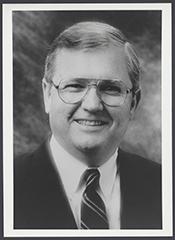
Mr. Speaker, I thank my friend from Texas for the time, and frankly, I am quite pleased to have the opportunity today, Mr. Speaker, to address four very important measures that I have had the honor,…
Mr. Speaker, I thank my friend from Texas for the time, and frankly, I am quite pleased to have the opportunity today, Mr. Speaker, to address four very important measures that I have had the honor, along with the gentleman from Ohio (Chairman Boehner), to sponsor.
Before addressing the mechanics of each of these important bills, and I will as they are considered, I would like to provide a little useful background.
If performance outcomes are what truly counts in government programs, performance outcomes, how well is that government program doing, my colleagues should know that the relevant indicators suggest that OSHA, under President Bush, is performing better than at any time in the agency's history.
Now, if we can spend just a little time looking at the facts, and I hate to confuse anybody with facts, but looking at the facts, we should look at the GAO report.
It is saying very clearly that the voluntary compliance strategies are showing very good results. In fact, they are
saying this may actually be working because the performance outcomes are better than they have ever been in the history of OSHA.
I have a couple of graphs, so you do not have to believe me, and they are put out by the Department of Labor statistics. It is indicating that workplace injuries as of 2002 and workplace fatalities as of 2002 are the lowest; they are the lowest they have ever been in the history of OSHA. Injury and illness rates and a number of workplace fatalities are down and are declining. And I believe, I firmly believe that one of the major reasons for this performance improvement is a new and improved vision for OSHA.
I know people do not like to change laws once they are passed, but they do need to be measured against performance outcomes, and sometimes you need to change laws when you know you are on the wrong track. OSHA has a vision that rejects the blunt confrontation and embraces the idea of cooperation between employers and government, between business and government. Let us come together to work together to make this a safer and a healthier workplace.
The simple truth is we can achieve much better results working together than working against each other, and that seems to be what GAO is saying. It seems to be what the numbers are saying. Or as we say where I come from, you are likely to attract more bees with honey.
Now, this does not mean, in our opinion, that you should let the fox guard the hen house. Far from it. It simply means that we will have a better balance to our regulatory approach at OSHA if it includes two useful components: one, a more effective targeting of enforcement resources to where they are most needed. That is just common sense. And, two, strong encouragement for employers to cooperate toward the performance improvements.
Why would they not? If they feel they can work with this government and try to improve the health and the safety of their workplace, why in the world would they not? Obviously, they are. The GAO studies keep pointing to the fact that that is working. Targeting focuses on a few bad actors in the business community, while cooperation focuses on the vast majority of employers who very much want a healthier and a safer workplace.
I would suggest this: performance improvements at OSHA simply did not come about by accident. In fact, by 1993, OSHA was strongly heading in the other direction of not using the carrot but using the hammer. Almost one of the worst OSHA bills that could ever have become law, in my opinion, occurred in 1994 with the Ford-Kennedy bill. Thank God that did not pass. It would not have improved workplace safety. And the GAO recently reported that one reason might be the exciting results reported by those employers who have already cooperated with OSHA. They are working together. What they are really trying to do is get where they can trust each other, where the employer feels he can call the government and ask for help and not be fearful that he will be tricked and drug into court.
What was most exciting about GAO's findings is that the word is getting out among the business community that safety pays. What relevance does all this have to the bills that we are going to consider today? The answer is a great deal of relevance, because each of these measures is directly tied to the general idea of a working formula to promote cooperation and trust.
I would like to explain that. I would suggest in the course of our debate over the next few hours that we will repeatedly hear several themes. These themes are: justice, flexibility, efficiency, elimination of waste, and a government that plays fairly and within the rules. Each of these words accurately describes one or more of the purposes of the four measures we will consider today.
I will describe the mechanics of these measures and relate how each fits into this larger picture of positive performance results for OSHA as each is considered.
I would like to urge each of our Members to support this rule and allow this very important discussion to begin. Obviously, I urge each of my colleagues to vote for the underlying bills.
I hear over and over again the term ``working families.'' That is used most frequently, I think, by the minority. And what they generally mean by working families is the 8 percent of our population that are in unions. Well, I like the words working families too. And when it comes to having protection from the government, the other 92 percent of the working families deserve that just as well. The baker with three employees, the florist with two, the local filling station guy who has two employees, they deserve protection equally as do the 8 percent that are in the unions.
So I would say to my colleagues that it is as simple as this: if you have no small businesses in your district, then you ought to vote ``no'' on this rule. But if you do have small businesses in your district, you better give this some consideration, because this is fairness for the little guy who happens not to be in a union, who has no way on Earth to stand up to the Labor Department or the finances of the Federal Government.
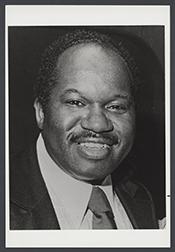
Mr. Speaker, I am here to protest, first of all, the package, the packaging process, the rules process. Lumping five bills together, four of them dealing with OSHA matters, there is an effort to…
Mr. Speaker, I am here to protest, first of all, the package, the packaging process, the rules process. Lumping five bills together, four of them dealing with OSHA matters, there is an effort to trivialize, to minimize and to make invisible this particular, very serious action being taken against working families and organized labor.
Working families need the protection of the government in the workplace. They are vulnerable and they are often victimized. The overwhelming number of business people in America are fair-minded, the small business people as well as corporations, but there is a percentage, which is far too large, that is greedy, selfish and always seeking to get more profits by exploiting workers.
The highest cost of most of these businesses is the labor costs. To drive down the labor costs they will do almost anything. It is not enlightened self-interest, because they are really making profits, but they want more and more.
This package that is being presented on OSHA I call the ``more injuries and more deaths package'' because the end product of chipping away at OSHA provisions is to create a situation where more workers out there are left vulnerable to injuries and to death.
This majority party started its offensive against the working class or working families with a very brutal and obvious attack. The first big action of this majority party when the administration was changed in the White House was to repeal the ergonomics standards that it had taken 10 years to put in place. Ergonomics standards in OSHA dealt with injuries suffered by large numbers of workers in a new environment, a high-tech environment, with different kinds of injuries being generated, but they wiped that out overnight. That was an obvious, brutal, in-your-face attack on working families and organized labor.
Since then, they have sought to chip away, in every way possible, in a long history from 1995, when the change in the majority took place, a steady history of trying to pass bills to cripple OSHA; and they have become less and less strident as time goes on. We have beat back a number of them, but they have come back in other forms, and what we have in this package is the elephant which has been knocked to his knees.
The repeal of the ergonomics standards knocked OSHA to its knees. That elephant is now being fed spoonfuls of poison. These are spoonfuls of poison. They seem common-sensical, they seem trivial, but it is just one way to poison the animal. It will die just the same.
OSHA is made weaker and weaker. The budget has gotten smaller. The number of inspectors, which always was inadequate has been cut. We never intended to cover inspections adequately, but we did do a better job before this present majority took over.
So the cornerstone of the majority Republican Party policy is being enumerated here in terms of workers--we really want them to be more vulnerable; we really want them to have lower costs. We are not going to talk about minimum wage. We are not going to deal with these things which benefit workers. We are going to continue to encourage outsourcing so that more and more jobs are going overseas, and employers can threaten the workers with outsourcing if they act up.
We are going to continue to foster policies which make corporations more and more profitable despite this recession ending, which shows that profits
are going up. Corporations, while there is unemployment, remain the same. Wages are not going up. We are making a clear statement, we want more of the same and we are going to reduce the labor force even further to peasants and serfs who are unable to take care of themselves in the workplace.
The greatest increase in jobs inside this economy, inside America, is going to take place and is taking place in the construction industry; and what they are doing is having large companies subcontract to smaller companies, and the smaller companies become the protectorate of the set of bills that we have here. They have less than 100 employees. They can then proceed to get away with the kinds of violations that we would never allow a larger company because it has different responsibilities.
So this effort, in the name of small businesses, is also an effort which goes after the most vulnerable workers. Construction, the dirtiest work, the most dangerous work, has taken place with immigrant workers and with people who are at the very lowest levels, unable to get any kind of job anywhere else. The number of deaths and injuries that have taken place in the last few years has increased dramatically in this area while the overall number might have gone down a little.
This area is an area where we have had a series of articles appearing in the New York Times which highlight the fact that the OSHA regulations, at present, are minimal. They do not deal with the serious situation that the workplace has in terms of safety and even in terms of death.
We had a hearing just last Wednesday, and I am going to later on read some testimony from those people, but I want to conclude by saying we have a Democratic package for working families in this Nation which includes ending the current tax incentives for shipping jobs overseas, enacting a robust highway bill that would create over 1.8 million good- paying jobs, providing a tax credit for small businesses so small businesses can lower their health care costs, extending Federal unemployment benefits for 2.5 million out-of-work Americans, raising the minimum wage, ensuring that individuals develop the skills that the employers need by increasing job training.
That, in contrast, to a package which is seeking to drive down the working conditions and place the workers in a more vulnerable position so that profits for unscrupulous small businesses can be greatly increased. This package does that. We ought to pay a lot of attention to it and not rush it through this process today.

Mr. Speaker, I rise in support of the rule for H.R. 2432, the Paperwork and Regulatory Improvements Act. Last June, with bipartisan cooperation, the gentleman from California (Mr. Ose) introduced…
Mr. Speaker, I rise in support of the rule for H.R. 2432, the Paperwork and Regulatory Improvements Act.
Last June, with bipartisan cooperation, the gentleman from California (Mr. Ose) introduced this good government bill that improved the existing processes governing paperwork and regulations. The bill makes incremental improvements instead of changing the role of Congress in its oversight of agency rules.
The overall burden of Federal paperwork and regulatory requirements is staggering and is a real drain on job growth, productivity and American competitiveness. In fact, Federal paperwork and regulatory burdens have increased in each of the last 8 years.
H.R. 2432 includes legislative changes to ensure reduction in tax paperwork burdens on small business, assist Congress in its review of agency regulatory proposals and improve public and congressional understanding of the true costs and benefits of regulations.
Since 1942, the Office of Management and Budget has had statutory responsibility to review and approve each new, revised or continuing paperwork imposition on the public. Currently, the IRS accounts for over 80 percent of all the federally imposed paperwork burden on the public. H.R. 2432 requires OMB to conduct a systematic review and then submit a report on specific actions the rest can take to reduce tax paperwork on small business.
To assist Congress in its review of agency regulatory reforms, H.R. 2432 permanently establishes a regulatory analysis function in the General Accounting Office. In 2000, Congress authorized a 3-year pilot test for this regulatory analysis function, but it was never funded. This was partly because GAO intended to use contractors instead of in- house expert staff during the test period. H.R. 2432 would require GAO's having in-house expertise comparable to OMB's expertise.
With GAO's help, Congress will be better equipped to review final agency rules under the Congressional Review Act and to submit timely and knowledgeable comments on proposed rules during the public comment period.
Current law requires OMB to submit an annual regulatory accounting statement and associated report on impacts, such as on small business, with the President's fiscal budget. To date, all six of OMB's final regulatory accounting reports have been incomplete, and none have been submitted in final form with the fiscal budget. As a consequence, their utility in the decision-making process has been hindered.
To improve OMB's regulatory accounting reports, this bill requires OMB to seek agency input annually, as it does for its information collection budget and the fiscal budget. The bill also requires OMB to conduct a study of regulatory budgeting to determine if agencies can better manage regulatory burdens on the public.
This bill has been endorsed by many organizations such as the U.S. Chamber of Commerce, the National Association of Manufacturers, National Federation of Independent Business, National Small Business Association and the Small Business Survival Committee.
The Congressional Budget Office provided a preliminary estimate of the budgetary impact of this bill, saying the bill would cost about $10 million a year and would not affect direct spending or revenues. CBO's estimate includes $8 million for GAO and $2 million for OMB.
The current budget for OMB's Office of Information and Regulatory Affairs is $7 million. OIRA has multiple functions besides paperwork and regulatory reviews, such as government-wide statistical policy and information policy.
As a consequence, the gentleman from California (Mr. Ose) and I will be introducing a substitute today authorizing $5 million for GAO's permanent regulatory analysis function. This amount is based on the proportionate share of OIRA's budget for its paperwork and regulatory reviews.
I support the rule with 1 hour of general debate, equally divided, and which makes in order the only two amendments submitted to the Committee on Rules, one from the gentleman from California (Mr. Waxman) and the gentleman from Massachusetts (Mr. Tierney) and one submitted by the gentleman from California (Mr. Ose). I urge my colleagues to support the rule.
H.R. 2432 should result in needed paperwork and regulatory relief, especially for small businesses, and help Congress fulfill its constitutional role as a coequal branch of government.
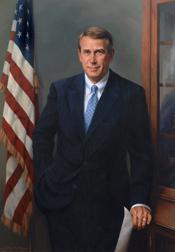
Mr. Speaker, I thank the gentleman for yielding me time. Mr. Speaker, I thank my colleagues for the opportunity today to have this debate on how to bring some more equitable regulations over at OSHA.…
Mr. Speaker, I thank the gentleman for yielding me time.
Mr. Speaker, I thank my colleagues for the opportunity today to have this debate on how to bring some more equitable regulations over at OSHA. Small employers are the engine of job creation in America and for employers of 100 or less, they create about 70 percent of the new jobs that we see in our
country each and every day. Yet these same employers are the ones that are dealing with the ever-rapidly rising cost of health insurance premiums for their employees, the cost of government regulations. They see competition not only from their neighbors down the street but competition from far beyond our seas. And if we want this engine of economic growth to continue to create jobs in America, we as Members of Congress ought to be looking at laws and regulations that affect their ability to compete both at home and abroad.
I want to congratulate my colleague from Georgia (Mr. Norwood), the chairman of the Subcommittee on Workforce Protections. He and the members of his subcommittee did a marvelous job in looking at OSHA.
Now, we have made great strides at OSHA over the last 5 or 6 years in terms of OSHA, a government agency, charged with protecting worker health and safety, working in a more cooperative way with employers all across the country. And what has happened? We have seen workplace injuries and accidents decrease. And this voluntary cooperation that we have under way, we believe can be enhanced by the four underlying bills that we bring to the floor today, whether it is giving the review commission a little more flexibility in looking at some regulations; whether it is expanding the review commission so they can speed up the adjudication of disputes between employers and OSHA; or whether it is to say to OSHA, before you bring a lawsuit against a small employer, you ought to consider the impact on it and what it does to the small employer, because if you bring this suit against a small employer and you lose, you ought to pay the legal costs for the employer.
A lot of small employers do not want to take on the Federal Government, do not want to take on the U.S. Treasury or OSHA even if they think they are right because of the giant expense involved. Most of these businesses do not have the kind of capital that big businesses have; and as a result, they are reluctant to really adjudicate what they think is a legitimate claim. And we believe that if OSHA would have to pay those fees if they lose, it would bring more balance to this relationship between OSHA and the employers and maintain the cooperative spirit that we have seen grow over the last 5 or 6 years.
So the four bills that we have before us I think will enhance worker safety, will enhance competitiveness for small companies. We ought to have a debate today, and I think the rule outlines a very fair process for the consideration of these four bills; and I would urge my colleagues not only to support the rule today but to support the four underlying bills that we are bringing to the floor under it.
Mr. Speaker, will the gentleman yield?
Mr. Speaker, I think the gentleman realizes that here in Washington we do two things every day: We do public policy which represents the work we are bringing to the floor today; and, unfortunately, we also do politics.
This being a presidential election year, much less a congressional election year, means there is an awful lot of politics being played by some of the opponents of political opponents that we might have; but I think if my colleagues were to look at the four underlying bills, my colleagues will see today that we will have broad bipartisan support for all four of these bills. Why? Because they are merely money sense.
Mr. Speaker, if the gentleman will continue to yield, the bigger proponent of protecting workers' rights are employers, because American employers understand that the single greatest asset they have are the men and women who work for them each and every day.
Show 11 more

Mr. Chairman, I rise in strong support of the Waxman- Tierney amendment, which would create an expert commission to study the politicization of science and make recommendations on how to protect…
Mr. Chairman, I rise in strong support of the Waxman- Tierney amendment, which would create an expert commission to study the politicization of science and make recommendations on how to protect science from political interference in the decision-making process.
This is an extremely important bill. It should have bipartisan support. We need our decisions to be based on science, not politics. Yet too often the decisions that are coming forward really overrule the recommendations of the scientists for a political goal or a certain ideology. For one example, 2 weeks ago, the FDA denied an application to allow the sale of Plan B emergency contraception and give it over- the-counter status. In this case, the science was very, very clear; and the FDA's own advisory panel voted 27 to zero that Plan B could be safely sold as an over-the-counter medication.
It then voted 23 to 4 to recommend that the FDA approve the application to make it available over the counter, but the FDA's commissioner ignored this determination and overruled the opinion of his own expert panelists. He was in conflict with the science and the experts.
I must say that according to the New England Journal of Medicine, the FDA's decision has no scientific basis. Editors wrote that ``a treatment for any other condition, from hangnail to headache to heart disease, with a similar record of safety would be approved quickly and immediately.''
So this really is a horrific decision. It flies in the face of science.
Mr. Chairman, the following are several news articles that have appeared in major newspapers and letters of support from Planned Parenthood and NARAL in support of the Waxman-Tierney amendment.
Planned Parenthood
Federation of America, Inc.,
Washington, DC, May 18, 2004.
Dear Representative: Today, Representatives Waxman and
Tierney will offer an amendment to H.R. 2432, the Paperwork
and Regulatory Improvements Act. The amendment would create
an expert commission to study the politicization of science
and make recommendations on how to protect science from
political and ideological manipulation and interference.
Planned Parenthood Federation of America strongly urges you
to support this amendment.
Over the past few years an alarming amount of decisions
that should have been decided on scientific merits have been
politicized. Ideology has crept into all aspects of the
government's decision-making on science. Some of the most
egregious offenses have affected women's health and well-
being. The most recent example is the Food and Drug
Administration's (FDA), the gold-standard for scientific
integrity, denial of Plan B emergency contraception's (EC)
over-the-counter status. This major public health setback was
politics at its worst. There is no scientific reason to
restrict access to this safe, effective backup method of
contraception. This decision flied in the face of a joint
hearing of the FDA Nonprescription Drugs and Reproductive
Health Drugs Advisory Committees recommendation of 23 to 4
that the FDA make EC available over the counter. Virtually
all major medical and health care organizations, including
the American College of Obstetricians and Gynecologists,
support making EC available without a prescription.
In addition, in October 2002 Department of Health and Human
Services web sites removed medically accurate information
about condom effectiveness and the lack of a proven link
between abortion and breast cancer. Then in November 2002,
the National Cancer Institute (NCI) Web site posts a
``revised'' that suggests an unproved link between abortion
and breast cancer, a link that has been soundly refuted.
These attempts to replace science with ideology deserve
investigation and Representatives Waxman and Tierney's
amendment to set-up an expert commission to do just that
deserves your support.
Thank you for your time and attention to this issue. Please
do not hesitate to contact us with any questions you may
have.
Sincerely,
Gloria Feldt,
President.

Mr. Chairman, I rise in opposition to H.R. 2432. Like so many other bills that have come the House floor recently, this one has a good title that belies its real substance. The paperwork and…
Mr. Chairman, I rise in opposition to H.R. 2432. Like so many other bills that have come the House floor recently, this one has a good title that belies its real substance. The paperwork and regulatory burdens on businesses could certainly use improvement, but this bill is actually an underhanded way to weaken so many important regulations that protect American citizens by giving us clean air, clean water, protected public lands, and safe workplaces.
It is ironic that, even as we operate under one of the most industry- friendly administrations in recent history, the paperwork burden on the average American businessman has actually gone up. In fiscal year 2003, total government paperwork reached an estimated 8.1 billion hours. According to OMB's Office of Information and Regulatory Affairs, the paperwork burden rose a record 570 million hours in fiscal year 2002 and another 72 million hours in fiscal year 2003.
So even as the Bush administration and the House leadership dole out special interest goodies to oil and gas companies, HMOs, and many others, the paperwork burden for businesses is going up. The bill we have in front of us will not relieve that burden or do anything to undo the sharp increase in paperwork that we have seen from this White House. Instead, it weakens the process of developing federal regulations that protect the health and safety of Americans and our natural environment.
It is also ironic that the House leadership has chosen to attack environmental regulations as imposing undue burdens on businesses when our laws and regulations still do not fully account for externalities like pollution. Polluting industries may decry the costs of burdensome government regulations, but it is average citizens who pay the real price when they breathe dirty air and drink polluted water.
Some reports have concluded that my home state of New Jersey has the worst air quality in the nation. So it is hard for me, and for my constituents, to tolerate the cries of the power industries when their pollution leads to the premature deaths of so many New Jerseyans. I am outraged when the Bush administration insists on rewriting environmental regulations to pad the profits of polluters and ignores the human costs of pollution.
There is a real danger with the details in this legislation, especially concerning environmental and health regulations. The bill directs OMB to have every federal agency provide an annual report estimating the total costs and benefits of regulations and paperwork pertaining to that agency. So the agency measures the costs, say, of installing pollution controls on a power plant and filling out the relevant paperwork. When it comes to measuring the benefits of a given pollution control regulation, however, are we going to include the value of premature deaths avoided and reduced asthma rates? I sincerely doubt that most federal agencies are going to be inclined, or even be able, to estimate such external benefits.
As a research scientist. I am also concerned that the bill does not require the cost-benefit analyses to be done using rigorous scientific analysis. If we want to seriously look at the real costs and benefits of our regulations, we need to use scientific methods, or we risk using complete speculation. This Administration has already undermined and ignored science numerous times--let's not give them another opportunity.
I understand the burden that many businesses, especially small businesses, face in filling out government paperwork. This bill, however, is more about coming up with excuses to undermine vital health, safety, and environmental regulations than about relieving the evergrowing paperwork burden.

Mr. Chairman, I yield my time to the gentleman from Massachusetts (Mr. Tierney) and ask unanimous consent that he be permitted to control the time. Mr. Chairman, I thank my friend for yielding me…
Mr. Chairman, I yield my time to the gentleman from Massachusetts (Mr. Tierney) and ask unanimous consent that he be permitted to control the time.
Mr. Chairman, I thank my friend for yielding me time.
Mr. Chairman, I rise in opposition to the bill, but more specifically I want to speak in support of the Waxman-Tierney amendment. The amendment should garner the support of every Member of this body, because this body authorizes and funds the activities of CDC, of EPA, of FDA and every other Federal agency.
We have an oversight role, and under our watch, science is being subverted to promote political and ideological goals. Advisory goals are being stripped of scientific experts and seeded with industry representatives and ideologues. Reports are being censored and data is being manipulated to promote the administration's political and ideological objectives.
This is a dangerous, dangerous precedent. This did not happen with President Bush, Sr., it did not happen with President Clinton, it did not happen with President Reagan, it did not happen with Republican or Democratic Presidents the way that it is happening today under this very politicized, very partisan, very ideologically driven White House.
The Federal Government has no business hiding from the facts, much less suppressing them. That means the Federal Government should not turn over science, real science, to ideology, to industry representatives, to corporate interests.
In February of this year, 20 Nobel Laureates and dozens of other leading U.S. scientists issued an unprecedented statement of concern about the misuse of science by the Bush administration. This is not a Democrat on the House floor saying this, this is 20 Nobel Prize-winning scientists and dozens of other leading scientists.
``When scientific knowledge has been found to be in conflict with the political goals, the Bush administration has manipulated the process through which science enters into its decisions.''
These are Nobel Laureates and other scientists talking.
``This has been done in the Bush administration by placing people who are professionally unqualified or who have clear conflicts of interest in official posts and on scientific advisory committees, by disbanding existing advisory committees, by censoring and suppressing reports by the government's own scientists, and by simply not seeking independent scientific advice.'' That is from 20 Nobel Laureates, not from a bunch of Democrats complaining about it.
To prove the point that these are not our words, the Director of the National
Bureau of Standards in the Nixon administration, another Republican who played it straight, did not have this ideologically driven agenda, Dr. Lewis Branscomb of the Nixon administration, said, ``I am not aware that President Nixon ever hand-picked ideologues to serve on advisory committees or dismissed from advisory committees well-qualified people if he didn't like their views. I don't think we have had this kind of cynicism that we see today with respect to objective scientific advice since I have been watching government, which is quite a long time.''
The Bush administration is manufacturing reality to fit its beliefs, and then they have the nerve, they have the gall, to call it sound science. That is not science, it is censorship. This Nation cannot afford it, this body should not abide it. I urge my colleagues to pass this amendment. Regardless of our political affiliation, we should not be afraid of the truth, nor should we permit its subversion.
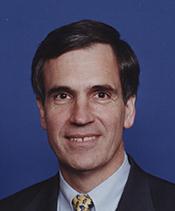
Mr. Chairman, I thank the gentleman for yielding me time. Mr. Chairman, today our Republican colleagues are talking about reforming government regulation. There is a big problem with government…
Mr. Chairman, I thank the gentleman for yielding me time.
Mr. Chairman, today our Republican colleagues are talking about reforming government regulation. There is a big problem with government regulation, and especially environmental regulation under the Bush administration.
This administration has turned regulatory decision-making over to big campaign donors with polluting industries. We all know what happens to public health and the environment when industry writes rules.
I want to mention three areas: the utility industry, the livestock industry and industrial laundries.
Consider the EPA's recently proposed rule on mercury pollution from power plants. A few years ago, EPA set up a process to involve all of the interested parties, States and localities, public health representatives, fish and wildlife advocates, power plant owners and others. These stakeholders worked for over a year. They gave EPA a set of regulatory recommendations, and they were working on other technical recommendations.
Then last spring, EPA halted the process and went behind closed doors. Nine months later, EPA emerged with an entirely new proposal based on another section of the Clean Air Act, and it allows many power plants to do nothing to control mercury emissions, perhaps for years, perhaps even for decades.
Now, as we now know, key parts of this deregulatory proposal were actually written by the power industry, which is one of President Bush's largest donors. The EPA Inspector General is now looking into the proposal and the new administrator has promised to go back to do further analysis. This is simply not the way agencies are supposed to do regulation.
Yesterday, we learned from the Chicago Tribune that livestock industry lobbyists are also setting environmental policy. The livestock industry sold the EPA on a proposal to let factory farms off the hook for air pollution violations. In exchange, the industry would conduct some monitoring, and monitoring only. Livestock lobbyists did not just come up with the idea; they also worked on all the details. EPA then publicly presented the proposal using, as EPA materials, slides that had been prepared by the lobbyists. The livestock industry is also an important source of campaign contributions to Republicans.
On the same day as the Chicago Tribune story, the Washington Post detailed how industrial laundry lobbyists influenced an EPA rule on hazardous waste disposal. The key company in this industry is owned by a Bush Pioneer who had raised at least $100,000 for the President's 2000 campaign.
The Post reports that EPA gave industrial laundry lobbyists an advance copy of a portion of the proposed rule, the lobbyist edited the rule and EPA adopted the changes. EPA did not grant such access to any other interested parties, which included environmental advocates, a labor union, hazardous waste landfill operators and competitive industries.
These are not accidents or isolated incidents. The Bush administration defends these proposals. Apparently, the administration sees nothing wrong with providing special access to large donors who own or represent polluting industries. But when industry buys the regulatory process, all Americans pay the bills. The prices are health, polluted air, dirty water, poisoned land, tainted fish and dying forests.
We do need regulatory reform, but this bill would only make the real problems worse.

Mr. Chairman, I rise today in support of the Waxman/Tierney amendment to establish an independent commission on the politicization of science in the regulatory process. As a family physician and…
Mr. Chairman, I rise today in support of the Waxman/Tierney amendment to establish an independent commission on the politicization of science in the regulatory process. As a family physician and Chair of the Congressional Black Caucus Health Braintrust, I have made numerous appearances on this floor to remind my congressional colleagues and this Nation about the gaping deficiencies in our healthcare system. With these deficiencies being most salient in minority communities, members have introduced and passed a number of legislative proposals geared towards eliminating racial and ethnic health disparities. Public Law 106-129 was one of these proposals and required the Agency for Health care Quality and Research to produce annual reports on the existing disparities in this Nation.
But the Bush administration, who seeks to evangelize individual responsibility as the sole mechanism for redressing health disparities and improving health care for the underserved, have produced policy directives sought to downgrade proven programmatic efforts to eliminate health disparities, and overtly question the reality of the health care system's failings in the requested report entitled National Health Care Disparities Report (NHDR).
The NHDR was published by Department of Health and Human Services' Agency for Health Care Quality and Research in December of 2003 and took the position that racial and ethnic minorities are in better health than the general population. After an investigation was launched at the request of Congressman Henry A. Waxman (D-CA) and members of the Congressional Minority Caucuses, it became apparent that there were two starkly different versions of the report.
The June version of the report found ``significant inequality'' in health care in the United States, referred to health care disparities as ``national problems,'' emphasized that these disparities are ``pervasive in our health care system,'' and found that the disparities carry a significant ``personal and societal price.'' The December version of the report that was released, however, contains none of these conclusions. Furthermore, the June versions of NHDR defined ``disparity'' as the condition or fact of being unequal, as in age, rank, or degree, and included the term over the 30 times in the ``key findings'' section of the executive summary. By contrast, the December version leaves ``disparity'' undefined and deletes the uses of the ``disparity'' throughout the report.
After much political pressure and public embarrassment, the Secretary of Health and Human Services retracted the December report and released the June version. But after three months of aggressively defending and justifying the December report it was clear the Administration's understanding of death from health disparities and unequal treatment of the underserved by the health care system based on ideological perspective rather than science. Perspective-based policy making in health care is problematic because its solutions hinge on its biases. With over a century of science-based evidence available, such policy- making appears not just partisan before activity harmful.
Mr. Chairman, we do not have time to allow political ideology to take precedent over science. I urge my colleagues to support the Waxman/ Tierney amendment and put an end to politicization of science.

Mr. Chairman, I rise in support of the gentlemen's amendment. Knowledge is power, or as Francis Bacon used to say ``Nam et ipsa scientia potestas est.'' Bacon inspired both this observation and what…
Mr. Chairman, I rise in support of the gentlemen's amendment.
Knowledge is power, or as Francis Bacon used to say ``Nam et ipsa scientia potestas est.'' Bacon inspired both this observation and what we have come to know as the scientific method, the underpinning of modern science. Whatever the inspiration for his famous quote, it appears that from the very beginning, science and politics mixed.
Here in Congress we rely on scientists to inform policy, since the term congressional ``expert'' is really an oxymoron--like ``Jumbo Shrimp'' or ``Jobless Recovery.'' Scientists tell us whether Yucca Mountain can be used to safely store nuclear waste for a hundred thousand years, how fast global warming is occurring, and whether therapeutic cloning is possible.
Unfortunately, the Bush administration has taken its relentless drive to weaken the environmental regulations of this country to a whole new level, and it has politicized the scientific process in a way we haven't seen since Galileo was tried and jailed by the Inquisition.
Lead is one of the most dangerous and potent toxins to the brains of young children. A year and a half ago, I learned that the Bush administration had rejected the CDC staff nominations of three renowned scientists to its Advisory Panel on Preventing Childhood Lead Poisoning. In their place, individuals with clear ties to the lead industry were nominated--including one who had actually been nominated by the lead industry, and another who was an expert witness for the lead industry, testifying that lead posed very little health risk in lawsuits brought against it. Clearly, the lead industry was unhappy with the CDC panel, which was considering revising the safe blood lead levels downward. So it decided to perform a little policy alchemy by compromising the advisory committee process. I tried to head it off by issuing a report entitled ``Turning Lead into Gold: How the Bush Administration is Poisoning the Lead Advisory Committee at the CDC.'' While one of the nominees admitted her conflict of interest and bowed out, the other industry nominees serve on that panel today.
The lead industry seems to have gotten its way for now. This same committee just recently decided not to lower the lead level of concern, despite a clear finding by a CDC working group that there are adverse health effects at the lower level.
To add insult to injury, the President is proposing a $35 million cut in funds for lead abatement in low-income homes. In the face of significant national drinking water needs--illustrated by the shocking revelations of extremely high lead levels in the Washington, DC, water--the President's budget also proposes to cut water quality funding by $822 million. This all adds up to a policy that counts politics more than all of the science on the adverse effects of lead on young children.
Vote ``yes'' on the Waxman-Tierney amendment to restore integrity to the government's scientific process.

Mr. Chairman, I rise today in strong support for H.R. 2432, the Paperwork and Regulatory Improvement Act, of which I am a co- sponsor. This important legislation will enable Congress to take…
Mr. Chairman, I rise today in strong support for H.R. 2432, the Paperwork and Regulatory Improvement Act, of which I am a co- sponsor. This important legislation will enable Congress to take responsibility for the laws and regulations imposed on this Nation.
Over the past 20 years, the costs and impacts of regulations have increased dramatically. We routinely authorize executive branch agencies to issue rules implementing the laws we pass in Congress. Just as Congress needs a Congressional Budget Office to check and balance the executive branch in the budget process, it also needs an analytic capability to check and balance the executive branch in the regulatory process. Our delegation of authority to the agencies does not relieve us of our duty to ensure the responsiveness and effectiveness of those agency regulations. Agency rules and regulations have the force and effect of law. They spew forth from the agencies more than 3 or 4,000 rules and regulations every 2 years, and Congress rightly should have better oversight.
Since the 104th Congress, I have led the fight for a Congressional Office of Regulatory Analysis resulting in the passage of the Truth in Regulating Act of 2000. That statute authorized a 3-year pilot project, adding a function at the General Accounting Office to respond to Congress' request for an independent evaluation of selective economically significant proposed rules, including an evaluation of the proposals that are consistent with congressional intent. Instead of using their own experts, GAO planned to hire outside contractor experts for the 3-year pilot test. As a consequence Congress did not fund this approach.
Today it is regrettable that despite the passage of TIRA, we still do not have an independent analysis of the various agencies regulatory analyses required by law or by executive order. H.R. 2432 would permanently authorize this function within GAO, ensuring full-time agency expertise within GAO. More importantly, the GAO's analysis would allow us to submit more informed and more influential comments on the cost, scope, and content of proposed rules during the public comment period.
Clearly it is time to increase the transparency of important regulatory decisions, promote effective congressional oversight,and increase the accountability of agencies. The government is accountable to the people and must take responsibilities for the rules established under the laws Congress passes.
Passage of H.R. 2432 would be one step toward Congress meeting its regulatory responsibilities. It is long past time for us to stop trying to change the subject and politicizing good public policy for small businesses. I urge my colleagues to vote for this bill, which is a small step towards giving some agencies the oversight they require.

Mr. Chairman, I speak out in opposition to H.R. 2432, the ``Paperwork and Regulatory Improvements Act of 2003.'' This bill would weaken, rather than improve, the process of developing federal…
Mr. Chairman, I speak out in opposition to H.R. 2432, the ``Paperwork and Regulatory Improvements Act of 2003.'' This bill would weaken, rather than improve, the process of developing federal regulations by elevating the interests of regulated industries over all other considerations. The bill would needlessly divert resources from implementing important regulations and does nothing to protect current public health and environmental regulations, which are under fire from the Bush administration. These are regulations that even the Office of Management and Budget has indicated have immense benefits: in September of 2003 an OMB study concluded that environmental regulations are well worth the costs they impose on industry and consumers, resulting in significant public health improvements and other benefits to society. For example, the study found that the health and social benefits of enforcing clean-air regulations during the past decade were five to seven times greater in economic terms than were the costs of complying with the rules. Yet the Bush administration continues to issue rules and guidelines that weaken the Clean Air Act.
I strongly support the Waxman-Tierney amendment to establish an independent commission on the politicization of science in the regulatory process. The amendment responds to a growing concern among scientists and the environmental community that the Bush administration is placing politics above science. From refusing to release a report contradicting their views in the Klamath basin of Oregon to removing information on global warming in an Environmental Protection Agency report, this administration has shown little more than flat out contempt for science. Just last month we saw the Bush administration issue a new policy that would allow hatchery-raised salmon in the Pacific Northwest to be included in wild salmon population counts, which could have a significant impact on whether or not the species are listed under the Endangered Species Act. Press accounts show that this was done over the objection of an independent panel of scientists commissioned by National Marine Fisheries Service to advise them on the issue.
In February of this year, 60 leading scientists--including 20 Nobel laureates, leading medical experts, former federal agency directors, and university chairs and presidents--voiced their concern over the misuse of science by this administration. I am deeply disappointed that H.R. 2432 takes us in the wrong direction by advancing a misguided concept that elevates the interests of regulated industries over the health of our communities.
Mr. Chairman, I thank the gentleman for yielding me time. I rise in support of the Waxman-Tierney amendment to establish a Commission on Politicization of Science in the Regulatory Process. We need…
Mr. Chairman, I thank the gentleman for yielding me time.
I rise in support of the Waxman-Tierney amendment to establish a Commission on Politicization of Science in the Regulatory Process. We need this commission because Congress and the administration have failed to do their jobs adequately. We also need this commission because scientific information has become politicized more and more recently, and this really has to change.
We have all read and heard of the allegations that politics has been used as a litmus test for the appointment of scientists to the Federal science advisory panels and that interpretation of scientific information has been skewed to emphasize uncertainties and justify inaction.
When 20 Nobel Laureates sign a letter stating that their belief is in the existence of a problem, we should take notice and examine the allegations. Yet Congress has failed to hold any hearings on this issue.
Dr. Marburger, the President's chief science advisor, does little more than issue a rebuttal to the Union of Concerned Scientist's report, denying that any problem exists.
It is true that the plural of anecdote is not data. However, at some point a series of anecdotes begins to look like a pattern. The pattern is disturbing and threatens to undermine our ability to rely on scientific and technical information as we weigh alternative policies.
At a minimum, the number of cases and the range of scientific issues they encompass create the perception that the Federal science advisory process has been undermined by politics. The perception alone is damaging. Policymakers and the public must have confidence in scientific information and scientific advice provided by experts.
Policy and regulatory decisions are political. Science can inform our decisions and help us to understand the likely outcomes associated with different policy choices. However, science does not determine policy choices. This is our job.
We must examine the processes we use to incorporate scientific information into our policy decisions, and we need constructive suggestions about how to ensure that political influence over the development of scientific information is minimized. It appears the current system is ripe for manipulation, and reform is needed. There are steps we can and should take to make it more difficult to politicize science. The commission can help us to identify these steps.
I urge support of this amendment. It is too costly and too misleading for us to depend on hearsay and ideology to substitute for the truth in scientific findings.

Mr. Chairman, I would suggest this kind of partisan language would not be appropriate in any legislation. I assume the goal of the gentleman from California (Mr. Waxman) is not to politicize science…
Mr. Chairman, I would suggest this kind of partisan language would not be appropriate in any legislation.
I assume the goal of the gentleman from California (Mr. Waxman) is not to politicize science and research, yet I respectfully suggest that is what this amendment does. And the comments of the gentleman on the floor were sort of blasting the Bush administration for some of the things that they have done.
I am chairman of the Subcommittee on Research, and the gentlewoman from Texas (Ms. Eddie Bernice Johnson) is the ranking member of that subcommittee. In fact, all of the members on that committee, Republicans and Democrats, and on the full Committee on Science work very diligently to not politicize what we are doing in science and research in this country.
This amendment requires that a commission be created to study the politicization of science by the Bush administration. What we all sort of agree is, politicizing this is what we are doing with this amendment. I urge my colleagues, I urge the Democrats not to start, even though it is an election year and we are approaching the election, not to start politicizing.
We have references to the Committee on Government Reform. Regardless of whether it is an August or November date, it is a minority staff report that the majority had nothing to do with, and it is directing the commission in this amendment. And by the way, this amendment, as I count the pages, a 10-page amendment in a 9-page bill, otherwise directs this new commission to take the minority report and study that report that bashes the Bush administration.
The sponsor references the Union of Concerned Scientists and their report; and the Union of Concerned Scientists, with all due respect, is a left-wing organization which has been bashing the Bush administration for the last 2 years.
So I think we need to be very careful of not politicizing what we are doing in science and research in this country and in this Congress.
On the Union of Concerned Scientists, Mr. Marburger, the scientific adviser for the President, informs me that they have studied and reacted to every point of suggested criticism in that report. If there is additional review of the gentleman's minority report, I would be glad to instigate it in our Subcommittee on Research because I think it is important that we do not politicize. But it seems to me, and I would respectfully and humbly suggest that passing this amendment does just that, it politicizes by creating a commission that bashes the Bush administration.

Mr. Chairman, I rise today in support of the amendment of the gentleman from California (Mr. Ose) and his bill, the Paperwork and Regulatory Improvements Act, and thank his staff as well for the fine…
Mr. Chairman, I rise today in support of the amendment of the gentleman from California (Mr. Ose) and his bill, the Paperwork and Regulatory Improvements Act, and thank his staff as well for the fine work they have done. This legislation is a needed addition and an improvement of existing law. H.R. 2432 would increase the transparency and effectiveness of government and lessen the burden associated with taxation-related paperwork for small businesses.
In 1980, the Congress passed the Paperwork Reduction Act, which established the Office of Information and Regulatory Affairs. The principal responsibility of this office is to reduce the paperwork burden from Federal regulations on the American public. The burden is considerable.
According to a 2001 study, Americans spend an estimated $843 billion annually to comply with Federal regulations. It is our responsibility as Members of Congress to review the new agency rules and regulations. Most importantly, it is our duty to find ways to reduce red tape. In order to fulfill this responsibility, Congress needs detailed information on the costs and benefits associated with each regulation. The
Paperwork and Regulatory Improvements Act would ensure this information is provided to Congress.
H.R. 2432 would do three things. It would require the Office of Management and Budget to seek agency input for its annual regulatory accounting report to Congress; permanently fund an independent regulatory analysis function within the General Accounting Office; and authorize OMB to designate at least three agencies to conduct a 2-year study on regulatory budgeting.
Based on the results of this study, OMB will report to Congress on the feasibility of regulatory budgeting. We can then determine if it is a useful tool for managing regulatory burdens on the public.
Finally, this legislation addresses the challenges small businesses face with regard to the paperwork burden. Small businesses spend an extremely disproportionate amount of resources, time, and money on compliance with regulations. The largest share, almost 80 percent of the paperwork, is taxation-related paperwork.
H.R. 2432 would require the OMB and the Internal Revenue Service to jointly develop specific solutions to reduce the paperwork burden on small businesses. It is time Congress paid attention to this pressing problem.
Mr. Chairman, I would like to urge all of my colleagues here today to support this sound piece of legislation.
Bill Text
2 versions available
        [Congressional Bills 108th Congress]
[From the U.S. Government Publishing Office]
[H.R. 2432 Reported in House (RH)]

Union Calendar No. 277
108th CONGRESS
2d Session
H. R. 2432

[Report No. 108-490, Part I]

To amend the Paperwork Reduction Act and titles 5 and 31, United States
Code, to reform Federal paperwork and regulatory processes.

_______________________________________________________________________

IN THE HOUSE OF REPRESENTATIVES

June 11, 2003

Mr. Ose (for himself, Mr. Tanner, Mr. Tom Davis of Virginia, Mr. Moore,
Mr. Janklow, Mr. Matheson, and Mr. Ryan of Wisconsin) introduced the
following bill; which was referred to the Committee on Government
Reform, and in addition to the Committee on the Budget, for a period to
be subsequently determined by the Speaker, in each case for
consideration of such provisions as fall within the jurisdiction of the
committee concerned

May 14, 2004

Additional sponsors: Mr. Istook, Mr. Schrock, and Mrs. Kelly

May 14, 2004

Reported from the Committee on Government Reform with an amendment
[Strike out all after the enacting clause and insert the part printed
in italic]

May 14, 2004

Referral to the Committee on the Budget extended for a period ending
not later than May 14, 2004

May 14, 2004

Committee on the Budget discharged; committed to the Committee of the
Whole House on the State of the Union and ordered to be printed
[For text of introduced bill, see copy of bill as introduced on June
11, 2003]

_______________________________________________________________________

A BILL

To amend the Paperwork Reduction Act and titles 5 and 31, United States
Code, to reform Federal paperwork and regulatory processes.

Be it enacted by the Senate and House of Representatives of the
United States of America in Congress assembled,

SECTION 1. SHORT TITLE.

This Act may be cited as the ``Paperwork and Regulatory
Improvements Act of 2004''.

SEC. 2. FINDINGS.

Congress finds the following:
(1) In 1980, in the Paperwork Reduction Act, Congress
established the Office of Information and Regulatory Affairs
(OIRA) in the Office of Management and Budget. OIRA's principal
responsibility is to reduce the paperwork burden on the public
that results from the collection of information by or for the
Federal Government. In 2002, OIRA estimated that the paperwork
burden imposed on the public was 7.7 billion hours, at a cost
of $230 billion. The Internal Revenue Service accounted for 83
percent of the paperwork burden.
(2) In 1995, Congress amended the Paperwork Reduction Act
and established annual governmentwide paperwork reduction goals
of 10 percent for each of fiscal years 1996 and 1997, and 5
percent for each of fiscal years 1998 through 2001, but the
paperwork burden increased, rather than decreased, in each of
those fiscal years and fiscal year 2002. Both the Office of
Management and Budget and the Internal Revenue Service need to
devote additional attention to paperwork reduction.
(3) In 2002, the House Report accompanying the Treasury and
General Government Appropriations Act, 2003 (House Report 107-
575) stated, ``The Office of Management and Budget has reported
that paperwork burdens on Americans have increased in each of
the last six years. Since the Internal Revenue Service imposes
over 80 percent of these paperwork burdens, the Committee
believes that OMB should work to identify and review proposed
and existing IRS paperwork.''.
(4) One key to success in paperwork reduction is the Office
of Management and Budget's systematic review of every new and
revised agency paperwork proposal. Recent statutory exemptions
from that office's review responsibility, especially those
without any stated justification, should be removed.
(5) In 2000, researchers Mark Crain of George Mason
University and Thomas Hopkins of the Rochester Institute of
Technology, in their October 2001 publication titled ``The
Impact of Regulatory Costs on Small Firms'', estimated that
Americans spend $843 billion annually to comply with Federal
regulations. Congress has a responsibility to review major
rules (as defined by section 804 of title 5, United States
Code) proposed by agencies, especially regulatory alternatives
and the costs and benefits associated with each of them. In
2000, in the Truth in Regulating Act, Congress established new
responsibility within the General Accounting Office to assist
Congress with this responsibility.
(6) In 1996, because of the increasing costs and
incompletely estimated benefits of Federal rules and paperwork,
Congress required the Office of Management and Budget for the
first time to submit an annual report to Congress on the total
costs and benefits to the public of Federal rules and paperwork
requirements, including an assessment of the effects of Federal
rules on the private sector and State and local governments. In
1998, Congress changed the annual report's due date to coincide
with the due date of the President's budget, so that Congress
and the public could be given an opportunity to simultaneously
review both the on-budget and off-budget costs associated with
the regulatory and paperwork requirements of each Federal
agency. In 2000, Congress made this a permanent annual
reporting requirement.
(7) The Office of Management and Budget requires agencies
to submit annual budget and paperwork burden estimates in order
to prepare certain required reports for Congress, but it does
not require agencies to submit estimates on costs and benefits
of agency rules and paperwork. The Office of Management and
Budget needs to require agencies to submit such estimates on
costs and benefits to help prepare the annual accounting
statement and associated report required under section 624 of
the Treasury and General Government Appropriations Act, 2001.

SEC. 3. REDUCTION OF TAX PAPERWORK.

Section 3504 of title 44, United States Code, is amended by adding
at the end the following new subsection:
``(i) In carrying out subsection (c)(3), the Director shall (in
consultation with the Internal Revenue Service and the Office of Tax
Policy of the Department of the Treasury and the Office of Advocacy of
the Small Business Administration) conduct a review of the collections
of information conducted by the Internal Revenue Service to identify
actions that the Internal Revenue Service can take to reduce the
information collection burden imposed on small business concerns,
consistent with section 3520(c)(1) of this chapter. The Director shall
include the results of the review in the annual report that the
Director submits under section 3514 of this chapter for fiscal year
2006.''.

SEC. 4. REPEAL OF EXEMPTIONS FROM PAPERWORK REDUCTION ACT, ETC.

(a) Repeals.--The following provisions of the Farm Security and
Rural Investment Act of 2002 (Public Law 107-171) are repealed:
(1) Subparagraphs (A) and (C) of section 1601(c)(2).
(2) Section 1601(c)(3).
(3) Section 2702(b)(1)(A).
(4) Section 2702(b)(2)(A).
(5) Section 2702(c).
(6) Subparagraphs (A) and (C) of section 6103(b)(2).
(7) Section 6103(b)(3).
(8) Subparagraphs (A) and (C) of section 10105(d)(2).
(9) Section 10105(d)(3).
(b) Effective Date.--The repeals of the provisions listed in
subsection (a) shall take effect 180 days after the date of the
enactment of this Act.

SEC. 5. AMENDMENT OF TRUTH IN REGULATING ACT TO MAKE PERMANENT PILOT
PROJECT FOR REPORT ON RULES.

The purpose of this section is to make permanent the authority to
request the performance of regulatory analysis to enhance Congressional
responsibility for regulatory decisions developed under the laws
enacted by Congress. The Truth in Regulating Act of 2000 (Public Law
106-312; 5 U.S.C. 801 note) is amended--
(1) in the heading for section 4, by striking ``PILOT
PROJECT FOR'',
(2) by striking section 5 and redesignating section 6 as
section 5; and
(3) in section 5 (as redesignated by paragraph (2))--
(A) in the heading, by striking ``and duration of
pilot project'';
(B) in subsection (a), by striking ``(a) Effective
Date.--''; and
(C) by striking subsections (b) and (c).

SEC. 6. IMPROVED REGULATORY ACCOUNTING.

(a) Requirement for Agencies To Submit Information on Regulations
and Paperwork to OMB.--Section 624 of the Treasury and General
Government Appropriations Act, 2001 (as enacted into law by Public Law
106-554; 114 Stat. 2763A-161), is amended
(1) by redesignating subsections (b), (c), and (d) as
subsection (c), (d), and (e), respectively, and
(2) by inserting after subsection (a) the following new
subsection:
``(b) Agency Submissions to OMB.--To carry out subsection (a), the
Director of the Office of Management and Budget shall require each
agency annually to submit to the Office of Management and Budget an
estimate of the total annual costs and benefits of Federal rules and
paperwork, to the extent feasible--
``(1) for the agency in the aggregate; and
``(2) for each agency program.''.
(b) Integration of OMB Accounting Statement and Report Into
President's Budget.--Section 624 of the Treasury and General Government
Appropriations Act, 2001 (as enacted into law by Public Law 106-554;
114 Stat. 2763A-161) is further amended in subsection (a), by striking
``with the budget'' and inserting ``as part of the budget''.
(c) Regulatory Budgeting.--(1) Chapter 11 of title 31, United
States Code, is amended by adding at the end the following new section:
``Sec. 1120. Regulatory budgeting
``(a) The Director of the Office of Management and Budget, after
consultation with the head of each agency, shall designate not less
than three agencies (or offices within an agency) to participate in a
study on regulatory budgeting for fiscal years 2006 and 2007. The
designated agencies shall include three regulatory agencies or offices
from among the following: the Department of Labor, the Department of
Transportation, the Department of Health and Human Services, and the
Environmental Protection Agency.
``(b) The study shall address the preparation of regulatory
budgets. Such budgets shall include the presentation of the varying
estimated levels of benefits that would be associated with the
different estimated levels of costs with respect to the regulatory
alternatives under consideration by the agency (or office within the
agency).
``(c) The Director of the Office of Management and Budget shall
include, in the accounting statement and associated report submitted to
Congress for calendar year 2006 under section 624 of the Treasury and
General Government Appropriations Act, 2001 (as enacted into law by
Public Law 106-554; 114 Stat. 2763A-161), a presentation of the
different levels of estimated regulatory benefits and costs with
respect to the regulatory alternatives under consideration for one or
more of the major regulatory programs of each of the agencies
designated under subsection (a).
``(d) In the accounting statement and associated report submitted
to Congress for calendar year 2009 under section 624 of the Treasury
and General Government Appropriations Act, 2001 (as so enacted), the
Director of the Office of Management and Budget shall include a report
on the study on regulatory budgeting. The report shall--
``(1) assess the feasibility and advisability of including
a regulatory budget as part of the annual budget submitted
under section 1105;
``(2) describe any difficulties encountered by the Office
of Management and Budget and the participating agencies in
conducting the study; and
``(3) recommend, to the extent the President considers
necessary or expedient, proposed legislation regarding
regulatory budgets.''.
(2) The table of sections at the beginning of such chapter is
amended by adding at the end the following new item:

``1120. Regulatory budgeting.''.

Union Calendar No. 277

108th CONGRESS

2d Session

H. R. 2432

[Report No. 108-490, Part I]

_______________________________________________________________________

A BILL

To amend the Paperwork Reduction Act and titles 5 and 31, United States
Code, to reform Federal paperwork and regulatory processes.

_______________________________________________________________________

May 14, 2004

Reported from the Committee on Government Reform with an amendment

May 14, 2004

Referral to the Committee on the Budget extended for a period ending
not later than May 14, 2004

May 14, 2004

Committee on the Budget discharged; committed to the Committee of the
Whole House on the State of the Union and ordered to be printed