First Responders Funding Reform Act of 2003
Legislative Activity
Stay on top of the latest movement without scrolling through every action
Subcommittee Hearings Held.
November 20, 2003
View full timeline
Introduced in House
June 18, 2003
Referred to the House Committee on the Judiciary.
June 18, 2003
Referred to the Subcommittee on Crime, Terrorism, and Homeland Security.
June 25, 2003
Subcommittee Hearings Held.
November 20, 2003
Floor Debate
16 membersWhat members said about H.R. 2512 on the floor
 HR
HR MOSJES
 EJM
EJM DRO+11
Floor Debate
16 membersWhat members said about H.R. 2512 on the floor
Madam Speaker, pursuant to the rule, I call up the conference report on the bill (H.R. 2555) making appropriations for the Department of Homeland Security for the fiscal year ending September 30,…
Madam Speaker, pursuant to the rule, I call up the conference report on the bill (H.R. 2555) making appropriations for the Department of Homeland Security for the fiscal year ending September 30, 2004, and for other purposes.
Madam Speaker, I yield myself such time as I may consume.
Madam Speaker, this is an historic day, consideration of the very first appropriations bill for the new Department of Homeland Security, which was stood up only March of this spring. This subcommittee was only stood up in March of this year, and I am very pleased with the work of our subcommittee, the committee and the Congress in bringing this bill from nowhere, no staff, offices, nothing, all the
way through the hearings and to be the very first conference to take place of all 13 bills and the very first considered by the House and on the floor at this moment. It is a record that the Congress can be proud of. It is a record that the administration can be proud of in proposing the Congress respond to the creation at the outset of a new Department of Homeland Security.
This conference agreement, Madam Speaker, will provide $29.4 billion for the new Department. That is an increase of $1 billion over what the President requested, and it is $535 million over what we are spending in the current fiscal year.
In the interest of time, I do not intend to list specific amounts proposed for the many programs and activities in the Department by the bill, but I do want to take note, Madam Speaker, of the substantial amounts of money that we have provided for homeland defense since the Nation was confronted with the ugly face of terrorism a little more than 2 years ago. I also believe it is important for us to take note of where these funds have gone.
Since September 11, 2001, governmentwide, the Congress has provided $75.8 billion for homeland security, including $43.9 billion to date just for the Department of Homeland Security. This bill provides an additional $29.4 billion, bringing the total appropriated since 9/11 to $105.2 billion governmentwide, $73.3 billion of that for just those agencies that now we include in the Department of Homeland Security.
This does not include funding, Madam Speaker, that will be provided in the other 12 appropriations bills, which could provide an additional $17.5 billion, but I want to talk just about the Department of Homeland Security and this bill.
Since September 11, here is what has been provided by the Congress for the following things: $513 million to secure our critical port facilities, including the $125 million that is in this bill; since September 11, 2001, $388 million for technology, such as radiation detectors for our ports and nonintrusive inspection technologies for cargo screening, including the $125 million in this bill for that purpose. These technologies have been deployed at our busiest land and seaports, including such places as Miami, Los Angeles and Newark.
$122 million since 9/11 has been provided for what has been called the Container Security Initiative, CSI, $62 million of that in this bill. CSI targets high-threat cargo before it comes to our ports. It has been fully funded since its inception. It is now in the process of being implemented in nearly all of the major foreign megaports so that we can search those containers before they reach America's shores.
Something I am very proud of, Madam Speaker, is the aid that we are providing for our State and local governments, the so-called first responders, our firefighters, our emergency technicians, our police and law enforcement people and the others, $20.5 billion, including the $4.2 billion that is in this bill in assistance to those people.
Madam Speaker, when we talk of homeland security, you cannot talk of that subject without talking about our hometown security, and this money is the biggest portion of the monies we appropriate for homeland defense.
Transportation security, of course, a continuing concern, but since September 11, 2001, we have provided a total of $15.7 billion, $5.2 billion in this bill, for passenger safety through the Transportation Security Administration, which was transferred to the new Department, including passenger baggage and cargo screening and the Federal Air Marshals program. $1.9 billion, including $400 million in this bill, has been spent on explosive and trace detection systems, including development, procurement and installation. This bill includes an additional $85 million just for air cargo safety, principally cargo shipped on passenger planes.
On the subject of cargo security, we dealt with a very difficult issue in conference, and that is air cargo on passenger planes. The House-passed bill included a provision that would have immediately banned airlines from carrying cargo. I would point out that 22 percent of all air cargo is shipped on passenger aircraft.
But we modified that provision in the conference and in the conference report that is before us today. In short, we do not prohibit airlines from carrying cargo. That would be an economic disaster for them. It is a $3 billion or $4-billion-a-year business for them, which would have meant, in my judgment, the death of the airlines. And we did not establish artificial deadlines that we knew could not be met.
Instead, we faced the problem head on with the reality in mind. We adopted language that directed the Secretary to immediately research, develop, procure and install certified systems that can screen cargo being placed on passenger planes at the earliest possible date. That machinery does not exist today. It has to be developed. No one knows how long that will take, but we direct the Secretary to immediately go at it without any delay and to do it at the earliest possible time.
In the meantime, this conference report requires that the Secretary of the Department enhance what is known as the known shipper program which is currently in place that prohibits high-risk cargo from being placed on passenger planes. It requires the Department to immediately issue requests for proposals on potential technologies to screen cargo, it requires the Department to conduct background checks on employees who handle cargo prior to being placed on the aircraft, and it requires the Department to launch a pilot program to use explosive detection machines in select locations to screen high-risk cargo.
I know that we will have additional debate on this issue during this debate and on the motion to recommit the bill. In the interim, I would hope that Members would actually read the conference report as it relates to cargo security. I want to read that portion of the bill. It is short and sweet and direct. I do not know how it could be more strong. We tried to find language that would be as directive and as clear as we could make it. Let me quote you the section, 521, from the conference report:
``The Secretary of Homeland Security is directed to research, develop, and procure certified systems to inspect and screen air cargo on passenger aircraft at the earliest date possible. Provided, That until such technology is procured and installed, the Secretary shall take all possible actions to enhance the known shipper program to prohibit high-risk cargo from being transported on passenger aircraft.''
There is language in the statement of managers that backs that up and requires the Secretary to immediately forthwith issue a request for proposals from the industry and the private sector to come forward with proposals to secure that equipment. The best we can do until the equipment is here, Madam Speaker, is to be sure we know who is shipping cargo on passenger planes, and if we do not know who they are, and they do not have a record of being secure, then we search every piece that is going on today, and we encourage the continuance of that. All high- risk cargo is screened for security.
Now, Madam Speaker, I want to conclude these remarks by noting that some of our colleagues here believe we should add more money to this bill. I suspect that for some, no matter how much we spend, no matter how much we add in the name of homeland security, it will never be enough. We could spend every penny we could beg, borrow or steal around the world and spend it in the name of homeland security, and it would never please some people.
I would just state my firm belief that throwing dollars at homeland security will not necessarily add to our security. What we need is a sensible plan that spends sensible sums of money on the establishment and operation of a comprehensive and complete system for protecting our Nation, and I believe this conference report is such a sensible plan.
It provides resources for the legacy functions of agencies transferred to the Department such as Customs inspections, Border Patrol, Immigration, Presidential protection, Secret Service funding, Coast Guard spending for small-boat rescue systems, buoy research and protection, fishing rights enforcement and the like. We continue spending on those things that are not directly related to homeland security.
But we continue our commitment, Madam Speaker, to first responders.
We support innovative technologies in this bill and capital investments for transportation security, for maritime safety, for the protection of critical infrastructure in the country.
In short, Madam Speaker, this conference agreement is a very good step toward a comprehensive plan for homeland security that spends sensible amounts of money. It moves us forward in leaps and bounds as we seek ways to defend the homeland and prevent future terrorist attacks.
So, Madam Speaker, I urge my colleagues to support the conference report and to reject any motions to recommit it.
Madam Speaker, I reserve the balance of my time.
Mr. Speaker, I yield myself 1 minute.
Mr. Speaker, we agreed to move the firefighter assistance grants, but not the emergency management performance grants over to the Office for Domestic Preparedness. But, and this is a very important but, I would say to the gentleman from Maryland (Mr. Hoyer), we include language that the fire grants have to continue to be administered ``in a manner identical to the current fiscal year''; and that means grants directly to those local fire departments, not through the States. We continue the peer review process of 300 firefighters from the new recruits to the fire chiefs, gathering to review the 15,000-plus annual applications for those monies; and we include the U.S. Fire Administration during the grant process.
We received a letter of support of that from the International Association of Fire Chiefs for the manner in which we moved those firefighter assistance grants over to ODP. So I think we have solved the problem.
I yield to the gentleman from Maryland.
Mr. Speaker, I yield such time as he may consume to the gentleman from Florida (Mr. Young), the chairman of the full committee, and the gentleman who had the courage and the vision at the outset to take the lead in the Congress, both bodies, to create the new Subcommittee on Homeland Security of the Committee on Appropriations, on which the other body then followed through. That is the vision of this leader.
Mr. Speaker, I yield 2 minutes to the gentleman from Tennessee (Mr. Wamp), a very hard-working and productive member of this subcommittee.
(Mr. Wamp asked and was given permission to revise and extend his remarks.)
Mr. Speaker, I reserve the balance of my time.
Mr. Speaker, I yield 2 minutes to the gentleman from Iowa (Mr. Latham), one of the hardest working members of our subcommittee.
Mr. Speaker, I yield 2 minutes to the gentleman from New York (Mr. Sweeney), a very hard-working member of the subcommittee.
Mr. Speaker, I yield 2 minutes to the gentleman from Florida (Mr. Goss), the very distinguished chairman of the House Permanent Select Committee on Intelligence.
(Mr. GOSS asked and was given permission to revise and extend his remarks.)
Mr. Speaker, I yield 1 minute to the gentleman from Texas (Mr. Brady).
Mr. Speaker, I yield 1 minute to the gentleman from California (Mr. Rohrabacher).
Mr. Speaker, how much time do I have remaining?
Mr. Speaker, I yield myself such time as I may consume.
This is a good bill. As I said before, what we are after is sensible spending on a sensible plan. We are spending a lot of money on homeland security. This bill is $29.4 billion. Is it enough? I think it is enough for the plan that we have, and I would urge the Members to support the conference report.
Now, on this issue of cargo on passenger planes, it has been beaten to death today; and there have been some irresponsible statements made, in my judgment, about it. Here are the essential facts.
Technology does not exist to x-ray the cargo going on passenger planes in those large pallets. It just does not exist. We are directing the Secretary and giving him the money immediately to go out and begin procuring that information and that kind of machinery. The money is there, and the direction is there; and we are telling him to do it posthaste, at the earliest possible date. I do not know how much more direct we could be.
In the meantime, we say we do not want any cargo going on a passenger plane from somebody we do not know about. The gentleman from Massachusetts (Mr. Markey) said he could send that package as a terrorist on a plane and walk away, and it would be shipped and the passenger would not be on the plane. That is not so. If you are an unknown shipper, your package does not go on the plane until we search it; actually search it. Under the known-shipper program, no cargo goes on a plane that we do not know who it is from and where it is going and all about it. That is the essential fact.
In the bill we say to enhance that system until we can get the x-ray machines in place to actually x-ray the cargo. It is the best we can do, Mr. Speaker. It is the best we can do. And we are directing the Secretary to move posthaste to get the machinery in place.
I ask my colleagues to support the bill. Before closing, I want to thank my ranking member for his great work and all the members of the subcommittee, and especially the staff, who have carried us this far. I urge adoption of the conference report and defeat the motion to recommit.
Madam Speaker, I yield myself such time as I may consume. Madam Speaker, when it comes to homeland security, the rhetoric flies fast and furious. Everyone wants a safer, better-prepared America…
Madam Speaker, I yield myself such time as I may consume.
Madam Speaker, when it comes to homeland security, the rhetoric flies fast and furious. Everyone wants a safer, better-prepared America against both terror threats and natural events like Hurricane Isabel. But our actions do not always match rhetoric. In most respects, this conference report does a responsible job of allocating funds within the budget constraints we face.
I commend the gentleman from Kentucky (Mr. Rogers) and the staff for their hard work and the many thoughtful decisions that are reflected in this bill. It is a clear and substantial improvement over the administration's request. I suppose one of the things Chairman Rogers mentioned was funding for port security. And I think it is obvious that we could spend more there, but every penny that has been appropriated by Congress was money not asked for by the administration.
Let me also pay particular respect to the hardworking staff. They are hardworking, they are professional, they are competent. From the minority staff, Beth Pheto; from our committee staff, Marjorie Duske; from my personal staff, Michelle Mrdeza, Jeannie Wilson, Stephanie Gupta, Jeff Ashford, Tom MacLemore, Tammy Hughes, and Brian Dunlop. They have had a big job to do, and they have done it in a professional manner.
It is a simple fact, however, that the United States is not as well prepared as we can and should be to meet our homeland security challenges. We should do more.
Mr. Speaker, at the end of the debate I will offer a motion to recommit that is very similar to the motion to instruct conferees that this House passed overwhelmingly 2 weeks ago. By a vote of 347 to 74, the House instructed conferees to insist on the highest possible funding levels for each homeland security preparedness and disaster response program and to require screening of cargo on passenger airplanes.
This conference agreement does not do that. One troubling shortfall is first responder funding which would remain flat at the 2003 level. The House bill would have provided a 4.5 percent increase, which is $200 million more. We know from our fire chiefs, police, and other first responders that more resources for equipment and training are urgently needed. The Council on Foreign Relations independently documented these needs in its recent report, ``First Responders: Dangerously Unprepared, Drastically Underfunded.''
I might add that adding money for such things as first responders is not simply throwing money at the problem. It is a substantial need, and we need to deal with it.
But homeland security preparedness is not just about more money. Across the board we need better management at the Department of Homeland Security. We need better plans. And in some areas we need more aggressive security goals. I put screening of cargo carried on passenger planes at the top of that list.
Mr. Speaker, 374 Members voted to instruct conferees to insist on the House amendment to require the immediate screening of cargo carried on passenger planes. This conference agreement comes up short in that respect. Instead, the agreement directs Secretary Ridge to research, develop, and procure systems to screen cargo on passenger aircraft at the earliest possible date. I do not think that is strong enough. The Department shows no eagerness to address the cargo problem. We should give them a deadline to act.
I might add that I sensed no particular interest, even, in this problem by the Department until the House passed its original amendment.
Mr. Speaker, my motion to recommit would set a deadline of October 31, 2004, for the Department to implement screening of cargo on passenger planes. We know who flies on passenger planes, but we still do not trust them. We still screen their bags. The same should be done with cargo shipped on these planes.
Airlines and others have argued that screening air cargo is a technical challenge that requires much more time to develop. This argument is similar to those made prior to 9/11 about screening passenger baggage: it cannot be done. How quickly we seem to have reworked old ways of thinking.
The motion I will offer will give the Department of Homeland Security 13 months to develop and implement a plan to screen cargo carried on passenger planes. Some may argue that is not enough time. I question how long we should make the American people wait.
I would also point out that this requirement would not affect every airport. The FAA tells us that 95 percent of all cargo carried on passenger aircraft is loaded at only 44 airports.
The lack of screening of cargo on passenger planes is not the only homeland security gap that exists today, but it is a huge one. Unless we make steady progress in closing these gaps, they will exist for years to come.
Let me add that the known-shipper program is probably better than not having anything, but I might remind Members that the gentleman who shipped himself in an air cargo crate was working for a known-shipper.
The Department's oversight of this program today basically consists of a few inspectors checking paperwork at airports. It is not a serious screening program today.
So I urge the adoption of the motion to recommit.
I yield to the gentleman from Maryland (Mr. Hoyer).
Mr. Speaker, the gentleman is accurate.
No. Mr. Speaker, reclaiming my time, I was not an advocate of the position in the conference committee. I thought we made a mistake in changing it. To be fair, the language in the bill retains some money as a separate line item, and there is language indicating the fire chiefs and the people involved in fire should be involved in the grant-making process.
I personally have questions about taking a program that was well run where it was and shifting it to another agency. I have a concern that what will develop are people who do not know much about the program making the grants.
Mr. Speaker, I thank the gentleman for his concern. We clearly need continuing strong oversight of this program.
Mr. Speaker, I reserve the balance of my time.
Mr. Speaker, I yield 5 minutes to the gentleman from Wisconsin (Mr. Obey), the ranking Democrat on the Committee on Appropriations.
Mr. Speaker, how much time remains on each side?
Mr. Speaker, I yield 2 minutes to the gentleman from New York (Mr. Nadler).
Mr. Speaker, I yield 1 minute to the gentleman from Texas (Mr. Green).
Mr. Speaker, I yield myself such time as I may consume.
Mr. Speaker, let me take a few minutes to talk about another provision in the bill which I think is important and it relates to the CAPPS2 system.
TSA has been working on this system for almost a year, but there remains many unanswered questions about it. I am concerned particularly that those people who move residences a lot or do not have phone or other bills in their name, like children and some older Americans, will be singled out for further TSA screening, not based on risk, but simply because of these two factors.
I am also concerned that TSA will have no real system where passengers can correct incorrect information. The provision in the bill, which I originally offered and strongly support, requires GAO to review CAPPS2 as it exists today before funding can be obligated on a planned pilot program. TSA is allowed to test the system while GAO's review is being conducted.
The GAO's review would mirror the recommendations put forth by the Secretary of Defense and the Attorney General in the report they submitted
on May 20 on DOD's Terrorism Information Awareness Program.
It is unclear how many of these recommendations, if any, have been followed by the TSA or by the Department of Homeland Security. I suspect none. Those recommendations include testing the search tools and security of the architecture, ensuring that the system is secure from hackers, and that the proper policies and processes of the system are in place.
Mr. Speaker, I do not believe that the passenger profiling system we are using today is a sophisticated or good one. However, we as a Nation need to be very careful as we proceed.
We recently heard about further problems about the TIA where a test conducted with Jet Blue, unknown to its passengers, matched up passengers and Social Security information and allowed some of this information to become public. We need to prevent this and any aviation passenger profiling system TSA develops, and that is what this provision in the bill seeks to do.
The bill has good language, and I hope it is fully implemented and followed by TSA.
Mr. Speaker, I reserve the balance of my time.
Mr. Speaker, I yield 5 minutes to the gentleman from Massachusetts (Mr. Markey).
Mr. Speaker, I yield myself the balance of the time.
First, let me indicate my strong agreement with the statement of the gentleman from Florida (Mr. Goss) that getting good information and getting it accurately out to our local units of government is incredibly important. We focus on homeland security in this bill, but clearly, some of the most important work, even more important than anything we do in this bill, is the work that is done by the Intelligence Community and the FBI to gather appropriate information.
And I think we are still sorting out how we get that information, even to us in Congress and to local units of government; and that remains and should remain very high on our priority list.
Mr. Speaker, I urge people to vote for the motion to recommit. Under the process of the House, there will be no separate debate on that motion after the debate concludes on this bill.
Our motion is a reasonable one. It is a problem that exists. I think we all understand that what goes into the belly of the plane is really a problem. From the earliest days of discussion of airplane security following 9/11, my initial response was that the biggest problem was not what went in the plane itself but what went into the belly of the plane.
Frankly, at one time I was not aware of the amount of cargo that was being carried. Baggage we are screening; cargo we are not. We have technology that we can use. The problem is how we put packages together and we prepackage into big containers. That gives us some trouble. We could prescreen before we repackage everything.
The Department is planning pilot projects, and clearly there is technology they are going to use. They need a prod and a push. They have basically ignored the problem. There has been no interest in the industry, no real initiative from the administration and from the Department. I do not know any other way to get their attention than by putting a deadline in a bill.
We would have had a little more time frame within a motion I offered in conference for planning and then implementation, but I could not offer that same motion here because of the limits of germaneness. So we have an amendment that is reasonable, gives them over a year to put a plan in place and to implement it. If there are problems that are real, they can come talk to us. It is after the start of the next fiscal year.
If we want to deal with the issue of cargo security and cargo screening on airplanes, the only way we are going to get action from this agency is to put a real prod to them, and that is by adopting the motion to recommit and setting a time frame for when they have to have it done.
Mr. Speaker, I urge a ``yes'' vote on the motion to recommit.
Mr. Speaker, I offer a motion to recommit.
Mr. Speaker, I am, in its current form.
Mr. Speaker, I object to the vote on the ground that a quorum is not present and make the point of order that a quorum is not present.
Mr. Speaker, I thank the chairman for yielding me the time. The gentleman from Minnesota (Mr. Sabo) said earlier that rhetoric as it relates to homeland security flies fast and furious, and indeed it…
Mr. Speaker, I thank the chairman for yielding me the time.
The gentleman from Minnesota (Mr. Sabo) said earlier that rhetoric as it relates to homeland security flies fast and furious, and indeed it does, and I guess that is just reflective of what this process is and system is, and the gentleman from Massachusetts (Mr. Markey), who is a great friend of mine and serves on the Select Committee on Homeland Security, just made some statements that I think are great examples of that rhetoric flying fast and furious. And if the motivation is derived from frustration that we want to do more and we want to do it sooner, because indeed we do want to protect every American citizen, then I applaud him, and I think in large part that is true.
But unfortunately, Mr. Speaker, I think in large part it is not true. It is not true because it belies many of the facts that many of us have seen both on this important committee and on the Select Committee on Homeland Security as it relates to what we can do today, what technology indeed exists. And the gentleman from Massachusetts (Mr. Markey) makes the point that if every American passenger has to pass through a metal detector on their way to an airplane, that we ought to be sending cargo through that metal detector as a means of securing that some sort of explosive device does not exist, and that is not true.
That technology, those machines, the technology applied to current passengers is distinctly different than what is needed to ensure that cargo transportation is fully inspected. The best known package system being used now currently is the best process we have available.
This bill is an important bill to support because we put in it funding that specifically moves forward the process to develop the kinds of technology that will get us where we all want to be, and to say that we can simply do that today by spending more money is incorrect and misleading, and I do not think it is a service to what we really want to accomplish here.
If indeed we say those things to motivate DHS, the Federal Government and this government to get its priorities more focused, then that is a good thing, but let us not mislead the American people as we do that.
Mr. Speaker, this is an important bill in order to maintain the integrity of progress in developing a system of homeland security. The Homeland Security Appropriations Act particularly does so by ensuring that in the future, when our national capacities reach requisite levels, we will be able to meet national needs and secure the requisite funding.
It has been said fast and furious rhetoric surrounds homeland security issues. I agree. It has been further stated by some that actions do not match their words. Let me suggest the disagreement is not over whether or not we should do more. I think we all agree moving forward is important. We disagree in what is doable now.
Mr. Speaker, how do we best do this while ensuring that the credibility of those expenditures are such that, as we go forward, the American people can have confidence that we are meeting the needs of our Nation in a thoughtful, capable and complete manner; without simple rhetoric, and thus without increasing waste, fraud and miscalculation?
We need better planning and response. Some Democrats have said more money is needed for first responders. The fact is we do not know the right amount or the requisite need separated from normal expenses. Further, already over $20 billion has already been invested in homeland security. Before we invest more, I contend we first create a formula based on threat, vulnerability and consequences to allocate the funds properly.
The City of New York spends $13.5 million dollars a week, $700 million a year, on extra police protection during its current state of alert. That amounts to more than $1 billion since 9/11. I am talking about the net, additional amount that New York spends to protect against terrorist attacks. One of the principle reasons many of the terrorism prevention needs are not met by many cities is because of the outdated formula applied to the vast majority of first responder funds.
The President supports a threat-based distribution of first responder funds in his National Strategy for Homeland Security, and I know from conversations I had with Homeland Security Secretary Ridge, that he also supports this approach. I hope this Congress moves quickly to enact a new threat-based formula to apply to first responders. I introduced H.R. 2512, a bill to reform the first responder formula to reflect today's reality. H.R. 2512 would
lessen the impact of allocating funds based on geography in favor of a quantitative assessment of threat information, vulnerability, and consequences. We are dealing with serious people and we need a serious formula.
I know the war in Iraq is over and the threat level has decreased since then, but we must remain vigilant in our fight against terrorism, particularly in New York.
One hundred percent screening of cargo containers is also unattainable regardless of what we spend at this time.
Mr. Speaker, we are all frustrated and want to move forward. We have to do so in a reasonable manner, not just blindly throwing money at the problem. I would like to remind every one that the other body took over one year ago to approve the bill creating the Department of Homeland Security. I am confident this bill represents the next best step and urge everyone's support.
Mr. Speaker, I thank the gentleman from Minnesota for his excellent work and, too, the gentleman from Wisconsin (Mr. Obey). This is a critically important bill. We are debating, we are discussing the…
Mr. Speaker, I thank the gentleman from Minnesota for his excellent work and, too, the gentleman from Wisconsin (Mr. Obey).
This is a critically important bill. We are debating, we are discussing the security of the American people at home. The President says that the security of the American people at home can be enhanced by spending $5.7 billion to rebuild Iraq's electricity grid; that our security is enhanced by spending $3.7 billion to expand access to safe drinking water for Iraqis; $875 million to restore marshlands in Iraq, that helps our security; $20 million for political consultants to the Afghan Government, that helps our security; $856 million to the Iraqis for their airports, that helps our security.
But when it comes to screening cargo that goes on the passenger planes, that every American flies on, nothing. Under existing law that this administration and the Republican leadership are going to pass, we all, Americans, we have to go through security, take off everything we have got on if necessary, put our carry-on bags through, our computers, our cell phones to prove that we are not threatening that passenger plane, but on the very same plane, that cargo goes on unscreened.
We are told by the Republican leadership that we cannot afford to do it, that the technology does not exist to do it. Let me ask this: If a person's carry-on can be taken on a plane this size and be put through a device that ensures that it does not have a bomb on it, why cannot this package of cargo go through the very same screening device? What do my colleagues mean the screening device does not exist? Put this through the screening device. It is going on the same plane, except a person is going to be on the plane with their baggage. The terrorist will not be on the plane with the cargo.
What about this 16-ounce package? Not only does it not get screened if it is cargo, but there is no paperwork required. Why cannot this go through the same screening device we go through if it is going into the belly of the plane? What do my colleagues mean the screening device does not exist?
I will tell my colleagues what does not exist. The screeners do not exist. The Republican administration has laid off 6,000 screeners who could be putting this cargo through the screening device to make sure that, as it goes on the passenger planes, that the people of America, every person that flew here to Washington, D.C., to visit the Capitol, who are flying back on a plane with cargo on it that has not been screened, that has not been put through the same machine that their bags are put there.
So if you are al Qaeda, are you going to try to get through that screening device, through the two air marshals, through the metal door of the pilot's cabin, past the pilot with a gun, past all the passengers who are going to jump you if you get up in the aisle, or are you just going to go right around this machine and put your bomb on the plane unscreened because they do not want to pay to put it through that device?
We cannot spend $87 billion on top of 65 billion other dollars that we have already spent to provide security for Americans in Iraq and then say we are not going to ensure that the packages which go on passenger planes in America, that our cargo are screened.
It is at the top of the al Qaeda terrorist list. We know that the four planes that they brought down were only a small part of what their plot was, a small part of how many planes they wanted to bring down. They know what it does to the psyche of the American people, to the economy of our country. That is what terrorism is all about. It paralyzes a country. It has paralyzed us, and we have come out of it, to the credit of the American people, but we cannot allow it to happen again because we know what they are targeting.
Laying off 6,000 screeners and saying that technology does not exist is not accurate. We can put these packages through the very same screening devices. How can it consume more time to put all of us through the screening device, human beings, than it does to just put a package through? In fact, it would take less time to ensure that that cargo is screened, but the industry does not want to pay for it, cargo or airline. The Bush administration says
we do not have any money for that domestically, even though we have $87 billion for Iraqi security.
It is wrong. This bill must be defeated. We must ensure that every person flying in our country is not subject to this threat.
Mr. Speaker, the gentleman from Kentucky, the chairman of the subcommittee, indicated that this bill needed ``sensible'' amounts of money. I would say that I would agree with that, except for one…
Mr. Speaker, the gentleman from Kentucky, the chairman of the subcommittee, indicated that this bill needed ``sensible'' amounts of money. I would say that I would agree with that, except for one thing: terrorists are not ``sensible,'' and that means that we may have to spend more money than we would like to spend in order to stop nonsensible people from terrorizing the world.
I think we need to understand exactly what this bill does, cutting through the rhetoric. This homeland security conference bill is 2.3 percent above last year's legislation. That does not even equal inflation. When the President addressed the Nation on September 7, he said, ``We will do what is necessary, we will spend what is necessary to achieve this essential victory in the war on terror to protect freedom and to make our own Nation more secure.''
Regrettably, Mr. Speaker, this conference report before us today does not live up to that promise made by the President just 2 weeks ago and neither do some of the President's actions. Let me give a few examples.
First, the conference report provides no funding to improve security at the perimeters or backsides of the airports.
Secondly, the conference report does not provide sufficient funding to secure ports in anything less than 20 years. Only $125 million is provided to port security grants in the conference report.
Third, this conference report does not increase funding for first responders above that provided in the previous year.
Fourth, the conference report does not provide sufficient funding to screen all cargo carried on passenger aircraft in anything close to a year. And with all due respect, the proposed conference report provides $85 million for cargo security conference. TSA Administrator Loy said he may need as much as $500 million to implement a cargo screen program.
Fifth, the conference report provides no funding for Customs to substantially increase the checking of cargo entering through our ports for weapons of mass destruction. GAO has said that the current low inspection rate makes container shipments a prime target for terrorists. Also, the screening requirement carried in the House bill for cargo carried on passenger aircraft has been weakened in the proposed conference to such an extent that it has no real meaning despite efforts of several speakers today to try to imply that something meaningful was done on this issue.
I support the gentleman from Minnesota's (Mr. Sabo) pending recommittal motion because I think it is in the interest of national security to pass it.
I would also make one other observation. Words are funny things. They can be used either to clarify or obscure. The subcommittee chairman indicated in a ``Dear Colleague'' letter and again made reference on the floor today to the large amounts of money that we are supposedly spending for homeland security. He suggests, for instance, that we spent more than $75 billion since September 11. That masks the true fact that that assessment includes all of the base funding that existed before 9/11. If you are looking at the additional funding that we have provided since that time, that figure would be $33 billion, not $75 billion.
Secondly, it is not true that we provided $29 billion in additional homeland security efforts in 2004. If you subtract the base from that figure, the real figure is more like $18 billion additional funding. That is a lot of money, but given the threat, in my judgment, it is not enough.
It has also been suggested that Congress will provide an additional $8.4 billion for border and port security in 2004. Again, that figure includes the base funding that existed prior to 9/11. That is not going to help much to deal with the increased threat.
And then we are told by the chairman very often that we could spend every single dollar of the Federal budget and some of us would argue we were not spending enough. I would strongly dispute that, and I would simply ask why should we be spending more in Iraq on a per capita basis than we are spending here at home to defend our homeland from threats such as cross-border threats?
I would urge support for the Sabo recommittal motion. I think that we need every dollar contained in that motion if we are to provide adequate security to this country.
Show 8 more
Mr. Speaker, first of all, the gentleman from Florida (Mr. Young) could not have selected a better person to chair this historic Subcommittee on Homeland Security of the Committee on Appropriations…
Mr. Speaker, first of all, the gentleman from Florida (Mr. Young) could not have selected a better person to chair this historic Subcommittee on Homeland Security of the Committee on Appropriations than the gentleman from Kentucky (Mr. Rogers) who is as tough as nails, very diligent, thorough, knowledgeable. I served under him on the Subcommittee on Commerce, Justice, State, Judiciary and Related Agencies of the Committee on Appropriations, and he is the right man for this task. He could not have selected a better professional staff to carry out these most important responsibilities.
We have had incredible cooperation, despite the gentleman from Wisconsin's (Mr. Obey) words, and some of those are very well-taken and well-spoken. This is for the most part a bipartisan product where there is widespread agreement on most of the issues. We are going to differ today on some substantive issues, but we have worked together very well. And the gentleman from Minnesota (Mr. Sabo) and his professional staff have done an excellent job.
This is really a great work product. When you consider the Container Security Initiative, Project Bio-Shield, some of the brand new programs that are so critical to program ramp up quickly for our homeland security needs and extend, frankly, the proverbial borders of our country around the world to protect us before it is too late, before things do come in and happen. We have made great strides very quickly.
I do not think the President could have selected a better Secretary than Tom Ridge for Homeland Security, also tough as nails, very thorough. We have had multiple hearings and done a lot of good work together. So while we differ today a little, we need to stick together in a bipartisan way to do the work of the country. This is just like national security, a whole new frontier.
Let me also say one other thing. In national security, there is the Berry amendment that says we have got to buy American products and use American vendors for these things. I want to do more. And I want it said today that we need to do more on homeland security. We need domestic producers, American manufacturers for pharmaceuticals for Bio- Shield to protect our interests. We need American companies in our manufacturing base to expand to provide the technologies and the equipment that we need to protect Americans first.
So as we move forward, let us say beginning today we will do more to strengthen this and have an amendment just like the Berry amendment, so that we can guarantee Americans that American people will be used to carry out the homeland security needs.
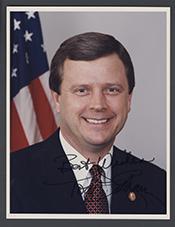
Mr. Speaker, I thank the chairman for yielding me time. Mr. Speaker, I rise in support of this conference agreement and urge my colleagues to do the same. I want to commend the gentleman from…
Mr. Speaker, I thank the chairman for yielding me time.
Mr. Speaker, I rise in support of this conference agreement and urge my colleagues to do the same. I want to commend the gentleman from Kentucky (Chairman Rogers) who has done such an outstanding job in putting together this first ever Homeland Security appropriations bill, the gentleman from Minnesota (Mr. Sabo), and all the subcommittee staff for the tremendous work on this bill.
The process of structuring a new appropriations bill to address the operational needs of the 22 agencies and departments under the new Homeland Security Department has not been easy this year. It will not be easy next year either because we have to make changes to accommodate the lessons that we are going to learn.
Having watched and participated in this process, I have come to the conclusion that our approach to funding Homeland Security has been measured and judicious. We have not thrown good money after bad, but have made difficult choices in funding the different functions of this new department.
All along, I felt that the worst mistake we could make in funding this new department would be to get into a bidding war in the Congress over what faction could spend the most money on individual activities and facilities before we have a full picture of needs and capabilities.
There are some in this House who want to put more money in that bureau or that agency. Some of those Members are well-intentioned, while others simply want to create a political issue by forcing Members to make a choice between spending more money on one hand or appearing to be less than responsible on homeland security issues on the other. This political game is played by throwing arbitrary numbers into the public arena and then questioning the commitment to homeland security on the part of some in this body.
The time for games is over. It is time to get serious. At the end of the day, there is much room remaining for an honest debate, but not one of our constituents is served well by gaming the debate.
As we go forward in this new area of homeland security, we will make progress in sorting out priorities. In the process, we will have the benefit of the ideas and knowledge of the State and local officials from our districts around the country. That collective wisdom will serve us well.
Knowing that we have the opportunity to improve this bill over time is a good reason to be measured in the way we appropriate these funds, and again, I want to commend the chairman and ranking member and urge the Members to support this conference report.
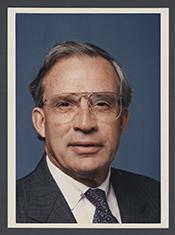
Mr. Speaker, I rise in strong support, and I wish to escalate and join in the very deep appreciation to the gentleman from Florida (Chairman Young) and the gentleman from Kentucky (Chairman Rogers)…
Mr. Speaker, I rise in strong support, and I wish to escalate and join in the very deep appreciation to the gentleman from Florida (Chairman Young) and the gentleman from Kentucky (Chairman Rogers) for the remarkable job they have done on a huge task in a very tough time constraint situation. This is a remarkable piece of legislation in what it accomplishes.
There is an awful lot of attention being paid to first responders in this legislation, and rightly so. That is a good thing. However, we need to make sure it is not done at the expense of good information acquisition, analysis, dissemination in a timely manner to people on the front lines, because this is our best weapon, preventing tragic terrorist attacks and the attendant tragedy that happens to Americans at home and abroad.
Good information, good information will keep our first responders out of harm's way, in fact, and reduce the chances that we will actually need to call into action. I would like to hope that the day will come when our first responders should be treated the same way as the Maytag men and women of our country. We do not have to call them because we have good information to head off trouble before it starts.
Getting good intelligence is a low-cost, high-return investment, and that is a piece that we have not completed yet. We have a foreign intelligence program. It is against the law to use it domestically. Americans do not spy on Americans. We have a new Department of Homeland Security, which this bill does a remarkable job of providing for. We now need a policy and implementing mechanics and funding to how best to deal with domestic intelligence information. That is a task that is now, it is urgent, it is for the future, it has got to be done.
I commit the Permanent Select Committee on Intelligence to work with the gentleman from Kentucky (Mr. Rogers) and others who are interested in this task. If we do not do this, we are going to have a problem.
I certainly agree that the people who are dealing with the prevention and defense part of this are excellent, extraordinary Americans taking huge risks. If we can give them good information, we reduce their risk and allow them to have a higher success rate. That is worth the investment.
I appreciate the time.
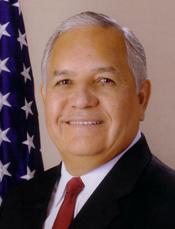
Mr. Speaker, I am pleased to bring my colleagues' attention to one provision in the Homeland Security Appropriations Conference Report on non-intrusive inspection technology. The conference report…
Mr. Speaker, I am pleased to bring my colleagues' attention to one provision in the Homeland Security Appropriations Conference Report on non-intrusive inspection technology.
The conference report directs Customs and Border Protection to accelerate its efforts to complete a field test of pulsed fast neutron analysis (PFNA) technology at the Ysleta border crossing. This field test is an important part of our Nation's efforts to use next- generation technology to better secure our borders while also facilitating the flow of legitimate trade and travel.
The Departments of Defense and Homeland Security have been working to carry out field tests of the PFNA truck inspection system in Ysleta, Texas. PFNA, described in a Fortune Magazine article earlier this year as ``beyond-Superman technology,'' has the potential to enable inspectors to detect the chemical composition of articles deeply buried in a fully-loaded cargo truck. The use of such technology in interdicting explosives, chemical agents and weapons, nuclear devices, dirty bombs, drugs and other threats has the potential to prevent destruction and the loss of life.
Earlier this month, U.S. Government screeners failed to detect, for the second time in two years, a shipment of depleted uranium in a container sent by ABC News from overseas. This is distressing and frightening news. Luckily it was just a test by one of our country's premier news organizations. However, we may not be so lucky in the future. PFNA technology could help us interdict such shipments. However, before such technology can be deployed, it must obviously be tested.
This conference report recognizes the importance of these tests and further understands that they should take place without undue delays so that if PFNA proves successful in the field, it can be deployed at ports of entry and protect America against terrorist threats and other criminal activity. PFNA could be the tool that prevents a catastrophic attack and I thank the conferees, in particular, Chairman Harold Rogers, for prioritizing our efforts to test this and other cutting- edge technologies.

Mr. Speaker, will the gentleman yield? Mr. Speaker, I appreciate the gentleman's elaboration of what this bill does and what it does not do. I would say to the gentleman, I have a concern. As the…
Mr. Speaker, will the gentleman yield?
Mr. Speaker, I appreciate the gentleman's elaboration of what this bill does and what it does not do. I would say to the gentleman, I have a concern. As the gentleman knows, when someone who has been very much involved in the fire grant program, and focused on the fire service, not just as it relates to terrorism, but as it relates to safety in our neighborhoods and the safety of our firefighters and emergency medical response teams, am I correct that unlike the House-passed bill, we have now shifted from the fire administration, the fire grant program, into the Office of Domestic Preparedness?
Mr. Speaker, if the gentleman will yield for another question, is the gentleman confident that having done that, that the fire grant program will not be adversely affected in terms of its focus on firefighting, firefighter safety, and emergency response capabilities?
Mr. Speaker, if the gentleman would further yield, I thank the gentleman for his observation. I have had an opportunity to discuss this briefly with the chairman of the subcommittee, the gentleman from Kentucky (Mr. Rogers); and I would hope that the committee, having accepted the Senate's position, which I do not share, as I share the gentleman's view on this, will ensure that this committee program, not just for our response to terrorist activity, but in response to making sure that our firefighters and emergency medical response teams can be effective, that we can also keep them safe in the normal
day-to-day, but risky, activities in which they undertake. I thank the gentleman.
Mr. Speaker, I thank the gentleman for his observations. And I want to say that, although I would have agreed with the position of the gentleman from Minnesota (Mr. Sabo) that it ought not to be shifted, I believe the gentleman is correct that he has tried to build in protections so that this program is not undermined. I appreciate those actions which I think certainly make this switch a more positive one than it otherwise would have been, and I thank the gentleman.
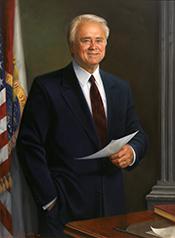
Mr. Speaker, I thank the gentleman from Kentucky (Chairman Rogers) for yielding me this time. I wanted to, number one, congratulate him on doing a tremendous job in presenting this conference report,…
Mr. Speaker, I thank the gentleman from Kentucky (Chairman Rogers) for yielding me this time.
I wanted to, number one, congratulate him on doing a tremendous job in presenting this conference report, along with his partner, the gentleman from Minnesota (Mr. Sabo), the ranking member. I know there are some differences here, but the fact of the matter is this is a good bill. This is the first real homeland security appropriations bill that the Congress has considered.
Once it became evident that our homeland was no longer totally secure from terrorism, the Congress moved quickly to establish the Department of Homeland Security, and the Congress moved quickly to establish a Select Committee on Homeland Security. But when we follow the money, which is where things happen, it was the gentleman from Kentucky (Chairman Rogers) who brought the pieces together, who brought together all of those agencies that had control of homeland security-type responsibilities. He did just a tremendous job in identifying the needs and providing the support. He worked this bill through. It was one of the first bills that passed in the House. It is one of the first bills; in fact, it is the second bill that comes before us as a conference report. He has done a really good job. While there will be some, as the gentleman from Minnesota (Mr. Sabo) pointed out, differences here, the fact of the matter is that this subcommittee can be very proud of the job that it has done.
I was able to appoint the gentleman from Kentucky (Chairman Rogers) as chairman of this subcommittee, and I am proud of that decision. He has made the House look good. And I know that the gentleman from Wisconsin (Mr. Obey) is very proud of his appointment of the gentleman from Minnesota (Mr. Sabo) as the ranking member because he has also made the House look good. They have done a good job, and I hope that we can expeditiously pass this conference report, get it to the Senate, and get it on the President's desk.
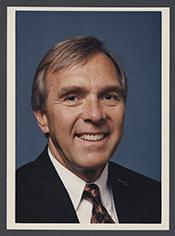
Mr. Speaker, I rise to support the funding prices for first responders put forward by both the House and the Senate in the Homeland Security Appropriations Act for Fiscal Year 2004. I feel especially…
Mr. Speaker, I rise to support the funding prices for first responders put forward by both the House and the Senate in the Homeland Security Appropriations Act for Fiscal Year 2004.
I feel especially gratified knowing that both chambers and the Administration have prioritized for this critical need by allocating resources in H.R. 2555 to solve the communication problems facing our first responders.
Already, our region has prepared the ``Puget Sound Interoperable Communications Program'' that will test and deploy new and emerging interoperability technolgies in and around the Ports of Seattle and Tacoma. This innovative program will significantly enhance the Puget Sound region's local, State and Federal first responder communication capabilities.
This particular geographic region was chosen because of its high- density population, presence of critical infrastructure, high threat areas, disparate communication systems and diverse user base. The project will be implemented throughout portions of the City of Seattle, City of Tacoma, City of Tukwila, Port of Seattle and the Port of Tacoma. This implementation will also integrate with other responder initiatives in the State.
This project will create a shared infrastructure architecture utilizing the latest advances in technology that ties public and private networks and multiple communication devices together in a secure interoperable environment.
This implementation will demonstrate that a cost effective, secure interoperability solution can be achieved by using existing equipment and off-the-shelf mobile devices. Over time, this project will be incrementally expanded and become part of the Statewide Public Safety Interoperability Program.
My colleagues and I look forward to working with the Administration and the Department of Homeland Security to help make this important program a success.
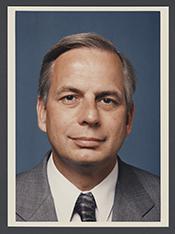
Mr. Speaker, I rise both in support of the conference committee report and thank both the chairman and the ranking member for putting this together. Obviously, we need more money. I want to raise an…
Mr. Speaker, I rise both in support of the conference committee report and thank both the chairman and the ranking member for putting this together.
Obviously, we need more money. I want to raise an issue that some of my colleagues in the Harris County delegation will talk about, including the functioning of the Customs and Border Protection at Bush Intercontinental Airport in Houston.
We have problems with our wait times for our passengers up to 2 hours. It is causing many international passengers to miss their connection. The Houston Chronicle has reported twice on the growing anger of people waiting in line to clear Customs and Border Protection. Missed flights are a major problem because of the wait time. For example, one airline had over 1,000 people miss connections in one day this summer.
We need additional inspectors at Intercontinental Airport, a commitment to maintaining 100 percent the utilization of the number of authorized positions, including overtime for the inspectors who are there to cover the problem.
We have looked at the numbers in other parts of the country at international ports of entry, and we know we are lower than other areas. So we need to make sure that Customs and Border Protection makes that adjustment.
The Members from the Houston area, the nine Members will meet tomorrow again with Customs and Border Protection, and hopefully they will understand that we need to have parity and not the wait time that we are seeing for our the international passengers coming into the Houston Intercontinental Airport.
Show 3 more
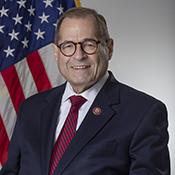
Mr. Speaker, I agree that this is, generally, a good bill. The distinguished chairman talked about containers being searched in Newark and Los Angeles. He said the Container Security Initiative will…
Mr. Speaker, I agree that this is, generally, a good bill. The distinguished chairman talked about containers being searched in Newark and Los Angeles. He said the Container Security Initiative will target high-threat cargo before it reaches U.S. shores.
Mr. Speaker, it only takes one weapon of mass destruction, in one container, to destroy an American city.
Mr. Speaker, this country will not be safe until every container is searched and sealed and certified by an American inspection team before it is put on a ship in a foreign port. This country will not be safe until no container can be put on that ship before it is searched and sealed by the American team in the foreign port, every container, not just the high-threat ones.
The terrorists know we will inspect the high-threat containers; so they will put the bomb in the low-threat container. We cannot depend on the good guys, that we know who the good guys are who are, long-time shippers to us. How do we know that some terrorist is not an employee of a good-guy shipper? We must spend the 6 or 7 or $8 billion a year that it will take to put an American inspection team to search every container before it is sent to our shore and the additional money to electronically go around every ship 100 miles off our shore before it is allowed into American territory or waters to make sure that there is no plutonium or enriched uranium onboard that ship. We can do that scientifically.
But until then we will not be safe. We are just nibbling at the edges with everything we are doing.
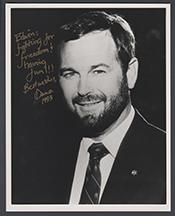
Mr. Speaker, I rise in strong support of this well- crafted, bipartisan legislation, and congratulate the gentleman from Kentucky (Chairman Rogers) and the gentleman from Minnesota (Ranking Member…
Mr. Speaker, I rise in strong support of this well- crafted, bipartisan legislation, and congratulate the gentleman from Kentucky (Chairman Rogers) and the gentleman from Minnesota (Ranking Member Sabo) for a job well done.
During this debate it should be evident to everyone that the cost of securing our country is going to be astronomical. Later today I will propose an amendment to H.R. 2557, the Water Resources Development Act, which will help us raise some money for our own security needs from outside, from foreign sources. My amendment will permit us to establish a container fee on containers coming into our ports, which, of course, those fees will be paid by the overseas manufacturers, that will then be part of a fund that we can use for our own security, for some of the costs that this legislation is appropriating money for.
We need to make sure that the American people are not the only ones who bear the burden of having secure ports in our country when overseas manufacturers use them as well.
So I rise in strong support of this legislation and would ask my colleagues to consider my amendment in the upcoming legislation.
Mr. Speaker, I rise to make two points: one, to be in strong support of this conference report. Homeland security in this country is a massive challenge. This is a huge Nation, with so many risks.…
Mr. Speaker, I rise to make two points: one, to be in strong support of this conference report.
Homeland security in this country is a massive challenge. This is a huge Nation, with so many risks. Yet we have put billions of dollars, unprecedented dollars, toward those risks. There is no question we are safer, we are, or more prepared, more focused on homeland security than ever before, and I support the chairman's efforts, which have just been dedicated to making our country safer. This bill moves that forward.
My second point is in support of that raised by my colleague from Houston (Mr. Green). We are having a serious problem of understaffing of the port of entry at the Bush Intercontinental Airport. It is not simply inconvenient. It is an intolerable line through Customs. It is a disruption of trade. We are losing jobs and business in the region as a result. This bill helps provide the resources.
I thank the chairman for the help to address those problems. We are meeting with the agency again tomorrow to focus their attention on this important need. We are hopeful they will listen carefully.
Bill Text
Latest available legislative text
        [Congressional Bills 108th Congress]
[From the U.S. Government Publishing Office]
[H.R. 2512 Introduced in House (IH)]

108th CONGRESS
1st Session
H. R. 2512

To establish a realistic, threat-based allocation of grant funds for
first responders.

_______________________________________________________________________

IN THE HOUSE OF REPRESENTATIVES

June 18, 2003

Mr. Sweeney introduced the following bill; which was referred to the
Committee on the Judiciary

_______________________________________________________________________

A BILL

To establish a realistic, threat-based allocation of grant funds for
first responders.

Be it enacted by the Senate and House of Representatives of the
United States of America in Congress assembled,

SECTION 1. SHORT TITLE.

This Act may be cited as the ``First Responders Funding Reform Act
of 2003''.

SEC. 2. ALLOCATION OF GRANT FUNDS.

Section 1014 of the USA PATRIOT Act (42 U.S.C. 3714) is amended--
(1) in subsection (c)(3), by striking ``0.75 percent'' and
inserting ``0.5 percent'';
(2) by redesignating subsection (c) as subsection (d); and
(3) by adding after subsection (b) the following new
subsection:
``(c) Basis for Grant Awards.--(1) Grants under this section shall
be awarded based on a quantitative assessment of risk for three
categories: threat, vulnerability, and consequences.
``(2) Not later than March 1 of each year, the Office shall submit
to Congress the quantitative assessment required by paragraph (1).''.
<all>