Compact Impact Reconciliation Act
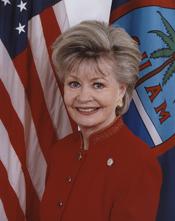
Legislative Activity
Stay on top of the latest movement without scrolling through every action
View full timeline
Introduced in House
June 19, 2003
Referred to the House Committee on Resources.
June 19, 2003
Sponsor introductory remarks on measure. (CR E1320-1321)
June 20, 2003
Floor Debate
11 membersWhat members said about H.R. 2522 on the floor
MZB EFH
EFH JAL
JAL RWP
RWP FJS+6
FJS+6
Floor Debate
11 membersWhat members said about H.R. 2522 on the floor
Madam Speaker, 56 years ago the United States assumed an international obligation to protect and promote the development of two island groups that straddle much of the vast Pacific Ocean: The…
Madam Speaker, 56 years ago the United States assumed an international obligation to protect and promote the development of two island groups that straddle much of the vast Pacific Ocean: The Federated States of Micronesia and the Republic of the Marshall Islands.
As strategic battle grounds in World War II, these islands were liberated from enemy occupation by U.S. forces. In the aftermath of that pivotal period in world history, they emerged from a League of Nations mandate administered by Japan to become a United Nations' Trust Territory with the United States as trustee. Over the next 40 years their socio-economic status improved and their developing economies would begin to take root.
Then, in 1986, Congress passed, and President Reagan signed, a Compact of Free Association with them. The compact allowed for a new relationship to be cultivated, and it afforded the FSM and the RMI the ability to become sovereign nation states in their own right. In the years since, they have been welcome to the international table in their own name and their alliance with the United States today could not be stronger.
While other nations who receive foreign aid consistently oppose us in the United Nations, the FSM and the RMI have been among our most steadfast of allies. Seventeen years after the original agreement, we are here today, Madam Speaker, to renew the compact. It is in the spirit of friendship that we renew an agreement that seeks to honor and build upon the benefits our respective countries have derived from the original compact.
So I rise today to support H.J. Res. 63 for four principal reasons: first, because it advances U.S. defense interests by providing a 50- year lease extension for U.S. access to Kwajalein Atoll in the RMI, home of the Ronald Reagan Missile Testing Facility and grants the U.S. the right of strategic denial.
Second, because it reaffirms the right of FSM and RMI citizens to migrate freely to the United States for work, education, and residence and improves the means by which the Federal Government addresses the impact of migration in affected U.S. jurisdictions, including Guam, the Commonwealth of the Northern Mariana Islands, and the State of Hawaii.
Third, because it continues for the next 20 years critical financial assistance to facilitate capacity-building and self-sufficiency in the FSM and the RMI while ensuring greater accountability oversight and effectiveness, as well as it be continuous Pell grant eligibility.
Finally, and most importantly, because it fulfills our moral obligation to the people of Micronesia and the Marshalls.
Guam is the closest American neighbor to the FSM and RMI, and we have seen the progress that they have made under the original compact. Guam has welcomed and embraced those FSM and RMI citizens who have availed themselves of their compact-provided right to migrate freely to the United States for the pursuit out of educational and other opportunities. This migration has come at a financial cost to the Government of Guam. As in many cases, migrating FSM and RMI citizens do not directly contribute to the local revenue base that sustains the education, the health, housing and other social services which they have sought.
Guam has been impacted significantly more than any other jurisdictions by this federally negotiated and internationally implemented agreement. As impact costs have increased, Guam has sought greater and improved assistance from the Federal Government. And that is why I am pleased that H.J. Res. 63 includes provisions based upon legislation that I introduced, namely H.R. 2522, and H.R. 2716 to address compact impact needs.
Madam Speaker, I want to go on record this afternoon to commend the gentleman from Illinois (Mr. Hyde), the gentleman from Iowa (Mr. Leach), the gentleman from California (Mr. Lantos), and my friend, the gentleman from American Samoa (Mr. Faleomavaega), for shepherding this legislation through this challenging process. I also want to express my gratitude to our chairman of the Committee on Resources, the gentleman from California (Mr. Pombo), and the ranking member, the gentleman from West Virginia (Mr. Rahall), for their bipartisan leadership in addressing those matters important to myself and other members of the Committee on Resources. I also want to thank all of the staff in all the different offices who worked so hard so that we could realize this day today.
Madam Speaker, I urge my colleagues to vote for H.J. Res. 63, vote ``yes'' for our national defense, vote ``yes'' to fulfill our moral obligations to the people of the Pacific, vote ``yes'' to help develop their economies, and vote ``yes'' to advance our relationship in this new century.
Guam is the closest American neighbor to the FSM and the RMI, and we have seen the progress that they have made under the original Compact. Guam has welcomed and embraced those FSM and RMI citizens who have availed themselves of their Compact-provided right to migrate freely to the United States for the pursuit of educational and other opportunities. This migration has come at a financial cost to the Government of Guam, as in many cases, migrating FSM and RMI citizens do not directly contribute to the local revenue base that sustains the educational, health, and other social services on Guam. Guam has been impacted more significantly than any other jurisdiction by this Federally-negotiated and internationally-implemented agreement. As impact costs have increased, Guam has sought greater and improved assistance from the Federal Government. Congress has responded with some assistance, termed Compact-impact aid, and appropriated such aid from time to time over the past seventeen years in varying amounts, but never at levels to cover the costs actually realized or with the consistency to adequately help shoulder the adverse financial consequences. This is why I strongly advocated for amending the Compact law (Public Law 99-239) during this reauthorization process to ensure the immigration policy goes hand-in-hand with an adequate reimbursement policy for Compact-impact costs.
Among the first pieces of legislation I introduced as a new Member of Congress was H.R. 2522, a bill that would authorize the reduction, release, or waiving of amounts owed by the Government of Guam to the United States to offset past unreimbursed Compact-impact expenses, and H.R. 2716, a bill that proposes new methods and more reliable means to provide for adequate Compact-impact aid in the future. H.R. 2522 was heard in the Resources Committee in July, and the Governor of Guam, Felix Camacho, and the Speaker of the Guam Legislature, Ben Pangelinan, traveled to Washington, D.C. to testify about the Compact-impact costs in Guam.
In enacting the original Compact law in 1986, Congress stated that these adverse consequences would be reimbursed by Compact-impact aid. The General Accounting Office and a previous report by Ernst and Young indicate that the unreimbursed costs accrued to date in Guam are approximately $187 million. I am pleased that H.R. 2522, in a modified form, has been agreed to by the Resources Committee and has been incorporated into H.J. Res. 63. Section 104(e)(1) of this legislation would provide for a process by which the President could use debt relief as a means to reconcile past unreimbursed impact expenses for Guam and the Commonwealth of the Northern Mariana Islands.
I believe that such authority could be exercised by the President in the public interest. One of the examples of debts owed by Guam which was brought to my attention is the amounts owed by the Guam Telephone Authority (GTA) for infrastructure improvements to Guam's telephone system in the 1970s and 1980s. GTA currently owes $105 million to the Rural Utilities Service. This debt has been an impediment to recent efforts by Guam to privatize the telephone authority, which now has the distinction of being the last government-owned telephone utility in the nation. The existing debt has caused potential buyers to avoid GTA due to its debt service ratio of 0.70 to 1, a ratio well below the 1 to 1 ratio preferred by investors. Furthermore, the annual debt service costs for GTA's loans make it difficult to attract buyers.
The reforms passed by Congress in the 1996 Telecommunications Reform Act eroded GTA's ability to compete in the marketplace. Telephone deregulation opened up the industry to competition, and in Guam, GTA was constrained by local and federal laws from competing while losing its own advantages as a local monopoly.
Debt relief for GTA to offset unreimbursed impact expenses would make it possible to privatize the utility and to end further Federal subsidies. The Federal investment in infrastructure has already paid off in debt service payments by Guam and in minimal Federal reconstruction costs for GTA after typhoons in the past two decades. Moreover, without the debt relief that Guam seeks, it may be more difficult to privatize the utility because the net return from the sale of GTA may not be substantial enough to make it an attractive option. Due to the economic recession in Guam, some opponents of privatization have already likened this effort to unloading GTA at fire sale prices and have argued that the Guam taxpayers have invested too much in this utility to
let it go for too little, irrespective of the actual market value of this depreciated telephone utility.
The authority for debt relief contained within H.J. Res. 63 may be prudently exercised by the President to set appropriate conditions for the relief in order to make the previous Federal investment and the Federal relief sought worthwhile. In this regard, the relief for GTA's debts could be made contingent on the Government of Guam's commitment to privatize the utility and use the proceeds from the sale of GTA for other capital improvement needs on Guam such as schools, water and power infrastructure, and health facilities. The debt relief contemplated by this provision is not intended to exacerbate the economic situation of Guam rather it is intended to promote good public policy and stimulate the economy.
Guam has suffered from a series of typhoons dating back to 1997. Any amounts owed by the Government of Guam to the Federal Government for Federal Emergency Management Agency (FEMA) assistance can be considered an offset for unreimbursed Compact-impact costs. In addition, the Government of Guam continues to request a reconciliation of FEMA assistance for Supertyphoon Paka, which struck Guam in December 1997, and for which the Government of Guam believes a significant amount of money is owed to cover debris collection, removal and disposal work in the aftermath of the storm.
Examples of other debts that could be retired or reduced to offset unreimbursed impact expenses for Guam are the $9 million owed by the Guam Waterworks Authority to the Department of the Navy for water consumption and $3 million owed by the Guam Community College to the Department of Education for construction of a student housing facility.
Beyond this reconciliation provision, I am also pleased that the Resources Committee agreed to provisions contained within H.R. 2716, and incorporated them into H.J. Res. 63, so that for the next twenty years we avoid the great disparity between impact costs and realized reimbursement. Providing for $30 million in annual mandatory Compact- impact aid for the affected jurisdictions is a significant improvement over the current mechanism for Compact-impact reimbursement. Although I continue to question the Federal obligation to the affected jurisdictions, I am pleased that H.J. Res. 63 includes authorizing language that would allow for additional Compact-impact aid, above and beyond the $30 million, in future years to address reimbursement needs. Further, to help Congress accurately assess actual Compact-impact costs, I am pleased the Resources Committee restored a reporting requirement. I am equally pleased the Resources Committee retained referral authority for medical facilities of the Department of Defense. Together, these provisions should set us on the right course for the next twenty years.
My colleagues, Mr. Abercrombie, Mr. Case, Mr. Gallegly, Mr. Rehberg, Mr. Acevedo-Vila, Mr. Grijalva, and Mr. Pallone, along with Mr. Faleomavaega, were also there for Guam throughout this process and helped me to ensure the Guam Compact-impact reconciliation provision was included. I thank them as well for their support.
Madam Speaker, I yield myself such time as I may consume. (Mr. FALEOMAVAEGA asked and was given permission to revise and extend his remarks.) Madam Speaker, I would like to extend my gratitude to the…
Madam Speaker, I yield myself such time as I may consume.
(Mr. FALEOMAVAEGA asked and was given permission to revise and extend his remarks.)
Madam Speaker, I would like to extend my gratitude to the chairman of the Committee on International Relations, the gentleman from Illinois (Mr. Hyde), and the senior ranking member of the Committee on International Relations, the gentleman from California (Mr. Lantos), my good friend, the chairman of the Committee on Resources, the gentleman from California (Mr. Pombo), and our senior ranking member of the Committee on Resources, the gentleman from West Virginia (Mr. Rahall), and the chairman of Committee on International Relations Subcommittee on Asia and the Pacific, the gentleman from Iowa (Mr. Leach), my good friend, for working so diligently these past several months to address some of the very important concerns raised by the leaders of the Republic of the Marshall Islands and the Federated States of Micronesia as it relates to the proposed Compact of Free Association or H.J. Res. 63.
Madam Speaker, the Compacts of Free Association commenced in 1986 between the Federated States of Micronesia and the Republic of the Marshall Islands and the United States. In brief, the United States agrees to provide Federal funding to the FSM and the RMI and, in turn, both agree to provide the United States with certain defense rights, now including use of 11 defense sites on Kwajalein Atoll, where the U.S. Department of Defense has established a multibillion dollar antiballistic missile testing facility.
In October 2001, portions of the Compact expired and representatives from the FSM, the RMI, and the Department of the Interior began negotiating an extension of these provisions, including also the Department of State. Earlier this year, the Department of the Interior sent Congress a negotiated product to be considered as a reauthorization of the Compact of Free Association. However, key provisions, including the funding of the Pell Grants and FEMA assistance, were excluded from the agreement. And over the last several months, my colleagues and I have been working closely with representatives from both the FSM and RMI to address these concerns.
Madam Speaker, the good people of the Federated States of Micronesia and the Republic of the Marshall Islands are in need of, and indeed deserve, U.S. support in assistance in building local capacity. As my colleagues know, education is invaluable to building self-sufficiency and local capacity, and, ultimately, will contribute to bolstering the economy of these developing nations. This is why I am pleased that the bill before us today now provides the Freely Associated States with Pell Grant assistance, hopefully, and also to recognize the importance of FEMA assistance to these islands.
The truth is, Madam Speaker, the Freely Associated States have made many sacrifices and contributions on behalf of the United States. In fact, the U.S. used the Marshall Islands as a nuclear testing ground and detonated more than 67 nuclear bombs, including the first hydrogen bomb which was one thousand times more powerful than the bombs dropped in Hiroshima and Nagasaki during World War II. The results were, and continue to be, devastating to the residents of the Marshall Islands.
As a Pacific Islander, I am pleased that H.J. Res. 63 acknowledges the contributions and sacrifices made by the Federated Associated States and also addresses the needs and concerns of the people of Federated States of Micronesia and the Republic of the Marshall Islands. I am also pleased that my colleagues have worked closely with me to make sure that American Samoa's tuna industry was protected in the process of these negotiations.
The outcome of H.J. Res. 63 will determine our relationship with the FSM and RMI for the next 20 years and will also affect American Samoa's tuna industry for generations to come.
With the approval of these Compacts, the United States will further solidify our relationship with these Western Pacific nations, both of which are close allies, and make an ongoing contribution to America's national defense.
To understand the importance of renewing the Compacts we must remember our Nation's history in the region. During World War II, American soldiers liberated the Pacific island by island in brutal and bloody battles. After the war, the United States administered Micronesia, and we have maintained a vitally important military installation on Kwajalein Atoll.
In the 1940s and 1950s, the United States conducted both underwater and atmospheric nuclear tests in the Marshalls. And as I indicated earlier, some 67 nuclear detonations were held during that period. I remember distinctly, in 1954, when we detonated the first hydrogen bomb, I indicated earlier that that nuclear detonation was a thousand times more powerful than the nuclear bombs that we dropped in Hiroshima and Nagasaki.
One of the serious issues that we still have not properly addressed, and, hopefully, in the coming months, that we will address seriously, the needs of some several hundred Marshallese men, women, and children who were directly exposed to nuclear contamination at the time of detonation of this hydrogen bomb in the 1950s.
Madam Speaker, since the independence of the Marshalls and Micronesia in 1986, the ties between our nations have grown even stronger. When Congress approved the Compact of Free Association in 1986, we received a good bargain. Funds would flow to the island nations in return for a ``strategic denial'' and a ``defense veto.'' The Kwajalein Army Base is vitally important to America's missile tests and as a listening post to the world.
Hundreds of Marshallese and Micronesians are currently defending American interests even in Iraq. I believe approximately 1,000 of our fellow Micronesians are in the military. Several have sacrificed their lives in the war in Iraq, even at this point in time as I speak. Just the other day Mr. Hilario Bermanis, a Micronesian, became an American citizen after losing a left arm and both legs while serving in the Army in Iraq.
While we undoubtedly furthered our national security interests with approval of the Compact, the United States insufficiently monitored expenditure of funds and did little to promote economic development in the islands.
The Compacts before the House today ensure that funds will be better spent in the future, will promote sound economic development and will focus on education and health care. They also establish trust funds for both nations to ensure that they can become self-sufficient in 20 years.
Madam Speaker, H.J. Res. 63 promotes our Nation's national security interests and furthers our relationship with the Marshalls and Micronesia. This is a bipartisan effort. And, again, I extend my gratitude and appreciation to the gentleman from Iowa (Mr. Leach), my good friend, for his tremendous support and leadership in bringing this piece of legislation to the floor.
Madam Speaker, I yield such time she might consume to the gentlewoman from Guam (Ms. Bordallo), my good friend.
(Ms. BORDALLO asked and was given permission to revise and extend her remarks.)
Madam Speaker, I yield myself such time as I may consume.
Madam Speaker, as I do not have any further speakers, I would like to express a few sentiments. It is very easy for those of us managing pieces of legislation and somewhat proclaiming our own sense of expertise by commenting or making speeches. As my good friend, the gentleman from Iowa (Mr. Leach), had given an indication earlier, there has been tremendous support from members of the professional staff of the two committees who have done an outstanding job in helping putting this piece of legislation together. Again, I would be remiss if I do not express my sense of appreciation to Mr. Doug Anderson and also Mr. Jamie McCormick on the majority side on the Committee on International Relations, as well as Mr. Peter Yeo and Dr. Lisa Williams, and also Dr. Bob King. Also on the Committee on Resources we have Mr. Tony Babauta and Mr. Chris Fluhr of the Committee on Resources, and also Mr. Chris Foster from the gentleman from California's (Mr. Pombo) office, and the outstanding contributions they have made as professional members of both committees in putting this legislation and certainly giving us positive advice now that we find ourselves agreeing to some of the important elements of this bill that is now before us.
We sincerely hope that our colleagues will lend their support to this important legislation.
Madam Speaker, I yield back the balance of my time.
Madam Speaker, will the gentleman yield?
Madam Speaker, I also want to note to the benefit of our colleagues that just this last weekend our President visited the State of Hawaii and he had an opportunity to meet with the leaders of these island nations at the East-West Center and the concerns expressed collectively by these leaders regarding homeland security. The security issues now of terrorism and issues of this nature are vitally important to this region of the world; and, again, this is all in concert with the efforts that we are making to make sure that we continue to establish good relations with our friends from Micronesia. I again thank my good friend, the gentleman from Iowa (Mr. Leach), for his tremendous support and leadership in bringing this legislation to the floor, again, sincerely hoping our colleagues will support this legislation.
Madam Speaker, I move to suspend the rules and pass the joint resolution (H.J. Res. 63) to approve the ``Compact of Free Association, as amended between the Government of the United States of America…
Madam Speaker, I move to suspend the rules and pass the joint resolution (H.J. Res. 63) to approve the ``Compact of Free Association, as amended between the Government of the United States of America and the Government of the Federated States of Micronesia'', and the ``Compact of Free Association, as amended between the Government of the United States of America and the Government of the Republic of the Marshall Islands'', and otherwise to amend Public Law 99-239, and to appropriate for the purposes of amended Public Law 99-239 for fiscal years ending on or before September 30, 2023, and for other purposes, as amended.
Madam Speaker, I ask unanimous consent that all Members may have 5 legislative days within which to revise and extend their remarks and include extraneous material on this joint resolution.
Madam Speaker, I yield myself such time as I may consume.
I rise today to present to the House joint resolution 63, legislation that reauthorizes the Compacts of Free Association with the Federated States of Micronesia and the Republic of the Marshall Islands.
Because of the unique relationship between the United States and the Freely Associated States, the legislation before us today involves an extraordinary array of Federal programs, agencies, and policies.
As a consequence, this joint resolution is the product of intensive bipartisan consultations between a panoply of different committees of jurisdictions, all of which have contributed to making this a compelling legislative product.
In this regard, I would like to thank, in particular, the leadership of the chairman of the Committee on International Relations, the gentleman from Illinois (Mr. Hyde) and our ranking member, the gentleman from California (Mr. Lantos), as well as the distinguished ranking member of the Committee on International Relations Subcommittee on Asia and the Pacific, the gentleman from American Samoa (Mr. Faleomavaega) whose expertise in island affairs has been invaluable to this Member and to our entire committee.
Let me also acknowledge the exceptional leadership of the Committee on Resources, specifically the chairman, the gentleman from California (Mr. Pombo) and the ranking member, the gentleman from West Virginia (Mr. Rahall) and their staff for working so closely with us to ensure that the amended compacts would not only be considered on an expeditious basis, but enjoy the support of Members as well as the administration and the Freely Associated States.
We also are appreciative of the prompt consideration of this bill by the Committee on the Judiciary, as well as the input of the Committee on Ways and Means.
In addition, we are most appreciative of the cooperation of the Committee on Education and the Workforce, as well as the Committee on Appropriations working closely with us on education funding issues of keen interest and concern to many Members as well as the people of the FSM and RMI.
Madam Speaker, here I note that under general leave, the gentleman from Illinois (Mr. Hyde) intends to insert into the record a letter to the Committee on International Relations from the Subcommittee on Appropriations for Labor, Health, and Human Services regarding funding for certain supplemental education programs as well as an exchange of letters confirming certain understandings on this joint resolution with the Committee on Ways and Means.
Madam Chairman, as my colleagues may be aware, the economic assistance provisions of the current Compact with Micronesia and the Marshall Islands expired in 2001, but were extended for 2 years while the United States renegotiated the expiring provisions with these island countries, also known as the Freely Associated States.
H.J. Res. 63, which is before us, is the authorizing and implementing legislation for the Amended Compacts of Free Association. Unless this resolution becomes law, critical portions of the original Compact of Free Association will expire with serious consequences for those nations and for United States' interests in the Pacific.
By background, the United States has shared a uniquely close and mutually beneficial relationship with the people of the Marshall Islands, as well as Micronesia, for the past half-century. For nearly 40 years after the Second World War, the United States administered both islands as United Nations Trust Territories. In 1986, Micronesia and the Marshall Islands chose to become sovereign states and entered into a Compact of Free Association with the United States. The Compact was intended to ensure self-government for the new island nations, to assist them in their economic development towards self-sufficiency, and to advance mutual security objectives.
It is my strong view that the interests of the people of the U.S. and these specific islands have been well-served by the Compact. Our former Trust Territories have emerged as sovereign democracies; America's strategic interest in the Western Pacific has been protected; and the bonds of friendship forged during World War II have only strengthened with the passage of time. Indeed, a significant number of Compact citizens have served honorably in the United States Armed Forces, including in the war on Iraq.
Among other things H.J. Res. 63: one, secures expiring U.S. defense interests and extends U.S. access to the geographically unique Kwajalein Atoll Range, the key U.S. missile and missile defense testing site for up to an additional 70 years; two, it continues U.S. assistance to the FSM and RMI for 20 years, but fundamentally restructures the way it is provided to increase fiscal accountability and move it towards budgetary self-sufficiency; three, it prepares for the end of U.S. grant assistance in 2023 by capitalizing a U.S.- controlled trust fund for each nation; and, four, it modifies the unique U.S. immigration status enjoyed by FSM and RMI citizens, to address concerns primarily related to the United States homeland security.
With respect to FEMA, the bill before us provides Compact countries continued access to FEMA programs through 2013, including essential public infrastructure rehabilitation programs. The Office of Foreign Disaster Assistance, which is part of U.S. Agency for International Development, is also authorized to provide emergency assistance to the
Madam Speaker, I yield myself such time as I may consume.
First, I want to concur in the sentiments of my good friend, the gentleman from American Samoa (Mr. Faleomavaega) with regard to the professionalism of the staff on Capitol Hill.
Prior to yielding back my time, I would like to specifically recognize the exceptional contribution of the chairman of the Committee on Resources, the gentleman from California (Mr. Pombo). The cooperation of his committee was crucial to our putting together this resolution.
Madam Speaker, finally, consideration of this resolution is historically significant for the Pacific region. It provides a moment for the people of the United States and the Freely Associated States to celebrate our warm friendship and look to an enhanced and mutually respectful relationship.
I yield to the gentleman from American Samoa.
Reclaiming my time, Madam Speaker, let me stress again the importance of this resolution. It has strong bipartisan support, I urge our colleagues to give this their unanimous support. This renewed compact is critical to the region.
Madam Speaker, I have no further requests for time, and I yield back the balance of my time.
Madam Speaker, I rise in support of H.J. Res. 63, the ``Compact of Free Association Amendments Act of 2003.'' The House Resources Committee has a unique understanding of the issues that affect the…
Madam Speaker, I rise in support of H.J. Res. 63, the ``Compact of Free Association Amendments Act of 2003.'' The House Resources Committee has a unique understanding of the issues that affect the insular areas, and this legislation received strong support within our Committee.
For over 50 years, the United States has enjoyed a very unique relationship with citizens of Micronesia and the Marshall Islands. In 1984, President Ronald Reagan proposed a new status for the trust territories of the Pacific through negotiated Compacts of Free Association. After having status as a United Nations Trust Territory for many years, in 1986, these islands chose to become sovereign states.
Starting in 1986, when Congress passed ``The Compact Act,'' we made the agreement to strive to continue to maintain both economic and political stability in this region, including working to advance economic self-reliance in these islands.
With the passage of time and implementation of the original Compact, it is very encouraging to see the results achieved that were aided by this legislation. We can now consider the connection we have with the Federated States of Micronesia (FSM) and the Republic of the Marshall Islands (RMI) to be one of the United States' closest bilateral relationships.
The administration submitted to Congress a large agreement that reflected many hours of hard work from individuals primarily within the U.S. State Department and the U.S. Department of the Interior. These individuals deserve recognition for the time which they dedicated to the people and governments of the Freely Associated States. Multiple Committees have an interest in this legislation, as the Compacts cover everything from immigration to health care and continuing education programs. It is encouraging to see how closely so many Members were able to work closely over the last few months to ensure bipartisan support and passage of this legislation.
I wanted to thank the Members of the House Resources Committee for their thoughtful input throughout the process of amending this legislation. The openness with which our Committee was able to work with the Chairmen and Ranking Members of the House International Relations Committee, the House Education and Workforce Committee, and the House Judiciary Committee was also essential to bringing H.J. Res. 63 to the floor today.
Through the work of multiple Members, the House has been able to make numerous changes that should create more beneficial results for not only those living in the FSM and
RMI, but also for those citizens from the Freely Associated States living in areas like American Samoa, the Commonwealth of the Northern Mariana Islands, Guam, and Hawaii.
We were able to craft legislation that incorporates components such as the strong accountability reforms agreed upon by the Administration, the FSM, and the RMI, while pushing to empower these citizens to maintain strong health care advances, education programs and general infrastructure. Chairman Boehner was particularly helpful in working with multiple Committees to ensure we worked to address the issue of funding education programs in the FSM and the RMI to a necessary level, and it is important to note that Congress will now ensure that this funding can be provided within the Compact for the next 20 years.
Further, through the direct input of Members from those areas affected by the migration of FAS citizens, we doubled the level of what is commonly referred to as ``Compact Impact'' funding. This will greatly assist areas in their ability to allow FAS citizens to continue to migrate to their islands while also fortifying the spending by their own respective governments on students and others that utilize the social resources of these areas.
Finally, the hard work over numerous years put into what is now H.J. Res. 63 should not be ignored and this legislation needs to move forward as quickly as possible. The timing is critical for these islands, and important to maintaining a relationship that has brought us the strong U.S. defense and strategic interests that exist in this area of the Pacific Ocean.
The ability for Congress to act thoughtfully and expeditiously is shown in the interest of multiple Members working to ensure we got this legislation to the Floor for a vote today. I appreciate again the leadership of Mr. Hyde and Mr. Leach, as well as Mr. Lantos from the International Relations Committee. My colleague from West Virginia, Mr. Rahall, was also very engaged throughout the process of moving this legislation, which helped to allow the Resources Committee to move forward with a unified voice concerning this legislation.
I thus strongly support the passage of H.J. Res. 63 and encourage the bipartisan support of this measure by my colleagues.
Madam Speaker, H.J. Res. 63 amends the Compacts of Free Association between the United States and the Federated States of Micronesia and the Marshall Islands. The Compacts, agreed to in the 1980s,…
Madam Speaker, H.J. Res. 63 amends the Compacts of Free Association between the United States and the Federated States of Micronesia and the Marshall Islands. The Compacts, agreed to in the 1980s, provide that the United States will support the new island nations economically and that we can establish, by agreement, military bases in their territories and foreclose access to the nations by military personnel of third countries. As to the Marshall Islands, a major subsidiary agreement allows the United States continued use of the Kwajalein missile test range. Deputy Assistant Secretary of Defense for Asian and Pacific Affairs Peter Brookes testified last year that ``it is in our best interest to maintain the full range of military access, use, and security cooperation options and rights that the Compact[s] provide[ ].''
The Compacts grant citizens of the Federated States of Micronesia and the Marshall Islands the right to enter the U.S. without passports or visas, as nonimmigrants and lawfully engage in occupations. In recent years, the U.S. government has expressed a number of concerns regarding these immigration provisions.
First, the ability of aliens claiming to be citizens of the two nations without having to have passports is an open invitation for abuse by terrorists. In addition, the government of the Marshall Islands has in the past been found to have sold passports.
Second, some Americans have taken advantage of the ability of islanders to enter the U.S. to bring in adopted children without having to meet the requirements of the Immigration and Nationality Act regarding foreign adoptions that are designed to safeguard the interests of the adopted children and their biological parents.
Finally, labor recruiters who arrange jobs in the United States for islanders have been abusing these unsophisticated workers, such as by not revealing the real nature of the jobs to be performed and charging prohibitive liquidated damages should the workers leave employment prematurely.
The State Department utilized the looming expiration of the economic assistance provisions of the Compacts to persuade the nations to agree to needed modifications to the Compacts addressing these immigration concerns and other matters. These changes are contained in H.J. Res. 63.
In order to address our security concerns, a number of changes have been made including barring entry to the U.S. under the Compacts of persons who were sold passports, limiting those naturalized citizens who can enter the U.S. pursuant to the Compacts, and requiring passports for entry to the U.S.
As to adoptions, any child who is coming to the U.S. pursuant to an adoption outside the country or for the purpose of adoption in the United States, is ineligible for admission as a nonimmigrant under the Compacts. The child must be brought to the U.S. pursuant to the applicable provisions of the Immigration and Nationality Act.
Separate agreements, which shall come into effect simultaneously with the Compacts, shall incorporate minimum obligations that labor recruiters will have to meet in order to protect Micronesians and Marshall Islanders who are recruited for work in the U.S.
H.J. Res. 63 also includes a number of provisions within the claims, courts, criminal law and administrative law jurisdiction of the Committee. For instance, the Compacts are amended to provide that the governments of the nations are immune from the jurisdiction of U.S. courts and that the U.S. shall not be liable in their courts, and federal agencies are authorized to settle and pay tort claims arising from acts or omissions of their employees within the two nations.
As to criminal law jurisdiction, provisions of the amended Compacts allow the United States to provide technical and training assistance to the governments of the Federated States of Micronesia and the Republic of the Marshall Islands. This assistance will facilitate the development and enforcement of their respective laws and allow for cooperation with the United States in the enforcement of U.S. laws. The postal inspection of contraband, extradition of fugitives, and the transfer of prisoners are among the mutual assistance in law enforcement matters addressed by the Compact. These issues are important not only in addressing the reality of the increased translational nature of general crime, but also are vitally important when confronting the issue of global terrorism.
H.J. Res. 63 contains numerous beneficial changes to the Compacts of Free Association. I urge my colleagues to support this legislation.
Show 6 more
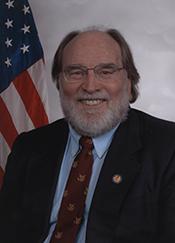
Madam Speaker, I would like to express my wholehearted support for this legislation being considered today. For the past 17 years, the United States has had a successful relationship with the Freely…
Madam Speaker, I would like to express my wholehearted support for this legislation being considered today. For the past 17 years, the United States has had a successful relationship with the Freely Associated States (FAS). The Federated States of Micronesia (FSM) and the Republic of the Marshall Islands (RMI) have been able to transition from a United Nations trusteeship to sovereign governments. At the same time, the United States has had its security and defense interests in the Pacific fulfilled. H.J. Res. 63 will improve this vital economic and military relationship by allowing our nations to continue the successes in our agreement while helping to resolve some of our differences.
One of the issues which required a resolution is the impact that the Compacts of Free Association has had on U.S. areas in the Pacific. The Compacts allow FSM and RMI citizens to freely enter the U.S. and its territories to live, seek an education, obtain healthcare and find employment. For the State of Hawaii alone, more than $32 million was expended in 2002 in order to support Compact migrants and help ensure their health and well-being. These costs have been borne by Hawaii since the Compacts were first implemented in 1986. For the past seventeen years, the state has provided Compact migrants with the care and benefits that were promised to them by the first Compact, expending more than $140 million. In that time, the federal government has reimbursed a mere five percent of that amount. As a signatory to the Compacts of Free Association, I believe it is the United States, not the State of Hawaii that should bear its costs.
For the first time ever, the Administration recognized this hardship and proposed a mandatory funding stream of $15 million a year for Hawaii, Guam, the Commonwealth of the Northern Mariana Islands, and American Samoa. H.J. Res. 63 has been amended to go even further to address this vast shortcoming by increasing the mandatory appropriations to $30 million a year. Although these funds will be divided among the four jurisdictions, it will be the largest compensation any of these jurisdictions has received to date. While these funds will surely cover only a portion of the total impact cost, its yearly distribution will undoubtedly have a great effect on the state departments and agencies that have spent untold resources and labor in providing for the compact migrants.
The legislation has also been amended to include many other improvements. The inclusion of language authorizing discretionary appropriations, the extension of Pell Grant eligibility, the inclusion of a trigger for full inflation adjustment, and the restoration of language authorizing compensation for health institutions are a few of these changes. I am also gratified to see these provisions, as they will help the Federated States of Micronesia and the Republic of the Marshall Islands in their quest to become fully independent countries.
At this time I would also like to thank Chairman Richard Pombo, Chairman Henry Hyde, Chairman Jim Nussle, and Chairman John Boehner for all of their hard work in bringing this bill to the floor. Thanks to their efforts, I have no doubt that our relationship with these Pacific nations will continue to be productive and mutually beneficial. I urge my colleagues to support this important measure.
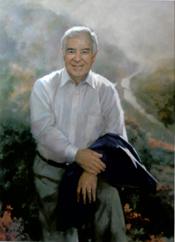
Madam Speaker, I rise in support of H.J. Res. 63, the Compacts of Free Association Amendments Act of 2003. These amendments to the existing Compact, extends and refines the official relationship…
Madam Speaker, I rise in support of H.J. Res. 63, the Compacts of Free Association Amendments Act of 2003. These amendments to the existing Compact, extends and refines the official relationship between the United States and our friends and allies, the Republic of the Marshall Islands (RMI) and the Federated States of Micronesia (FSM).
For the next 20 years, we can only hope that these changes will result in continuing economic opportunity, social development, and improvements to the quality of life of these island nations as well as serve the interests of the United States.
The RMI and FSM's contribution to our Nation's history is unique. Beginning in the mid-1940s, after World War II, their people sacrificed both land and culture to help preserve peace.
Then under U.S. Trusteeship, atolls in the RMI were used as sites to test the effectiveness and power of U.S. nuclear weaponry. Islands comprising the FSM and also the Republic of Palau became our ``line in the sand''
in the middle of the Pacific Ocean from which we staved off the spread of communism.
Though their role has largely gone unnoticed by the American public, the relationship we have since established with them to become emerging self-governing and self-sufficient democracies reflects how important we view their contributions to our Nation.
Seventeen years have passed since the RMI and FSM became freely associated with the United States. The relationship has been successful and yet imperfect.
The Compact amendments we are considering today will not make the relationship perfect, or guarantee success. There is no clear legislative path to accomplish such goals. However, all the tools are within this legislation for both the RMI and FSM to continue developing, as well as for the United States to continue to foster their growth.
H.J. Res. 63 preserves education opportunities, advances economic activity, safeguards infrastructure investments, and adequately addressed the consequences of immigration to Hawaii, Guam and the Northern Marianas from the freely associated states.
In that regard, I want to make note of the great amount of work Neil Abercrombie and Madeleine Bordallo put into this issue. With justification, they should be proud of their work on behalf of Hawaii and Guam as it relates to the matter of impact aid.
Let me state that this legislation is the product of bipartisan support and multiple Committee collaboration. Bringing this legislation to the floor would not have been possible without the leadership of International Relations Chairman Henry Hyde and the Ranking Democrat Tom Lantos, as well as Chairman Leach and our colleague from American Samoa, from the Subcommittee on East Asia and the Pacific.
Finally, I also want to thank Resources Chairman Richard Pombo for the bipartisan manner to which he worked with us on the Committee. His willingness to address important Compact issues in a meaningful and responsive manner gave us the opportunity to move this legislation expeditiously.
I urge my colleagues to favorably pass H.J. Res. 63.

Madam Speaker, this Member rises in strong support for H.J. Res. 63, the Compacts of Free Association Amendments Act of 2003. Additionally, this Member would like to extend thanks to the very…
Madam Speaker, this Member rises in strong support for H.J. Res. 63, the Compacts of Free Association Amendments Act of 2003. Additionally, this Member would like to extend thanks to the very distinguished gentleman from Iowa, the Chairman of the International Relations Subcommittee on Asia and the Pacific, (Mr. Leach) for his efforts to conduct oversight of the Compact negotiations and ultimately to bring this measure
to the Floor today. Both the gentleman and his staff on the Subcommittee are to be commended for their vigilance. Furthermore, this Member would like to thank the distinguished gentleman from California (Mr. Pombo), the Chairman of the Resources Committee, which also has jurisdiction over the Compacts of Free Association for his efforts in guiding this resolution through the legislative process.
When this Member served as Chairman of the International Relations Subcommittee on Asia and the Pacific, he requested a Government Accounting Office (GAO) investigation into the use of Compact of Free Association funds. Indeed, this Member traveled to the Republic of the Marshall Islands (RMI) and the Federated States of Micronesia (FSM) many years ago and was disturbed by the conditions of schools, roads, and public buildings despite the infusion of U.S. aid. Unfortunately, the GAO reports certainly corroborated this Member's grave concerns about pervasive fraud, corruption, and waste of funds by the RMI Government and the poor planning and construction of infrastructure in both the RMI and the FSM.
This resolution would approve the amended Compact of Free Association, the agreement through which the United States provides assistance to the people of the RMI and the FSM. Overall, the revised Compact addresses many of the concerns which this Member has expressed for many years about this assistance and development programs for these two island groups which are two of the four Trust Territories for which the United States assumed responsibility after World War II. Of course, Congress must continue its oversight role to ensure that the people of RMI and FSM get the aid and services which they deserve and that the funds are not diverted for misuse by government officials in those countries.
In closing, Madam Speaker, this Member encourages his colleagues to vote for H.J. Res. 63.
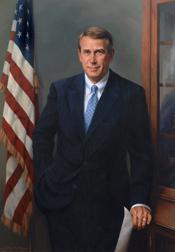
Madam Speaker, I rise in support of H.J. Res. 63 which will renew the Compact of Free Association with both the Federated States of Micronesia (FSM) and the Republic of the Marshall Islands (RMI). I…
Madam Speaker, I rise in support of H.J. Res. 63 which will renew the Compact of Free Association with both the Federated States of Micronesia (FSM) and the Republic of the Marshall Islands (RMI). I am pleased that Chairman Hyde and Chairman Pombo worked with me to find a solution to continue funding for education programs in the Federated States of Micronesia and the Republic of the Marshall Islands.
H.J. Res. 63 provides a new supplemental education discretionary grant for the FSM and the RMI to receive funding from one source. This supplemental education grant provides funds for the FSM and RMI to use for education programs under Title 1 of the Elementary and Secondary Education Act, part B of IDEA, Title 1 of the Workforce Investment Act, the Adult Education and Family Literacy Act, Title 1 of the Carl D. Perkins Vocational and Technical Education Act and the Head Start Act. These funds will be subject to the Fiscal Procedures Act negotiated by the U.S. government and the FSM and the RMI. Specifically, the U.S. Department of Education, as a member of the Joint Economic Management Team, will ensure that academic performance measures are developed for standards and assessments appropriate for the FSM and RMI in order to increase academic achievement for the children receiving educational services under this grant. H.J. Res. 63 also continues eligibility for the FSM and RMI under the Pell Grant program and continues to allow the FSM and RMI to compete for competitive grants at the U.S. Department of Education.
Madam Speaker, I want to be clear. This new discretionary supplemental education grant is the source, and only source, for funds for education programs for the FSM and RMI. They are no longer eligible to receive separate funding from any formula grant run by the Department of Education, the Department of Labor or the Head Start Act administered by the Department of Health and Human Services. In my view, this new supplemental education grant is a signal that funds for the FSM and RMI should be addressed within the Compact, rather than through a disjointed system of domestic formula grants. The United States owes an enormous debt to these nations and efforts to improve their educational system should be a top priority.
I urge my colleagues to support this Compact.
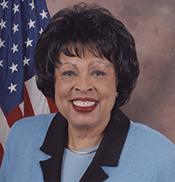
Madam Speaker, President Clinton gave me the privilege to represent the American people as Ambassador to the Federated States of Micronesia. I have a deep respect for the Island nations, and I am…
Madam Speaker, President Clinton gave me the privilege to represent the American people as Ambassador to the Federated States of Micronesia. I have a deep respect for the Island nations, and I am pleased that we have passed the new compact legislation out of the House.
Although most of the contentious issues in the compact have been addressed, the funding allocated for education concerns me. The RMI and FSM children have only just begun to benefit from the establishment of an integrated education system. I urge Congress to monitor education appropriations for the compact and stay intent on our obligations.
In my former profession of teaching I have witnessed the impact of early structured education. Young students are much better equipped to enter the educational system when they are exposed to education at an early age. The educational funding that Chairman Regula has offered to support is critical to keep effective programs in place.
I strongly support those provisions in this compact that provide for continued Pell Grant eligibility for the FAS. It will bolster the ability of the FAS to cultivate education. The elimination of Pell Grant assistance would have decimated the college system in the FAS altogether. A large portion of the operating funds for the College of Micronesia are obtained through Pell Grants.
One other important area that I would like to point out is the reinstatement of FEMA assistance. It has been placed back into the Compact for infrastructure purposes and major catastrophes. USAID is not equipped to deal with all of the problems that arise on small islands nor do they have the ready response to help in a timely fashion. As we move forward with our unique relationship with the FAS I hope the United States Congress will be supportive and receptive to the needs of our friends.
In conclusion, with a few minor adjustments, this Congress will produce long lasting legislation to be proud of. I urge my colleagues to understand the importance of the FAS. I support this bill and look to endorse the final product as the other body considers the Compact.
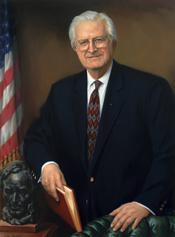
Madam Speaker, I submit for printing in the Congressional Record the following correspondence concerning H.J. Res. 63: (1) an exchange of letters between Chairman Thomas and myself; (2) a letter from…
Madam Speaker, I submit for printing in the Congressional Record the following correspondence concerning H.J. Res. 63: (1) an exchange of letters between Chairman Thomas and myself; (2) a letter from Chairman Regula to me; (3) a letter from Chairman Pombo to Chairman Nussle; and (4) a letter from me to Chairman Nussle.
House of Representatives,
Committee on Ways and Means,
Washington, DC, September 24, 2003.
Hon. Henry J. Hyde,
Chairman, Committee on International Relations, Rayburn House
Office Building, Washington, DC.
Dear Chairman Hyde: I am writing concerning H.J. Res. 63,
the ``Compact of Free Association Amendments Act of 2003,''
which was referred to the Committees on International
Relations, Resources and Judiciary. I understand that a
short-term extension of the compacts may be included in a
Continuing Resolution to be considered by the House.
As you know, the Committee on Ways and Means has
jurisdiction over matters concerning trade. H.J. Res. 63,
which incorporates Article IV of the agreements with the
Federated States of Micronesia and the Republic of the
Marshall Islands, contains several provisions involving
tariffs and imports, which fall squarely within the
jurisdiction of the Committee on Ways and Means.
However, in order to expedite this legislation for floor
consideration, the Committee will forgo action on this bill.
This is being done with the understanding that it does not in
any way prejudice the Committee with respect to the
appointment of conferees or its jurisdictional prerogatives
on this or similar legislation.
I would appreciate your response to this letter, confirming
this understanding with respect to H.J. Res. 63, and would
ask that a copy of our exchange of letters on this matter be
included in the Congressional Record during floor
consideration.
Best regards,
Bill Thomas,
Chairman.
Bill Text
Latest available legislative text
        [Congressional Bills 108th Congress]
[From the U.S. Government Publishing Office]
[H.R. 2522 Introduced in House (IH)]

108th CONGRESS
1st Session
H. R. 2522

To amend the Organic Act of Guam to authorize the Secretary of the
Interior to reduce, release, or waive amounts owed by the Government of
Guam to the United States to offset unreimbursed Compact impact
expenses.

_______________________________________________________________________

IN THE HOUSE OF REPRESENTATIVES

June 19, 2003

Ms. Bordallo (for herself, Mr. Gallegly, Mr. Rahall, Mr. Faleomavaega,
Mr. Rehberg, Mr. Abercrombie, and Mr. Case) introduced the following
bill; which was referred to the Committee on Resources

_______________________________________________________________________

A BILL

To amend the Organic Act of Guam to authorize the Secretary of the
Interior to reduce, release, or waive amounts owed by the Government of
Guam to the United States to offset unreimbursed Compact impact
expenses.

Be it enacted by the Senate and House of Representatives of the
United States of America in Congress assembled,

SECTION 1. SHORT TITLE.

This Act may be cited as the ``Compact Impact Reconciliation Act''.

SEC. 2. COMPACT IMPACT RECONCILIATION.

(a) Findings.--Congress finds the following:
(1) In enacting the Compact of Free Association Act of 1985
(Public Law 99-239), Congress authorized unrestricted migration
from the Federated States of Micronesia, the Republic of the
Marshall Islands, and the Republic of Palau to the United
States. Public Law 99-239 stated that if any adverse
consequences to Guam resulted from implementation of the
Compacts of Free Association, the Congress would act
sympathetically and expeditiously to redress those adverse
consequences.
(2) The General Accounting Office has reported that such
migration permitted under the Compacts of Free Association has
had a significant impact on Guam.
(3) By placing demands on local government for health,
educational, and other social services, migration under the
Compacts of Free Association has adversely affected the
budgetary resources of the Government of Guam.
(4) Insufficient sums have been appropriated to cover the
costs incurred by the Government of Guam resulting from
increased demands placed on health, educational, and other
social services by citizens of the Federated States of
Micronesia, the Republic of the Marshall Islands, and the
Republic of Palau.
(5) The Government of Guam has provided health,
educational, and other social services in good faith with the
expectation that such incurred costs would be reimbursed by the
United States.
(6) Guam has experienced a severe economic crisis in recent
years which has been exacerbated by expenses incurred related
to Compact migration without adequate reimbursement from the
United States.
(7) The Government of Guam has accrued significant
obligations to the United States Government, including but not
limited to--
(A) $9,000,000 owed by the Guam Waterworks
Authority to the Department of the Navy for water
consumption;
(B) $3,000,000 owed by the Guam Community College
to the Department of Education for construction of a
student housing facility;
(C) $40,000,000 owed by the Government of Guam in
local matching funds to the Department of Homeland
Security for Typhoon Chata'an (FEMA-1426-DR) and
Supertyphoon Pongsona (FEMA-1446-DR) disaster
assistance; and
(D) $105,000,000 owed by the Guam Telephone
Authority to the Department of Agriculture for
telephone infrastructure improvements.
(8) Congress has the authority to reconcile the amounts
that have not been appropriated to Guam for Compact impact
assistance with obligations owed by the Government of Guam to
the United States.
(9) Reconciliation is in the national interest and would
promote good will in the future renewal of the Compacts of Free
Association and the economic recovery of Guam.
(b) In General.--The Organic Act of Guam (48 U.S.C. 1421 et seq.)
is amended by adding at the end the following new section:
``Sec. 36. The Secretary of the Interior may reduce, release, or
waive all or part of any amounts owed by the Government of Guam (or its
autonomous agencies or instrumentalities) to any department, agency,
independent agency, office, or instrumentality of the United States.''.
<all>