To restore the operation of the Native American Veteran Housing Loan Program during fiscal year 2003 to the scope of that program as in effect on September 30, 2002.
Legislative Activity
Stay on top of the latest movement without scrolling through every action
Received in the Senate and Read twice and referred to the Committee on Veterans' Affairs.
September 11, 2003
View full timeline
Introduced in House
June 25, 2003
Referred to the House Committee on Veterans' Affairs.
June 25, 2003
Committee Consideration and Mark-up Session Held.
June 26, 2003
Reported by the Committee on Veterans' Affairs. H. Rept. 108-197.
July 10, 2003
Placed on the Union Calendar, Calendar No. 101.
July 10, 2003
Mr. Smith (NJ) moved to suspend the rules and pass the bill.
September 10, 2003 • 10:21 AM
Considered under suspension of the rules. (consideration: CR H8091-8094)
September 10, 2003 • 10:21 AM
DEBATE - The House proceeded with forty minutes of debate on H.R. 2595.
September 10, 2003 • 10:21 AM
Passed/agreed to in House: On motion to suspend the rules and pass the bill Agreed to by voice vote.(text: CR H8091)
September 10, 2003 • 10:38 AM
On motion to suspend the rules and pass the bill Agreed to by voice vote. (text: CR H8091)
September 10, 2003 • 10:38 AM
Motion to reconsider laid on the table Agreed to without objection.
September 10, 2003 • 10:39 AM
Received in the Senate and Read twice and referred to the Committee on Veterans' Affairs.
September 11, 2003
Floor Debate
17 membersWhat members said about H.R. 2595 on the floor
 JDS
JDS PMC
PMC EFH
EFH FPJ
FPJ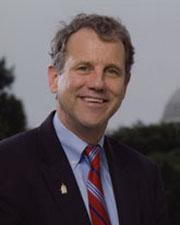 SB+12
SB+12
Floor Debate
17 membersWhat members said about H.R. 2595 on the floor
Mr. Speaker, I offer a motion to instruct. Mr. Speaker, I ask unanimous consent that all Members may have 5 legislative days within which to revise and extend their remarks and include extraneous…
Mr. Speaker, I offer a motion to instruct.
Mr. Speaker, I ask unanimous consent that all Members may have 5 legislative days within which to revise and extend their remarks and include extraneous material on this motion to instruct.
Mr. Speaker, I yield myself as much time as I may consume.
I rise today to offer a motion to instruct the House conferees on H.R. 1, the Medicare Prescription Drug and Modernization Act of 2003, to strike the health savings security accounts. The $174 billion saved should be used to provide employer subsidies in order to prevent over 4 million retirees from losing their existing drug benefits.
Many of us believe that the House Medicare bill does not go far enough in providing an affordable and adequate prescription drug benefit to the 13 million senior citizens and persons with disabilities who lack coverage. There are, however, 12 million retirees who today enjoy better coverage through employer-sponsored insurance than the benefit included in H.R. 1. I suspect that very few of us would be willing to say that those 12 million retirees should lose the better coverage they have today.
In fact, one of the selling points of this bill is supposed to be that enrollment in the Medicare benefit is purely voluntary, that retirees can keep their existing coverage if they want; but, unfortunately, this is not the case. We know that from the July 22 Congressional Budget Office analysis of H.R. 1 that one in three out of those 12 million retirees would be worse off if we pass this bill. I want to repeat that. According to the CBO, one out of three of those 12 million retirees would be worse off if we pass this Medicare bill.
It seems to me that our theme ought to be at least first do no harm; but 32 percent of retirees with employer-sponsored insurance would lose that coverage, according not just to the CBO but to studies like the one recently released by Ken Thorpe, a health policy expert now working at Emory University. He agrees with the CBO figures and has given us state-by-state figures about the impacts of H.R. 1.
According to Dr. Thorpe's analysis, 163,000 retirees in my State and in the State of the gentleman who takes the opposite view would lose their coverage and be forced to pay more for their medications if H.R. 1 passes. In every State across our great Nation, there are retirees and retiree families who would be worse off under this bill: 252,000 in Florida; 45,000 in Iowa; 218,000 in Michigan; 55,000 in Louisiana, and on and on the litany of retirees who would do worse under this Medicare bill.
The devastating impact this bill would have on these 12 million retirees and their families is probably unintended. Many of my colleagues may not have known about this problem when H.R. 1 passed this body by a single vote; but now we know about those
impacts, and it is up to us to fix this problem.
Again, it may have been unintentional, but we now know that this bill includes perverse incentives that actually encourage employers to drop coverage and that penalize employers that have done the right thing, those employers who are struggling to pay for drug benefits for retirees and who want to continue to meet their commitment.
We have heard about this problem not just from groups like the AARP and the AFL-CIO, the National Committee to Preserve Social Security and Medicare, and Consumers Union, the National Breast Cancer Coalition and the American Foundation for the Blind. The analysis is coming from the Congressional Budget Office and the Heritage Foundation.
These concerns are, as my colleagues know, echoed by individual retirees across the country. Many of us have held town meetings on Medicare, have talked with senior groups and heard from individual retirees. Again and again, we hear concern that H.R. 1 will take away the benefits that they worked so very, very hard to earn.
As Francis Meehling, age 76, told a New York Times reporter, ``Congress says the new benefits are voluntary, but many people would lose the coverage they have.'' Once a retiree loses his or her coverage, the choice to enroll in an inadequate Medicare drug plan is no longer voluntary because there is no other option available. Let us be very clear. Unless we fix this problem, we will have taken away choice from 4 million retirees and their families.
My motion to instruct conferees is a way to find the resources necessary to provide the financial incentives to solve this problem. Because we are faced with a $400 billion cap on Medicare spending, which is imposed by the other side of the aisle, we have few choices. We can find the money by reducing the already meager Medicare benefit, we can cut Medicare payments to hospitals and doctors, or we could use the money going for health savings accounts, $174 billion, so that 4 million retirees do not lose their current benefits.
I have lots of concerns with the health savings accounts themselves because few of the uninsured have incomes high enough to take advantage of the health savings accounts, and I do not believe they will meet their purported goal of providing coverage to the uninsured. At a time when States are struggling financially, the Center on Budget and Policy Priorities says savings accounts will drain $20 billion to $30 billion from State treasuries.
It is really not my point today to argue that point. I urge even my colleagues who support savings accounts to support this motion. We have limited choices about where to get the money to prevent 4 million retirees from losing their coverage; and again, I am sure that none of my colleagues want a single one of their constituents to be worse off because of passage of this bill.
The example of the catastrophic health care bill of 1989 continues to loom over us, and I have issued a friendly warning about it in the past. That is the time when the angry senior citizens charged the then- chairman of the House Committee on Ways and Means and surrounded his car and demanded that that bill be repealed. In recent weeks, I have heard from so-called experts that this bill will not result in a rerun of major grass roots opposition created by the catastrophic bill because they say this is a voluntary bill and no one will be worse off because this Medicare drug benefit is not mandatory but voluntary; but that is really not true because I caution my colleagues to listen again to the words of senior citizen Francis Meehling who says, ``Congress says the new benefits are voluntary but many people would lose the coverage they have.''
Mr. Speaker, I reserve the balance of my time.
Mr. Speaker, I yield myself such time as I may consume.
Let me just briefly respond that the purpose of this motion to instruct is to prevent 163,000 people from our State of Illinois from losing their coverage because their employers stop providing the benefit for prescription drugs for the retirees. So that is the point. It is to solve a problem that will cause millions of retirees and persons with disabilities to lose their benefit.
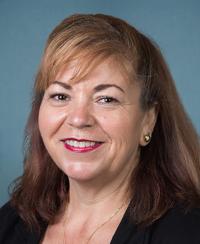
Mr. Speaker, I yield 5 minutes to the gentlewoman from California (Ms. Linda T. Sanchez), a State where 385,000 retirees are projected to lose their prescription drug coverage.
Mr. Speaker, I would like to inquire as to how much time is left on my side.
Mr. Speaker, I yield 3 minutes to the gentleman from New Jersey (Mr. Pallone), a State in which 143,000 retirees are projected to lose their prescription drug coverage.
Mr. Speaker, I yield 3 minutes to the gentleman from Texas (Mr. Sandlin), a State in which 280,000 retirees are projected to lose their employer-provided prescription drug coverage.
Mr. Speaker, I yield 3 minutes to the gentleman from Ohio (Mr. Brown), a State in which 243,000 retirees are projected to lose their employer provided prescription drugs.
Mr. Speaker, I yield 3 minutes to the gentleman from Washington (Mr. McDermott), a State in which 74,000 retirees could lose their benefits.
Mr. Speaker, I yield 3 minutes to the gentleman from New Jersey (Mr. Holt), a State in which 134,000 retirees may lose their employer-provided prescription drug benefit.
Mr. Speaker, I yield myself the balance of my time.
This motion is not about giving senior citizens more than they already have; this is about preventing something from being taken away from 4 million seniors. As my colleague stated, the entire Medicare bill is subject to a $400 billion spending limit because of the insistence of the Republican leadership. If we are going to provide the funding necessary so that 4 million retirees do not lose their coverage, we need to find the money somewhere. We can take it from the health savings accounts, or we can reduce the meager drug benefit even more, or we can cut provider payments.
My motion says that taking it from the health savings accounts is the best of all of the options that the other side has given us. We know what this motion means. It is a choice whether we vote to protect retiree health coverage, or we are going to vote for health savings accounts that will not meet their goal of covering the uninsured.
More important, the retirees who have employer-sponsored insurance and do not want to lose it know what this vote is about. They will be watching us. I urge support for the motion to instruct.
Mr. Speaker, on that I demand the yeas and nays.
Mr. Speaker, I yield myself such time as I may consume. We have had several motions to instruct conferees that this House has voted down, and this is more of the same. The motion before us instructs…
Mr. Speaker, I yield myself such time as I may consume.
We have had several motions to instruct conferees that this House has voted down, and this is more of the same. The motion before us instructs conferees to reject division B of the House-passed Medicare bill. Division B in H.R. 1 allows for the creation of tax-favored health care savings accounts. The basic idea behind these accounts is to let people put their own money away for their future health care needs. They are completely portable and can be used for any health care expense such as prescription drugs or doctor visits.
Let me explain to my colleagues why these accounts are so important for seniors and all other Americans. In January, most insured Americans will see an estimated 14 percent increase in their health insurance premiums. This is the fourth consecutive year of double digit increases. Currently, there are more than 43 million Americans without health insurance, an increase of 2.4 million in the last year.
Health care costs are spiraling out of control throughout the United States. Seniors have the most pressing problem with health care costs because they have no further income opportunities after they retire; but make no mistake about it, all Americans are struggling with increasing health care costs.
The future looks bleak. We have an aging population. The fastest growing segment in our country is people 80 and older. We need to start looking at ways to handle the chronic and long-term care costs of our aging population. When the baby boomers retire, long-term care costs will skyrocket, driving prices even higher.
One piece of legislation is not going to solve all these problems. There is not a simple answer, but there is a necessity to take multiple steps now with one of the most important steps being health savings accounts.
This House has passed bipartisan legislation that for the first time gives all Americans the incentive to plan for the future. It gives people more options and flexibility. If an employer does not offer health coverage, an individual has an affordable way to purchase health insurance on his own.
A few months ago, I talked to a constituent from my district who told me a story similar to the stories many Members have heard from their constituents. He recently quit his job to start his own company. He has a wife and two daughters, and he has been pretty successful at getting his company off the ground, but he cannot find health insurance for his family that is not exorbitantly expensive. He knows he needs it. He has got two children. He makes enough money to be classified as middle class, and he provides well for his family; but he simply cannot afford to be self-employed and make sure his children can go to the doctor. Having had eight children of my own, I understand his frustration. By all accounts he is successful except he cannot find health insurance. Health savings accounts would be a viable option for him and his family.
Opponents of health savings accounts will say that we are only helping wealthy people, that health savings accounts are a tax shelter for the rich. The very opposite is true. These types of accounts are giving people in the middle class and workers who do not have benefits the ability to buy health insurance.
Medical savings accounts, the precursor to health savings accounts, have been very successful. According to the last report from the Internal Revenue Service and the U.S. Treasury, 73 percent of all medical savings account buyers were previously uninsured. So medical savings accounts are making health insurance affordable for the first time for many Americans and actually bringing them into the health insurance system.
According to the Coalition for Patient Care, medical savings account policy holders currently have at least $100 million in their medical savings accounts to use for health care now or in the future. Previously, that money used to go to insurance companies. With medical savings accounts, policy holders are benefiting from their wise consumption of medical care.
Health savings accounts and health savings security accounts are more flexible than medical savings accounts and, therefore, will be more attractive to people. If they are implemented, it is estimated that 40 million health savings accounts and health savings security accounts will be created by the end of the decade.
I simply cannot understand why my colleagues on the other side of the aisle persist in trying to pass a motion that will remove the ability of seniors to save for their out-of-pocket health costs that will keep 43 million Americans uninsured. I cannot understand a
motion that will limit health care options for Americans. I think some Members are under the assumption that if we strip health savings accounts from the bill that the money spent on health savings accounts will be redirected and used to provide enhanced prescription drug coverage.
I want to clarify what this motion does and does not do. The motion does not direct conferees to close the drug coverage gap. It does not direct conferees to spend more money on drug coverage. It does nothing more than eliminate health savings accounts.
Mr. Speaker, I reserve the balance of my time.
Mr. Speaker, I yield myself such time as I may consume.
Mr. Speaker, my colleagues on the other side of the aisle have one general theme when they talk about health care policy: if we cannot give everyone everything, why pass a Medicare drug benefit. If we cannot help everyone, why help anyone. It is flawed thinking. We all want to help seniors pay for their prescription drugs. We want everyone to have access to affordable quality health care, it is just that we are going about it in different ways.
Our side of the aisle believes that seniors are smart enough to be able to choose the health care that is best for them. They should be able to choose what services they want and what doctor they want to go to. We think that people have the capability to plan for their health care needs down the road. The other side of the aisle thinks that Americans need to be taken care of, that is, what is good for one person is good enough for everyone. Some Members continue to categorize health savings accounts unfairly. They have been called a number of things. They have been called a tax-free grant, a tax shelter for the wealthy, and my favorite, a radical proposal.
The sad truth is that health savings accounts are a radical proposal. We are giving all Americans, including seniors, a tool to save for their future health care needs. We are letting people keep more of their own money in order to buy health insurance. Ironically, that is a radical idea for some Members, letting people keep the money they earn to buy the health coverage they want. It has been argued that Republicans are being fiscally irresponsible. Some have said that, if the health savings account provisions are stripped from the Medicare bill, that we could afford to cover more of the seniors' prescription drug costs. This is simply not true. Even if health savings accounts were taken out of the bill, $174 billion will not close the so-called coverage gap.
Let me remind Members that the Democrats offered an alternative prescription drug bill which closed the coverage gap, and that bill cost $1 trillion. The entirety of the cost of H.R. 1, including the provision creating health savings accounts, is within the budget limits that this House passed earlier this year; a $1 trillion prescription drug bill is not. Some Members today have spent a lot of time talking about how important it is to close the coverage gap in H.R. 1; yet this motion has nothing to do with closing the so-called doughnut hole. The motion does not instruct conferees to devote any additional money at all toward prescription drug coverage. This motion is not meant to supplement our prescription drug proposal; it is meant to kill legislation that this House has passed which will give millions of Americans access to affordable health care. I urge my colleagues to reject this motion.
Mr. Speaker, I yield back the balance of my time.
Mr. Speaker, I certainly want to thank the distinguished chairman of the Committee on Veterans' Affairs from New Jersey and our senior ranking member from Illinois for their leadership and for their…
Mr. Speaker, I certainly want to thank the distinguished chairman of the Committee on Veterans' Affairs from New Jersey and our senior ranking member from Illinois for their leadership and for their sensitivity in bringing this legislation to the floor for consideration.
Mr. Speaker, as an original cosponsor of the original legislation that was offered 10 years ago, I think it is time that we no longer should call this legislation a pilot program. It has matured. I certainly want to urge my colleagues that we should increase not only the authorization as well as the funding levels for this important program.
I rise today in support of H.R. 2595, a bill to restore the operation of the Native American Veteran Housing Loan Program for fiscal year 2003. This program permits the Department of Veterans Affairs to provide direct home loans to Native American veterans who live not only on tribal lands but also on homestead lands and communal lands. Eligible native veterans can then use direct loan funding to purchase, construct or improve a home on Native American trust land. These loans may also be used simultaneously to purchase and improve a home or to refinance another VA direct loan.
This pilot program extends to Native Americans, native Hawaiians, and also to my constituents in American Samoa. As a result, this program has been crucial to providing American Samoan veterans the opportunity to build and own their own homes, an opportunity that would not otherwise be available to them. VA's annual report to Congress for fiscal year 2002 reports that over 62 loans have been closed; but for the 10-year period, hundreds of loans have been approved because of this program.
As I explained earlier, Mr. Speaker, for the benefit of my colleagues so we can better appreciate this unique home loan program for our native veterans, the thousands of American Indian veterans who live in reservations, when they returned to their homes, they could not obtain a commercial home loan as you would someone who lived in a commercially owned property, a fee simple, living in reservations. The same is true with our native Hawaiian veterans who live in what is known as ``homestead lands,'' in the same situation where commercial lending institutions would not lend us money to build homes under a veterans program. The same is also true with my own veterans who live on communal lands. This is a unique program. I am very, very happy that we are able to continue the funding levels but also more importantly we need to make sure that this program continues.
Mr. Speaker, the Native American Veteran Housing Loan Program has been successful in providing our native veterans the opportunity to build and own their own homes. It provides our native veterans the ability to continue to live in their own lands, to contribute to their communities, and to build a legacy to leave their families. This program needs increased authorization and funding in the years to come. I urge my colleagues to support this legislation.
Mr. Speaker, I would like to thank Chairman Chris Smith and Ranking Member Lane Evans for their support and diligent work regarding Native American issues. Today I rise in support of H.R. 2595, a bill to restore the operation of the Native American Veteran Housing Loan Program during Fiscal Year 2003. This pilot program permits the Department of Veterans Affairs to provide direct home loans to Native American veterans who live on tribal lands. Eligible native veterans can use direct loan funding to purchase, construct, or improve a home on Native American trust land. These loans may also be used to simultaneously purchase and improve a home or to refinance another VA direct loan.
This pilot program extends to Native Americans, Native Hawaiians and to my constituents in American Samoa. For the benefit of my colleagues and so that we can better appreciate this unique home loan program, I want to explain that most native veterans living on communal or tribal lands. This is true for American Indian veterans who live on reservation lands. The same is true of our Native Hawaiian veterans who live on what is known in Hawaii as Homestead lands. The same is also true with American Samoan veterans who live on communal lands which cannot be sold as commercial or as fee simple property.
Given the unique status of communal lands, thousands of native veterans have been denied loans by our commercial lending institutions and banks. However, with the creation of this pilot program, many of our native veterans are able to build and own their own homes and the VA reported that in 2002 it had closed on a total of 289 loans under the terms of this pilot program.
Recently, Public Law 108-7, Consolidated Appropriations Resolution, placed a cap of $5 million on the amount of loans that could be approved under the program. But, at the time this law was enacted, VA had already exceeded this cap. As a result, VA is unable to make new loans for the remainder of the fiscal year. Because of this new cap, veterans are unable to complete construction on homes already in progress. This is unfair to our native veterans and it is imperative that Congress remedy this situation. H.R. 2595 will accomplish this.
Mr. Speaker, I want to thank my colleague, the gentlewoman from Illinois, for putting together this motion to strike the Health Savings Account provisions and shore up employer-sponsored coverage.…
Mr. Speaker, I want to thank my colleague, the gentlewoman from Illinois, for putting together this motion to strike the Health Savings Account provisions and shore up employer-sponsored coverage.
The House Republican bill includes $174 billion over 10 years for Health Savings Accounts, and these accounts, Mr. Speaker, are bogus. This money should be used to subsidize employers to prevent employer- sponsored coverage erosion. The Health Savings Account provisions will undercut employer-provided health care coverage.
These benefits are available only if individuals are covered by high deductible plans. In other words, plans providing no coverage for at least the first $1,000 of medical expenses. A deductible that size is approximately double the deductible of most employer plans. The provisions will encourage employers to reduce coverage for workers and their families by increasing deductibles and shifting even more costs on to employees. The resulting cost savings will be enjoyed by the employer because there is no requirement that these savings be passed on to the employee.
For many American families, the tax benefits are completely worthless. The only thing they would receive from the Health Savings Account provision is reduced health care coverage. Most American families will not be able to take advantage of the tax shelter in these provisions because they do not have $4,000 per year in additional savings. The Health Savings Account provisions are designed to benefit employers and upper-income management not rank-and-file employees.
Now, Mr. Speaker, with the deficit at a record high, we ought to carefully consider how best to spend the scarce resources we have. It is fiscally and morally irresponsible to spend $174 billion on a tax shelter that will erode health insurance coverage and not improve it. This money would be much better spent by strengthening employer- sponsored retiree coverage, which currently covers about a third of all seniors.
The fate of employer-sponsored health coverage for retirees is a central issue in the Medicare prescription drug debate. As it currently stands, the House-passed Medicare bill encourages employers currently providing retiree health benefits to drop coverage. Unfortunately, the Republican bill states that any dollar an employer pays for an employee's prescription drug cost would not count towards the employee's out-of-pocket catastrophic cap. This disadvantages seniors with employer-sponsored coverage because it would be almost impossible for them to ever reach the bill's catastrophic cap over which Medicare would pay 100 percent of the drug costs. So, without a doubt, many employers will simply stop offering retiree coverage.
The potential loss of this valuable benefit that many unions and employers provide was reported recently in the New York Times. According to the lead story by Robert Pear, and I quote, ``About 12 million of the 40 million Medicare recipients has retiree health benefits, usually including some drug benefits. The Congressional Budget Office estimates that one-third of the people with such drug coverage could lose it under bills passed in June by the House.''
Now, the Republican conferees are unwilling to provide a final Medicare agreement that will provide seniors with an affordable, available, and guaranteed prescription drug benefit that
does not privatize Medicare. With the added threat of employers dropping retiree health benefits if a retiree is eligible for Medicare, we will no doubt have a public health crisis on our hands. Do not let this happen. Support the Schakowsky motion.
Mr. Speaker, I thank gentlewoman from Illinois for yielding me this time, and for her leadership on health care issues. What is it, Mr. Speaker, what is it about Republicans and Medicare? There is…
Mr. Speaker, I thank gentlewoman from Illinois for yielding me this time, and for her leadership on health care issues.
What is it, Mr. Speaker, what is it about Republicans and Medicare? There is always some Rube-Goldberg idea they have to change the public health system that has lifted millions of Americans out of poverty for the last 38 years, that has helped America's elderly live longer lives and healthier lives? Republicans always want to try some experiment, some Rube-Goldberg plan.
They tried means testing. They could not get that through the Congress. They tried to raise up eligibility age. They could not get that through the Congress. They tried these Medicare HMOs; and, unfortunately, they have gotten that through the Congress. And ask almost any senior how these Medicare HMOs are working, and they are not working very well.
They have tried an experimental medical savings account, a demonstration project which has not worked very well. Then the President said if you want a prescription drug benefit through Medicare, you have to get out of Medicare and get it through private insurance. That clearly is not flying with the American people. They always, always, always, over the last 30 years, every chance they have gotten, have tried to privatize Medicare.
Now, Mr. Speaker, they have this $174 billion tax scheme to, again, try to undercut and weaken Medicare. Medicare works because it is universal insurance. And universal insurance works because there are a lot of healthy people and a lot of people that are sick. Through universal coverage, it works for everybody. It works for the healthy 65-year-old who walks two miles every day and does not need much medical treatment, because she subsidizes the 80-year-old who may be sicker. Then when the 65-year-old gets sicker, other people will begin to help her, because it is a universal system.
Republicans, for whatever reason, I do not know if it is their friends in the insurance industry or what it is, or their political philosophy, or whatever, they want to fracture that universal coverage pool. I guess we really should not be surprised, Mr. Speaker. For 38 years, we have seen Republicans simply have not liked Medicare. They did not vote for it 38 years ago. Speaker Gingrich tried to cut $250 billion 10 years ago to, surprise, give tax cuts to the wealthiest people in this country. Dick Armey, the Republican leader 2 years ago, said, ``In a free society, we wouldn't have Medicare.'' Whatever that meant. The gentleman from California (Mr. Thomas), chairman of the Committee on Ways and Means, just in the past year, said he wants to end Medicare as we know it.
They simply do not like this program. I wish they would come to the floor instead of sending these Rube-Goldberg kind of constructs that nobody really understands, just come to the floor and say; we do not like Medicare; we want to privatize it; we want to let the insurance industry run it. That is what the Republicans do in every one of these Rube-Goldberg kind of schemes.
Perhaps the worst is this $174 billion tax shelter, tax scheme, they are trying with the medical savings accounts. That is why the Schakowsky motion to instruct makes sense. We can take that $174 billion, instead of putting it in some kind of tax shelter or tax scheme, and use it for something that will really matter and that will help the seniors in this country.
Show 8 more

Mr. Speaker, I thank the gentlewoman for yielding me this time. Mr. Speaker, we have a very important question to answer today: Should we provide prescription drugs for all seniors, or should we…
Mr. Speaker, I thank the gentlewoman for yielding me this time. Mr. Speaker, we have a very important question to answer today: Should we provide prescription drugs for all seniors, or should we provide tax shelters for the few? That is our question.
Mr. Speaker, I rise today to join my colleagues in instructing the conferees on H.R. 1 to make our Nation's seniors our top priority as set forth in the Schakowsky motion to instruct.
The prescription drug bill that is before us is supposed to help and not harm our seniors, and yet H.R. 1 has 12 million seniors in this country running scared. These are supposedly the fortunate seniors, the ones who work for companies that promised they would provide retiree health coverage if the employees put in the time required.
But the flawed structure of H.R. 1 will ultimately destroy that commitment. The Congressional Budget Office has estimated that up to 32 percent of retirees will lose their employer-sponsored coverage and drug benefits under the House bill. Thirty-two percent of America's seniors, the retirees, will lose their employer-sponsored coverage under the House bill. That is unacceptable.
A separate study by economist Ken Thorpe came to similar conclusions and noted that in my home State of Texas, 280,000 retirees would lose coverage. That is one-quarter of a million seniors. Now, Mr. Speaker, that is just not exactly the kind of thing that you want to put in your constituent newsletter that you send back home.
Now, this is ridiculous. Why are we pretending to fix one problem while causing another? The CBO has noted that H.R. 1 would provide, and this is a quote, ``provide a clear financial disincentive for employers to supplement the part D benefit.'' A disincentive. It blatantly discriminates against employers who provide retiree health coverage by providing better Federal subsidies when an employer drops coverage than when an employer retains coverage. What kind of reasoning is that?
The Republicans like to say this is a voluntary benefit, but that implies, ``voluntary,'' that our seniors have a choice. I can say with full certainty that none of our seniors with retiree coverage would choose this detrimental program to be enacted into law. I know Texans would not. I know the 32 percent who will be losing their coverage would not. So let us spend our money wisely. Let us direct it at protecting our retirees' hard-earned benefits. We can do that by eliminating HSAs today.
The majority claims we cannot afford, we cannot afford, to offer comprehensive coverage for our seniors' drug needs. But we can afford to allocate over $174 billion in tax cuts to the inclusion of Health Savings Accounts. That shows where our priorities are. HSAs will certainly help the wealthiest individuals for whom they offer yet another opportunity for another tax shelter. But for middle America, for the people I represent and most of us represent, HSAs will result in employers reducing coverage for American families by, one, increasing deductibles; and two, shifting cost to employees.
Understand, there is no requirement to pass on the savings. We need prescription drugs for all, not a shelter for the few.
Mr. Speaker, I thank the gentlewoman for yielding me this time, and I rise in support of her motion to reject the use of the $174 billion for Health Savings Security Accounts included in the…
Mr. Speaker, I thank the gentlewoman for yielding me this time, and I rise in support of her motion to reject the use of the $174 billion for Health Savings Security Accounts included in the Republicans' prescription drug bill.
On June 26, I voted against the Health Savings and Affordability Act, H.R. 2595. While it sounds like a great idea to let folks save for their out-of-pocket costs, in reality these Health Savings Accounts are a $174 billion tax cut for the wealthy. Republicans tell us that these accounts will help those without health insurance, but in reality those without health insurance have incomes that are too low to take advantage of the tax breaks in this bill. The truth is these folks do not have the additional $2,000 to $4,000 a year to put into these savings accounts.
When America is experiencing record deficits, this Republican Congress' highest priority remains increased tax cuts, and I am outraged that they are placing them into the Medicare prescription drug bill. When is this type of deception going to stop? All I ask is that my colleagues be honest with the American people. I do not think it is asking a lot for them to really be honest and level with Americans about what they are really getting in this bill.
I ask this Congress if $174 billion could not be better used? At a time when retirees are struggling with rising prescription drug costs, could the $174 billion not be used to increase incentives for employers not to drop prescription drug coverage for their retirees? If passed as is, the Medicare prescription drug bill will make those receiving employee retirement plans worse off. Currently, this is the largest source of prescription drug coverage for Medicare beneficiaries, and these plans are significantly better than anything that they would receive under the Republican bill.
Under the Republican bill, the likelihood that employers will drop prescription drug coverage is great because retirees will not be able to use their health plans towards the gap in coverage. Therefore, these higher costs do not provide an incentive for employers to make prescription drug coverage available to their retirees. The Congressional Budget Office projects that approximately one-third of employers who are currently providing retiree prescription drug benefits would drop the coverage if the Republican prescription drug bill becomes law, making some 4 million retirees worse off.
In fact, this possibility of losing drug benefits from former employers is the biggest fear currently facing retirees. Already we are seeing a decline in retiree coverage due to increased prescription drug costs, which accounts for 40 to 60 percent of an employer's retiree health care costs.
We cannot stand here and allow the Republican bill to expedite this process. Therefore, I urge my colleagues to support the Schakowsky motion and reject more tax cuts for the wealthy. Instead, why not be honest and do something that is right for the American people and use the $174 billion for employer subsidies to help ensure that employers do not drop their current prescription drug plans for their retirees.

Mr. Speaker, I rise in support of the motion to instruct, and I thank the gentlewoman from Illinois for her leadership on this issue. The motion addresses two rather disturbing aspects of H.R. 1, the…
Mr. Speaker, I rise in support of the motion to instruct, and I thank the gentlewoman from Illinois for her leadership on this issue. The motion addresses two rather disturbing aspects of H.R. 1, the troublesome Medicare legislation passed earlier this year.
The first problem with this bill is, of course, it is, as so many things this year, a loss of revenue so that benefits can be given to people who need the benefits least. The Center for Budget and Policy Priorities has estimated that the health savings accounts would cost the Federal Government $174 billion over 10 years.
These health savings accounts are a way of saying to the American people they are on their own. The beauty of Medicare and its sister program, Social Security, is we are all in it together. We all know we are all in it together. But the message that the majority is sending here is you are on your own. You can save for these expenses that you will incur, you can save for these prescriptions that you will need, you can save and you will be in good shape. I can hear the President saying to the Vice President, It worked for you, did it not, Dick?
Yes, George, it worked for me.
That is the message that they are giving to the American people, that you are on your own and you will be okay.
At the end of the line of this is channeling all beneficiaries into private insurance. As the chairman of the Committee on Ways and Means said, for those who think that we are trying to change Medicare as we know it, the answer is, I certainly hope so. Yes, that is what the chairman said. This is a fundamental change in Medicare.
Now, there are millions of Americans out there who are saying all this debate about prescription medicine under Medicare does not really affect me. They may not like turning people out on their own like this, but we can hear these millions of Americans saying thank goodness that my former employer has given me a good retirement package and I have prescription drug coverage. In fact, in New Jersey where there are 1.2 million Medicare beneficiaries, of these 434,000 have employer- sponsored coverage. It sounds good, but unfortunately we have got bad news for those people who think that they are covered.
The Congressional Budget Office says perhaps one-third of employers could drop retiree coverage under the new bill, one-third. Well, in New Jersey it might be any of 134,000 beneficiaries who would lose their employer-sponsored coverage under H.R. 1. This certainly is an unpleasant surprise for many seniors. The gentlewoman from Illinois (Ms. Schakowsky) has pointed out that the money set aside in H.R. 1 for the health savings accounts could be much better spent, addressing this second failing of the legislation, its effect on retiree prescription drug coverage, a fine idea, worthy of Members' support. I think we can create this fix by passing the motion to instruct of the gentlewoman from Illinois (Ms. Schakowsky). I will vote for it and urge my colleagues to do the same.
Mr. Speaker, I move to suspend the rules and pass the bill (H.R. 2595) to restore the operation of the Native American Veteran Housing Loan Program during fiscal year 2003 to the scope of that…
Mr. Speaker, I move to suspend the rules and pass the bill (H.R. 2595) to restore the operation of the Native American Veteran Housing Loan Program during fiscal year 2003 to the scope of that program as in effect on September 30, 2002.
Mr. Speaker, I yield myself such time as I may consume.
Mr. Speaker, this legislation would restore the operation of the Native American Veteran Housing Loan Program during the current fiscal year to the scope of that program as it was in effect on September 30, 2002.
The Native American Veteran Home Loan Program was established in 1992 as a 5-year pilot program, and Congress has extended it twice, most recently through 2005. This program is intended to assist eligible veterans living on trust or equivalent lands to secure
loans at market rates to purchase, build or to renovate homes. VA has made over 300 home loans under this program. The Department of Veterans Affairs has stopped making loans under the Native American direct loan program because of a limitation contained in the 2003 Appropriations Act, which capped the amount of loans that can be made under this program to $5 million. This limitation was requested by the administration with the assumption that the limit would not be breached. VA advised us as of June 11 in a letter that it has already exceeded that limit.
Mr. Speaker, 47 loans have already been made during the fiscal year, many of them refinancing loans. The VA committee has been advised that construction of a number of homes has been suspended directly attributable to the imposition of this moratorium. Pending applications are also on hold. I see no reason, in effect, why our Native American veterans should lose access to home loans in this way. We should celebrate their success, not put an artificial cap on it, especially at a time when refinancing is a way to save veterans thousands of dollars each and every year. We need to end this moratorium as soon as possible, and that is the purpose of this legislation.
Mr. Speaker, I reserve the balance of my time.
Mr. Speaker, I yield such time as he may consume to the gentleman from Arizona (Mr. Renzi), a member of the Committee on Veterans' Affairs.
Mr. Speaker, I yield myself such time as I may consume.
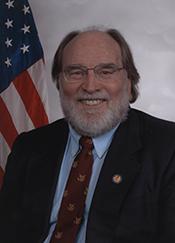
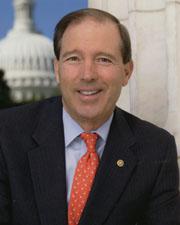
I just want to thank the gentleman from Illinois for his leadership on this and for working so cooperatively with us. I also thank the gentleman from Arizona (Mr. Renzi), the gentleman from New Mexico (Mr. Udall), the gentleman from Hawaii (Mr. Abercrombie), the gentleman from Hawaii (Mr. Case), the gentlewoman from Guam (Mr. Bordallo), the gentleman from Maine (Mr. Michaud), and the gentleman from American Samoa (Mr. Faleomavaega) for his cosponsorship of this legislation. I appreciate it very much and urge the body to adopt it.
Mr. Speaker, I rise in strong support of this bill to reinstate the Native American Veteran Housing Loan program. I would like to thank the Chairman of the Committee on Veterans' Affairs, Mr. Smith,…
Mr. Speaker, I rise in strong support of this bill to reinstate the Native American Veteran Housing Loan program.
I would like to thank the Chairman of the Committee on Veterans' Affairs, Mr. Smith, the Ranking Member, Mr. Evans, and the staff of the Committee on Veterans' Affairs for their work in crafting this much- needed remedy to the present situation. I would also like to thank Senator Akaka for his leadership over the years on this issue. He and his staff have been tireless in their efforts to rectify this problem since it arose in May.
In 1992, the Native American Veterans Home Loan Equity Act was enacted to establish and implement a pilot program to make direct housing loans to aid Native American (Indian, Alaska or Hawaii native, or Pacific Islander) veterans in purchasing, constructing, or improving, dwellings on trust land. Almost 11 years later, the VA has closed several hundred loans, and the program is a resounding success.
Native Hawaiian veterans have greatly benefited from the loan program. Through the end of Fiscal Year 2002, 300 loans were closed throughout the Pacific. Of the 300 loans, about 215 were new construction loans, with the balance consisting of Interest Rate Reduction Loans. Although Hawaii has the highest loan volume, American Samoa, the Commonwealth of the Northern Mariana Islands, and Guam have significant levels of activity. About 100 of the 300 loans have been paid in full and the other 200 are active and performing. Only one loan termination has occurred to date since 1992.
This year's dramatic increase in use of the program mirrors the national upswing in financing new construction and refinancing existing loans. Home ownership has long been a hallmark of financial growth and community stability, and it's encouraging to see so many vets in my own state enjoying this benefit. However, I deeply regret that more of our Native American veterans were unable to take advantage of the 40-year historic low financing rates available a mere two and a half months ago. The untimely halt to this past May cut off deserving veterans from this financial tool. Mr. Speaker, I hope that we can do better in the future to correct such problems before they cause inadvertent harm.
In the end, this measure is about equity. The Native American Veterans Direct Loan program exists to afford our Native American, Native Hawaiian, Alaskan Native, and Pacific Islander veterans on trust lands the same benefits available to the rest of our veterans community. We need to sustain this program--it's a matter of fairness.
I urge my colleagues to support this measure.
Mr. Speaker, I yield back the balance of my time.
Mr. Speaker, as an original cosponsor of this bill, I rise today to offer my strong support for the restoration of the Native American housing loan program. In the past, this program has benefited…
Mr. Speaker, as an original cosponsor of this bill, I rise today to offer my strong support for the restoration of the Native American housing loan program. In the past, this program has benefited many of my constituents. Restoring it today will ensure that many more will benefit in the future.
Traditionally, veterans living on tribal land, including allotted land, were not eligible for the VA home loan guarantees. However, this program has allowed many Native American veterans who might otherwise have been unable to obtain suitable housing or acquire direct home loans to do just that.
In the 107th Congress, I introduced a bill to extend this program through fiscal year 2005. That bill was included in a bill that became Public Law 107-103. Language in the omnibus appropriations bill passed earlier this year caps the program at $5 million. The loans of many Native American veterans have been cut off. As I speak, there are homes that were begun under this program that remain half constructed. All over the Nation, Native American veterans trying to refinance their homes cannot do so because of this provision.
Additionally, those veterans who have had their loans approved for construction cannot get the money they were promised. By restoring this program, we are providing an opportunity for Native American veterans with existing loans, as well as additional deserving Native American veterans to get home loans.
Poverty, lack of economic opportunity, and a shortage of financing for decent affordable housing have created housing conditions on Native American lands that may only be described as deplorable.
Almost one in three Native Americans living on a reservation is poor. Many Native Americans have honorably served our country in the Armed Forces. In fact, historically Native Americans have the highest record of service per capita of any ethnic group. Let us continue to help them by restoring this much-needed program.
In closing, I would like to thank Chairman Smith, Ranking Member Evans, and the staff of the Committee on Veterans' Affairs for their speedy work on this bill. This is an important piece of legislation. I urge my colleagues to support it.
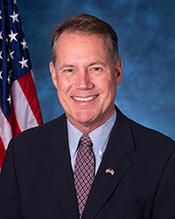
Mr. Speaker, amidst all of the disagreement and debate on this floor over things like war and deficits, this is a good-news story. I want to start some decades ago recognizing my political mentor, a…
Mr. Speaker, amidst all of the disagreement and debate on this floor over things like war and deficits, this is a good-news story. I want to start some decades ago recognizing my political mentor, a former Member of this Chamber, my predecessor, Spark Matsunaga, a veteran himself, who went back and tried to determine whether the veterans home loan program, a successful program, was working for Native American veterans living on tribal or trust territory lands. The answer was a resounding ``no.'' The reason was because those lands contained restraints on alienation that are not applicable to other lands. So, therefore, conventional mortgage practices were not working. My predecessor and my current Senator, Daniel Akaka, took up the cause and initiated the legislation which we are now addressing to provide for this program to be applied on trust territory lands, the lands of the indigenous peoples of our country, whether they be in Alaska, in North America or Hawaii or the Pacific Islands.
A very successful program arose, so successful that in the Pacific, in 300 loans granted under this program over the last 10 years, there has been one delinquency out of 300 programs. Three hundred programs, 100 paid in full, 200
being paid in full, one delinquency, a fantastic program that has accomplished its purpose. This is good news. This is good news because we made a mistake and we are coming back to correct it and we all know it. The administration deserves credit for this, the ranking member deserves credit, the Chair deserves credit, the appropriations committee deserves credit. What we are going to do is to take a program that has been successful and continue it. By the way, when you score this program, we are always talking about money, this program, if this bill goes through, will return $1 million to the U.S. Treasury. That is how successful this is. We are not spending money; we are generating money from this program because of the low delinquency rates.
I thank everybody involved. I commend this bill to the Members and urge its expeditious passage.
Mr. Speaker, I rise in support of the Schakowsky motion which would strike the House-passed provisions establishing new tax-free savings accounts for medical expenses, estimated to cost $174 billion…
Mr. Speaker, I rise in support of the Schakowsky motion which would strike the House-passed provisions establishing new tax-free savings accounts for medical expenses, estimated to cost $174 billion over ten years.
On June 26, 2003, I voted against the Health Savings and Affordability Act, which established these new tax-free personal savings accounts that employers could offer to their employees, along with high-deductible insurance policies.
As the House and Senate conferees continue to discuss the Medicare prescription drug legislation, the facts are still coming in that this bill will be a blow to the 12 million Medicare beneficiaries who currently receive prescription drug coverage through their employer retiree plans.
In most cases, their employer prescription drug coverage is significantly better than what they would receive under the Republican Medicare Prescription Drug plans.
It is also troubling to note that about one-third of employers who are currently providing retiree prescription drug benefits will drop that coverage if H.R. 1 becomes law. This means more than 4 million Medicare beneficiaries will be worse off.
Both H.R. 1 and S. 1 exclude employer-provided coverage as counting towards meeting the catastrophic cap on beneficiary spending in their ``true out of pocket'' definition.
Retirees with employer-provided coverage will get less of a benefit than other seniors.
In fact, these retirees would need closer to $10,000 in drug costs before the stop-loss protection would apply, well after the $5800 cap that applies to all other beneficiaries.
This will, in effect, encourage employers to drop their retiree benefits, at a difficult time when steep drug prices are prompting employers to eliminate drug benefits or cap their contributions.
I urge all my colleagues to vote in favor of the Schakowsky motion to reject the creation of the Health Savings Security and Health Savings Accounts provision and use the $174 billion dollars to help save employer retiree prescription drug plans for our Nation's seniors.
Show 4 more
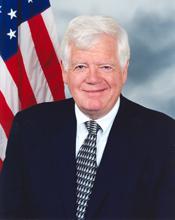
Mr. Speaker, it is my desire not to be repetitive, but the gentleman from Ohio (Mr. Brown) really said it all: Medicare is a program that we all agree we ought to fix, we ought to add a prescription…
Mr. Speaker, it is my desire not to be repetitive, but the gentleman from Ohio (Mr. Brown) really said it all: Medicare is a program that we all agree we ought to fix, we ought to add a prescription drug benefit.
Now Members know that the $400 billion that we have put into it is simply not enough. The plan has a great big doughnut hole in it. Most seniors will pay more than they will ever get out of the program, and when we talk about let us fully fund it so everybody gets what they need, we are told there is not enough money. Then if we look a little further into the bill, we find the medical savings accounts. Now I do not know if Members watching this on their television all understand, $400 billion is what they say, and they have $190-some-odd billion for medical savings accounts. Who gets the benefit
from that? How many people in this society are able to put money aside in anticipation of an illness?
We buy insurance; we cannot save up for it unless you are rich. This is a plan for the rich to shelter some more of their money. That money could much better be used for providing a good pharmaceutical benefit. Now, the motion of the gentlewoman from Illinois (Ms. Schakowsky) simply says let us get rid of one more tax break for the rich which is all the President and the Republican majority seem to be able to come up with. In a time when we are losing jobs everywhere and everything else is going wrong, they can find money to keep putting money out for tax breaks. Let us take that money and put it into a pharmaceutical benefit for seniors.
Why should we put a man out that everybody predicts 30 percent of the seniors who are covered now by their former employment will lose that benefit? Why should 74,000 people in the State of Washington who right now have a benefit lose it so we can give another tax break to the rich? It makes no sense. We should all vote for the motion of the gentlewoman from Illinois because it makes good sense, it is good public policy, and it is humane.
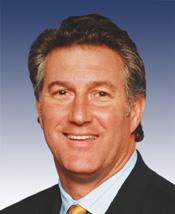
Mr. Speaker, I am privileged to represent more Native Americans than any other congressman. Recently my good friend, the gentleman from New Mexico (Mr. Udall), and I visited the Navajo Nation, the…
Mr. Speaker, I am privileged to represent more Native Americans than any other congressman. Recently my good friend, the gentleman from New Mexico (Mr. Udall), and I visited the Navajo Nation, the homeland of the Code Talkers, a distinct group of individuals that made significant contributions to the security of our Nation in World War II.
It is deplorable to visit the Navajo Nation and see the conditions of their children, of their families, living in dilapidated housing. Therefore, Congress enacted legislation to establish a program to address this difficulty. What makes it harder is that Native Americans live on sovereign land and the ability to secure collateral makes it harder for loans to be made.
The program that was established by Congress to address this issue is scheduled to conclude at the end of this fiscal year. However, because we set a cap limiting the number of loans under this program, the Department of Veterans Affairs exceeded the limit earlier this year. H.R. 2595 would lift the caps and allow the Department to continue to process the backlog of new loan applications.
I am proud to be a cosponsor of H.R. 2595 and believe the program provides equal opportunity to all veterans, especially Native Americans, to become homeowners.
In October 2000 a joint study of the Department of Housing and Urban Development and the Department of Treasury found that ownership among Native Americans is among the lowest in the country at just 33 percent. We must hold true and honor our commitment to those who served the Nation and help Native American veterans enjoy the security of homeownership. This program has been successful in making homeownership a reality for Native American Indian veterans. For those who bravely fought to sustain this prosperous Nation, we should lift the barriers they face in homeownership.
I urge my colleagues to vote favorably in favor of H.R. 2595.
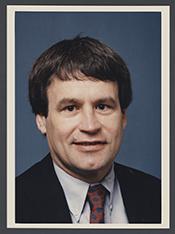
Mr. Speaker, I yield myself such time as I may consume. Mr. Speaker, I rise in strong support of this resolution. This will correct the terrible error that is depriving Native American veterans…
Mr. Speaker, I yield myself such time as I may consume.
Mr. Speaker, I rise in strong support of this resolution. This will correct the terrible error that is depriving Native American veterans access to home loans under the Native Americans Veterans Housing Program.
While the necessary funding for this loan program has already been appropriated, the administration requested a cap of $5 million on the loans of fiscal year 2003. By the time that fiscal year 2003 appropriations bill was signed, the cap had already been exceeded. Some Native Americans in Hawaii have partially built their homes but now are unable to complete that construction. This is no way to treat the brave Americans who fought for our country. This is a mistake that must be corrected now. Mr. Speaker, this bill would simply remove the existing cap on expenditures under this program. No additional funding is needed to restore the program to its original intent. I urge all Members to support this bill.
Mr. Speaker, I reserve the balance of my time.
Mr. Speaker, I yield 3 minutes to the gentleman from New Mexico (Mr. Udall).
Mr. Speaker, I yield 2 minutes to the gentleman from Hawaii (Mr. Case).
(Mr. CASE asked and was given permission to revise and extend his remarks.)
Mr. Speaker, I yield 4 minutes to the gentleman from American Samoa (Mr. Faleomavaega).
(Mr. FALEOMAVAEGA asked and was given permission to revise and extend his remarks.)
Mr. Speaker, I yield 2 minutes to the gentlewoman from Guam (Mr. Bordallo).
(Mr. BORDALLO asked and was given permission to revise and extend her remarks.)
Mr. Speaker, I have no further requests for time, and I yield back the balance of my time.
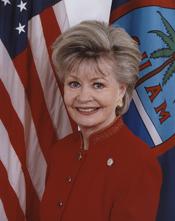
Mr. Speaker, when Congress authorized the Native American home loan bill in 1993, it recognized the poverty and the homelessness of veterans from the Pacific Islands. It recognized that those…
Mr. Speaker, when Congress authorized the Native American home loan bill in 1993, it recognized the poverty and the homelessness of veterans from the Pacific Islands. It recognized that those veterans needed special assistance to access the necessary financing to put a roof over their heads. Ten years later, the funding has expired, but the challenge remains the same.
Mr. Speaker, I understand that when the Department of Veterans Affairs shut down the lending program, they were on the verge of approving a loan to a Guam applicant. So I am pleased to join with my colleagues, Chairman Smith and Ranking Member Evans, in providing the funding authorization necessary to continue the program.
A noteworthy aspect of the Native American home loan bill is that it withholds a loan fee from applicants with a service-connected disability. Each time I meet with veterans in Guam and hear their descriptions of living with the effects of Agent Orange or a post- traumatic stress disorder, I am reminded that we have yet to repay the service that these men and women have given to our Nation. We need to provide adequate veterans benefits and services not just near where a military base or a VA processing center is but where the veterans are, places like the tribal lands of Colorado and the Chamorro land trust properties of Guam.
I hope that our action here today will bring attention to the good work of the program and increase the knowledge of the program amongst Native American communities.
Bill Text
4 versions available
        [Congressional Bills 108th Congress]
[From the U.S. Government Publishing Office]
[H.R. 2595 Referred in Senate (RFS)]

1st Session
H. R. 2595

_______________________________________________________________________

IN THE SENATE OF THE UNITED STATES

September 11, 2003

Received; read twice and referred to the Committee on Veterans' Affairs

_______________________________________________________________________

AN ACT

To restore the operation of the Native American Veteran Housing Loan
Program during fiscal year 2003 to the scope of that program as in
effect on September 30, 2002.

Be it enacted by the Senate and House of Representatives of the
United States of America in Congress assembled,

SECTION 1. OPERATION OF NATIVE AMERICAN VETERAN HOUSING LOAN PROGRAM.

(a) Restoration for Fiscal Year 2003 to Fiscal Year 2002 Level.--In
carrying out the pilot program provided by subchapter V of chapter 37
of title 38, United States Code, under which the Secretary of Veterans
Affairs is authorized to make direct housing loans to Native American
veterans, the Secretary shall during fiscal year 2003 carry out that
program without regard to the proviso under the heading ``Native
American Veteran Housing Loan Program Account'' in title I of the
Departments of Veterans Affairs and Housing and Urban Development, and
Independent Agencies Appropriations Act, 2003 (division K of Public Law
108-7; 117 Stat. 476), and such proviso shall be treated as being of no
force or effect.
(b) Savings Provision.--Any action taken by the Secretary of
Veterans Affairs before the enactment of this Act that is inconsistent
with the proviso referred to in

subsection (a) is hereby ratified with respect to such inconsistency.

Passed the House of Representatives September 10, 2003.

Attest:

JEFF TRANDAHL,

Clerk.