Great Lakes Controlled Data Collection and Monitoring Act
Legislative Activity
Stay on top of the latest movement without scrolling through every action
Referred to the Subcommittee on Water Resources and Environment.
July 9, 2003
View full timeline
Introduced in House
July 8, 2003
Referred to the House Committee on Transportation and Infrastructure.
July 8, 2003
Referred to the Subcommittee on Water Resources and Environment.
July 9, 2003
Floor Debate
11 membersWhat members said about H.R. 2668 on the floor
 EFH
EFH JBL
JBL FPJ
FPJ VJE
VJE RE+6
RE+6
Floor Debate
11 membersWhat members said about H.R. 2668 on the floor
Mr. Speaker, I want to thank the gentleman from Michigan and my good friend from New Jersey for the management of this proposed legislation. Mr. Speaker, I rise in support of Senate Joint Resolution…
Mr. Speaker, I want to thank the gentleman from Michigan and my good friend from New Jersey for the management of this proposed legislation.
Mr. Speaker, I rise in support of Senate Joint Resolution 41, as offered by the good Senator from the State of Colorado, Mr. Campbell; and I would like to take this occasion to commend Senator Ben Nighthorse Campbell and Senator Daniel Inouye on the historic opening of the National Museum of the American Indian.
The museum's opening and the other celebratory events of this week represent a culmination of over 15 years of dedicated work by Senator Ben Campbell and Senator Daniel Inouye to establish a national museum that acknowledges and honors the history, the achievement, and the arts and the culture of Native Americans.
This museum also symbolizes the courage and determination of Native Americans to persevere in the face of over 500 years of hardship and adversity. The National Museum of the American Indian is a true national treasure, a living legacy to the vitality and creativity of the first Americans of our Nation, a treasure that would not exist today without the vision and the efforts of Senator Ben ``Nighthorse'' Campbell and Senator Daniel Inouye.
Senator Campbell has worked tirelessly on behalf of Native Americans throughout his distinguished career. He introduced important legislation for native communities on issues as divergent as economic development, job training, trust reform and health care. Senator Campbell has also introduced resolutions honoring the contributions of Native American veterans to the United States and designating November 2003 as National American Indian Heritage Month. Senator Campbell has been a leading voice in establishing Native American policies and addressing the numerous challenges facing the Native American people, and his voice will be sorely missed when he retires at the end of this congressional session.
Senator Inouye has a tremendous reputation among the American Indian community. He deserves high praise for his countless contributions to the health and the well-being of our Nation's native people. Senator Inouye has been actively involved in the Senate Committee on Indian Affairs since 1978, playing a key role in establishing the committee from a select committee to a standing committee in order to better address long-neglected issues affecting our Native American community.
Senator Inouye has introduced legislation recognizing tribal sovereign authority, supporting native health care, and in conjunction with Senator Campbell, authorizing the construction of the National Museum of the Native American Indian.
Mr. Speaker, I also commend the Native American Caucus here in our own Chamber, led by my colleagues, the gentleman from Michigan (Mr. Kildee) and the gentleman from Arizona (Mr. Hayworth) for their outstanding leadership on issues of concern to the Native American community. For 16 years I have proudly supported the Native American Caucus as it advanced the interests of Native Americans in Congress, in the ongoing mission to improve the relationship between the United States Government and the Native American tribes to one of dignity and mutual respect.
Mr. Speaker, when I think of the American Indian museum, I think of the many trials and tribulations and suffering of the Native Americans. I am reminded of their generosity and humanity to teach the first pilgrims how to farm and to save the first Europeans from starvation. I am reminded of the forced removal of the Cherokees on the infamous ``Trail of Many Tears,'' and the moving surrender speech of Chief Joseph, who said, ``My heart is sick and sad. From where the sun now stands, I will fight no more, forever.''
Mr. Speaker, when I think of the American Indian Museum, I am reminded of the great speech by Chief Seattle, a member of the Squamish-Dowamish tribe in the State of Washington, and I will submit the text of Chief Seattle's speech for the Record. Chief Seattle's speech was a moving and most profound and keen observation on the relations between Native Americans and our country; profound, in that his insights were prophetic and accurate. I want to share with my colleagues an excerpt of Chief Seattle's speech, and I quote.
``Every part of this country is sacred to my people. Every hillside, every valley, every plain and grove has been hallowed by some fond memory or some sad experience of my tribe. Even the rocks, which seem to lie dumb as they swelter in the sun along the silent shore in solemn grandeur thrill with memories of past events connected with the fate of my people. The very dust under your feet responds more lovingly to our footsteps than to yours because it is the ashes of our ancestors, and our bare feet are conscious of the sympathetic touch, for the soil is rich with the life of our kindred.''
Mr. Speaker, as my good friend and colleague, the gentleman from California (Mr. Baca) alluded to earlier, the unmet social, political, educational and health care needs of some 4.1 million Native Americans is still an embarrassment, at least in this Member's opinion, and is not a record of which our national government can be proud. Yes, we are giving assistance, but never enough to do the job. I, for one, am puzzled by our Nation's inability to provide the necessary resources to assist our Native American community
with the very serious problems affecting them, especially health care and education.
Today, Mr. Speaker, the opening of the National Museum of the American Indian is a celebration of the Native American contributions to our national identity as well as a testament to the drive and determination of our congressional leaders who fought to make this museum a reality. Again I applaud the efforts of Senator Ben ``Nighthorse'' Campbell and Senator Daniel Inouye for their leadership and initiative, and I am hopeful that Congress will now act to give our Native American community a voice in government, hopefully for generations to come.
Mr. Speaker, I urge my colleagues to support Senate Joint Resolution 41.
Mr. Speaker, the speech of Chief Seattle, referred to above, follows:
Chief Seattle's Speech
As Translated by Dr. Henry Smith--Seattle, Washington Territory, During
Treaty Negotiations--1854
Yonder sky that has wept tears of compassion upon our
fathers for centuries untold, and which to us looks eternal,
may change. Today is fair, tomorrow it may be overcast with
clouds.
My words are like the stars that never set. What Seattle
says the Great Chief at Washington can rely upon with as much
certainty as our paleface brothers can rely upon the return
of the seasons.
The son of the White Chief says his father sends us
greetings of friendship and good will. This is kind, for we
know he has little need of our friendship in return because
his people are many. They are like the grass that covers the
vast prairies, while my people are few and resemble the
scattering trees of a storm-swept plain.
The Great, and I presume, also good, White Chief sends us
word that he wants to buy our lands but is willing to allow
us to reserve enough to live on comfortably. This indeed
appears generous, for the Red Man no longer has rights that
he need respect, and the offer may be wise, also, for we are
no longer in need of a great country.
There was a time when our people covered the whole land as
the waves of a windruffled sea covers its shell-paved floor.
But that time has long since passed away with the greatness
of tribes now almost forgotten. I will not mourn over our
untimely decay, nor reproach my paleface brothers for
hastening it, for we too, may have been somewhat to blame.
When our young men grow angry at some real or imaginary
wrong, and disfigure their faces with black paint, their
hearts, also, are disfigured and turn black, and then their
cruelty is relentless and knows no bounds, and our old men
are not able to restrain them.
But let us hope that hostilities between the Red Man and
his paleface brothers may never return. We would have
everything to lose and nothing to gain.
True it is, that revenge, with our young braves is
considered gain, even at the cost of their own lives. But old
men who stay at home in times of war and mothers who have
sons to lose, know better.
Our great father, Washington, for I presume he is now our
father as well as yours, since George has moved his
boundaries to the North--our great and good father, I say,
sends us word by his son, who, no doubt, is a great chief
among his people, that if we do as he desires he will protect
us.
His brave armies will be to us a bristling wall of
strength, and his great ships of war will fill our harbors so
that our ancient enemies far to the northward--the Simsiams
and Hydas--will no longer frighten our women and old men.
Then he will be our father and we will be his children.
But can that ever be? Your God is not our God! Your God
loves your people and hates mine! He folds His strong arms
lovingly around the white man and leads him as a father leads
his infant son--but He has forsaken his red children. He
makes your people wax strong every day and soon they will
fill all the land; while my people are ebbing away like a
fast receding tide that will never flow again. The white
man's God cannot love His red children or He would protect
them. They seem to be orphans who can look nowhere for help.
How, then, can we become brothers? How can your Father
become our father and bring us prosperity and awaken in us
dreams of returning greatness?
Your God seems to us to be partial. He came to the white
man. We never saw Him, never heard His voice. He gave the
white man laws, but had no word for His red children whose
teeming millions once filled this vast continent as the stars
fill the firmament.
No. We are two distinct races, and must ever remain so.
There is little in common between us.
The ashes of our ancestors are sacred and their final
resting place is hallowed ground, while you wander away from
the tombs of your fathers seemingly without regrets.
Your religion was written on tablets of stone by the iron
finger of an angry God, lest you might forget it. The Red Man
could never remember nor comprehend it.
Our religion is the traditions of our ancestors--the dreams
of our old men, given to them by the Great Spirit, and the
visions of our Sachems, and is written in the hearts of our
people.
Your dead cease to love you and the homes of their nativity
as soon as they pass the portals of the tomb. They wander far
away beyond the stars, are soon forgotten and never return.
Our dead never forget the beautiful world that gave them
being. They still love its winding rivers, its great
mountains and its sequestered vales, and they ever yearn in
tenderest affection over the lonely-hearted living, and often
return to visit and comfort them.
Day and night cannot dwell together. The Red Man has ever
fled the approach of the white man, as the changing mist on
the mountain side flee before the blazing morning sun.
However, your proposition seems a just one, and I think
that my folks will accept it and will retire to the
reservation you offer them, and we will dwell apart and in
peace, for the words of the Great White Chief seem to be the
voice of Nature speaking to my people out of the thick
darkness that is fast gathering around them like a dense fog
floating inward from a midnight sea.
It matters little where we pass the remainder of our days.
They are not many. The Indian's night promises to be dark. No
bright star hovers above his horizon. Sad-voiced winds moan
in the distance. Some great Nemesis of our race is on the Red
Man's trail, and wherever he goes he will still hear the sure
approaching footsteps of the fell destroyer and prepare to
meet his doom, as does the wounded doe that hears the
approaching footsteps of the hunter.
A few more moons, a few more winters, and not one of all
the mighty hosts that once filled this broad land or that now
roam in fragmentary bands through these vast solitudes or
lived in happy homes, protected by the Great Spirit, win
remain to weep over the graves of a people once as powerful
and as hopeful as your own!
But why should I repine? Why should I murmur at the fate of
my people? Tribes are made up of individuals and are no
better than they. Men come and go like the waves of a sea. A
tear, a tamanamus, a dirge and they are gone from our longing
eye forever. Even the white man, whose God walked and talked
with him as friend to friend, is not exempt from the common
destiny. We may be brothers after all. We shall see.
We will ponder your proposition, and when we have decided
we will tell you. but should we accept it, I, here and now,
make this the first condition, that we not be denied the
privilege, without molestation, of visiting at will the
graves of our ancestors and friends.
Every part of this country is sacred to my people. Every
hillside, every valley, every plain and grove has been
hallowed by some fond memory or some sad experience of my
tribe. Even the rocks, which seem to lie dumb as they swelter
in the sun along the silent shore in solemn grandeur thrill
with memories of pass events connected with the fate of my
people, the very dust under your feet responds more lovingly
to our footsteps than to yours, because it is the ashes of
our ancestors, and our bare feet are conscious of the
sympathetic touch, for the soil is rich with the life of our
kindred.
The sable braves, and fond mothers, and glad-hearted
maidens, and the little children who lived and rejoiced here
and whose very names are now forgotten, still love these
solitudes and their deep fastnesses as eventide grows shadowy
with the presence of dusky spirits.
And when the last Red Man shall have perished from the
earth and his memory among white men shall have become a
myth, these shores will swarm with the invisible dead of my
tribe and when your children's children shall think
themselves alone in the field, the store, the shop, upon the
highway, or in the silence of the woods, they will not be
alone. In all the earth there is no place dedicated to
solitude.
At night, when the streets of your cities and villages
shall be silent and you think them deserted, they will throng
with the returning hosts that once filled and still live this
beautiful land.
The white man will never be alone. Let him be just and deal
kindly with my people, for the dead are not powerless.
Mr. Speaker, I yield myself such time as I may consume. (Mr. Larson of Connecticut asked and was given permission to revise and extend his remarks, and include extraneous material.) Mr. Speaker, I…
Mr. Speaker, I yield myself such time as I may consume.
(Mr. Larson of Connecticut asked and was given permission to revise and extend his remarks, and include extraneous material.)
Mr. Speaker, I would like to associate myself with the remarks of the gentleman from Michigan. Indeed, I am pleased to support Senate Joint Resolution 41, commemorating the successful 15-year effort to create the National Museum of the American Indian and requesting the President to issue a proclamation for this occasion.
What a day it has been already, having the celebration kicked off this morning. So many Native Americans from my great State of Connecticut are down here for this very special commemoration.
I would also echo the remarks and sentiments of the gentleman from Michigan. What a great tribute. This is the 18th such museum that the Smithsonian has put up; and under their tutelage, we know that it is going to continue to be as spectacular as the 17 others that come under their control and auspices.
I am equally proud as well that so many tribes in the great State of Connecticut have contributed not only to our great economy and employment there but they themselves have been leaders. The Mashantucket Pequots of Mashantucket have put together their own museum and are going to collaborate here with the national museum.
They are both extraordinary sites and worth everyone visiting, as well as have the Mohegans in Connecticut who are also great economic contributors and employers in the State of Connecticut, who have also put together an educational program and archaeological field trips that teach both the culture and the storytelling and the lore of all that are so important.
So, Mr. Speaker, I am proud and encourage everyone to support this resolution today.
I am pleased to support S.J. Res. 41, commemorating the successful 15-year effort to create the National Museum of the American Indian (NMAI) on the Mall, and requesting the President to issue a proclamation for the occasion.
The legislation was originally introduced by Senators Campbell and Inouye, the chairman and ranking member of the Committee on Indian Affairs, and passed the Senate on July 22. Many of Connecticut's tribal nations are here this week for the commemoration.
The Museum encompasses the culture and history of indigenous peoples throughout the Western Hemisphere, who total more than 35 million.
The Museum, which is part of the Smithsonian Institution, opens today at 4.25 acre site southwest of the U.S. Capitol grounds. It is the only national museum devoted exclusively to the life, languages, literature, history and arts of cultures indigenous to the Americas.
Earlier today there are a ceremonial procession of Native Americans from the Smithsonian to the Capitol, followed by the Museum dedication ceremony on the Mall and the opening of the Museum to the public. A six-day festival and celebration on the Mall also begins today.
Besides the site on the Mall, the Museum also includes the George Gustave Heye Center, a museum in New York; and the Cultural Resources Center, a research and collections facility in Suitland, Maryland.
The National Museum of the American Indian is the 18th museum under the control of the Smithsonian. It was formally created by Congress in 1989 after the Heye Foundation in New York City agreed to transfer its own unique collection to the Smithsonian. Construction on the Mall began in 1999.
The structure has a unique architectural design using Kasota limestone which gives the appearance of having been weathered by the elements. It is a majestic setting which enhances the Mall, and the Museum's location along Independence Avenue near the Capitol ensures that it will become one of Washington's premier attractions for visitors. American Indians have played a key role in the Museum's design and fund-raising, as well as the exhibitions and programs.
The Smithsonian Institution has developed a special expertise in conceiving and managing museums which move beyond traditional concepts of exhibitions that remain static for decades, and instead allow living and evolving history to be displayed.
This is especially appropriate since Native American communities in the United States and Canada, and throughout the Hemisphere, remain vital forces in the cultural identifies of the many new nations with which they have been joined.
The Native American communities in the United States remain distinct, highly visible entities culturally, and often politically and economically, in the States where they are located. In this country alone there are more than 500 distinct Native cultural communities recognized by the Federal government, and States recognize still more.
There are more than two million indigenous peoples residing in the United States.
The Mashantucket Pequot Tribe, in my home State of Connecticut, in addition to being a major employer and economic force in the State due to its well-known casinos, was the first Tribe to make a large donation to the National Museum of the American Indian. Its $10-million donation was, at the time, the largest-ever single contribution to the Smithsonian. Both the Mohegan Tribe of Connecticut and the Oneida Tribe of New York later made similar donations.
The National Museum of the American Indian has also been the beneficiary of numerous other sizable donations from tribal communities and tribally related organizations. Tribes and tribal organizations have donated nearly one quarter of the approximately $199 million total cost of the Museum building, a testament to the continuing cultural and economic vitality of Indian tribes and their interest in disseminating knowledge to the broader American public.
The Mashantucket Pequots also own and operate the Mashantucket Pequot Museum and Research Center in Mashantucket. This 308,000 sq. ft. facility houses the largest collection of Native American artifacts in the world. Four full acres of permanent exhibits at the Center depict 18,000 years of Native and natural history in thoroughly researched detail. The Mashantucket Pequot Tribe, along with the Mashantucket Pequot Museum and Research Center will continue to work together in a cooperative agreement with the National Museum of the American Indian.
The Mohegans have also created many educational resources to bring their contributions to a wider audience. Their Archaeological Field School provides an opportunity to learn about Native American history first-hand. Cultural and community programs bring Mohegan culture to life through presentations of tribal artifacts.
It is an honor for me to know personnally so many tribal leaders, including from the Mohegans, Lifetime Chief and former Chairman Ralph Sturges, Chairman Mark F. Brown, Vice Chairman Peter J. Schultz and Ambassador Jayne G. Fawcett; and from the Mashantuckets, Chairman Michael Thomas, Vice Chairman Richard ``Skip'' Hayward, Executive Director of Public Affairs Pedro Johnson, and Councilmember Kenny Reels.
Mr. Speaker, the successful completion of the National Museum of the American Indian bodes well for public interest in the National Museum of African American History and Culture, which was created by Congress last year and is in the preliminary stages of development, site selection and fund-raising.
I insert in the Congressional Record at this point a chronology of the development of the National Museum of the American Indian prepared by the Smithsonian Institution.
National Museum of the American Indian Chronology
1980--Discussions begin between the Smithsonian Institution
and the Museum of the American Indian, Heye Foundation in New
York City. The Heye collection of 800,000 objects,
representing tribes from the entire Western Hemisphere, was
one of the largest Native American collections in the world.
The talks were initiated by the museum's trustees, and
discussions centered on an affiliation with the Smithsonian
while still maintaining an independent museum in New York.
Although not conclusive in themselves, these early talks lead
the way to future negotiations.
April 1987--Smithsonian Secretary Robert McC. Adams
accompanied Senator Daniel Inouye (D-Hawaii) to New York to
talk with officials of the Museum of the American Indian,
Heye Foundation.
May 4, 1987--The board of trustees of the Museum of the
American Indian unanimously adopted a resolution providing
for an affiliation between its museum and the Smithsonian,
and for the relocation of the museum collections to a new
building on the National Mall in Washington.
May 11, 1987--The Smithsonian Board of Regents approved a
motion encouraging the Secretary to ``continue discussions
with representatives of the Museum of the American Indian,
Heye Foundation, about the prospect of a formal institutional
relationship between the museum and the Smithsonian.''
Following discussion with the Smithsonian and the Heye
Foundation's board of trustees, Senator Inouye introduced a
bill (S. 1722) on September 25, 1987, to establish a National
Museum of the American Indian within the Smithsonian
Institution.
The Smithsonian Institution continues its negotiations with
the board of trustees of the Museum of the American Indian,
Heye Foundation. The Smithsonian Board of Regents approved an
``agreement in principle'' on January 30, 1989 to transfer
the Museum of the American Indian collection to the
Smithsonian.
March 16, 1989--Julie Johnson Kidd, chairman of the Heye
Foundation, signed the agreement. The Smithsonian Board of
Regents gave its final approval to the agreement on May 8,
1989, and it was endorsed the same day by Secretary Adams.
Senator Inouye introduced S. 978 to establish the National
Museum of the American Indian on May 11, 1989, and Senator
Ben Nighthorse Campbell (R-Colorado), at that time a U.S.
representative from Colorado, introduced companion
legislation, H.R. 2668 on June 15, 1989.
September 12, 1989--Secretary Adams joined Senators Inouye
and Campbell for a press conference announcing the
Smithsonian's revised policy on repatriation of American
Indian human remains in the National Museum of Natural
History collections. The legislation establishing the new
museum, to be named the National Museum of the American
Indian, would incorporate the repatriation policy and
appropriate funds for an inventory of human remains in the
Smithsonian's collections.
November 28, 1989--President George Bush signs legislation
establishing the National Museum of the American Indian as
part of the Smithsonian Institution.
May 21, 1990--Secretary Adams announced the appointment of
W. Richard West (Southern Cheyenne), as founding director of
the new museum, effective June 1, 1990.
April 1991--The Smithsonian selected Venturi, Scott Brown
and Associates Inc. of
Philadelphia to assist the National Museum of the American
Indian in developing general architectural program
requirements and criteria for the design of the new museum in
Washington, D.C., and for a Cultural Resources Center in
Suitland, MD, about six miles from Washington where the
museum's collections would be housed.
June 1992--The Smithsonian selected Polshek and Partners of
New York City, Tober + Davis of Reston, VA, and the Native
American Design Collaborative to provide architectural and
engineering services for the Cultural Resources Center.
A preview exhibition, ``Pathways of Tradition,'' a
selection of more than 100 objects representing American
Indian cultures and creativity, was on view at the
Smithsonian's George Gustav Heye Center of the National
Museum of the American Indian in New York City from November
15, 1992-January 24, 1993.
February 1993--The Smithsonian selected the architectural
firm of GBQC of Philadelphia in association with Douglas
Cardinal Architect Ltd. of Ottawa, Canada, to create the
design concept for the National Museum of the American Indian
on the National Mall in Washington.
October 30, 1994--The museum's Geroge Gustav Heye Center
officially opened in the Alexander Hamilton U.S. Custom House
at One Bowling Green in New York City.
January 1998--The Smithsonian terminated its relationship
with GBQC and Douglas Cardinal (Blackfoot) and the
Institution assumed responsibility for the design and
construction of the museum on the National Mall. Assisting
the Smithsonian were Polshek/Smith Group and Johnpaul Jones
(Cherokee/Choctaw).
September 28, 1999--The groundbreaking and blessing
ceremony takes place on the National Mall in Washington, DC,
at the site of the National Museum of the American Indian's
Mall Museum. The new museum will occupy the Mall's last
remaining site. Three planned inaugural exhibitions will
feature historic and contemporary aspects of Native life, and
will highlight artifacts from the museum's priceless
collection.
June 26, 2001--The Smithsonian Institution awarded a
contract to ``CLARK/TMR, A Joint Venture,'' to build the
National Museum of the American Indian. CLARK/TMR is composed
of the Clark Construction Company of Bethesda, MD, and Table
Mountain Rancheria Enterprises Inc., a construction company
that is a subsidiary of the Table Mountain Rancheria of
Friant, CA.
September 14-15, 2002--A national Pow Wow was sponsored by
the museum on the National Mall adjacent to the museum
construction site. Approximately 25,000 people attended to
watch nearly 500 Native Americans dance over the two-day
event.
November 20, 2002--A ``topping out'' (a circular section of
glass was installed on the roof of the building) ceremony and
blessing was held to mark the completion of the major
structural elements of the new building.
January 15, 2004--The first phase of occupancy of the new
museum by staff begins.
Mr. Speaker, I ask unanimous consent that the gentleman from New Jersey (Mr. Pallone) may control the remainder of my time.
Mr. Speaker, I yield 7 minutes to the gentleman from American Samoa (Mr. Faleomavaega). (Mr. FALEOMAVAEGA asked and was given permission to revise and extend his remarks.) Mr. Speaker, may I inquire…
Mr. Speaker, I yield 7 minutes to the gentleman from American Samoa (Mr. Faleomavaega).
(Mr. FALEOMAVAEGA asked and was given permission to revise and extend his remarks.)
Mr. Speaker, may I inquire about the amount of time I have remaining?
Mr. Speaker, I yield myself such time as I may consume, and I do not intend to use all the time, but I do want to speak out about the National Museum of the American Indian.
First of all, let me say that 15 years after Congress passed legislation calling for the establishment of a National Museum of the American Indian, we finally arrive today at the day when American Indians have a place to call their own in the Nation's Capital. I had the opportunity today to witness most of the procession that took place beginning at 9 a.m. and then the opening
ceremony at 12 noon, and then the opportunity this afternoon to go and visit the museum itself. So I want to talk a little bit about my firsthand experiences today and why I think it is so significant that this museum has finally opened.
When I was talking to Native Americans today, some of whom I had met before, some of whom I had not, they all seemed to say the same thing, which is, finally, finally, the day had come when they were going to be recognized in this museum. I asked some of them what they meant by that, and they pretty much said the same thing, which was that for a long time in these United States, Native American culture was not paid attention to.
Many people, I would say, particularly on the East Coast, are not even aware of the fact that Native American communities continue to exist. It is almost as if they are something that happened and occurred a long time ago, maybe 100 years ago, and now there is very little knowledge on the part of many Americans about Native Americans or their communities. So the museum seeks to change all that.
When I went through the museum today, there was, of course, reference to the genocide that occurred, there was, of course, reference to, I remember one particular place where there is a wall that talks about how so many Native Americans were wiped out through diseases when Europeans arrived. But, generally speaking, it was not so much a museum about the past, it was much more a museum about communities that exist today, the peoples that exist today, the cultures that exist today, and the uniqueness of them and how there is so much variety between the various tribes and Indian nations, not only in the United States, but in all of the Americas.
So the museum has become an affirmation of the fact that Native Americans and their communities not only continue to exist, but are growing and are vibrant and are an important part of American culture. I think that is a lesson that is certainly important for nonNative Americans. In the museum today, most of the people seemed to be American Indians, but there were certainly a lot of people who were not, and the museum serves as a way of explaining to them how the Native American culture continues to exist and survive and strive and move forward.
I have to also say that looking at the museum, the artwork was just unbelievable, not only in terms of traditional culture, such as baskets, moccasins, clothing, and blankets, but also in terms of modern art, like abstract art and abstract paintings. It truly is a museum that encompasses the entire spectrum of the Native American culture. So I just want to say that when I went down there today and witnessed the museum, I just felt that this was sort of the culmination of the artistic achievement of the Native American culture in the United States.
The other thing that was so significant was the opening ceremony today. I think they estimated there were over 10,000 native peoples that participated in the opening ceremony. They were arranged alphabetically by tribe. And when you saw them march, you could see the pride in their faces, you could see the children that were learning from the experience, you could see the elders that were so proud to be there, and the various cultures in just watching that procession with the various tribes.
I do not know how many tribes were represented. I am sure there had to be hundreds, not only from the United States, but also throughout the Americas. I saw Incas from Peru, I saw people from the extreme southern part of South America, and I saw Arctic peoples. It was just truly amazing.
So I just want to close today, although I do see we have another speaker that I will yield some time to, but I want to close today by saying on my behalf, and also on behalf of the Native American Caucus, of which I am one of the vice chairs, we want to welcome the thousands of Native Americans that came to Washington to celebrate the opening of the National Museum of the American Indian, and certainly ask my colleagues here in the House to join in the celebration this week and take time to reflect now upon the rich culture of Native Americans.
Mr. Speaker, I reserve the balance of my time.
Mr. Speaker, I yield 3 minutes to the gentleman from Washington (Mr. McDermott).
Mr. Speaker, I yield 2 minutes to the gentlewoman from Texas (Ms. Jackson-Lee).
Mr. Speaker, I yield back the balance of my time.
Mr. Speaker, I move to suspend the rules and pass the Senate joint resolution (S.J. Res. 41) commemorating the opening of the National Museum of the American Indian. Mr. Speaker, I yield myself such…
Mr. Speaker, I move to suspend the rules and pass the Senate joint resolution (S.J. Res. 41) commemorating the opening of the National Museum of the American Indian.
Mr. Speaker, I yield myself such time as I may consume.
Senate Joint Resolution 41 commemorates the opening of the National Museum of the American Indian.
Today brings to a conclusion a concept that started over 20 years ago, to create a national museum in our Nation's capital which is dedicated exclusively to Native American art, history, and culture.
Today will also mark the beginning of a lasting tribute to those individuals who were our country's earliest inhabitants.
The Smithsonian Institution's National Museum of the American Indian sits adjacent to the National Air and Space Museum on over 4 acres of land, just southwest of the U.S. Capitol.
The building's appearance is unlike any other in Washington, D.C., and it has symbolic references to Native American culture. The building's limestone exterior gives it the appearance of natural rock formations that have been carved by wind and water.
Three-quarters of the site is reconstructed natural habitats that are indigenous to this southeastern region, and the building itself will display about 8,000 objects from its permanent collection. The displays will include not only historical artifacts, but will also portray ongoing vital contributions Native Americans bring to this Nation's art and culture.
The building has some special features which include an entrance facing east toward the rising sun, a prism window and a 120-foot high atrium called the Potomac, which was designed in consultation with many Native Americans.
Native Americans indeed have had profound influences on our Nation's culture from the very birth of our country through today and will continue into the future.
At a time when our military receives so much focus, it is important to remember that some of our military's great heroes, such as the code talkers, were Native Americans who helped preserve our country's ideals and beliefs.
It is also important to note that Native Americans make up less than 1 percent of the total U.S. population, but represent half the languages and cultures in the Nation.
The term ``Native American'' includes over 500 different groups and reflects great diversity of geographic location, language, socioeconomic conditions, and retention of traditional spiritual and cultural practices. However, many teaching materials present a generalized image of Native American people with little or no regard for differences that exist from tribe to tribe. I believe this museum provides a strong presentation of these differences and will be very educational to the viewer and to the Nation.
It is remarkable that Native Americans have retained many of their longstanding traditions, even though numerous outside influences create pressures for change.
Thanks to the efforts of Senator Inouye and our former House colleague, Senator Ben Nighthorse Campbell, legislation was signed by former President George Herbert Walker Bush on November 28, 1989; and today this museum has become a reality.
I hope all my colleagues and all who visit our Nation's capital will take the opportunity to visit this wonderful museum, and I urge my colleagues to support S.J. Res. 41.
Mr. Speaker, I reserve the balance of my time.
Mr. Speaker, I reserve the balance of my time to close. I have no further speakers other than myself.
Mr. Speaker, I continue to reserve the balance of my time.
Mr. Speaker, I yield myself the balance of my time.
Mr. Speaker, it is my pleasure to wrap up this debate. I thank my colleagues for their fine speeches and good comments that have been made. However, I must express my concern that the gentleman from Washington State tarnished this joyous event by raising partisan issues, and I certainly dispute the gentleman's statement that the current President of the United States would have stopped the construction of this museum if he had been able to. That is certainly a wrong assumption, and I am sorry that statement was made.
I want to speak on behalf of the full Congress and say we are very pleased to join the Smithsonian and the Native American community in this country by celebrating the completion of this museum. It will be a tremendous asset to this country in understanding the first human inhabitants of this continent, and I hope everyone who proceeds through the museum will regard with great reverence and respect the history of the American Indian and learn a great deal about the founders of this country and who established the first governments. I am very pleased to be able to participate in this event.
Mr. Speaker, I proudly rise to recognize the American Indian Center of Chicago, the longest-running urban Indian organization in the country and the leader of the National Urban Indian Family…
Mr. Speaker, I proudly rise to recognize the American Indian Center of Chicago, the longest-running urban Indian organization in the country and the leader of the National Urban Indian Family Coalition. I would like to congratulate the American Indian Center on its family oriented activities and publication of the new book ``Chicago's 50 Years of Powwows.'' I would also like to congratulate them on the special honor of being selected by the Smithsonian Institute as the only organization representing contemporary urban American Indians to be featured in the opening of the new Smithsonian's National Museum of the American Indian. This museum celebrating the past and present of American Indians, and their rich history, opened today.
The American Indian Center of Chicago is showcased in the new Smithsonian's National Museum of the American Indian exhibit Our Lives: Contemporary Life and Identities. Our Lives presents the American Indian culture from a first voice perspective and tells stories of modern American Indian communities, examining the personal and collective identities of American Indian peoples in the 21st century.
The American Indian Center of Chicago was organized in 1953 by the Chicago American Indian community, in response to the Indian Relocation Act. That bill brought an influx of American Indians to Chicago, which soon became home to individuals from more than 50 tribes, including Oneida, Ojibwa, Menominee, Sac and Fox, Potawatomi, Lakota, Navajo, Blackfoot, Papago, and many others.
Throughout its history, the American Indian Center has been the principal cultural resource for American Indians in Chicago, promoting cultural awareness and cultural education within and outside the American Indian community. Over the years the center has hosted powwows, potlucks, bingo, birthdays, special celebrations, wakes and commemorative dinners, and many other special events.
Today, the American Indian Center of Chicago is a family-focused urban center and educational organization. It is also the cultural institution where the richness of American Indian traditions and culture are celebrated. The center serves as a model for other American Indian urban organizations in the country.
Mr. Speaker, on this historic day marking the opening of the new Smithsonian's National Museum of the American Indian on the National Mall, I wish to congratulate the American Indian Center of Chicago on its leadership and work with the American Indian community, and high honor of being selected by Smithsonian as part of its grand opening exhibits. On this remarkable day, I am proud to join the American Indian people of my district, as well as those of American Indian descent throughout the country, in celebrating this historic event.
Show 6 more
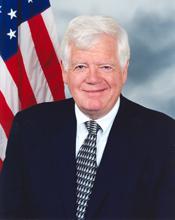
Mr. Speaker, I appreciate the opportunity to talk on this resolution because I think it is a long time in coming. Our treatment of the first people in this country has been abysmal. We are largely…
Mr. Speaker, I appreciate the opportunity to talk on this resolution because I think it is a long time in coming. Our treatment of the first people in this country has been abysmal. We are largely ignorant of what their culture was or that there was a culture, and this is now an opportunity to redress what I think has been a serious error that has been made by the United States.
What is amazing about this is that it is not over. At the time of the last 8 years under President Clinton, a number of tribes tried to get their recognition. The Dowamish and Chinook tribes in the State of Washington went through the entire process in the Department of the Interior. They were given their status as recognized tribes in this process. The President signed the order creating this relationship with the Chinooks and the Dowamish, and when the new administration came in, one of the very first things they did was reach back into the desk drawer and wipe out the Dowamish tribe. They do not exist any more, to this administration.
Now, I come from a city called Seattle, that is a corruption of the name of the Chief of the Dowamish tribe, Sealth. Chief Sealth was a Dowamish. He lived in this country when everybody arrived. He helped those people who came into Pugent Sound all by themselves. And, in fact, he gave his name to the city. He made a speech once where he said, ``When I met the great white father, I didn't know the land was his. I thought that God gave us, the great spirit gave us the land to live in and to share and to leave it in better condition than when we found it.'' That kind of wisdom is in that museum, and you will see it.
However, the fact is there are still wrongs that need to be righted. This Congress needs to advance a bill, which we put in a couple of years ago and no one ever wants to even have a hearing on. We want to be out here glorify the opening of a museum. And it is a good thing the museum was started before this administration got in place, or it never would have happened. I believe that there are these kind of grievances that people need to go and find out about.
We took their land. We created treaties with people who did not really understand how skillful we were with words, but they took us at our words and they have tried to live with us. But the fact is that we still continue to leave the Dowamish without their recognition and Chief Sealth is a man without a tribe.
That is wrong. We should fix that, too.

Mr. Speaker, this week, thousands of indigenous people from across the Western Hemisphere have come to Washington, DC. It is arguably the largest gathering of native people in U.S. history. By…
Mr. Speaker, this week, thousands of indigenous people from across the Western Hemisphere have come to Washington, DC. It is arguably the largest gathering of native people in U.S. history. By planes, cars, metro, and on foot, native people have come to celebrate the opening of the National Museum of the American Indian. The museum is a stunning and long overdue tribute to indigenous people across this land.
If is entirely fitting and appropriate that the National Museum of the American Indian join the United States' other national treasures, and take its place among the family of Smithsonian museums on the Mall. For, the history and culture of our nation is inseparable from the history and culture of Indian people.
Through centuries of great hardship, Indian people have struggled to maintain their social and cultural identity. The museum opening marks a revolution in this struggle, for it is a reclaiming of native identity. It is the culmination of thousands of hours of work by Indian people to tell their story. It links the past, present, and future of Indian people in a way that visitors can experience and understand the native perspective. The design and construction of the museum, itself, reveals an animate, live entity. And inside visitors find the living cultures of Indian people in language, history, dance, arts, cultural values, and spirituality.
As a Representative of Oklahoma, the State historically known as Indian Country, and as a member of the Cherokee Nation, I am deeply honored to join the native community in witnessing and welcoming this historical event, for the opening of the National Museum of the American Indian celebrates what was once despised, and honors what our Nation for too long tried to eradicate.
It is my hope, the location and majesty of the museum will today--and forever--remind lawmakers on Capitol Hill of the United States legal and moral responsibilities to Indian nations. For we must never forget to honor and recognize all that Indian tribes contribute and have sacrificed.
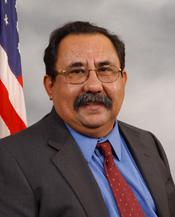
Mr. Speaker, I rise today on behalf of all the tribal people of my district and of Arizona to commemorate the opening of the American Indian Museum today in Washington, DC. This is an historic moment…
Mr. Speaker, I rise today on behalf of all the tribal people of my district and of Arizona to commemorate the opening of the American Indian Museum today in Washington, DC. This is an historic moment when at long last the indigenous peoples of this continent have a place to call their own on our National Mall and in our national consciousness.
The museum is not a place that will display relics of the past, but a living monument to the multitudes of cultures, arts, and languages that exist in the Americas. This museum will be a ``living legacy'' to those who have come before, and a gift to those who will be born in the future.
This morning I had the honor of seeing the procession of Native American people on the National Mall. Tens of thousands of people from every corner of this continent filled the Mall. They have come to make a ceremonial and symbolic journey, representing the millions of native people who live and thrive in the Americas.
But, while we honor this monument to our native peoples today we must not forget the ongoing struggle these communities face to retain their dignity in face of poverty, unemployment, lack of access to adequate healthcare, among other issues.
For example, the infant mortality rate is 150 percent greater for Indians than that of White infants. Indians have the highest prevalence of Type-2 diabetes in the world, and are 2.6 times more likely to be diagnosed with diabetes. Indians have a life expectancy 5 years less than the rest of the U.S. population.
The United States has a longstanding trust responsibility to provide health care services to American Indian and Alaska Natives. As a society, we can and we must take action to address the disparity and distress many of these communities face.
So on this occasion, I ask my fellow Members of Congress to join me in honoring the opening of the American Indian Museum, and I also ask you to join me in seeking to address some of the difficulties facing our native population in order to truly honor the first Americans.
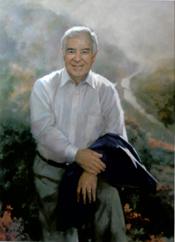
Mr. Speaker, I rise today to congratulate our first Americans on this, the long awaited opening day of the National Museum of the American Indian. If, indeed, the last shall be first, this is a fine…
Mr. Speaker, I rise today to congratulate our first Americans on this, the long awaited opening day of the National Museum of the American Indian. If, indeed, the last shall be first, this is a fine example as this museum dedicated to our first Americans is located on the last spot open on the National Mall.
This a joyous day. At this very moment, thousands of native Americans who traveled from all the corners of our country, Canada, and South America are participating in a procession on the Mall leading to the museum itself. They are dressed in unique traditional attire, stopping along the way to celebrate with dance, song, and drums.
I am honored to say that as a member of the Interior and Insular Affairs Committee, I worked with then Chairman Mo Udall on the legislation to build a museum devoted solely to the culture, art, and history of our Native Americans. Although Mo is no longer with us, I am certain that he is smiling down upon us today.
I encourage everyone to visit this magnificent National Museum of the American Indian and use its resources to learn about the rich history and legacy of Native Americans, as well as contemporary Indian life. I promise your lives will be enriched by the experience.
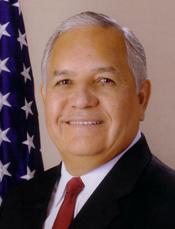
Mr. Speaker, I rise today in strong support of S.J. Res. 41, commemorating the opening of the Smithsonian's National Museum of the American Indian. For the first time in our Nation's history, the…
Mr. Speaker, I rise today in strong support of S.J. Res. 41, commemorating the opening of the Smithsonian's National Museum of the American Indian.
For the first time in our Nation's history, the American public is being provided with a venue in which they can explore and develop a deeper understanding of this rich culture, its history, and the issues that affect these communities. Our Native American citizens have long been awaiting this day.
My district is fortunate to have one of the three Native American reservations in Texas. The Tiguas of Ysleta del Sur founded one of the oldest communities in the Southwest over 300 years ago. They have faced many hardships, but they continue to thrive and persevere as a united community. It is a great honor to have the Tiguas share their rich culture and history with the El Paso community, and I am glad to see that all Native American communities will now be able to do the same with the rest of the Nation in this beautiful new museum.
Mr. Speaker, I encourage all Americans to visit the National Museum of the American Indian when in Washington, DC, and I urge my colleagues to show their support for this very worthy resolution.
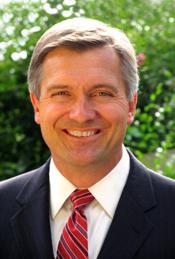
Mr. Speaker, I rise in celebration of today's opening of the National Museum of the American Indian--a historic event that is long overdue. My congressional district contains lands of the Navajo…
Mr. Speaker, I rise in celebration of today's opening of the National Museum of the American Indian--a historic event that is long overdue. My congressional district contains lands of the Navajo Nation, the Southern Utah Paiutes, and the Northern Ute Indian Tribe-- people who understand all too well the atrocities that Native Americans have experienced at the hand of our Federal Government.
The opening of this museum is a bold step toward the United States becoming a nation that understands the history of its people and celebrates the uniqueness of native cultures in its society. My hope is that the museum will help foster and maintain this understanding for ``as long as the rivers shall run and the grass shall grow.''
The designing of the National Museum of the American Indian was indicative of the cooperative and inclusive process that the Federal Government should always use when working with Native American tribes. I am proud of the collaborative efforts of all of the people who worked to make this museum a success, and I welcome the many Utahns who join me in celebrating this joyous occasion.
Mr. Speaker, I yield back the balance of my time.
Bill Text
Latest available legislative text
        [Congressional Bills 108th Congress]
[From the U.S. Government Publishing Office]
[H.R. 2668 Introduced in House (IH)]

108th CONGRESS
1st Session
H. R. 2668

To amend the Federal Water Pollution Control Act to direct the Great
Lakes National Program Office of the Environmental Protection Agency to
develop, implement, monitor, and report on a series of indicators of
water quality and related environmental factors in the Great Lakes.

_______________________________________________________________________

IN THE HOUSE OF REPRESENTATIVES

July 8, 2003

Mrs. Miller of Michigan introduced the following bill; which was
referred to the Committee on Transportation and Infrastructure

_______________________________________________________________________

A BILL

To amend the Federal Water Pollution Control Act to direct the Great
Lakes National Program Office of the Environmental Protection Agency to
develop, implement, monitor, and report on a series of indicators of
water quality and related environmental factors in the Great Lakes.

Be it enacted by the Senate and House of Representatives of the
United States of America in Congress assembled,

SECTION 1. SHORT TITLE.

This Act may be cited as the ``Great Lakes Controlled Data
Collection and Monitoring Act''.

SEC. 2. FINDINGS.

Congress finds that--
(1) there are no comprehensive, regularly-collected data
that reveal whether the water quality or related environmental
factors of the Great Lakes have improved as a result of efforts
to remediate and protect the Great Lakes;
(2) that lack of data was confirmed in May 2003 in a report
by the General Accounting Office that concluded that existing
data were inadequate to assess the overall progress of
restoration efforts in the Great Lakes; and
(3) without those data, it is impossible to determine
whether--
(A) progress is being made toward achieving the
goals contained in the Great Lakes Water Quality
Agreement between the United States and Canada; or
(B) Federal and State water quality standards and
remediation programs are effective.

SEC. 3. GREAT LAKES WATER QUALITY INDICATORS AND MONITORING.

(a) In General.--Section 118(c)(1) of the Federal Water Pollution
Control Act (33 U.S.C. 1268(c)(1)) is amended by striking subparagraph
(B) and inserting the following:
``(B)(i) Not later than 2 years after the date of
enactment of this clause, the Administrator, in
cooperation with Canada and appropriate Federal
agencies (including the United States Geological
Survey, the National Oceanic and Atmospheric
Administration, and the United States Fish and Wildlife
Service), shall develop and implement a set of science-
based indicators of water quality and related
environmental factors in the Great Lakes, including, at
a minimum, measures of toxic pollutants that have
accumulated in the Great Lakes for a substantial period
of time, as determined by the Program Office.
``(ii) Not later than 4 years after the date of
enactment of this clause, the Administrator shall
establish a Federal network for the regular monitoring
of, and collection of data throughout, the Great Lakes
basin with respect to the indicators described in
clause (i) and collect an initial set of benchmark data
from the network.
``(iii) Not later than 2 years after the date of
collection of the data described in clause (ii), and
biennially thereafter, the Administrator shall submit
to Congress, and make available to the public, a report
(in addition to the report required under paragraph
(10)), that--
``(I) describes the water quality and
related environmental factors of the Great
Lakes (including any changes in those factors),
as determined through the regular monitoring of
indicators under clause (ii) for the period
covered by the report; and
``(II) identifies any emerging problems in
the water quality or related environmental
factors of the Great Lakes.''.
(b) Authorization of Appropriations.--Section 118 of the Federal
Water Pollution Control Act (33 U.S.C. 1268) is amended by striking
subsection (h) and inserting the following:
``(h) Authorization of Appropriations.--
``(1) In general.--There is authorized to be appropriated
to carry out this section (other than subsection (c)(1)(B))
$32,000,000 for each of fiscal years 2004 through 2008.
``(2) Great lakes water quality indicators and
monitoring.--There are authorized to be appropriated to carry
out subsection (c)(1)(B)--
``(A) $5,000,000 for fiscal year 2004;
``(B) $7,000,000 for fiscal year 2005;
``(C) $9,000,000 for fiscal year 2006; and
``(D) $11,000,000 for fiscal year 2007.''.
<all>