Salt Cedar and Russian Olive Control Assessment and Demonstration Act
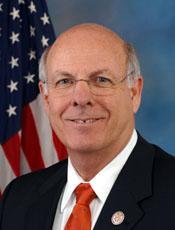 Rep. Stevan Pearce (R-NM)
Legislative Activity
Stay on top of the latest movement without scrolling through every action
Read twice. Placed on Senate Legislative Calendar under General Orders. Calendar No. 605.
June 25, 2004
View full timeline
Introduced in House
July 10, 2003
Referred to the Committee on Resources, and in addition to the Committee on Agriculture, for a period to be subsequently determined by the Speaker, in each case for consideration of such provisions as fall within the jurisdiction of the committee concerned.
July 10, 2003
Referred to the Subcommittee on Department Operations, Oversight, Nutrition and Forestry.
July 15, 2003
Referred to the Subcommittee on National Parks, Recreation and Public Lands.
July 16, 2003
Referred to the Subcommittee on Forests and Forest Health.
July 24, 2003
Subcommittee Hearings Held.
July 24, 2003
Subcommittee on Forests and Forest Health Discharged.
October 29, 2003
Subcommittee on National Parks, Recreation and Public Lands Discharged.
October 29, 2003
Committee Consideration and Mark-up Session Held.
October 29, 2003
Ordered to be Reported (Amended) by Unanimous Consent.
October 29, 2003
Reported (Amended) by the Committee on Resources. H. Rept. 108-424, Part I.
February 24, 2004
House Committee on Agriculture Granted an extension for further consideration ending not later than Feb. 24, 2004.
February 24, 2004
Placed on the Union Calendar, Calendar No. 244.
February 24, 2004
Mr. Pearce moved to suspend the rules and pass the bill, as amended.
February 24, 2004 • 2:20 PM
Considered under suspension of the rules. (consideration: CR H520-523)
February 24, 2004 • 2:21 PM
DEBATE - The House proceeded with forty minutes of debate on H.R. 2707.
February 24, 2004 • 2:21 PM
At the conclusion of debate, the Yeas and Nays were demanded and ordered. Pursuant to the provisions of clause 8, rule XX, the Chair announced that further proceedings on the motion would be postponed.
February 24, 2004 • 2:40 PM
Considered as unfinished business. (consideration: CR H529-530)
February 24, 2004 • 7:12 PM
Passed/agreed to in House: On motion to suspend the rules and pass the bill, as amended Agreed to by the Yeas and Nays: (2/3 required): 367 - 40 (Roll no. 26).(text: CR H520)
February 24, 2004 • 7:20 PM
On motion to suspend the rules and pass the bill, as amended Agreed to by the Yeas and Nays: (2/3 required): 367 - 40 (Roll no. 26). (text: CR H520)
February 24, 2004 • 7:20 PM
Motion to reconsider laid on the table Agreed to without objection.
February 24, 2004 • 7:20 PM
Received in the Senate.
February 25, 2004
Read twice. Placed on Senate Legislative Calendar under General Orders. Calendar No. 605.
June 25, 2004
Voting History
1 vote recorded • Roll call available
Floor Debate
9 membersWhat members said about H.R. 2707 on the floor

 +4
+4
Floor Debate
9 membersWhat members said about H.R. 2707 on the floor
Mr. Speaker, I move to suspend the rules and pass the bill (H.R. 2707) to direct the Secretaries of the Interior and Agriculture, acting through the U.S. Forest Service, to carry out a demonstration…
Mr. Speaker, I thank my friend from American Samoa for yielding me this time. Mr. Speaker, I rise today in strong support of H.R. 2707. I am an original cosponsor of this legislation, and I worked…
Mr. Speaker, I rise in support of H.R. 2707. I thank the gentleman from New Mexico for his sponsorship and leadership. We have heard about how important it is to the areas of Texas and New Mexico. It…
Mr. Speaker, I yield myself such time as I may consume. (Mr. FALEOMAVAEGA asked and was given permission to revise and extend his remarks.) Mr. Speaker, I rise in strong support of this legislation,…
Mr. Speaker, as a cosponsor of H.R. 2707, I am extremely pleased that this bill is on the floor of the House today. I would like to thank my colleague from New Mexico (Mr. Pearce) for introducing…
Show 4 more
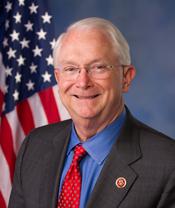
Mr. Speaker, I rise today in support of H.R. 2707, the Salt Cedar and Russian Olive Control Demonstration Act. In Texas, New Mexico, and other Western States prone to drought, Salt Cedar trees are…

Mr. Speaker, as Utah copes with its most severe drought in recent times, protecting our native species from invasive plants is vital to both agriculture and the environment. It is important to those…

Mr. Speaker, I rise today to support H.R. 2707, the Salt Cedar and Russian Olive Control Demonstration Act, introduced by my colleague from New Mexico Steve Pearce. The Russian Olive and Salt Cedar…

Mr. Speaker, personal responsibilities required my presence in the 13th Congressional District of Michigan. Should I have been present for today's legislative business, I would have voted ``yea'' on…
Bill Text
4 versions available
        [Congressional Bills 108th Congress]
[From the U.S. Government Publishing Office]
[H.R. 2707 Placed on Calendar Senate (PCS)]

Calendar No. 605
108th CONGRESS
2d Session
H. R. 2707

_______________________________________________________________________

IN THE SENATE OF THE UNITED STATES

February 25, 2004

Received

June 25, 2004

Read twice and placed on the calendar

_______________________________________________________________________

AN ACT

To provide for an assessment of the extent of the invasion of Salt
Cedar and Russian Olive on lands in the Western United States and
efforts to date to control such invasion on public and private lands,
including tribal lands, to establish a demonstration program to address
the invasion of Salt Cedar and Russian Olive, and for other purposes.

Be it enacted by the Senate and House of Representatives of the
United States of America in Congress assembled,

SECTION 1. SHORT TITLE.

This Act may be cited as the ``Salt Cedar and Russian Olive Control
Assessment and Demonstration Act''.

SEC. 2. DEFINITIONS.

In this Act:
(1) Secretaries.--The term ``Secretaries'' means the
Secretary of Agriculture, in cooperation with the Secretary of
the Interior.
(2) Western united states.--The term ``Western United
States'' refers to the States defined by the Act of June 17,
1902 (commonly known as the 1902 Reclamation Act; 43 U.S.C. 371
et seq.), which includes Arizona, California, Colorado, Idaho,
Kansas, Montana, Nebraska, Kansas, Oklahoma, Nevada, New
Mexico, Oregon, Texas, Utah, Washington, and Wyoming.

SEC. 3. ASSESSMENT OF SALT CEDAR AND RUSSIAN OLIVE INFESTATION IN
WESTERN UNITED STATES.

(a) Assessment.--Not later than one year after the date on which
funds are first made available to carry out this section, the
Secretaries shall complete an assessment of the extent of Salt Cedar
and Russian Olive invasion in the Western United States.
(b) Content.--The assessment shall include the following:
(1) To the extent practicable, documentation of the
quantity of water lost due to the infestation.
(2) Documentation of the quantity of water saved due to
various control methods, including the portion of saved water
that returns to surface water or groundwater supplies and at
what rates.
(3) Determination of the optimum control method for the
various land types and land uses.
(4) Determination of what conditions indicate the need to
remove such growth and the optimal methods for disposal or use
of such growth.
(5) Determination of methods to prevent the regrowth and
reintroduction of Salt Cedar and Russian Olive and to
reestablish native species.
(c) Report on Assessment.--
(1) Preparation and content.--The Secretaries shall prepare
a report containing the results of the assessment. The report
shall identify long-term management and funding strategies that
could be implemented by Federal, State, Tribal, and private
land managers and owners on all land management types to
address the invasion of Salt Cedar and Russian Olive. The
report shall also identify deficiencies or areas for further
study and where actual field demonstrations would be useful in
the control effort.
(2) Submission.--The Secretaries shall submit the report to
the Committee on Resources and the Committee on Agriculture of
the House of Representatives and the Committee on Agriculture,
Nutrition, and Forestry and the Committee on Energy and Natural
Resources of the Senate.
(d) Support for Identification of Long-Term Management and Funding
Strategies.--The Secretaries may make grants to institutions of higher
education or nonprofit organizations (or both) with an established
background and expertise in the public policy issues associated with
the control of Salt Cedar and Russian Olive to obtain technical
experience, support, and recommendations related to the identification
of the long-term management and funding strategies required to be
included in the report under subsection (c)(1). Each grant awarded
under this subsection may not be less than $250,000.

SEC. 4. DEMONSTRATION PROGRAM FOR CONTROL OF SALT CEDAR AND RUSSIAN
OLIVE IN WESTERN STATES.

(a) Demonstration Projects.--
(1) Projects required.--Based on the results of the
assessment and report in section 3, the Secretaries shall
initiate a program of not fewer than three demonstration
projects in the Western United States designed to address the
deficiencies and areas for further study to address the
invasion of Salt Cedar and Russian Olive, including the test of
additional control methods, identified by the report.
(2) Implementation.--The Secretaries may enter into an
agreement with a State in the Western United States to carry
out a demonstration project. If the Secretaries select a
demonstration project for implementation on National Forest
System lands, the Secretary of Agriculture shall be responsible
for implementation of the project.
(b) Elements of Projects.--
(1) Design and scale.--Each demonstration project shall be
designed with integrated methods and adaptive management
strategies and carried out over time frames and spatial scales
large enough to accomplish the goals laid out in the report.
(2) Scientific review.--Before being carried out, the
methods and strategies proposed for each demonstration project
shall be subject to review by scientific experts, including
non-Federal experts, selected by the Secretaries. The
Secretaries may use existing scientific review processes to the
extent they comply with this requirement.
(c) Project Costs and Cost Sharing.--The total cost of each
demonstration project may not exceed $7,000,000, including the costs of
planning, design, implementation, revegetation, maintenance, and
monitoring. In the case of a demonstration project conducted on lands
under the jurisdiction of the Secretary of the Interior or the
Secretary of Agriculture, the Secretaries may accept, but not require,
funds or in-kind contributions, including State agency provided
services. The Federal share of the costs of any activity on private
lands funded under the project shall be no more than 75 percent of the
total cost of the activity.
(d) Reporting Requirement.--During the period in which the
demonstration projects are carried out, the Secretaries shall submit to
the congressional committees specified in section 3(c)(2) an annual
report describing--
(1) the demonstration projects;
(2) the progress made in carrying out the projects during
the period covered by the report; and
(3) the costs of the projects under subsection (c).
(e) Monitoring.--Demonstration projects shall include the
following:
(1) Documentation of the quantity of water saved due to
various control methods, including the portion of water saved
that returns to surface water or groundwater supplies and at
what rates.
(2) Optimal revegetative states to prevent the regrowth and
reintroduction of Salt Cedar and Russian Olive and to
reestablish native species.
(f) Cooperation.--The Secretaries shall use the expertise of their
various agencies, as well as other Federal agencies, institutions of
higher education, State and local governments and political
subdivisions thereof, including soil and water conservation districts,
and Indian tribes, which are actively conducting assessments on or
implementing Salt Cedar and Russian Olive control activities.

SEC. 5. RELATION TO OTHER AUTHORITY.

Nothing in this Act shall be construed to affect, or otherwise
bias, the use by the Secretaries of other statutory or administrative
authorities to plan or conduct Salt Cedar or Russian Olive control and
eradication that is not planned or conducted under this Act.

SEC. 6. AUTHORIZATION OF APPROPRIATIONS.

(a) Assessment.--There are authorized to be appropriated to the
Secretaries $5,000,000 for fiscal year 2005 to conduct the assessment
required by section 3.
(b) Grants.--There are authorized to be appropriated to the
Secretaries $1,000,000 for fiscal year 2005 to award as grants under
section 3(d).
(c) Demonstration Projects.--There are authorized to be
appropriated to the Secretaries $18,000,000 for each of the fiscal
years 2005 through 2009 to carry out the program of demonstration
projects under section 4.

Passed the House of Representatives February 24, 2004.

Attest:

JEFF TRANDAHL,

Clerk.

Calendar No. 605

108th CONGRESS

2d Session

H. R. 2707

_______________________________________________________________________

AN ACT

To provide for an assessment of the extent of the invasion of Salt
Cedar and Russian Olive on lands in the Western United States and
efforts to date to control such invasion on public and private lands,
including tribal lands, to establish a demonstration program to address
the invasion of Salt Cedar and Russian Olive, and for other purposes.

_______________________________________________________________________

June 25, 2004

Read twice and placed on the calendar