Nutria Eradication and Control Act of 2003
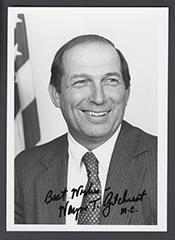 Rep. Wayne T. Gilchrest (R-MD)
Legislative Activity
Stay on top of the latest movement without scrolling through every action
Became Public Law No: 108-16.
April 23, 2003
View full timeline
Introduced in House
January 8, 2003
Referred to the House Committee on Resources.
January 8, 2003
Referred to the Subcommittee on Fisheries Conservation, Wildlife and Oceans.
February 12, 2003
Mr. Gilchrest moved to suspend the rules and pass the bill.
April 8, 2003 • 12:37 PM
Considered under suspension of the rules. (consideration: CR H2872-2874, H2878)
April 8, 2003 • 12:37 PM
DEBATE - The House proceeded with forty minutes of debate on H.R. 273.
April 8, 2003 • 12:37 PM
At the conclusion of debate, the Yeas and Nays were demanded and ordered. Pursuant to the provisions of clause 8, rule XX, the Chair announced that further proceedings on the motion would be postponed.
April 8, 2003 • 12:42 PM
Considered as unfinished business. (consideration: CR H2878)
April 8, 2003 • 1:36 PM
Passed/agreed to in House: On motion to suspend the rules and pass the bill Agreed to by the Yeas and Nays: (2/3 required): 385 - 30 (Roll no. 113).(text: CR H2872-2873)
April 8, 2003 • 1:37 PM
On motion to suspend the rules and pass the bill Agreed to by the Yeas and Nays: (2/3 required): 385 - 30 (Roll no. 113). (text: CR H2872-2873)
April 8, 2003 • 1:37 PM
Motion to reconsider laid on the table Agreed to without objection.
April 8, 2003 • 1:37 PM
Received in the Senate, read twice, considered, read the third time, and passed without amendment by Unanimous Consent. (consideration: CR S5096-5097)
April 9, 2003
Message on Senate action sent to the House.
April 10, 2003
Presented to President.
April 11, 2003
Signed by President.
April 23, 2003
Became Public Law No: 108-16.
April 23, 2003
Voting History
1 vote recorded • Roll call available
Floor Debate
7 membersWhat members said about H.R. 273 on the floor

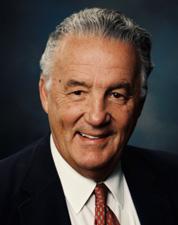

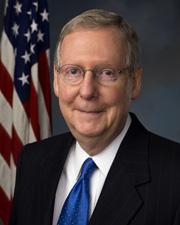 +2
+2
Floor Debate
7 membersWhat members said about H.R. 273 on the floor
Madam Speaker, I move to suspend the rules and pass the bill (H.R. 273) to provide for the eradication and control of nutria in Maryland and Louisiana. Madam Speaker, I yield myself such time as I…
Madam Speaker, Nutria is a rodent native to South America. They weigh approximately 18 pounds and resemble a beaver. In the 1930's, they were introduced into Louisiana. Studies indicate that female…
Mr. President, this legislation would reauthorize and expand the Nutria Control Project established under Public Law 105-322 to help address the non-native rodent nutria which is destroying wetlands…
Madam Speaker, I yield myself such time as I may consume. (Mrs. CHRISTENSEN asked and was given permission to revise and extend her remarks.) Madam Speaker, as stated by the gentleman from Maryland…
Mr. President, I ask unanimous consent that the Senate proceed to the immediate consideration of H.R. 273, just received from the House and which is now at the desk. The nutria eradication bill. It…
Show 2 more

Mr. President, I have no objection to proceeding to the measure, but I ask the distinguished majority whip, is this the rat eradication bill? Is that the rat eradication? Yes, I think so.
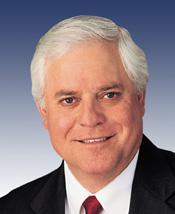
Madam Speaker, on rollcall No. 113, had I been present, I would have voted ``yea.''
Bill Text
5 versions available
        [Congressional Bills 108th Congress]
[From the U.S. Government Publishing Office]
[H.R. 273 Enrolled Bill (ENR)]

H.R.273

One Hundred Eighth Congress

of the

United States of America

AT THE FIRST SESSION

Begun and held at the City of Washington on Tuesday,
the seventh day of January, two thousand and three

An Act

To provide for the eradication and control of nutria in Maryland and
Louisiana.

Be it enacted by the Senate and House of Representatives of the
United States of America in Congress assembled,

SECTION 1. SHORT TITLE.

This Act may be cited as the ``Nutria Eradication and Control Act
of 2003''.

SEC. 2. FINDINGS AND PURPOSES.

(a) Findings.--The Congress finds the following:
(1) Wetlands and tidal marshes of the Chesapeake Bay and in
Louisiana provide significant cultural, economic, and ecological
benefits to the Nation.
(2) The South American nutria (Myocastor coypus) is directly
contributing to substantial marsh loss in Maryland and Louisiana on
Federal, State, and private land.
(3) Traditional harvest methods to control or eradicate nutria
have failed in Maryland and have had limited success in the
eradication of nutria in Louisiana. Consequently, marsh loss is
accelerating.
(4) The nutria eradication and control pilot program authorized
by Public Law 105-322 is to develop new and effective methods for
eradication of nutria.
(b) Purpose.--The purpose of this Act is to authorize the Secretary
of the Interior to provide financial assistance to the State of
Maryland and the State of Louisiana for a program to implement measures
to eradicate or control nutria and restore marshland damaged by nutria.

SEC. 3. NUTRIA ERADICATION PROGRAM.

(a) Grant Authority.--The Secretary of the Interior (in this Act
referred to as the ``Secretary''), subject to the availability of
appropriations, may provide financial assistance to the State of
Maryland and the State of Louisiana for a program to implement measures
to eradicate or control nutria and restore marshland damaged by nutria.
(b) Goals.--The goals of the program shall be to--
(1) eradicate nutria in Maryland;
(2) eradicate or control nutria in Louisiana and other States;
and
(3) restore marshland damaged by nutria.
(c) Activities.--In the State of Maryland, the Secretary shall
require that the program consist of management, research, and public
education activities carried out in accordance with the document
published by the United States Fish and Wildlife Service entitled
``Eradication Strategies for Nutria in the Chesapeake and Delaware Bay
Watersheds'', dated March 2002.
(d) Cost Sharing.--
(1) Federal share.--The Federal share of the costs of the
program may not exceed 75 percent of the total costs of the
program.
(2) In-kind contributions.--The non-Federal share of the costs
of the program may be provided in the form of in-kind contributions
of materials or services.
(e) Limitation on Administrative Expenses.--Not more than 5 percent
of financial assistance provided by the Secretary under this section
may be used for administrative expenses.
(f) Authorization of Appropriations.--For financial assistance
under this section, there is authorized to be appropriated to the
Secretary $4,000,000 for the State of Maryland program and $2,000,000
for the State of Louisiana program for each of fiscal years 2004, 2005,
2006, 2007, and 2008.

SEC. 4. REPORT.

No later than 6 months after the date of the enactment of this
Act, the Secretary and the National Invasive Species Council shall--
(1) give consideration to the 2002 report for the Louisiana
Department of Wildlife and Fisheries titled ``Nutria in
Louisiana'', and the 2002 document entitled ``Eradication
Strategies for Nutria in the Chesapeake and Delaware Bay
Watersheds''; and
(2) develop, in cooperation with the State of Louisiana
Department of Wildlife and Fisheries and the State of Maryland
Department of Natural Resources, a long-term nutria control or
eradication program, as appropriate, with the objective to
significantly reduce and restore the damage nutria cause to coastal
wetlands in the States of Louisiana and Maryland.

Speaker of the House of Representatives.

Vice President of the United States and
President of the Senate.