Seniors Citizen's Freedom of Choice
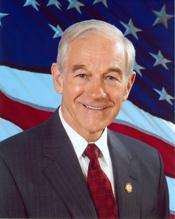
Legislative Activity
Stay on top of the latest movement without scrolling through every action
Referred to the Subcommittee on Health.
July 22, 2003
View full timeline
Introduced in House
July 17, 2003
Referred to the House Committee on Ways and Means.
July 17, 2003
Sponsor introductory remarks on measure. (CR E1515)
July 18, 2003
Floor Debate
8 membersWhat members said about H.R. 2781 on the floor
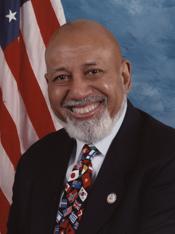 ALH
ALH GM
GM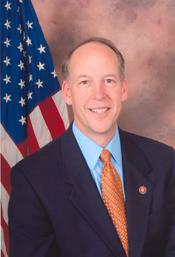 GW
GW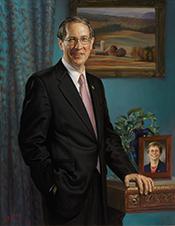 BG
BG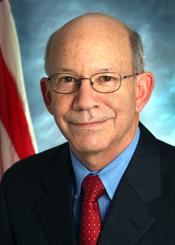 PAD+3
PAD+3
Floor Debate
8 membersWhat members said about H.R. 2781 on the floor
Mr. Speaker, I thank my good friend and namesake, the gentleman from Washington (Mr. Hastings), for yielding me the time. Mr. Speaker, I am pleased to yield 4 minutes to the gentleman from Oregon…
Mr. Speaker, I thank my good friend and namesake, the gentleman from Washington (Mr. Hastings), for yielding me the time.
Mr. Speaker, I am pleased to yield 4 minutes to the gentleman from Oregon (Mr. DeFazio).
Mr. Speaker, I yield 4 minutes to the distinguished gentleman from California (Mr. George Miller), my good friend.
Mr. Speaker, I would like to thank the gentleman from Oregon (Mr. Walden) and the gentleman from Virginia (Mr. Goodlatte) and the ranking members. I know that they have done a serious and yoeperson's job in bringing us this far, which, while I thank them, I still have reservations, and I know the gentleman from Oregon (Mr. Walden) and I have talked about them. But that does not mean that they did not work hard.
Mr. Speaker, I yield 3 minutes to the gentleman from Washington (Mr. Inslee), my good friend.
(Mr. INSLEE asked and was given permission to revise and extend his remarks.)
Mr. Speaker, I yield myself such time as I may consume. I thank again my good friend from Washington (Mr. Hastings) for having yielded me time.
As the gentleman previously mentioned, this is a typical rule for a conference report and I will not oppose it. I will, however, oppose the underlying conference report, not because my good friend said it would not have been productive to have some of us in the conference. I do not serve on the committee so I do not know how I got thrown into that. I would not have been in the conference in the first place and perhaps he should not have been.
But, Mr. Speaker, President Theodore Roosevelt told Congress in 1907, ``The conservation of our natural resources and the proper use constitute the fundamental problem which underlies almost every other problem of our national life.''
Indeed, it does, Mr. Speaker.
In 2002 alone, wildfires burned more than 6\1/2\ million acres at a cost to taxpayers of more than $1 billion. Hundreds of families were evacuated and uncontrollable fires caused millions of dollars worth of damage. The images of the recent wildfires in southern California are fresh in our minds and pictures of homes burning to the ground and thoughts of livelihoods being destroyed will never be forgotten.
Yes, the underlying report takes significant steps to improve our ability to combat and mitigate wildfires. And, again, I congratulate the gentleman from Oregon (Mr. Walden), the gentleman from Virginia (Mr. Goodlatte) and their ranking members and their committee for their work. But in my opinion it goes a bit too far. And for anyone who says that this or any other bill is not a perfect bill but we should support it anyway, I say absolutely not. If we know that a problem exists in the legislation, then let us fix it. Let us fix it before it becomes law.
The underlying conference report loosens current law regarding the logging and controlled burning of our Nation's forests. Moreover, it eviscerates environmental studies and the ability of organizations and private citizens to submit appeals on the cutting down of as many as 20 million acres. Under the report, appeals are subject to, in my view, unnecessary and unrealistic deadliness that insult the process and force Federal judges to adhere to judicial deadlines that make it impossible to fully consider the complexities of the appeal.
Mr. Speaker, at a time when more than half of the United States is experiencing some form of drought and dryness, it is critical for Congress to consider legislation that is proactive in defending and responding to the adverse effects of wildfires. And I spoke last night with the gentleman from Oregon (Mr. Walden) and the gentleman from Virginia (Mr. Goodlatte) and my friends in the Committee on Rules about the fact that drought is an attendant feature that must deal with our concerns about forest fires.
It is equally critical for Congress to also consider legislation that helps communities mitigate the effects of the reoccurring events that often result in an excessive and prolonged fire season. In fact, my colleague on the other side of the aisle, the gentleman from Montana (Mr. Rehberg) and I have introduced a bill that does just that. H.R. 2781, the National Drought Preparedness Act, moves our country away from an ad hoc response-oriented approach and towards a more proactive mitigation-based approach.
Our bill provides States and local communities with the resources and tools to develop drought preparedness plans and think about the ramifications of drought before we find ourselves in one.
We are now faced with a vote clearly indicative of the concerns raised by President Roosevelt nearly one century ago. Whether we answer the challenge made by the late President or allow his legacy to fall victim to an influential timber lobby is a decision that Members will have to make later today.
I realize we do not oppose removing excess vegetation that increases the risk and facilitates the spread of wildfires. I certainly do not take issue with the report's efforts to address insect manifestations in forests. It is, in fact, crucial that Congress address these two issues.
What I do take issue with, however, is why the majority cannot just stop there. Instead, it uses the report to further its agenda under the blanket of healthy forests. Cutting down national forests and limiting public participation and administrative reviews does not get us any closer to stopping the spread of wildfires, and it certainly does not make our forests any healthier.
Teddy Roosevelt once noted, ``Forests are the lungs of our land, purifying the air and giving fresh strength to our people.'' He continued, ``A nation that destroys its soils destroys itself.''
Mr. Speaker, we must not allow the late President Roosevelt's warning to be realized by the 108th Congress. I urge my colleagues to support the rule and oppose the underlying report.
Mr. Speaker, I yield back the balance of my time.
Mr. Speaker, I, too, want to join in this in thanking Members on both sides of the aisle for their participation and cooperation in this legislation. As the gentleman from Oregon (Mr. DeFazio) noted,…
Mr. Speaker, I, too, want to join in this in thanking Members on both sides of the aisle for their participation and cooperation in this legislation. As the gentleman from Oregon (Mr. DeFazio) noted, we started some 2 years ago with the gentleman from Colorado (Mr. McInnis) and others talking about what would be possible. The gentleman from Oregon (Mr. Walden) and we came up with what we thought was possible, we did not make it, went back this year and continued that process.
And we passed a bill out of the House, a bill that I did not agree with in its entirety by any means, but then the Senate was also able to pass legislation. And as a result of those negotiations, which I wish had been a little bit more open, but the fact of the matter is as a result of those negotiations, we now have this, we will have this bill before us later today. And I want to thank the Committee on Rules for providing us this opportunity.
Mr. Speaker, let me just say this one point. I wish the firefighter protections that had been offered and accepted in the Senate, they were offered by Senator Boxer of California, would have been kept in the bill. I think it is important now as we see these larger, more catastrophic fires, as we see fires that move through residential areas, to understand that the firefighters there are put in jeopardy from many other things besides just the fires themselves, but also the chemicals and building materials and the rest of it that are caught up in these huge winds created by the fires.
But let me say as to the bill, I think this is a bill that is a vast improvement over what left the House. In this compromise, in this conference report we will target half of the appropriated money into those areas most likely to have the most catastrophic fires. The rest of the money can be used in forest treatment and other areas of the national forest. That is important.
It is also important that we involve the communities, and communities can come up with those plans that they think serve their area best. Hopefully, they will use community resources, small businesses, and others to develop those plans. People are also entitled to have some review of those plans.
But what this bill does not allow you to do is to drag the process out forever, forever and ever. You have got to come in, make your case, you made it or you have not made it. But those rights are protected, and you can appeal that to court.
Some people do not like the fact that the bill extends the urban interface area out to a mile and a half. The fact of the matter is when you see the size of some of these fires, the treatment in the urban interface area is nothing more than a firebreak. And a little tiny area is not going to stop some of these fires that we have seen over the last decade in the West.
Finally, with respect to the treatment in the larger forest, the goods for services contracts are still allowed, but as the gentleman from Oregon (Mr. DeFazio) pointed out, the important part of this bill, what Senator Feinstein was able to do was get an authorized amount of money in here, because if we just do it on goods for services, we will either have to cut down all the trees to save them in order to get enough money to carry out the project, or we will not be able to treat those areas, as we saw in southern California, of negligible timber value but high risk to the communities.
And so we need to have an appropriation to follow this authorization so we can treat those areas of high intensity, of great potential of catastrophic fires, the potential to engulf communities. We have got to go there with some Federal dollars and some goods for services. And I think that is a balance that makes sense.
I spend several weeks a year backpacking in the high country and the forests and parks of this country. You do not have to walk very long in the forest to see the need for treatment. If you love the big old trees, as the gentleman from Oregon (Mr. DeFazio) again pointed out, you have got to understand that we have allowed a ladder to build up in these forests. And the big ponderosas, the big sugar pines are at risk because of the understory, the undergrowth that is there that will take the flames right into the crowns. And, obviously, once in the crowns, with any wind they move so fast that we cannot deal with them.
So, Mr. Speaker, I would like to say that I think that this is a product that the House should vote for. Members on both sides of the aisle should support this. It is very, very important to so many of our communities and very important to the stewardship of our natural resources.
Mr. Speaker, I want to thank my colleague from Washington, with whom I have worked closely on this and other legislation to improve the great Northwest and certainly improve and protect America's…
Mr. Speaker, I want to thank my colleague from Washington, with whom I have worked closely on this and other legislation to improve the great Northwest and certainly improve and protect America's forests. I want to thank the chairman of the Committee on Agriculture, the gentleman from Virginia (Mr. Goodlatte), and the gentleman from California (Mr. Pombo), the chairman of the Committee on Resources, and certainly my friend and colleague, the gentleman from Colorado (Mr. McInnis), for their yeoman's effort on this legislation; my friend, the gentleman from California (Mr. George Miller), and the gentleman from Oregon (Mr. DeFazio) as well for their work; and certainly the President of the United States, who on not one, but two occasions has come out to the Northwest to drive home the point that we had to pass legislation that embodies the principles contained in H.R. 1904.
I think it is especially important. There are not many of us who do not recognize that if we do not remove the ladder fuels that my colleague from California talked about, the old growth
policy that will be out there is one of let it burn, because that is what is happening today in America's forests. Because we have taken natural fire out of the equation and taken human management out of the equation, these forests have become completely overstocked. So it is like any other fire, it is about the fuel load. And the fuel load is such that when fire starts today, unlike 100 years ago, when it starts today, it burns catastrophically.
We witnessed it in the Biscuit Fire in southern Oregon a year ago. We witnessed it in the B&B fire this summer in my district. We witnessed it in California. We can see it all across America's great forests and rangelands that when there is too much fuel, the fire is nearly uncontrollable and certainly catastrophic.
Let us talk about the human consequences, because we saw it especially this year in California, but we have seen it before. Last year 23 firefighters lost their lives, and the American taxpayer spent $1.5 billion containing 2002's record fires.
This shows you a scene that, unfortunately, is one that has been seen far too often: a home that has been destroyed in a forested area. This next shot shows you what happens to fish habitat. This was in my district in eastern Oregon, a fire that took place in 1989. This is a stream that used to be part of the spring Chinook salmon habitat. You can see it is nothing but a mudflow here. There is no buffer. These are all dead trees. It looks like a moonscape or a Mars-scape. This was in the Wallowa Whitman National Forest. This is what you get when you cannot control forest fires.
This, on the other hand, is an example of how a fire that has been treated like we are talking about treating performs. This is an area where President Bush accompanied me and Senator Smith and others, Senator Wyden, up to the Squires Peak fire in 2002. And you can see where the land had been treated, there are good healthy trees left behind. There is a fire burning here, but it has fallen to the ground, because that is what happens when you treat in these areas. The fire drops to the ground, and our firefighters are able to control and contain it. The damage is not that significant. In fact, it can be very positive in terms of when a fire burns like this to regenerate.
But just on the other side of this hill where the same people who fought the fire have been doing the thinning work, it was completely obvious because they had not thinned there yet. Where they had not thinned, the fire had been in the canopy, it had been at the top. It had been catastrophic and extraordinarily destructive.
Finally, let me make this point. By streamlining this process we are going to be able to get in and do this kind of work sooner so we do not end up with that kind of devastation I showed you earlier. But we also, as a policy, as a Congress, need to take a look at what happens after a catastrophic fire. How can we get in and restore America's great conifer forests instead of letting them become brush? How do we get in and protect the habitat that remains after a fire and improve it so our fish runs can come back? That is a debate we will have to have in the future.
Today, though, I am delighted that we are at this point with a comprehensive bipartisan, bicameral plan that will move us an enormous generation forward to protect and preserve America's forests, create jobs in our rural communities, and make sure fire, when it burns, is not catastrophic.
Mr. Speaker, I thank the gentleman from Washington for yielding me this time and for bringing this rule to the floor and I thank the Committee on Rules for very expeditiously moving this process. I…
Mr. Speaker, I thank the gentleman from Washington for yielding me this time and for bringing this rule to the floor and I thank the Committee on Rules for very expeditiously moving this process. I know that when I left the Committee on Rules last night it was close to 9:30 and they were still going on to other legislative business. So often the members of the Committee on Rules have to do that. Of course part of the reason for that is that we are so very near the end of this session of Congress. So it is critically important given what happened in California just a few weeks ago and what is going to happen again next year that we pass this legislation promptly so we can begin the process. It is going to take a long time.
The gentleman from Oregon is correct. There are not enough resources nor are there enough acres being addressed in this legislation, but nonetheless this is a very important first step and this is the first major piece of legislation related to forestry to be passed out of a House-Senate conference committee in more than 20 years. This is a very, very important development. We have a tremendous opportunity today, and when the Senate acts to send to the President a good bill that will give us the first step in this process.
It has been a fair process that has involved everybody in it. Over 2 weeks ago, we came to the floor to appoint conferees. The ranking Democrat on the House Committee on Agriculture who has worked with us every step of the way, and I might add that I believe 19 of the 24 House Democrats on the Committee on Agriculture voted for the original House-passed legislation, very strong bipartisan support in crafting this legislation. He made a motion to instruct conferees calling for the prompt action at an open conference to report back a bill a week ago. Unfortunately, the other body did not respond in that fashion and did not appoint their conferees until yesterday
morning. Nonetheless, in the meantime there was a tremendous amount of bipartisan and bicameral discussions going on about how to move the House and the Senate closer together on these pieces of legislation and we achieved that. Then yesterday we did have in the short period of time after the Senate appointed conferees the opportunity for an open conference, Members were given the opportunity to offer amendments, there was clearly a tremendous amount of consensus on both sides of the Capitol and in both parties on the need to move forward with this and we had a very expeditious conference.
Nonetheless, I think we kept the commitment made by the House on the motion of the ranking member, the gentleman from Texas, to have an open conference and to move as expeditiously as the process allowed us to do.
This bill is going to allow us to take major steps to let the Forest Service do the job they are charged with doing, protecting our national forests. This will also allow us to make absolutely certain that we have a process that is open and fair to everybody who is concerned about our national forests from any perspective. We are accelerating the process so that when ideas about what needs to be done to protect our forests take place, they can take place promptly, but we are not excluding the public in any way from this process. They will have the opportunity from start to--a judicial review if that becomes necessary--finish to have input in the process, but it will be done in such a way that the system can no longer be rigged to stretch out these decisions for many years and have our forests destroyed in the meantime.
That is vitally important.
I want to thank everybody who has been involved in this process. The gentleman from California (Chairman Pombo), the Committee on Resources, made important contributions. The gentleman from Colorado (Mr. McInnis), the subcommittee chairman, was also vitally important. He introduced the legislation. And certainly the gentleman from Oregon (Mr. Walden) has been with us every step of the way as well. The same thing has been true on the other side of the aisle, whether they have agreed with all the measures or not. We thank them for their input.
Mr. Speaker, I urge my colleagues to support this rule and the underlying bill.
I thank the gentleman for yielding me this time. Mr. Speaker, it was just a little over a year ago that the Biscuit fire was raging in southwest Oregon in an area shared by myself and the gentleman…
I thank the gentleman for yielding me this time.
Mr. Speaker, it was just a little over a year ago that the Biscuit fire was raging in southwest Oregon in an area shared by myself and the gentleman from Oregon (Mr. Walden). We held a hearing in the Committee on Resources during that fire about the issue of the fuel buildup in our forests. After I listened to a few of the witnesses, I really did not ask any questions, I gave a pretty impassioned speech about how I was tired of the fact that we all kind of went to our political corners on this issue when a real solution was warranted. Surprisingly after the hearing I was approached by a number of Members that people would be surprised could sit down in a room and work together on an issue like this, but notably the gentleman from Colorado (Mr. McInnis) came forward and said to me, I really agreed with a lot of what you said and I would like to try and work something out, as did the gentleman from Arizona (Mr. Shadegg), the gentleman from Oregon (Mr. Walden), and the gentleman from California (Mr. George Miller). We sat down and began some very difficult negotiations.
Unfortunately, last year the clock ran out on us. We had an election year, so we did not get the bill done. But now here we are hopefully at the point of adopting the bill in the House and the Senate and seeing it signed into law. This is not exactly the bill I would have written. It is not exactly what we negotiated last year, but I believe it is a bill that can get the job done. Most importantly, it authorizes $760 million. I think we could even authorize and do more work than that on an annual basis given the unnatural buildup of fuels in the forests, but if we can get that money actually spent, it will provide for a lot of jobs. It will provide for tremendous protection for communities and resources.
The bill has language about how the work should be conducted. The idea is to leave the big old fire-resistant trees and return the forest to what we call a presettlement condition, before we began unnaturally repressing fire more than 100 years ago with the settlement of the West. What you need to do, and there was a dramatic example at the Davis fire in central Oregon this year, you could see where the lodgepole pines were growing up into the crowns of the big old fire- resistant Ponderosas and unfortunately a lot of those Ponderosas went because that is called a ladder fuel. It just ran up this crummy old lodgepole and right up into the beautiful old Ponderosa and we lost everything. We need to go in and remove those lodgepole pines and other unnatural fuel buildups. That will provide both for jobs, potentially for some merchantable material in certain areas, and eventually we will be able to manage our forests back or help return them to a state where low-intensity fires can burn through, fires that do not destroy whole stands, that do not turn the Earth into glass and sterilize it. That is the condition that prevails today in the West.
This bill is not without controversy. That is again part of the process. I think the protections are there. People still have a right to appeal but appeals will be expedited. People have to participate meaningfully in the process. I do not have a problem with that. I think people should participate meaningfully in the process and we should open it up to everybody who is concerned. People will still have a right to go to court if they feel that the law is being violated but we are going to have the money, we are going to have the tools and if this administration applies this properly, if they get and spend all the money that is promised under this bill, we will begin a very long process of restoring our forests to a more natural state in the western United States and in a state that will not lead to a multi-number of catastrophic fires on an annual basis, which is the state we are seeing today.
I want to thank my colleagues on that side. I neglected the Committee on Agriculture, where I do not serve, but I know that the Committee on Agriculture also played a key role in this legislation. I think we will be all the better for it.
Show 3 more

Mr. Speaker, by direction of the Committee on Rules, I call up House Resolution 457 and ask for its immediate consideration. Mr. Speaker, for the purpose of debate only, I yield the customary 30…
Mr. Speaker, by direction of the Committee on Rules, I call up House Resolution 457 and ask for its immediate consideration.
Mr. Speaker, for the purpose of debate only, I yield the customary 30 minutes to my good friend and namesake, the gentleman from Florida (Mr. Hastings), pending which I yield myself such time as I may consume. During consideration of this resolution, all time yielded is for the purpose of debate only.
(Mr. HASTINGS of Washington asked and was given permission to revise and extend his remarks.)
Mr. Speaker, House Resolution 457 is a rule
providing for the consideration of the conference report to accompany H.R. 1904, the Healthy Forests Restoration Act of 2003. The rule waives all points of order against the conference report and its consideration and provides that the conference report shall be considered as read.
Mr. Speaker, recent reports of catastrophic wildfires in the West have helped millions of Americans to understand what Members of western districts have known for years, that steps must be taken to improve our management of national forests in order to reduce the risk of runaway forest fires that threaten lives, property and even entire communities.
H.R. 1904, the Healthy Forests Restoration Act, contains several key measures that will enable Federal land managers to better manage potentially explosive stands of timber and underbrush. Passage of the bill would also enable local communities to play a more meaningful role in the management of lands that pose potential threats. H.R. 1904 would authorize the removal of dead, dying and diseased trees and underbrush from Federal lands. It would also strengthen the ability of land managers to pursue fire prevention strategies under an expedited system that would limit excessive court challenges to proposed changes in management plans for Federal lands.
The bill authorizes $760 million annually for fire prevention, suppression and management activities, a significant increase over current allocations.
Mr. Speaker, the conferees have done an excellent job of protecting the House position on this legislation, which passed the House by a large margin back in May 2003. The conferees should be commended for moving to complete the work on this important legislation before Congress adjourns and we in turn should pass it without further delay.
Accordingly, Mr. Speaker, I urge my colleagues to support both the rule and the underlying conference report.
Mr. Speaker, I reserve the balance of my time.
Mr. Speaker, I am pleased to yield 4 minutes to the distinguished gentleman from Virginia (Mr. Goodlatte), chairman of the Committee on Agriculture.
Mr. Speaker, I yield 4 minutes to the gentleman from Oregon (Mr. Walden), an individual that has had a great deal of impact on this legislation.
Mr. Speaker, I yield 3 minutes to the gentleman from Colorado (Mr. McInnis), who has worked extremely hard on this issue and has been working on this issue.
Mr. Speaker, I yield myself such time as I may consume.
Mr. Speaker, the bill that this rule allows to be taken up is a very significant piece of legislation, and I just want to make one point that I do not think has been made in the debate on this rule regarding this underlying legislation, and that is that this legislation is geared towards what we call multiple use areas within our national system, our national forests and our BLM lands. Multiple use by definition means it should be open for recreation, commercial activity, and so forth. But, unfortunately, with policies that have been enacted de facto in the past 10 or 15 years, in fact, we have closed up these multiple use areas.
This legislation addresses these problems that have built up for a time and as a result has built up to unhealthy forests and unhealthy BLM lands. So it is a significant first start, an extremely significant first start.
With that, Mr. Speaker, I urge my colleagues to support the rule and support the underlying legislation.
Mr. Speaker, I yield back the balance of my time, and I move the previous question on the resolution.
The previous question was ordered.
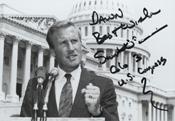
Mr. Speaker, I thank the chairman for yielding me time. I also thank the Members and my colleagues on the Democratic side who worked with me on my bill. This is a bill I introduced. I have been…
Mr. Speaker, I thank the chairman for yielding me time. I also thank the Members and my colleagues on the Democratic side who worked with me on my bill. This is a bill I introduced. I have been working on it in great detail for a number of years.
Now, it is true that in the process I did not include 435 Members to come to our meetings to come to some kind of compromise. Now, there are reasons I did not include 435. First of all, that is not routine. Second of all, we could not get them all into one location. Third of all, not very many of them were interested. They are interested, most of them, in the final product, but they are not interested because they have their own priorities in putting this together.
And, finally, there is a very definite class of people that you cannot bring in to a room and expect a compromise. My good colleague, the gentleman from Washington (Mr. Inslee), is not one of those people that I felt that I could bring into these negotiations and come out with anything positive.
I have got to get people in there that are willing to come up with a solution, and I will give you two good examples, two very ardent spokesmen for the environment, the gentleman from California (Mr. George Miller) and the gentleman from Oregon (Mr. DeFazio).
Those are about two of the toughest individuals on this House floor when it
comes to speaking about environmental issues. While the gentleman from Washington (Mr. Inslee), for example, is very tough on environmental issues, the fact is I can negotiate with the gentleman from California (Mr. George Miller). I can negotiate with the gentleman from Oregon (Mr. DeFazio). And that is exactly why the gentleman from California (Mr. George Miller) and the gentleman from Oregon (Mr. DeFazio) and the gentleman from Oregon (Mr. Walden) and myself and the gentleman from Virginia (Mr. Goodlatte) and the gentleman from California (Mr. Pombo), that is exactly why that group of people came together to work out a compromise with the Senate to come up with a bill that is good for all of us.
So what we are seeing today is not opposition to the content of the bill by the gentleman from Washington (Mr. Inslee). What we are seeing with all due respect to the gentleman from Washington (Mr. Inslee) is sour grapes. Hey, I did not get to play in the game. I was not invited to the meeting.
As I said, there is a reason why the gentleman from Washington (Mr. Inslee) was not invited to the meeting. I wanted a meeting with production. I needed to have a meeting that would come out with a product that could pass both the Senate and the House and accomplish something out there with our forests, and that is exactly what this bill does. That is exactly why we should pass this rule and that is exactly why I expect this bill in both the Senate and the House, the Senate and the House, to pass with bipartisan; that is, Republican and Democratic, support.
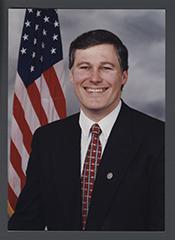
Mr. Speaker, unfortunately, actually the way this final package was developed was a continuation of the sad deterioration of an effort to actually reach consensus in this body. And the reason I say…
Mr. Speaker, unfortunately, actually the way this final package was developed was a continuation of the sad deterioration of an effort to actually reach consensus in this body. And the reason I say that is the way this package was put together is some folks went into a closed room and excluded other Members of the House from consideration. In fact, the ranking Democrat on the Subcommittee on Forests and Forest Health of the Committee on Resources was excluded from consideration to try to reach a consensus product here, as was virtually anyone who questioned the original bill who left the House.
This is the system, if you can imagine, when they are sitting around a table in Iraq right now and they ask, how do you do democracy in America, I guess you would have to say, in the House we just have this secret group and exclude Members from the minority party who are ranking Members. And that is what happened here, and it is unfortunate because we may have been able to reach a consensus of unanimity here on the House floor.
Now, let me point out a couple significant concerns with this final product. Number one, it does not cut the mustard in saving our houses and our towns from fire. We just witnessed this enormous devastation in California as a result of these fires, hundreds and hundreds of houses that were burned. And we do not have enough money in the Federal Treasury to come close to treating all of the acres that need treatment. At most, under this bill, we will only treat about 2 percent of the acres that need treating a year in our forests. That means we have got to be smart and target our resources where it is going to do the most good, and where it is going to do the most good fastest is around our homes and our towns to prevent the devastation that happened in California.
It ought to be a clear, unanimous consensus in this House that we put the majority of our resources protecting our families and our homes and our towns. And this bill does not do it. Yes, it is better than the House version because it says 50 percent, but what are you going to tell people next time? Sure, you had 200 houses burned, we will save 100 of them this time. Well, 50 percent is not good enough saying we are just going to save half your town; 50 percent is not good enough when we say we are going to save half your subdivision.
We ought to put a clear majority of our resources in protecting these belts, these protective moats, if you will, around our houses, and we are not doing it. Why we are not doing it? Because the timber industry has driven a lot of this debate. Who is for this is the timber industry. And who is against it is the Sierra Club. And it is too bad we did not really reach a consensus when we could have on this bill.
Bill Text
Latest available legislative text
        [Congressional Bills 108th Congress]
[From the U.S. Government Publishing Office]
[H.R. 2781 Introduced in House (IH)]

108th CONGRESS
1st Session
H. R. 2781

To provide greater health care freedom for seniors.

_______________________________________________________________________

IN THE HOUSE OF REPRESENTATIVES

July 17, 2003

Mr. Paul introduced the following bill; which was referred to the
Committee on Ways and Means

_______________________________________________________________________

A BILL

To provide greater health care freedom for seniors.

Be it enacted by the Senate and House of Representatives of the
United States of America in Congress assembled,

SECTION 1. SHORT TITLE.

This Act may be cited as the ``Seniors Citizen's Freedom of
Choice''.

SEC. 2. NO ELIGIBILITY CONDITION BASED ON REFUSAL TO PARTICIPATE IN A
GOVERNMENT PROGRAM.

No persons otherwise eligible for old-age benefits under Social
Security shall be denied such benefits because of their voluntary
refusal to participate in any part of the Medicare program.
<all>