Department of Homeland Security Financial Accountability Act
Legislative Activity
Stay on top of the latest movement without scrolling through every action
Reported (Amended) by the Committee on Homeland Security (Select). H. Rept. 108-358, Part I.
November 12, 2003
View full timeline
Introduced in House
July 24, 2003
Referred to the Committee on Government Reform, and in addition to the Committee on Homeland Security (Select), for a period to be subsequently determined by the Speaker, in each case for consideration of such provisions as fall within the jurisdiction of the committee concerned.
July 24, 2003
Sponsor introductory remarks on measure. (CR E1587)
July 25, 2003
Referred to the Subcommittee on Government Efficiency and Financial Management.
August 25, 2003
Subcommittee Consideration and Mark-up Session Held.
September 24, 2003
Forwarded by Subcommittee to Full Committee (Amended) by Voice Vote.
September 24, 2003
Committee Consideration and Mark-up Session Held.
October 30, 2003
Ordered to be Reported Favorably amended by a Motion.
October 30, 2003
Committee Consideration and Mark-up Session Held.
November 6, 2003
Ordered to be Reported (Amended) by Voice Vote.
November 6, 2003
Reported (Amended) by the Committee on Homeland Security (Select). H. Rept. 108-358, Part I.
November 12, 2003
Floor Debate
18 membersWhat members said about H.R. 2886 on the floor
 PM
PM OGH
OGH RS
RS DKA
DKA JSC+13
Floor Debate
18 membersWhat members said about H.R. 2886 on the floor
Mr. President, today I'm pleased to introduce a bill that will help America's teenagers graduate from high school, go on to college, and enter the working world with the skills they need to succeed.…
Mr. President, today I'm pleased to introduce a bill that will help America's teenagers graduate from high school, go on to college, and enter the working world with the skills they need to succeed. I'm proud to introduce the PASS Act--which stands for the Pathways for All Students to Succeed Act. Today, far too many students drop-out of school and never have a chance for college and a better life. My bill will reach out to vulnerable students during high school by providing the training, guidance and resources they need to stay in school and go on to college.
Specifically, the PASS Act will: help schools hire literacy coaches to strengthen essential reading and writing skills. It will provide grants for high-quality Academic Counselors to ensure each student has an individualized plan and access to services to prepare for college and a good job. And finally, the PASS Act targets resources to those high schools that need the most help, so they can implement research- based strategies for success.
Many of America's high schools and high school students are in serious trouble, and it's only getting worse.
With each new school day, 3,000 secondary students drop out of school. This year alone, nearly 540,000 young people will leave school without attaining a high school diploma. Our Nation's high school graduation rate is 69 percent. And in urban areas, that figure is even worse. Many urban school districts graduate fewer than half of their students. Dropping out has an enormous cost to these students, their families and our communities. Sadly, even those students who do receive a high school diploma are not guaranteed success in college or in life.
Many graduate from high school unprepared for the academic rigor of post-secondary study. About 40 percent of four-year college students and 63 percent of community college students are enrolling in remedial courses in reading, writing, or math when they enter college.
And although approximately 70 percent of high school graduates enroll in college, only 7 percent from low-income families will have earned a bachelor's degree by age 24--in part because they have not been properly prepared for college academics.
That's why today I'm introducing a bill to improve our Nation's secondary schools, especially those serving high-need students. First, the PASS Act would ensure that middle or high school students who are still struggling to master literacy will get additional help. About 60 percent of students in the poorest communities fail to graduate from secondary school on time, in large part because they don't have the reading or writing skills they need. We took a good step in creating the Reading First program to strengthen students' reading skills in the elementary grades. These skills are the foundation of their success throughout their academic careers. However, many middle and high school students struggle with serious reading deficits and substandard literacy skills that have gone unattended for years.
The 2002 National Assessment of Educational Progress shows that the reading achievement of 12th grade students has declined at all performance levels since 1998. Thirty-three percent of 12th grade boys, and 20 percent of 12th grade girls read below the ``basic level.''
While the percentage of 4th and 8th graders writing at or above a basic level has increased between 1998 and 2002, the percentage of 12th graders writing at or above basic has gone down.
These numbers show that our concentrated efforts for elementary and middle school students have improved their writing skills, but by neglecting the needs of secondary school students. We are squandering these gains.
In response, Title I of my bill creates a $1 billion ``Reading to succeed'' grant program.
Building on the strong foundation of the Reading First program, this grant program will establish effective, research-based reading and writing programs for students in our middle and high schools, including children with limited English proficiency and children with disabilities.
These grants will provide resources for schools to hire literary coaches at a ratio of at least one for every 20 teachers. The coaches will help teachers incorporate research-based literary instruction into their core subject teaching. This will strengthen the reading and writing skills of all students, while identifying and helping those students whose skills are especially poor. These coaches will assess students and coordinate services to address significant reading and writing deficits.
In addition to hiring literacy coaches, funds can be used to provide relevant professional development, strengthen curricula in secondary schools, and implement diagnostic assessments, research-based curricula, instructional materials, and interventions in middle and high schools.
These literacy coaches can help us make sure that no more students slip through the cracks because they never learned to read.
In addition to strong literacy skills, careful planning, sound advice and strong academic support are critical to guiding students to success. Too many high school students make it to graduation, only to find that they cannot attend the school of their choice or enter a chosen career because they are not prepared. Many high school students are floundering--unable to find out what courses they need to take or how they can get past academic or other barriers.
Unfortunately, most of our school counselors serve too many students with too few resources. High school counselors work with an average of 450 students each, making it impossible to guide each individual student along the pathway to high school graduation and work or college. Title II of my bill seeks to address this problem by creating grants for thorough, high-quality academic and career counseling for our high school students.
These grants will cultivate and promote parent involvement in their child's education, and will coordinate support services for at-risk high school students across the country.
This ``Creating Pathways to Success Program'' would complement other existing successful high school programs by providing $2 billion to support systemic change in the way we guide our high school students to success.
The funds could be used to hire and train Academic Counselors to work with no more than 150 students each, and to equip these counselors with the time, skills, and resources to work directly with students, parents, and teachers to give each student the individualized attention and service they need.
Academic Counselors will work with students and parents to develop 6- year plans outlining the path each student will take to reach his or her goals.
They will coordinate new resources with existing ones such as GEAR UP, TRIO, Title I, IDEA and Perkins Vocational and Technical Education programs to ensure students receive the services identified in their plans and to facilitate a smooth transition to postsecondary education or a career.
Schools that get these new funds must offer a rigorous college preparatory curriculum to all students, including access to Advanced Placement or International Baccalaureate courses.
Working together we can make sure that our adolescents graduate prepared for any dream they may choose to pursue.
Finally, my bill includes a third title called ``Supporting Successful High Schools'' to ensure that we take action to help turn around our low-performing high schools.
Approximately 10 percent of the schools which have been identified so far as ``in need of improvement'' according to the requirements of No Child Left Behind are high schools.
In about 1100 high schools, 75 percent or more of the students enrolled are living in poverty.
Despite these numbers, most reform efforts are focused on elementary schools. We've overlooked struggling middle and high schools.
Under the No Child Left Behind Act, Title I funding should be used to help all schools that need improvement, but high schools receive only 15 percent of Title I funds, even though they enroll 33 percent of low- income students.
Until Title I is fully-funded, it is unlikely that high schools will receive a significant amount of these funds to address the problems they have identified.
Meanwhile, high schools are being held to the requirements of No Child Left Behind without a targeted source of funding to turn around schools in need of improvement.
Our states and districts have worked hard to figure out which high schools need improvement the most, and now it's time we improve them.
That's why my bill would create a $500 million grant program that allows districts to identify, develop, and implement reforms that will turn around these low-performing schools.
School districts can use funds for research-based strategies and best practices that will improve student achievement and bring success.
Districts would work with parents, teachers, students and communities to choose any effective reform such as small schools, block scheduling, whole school reforms or individualized learning plans.
For example, since research shows that small schools enhance student outcomes by allowing teachers to offer personalized assistance and connect with students, some districts may reduce the size of low- performing high schools by creating smaller schools or academies within larger schools.
Working together, we can do more than identify our schools in need of improvement--we can improve them.
In conclusion, the Pathways for All Students to Succeed Act provides the grants America's students need to promote adolescent literacy, support college and career pathways for all our students, and to improve struggling high schools nationwide.
I hope my colleagues will join me in supporting this bill and addressing the needs of our high school students.
Mr. President, along with my good friends and colleagues, Senators Breaux, Smith, Lott, and Snowe, I rise today to introduce the Real Estate Investment Trust Improvement Act of 2003. This legislation…
Mr. President, along with my good friends and colleagues, Senators Breaux, Smith, Lott, and Snowe, I rise today to introduce the Real Estate Investment Trust Improvement Act of 2003. This legislation would update the tax rules governing real estate investment trusts, commonly referred to as REITs, by making a number of minor but important changes to remove uncertainties in the law and improve their investment climate. Identical legislation has been introduced in the House of Representatives.
REITs are publicly traded real estate companies that pass through their earnings to individual shareholders. Congress originally created REITs in 1960 to enable small investors to make investments in large- scale, income producing real estate. By doing so, Congress made commercial real estate more accessible, more liquid, more transparent, and more attuned to investor interests. REITs have evolved to own properties across the country, including office buildings, apartments, shopping centers, and warehouses. As a result, these entities play a key role in helping our economy move forward by promoting investment and creating jobs.
The Internal Revenue Code includes detailed rules governing the operations of REITs, the types of income they can earn, and the assets they hold. Congress last amended these provisions in 1999. The REIT Improvement Act is the product of almost two years of discussions with the staffs of the Treasury Department and the Joint Committee on Taxation on how to find solutions to several thorny problem areas where the rules are in need of clarification or modification.
The REIT Improvement Act includes three titles: Title I--REIT Corrections; Title II--FIRPTA Corrections; and Title III--REIT Savings.
Title I includes several corrections to the REIT tax rules to remove some uncertainties and provide corrections largely arising from enactment of the REIT Modernization Act in 1999. Although these provisions have very little effect on revenue to the Treasury, they are of considerable importance to REITs because they remove uncertainties that interfere with the efficient operation of their businesses.
Because publicly-held REITs have to report quarterly to the Securities and Exchange Commission that they are in compliance with the specialized income and asset tests applicable to REITs, the uncertain application of these tax rules creates greater difficulties in REIT business operators than unclear tax rules generally do for other corporations.
The most important, time-sensitive provision in this title deals with what is called the ``straight debt'' rule. This rule, which was adopted in the REIT Modernization Act of 1999, prohibits REITs from owning more than 10 percent of the value of any other entity's securities. Although this rule was intended to prevent REITs from owning more than 10 percent of the equity of another corporation, as drafted the rules potentially apply to many situations when individuals and businesses owe some sort of debt, ``security'' defined broadly, to a REIT.
There are many situations in which REITs make non-abusive, ordinary loans in the course of business for which they could face loss of REIT status because the loans do not qualify as
``straight debt.'' The most common context for this situation is in the REIT's relationship with its tenants. For example, the REIT might lend the tenant money for leasehold improvements. In some circumstances such a loan could represent more than 10 percent of the tenant's total debt obligations. In such a case, although the amount owed could be small, it could lead to REIT disqualification. The bill we are introducing today would exempt from the 10 percent rule certain categories of loans that are non-abusive and present little or no opportunity for the REIT to participate in the profits of the issuer's business. This includes any loan from a REIT to an individual or to a government, and any debt arising from a real property rent arrangement.
Other provisions in this title clarify the related party rent rules that limit the amount of space a taxable subsidiary may lease from its parent REIT, update the hedging definitions in the REIT rules, remove a safe harbor protection for a taxable subsidiary providing customary services to a REIT's tenants, and restore a formula for imposing a tax on REITs that fail to meet the 95 percent gross income test.
Finally, the bill would modify a safe harbor to the prohibited transaction rule that imposes a 100 percent tax on the income REITs earn from sales of ``dealer property.'' Currently, the safe harbor is limited to sales of property held for the production of rental income that meet a series of tests. The change proposed in this title would extend the safe harbor to other REIT property, not just that held for the production of rental income.
Title II of the bill would modify the Foreign Investment in Real Property Tax Act (``FIRPTA'') to remove barriers to foreign investment in REITs. Today, there is very little foreign investment in REITs. We understand that U.S. money managers routinely receive assignments to place foreign investment capital in the United States under which they have complete discretion to invest in any U.S. stocks except REITs. The reason they are expressly told to avoid REITs is that under FIRPTA, foreign investors that receive REIT capital gains distributions are treated as doing business in the United States.
Title II would modify the FIRPTA rules so that a publicly traded REIT's payment of capital gains dividends to a foreign portfolio investor would no longer cause the REIT investor to be considered doing business in the United States. The effect of this would be to threat investments in REITs like investment in other corporations, and the provision would parallel current law governing a portfolio investor's sale of REIT stock.
Title III of our bill, REIT Savings, would modify a number so-called ``death trap'' provisions in the REIT tax rules that result in the disqualification of the REIT if various rules are not met. The loss of REIT status would be a catastrophic occurrence that the management of a REIT tries to avoid at all costs, so much so that they expend significant resources to put in place compliance measures to avoid such a result. A better, simpler alternative would be to build in some flexibility to the REIT tax rules and impose monetary penalties, in lieu of REIT disqualification, for the failure to meet these strict rules that lead to REIT disqualification.
For example, under current law, a REIT is disqualified if more than 5 percent of its assets are comprised of the securities of any entity, or if it owns more than 10 percent of the voting power or value of any entity. In lieu of disqualification of the REIT status for violations of these rules, our bill would first give REITs an opportunity to comply with the asset tests with respect to any violation that does not exceed 1 percent of their total assets. Assets in excess of the 1 percent de minimis amount would be subject to a tax of the greater of $50,000 or the highest corporate tax rate multiplied by the net income from the assets if the violation was justified by reasonable cause.
Under current law, a REIT is disqualified if it does not meet certain other tests relating to its organizational structure, the distribution of its income, its annual elections to the IRS, the transferability of its shares, and other requirements. In lieu of this disqualification, Title III would change the law, assess a monetary penalty of $50,000 for each reasonable cause failure to satisfy these rules. This is a much more reasonable solution.
These changes are similar to ``intermediate sanctions'' legislation that Congress approved a few years ago dealing with nonprofit organizations. That legislation imposed monetary penalties on nonprofit organizations for violation of certain tax rules in lieu of a devastating loss of the organizations' tax-exempt status. Those changes, like the ones we are proposing today, recognize that it is far more likely that an entity will be sanctioned under a penalty regime than under draconian rules that entirely disqualify the organization.
The REIT Improvement Act would provide reasonable and much needed reforms to the rules governing a key component of our economy. We urge our colleagues to join with us in sponsoring this legislation and supporting its inclusion in tax legislation heading for passage this year.
Mr. President I rise to join my colleague Senator Lindsey Graham in reintroducing the Fair Care for the Uninsured Act, legislation aimed at ensuring that all Americans, regardless of income, have a…
Mr. President I rise to join my colleague Senator Lindsey Graham in reintroducing the Fair Care for the Uninsured Act, legislation aimed at ensuring that all Americans, regardless of income, have a basic level of resources to purchase health insurance. I am pleased that Congressman Mark Kennedy of Minnesota has joined in introducing companion legislation in the House of Representatives that now has 120 bipartisan cosponsors.
As we all know, the growing ranks of uninsured Americans--currently more than 40 million--remains a major national problem that must be addressed as Congress considers improvements to our healthcare delivery system.
An Urban Institute study released earlier this year estimated that the nation annually spends about $35 billion on uncompensated care received by the uninsured, both those who are uninsured for a full year and those who lack coverage for part of a year. About two-thirds of uncompensated care, almost $24 billion, is provided by hospitals caring for uninsured people in emergency rooms, outpatient departments, and as inpatients. This study also estimated that a substantial portion of uncompensated care, perhaps as much as $30 billion, is already being financed by taxpayers through programs such as: Medicare and Medicaid Disproportionate Share Payments; Medicaid Upper Payment Limit payments; state and local tax appropriations, primarily to public hospitals and clinics; federal grants to community health centers, and federal direct care provided by the Department of Veterans Affairs and the Indian Health Service.
These sobering statistics reveal that the price of being uninsured is very high, and they ought to serve as a catalyst for us to address the problem of uninsured Americans in a deliberate yet responsible fashion.
The Fair Care for the Uninsured Act represents a major step toward helping the uninsured obtain health insurance coverage through the creation of a new refundable tax credit for the purchase of private health insurance, a concept which again, enjoys bipartisan support.
This legislation directly addresses one of the main barriers now inhibiting access to health insurance for millions of Americans: discrimination in the tax code. Most Americans obtain health insurance through their place of work, and for good reason: workers receive their employer's contribution toward health insurance completely free from federal taxation, including payroll taxes. The Federal Government effectively subsidizes employer-provided health insurance to the tune of more than $80 billion per year. By contrast, individuals who purchase their own health insurance get virtually no tax relief. They must buy insurance with after-tax dollars, forcing many to earn twice as much income before taxes in order to purchase the same insurance. This hidden health tax penalty effectively punishes people who try to buy their insurance outside the workplace.
The Fair Care for the Uninsured Act would remedy his situation by creating a parallel system for working families who do not have access to health insurance through the workplace. Specifically, this legislation creates a refundable tax credit of $1,000 per adult and up to $3,000 per family, indexed for inflation, for the purchase of private health insurance; would be available to individuals and families who don't have access to coverage through the workplace or a federal government program; enables individuals to use their credit to shop for a basic plan that best suits their needs and which would be portable from job to job; and allows individuals to buy more generous coverage with after-tax dollars. And of course the States could supplement the credit.
I would like to apprise our colleagues of one improvement in particular which we have added to last session's bill that we believe will help bring about an even more positive impact on America's uninsured population. In an effort to keep premiums affordable for older, sicker Americans, our Fair Care legislation augments funding provided in the Trade Act of 2002, P.L. 107-210, to State-run safety net insurance programs, currently operating in 30 States, and encourages more States to establish these important programs. And, as in our legislation last session of Congress, we seek to help further reduce premiums by permitting the creation of Individual Membership Associations, through which individuals can obtain basic coverage free of costly state benefit mandates.
This legislation complements a bipartisan consensus which is emerging around this means for addressing the serious problem of uninsured Americans: Instead of creating new government entitlements to medical services, tax credits provide public financing to help uninsured Americans buy private health insurance. President Bush has proposed a similar tax credit for health insurance coverage, and Congress has already acknowledged the promise of this idea in passing into law the new Health Coverage Tax Credit, which helps folks who are eligible to receive Trade Adjustment Assistance or pension benefit payments from the Pension Benefit Guaranty Corporation. Some 200,000 people across the country who meet eligibility requirements--nearly 200,000 of whom reside in the Commonwealth of Pennsylvania--now can obtain a tax credit covering 65 percent of qualified health insurance premiums. They can get this assistance in two ways. First, they can claim it on their tax forms in a lump sum next year on April 15th. Or, beginning in August, the Health Coverage Tax Credit program will allow eligible individuals and their families to directly apply the credit to their health insurance premiums every month. This advance payment option could make a big difference for families that are just getting by month-to-month or week-to-week.
In reducing the amount of uncompensated care that is offset through cost shifting to private insurance plans, and in substantially increasing the insurance base, a health insurance tax credit will help relieve some of the spiraling costs of our health care delivery system. It would also encourage insurance companies to write policies geared to the size of the credit, thus offering more options and making it possible for low-income families to obtain coverage without paying much more than the available credits.
It is time that we reduced the tax bias against families who do not have access to coverage through their place of work or existing government programs, and to encourage the creation of an effective market for family-selected and family-owned plans, where Americans have more choice and control over their health care dollars. The Fair Care for the Uninsured Act would create tax fairness where currently none exists by requiring that all Americans receive the same tax encouragement to purchase health insurance, regardless of employment.
It is my hope that our colleagues will join Senator Graham and me in endorsing this legislation to provide people who purchase health insurance on their own similar tax treatment as those who have access to insurance through their employer.
I ask unanimous consent that the text of the bill be printed in the Record.
Mr. President. As the ranking member of the Subcommittee on Financial Management, the Budget, and International Security, I am honored to work with my colleague Senator Fitzgerald, Chairman of the…
Mr. President. As the ranking member of the Subcommittee on Financial Management, the Budget, and International Security, I am honored to work with my colleague Senator Fitzgerald, Chairman of the Subcommittee, to introduce the ``Department of Homeland Security Financial Accountability Act.''
Our bill would add the Department of Homeland Security (DHS) to the Chief Financial Officers Act of 1990 (CFO Act), P.L. 101-576. It is a companion measure to bipartisan legislation, H.R. 2886, introduced in the House on July 24, 2003. Adding DHS would ensure that Congress will have timely and accurate financial information imperative for good governance of the resources of the Department entrusted to making our homeland safe.
The CFO Act recognizes the responsibility of governmental agencies to be accountable to taxpayers. This bill would require the President to appoint, subject to Senate confirmation, a Chief Financial Officer for DHS, who would report directly to the Director of the Department regarding financial management matters. It also requires the DHS CFO to be a member of the CFO Council. This Council is charged with advising and coordinating the activities of its members' agencies on such matters as consolidation and modernization of financial systems, improved quality of financial information, financial data and information standards, internal controls, legislation affecting financial operations and organizations, and any other financial management matters. In addition, the bill would require the DHS CFO to prepare and provide for audit, annual financial statements that are submitted to Congress, which will aid in congressional oversight of the Department.
Although the DHS bill adopted by the Govermental Affairs Committee last year, S. 2452, would have put the new Department under the CFO Act, the enacted version of the bill, P.L. 107-296, did not. All other Federal departments and major agencies are under the requirements of the Act. Since the passage of the CFO Act in 1990, tremendous improvements have been made in agency financial management. For example, all CFO Act agencies, except for the Department of Defense and the Agency for International Development, achieved clean opinions from their auditors on their financial statements in fiscal year 2003. Initially, none of the agencies were able to do so. Also, the General Accounting Office has reported that the number and severity of internal control problems reported for CFO Act agencies have been significantly reduced. We expect good corporate governance from the private sector; we should also expect good governance from federal agencies.
Adding DHS to the CFO Act would also require that it meet the requirements of the Federal Financial Management Improvement Act of 1996 (FFMIA), P.L. 104-208, which mandates that all agencies subject to the CFO Act meet certain financial system conditions. The goal of FFMIA is for agencies to have systems that provide reliable financial information available for day-to-day management.
It is our responsibility to ensure the Federal Government is accountable to the American taxpayers. I am pleased to join with the Chairman of our Subcommittee to ensure that DHS has the financial management systems and practices in place to provide meaningful and timely information needed for effective and efficient management decision-making.
Mr. President, I rise today to introduce the Pension Benefit Guaranty Corporation Pilots Equitable Treatment Act to ensure fair treatment of commerical airline pilot retirees. This bill will lower the age requirement to receive the maximum pension benefits allowed by Pension Benefit Guaranty Corporation (PBGC) to age 60 for pilots, who are mandated by the Federal Aviation Administration (FAA) to retire before age 65. With the airline industry experiencing severe financial distress, we need to enact this legislation to assist pilots whose companies have been or will be unable to continue their defined benefit pension plans. This bill will slightly alter Title IV of the Employee Retirement Income Security Act of 1974 to require the Pension Benefit Guaranty Corporation to take into account the fact that the pilots are required to retire at the age of 60 when calculating their benefits.
The Pension Benefit Guaranty Corporation was established to ensure that workers with defined benefit pension plans are able to receive some protion of their retirement income in cases where the employer does not have enough money to pay for all of the benefits owed. After the employer proves to the PBGC that the business is financially unable to support the plan, the PBGC takes over the plan as a trustee and ensures that the current and future retirees receive their pension benefits within the legal limits. Four of the ten largest claims in PBGC's history have been for airline pension plans. Although airline employees account for only two percent of participants historically covered by PBGC, they have constituted approximately 17 percent of claims. For example, Eastern Airlines, Pan American, Trans World Airlines, and US Airways have terminated their pension plans and their retirees rely on the PBGC for their basic pension benefits.
The FAA requires commercial aviation pilots to retire when they reach the age of 60. Pilots are therefore denied the maximum pension benefit administered by the PBGC because they are required to retire before the age of 65. Herein lies the problem. Mr. President, if pilots want to work beyond the age 60, they have to request a waiver from the FAA. It is my understanding that the FAA does not grant many of these waivers. Therefore, most of the pilots, if not all, do not receive the maximum pension guarantee because they are forced to retire at age 60.
The maximum guaranteed pension at the age of 65 for plans that terminate in 2003 is $43,977.24. However, the maximum pension guarantee for a retiree is decreased if a participant retires at the age of 60 to $28,585.20. This significant reduction in benefits puts pilots in a difficult position. Their pensions have been reduced significantly and they are prohibited from reentering their profession due to the mandatory retirement age. They are unable to go back to their former jobs.
It is my sincere hope that existing airlines are able to maintain their pension programs and that the change this bill makes will not be needed for any additional airline pension programs. However, due to the difficult financial conditions of many or the airlines, I feel that we must enact this protective measure. My legislation ensures that pilots are able to obtain the maximum PBGC benefit without being unfairly penalized for having to retire at 60, if their pension plan is terminated.
I urge my colleagues to support this bill. I ask unanimous consent that the text of the bill be printed in the Record.
Mr. President, every two minutes a woman is sexually assaulted in the United States, and an estimated 25,000 annually will become pregnant as a result of rape. Though there is widespread consensus in…
Mr. President, every two minutes a woman is sexually assaulted in the United States, and an estimated 25,000 annually will become pregnant as a result of rape. Though there is widespread consensus in the medical community that emergency contraception is a safe and effective means of preventing pregnancy after unprotected intercourse, studies indicate that many hospitals still do not provide emergency contraception to rape survivors. That is why today, along with my colleagues Senators Kerry, Murray, Durbin, Lautenberg, and Cantwell, I am introducing the Compassionate Assistance in Rape Emergencies Act, or CARE Act, which will ensure that women who are survivors of sexual assault have access to and information about emergency contraception regardless of where they receive medical care.
Emergency Contraceptive Pills (ECPs) are the most commonly used method of emergency contraception. ECPs are birth control pills taken in larger doses that can reduce a woman's risk of becoming pregnant by up to 95 percent when taken within 72 hours of unprotected intercourse. I want to be clear that emergency contraception does not cause abortion. Instead, emergency contraception works by inhibiting ovulation or fertilization, or by preventing the implantation of a fertilized egg before a pregnancy can occur.
Despite the documented benefits of emergency contraception, many hospitals neglect their responsibility to offer emergency contraception to sexual assault survivors. For example, a survey of emergency rooms in New York State found that 54 percent did not consistently provide emergency contraception to women who had been raped. In Pennsylvania, only 28 percent of hospitals routinely offer and provide emergency contraception to sexual assault survivors.
In short, survivors of sexual assault are not consistently getting access to all the treatment options available to them to prevent an unwanted pregnancy. I believe it is unacceptable that a rape victim's access to standard care depends on the hospital to which she is taken. All healthcare institutions that counsel or treat women who have been raped should consistently inform, provide or meaningfully refer women for emergency contraception. Indeed, the emergency care standards of the American Medical Association recommend that rape survivors seeking medical care be counseled about their risk of pregnancy and offered emergency contraception.
The legislation, which is identical to legislation recently introduced in the House of Representatives by Representatives James Greenwood and Steven Rothman, would require hospitals that receive federal funds to offer information about and access to emergency contraception for victims of rape. This commonsense legislation will help ensure that women who have survived a heinous sexual attack will have access to comprehensive and compassionate emergency medical care.
We must not sit idly by while so many sexual assault victims are not given the opportunity to safely and effectively prevent a pregnancy caused by their assault. I ask my colleagues to join me in support of this effort to help sexual assault victims across the country receive the medical care they need and deserve.
I ask unanimous consent that the text of the bill be printed in the Record.
Mr. President, I rise today to introduce the Fire Safety Incentive Act of 2003, legislation to improve fire safety and save lives by creating incentives for business owners to install automatic fire sprinkler systems. This bill would classify automatic fire sprinkler systems as five-year property for purposes of depreciation under the Tax Code.
In 2001, fire departments across the United States responded to 1.7 million fires. Not including victims from the September 11 terrorist attacks, 3,745 people died in fires, 99 of whom were firefighters. Fires also caused almost 21,000 civilian injuries and $8.9 billion in direct property damage.
On average, fire departments respond to a fire every eighteen seconds, with fires breaking out in a structure every sixty seconds and in a residential structure every eighty seconds.
Recent tragedies have demonstrated how the lack of effective fire safety precautions can have disastrous consequences. In February, 99 concertgoers were killed when a pyrotechnic display erupted into a fire that devastated the concert venue in the deadliest fire in Rhode Island history. Unfortunately, the building was not equipped with fire sprinklers to respond to the fire. In my home state of New Jersey, a fire on the campus of Seton Hall killed three college students and injured 58 more people. In response to that tragedy, I introduced the Campus Fire Safety Right to Know Act of 2003, S. 1385, which calls for disclosure of fire safety standards and measures with respect to campus buildings.
The Fire Safety Incentive Act would go further by providing economic incentives to business owners to install automatic fire sprinkler systems.
It is difficult to dispute the effectiveness of sprinklers in controlling fire and saving lives and property. According to the National Fire Prevention Association, over a 10-year period ending in 1998, buildings with fire sprinkler systems were proven safer. There were 60 percent fewer deaths in manufacturing buildings equipped with fire sprinkler systems than in those without. Similarly, in hotels, there were 91 percent fewer deaths in buildings with fire sprinkler systems. In fact, the NPFA has no record of a fire killing more than two people in a public assembly, educational, institutional, or residential building in which a fire sprinkler system was installed and operating properly. The same study showed that property loss from fires was significantly reduced by the presence of fire sprinklers, from a low range of 42 percent in industrial buildings to an impressive high of 70 percent in public assembly occupancies.
While the effectiveness of fire sprinkler systems is well established, the major impediment to their widespread use has simply been their cost. Moreover, many State and local governments lack any requirements for structures to contain automatic fire sprinkler systems.
This bill would encourage businesses to install fire sprinkler systems by creating tax incentives to do so. Under the current Tax Code, assets are classified under different schedules of depreciation. The often-employed ``straight-line'' depreciation method uses an average deduction from year-to-year for 39 years. This legislation allows businesses to classify sprinklers under a 5-year schedule, creating a meaningful tax incentive to install automated sprinkler systems.
This legislation would save lives and prevent many tragedies. I hope my colleagues will support it, and I ask unanimous consent that the text of the legislation be printed in the Record.
Show 8 more
Mr. Speaker, I move to suspend the rules and pass the bill (H.R. 4259) to amend title 31, United States Code, to improve the financial accountability requirements applicable to the Department of…
Mr. Speaker, I move to suspend the rules and pass the bill (H.R. 4259) to amend title 31, United States Code, to improve the financial accountability requirements applicable to the Department of Homeland Security, to establish requirements for the Future Years Homeland Security Program of the Department, and for other purposes.
Madam Speaker, I ask unanimous consent that all Members may have 5 legislative days within which to revise and extend their remarks and include extraneous material on H.R. 4259.
Madam Speaker, I yield myself such time as I may consume.
Madam Speaker, I rise today in strong support of H.R. 4259, the Department of Homeland Security Financial Accountability Act. This legislation, which I introduced in May 2004, along with the chairman of the Committee on Government Reform, the gentleman from Virginia (Mr. Tom Davis); the ranking member, the gentleman from California (Mr. Waxman); the chairman of the Select Committee on Homeland Security, the gentleman from New Jersey (Mr. Cox); the ranking member of the Select Committee on Homeland Security, the gentleman from Texas (Mr. Turner); the gentleman from New York (Mr. Towns); and the gentlewoman from Tennessee (Mrs. Blackburn), represents a compromise between the House Committee on Government Reform and the House Select Committee on Homeland Security.
Essentially, H.R. 4259 replaces H.R. 2886, which was reported by the House Committee on Government Reform in November of 2003. This latest version, H.R. 4259, was introduced to incorporate key changes requested by the minority and the Select Committee on Homeland Security.
Madam Speaker, let me provide a brief history of this important legislation. On July 24 of last year, I, along with the gentleman from Virginia (Chairman Tom Davis), the gentleman from California (Ranking Member Waxman), the gentleman from New York (Mr. Towns), and the gentlewoman from Tennessee (Mrs. Blackburn), introduced the original H.R. 2886 to ensure that the Department of Homeland Security is subject to the same financial accountability requirements as all other Cabinet- level Departments.
This bill, and the one before us today, codifies a structure for sound financial management that is mandatory, not optional, for future administrations. H.R. 4259, like its predecessor, achieves this goal by adding the Department of Homeland Security to the list of agencies that are covered by the CFO Act of 1990.
H.R. 4259 puts the Department of Homeland Security's Chief Financial Officer on the same footing as the CFOs at the rest of the Cabinet- level Departments by ensuring that the Department's CFO is a Presidential appointee subject to Senate confirmation, reports directly to the Secretary of the Department, and is part of the statutorily created Chief Financial Officer's Council.
In addition, the bill ensures that the Department will comply with the Federal Financial Management Improvement Act of 1996, which establishes important financial management systems requirements for the CFO Act agencies.
Additionally, this legislation requires an opinion-level audit of the Department's internal controls. Currently, OMB guidance requires a report on internal controls in conjunction with annual financial audits. Having an auditor issue an opinion on the internal controls report would help uncover inherent weaknesses and address problems as business practices are being established, before they become ingrained. Strong internal controls are essential to sound financial management.
H.R. 4259 incorporates a number of important changes requested by the gentleman from California (Ranking Member Waxman) as well as the Select Committee on Homeland Security. Most notably, H.R. 4259 alters the reporting structure for the Department of Homeland Security Chief Financial Officer to allow for dual reporting to both the Secretary and the Under Secretary for Management. It also provides for the establishment of an Office of Program Analysis and Evaluation. It requires a Future Years Homeland Security Program and Homeland Security Strategy. The new bill also delays a requirement for the Department's internal control audit until fiscal year 2006.
H.R. 4259 retains key provisions from the original bill, H.R. 2886, as introduced, including the requirement that the CFO at DHS be appointed by the President and confirmed by the Senate. The newness, size, and mission of the Department of Homeland Security calls for more accountability and oversight, not less.
At present, DHS is the only Cabinet-level Department whose CFO is not required to be Senate confirmed. This unique status demotes both the CFO position and the importance of financial management within the Department. Now is not the time to dilute the importance of the CFO position, and we should not require less financial accountability at DHS than we do at other Cabinet-level Departments.
This Department faces many daunting challenges, and these challenges will require strong leadership and a commitment from top-level management to overcome. Financial management at DHS must be of the highest priority. The legislation before the Congress today ensures that it is such a priority.
Madam Speaker, it is important to note that under the leadership of President George Bush and Department Secretary Tom Ridge, my fellow Pennsylvanian, the Department has shown a determination to be fiscally responsible, and they are to be applauded for this approach. I want to emphasize that, although they are not required to comply with the CFO Act, they have made a determined effort to do so and are setting a good example. What we are trying to do is make sure that is a permanent example followed by future administrations.
Future administrations are not bound by law, as I said, to follow this same path of fiscal responsibility. This bill rectifies that situation by codifying compliance with the provisions of the CFO Act. I urge my colleagues to support H.R. 4259.
Madam Speaker, I reserve the balance of my time.
Madam Speaker, I yield myself such time as I may consume to just thank our ranking member, the distinguished gentleman from New York (Mr. Towns), for his work and his staff's work with me and our subcommittee staff on the majority side. It has certainly been a bipartisan effort, and I am grateful for his assistance.
Madam Speaker, I urge all Members to support the passage of H.R. 4259, the Department of Homeland Security Financial Accountability Act, and I yield back the balance of my time.

Mr. President, I rise today to introduce the Department of Homeland Security Financial Accountability Act. I am joined in introducing this legislation by the distinguished Senator from Hawaii,…
Mr. President, I rise today to introduce the Department of Homeland Security Financial Accountability Act. I am joined in introducing this legislation by the distinguished Senator from Hawaii, Senator Akaka, who serves as the ranking member of the Governmental Affairs Subcommittee on Financial Management, the Budget, and International Security, which I chair.
This bill is a companion bill to H.R. 2886 that Congressman Todd Platts, chairman of the Subcommittee on Government Efficiency and Financial Management, introduced in the House of Representatives on July 24, 2003. The House bill has bipartisan support from the leadership of the House Government Reform Committee, including Chairman Tom Davis, Ranking Minority Member Henry Waxman, and the vice chairman and ranking minority member of the Subcommittee on Government Efficiency and Financial Management, Marsha Blackburn and Edolphus Towns.
The purpose of this bill is to ensure that the Department of Homeland Security is included in the Chief Financial Officers Act of 1990, as amended, and is subject to the same audit requirements that currently apply to over 100 Federal agencies.
Improving financial management in the Federal Government to eliminate waste, fraud, and abuse, has long been a priority for me. The Chief Financial Officers Act (CFO Act) is regarded as one of the most important statutes that contributes significantly towards accomplishing this objective. The original CFO Act required 24 Federal agencies to submit audited financial statements to the Office of Management and Budget (OMB) and the Congress, thereby improving the accountability of Federal agencies to the taxpayer. In the 107th Congress I sponsored the Accountability of Tax Dollars Act that extended this audit requirement to all Federal agencies with budgets over $25 million, unless the Office of Management and Budget provided a waiver from the requirement. President Bush signed the Accountability of Tax Dollars Act into law on November 7, 2002, as Public Law 107-289.
As my colleagues may know, an auditor may certify a financial statement as unqualified, also known as a clean audit, or as unqualified. An unqualified opinion means that an agency's financial statements present fairly, in all material respects, the financial position, results of operations, and cash flows of the agency. A qualified opinion contains an exception to the standard opinion, but the exception is not of sufficient magnitude to invalidate the statement as a whole. Finally, an agency may also receive a disclaimer of opinion. A disclaimer is the worst case because it indicates that the agency's accounts are in such disorder that the auditor is not in a position to make any certification.
This past year we have seen dramatic improvement by Federal agencies regarding their financial reporting and audit compliance. In February 2003, the Office of Management and Budget announced that a record 21 of the 24 CFO Act agencies submitted unqualified financial audits, including for the first time the Agriculture Department. As a member of the Senate Committee on Agriculture, Nutrition, and Forestry, I raised the issue of financial management with Secretary Ann Veneman at her nomination hearing on January 18, 2001, and stressed the importance of unqualified opinions. I was, therefore, pleased to see that the USDA received its first unqualified opinion this year, demonstrating remarkable improvement in the department's financial management.
I also discussed financial management recently with the Department of Homeland Security, Secretary Tom Ridge, when he testified before the Government Affairs Committee on May 1, 2003. At that time, Secretary Ridge assured me that financial management is a top priority for the Department, and every effort will be made to comply with the provisions of the CFO Act. While Secretary Ridge and the Office of Management and Budget have demonstrated their commitment to financial accountability, the bill I am introducing today will ensure that future secretaries and future administrations also will comply with the CFO Act.
The legislation I propose will ensure that the Department of Homeland Security is subject to the same financial management requirements as all other cabinet departments by accomplishing the following: It will include the Department in the list of agencies covered by the CFO Act, and make necessary adjustments to the Homeland Security Act of 2002 so that it is consistent with the provisions of the CFO Act; it will ensure that the Chief Financial Officer at the Department of Homeland Security is subject to the same requirements as all other similarly situated CFOs in cabinet-level departments by providing that the CFO is nominated by the President and confirmed by the Senate; it will require the CFO at the Department of Homeland Security to report directly to the Secretary and be a part of the statutorily created CFO Council; and it will require the Department of Homeland Security to include in each performance and accountability report an audit opinion of the Department's internal controls over its financial reporting.
Application of the Chief Financial Officers Act to the Department of Homeland Security is essential to ensure that effective financial management and reporting requirements are adhered to by the newest, and one of the largest, cabinet-level departments in the Federal Government. The Department of Homeland Security is in the process of integrating 22 agencies, many with disparate financial systems and a number with their own CFOs. Inclusion of the Department within the management requirements of the CFO Act will help ensure that the financial process is properly managed by requiring full financial disclosure of the Department's financial activities. Therefore, I urge my colleagues to support passage of this bill to protect against financial waste, fraud, and abuse within the Department of Homeland Security.
I ask unanimous consent that the text of the bill be printed in the Record.

Mr. President, history books written about California always comment on the natural beauty of the State because our natural treasures have always been one of the things that makes California unique.…
Mr. President, history books written about California always comment on the natural beauty of the State because our natural treasures have always been one of the things that makes California unique. But that beauty must not be taken for granted. That is why I am introducing the California Wild Heritage Act of 2003 in an effort to pass the first statewide wilderness bill for California since 1984.
I introduced a similar bill last year and was thrilled that the 107th Congress passed legislation to designate 56,000 acres of my bill as wilderness within the Los Padres National Forest. It was a wonderful first step. The California Wild Heritage Act of 2003 represents the next step.
This legislation will protect more than 2.5 million acres of public lands in 81 different areas, as well as the free-flowing portions of 22 rivers. Every acre of wild land is a treasure. But the areas protected in this bill are some of California's most precious, including: the old growth redwood forests near the Trinity Alps in Trinity and Humboldt Counties; the pristine coastline in the King Range in Humboldt and Mendocino Counties; the Nation's sixth highest waterfall, Feather Falls, in Butte County; the ancient Bristlecone Pines in the White Mountains in Inyo and Mono Counties; and the oak woodlands in the San Diego River area.
The bill protects these treasures by designating these public lands as ``wilderness'' and by naming 22 rivers--including the Clavey in Tuolumne County and the Owens in Mono County--as ``wild and scenic'' rivers. These designations mean no new logging, no new dams, no new construction, no new mining, no new drilling, and no motorized vehicles. Mining, logging and grazing activities that are currently permitted would be allowed to continue.
Protection of the areas in this bill is necessary to ensure that these precious places will be there for future generations. Because much of our state's drinking water supply is made up of watersheds in our national forests, this bill also helps ensure California has a safe, reliable supply of clean drinking water.
This bill would also mean that the hundreds of plant and animal species that make their homes in these areas will continue to have a safe haven. Endangered and threatened species whose habitats will be protected by this bill include the bald eagle, Sierra Nevada Red Fox, and spring run chinook salmon, among others.
In short, this bill preserves, prevents, and protects. It preserves our most important lands, it prevents pollution, and it protects our most endangered wildlife.
That is why this bill is so widely supported. Thousands of diverse organizations, businesses, and others see the importance of this legislation and have given it their support. Additionally, over 400 local elected officials have voiced support for the protection of their local areas.
Despite the tremendous support for this bill, it is not without opponents. They will say this bill is too large and goes too far. Yet this bill is similar in size to other statewide wilderness bills that have already passed Congress. The 1984 California Wilderness Act protected approximately 2 million acres and 83 miles of the Tuolumne River. A more recent wilderness bill, the California Desert Protection Act, protected approximately 6 million acres of desert areas.
It is important to note that only 13 percent of California is currently protected as wilderness. This bill would raise that amount to 15 percent. During the last 20 years, 675,000 acres of unprotected wilderness--approximately the size of Yosemite National Park--lost their wilderness character due to activities such as logging and mining. As our population increases, and California becomes home to almost 50 million people, these development pressures are only getting worse. If we fail to act now, there simply will not be any wild lands or wild rivers left to protect.
The other big question that has been raised is whether this bill will limit public access to these areas. I do not believe this will be the case. While wilderness designation means the wilderness areas are closed to mountain bikers, they remain open to a myriad of recreational activities, including horseback riding, fishing, hiking, backpacking, rock climbing, cross country skiing, and canoeing. Mountain bikers and motorized vehicles have 100,000 miles of roads and trails in California that are not touched in my bill. Furthermore, numerous economic studies suggest wilderness areas are a big draw that attract outdoor recreation visitors, and tourism dollars, to areas that have received this special designation.
One important change has been made to the legislation after concerns were raised about wildfire prevention and control near at-risk communities. The bill I am introducing today protects communities by allowing Federal, local and State agencies to perform fire and emergency response activities in wilderness areas. I worked extensively with the California Department of Forestry on this legislation, and they have expressed their support for the language in the bill.
Those of us who live in California have a very special responsibility to protect our natural heritage. Past generations have done it. They have left us with the wonderful and amazing gifts of Yosemite, Big Sur and Joshua Tree. These are places that Californians cannot imagine living without. Now it is our turn to protect this legacy for future generations--for our children's children, and their children. This bill is the place to start and the time to start is now.

Mr. President, it is a privilege to join my colleagues Senator Hutchison, Senator Inouye, Senator Landrieu, Senator Bingaman, and Senator Murray in introducing the ``Comprehensive Tuberculosis…
Mr. President, it is a privilege to join my colleagues Senator Hutchison, Senator Inouye, Senator Landrieu, Senator Bingaman, and Senator Murray in introducing the ``Comprehensive Tuberculosis Elimination Act''. With the evolution of modern medicine, especially in recent years, we have the actual opportunity to do that now--eliminate this century-old public health threat in the United States. Tuberculosis was once the leading cause of death in America. In recent decades, developments in science and public health have transformed tuberculosis into a preventable and treatable disease. Yet, every year, thousands of Americans still become infected and die from tuberculosis.
Experts agree that we have the ability to eliminate it. What's lacking is a strong national commitment to do it. More than 50 years ago, when the first effective drugs to treat TB were introduced and case rates began to decline, we began making slow but steady progress, and we might have eliminated it. But instead, the declining number of cases led to complacency and neglect. In fact, Federal categorical funding for TB control and prevention was discontinued in 1972, and wasn't restored until 1981. Efforts to control the disease broke down in many parts of the country.
In the late 1980s, cases rose by 20 percent increase in TB and drug- resistant strains began nationwide systems for dealing with the infection had been allowed to deteriorate. In New York City alone, more than $1 billion was needed to regain control of TB.
After considerable effort, TB control was re-established and rates again began declining. Today, with the low number of infections and the expertise of public health officials, we have the opportunity to eradicate TB from the Nation once and for all.
The Institute of Medicine has developed guidelines to do so, and in this bipartisan legislation, my colleagues and I proposed to implement the guidelines by authorizing $235 million for the Centers for Disease Control and Prevention to expand and intensify our prevention, control, and elimination efforts.
Our bill also expands support for vaccine development at the National Institute of Allergy and Infectious Diseases. Experts estimate that $240 million will be needed to develop a safe and effective vaccine. Our legislation authorizes $136 million in 2004 and $162 million in 2005, with the goal of committing the necessary resources to make the vaccine available by 2008 at the latest.
We cannot allow tuberculosis to take more American lives when we have the ability to prevent it. It's time for a new and sustained commitment to the fight against tuberculosis. I urge my colleagues to support this legislation, and I look forward to its enactment.
Mr. President, Senator Clinton and I are proposing legislation to protect the voices of language minorities in our country. Representative Robert Menendez will be introducing a companion bill in the House after the August recess. Our bill is called the National Minority Media Opportunities Act. Its goal is to see that Americans who are members of any ``language minority'' groups under the Voting Rights Act--defined as American Indian, Asian Americans, Alaskan Natives, and Hispanic Americans--are not injured by excessive media concentration of companies that broadcast primarily in their native languages.
Neither the Federal Communications Commission's new broadcast ownership regulations adopted on June 2 nor the previous regulations deal with the effects of growing media concentration on citizens relying on minority-language broadcasts for their news and information.
The FCC's new rules are already controversial because they allow excessive concentration, in spite of its effect on competition, the diversity of views, and other major national, State, and local priorities. Unfortunately, the specific and often more harmful effects of such concentration on minority populations have gone largely unnoticed.
For instance, surveys show that the majority of the nearly 40 million Hispanic Americans rely significantly on Spanish-language broadcast media for their news and information. Forty percent--nearly 16 million--of them rely predominantly on Spanish-language broadcast media, and 25 percent--nearly 10 million--rely exclusively on it.
Additional measures are clearly needed to guarantee that Americans who are members of minority language groups will continue to have access to diverse sources of news, information and cultural programming, and to opportunities for ownership of their media.
Our bill addresses these concerns by requiring the FCC to hold public hearings, with notice and opportunity to comment, before approving the transfer of a license for a station serving a minority-language audience. It also requires the FCC to report to Congress on issues involving the concentration of ownership and control of minority- language broadcast media and the effects of excessive concentration on competition and diversity in these minority-language markets.
The bill will continue the Nation's strong commitment to competition in broadcast media and the fullest possible participation in the political process for all our citizens, including the growing number of those whose first language is English. We look forward to working with our colleagues in Congress to enact this needed legislation.

Mr. President, today I am introducing a bill that would preserve existing seats on the District of Columbia Superior Court. I am pleased to be joined in this effort by Senators Voinovich and Durbin.…
Mr. President, today I am introducing a bill that would preserve existing seats on the District of Columbia Superior Court. I am pleased to be joined in this effort by Senators Voinovich and Durbin.
The Superior Court is the local court of general jurisdiction in the District of Columbia. The Associate Judges on the Court are selected through a two-step review process. When a vacancy on the Court occurs, usually because of a retiring judge, the District of Columbia Judicial Nominations Commission, solicits applicants to fill the vacancy. They narrow the possible number of candidates to three and send those three names to the President. The President then selects one of those three candidates to nominate and sends the nominee to the Senate for confirmation. Existing law caps the total number of judges on the Superior Court at 59.
Recently, I was informed that nominations, currently pending in the Committee on Governmental Affairs, and an additional candidate expected to be nominated in the coming months, may not be able to be seated on the Court, even if they are confirmed by the Senate. The three seats that these candidates are intended to fill were left open by retiring judges, so they are not new seats on the Court. The cause of this unusual problem is the District of Columbia Family Court Act, enacted last Congress. That Act created three new seats for the Family Court, which is a division of the Superior Court, but failed to increase the overall cap on the number of judges seated on the Court. As a result, the Family Court Act effectively eliminated three existing seats in the other divisions of the Court, including the criminal and civil divisions.
Because of this, the Governmental Affairs Committee currently has four nominations pending for the Superior Court, but only two seats left to fill. I also understand that there is yet another nomination expected in the coming months. Because existing law sets strict requirements on both the D.C. Judicial Nominations Commission as well as the White House on how quickly they must process potential candidates and make a nomination, it is unclear whether they have legal grounds to halt their processes. Nor is it clear as to whether, had they known of this problem, they would have had the power to not make the nominations they have already made.
This is a highly unusual situation. Mr. President, for this body to have nominations pending before it for which there are no open positions. The bill I introduce today would rectify this problem by amending the District of Columbia Code to increase the cap on the number of Associate Judges on the Superior Court. This is not intended to create new seats on the Court; that was already done when the D.C. Family Court Act was enacted. Instead, this would preserve existing seats on the Court and remedy a problem that is effecting not only the Court, but the Senate as well. I believe that it is also important to not only remedy the immediate problem before the Senate, but also to ensure that all of the divisions of the Superior Court are fully staffed. This is more than just a procedural issue. It is also important for the citizens of the District of Columbia to know that all of the divisions, including criminal and civil, are operating at full capacity. Eliminating existing seats in the criminal and civil divisions will not improve the administration of justice in the District, but can only result in increased judicial case-load and delays at the Courthouse.
Madam Speaker, I yield myself such time as I may consume. Madam Speaker, let me begin by commending both the gentleman from Virginia (Chairman Tom Davis); the gentleman from Pennsylvania (Mr.…
Madam Speaker, I yield myself such time as I may consume.
Madam Speaker, let me begin by commending both the gentleman from Virginia (Chairman Tom Davis); the gentleman from Pennsylvania (Mr. Platts), the chairman of the subcommittee; and the gentleman from California (Mr. Waxman), the ranking member, for their tireless efforts in forging a consensus for H.R. 4259, the Department of Homeland Security Financial Accountability Act, of which I am a proud cosponsor. Our work today will move us one step closer to ensuring that the critical resources utilized for protecting our Nation will finally have an appropriate level of management and oversight.
In an era of soaring Federal deficits, along with challenges in managing a dynamic workforce from distinct legacy agencies, the exemption of DHS's CFO from the requirements of all other Cabinet-level CFOs is irresponsible. Therefore, I am happy to say that the bill before us today is a well-crafted compromise forged after months of negotiation and deliberative discussions. There are several key provisions contained in this legislation. Most importantly, however, the bill amends the Chief Financial Officers Act of 1990 to include the Department of Homeland Security, ensuring that the DHS CFO is subject to the same reporting requirements, oversight responsibilities, and congressional scrutiny required for all major Cabinet-level positions. The CFO is in the executive branch.
Through thoughtful analysis and consideration, there have been several significant improvements made to this legislation, which I am happy have occurred. These include a provision requiring the CFO to be a Presidential appointee subject to Senate confirmation. The specific language would require the CFO to report directly to the Secretary of Homeland Security, and authorization for the DHS CFO to become part of the statutorily created CFO Council. To address the need for stronger fiscal oversight, the bill requires DHS to annually review its internal financial controls, ensuring that agency standards for financial management and accountability remain intact.
By adding these provisions to the bill, we are strengthening the accountability, management, and oversight responsibilities of the new Department. As we all recognize, Madam Speaker, the establishment of the Department of Homeland Security was an unprecedented effort by Congress to increase our Nation's preparedness and responsiveness to domestic security threats. The Department is one of the largest in the Federal Government, consisting of 22 legacy agencies, and has perhaps the most important mission of any Federal agency as we struggle to counteract new threats to our domestic security.
To conclude, this is a necessary step forward if we are to develop an efficient and effective agency that is ready to achieve its purpose of protecting our citizens, infrastructure, and borders. I urge my colleagues to support this bill.
Madam Speaker, I reserve the balance of my time.
Madam Speaker, I yield myself such time as I may consume to thank the chairman of the subcommittee for his outstanding work in terms of bringing about a coalition to be able to work out some of the disagreements that we had, to be able to come up, I think, with a very strong bill. So I would like to salute him for that. I would like to salute the staff on both sides, the Democratic side and the Republican side, for their hard work as well.
Madam Speaker, I yield back the balance of my time.
Mr. President, I am pleased to join my colleague, Senator Hatch in the introduction of the REIT Improvement Act of 2003. Through this legislation we hope to remove a number of uncertainties in the…
Mr. President, I am pleased to join my colleague, Senator Hatch in the introduction of the REIT Improvement Act of 2003. Through this legislation we hope to remove a number of uncertainties in the tax laws that hinder the management of REITs, and to improve the investment climate for REITs, particularly with respect to their ability to attract foreign capital.
Real estate investment trusts (``REITs'') were created by Congress in 1960 as a means of enabling small investors to invest in real estate through professionally managed companies. While REITs remained a very small sector of the real estate industry for many years--primarily as mortgage owning companies--with the enactment of tax reform in 1986, and the collapse of the real estate markets in the late 1980s--the REIT structure rapidly grew in the 1990s as an attractive means of owning real estate. Unlike the traditional form of real estate ownership, REITs are publicly traded corporations that go to the public capital markets to raise capital for their operations. Today, REITs are corporations or business trusts that combine the capital of many investors to own, operate or finance income-producing real estate, such as apartments, storage facilities, hotels, shopping centers, offices, and warehouses.
Because REITs are publicly traded corporations that must show results to the financial markets, the REIT structure injects better market discipline into the real estate sector. This minimizes the wild valuation swings that have characterized the real estate sector in the past. It also limits the exposure of federally insured depository institutions that have been traditional lenders to private real estate companies.
The legislation that we are introducing today, the REIT Improvement Act of 2003 (RIA), has three objectives. Number one, to make a number of minor corrections in the REIT tax rules, including most importantly fixing an unintended problem arising from the REIT Modernization Act of 1999 that now causes a company to lose its REIT status by holding ordinary debt, e.g., a loan to a small tenant to finance tenant improvements.
Number two, to eliminate a major barrier to foreign investment in publicly traded REITs that now treats portfolio investors as doing business in the U.S. merely because they receive REIT capital gains distributions. The change would parallel the existing Tax Code rule for a foreigner's sale of a publicly traded REIT's stock.
Number three, to replace the penalty for reasonable cause violations of REIT tests from a loss of REIT status to a monetary penalty. This is similar to a test that was enacted as part of the REIT Simplification Act of 1977, as well as ``intermediate sanction'' legislation Congress passed a few years ago for tax-exempt organizations.
Twenty-nine members of the Ways and Means Committee are cosponsoring identical legislation in the House of Representatives, H.R. 1890. I expect we will eventually have similar support for this legislation in the Senate Finance Committee. I invite may colleagues to join us as cosponsors of this legislation in the weeks ahead.
Mr. President, I rise to join my colleague from Kentucky, Senator McConnell, in introducing legislation to grant PNTR to Armenia. Since becoming an independent sovereign state in 1991, with the…
Mr. President, I rise to join my colleague from Kentucky, Senator McConnell, in introducing legislation to grant PNTR to Armenia.
Since becoming an independent sovereign state in 1991, with the collapse of the Soviet Union, Armenia has pursued comprehensive economic reforms within a democratic framework. Armenia's accession to the World Trade Organization this year reflects its continuing progress in adopting and implementing economic and trade reforms, and it now ranks 44th among the 161 nations surveyed in the ``2003 Index of Economic Freedom'' that the Wall Street Journal and the Heritage Foundation have jointly published.
As a one-time Soviet republic, Armenia continues to be subject to the freedom-of-emigration requirements set out in Title IV of the Trade Act of 1974, the Jackson-Vanik amendment, and therefore its trade status is subject to annual review by the President. Since becoming independent Armenia has annually received the waiver provided under Jackson-Vanik, and indeed for the past 6 years Armenia has been found to be fully in compliance with the amendment.
So long as Armenia remains subject to the Jackson-Vanik provision, the United States is precluded from extending PNTR status and normalizing U.S.-Armenian trade relations. At the same time, however, WTO rules require the United States to grant PNTR to all other WTO members without condition. Our legislation would resolve this contradiction by authorizing the President to terminate the Jackson- Vanik provision with respect to Armenia and extend PNTR. Without PNTR, neither Armenia nor the United States will be able to realize the full benefits of Armenia's accession to the WTO.
PNTR will bring the United States into compliance with WTO rules. And it will significantly expand opportunities for bilateral trade between the United States and Armenia.
In addition, it will enable Armenia to deal more effectively with the challenges of building a vigorous and prosperous economy, at a time when 50 percent of the population lives in poverty and the poverty rate has dropped from 55 percent only in the last 2 years. These challenges are made all the more daunting by the blockades that Azerbaijan and Turkey continue to impose; according to the World Bank, these blockades raise the cost of doing business in Armenia by 30 percent. Expanded U.S.-Armenian trade will act as a spur to greater economic activity in Armenia, which in turn will lead to more and better-paying jobs and ease the hardships that Armenians confront in their daily lives.
The ties between our country and Armenia are strong, and normalization of trade relations will make them stronger still. I urge my colleagues to join me in supporting this legislation.
Show 5 more
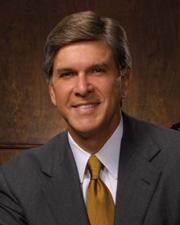
Mr. President, I am pleased today to introduce the Legal Services Benefit Act of 2003. My friends and colleagues from the Senate Finance Committee, Senators Breaux, Kerry, Lincoln, Rockefeller, and…
Mr. President, I am pleased today to introduce the Legal
Services Benefit Act of 2003. My friends and colleagues from the Senate Finance Committee, Senators Breaux, Kerry, Lincoln, Rockefeller, and Snowe, join me in introducing this important bill. This bill will amend the Internal Revenue Code to restore and make permanent the exclusion from gross income for amounts received under qualified group legal services plans.
When Congress first enacted Internal Revenue Code Section 120 in 1976, employers were provided with an incentive to provide their workforce with group legal services benefits at modest cost. These benefit programs enabled employees to contact an attorney and get advice and, if necessary, representation. Most plans covered the everyday legal events that we all expect to encounter in life, from house closings and adoptions to traffic tickets and drafting wills. The provision sunsetted in 1992, however, eliminating this valuable benefits' favorable tax status.
Qualified employer-paid plans have proven to be highly efficient. These arrangements make substantial legal service benefits available to participants at a fraction of what medical and other benefit plans cost. For an average employer contribution of less than $150 annually, employees are eligible to utilize a wide range of legal services often worth hundreds and even thousands of dollars, which otherwise would be well beyond their means.
In addition to the efficiency with which these plans can deliver services, their ability to make preventive legal services available results in additional savings in our economy. Group legal plans give investors access to legal services before they are induced to make unwise investments. Having a lawyer available to review the investment documents could mean the difference between a comfortable retirement and lost life savings. Group legal plan attorneys add a layer of security to the system.
I strongly encourage my colleagues to join me in supporting this important proposal to provide efficient access to our legal system for working Americans. I look forward to working with Chairman Grassley to move this matter successfully through the Finance Committee.
I ask unanimous consent that the text of this legislation be printed in the Record.
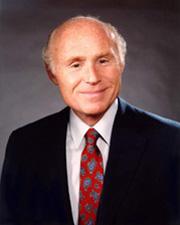
Mr. President, I rise today to introduce the Disable Workers Empowerment. Under current law, millions of disabled Americans are unable to claim a tax deduction for many of the expenses they incur as…
Mr. President, I rise today to introduce the Disable Workers Empowerment. Under current law, millions of disabled Americans are unable to claim a tax deduction for many of the expenses they incur as a result of their disabilities. This creates a significant barrier to their leading productive and rewarding lives through employment. For example, in order to work, an individual who uses a wheelchair might need to hire a personal attendant to provide transportation to and from the job site.
At a time when we are doing everything in our power to assist individuals looking for employment, it is counterintuitive to retain legislation that prevents some from seeking employment. While current law allows a limited deduction for disabled workers' expenses, this deduction is limited to expenses that are necessary for the individual to perform work satisfactorily. This means, for example, that a blind individual could only claim a deduction for the cost of using a reading service at the workplace and during normal work hours. In addition, if this individual does not itemize his or her tax returns, the individual would receive no deduction.
This legislation would correct this inequity. Under this bill, whether or not the individual itemizes, he or she would be able to claim a deduction for the overtime services that they require, regardless of itemizing his or her return. This is just one example of the dozens of, often expensive, services that better enable people with disabilities to do their jobs.
I believe we need to do more to encourage individuals with disabilities and the desire to seek out employment. Current law perpetuates an iniquity that discourages people from living the fullest possible life. I believe this legislation goes a long way in correcting a shortcoming in current law, and will remove a barrier for millions of disabled workers. I urge my colleagues to join me in supporting this legislation, and hope to see its passage this year.
I ask unanimous consent that the text of the bill be printed in the Record.

Mr. President, August 11, 2003, will mark the 25th Anniversary of the American Indian Religious Freedom Act of 1978. I am proud to have served as one of nine original co-sponsors of this Act, joining…
Mr. President, August 11, 2003, will mark the 25th Anniversary of the American Indian Religious Freedom Act of 1978.
I am proud to have served as one of nine original co-sponsors of this Act, joining Senators Abourezk, Goldwater, Gravel, Hatfield, Humphrey, Kennedy, Matsunaga and Stevens to introduce the Joint Resolution on December 15, 1977.
The American Indian Religious Freedom Act states that it is the policy of the United States to preserve and protect the traditional religions of the American Indians, Aleuts, Eskimos and Native Hawaiians. It was necessary to declare this policy to begin to counter the ill effects that stemmed from the policy of the 1880s to the 1930s that sought to ban the exercise of Native American traditional religions.
With the American Indian Religious Freedom Act policy in place, Congress built on this foundation to develop more specific legislation in 1989 and 1990 to provide for the repatriation of Native American human remains, sacred objects and items of cultural patrimony that were taken from Native Americans during the time of that Federal policy attempted to eliminate the practice of their religions.
From time to time, the Congress has also returned certain sacred lands to Native Americans for their traditional religious use.
The Committee on Indian Affairs has been conducting a series of oversight hearings on Native American sacred places and has found that many of these areas are being systematically damaged and destroyed, and Native Americans have no specific statutory authority that would enable them to defend their traditional religious areas in court.
I believe that this twenty-fifth anniversary year of the American Indian Religious Freedom Act is a fitting time for Congress to amend the Act, to assure that Native Americans have the legal means to protect their places of worship.
I believe it is time that we join together in enacting legislation that will fulfill the policy promise of the American Indian Religious Freedom Act.

Mr. President, today I am introducing ``The Home School Non-discrimination Act'' (HONDA). This bill would clarify several existing Federal statutes which inadvertently exclude home schoolers. I am…
Mr. President, today I am introducing ``The Home School Non-discrimination Act'' (HONDA). This bill would clarify several existing Federal statutes which inadvertently exclude home schoolers. I am pleased the Senator Allen is joining me in sponsoring this measure.
All to often, Federal laws relating to education have left out the millions of children across the Nation who are benefitting from home schooling. For example, home schoolers generally cannot qualify for the education savings accounts, unless they live in one of 13 states where a home school is treated as a private school. Also, home schooled students have found themselves to be ineligible for student aid in some circumstances.
Nearly 2 million American children were home schooled during the 2000-2001 school year. These are good students who frequently outperform their public school peers. For example, in 2002 home schoolers as a whole averaged over 70 points higher on the Scholastic Aptitude Test (SAT). Also, although home schoolers only make up about 2 percent of the U.S. school-age population, in 2003 they made up 12 percent of the 251 spelling finalists and 5 percent of 55 geography bee finalists.
These students consistently score at the highest levels of achievement tests and get into some of the best colleges and universities in our Nation. They are hard working, intelligent, and active in their communities. However, these students may be denied services available to other students because of an oversight in Federal law. That is not right, and HONDA will rectify the situation. I hope my colleagues will join me and Senator Allen in this effort.
I ask unanimous consent to print a section-by-section analysis of HONDA as well as the text of the bill in the Record.
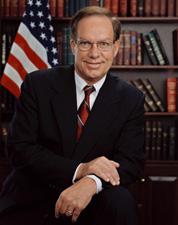
Mr. President, I ask unanimous consent that the text of the bill be printed in the Record.
Mr. President, I ask unanimous consent that the text of the bill be printed in the Record.
Bill Text
Latest available legislative text
        [Congressional Bills 108th Congress]
[From the U.S. Government Publishing Office]
[H.R. 2886 Introduced in House (IH)]

108th CONGRESS
1st Session
H. R. 2886

To amend title 31, United States Code, to improve the financial
accountability requirements applicable to the Department of Homeland
Security, and for other purposes.

_______________________________________________________________________

IN THE HOUSE OF REPRESENTATIVES

July 24, 2003

Mr. Platts (for himself, Mr. Tom Davis of Virginia, Mr. Waxman, Mrs.
Blackburn, and Mr. Towns) introduced the following bill; which was
referred to the Committee on Government Reform, and in addition to the
Select Committee on Homeland Security, for a period to be subsequently
determined by the Speaker, in each case for consideration of such
provisions as fall within the jurisdiction of the committee concerned

_______________________________________________________________________

A BILL

To amend title 31, United States Code, to improve the financial
accountability requirements applicable to the Department of Homeland
Security, and for other purposes.

Be it enacted by the Senate and House of Representatives of the
United States of America in Congress assembled,

SECTION 1. SHORT TITLE.

This Act may be cited as the ``Department of Homeland Security
Financial Accountability Act''.

SEC. 2. CHIEF FINANCIAL OFFICER OF THE DEPARTMENT OF HOMELAND SECURITY.

(a) In General.--Section 901(b)(1) of title 31, United States Code,
is amended--
(1) by redesignating subparagraphs (G) through (P) as
subparagraphs (H) through (Q), respectively; and
(2) by inserting after subparagraph (F) the following:
``(G) The Department of Homeland Security.''.
(b) Appointment or Designation of CFO.--The President shall appoint
or designate a Chief Financial Officer of the Department of Homeland
Security under the amendment made by subsection (a) by not later than
180 days after the date of the enactment of this Act.
(c) Continued Service of Current Official.--The individual serving
as Chief Financial Officer of the Department of Homeland Security
immediately before the enactment of this Act may continue to serve in
that position until the date of the confirmation or designation, as
applicable (under section 901(a)(1)(B) of title 31, United States
Code), of a successor under the amendment made by subsection (a).
(d) Conforming Amendments.--
(1) Homeland security act of 2002.--The Homeland Security
Act of 2002 (Public Law 107-296) is amended--
(A) in section 103 (6 U.S.C. 113)--
(i) in subsection (d) by striking paragraph
(4), and redesignating paragraph (5) as
paragraph (4);
(ii) by redesignating subsection (e) as
subsection (f); and
(iii) by inserting after subsection (d) the
following:
``(e) Chief Financial Officer.--There shall be in the Department a
Chief Financial Officer, as provided in chapter 9 of title 31, United
States Code.''; and
(B) in section 702 (6 U.S.C. 342) by striking
``shall report'' and all that follows through the
period and inserting ``shall perform functions as
specified in chapter 9 of title 31, United States
Code.''.
(2) FEMA.--Section 901(b)(2) of title 31, United States
Code, is amended by striking subparagraph (B), and by
redesignating subparagraphs (D) through (H) in order as
subparagraphs (C) through (G).

SEC. 3. FUNCTIONS OF CHIEF FINANCIAL OFFICER OF THE DEPARTMENT OF
HOMELAND SECURITY.

(a) Application of Financial Statements Requirement.--The Secretary
of Homeland Security is not required to prepare or submit any audited
financial statement under section 3515 of title 31, United States Code,
for any fiscal year before fiscal year 2004.
(b) Performance and Accountability Reports.--Section 3516 of title
31, United States Code, is amended by adding at the end the following:
``(f) The Secretary of Homeland Security--
``(1) shall submit for fiscal year 2004, and for each
subsequent fiscal year, a performance and accountability report
under subsection (a) that incorporates the program performance
report under section 1116 of this title for the Department of
Homeland Security; and
``(2) shall include in each performance and accountability
report an audit opinion of the Department's internal controls
over its financial reporting.''.
<all>