To amend title 10, United States Code, to permit members of the Selected Reserve the use of Reserve Montgomery GI Bill education benefits for payment for licensing or certification tests.
Legislative Activity
Stay on top of the latest movement without scrolling through every action
Referred to the House Committee on Armed Services.
September 5, 2003
View full timeline
Introduced in House
September 5, 2003
Referred to the House Committee on Armed Services.
September 5, 2003
Floor Debate
17 membersWhat members said about H.R. 3018 on the floor
 REA
REA JAB
JAB RP
RP GM
GM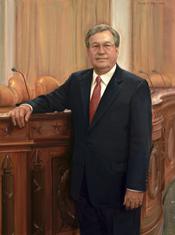 WMT+12
Floor Debate
17 membersWhat members said about H.R. 3018 on the floor
Mr. Speaker, I yield myself such time as I may consume. Mr. Speaker, I do want to begin by thanking the gentleman from Ohio (Mr. Boehner) who very ably and fairly chaired this conference and for all…
Mr. Speaker, I yield myself such time as I may consume.
Mr. Speaker, I do want to begin by thanking the gentleman from Ohio (Mr. Boehner) who very ably and fairly chaired this conference and for all the participants and staff who worked very hard in the conference and did yeomen's work on both sides of the Capitol and both sides of the aisle.
As the chair of the Committee on Ways and Means said a minute ago, this bill solves a problem. I think he is correct, that there is a problem. I think he is correct that it solves the problem for some people who suffer that problem, but I would respectfully say he is most decidedly incorrect when he says it solves the entire problem.
The problem here is that people running pension plans, defined benefit plans, have suffered an unusual series of economic circumstances, declining stock prices, very low interest rates, which have given them great fiscal distress in their plans.
Under the existing law, it is necessary for the employers who pay into those plans to make huge increases in their contributions in the very near future. This translates, in my view, into lost jobs, slower growth, and significant economic problems for many industries. Commendably, this conference tried to address that problem and has, in fact, done so for many of our employers, but the conference report fails miserably to help a number of employers who need this help, and those are the employers in what is called the multi-employer plans.
Now multi-employer plan is a very antiseptic term. Who are we talking about? We are talking about air conditioning contracting companies. We are talking about people who build houses. We are talking about people that do plumbing repairs and heating repairs, that do sheet metal contracting. We are talking about 60,000 small businesses across this country affected by this change.
Now, the experts in the field have told us that about one in five of those small businesses is going to experience a significant problem in their pension plan within the next 5 years. Twenty percent of these air conditioning repair companies and plumbing companies and home builders are going to experience a problem in the next 5 years. So about 20 percent of these small businesses and their employees need help right now.
This bill helps about 3 or 4 percent of these small businesses in the country. Think about this. The experts tell us that 20 percent of these small businesses and their employees need help. This bill steps forward and helps 3 or 4 percent.
Now one might be inclined, Mr. Speaker, to think that this is a technical oversight or it is a problem that cannot be fixed because of some fiscal or budgetary reason. Nothing could be further from the truth. This bill represents a deliberate choice to exclude thousands of small businesses and their employees from the relief that they need to continue creating jobs, and I believe that deliberate choice is made because these plans are all affiliated with organized labor. That is what this is about.
There are a bunch of people that fell off the boat and they are drowning and need a life preserver and we are standing on the deck of the rescue ship throwing out life preservers so people can survive. And that is commendable. But we will not throw the life preservers for union plans and union workers. That is wrong. There is no substantive basis for that judgment. There is no fair basis for that judgment. And it is wrong.
We will have an opportunity to fix this injustice in the motion to recommit to conference that I will be offering. Under the rules of the House, there will be no debate on that motion, so I want to bring it up now.
What the motion will permit us to do is to reconvene the conference with the instructions that the small businesses adversely affected by this bill will have the chance to be included. We will go back to the bargaining table and say, as the experts have told us, that the 20 percent of small businesses who are drowning out there in the sea will also get thrown a life preserver.
To make a judgment based on dollars is reasonable. To make a judgment based upon technical disagreement is reasonable. But to make a judgment based upon ideological opposition to a certain segment of the American business community, those who employ unionized workers and against a segment of American workers, those who happen to exercise their right to collectively bargain, is wrong.
That is why the motion that I will submit is supported by, and final passage is opposed by, the Teamsters, the IBEW, the building and construction trades of the AFL/CIO, the bricklayers, the boilermakers, the roofers, the asbestos workers, the carpenters, the iron workers, the operating engineers, the laborers, the sheet metal workers, the plasterers, the plumbers and pipe fitters, the elevator trades and the painters.
The small businesses that employ these Americans should not be excluded from this bill, irrespective of
who they support in the election, irrespective of how they view things politically. It is wrong to throw a life preserver only to the favored few.
I would urge my colleagues to support the motion to recommit that will be offered and oppose final passage of the bill.
Mr. Speaker, I reserve the balance of my time.
Mr. Speaker, I yield 2 minutes to the gentleman from Maryland (Mr. Cardin), who is really one of our leading voices on pension reform in this country.
Mr. Speaker, I yield myself such time as I may consume, and I would just point out that the argument from the other side, we keep hearing the bill is not everything, that we cannot do everything all at once.
It seems like the things that we never quite get around to are the ones that most benefit the working people of the country. We never quite get around to extending unemployment benefits. We never quite get around to consideration of raising the minimum wage. We never quite get around to including pension relief for employees of small businesses, 60,000 small businesses across the country. We never quite get around to debating legislation that would help the 45 million people without health insurance in the country. We never quite get around to that.
We always do get around to helping very powerful players in our economy and our political system who, in fact, deserve help in this circumstance. I do not dispute that; but I hope one of these days, Mr. Speaker, we get around to helping the rest.
Mr. Speaker, I yield 3 minutes to my friend, the gentleman from Massachusetts (Mr. Lynch).
Mr. Speaker, I yield myself such time as I consume, and I know that there are elements of the union movement who support this bill. I understand that, but I want to reiterate, the Teamsters, the IBEW, the building trades, the bricklayers, the boilermakers, the roofers, the asbestos workers, the carpenters, the iron workers, the operating engineers, the laborers, the sheet metal workers, the plasterers and cement masons, the plumbers and the pipefitters, the elevator trades and the painters all oppose this bill.
Mr. Speaker, I yield 3 minutes to my friend, the gentlewoman from Texas (Ms. Jackson-Lee).
Mr. Speaker, I yield 2\1/2\ minutes to the gentleman from North Dakota (Mr. Pomeroy), who is a leading voice on pension issues.
Mr. Speaker, I yield myself such time as I may consume.
I also want to echo the comments of the chairman regarding the staff on both sides, here in the House and the other body. Staff put in innumerable hours, did very high-quality work on both sides, and we are very grateful to each of these ladies and gentlemen.
I have listened to the arguments from the other side, and I certainly respect their intent, but I want to clarify the record.
We have heard that the bill that is in front of us really does help the multi-employer plans, the small business plans who need help, and that it only excludes those who do not. I again state that The Segal Company, which is widely recognized as an objective and authoritative source in this field, has concluded that over the course of the next 5 years 20 percent of the multi-employer plans will experience grave trouble. As I understand their analysis of this bill, this bill will help fewer than 4 percent of those plans. So a lot of plans in distress are going to have further distress.
Another argument we hear is that not that many people are really left out. My friend from Ohio talked about the relatively tiny percentage of small businesses affected by this. But it is important that we understand that these businesses employ nine and a half
million people. Now, not all those nine and a half million people are in plans that are in distress, but a significant portion of them are. So it is nine and a half million workers who are affected and, I believe, left out of this important consideration.
We hear that this is only a temporary fix and we will come back and fix it later in 2 years. I hope that is true, and I have no doubt that is the intention of the majority. But we sometimes do not move very quickly in these areas. If someone is in trouble, and again I think the record shows about a fifth of these plans are in trouble, telling them they have to tread water for another 2 years until the life preserver comes is a rather unhelpful answer.
We have heard that no one in the House brought up multi-employer relief the first time this came through. That is true. The bill was brought up under a unanimous consent agreement in which no amendments were permitted, by agreement of both sides. Frankly, our side entered that agreement because we wanted the bill to move quickly and because I think we made a rather reasonable forecast, based upon our experience, that Democratic amendments that alter decisions by the majority are very often not considered under the rules passed by this House.
So the idea we could have come to the floor and offered an amendment that would have included the multi plans is rather at variance with the record.
I yield to the gentleman from Ohio.
Reclaiming my time, Mr. Speaker, I certainly appreciate that. I also appreciate the fact that the record of this House is that Democratic amendments to bills very often do not get fairly considered.
Finally, we are told the President will not go any further than what is in this bill. Well, I certainly respect the Office of the Presidency and the man who holds it now, but we are a coequal branch of government. Our job here is not to limit our expression of what we think the right answer is to what the people at the other end of Pennsylvania Avenue think. We have both the right and the responsibility to stand up and be counted for what we think.
Mr. Speaker, I reserve the balance of my time.
Mr. Speaker, I yield myself such time as I may consume.
I again would like to express my appreciation to the majority for the fair and evenhanded way in which the conference was handled. I dispute its result and disagree with its result. I do look forward to our cooperation over the next number of years in addressing the long-term problems.
I would urge my colleagues to vote in favor of the motion to recommit because I do not believe, as the distinguished chairman just said, it kills the chance for relief. I think it improves relief. I think this is a legislative body that is capable of producing a better product. I think that indisputably we have a situation here in which a number of small businesses who contribute to multi-employer pension plans are going to not receive the relief that they need in order to continue to generate and create jobs.
One of the ritualistic things that we say around here is that everyone loves small business, that they create three-quarters of the jobs created in the private sector in America, and we regularly have contests between each other to see who can be most in love with small business. The issue in front of us is 60,000 small businesses who pay into multi-employer pension plans. The record reflects that the best judgment of objective analysts concludes that 20 percent of the plans are at risk of being in financial jeopardy in the next 5 years. The bill in front of us helps only a tiny fraction of that group that is going to be in such trouble. It subjects thousands of those employers to difficult situations where they are going to have to steeply increase their contributions to their pension plans and thereby jeopardize their ability to keep handing out paychecks, which is so very, very important.
I would urge my colleagues to join the very broad and strong coalition of working men and women in supporting the motion to recommit and opposing final passage of the bill.
Mr. Speaker, I yield back the balance of my time.
Mr. Speaker, I offer a motion to recommit.
I am, in its present form.
Mr. Speaker, I object to the vote on the ground that a quorum is not present and make the point of order that a quorum is not present.
Mr. Speaker, pursuant to the order of the House of April 1, 2004, I call up the conference report on the bill (H.R. 3108) to amend the Employee Retirement Income Security Act of 1974 and the Internal…
Mr. Speaker, pursuant to the order of the House of April 1, 2004, I call up the conference report on the bill (H.R. 3108) to amend the Employee Retirement Income Security Act of 1974 and the Internal Revenue Code of 1986 to temporarily replace the 30-year Treasury rate with a rate based on long-term corporate bonds for certain pension plan funding requirements, and for other purposes, and ask for its immediate consideration.
Mr. Speaker, I ask unanimous consent that all Members may have 5 legislative days within which to revise and extend their remarks on H.R. 3108.
Mr. Speaker, I ask unanimous consent that 15 minutes of this time be controlled by the gentleman from California (Mr. Thomas), the chairman of the Committee on Ways and Means.
Mr. Speaker, I yield myself such time as I may consume.
Mr. Speaker, the pension security measure that we have before us is of great urgency for American workers and their employers, and that is because the 30-year Treasury bond that is used to calculate the contributions and obligations for employers for single-employer defined benefit systems are so low that it is causing companies to have to take money that they would invest in their business, that they would invest in more jobs, and put it into their pension plans when, in reality, they do not need to put that money there.
Mr. Speaker, this issue of what we do with defined benefit pension plans is a very difficult path that we must follow. On one hand, we want to protect the obligations and the rights of employees who have been offered these plans and to maintain the retirement security that they have been promised and that they are expecting. At the same time, we need to find a way to make these plans work more smoothly so that employers do not continue to leave these plans in droves, as they have over the last 15 years.
That is why the bill we have before us today was intended to fix this discount rate for single-employer defined benefit plans, and we go from a 30-year Treasury bond to a blend of corporate bond indexes that we believe more appropriately reflects the marketplace in terms of what the discount rate should be as they calculate these obligations.
Yesterday, the House and Senate reached an agreement on a short-term bill that is good for the economy, it is good for American workers and the overall health of the Nation's pension system. I should say temporary. This is a 2-year bill. As the gentleman from New Jersey pointed out, the people who are opposed to this bill do not have funding obligation problems for 5, 6, 7 years; and for those multi- employer plans who do have problems here in the short term, over the next 3 years they will in fact, by and large, get the relief that they need.
The measure that was adopted by the conferees yesterday, I think, is a fair and responsible proposal that meets all of the goals that the conferees started with when we had the conference. The most critical urgent measure is the 30-
year Treasury bond fix. It also includes limited relief from deficit reduction contributions for airlines and integrated steel companies, and it targets funding relief for multi-employer pension plans that we believe are most in need. It is also a bill that the President of the United States has agreed he will sign into law.
It is important to note that the interest rate provision really is the sole reason that we are here. Last fall, when we passed this measure on a 397 to 2 vote, everyone voted for this bill except two Members from the other side of the aisle. There was never any discussion about multi-employer relief, and we worked with our Senate and Republican colleagues on both sides of the aisle, both sides of the Capitol.
Mr. Speaker, I want to thank the gentleman from California (Mr. Thomas), Chairman of the Committee on Ways and Means, for his willingness to work closely with us, and the gentleman from Ohio (Mr. Portman) on our side, along with the gentleman from Ohio (Mr. Tiberi), the gentleman from Texas (Mr. Sam Johnson), and the gentleman from California (Mr. McKeon), and I guess that would be it on our side; along with the gentleman from New Jersey (Mr. Andrews) and the gentleman from California (Mr. George Miller) and the gentleman from New York (Mr. Rangel). We worked together very closely in an open and bipartisan process that I think speaks well of how we should legislate here in the House.
I think we have come an awful long way, and we need to get this bill finished, and we need to get it finished today. These funding obligations for employers are due on April 15, and if this conference report is not passed by the House and Senate and signed into law before then, companies will be making contributions that they really are not required, we believe, to make.
Beyond thanking all of the Members who have worked on this, I want to take a moment to thank all of our staff. As we all know, Members are only as good as the staff we have around us, and we have staff on both sides of the aisle who have done really an awful lot of hard work to get us here today.
From my own staff, I want to thank Paula Nowakowski, Ed Gilroy, Stacey Dion, Jo-Marie St. Martin, David Connolly, Jeff Dobrozsi, Kevin Smith, Greg Maurer, Dave Schnittger, Linda Stevens, Kevin Frank, and Deborah Samantar.
I would also like to thank Shahira Knight and Lisa Schultz from the staff of the gentleman from California (Mr. Thomas); Kathleen Black from the staff of the gentleman from Texas (Mr. Sam Johnson); Kurt Courtney from the staff of the gentleman from California (Mr. McKeon); Angela Klemack from the staff of the gentleman from Ohio (Mr. Tiberi); and Barbara Pate from the staff of the gentleman from Ohio (Mr. Portman) for all her work on this as well.
I would also like to thank John Lawrence, Michelle Varnhagen and Mark Zuckerman from the staff of the gentleman from California (Mr. George Miller), and Jody Calemine from the staff of the gentleman from New Jersey (Mr. Andrews), and Mildeen Worrell from the staff of the gentleman from New York (Mr. Rangel) for an awful lot of really long, long nights in getting us here.
I also want to thank Wade Ballou and Larry Johnston of the House Office of Legislative Counsel. They were under a great deal of pressure yesterday to get this bill drafted so we could get it filed.
Now there are some groups out there opposing the bill we have before us today, but there are also a lot of people supporting the bill we have before us today: the Airline Pilots Association, the International Association of Machinists and Aerospace Workers, the United Auto Workers, the U.S. Chamber of Commerce, the Motor Freight Carriers Association, Delta Airlines, the Business Round Table, New York Life, United Parcel Service, Northwest Airlines, Ford Motor Company, Daimler Chrysler, General Motors, and the Financial Services Roundtable.
If you want to see a broad bipartisan nonideological coalition of people supporting the bill, I think the list I have just read does in fact do that.
I would urge all of my colleagues today to reject the motion to commit and to vote ``yes'' on final passage of this bill.
Mr. Speaker, I reserve the balance of my time.
Mr. Speaker, will the gentleman yield?
Mr. Speaker, when H.R. 3108 was brought to the floor, it was brought to the floor and developed in total agreement between myself, the chairman of the Committee on Ways and Means, the gentleman from California (Mr. George Miller) and the gentleman from New York (Mr. Rangel). We came to an agreement on what the bill would be, and that is why it was brought up the way it was.
Mr. Speaker, I yield 1 additional minute to the gentleman from California (Mr. Thomas).
Mr. Speaker, I yield myself such time as I may consume.
As we said before, this is a short-term, 2-year temporary effort to help with the Nation's ailing pension system. There is not an issue that is in the bill that any of the conferees disagreed with. There are more things that people would like to add to the bill; but the bill that is before us, everybody agrees to, other than some people have been disappointed because they want more. We all want more, but the gentleman himself said that the multi-employer relief that is not included in the bill is for firms and plans that have a problem 5 or 6 years from now. Trust me, we will be back here within the next 2 years with a broad overhaul of our Nation's pension laws, which is greatly needed. This is a broad bipartisan bill. I think it will be supported in a broad bipartisan way here today. The motion to recommit is nothing more than a way to kill the bill. We do not want that to happen. It would be bad for American workers and their employers.
I urge my colleagues to vote against the motion to recommit and to vote for final passage.
Mr. Speaker, I yield back the balance of my time.
Mr. Speaker, I demand a recorded vote.
Mr. Speaker, I yield myself such time as I may consume. Mr. Speaker, I thank my colleague, the gentleman from New Jersey (Mr. Andrews) for his comments. I have enjoyed working with him over the…
Mr. Speaker, I yield myself such time as I may consume.
Mr. Speaker, I thank my colleague, the gentleman from New Jersey (Mr. Andrews) for his comments. I have enjoyed working with him over the years. He works closely with the gentleman from Ohio (Chairman Boehner) who we will hear from in a moment on pension issues.
I would say I cannot agree exactly with his analysis of this bill. This is a very strong bill that I strongly support. I commend those who played a role in putting it together, and the gentleman from New Jersey (Mr. Andrews) was there in the conference helping put it together.
The bill that came through the House, as my colleagues will recall, had no help from multi-employers because it was a 30-year bill. That was the issue that we started with, and that is the source of the legislation, also the reason for the legislation, and that legislation then got added to. But it is interesting that all but I think two Members of this House voted for the bill last go-around without any multi-employer relief and now somehow the bill is not good enough because it does not have enough multi-employer relief.
It does solve the 30-year problem, and that is extremely important to 34 million American workers. It is only a 2-year short term bill, as the gentleman knows; and in those 2 years the idea is that we will reform all of the pension rules and regulations, including the funding rules, the accounting rules, the disclosure rules, something that is long overdue, and including within that, of course, the multi-employer rules, which I believe do need to be altered. But this was never meant to be the bill to do that.
My colleague talked about problems that might come up in the next 5 or 10 years for these plans. We will have time to deal with that in the next 2 years. That is the whole idea. The critical thing here is, before April 15 when these quarterly payments are going to be made or not made, that we make a decision to save millions of employees from having their benefits frozen, from perhaps losing their benefits altogether, new entrants into the workforce. We know we had 300,000 new jobs last month. Let us be sure those people have an opportunity to get into a pension.
What is happening out there, as we know, is we not only have seen a precipitous drop in the number of plans that are insured by PBGC, meaning these traditional guaranteed, defined benefit plans, we have gone from roughly 114,000 plans to 32,000 plans just in the last 18 years.
More disturbing to me is that recently we have seen a lot of these plans freeze benefits for existing participants and not allow new participants in. The best study we have got shows that we have about 27 percent of plans that are not offering benefits to new hires as they do to existing hires. We have about 21 percent of plans, that is more than one in five, who are scaling back benefits through a freeze or other similar mechanisms.
We have got a crisis, and we need to deal with it. We have spent 2 years talking about it. I am delighted this bill is before us to finally correct the major reason that plans are freezing and cutting benefits and that is the fact that the interest rate they have to use, called the 30-year rate, is not accurate.
My colleague, the gentleman from Maryland (Mr. Cardin), who I see is on the floor, and I introduced legislation to correct this problem. It is bipartisan legislation, strongly supported in this House. It provides for a long-term, conservative corporate bond rate to be used instead of this 30-year Treasury, as the gentleman from California (Chairman Thomas) said earlier, which is now defunct and no longer a good interest rate. It provides a slightly higher interest rate, which allows companies to make the adequate and accurate contribution but not overcontribute. And this will help, again, 34 million American workers.
I am pleased to see the conference report we have before us incorporates that model. It only does it for 2 years. I wish we could have gotten 3 or 4. I would have loved it to be permanent. It would give the plans the predictability they need. We were not able to do that. But to have the 2-year change in the 30-year is extremely important to those 34 million workers, including, by the way, 12 million union workers.
To my friend, the gentleman from New Jersey (Mr. Andrews), he talked earlier about the fact that this somehow does not take care of union workers but it takes care of non-union workers. I would just remind him there are 9 million union workers in multi-employer plans, but there are 12 million union workers who get a very direct benefit from the 30- year Treasury fix in this bill.
I would also say that, for those folks who are concerned about who this covers and does not cover in terms of the multi-employer plans, we really do not know. It may be three 3 or 4 percent. It may be more than that. That is not what we intended to do, was to choose a percentage. We tried to put in place some screens to be sure that the benefits that were added to, again, the 30-year Treasury bill that went through this House with all but two votes, to be sure that those plans that were added to that were those plans most in need. That was the only criteria.
Mr. Speaker, I yield 1 minute to the distinguished gentleman from New York (Mr. Houghton), my colleague on the Committee on Ways and Means.
Mr. Speaker, I yield myself such time as I may consume.
First of all, I want to thank my colleague from Maryland for all of his hard work and his support today and make that commitment with him and the gentleman from Ohio (Chairman Boehner), the gentleman from California (Chairman Thomas), and the gentleman from New Jersey (Mr. Andrews) and others. We will work together on this issue for the next couple of years. We do need to reform our entire defined benefit pension system.
Mr. Speaker, I yield 2 minutes to the gentlewoman from Connecticut (Mrs. Johnson), my distinguished colleague on the Committee on Ways and Means.
Mr. Speaker, I yield myself such time as I may consume.
Just briefly, I say to my colleague who just spoke, I appreciate his support. Last time through he said he did support the legislation without any multi-employer provisions. He should know that no one who has spoken on the floor today mentioned the multi-employer issue when it came to the floor last time. In fact, when we look
through the debate, not one Member of Congress on either side of the aisle mentioned the multi-employer issue or suggested that it be added.
I would also say with regard to all these small businesses, 23 million small businesses in America, let us assume all the multi- employer employers are small businesses which, of course, they are not. Let us assume they were, that would be .2 percent of our small businesses in America. So let us be careful about saying we are talking about 20 percent of the small businesses here.
We are talking about at the most .2 percent and of course, not all multi-employer employers are defined as small businesses.
Mr. Speaker, I yield 1\1/2\ minutes to the gentleman from Michigan (Mr. Camp), a distinguished member of the Committee on Ways and Means.
Mr. Speaker, I yield myself such time as I may consume.
I just wanted to say again that I have enjoyed working with the gentleman from New Jersey. I look forward to working with him on multi- employer relief over the next 2 years. This is a short-term bill.
Mr. Speaker, I yield the balance of my time to the gentleman from California (Mr. Thomas).
Mr. Speaker, because of a previous commitment I missed the recorded vote today on rollcall No. 117, final passage of the conference report on H.R. 3108, the Pension Funding Equity Act. Had I been present, I would have voted ``aye.''
Mr. Speaker, I wish to begin by thanking the chairman, Mr. Boehner from Ohio, for trying to conduct a fair conference committee on this bill, H.R. 3108, the Pension Funding Stability Act.…
Mr. Speaker, I wish to begin by thanking the chairman, Mr. Boehner from Ohio, for trying to conduct a fair conference committee on this bill, H.R. 3108, the Pension Funding Stability Act.
Regrettably, however, I must oppose the conference report before the House today. However, I strongly urge support for the Andrews motion to recommit because it provides urgently needed relief for multi-employer plans.
The conference agreement was significantly weakened after intense lobbying by the Bush administration to strike provisions that would have protected the long-term stability of multiemployer pension plans.
While this conference report provides significant relief to many single-employer pension plans, it is outrageous that it does not provide relief to the many multiemployer plans across the country that need relief, plans that include many small businesses and others that need short-term relief. As a result of this deficiency, I oppose this bill.
Last week, House and Senate Democrats and Republicans on the conference committee had an agreement that the final bill would include pension funding relief for the 20 percent of multiemployer pension plans hardest hit by the recent economic and financial market downturn.
But then, 2 days later, the White House started to make clear to the Republicans that it did not want any help for multiemployer pension plans included in the agreement.
Not for any substantive reason--just political reasons, plain and simple.
The White House's opposition stemmed from the fact that multiemployer plans are administered jointly by employers and unions. And the Bush political appointees did not want any agreement that would help those unions.
Even if it meant they would hurt the tens of thousands of small and large employers that are unionized and contribute to these plans.
Even if it meant they would hurt the hundreds of thousands of working men and women and their families whose retirement security depends on the financial viability of these plans.
This is pure and simple hardball politics of punishing unions and undermining workers who earn decent wages and benefits. The Bush administration is doing everything it can to destroy middle-class America.
This is the same administration that is about to promulgate regulations that would take away overtime pay from millions of workers.
Let us remember that this administration has done nothing to protect workers' pensions.
I wrote the administration in July 2002 to take action when pension deficits skyrocketed from $26 billion to over $100 billion. It failed to act.
Now, over a year and a half later, the problem is substantially worse. The Pension Benefit Guarantee Corporation says that pension
plans are $400 billion in the red nationally, the largest liability in history, and the PBGC itself is reporting an $11.2 billion deficit as of December 31.
The General Accounting Office is so concerned that it has placed PBGC on its list of Federal programs that are at high risk of failure.
The Bush administration and Congress' failure to take decisive action on pensions, their failed economic policies and neglect of our manufacturing industries and the failure of some companies to honestly estimate their pension liabilities have together precipitated one of the largest underfunding of private pensions in history.
The conference agreement before us today is a short-term fix. Everyone recognizes that. And I agreed at the outset of this process that given the absence of any viable alternative at the moment, a short-term fix was better than nothing. But this conference report does nothing to reform defined benefit plans to ensure their future soundness. And as I have said, the final report fails to provide relief to the broader universe of plans that need it.
The conference agreement provides $80 billion in short-term funding relief for the largest corporations by letting them use higher interest rate assumption to value their pension plan liabilities. And it permits a handful of struggling airlines and steel firms to delay for 2 years their underfunded pension plan contributions.
But the conference agreement does almost nothing to help multiemployer pension plans that do not benefit from the other two provisions. The conference agreement only provides temporary funding relief to multiemployer pension plans that can meet five conditions. According to the respected Segal consulting company, almost no multiemployer plan could meet all of these five conditions.
The Republicans will claim that the conference agreement does provide some limited relief to multiemployer plans. But, they cannot cite a single plan or company that will be covered.
Once again, the Republican majority is exercising its political muscle at the expense of hard working Americans.
Mr. Speaker, the administration must get serious about pension reform. The retirement security of millions of Americans depends upon timely actions by this Government. What we do here today is important to provide this relief. Companies need to shore up their pension obligations. But the American people's anxiety about the future of the retirement security is highly justified in light of this administration's and this Congress' failure to seriously address the problems in our pension system.
Once again, I appreciate the hard work of Chairman Boehner to try to accommodate the many interests in this bill and to try to conduct a fair conference meeting. But the final product does not fairly address the many pension plans left without any relief here today and for that reason I regrettably oppose the conference agreement.
Mr. Speaker, I thank the gentleman from Ohio for yielding me the time, and I yield myself such time as I may consume. I want to thank everyone for bringing to fruition a modest bill which has a…
Mr. Speaker, I thank the gentleman from Ohio for yielding me the time, and I yield myself such time as I may consume.
I want to thank everyone for bringing to fruition a modest bill which has a limited life, but which is extremely critical in today's economic environment. Twice the House has passed a short-term substitute for a financial structure that assists in pensions. Thirty-year Treasury bonds had been the standard. When the Treasury decided not to issue 30- year bonds anymore, we did not have a surrogate.
This surrogate is absolutely essential in the short term while we work out a long-term replacement for the 30-year Treasuries. As I said, twice the House passed this legislation, once in October of 2003 and then again in November of 2003. Neither time in passing this legislation did the House include multi-employer provisions.
Multi-employers tend to basically be the representatives for the unions.
Multi-employers determine their pension liabilities differently than other companies. It is important to make sure that there are provisions available for multi-employers, and what the conference did was work out a solution which we believe addresses those multi-employers in need and can be signed into law.
We are going to hear a lot of comments about what we did or did not do. It seems to me that when we look at those people who are willing to write letters in support and we get one letter from the United Auto Workers and the other from Ford, Daimler Chrysler, and General Motors, both management and labor in support of what we did in the short-term solution, we begin to think maybe we have it about right.
So as we look at this, this is not permanent legislation; it is legislation that needs to go to the President to be enacted, hopefully no later than next week; and we will then sit down and look at long- term, formal changes to the pensions in this country in a number of different ways, in the Tax Code and in the jurisdiction of the gentleman from Ohio's Committee on Education and the Workforce.
I want to compliment the gentleman from Ohio (Chairman Boehner) on the way in which he has conducted himself while working on this legislation in the House and especially his leadership in conference. It is a pleasure to work with my colleagues where, notwithstanding the jurisdictional differences in committee, we are able to work together to solve problems, because it is the problem that needs to be addressed and not the particular concerns or interests of any committee.
Mr. Speaker, I yield such time as he may consume to the gentleman from Connecticut (Mr. Simmons) for purposes of a colloquy.
Mr. Speaker, if the gentleman will yield, I will tell the gentleman we have, and we are. I know the gentleman's interest in this issue based upon his State and one of the things his State is famous for.
We are working with a number of individuals on Joint Tax, in industry, to gather the information needed to craft an equitable proposal. Once the committee receives this information, I will tell the gentleman, we intend to seriously pursue relief options because of the current unfair relationships, as the gentleman described.
Mr. Speaker, I ask unanimous consent that the gentleman from Ohio (Mr. Portman) control the remainder of the time of the Committee on Ways and Means.
I thank the gentlemen for yielding me this time.
Mr. Speaker, the record really needs to be absolutely crystal clear. We are not talking about the minority offering amendments and amendments being rejected. We are talking about in consultation with the chairmen and the ranking members of the committees of jurisdiction, what is it that we want to do in terms of legislation. It was completely agreed upon, evidenced by the fact that in October we passed nothing but a short-term 2-year extension with two ``no'' votes. In November when we expanded it to cover airlines, an absolute opportunity to include multi-employers, it was never mentioned, it was never offered, never considered, never presented by the minority; and that measure passed on a voice vote.
So when we analyze what goes on around here, the record really needs to reflect that the House in a bipartisan fashion acted, the Senate in a bipartisan fashion acted, and the conference came together and melded two significantly different bills. It is incontrovertible, the House twice sent out bills with no multi-employer provisions in it. We have before us in the conference report a conference report that includes multi-employer. That is the way this place is supposed to work.
If you vote on the motion to recommit, understand that recommitting conference reports kills the conference report. Do not look at what they want to do. Understand what the action does. It kills the conference report.
Show 8 more
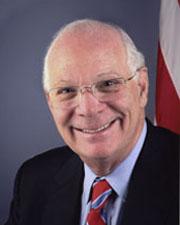
Mr. Speaker, let me thank the gentleman from New Jersey (Mr. Andrews) for his leadership on pension issues and protecting working people. I agree completely with what he has said with regards to…
Mr. Speaker, let me thank the gentleman from New Jersey (Mr. Andrews) for his leadership on pension issues and protecting working people. I agree completely with what he has said with regards to multi-employer. I am very happy that my friend, the gentleman from Ohio (Mr. Portman), is on the floor. I want to thank the gentleman from Ohio (Chairman Boehner) for all of his help on dealing with particularly the ERISA provisions as it affects pension rules.
It is interesting, in regards to the multi-employers, it was included in legislation that the gentleman from Ohio (Mr. Portman) and I authored to try to deal with the current problems of funding a pension plan. I regret it is not included in this legislation.
Mr. Speaker, let me point out that when this bill passed this body I urged my colleagues to support the bill, but I pointed out that it is not going to correct the problem. It is a temporary Band-Aid, that we should have done more. We should have had a longer than 2-year replacement of the 30-year Treasury.
We should have had a permanent correction. We know what we should be doing. Using the formula that is in this
bill, we should have had it for more than just 2 years.
I also pointed out that there are many other provisions in funding of pension plans, defined benefit plans that need to be addressed. I know there is an attempt here to deal with the mortality schedules, but we should deal with it broader. There are a lot of blue collar workers that today their pension plans are overfunded in regards to the mortality schedules.
We had the issue of smoothing contributions to allow employers to make more predictable contributions to the defined benefit plans. All that needs to be dealt with.
So, Mr. Speaker, I hope that my colleagues will support this bill because it is important that we get this relief in effect before April 15, but I hope that we will do a lot more in protecting the defined benefits because, if we do not, if we do not take this issue up, next year when we talk about it or 2 years from now, we are going to find there are less defined benefit plans that are out there.
The well-funded plans are going to freeze or convert, but they are not going to do the current roles that are out there. We need to reform and make sure that plans are accurately funded, fully funded so that employees are protected, but we also have to make sure that there are incentives for companies to continue their defined benefit plans.
So I urge my colleagues to support this legislation, support my colleague's, the gentleman from New Jersey (Mr. Andrews), motion to recommit so we can then deal with the multi-employer issue, but let us get this bill to the President's desk as quickly as possible.
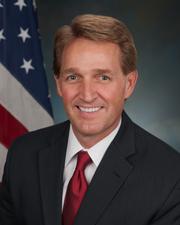
Mr. Speaker, in voting against the conference report on H.R. 3108, the Pension Funding Equity Act of 2003, I want to be clear that I voted for the original House version of the bill. When we…
Mr. Speaker, in voting against the conference report on H.R. 3108, the Pension Funding Equity Act of 2003, I want to be clear that I voted for the original House version of the bill. When we considered this bill in the House of Representatives, it simply contained a replacement rate for the defunct 30-year Treasury rate used for calculating pension liabilities. Using a rate based on a blend of high-quality corporate bonds, companies with pension plans are expected to realize about $80 billion in appropriate funding relief.
When the other Chamber produced its version of the bill, however, the merits of the
House bill were more than offset by special interest favors for a few airline and steel companies. This version would give automatic waivers to airlines by law, but the relief would only benefit a few companies in these industries. The companies that would not benefit would then be at a competitive disadvantage. Such legislation puts Congress in the position of picking winners and losers.
I was joined by some of my colleagues in communicating to the House leadership and the conferees our concern over the direction the pension legislation was headed. We urged that, at the very least, companies that would benefit by the special provisions should be subject to an application and review process before being approved for relief. We also suggested that if any relief was granted, then it should be reduced in order to leave taxpayers less exposed.
What came out of conference, however, was even worse. The few companies who will benefit from the special provisions included in the legislation will be allowed to forego more of the payments to their pension plans than had been proposed prior to the conference.
These narrow waivers are expected to amount to about $1.6 billion in relief for these few companies. If this measure is necessary to keep these companies going, they must be dangerously close to failure as it is. Forgiving their deficit reduction contributions may only grow the size of their liabilities and delay inevitable failure. I am concerned that there we may be setting taxpayers up for a bailout like that of the savings and loan industry in the 1980s.
I am aware of the need for a replacement for the 30-year Treasury rate, and I support such a replacement. I understand that the broader business community supports this legislation. But I cannot support this conference report because of the special interest provisions included in it. While providing short-term relief for a few companies, this legislation may result in a taxpayer bailout that will hurt all taxpayers and result in much more long-term damage.
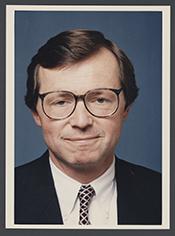
Mr. Speaker, I thank the gentleman for yielding me this time, and I commend him and the gentleman from Ohio (Mr. Boehner), Chairman of the Committee on Education and the Workforce, for their very…
Mr. Speaker, I thank the gentleman for yielding me this time, and I commend him and the gentleman from Ohio (Mr. Boehner), Chairman of the Committee on Education and the Workforce, for their very hard work in trying to move this through conference committee. I also see my friend, the gentleman from Ohio (Mr. Portman), in the Chamber. He has been a tireless advocate of moving in place this much- needed pension fix. I admire very much his leadership and work in this effort.
The bill before us must pass. It is estimated by Watson Wyatt, the consulting firm, that 20 percent of defined benefit pension plans, one in five, have been frozen or canceled within the last 3 years alone.
We are seeing a wholesale rout in the marketplace of defined benefit plans, and what is so sad about this is this is the old traditional pension. This is the thing that provides that guaranteed monthly payment upon retirement based upon a calculation of earnings and years served that really does provide secure retirement income in retirement.
We have some work ahead of us, Mr. Speaker, in trying to fix the underlying funding requirements of pension plans in this country. Because when times are good, we prohibit additional funding flowing into the plans. When times are bad, and we are asking these businesses to do everything they can to grow and hire more workers, we also require, under the formula, disproportionate funding of the pension program. At a time when they can least afford it, we make them fund it the most.
There are many industries hard hit with this, but the airline industry has been particularly hard hit. They have encountered the perfect storm of unfortunate circumstances. No need to go into them here. We are all aware of them. But we literally are going to be pushing airlines into bankruptcy if this legislation does not move. Now we need to again look longer term at addressing their pension funding issues and doing so in a way that comports with reason.
So I support the bill. Everything in it is good, but something is missing: support for the multi-employer pension plans.
I specifically asked the Secretary of Labor when she was before the Ways and Means if the administration opposed helping multi-employer plans. She refused to answer. She said she would get back to us. I am still waiting. But we know what is clear is the role they played in the conference committee in terms of trying to stop the conference from providing assistance to the multi-employer plans as well.
Our motion to recommit will fix that, which is why I will be voting for the motion to recommit and then for the underlying bill.

Mr. Speaker, I too want to thank the gentleman from New Jersey (Mr. Andrews) and also the gentleman from Ohio (Chairman Boehner) and the gentleman from Ohio (Mr. Portman) for their work on this bill.…
Mr. Speaker, I too want to thank the gentleman from New Jersey (Mr. Andrews) and also the gentleman from Ohio (Chairman Boehner) and the gentleman from Ohio (Mr. Portman) for their work on this bill.
Mr. Speaker, I rise today to express my concerns about the conference report for H.R. 3108, the Pension Funding Equity Act. Mr. Speaker, I am extremely disappointed that this conference report fails to address the real dangers facing multi-employer pension plans.
When we considered this bill last October, I supported the temporary extension of using a composite of corporate bond index to replace the 30-year Treasury. I think that is a good move. It is good to, I think, adjust in the current climate the funding obligation calculations that we include in this bill. Few of us doubt that this country's retirement system is in desperate need of reform. However, today we are missing an opportunity to meaningfully address the funding struggles that are crippling many of the multi-employer plans in this country.
When the Senate considered H.R. 3108, they recognized this growing crisis, and they included protections for multi-employer plans by an overwhelming vote. Sadly, this good work was undone yesterday by Republican conferees who gutted multi-employer pension relief with a so-called compromise that was strictly conducted on a party-line vote.
Mr. Speaker, the real losers today are our Nation's workers. Multi- employer pension plans cover 9.5 million workers and retirees who have put their faith in the retirement security system. Hardworking families should not be forced to pay the price of partisan politics. They deserve this body to comprehensively address this problem facing multi- employer plans. Congress should be taking a fair look at this issue and making a good faith effort to provide meaningful pension reform. The Senate tried to do just that; but sadly, the conference report failed in its similar attempt.
There is a pattern here, Mr. Speaker, of conduct that the gentleman from New Jersey (Mr. Andrews) has addressed in part; and I, too, find it troubling that unemployment benefits are blocked by the Republican leadership; that overtime pay for our workers is blocked by the Republican leadership; that minimum wage increases are blocked by the Republican leadership. And now, Mr. Speaker, again, because of the obstructions created by the Republican leadership, we are missing an opportunity here to provide real multi-employer pension relief.
I urge my colleagues to support the gentleman from New Jersey's (Mr. Andrews) motion to recommit and oppose this conference report.
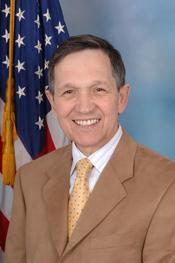
Mr. Speaker, I rise today in opposition to the conference report on H.R. 3108, the ``Pension Funding Equity Act'' and in strong support of the motion to recommit. While the conference agreement…
Mr. Speaker, I rise today in opposition to the conference report on H.R. 3108, the ``Pension Funding Equity Act'' and in strong support of the motion to recommit.
While the conference agreement contains needed assistance for single- employer pension plans, it is crafted to provide no assistance to multiemployer pension plans, which cover over 9\1/2\ million workers and retirees and some 600,000 small businesses.
Rather than enacting a reasonable and equitable package to offset the severe investment losses experienced by nearly all pension plans in the last few years, the effect of this conference report is to cynically distinguish between classes of business. It grants an estimated $80 billion in relief to large corporate sponsors of single employer plans, while rejecting real relief for multiemployer plans, which are jointly administered by small employers and unions. Even though multiemployer plans have a long history of sound funding and stability since their fortunes are not tied to the fate of a single corporation, only 4 percent of these plans are eligible for help under this bill. This is unacceptable.
Perhaps even worse, however, this conference report sets a dangerous precedent that could severely injure the integrity of the collective bargaining process for years to come. Employers that seek either Deficit Reduction Contribution or multiemployer relief would be precluded from increasing worker benefits during the relief period. Thus, under this agreement, employers could seek minimal relief not to further secure workers' retirement security, but as a way to prevent unionized employees from bargaining over benefit increases.
I urge my colleagues to vote for the Andrews motion to recommit, which would provide fair relief to multiemployer plans, and against final passage of this stilted and discriminatory conference report.

Mr. Speaker, I rise in opposition to H.R. 3108. This bill passed both the House and the other body in a bipartisan manner, and I had hoped that we could conclude this process in a bipartisan manner.…
Mr. Speaker, I rise in opposition to H.R. 3108. This bill passed both the House and the other body in a bipartisan manner, and I had hoped that we could conclude this process in a bipartisan manner. However, I must say that I am disappointed that the conference report is actually quite partisan.
The conference report would jeopardize the retirement security of millions of hard-working middle-class families who work for small businesses. Though it provides needed reform for some pensions, it ignores the need to provide relief to the more than 60,000 mainly small businesses that join together to pool resources and reduce risk for their employees' pensions. Without relief, these small businesses face excise taxes and mandatory additional contributions, putting the companies and the family-supporting jobs they produce at risk. The conferees have chosen to forget the retirement security of approximately 9\1/2\ million workers who rely on these jobs.
Mr. Speaker, I am pleased with the conference report's changes to pension plans that are sponsored by large, individual companies. The people who work for these companies deserve to have their pensions strengthened and improved. For example, replacing the current 30-year Treasury bond interest rate that employers use to determine their defined benefit pension contribution with an index based on corporate bonds will add stability to long-term pension growth. It is critical, however, that we provide the same pension security to people who work for small businesses. Congress should not pick and choose which pension plans can get relief--we should provide relief for all defined benefit plans regardless of the size of the company offering them. I ask my colleagues to oppose this bill so that we can come back with new legislation that would provide proper pension security for all employees.

Mr. Speaker, I rise in support of this conference report, and I want to thank the gentleman from California (Chairman Thomas) and the gentleman from Ohio (Mr. Boehner) for all their hard work on this…
Mr. Speaker, I rise in support of this conference report, and I want to thank the gentleman from California (Chairman Thomas) and the gentleman from Ohio (Mr. Boehner) for all their hard work on this important legislation.
This does make important, commonsense changes to help keep workers' pensions intact, and replacing the 30-year Treasury bond rate is one step in addressing the crisis companies with pensions face, especially the airline and steel industries. These companies are facing massive mandatory payments because of the simultaneous collapse of the stock market and record low interest rates.
Many defined pension plans have gone from an overfunded surplus to an underfunded deficit in just 3 years. Since these plans are now less than 90 percent funded, companies will be required to pay hefty surcharges, known as deficit reduction contributions. These payments are no less than a government-mandated surcharge requiring companies to make enormous additional payments in an unreasonable period.
This bill would provide relief to those affected employers without sticking taxpayers with the bill. More importantly, this legislation protects employee pensions and the ability of companies to keep the doors open for business. It is both pro-worker and pro-employer.
Under the bill, companies would continue to make their normal pension payments, but be allowed partial 2-year deferral for contribution payments.
In no way does this plan relieve any company from their pension liabilities. They must continue to make their normal pension contributions. This bipartisan plan is supported by both unions and management. This legislation is essential to maintaining healthy and viable employers and to protecting the pensions of thousands of workers, including the 305,000 new jobs and new pensions that were created last month.
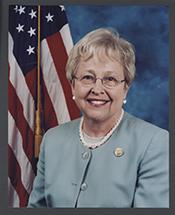
Mr. Speaker, I thank the chairman; and I want to congratulate my colleagues, the gentleman from Ohio (Mr. Portman) and the gentleman from Maryland (Mr. Cardin), who have long been leaders on…
Mr. Speaker, I thank the chairman; and I want to congratulate my colleagues, the gentleman from Ohio (Mr. Portman) and the gentleman from Maryland (Mr. Cardin), who have long been leaders on complicated pension issues, and to the whole conference committee for bringing a bill back that we can get to the President's desk to sign because there is literally nothing more important to working Americans than retirement security.
They have the right to know. We have the obligation to assure them that, when they retire, their retirement plans will come to reality and they will receive the benefits that they have long counted on.
When the rate on the 30-year Treasury bond plummeted after the bonds were discontinued, companies found themselves forced to make artificially high contributions to defined benefit pension plans. That is all this does. This just eliminates that requirement for companies with defined benefit pension plans, which we all know are extremely valuable to working people. It protects those companies from having to make artificially high contributions.
With the economy just coming back, this is about as important a jobs bill as we could pass right now because if we do not give these companies relief, they will be forced to divert funds from paying for current employees or hiring new employees because they will have to make sizeable, significant, new, higher contributions to their pension funds.
So this will free up $80 billion over the next 2 years to help grow this economy, and that is about jobs now. It is about retirement security later. So this is a must-pass bill. Is it everything? No, it is not everything. We need a permanent fix to this problem, and we have a permanent fix that needs to go to everyone; but this is a must-must- pass bill, and I urge the body to vote ``yes.''
Show 4 more
Mr. Speaker, I rise today in order to voice my strong and unwavering support for the conference report on H.R. 3018, the Pension Funding Equity Act, and also to express my sincere appreciation for…
Mr. Speaker, I rise today in order to voice my strong and unwavering support for the conference report on H.R. 3018, the Pension Funding Equity Act, and also to express my sincere appreciation for the hard work and dedication of Chairman Boehner in bringing this important legislation to the floor this afternoon.
Mr. Speaker, protecting and strengthening the retirement security of American workers is a top priority for my Republican colleagues and I. Indeed, since coming to Congress in 1995 I have sought a solution to the pension-funding shortfall that will soon face countless American workers.
The Pension Funding Equity Act Conference Report before the floor today is critical to protecting the pension benefits of millions of workers and their families. I strongly believe it will provide an effective and temporary replacement to the current 30-year Treasury interest rate, while at the same time allowing Congress the opportunity to craft a long-term solution to this issue in the weeks and months to come.
I was pleased to support the Pension Funding Equity Act of 2003 upon its original introduction and passage in the House of Representatives last year, and look forward to working alongside my colleagues on both sides of the aisle to develop permanent solutions to this issue that effects millions of American workers.
Mr. Speaker, there are a lot of good things in this bill, a lot of things you can argue about. The two things that I think are important, one is the section 809, which we all know about. It is a…
Mr. Speaker, there are a lot of good things in this bill, a lot of things you can argue about. The two things that I think are important, one is the section 809, which we all know about. It is a conference report and permanently extends the suspension of section 809 on an antiquated tax on mutual life insurance companies. That is very important. But the most important thing for me is the temporary replacement of the 30-year Treasury bond.
Now, people have talked about that. A lot of people are going to discuss this. But, having been in business, this is very, very important. They are out now. They are gone. There is nothing to base a pension plan formula on. Something has to take its place, and what we want to do is to try to have something which is timely and can be voted on by April 15 when many of these companies have to make their decision.
So to protect the money that goes into the pension plans for employees, you must have a guideline. It is very important. It is very critical timewise. This is not an intellectual issue. This is not something we can have bandied about forever. People's very retirement depends on this. It is not so much the money, but it is the guideline. I hope very much we will support this.
Mr. Speaker, the chairman is aware that some stock life insurance companies are facing taxes on their policyholder surplus accounts due to corporate reorganizations. Is the chairman examining ways to…
Mr. Speaker, the chairman is aware that some stock life insurance companies are facing taxes on their policyholder surplus accounts due to corporate reorganizations.
Is the chairman examining ways to prevent this tax from hitting companies in the process of reorganizing to be more competitive?
Mr. Speaker, I thank the chairman for his insightful and reassuring response.

I was unavoidably detained and did not vote on rollcall vote No. 116. Were I present, I would have voted ``yea'' on rollcall vote No. 116.
I was unavoidably detained and did not vote on rollcall vote No. 116. Were I present, I would have voted ``yea'' on rollcall vote No. 116.
Bill Text
Latest available legislative text
        [Congressional Bills 108th Congress]
[From the U.S. Government Publishing Office]
[H.R. 3018 Introduced in House (IH)]

108th CONGRESS
1st Session
H. R. 3018

To amend title 10, United States Code, to permit members of the
Selected Reserve the use of Reserve Montgomery GI Bill education
benefits for payment for licensing or certification tests.

_______________________________________________________________________

IN THE HOUSE OF REPRESENTATIVES

September 5, 2003

Mr. Evans introduced the following bill; which was referred to the
Committee on Armed Services

_______________________________________________________________________

A BILL

To amend title 10, United States Code, to permit members of the
Selected Reserve the use of Reserve Montgomery GI Bill education
benefits for payment for licensing or certification tests.

Be it enacted by the Senate and House of Representatives of the
United States of America in Congress assembled,

SECTION 1. USE OF RESERVE MONTGOMERY GI BILL EDUCATION BENEFITS FOR
PAYMENT FOR LICENSING OR CERTIFICATION TESTS.

(a) In General.--Section 16131 of title 10, United States Code, is
amended by adding at the end the following new subsection:
``(j)(1) Subject to paragraph (3), the amount of educational
assistance payable under this chapter for a licensing or certification
test described in section 3452(b) of title 38, is the lesser of $2,000
or the fee charged for the test.
``(2) The number of months of entitlement charged in the case of
any individual for such licensing or certification test is equal to the
number (including any fraction) determined by dividing the total amount
of educational assistance paid such individual for such test by the
full-time monthly institutional rate of educational assistance which,
but for paragraph (1), such individual would otherwise be paid under
subsection (b).
``(3) In no event shall payment of educational assistance under
this subsection for such a test exceed the amount of the individual's
available entitlement under this chapter.''.
(b) Effective Date.--The amendment made by subsection (a) shall
take effect on October 1, 2004, and shall apply to tests administered
on or after that date.
<all>