To amend title 10, United States Code, to increase the military death gratuity from $6,000 to $12,000 and to provide that such death gratuity shall be excluded from gross income under the Internal Revenue Code of 1986.

Legislative Activity
Stay on top of the latest movement without scrolling through every action
Referred to the Committee on Ways and Means, and in addition to the Committee on Armed Services, for a period to be subsequently determined by the Speaker, in each case for consideration of such provisions as fall within the jurisdiction of the committee concerned.
September 5, 2003
View full timeline
Introduced in House
September 5, 2003
Referred to the Committee on Ways and Means, and in addition to the Committee on Armed Services, for a period to be subsequently determined by the Speaker, in each case for consideration of such provisions as fall within the jurisdiction of the committee concerned.
September 5, 2003
Floor Debate
10 membersWhat members said about H.R. 3019 on the floor
JPM SJ
SJ IS
IS MRM
MRM RR+5
RR+5
Floor Debate
10 membersWhat members said about H.R. 3019 on the floor
Mr. Speaker, yesterday was the bloodiest day in Iraq since our forces took control of the country. These latest deaths of humanitarian relief workers, Iraqi police and another American serviceman…
Mr. Speaker, yesterday was the bloodiest day in Iraq since our forces took control of the country. These latest deaths of humanitarian relief workers, Iraqi police and another American serviceman illustrate the extreme dangers that continue to confront our military and the civilian population in Iraq.
When the President commands and Congress authorizes to send our sons and daughters, fathers and mothers into harm's way, then we have a special duty to take care of the families and the survivors of those servicemen and women who sacrificed their lives.
This is why, Mr. Speaker, I strongly support increasing the military death gratuity to $12,000, restoring its tax exempt status and providing these funds to the families and the survivors of those Armed Forces personnel who have perished on or following September 11, 2001. I am very pleased that the House will vote on this urgent matter tomorrow.
As of this morning, 350 American military personnel have lost their lives in Iraq. At least 67 others have perished in Operation Enduring Freedom, mainly in Afghanistan. Among those who have fallen are nine men from Massachusetts, including Marine Captain Benjamin W. Sammis, age 29, from the town of Rehobeth in my own Congressional District. They range in age from 20 to 40. They served in the Army, the Marines and in the Army National Guard. They were privates, specialists, sergeants, lieutenants and captains, and they lost their lives in Afghanistan, the Philippines and Iraq.
Every day we awake to news of yet another American who has paid the ultimate sacrifice for service to our country. At such times, it matters not at all whether you are liberal or conservative, Republican or Democrat. In the face of such loss, we are united in sorrow and in our common need to express our respect and condolences to the families and loved ones of that soldier, sailor, airman or marine.
We are also united in wanting to ensure that the surviving family's most pressing needs are provided for. Currently these families receive only $6,000 as a death benefit, and half of that is subject to tax. Mr. Speaker, that is simply wrong.
On September 5, I introduced H.R. 3019, to increase the military death gratuity to $12,000, exempt it from taxes and make it retroactive to September 11, 2001. My colleague the gentleman from Arizona (Mr. Renzi) recently introduced nearly identical legislation, H.R. 3566, and it is his bill that the Republican leadership will move to the floor tomorrow.
Mr. Speaker, I am proud to be a cosponsor of his bill, and the gentleman from Arizona (Mr. Renzi) and others will be speaking about it later this evening. I am pleased that the House leadership has turned its attention to this matter, and I urge all my colleagues on both sides of the aisle to vote in favor of H.R. 3566 tomorrow.
Mr. Speaker, it is no secret to the Members of this House that the current military death gratuity needs to be fixed. Historically, the death gratuity has been tax exempt. But when Congress last increased the death benefit to $6,000, half of this amount became subject to taxation. On several occasions Congress has attempted to rectify this mistake by passing the Armed Forces Tax Fairness Act. Unfortunately, that bill remains stalled at the Speaker's desk.
While efforts are underway in the defense authorizations conference to double the death benefit and make it retroactive to September 11, 2001, only passage of H.R. 3566 can remedy the unfair tax burden on our military families.
Mr. Speaker, tomorrow the House will do the right thing by our military families and pass H.R. 3566. I would urge the House majority leadership to ensure that the other body also approves the bill and sends it to the President before Congress adjourns. Only if this bill becomes law can we guarantee that grieving families are not burdened with an unexpected tax bill.
But, Mr. Speaker, that is not enough. I also call on the House Republican leadership to act now to ensure the Armed Forces Tax Fairness Act be sent to the President so that other tax incentives that benefit our uniformed men and women, especially our Guard and Reserves, may go into effect.
It is astonishing to me that this Congress can provide billions of dollars in tax relief to the wealthiest in our society, but it fails to move this modest set of tax incentives for the men and women who put their lives on the line every single day in defense of freedom. So while I am glad that tomorrow we will do something positive, we still have much more to do before the actions of this Congress match its rhetoric.
Mr. Speaker, I include for the record the names of the Massachusetts military personnel who have fallen in combat since September 11, 2001.
Members of U.S. Armed Forces From Massachusetts Killed in Action or
Died While on Active Duty, September 11, 2001 to Current Date
(Information may be partial or incomplete.)
(Sources: CNN ``Forces: U.S. and Coalition Casualties'' and
Central Command Public Affairs Office/U.S. Department of
Defense)
(1) Staff Sergeant Joseph P. Bellavia, Age: 28, Unit: 716th
Military Police Battalion, 16th Military Police Brigade,
XVIII Airborne Corps, U.S. Army, Hometown: Wakefield, MA,
Date and Place of Death: October 16, 2003 in Karbala, Iraq.
(2) Specialist Mathew G. Boule, Age: 22, Unit: 2nd
Battalion, 3rd Aviation Regiment, 3rd Infantry Division, U.S.
Army, Hometown: Dracut, MA, Date and Place of Death: April 2,
2003 in central Iraq.
(3) Staff Sergeant Joseph Camara, Age: 40, Unit: 115th
Military Police Company, Army National Guard, Hometown: New
Bedford, MA, Date and Place of Death: May 21, 2003 in an area
south of Baghdad, Iraq.
(4) Sergeant Justin W. Garvey, Age: 21, Unit: 1st
Battalion, 187th Infantry Regiment, 3rd Brigade, 101st
Airborne Division, U.S. Army, Hometown: Townsend, MA, Date
and Place of Death: July 20, 2003 in Tallifar, Iraq.
(5) Private First Class John D. Hart, Age: 20, Unit: 1st
Battalion, 508th Infantry Regiment, 173rd Airborne Brigade,
U.S. Army, Hometown: Bedford, MA, Date and Place of Death:
October 18, 2003 in Taza, Iraq.
(6) 1st Lieutenant Brian M. McPhillips, Age: 25, Unit: 2nd
Tank Battalion, 2nd Marine Division, U.S. Marines, Hometown:
Pembroke, MA, Date and Place of Death: July 27, 2003 in
central Iraq.
(7) Captain Benjamin W. Sammis, Age: 29, Unit: Marine
Aircraft Group 39, 3rd Marine Aircraft Wing, U.S. Marines,
Hometown: Rehobeth, MA, Date and Place of Death: April 4,
2003 in Ali Aziziyal, Iraq.
(8) Sergeant First Class Daniel H. Petithory, Age: 32,
Unit: U.S. Army, Hometown: Cheshire, MA, Date and Place of
Death: December 5, 2001 in Afghanistan.
(9) Staff Sergeant Bruce A. Rushforth, Jr., Age: 35, Unit:
U.S. Army, Hometown: Middleboro, MA, Date and Place of Death:
February 21, 2002 in the Philippines.
Mr. Speaker, I move to suspend the rules and pass the bill (H.R. 3365) to amend title 10, United States Code, and the Internal Revenue Code of 1986 to increase the death gratuity payable with respect…
Mr. Speaker, I move to suspend the rules and pass the bill (H.R. 3365) to amend title 10, United States Code, and the Internal Revenue Code of 1986 to increase the death gratuity payable with respect to deceased members of the Armed Forces and to exclude such gratuity from gross income.
Mr. Speaker, I yield myself such time as I may consume.
Mr. Speaker, I rise today in support of this bill, the Fallen Patriots Tax Relief Act. It is important to me, and I think to the whole Congress, that we get this enacted right away. It is unconscionable to me that a knock at the door by a military chaplain is followed by a knock on the door from the tax man.
Sadly, this is the case. I had the distinct honor of serving my country in the Air Force for about 29 years. So my family and I know something about this part of military life, and I will never forget, after I got home from being a prisoner of war, that my wife said that one of her worst moments was when the military chaplain pulled up in front of the house after I was shot down and her heart just stopped. She did not know what they were going to say, but she knew it was not going to be good, and I cannot imagine today the unspeakable despair of a family who just lost the loved one in service of their country only to be followed up by the horror of a visit from the tax man. That is just wrong. This bill fixes that. We need to change that law today.
This bill permits the entire amount of the death benefit gratuity to be tax free. It also increases the amount of the death benefit to $12,000, which is more in line with the value of these benefits when they were initially created.
This is a clean bill. There is absolutely no good reason for it to get fouled up in the same legislative back water that stalled three previous provisions of this bill.
Sadly, every day we hear of deaths in Iraq and other military hot spots around the globe. In the 2 years since 9/11, it has been increasingly important that we eliminate the unfair, immoral tax on the death benefit of a servicemember's loved ones who receive that from the Armed Forces.
Mr. Speaker, I reserve the balance of my time.
Mr. Speaker, I reserve the balance of my time.
Mr. Speaker, I yield myself such time as I may consume to thank the gentleman from Missouri for his comments.
Mr. Speaker, I reserve the balance of my time.
Mr. Speaker, I yield myself such time as I may consume.
Mr. Speaker, I thank the gentleman from New York for his kind words and support, and the support of all the Democrats, which has happened in this House previously.
Mr. Speaker, the House has acted repeatedly on this issue. The Committee on Ways and Means marked up a similar bill in the committee on February 27. That has been a long time ago.
In the full House we passed a similar bill on March 20 by a vote of 422-0. An amended version of this bill then passed the Senate by a vote of 97-0, but it did not get out of conference. The House passed the concept again on April 9 by voice vote, so I guess we are just having a hard time keeping this bill narrow enough to get it enacted. It is so narrow now, I do not think we could squeeze it any tighter.
I do not believe the problems with this bill rest on this side of the Capitol. Unfortunately, House rules do not allow me to talk about where the roadblocks are to enactment, but it is not on this side of the Capitol.
I have a provision regarding military academy scholarships and college savings plans that I would like to get enacted this year, but if it would mean holding up, for even one more day, the elimination of this immoral tax on military death benefits, I would forgo having any other provisions added.
Frankly, I do not care what the reasons are for not having this concept enacted into law, it is just wrong to tax military death benefits. And as the gentleman from New York (Mr. McNulty) pointed out, it is a minor tax bill. Let us pass this bill today with another strong vote and get the job done before the end of this year. It is the least we can do for the families who have lost a loved one in service to their country. It is for America. We need to do it for America.
Mr. Speaker, I rise today in support of H.R. 3365, the Fallen Patriots Tax Relief Act. It is important that we get this bill enacted into law right away. It is unconscionable that a knock at the door by a military chaplain is followed by a knock on the door from the tax man. But sadly, this is the case.
I had the distinct honor of serving my country in the Air Force for about 29 years. So my family and I know something about military life. And my wife, Shirley, has said that one of her worst moments was when the military chaplain pulled up in front of the house after I was shot down in Vietnam, and her heart just stopped. She didn't know what they were going to say, but she knew it was not going to be good.
I can't imagine the unspeakable despair of a family who just lost a loved one in service of their country, only to be followed up by the horror of a visit from the taxman. That is just wrong. So this bill fixes that. Let us change this law today.
This bill permits the entire amount of the death benefit gratuity to be tax free. It also increases the amount of the death benefit to $12,000, which is more in line with the value of these benefits when they were initially created. This is a clean bill. There is absolutely no good reason for it to get fouled up in the same legislative backwater that has stalled three previous versions of this bill.
You know, there a lot of good stories out there that don't get reported. For example, I've heard of a company of marines that left Iraq this summer without one casualty. That's great news. But, more common is the news we see on T.V. As President Bush says, ``Iraq is still a dangerous place.''
Sadly, nearly every day we hear of deaths in Iraq and other military hot spots around the globe. In the two years since 9/11 it has been increasingly important that we eliminate the unfair, immoral tax on the death benefit a service member's loved ones receive from the Armed Forces. In fact, this bill reaches back to that terrible day and also applies to families who will be receiving a visit from a chaplain in the future. I find it shameful that we continue to tax one-half of the death benefits paid to families.
This must change before the end of the year. It is the least we can do. These families have given the ultimate sacrifice for our country. We must not take any more from them.
Mr. Speaker, I yield back the balance of my time.
Mr. Speaker, on that I demand the yeas and nays.
Mr. Speaker, I thank the gentleman for yielding me this time and for his long leadership on tax fairness and support for our men and women in uniform. I also want to publicly express my appreciation…
Mr. Speaker, I thank the gentleman for yielding me this time and for his long leadership on tax fairness and support for our men and women in uniform. I also want to publicly express my appreciation for the leadership and the service of the gentleman from Texas (Mr. Sam Johnson).
Mr. Speaker, I rise in strong support of H.R. 3365. I had the opportunity last night to speak about the need to change the current military death gratuity, so I simply want to thank my colleague from Arizona (Mr. Renzi) for making sure that the House delays no longer in acting on this urgent issue. I also want to commend the tireless work of the gentleman from Texas (Mr. Edwards) and the gentleman from North Carolina (Mr. Jones), who were pioneers on this issue and so many others that benefit our military and their families.
I want to thank my good friend and colleague, and the ranking minority member of the House Committee on Armed Services, the gentleman from Missouri (Mr. Skeleton), for ensuring that language to increase the death gratuity and to make it retroactive to September 11, 2001, will be included in the defense authorization conference report.
Mr. Speaker, I heard from many military veterans in my district about this issue. In April, Mr. Philip Kurdulis of Worcester, Massachusetts, in particular, motivated me to fix the problems with the death gratuity. He wrote: ``Dear Representative McGovern: I was shocked to find out that the death benefit for our servicemen and women is only $6,000, and that $3,000 of that is taxed. We need to do the right thing as a country for the brave men and women who have made the ultimate sacrifice for their country. The Congress had no problem coming up with $1.6 million each for the families and survivors of the World Trade Tower victims. I do not begrudge this money; however we should do much more for the brave men and women we sent to avenge them. Deaths in our current war in Iraq and the conflict in Afghanistan have been relatively few in number. I believe it should be affordable, therefore, to increase the death benefit. I propose legislation to correct this grossly inadequate compensation. As a 10-year veteran of the Army Reserve, I ask you to `Achieve the Honorable' in this matter.''
Mr. Speaker, I also want to thank Mr. Gary Brown, who is the director of the VA office in Marlborough, Massachusetts, who encouraged me to introduce legislation to remedy the problems with the current death gratuity, which I did on September 5 when I introduced H.R. 3019, a bill that is basically identical to the one we are considering today.
Mr. Speaker, as of this morning, 352 American military personnel have lost their lives in Iraq. At least 67 others have perished in Operation Enduring Freedom, mainly in Afghanistan. Among the fallen, nine are from Massachusetts. In the face of such loss, Members of Congress stand united in our need to express our condolences and respect to the families who have lost a loved one and to ensure that their most immediate needs are provided for. Today, the House will do the right thing by our military families and pass H.R. 3365; but, Mr. Speaker, we cannot stop there. We must make sure that this bill reaches the President's desk before we adjourn. Only then can we be sure that grieving military families will not be burdened with an unexpected tax bill.
We must also move now to complete our work on the Armed Forces Tax Fairness Act, which provides additional assistance to our uniformed men and women, especially our overstressed Guard and Reserves.
It is more than a bit ironic, Mr. Speaker, that yesterday the majority in the Committee on Ways and Means approved legislation to provide $140 billion in corporate tax breaks but cannot seem to find the time to send this very modest bill of tax relief for our military to the President of the United States.
Mr. Speaker, I would urge my colleagues to vote ``yes'' on H.R. 3365, and I call upon the House leadership to send the Armed Forces Tax Fairness Act to the President.
Mr. Speaker, I submit for the Record the names of the servicemen from Massachusetts who have been killed in combat.
Members of U.S. Armed Forces From Massachusetts Killed in Action or
Died While on Active Duty September 11, 2001-Curent Date
(Information may be partial or incomplete; sources: CNN ``Forces: U.S. and Coalition Casualities'' and Central Command Public Affairs Office/
U.S. Department of Defense)
Staff Sergeant Joseph P. Bellavia; Age: 28; Unit: 716th
Military Police Battalion, 16th Military Police Brigade,
XVIII Airborne Corps, U.S. Army; Hometown: Wakefield, MA;
Date and Place of Death: October 16, 2003 in Karbala, Iraq.
Specialist Matthew G. Boule; Age: 22; Unit: 2nd Battalion,
3rd Aviation Regiment, 3rd Infantry Division, U.S. Army;
Hometown: Dracut, MA; Date and Place of Death: April 2, 2003
in central Iraq.
Staff Sergeant Joseph Camara; Age: 40; Unit: 115th Military
Police Company, Army National Guard; Hometown: New Bedford,
MA; Date and Place of Death: May 21, 2003 in an area south of
Baghdad, Iraq.
Sergeant Justin W. Garvey; Age: 21; Unit: 1st Battalion,
187th Infantry Regiment, 3rd Brigade, 101st Airborne
Division, U.S. Army; Hometown: Townsend, MA; Date and Place
of Death: July 20, 2003 in Tallifar, Iraq.
Private First Class John D. Hart; Age: 20; Unit: 1st
Battalion, 508th Infantry Regiment, 173rd Airborne Brigade,
U.S. Army; Hometown: Bedford, MA; Date and Place of Death:
October 18, 2003 in Taza, Iraq.
1st Lieutenant Brian M. McPhillips; Age: 25; Unit: 2nd Tank
Battalion, 2nd Marine Division, U.S. Marines; Hometown:
Pembroke, MA; Date and Place of Death: July 27, 2003 in
central Iraq.
Captain Benjamin W. Sammis; Age: 29; Unit: Marine Aircraft
Group 39, 3rd Marine Aircraft Wing, U.S. Marines; Hometown:
Rehobeth, MA; Date and Place of Death: April 4, 2003 in Ali
Aziziyal, Iraq.
Sergeant First Class Daniel H. Petithory; Age: 32; Unit:
U.S. Army; Hometown: Cheshire, MA; Date and Place of Death:
December 5, 2001 in Afghanistan.
Staff Sergeant Bruce A. Rushforth, Jr.; Age: 35; Unit: U.S.
Army; Hometown: Middleboro, MA; Date and Place of Death:
February 21, 2002 in the Philippines.
Mr. Speaker, I thank the gentleman for his leadership on this, and my friend, the gentleman from Massachusetts (Mr. McGovern), for his hard work in seeing to it this bill gets here; and I thank as…
Mr. Speaker, I thank the gentleman for his leadership on this, and my friend, the gentleman from Massachusetts (Mr. McGovern), for his hard work in seeing to it this bill gets here; and I thank as well our friend, the gentleman from Texas (Mr. Sam Johnson).
Mr. Speaker, I rise in support of this bill, and I thank those who have offered it and have cosponsored it. The bill before us increases the death gratuity from $6,000 to $12,000; but more important, it would provide that the entire payment be tax free.
Congress first established the benefit for death back in 1908, and there is a long history of this. As a result of increasing the benefit from $3,000 to $6,000, and the way the law was written at the time, part of that remained taxable. We are now increasing this to $12,000 and making it all nontaxable.
About a month ago, I went to Iraq. I had the opportunity to see some young men and young women in uniform doing their duty. It is arduous and difficult, and I felt very proud of them. Whether they had a star on their shoulder or whether they be buck privates, they were doing masterful jobs, for which they were well trained. They are the cream of the crop of our youth in this country. We thank them for that.
Three days our group spent in Iraq, flying in and out of Baghdad from Kuwait. We had to spend the night in Kuwait, for security reasons, we were told. The second night, Sunday night, we flew from Baghdad back to Iraq, and
in the C-130 airplane there was with us a body bag carrying the body of a young soldier. It caused me to stop and think that these young Americans are literally putting their lives on the line, and the best thing we can do is to show gratitude and appreciation.
Cicero once said that gratitude was the greatest of all virtues, and I think that he was right. So how do we do that today? We do it with this bill, introduced by the gentleman from Massachusetts (Mr. McGovern), the gentleman from Arizona (Mr. Renzi), the gentleman from New York (Mr. McNulty), and the gentleman from Texas (Mr. Sam Johnson). This shows gratitude to those unfortunate families that lose a loved one, and it is a good thing that we can do.
I wholeheartedly support it, both the increase and the tax benefit therefrom, because gratitude is the greatest of all virtues and this is one small way we can express it.
Mr. Speaker, I rise to support my colleagues, Mr. Renzi and Mr. McGovern, in their efforts to provide a tax-free, increased death gratuity payment to survivors of deceased service members. The bill before us would increase the death gratuity payment from $6,000 to $12,000, but more importantly, it would provide that the entire payment be tax free.
Congress first established the death gratuity payment in 1908. At the time, it provided six months pay to the survivors of deceased service members. The death gratuity was necessary because there was no government life insurance program and career personnel often could not obtain or afford adequate commercial life insurance. The death gratuity payment was used to provide immediate financial assistance to families of deceased military members to meet immediate expenses.
The death gratuity program was repealed in 1917 when Congress established the predecessor to the current Dependency and Indemnity Compensation Program. However, only two years later, Congress would restore this important benefit. Over time as inflation and pay increases eroded the principle of a six-month pay payment, all survivors regardless of rank began to receive the higher payment of $3,000.
The maximum $3,000 tax-free benefit would not see a notable increase until 1991, as our Nation sent its sons and daughters in uniform to war in the Persian Gulf conflict. Congress, recognizing the sacrifices that our military families were experiencing, doubled the death gratuity payment from $3,000 to $6,000. Unfortunately, the additional increase of $3,000 was determined to be a taxable benefit.
Today, over 120,000 American troops are back in the Persian Gulf to help liberate the Iraqi people. Since the start of the Iraq conflict, over 229 service members have given their lives in combat and another 127 have been killed in the line of duty. In addition, 31 service members have lost their lives in combat in Afghanistan in Operation Enduring Freedom, and 58 Armed Forces personnel have been killed in service to their Nation.
We have a moral obligation to provide assistance to these families and help them through this difficult time. Increasing the death gratuity to $12,000 for these military families, and those who may lose their service member in the war against terrorism, will provide immediate financial assistance to families in those first turbulent and stressful weeks.
As my colleagues are aware, the conferees to the defense authorization bill are also considering a conference provision that would increase the death gratuity to $12,000 for survivors of deceased service members.
While I am relatively confident that provision will be accepted by the conferees, what is really needed is to make this payment tax-free. Which is why I am pleased that my colleagues from the Ways and Means Committee are here today to help ensure that the death gratuity payments paid to military families are tax-free. These families should not have to worry that this additional money, provided to them in a time of need, may end up being a financial hardship at the end of the year.
I urge my colleagues to recognize the sacrifices and dedication of those who serve in uniform, and support this effort to provide these families the additional financial resources to help them during a heartbreaking and distressing time.
Mr. Speaker, I yield myself such time as I may consume. There is no need for me to reiterate the details of this bill. The gentleman from Texas has outlined them. I strongly support the bill, and I…
Mr. Speaker, I yield myself such time as I may consume.
There is no need for me to reiterate the details of this bill. The gentleman from Texas has outlined them. I strongly support the bill, and I agree with him wholeheartedly, that its passage is long overdue.
I will also say that it is one of my great honors to serve in the United States Congress with my friend Sam Johnson. He rendered outstanding service as a member of our Armed Forces over a very long period of time. He was also, as my colleagues all know, a prisoner of war for 7 years and endured torture during his service on behalf of our country. Thankfully, he came back home and has rendered outstanding service to his community, to his State, and his Nation ever since.
I am grateful to him, and I am grateful to all of those who served in our Armed Forces through the years.
As I get older, I work more at keeping my priorities straight. Part of that for me is to remember that had it not been for all of the men and women who served in the United States military through the years, the rest of us would not have the privilege of going around bragging, as I often do, about how we live in the freest and most open democracy on the face of the Earth.
Freedom is not free. We have paid a tremendous price for it. Part of that
price is visible in this Chamber. And today we are talking about those who made the supreme sacrifice. The gentleman from Texas (Mr. Sam Johnson) was a prisoner of war in the same war that took the life of my brother, HM3 Bill McNulty; and I think that is why I feel especially close to Sam.
Mr. Speaker, this is a very, very minor benefit to the families of those who made the supreme sacrifice, and we ought to pass it with dispatch. I strongly support this bill, and I urge all of my colleagues to vote for it.
Mr. Speaker, I am pleased to yield 4 minutes to the gentleman from Massachusetts (Mr. McGovern).
Mr. Speaker, I am pleased to yield 5 minutes to the gentleman from Missouri (Mr. Skelton), my former colleague on the Committee on Armed Services and the ranking minority member of the Committee on Armed Services of the House of Representatives.
Mr. Speaker, I am pleased to yield 3 minutes to the gentlewoman from California (Ms. Woolsey), my friend and colleague.
Mr. Speaker, I yield myself such time as I may consume. I join with the others in commending the gentleman from Arizona and the gentleman from Massachusetts for their sponsorship of this bill. I thank the ranking minority member of the Committee on Ways and Means, the gentleman from New York (Mr. Rangel), for designating me to manage the bill on the Democratic side.
As I said in the beginning, this is a minor tax benefit that we are giving to those who have made the supreme sacrifice. I wish we were doing more, but I strongly agree with my friend and colleague, the gentleman from Texas, that this is long overdue. We need to do this with dispatch, and we need to do it for the families of those who have lost their loved ones.
One of the fundamental principles is that ``life is to give, not to take.'' Sitting across from me in this Chamber is a gentleman who has given a great deal throughout his life, and especially during his military service. Veterans of this country and the families of those who have lost loved ones could have no better friend than the gentleman from Texas (Mr. Sam Johnson). He is one of the reasons why, when I get up in the morning, the first two things I do are to thank God for my life and veterans, like the gentleman from Texas, for my way of life.
I urge all of my colleagues to support this bill.
Mr. Speaker, I yield back the balance of my time.
Show 6 more
Mr. Speaker, today the House is considering H.R. 3365, the Fallen Patriots Tax Relief Act. I am moved by the bipartisanship that has carried this bill through the House. The outstanding leadership of…
Mr. Speaker, today the House is considering H.R. 3365, the Fallen Patriots Tax Relief Act. I am moved by the bipartisanship that has carried this bill through the House. The outstanding leadership of my colleagues, Mr. Jones of South Carolina and Mr. McGovern of Massachusetts, illustrates the dedication of this Congress to support service members and their families who have sacrificed so much for this great country. In addition, I want to thank the gentlemen for their guidance on this bill and for their eager cooperation in drafting H.R. 3365.
This legislation will increase the death gratuity payment to $12,000 and will return the payment to its historical tax-exempt status. This payment must remain a gift to surviving families as a gesture of a grateful nation that dignifies their ultimate sacrifice of their loved ones. At a time when our nation is sending its sons and daughters to war, it is unconscionable to ask their families to shoulder a tax burden on a gift of thanks intended to be free from taxation. It is because of three of my constituents who gave their lives to defend our freedom that I became involved with this legislation.
Spencer Karol, from Holbrook, Arizona, was a 20-year-old Army Specialist with the 165th Military Intelligence Battalion. He enlisted in the Army with two friends and was sent to Iraq. Specialist Karol died when his vehicle was hit by an explosive device on patrol at Ar Ramadi looking for enemy combatants on October 6, 2003. This legislation would give Specialist Karol's mother the ability to meet the funeral expenses of burying her eldest son.
Specialist Lori Piestewa, was assigned to the 507th Maintenance Division, and was the first Native American woman killed in action. Under current law, Lori's family must pay taxes on the death benefit they have received. This legislation will correct this injustice.
Alyssa Peterson, a 27-year-old Army Specialist, was an athlete and graduated at the top of her class. She was fluent in several languages and gracious to her family and friends. I would like to share with you an essay that this precocious young woman wrote when she was a fifth grade student at Sechrist Middle School, in Flagstaff Arizona. She wrote:
What is an American Patriot?
I believe that an American Patriot can be anyone who lives
in America. I think that no matter what anyone does with
their time, they can be a patriot each day. To be a patriot
you need to be a loyal American. You need to stand up for
what is right. You need to be the best person you can be.
A patriot needs to help America be a better place to live.
Cleaning up litter is being patriotic. Obeying traffic rules
is being patriotic. Helping our neighbors and giving of
ourselves is being patriotic. Participating in your school
activities is being patriotic, just like adults participating
in voting for our government leaders and laws is patriotic. A
patriot obeys all the laws of the land.
Patriotism is an attitude which shows up in our everyday
actions. No one needs to wait to be a patriot.
I commend Alyssa's words to your attention. It is now time to pass this necessary legislation and pay proper tribute to those who have served our nation.

Mr. Speaker, I rise today in support of H.R. 3365/H.R. 3019 (Renzi/McGovern), the Fallen Patriots Tax Relief Act. I am a proud cosponsor of both of these bills because they honor our fallen service…
Mr. Speaker, I rise today in support of H.R. 3365/H.R. 3019 (Renzi/McGovern), the Fallen Patriots Tax Relief Act. I am a proud cosponsor of both of these bills because they honor our fallen service men and women. This bill doubles the military death benefit paid to survivors of military personnel killed in the line of duty from $6,000 to $12,000. It also makes the $12,000 death benefit tax-free. The change would be effective retroactive to deaths occurring on or after September 11, 2001. (Under current law, the military death benefit is $6,000, of which $3,000 is subject to federal tax). As a nation and as Members of Congress, we need to do the best we can for the families of the brave men and women who have made the ultimate sacrifice for our country's freedom.
For the last several months, I have supported measures that give our armed forces the resources necessary to provide our soldiers and their families with a better quality of life. I have supported restoring the child tax credit for the families of 260,000 children of active duty military personnel. I also supported a provision on the house floor to add a $1,500 bonus for troops serving in Iraq and Afghanistan. Unfortunately, this provision failed on a tie vote. When Democrats offered to transfer $3.6 billion from Iraqi reconstruction to providing more support for our troops--including important quality-of-life measures such as improved health care benefits I voted yes because I believe that we should do all we can to protect and care for our men and women in uniform. H.R. 3566/H.R. 3019 (Renzi/McGovern) is no different. Support for our troops is a priority for me and I am proud to support this benefit for their families.
I am glad that the Renzi/McGovern bill makes the military death benefit tax-exempt. It is wrong that one-half of the military death
benefit is currently subject to taxation. Families of patriots should not be penalized on a benefit meant to show the nation's gratitude for their sacrifice. We must restore the original intent of this benefit and not unduly burden families with an unexpected tax bill. The death benefit paid to the survivor of a military member has historically been exempt from taxation. An oversight in the tax code after the gratuity was increased to $6,000 in 1991 left half of this payment subject to taxation. Only the passage of H.R. 3566/H.R. 3019 (Renzi/McGovern) will remedy this unfair taxation problem for our military families.
I commend my colleagues Representatives McGovern and Renzi for sponsoring this important measure, and I look forward to supporting this bill and supporting our troops.
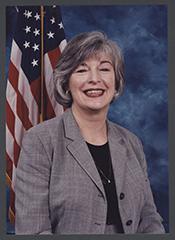
Mr. Speaker, yesterday the 352nd and 353rd American servicemembers were killed since the start of the war in Iraq. That means almost twice as many soldiers have died since the President declared an…
Mr. Speaker, yesterday the 352nd and 353rd American servicemembers were killed since the start of the war in Iraq. That means almost twice as many soldiers have died since the President declared an end to major fighting operations than during the 2 months of actual war. Something is drastically wrong here.
We are not adequately showing our gratitude to those who have sacrificed for us. As a result, 353 of our soldiers have lost their lives, which speaks to the administration's haphazard planning for the postconflict phase in Iraq, costing those 353 Americans their lives and thousands who have been wounded.
We must support our brave men and women stationed in Iraq and Afghanistan, and we must also make a commitment to support the widows and widowers of those soldiers who are killed halfway around the world. And we can do that by passing H.R. 3365, doubling the amount paid to survivors of service men and women killed on the battlefield from $6,000 to $12,000, at the same time making this benefit completely tax free. After all, taxing families of patriots does not seem very patriotic to me.
It appears this bill has strong bipartisan support, and yet we have not always been so dedicated to our soldiers. On October 20, here in this House, less than 2 weeks ago, this body voted on an amendment to the $87 billion supplemental bill that would have added $1,500 as a bonus for troops serving in Iraq and Afghanistan. Unfortunately, this amendment failed by a vote of 213 to 213, with most Democrats voting in favor of the bonus and most Republicans voting against the bonus.
The Republican administration thrust upon us this budget-busting $87 billion supplemental spending bill for Iraq and Afghanistan, and then the House had the audacity to vote against the bonus for our troops; our troops who are in harm's way; our troops who have been wounded, and whose lives will be changed and altered forever; and our troops who have given up their lives for this country.
We must support our troops. We must compensate them for their service to this country should disaster strike. As any pundit would have predicted, and which has happened 353 times to date in Iraq in the last 7 months, we must support the families of those who make the ultimate sacrifice. Mr. Speaker, this is the very least we can do. To that end, I am proud to support H.R. 3365.
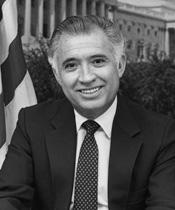
Mr. Speaker, the bill we pass today is indeed the least we could possibly do for the young men and women who have carried our battle to the enemy in the global war in which we are engaged. We should…
Mr. Speaker, the bill we pass today is indeed the least we could possibly do for the young men and women who have carried our battle to the enemy in the global war in which we are engaged. We should be ashamed that the Congress is only now providing enhanced civil and economic protections for military personnel on active duty.
At a time when we are asking our military to carry an incredibly heavy burden, the Congress is deeply concerned about making life as easy as possible for our servicemembers and their families, and this bill is the way to begin.
While our troops are on duty overseas and elsewhere, separated from their families and--in the case of Guard and Reserve troops called up-- struggling on less salary than they make in the civilian world, we are hopeful this legislation will help those military families better cope with economic challenges.
This bill would increase the death gratuity payable to the families of deceased members of the Armed Forces and to exclude such gratuity from gross income. The intent is to assist surviving family of active duty service members with immediate expenses following notification of the death of a loved one.
This bill would double the death gratuity from $6,000 to $12,000 and apply it retroactively to all deaths after September 10, 2001. The bill would also exempt from taxation the full $12,000 payment. Currently, only $3,000 of the current payment of $6,000 is exempt from taxation.
Given our experience here in South Texas in helping families who have lost loved ones, I can tell you that this Congress can do much more financially to ease their suffering, but I'm pleased that at least we are no longer taxing their death benefits.
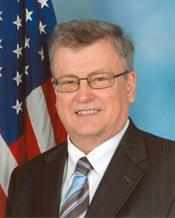
Mr. Speaker, I come before you today in support of H.R. 3365, the Fallen Patriots Tax Relief Act. While there has been debate over how strong our national defense should be in order to preserve the…
Mr. Speaker, I come before you today in support of H.R. 3365, the Fallen Patriots Tax Relief Act. While there has been debate over how strong our national defense should be in order to preserve the freedom of others, I think you will find that everyone in this chamber is in agreement when it comes to the treatment of our fallen soldiers and their families. This bill would be an invaluable way of expressing our country's gratitude to the brave men and women who have died giving their last full measure of devotion.
In March of this year, Marine Lance Corporal David K. Fribley, from Atwood, Indiana, and seven of his fellow Marines, were killed in the opening march of Operation Iraqi Freedom. While the gratuity that is owed to the Fribley family has historically been exempt from taxation, an oversight in the tax code after 1991 left half of the $6,000 gratuity subject to taxation. Families who have had to suffer because of the loss of a loved one are now being asked to pay taxes on what was set up to be a one time, tax-free gift. It is for this reason and for families like the Fribley's that I pledge my full support to this bill. If adopted, this legislation would increase the gratuity payable to survivors of deceased members of the armed forces to $12,000 retroactive to September 11, 2001, and would make the payment fully tax-exempt.
As we carry on this struggle against evil, it is a most tragic fact of war that we are sure to lose more young people like Lance Corporal David Fribley. As they courageously make the sacrifice for our liberty and the safety of our world, we must never fail to honor their memory and see that their loss has not been in vain.

Mr. Speaker, I rise in strong support of H.R. 3365, the Fallen Patriots Tax Relief Act. The Fallen Patriots Tax Relief Act is a positive step in honoring the men and women of the Armed Services, who…
Mr. Speaker, I rise in strong support of H.R. 3365, the Fallen Patriots Tax Relief Act.
The Fallen Patriots Tax Relief Act is a positive step in honoring the men and women of the Armed Services, who have made the ultimate sacrifice and given their lives while serving our country.
Unfortunately, the current death gratuity paid to the survivors of a military member is not adequate to cover funeral expenses, leaving them with the extra burden of covering these unexpected costs. The vast majority of the men and women in uniform come from hard working low- income backgrounds, whose families should not be expected to cover these costs.
On October 13, 2003, Private Jose Casanova, Jr. became the second constituent of mine to lose his life in Iraq.
The financial assistance provided to the Casanova family for burial expenses was not sufficient. The family still had to pay money from their own funds despite having the funeral home and the local police department waive numerous fees and provide some services for free.
This situation is not acceptable. Military families, like the Casanova family, deserve to be relieved of unnecessary financial costs associated with their fallen family members' deaths. This is the least we can do as a country.
In honor and in memory of our fallen patriots, I strongly urge my colleagues to support this bill.
Bill Text
Latest available legislative text
        [Congressional Bills 108th Congress]
[From the U.S. Government Publishing Office]
[H.R. 3019 Introduced in House (IH)]

108th CONGRESS
1st Session
H. R. 3019

To amend title 10, United States Code, to increase the military death
gratuity from $6,000 to $12,000 and to provide that such death gratuity
shall be excluded from gross income under the Internal Revenue Code of
1986.

_______________________________________________________________________

IN THE HOUSE OF REPRESENTATIVES

September 5, 2003

Mr. McGovern introduced the following bill; which was referred to the
Committee on Ways and Means, and in addition to the Committee on Armed
Services, for a period to be subsequently determined by the Speaker, in
each case for consideration of such provisions as fall within the
jurisdiction of the committee concerned

_______________________________________________________________________

A BILL

To amend title 10, United States Code, to increase the military death
gratuity from $6,000 to $12,000 and to provide that such death gratuity
shall be excluded from gross income under the Internal Revenue Code of
1986.

Be it enacted by the Senate and House of Representatives of the
United States of America in Congress assembled,

SECTION 1. INCREASE IN DEATH GRATUITY PAYABLE WITH RESPECT TO DECEASED
MEMBERS OF THE ARMED FORCES.

(a) Amount of Death Gratuity.--Section 1478(a) of title 10, United
States Code, is amended by striking ``$6,000'' and inserting
``$12,000''.
(b) Effective Date.--The amendment made by subsection (a) shall
apply with respect to deaths occurring on or after September 11, 2001.

SEC. 2. DEATH GRATUITY EXCLUDIBLE FROM FEDERAL INCOME TAXATION.

(a) In General.--Paragraph (1) of section 134(b) of the Internal
Revenue Code of 1986 (relating to certain military benefits) is amended
by adding at the end the following new flush sentence:
``Such term shall include any death gratuity to which the
limitation in section 1478(a) of title 10, United States Code,
applies.''.
(b) Effective Date.--The amendment made by subsection (a) shall
apply to amounts paid with respect to deaths occurring on or after
September 11, 2001.
<all>