To pay a one-time bonus to members of the Armed Forces who served or serve in a combat zone designated for Operation Iraqi Freedom or Operation Enduring Freedom, and for other purposes.

Legislative Activity
Stay on top of the latest movement without scrolling through every action
Sponsor introductory remarks on measure. (CR H9079-9080)
October 1, 2003
View full timeline
Introduced in House
September 9, 2003
Referred to the Committee on Armed Services, and in addition to the Committee on Transportation and Infrastructure, for a period to be subsequently determined by the Speaker, in each case for consideration of such provisions as fall within the jurisdiction of the committee concerned.
September 9, 2003
Referred to the Subcommittee on Coast Guard and Maritime Transportation.
September 10, 2003
Referred to the Subcommittee on Total Force.
September 24, 2003
Sponsor introductory remarks on measure. (CR H8959-8960, H9002-9003)
September 30, 2003
Sponsor introductory remarks on measure. (CR H9079-9080)
October 1, 2003
Floor Debate
21 membersWhat members said about H.R. 3051 on the floor
 JK
JK JLBS
JLBS CVH
CVH PAD+16
Floor Debate
21 membersWhat members said about H.R. 3051 on the floor
Mr. Chairman, I yield myself such time as I may consume. I rise in opposition to the amendment, and would like to point out that this is a little different amendment than we originally thought we…
Mr. Chairman, I yield myself such time as I may consume.
I rise in opposition to the amendment, and would like to point out that this is a little different amendment than we originally thought we would be looking at today.
This issue was debated twice yesterday on this floor, once with the Obey
amendment which would have cut the amount by half and put some in loans, the other time during debate on the amendment offered by the gentleman from Indiana (Mr. Pence) which would have done the same thing. We have had a lot of discussion about the idea of how much we should have and whether we should reduce it, and whether some should be in the form of a loan or not. I believe that issue has been dispensed with.
I have just heard a couple of arguments from the other side that this amendment will require more scrutiny. Where in the words here does it require any more scrutiny? It just says it will cut it by 50 percent. It says that we think that the Committee on Appropriations' work is insufficient, we are just going to cut it in half.
Where does it say that it is going to require some repayment by the Iraqis? There is nothing in here about repayment or loans. It just says we are going to take the aid and the assistance we are going to provide to the Iraqis, and we are going to slice it exactly in half because we think that they do not really need that money for reconstruction.
Mr. Chairman, what we have heard over the last several days, and I know I am sounding like a broken record by repeating this, as General Abizaid, Ambassador Bremer, and many others have told us over and over again, every dollar for reconstruction is just as important as every dollar we provide to our men and women in uniform in Iraq. It is just as important.
If we are going to get our men and women home from Iraq, we have to turn the security of the country over to the Iraqis, and that means we have to train the Iraqis. We have to train the police force and the national army. If we are going to get our men and women home, we have to restore the Iraq economy and put Iraq back on its feet. Cutting the assistance to Iraq in half is not the way to accomplish that. If we want to be sure that our men and women in uniform stay in Iraq a lot longer, this is the amendment Members want to vote for.
I have great respect for the gentlemen who have offered this amendment, they are very thoughtful people, but I must say this amendment is absolutely the wrong direction. It does not accomplish what they want. It does not accomplish the kind of scrutiny they want, which is what we will find in the general provisions of the bill. We have a lot of oversight. We have more reporting, we have more oversight requirements, we have requirements that if there are changes in the amount of the funds, if it is moved from one to the other, there has to be notification to the Congress. We are doing that oversight. That is the responsibility of Congress. But cutting the amount of assistance to Iraq in half is not the way to proceed. I urge my colleagues to reject this amendment.
Mr. Chairman, I yield back the balance of my time.
Mr. Chairman, I thank the gentleman from Pennsylvania for his comments.
Mr. Chairman, here we go again. The last amendment cut 50 percent of the reconstruction dollars; this only cuts 1 billion of the dollars out of reconstruction. But I am still left with the question, what is it that members do not understand regarding the importance of reconstruction assistance? We have been told over and over again by our commanders, by everybody that is out there, that the dollars we are spending on reconstruction is part of national security. It is just as important as what we do for our Guard and Reserves. It is just as important as what we do in terms of providing ammunition and vehicles and all the armor and the other items that are needed by our troops that are over there.
The reconstruction is a vital part of this program; and if we short that, all we are doing is saying to the men and women in uniform who are there in Iraq that we are going to leave you there better off, with maybe more creature comforts, maybe with more vehicles, but we are going to leave you in this bleak, hostile landscape.
Where is this billion coming from? Is it coming from what we are going to do to try to create a new constitution? Is it coming from the governing council? Is it coming from the kerosene funding? Is it coming from the clean water for the children over there? Where is it coming from?
Mr. Chairman, to take this money out of the reconstruction is the wrong approach. We should not be doing that. I hope my colleagues will reject this amendment.
Mr. Chairman, I rise to claim the time in opposition. I will not take 5 minutes. I yield myself such time as I may consume.
I agree with most everything the gentleman from Oregon has said. I certainly do not believe the taxpayers of the United States should be paying for Iraq when there is a newly constituted government there to be participating in the Organization of Petroleum Exporting Countries, known as OPEC. The fact is they most certainly, almost certainly, will continue to be a member of that organization; and, in fact, they have already attended meetings in kind of an observer status. But none of our funds should be used to do that, since they are generating a fair amount of oil funds now that are paying for much of their internal costs of government, although not enough to do the reconstruction, which is what we are having the discussions today about. That would be the funds that they would use to do that, but I quite agree that funds from the United States taxpayers should not be used for that.
Therefore, Mr. Chairman, I am prepared to accept this amendment.
Mr. Chairman, I yield back the balance of my time.
Mr. Chairman, as the designee of the gentleman from Florida (Mr. Young), I move to strike the last
word, and I yield to the gentleman from Illinois (Mr. Manzullo).
Mr. Chairman, I rise in opposition to the amendment, and I reserve the balance of my time.
Mr. Chairman, I yield I yield myself such time as I may consume, and I do rise in opposition to the amendment.
Mr. Chairman, let me begin with noting my disappointment in the remarks
of the gentlewoman from Texas (Ms. Jackson-Lee) that Democratic amendments have not been accepted or not been listened to. We are now in our third day of debate on this bill. We have had a large number of amendments, most of which have come from the minority side, and a number of Democratic amendments have been accepted.
When the gentlewoman said it is not done in a collegial way, let me just note specifically in the area she is talking about, education in Iraq, that there is $90 million specifically set aside for education in Iraq that was not requested by the President, because the gentlewoman from New York (Mrs. Lowey), the ranking Democrat on the subcommittee, came to me and talked to me about this issue. So we have these funds in there at the request of the gentlewoman from New York (Mrs. Lowey), at the request of the minority, not because of the President's request, but because this body, this subcommittee, has worked in a collegial fashion.
Now, what the gentlewoman is suggesting is putting more money into that and more money into Afghanistan. But our committee, again not at the President's request, but recognizing the need for us to follow through with our commitment in Afghanistan and recognizing the deteriorating security conditions in Afghanistan, our subcommittee has increased the amount of assistance for Afghanistan by almost $400 million.
I have already noted that we specifically set aside $90 million for education in Iraq that was not requested by the administration.
As far as the areas where this would come out of, $100 million out of the IRRF fund, $300 million out of restoring the oil production in Iraq which, by the way, is the only way Iraq is ever going to generate enough funds that they can do their own reconstruction, that they can stand on their own feet, to take that $300 million out of there is to not only harm the infrastructure, the effort to reconstruct the infrastructure, but harm the immediate needs of Iraqi citizens to have heating oil and kerosene for cooking, the cooking and heating oil that is absolutely vital as we go into the winter months there in Iraq. It has to do not just with comfort for the people in Iraq but in many cases the very livelihoods, the very survival, particularly when children are involved.
I think the gentlewoman's intentions are good, but that is why we discussed this issue at length in the subcommittee and that is why we discussed it at the full committee level too. I think we have come with what, I think, is a fair and a balanced division of the funds as it is going to the various accounts in Iraq.
And so, Mr. Chairman, I think that this would upset that balance. I do not think it is the right way to go, though I respect the gentlewoman's intentions.
I yield to the gentlewoman from Texas.
Mr. Chairman, I yield to the gentleman from California.
Mr. Chairman, reclaiming my time, I would urge the Members to reject this amendment.
Mr. Chairman, I rise to claim the time.
Mr. Chairman, I yield myself such time as I may consume.
I will not oppose this amendment. This perfects some language that was adopted in the committee offered by the gentleman from New York (Mr. Hinchey) on requiring quarterly reports to be made and placing some additional requirements in that report which, I think, is useful information for us to have. This substitutes some language in three of the paragraphs and adds to it, tightens that up, and, for the most part, I do not have any objection to it.
I do find a problem, and I just want the gentleman to know this because that is really an issue, I think, in the conference. I do have a problem with one issue in paragraph nine where it requires that the administration give the Congress an estimate of the period of time for which such forces will be deployed. That is probably not possible for them to do, to actually tell how long the forces are going to be deployed because we do not know the circumstances of what is going to happen in Iraq either with the democracy there or with external circumstances that might require them to be there longer than we would like. But other than that, I would think the language here is helpful, and we can deal with that issue in the conference. And so, Mr. Chairman, I am prepared to accept the amendment.
Mr. Chairman, I yield back the balance of my time.
Mr. Chairman, I move to strike the last word.
Mr. Chairman, I yield to the gentleman from Rhode Island (Mr. Langevin) for the purposes of colloquy.
Mr. Chairman, I thank the gentleman from Rhode Island for bringing this issue to our attention, but most importantly for his strong leadership on this issue.
I agree with him that our foreign assistance dollars ought to be spent in a manner that is not only efficient but that is inclusive of all peoples including those with disabilities. I agree that the needs of people with disabilities ought to be a priority as we proceed with the reconstruction in Iraq and Afghanistan; and as we negotiate the terms of this spending bill, I certainly intend to keep the gentleman's comments today here in mind as we look at the report language and bill language. I thank the gentleman for his comments.
Mr. Chairman, I claim time in opposition, and I reserve the balance of my time.
Mr. Chairman, I yield myself such time as I may consume.
I do rise in opposition to this amendment. We already had a full debate on this issue last night, as a matter of fact. The bill that we have before us has provisions, rather extensive provisions, dealing with competition and providing for full and open competition. These were provisions that were worked out with the chairman of the Committee on Government Reform and the staff and, I believe, ranking members as well. Those provisions were amended last night here on this floor in the House. A perfecting amendment was added to it, which struck a particular exception on the notification. If it was a sole-source contract, it struck the exceptions for that. So notification
has to be given before those contracts are awarded.
This sets up a separate procedure that has no exception at all for it, even for an urgent situation. I am not sure if the gentleman has thought about what happens if there is a break in an oil line, what happens if there is a fire. They cannot go through a long bidding process for that. They have to take the money that is available and do an immediate contract. But even under those circumstances, there are procedures for competitive bidding and for open bidding, for making sure it is done in an open manner; and that is basically what the law that the Committee on Government Reform has the responsibility for is all about. That legislation, which is quite extensive, provides for open competition, provides for the bidding process, and it provides for the exceptions which are in there. And as I said last night on this floor, this body decided to eliminate at least one of those particular exceptions.
So I think we have thoroughly debated this issue, and I might say that the language as it is drafted here is not really, it seems to me, in legislative or legal form where it says ``enter into any contract using procedures other than competitive procedures.'' That ``other than competitive procedures'' is not a term which appears in the law anyplace, so we do not know exactly what ``competitive'' means there. ``Fully competitive'' is something that does appear in the law, but ``competitive'' does not.
So it is not at all clear what really the impact of this would be. Mr. Chairman, I oppose this amendment and urge its rejection.
Mr. Chairman, I yield back the balance of my time.
Mr. Chairman, I yield myself such time as I may consume. Good morning, Mr. Chairman, and welcome back. The Chairman carried forward a very full day yesterday, and we appreciate his help. This…
Mr. Chairman, I yield myself such time as I may consume. Good morning, Mr. Chairman, and welcome back. The Chairman carried forward a very full day yesterday, and we appreciate his help.
This amendment, and amendments like it that we have seen much of the day yesterday, is a very appealing sort of amendment, for it essentially says we have money in this package, and why do we not take some of it and add additional funding for our troops one way or another. Obviously, that has appeal.
The gentleman from Michigan (Mr. Stupak) is a very fine Member from Michigan and he has expressed his concern about the troops before. Yesterday I heard people who had never expressed concern for our troops and, in fact, had not even voted for our bill in the past who were suddenly very, very concerned, and that is a little disconcerting. The gentleman from Pennsylvania (Mr. Murtha) and I, my colleague and partner, have made every effort in this package and packages before it to aggressively increase funding available for our troops, especially those who are serving our country overseas and those who are in harm's way.
This specific proposal adds $265 million to the military personnel accounts. It suggests that it is enough to pay for a $1,500 bonus for each serviceman who is in the region. The offset is to reduce $1 billion for the reconstruction effort in Iraq.
I must say, one of the strongest arguments regarding this, besides the fact that we have done everything we can to help our troops in the previous bills and in this one, is the reality that the experts, the generals in charge of our military effort over there, say that their number one priority is reconstruction, because it is the way to, first of all, secure our troops while they are there and, secondly, the way to make certain they get home as quickly as possible is to see the economy of Iraq move forward, get it back on track, and that is part of what this bill is about.
I yield to the gentleman from Pennsylvania.
Mr. Chairman, I yield such time as he may consume to the gentleman from Arizona (Mr. Kolbe).
Mr. Chairman, will the gentlewoman yield?
Mr. Chairman, I appreciate very much the gentlewoman yielding, and she is in the midst of a very important statement, but I wanted to share with her, as well as my colleagues, that I believe she is highlighting a very important problem.
We do provide for $22 million within the bill, but frankly, the Department tells me that the challenges are very real, we may need more money, and rather than taking my 5 minutes, I am inclined to let the gentlewoman know that we are going to accept her amendment.
Mr. Chairman, I rise very reluctantly to oppose this amendment.
Mr. Chairman, I yield myself such time as I may consume.
The gentleman from Texas (Mr. Reyes) is pointing to an area that the committee is very concerned about, and indeed the intelligence community has been, as has our Permanent Select Committee on Intelligence here in the House.
The amendment seems to have no real overall effect on the intelligence community's management account. It decreases the account by $5 million and then increases that same account, but the point that I would make is that this shifting of money would tend to have a direct impact upon both the FBI and the Department of Energy, as well as the broader intelligence community, in their efforts to develop our effort on the intelligence side in the war on terrorism.
In turn, in recent years, there has been sizeable adjustment in those accounts that addressed the question of linguistics, the training of people who know foreign language, et cetera, and as my colleague knows, identifying such people, first of all, takes time and takes time to train them, and so we just cannot throw money at it and cause a change like that. I mean, unlike a lot of accounts where we just put money in and something happens tomorrow, linguistic development, that kind of training is very difficult. So it is much more a regular order kind of process.
I could describe this in great detail in private between us, but some of the intelligence questions here really should not be discussed in this environment, but in turn, it is an important problem. If I thought a $5 million shift would make a difference and not affect other elements of our war on terrorism, I would support the gentleman's amendment, but I reluctantly oppose it.
Mr. Chairman, I reserve the balance of my time.
Mr. Chairman, will the gentleman yield?
Mr. Chairman, I am pleased to have this exchange with my colleague. We are really coming from the same position. These accounts are very delicately balanced now, as the gentleman knows, and the impact that this shifting might very well have on work that is vital within the FBI, et cetera, concerns me.
In turn, I think our dialogue here, I think, is highlighting the matter. There is no doubt that the committee is reflecting the Permanent Select Committee on Intelligence's concern about improving what we are doing relative to foreign language training and linguistics. There is little doubt that the Congress, the House of Representatives, has said very clearly in this bill in other sections, as well as this dialogue, that this is a priority. We expect the entire intelligence community to respond.
So, frankly, I want to be very complimentary of the gentleman's effort, but shifting the money here could make it very difficult to deal with the other body in a fashion that we hope to move forward with. So I am reserved relative to this amendment, but do very much appreciate my colleague's helping us highlight this important area.
Mr. Chairman, I yield myself such time as I may consume.
We certainly will but, frankly, I will end up opposing, asking for a ``no'' vote on that vote. I frankly do not like to see us end it that way, and we could very well end it that way, and maybe that does not help with the highlighting.
Mr. Chairman, I yield back the balance of my time.
Mr. Chairman, I rise to claim the time in opposition, though it is my pleasure to say that I am highly inclined to support the Ramstad amendment.
Mr. Chairman, I reserve the balance of my time.
Mr. Chairman, I yield myself such time as I may consume to say that I am prepared to accept the amendment and to yield back.
I yield to the gentleman from Wisconsin.
I thank the gentleman for yielding, and the gentlewoman is much too young to remember this.
During the big war, there was a word, a phrase, it is really a word, a snafu was common among all people who were in the service. The military has often screwed up, I must tell you, and it is ridiculous. Absolutely, we agree with the gentlewoman's position. We will do everything we can to improve that process. Your highlighting it here is very helpful.
Mr. Chairman, I claim the time in opposition.
Mr. Chairman, I yield myself such time as I may consume.
I do not intend at this moment to use the 5 minutes, but I must say I absolutely understand the gentlewoman's presenting this amendment for, indeed, we spent time together in Iraq, I have been saying a whole month in one weekend in Iraq together. That is not because of our wonderful charm, but because of what we experienced there together, the reality that Saddam Hussein is the worst tyrant, clearly competing with Hitler and Stalin. We learned that he was capable of almost anything. I will never forget the gentlewoman, as we were together at the killing fields, urging me and others to join together in a moment of silence, thinking about the potential of mass destruction as a part of this guy's everyday existence as long as he was ruling that country.
Indeed, I do not know exactly what we might find. I am hesitant about reducing this amount of money. I am going to be willing to talk about it as we go forward, but, indeed, the things that David Kay is about in his work are very important for us as we look at the challenges of dealing with people like this. So it is with great reluctance that I resist and ask for a ``no'' vote on the gentlewoman's amendment.
Mr. Chairman, I reserve the balance of my time.
Mr. Chairman, I yield myself such time as I may consume.
I just might mention that the gentlewoman's expression of international involvement is a very appropriate one, and I would highlight her remarks by mentioning that the U.N. voted unanimously yesterday, getting the U.N. really on board for the first time in helping us with this effort. In the meantime, moving this money around in this fashion when we have done so much as we have in O & M and the bill in general, I hesitate about it, and therefore I ask for a ``no'' vote. And I want to tell the gentlewoman I very much appreciate the work she has done with me.
I might mention, just to take the time, when we were together following our weekend, we actually sat down together for hours, our team of 17, and in the midst of it, one of our colleagues said, I am one, a liberal Democrat, who voted ``no'' to going to war, but after seeing what I see here about Saddam Hussein, I must say I have got to be ahead of my people. It is going to be unpopular at home.
It is time for us to lead, and therefore I am going to support this request of the President to carry forward this war on terrorism.
Madam Speaker, this week as the other body takes up the President's request for the $87 billion in supplemental appropriations for Iraq, we must do more for our troops and their families who are…
Madam Speaker, this week as the other body takes up the President's request for the $87 billion in supplemental appropriations for Iraq, we must do more for our troops and their families who are under increasing duress.
Specifically, Congress should grant a $1,500 bonus to all who served in Iraq and Afghanistan.
Not since Vietnam have such a large number of troops had such long deployments. The pressure this puts on our troops and their families is tremendous.
This summer, the Department of Defense increased deployments for troops serving in Iraq and Afghanistan to 1 year, and not until last week, did the Department of Defense offer these troops who are living under highly primitive and stressful conditions a 2-week leave for rest and recuperation.
Tragically, this month our U.S. causalities in Iraq surpassed the number of those killed in the first Gulf War. We have now lost more than 308 servicemen and women.
Recognizing the increasing gravity of U.S. military involvement abroad, I have introduced H.R. 3051, to qualify all active-duty military personnel deployed for any length of time in Iraq and Afghanistan for a $1,500 bonus. This $1,500 bonus proposal should be part of the supplemental appropriations bill. Although, as Members of Congress, we may have different ideas about U.S. policy in Iraq, we can all agree our servicemen and women deserve our sincere recognition for their courageous efforts. Fifteen hundred dollars will not only help boost morale, but will send a strong bipartisan message to our troops that Congress is unified behind them.
The Bush administration is actively lobbying Members of Congress to approve the $21 billion in direct grants to support the infrastructure development in Iraq in this $87 billion supplemental appropriations.
First of all, I see no reason why we cannot separate out these two items. The $66 billion for defense, which we all support, should be made a separate bill. And the $21 billion they want for reconstruction in Iraq should be placed in a separate bill, so we can have a debate on it. And then we should require Iraqi oil to be used as collateral for international loans to finance Iraqi infrastructure projects. And we should also ensure Iraq reconstruction contracts are competitively bid.
Either way, U.S. citizens should not be expected to support Iraqi development while many Americans face shortfalls in funding for health care, prescription drug coverage, school and road construction, and other critical infrastructure improvements.
Even to come up with this $87 billion for the supplemental appropriations for Iraq, the U.S. must borrow the money base we are so far in debt thanks to the policies of this administration. We do not have the money. We have to borrow it. Yes, Congress must continue to work to help, but not at the expense of the Americans here at home and our troops abroad.
Some of my colleagues tonight have talked about waste, fraud and abuse; and I think it is shameful when we look at the waste, fraud and abuse being put forth by this administration when we look at reconstruction for Iraq.
Just take a look at some of these numbers they have provided us:
There is $4 million to develop a set of telephone numbers and $150 million for a national 911. In my district if you want 911, the local taxpayers have to do it.
How about $100 million to build seven planned communities? Each community to have 3,258 houses.
Ten million dollars to finance 100 prison-building experts. We have to pay prison-building experts $10 million to tell them how to do it in Iraq?
How about $100 million for 2,000 garbage trucks?
And then they want $20 million for Afghan consultants, whatever those are.
And we have $850 million for health facility construction and medical equipment replacement. What about health care in this country?
How about $900 million to import petroleum products such as kerosene and diesel? Remember, Iraq has the world's second largest oil reserves, and we have to import oil products to them?
The health care provisions alone provide a striking comparison between taxpayers' support of Iraqis health care
and Americans' support for health care.
You only need to look at the numbers. In Iraq, currently 13 million people receive basic access to health care, half the country. One hundred percent of the population has maternity care. Every Baghdad hospital and clinic is operating. In Detroit, we just had to close down two hospitals because we did not have any money.
There are 7,500 tons of medicine distributed to hospitals and clinics, and there are 128 generators and power supplies being installed in Iraq.
Let us go to the United States. Not one new dollar has been spent on 42 million uninsured Americans.
There has been no increase for the Maternal and Child Health Block Grant or the National Health Service Corps; no increase for the childhood immunization program; Congress has underfunded HIV prevention and care, and failed to address the Nation's nursing shortage.
We have no control over runaway healthcare costs and can no longer afford prescription drug coverage.
Instead of again dipping into the pockets of working Americans and risking veterans' benefits for our troops when they return home, I support proposals to suspend the tax cuts for the top 1 percent of income earners to pay for the Bush administration's $87 billion supplemental. And I urge Congress to consider my bill, H.R. 3051, to include support for our troops in this supplemental aid package to Iraq.
Again, my bill provides a $1,500 bonus to military personnel who serve under the Army, Navy, Air Force, Marine Corps, Coast Guard, National Guard, or Reserves in a combat zone in Iraq and Afghanistan.
In the coming year an estimated 150,000 young men and women will not see their families, a record number of reservists and guardsmen and women will put their private sector opportunities and jobs on hold, and thousands of children from every part of America will pray for their parents' safe return.
These extraordinary times, deserve an exemplary measure. I urge you to support my bill, H.R. 3051, to provide for our troops in Iraq and Afghanistan, and to make it a part of the supplemental appropriations bill.
Give our troops the $1,500 bonus they deserve.
Mr. Chairman, I thank the gentlewoman from California and the gentleman from California for this amendment which would provide additional equipment to our troops and still leave our U.S. inspections…
Mr. Chairman, I thank the gentlewoman from California and the gentleman from California for this amendment which would provide additional equipment to our troops and still leave our U.S. inspections team with adequate resources for the search. But there is a simple way for the United States to supplement our search efforts by bringing back the highly trained U.N. troops to help in the effort. We have all said the international community should share in the burden and share in the cost. We have an opportunity right now. The U.N. has a team of over 354 inspectors on the ground, trained, ready to go on short notice. What would it cost the United States? Nothing. They are paid for through the U.N. dues. They can also supplement our effort in another way. They can bring us something that money cannot buy, which is credibility. The fact of the matter is that this administration has lost much of its credibility with respect to claims it made of weapons of mass destruction.
If we want the international community and the American people to have faith in the findings, it is important that we bring in an independent inspection team to join our efforts. Only then can we convince the international community that any findings they make are legitimate and unbiased.
So I thank the gentlewoman for offering this important amendment. It is a win-win.
Mr. Chairman, we have an opportunity to immediately obtain the help of the international community in sharing the burden and cost of some of our efforts in Iraq.
As part of his $87 billion request, President Bush has asked for an additional $600 million to pay for our team of weapons inspectors in Iraq--known as the Iraq Survey Group--so that they may continue their search for weapons of mass destruction. This team of 1,200 inspectors, led by David Kay, has searched for WMD in Iraq for many months now. The President's request would increase that team to 1,400 inspectors.
I had an amendment prepared would allow us to greatly reduce the costs to the American taxpayer of conducting that search and dramatically increase the credibility of any findings made by the inspectors. The Republican majority refused to allow that amendment to come to a vote. I am pleased that Rep. Tauscher has offered this amendment. It provides for better equipment for our troops and leaves $300 million for our inspection team. We can supplement our team by bring back the U.N. inspectors. The President should immediately invite the existing team of United Nations' inspectors--known as UNMOVIC--to participate in the search for WMD in Iraq. The U.N. has a pool of inspectors who have 12 years of experience investigating Iraq's programs and many of whom speak Arabic. According to its most recent report, UNMOVIC has a roster of 354 trained experts available to serve in Iraq at short notice. This important resource should be put to use, allowing us to reduce the size and costs of our team of inspectors.
What would it cost us to engage these trained experts? Nothing. The costs of UNMOVIC are borne by the United Nations and paid for through the dues of the member nations.
Engaging the U.N. weapons inspectors in the search for WMD would also get us something that money can't buy--credibility. With respect to the existence of weapons of mass destruction in Iraq, the Bush Administration has lost its credibility with the American people and has undermined American credibility in the international community. Before the war, our Secretary of State told the United Nations that the Iraqis were attempting to import nuclear weapons material from Africa. The U.N. inspectors reviewed the evidence and determined the claims were based on forged documents. The U.S. conceded the point and, worse, it turns out that agencies within the U.S. government had already questioned the veracity of the documents. Our Secretary of Defense told the world that we knew the location of the weapons of mass destruction. We now know that was untrue. In the aftermath of the war, the President claimed that two mobile trailers found in Iraq were evidence of a biological weapons program. Our inspection team has recently had to retreat from that claim. Again and again, Administration officials from the President on down have made false claims about Iraqi WMD. Even the Economist magazine, which had been a booster of the war, has stated that the Bush Administration is seen around the world as having its own arsenal of WMD--Wielders of Mass Deception.
The only way to restore confidence in the search for WMD is to bring in an impartial team of international inspectors. David Kay, the leader of our team, is stuck in a fundamental contradiction. He wears two hats, serving as both fact finder and salesman for the Administration. No matter how high his personal integrity, this dual role undermines the credibility of any findings his team may make.
It is critical to the integrity of the process that independent U.N. weapons inspectors be invited to participate in the search and given
the opportunity to independently evaluate any claims made by David Kay and the Iraq Survey Group. The American people should not be asked to spend an additional $600 million to fund a search that is widely perceived to be an effort to provide cover for an Administration that has lost its credibility on this issue at home and abroad.
Mr. Chairman, I offer an amendment. Mr. Chairman, I yield myself such time as I may consume. I ask that my amendment to provide a $1,500 bonus to the men and women who have served in Iraq be joined…
Mr. Chairman, I offer an amendment.
Mr. Chairman, I yield myself such time as I may consume.
I ask that my amendment to provide a $1,500 bonus to the men and women who have served in Iraq be joined by the gentleman from Pennsylvania (Mr. Doyle), the gentleman from Washington (Mr. Inslee), the gentleman from Texas (Mr. Lampson), the gentleman from California (Mr. Cardoza), and the gentlewoman from Minnesota (Ms. McCollum), and all those who have cosponsored my base bill, H.R. 3051. They have all asked to join with me in providing this bonus to the men and women who have served in Iraq and Afghanistan during fiscal year 2004.
This amendment provides a $265 million increase in the base pay for all of our military services' troops. This is the amount that is needed to provide a $1,500 bonus to each person serving, including our National Guard and Reserve units serving in Iraq or Afghanistan.
This $1,500 bonus is paid for by cutting the appropriate sum from the bill, from the amount set aside to import petroleum products into Iraq. In this $87 billion supplemental appropriation for Iraq, we surely can afford to boost the pay of the service men and women by $1,500.
What this amounts to when we look at the total bill, for every $328.30, we are giving our troops $1. Certainly, we can afford $1 for every $328 we spend in Iraq and Afghanistan. Our troops are really carrying the true burden of our commitment to Iraq and Afghanistan, and at least we can give them $1 compared to $328 which we are pouring into Iraq and Afghanistan.
Our soldiers have lived basically in nearly primitive conditions. We had an amendment yesterday on the floor, the Obey amendment, which would increase the quality of life for our Armed Services while there, and when they come home. Unfortunately, that amendment was defeated. This is an opportunity to show our troops that this Congress is united behind them in the service they are providing.
These deployments that we are now undertaking of our troops, our Guard and our Reserve units, is the longest deployment we have had of military personnel since Vietnam. They have now been deployed for up to a year in Afghanistan and Iraq. Recently, the Pentagon provided a 2- week leave for our troops after they serve 12 months. We know some 700 soldiers a day come back to the United States. They are only paid to fly into BWI, Baltimore-Washington International Airport, and then they are stuck. If their family is in Michigan, Iowa, Tennessee, they have no way of getting home. They do not even get a government rate to finish the trip home. The military does not provide a ticket for them to see their families.
And how about our National Guard and Reserve units over in Iraq and Afghanistan, first they were only going to be called up for a few months, then 6 months, and now it is a year. While our National Guard and Reserve units are proud to serve, and are willing to leave their civilian jobs to serve, how do they support their families back home, when they leave their civilian jobs?
In my district, National Guard Unit 1437 from Slt. St. Marie, Michigan, just came back. They told me about the financial hardship it is to make ends meet at home while they are over in Iraq.
Right now the U.S. Army Reserve Unit 652, a bridge-building unit, is in Iraq. It is from the Harvey and Marquette, Michigan area. What about their financial burdens? What about the financial burdens we place on the families? Well, this $1,500 bonus is not going to solve all of these financial burdens for these people, and I do not believe that asking for $1 out of every $328 we are going to pour into Iraq and Afghanistan, to give our troops $1 is asking too much.
Again, to pay for this, in the amendment we propose to cut the oil import into Iraq. Iraq possesses the second largest oil reserves in the world. I did not know why we even have to import into Iraq, but I think we should at least be able to cut that and provide this bonus to these people.
I know some may argue that Iraq may not have enough diesel fuel or kerosene to see them through the winter. Therefore, we somehow ask the American taxpayers to make sure that they will have the diesel and kerosene to get through this winter to heat their homes. But what about our own energy needs here in this country? What about this winter? Heating oil, natural gas, and propane is expected to go sky high, and we will be in short supply here at home. Americans will be scraping and sacrificing to get through the winter. The Iraqis should at least share in this sacrifice when it comes to their oil needs.
Mr. Chairman, it still does not make much sense to me to have oil imported into Iraq which, again, possesses the second largest oil reserves in the world.
Mr. Chairman, I demand a recorded vote.
Show 8 more
Mr. Speaker, this week the other body takes up the President's request for $87 billion in supplemental aid for Iraq and Afghanistan. The supplemental appropriation should do more to support our…
Mr. Speaker, this week the other body takes up the President's request for $87 billion in supplemental aid for Iraq and Afghanistan. The supplemental appropriation should do more to support our troops who have been deployed in Iraq and Afghanistan. Specifically, to support our troops and their families who are under increasing duress, Congress should grant a $1,500 bonus to all those who serve in Iraq and Afghanistan. Not since Vietnam have such a large number of troops received such long deployments. This puts tremendous pressure on our troops and their families.
This summer, the Department of Defense upped deployments for troops serving under Operation Iraqi Freedom and Operation Enduring Freedom to one year, and not until last week did the Department of Defense offer these troops, largely living under very primitive, highly stressful conditions, a 2-week leave.
Tragically, this month, our U.S. casualties in Iraq surpassed the number of those killed in the first Gulf War, Desert Storm. We have lost more than 308 people in Iraq.
Recognizing the increasing gravity of U.S. military involvement along, my legislation, H.R. 3051, qualifies all active duty military personnel deployed for any length of time under Operation Iraqi Freedom or Operation Enduring Freedom for a $1,500 bonus. This bonus should be made part of the supplemental appropriations for Iraq.
Although as Members of Congress we may have different ideas about U.S. policy in Iraq, we can all agree that our servicemen and women deserve our sincere commendation for their courageous efforts. $1,500 will not only help boost morale but will send a strong bipartisan message to our troops that Congress is unified behind them.
The present administration wants to talk about its proposed $21 billion in direct grants to support infrastructure development in Iraq. In this $87 billion supplemental appropriation, there is another part, $66 billion for military operations. I see no reason why these two parts, the $21 billion and the $61 billion, cannot be separated out and why we cannot require the use of Iraqi oil to be used as collateral for international loans to at least pay for the $21 billion for the infrastructure improvements in Iraq and ensure the reconstruction contracts are competitively bid to all companies internationally.
We should also consider using Iraqi oil reserves to pay down Iraq's $200 billion international debt. Either way, American citizens should not be expected to support Iraqi development, while many Americans here at home face shortfalls in funding for health care needs, prescription drugs, school construction and critical infrastructure needs we find throughout this country.
Congress must continue to work to restore Iraq to a stable and self- governing state but not at the expense of the American people here at home and our troops abroad.
I also question several items contained in the administration's supplemental appropriation for Iraq, like $4
million to develop a set of telephone numbers, $100 million to build seven planned communities with 3,258 houses, $10 million to finance 100 prison building experts, $50,000 for garbage trucks. How about $850 million for health construction and medical equipment, $20 million for Afghanistan consultants, whatever they are, and $900 million to import petroleum products such as kerosene and diesel to a country with the world's second largest oil reserves?
Some of these requests do not make sense. Instead of again dipping into the pockets of working Americans and risking veteran benefits for our troops when they return home, I support proposals to suspend the tax cuts for the top 1 percent of income earners to pay for the President's $87 billion request for Iraq; and I urge Congress to consider my bill, H.R. 3051, to include support for our troops in this supplemental package on Iraq.
Again, my bill provides for a $1,500 bonus to military personnel who served under the Army, Navy, Air Force, Marine Corps, Coast Guard, National Guard or Reserves in a combat zone under Operation Iraqi Freedom or Operation Enduring Freedom.
In the coming year, in this coming year, an estimated 150,000 young men and women will not see their families. A record number of Reservists and Guardsmen and women will put their private sector opportunities and employment on hold, and thousands of children every night will say a prayer for their parent's safe return. These extraordinary times deserve extraordinary measures. I urge Members to support my bill, H.R. 3051, to provide our troops in Iraq and Afghanistan a $1,500 bonus, a bonus they certainly deserve, and make this part of the supplemental appropriation bill.
Madam Speaker, this week as the other body takes up the President's request for an $87 billion supplemental appropriation bill for Iraq, we must do more for our troops and their families who are…
Madam Speaker, this week as the other body takes up the President's request for an $87 billion supplemental appropriation bill for Iraq, we must do more for our troops and their families who are under increasing duress. Specifically, Congress should grant a $1,500 bonus to all those who serve in Iraq and Afghanistan. Not since Vietnam have such a large number of troops been deployed for so long. The pressure this puts on our troops and their families is tremendous. This summer, the Department of Defense increased deployments for troops serving in Iraq and Afghanistan to 1 year, and not until last week did the Department of Defense offer these troops who are living under highly primitive and stressful conditions a 2-week leave for rest and recuperation. And tragically this month, our U.S. casualties in Iraq surpassed the number of those killed in the first gulf war. We now have lost more than 300 soldiers, sailors and airmen.
Recognizing the increasing gravity of U.S. military involvement abroad, I introduced H.R. 3051 to qualify all active duty military personnel deployed for any length of time in Iraq and Afghanistan for a $1,500 bonus. This bonus proposal should be made part of the supplemental appropriation bill. As Members of Congress, we may have different ideas about the U.S. policy in Iraq, but we can all agree our service- men and -women deserve our sincere recognition for their courageous efforts. $1,500 will not only help boost morale but will send a strong bipartisan message to our troops that Congress is unified behind them.
The Bush administration is lobbying Congress for $21 billion in direct grants to support infrastructure developments in Iraq in this $87 billion supplemental appropriations bill. First of all, I see no reason why we cannot separate this $87 billion into two separate bills: one, the $66 billion defense portion, which I think we all support, and $21 billion for the reconstruction portion and then let us as a Congress require Iraqi oil to be used as collateral for international loans to finance Iraqi infrastructure projects and ensure that Iraq construction contracts are competitively bid. Either way, U.S. citizens should not be expected to support Iraqi development while many Americans are facing shortfalls in funding here at home, in health care, prescription drug coverage, schools, road construction, and other critical infrastructure improvements. Congress must continue to work to restore Iraq to a stable and self-governing state, but not at the expense of Americans here at home and our troops abroad.
I also question several items contained in the administration's supplemental bill for Iraq, like the $4 million to develop a set of telephone numbers and $150 million for a national 911 system; $100 million to build seven planned communities with 3,258 houses;
$10 million to finance 100 prison-building experts; $100 million for 2,000 garbage trucks; $20 million for Afghanistan consultants; $850 million for health facility construction and medical equipment replacement; and $900 million to import petroleum products, such as kerosene and diesel, to a country with the world's second largest oil reserves.
Instead of again coming back and dipping into the pockets of working Americans and risking veterans benefits for our troops when they return home, I support proposals to suspend the tax cut for the top 1 percent of income earners to pay for the Bush administration's $87 billion supplemental appropriation bill for Iraq. Again, I urge Congress to consider my bill, H.R. 3051, to include support for our troops in the supplemental aid package to Iraq. Again, my bill provides a $1,500 bonus to military personnel who serve under the Army, Navy, Air Force, Marine Corps, Coast Guard, National Guard and Reserves in a combat zone in Iraq or Afghanistan. In the coming year, an estimated 150,000 young men and women will not see their families. They will be deployed overseas in Iraq and Afghanistan. A record number of Reservists and Guards- men and -women will put their private sector opportunities and jobs on hold, and thousands of children from every part of America will pray for their parents' safe return.
These extraordinary times deserve an exemplary measure. I urge my colleagues to support my bill, H.R. 3051, to provide for our troops in Iraq and Afghanistan and to make it a part of the supplemental appropriations bill. Give our troops the $1,500 bonus they deserve.
Mr. Chairman, I offer an amendment. Mr. Chairman, I yield myself such time as I may consume. This amendment will not, as has previously been criticized, deduct from the funds that will be used to…
Mr. Chairman, I offer an amendment.
Mr. Chairman, I yield myself such time as I may consume.
This amendment will not, as has previously been criticized, deduct from the funds that will be used to build Iraq or, I should say, the money we will borrow to build Iraq. It is a simple amendment. It says, none of the funds made available in this act, U.S. taxpayer dollars, may be used for the participation of Iraq in the Organization of Petroleum Exporting Countries.
Now, why would we want to restrict that?
Well, the Organization of Petroleum Exporting Countries is a cartel. It is an energy cartel. They flout international law, the World Trade Organization, and other agreements by artificially constraining production in violation of the World Trade Organization's precepts to drive up the price, to profit themselves; and, of course, U.S. consumers are the losers.
Now, OPEC controls about 40 percent of the world's oil production, three-quarters of the reserves, and they set these production quotas for its 11 members.
We have heard a lot about how Iraq is going to become a free market economy. It is going to have a tremendous impact on world oil prices when its production hits the free market. If they join OPEC, they will be assigned a quota; and their quota will be controlled in the interests of OPEC, not international oil supply, not the consumers of the United States of America, but solely to benefit members of a price- fixing oil cartel.
This same cartel agreed to cut oil production, they just voted a couple of weeks ago, on November 1, by 900,000 barrels a day, which is already raising the price of gasoline at the pump here in the United States, jacking up the price of home heating oil as we go into a home heating season here in the United States. And the Iraqi representative who was sent to the last meeting at the behest of Mr. Bremer and the United States, in all probability with U.S. funds, Ibrahim Bahr al- Uloum said Iraq should play an active role in achieving the objectives of this organization, which translated, means Iraq fully intends to participate in the price-fixing, the manipulation, and the cartel.
I do not believe that U.S. taxpayer dollars should participate in this activity, which is contrary to the United States, the precepts we advocate in world trade, and our own consumers and taxpayers.
Now, why do we need the amendment? Well, Mr. Bremer has supported the membership of Iraq in OPEC, the price-fixing cartel. There are ample discretionary funds in the bill in addition to the $2.1 billion that will go to rebuild the Iraq oil infrastructure and flows through the Iraqi oil ministry which could be used to facilitate the participation in this price-fixing cartel. I just do not think that the United States taxpayers should be asked to foot this bill.
Hopefully, in fact, the U.S. will try and convince the Iraqi council and others that it would not be in their best interests to participate in a price-fixing cartel, particularly if they are going to depend upon us for so many billions of dollars to fix their oil infrastructure.
I know the gentleman from Arizona believes very much in the rule of law and is a big advocate of the World Trade Organization, their dispute mechanism, resolution mechanism; and I am certain he is very well aware that the quotas of OPEC violate the precepts of the WTO. They are not based in a shortage; they create shortages. The only way we can constrain supply under the WTO in this manner is if we have a certified shortage or conservation of resources. This is neither. This is price-fixing to gouge American consumers and others in oil-importing countries, and the United States taxpayers should have none of this.
Mr. Chairman, I yield back the balance of my time.

Mr. Chairman, I offer an amendment. Mr. Chairman, I yield myself such time as I may consume. Mr. Chairman, I believe we need more information about our situation in Iraq. I would like to offer an…
Mr. Chairman, I offer an amendment.
Mr. Chairman, I yield myself such time as I may consume.
Mr. Chairman, I believe we need more information about our situation in Iraq. I would like to offer an amendment to add additional requests for information to a section of the bill that the Appropriations Committee added, appropriately so, an amendment offered by the gentleman from Maryland (Mr. Hoyer) that requires the President to submit quarterly reports to Congress on military operations and reconstruction efforts in Iraq. I think the committee did the right thing. I think we should ask for more information. And so my amendment would add additional requirements to three sections of the reporting provision already in the bill.
One provision in the bill asks for a description of progress made toward the holding of free and fair elections. My amendment would add to that section a schedule for the transfer of power to the Iraqi people, including the drafting of an Iraqi constitution.
A second section already in the bill asks for a description of the extent of international participation in the stabilization and reconstruction of Iraq, including the amount of provision for financial assistance. I would add a schedule for the provision of financial assistance from other nations and from the United Nations be added as a requirement.
And, finally, a section of the bill asks for the number of Armed Forces deployed in connection with Operation Iraqi Freedom and Operation Enduring Freedom be reported quarterly. I would
add to that section an estimate on how long our troops, including the National Guard and Reserves, will remain in Iraq and the progress being made in replacing them with troops from other nations or from U.N. peacekeepers.
I think these reports on a quarterly basis would help us understand the situation in Iraq, would help this Congress fulfill our constitutional duties of oversight and would help us better exercise our power of the purse. I am concerned that we have not had an adequate and a concrete plan to win the peace in Iraq. Our soldiers performed brilliantly and bravely and the military victory was a rousing success. I am concerned that we are not winning the peace. And we have a number of national goals in Iraq. We need to stabilize the country; we need to support and better protect our troops; we need to establish a pluralistic society and a representative self-government; we need to internationalize the construction and the security in Iraq; we need to put Iraqis quickly back in charge of Iraq. For us to do our job appropriately and to exercise our oversight and exercise our power of the purse, we need more information. I would ask the House to approve this amendment that would give on a quarterly basis more information to the Congress.
Mr. Chairman, I reserve the balance of my time.
Mr. Chairman, I yield myself such time as I may consume.
I thank the gentleman for his comments. Just two quick comments. I gave credit to the gentleman from Maryland (Mr. Hoyer) for this amendment in committee. The gentleman gave credit to the gentleman from New York (Mr. Hinchey). Whoever deserves the credit should get it, because the Committee on Appropriations did a good job with that. Regarding the requirement of an estimate of the period of time, I am asking for an estimate, not an ironclad statement of future requirements because I know that is difficult. And as part of my language also, a description of the progress of bringing other troops in, I think that is all part of trying to get quarterly reports to the Congress so we can better understand what is happening. I thank the gentleman for his cooperation and his leadership.
Mr. Chairman, I yield back the balance of my time.
Mr. Chairman, I offer an amendment. Mr. Chairman, I yield myself such time as I may consume. This amendment is designed to address serious shortfalls in two critical areas to our national security,…
Mr. Chairman, I offer an amendment.
Mr. Chairman, I yield myself such time as I may consume.
This amendment is designed to address serious shortfalls in two critical areas to our national security, foreign language proficiency and diversity in their workforce.
Specifically, my amendment will cut $5 million from the general intelligence community management account and add $5 million for programs designed to increase language proficiency and workforce diversity in the intelligence community.
Success in the global war on terrorism and in Iraq demands that our Nation have the best intelligence collection and analysis possible. Officers with only a marginal understanding of the language and the culture of intelligence targets will only be marginally effective for this country.
The report of the joint inquiry into the events of 9/11 reflects my long-standing concerns about the lack of progress that has been made by the intelligence community in enhancing language proficiency and diversifying its workforce.
Specifically, it recommended that the intelligence community implement, expeditiously, measures to identify and recruit linguists outside the community whose abilities are relevant to the needs of counterterrorism.
The joint inquiry further recommended that the intelligence community should enhance recruitment of a more ethnically and culturally diverse workforce and devise a strategy to capitalize upon the unique cultural and linguistic capabilities of first-generation Americans.
To address these critical needs, my amendment will provide funds for training in critical foreign languages and language maintenance and award programs. It will also fund scholarship programs, recruitment efforts and other nontraditional programs that are designed to enhance the recruitment and the retention of a diverse workforce.
The intelligence community must have a diverse set of people that have the cultural awareness, the language familiarity and the skill sets that will allow our Nation to succeed against an increasing number of formidable foes around the globe. My amendment will provide funds for increasing diversity of the workforce and language proficiency, two vital and important national security imperatives.
I hope that I can get the support of all my colleagues on this very critical amendment.
Mr. Chairman, I reserve the balance of my time.
Mr. Chairman, I yield myself such time as I may consume.
I have a high degree of respect for my colleague. I have been on the Permanent Select Committee on Intelligence finishing up my third year, and the bottom line is that we have not seen a strategic plan to, in fact, diversify the workforce or specifically address issues dealing with language.
My purpose in offering this amendment is to continue to highlight the critical nature and the imperative challenge that we face when we do not have this as a priority for our country. That is really why I left this at $5 million because I did not want to try to hurt any one program or this account in particular, but I specifically wanted to highlight the critical need and the lack of a strategic plan by our intelligence community to work in this particular area.
I yield to the gentleman from California.
Mr. Chairman, in deference to my colleague, I would close by saying I hope we can have a recorded vote, so that we can understand the importance of the issue. I hope the gentleman is in agreement.
Mr. Chairman, I reserve the balance of my time.
Mr. Chairman, I yield back the balance of my time.
Mr. Chairman, I demand a recorded vote.
Mr. Chairman, I offer an amendment. Mr. Chairman, I yield myself such time as I may consume. The supplemental proposal before us today provides $2.1 billion for oil infrastructure improvements and…
Mr. Chairman, I offer an amendment.
Mr. Chairman, I yield myself such time as I may consume.
The supplemental proposal before us today provides $2.1 billion for oil infrastructure improvements and reconstruction in Iraq. The public and the world are a bit skeptical as to how that money will be spent. The answer to that skepticism is in government contract law which provides for procedures for competitive bidding. However, there are on many occasions exceptions to the competitive bidding rules that have been employed by this administration.
The purpose of this amendment is to say that, with regard to the oil work, there will be no further exceptions at least for the money being spent under this bill.
This amendment does not affect our military procurement or our troops. It does not affect any emergency acquisitions of food or medicine or other humanitarian assistance. It deals only with the lucrative construction projects for the Iraqi oil system. And as to those projects, we should say no sole-source contracts.
Last night we debated a part of this issue. Congress demanded notification whenever there was sole-source contracting, and that is important as far as it goes. But with regard to these highly sensitive oil contracts, we need to go further and say no sole-sourcing at all. It is not just a matter of notification. There is no exigency, no national security justification for secrecy and sole-source contracting when we are talking about building oil wells in Iraq.
I am particularly concerned with the one company, Halliburton. This administration seems unable to contain its affection for this one corporation. Before the war, Halliburton won $1.4 billion for Iraq on a no-bid basis--before the hostilities even began and at a time when the administration was saying that hostilities were our last resort. The Halliburton Company greatly overcharged the American Government for its work in Kosovo. Recently, the gentleman from California (Mr. Waxman) and the gentleman from Michigan (Mr. Dingell) brought to the attention of this House the fact that Halliburton was charging a $1.70 a gallon for gasoline in Iraq at a time and a place where others were selling it for only 70 cents. American taxpayers are being ripped off for over half the price. This amendment will make sure that the building of the Iraqi oil infrastructure is done legitimately, that American taxpayers and the entire world know that fair processes are being pursued.
Given the incredible justification for skepticism as to how oil contracts have been let by this administration, it is appropriate for us to impose ``regular order'' in dealing with these oil contracts.
Mr. Chairman, I reserve the balance of my time.
Mr. Chairman, I yield myself such time as I may consume.
Let me use this 1 minute to address another issue, and that is to commend the United States Senate for adopting an amendment yesterday similar to one debated here on this floor. That amendment says that half the money being used to rebuild Iraq will be in the form of loans. That is an important decision by the United States Senate. The Senate version of that amendment was, I think, crafted in a more sophisticated manner than we were able to offer here on this floor given the House rules. I think that amendment might have passed this House, and in any case I urge our conferees to recede to the Senate on the issue of a $9 billion loan, $9 billion gift to rebuild Iraq.
Mr. Chairman, I yield back the balance of my time.
Mr. Chairman, I demand a recorded vote.

Mr. Chairman, I was prepared to introduce an amendment. There will be a better time under the rules to do that, but I will just take a couple of minutes to explain what that amendment would have…
Mr. Chairman, I was prepared to introduce an amendment. There will be a better time under the rules to do that, but I will just take a couple of minutes to explain what that amendment would have done, if that is okay with the gentleman from Arizona (Mr. Kolbe).
The amendment that we had been prepared to introduce, and which, actually, we will execute in another way as the chairman of the Committee on Small Business regards the reporting requires of H.R. 3289, and, essentially, what we are trying to do here is two things.
The first thing is to have the reporting requirement so that every 60 days the Federal Government will have to file a written report with the United States Congress stating the nature of these contracts that are being used for the reconstruction of Iraq, the country of origin of incorporation or entity getting the contract and the country of origin of the services or manufactured items. There is a very rich opportunity in this country to help restore the crumbling manufacturing base by taking the $21 billion in money to rebuild Iraq and to target that at United States' manufacturing companies which have lost nearly 3 million workers in the past 2\1/2\ years.
The present reporting requirements of H.R. 3289 are not adequate for Congress to perform the oversight functions. The present bill requires no reporting to Congress where a foreign company wins a contract to assist Iraq in a free and open competition. The bill, however, does require a report to Congress where a contract is awarded on the basis of restricted competition such as a small business set aside awarded to U.S. small business.
The issue here is accountability and, essentially, the issue is under Article I of the Constitution, section 9, where it says, No money shall be drawn from the Treasury but in consequence of appropriations made by law, and a regular statement and account of the receipts and expenditures of all public money shall be published from time to time.
We simply would have asked in the amendment, had it been ruled in order, for the United States Congress to follow the constitutional mandate of reporting. So we will find another time to do that.
Meanwhile, Mr. Chairman, what we have going on in this country is 93,000 manufacturing jobs have been lost in the past 60 days in America. The slide has continued for over 3 years at the rate of about 57- to 60,000 manufacturing jobs per month, and this Congress should step up to the bat and say if we are going to spend $21 billion in taxpayers' dollars, let us at least use it to help keep the jobs of the hard-hit manufacturing sector in this country.
I want to thank the gentleman from Florida (Chairman Young) for the opportunity to speak, look forward to working with him. I will be writing to the people in charge of the conference to ask them to consider this extremely important amendment.
Another amendment that we would have introduced, had it been in order, would have been at least to request the people buying supplies in Iraq with American taxpayers' dollars to prefer American manufacturers and American suppliers of services. We need to find a way to help create jobs, to help stop the ebb of service sector jobs and manufacturing jobs in this country. We should be using this process to rebuild Iraq for that opportunity.
Amendment Offered by Mr. Reyes
Mr. Chairman, I offer an amendment. Mr. Chairman, I yield myself 2\1/2\ minutes. Mr. Chairman, last week I had the opportunity to travel to Iraq visiting our troops in the field, and they are doing…
Mr. Chairman, I offer an amendment.
Mr. Chairman, I yield myself 2\1/2\ minutes.
Mr. Chairman, last week I had the opportunity to travel to Iraq visiting our troops in the field, and they are doing an incredible job under difficult and dangerous circumstances. Clearly, our Nation is paying a very high price in both lives and money due to the unilateral action that was taken in Iraq. Their high level of sacrifice, quite frankly, has not been met by the high level of planning that is required for this mission. I believe we have been derelict in our duty in Congress in demanding more accountability and more justification in regards to the expenditure and the use of the funds that are before us today and have been appropriated earlier this year.
That is why the gentleman from Maryland (Mr. Cardin) and I are offering this amendment which could be titled The Enhanced Accountability and Detailed Accounting Amendment, which would slash the reconstruction funds by one-half, not because we do not believe in the mission, but because we believe the administration should come before Congress to justify in a detailed fashion what current funds are being used for and what future funds are being requested and for what purpose.
The World Bank and IMF released a report last week that indicated that for the next year in Iraq, we cannot spend, more than $5 billion without running into difficulty, and yet we have a $20 billion reconstruction request before us today.
As a member of the Committee on the Budget, it has been very frustrating trying to get detailed listings of the amount of money being spent and for what purpose. Mr. Zakheim, Comptroller for Defense, indicated yesterday before us that it was the administration's intent to keep coming to Congress for future supplemental requests which do not have to be offset, which will result in more deficit financing, instead of budgeting it in the normal budget process.
We think it should be budgeted with future requests. I also believe by slashing funds by one-half, we would encourage greater savings and cost efficiencies.
I met with Kuwaiti officials last week who indicated that they did not understand what the administration was doing in Iraq. They were sitting on multiple 3,000 megawatt generators not being used and not being requested by the United States for use in Iraq. They are also sitting on multiple desalinization machines that could be used in Iraq to help with clean water difficulties; but again, they were not being asked to contribute.
General Petraeus of the 101st Airborne, when he discovered from U.S. engineers that it was going to cost somewhere between $15-$20 million to restore a cement factory in northern Iraq went out and talked to local Iraqi officials and was able to get the job done for $80,000.
I believe this Congress has an obligation to the American taxpayer, an obligation to our children and to our grandchildren to ask questions and to demand accountability in regards to the use of these reconstruction funds, and I would encourage support for my amendment.
Mr. Chairman, I yield the balance of my time to the gentleman from Maryland (Mr. Cardin), one of the most fiscally responsible Members of this Congress.
Mr. Chairman, I demand a recorded vote.
Show 11 more
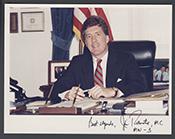
Mr. Chairman, I offer an amendment. Mr. Chairman, I yield myself such time as I may consume. Mr. Chairman, I rise today to offer an amendment to the supplemental appropriations bill to provide travel…
Mr. Chairman, I offer an amendment.
Mr. Chairman, I yield myself such time as I may consume.
Mr. Chairman, I rise today to offer an amendment to the supplemental appropriations bill to provide travel and transportation costs for our brave troops to return home during R&R breaks. I want to thank my friend, the gentleman from Kansas (Mr. Moore), for his work on this important legislation. I would also like to thank the chairman and ranking member for their tireless work on the underlying legislation, which is so critical to our mission in Iraq.
Mr. Chairman, our military recently began employing its first Rest and Recuperation program during the Vietnam War. This means that soldiers who have served 12 straight months in Iraq qualify for R&R, and some 700 troops per day are currently returning to the United States to see their families. Unfortunately, once the troops reach our shores, they are too often stranded at the airport. That is because the airports to which they are flown are nowhere near their homes or families, and same-day airline fares are far too expensive for most of our troops to afford. Being stranded at the Baltimore Washington Airport will not provide much rest or relaxation to those who are making such great sacrifices to defend our freedom.
Anyone, Mr. Chairman, who has served in the military knows how important it is to get home, especially those serving in combat. The Ramstad-Moore amendment simply shifts $98 million in funds from the Iraq Freedom Fund to the Army's personnel account.
Mr. Chairman, an amendment stating Congress' intent to expand the R&R program to cover domestic travel costs was agreed to by unanimous consent during the other body's consideration of the Iraq supplemental. This amendment today would provide the funding necessary to pay for these costs and would put this body on record in support of this important initiative for our brave troops.
The Federal Government should clearly cover all travel and transportation costs necessary to return our brave troops to their homes, briefly reuniting wives and husbands, parents and children, friends and loved ones. Getting our brave troops home for rest and recuperation is the very least we can do to show our troops and their families that we appreciate their service and their great sacrifice, and I urge my colleagues to support this amendment.
Mr. Chairman, I reserve the balance of my time.
Mr. Chairman, I yield myself such time as I may consume to thank the distinguished chairman for accepting this important amendment to show our troops that we truly do appreciate their important service to our country and their great sacrifice.
Mr. Chairman, how much time remains?
Mr. Chairman, I yield such time as he may consume to the gentleman from Kansas (Mr. Moore).
Mr. Chairman, I yield back the balance of my time.

Mr. Chairman, I offer an amendment. Mr. Chairman, I yield myself such time as I may consume. I am offering an amendment with my friend and colleague from California (Mr. George Miller) to transfer…
Mr. Chairman, I offer an amendment.
Mr. Chairman, I yield myself such time as I may consume.
I am offering an amendment with my friend and colleague from California (Mr. George Miller) to transfer $300 million from the weapons inspectors in Iraq to pay for lifesaving equipment for the Army National Guard and Reserve troops currently serving there. Our amendment would leave the remaining $300 million to focus on finding weapons of mass destruction in Iraq, if there are any. Some 300,000 of our Guard and Reserve personnel have been called to active duty to fight terrorists in Africa and Asia and secure the peace in Afghanistan, the Balkans and Iraq. They are being called on to serve multiple tours and will continue to serve until we either stabilize Iraq or get international troops in there to share the burden. Yet our Guard and Reserve forces are working in Iraq without bulletproof jackets, armored vehicles and other basic lifesaving equipment. I am deeply concerned that if the demands of the Guard and Reserve do not ease up in the coming months, we will severely undermine our ability to attract new Reservists and keep ones that we have, which will prevent those who are currently serving in Iraq from returning to civilian life. If we are to depend on our brave citizen-soldiers to secure the peace in Iraq and prosecute the war on terrorism elsewhere, it is critical that they have the same equipment as everyone else.
I urge my colleagues to vote for this amendment to increase funds to protect the lives of our troops currently serving in Iraq.
Mr. Chairman, I yield 1\1/2\ minutes to the gentleman from California (Mr. George Miller).
Mr. Chairman, I yield 1\1/2\ minutes to the gentleman from Maryland (Mr. Van Hollen).
Mr. Chairman, I reserve the balance of my time.
Mr. Chairman, I yield myself such time as I may consume.
I want to thank the chairman of the Defense Subcommittee of the Committee on Appropriations for not only including me on the trip but for his eloquence and his leadership. I appreciate the fact that he recognizes the urgent needs of our Guard and Reserve. I know that he intends to work diligently to provide them with the money to get this new equipment. I do think that it would be wiser for us to have U.N. inspectors in there not only to have more credibility but also to share the burden. And I urge my colleagues to vote ``aye'' on this amendment.
Mr. Chairman, I yield back the balance of my time.
Mr. Chairman, I thank the gentleman from Wisconsin (Mr. Kind) for offering this amendment. The gentleman has brought forward an important amendment that I hope we will consider and pass. Regardless…
Mr. Chairman, I thank the gentleman from Wisconsin (Mr. Kind) for offering this amendment. The gentleman has brought forward an important amendment that I hope we will consider and pass.
Regardless of how one may feel in support of the supplemental appropriation, I hope we all agree that reconstruction aid requires a higher level of scrutiny. That is exactly what this amendment does. It provides 50 percent of the money now. That is consistent with the analysis of the World Bank, the United Nations, and the International Monetary Fund as to how much funds can effectively be used by Iraq in the next year. It is consistent with our initiative to get our allies to pay a larger share of the reconstruction act.
The vote in the United Nations Security Council yesterday was encouraging. If Members believe our allies should be paying more of these reconstruction funds, Members should support the Kind amendment.
It is also consistent with our desire to have the Iraqis repay some of this money. We know that the other body has already taken action in that regard. If Members believe that we should be considering whether the Iraqis have the resources to repay some of these funds later, then Members should support the Kind amendment.
It is consistent with our responsibility for oversight. It is our responsibility to make sure these monies are properly spent, to monitor the use and get more accounting. If Members believe we should exercise that responsibility, they should support the Kind amendment.
It also allows us to get a plan from the administration to transfer authority to the Iraqis and bring our troops home. We should have that information. This amendment is consistent with that request.
Then if more funds are needed, this body can take it up with the condition, and in the form, that is consistent with the goals that we are trying to achieve. At that time, the Congress can take up additional resources and act on that request. I urge my colleagues to support this amendment. It is the right thing for us to do in order to successfully complete our mission in Iraq.
Mr. Chairman, I offer an amendment. Mr. Chairman, I yield myself such time as I may consume. Today I am offering an amendment that directs $50 million from the Operation and Maintenance Defense-Wide…
Mr. Chairman, I offer an amendment.
Mr. Chairman, I yield myself such time as I may consume.
Today I am offering an amendment that directs $50 million from the Operation and Maintenance Defense-Wide account to the Family Advocacy program that is administered by the Defense Department. This amendment addresses the fundamental needs that will be facing our returning military personnel and their families when they return home from Operation Enduring Freedom and Operation Iraqi Freedom.
The Family Advocacy program provides support services to families that are transitioning from the frontline to the home front. This additional $50 million in funding will enable military families to get personal and marriage counseling which will work to reduce the incidence of domestic violence and suicide among our military personnel.
As we are all aware, Mr. Chairman, domestic violence occurs within all groups and levels of society. However, the military presents families with particular challenges not normally found in civilian society.
I yield to the gentleman from California.
Mr. Chairman, I thank the gentleman so much.
Mr. Chairman, I need not say anymore. I appreciate the other side accepting this.
Mr. Chairman, I yield back the balance of my time.
Mr. Chairman, I thank the gentlewoman from Texas for yielding me this time, and I stand in accord with what the gentlewoman from Texas has said.
It is critical, Mr. Chairman, that we recognize the importance or the violation of human rights in Iraq and the women's rights in Afghanistan. For years, I have worked with a lot of Members of the House in working on women's rights in Afghanistan and ensuring that they have more of a governance, more education, and the same as in Iraq. So I urge everyone to support the gentlewoman's amendment.

Mr. Chairman, I thank my colleague from California for introducing this amendment and making sure that it was in order. It raises a very important question. It is a matter of life and death for the…
Mr. Chairman, I thank my colleague from California for introducing this amendment and making sure that it was in order. It raises a very important question. It is a matter of life and death for the members of our National Guard.
Currently we have a policy in place which makes a lot of sense in ordinary circumstances for the taxpayer and for the use of our equipment and, that is, that the Guard gets essentially hand-me-down equipment as we buy new equipment for the active forces to engage in combat. But now what we find out is because of our manpower problems and the longer deployments of the Guard and a deeper reaching into the Guard structure in this country to deploy people in Iraq, in Afghanistan, we are in the situation where we now have the Guard entering the field of combat with old and, in some cases, obsolete equipment, equipment that is not compatible, communications equipment that is not compatible, Humvees that are from the first generation that do not provide the kind of protection to the occupants of that vehicle that the newer Humvees do. Yet, now we find, as I have been told by Guard members on the phone from Baghdad, in letters from Baghdad, they are seeing modern equipment being rotated back to the United States as those units are rotated out and the Guard is still left with old, obsolete, unsafe equipment.
The National Guard must not be put into the theater of combat with less than the same equipment that the active Army is put into the field of combat with. We cannot treat them as second-class citizens. This is a policy that
makes sense in peacetime, but this is a policy that is now lethal to our Guard members. I would hope that the committee, in its deliberations, would be able to address this problem.
I thank the gentlewoman for yielding.

Mr. Chairman, I thank the gentleman for yielding and the opportunity to address this critical issue on the floor today. Mr. Chairman, as we are poised to invest billions of dollars in the…
Mr. Chairman, I thank the gentleman for yielding and the opportunity to address this critical issue on the floor today.
Mr. Chairman, as we are poised to invest billions of dollars in the reconstruction of Iraq and Afghanistan, I believe that it is imperative that we address the infrastructure needs of people with disabilities in the rebuilding process. Conflicts in other countries result in higher- than-average rates of disabilities for people, and the need for their consideration in the planning and design stages of new construction simply cannot be understated. Furthermore, given the history of discrimination and abuse of people with disabilities in Iraq, targeted programs through multi-inclusion of Iraqis with disabilities in public life and education will be necessary and, in fact, imperative. Including these matters, I believe, as a forethought will result in little up-front cost and save significant time and expense down the road. It is always more difficult and more costly to retrofit than it is to plan it in the earlier stages when construction is just being planned.
Finally, I believe that it is time to align our foreign policies with our national priorities, and currently foreign assistance funding is not required to be used in a manner that ensures access to people with disabilities. And this is inconsistent with our own civil rights laws, most notably the Americans with Disabilities Act.
Mr. Chairman, I was hoping and wanted to ask as this bill moves forward and goes to conference that the gentleman would be willing to work with me to perhaps ensure that those things are considered.
Mr. Chairman, I thank the gentleman and look forward to working with him.
Amendment Offered by Mr. Sherman
Mr. Chairman, I rise in support of this amendment, and I commend my colleague on the Subcommittee on Human Intelligence, Analysis, and Counterintelligence for his work on this issue. Today, our…
Mr. Chairman, I rise in support of this amendment, and I commend my colleague on the Subcommittee on Human Intelligence, Analysis, and Counterintelligence for his work on this issue.
Today, our Nation is fortunate to have General Abizaid leading our troops in Central Command. General Abizaid is an expert on Middle Eastern affairs, and fluent in Arabic. He is the perfect man to have leading our troops in this region.
Unfortunately, people like General Abizaid are rare in the United States. Our Nation has neglected programs that build proficiency in those languages, and we are struggling to catch up. Last year, the GAO reported that the FBI had thousands of hours of audio tapes and pages of written material that have not been reviewed or translated due to the lack of qualified translators.
The GAO also noted that the State Department suffers from a language proficiency shortfall whereby Foreign Service officers are put in positions with lower-than-desired levels of proficiency. These shortfalls have not existed without cost. These shortfalls have weakened the fight against international terrorism and drug trafficking; and resulted in less effective representation of U.S. interests overseas.
The lack of trusted interpreters and human intelligence sources is slowing down the work to expose Saddam Hussein's weapons programs.
Most critically, the lack of skilled interpreters has slowed our efforts in the war on terrorism. This amendment will help alleviate these problems by focusing on the critical need to address the shortfall.
We cannot ignore this shortfall--the need for improved HUMINT is an emergency that I urge my colleagues to support with this amendment.
Mr. Chairman, I want to thank my good friend, the gentleman from Minnesota (Mr. Ramstad), for his great work on this bill. This is a worthy bill that should be considered and adopted by this body,…
Mr. Chairman, I want to thank my good friend, the gentleman from Minnesota (Mr. Ramstad), for his great work on this bill. This is a worthy bill that should be considered and adopted by this body, and I urge all of my colleagues to vote for the Ramstad- Moore amendment.
Mr. Chairman, back on October 1, I introduced House Resolution 387, a bipartisan resolution that now has 127 cosponsors, and basically it did exactly what the gentleman from Minnesota (Mr. Ramstad) has written into this amendment, and that is pay for the rest and recuperation travel, full travel cost, for all of our military personnel serving in Iraq and Afghanistan.
I heard a story on NPR about 3 weeks ago and was frankly stunned to hear that young people who had been serving in Afghanistan and Iraq were being brought home for R&R after serving their several months in Afghanistan or Iraq, and then being deposited in Baltimore or some other port city, and said, you are here, you have to pay for your own travel home and back.
I was stunned. In fact, I did not believe that was really true. I asked my staff to check, and found out in fact it was true, that they were required to pay their travel costs home and back. This is not the way we show honor and respect for the young people who serve our military and protect our country.
So I applaud again the gentleman from Minnesota (Mr. Ramstad) for his work on this, and I ask all of our colleagues to join with us in supporting this. Again, 127 have signed on a similar bill. There is broad bipartisan support in this body. And as the gentleman from Minnesota (Mr. Ramstad) said, the other body has already passed a similar amendment by voice vote.

Mr. Chairman, will the gentleman yield? Mr. Chairman, I know that there is no one in this Chamber who has more concern about the Reserve and Guard than the gentleman from Michigan (Mr. Stupak). He…
Mr. Chairman, will the gentleman yield?
Mr. Chairman, I know that there is no one in this Chamber who has more concern about the Reserve and Guard than the gentleman from Michigan (Mr. Stupak). He has units that have been deployed, as all of us have. I am getting questions and concerns from the families in my district, and all over the country they are writing to me. I had a 67-year-old say that he was retired for 10 years and they were trying to call him back.
But I do not think, as hard as we work for pay, I do not think an amendment like this helps us. I think we really have a problem. I know we all want to help the troops, but we struggle all the time trying to make sure we balance out the money they make. I just do not think this is the right way to do it. I think what we have to do is certainly take a look at it, working with the services themselves.
Mr. Chairman, 65 percent of our money right now goes to personnel. We put a big health care package in. Our subcommittee works helping the troops; that is what we concentrate on. I think it is just something we cannot accept. I would ask the Members to vote against this amendment, no matter how all of us would like to see the troops get more money.

Mr. Chairman, I rise to voice my support to the Ramstad-Moore amendment, which would allow troops on rest and recreation leave to return from Iraq to their home of record. This amendment benefits…
Mr. Chairman, I rise to voice my support to the Ramstad-Moore amendment, which would allow troops on rest and recreation leave to return from Iraq to their home of record. This amendment benefits every member of the military serving in Operation Iraqi Freedom and Operation Enduring Freedom from across the United States, its territories and possessions. I am pleased that this amendment will enable servicemen and women from Guam to return home, even if only for a few days. This amendment will make a great improvement in the morale of our troops because they will be re-united with friends and family who are hoping and praying for their safe return. On behalf of the children that will be reunited with a parent and the couples that will see each other for the first time in months, I strongly urge my colleagues to adopt this amendment.
Mr. Chairman, I claim the time in opposition to the amendment, and I yield myself such time as I may consume. Mr. Chairman, on the first amendment offered today, the amendment offered actually was…
Mr. Chairman, I claim the time in opposition to the amendment, and I yield myself such time as I may consume.
Mr. Chairman, on the first amendment offered today, the amendment offered actually was different than the one that we had agreed to last night in the unanimous consent request, and that is okay; we have no problem with that. But I would just ask my colleagues that in the event that any amendment that they would offer, if it is different than the one that we agreed to last night, please let us know that when they actually offer the amendment, so that we are prepared to deal with the proper amendment.
Mr. Chairman, I ask unanimous consent that the balance of the time be controlled by the gentleman from California (Chairman Lewis) of the Subcommittee on Defense.
Bill Text
Latest available legislative text
        [Congressional Bills 108th Congress]
[From the U.S. Government Publishing Office]
[H.R. 3051 Introduced in House (IH)]

108th CONGRESS
1st Session
H. R. 3051

To pay a one-time bonus to members of the Armed Forces who served or
serve in a combat zone designated for Operation Iraqi Freedom or
Operation Enduring Freedom, and for other purposes.

_______________________________________________________________________

IN THE HOUSE OF REPRESENTATIVES

September 9, 2003

Mr. Stupak introduced the following bill; which was referred to the
Committee on Armed Services, and in addition to the Committee on
Transportation and Infrastructure, for a period to be subsequently
determined by the Speaker, in each case for consideration of such
provisions as fall within the jurisdiction of the committee concerned

_______________________________________________________________________

A BILL

To pay a one-time bonus to members of the Armed Forces who served or
serve in a combat zone designated for Operation Iraqi Freedom or
Operation Enduring Freedom, and for other purposes.

Be it enacted by the Senate and House of Representatives of the
United States of America in Congress assembled,

SECTION 1. ONE-TIME BONUS FOR SERVICE IN COMBAT ZONE DESIGNATED FOR
OPERATION IRAQI FREEDOM OR OPERATION ENDURING FREEDOM.

(a) Military Services.--The Secretary of Defense shall pay a one-
time bonus of $1,500 to each member of the Army, Navy, Air Force, or
Marine Corps, including reserve components thereof, who served or
serves for any period of time in a combat zone designated in connection
with Operation Iraqi Freedom or Operation Enduring Freedom.
(b) Coast Guard.--The Secretary of Homeland Security shall pay a
one-time bonus of $1,500 to each member of the Coast Guard or Coast
Guard Reserve who served or serves for any period of time in a combat
zone designated in connection with Operation Iraqi Freedom or Operation
Enduring Freedom.
<all>