To require cigarette products to be placed under or behind the counter in retail sales.
Legislative Activity
Stay on top of the latest movement without scrolling through every action
Referred to the Subcommittee on Commerce, Trade and Consumer Protection.
October 6, 2003
View full timeline
Introduced in House
September 24, 2003
Referred to the House Committee on Energy and Commerce.
September 24, 2003
Referred to the Subcommittee on Commerce, Trade and Consumer Protection.
October 6, 2003
Floor Debate
7 membersWhat members said about H.R. 3162 on the floor
 MW
MW BL
BL EEC
EEC DMP
DMP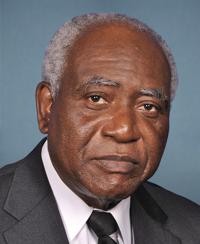 DKD+2
DKD+2
Floor Debate
7 membersWhat members said about H.R. 3162 on the floor
Mr. Speaker, to the chairman of the Congressional Black Caucus, the gentleman from Maryland (Mr. Cummings), I want to thank him for taking time out in the schedule of the Congress of the United…
Mr. Speaker, to the chairman of the Congressional Black Caucus, the gentleman from Maryland (Mr. Cummings), I want to thank him for taking time out in the schedule of the Congress of the United States to allow the members of the Congressional Black Caucus to take the floor to talk about our concerns and to describe our feelings about the preemptive strike that we are poised to carry out as we stand here tonight.
I thank the Chairman because he knows and I know that we are going to be criticized. We are going to be criticized, and there will be those who even call us unpatriotic. We will be criticized. We will be called unpatriotic, and there will be an attempt to intimidate us and say to us that at this point in time we should not raise these questions, we should not talk about our deep feelings and our concerns, we should only support whatever the President is doing.
But I would like to remind those who would criticize us that we are indeed patriotic Americans. As a matter of fact, if we take a look at the history of African Americans in this country, one can only conclude that we are indeed patriotic. We believe in America. We believe in America despite the history of America as it relates to African Americans, despite slavery, despite discrimination, without racism. We stand by America. We have decided that it is our job and our responsibility to make America the kind of place that America can be and it should be, and so we take this floor this evening to try to raise the question how did we get to the point where the President of the United States is issuing an ultimatum to Saddam Hussein in Iraq to be out of that country within 48 hours, he and his sons, or face the consequences of a preemptive strike? How did we get to this point? How did we get to the point where all diplomatic efforts have been abandoned? How did we get to the point where we have some 250,000 to 300,000 young men and women in Kuwait, in Qatar and on the sea awaiting the order to strike? Where did it all break down? How did we lose our allies? What made France and Russia and Germany and even China decide that they could not stand with the President of the United States in a second resolution? What made France say no matter what, they were poised to veto any resolution being described in the way the President of the United States was describing the second resolution?
When we ask the question of how, when, and where did the diplomatic efforts fail, we cannot help but understand that the diplomatic efforts could not work because the case has not been made for preemptive strike. The case has not been made, and there is no documentation as of this date that even Saddam Hussein is harboring weapons of mass destruction.
As we have sent our inspectors there, they have found some things; but we have also discovered that some things that were supposedly in place in Iraq were not in place. We listened very carefully as our Secretary of State described sheds and operations where weapons were being developed only to discover that they were old and dilapidated, full of dust with no electricity. As there was an attempt to document why we had to have this preemptive strike, we found each day that the representations were less than factual. As a matter of fact, our own intelligence community headed by the CIA said that they could not find in Iraq that which was being described by our own Secretary of State, the President of the United States.
Some would say the President moved on this preemptive strike after 9- 11, the President was so concerned about terrorism and 9-11 that he decided that he must take some action.
The President of the United States of America had the support of this Congress to take action to find the terrorists, to bring them to the bar of justice. We said yes, Mr. President, 9-11 is a terrible thing. It was a terrible thing. We should not be the victims of terrorism, and we should find those who are responsible. We were told that Osama bin Laden and others were responsible. And we said, we support you, Mr. President. Let us go after Osama bin Laden and Mullah Omar and any of the rest of those leaders leading al Qaeda that were responsible for terrorism.
We are still looking for Osama bin Laden. Where is he, Mr. President? We still do not have Mullah Omar, supposedly one of the high operatives responsible for terrorism. Mr. President, not only do we support finding the terrorists, you have taken a lot of steps above and beyond what some of us even thought should be taken when you moved to change the Constitution of the United States to try to locate folks that supposedly were responsible. You have locked up people. Some of them we still do not know where they are. You have brought folks who still have not been identified with terrorism but are being held, but we have not had a breakthrough. We have not had a breakthrough, and we are worried that the war on terrorism has taken a back seat to a preemptive strike on Saddam Hussein.
Mr. President, you cannot substitute a preemptive strike on Saddam Hussein for finding the terrorists. We want the terrorists to be found. We give you all the support that you need to do that. And, Mr. President, we want the homeland secured. We have given you all the support that you need for homeland security, but we find as of today the terrorists have not been located. Some of our airports are still exposed. We have nuclear power plants that are exposed. We have ports where we have containers that are still coming in that are not inspected; and as of this day, not all of the baggage that goes into the belly of the airplanes that are traveling throughout this country is inspected.
Mr. President, we want to find the terrorists. We want to secure the homeland. We are worried that you have been diverted, that you are about to do this preemptive strike without the documentation.
Yes, we know that Saddam Hussein has done some terrible things. We have been successful in containing him. I do not think that he presents us nearly as much of a problem as North Korea. If we take a look at Kim Jong Il in North Korea, we find that not only has he developed nuclear capability, he has opted out of the nuclear proliferation treaty. He has decided to test missiles.
He has challenged us. He has interfered with our airplanes in the sky. What are you going to do about Kim Jong Il? And on top of that, we now discover that Iran has plutonium that could be developed into nuclear capability for weapons of war.
Mr. President, something is wrong with this picture. What is wrong with this picture is this: we are sophisticated enough to know that some of our allies, Pakistan, have nuclear capability and so does India and they could go at each other any day of the week. We also know that Israel has nuclear capability. We also understand that Russia still has nuclear capability. There is too much nuclear capability in the world to talk about focusing our sights on Iraq that still does not have nuclear capability, and we still have not found the weapons of mass destruction.
I know that Saddam Hussein is clever and of course he has been cooperating. The more we push him against the wall, the more he cooperates. Yes, we can now send our planes and we can do the surveillance. Yes, he is now dismantling the Samoud missiles. Yes, he continues to cooperate as we push him against the wall, and the more he cooperates, the more our allies and others say let us continue to do the inspections, let us see if there are weapons of mass destruction. We should not stop in the middle of these inspections.
But there are those who say all of this talk is too late, that you have decided, Mr. President, that it is just a matter of time after issuing the ultimatum that we will move. I am naive enough to believe, I have enough hope, that even at this late date, you have identified that we will move at a time of our choice, that that time will not come. I still hope despite the billions of dollars that we have spent deploying these soldiers that we will bring them home.
We love our soldiers. We support them and we embrace them. Our hearts are torn apart as we see these families torn apart, mothers and fathers leaving the babies. We watched this in the Gulf war only to find that our soldiers came home, many of them had no apartments. They had no homes. They had no furniture. We do not want to replay this. Yes, every country should be able to defend itself, but we are in no danger from Iraq. As a matter of fact, that is probably one of the weakest points on the globe for us to attack. We are not threatened by Saddam Hussein.
Mr. President, I hope that you do not think that with this preemptive strike that somehow this will translate into we have a war on terrorism. It does not. We know the difference, Mr. President. Striking Saddam, striking Iraq is not fighting terrorism. What about our friends in Saudi Arabia who pay for the madrasas and the schools where right- wing fundamentalism is taught? Those madrasas are the breeding grounds for the al Qaeda operation, but, no, they are our friends. We are tied to them because of oil. They are not a democracy. The House of Faud is but a very rich family that has been able to manipulate its way into a friendship and a relationship despite the fact the support and the money comes from Saudi Arabia. The terrorists, all of which have been identified with 9-11, all were born, bred in Saudi Arabia. Our friends that we have aligned ourselves within Pakistan as we have moved into Afghanistan turn out to be those who are supplying North Korea with some of the plutonium and the nuclear capability that they are developing. It does not add up, Mr. President.
What we see and we are witnessing is the mismanagement of America. Someone today criticized Senator Daschle because he talked about the diplomatic disaster. Mr. President, it is a diplomatic disaster. We are watching before our very eyes the mismanagement of our beloved country. Our schools are falling apart. You said you wished to leave no child behind, but, Mr. President, you have not funded assistance to education that will have our children in the best possible situations where they can learn. Our health care system has fallen apart. In my city, in my county we are closing healthcare clinics. We are closing hospitals. And the stock market has not performed since before 9-11. What are you doing to stimulate this economy? Mr. President, I do not think the average person will believe that by eliminating the taxes on dividends that somehow it is going to stimulate this economy.
Mr. President, you are not able to tell us what this war is going to cost and what the cleanup, what the revitalization, the reconstruction of Iraq is going to cost. The American people need to know where our dollars are going. The American people need to understand the cost of this war and why.
Mr. President, the worst thing that could happen to us is that you have this preemptive strike, you go into Iraq, occupy it, and we spend billions of dollars after this so-called regime change where we are going to institute democracy, and the terrorists are still operating. When are you going to break up the al Qaeda cells right here in America? When are we going to get with our allies and put together a strong approach to rooting out the terrorists all over the world?
Mr. President, we must raise these questions. We must raise these questions because we are patriots. We are folks who love this country. We are folks who have stood by this country no matter what, and we will continue to stand by this country. We will continue to stand by our soldiers. But, Mr. President, you are going to have to account for the leadership that you are giving, and I say to you and all those who are advising you, be it Wolfowitz, be it Secretary of State Colin Powell, be it Condoleezza Rice, be it Carl Rove, or any of those in the inner circle, you are going to be held responsible for what takes place in this world, what takes place with this preemptive strike, what takes place with our soldiers and our families.
We would like to see this situation resolved in a way that will not cause the body bags to come home. We would like to see this situation resolved in a way that our young people would not be put in harm's way.
It is not too late, Mr. President. We will all stand up and applaud you if you do the courageous thing of saying, yes, we deployed; yes, we spent billions of dollars to do it; but we do not have the allies, we cannot afford the costs, and we cannot afford the loss of lives. I am going to bring our soldiers home.
We will stand with you and praise you and applaud you and say you are a great man. Unless you can do it that way, Mr. President, you are going to have to accept the responsibility.
Mr. Speaker, I want to thank the Chair of the Congressional Black Caucus for organizing this Special Order and for his leadership, especially for giving us one more chance to discuss this march to…
Mr. Speaker, I want to thank the Chair of the Congressional Black Caucus for organizing this Special Order and for his leadership, especially for giving us one more chance to discuss this march to this needless and dangerous war. This is a really sad and very somber evening for many of us.
Last September, the Congressional Black Caucus issued five principles on war with Iraq. The principles began by saying: ``We oppose a unilateral first-strike action by the United States without a clearly demonstrated and imminent threat of attack on the United States.'' All these months later, Mr. Speaker, we still have no evidence of an imminent threat to our country. Even the CIA in a declassified report has said that Saddam Hussein is unlikely to use weapons of mass destruction against the United States or our allies unless he himself is under dire threat of attack. We do not face an imminent threat.
The second principle reads, ``Only Congress has the authority to declare war.'' Congress has not declared war. And the Constitution is unyielding on this point.
The third principle states, ``Every diplomatic option must be exhausted.'' Our diplomatic options are not exhausted, although the President's patience apparently is. Through diplomatic engagement and inspections, we have successfully contained and restrained Saddam Hussein. The inspections process is working. It is just not finished yet.
The fourth Congressional Black Caucus principle states, ``A unilateral first strike would undermine the moral authority of the United States, result in substantial loss of life, destabilize the Mideast region, and undermine the ability of our Nation to address unmet domestic priorities.'' All of these concerns are still with us, Mr. Speaker.
The doctrine of preemption and the threat of preemptive war against Iraq do not make us safer. They make us less secure. This doctrine threatens to set a dangerous precedent that might then be cited by other countries, including other nuclear powers, to justify preemptive first strikes against perceived future threats. That is not a world we want to live in, and not an example we want to set. We also risk unleashing new waves of instability and destruction in the Middle East. And no one here questions for a minute that we have not met our priorities here at home. The Bush budget underfunds education, job training, health care, environmental protections, housing and a host of other critical and neglected priorities. And it underfunds all those programs without including one penny to cover the hundreds of billions of dollars that war and occupation in Iraq will cost. That is still to come.
The fifth principle of the Congressional Black Caucus document from last fall reads, ``Any post-strike plan for maintaining stability in the region would be costly and would require a long-term commitment.'' Those facts are still very much with us today. A well-known Yale economist said that reconstruction and occupation in Iraq could cost well over $1 trillion. That is not something the President has acknowledged. It is certainly not in the budget that he has just submitted.
We issued those principles last fall, last September, when the President claimed the unilateral right to attack Iraq with or without United Nations' authority and talked a lot about regime change. After all this time, we have returned to our starting point.
Tonight we are on the eve of a war. We must take this opportunity, and I thank the gentleman from Maryland again for giving us the opportunity to make one last plea.
I want to read excerpts from a letter sent to President Bush by really a great religious leader, the presiding Bishop of the Church of God in Christ, Bishop Gilbert Earl Patterson, and the General Board of the Church of God in Christ, which is the largest African American Christian denomination in the United States of America. Some of the excerpts are:
``Dear President Bush: We write to you as predominantly black clergy, intellectuals and informed laypersons of community-serving churches of the Church of God in Christ to address matters of the deepest gravity, namely, that of war and peace as presented by your statements and those of Vice President Richard Cheney and Secretary of Defense Donald Rumsfeld concerning a preemptive attack upon Iraq.
``We are mindful that war, should it come to pass, will directly affect the safety and well-being of tens of thousands of our fellow citizens in the Armed Forces, of whom significant numbers are ethnic minorities in the enlisted as well as the officers and noncommissioned ranks.
``Our thoughts also extend to the safety and well-being of Iraqi civilians who have not lifted a hand against the United States. We are deeply concerned that critical moral reflection on the prospects of war has been overlooked by some in your administration. We do not advocate a weak America, unable to defend the innocents from tyranny of attack, but a strong America must examine itself before setting off to war.''
Bishop Patterson goes on to say, ``We would agree that Iraq's President Saddam Hussein has demonstrated aggression against his neighbors in the past, some of which was unopposed, mind you, by the United States Government. We would also agree that if Iraq possessed weapons of mass destruction, this would be a matter of grave concern. In this regard, we believe that the United States' interests are best served by using the existing mechanisms of international law, collaboration and consultation with our allies, and the use of existing United Nations resolutions to support the work of weapons inspectors so they may detect and destroy any weapons of mass destruction found in Iraq.
``However, we do not find any moral justification for a preemptive strike in the absence of an attack or a real threat of an attack against the United States of America. A military strike of this nature puts the United States in the posture of aggressive warfare, not defense, which is precisely the behavior that we, and your administration, deplore in the Iraqi regime.
``Surely our Nation and its leaders can examine their own intentions in light of Holy Scripture before setting their feet upon the blood- soaked path of war whose ultimate outcome is known with certainty only by the Maker of us all.''
Mr. Speaker, in closing, I support our troops with all my heart. As a soldier's
daughter, I know what their families are feeling now. I hope and pray for the return, the safe return, of our Armed Forces and for the safety of Iraqi civilians who will inevitably be caught in the crossfire of any conflict. And I hope and pray that our Nation finds an alternative to war.
Once again, as Bishop Patterson said, money spent on war to destroy lives could instead be used to save lives by financing the alleviation of the impending famines in Southern Africa, or to provide clean drinking water to enhance the health of hundreds of thousands of poor, defenseless men, women and children throughout that continent. He said that these resources could also be productively directed toward providing treatment and prevention services for those afflicted by the HIV/AIDS holocaust in Africa, the United States and other countries around the world, not to forget the blight and ravages of economic depression in Appalachia and the inner cities of America.
Once again, I just want to say to the gentleman from Maryland and to members of the Congressional Black Caucus, to this body here tonight, that we still have a window of opportunity, a very short window. Tonight we are making one last plea not only on behalf of ourselves, but on behalf of millions of people in our country, millions of people throughout the world who want to see a safe and secure America, who want to see a safe and secure world, who want to turn over to our children a world that is more secure, not less secure.
Mr. Speaker, I would like to insert into the Record the Congressional Black Caucus' principles on United States military action in Iraq. They are as follows: We oppose the unilateral first strike…
Mr. Speaker, I would like to insert into the Record the Congressional Black Caucus' principles on United States military action in Iraq. They are as follows:
We oppose the unilateral first strike action by the United States without a clearly demonstrated and imminent threat of attack on the United States.
Only Congress has the authority to declare war.
Every diplomatic option must be exhausted.
A unilateral first strike would undermine the moral authority of the United States, result in substantial loss of life, destabilize the Mideast region and undermine the abilities of our Nation to address unmet domestic priorities.
Further, any post-strike plan for maintaining stability in the region would be costly and would require a long-term commitment.
Mr. Speaker, I rise at a moment when America stands at the brink of war. Our actions in Iraq will define our moral standing in the world for this generation and for generations yet unborn. I have given my oath to do everything within my power to support our men and women in uniform. We have a great American tradition that when we engage in combat, we support our troops. I will fulfill that solemn obligation. However, I also have pledged my commitment to ensure their sacrifice is warranted and just. That obligation does not allow me to remain silent tonight.
Mr. Speaker, the President has declared that he will allow no more time for a negotiated disarmament of Iraq. We all know the terrible consequences of that decision. The stakes are enormous. Many human beings will be harmed and others will die. In the course, American foreign policy could be seriously changed. So before a single shot has been fired, I must again raise what I consider to be the fundamental question about this preemptive war: By what authority, by what right does this Nation justify the taking of life in Iraq?
Mr. Speaker, the American people have created the strongest military force in history. We in this Congress will continue to support our troops. We will continue to ensure that they are the best trained and equipped in the world. Yet as a people, Americans have never subscribed to the proposition that our might makes us right. America has never led by military power alone, but by our devotion to principles and the legitimacy of our mission. And now that principled foundation of our national security has been placed in jeopardy and the legitimacy of our mission, and therefore the credibility of our Nation, is challenged by a significant part of the global community and our own citizens.
The administration regrettably has failed to achieve the U.N. approval and broad-based international support that are critical to achieving our objectives and protecting our men and women in uniform in the Middle East. We have an obligation to ask why the administration has failed to make its case.
If the President's rationale for war were self-evident, a broad-based multinational ``coalition of the willing'' would have indeed materialized. At the heart of the administration's failure, I am convinced, is the absence of clear and convincing evidence that Iraq poses an imminent threat either to the United States or other nations of the world.
Moreover, Mr. Speaker, the administration has yet to adequately explain the consequences of going to war to the American people. Have we received clear and convincing evidence that the President's decision will not destabilize the Middle East, will not make our defense against terrorism more difficult, and will not undermine our ability to meet the compelling domestic needs of Americans here at home?
Where is the administration's comprehensive plan for the political and
economic stability of Iraq once hostilities have ended? Where is the President's evaluation of the cost of military conflict and reconstruction? Where is the President's analysis of the impact upon our economy? Will both affluent Americans and working-class Americans share fairly in that sacrifice?
The answers to these questions raise the classic conflict between whether we pursue questionable international missions or spend the resources for urgent domestic priorities.
Mr. Speaker, that is why we have not yet received the administration's answers to any of these critical questions. Fundamentally, however, the issue of war remains one of morality. Following President Bush's ultimatum last night, the Vatican offered this response, ``Whoever decides that all peaceful means that international law has put at our disposition have been exhausted assumes a serious responsibility before God, his conscience and history.''
I submit that the heavy weight of this responsibility is shared by the President and every Member of this House; and that realization should give us pause, that we have pursued the right course and that we are doing the right thing by this military action.
So tonight, as I speak, tens of thousands of religious congregations throughout the world, women and men of every faith and tradition, are praying that peace will prevail for the good of our country and the enlightened progress of humanity.
May God protect our men and women in uniform and all the innocents who now stand in harm's way, and bring them safely home. And may God guide America during these dangerous times.
Mr. Speaker, I yield to the gentleman from New York (Mr. Meeks).
Mr. Speaker, I thank the gentleman for his statement, and I want to make it clear, as the gentleman has made and all of us will make, that we strongly support our troops. They are our sons, our daughters, our sisters, our brothers, our friends, our fathers, our mothers.
Mr. Speaker, I yield to the gentleman from Illinois (Mr. Davis).
Mr. Speaker, I thank the gentleman for his very eloquent statement.
I yield to the distinguished gentlewoman from California (Ms. Lee).
I want to thank the gentlewoman for her statement. I just want to reiterate that the principles that the gentlewoman stated for the Congressional Black Caucus with regard to war were actually agreed upon by the Congressional Black Caucus back in September. Just approximately 2 weeks ago, the Caucus asked, by way of letter, the President to sit down with us so that we might talk about resolving this Iraq situation without war. The President has not seen fit to meet with us.
It is my honor to yield to the distinguished gentlewoman from California (Ms. Waters).
Mr. Speaker, I want to thank the gentlewoman for her statement. I just want to reiterate something that the distinguished gentlewoman said.
I think every member of the Congressional Black Caucus wants Saddam Hussein to be disarmed. We believe that it can be done through peaceful means. We believe very strongly that we must not just stand on the sidelines and watch our troops go into harm's way and see the Iraqi people come into harm's way. So, we stand up at this last hour.
Mr. Speaker, I am very pleased to yield to the distinguished gentleman from New Jersey (Mr. Payne).
(Mr. PAYNE asked and was given permission to revise and extend his remarks.)
I want to thank the gentleman.
Mr. Speaker, I yield to the gentleman from New York (Mr. Towns).
Mr. Speaker, I thank the chairman of the Congressional Black Caucus for yielding. Let me say how proud I am of the outstanding job the gentleman has done in the short time he has been chairing our…
Mr. Speaker, I thank the chairman of the Congressional Black Caucus for yielding. Let me say how proud I am of the outstanding job the gentleman has done in the short time he has been chairing our beloved caucus.
As a member of the Congressional Black Caucus, I thank the gentleman for taking this Special Order. As we have recently celebrated Black History Month, I want to say how proud I am of our troops, all of our troops, white, black, Hispanic, that are there, even some persons who are there to fight who have green cards, who are risking their lives for this country, and they are not even citizens of this country. So I applaud all of our young people who are there to stand up for our country when our Commander in Chief sends them to a place.
As we have just recently celebrated Black History Month, we look at African Americans who were the first to die in this Nation. On March 4, 1770, in the Boston Massacre, Crispus Attucks was the first person to die when those five patriots died at the Boston Massacre, shot down by the British. It was at the Battle of Bunker Hill that Peter Salem, who was a Minuteman, killed the commander of the British troops,
the Redcoats, at the Battle of Bunker Hill; Peter Salem, who was a patriot, who I had to graduate from high school and college to find out about these tributes.
We can talk about the 5,000 African Americans who fought in the Revolutionary War. And we go on to the Civil War, where the 54th Regiment, former slaves, who fought valiantly; or the Revolutionary War, where Haiti sent troops in the Battle of Savannah to fight for the independence of the United States against Britain, black men who were former slaves in Haiti came here to fight. So people of color have shed their blood for many years for this country, or the Civil War, as I mentioned, with the 54th Regiment.
When we take the 1898 Spanish-American War, when Teddy Roosevelt and the Rough Riders were about to be annihilated at the Battle of San Juan Hill, it was the Buffalo Soldiers who came and prevented that from happening. Private Johnson and Private Roberts served 181 days in the trenches away from their battalion with 30 German prisoners of war, over a half a year in the trenches in World War I, to get the medal by the French, but not the Americans.
Even recently, Colonel Anderson from New York was on the ill-fated Columbia, one of the seven persons to die in that NASA tragedy, with a man from Israel and a woman who migrated here from India.
So our country is great. So I just wanted to say that we in the Congressional Black Caucus are proud of our history and the history that African Americans have contributed to this country.
But today we stand at the threshold of war with Iraq. It appears that President Bush intends to send our troops into combat without any further attempt at diplomacy and without the support of long-time U.S. allies. In so doing, our Nation will be setting a high-risk precedent wherein we assert the right to engage in preemptive warfare whether or not we are under direct military threat.
What about India and Pakistan? What about if they did a preemptive strike on one another? What about China and Taiwan? What happens then if they follow our lead? We are setting a dangerous precedent.
Then our allies that we are criticizing, Belgium, France and Italy, those who we were trying to bring on our side, like China and Russia, we have lost a lot of diplomacy with this act.
We are opening a door to an era which deemphasizes diplomacy and devalues peaceful solutions through negotiations.
We have been able to contain Saddam Hussein through the use of no-fly zones. More recently we obtained a concession from Iraq which gives us the authority to use our U-2 spy planes, the French Mirage planes and the Russian Antonovs, which monitor daily activities in Iraq.
If the President proceeds with his plan to attack a country without a direct provocation, ours will be a world that is filled with greater fear and danger, greater than ever before in our history. Innocent lives on all sides will be lost. I think it is tragic that we are willing to pay the price of human lives that war extracts when we have not fully explored all diplomatic channels through the United Nations.
As a member of the House Committee on International Relations, I have been directly involved in monitoring elections overseas and helping to resolve very serious conflicts. In South Africa we had a solution where it seemed impossible to reach consensus after years of apartheid and bitter racial divisions, and yet we see people in South Africa living in a new, nonracial Democratic South Africa.
I traveled to Northern Ireland, where generations of violence and animosity have created seemingly insurmountable differences. Yet with great patience and diplomacy, former Senator George Mitchell was able to bring both sides to the table to forge the Good Friday Accords.
In Rwanda, a war-torn country where genocide took place as the world watched, we saw close to 1 million people killed. Opposite sides now live together, peacefully, even some having to share the same home because of coming back and joining together in a house that was previously occupied by the other family, and they are looking forward to democratic elections.
My point is no matter how dire a situation, diplomacy can work. Before we risk the lives of young men and women in uniform, which I support and all of us in the Congressional Black Caucus support 100 percent, as well as the countless citizens in both the Middle East and our own country, should we not do everything in our power to have a peaceful solution to the situation in Iraq?
We know that war takes terrible tolls. Tragically, even as technology advances, incidents of friendly fire where our soldiers are inadvertently killed by our own troops are on the rise. The number of incidents have grown from 3 percent casualties in World War II to over 24 percent in the Persian Gulf War. That number is expected to increase, our own soldiers killed inadvertently by our own weapons. Recently there was the tragedy of Canadian soldiers brought down by mistake.
So, as I conclude, I implore President Bush to reconsider his decision before we make a tragic mistake from which there will be no turning back.
Mr. Speaker, I thank the chairman of the Congressional Black Caucus for yielding, and I also commend the gentleman for the outstanding leadership he has provided and continues to provide not only on…
Mr. Speaker, I thank the chairman of the Congressional Black Caucus for yielding, and I also commend the gentleman for the outstanding leadership he has provided and continues to provide not only on this issue but on a myriad of issues affecting this country and affecting our world.
I rise today to discuss the war that is pending, the unfortunate war that we are about seemingly to enter. I make it clear that those men and women who stand ready and are poised and who stand on the front lines and are ready to give every measure of devotion that they have, even in many instances perhaps their lives, are to be commended. They are to be supported. They are to be acknowledged for the tremendous sacrifice they are prepared to make.
I have been told that war is by definition a state of open-armed conflict between nations, states or parties. It is a condition of active antagonism or contention, a concerted effort to combat something injurious. War is also the admission of the failure of diplomacy.
Since the passing of the USA PATRIOT Act of 2001, H.R. 3162, we have provided funding to intercept and to obstruct terrorism, our peace initiative. Unfortunately, recent failures in American diplomacy have impacted the United Nations' ability to work for a peaceful solution.
In my home State of Illinois, the citizens of my district, as in all of America, have made many sacrifices during these difficult times. The greatest sacrifice has been that there are an estimated 100,000 servicemen and women currently stationed at strategic points overseas to ensure the success of this conflict. Many of them are citizens of my district and of the hundreds of other districts across this great Nation.
There are compelling reasons that may have motivated our President to pursue this course of action. First, we have been told that we have the military might, resources readily available and poised at strategic points across the globe to address what is hoped to be a short-term conflict, and that we have the support of allies, Great Britain and Spain.
The noted Greek historian Herodotus once said, ``In peace, sons bury fathers, but war violates the order of nature, and fathers bury sons.'' The loss of human life in efforts of war, regardless of their country of origin, is unacceptable and should be avoided, as all life is sacred.
While military and human resources may have been committed to this effort, the full cost of this war has yet to be disclosed, especially when we do not have the full support of the United Nations for both the war and the subsequent occupation and rebuilding of Iraq. I see no United Nations-supported Marshall Plan on the horizon.
We were told that while we acknowledge the strained relationship with North Korea caused by their blatant
confrontational comments and open defiance in the propagation of their own nuclear supremacy agenda, they are not of primary concern. Yet North Korea and its quest for nuclear power is an issue that will haunt us in the future because of our inaction today.
We have also been advised by our President that this war in Iraq is the only means that we as a Nation have to respond to Iraq's 10-year failure to comply with United Nations Security Council resolutions calling for their disarmament after the first Persian Gulf war in 1991. The selection of Iraq was not a matter of revenge, unfounded on any principle, but was within the law as ascribed by United Nations Resolution 1441 and will also aid our efforts in the war on terrorism by accomplishing the removal of Saddam Hussein and his lieutenants. This, we have been told, will also ensure the disbanding, if not destruction, of the terrorist cells that are either located in or are supported by Saddam Hussein and his regime.
Mohandas Gandhi, a man praised and revered for his life of peace, said, ``I object to violence because when it appears to do good, the good is only temporary. The evil it does is permanent.''
Mr. Speaker, I am not convinced by any shape, form or fashion that invading Iraq, that a preemptive strike by this country is going to net the results that we are hoping for. But I am optimistic, and I still hope. I hope and I pray that somehow or another before there is a grand holocaust, that peace will be found and peace will prevail. But if not, certainly I stand with the men and women, the young persons from my congressional district who are poised and have left home, who are ready to give of themselves and to give of their lives so that there can be hope for peace and the continuation of the kind of freedoms that we have come to enjoy.
Show 2 more
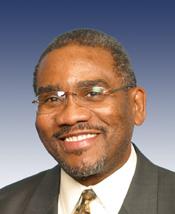
Mr. Speaker, I thank the chairman of the Congressional Black Caucus for his leadership in bringing us to the House floor to speak to the American people tonight about the Bush administration's…
Mr. Speaker, I thank the chairman of the Congressional Black Caucus for his leadership in bringing us to the House floor to speak to the American people tonight about the Bush administration's decision to choose war as the best way to make the American people safe. It is a choice which I believe is wrong.
First and foremost, in opposing President Bush's decision, let me say unequivocally I support in every way the men and women of our armed services and the sacrifices they and their families are being asked to make. May God bless each and every one of them in this time of crisis and bring them home safely.
Mr. Speaker, I believe in a strong America. We have more instruments of power than any nation on Earth. However, our greatest source of power is our moral clarity and purpose in how we use our strength. Unfortunately, the Bush administration has failed to understand this.
As our President prepares to unilaterally and preemptively use military force against a nation which is not an imminent threat to us, we may be on the verge of threatening the very international laws and norms which are the foundation of global stability. Many of the consequences of such actions have already become known. America is more isolated than ever and anti-American sentiment is rising globally. However, it is the unknown consequences of this administration's choice for war which will likely be even more dangerous. My single greatest fear is that this war will jeopardize the help we receive from moderate Muslim nations in successfully bringing to justice those who directly attacked us on 9-11 and prevent attacks against Americans at home and abroad against known imminent terrorist threats.
Contrary to the President's force dichotomy that our choice was either war or doing nothing, I believe we do have alternatives to this war. If Iraq was such a threat, we can continue to use robust inspections, sanctions, and a military containment box. There are others that I think are on the list that are much more of an imminent danger to us here in America, but it is clear to the world that this war is not really about Iraq's threats to America.
The world believes that this war is about changing a regime we once supported and a test case for the Bush administration's doctrine of preemption, a doctrine that was not just created after 9-11, but a doctrine that was espoused back in 1991 by many of the same individuals in the Bush II administration during the Bush I administration. So it is not a new doctrine that we have to go by because of 9-11; it is a doctrine that was preached and talked about prior to 9-11 by many members of this administration.
I believe it is a disservice for the strongest Nation in the world to adopt such a doctrine, because it represents a policy of fear and weakness. More importantly, it signals a dangerous devaluation of diplomacy as an instrument of statecraft to the entire world.
Mr. Speaker, there is not a question in my mind that our military will defeat Iraq, but the real question for America and the world is what will come next and what damage to the region and international order will this cause? What will happen in the Arab and Muslim worlds when the U.S. military occupies Iraq in the name of stability? In the end, the question is: Will this make America safer? I believe not. I think we are making a mistake; but may God bless all of the men and women again that are there, that they may return home to their families safely.
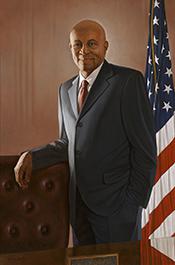
Mr. Speaker, we really appreciate the gentleman taking the time to inform the people of how important this situation is and that we should not move forward. Mr. Speaker, I rise today to express my…
Mr. Speaker, we really appreciate the gentleman taking the time to inform the people of how important this situation is and that we should not move forward.
Mr. Speaker, I rise today to express my strong concerns about the movement of this country towards war with Iraq. I challenge anybody to say, ED, you are unpatriotic because you are opposing the war.
Mr. Speaker, let me be clear: I support our troops. I served in the military. When my country called, I answered. So I stand here as someone who understands the duty of military service and the willingness to make the ultimate sacrifice for our country, and it is precisely because I do support our troops and their families that I cannot understand the unwillingness to send them into harm's way without a clear and present danger to the people of the United States of America.
It is for that reason that in October 2002 I voted against the authorization to allow the President to use United States Armed Forces in Iraq without prior congressional approval. Nothing has happened since that time which would cause me to change my position.
Some people would say, well, what about the weapons of mass destruction? Well, there are a lot of weapons of mass destruction. When I look at the fact that we have an educational system that is in shambles, to me that is a weapon of mass destruction. When we have 41 million people with no health insurance in the United States of America, to me that is a weapon of mass destruction. When we have people that have no jobs and no way of getting jobs, to me that is a weapon of mass destruction. When we have no prescription drug program for our senior citizens in this Nation, that is a weapon of mass destruction.
So I come tonight to make an appeal, knowing that time is running out. But I hope that we will be able to continue to have some dialogue and that we will be able to bring our troops home.
Yes, I am in support of the troops. Yes, I am in support of the troops' families. And I am hoping we can bring them home without any further delay. We need to continue to discuss this. We need to continue to talk.
I am not convinced that the United States of America is in harm's way. When I listened to experts on terrorism, Tom Ridge, who heads Homeland Security, whom I have tremendous respect for, has indicated that we will place the people of the United States of America in jeopardy because of terrorism if we attack. I think that when we hear the cry coming from experts around the Nation who are pointing this out, and have pointed it out so clearly, we should listen to those experts and to go another way.
So I am hoping and praying that, some way or another, that this situation can be diverted, and that we will not send our people into harm's way.
So as I conclude tonight, Mr. Speaker, I am not willing to risk the lives of Americans at home and abroad to fight a war without clear rationale, a clear purpose and a definite end game. The administration has not made this
clear, and I pray the leadership of this Nation will consider and do what is right by bringing our soldiers home.
Bill Text
Latest available legislative text
        [Congressional Bills 108th Congress]
[From the U.S. Government Publishing Office]
[H.R. 3162 Introduced in House (IH)]

108th CONGRESS
1st Session
H. R. 3162

To require cigarette products to be placed under or behind the counter
in retail sales.

_______________________________________________________________________

IN THE HOUSE OF REPRESENTATIVES

September 24, 2003

Mr. Andrews introduced the following bill; which was referred to the
Committee on Energy and Commerce

_______________________________________________________________________

A BILL

To require cigarette products to be placed under or behind the counter
in retail sales.

Be it enacted by the Senate and House of Representatives of the
United States of America in Congress assembled,

SECTION 1. RETAIL SALES OF CIGARETTE PRODUCTS.

(a) Product Placement.--Any person engaged in the retail sales of
cigarette products shall place such products under or behind a counter
and not out on the floor of the retail sales facility.
(b) Penalty.--A person who violates subsection (a) shall be
considered to have engaged in a deceptive act or practice in violation
of section 5 of the Federal Trade Commission Act (15 U.S.C. 45).
<all>