Mr. Speaker, lately, in a rare turn of events, House Democrats have adopted the old adage of Republican leaders and, in floor communications, they have posed the famous question from Reagan, Are you…
Mr. Speaker, lately, in a rare turn of events, House Democrats have adopted the old adage of Republican leaders and, in floor communications, they have posed the famous question from Reagan, Are you better off than you were 4 years ago?
Well, when the quote came, I think Democrats have found a moment of despair. We will welcome their call for comparison of today's economic, international and domestic status to that of 4 years. Yes, we are better off now.
Just look at the war on terror. The attacks on September 11 awakened the Nation to the threat of terror. Republicans have a clear strategy to keep Americans safe and to spread freedom and peace throughout the world.
In the past 3 years, we have seen great progress. Afghanistan is free, Libya is now disarmed, Saddam Hussein is no longer in power. Iraq is becoming a free country, making the heart of the Middle East more stable and America more secure.
The Republican-controlled House quickly passed legislation creating the Department of Homeland Security in 2002. All border activity has been consolidated into the Department of Homeland Security, a single agency, doing away with the fallible INS, or Immigration and Naturalization Service, that allowed the September 11 hijackers to slip through our borders, rent apartments, find employment and train in flight schools, only to have their visas approved by INS after they carried out attacks on the Twin Towers and the Pentagon.
The Department of Homeland Security is implementing background checks on 100 percent of applications for U.S. citizenship and has registered over 1.5 million travelers into the United States VISIT program.
Over 500,000 first responders have been trained in weapons of mass destruction, awareness and response since September 11, 2001.
The USA PATRIOT Act has broken down unnecessary barriers between intelligence and law enforcement officers, ensuring that the best available information about terrorist threats is provided to people who need it most.
After two rounds of across-the-board, Republican-led tax cuts in 2001 and 2003, America's economy is strong and growing stronger, and we have overcome the triple shock of terrorist attacks, corporate scandals and recession.
Americans are seeing the benefit of the Republican progrowth agenda. In the eighth straight month of growth, the economy created 288,000 jobs in April, bringing the total increase since August to more than 1.1 million jobs created.
The real gross domestic product has grown at its fastest rate in almost 20 years over the last three-quarters. Productivity has grown at its fastest rate in 40 years. Homeownership is at an all-time high, 68.6 percent, with substantial gains among minority homeowners. We have the highest total number of people working in the history of America. Let me repeat that. We have the highest number of workers in the entire history of America on the payroll today. Unemployment today is at its lowest rate, lower than at the average of the 1970s, 1980s, and 1990s. The average earnings by American workers is up, higher than it has ever been before. These are high-paying jobs that are coming to America. Manufacturing jobs have also increased for the first time in a long time, 1.1 million jobs in total since August.
Now, we have had some really good news on the economy, but we need to do much more; and we will talk about that later. First, let me talk about health care. Republicans have been working to see that the rising costs of health care are capped and lowered, accessibility to quality care is expanded, and jobs for more Americans are created in the process.
Millions of Americans are benefiting from lower prescription drug costs and increased access to health care. In December 2003, a prescription drug benefit was signed into law that will make Medicare prescription drug coverage available to millions of seniors and people with disabilities for the first time since Medicare's inception.
Health savings accounts were signed into law to give employees more control over their health care decisions and the opportunity to save tax-free income for future health care costs.
The number of children enrolled in the State Children's Health Insurance Program increased from 4.6 million in 2001 to 5.8 million in 2003.
Now, let us talk about education. Under President Bush and the Republican-led Congress, No Child Left Behind was signed into law to ensure that all students become proficient at reading and math and to close the achievement gap that exists between students of different socioeconomic backgrounds. Students, teachers, and parents have seen the prospective effects of accountability, challenge, and incentive.
No Child Left Behind, or NCLB, funding for K through 12 has increased by 35 percent, and title I funding has increased 41 percent, the largest investment in education to date. While only 11 States are in full compliance with previous Federal education accountability standards in January of 2001, NCLB ensured that by June 2003 all 50 States had approved accountability plans to ensure that students become proficient in reading and math. Under NCLB, math scores have increased by 9 points for fourth graders and by 5 points for eighth graders since the 2000 National Assessment of Education Progress.
Under a Democrat watch, we would not be better off. With the Democrats in the majority, 34 million working families would not have received an average of $1,549 in tax relief each year; 47 million families would not have received the $1,000 child tax credit last summer for each child; 35 million Americans would still be paying the unfair double taxation on dividend income, discouraging them from investing in our economy; the defense of our homeland would still be spread among 22 different Federal agencies; 50,000 highly trained Federal screeners would not be protecting America's airports; 24 million Iraqis would still be living in fear under Saddam Hussein's hostile regime; more than 15 million Afghan citizens would still live under the oppressive brutal regime of the Taliban; two-thirds of al Qaeda's top leaders would still be on the loose, plotting attacks, while congressional Democrats treat terrorism as a law enforcement problem; millions of seniors would not benefit from access to discounted prescription drugs, and an eventual prescription drug benefit under Medicare; and millions of American employees would not be able to save pre-tax income towards future health care costs in personal health savings accounts.
The largest number in education to date, a 42.5 percent increase in funding, would never have seen its day in American classrooms; and only 11 out of 50 States would meet acceptable accountability standards in education today.
But things are better off under Republicans this year than they were 4 years ago. Now, every day we hear about how American jobs are going overseas. We have a chart here that reflects some of the issues that are going to be coming up and that I want to start talking about. But there is a reason why jobs have been going overseas. It is not Benedict CEOs, as we have heard before. It is not the wage levels in America. The responsibility lies right here in Congress.
Over the last generation, Congress has passed laws that have come back to haunt this generation and future generations, unless we act now. Republicans have divided these barriers that prevent Americans from keeping and creating jobs into eight categories. We have already acted on two of these categories. The first one was health care security. We have voted to limit health care costs and help provide health care security in America. This week we have dealt with the cost of bureaucratic red tape in our Bureaucratic Red Tape Termination group of bills, these five bills which I will discuss later on.
In the weeks that follow, House Republicans will bring up to the floor and vote on issues that address lifelong learning, so that we can have a skilled and talented workforce that focuses on math, science, and engineering skills.
We are going to deal with trade fairness and opportunity, so that we have fair trade policies to help assure jobs here in America. We are going to deal with tax relief and simplification so we can provide tax relief and tax simplification for Americans. We are going to move forward on an energy self-sufficiency and security plan. And we are going to encourage research and development by bringing legislation to the floor for research and development innovation. And we are going to end lawsuit abuse and deal with litigation management, which is the last issue we will deal with.
This is how we will make America more competitive. This is how we are going to ensure that our children and grandchildren have a strong economy, with opportunities to get a job if they want or start a business if they choose.
This week, we focused on bureaucratic red tape, and I want to read some facts. There are 65 words in The Lord's Prayer. There are 286 words in the Gettysburg Address. There are 1,322 words in the Declaration of Independence. And there are 26,911 words in the Federal regulation governing the sale of cabbage. This was made in a speech by FDIC Vice Chairman John M. Reich. He said this because he wanted to emphasize that bureaucratic red tape termination is vital for U.S. competitiveness in a global economy.
Bureaucratic red tape termination means less government not only by granting the freedom to allow Americans to pursue their dreams, but it also means providing space for businesses to thrive. Instead, our Federal Government has become a creeping ivy of regulations that strangle enterprise. Unrealistic, impractical, unnecessary environmental prohibitions, OSHA mandates and the like are literally driving our industries and small businesses and our health care system to a grinding halt.
How can we expect our economy to develop when bureaucracy prevents businesses from starting or expanding; when doctors cannot even keep up with the ever-changing codes, and teachers are forced to spend more time filling out paperwork than teaching in the classroom? The total compliance burden on our economy of environmental,
economic, workplace, and tax compliance regulations is $850 billion; $160 billion on manufacturers alone, which is the equivalent of a 12 percent excise tax.
Of the $860 billion, we can see in the chart that it is spread between four categories: tax compliance, the total is $132 billion; workplace compliance is $84 billion; environmental regulations are $201 billion; and economic regulatory costs are $444 billion.
Now, if we compare that $860 billion to the gross domestic product of Mexico, we can see that the $860 billion is higher than the $574 billion that is the entire gross national product of Mexico. Our regulatory burden is higher than the $701 billion, which is the entire gross national product of Canada. It is a tremendous burden on our businesses.
The regulatory costs compared with individual income taxes and corporate taxes and corporate pretax profits, here again is the $860 billion of regulatory costs, the total individual income taxes that were paid last year were $949 billion, the corporate income taxes were $201 billion, and the corporate profits were $699 billion. So we can see this is a tremendous regulatory burden on our businesses, and it is keeping us from creating and holding jobs here in America.
But the Bush administration has made great strides in curbing the growth of regulations and is making a concerted effort to review existing regulations to the extent possible. They have utilized the Office of Information and Regulatory Affairs and its administrator, Dr. John Graham, more than any other administration. We must support them in our efforts and encourage them to do even more.
Congress should also do a better job of oversight. Too often my colleagues and I are overburdened with committee work and we do not have the time or the staff to completely review how agencies operate within what cumbersome and unnecessary regulations they are placing on our citizens. I hope, myself, to work with leadership and refocus the committees' efforts to take time to review what is in place as we do the work that must be done immediately.
I have come up with a bill called CARFA, that I will explain more later, but it is called the Commission on Accountability and Review of Federal Agencies. It is a base realignment-type committee, a BRAC-like effort. BRAC was used for the military to determine which bases should be closed. CARFA would be used by this commission to find out which parts of the Federal Government should be closed, but I will explain more about that later.
House Republicans are taking on these problems of regulations and overburdening of rules. Over the last generation, legislation has been passed with good intentions, but the disastrous consequences have come in the form of these regulations and policies. These regulations and policies have made it difficult to stay competitive; and Congress, the Republicans in Congress, intend to do something about it.
We divided these into eight categories, and we are going to continue for the next 6 weeks, after we return from recess, to take one issue a week in order to reach the compliance that we need. Our goal is more high-quality, high-paying jobs today and for future generations.
The Heritage Foundation asserts that regulatory costs are killing our jobs. They say that reducing the regulatory burden would do much to speed the economic recovery and create jobs as well as help consumers. There are opportunities for reform in a number of areas, ranging from the burdensome telecommunication rules that are slowing progress for the next generation of Internet technologies, to unnecessary costly environmental regulations that make economic growth difficult. It goes to outdated workplace regulations that also discourage job creation.
OMB, or the Office of Management and Budget, recently reported to Congress that the annual cost to society of major Federal regulations, just issued between 1992 and 2002, in other words for a decade, are estimated to range between $38 billion and $44 billion. Now these are dollars that are going to compliance and not towards investment. This estimate suggests that Americans spend about $1.50 in compliance costs for every dollar in tax costs devoted to regulation.
For firms employing fewer than 20 employees, the annual regulatory burden in 2000 was estimated to be $6,975 per employee, nearly 60 percent higher than the $4,463 estimated for firms with more than 500 employees. In other words, it is the most difficult for small businesses.
Instead of spending more on wages or health care for these employees, they have to spend nearly $7,000 per employee just complying with the paperwork that the Federal Government requires.
Over the last decade, small firms have accounted for 60 to 80 percent of the net new jobs in the U.S. economy. During and coming out of the last two recession periods, 1990 through 1992, and 2000 through 2001, small businesses created all of the new net jobs.
According to the Mercatus Center at George Mason University, the budgetary cost to taxpayers for funding regulatory agencies topped $25 billion in 2002 alone. The Code of Federal Regulations extends 19 feet. If you can imagine that, that is more than three times my height. If it was stacked from the floor up towards the ceiling, 19 feet high. From 1991 to 2000, the number of pages in the Code of Federal Regulations increased 28 percent.
This Republican Congress has made regulatory reform a priority. It started back in the 104th Congress when we passed the Federal bureaucratic reforms under the Job Creation and Wage Enhancement Act, which was part of the contract with America. That, among other things, has Federal agencies assess the risk and cost imposed by regulations.
To mark the passage of H.R. 1375, the Financial Services Regulatory Relief Act, had a myriad of bills and amendments that aimed at cutting red tape. According to the Congressional Research Service, the average number of rules issued each year, proposed and final, declined sharply during the Reagan administration, and dropped even further during the Bush administration, rose slightly during the Clinton administration, and has declined even further during the first 3 years of George W. Bush.
The average number of rules issued each year during the current Bush administration is 6,712. It is just over half as many issued, on average, each year during the Carter administration; that was 12,325. They have utilized the Office of Information Regulatory Affairs to do this through Dr. John Graham, and the U.S. Small Business Administration's Office of Advocacy has gone out of its way to stand up for small businesses and encourage fellow agencies to reduce the red tape and the regulatory burdens.
Bolstered by the President's commitment to remove regulatory barriers that can stifle entrepreneurial growth and job creation, it has incorporated the views of small businesses into hundreds of agency decisions. Those efforts have changed regulations and curbed new mandates resulting in over $31 billion of savings. Those savings have been reinvested back into the economy, and we are starting to see the improvement with a number of jobs. I support the administration's efforts and encourage them to do more.
Let me talk about competitiveness, because compliance costs can be regarded as the silent killer of manufacturing competitiveness. According to the Heritage Foundation, a global CEO survey shows six of ten company heads view regulations as a serious threat to the growth of their business, topping exchange rates, corporate governance issues, and even terrorism. Small business is leading America's economic recovery, but an overwhelming burden of Federal paperwork rules and regulations threatens their competitiveness and their ability to spur job creation.
Regulation imposes its heaviest burden on small- and medium-sized businesses because it is even harder for them to handle the necessary paperwork and overhead costs, and the attorney and the accountant fees that go along with it. Richard Vedder, an economist at the Center For the Study of American Business, finds that Federal regulations cause $1.3 trillion in economic output to be lost each year.
In order to give an idea of what a trillion dollars is, let us assume you started a business the day after Christ
rose from the dead, and you made a million dollars that day and each day until today. In other words, your profit was a million dollars a day for nearly 2,000 years; by that time you would not yet have made a trillion dollars. You would only be three-quarters of the way to earning a trillion dollars.
So the cost of $1.3 trillion to economic output is a tremendous cost to our economy. This is roughly equivalent to the entire output of the Midatlantic region which includes Delaware, the District of Columbia, Maryland, New Jersey, New York, and Pennsylvania.
According to a study done by the Manufacturing Alliance, entitled ``How Structural Costs Imposed on U.S. Manufacturers Harm Workers and Threaten Competitiveness,'' in terms of compliance, three areas of regulation are hit particularly hard: consumer safety, workplace safety and environmental protection.
The total compliance burden is the $850 billion we have been talking about. And again, for manufacturers, that is equivalent to a 12 percent excise tax. That means we are 12 percent less competitive. If we could cut that in half, we could make ourselves 6 percent more competitive worldwide.
The burden on the pollution abatement expenditures alone reduces the cost of competitiveness by 3.5 percentage points, in comparison with our nine largest trading partners.
In a recent working paper by the Mercatus Center, which surveyed 100 manufacturing companies and estimated that the total cost of complying with the 25 statutes and executive orders, just 25 statutes and executive orders that encompass workplace regulation, it was about a $32 billion cost in the year 2000. That is equivalent to a 1.6 percent excise tax on manufactured goods.
In addition to the problem of adding to the number of uninsured and employers losing work due to the inability to provide coverage, health care costs are making America uncompetitive in the global market as well. While I do not advocate socialized medicine, most foreign nations provide health care coverage through their government and this is a huge cost that our companies have to worry about, but foreign companies do not have to worry about.
The National Association of Manufacturers calculated that the benefit costs put American companies at a 5.5 percent disadvantage compared to our nine largest trading partners. Not only does the United States spend more on health care annually, but 7.7 percent of our gross domestic product is the private sector contribution to health care coverage, and that far exceeds those of our foreign competitors. If we add the public sector to that, it is 14 percent of our gross domestic product.
America has been blessed with the best health care system. However, we must keep working to make it available and affordable, and the bureaucratic red tape tied to it is driving the cost of health care up. The Kansas Hospital Association has told me that for every hour of health care they provide, there is an additional hour required for paperwork compliance. We must improve access to health care and reduce the demands on paperwork so the quality of health care does not diminish.
Now, this week we have dealt with four OSHA bills and one paperwork reduction bill and we are committed, the Republicans are committed to reduce the cost of bureaucratic red tape. Congress established OSHA in 1970. OSHA, which is the Occupational Safety and Health Administration, OSHA's mandate was to ensure for all workers safe and healthful working conditions, I am quoting from the original law which says, ``by encouraging employers and employees in their efforts to reduce the number of occupational, safety and health hazards at their place of employment.''
Yet, unsurprisingly, OSHA's 30-year record has been marred by failure. According to the regulatory analysis performed by the Cato Institute, while OSHA's supporters cite evidence attesting to the agency's effectiveness, the vast majority of studies have found no statistical significance in the reduction of workplace fatalities or injuries due to OSHA. Interventionists are hard pressed to maintain that OSHA meets even the minimum criteria for any government program. That criteria is, does it have any desirable effect on the problem it is supposed to solve.
OSHA's failure has been bad for business. A 1995 study by the Employment Policy Foundation found that 19 percent of the productivity slow-downs in the 1970s was directly attributable to regulations imposed by OSHA, and nearly half of those slow-downs in long-term productivity can be explained by rising governmental regulatory activity.
OSHA's poor track record even forced Vice President Gore to admit that the agency ``does not work well enough.'' Yet despite its failures, OSHA continues to intimidate businesses with the heavy hand of regulation, and it continues to make us worse off. As with almost any form of persistent government meddling, regulation stifles the very forces that drive growth and enhance prosperity here at home.
OSHA was created to ensure a safe and healthy workplace for workers throughout our Nation. Over the past 30 years, America's workplace has become safer and more secure than any time in our history, much of it through initiatives through the private sector. But in the last 3 decades, OSHA has developed an affliction which many Federal agencies share. Those same Federal agencies, while created to do good, have become unwelcome visitors, bearing gifts such as regulation and misguided oversight. The affliction to which I am referring is an insatiable appetite for too much control of the day-to-day lives of American workers and the companies they have worked hard to build.
This is particularly true in the residential construction industry. A few months ago, OSHA seemed to unfairly target the residential industry in Sedgwick County, Kansas. In June, I was contacted by the home builders from Wichita who were terrified by the prospect of having to stop work in order to avoid fines by OSHA. OSHA had targeted three counties in Kansas and they flooded these OSHA employees into those areas.
My constituents told me that OSHA was planning to fine builders for having plastic coffee cups on the ground and workers' failure to wear ear plugs while operating a wet-vac. These fines could be as high as $50,000, and would effectively put these small businessmen out of business.
OSHA claimed these reports were exaggerated, but there is no way I can exaggerate the impact of OSHA's hostility and excessive regulation on the fragile economy in Wichita. Allow me to explain, and prevent further harm to the small business sector.
As the Air Capital of the World, nowhere else do you find so many top-name general aviation aircraft manufacturers located in such close proximity. We also manufacture structural components for large commercial airlines. It has been said that what Detroit is to the automobile and what Silicon Valley is to the computer chip, Wichita, Kansas, is to the airplane.
Wichita proudly claims as corporate residents the Boeing Company, Cessna, Raytheon, Bombardier Aerospace's Learjet division. As a result, Wichita supplies components of two-thirds of the world's commercial airlines and manufactures 60 percent of the world's general aviation aircraft.
As you are aware, the aviation industry is the first to feel the effects of an economic downturn and the last to recover from it, and that is exactly what happened after the terrorist attacks on September 11, 2001. Wichita and surrounding area lost more jobs as a percentage of the total number of jobs than any other community in the United States. That resulted in the layoff of over 12,000 aircraft manufacturing workers.
The last thing Wichita needs is a Federal agency running around harassing small business and operating as though it would rather push paper and impose fines than working with employers to create a safe and healthy work environment.
In the case of the residential construction companies, OSHA chose surprise visits, ill-conceived compliance guidelines, and an adversarial demeanor to achieve everyone's goal of a safer, more secure workplace. Many small contractors were forced to stop working in order to avoid unfair fines which could have been as much as $7,000 per infraction, no matter how insignificant the infraction was.
Under this approach, OSHA was doing more to hurt employees than to help them by threatening the ability of the men and women in the residential construction industry to make a living. The work environment was safer; it was safe because there was nobody there. They were afraid to go to the work site in fear of being find by OSHA.
The gentleman from Georgia (Mr. Norwood) has been a leader in the fight to keep American businesses competitive without sacrificing workplace safety and health protections. As a part of our Bureaucratic Red Tape Reduction Week, the gentleman brought to the floor this week several bills which are aimed at establishing the basic principles of fairness, reducing regulatory burdens and expediting administrative reviews that will increase business productivity among America's small businesses.
These four bills are H.R. 2728, the Occupational and Safety Health Small Business Day in Court Act; H.R. 2729, the Occupational Safety and Health Review Commission Efficiency Act; H.R. 2730, the Occupational Safety and Health Independent Review of OSHA Citations Act; and H.R. 2731, the Occupational Safety and Health Small Employer Access to Justice Act. I am pleased to say that the House passed all four measures despite overwhelming Democratic opposition to the measures.
As we continue to focus on Bureaucratic Red Tape Termination week, I would like to share with my colleagues legislation that I will be introducing to assist small businesses in their latest battle against Big Government. My legislation accomplishes five goals. First, the bill will streamline the amount of time businesses have to contest citations and the amount of time OSHA has to issue citations. Today, businesses have 15 days to contest citations while OSHA has 6 months to issue them. Under my bill, OSHA will have 30 days to issue citations and provide employers with 30 days to contest it.
Secondly, this legislation allows businesses the right to correct OSHA violations without immediate monetary penalty. Under my plan, safety would be improved because employers would be given the incentive to promptly correct conditions that violate OSHA standards, except in the case of willful violations where the employer had knowledge of the violation and made no reasonable effort to correct it.
This section of the bill would give employers 72 hours to correct a violation following an OSHA inspection. Once corrected, the employer must provide an abatement certification to OSHA of the correction. Upon completion of the correction and certification, OSHA would not issue a monetary penalty for the citation, although the citation would be kept on record.
Third, my bill addresses the multi-employer citation policy issue by more narrowly defining the multi-employer citation policy at OSHA.
OSHA's recent enforcement of this policy has potentially overstepped their statutory authority that was authorized by Congress in the Occupational Safety and Heath Act. The legislation that I will be proposing clarifies to whom OSHA can issue citations on work sites where multiple employers are operating and allows OSHA to issue citations for a violation only to the employer who has exposed their employee to that given condition.
Fourth, my legislation will change the criteria for issuing subsequent repeat citations by stating that ``other than serious'' citations cannot be used as a basis for repeat or subsequent citations.
Finally, the bill will require OSHA inspectors to provide to employers a written statement or summary at the conclusion of the inspection that lists the items which OSHA inspectors noticed during the inspection. OSHA must then use these summary items as the basis for their citations. Requiring a summary at the end of the inspection would provide employers with prompt notification of hazardous conditions on their job site, thereby improving safety on the work site by providing employers with the opportunity to correct hazardous conditions immediately.
Currently, employers are often unaware of what the inspector's concerns were until they receive the citation, sometimes up to 6 months after the inspection. The bill also includes the added benefit of providing OSHA with the incentive to ensure that their inspectors are well versed and educated on OSHA regulations prior to conducting the site inspection.
Mr. Speaker, I believe that OSHA's first approach to those who provide jobs in our communities should be cooperative and not combative. This agency should be driven to work with, and not against, America's businesses.
Since 1971, OSHA's safety guidelines have accomplished some decline in occupational injuries and illness rates, and workplace fatalities have been cut in half. And I am convinced that it is possible to continue job protection for the American worker while at the same time create a climate for more jobs and economic growth.
The fifth bill that was passed this week to reduce bureaucratic red tape and paperwork was called the Paperwork and Regulatory Improvements Act. It was H.R. 2432, and it requires the Office of Management and Budget, in concert with the Internal Revenue Service, to conduct a review and then report to Congress on possible actions to reduce tax paperwork burden imposed on small businesses. H.R. 2432 provides Congress with a needed permanent analytic capability to serve as a check and balance on the executive branch's cost-benefit estimates of its proposed and final regulations and their consistency with congressional intent. Under the current law, OMB is required to submit an annual regulatory accounting statement with the President's fiscal budget.
To date, the usefulness of these reports has been undermined since they have not been integrated with the budget. In other words, they do not permit Congress to review simultaneously the on-budget and off- budget costs associated with each Federal agency and each Federal agency program that imposes regulatory or paperwork burdens on the public. H.R. 2432 improves the utility of these reports to Congress by ensuring we have this simultaneous review.
Currently, there is no end to regulatory burdens imposed on the public including both large and small businesses, but H.R. 2432 requires the first-ever multi-agency study of regulatory budgeting to determine if agencies can better manage regulatory burdens on the public. This is a good government bill which makes incremental improvements in the existing processes governing paperwork and regulatory reviews, including strengthening tools for those of us here in Congress.
Mr. Speaker, tonight I also want to discuss another tool that I think can be used in eliminating unwanted and unneeded regulation and regulatory bodies in our Federal Government, and that is the creation of the Commission on the Accountability and Review of Federal Agencies or CARFA.
It is certainly no secret that the Federal budget is filled with examples of duplicative, inefficient, and failed Federal agencies and programs. Many of these programs and agencies share regulatory oversight which very often ties the hands of businesses and employers due to the outrageous compliance costs these businesses must bear. I have introduced legislation that I believe would eliminate much of the fraud, abuse, and unnecessary regulation that persists in our Federal Government in a politically visible manner.
It has become increasingly clear that Congress's normal procedures cannot address the spending and waste problems that persist within our Federal Government. Time and again we see congressionally authorized programs become institutionalized, ultimately becoming a permanent fixture at the expense of taxpayers. This ties up precious Federal resources that could be used towards paying down the national debt or higher congressional priorities. By cutting out unnecessary Federal programs and agencies, we will send a strong message that we are serious about exercising fiscal responsibility and controlling government spending.
A first step towards a stable financial future for this country certainly can be found in H.R. 3213, the CARFA bill, which is also known as the Commission on the Accountability and Review of Federal Agencies Act. CARFA is based on a process with an established record of successful program elimination and
prioritizing of spending. The Base Realignment and Closure Commission, or BRAC as it is called, is similar only it deals strictly with military bases, whereas H.R. 3213 will establish a commission to conduct a comprehensive review of Federal agencies and programs and recommend the elimination or the realignment of duplicative, wasteful, and outdated functions.
CARFA provides for a disciplined spending review process for nondefense, nonentitlement programs. Congress will simply have to vote up or down on the commission's recommendations in their entirety. The congressional log-rolling that normally bogs down the process will be short-circuited. In this way, real reform can emerge and the deficit and debt program can be brought under control. H.R. 3213 offers Congress and the administration a unique opportunity rather than simply re-fund and increase funding for every Federal program. CARFA will eliminate unproductive, duplicative, and outdated programs.
Here is how CARFA would work. The commission would consist of 12 members appointed by the President no later than 90 days after the enactment of this bill. Members would be appointed for the life of the commission and would be required to meet no later than 30 days after the date on which all the members of the commission have been appointed. CARFA's duties would then include conducting a top to bottom review of all Federal programs and agencies, excepting the Department of Defense and any agency that solely administers entitlement programs.
CARFA would seek to identify those programs or agencies that could be considered duplicative in mission, grossly wasteful or inefficient, outdated, irrelevant, or simply failed. The assessment of these programs would be based primarily on the achievement of common performance measures, financial management, and other factors determined by the President. No later than 2 years after the enactment of this act, the commission would be required to submit to the President and Congress a plan with recommendations of the agencies and programs that should be realigned or eliminated and propose legislation to implement this plan. CARFA would require congressional consideration of the review's findings under the expedited legislative rules. In short, Congress would be voting up or down to continue or stop wasteful spending.
CARFA's main focus would be to make our government smarter and more effective and also to ensure that taxpayer dollars are not used to support programs such as the Federal Tea-taster, who until 1995 headed the Board of Tea Experts, which was created by the Imported Tea Act of 1897. Until this program's elimination just 8 short years ago, the Federal Government was spending $120,000 in salary and operating expenses per year to taste tea.
Obviously, this is only one example of the type of program that CARFA would target, but I am convinced that our Federal Government is replete with programs such as this that make a mockery out of our hard-earned tax dollars and that dramatically increase the costs of doing business in this country. Other examples of government waste that CARFA would target include surplus lands owned by the Department of Energy, which if sold would save taxpayers $12 million over 5 years. In addition, eliminating four duplicative bilingual education programs at the Department of Education would save taxpayers $800 million over a 5-year period. We could save $1 million every year by simply eliminating overlapping responsibilities and reducing administrative positions at the Consumer Product Safety Commission. The examples of inefficiency and wasteful government practices that CARFA could target are far too numerous to cite in this short amount of time. However, it is clear to me that the need for CARFA is very real.
The strict time limits governing the commission which would expire shortly after submitting its findings would ensure that its costs are kept to a minimum. I believe that the savings that would occur as a result of the commission's findings will more than justify the minimal expenses the study might incur. In addition, it is worth noting that CARFA requires that all funds saved by implementation of this plan can only, only, be used for supporting other domestic programs or paying down the national debt.
H.R. 3213 offers Congress and the administration a test: Can we address a real and present problem by adopting a method that has been successful in the past? CARFA is a realistic plan that will make genuine reform possible. We welcome support of this politically viable solution to government spending gone awry. If the CARFA commission comes to fruition, it will give Congress arms-length distance to do the right thing and vote down ridiculous, redundant, and outdated programs. Over 65 of my colleagues in the House have agreed to cosponsor this legislation, and our numbers are growing stronger. We hope to see the CARFA commission hard at work cutting wasteful spending and eliminating burdensome overregulation by this time next year if not sooner.
So in summary, Mr. Speaker, we have seen that, over the last generation, Congress through good intentions has created barriers to keeping and creating jobs in America. Republicans in the House have come up with a plan of dividing these barriers into eight issues, and over a period of 8 weeks we are going to address each one of these issues with the purpose of creating high-quality, high-paying jobs right here in America and bringing jobs home, jobs that we have lost due to the acts of Congress and the regulations and policies and rules that have followed these acts of Congress.
Again, Mr. Speaker, those eight issues are health care security, bureaucratic red tape termination, lifelong learning, trade fairness and opportunity, tax relief and simplification, energy self-sufficiency and security, spurring innovation, and ending lawsuit abuse.
Last week we dealt with health care security by passing health care liability reform and by passing Flexible Savings Accounts and Medical Savings Accounts.
This week we have dealt with bureaucratic red tape termination. We passed four bills relating to OSHA and the Paperwork and Regulatory Improvement Act 2030.
Next week we are in recess, so the following week we are going to deal with lifelong learning. It is our intent during that week to focus on those types of training and education that we believe will bring more jobs into America. We want to focus on math, on science, on engineering. We want to develop a system where we can teach our young men and women to be technical in their training, so they can be innovative and ready to accept the jobs that will be created by reducing these other burdens. So lifelong learning will be the week next after we are on recess.
So, Mr. Speaker, these eight issues are going to be dealt with. They are not easily overcome by businesses, small and large, because they are things they cannot control. Businesses can control wages, they can control overhead, but they cannot control their health care costs, they cannot control the bureaucratic red tape that burdens them down every day, they cannot control the trade issues and policies, they cannot control the energy policy we have and they cannot control the lawsuits that come and haunt them. So we intend to address these issues.
This is the debate that we should be having on the floor of the House now. This is how we are going to secure a future for our children and our grandchildren. We are going to, if successful, create a strong economy in the future, where they can either start a business or get a job.
For those who are in opposition to these issues, I want to ask you, why would you oppose an energy policy that would create 700,000 more jobs in America? Why would you oppose reducing red tape so we can create additional work in areas where we do not have jobs now? Why would you want to oppose lawsuit reform, because right now it is driving jobs overseas?
The Republicans in the House want to bring jobs back into America. This is our plan. It is the most aggressive and organized plan that we have ever had for bringing jobs back to America. I am very proud to head up this effort through a Jobs Action Team.
Mr. Speaker, I think we are going to be successful in bringing jobs back.
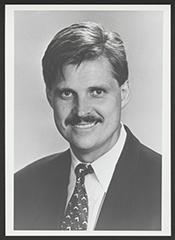 Rep. Todd Tiahrt (R-KS)