Mr. Speaker, and colleagues, good evening, aloha and mabuhay! I rise tonight, on this occasion of national Filipino Veterans Action Day, to express my strong and affectionate support for our great…
Mr. Speaker, and colleagues, good evening, aloha and mabuhay! I rise tonight, on this occasion of national Filipino Veterans Action Day, to express my strong and affectionate support for our great Filipino-American community, as well as for our honored Filipino veterans, both here and in the Philippines, who are so well represented by the American Council on Filipino Veterans, and to highlight just some of the challenges these communities still face and the opportunities we have to address them.
First let us remember that the relationship between the Philippines and our United States has never been stronger. Our modern-day bond began after the 1898 Spanish American War, continued through the commonwealth period into 1946, and strengthened when the independent Republic of the Philippines came into existence on July 4th of that year. For nearly 40 years, from 1907 to 1946, the Philippines in fact was represented in the U.S. Congress through nearly 15 different resident commissioners. Currently, we have a Filipino-American, Congressman Bobby Scott, representing the 3rd District of Virginia. And one year ago, I was proud to be a charter member of the Congressional Philippines Caucus, which today boasts over seventy members.
Apart from the Philippines' continuing vital role in U.S. national security and economic interests in the Asia-Pacific region, our country also has a special relationship with the people of the Philippines. Many have migrated to the United States, in particular my home state of Hawaii, which commemorates the 100th anniversary of our first Filipino immigrants in 2006.
In fact, there are now nearly 2.5 million Filipino-Americans, with significant populations in California, Hawaii, Illinois, New York, New Jersey, Washington, Texas, and Florida. In Hawaii alone there are nearly 300,000 Filipino-Americans, including roughly 140,000 in my Second Congressional District, the largest number of any congressional district in our country.
This community's contributions just in Hawaii are notable, in all facets of our society, from politics to business, from teaching to sports and movie stars, you name it. Former Hawaii Governor Ben Cayetano was the first Filipino-American governor ever elected in the United States; our state legislature today has 12 members: 6 senators and 6 representatives. Angela Baraquio became Miss America in 2001. We had Ben Agbayani in professional baseball and Tia Carrera in Hollywood. And let us not forget native daughters Jasmine Trias and Camile Velasco, two of just twelve of 2004's American Idol final contestants.
But perhaps the most vital and painful contribution of Filipinos to our country was the service, and sacrifice, of our Filipino veterans, who fought alongside our troops in World War II. Their heroic efforts were indispensable to the liberation of the Philippines led by General MacArthur and thus to Allied success in that great conflagration, and earned them a place in legend at the same table as, for example, our Japanese-Americans' 100th Infantry Battalion/442nd Regimental Combat Team.
Therefore, the contribution of the American Coalition for Filipino Veterans to designate today as Filipino Veterans Action Day is invaluable to assuring that we never forget. There have been similar efforts in Hawaii from community leaders like Hawaii State Representative Jun Abinsay, Joe Gonzales and Artemio Caleda, former and new presidents, respectively, of the World War II Fil-Am Vets and Ladies Auxilliary Hawaii Chapter, and Domingo Los Banos, a Sergeant with the 1st Filipino Infantry Regiment, U.S. Army, who later worked collaboratively with many others in Hawaii and the mainland in molding that great documentary on the Filipino veterans: ``An Untold Triumph.''
Let me turn now from what has been to what needs to be. Specifically, there are two issues which I believe Congress must address for both Filipino veterans and our Filipino-American community at large. One is veterans' benefits and the other is immigration.
veterans benefits
We know that in 1941, President Franklin Delano Roosevelt made a promise to the members of the Philippine Army and the Philippine Scouts who had fought and would fight for the Allies in World War II. Because they had made and would make the same sacrifices as U.S. servicemembers, President Roosevelt promised that they would receive the same veteran's benefits as those received by American veterans.
However, in the spring of 1946, just one year after the death of our 32nd President, the United States Congress went back on its promise. And that injustice stands uncorrected from that day to this, as these veterans pass increasingly from this earth along with their comrades- in-arms.
Last year, we did make some measure of progress by enacting into law H.R. 2297, legislation increasing VA benefits for U.S. resident Filipino veterans and making New Philippine Scouts living in the U.S. eligible for burial in VA national cemeteries. The House also passed H.R. 2357, which would provide VA nursing home and medical services to Commonwealth Army veterans and New Philippine Scouts residing in the U.S., assuming they-meet the same eligibility requirements as U.S. veterans.
But this is clearly not enough. That is why I am a cosponsor of H.R. 677, the Filipino Veterans Equity Act, which will deem all members of the Philippine Scouts and Philippine Army as qualified to receive the full benefits denied them nearly six decades ago.
As Secretary of Veterans' Affairs Anthony J. Principi wrote: ``The United States is indebted to Filipino veterans, whose heroism and self- sacrifice helped allies emerge victorious from World War II.'' As we all know, our Filipino World War II veterans are entering the sunset years of their lives. I implore my colleagues to get this bill out of committee and bring it to the floor for a vote this year.
immigration
Our country has benefited from the fruits of a century-plus influx of Filipinos as new and productive citizens, and we can and should continue this rich heritage. However, our overall immigration policy has fallen particularly harshly and unfairly on legitimate Filipino immigration of late.
For example, in 1990, we provided a waiver from certain naturalization requirements for Filipino veterans, and many thereafter became proud citizens our country. But a huge gap was created when we did not also permit naturalization of the sons and daughters of these same veterans.
These are real-life issues, for the stories of families who have waited years to be reunited are heartbreaking. For example, a veteran and his wife living in Hawaii filed immigration petitions for two of their six adult children; they have waited over ten years for a visa to be issued to either. Another veteran petitioned successfully for his wife's immigration visa, but has not been as successful with the applications for their five adult children. Again, this family has been holding on for ten years with the hope that they will one day live in the U.S. as a complete family.
H.R. 3587, a bill I introduced in November of last year, would provide these sons and
daughters with priority in their respective immigration categories. I urge its passage.
Two other bills I have introduced also would correct deficiencies in our immigration system which impact Filipino-Americans disproportionately. H.R. 3306, The Compassionate Visitor Visa Act, would facilitate the temporary admission of nonimmigrant aliens in circumstances of family emergency of U.S. citizens or permanent residents. H.R. 4018, introduced yesterday, would ensure that family members who have petitioned to immigrate into the United States are not penalized as a result of an award of citizenship to a sponsoring parent or spouse.
Both bills recognize the basic concept that our country can ensure our national security, while providing flexibility for immigrants from certain countries that have longstanding close relationships with our country. The Philippines is certainly very high on that list.
In summary, Mr. Speaker, both Filipino veterans and our larger Filipino-American community have contributed immensely to our country, and I believe that the best is yet to come. On this Filipino Veterans Action Day, let us recognize that we do what is right for both the past and the future by acknowledging their contributions and committing ourselves to the unfinished business at hand.
Mahalo!
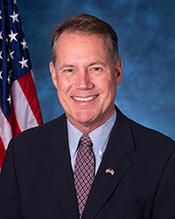 Rep. Ed Case (D-HI)