H.R. 3513House108th Congress (2003-2005)In Committee
Elder Fall Prevention Act of 2003
To amend the Public Health Service Act to direct the Secretary of Health and Human Services to expand and intensify programs with respect to research and related activities concerning elder falls, and for other purposes.
Sponsored by 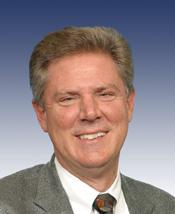 Rep. Frank Pallone, Jr. (D-NJ)
Introduced November 18, 2003
Legislative Activity
Stay on top of the latest movement without scrolling through every action
HouseCommittee
Latest Action
Referred to the Subcommittee on Health.
December 4, 2003
View full timeline
HouseIntro Referral
Introduced in House
November 18, 2003
HouseIntro Referral
Referred to the House Committee on Energy and Commerce.
November 18, 2003
Bill Text
Latest available legislative text
Introduced in HouseIssued November 18, 2003
        [Congressional Bills 108th Congress]
[From the U.S. Government Publishing Office]
[H.R. 3513 Introduced in House (IH)]

108th CONGRESS
1st Session
H. R. 3513

To amend the Public Health Service Act to direct the Secretary of
Health and Human Services to expand and intensify programs with respect
to research and related activities concerning elder falls, and for
other purposes.

_______________________________________________________________________

IN THE HOUSE OF REPRESENTATIVES

November 18, 2003

Mr. Pallone introduced the following bill; which was referred to the
Committee on Energy and Commerce

_______________________________________________________________________

A BILL

To amend the Public Health Service Act to direct the Secretary of
Health and Human Services to expand and intensify programs with respect
to research and related activities concerning elder falls, and for
other purposes.

Be it enacted by the Senate and House of Representatives of the
United States of America in Congress assembled,

SECTION 1. SHORT TITLE.

This Act may be cited as the ``Elder Fall Prevention Act of
2003''.

SEC. 2. FINDINGS.

The Congress finds as follows:
(1) Falls are the leading cause of injury deaths among
people over 65.
(2) By 2030, the population of individuals who are 65 years
of age or older will double. By 2050, the population of
individuals who are 85 years of age or older will quadruple.
(3) In 2000, falls among elderly individuals accounted for
10,200 deaths and 1,600,000 emergency department visits.
(4) Sixty percent of fall-related deaths occur among
persons 75 and older.
(5) Twenty-five percent of elderly persons who sustain a
hip fracture die within 1 year.
(6) Hospital admissions for hip fractures among the elderly
have increased from 231,000 admissions in 1988 to 332,000 in
1999. The number of hip fractures is expected to exceed 500,000
by 2040.
(7) Annually, more than 64,000 individuals who are over 65
years of age sustain a traumatic brain injury as a result of a
fall.
(8) Annually, 40,000 individuals who are over 65 years of
age visit emergency departments with traumatic brain injuries
suffered as a result of a fall, of which 16,000 of these
individuals are hospitalized and 4,000 of these individuals
die.
(9) The rate of fall-induced traumatic brain injuries for
individuals who are 80 years of age or older increased by 60
percent from 1989 to 1998.
(10) The estimated total cost for non-fatal traumatic brain
injury-related hospitalizations for falls in individuals who
are 65 years of age or older is more than $3,250,000,000. Two-
thirds of these costs occurred among individual who were 75
years of age or older.
(11) The costs to the Medicare and Medicaid programs and
society as a whole from falls by elderly persons continue to
climb much faster than inflation and population growth. Direct
costs alone will exceed $32,000,000,000 in 2020.
(12) The Federal Government should devote additional
resources to research regarding the prevention and treatment of
falls in residential as well as institutional settings.
(13) A national approach to reducing elder falls, which
focuses on the daily life of senior citizens in residential,
institutional, and community settings is needed. The approach
should include a wide range of organizations and individuals
including family members, health care providers, social
workers, architects, employers and others.
(14) Reducing preventable adverse events, such as elder
falls, is an important aspect to the agenda to improve patient
safety.

SEC. 3. PURPOSES.

The purposes of this Act are--
(1) to develop effective public education strategies in a
national initiative to reduce elder falls in order to educate
the elders themselves, family members, employers, caregivers,
and others who touch the lives of senior citizens;
(2) to expand needed services and gain information about
the most effective approaches to preventing and treating elder
falls; and
(3) to require the Secretary of Health and Human Services
to evaluate the effect of elder falls on the costs of the
Medicare and Medicaid programs and the potential for reducing
costs by expanding education, prevention, and elderly
intervention services covered or sponsored by these two
programs.

SEC. 4. AMENDMENT TO PUBLIC HEALTH SERVICE ACT.

Title III of the Public Health Service Act (42 U.S.C. 241 et seq.)
is amended by adding at the end the following part:

``PART R--PREVENTION OF ELDER FALLS

``SEC. 399AA. PUBLIC AND PROFESSIONAL EDUCATION.

``(a) In General.--Subject to the availability of appropriations,
the Secretary shall--
``(1) oversee and support a three-year national education
campaign to be carried out by the National Safety Council to be
directed principally to elders, their families, and health care
providers and focusing on ways of reducing the risk of elder
falls and preventing repeat falls;
``(2) provide grants to qualified organizations and
institutions for the purpose of organizing State-level
coalitions of appropriate State and local agencies, safety,
health, senior citizen and other organizations to design and
carry out local education campaigns, focusing on ways of
reducing the risk of elder falls and preventing repeat falls;
and
``(3) provide grants and contracts to qualified
organizations and institutions for the purpose of providing
state-of-the-art continued education to health and allied
health professionals to effect geriatric fall prevention.
``(b) Definition.--For purposes of this section, the term `allied
health professionals' has the meaning given such term in section 799B.

``SEC. 399AA-1. RESEARCH.

``(a) In General.--Subject to the availability of appropriations,
the Secretary shall--
``(1) conduct and support research to--
``(A) improve the identification of elders with a
high risk of falls;
``(B) improve data collection and analysis to
identify fall risk and protective factors;
``(C) improve strategies that are proven to be
effective in reducing subsequent falls by elderly fall
victims;
``(D) expand proven interventions to prevent elder
falls;
``(E) improve the diagnosis, treatment, and
rehabilitation of elderly fall victims; and
``(F) assess the risk of falls occurring in various
settings.
``(2) conduct and support research concerning barriers to
the adoption of proven interventions with respect to the
prevention of elder falls (such as medication review and vision
enhancement); and
``(3) evaluate the effectiveness of community programs to
prevent assisted living and nursing home falls by elders.
``(b) Administration.--In carrying out subsection (a), the
Secretary shall--
``(1) conduct research and surveillance activities related
to the community-based and populations-based aspects of elder
falls prevention through the Director of the Centers for
Disease Control and Prevention;
``(2) conduct research related to elder fall prevention in
health care delivery settings and clinical treatment and
rehabilitation of elderly fall victims through the Director of
the Agency for Healthcare Research and Quality; and
``(3) ensure the coordination of the activities described
in paragraphs (1) and (2).
``(c) Grants.--The Secretary shall award grants and contracts to
qualified organizations and institutions to enable such organizations
and institutions to provide professional education for physicians and
allied health professionals in elder fall prevention. In awarding these
grants and contracts, the Secretary shall give appropriate priority to
projects that show proven capacity to be self supporting within two
years after the onset of the project.

``SEC. 399AA-2. DEMONSTRATION PROJECTS.

``(a) In General.--Subject to the availability of appropriations,
the Secretary, acting through the Director of the Centers for Disease
Control and Prevention and in consultation with the Director of the
Agency for Healthcare Research and Quality, shall carry out the
following:
``(1) Oversee and support demonstration and research
projects to be carried out by the National Safety Council in
the following areas:
``(A) A multi-State demonstration project assessing
the utility of targeted elder-falls risk screening and
referral programs.
``(B) Programs targeting newly-discharged fall
victims who are at a high risk for second falls, which
shall include, but not be limited to modification
projects for elders with multiple sensory impairments,
video and web-enhanced fall prevention programs for
caregivers in multifamily housing settings, and
development of technology to prevent and detect falls.
``(C) Private sector and public-private
partnerships, involving home remodeling, home design
and remodeling (in accordance with accepted building
codes and standards) and nursing home and hospital
patient supervision.
``(D) Private sector and public-private
partnerships to develop technology to prevent falls and
prevent or reduce injuries if falls occur.
``(E) Hospital-based geriatric fall prevention and
treatment centers.
``(F) Medicaid sponsored community projects for
comprehensive geriatric fall prevention of the type
recently adopted by the States of Pennsylvania, New
York, and Florida whereby Medicaid elders are
comprehensively screened, counseled, referred, case
managed, and otherwise so treated as to reduce hospital
admissions for fall related injuries by 60 percent or
more.
``(G) Provide grants to not less than four States
and to four hospitals to expand the programs identified
in subparagraphs (E) and (F). In selecting State
grantees under this subparagraph, the Secretary shall
give appropriate priority to States that have adopted
legislation that either--
``(i) adopts Medicaid-sponsored
comprehensive fall prevention projects; or
``(ii) requires allied health professional
licensing boards to provide at least 1 hour of
continuing education per year on geriatric fall
prevention.
In all demonstration projects under this paragraph, the
Secretary shall give appropriate priority to projects that show
proven capacity to be self supporting within 2 years of the
onset of the project.
``(2)(A) Provide grants and contracts to qualified
organizations and institutions to design and carry out elder
falls prevention programs in residential and institutional
settings.
``(B) Provide one or more grants to one or more qualified
applicants in order to carry out a multi-State demonstration
project to implement elder falls prevention programs targeted
toward multi-family residential settings with high
concentrations of elders, including identifying high risk
populations, evaluating residential facilities, conducting
screening to identify high risk individuals, providing pre-fall
counseling, coordinating services with health care and social
service providers and coordinating post-fall counseling,
treatment, and rehabilitation.
``(C) Provide one or more grants to qualified applicants to
conduct evaluations of the effectiveness of the demonstration
projects in this section.
``(b) Definition.--For purposes of this section, the term
`Medicaid' means the program under title XIX of the Social Security
Act.

``SEC. 399AA-3. AUTHORIZATION OF APPROPRIATIONS.

``(a) In General.--In order to carry out the provisions of this
part, there are authorized to be appropriated--
``(1) to carry out the national public education provisions
described in section 399AA(1), $5,000,000 for each of fiscal
years 2004 through 2006;
``(2) to carry out the State public education campaign
provisions of section 399AA(2), $4,000,000 for each of fiscal
years 2004 through 2006;
``(3) to carry out the professional and educational
campaign provision of section 399AA(3), $5,000,000 for each of
fiscal years 2004 through 2006;
``(4) to carry out research projects described in section
399AA-1, $5,000,000 for each of fiscal years 2004 through 2006;
``(5) to carry out the demonstration projects described in
section 399AA-2(1), $11,000,000 for each of fiscal years 2004
through 2006; and
``(6) to carry out the demonstration and research projects
described in section 399AA-2(2), $8,000,000 for each of fiscal
years 2004 through 2006.
``(b) Allocation.--In the case of each program for which an
authorization of appropriations is established in subsection (a) and
under which program the Secretary is authorized to make awards of
grants or contracts to private entities, the Secretary shall reserve
from the amount appropriated under such subsection for the program not
less than 30 percent for making such awards.''.

SEC. 5. REVIEW OF REIMBURSEMENT POLICIES.

(a) In General.--The Secretary of Health and Human Services shall
undertake a review of the effects of elder falls on the costs of the
programs under titles XVIII and XIX of the Social Security Act
(referred to in this section as the ``Medicare'' and ``Medicaid''
programs, respectively) programs and the potential for reducing costs
by expanding services covered by these two programs. This review shall
include a review of the reimbursement policies of Medicare and Medicaid
in order to determine if additional fall-related education, prevention,
and early prevention services should be covered or reimbursement
guidelines should be modified.
(b) Report.--Not later than 18 months after the date of the
enactment of this Act, the Secretary of Health and Human Services shall
submit to the Congress a report describing the findings of the
Secretary in conducting the review under subsection (a).
<all>