To suspend temporarily the duty on 486 paint based on aqueous vinyl polymer.

Legislative Activity
Stay on top of the latest movement without scrolling through every action
Referred to the Subcommittee on Trade.
December 8, 2003
View full timeline
Introduced in House
November 18, 2003
Referred to the House Committee on Ways and Means.
November 18, 2003
Floor Debate
12 membersWhat members said about H.R. 3518 on the floor
 SB
SB LS
LS FJS
FJS CAG
CAG HLB+7
HLB+7
Floor Debate
12 membersWhat members said about H.R. 3518 on the floor
Mr. Speaker, I appreciate the gentleman's good work on this. The act we are approving today continues a strong policy of continuing local-to-local service. It also pushes the satellite industry to be…
Mr. Speaker, I appreciate the gentleman's good work on this.
The act we are approving today continues a strong policy of continuing local-to-local service. It also pushes the satellite industry to be as competitive as possible with cable.
For the first time, the bill will allow satellite carriers to deliver significantly viewed stations from nearby markets as cable now is able to do. In any given community, the significantly viewed stations that the direct broadcast service will be allowed to carry are exactly the same ones that cable can carry.
The act imposes a variety of limits designed to protect free, local, over-the-air broadcasting. For example, the only subscribers who can receive significantly viewed stations are those who are already receiving their own local stations by satellite.
Nor can the direct broadcast service company offer a digital signal of a significantly viewed affiliate of, say, CBS to a subscriber to which it offers only the analog feed of the local CBS station or carry the significantly viewed CBS station with more digital broadband than the local station.
There also are some pretty strong provisions in this. If the satellite carrier abuses this new regime by carrying an unauthorized station, it will be both subject to swift and severe penalties at the FCC and will forfeit its compulsory license under the Copyright Act which is conditioned on compliance with all applicable FCC rules regulations and authorization.
I had been impressed with the satellite industry and how it has created this industry, but they also now need to be fair players in the marketplace.
As Congress made clear when we passed the 1999 Satellite Home Viewer Improvement Act (``SHVIA''), it is far better for local communities if satellite carriers offer their customers local television stations-- including network
stations--rather than TV stations from other cities. Put another way, local-to-local service is the right way, and--except when there is no other choice--distant network stations are the wrong way, to deliver broadcast programming by satellite. Local-to-local fosters localism and helps keep free, over-the-air television available to everyone, while delivery of distant network stations to households that can receive their own local stations (whether over the air or via local-to-local service) has just the opposite effect.
The pro-local-to-local policy of the 1999 SHVIA has been an astounding success. The satellite industry has grown spectacularly since then, spurred--as the satellite industry has many times reminded us--by the availability of local-to-local service. In fact, in the past year, the number of cable subscribers has actually shrunk, while satellite carriers continue to expand at a rapid clip.
Recognizing that local-to-local is not just good policy but good business, the DBS firms have expanded local-to-local service at a rate far faster than the industry predicted a few years ago. As to analog service, EchoStar recently announced that it was serving no fewer than 150 local markets, covering more than 90 percent of the television households in the United States. And for its part, DirecTV expects to offer local-to-local in at least 130 local markets by the end of 2004-- and has committed to offering local-to-local in every market as soon as 2006, and no later than 2008.
I want to commend DirecTV for its commitment to provide service to all 210 Designated Market Areas. I hope that EchoStar is on a similar path and will provide more certainty as to when this might occur just as DirecTV has done. It is my hope that this service is provided sooner rather than later so that those satellite subscribers in Lafayette, Indiana will be able to receive their local affiliate station and achieve true local-into-local service.
But there is still more: DirecTV announced just a few weeks ago that it plans to offer high-definition local-to-local service in many markets over the next few years. With the first of its new satellites, DirecTV plans to offer during 2005 more than 500 local high-definition channels, enabling it to offer local HD programming to the majority of U.S. television households. And with the launch of still more new satellites, DirecTV will be able to add even more local HD markets in the future. Of course, in the highly competitive world of multichannel television providers, there is little doubt that DirecTV's competitors will be driven to try to match--or exceed--DirecTV's local-to-local offerings. And that is all to the good.
The Act we are approving today continues the strong policy of encouraging local-to-local service and pushing the satellite industry to be as competitive as possible with cable. For the first time, the bill will allow satellite carriers to deliver ``significantly-viewed'' stations from nearby markets, as cable is now able to do. In any given community, the ``significantly viewed'' stations that DBS will be allowed to carry are exactly the same ones that cable can carry. The Act imposes a variety of limits designed to protect free, local, over- the-air broadcasting: For example, the only subscribers who can receive significantly-viewed stations are those who already receive their own local stations by satellite. (Since cable always offers local stations, this rule ensures a level playing field.) Nor can a DBS company offer a digital signal of a significantly-viewed affiliate of, say, CBS, to a subscriber to which it offers only the analog feed of the local CBS station, or carry a significantly-viewed CBS station with more digital bandwidth than the local CBS station (unless the carrier offers the entire bandwidth of the local digital station).
If a satellite carrier abuses this new regime--by carrying unauthorized stations--it will both be subject to swift and severe penalties at the FCC, and will forfeit its compulsory license under the Copyright Act, which is conditioned on compliance with all applicable FCC rules, regulations, and authorizations.
Mr. Speaker, first of all, I thank the gentleman from Wisconsin (Mr. Sensenbrenner), the chairman of the Committee on the Judiciary, for yielding me time. Mr. Speaker, I support the manager's…
Mr. Speaker, first of all, I thank the gentleman from Wisconsin (Mr. Sensenbrenner), the chairman of the Committee on the Judiciary, for yielding me time.
Mr. Speaker, I support the manager's amendment to H.R. 4518, the Satellite Home Viewer Extension and Reauthorization Act of 2004 which I introduced.
I, too, would like to acknowledge the contributions and support of the gentleman from Texas (Chairman Barton) and our colleagues on the Committee on Energy and Commerce.
Without the hard work of the gentleman from Michigan (Mr. Upton), sitting to my right, the gentleman from Michigan (Mr. Dingell) and the gentleman from Massachusetts (Mr. Markey), a bill this complex would not have been able to move under suspension.
Also, I want to especially thank the gentleman from Wisconsin (Chairman Sensenbrenner) for his leadership, as well as recognize the personal effort and contributions of both the gentleman from Michigan (Mr. Conyers) and the gentleman from California (Mr. Berman).
This bill will reauthorize the Copyrights Act's distant-signal license, which benefits the satellite industry. Because of this bill, Americans will continue to be able to receive television programming over satellite.
This legislation strikes a balance between the interests of intellectual property owners and the interests of the satellite providers who distribute copyrighted programming.
With time running out this session, it is now critically important that H.R. 4518 be enacted without delay.
The bill makes important changes to both the Copyright Act and the Communications Act to ensure that consumers will have greater choices in programming; that satellite providers have greater freedom to deliver the content consumers desire; that free over-the-air local broadcasters have the opportunity to serve needs that are specific to their communities; and that copyright owners receive the first adjustment to their compensation in 5 years.
In addition, the bill requires the Copyright Office to complete a study and provide recommendations on whether Congress should take further steps to create more parity with the cable compulsory license.
Mr. Speaker, I would also like to recognize the hard work and countless hours that were dedicated by the Copyright Office's Bill Roberts, as well as by David Whitney of my staff, Sampak Garg of the gentleman from Michigan's (Mr. Conyers) staff, and Alec French from the gentleman from California's (Mr. Berman) staff.
Mr. Speaker, H.R. 4518 is a carefully crafted bill that promotes the interests of consumers, satellite providers, broadcasters and copyright owners. It is a fair and balanced bill that deserves the support of this House.
Mr. Speaker, I would like to insert a copy of the September 23 letter by DirecTV, EchoStar, the Motion Picture Association, Major League Baseball into the Record, as well as an October 5 letter by Eddie Fritts of the National Association of Broadcasters that endorses H.R. 4518 at this point.
National Association of
Broadcasters,
Washington, DC, October 5, 2004.
Dear Representative: I understand that this week the House
of Representatives will consider H.R. 4518, the Satellite
Home Viewer Extension and Reauthorization Act. On behalf of
your local television stations, I am writing to urge you to
support this critical legislation, which will help preserve
localism in television and protect the interests of the
American viewer.
The legislation enjoys widespread, bipartisan support. The
bill is the result of extensive compromise and negotiation
between Members of the two Committees of jurisdiction, the
Judiciary Committee and the Energy and Commerce Committee and
is carefully crafted to address a range of satellite
television issues in a pro-consumer fashion. For instance:
The bill would create incentives for satellite subscribers
to gradually shift to selecting their local television
stations in their programming packages.
It would phase-out a discriminatory ``2-dish'' practice
which relegates some local television stations to a second
dish, where they are all but invisible to satellite
subscribers.
The bill would give satellite providers parity with cable
by allowing them to import
``significantly viewed'' out-of-market stations from
adjoining markets.
The legislation balances this new privilege with key
safeguards ensuring such a practice is not abused to the
detriment of local television and consumers.
The bill provides a long needed update to copyright rates,
increasing compensation for copyright holders.
Some have argued the legislation should be modified to
include a ``Digital White Areas'' provision, which would
permit satellite companies to import national, distant,
digital network digital networks from Los Angeles or New York
into local television markets, supplanting local television
stations. However, the vast majority of industry
stakeholders, including local broadcast stations, the
television networks, cable operators, and DirecTV have
rejected this approach and are instead working to see local
high-definition digital television available on cable and
satellite systems. We urge you to reject the Digital White
Areas proposal as well.
Ultimately, as the product of an open process of hearings
and mark-ups in both Committees of jurisdiction, H.R. 4518
would reauthorize the Satellite Home Viewer Improvement Act
in a manner consistent with broadcast television localism. I
strongly urge you to pass H.R. 4518 as written. The measure
will take import strides in protecting the interests of
consumers and furthering localism in television.
Sincerely,
Eddie Fritts.
Mr. Speaker, I ask unanimous consent that the gentleman from Texas (Mr. Barton) and I be allowed to yield portions of the time that has been yielded to us by the majority leader. Mr. Speaker, I yield…
Mr. Speaker, I ask unanimous consent that the gentleman from Texas (Mr. Barton) and I be allowed to yield portions of the time that has been yielded to us by the majority leader.
Mr. Speaker, I yield myself 6 minutes.
Mr. Speaker, I thank the majority leader for calling up this bill which is appropriately named in tribute to our colleague, the gentleman from Louisiana (Mr. Tauzin), who will retire at the end of this year after having served the citizens of Louisiana for more than a quarter century.
This bill is a product of a remarkable collaborative effort that has involved members of the Committee on the Judiciary and Committee on Energy and Commerce. I would like to especially thank the gentleman from Texas (Mr. Barton) for his excellent cooperation through this entire process.
The manager's amendment to the bill, which the Committee on the Judiciary approved unanimously on July 7, 2004, incorporates H.R. 4501 which was the Committee on Energy and Commerce version of the bill reported on July 22.
The manager's amendment incorporates important refinements to both the copyright and communications acts. These provisions are designed to extend for an additional 5 years the license that permits satellite TV companies such as DirecTV and EchoStar to retransmit to their subscribers TV programming shown on distant network stations and superstations. The extension will ensure that Americans who live in rural areas where they have trouble receiving signals from the regular broadcast stations will continue to have access to network TV programming.
Significantly, this bill does not simply preserve the status quo for the statutory period. Instead, the bill changes both the copyright and communications acts to ensure, first, that consumers will have greater choice in programming; second, that satellite providers will have greater freedom to deliver the content consumers desire; third, that free, over-the-air local broadcasters will have the opportunity to serve needs that are specific to their communities; and, fourth, the copyright owners will enjoy the first compulsory royalty fee adjustment in nearly 5 years.
The amendments have been carefully negotiated and crafted. They have benefited from an open process which has involved at least four committee hearings, the introduction and mark-up of two committee- reported bills to the House, and a willingness to consider numerous refinements to achieve the right policy and to gain consensus.
As a result, the bill is supported by numerous organizations including the
National Association of Broadcasters, numerous local broadcast stations, and the Capital Broadcasting Company. In addition, the royalty provision contained in the judiciary title has been specifically endorsed by effective stakeholders. This is a culmination of a painstaking effort under the leadership of the gentleman from Texas (Mr. Smith) and the ranking member, the gentleman from California (Mr. Berman), who encouraged affected parties to negotiate a voluntary agreement.
As a result, the section 119 rate provisions contained in the manager's amendment are now supported by the two largest DBS providers, DirecTV and EchoStar; their trade association, the Satellite Broadcasting and Communications Association, and major copyright owners including the Motion Picture Association and the Office of the Commission of Baseball. Together those entities represent the copyright owners who receive the overwhelming majority of copyright royalties paid under the license and the satellite carriers who make the vast majority of such payments.
In return for extending the license to satellite companies, the bill does require the beneficiaries to accept certain reporting requirements. These requirements are designed to protect the legitimate interests of copyright owners and free over-the-air broadcasters.
I would like to take a moment to acknowledge the contributions of the subcommittee chairman, the gentleman from Texas (Mr. Smith). We could not have reached this point without his steady work. I also want to thank the gentleman from Texas (Mr. Barton) for all his help and support during the process. Thanks also go to other key players, the gentleman from Michigan (Mr. Upton), the gentleman from Michigan (Mr. Conyers), the gentleman from California (Mr. Berman), the gentleman from Michigan (Mr. Dingell), and the gentleman from Massachusetts (Mr. Markey), all of whom have made significant contributions to this effort. I appreciate all their efforts.
I am pleased that we have been able to work together in developing this joint bill, and I look forward to building on this success next year. The bill promotes the interests of consumers, satellite providers, broadcasters, and copyright owners. It is a balanced bill and deserves the support of this House.
Mr. Speaker, I reserve the balance of my time.
Mr. Speaker, I yield the balance of my time to the gentleman from Texas (Mr. Smith), the chairman of the Subcommittee on Courts, the Internet, and Intellectual Property.
(Mr. SMITH of Texas asked and was given permission to revise and extend his remarks, and include extraneous material.)
Mr. Speaker, I yield myself as much time as I may consume. Mr. Speaker, I rise in support of H.R. 4518, the Satellite Home Viewer Extension Reauthorization Act of 2004. I would like to thank the…
Mr. Speaker, I yield myself as much time as I may consume.
Mr. Speaker, I rise in support of H.R. 4518, the Satellite Home Viewer Extension Reauthorization Act of 2004. I would like to thank the gentleman from Texas (Chairman Barton) and the gentleman from Wisconsin (Chairman Sensenbrenner), the gentleman from Michigan (Ranking Member Dingell) and the gentleman from Michigan (Ranking Member Conyers) and the subcommittee chairmen and ranking
members for their hard work on this piece of legislation.
H.R. 4518 is a comprehensive, bipartisan bill crafted jointly by the Committee on Energy and Commerce and the Committee on the Judiciary that will preserve localism, protect consumer privacy and increase competition between cable and satellite companies.
Local broadcasters play a vital role in providing to the communities they serve local news and weather, information on community events and entertainment. In 1999, Congress recognized the important role of local broadcasters when it last authorized this act. Specifically, the act requires satellite companies to offer in a nondiscriminatory manner all local broadcast signals once the satellite carriers begin offering local-into-local service in a market. This requirement, dubbed ``carry one, carry all,'' was the cornerstone of the act.
Unfortunately, in several markets, one satellite company has refused to comply with this requirement. For several years, I have heard complaints from local Spanish language broadcasters that one particular satellite company has refused to carry Spanish language broadcasts on the same dish on which it carries the signals of the major television networks. In fact, in my own home State of Texas nine of the eleven stations bumped by that particular satellite company to a second dish are Spanish language stations.
In these two-dish markets, customers do not receive all of the channels for which they have paid if they do not ask that particular company for the second dish. This is unfair to consumers, and it harms the viability of local broadcasters because fewer people are watching their channels.
The negative effects of a two-dish practice are made even greater by a failure to inform many customers of a particular company of the need for a second dish. This practice is wrong. It undermines basic principles of localism by essentially giving Spanish language and other minority-themed stations a second-class status in their own home markets.
I thank my colleagues for including language in this bill that would put an end to this two-dish practice within 1 year. Forcing satellite providers to carry all local broadcast signals on one dish will finally ensure the equal treatment of all broadcasters.
Protecting the privacy of consumers who subscribe to satellite television is also very important. Although current law protects the privacy of persons who subscribe to cable television service, it does not protect those who subscribe to satellite service.
I commend the gentleman from Massachusetts (Mr. Markey) in particular for seeing to it that this bill extends to satellite subscribers the same privacy protections in effect for cable subscribers.
Finally, increasing competition between cable and satellite companies is an important goal of this act. Prior to the last reauthorization of the act, cable companies provided their customers with all of the local broadcast channels, but satellite companies were not permitted to do the same. Since Congress gave satellite companies the authority to provide local-into-local service in 1999, the number of subscribers to satellite has about doubled.
This legislation before us today makes further important strides in increasing parity which should lead to greater competition between cable and satellite. Right now, cable television companies can provide their subscribers with signals that are significantly viewed in a local market. Satellite television providers have no such authority. H.R. 4518 would fix this inequity by permitting satellite carriers of those same significantly viewed signals.
Mr. Speaker, this is a good bill that preserves local broadcasting, protects the privacy of satellite television service subscribers, and will provide a more level playing field for satellite companies on which to compete against cable providers. I support these goals and urge all Members to support this bill.
Mr. Speaker, I reserve the balance of my time.
Mr. Speaker, I yield 3 minutes to the gentleman from New York (Mr. Engel).
Mr. Speaker, I yield myself such time as I may consume.
Just briefly again, Mr. Speaker, this is a bill that makes good business sense and is a good deal for the consumer, standing for the proposition those are not mutually exclusive concepts.
Mr. Speaker, I have no further requests for time, and I yield back the balance of my time.
Mr. Speaker, I ask unanimous consent that the gentleman from Texas (Mr. Gonzalez) be allowed to control 10 minutes of my time. Mr. Speaker, I yield myself such time as I may consume. Mr. Speaker, I…
Mr. Speaker, I ask unanimous consent that the gentleman from Texas (Mr. Gonzalez) be allowed to control 10 minutes of my time.
Mr. Speaker, I yield myself such time as I may consume.
Mr. Speaker, I rise in support of H.R. 4518 and ask my colleagues to vote in favor of its passage. I am happy to join my friend from Wisconsin (Mr. Sensenbrenner), the chairman of the committee, the gentleman who rolled me yesterday, in supporting this legislation.
This bill is a must-pass piece of legislation. Its core provision re- authorizes the statutory license found in section 119 of the Copyright Act which is due to expire on December 31 of this year. The section 119 enables satellite television companies to retransmit distant superstation and network signals to the subscribers who cannot obtain comparable signals over the air.
Extension of the section 119 license is very important to many satellite TV subscribers who might otherwise lose access to a number of popular television stations. The section 119 license is also of great benefit to satellite TV companies as it provides them with the equivalent of a valuable government subsidy. It guarantees satellite companies the ability to retransmit copyrighted broadcast programming, without the permission of the copyright owners and to do so at a government set rate.
I support this extension of the section 119 license despite my longstanding opposition to statutory licensing of copyrighted works. Section 119 was originally enacted in order to help satellite television become competitive with cable television which benefits from an analogous license. With 22 percent of the pay TV market, it appears that satellite television has reached that goal. However, expiration of section 119 without simultaneous expiration of the analogous statutory license for cable television may upset that competitive balance. When Congress revisits this issue in 2009, it may reach a different conclusion or even decide to do away with both licenses. Until then, however, we should strive to maintain a competitive balance.
The legislation before us does far more than simply reauthorize the section 119 statutory license. It is a combination of two bills that emerged from the Committee on the Judiciary and the Committee on Energy and Commerce. As such, it is the culmination of a long, sometimes difficult but ultimately successful collaboration between our two committees.
I commend the chairmen of both committees, the Committee on Energy and Commerce and the Committee on the Judiciary, for their steady and inclusive stewardship throughout this collaborative effort. I leave it to my colleagues of the Committee on Energy and Commerce to describe the provisions of title II which fall in their jurisdiction. However, I do want to express my support for title II and in particular the single dish requirement contained therein.
This provision requires that satellite TV providers enable customers to obtain all local broadcast programming through a single satellite dish, rather than having to install two dishes. The one-dish requirement will prevent further de facto discrimination against broadcast stations carrying minority, religious, and public interest programming.
As for title I, I am pleased most of all by its royalty provisions. These provisions represent a marked improvement over the provisions found in the Judiciary-reported version of H.R. 4518. The bill before us today does not mandate any increase in royalty rates. Nor does it establish a specific royalty rate for the retransmission of distant signals. Rather, the royalty rate will be set through adoption of a voluntary industry agreement, or in the absence of an acceptable agreement, by a copyright arbitration royalty panel.
While I do not know its terms, I understand that a voluntary industry agreement on royalties has already been reached. EchoStar, DirecTV, the Satellite Broadcast Communications Associations, and the relevant copyright owners have written us a letter to this effect. The letter also expresses unequivocal support for the royalty provisions contained in the bill before us today. If no interested party raises a well- founded objection, the legislation directs the copyright office to expeditiously adopt the voluntary industry agreement.
The adoption of this agreement would represent perhaps the least contentious establishment of section 119 royalties since section 119 was first enacted. All involved deserve a great deal of credit for reaching a mutually acceptable agreement in such a compressed time frame.
Once again, Mr. Speaker, I note my support for H.R. 4518, as amended, and ask my colleagues to add their support.
Mr. Speaker, I reserve the balance of my time.
Mr. Speaker, I yield back the balance of my time.
Show 7 more
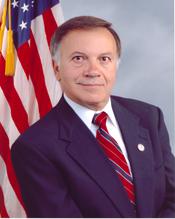
Mr. Speaker, I wish to express my views on the legislation before us today. This legislation includes a requirement for Echostar, better known as Dish Network, to eliminate the solution it developed…
Mr. Speaker, I wish to express my views on the legislation before us today.
This legislation includes a requirement for Echostar, better known as Dish Network, to eliminate the solution it developed to serve more Americans with local service than any other satellite TV company. The legislation would eliminate its ``two dish'' solution within 12 months. This requirement will cause consumer inconvenience and hamper the rollout of local programming. The ``two dish'' remedy maximizes the number of television markets that can receive local channels by utilizing the scarce spectrum available.
I believe a better route to dealing with the lack of spectrum, which I know is a priority for you, is for this legislation to include a provision similar to that of the Senate Commerce Committee. That committee voted to allow satellite TV providers to offer High Definition TV service to markets where a local broadcaster is not even offering a digital signal. As noted in the Digital Transition Coalition letter which I will also enter into the Record, the freed-up spectrum could be redeployed to our Nation's first responders, auctioned to wireless companies eager to offer new advanced services, and raise funds that could be returned to the taxpayer or put to paying off the debt.
I look forward to our continuing work on this legislation.
Digital Transition Coalition,
Washington, DC, October 4, 2004.
Hon. J. Dennis Hastert,
Speaker, House of Representatives,
U.S. Capitol, Washington, DC.
Dear Speaker Hastert: The Digital Transition Coalition is
writing to express its concern regarding the House
reauthorization of the Satellite Home Viewer Improvement Act
(SHVIA). While the legislation adopts rate increase
adjustments for content owners and allows satellite companies
to provide ``distant network signals'' to subscribers who
cannot receive ``over-the-air'' broadcast signals, it fails
to include the ``digital white area'' provision adopted by
the Senate Commerce Committee which would accelerate the
digital television transition. Without this provision,
millions of Americans, especially consumers in rural areas,
will have to wait even longer for digital and High-Definition
television and be denied the world of innovation derived from
freed-up spectrum.
H.R. 4501, approved by the Committee on Energy & Commerce,
did not include an important provision to speed up the return
of tens of billions of dollars of analog spectrum currently
held by broadcasters. Despite the fact that Congress years
ago set a 2006 deadline for broadcasters to return the analog
spectrum (in exchange for tens of billions of dollars of free
digital spectrum), it is clear that deadline will not be met.
As a result, consumers in more than 39 million U.S.
households (about 36 percent nationwide) will continue to be
deprived of receiving all their network signals in digital.
As taxpayer groups, consumer advocates and technology
leaders, our coalition has
strongly supported proposals to allow direct broadcast
satellite providers to offer a distant digital network signal
into local television markets where broadcasters are not
transmitting a full-power digital signal. We believe such a
measure is essential to provide market-based pressure on
local broadcasters to complete the digital transition and
return the public's valuable analog spectrum for other uses.
The satellite home viewer reauthorization legislation is
the vehicle to address this issue. The Senate Commerce
Committee, in its version of the satellite legislation,
adopted a ``digital white area'' provision that will help
provide the necessary impetus to speed up the digital
transition and serve the needs of millions of television
viewers who are disadvantaged by the current situation. In
contrast, the House Commerce Committee bill requests a
perfunctory report on the matter without any immediate
remedy.
As such an important issue for consumers and the economy,
we strongly urge that a digital white area provision be added
to the House legislation. We appreciate your consideration of
our request, and we look forward to continuing to work with
the Congressional leadership, the committee chairmen and
ranking members to further improve this legislation.
Sincerely,
Grover Norquist, Americans for Tax Reform; The Honorable
Andrea Seastrand, The California Space Authority; Tom Schatz,
Council for Citizens Against Government Waste; Charles Ergen,
EchoStar Communications Corporation; George Landrith,
Frontiers of Freedom; Andrew Jay Schwartzman, Media Access
Project; Gigi Sohn, Public Knowledge; Richard DalBello,
Satellite Broadcasting and Communications Association; Karen
Kerrigan, Small Business Survival Committee.
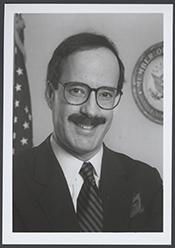
Mr. Speaker, I thank the gentleman for yielding time to me. And, Mr. Speaker, I am pleased to rise in strong support of this proconsumer legislation, the Satellite Home Viewers Extension and…
Mr. Speaker, I thank the gentleman for yielding time to me. And, Mr. Speaker, I am pleased to rise in strong support of this proconsumer legislation, the Satellite Home Viewers Extension and Reauthorization Act.
I also want to thank the chairman and ranking member of the Committee on Energy and Commerce for the manner in which this legislation moved through our committee. The Committee on Energy and Commerce moved through the process, it was completely open and bipartisan; and I thank the Chair for that.
The Satellite Home Viewer Improvement Act expires at the end of this year. Thus, we must act quickly to ensure our constituents continue to receive the services they enjoy.
This bill also does a great service to our communities by preserving and strengthening local broadcasting.
My interest in this legislation was piqued when I discovered that one of the two satellite companies was engaging in a discriminatory practice that forced 95 percent of their customers to pay for services they do not receive.
EchoStar's system requires two satellite dishes on a rooftop to be able to receive all of the local channels and other channels they offer. Nothing is wrong with that. It is how their technology works. However, EchoStar is discriminatory in choosing which local broadcasters would end up on the second dish which is inconvenient. Most often it is Spanish language, public and religious broadcasters.
On top of that, EchoStar does a poor job informing its customers of the need for a second dish, and the company requires a second technician to come out and install the second dish. The company states that only about 5 percent of their customers take the second dish, which means that 95 percent of customers are paying for services they do not receive.
This legislation requires all satellite companies to put all local channels on one of the two dishes. I think that is important, and I think it is a major breakthrough.
This provision is also key to the health of the satellite industry by setting the ground rules for providing local broadcast stations. Local- to-local has been a driving force in the satellite television industry's growth. In 1999, just prior to the establishment of the local-to-local compulsory license, the industry had 10.1 million subscribers. Only 4 years later, after the advent of local-to-local, the industry had more than doubled its subscriber base to 20.4 million.
Another key provision gives consumers of satellite TV service the same choices as cable subscribers. Specifically, the bill gives satellite the ability to import significantly viewed stations from adjoining markets. At the same time, the bill includes safeguards to ensure this new privilege is not abused to the detriment of local television and television viewers.
This means, for example, a satellite prescriber in Baltimore could soon be getting Washington, D.C., local stations if they are significantly viewed. For people who live in or near Baltimore and commute to D.C. to work, the traffic reports are obviously vital.
In closing, Mr. Speaker, this legislation enjoys widespread bipartisan support in Congress as well as the endorsement of nearly all key industry stakeholders, including local television stations, the television networks, cable operators, and DirecTV.

Mr. Speaker, I yield 1\1/2\ minutes to the gentleman from Indiana (Mr. Buyer), my friend and colleague, a member of the Subcommittee on Telecommunications and the Internet. (Mr. BUYER asked and was…
Mr. Speaker, I yield 1\1/2\ minutes to the gentleman from Indiana (Mr. Buyer), my friend and colleague, a member of the Subcommittee on Telecommunications and the Internet.
(Mr. BUYER asked and was given permission to revise and extend his remarks.)
Mr. Speaker, I yield myself such time as I may consume.
Mr. Speaker, today we are considering H.R. 4518, which is alternatively named the ``W.J. `Billy' Tauzin Satellite Television Act of 2004,'' in honor of our former chairman, Billy Tauzin. It is particularly fitting that this is named after Boudreaux friend, Billy Tauzin, since he was the chief architect of the regulatory landscape which promoted the creation of a vibrant satellite TV industry to the benefit of so many consumers across the country.
Mr. Speaker, our prayers remain with Billy Tauzin as he continues his fight against cancer, and I know that he is fighting with the same vim and vigor that characterizes his very able public service.
This bill reauthorizes certain expiring provisions in the communications and copyright acts. It also modernizes other provisions to increase parity and enhance competition between satellite and cable operations. And given that this bill affects both communications and copyright issues, the Committee on Energy and Commerce worked very closely with the House Committee on the Judiciary on a bipartisan basis in putting this bill together.
Procedurally, this bill combines the elements of H.R. 4501, which was reported by the House Committee on Energy and Commerce, with elements of H.R. 4518, which was reported by the House Committee on the Judiciary. I want to commend my colleagues on both committees, on both sides of the aisle, for their cooperation and dedication of this mission, particularly the gentleman from Wisconsin (Mr. Sensenbrenner), chairman of the Committee on the Judiciary; the gentleman
from Texas (Mr. Smith), chairman of the Subcommittee on Courts, the Internet, and Intellectual Property; and, obviously, the ranking member of the Committee on Energy and Commerce, the gentleman from Michigan (Mr. Dingell) and the ranking member of the Subcommittee on Telecommunications and the Internet, the gentleman from Massachusetts (Mr. Markey), for their very active work on this legislation.
This bill resulted from an extensive examination of satellite TV issues in our committee. The subcommittee on Telecommunications and the Internet held an oversight hearing on March 10, a legislative hearing on April 1, subcommittee markup to legislation on April 28, and the full committee markup to legislation on June 3 that would become H.R. 4501. As I recall, that bill passed in both the subcommittee and full committee on a voice vote. It was extensively bipartisan from the very start. And without a doubt, by extending these expiring provisions, increasing parity between satellite TV and cable operators, promoting competition between satellite TV and cable, the bill will enhance consumer choice and service.
Mr. Speaker, this bill builds upon the solid foundation laid by our friend Billy Tauzin. I commend this bill to my colleagues on both sides of the aisle and urge its passage.
Mr. Speaker, I yield back the balance of my time.
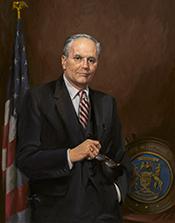
Mr. Speaker, I rise today in support of H.R. 4518, the Satellite Home Viewer Extension and Reauthorization Act of 2004. I congratulate Chairmen Barton and Sensenbrenner, Ranking Member Conyers and…
Mr. Speaker, I rise today in support of H.R. 4518, the Satellite Home Viewer Extension and Reauthorization Act of 2004. I congratulate Chairmen Barton and Sensenbrenner, Ranking Member Conyers and the subcommittee chairmen and ranking members of their hard work on this legislation. The task of combining separate Energy and Commerce and Judiciary Committee bills into a single product is never easy, but I am pleased with this bipartisan bill before us today. Let us hope that the other body will act with due haste to ensure that this legislation becomes law this year.
I note that the bill before us incorporates the language of both H.R. 4501 and H.R. 4518 was solely referred to the Committee on Energy and Commerce. H.R. 4518 was referred solely to the Committee on the Judiciary. The members of both committees worked long and hard on their respective bills. Accordingly, the legislative history on H.R. 4518 includes the legislative history of H.R. 4501.
The bill before us achieves three very critical goals. First, it will increase regulatory parity between cable and satellite providers, thereby strengthen satellite companies' ability to compete in the multichannel video marketplace. Currently, cable providers can offer their subscribers out-of-market television signals that are ``significantly viewed'' in the subscribers' local communities. Satellite companies, however, are prevented by law from offering to their subscribers the same signals. This bill would change the law to provide satellite companies an equal right to provide their subscribers those ``significantly viewed'' signals. This increased parity should help spur greater competition between cable and satellite providers and ultimately benefit consumers in the form of lower prices and better service.
Second, the act will protect consumers and foster localism by ensuring that satellite customers receive all of their local broadcast signals when these signals become available via satellite. Local broadcasters provide their communities with important local programming. Whether it is local news, weather, or community events, these broadcasters are there, on the ground serving their friends and neighbors. This idea of localism was recognized and fostered by Congress during the last reauthorization of this statute in 1999, through a provision called ``carry one, carry all.'' This policy mandates that a satellite provider, in a nondiscriminatory fashion, offer all local broadcast signals in a market if it offers one.
Finally, I am also pleased that this bill will help protect consumer privacy. This bill will force satellite carriers to comply with the same privacy obligations that already apply to cable television providers. Personally identifiable information will now be better protected.
Mr. Speaker, H.R. 4518 will encourage competition between cable and satellite. It also furthers the goal of localism and protects consumers. I urge my colleagues to support it.
Mr. Speaker, I rise in support of this legislation, of which I am an original cosponsor. I first would like to note the comity that went into drafting this bill. We worked with the Commerce Committee…
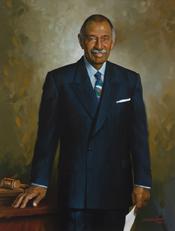
Mr. Speaker, I rise in support of this legislation, of which I am an original cosponsor. I first would like to note the comity that went into drafting this bill. We worked with the Commerce Committee on addressing the relevant issues based on jurisdiction. Further, Chairman Sensenbrenner and his staff worked diligently with us on drafting this legislation. I would particularly like to thank David Whitney, counsel to the majority, whose diligence and bipartisanship are the only reason we are here today.
In 1999, we passed the Satellite Home Viewer Improvement Act to allow satellite companies to retransmit distant network signals to customers who could not receive clear over-the-air television signals. Such companies have to pay a government-set rate to the broadcast copyright owners. While I had, and still have, hesitations about creating compulsory licenses that require content owners to sell their work for a set fee, I believe this license led to significant competition in programming distribution.
As a result of this policy decision, the satellite industry has dedicated significant technological and financial resources to expanding the choices available to consumers. I am certain we can all agree that is a good thing.
The 1999 law expires at the end of this calendar year, so we must reauthorize it. The bill before us extends the license for 5 years. Importantly, the bill goes beyond that in addressing the desires of consumers in that it permits the satellite companies to retransmit a significantly viewed local signal to a customer.
The bill also settles a gray area in terms of what satellite service customers can get when local-to-local satellite television is available. Under the new regime, current subscribers will be allowed to choose between the distant signal service or the local service. New customers would be provided with the local service.
Despite the benefits of this legislation and the work of the interested parties, much remains to be done in terms of providing complete television service across the country. I look forward to working with the content owners and satellite companies in making that happen.
I urge my colleagues to vote ``yes'' on this legislation.

Mr. Speaker, do we have the time allocated equally on both sides, or do I need to yield time to the minority? So the gentleman from Texas (Mr. Gonzalez) have 10 minutes? Mr. Speaker, I was under the…
Mr. Speaker, do we have the time allocated equally on both sides, or do I need to yield time to the minority?
So the gentleman from Texas (Mr. Gonzalez) have 10 minutes?
Mr. Speaker, I was under the impression that perhaps I needed to yield time to the gentleman from Texas (Mr. Gonzalez), but apparently not, so I yield myself such time as I may consume.
(Mr. BARTON of Texas asked and was given permission to revise and extend his remarks.)
Mr. Speaker, I will focus on what the gentleman from California (Mr. Berman) asked me to focus on, which is title II of H.R. 4518 which addresses a communications provision that originated in
Mr. Speaker, I move to suspend the rules and pass the bill (H.R. 4518) to extend the statutory license for secondary transmissions under section 119 of title 17, United States Code, as amended. Mr.…
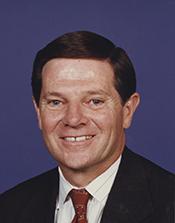
Mr. Speaker, I move to suspend the rules and pass the bill (H.R. 4518) to extend the statutory license for secondary transmissions under section 119 of title 17, United States Code, as amended.
Mr. Speaker, I ask unanimous consent that the chairman of the Committee on Energy and Commerce, the gentleman from Texas (Mr. Barton), and the chairman of the Committee on the Judiciary, the gentleman from Wisconsin (Mr. Sensenbrenner), each be allowed to control 10 minutes of the time currently under my control.
Bill Text
Latest available legislative text
        [Congressional Bills 108th Congress]
[From the U.S. Government Publishing Office]
[H.R. 3518 Introduced in House (IH)]

108th CONGRESS
1st Session
H. R. 3518

To suspend temporarily the duty on 486 paint based on aqueous vinyl
polymer.

_______________________________________________________________________

IN THE HOUSE OF REPRESENTATIVES

November 18, 2003

Mr. Waxman introduced the following bill; which was referred to the
Committee on Ways and Means

_______________________________________________________________________

A BILL

To suspend temporarily the duty on 486 paint based on aqueous vinyl
polymer.

Be it enacted by the Senate and House of Representatives of the
United States of America in Congress assembled,

SECTION 1. 486 PAINT BASED ON AQUEOUS VINYL POLYMER.

(a) In General.--Subchapter II of chapter 99 of the Harmonized
Tariff Schedule of the United States is amended by inserting in
numerical sequence the following new heading:

``    9902.33.20    486 paint based   Free              No change         No change         On or before 12/
on aqueous                                                              31/2008          ''
vinyl polymer                                                                             .
(provided for
in subheading
3209.10.00)....

(b) Effective Date.--The amendment made by subsection (a) applies
with respect to goods entered, or withdrawn from warehouse for
consumption, on or after the 15th day after the date of the enactment
of this Act.
<all>