SAFE Act
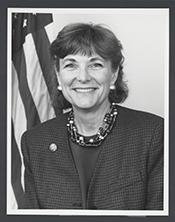 Rep. Sue W. Kelly (R-NY)
Legislative Activity
Stay on top of the latest movement without scrolling through every action
Referred to the Subcommittee on Financial Institutions and Consumer Credit.
December 2, 2003
View full timeline
Introduced in House
November 19, 2003
Referred to the House Committee on Financial Services.
November 19, 2003
Referred to the Subcommittee on Financial Institutions and Consumer Credit.
December 2, 2003
Floor Debate
20 membersWhat members said about H.R. 3520 on the floor
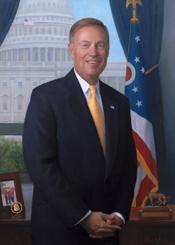
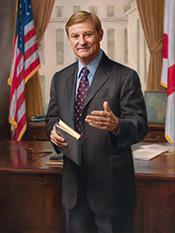
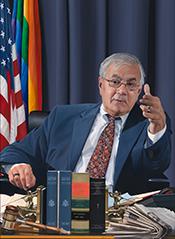
 +15
+15
Floor Debate
20 membersWhat members said about H.R. 3520 on the floor
Mr. Speaker, I move to suspend the rules and agree to the conference report on the bill (H.R. 2622) to amend the Fair Credit Reporting Act, to prevent identity theft, improve resolution of consumer…
Mr. Speaker, I thank the chairman for yielding me this time. I am going to limit my time to thanking Members, because this legislation I think more than anything is a testimony of what we as Members…
Mr. Speaker, it happens I do not agree with the previous speaker. I rise in strong support of the conference report before us. I would like to commend the gentleman from Ohio (Chairman Oxley) and the…
Mr. Speaker, I am glad to yield 2\1/2\ minutes to the gentlewoman from Oregon (Ms. Hooley), a member of this committee who really did extraordinarily good work here and who early on became our task…
Mr. Speaker, I thank my friend, and I congratulate him for all the good things that are in this bill, all the credit report and the negative statement issues that are dealt with. But there is one…
Show 8 more
Mr. Speaker, just as an aside, if I may, I urge all my colleagues on this side of the aisle and on the other side of the aisle to support one of the most bipartisan pieces of legislation. I want to…
Mr. Speaker, I thank my good friend, the gentleman from Massachusetts, for yielding me this time. During floor debate of the Fair and Accurate Credit Transaction Act back in September, I told a story…

Mr. Speaker, as a member of the Financial Services Committee and a conferee, this member rises today to express his strong support for the conference report of H.R. 2622, the Fair and Accurate Credit…
Mr. Speaker, I rise in strong support of the conference report to accompany the Fair and Accurate Transactions Act of 2003. And I congratulate the gentleman from Ohio (Mr. Oxley) and the ranking…

Mr. Speaker, I thank the gentleman for yielding me time. I thank our ranking member and chair and my colleagues. I rise in support of this legislation that permanently reauthorizes the Fair Credit…
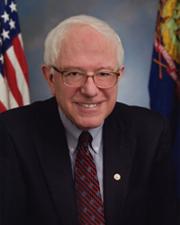
Mr. Speaker, I thank the gentleman for yielding me this time. Mr. Speaker, this bill has a number of important and positive provisions. The idea that consumers will receive free credit reports is…
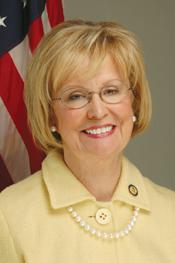
Mr. Speaker, I would like to commend the hard work that the gentleman from Ohio (Chairman Oxley) and the gentleman from Alabama (Mr. Bachus), subcommittee chairman, the gentleman from Massachusetts…

Mr. Speaker, I rise today on behalf of the Fair and Accurate Credit Transactions Act, H.R. 2622. This sound piece of legislation will aid in the prevention of identity theft. Additionally, it will…
Show 7 more

Mr. Speaker, I want to discuss some of the exciting opportunities in the FCRA, specifically the aspects that Florida has engaged in. And I would like to enter a colloquy with the gentleman from…
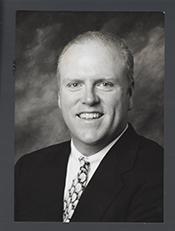
Mr. Speaker, I would like to call this the comity before the storm. It is interesting that we have such comity here in the House on the floor dealing with the FACT Act, the Fair Credit Reporting Act.…
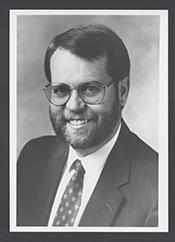
Mr. Speaker, I want to first begin by commending the gentleman from Ohio (Mr. Oxley) and the ranking member, the gentleman from Massachusetts (Mr. Frank), for their hard work together with the…

Mr. Speaker, I would like to thank the gentleman from Massachusetts (Mr. Frank) and the gentleman from Alabama (Mr. Bachus) for the bipartisan spirit to move the bill to the floor. Mr. Speaker, the…
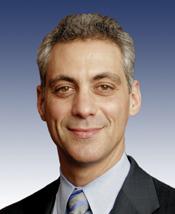
Mr. Speaker, I would like to commend the Members on both sides of the aisle who worked in a bipartisan way to draft a good, strong bill with new identity theft protections and consumer protection. A…
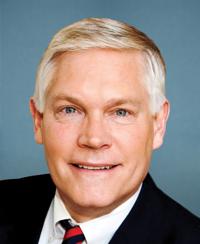
Mr. Speaker, I wish to thank the great chairman of the committee, the gentleman from Ohio (Mr. Oxley), and also the gentleman from Massachusetts (Mr. Frank) for working with me on an important aspect…
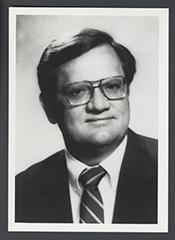
Mr. Speaker, I thank the gentleman for yielding me time. I want to commend both the chairman and the subcommittee chairman, as well as the ranking members, for the great job they did on this bill. I…
Bill Text
Latest available legislative text
        [Congressional Bills 108th Congress]
[From the U.S. Government Publishing Office]
[H.R. 3520 Introduced in House (IH)]

108th CONGRESS
1st Session
H. R. 3520

To reduce duplication in Federal financial literacy and financial
programs, identify more effective ways to provide financial education,
and facilitate greater cooperation at the Federal, State and local
levels and between government units and entities in the private sector
by requiring the establishment of a national strategy for assuring
financial education, and for other purposes.

_______________________________________________________________________

IN THE HOUSE OF REPRESENTATIVES

November 19, 2003

Mrs. Kelly introduced the following bill; which was referred to the
Committee on Financial Services

_______________________________________________________________________

A BILL

To reduce duplication in Federal financial literacy and financial
programs, identify more effective ways to provide financial education,
and facilitate greater cooperation at the Federal, State and local
levels and between government units and entities in the private sector
by requiring the establishment of a national strategy for assuring
financial education, and for other purposes.

Be it enacted by the Senate and House of Representatives of the
United States of America in Congress assembled,

SECTION 1. SHORT TITLE.

This Act may be cited as the ``Strategy for Assuring Financial
Empowerment Act'' or the ``SAFE Act''.

SEC. 2. STRATEGY FOR ASSURING FINANCIAL EDUCATION.

(a) Findings.--
(1) In general.--The Congress finds it is imperative to--
(A) reduce overlap and duplication in Federal
financial literacy and financial education programs and
in public and private educational activities, in order
to increase effectiveness and coordination and to
better utilize resources;
(B) identify the most effective types of public
sector financial literacy programs and techniques as
measured by improved consumer decision-making;
(C) coordinate and promote financial literacy and
financial education efforts at the State and local
level, including partnerships between Federal, State
and local governments, non-profit organizations and
private enterprises;
(D) obtain recommendations for integrating economic
education and personal-finance education into primary,
secondary and post-secondary curricula; and
(E) provide multilingual materials and programs
under the strategy for assuring financial education
whenever appropriate in order to effectively reach the
broadest number of people.
(2) Additional findings.--The Congress also finds that as
many as 1 in 10 American families, or about 10,000,000
households, do not have a relationship with a traditional
financial institution such as a bank, thrift institution, or
credit union, despite the significant advantages of such a
relationship, including the following:
(A) The establishment of a deposit account with a
financial institution leads to greater knowledge of
personal financial fundamentals.
(B) Account ownership provides an opportunity to
build assets, because a deposit account is a tool that
can be used to save for homeownership, educational
opportunities, or retirement.
(C) The unbanked typically pay higher costs in
transaction fees for financial services than do
individuals with banking relationships.
(D) Opening and maintaining an account with a
financial institution provides opportunities to obtain
other products and services--such as home loans, car
loans, education loans, or small business loans--from
the institution, and can help individuals establish a
credit history for their future borrowing needs.
(E) Owning an account provides a record of
financial transactions that can be drawn on in the case
of a dispute.
(F) Account ownership provides the opportunity for
safer, more secure types of financial transactions,
such as direct deposit and check-writing, reducing the
risk that paychecks could be stolen or lost and
reducing the risk of becoming the victim of a robbery
or burglary triggered by carrying large sums of cash.
(b) Development and Transmittal to the Congress.--
(1) Development.--The President, acting through the
Secretary of the Treasury, the Office of Financial Education
established by the Secretary in the Department of the Treasury,
and in consultation with the Secretary of Housing and Urban
Development and other officials of the administration, as
appropriate, shall develop a national strategy for financial
education, to be known as the Strategy for Assuring Financial
Empowerment (hereinafter in this section referred to as the
``SAFE strategy'').
(2) Transmittal to the congress.--By February 1 of 2005 and
by that date of each succeeding year, the President shall
transmit to the Congress a national strategy developed in
accordance with paragraph (1).
(3) Appearance before the congress.--Before March 1, 2004,
and before March 1 of each subsequent year, the Secretary of
Treasury shall appear before the Committee on Financial
Services of the House of Representatives and the Committee on
Banking, Housing, and Urban Affairs of the Senate at hearings
regarding the development of a national strategy for assuring
financial education.
(4) Working group.--The first national strategy transmitted
to the Congress in 2005 shall contain recommendations and a
proposal for forming a Financial Literacy and Education Working
Group to be chaired by the Secretary of the Treasury.
(c) Issues To Be Addressed.--The SAFE strategy shall address any
area the President considers appropriate, acting through the Secretary
of the Treasury, the Office of Financial Education established by the
Secretary in the Department of the Treasury, and in consultation with
the Secretary of Housing and Urban Development, the Financial Literacy
and Education Working Group established pursuant to the proposal under
subsection (b)(4), and other officials of the administration, as
appropriate, including the following:
(1) Goals, objectives, and priorities.--
(A) In general.--Comprehensive, research-based
goals, objectives, and priorities for increasing the
financial literacy of all citizens, with particular
attention to those with low and moderate incomes,
Native Americans, immigrants, youths from ages 10-25
and those of pre-retirement age.
(B) Goals to be included.--Such goals shall include
helping individuals, especially those in the target
groups, learn to develop--
(i) access to and responsible use of
accounts at financial institutions;
(ii) knowledge of the credit-granting
process, including the importance and benefits
of building credit;
(iii) homeownership;
(iv) planning for unexpected circumstances,
further education, retirement and estate
planning;
(v) budgets and long-range financial
planning;
(vi) an appreciation of the value of
charitable giving;
(vii) an understanding of the impact of
taxes on earned income and intelligent planning
to minimize the effects of taxes;
(viii) a strategy for and an appreciation
of the value of broad-based, well-planned,
long-term investments; and
(ix) patterns of responsible borrowing and
consumer behavior.
(2) Coordination.--Coordination of financial education
efforts and programs within the Executive Branch and with the
Board of Governors of the Federal Reserve System, the
Securities and Exchange Commission, other Federal banking
agencies, the National Credit Union Administration Board, and
such other Federal agencies as the Secretary of the Treasury
determines to be appropriate.
(3) Coordination with and enhancement of the role of the
private financial sector in financial education.--The
enhancement of partnerships between the private government
agencies and both the financial sector and nongovernment
agencies with regard to financial education.
(4) Enhancement of intergovernmental cooperation.--The
enhancement of--
(A) cooperative efforts between the Federal
Government and State and local officials, including
State and local regulators and educators; and
(B) cooperative efforts among the several States
and between State and local officials, including State
and local regulators and educators which could be
utilized or should be encouraged.
(5) Project and budget priorities.--A 3-year projection for
program and budget priorities and achievable projects for
improving financial education.
(6) Assessment of funding.--A complete assessment of how
the proposed budget is intended to implement the strategy, and
whether the funding levels contained in the proposed budget are
sufficient to implement the strategy.
(7) Data regarding trends in financial education.--The need
for timely, accurate, and complete information necessary for
the purpose of developing and analyzing data in order to
ascertain trends in the need for financial education.
(8) Improved communications.--A plan for enhancing the
communication between the Federal Government and State and
local governments regarding financial education.
(d) Effectiveness Report.--At the time each national SAFE strategy
for financial education is transmitted by the President to the Congress
(other than the first transmission of any such strategy) pursuant to
subsection (b), the Secretary shall submit a report containing an
evaluation of the effectiveness of policies to enhance financial
education and reach the goals outlined in subsection (c).
(e) Consultations.--In addition to the consultations required under
this section with the Secretary of Housing and Urban Development, in
developing the national SAFE strategy for financial education, the
Secretary shall consult with--
(1) the Board of Governors of the Federal Reserve System
and other Federal banking agencies and the National Credit
Union Administration Board;
(2) State and local officials, including State and local
regulators and educators;
(3) the Securities and Exchange Commission;
(4) the Commodities and Futures Trading Commission;
(5) the Secretary of Education;
(6) to the extent possible, the finance ministers of
foreign governments;
(7) to the extent appropriate, State and local officials
responsible for financial institution and financial market
regulation;
(8) any other State or local government authority, to the
extent appropriate;
(9) any other Federal Government authority or
instrumentality, to the extent appropriate
(10) representatives of the private financial services
sector, to the extent appropriate;
(11) the Secretary of Agriculture;
(12) the Secretary of Health and Human Services;
(13) the Secretary of Defense;
(14) the Secretary of Labor;
(15) the Secretary of Veterans Affairs;
(16) the Chairman of the Federal Trade Commission;
(17) the Commissioner of Social Security, the Social
Security Administration;
(18) the Administrator of the Small Business
Administration;
(19) the Director of the Office of Personnel Management;
(20) the Federal Housing Commissioner;
(21) State insurance commissioners working through the
National Association of Insurance Commissioners;
(22) the Advertising Council; and
(23) the heads of Federal, State and local government
programs, and privately run programs, which have the purpose
of--
(A) getting the unbanked to participate in the
banking system; and
(B) encouraging recipients of State or Federal
assistance programs to move away from receiving their
programs via paper checks and towards receiving such
payments electronically.
(f) Authorization of Appropriations.--There are authorized to be
appropriated to the Secretary of the Treasury for fiscal years 2004,
2005, 2006, 2007, 2008, and 2009 such sums as may be necessary to carry
out the requirements of this section.
<all>