Sports Agent Responsibility and Trust Act
 Rep. Bart Gordon (D-TN)
Legislative Activity
Stay on top of the latest movement without scrolling through every action
Became Public Law No: 108-304.
September 24, 2004
View full timeline
Introduced in House
January 27, 2003
Referred to the House Committee on Energy and Commerce.
January 27, 2003
Committee Consideration and Mark-up Session Held.
January 29, 2003
Reported by the Committee on Energy and Commerce. H. Rept. 108-24, Part I.
March 5, 2003
Referred sequentially to the House Committee on the Judiciary for a period ending not later than June 1, 2003 for consideration of such provisions of the bill as fall within the jurisdiction of that committee pursuant to clause 1(k), rule X.
March 5, 2003
Referred to the Subcommittee on Commercial and Administrative Law.
May 1, 2003
Subcommittee Hearings Held.
May 15, 2003
Subcommittee Consideration and Mark-up Session Held.
May 15, 2003
Forwarded by Subcommittee to Full Committee (Amended) by Voice Vote.
May 15, 2003
House Committee on Judiciary Granted an extension for further consideration ending not later than June 2, 2003.
May 20, 2003
Reported (Amended) by the Committee on Judiciary. H. Rept. 108-24, Part II.
June 2, 2003
Placed on the Union Calendar, Calendar No. 66.
June 2, 2003
Mr. Stearns moved to suspend the rules and pass the bill, as amended.
June 4, 2003 • 2:17 PM
Considered under suspension of the rules. (consideration: CR H4895-4899)
June 4, 2003 • 2:17 PM
DEBATE - The House proceeded with forty minutes of debate on H.R. 361.
June 4, 2003 • 2:17 PM
Passed/agreed to in House: On motion to suspend the rules and pass the bill, as amended Agreed to by voice vote.(text: CR H4895-4896)
June 4, 2003 • 2:43 PM
On motion to suspend the rules and pass the bill, as amended Agreed to by voice vote. (text: CR H4895-4896)
June 4, 2003 • 2:43 PM
Motion to reconsider laid on the table Agreed to without objection.
June 4, 2003 • 2:43 PM
Received in the Senate and Read twice and referred to the Committee on Commerce, Science, and Transportation.
June 5, 2003
Senate Committee on Commerce, Science, and Transportation discharged by Unanimous Consent.(consideration: CR S9044)
September 9, 2004
Senate Committee on Commerce, Science, and Transportation discharged by Unanimous Consent. (consideration: CR S9044)
September 9, 2004
Passed Senate without amendment by Unanimous Consent.
September 9, 2004
Message on Senate action sent to the House.
September 10, 2004
Presented to President.
September 16, 2004
Signed by President.
September 24, 2004
Became Public Law No: 108-304.
September 24, 2004
Floor Debate
10 membersWhat members said about H.R. 361 on the floor
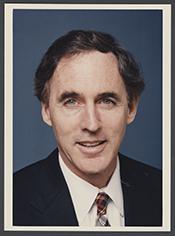


 +5
+5
Floor Debate
10 membersWhat members said about H.R. 361 on the floor
Mr. Speaker, I move to suspend the rules and pass the bill (H.R. 361) to designate certain conduct by sports agents relating to the signing of contracts with student athletes as unfair and deceptive…
Mr. Speaker, I yield myself such time as I may consume. Mr. Speaker, I intend to make a few brief remarks in support of H.R. 361, the Sports Agent Responsibility and Trust Act, or SPARTA. The…
Mr. Speaker, last weekend, the National Football League draft was conducted. Over 200 players were selected in the draft. Each player eventually will be represented by an agent. The difficult thing…
Mr. Speaker, I thank the chairman for yielding time to me, and I appreciate his help very much. I would also like to thank the gentleman from Tennessee (Mr. Gordon) and his staff for all the work…
Mr. Speaker, I rise in support of H.R. 361. This bill is important for all of the reasons that have already been discussed. An athletic agent is in a unique position in that while he stands to gain…
Show 7 more
Mr. Speaker, let me first of all give much applause to the gentleman from Tennessee (Mr. Gordon) for a very thoughtful, but very important legislative initiative. I am very proud as a member of the…

Mr. Speaker, I rise in support of H.R. 361. This legislation, which is known as the SPARTA Act, is important for the sports industry, which in recent years has become ever more just so that, an…

Mr. President, I am pleased that the Senate has agreed by unanimous consent to pass H.R. 361, the Sports Agent Responsibility and Trust Act, SPARTA. The bill would help to protect amateur athletes…

For the information of all Senators, on Monday, following morning business, the Senate will resume consideration of the Homeland Security appropriations bill. The chairman and ranking member will be…
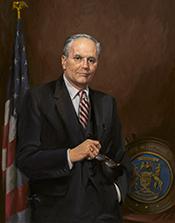
Mr. Speaker, I am a proud cosponsor of H.R. 361, the ``Sports Agent Responsibility and Trust Act'' (SPARTA). This legislation will hold unscrupulous sports agents responsible for their actions by…
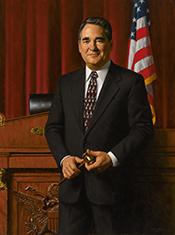
Under clause 2 of rule XII, bills and reports were delivered to the Clerk for printing, and bills referred as follows: Mr. TAUZIN: Committee on Energy and Commerce. H.R. 361. A bill to designate…
I ask unanimous consent that the Commerce Committee be discharged from further consideration of H.R. 361 and the Senate proceed to its immediate consideration. I ask unanimous consent that the bill…
Bill Text
6 versions available
        [Congressional Bills 108th Congress]
[From the U.S. Government Publishing Office]
[H.R. 361 Enrolled Bill (ENR)]

H.R.361

One Hundred Eighth Congress

of the

United States of America

AT THE SECOND SESSION

Begun and held at the City of Washington on Tuesday,
the twentieth day of January, two thousand and four

An Act

To designate certain conduct by sports agents relating to the signing of
contracts with student athletes as unfair and deceptive acts or
practices to be regulated by the Federal Trade Commission.

Be it enacted by the Senate and House of Representatives of the
United States of America in Congress assembled,

SECTION 1. SHORT TITLE.

This Act may be cited as the ``Sports Agent Responsibility and
Trust Act''.

SEC. 2. DEFINITIONS.

As used in this Act, the following definitions apply:
(1) Agency contract.--The term ``agency contract'' means an
oral or written agreement in which a student athlete authorizes a
person to negotiate or solicit on behalf of the student athlete a
professional sports contract or an endorsement contract.
(2) Athlete agent.--The term ``athlete agent'' means an
individual who enters into an agency contract with a student
athlete, or directly or indirectly recruits or solicits a student
athlete to enter into an agency contract, and does not include a
spouse, parent, sibling, grandparent, or guardian of such student
athlete, any legal counsel for purposes other than that of
representative agency, or an individual acting solely on behalf of
a professional sports team or professional sports organization.
(3) Athletic director.--The term ``athletic director'' means an
individual responsible for administering the athletic program of an
educational institution or, in the case that such program is
administered separately, the athletic program for male students or
the athletic program for female students, as appropriate.
(4) Commission.--The term ``Commission'' means the Federal
Trade Commission.
(5) Endorsement contract.--The term ``endorsement contract''
means an agreement under which a student athlete is employed or
receives consideration for the use by the other party of that
individual's person, name, image, or likeness in the promotion of
any product, service, or event.
(6) Intercollegiate sport.--The term ``intercollegiate sport''
means a sport played at the collegiate level for which eligibility
requirements for participation by a student athlete are established
by a national association for the promotion or regulation of
college athletics.
(7) Professional sports contract.--The term ``professional
sports contract'' means an agreement under which an individual is
employed, or agrees to render services, as a player on a
professional sports team, with a professional sports organization,
or as a professional athlete.
(8) State.--The term ``State'' includes a State of the United
States, the District of Columbia, Puerto Rico, the United States
Virgin Islands, or any territory or insular possession subject to
the jurisdiction of the United States.
(9) Student athlete.--The term ``student athlete'' means an
individual who engages in, is eligible to engage in, or may be
eligible in the future to engage in, any intercollegiate sport. An
individual who is permanently ineligible to participate in a
particular intercollegiate sport is not a student athlete for
purposes of that sport.

SEC. 3. REGULATION OF UNFAIR AND DECEPTIVE ACTS AND PRACTICES IN
CONNECTION WITH THE CONTACT BETWEEN AN ATHLETE AGENT AND
A STUDENT ATHLETE.

(a) Conduct Prohibited.--It is unlawful for an athlete agent to--
(1) directly or indirectly recruit or solicit a student athlete
to enter into an agency contract, by--
(A) giving any false or misleading information or making a
false promise or representation; or
(B) providing anything of value to a student athlete or
anyone associated with the student athlete before the student
athlete enters into an agency contract, including any
consideration in the form of a loan, or acting in the capacity
of a guarantor or co-guarantor for any debt;
(2) enter into an agency contract with a student athlete
without providing the student athlete with the disclosure document
described in subsection (b); or
(3) predate or postdate an agency contract.
(b) Required Disclosure by Athlete Agents to Student Athletes.--
(1) In general.--In conjunction with the entering into of an
agency contract, an athlete agent shall provide to the student
athlete, or, if the student athlete is under the age of 18, to such
student athlete's parent or legal guardian, a disclosure document
that meets the requirements of this subsection. Such disclosure
document is separate from and in addition to any disclosure which
may be required under State law.
(2) Signature of student athlete.--The disclosure document must
be signed by the student athlete, or, if the student athlete is
under the age of 18, by such student athlete's parent or legal
guardian, prior to entering into the agency contract.
(3) Required language.--The disclosure document must contain,
in close proximity to the signature of the student athlete, or, if
the student athlete is under the age of 18, the signature of such
student athlete's parent or legal guardian, a conspicuous notice in
boldface type stating: ``Warning to Student Athlete: If you agree
orally or in writing to be represented by an agent now or in the
future you may lose your eligibility to compete as a student
athlete in your sport. Within 72 hours after entering into this
contract or before the next athletic event in which you are
eligible to participate, whichever occurs first, both you and the
agent by whom you are agreeing to be represented must notify the
athletic director of the educational institution at which you are
enrolled, or other individual responsible for athletic programs at
such educational institution, that you have entered into an agency
contract.''.

SEC. 4. ENFORCEMENT.

(a) Unfair or Deceptive Act or Practice.--A violation of this Act
shall be treated as a violation of a rule defining an unfair or
deceptive act or practice prescribed under section 18(a)(1)(B) of the
Federal Trade Commission Act (15 U.S.C. 57a(a)(1)(B)).
(b) Actions by the Commission.--The Commission shall enforce this
Act in the same manner, by the same means, and with the same
jurisdiction, powers, and duties as though all applicable terms and
provisions of the Federal Trade Commission Act (15 U.S.C. 41 et seq.)
were incorporated into and made a part of this Act.

SEC. 5. ACTIONS BY STATES.

(a) In General.--
(1) Civil actions.--In any case in which the attorney general
of a State has reason to believe that an interest of the residents
of that State has been or is threatened or adversely affected by
the engagement of any athlete agent in a practice that violates
section 3 of this Act, the State may bring a civil action on behalf
of the residents of the State in a district court of the United
States of appropriate jurisdiction to--
(A) enjoin that practice;
(B) enforce compliance with this Act; or
(C) obtain damage, restitution, or other compensation on
behalf of residents of the State.
(2) Notice.--
(A) In general.--Before filing an action under paragraph
(1), the attorney general of the State involved shall provide
to the Commission--
(i) written notice of that action; and
(ii) a copy of the complaint for that action.
(B) Exemption.--Subparagraph (A) shall not apply with
respect to the filing of an action by an attorney general of a
State under this subsection, if the attorney general determines
that it is not feasible to provide the notice described in that
subparagraph before filing of the action. In such case, the
attorney general of a State shall provide notice and a copy of
the complaint to the Commission at the same time as the
attorney general files the action.
(b) Intervention.--
(1) In general.--On receiving notice under subsection (a)(2),
the Commission shall have the right to intervene in the action that
is the subject of the notice.
(2) Effect of intervention.--If the Commission intervenes in an
action under subsection (a), it shall have the right--
(A) to be heard with respect to any matter that arises in
that action; and
(B) to file a petition for appeal.
(c) Construction.--For purposes of bringing any civil action under
subsection (a), nothing in this title shall be construed to prevent an
attorney general of a State from exercising the powers conferred on the
attorney general by the laws of that State to--
(1) conduct investigations;
(2) administer oaths or affirmations; or
(3) compel the attendance of witnesses or the production of
documentary and other evidence.
(d) Actions by the Commission.--In any case in which an action is
instituted by or on behalf of the Commission for a violation of section
3, no State may, during the pendency of that action, institute an
action under subsection (a) against any defendant named in the
complaint in that action.
(e) Venue.--Any action brought under subsection (a) may be brought
in the district court of the United States that meets applicable
requirements relating to venue under section 1391 of title 28, United
States Code.
(f) Service of Process.--In an action brought under subsection (a),
process may be served in any district in which the defendant--
(1) is an inhabitant; or
(2) may be found.

SEC. 6. PROTECTION OF EDUCATIONAL INSTITUTION.

(a) Notice Required.--Within 72 hours after entering into an agency
contract or before the next athletic event in which the student athlete
may participate, whichever occurs first, the athlete agent and the
student athlete shall each inform the athletic director of the
educational institution at which the student athlete is enrolled, or
other individual responsible for athletic programs at such educational
institution, that the student athlete has entered into an agency
contract, and the athlete agent shall provide the athletic director
with notice in writing of such a contract.
(b) Civil Remedy.--
(1) In general.--An educational institution has a right of
action against an athlete agent for damages caused by a violation
of this Act.
(2) Damages.--Damages of an educational institution may include
and are limited to actual losses and expenses incurred because, as
a result of the conduct of the athlete agent, the educational
institution was injured by a violation of this Act or was
penalized, disqualified, or suspended from participation in
athletics by a national association for the promotion and
regulation of athletics, by an athletic conference, or by
reasonable self-imposed disciplinary action taken to mitigate
actions likely to be imposed by such an association or conference.
(3) Costs and attorneys fees.--In an action taken under this
section, the court may award to the prevailing party costs and
reasonable attorneys fees.
(4) Effect on other rights, remedies and defenses.--This
section does not restrict the rights, remedies, or defenses of any
person under law or equity.

SEC. 7. LIMITATION.

Nothing in this Act shall be construed to prohibit an individual
from seeking any remedies available under existing Federal or State law
or equity.

SEC. 8. SENSE OF CONGRESS.

It is the sense of Congress that States should enact the Uniform
Athlete Agents Act of 2000 drafted by the National Conference of
Commissioners on Uniform State Laws, to protect student athletes and
the integrity of amateur sports from unscrupulous sports agents. In
particular, it is the sense of Congress that States should enact the
provisions relating to the registration of sports agents, the required
form of contract, the right of the student athlete to cancel an agency
contract, the disclosure requirements relating to record maintenance,
reporting, renewal, notice, warning, and security, and the provisions
for reciprocity among the States.

Speaker of the House of Representatives.

Vice President of the United States and
President of the Senate.