Protecting American Manufacturing Jobs Act of 2003
Legislative Activity
Stay on top of the latest movement without scrolling through every action
Referred to the Subcommittee on Railroads.
December 9, 2003
View full timeline
Introduced in House
December 8, 2003
Referred to the House Committee on Transportation and Infrastructure.
December 8, 2003
Referred to the Subcommittee on Highways, Transit and Pipelines.
December 9, 2003
Referred to the Subcommittee on Railroads.
December 9, 2003
Floor Debate
19 membersWhat members said about H.R. 3682 on the floor
 JLO
JLO TD
TD DY
DY SB
SB SCL+14
Floor Debate
19 membersWhat members said about H.R. 3682 on the floor
Mr. Chairman, how much time remains on both sides? Mr. Chairman, this language is not well-drafted, I must say to the gentleman. He has a very good purpose but very unclear and unsure language; and…
Mr. Chairman, how much time remains on both sides?
Mr. Chairman, this language is not well-drafted, I must say to the gentleman. He has a very good purpose but very unclear and unsure language; and as I read the language approved under unanimous consent, it makes the authority even broader.
It says trucks that are specifically allowed by Federal law to travel on the national network now can be disapproved by New Jersey. We cannot have one rule for local trucks and a different rule for through trucks.
Mr. Chairman, I thank the Chair for yielding me the time, and I reluctantly oppose the amendment of the gentlewoman from California with whom I am in accord on most issues, and I think she makes a very good point about this remote security facility.
I raised such concerns many years ago in Paris when Charles de Gaulle Airport said, for American check-in passengers, we are going to have a separate little place called the hutch. I went over to inspect it, and I said, my goodness, this is terrific, you collect all the Americans in one place so a terrorist can throw a bomb and kill them all at once. Of course, I said it in French; and they said, oh, we had not thought about that. They backed away and said, well, we will not make Americans do that.
So the gentlewoman makes a good point, but it is the point that is part of a larger process and that is to stop the expansion of the Los Angeles Airport. The Metropolitan Planning Organization is the agency in an urbanized area with the responsibility to determine the needs for projects to be advanced to meet transportation needs for the area. We really should not be inserting ourselves into that debate, certainly not at this time; and, reluctantly, I oppose the gentlewoman's well- intentioned
amendment and well-expressed amendment.
Mr. Chairman, I claim the time in opposition, and I yield myself such time as I may consume.
Mr. Chairman, I believe, with further discussion, we can find a way to come to a resolution.
Mr. Chairman, I yield 1\1/2\ minutes to the gentleman from Oregon (Mr. Blumenauer).
Mr. Chairman, I yield myself such time as I may consume, and I thank the gentleman for his very cogent statement.
Section 410 of existing law gives States eligibility to receive funds for alcohol-impaired driving countermeasures. It is a good program, a good provision. New Jersey is the first and only State to enact a law to impound a vehicle operated by a person who was arrested for drunk driving.
Now, section 410 requires that States meet six of nine criteria to qualify for a grant. If the gentleman's amendment is accepted, it would expand that number to seven. If the gentleman from New Jersey, as I understand from previous discussion on this amendment, would agree that as we move further into conference, that the number of criteria necessary to qualify for a grant should be reduced to six, so we not expand the number and make it easier to evade, then I would concur in this amendment.
I yield to the gentleman from New Jersey.
Mr. Chairman, reclaiming my time, I thank the gentleman.
I yield to the gentleman from Alaska.
Mr. Chairman, reclaiming my time, yes, we are; and I thank the chairman and the gentleman from New Jersey for a very thoughtful constructive matter that now has been resolved in, I think, a very positive way.
Mr. Chairman, I reserve the balance of my time.
Mr. Chairman, I yield back the balance of my time.
Mr. Chairman, will the gentleman yield?
Mr. Chairman, I thank the gentleman for yielding. The language of the amendment of the gentleman from Oregon as originally drawn was way beyond the scope of what he intended, and we greatly appreciate the cooperation of the majority giving the gentleman the opportunity to have unanimous consent to correct the language to reflect exactly what he wants to do, to limit this amendment to small starts, which it does; and I think that relieves the concerns on both sides of the aisle.
Mr. Chairman, I believe under the unanimous consent agreement, the gentleman has already made that correction in the language pending.
If the gentleman will continue to yield, I would just add that the principle remains.
Mr. Chairman, I thank the gentleman for yielding time and thank the gentleman and the gentlewoman for bringing this amendment forward.
In the 1980s, as the Chair of the Subcommittee on Investigations and Oversight, I held extensive hearings on the status of manufacturing in light rail, passenger vehicles and buses during which we demonstrated the loss of tens of thousands of jobs in America to underbid products coming in from overseas. We shipped overseas tens of thousands of jobs in the light rail, passenger rail and bus sector of our economy.
Now it is coming back. Now we are recapturing those jobs. We now are putting in the next 6 years $51.5 billion into transit systems in America. We ought to have those jobs in America as well and reclaim the technology and the jobs that go with them for America. That is what this amendment will do.
Mr. Chairman, I thank the chairman for yielding.
I too support the spirit of the gentleman's amendment, but not the language and not the approach and certainly not the additional cost without offsets. I do want to point out that under FAA's Airport Improvement Program and with the use of passenger facility charges, airports can accomplish this purpose. In fact, provided that the vehicle is owned by the Airport Authority, operated solely on airport property, the funds from passenger facility charges can be used to purchase such vehicles.
Where a vehicle is not AIP eligible, FAA would pay for the difference in cost between low emissions and a regular vehicle. We have addressed this matter already in the appropriate context in the FAA reauthorization bill. So there is a way of accomplishing it.
Under Congestion Mitigation and Air Quality Improvement, funds are apportioned to the States to improve their air quality in nonattainment areas. The pilot program, unfortunately, does not address nonattainment areas within States. So just as we opposed taking FAA money off airports, we are in the position of taking CMAQ money and putting it into airports. So the purpose of the gentleman is at cross purposes with public policy already in place, and reluctantly we must oppose the amendment. But we will work with the gentleman and find a way that we can accomplish this purpose.
Mr. Chairman, I rise in opposition to the amendment.
Mr. Chairman, I yield myself 2 minutes.
Mr. Chairman, I rise not only in opposition to this amendment, but to the many assaults upon the Federal Motor Carrier Safety Administration's hours of service rule announced just recently. But this one in particular, the FMCSA revised the hours of service pursuant to legislation that we enacted that moved out of our committee, through this body, through conference, signed into law. It has taken years for them to get this rulemaking after many hours of public discussion, debate, publishing in the Federal Register; and now people who are unhappy with the outcome are coming to the Congress to overturn a rulemaking. They have another procedure to do that. We should not by law go in and just be a congressional wrecking crew for safety.
Major change in the rules was to lengthen the required rest time after a long day on duty from 8 hours to 10 hours. An 8-hour rest is not enough. They barely get time to get home from their job, maybe get a shower, have something to eat, go to bed, and then they are going to be on duty again. A 10-hour off-duty period allows a driver reasonable time to get home, be with
family, have dinner or lunch or whatever his shift allows, and then get that 7 to 8 hours of sleep.
I have heard this said many times, including the President of the Motion Picture Association say they start at seven o'clock and they may finish at eight or nine o'clock at night, and they are not doing anything all this time. I say those who only stand and wait also serve.
Mr. Chairman, I reserve the balance of my time.
Mr. Chairman, I yield 1 minute to the gentleman from Illinois (Mr. Lipinski).
Mr. Chairman, I yield myself 1 minute.
I thank the gentleman for his statement.
If I may have the attention of the gentleman from Alabama, he has twice
referenced that drivers have 9 hours off during the day. If he would be willing to limit his amendment to those cases where they have 9 hours off during the day, I think we could accept that.
I yield to the gentleman from Alabama.
Mr. Speaker, I yield myself the balance of my time.
Mr. Speaker, under the language provided for us here in this amendment, a driver could start work at 8 o'clock in the morning, work until midnight with 2 hours off during the day, and be expected back at work at 8 o'clock the following morning. I do not think it is right to put drivers on the road with so little rest, so much fatigue and so great potential for fatalities.
Now, the industry argues, well, we have not had any fatalities. But I have been involved in this fatigue issue in aviation, railroading, maritime and over-the-road truck driving for 25 years, and I know that the next fatality is just around the corner from the next weakening of safety regulations.
It is inappropriate to make the change in the way in which it is proposed here. This is not the right venue, it is not the right approach, it will endanger worker safety, and we ought to oppose this amendment.
Mr. Chairman, I demand a recorded vote, and pending that, I make the point of order that a quorum is not present.
Mr. Chairman, I will not have to claim time in opposition. The unanimous consent request includes restoring the language ``during planting and harvest periods as determined by each State'' is restoration
of current law and is not an expansion thereof.
With that understanding, we can accept the amendment on this side.
Mr. Chairman, I claim the time in opposition. Mr. Chairman, I yield myself such time as I may consume. Mr. Chairman, I rise in opposition to the LaTourette amendment. First, let me say to my friend…
Mr. Chairman, I claim the time in opposition.
Mr. Chairman, I yield myself such time as I may consume.
Mr. Chairman, I rise in opposition to the LaTourette amendment.
First, let me say to my friend from Ohio, the domestic steel industry has no stronger advocate in the Congress than the gentleman from Ohio. He has been a leader in this area, but on this particular amendment I take issue with it and disagree.
This amendment would require that more than 60 percent of the components and subcomponents of manufactured products used for construction projects be of United States origin. Of course, this means that, instead of going to the lowest bidder, the taxpayers getting their best bang for the buck, it could raise costs conceivably as much as 15 percent on a project with its components. That means that there is less money to build more roads with, to buy additional rail cars, to build intersections that are needed, and it means fewer people can become employed because we may be paying more money just to buy domestically. This would constitute a radical and in my judgment harmful expansion of the current law.
There is already in my judgment a very wrongheaded 50 percent ceiling on non-U.S. components. I have serious concerns about raising it another 10 percent. I think we ought to be going in the other direction, and I think that this amendment makes bad policy even worse.
We need to beware the law of unintended consequences. Domestic source restrictions such as this one may indeed be well intentioned, but they only serve to increase the cost of our critical transportation projects by reducing competition available for Federal contracts and raising the cost to the taxpayers. These restrictions are often self-defeating as they can well lead to reprisals from overseas trading partners. We often lose much more business than we gain.
Restrictions such as those proposed here could possibly provide some immediate short-term benefits to some American companies, but in the long run, in my judgment, they hurt the overall economy. We cannot maintain our global leadership in manufacturing by artificially propping up industries that are not able to compete in the global marketplace.
Mr. Chairman, we are here today touting the job creation potential of this reauthorization bill, so I have to ask this question: Have we considered the counterproductive, anticompetitive consequences of restrictionist amendments like this one? How many jobs could be created with the dollars firms will have to spend to comply with these government-unique restrictions? Our goal should be to ensure that we have access to open world markets so that we can get the best deal on the best goods available, regardless of their location. The American taxpayer deserves nothing less. This again allows us to spend more money from this transportation bill on transportation products, which means we can employ more people than these restrictions would otherwise give us.
I cannot overstate the potential harm posed by such economic isolationist restrictions, harm to our critical transportation infrastructure, because by paying more we end up being able to do less; harm to our Nation's
place in the global economy; and harm to our job creation agenda.
We have to remember a couple of things.
First of all, the details of the certification contained in this bill in my judgment means that if there is not availability of U.S. parts then we are going to need waivers. Waivers are going to have to be obtained. In these waivers, of course, it takes more time, which delays transportation projects.
Secondly, it could have the unintended consequences of allowing by these waivers more foreign products in the U.S. than you may get otherwise in some instances.
Thirdly, and most important, this can invite retaliation from foreign countries who, as we restrict the ability of their goods to get into markets, they retaliate against us.
What does this mean? It could be retaliation against agricultural products, information technology, even other manufactured products. It is anticompetitive, and it is antijobs, in my opinion, as it is currently constructed. I rise in opposition.
Mr. Chairman, I reserve the balance of my time.
Modification to Amendment No. 15 Offered by Mr. LaTourette
Mr. Chairman, reserving the right to object, could I just ask what the purpose of the modification is?
This makes a bad amendment better.
Mr. Chairman, I withdraw my reservation of objection.
Mr. Chairman, I yield myself the balance of my time.
Let me just say on this amendment, this may expand the Buy America for steel, but it shrinks Buy America in other areas, other manufactured areas, perhaps agriculture, perhaps information technology, because of this kind of action that basically invites retaliation from foreign countries.
America is only 5 percent of the world's consumers. If we want to succeed from a manufacturing standpoint and economically around the world, we need to expand those markets. This goes in the opposite way. We ought to be reducing the Buy America requirements, reducing the certification process that does nothing but invite waivers which delays transportation projects; and we ought to put our transportation dollars into getting as much road money, as much money to buy rail cars, to lay track and move America as we can. This raises the cost of doing that with this legislation. It is for that reason that I oppose this and urge opposition to this amendment.
Mr. Chairman, I yield back the balance of my time.
Mr. Chairman, I yield myself such time as I may consume. I will say, though, I am usually in favor of what occurs by State action, but what this amendment does, it allows the State of New Jersey to…
Mr. Chairman, I yield myself such time as I may consume.
I will say, though, I am usually in favor of what occurs by State action, but what this amendment does, it allows the State of New Jersey to limit large trucks and twin-trailer combination trucks to the interstate system, not intrastate, the New Jersey Turnpike and the Atlantic City Expressway, except when making local deliveries. It is amazing when you need your donors you allow a twin-trailer truck to arrive at the door but nobody else.
In 1999, the New Jersey DOT actually allowed New Jersey to ban, that is DOT of New Jersey, large trucks from certain roads. However, that was challenged in court by the trucking industry; and if I am correct, just recently, last week of this year, the U.S. District Court from New Jersey ruled that the New Jersey truck highway access regulatory system discriminated against interstate commerce and violated the commerce clause of the U.S. Constitution.
This amendment would reverse that decision; and, again, I would suggest that New Jersey use all the recourse through the law. Because to take now a case that has been won by one side of the argument in the court and now us, as a Congress, to reverse that----
I yield to the gentleman from New Jersey.
Mr. Chairman, reclaiming my time, but the industry or the plaintiff that filed the suit is now being precluded from going forth. If my colleague wants to do that, have the court or New Jersey file an injunction against the court's decision. Do not ask us to undo what a court has ruled.
Reclaiming my time, they can continue their suit, but they are not the ones now that have to pursue the suit. They are the ones that won the case, and they can drive their trucks on interstate commerce because of the clause in the interstate commerce clause under the Constitution. What the gentleman is asking us to do in the Congress is to undo what the court has ruled.
I am not a lawyer. Thank God for that. We have got enough of those around here. But I am a little concerned that what we are doing here is really not fair to the persons that filed the suit to begin with. We are saying you cannot do it. You can go back to court. As we go back to court, well, you cannot use the truck. Under the interstate clause, that is against the Constitution, as the court has ruled.
Mr. Chairman, I reserve the balance of my time.
Mr. Chairman, I yield 1 minute to the gentleman from Minnesota (Mr. Oberstar).
Mr. Chairman, I yield back the balance of my time.
I rise in opposition to the amendment.
Mr. Chairman, I yield such time as he may consume to the gentleman from Minnesota (Mr. Oberstar) who wishes to speak on the amendment.
Mr. Chairman, I reserve my time.
Mr. Chairman, will the gentleman yield?
Mr. Chairman, I simply wanted to compliment
the gentleman and the gentleman from Oregon for their presentations. As I told the gentleman from New Jersey, I did support the concept of this amendment.
I also agree with my ranking member that, as we go through it, we will do it the right way and do it correctly so we can actually solve a serious problem. His story is a very telling story.
So with that, I guess we will have a voice vote; is that correct?
Mr. Chairman, I rise in opposition to the amendment.
Mr. Chairman, I yield myself such time as I may consume.
I yield to the gentleman from Minnesota.
Mr. Chairman, reclaiming my time, we are going to support the amendment as intended. However, there is a slight, as I think the gentleman from Minnesota mentioned, drafting error, the section that applies to both the current new starts and the new small starts process. We will take the amendment at this time with the gentleman's understanding we want to correct the language in conference so that the exemption applies only to the new small starts process.
Does the gentleman understand that?
Reclaiming my time once again, Mr. Chairman, if he has done that, I apologize. I was talking to my staff and they did not advise me of that. If that has already been done, we do not have to worry about that.
Mr. Chairman, I yield myself such time as I may consume.
Although it is well merited, the Federal Public Transportation program does not provide programs for airport-based services. In addition, we understand that this amendment, according to our figures, adds $300 million to the cost of the bill, and that concerns me a great deal.
And, lastly, may I suggest respectfully, as important as natural gas is, we have some real problems getting natural gas to the United States, and we had better start looking at that problem very quickly; and under the energy bill we can do that. We have not passed the energy bill, but it is crucially important for this Nation to have a new supply of natural gas.
Mr. Chairman, I thank the gentleman for yielding me time and especially thank the gentleman for his perseverance and the work he has done, as well as the ranking member for accepting the amendment to the amendment.
Mr. Chairman, I think what I have said before is it is a way to have a little logic in this body. I do compliment the gentleman for bringing this amendment to the floor.
Mr. Chairman, I move that the Committee do now rise.
Mr. Chairman, I offer an amendment. The Chairman pro tempore. The Clerk will designate the amendment. Mr. Chairman, I yield myself 1 minute. Mr. Chairman, the U.S. motion picture and TV industry…
Mr. Chairman, I offer an amendment.
The Chairman pro tempore. The Clerk will designate the amendment.
Mr. Chairman, I yield myself 1 minute.
Mr. Chairman, the U.S. motion picture and TV industry makes movies that are seen around the world. But, unfortunately, foreign countries are offering tax incentives to attract that production overseas, and I think most of us have seen movies lately that were set here, but filmed in Canada or Mexico.
This amendment would help stop that, and it simply will allow the motion picture industry, the TV industry, to operate under the current Hours of Service regulations. Not only the motion picture industry and the TV industry which asked me to bring this amendment, but the Teamsters Union have endorsed this amendment. It will simply allow those drivers who drive out to the location for an hour or 2 hours, then have 9 hours of rest and then have 2 hours in the evening to continue those hours of service. They have an excellent and exemplary safety record.
Mr. Chairman, I yield 1 minute to the gentlewoman from California (Mrs. Tauscher).
Mr. Chairman, I yield 1 minute to the gentleman from North Carolina (Mr. Coble), who is one of 38 Committee on Transportation and Infrastructure members who have signed a letter in support of this amendment.
Mr. Chairman, I yield 1 minute to the gentleman from Florida (Mr. Foley) in support of this amendment.
Mr. Chairman, I yield myself 1 minute.
Mr. Chairman, I would like to include in the Record a letter from the Teamsters in support of this amendment, and these are the very drivers that are driving these trucks. And as the gentleman from Florida said, these drivers drive and our amendment limits them to 100 miles. They drive out in the morning. They drive back at night, and that is their responsibility, and they do have 9 hours of rest. This does not include overnight. They go with the film crews. They go with the actresses. They go with the actors. They go with the camera people. And they are all out there from sunup to sundown. And the Teamsters, if the Members look at the letter that I am introducing, they will tell them that they are afraid they will either lose their job because they will continue to go out of country or they will turn these jobs into 2- or 3-hour part-time jobs and hire two crews. And instead of having a good-paying job, they will have no job.
Studio Transportation Drivers,
Teamsters Local Union No. 399,
North Hollywood, CA, July 16, 2003.
Re: support for exemption from new hours of service
regulations.
Hon. Ernest Istook, Jr.,
Chairman,
Hon. John W. Olver,
Ranking Member,
House Appropriations Subcommittee on Transportation,
Treasury, and Independent Agencies, Washington, DC.
Gentlemen: I understand that your committee is considering
amendments that would provide relief to certain industries
from aspects of the new hours of service (``HOS'')
regulations published by the Federal Motor Carrier Safety
Administration. On behalf of the Studio Transportation
Drivers of the International Brotherhood of Teamsters, Local
399, I wish to express our support for a proposal to permit
commercial drivers to continue to comply with current HOS
regulations concerning daily, on-duty time when operating to
and from a motion picture or television production site
located within a 100 air-mile radius of their work reporting
location.
Existing HOS duty time regulations are better suited to the
unique schedules of studio transportation drivers than th new
regulations that will take effect January 4, 2004. Drivers
assigned to productions drive only a few hours each day;
these are short haul assignments. These drivers have had an
excellent safety record, and their schedules meet the current
HOS limitation. To comply with the new regulations, the
industry will not be able to use the same drivers for an
entire production day. Thus, each driver will receive
significantly less compensation than under the current
system. Given our excellent safety record, and that new HOS
regulations largely were designed to address the fatigue of
long-haul drivers, application of new duty-time limits to our
drivers will increase operating costs without a corresponding
safety benefit.
I hope that you will support retaining current hours of
service regulations for studio transportation drivers.
Sincerely,
Leo T. Reed,
Secretary-Treasurer/Principal Officer.
Mr. Chairman, I reserve the balance of my time.
Mr. Chairman, will the gentleman yield?
Mr. Chairman, as the gentleman knows, this amendment was first proposed last October and we have tried to work in committee. We tried to work on this issue. What we are talking about is we have restricted it to 200 miles: 100 miles in the morning, 100 miles at night. To me it is almost a joke to say that that would fatigue these drivers. The very drivers that are driving, they have been operating under these rules for years and years and years and have an exemplary safety record.
Mr. Chairman, I offer an amendment. Mr. Chairman, I yield myself such time as I may consume. I am proud to offer this amendment with the gentlewoman from Michigan (Ms. Kilpatrick). I offered a…
Mr. Chairman, I offer an amendment.
Mr. Chairman, I yield myself such time as I may consume.
I am proud to offer this amendment with the gentlewoman from Michigan (Ms. Kilpatrick). I offered a similar amendment in committee, and the chairman and the ranking member have been kind enough to work with us to incorporate as much as possible into the manager's amendment today.
Mr. Chairman, as Members know, we have a manufacturing crisis in this country. We have lost an estimated 3 million manufacturing jobs. While many of us may hold different views on how that came about, I think we can all agree that the Federal Government should be part of the solution to the crisis.
The problem here is that there is too much confusion currently as to what a manufactured good is. The gentleman from Washington (Mr. Baird) had a sense of Congress on the floor a little earlier that addressed this issue. Today, Buy America requires that a manufactured good must be made with components assembled in the United States. Subcomponents, however, do not have to be American made. This has caused a good deal of confusion.
This amendment that the gentlewoman from Michigan and I are offering will correct the problem. The amendment is a modified version of H.R. 3682, the Protecting American Manufacturing Jobs Act, which was introduced by the gentlewoman from Michigan. We were able to work this out with input from the Federal Transit Administration so they can implement it.
Under this amendment, we clarify that 60 percent of the components and subcomponents in a manufactured product must be American made. For construction projects and system acquisition, the amendment requires that 60 percent of the total cost of components and subcomponents in manufactured products must be American made. We also required that final assembly of any manufactured product must happen in the United States. By making these changes we will make sure that Federal dollars support American jobs.
This is, in my opinion, a good amendment. It helps take care of our own manufacturing jobs in this country. I urge support.
Mr. Chairman, I reserve the balance of my time.
Mr. Chairman, I ask unanimous consent to modify the amendment with the text which I have placed at the desk.
If the gentleman will yield, the committee, both minority and majority, have asked me to use this amendment as a vehicle to make technical corrections in the bill.
Mr. Chairman, it is my pleasure to yield 2 minutes to the distinguished gentlewoman from Michigan (Ms. Kilpatrick), who, as I indicated in my other remarks, is the sponsor of the original legislation and the coauthor of this amendment.
Mr. Chairman, it is my pleasure to yield such time as he may consume to the gentleman from Minnesota (Mr. Oberstar), the distinguished ranking member of the committee.
Mr. Chairman, I yield myself the balance of my time.
I want to make this observation. The Federal Government in the procurement process has no greater champion in this Congress than the gentleman from Virginia (Mr. Tom Davis), the chairman of the Committee on Government Reform. The hearings that he has conducted have literally saved the country and the taxpayers billions of dollars.
This issue, however, while I appreciate every argument that he has made, it is time, not by being protectionist but it is time in the manufacturing sector that we take care of our own in the United States. It is not unreasonable to require that 60 percent, we are not asking for 100 percent, but 60 percent of these goods and projects be manufactured in the United States and there not be some shell game where they simply have to be assembled in the United States. You could have a machine with 150 parts and today's requirement is they could all be made overseas as long as we had a shop that assembled them here in this country. It is wrong, and I ask for support of the amendment.
Show 8 more
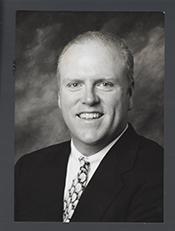
Mr. Chairman, I offer an amendment. Mr. Chairman, I yield myself such time as I may consume. Let me state first my admiration for both the chair and the ranking member of the Committee on…
Mr. Chairman, I offer an amendment.
Mr. Chairman, I yield myself such time as I may consume.
Let me state first my admiration for both the chair and the ranking member of the Committee on Transportation and Infrastructure for the work that they have put into creating this bill before us today. I do not pretend to know all the difficulties that they have been through in trying to craft this legislation, not being a member of the committee, but having done a good bit of extensive reading through the papers have come to understand that this has not been an easy process for them. I do extend to them my congratulations on coming this far.
Mr. Chairman, I do have an amendment at the desk that I believe will enhance this bill and make it a better bill. So many of us who represent airports know the economic benefits airports bring to our communities, but we also, unfortunately, know the environmental damage that airports can cause the surrounding communities. While everyone thinks it is the airplanes themselves which bring elevated levels of pollution and ill health effects to surrounding communities, studies have shown that the more pressing concern is the emissions of shuttle buses, private cars and taxis, tarmac equipment and other vehicles which elevate local pollution levels, causing complaints and health concerns for many of our constituents.
A study in 2002 showed the emission reduction performance of natural gas transit buses versus conventional diesel counterparts, that the natural gas buses had a 53 percent lower oxides of nitrogen, 85 percent lower total particulate matter, and 89 percent lower carbon monoxide emissions. In fact, right here in Washington, D.C., officials developed a plan in 2001 to convert much of the Washington Metropolitan Area Transit Authority bus fleet from diesel to clean natural gas.
My amendment will create a pilot program that facilitates the use of natural gas buses at our Nation's top 25
busiest airports, New York's three airports, Chicago O'Hare, Los Angeles, Atlanta, Miami and others that handle millions of passengers, employees and visitors a day.
My amendment would entail buses not only shuttling passengers connecting to terminals but also buses taking passengers from the airport to the public airport parking lots and employees to and from employee parking lots. This would be done by awarding grants on a competitive basis for the use of natural gas buses at public airports through airport bus replacement and fleet expansion programs.
My amendment makes sure that the priority is given to those public airports running the oldest buses. We have to get these old polluting buses out of service and ensure we can start to reduce air pollution. As most of us know, natural gas buses are not something new. This amendment will help clean up the air around America's busiest airports by improving health and quality of life at the same time.
Mr. Chairman, my amendment is supported by the Natural Gas Vehicle Coalition, and I encourage all my colleagues to support this amendment.
Mr. Chairman, I reserve the balance of my time.
Mr. Chairman, I yield myself such time as I may consume.
I appreciate the comments of both gentlemen whom I respect very much on those issues. I would say that it is not an attempt on my part to take from Peter to pay Paul or vice versa. I was really trying to find a solution to the problem of congested airports and the pollution that they emit to surrounding communities. And I look forward to working with the gentleman from Minnesota (Mr. Oberstar), ranking member, in the future to further address this issue.
Mr. Chairman, I yield back the balance of my time.
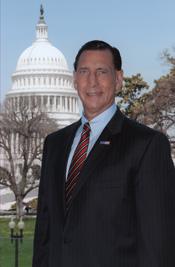
Mr. Chairman, I offer an amendment. Mr. Chairman, I yield myself such time as I may consume. Mr. Chairman, my amendment would make States eligible to receive section 410, Alcohol-Impaired…
Mr. Chairman, I offer an amendment.
Mr. Chairman, I yield myself such time as I may consume.
Mr. Chairman, my amendment would make States eligible to receive section 410, Alcohol-Impaired Countermeasures grant funding to cover the cost of DWI vehicle impoundment programs.
The motivation for my amendment is the result of a very tragic death of one of my constituents. U.S. Navy Ensign John Elliott, who had just received his commission from the naval flight school in Pensacola, Florida, was struck and killed by a drunk driver on July 22 of the year 2000. The accident instantly killed Ensign Elliott and seriously injured his passenger, Kristen Hoinwarter.
Sadly, it was later discovered, and it was very sad, that the driver responsible for Ensign Elliott's death had been arrested for drunken driving earlier in the evening. He was released from custody, obviously while still being intoxicated, and returned to his car. Elliott was on his way home for his mother's birthday party when he crossed paths with the intoxicated driver.
Nearly 3 years after that tragic accident, his parents, Bill and Muriel Elliott, continue the fight to save other families from the grief they have endured. Lobbying the New Jersey State legislature, the Elliotts saw to fruition the drafting, passage, and ultimate enactment of John's Law. The law ensures that individuals who pick up an arrested driver sign a document accepting custody. Additionally, it gives State Police the authorization to impound the automobile of an arrested driver for up to 12 hours.
My amendment will encourage States to establish DWI impoundment programs for making them eligible for an existing grant program, helping them to defray costs. My amendment does not, I repeat, does not require States to enact impoundment programs, nor does it stipulate the terms of their programs, nor does it penalize States for not enacting such programs. And since funds come from an existing grant program, it will not cost the Federal Government a single penny.
We are making important strides to eliminate the senseless deaths caused by the lethal mix of alcohol and automobiles. Annual deaths from drinking and driving have decreased. However, much work remains to be done. Each death is a preventable one, and this amendment will go a long way to ensuring deaths like Elliott's are prevented, and families are saved from the pain that the Elliotts have experienced and other families have experienced across the Nation.
Mr. Chairman, I urge all Members to support my amendment.
Mr. Chairman, I reserve the balance of my time.
Mr. Chairman, will the gentleman yield?
Mr. Chairman, I thank the gentleman for yielding, and I would answer, absolutely yes, that is a commonsense approach, and I would agree to that.
Mr. Chairman, I yield myself such time as I may consume for a few closing remarks.
I would just again like to thank the gentleman from Alaska (Mr. Young), the chairman of the committee. And to the ranking member, the gentleman from Minnesota (Mr. Oberstar), I thank you. I know we have had extensive discussions over this issue.
I want to also thank the gentleman from Oregon (Mr. Blumenauer), who came to me when he first heard of my story, and he told me about situations that he had experienced and the work he had done on this. And I think he is absolutely correct, we have to find a common ground in these areas where we can avoid these senseless tragedies for families like that of Ensign Elliott. This is a commonsense measure that can move us forward.
Mr. Chairman, I yield back the balance of my time.
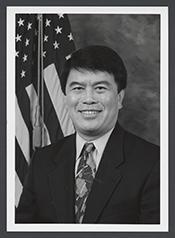
Mr. Chairman, I offer an amendment. Mr. Chairman, I ask unanimous consent that the amendment be modified in the form at the desk. Mr. Chairman, I yield myself such time as I may consume. Mr.…
Mr. Chairman, I offer an amendment.
Mr. Chairman, I ask unanimous consent that the amendment be modified in the form at the desk.
Mr. Chairman, I yield myself such time as I may consume.
Mr. Chairman, there are projects that have undergone all aspects of FTA New Starts review and have, in fact, received recommended ratings in the FTA 2005 New Starts Report, and they are simply awaiting approval to enter final design. These projects have been through financial review, environmental review, project management review, and have fulfilled all of the prerequisites for entering into final design.
However, under our subject legislation, only projects with a full funding grant agreement or letter of intent before enactment of this bill are exempt from the provisions for major projects and small starts. This is a serious problem for smaller projects like a commuter rail project in my congressional district, which are in final design or in the process of having final design approved. I might add this also affects a rail project in the San Diego metropolitan area.
These projects will essentially have to start all over again under the small starts program and, furthermore, such projects will have to await the promulgation of small starts rules before proceeding. This process will result in a year-long delay for projects that are near the end of an already lengthy Federal approval process.
In the case of the commuter rail project in my congressional district, this long delay will seriously endanger State funding and agreed-to rail agreements.
Mr. Chairman, my amendment will exempt projects for which the Secretary of Transportation has received an application for final design from the small starts provisions of the bill. This fair and balanced amendment will allow recommended new starts which have applied for final design to move forward on their original time line and avoid unnecessary delay.
This is expressly limited to subsection (d), small start projects only. My amendment will only affect two recommended small start transit projects in the entire country, but it will save unnecessary administrative delay and also improve the commuting lives of millions of citizens in Oregon and in the San Diego metropolitan area.
Mr. Chairman, I urge adoption of the amendment.
Mr. Chairman, I reserve the balance of my time.
Mr. Chairman, I yield myself such time as I may consume to assure the chairman and ranking member that as originally drafted it applied to both subsection (d) and (e), major starts and small starts. As redrafted in the modified language, this amendment applies only to subsection (d), the small starts provision.
So I want to assure the chairman and ranking member that it does only apply to small starts, what would otherwise be small starts.
Mr. Chairman, I yield back the balance of my time.

Mr. Chairman, I offer an amendment. Mr. Chairman, I ask unanimous consent that the amendment be modified in the form at the desk. Mr. Chairman, I yield myself 3 minutes. Mr. Chairman, first, I want…
Mr. Chairman, I offer an amendment.
Mr. Chairman, I ask unanimous consent that the amendment be modified in the form at the desk.
Mr. Chairman, I yield myself 3 minutes.
Mr. Chairman, first, I want to thank the leadership of the committee for accepting the perfecting amendment. It does track the existing regulations.
This amendment, based upon H.R. 871, which this Member offered last year, would assure that agriculture transporters would continue, that is the important part, would continue to be exempt from hours of service requirements when operating within a 100-mile radius of their point of origin during the very busy and at times short, weather- restrained planting and harvesting seasons of the year.
This is a matter of great importance to the transporters of agriculture commodities and supplies as well as consumers. However, this amendment narrows the definition of commodities and farm supplies, and I think it is appropriate.
The business of farming is driven largely by the weather and the significant demands of spring planting and fall harvest, and farmer's yields and the qualities of their crops depend, to a major extent, on timing. Planting, fertilizing, application of crop protection products and harvest all must be done at the right time, fitted in and around the ups and downs of weather.
During the 1995 National Highway System Designation Act, this Member's initiative led to regulations creating the current exemption. This relief has been threatened by proposed changes to hours of service rules. The provisions to include this amendment are needed to safeguard the continuation of this necessary exemption and to provide a clearer definition and a more restricted definition of agriculture commodities and farm supplies.
It is for this reason that I offer the amendment today. The legislation is supported by 40 cosponsors on a bipartisan basis. The chairman and the ranking member of the committee have received letters from about 35 organizations supporting the amendment.
I ask for its approval.
I yield to the gentleman from Minnesota.
Mr. Chairman, that is correct.
Mr. Chairman, reclaiming my time, I thank the gentleman very much.
Mr. Chairman, I yield such time as he may consume to the cosponsor of the legislation, the distinguished gentleman from Texas (Mr. Stenholm).
Mr. Chairman, I yield such time as he may consume to the gentleman from Alaska (Mr. Young), the distinguished chairman of the committee.
Mr. Chairman, I yield myself such time as I may consume.
Mr. Chairman, I thank the gentleman for his support and appreciate the assistance of the staff on both sides of the aisle as we moved in this direction.
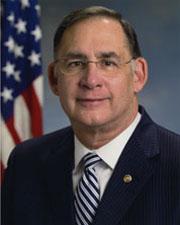
Mr. Chairman, I rise in support of the Bachus amendment. I understand the effects that the new hours of service rule is having on the trucking industry and I also understand the unique operation of…
Mr. Chairman, I rise in support of the Bachus amendment. I understand the effects that the new hours of service rule is having on the trucking industry and I also understand the unique operation of the motion picture drivers.
There are a number of groups who are seeking a modification to the hours of service rule and its for a simple reason--one size doesn't fit all.
The modifications sought by individual groups are understandable and I do support the motion picture industry's efforts. However, I also want to mention that I am also a strong supporter of taking a broader approach to assist all drivers, including short-haul operators in dealing with the new rule.
Options such as providing another 16-hour day to the short-haul drivers and providing all drivers with a defined two-hour rest period are viable options. I plan to continue working on this issue because there are several matters that deserve consideration.
Again, I support the Bereuter amendment and I thank the gentleman for yielding.
Mr. Chairman, I rise in support of the Bereuter amendment. I understand the effects that the new hours of service rule is having on the trucking industry and I also understand the unique operation of the drivers of agriculture commodities.
There are a number of groups who are seeking a modification to the hours of service rule and it's for a simple reason--one size doesn't fit all.
The modifications sought by individual groups are understandable and I do support the agriculture modification. However, I also want to mention that I am also a strong supporter of taking a broader approach to assist all drivers, including short-haul operators, in dealing with the new rule.
Options such as providing another 16-hour day to the short-haul drivers and providing all drivers with a defined 2-hour rest period are viable options. I plan to continue working on this issue because there are several matters that deserve consideration.
Again, I support the Bereuter amendment and I thank the gentleman for yielding.
Mr. Chairman, I yield back the balance of my time.
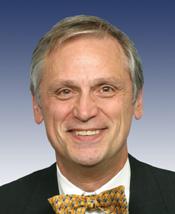
Mr. Chairman, I rise in support of the concept that is being advanced by my friend from New Jersey. One of the things that I had worked on prior to coming to Congress dealt with taking away the cars…
Mr. Chairman, I rise in support of the concept that is being advanced by my friend from New Jersey. One of the things that I had worked on prior to coming to Congress dealt with taking away the cars of repeat drunk drivers.
I listened to the story of Ensign Elliott and, sadly, this is a pattern that is repeated time after time after time. People who commit carnage on our highways, repeat drunk drivers, too often there is a far too long history. If we had an effective program of impoundment or vehicle confiscation, I think we would make a dramatic statement towards the people who are serial abusers.
It is something that I think makes clear that the license to drive is not a license to kill; that if we had a more aggressive program to disarm people who have shown that they are repeatedly dangerous drivers, we can find some common ground.
Too often we have had people who are, for example, in the restaurant and beverage industry that are concerned about how low the blood alcohol level is going to fall. We have had concerns from our friends with the Mothers Against Drunk Driving who want to move forward. Well, this is one people can unite behind.
I appreciate the gentleman bringing it forward. I hope that we can put something in this legislation before we are through that speaks to vehicle impoundment, that encourages States to have vehicle forfeiture, and that we can take a dramatic step towards eliminating the tiny fraction of people who are repeat drunk drivers who inflict such damage on the highways.

Mr. Chairman, will the gentleman yield? Mr. Chairman, the purpose of the amendment, in fact, is to maintain current law and current policy, to make sure that this new law, should it take effect,…
Mr. Chairman, will the gentleman yield?
Mr. Chairman, the purpose of the amendment, in fact, is to maintain current law and current policy, to make sure that this new law, should it take effect, would not change anything.
New Jersey will continue and has declared its intention of arguing this in court; and we, the State of New Jersey, expect to win in court. We just do not want to change the policy with this new legislation. So this was not to side-step the courts but, rather, to keep the law the same.
Mr. Chairman, if the gentleman will continue to yield, this would not preclude the truckers from continuing their suit or the State.
Mr. Chairman, I yield myself the balance of the time, and I will address those points.
The amendment simply allows the States to have the authority that the Department of Transportation determined 5 years ago that they had under that existing transportation law. We just want to make sure that in the legislation we are considering today we do not change that. If it is determined that that is in violation of the Constitution, certainly they will be the governing decision, but if it is not determined, we do not want anything in this law to preclude those States' rights.
With that, I ask support for my amendment.
Mr. Chairman, I yield back the balance of my time.
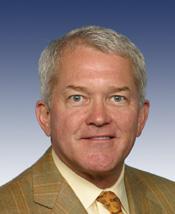
Mr. Chairman, I appreciate what the ranking member and the chairman are trying to do relative to truck safety, but this is a very unique issue. As chairman of the House Entertainment Task Force, we…
Mr. Chairman, I appreciate what the ranking member and the chairman are trying to do relative to truck safety, but this is a very unique issue. As chairman of the House Entertainment Task Force, we have been working consistently to try to keep jobs in America. We are talking about jobs not only about movie stars, but for the grips, the caterers, the production folks. This is a totally different issue.
The truck arrives on the set of a production in the morning, having driven maybe 50, 75 miles, and remains on the set for the remainder of the day before it moves back to its location. This is not long-haul shipping.
Mr. Chairman, we have had enough runaway productions leaving to Canada and other locales. This is one more impediment to keeping film production in the United States. It is a jobs opportunity provision. The gentleman from Alabama (Mr. Bachus), the gentlewoman from California (Ms. Tauscher), and the gentleman from North Carolina (Mr. Coble), I appreciate their sentiments on this. So, please, as we get ready to vote for this amendment, this is not contrary nor trying to be argumentative with our great chairman and ranking member on safety. We all join in the safety of our streets and highways. But we have to be very careful and make this unique distinction to protect jobs.
Show 6 more
Mr. Chairman, I thank the gentleman for yielding me this time. Mr. Chairman, I rise in strong support of the Bachus-Tauscher amendment to clarify the hours of service rule for drivers in the motion…
Mr. Chairman, I thank the gentleman for yielding me this time.
Mr. Chairman, I rise in strong support of the Bachus-Tauscher amendment to clarify the hours of service rule for drivers in the motion picture and television industry.
This industry is vital to California and the Nation, and these new rules inadvertently impact their business model and encourage offshore production. The Teamsters strongly support this amendment because it will save jobs for their members who contribute so much to our economy.
I have tremendous respect for the ranking member of the committee and chairman of the committee, but the facts are that the rulemaking is about long-haul drivers, drivers who are driving many consecutive, consistent hours. This is not the situation here. This industry and the Teamsters have an unblemished record. They have a tremendous safety record. They are not driving for long hours. They are actually driving for less than 100 miles, waiting until the production is done, and then driving back.
We are all for safety, but we also want to keep jobs in this country. This is vital to California. I urge my colleagues to support the Bachus-Tauscher amendment.
Mr. Chairman, let me thank the gentleman from Ohio for his leadership in continuing the provision to buy America. We are in a downturn in our country. Many manufacturing jobs have been lost. This…
Mr. Chairman, let me thank the gentleman from Ohio for his leadership in continuing the provision to buy America. We are in a downturn in our country. Many manufacturing jobs have been lost. This Congress has always supported Buy America in earlier years and in times past. We hope they will come together today to support our amendment.
It is important that we make sure, and a previous speaker said that we may not get the best price. We believe that American workers will have the best price, will have the best manufactured goods and that in this $275 billion bill, much of it should be spent with American manufacturers.
I was just visited by a group of bus manufacturers in my office just last week. They were complaining about how much business they are losing and how many jobs they are losing. I think it is imperative that we adopt the LaTourette-Kilpatrick amendment.
Buy America keeps Americans working, keeps families together and additionally offers revenues for cities across America. I would hope that we would support the LaTourette-Kilpatrick amendment.

Mr. Chairman, I offer an amendment. Mr. Chairman, I yield to myself such time as I may consume. My amendment would prohibit the use of funds for surface transportation projects that are planned or…
Mr. Chairman, I offer an amendment.
Mr. Chairman, I yield to myself such time as I may consume.
My amendment would prohibit the use of funds for surface transportation projects that are planned or required to implement Alternative D of the Master Plan for Los Angeles International Airport or any other proposal to build a remote passenger check-in facility at
Mr. Chairman, I yield myself the balance of my time.
It is unfortunate that there seems to be some agreement between my friends on the opposite side of the aisle and my own caucus in opposing my project. It is very important to my district and all of the areas in the surrounding communities that has formed a coalition, and this is simply a request to say let us not use any of this money for any selfish projects.
This has nothing to do with the building of the facility itself; and, unfortunately, since there has been an agreement, I know that it will be voted down, but I am not at all happy about it.
Mr. Chairman, I thank the gentleman for yielding me this time. Mr. Chairman, this is a good amendment. Outside of industry centers such as New York and California, North Carolina, my State, leads the…
Mr. Chairman, I thank the gentleman for yielding me this time.
Mr. Chairman, this is a good amendment. Outside of industry centers such as New York and California, North Carolina, my State, leads the country in attracting film and television production to our State. This hours of service amendment would allow the motion picture industry to operate under the old hours of service rules under which they have an excellent safety record, but this will also afford them to keep production costs down.
It is imperative, Mr. Chairman, that my State and other States be able to compete for this business. Too much of it is lost to Canada and other countries. As my friend from Alabama just said and gentlewoman from California mentioned, it is a good amendment. The Teamsters support this amendment. I support this amendment. I urge my colleagues to do likewise.
Mr. Chairman, I thank my friend from Nebraska for yielding me time. I also thank the ranking member for his acceptance of this amendment and also the chairman of the committee. Mr. Chairman, this is…
Mr. Chairman, I thank my friend from Nebraska for yielding me time. I also thank the ranking member for his acceptance of this amendment and also the chairman of the committee.
Mr. Chairman, this is a very important amendment for agriculture, the agriculture exemption for truck drivers. Without this exemption, drivers employed by agriculture retailers and farmers during the busy planting and growing season would have to comply with the same stringent rules that apply to long-haul drivers.
U.S. agriculture depends heavily on this limited relief. We have a great opportunity with this amendment to develop a uniform set of regulations that haulers of agriculture commodities will use.
Mr. Chairman, I thank the gentleman for yielding me this time. There are at least three other, and perhaps four other, industries in this country that have come to me asking for an exemption from…
Mr. Chairman, I thank the gentleman for yielding me this time.
There are at least three other, and perhaps four other, industries in this country that have come to me asking for an exemption from this hours of service rule, and we have looked at it very closely, and we feel very strongly that these exemptions should not be granted.
I am a long-time supporter of the Teamsters. I do not think there is an issue that has come before this House that I have not been on their side, but there are some times that we have to protect people from themselves. Consequently, I have to strongly oppose this amendment.
Bill Text
Latest available legislative text
        [Congressional Bills 108th Congress]
[From the U.S. Government Publishing Office]
[H.R. 3682 Introduced in House (IH)]

108th CONGRESS
1st Session
H. R. 3682

To amend title 49, United States Code, to clarify certain Buy America
provisions.

_______________________________________________________________________

IN THE HOUSE OF REPRESENTATIVES

December 8, 2003

Ms. Kilpatrick introduced the following bill; which was referred to the
Committee on Transportation and Infrastructure

_______________________________________________________________________

A BILL

To amend title 49, United States Code, to clarify certain Buy America
provisions.

Be it enacted by the Senate and House of Representatives of the
United States of America in Congress assembled,

SECTION 1. SHORT TITLE.

This Act may be cited as ``Protecting American Manufacturing Jobs
Act of 2003''.

SEC. 2. BUY AMERICA.

(a) Waivers.--Section 5323(j) of title 49, United States Code, is
amended--
(1) by adding at the end of paragraph (1) the following:
``The term `manufactured goods' as used in this paragraph means
each individual item specified in each line item of a
procurement. If the individual items to be procured are listed
in the bill of materials and specifications rather than a line
item, the term `manufactured goods' shall apply to each such
item. The term `manufactured goods' shall not be applicable to
the procurement of rolling stock as set forth in paragraph
(2)(C).'';
(2) by redesignating paragraphs (3) through (7) as
paragraphs (5) through (9), respectively;
(3) by inserting after paragraph (2) the following:
``(3) When issuing a waiver based upon a public interest
determination under paragraph (2)(A), the Secretary shall produce a
detailed written justification as to why the waiver is in the public
interest. The Secretary shall publish such justification in the Federal
Register and provide the public a reasonable period for notice and
comment.
``(4) The Secretary may not grant a waiver under paragraph (2) for
microcomputer equipment. For purposes of this paragraph
`microprocessor' means a computer processor on a microchip.''; and
(4) by adding at the end the following:
``(10) Administrative review.--A party adversely affected
by an agency action under this subsection shall have the right
to seek review under section 702, title 5, United States
Code.''.
(b) Application to Existing Waivers.--Notwithstanding the
amendments made by this section, such amendments shall not modify the
scope or terms of an existing waiver granted by the Secretary of
Transportation that pertains to microprocessors or microcomputers,
including software, incorporated in train control equipment or
communication equipment, as such terms are defined in 49 CFR 661.11 (t)
and (u).
<all>