Keeping America's Promise to Steel Act

Legislative Activity
Stay on top of the latest movement without scrolling through every action
Referred to the Subcommittee on Trade.
December 17, 2003
View full timeline
Introduced in House
December 8, 2003
Referred to the House Committee on Ways and Means.
December 8, 2003
Floor Debate
19 membersWhat members said about H.R. 3699 on the floor
 NA
NA CC
CC MR
MR IS
IS MTM+14
Floor Debate
19 membersWhat members said about H.R. 3699 on the floor
Mr. Speaker, I think it is unfortunate that the discussion here has gone off in directions about what constitutes patriotism or what constitutes the proper recognition of the defense of democracy,…
Mr. Speaker, I think it is unfortunate that the discussion here has gone off in directions about what constitutes patriotism or what constitutes the proper recognition of the defense of democracy, because that is how all this argument started.
Mr. Speaker, I want to indicate to the Members that this issue deserves a full discussion and not just on the floor. We would not be here and there would not be a motion to recommit, which will be made shortly, I can assure you, if we had a full discussion about this and then had gone, probably where it should have gone, to the Committee on the Judiciary, if it needed to go at all, or a decision could have been made as to whether that was the proper venue.
I, too, can have recollections about what happened during Vietnam. I daresay that a lot of people on the floor, Members of this Congress, were not involved in any of that. I know what the first amendment is all about, and I do not think the first amendment says that the Secretary of Defense gets to decide what other people get to say or do in this country under threat of some kind of sanction. To the degree or extent that someone is prevented access that they are entitled to, they have recourse in the courts. That is what we do in a democracy.
I do not notice that it is our job, certainly not in the Committee on Armed Services, to turn over to the Secretary of Defense, any Secretary of Defense, the opportunity to be a prosecutor and a judge and a jury and a sheriff all at the same time.
Now, the facts are, as to the origin of this argument today, that there apparently have been instances in which people disagreed, apparently in some law schools in particular, disagreed with the ``don't ask/don't tell policy'' of the United States Armed Forces. This has nothing to do with what people said or did not say about the Vietnam War. It has nothing to do with what any particular Member's view of that American involvement in the Vietnam war was, let alone the war on terror or anything else. What it has to do is with the present policy, whether you agree with it or not, with the armed services.
Now, if the Armed Services say they want equal access, what was being said apparently by the people at these various schools was that they did not have equal access to being able to join the Armed Services or the Department of Homeland Security, I suppose, or the CIA. Now that needs to be discussed, and it is not going to be discussed in 3 minutes or 5 minutes or 2 minutes here on the floor. It is not even going to come up.
Now I could not find the proper way to make a motion to try to get this before the Committee on the Judiciary so we could have a discussion on what the proper sanctions might be, if they were needed at all, with respect to gaining access for the ROTC or anybody else that want to recruit. I am in favor of that. Those of us who oppose this bill are in favor of it.
I resent on proper grounds here in the House being categorized as someone who somehow wants to thwart the war on terrorism or does not have the correct view on the Vietnam War because I am trying to defend the first amendment and because I would like to see these discussions held in a manner and in a place and in a venue which is appropriate to the circumstances. We need to talk about such issues as to whether everybody in this country is going to be treated equally with respect to being able to join the military
or participate in the Department of Homeland Security or defend our security interests through the CIA and whether they can be hired on the basis of their ability and what they have to offer rather than on what they look like or what their sexual orientation is or anything else. This is not the bill to do it, and it is certainly not the Secretary of Defense who should be doing it.
So what I am asking here is that the Members try to exercise some common sense, some common legislative sense, give us an opportunity to take up this serious issue, which does need addressing, and address it in a manner that will resolve it under constitutional methodology that is worthy of this body.
Mr. Speaker, will the gentleman yield?
I do not dispute that. We did not dispute it in committee. When the issue was raised in committee, what I said is that this issue does need to be resolved so that access is possible, ``Is this the best way to do it?'' Inasmuch as we had to make a decision on the spot, my contention was, and I believe many of us who are forced now, we are forced because the bill is on the floor under a closed rule, I have no choice but to try and oppose it.
Mr. Speaker, I accept everything that the gentleman just said. It is making my point. The reason this bill is on the floor is because the courts ruled that the Secretary of Defense had no basis for making this decision. That is the reason the bill is on the floor.
I realize a lot of Members and their staffs are listening to this discussion in their offices, and they cannot be on the floor because they have other duties; but I am asking them to pay attention to why the bill is on the floor. This bill gives the Secretary of Defense the basis. We are creating another problem instead of solving the problem which is really before us, which is access for ROTC and/or military and other recruiters. If Harvard or any other school is preventing them from coming on, is there no access to the courts? You mean no law exists in the United States to allow people to have proper access? Of course it exists.
The reason for this bill is to make the Secretary of Defense the arbiter of how this is going to take place, even up to the point of getting certification from the school that the Secretary of Defense is satisfied that equal access, et cetera, is going to be provided.
My point is that we are doing this all wrong. If we really want to solve this issue of openness and access and discussion that needs to be taking place and to have the ROTC or the CIA or the Homeland Security Department or whoever it is have access and dialogue and discussion on a civilized basis as to how it should take place, that is available to us. This is not the way to do it. This bill merely enables the Secretary of Defense to be judge and jury over that process, and it will generate a whole new slew of lawsuits that will not solve the question nor even address the question that is before us as to how do we achieve this access. I want that access.
I think it is very unfortunate that the bill is being posited to the body in such a manner that those of us who oppose it seem to be in favor of terrorism or approving arbitrary dislocation of legitimate endeavors to recruit for the ROTC or anybody else. That is not true. On the contrary, I raised the issue in the Committee on Armed Services precisely on the point that I am a libertarian on the issue of free speech and access, and I believe everybody should engage in dialogue and confrontation of the issues in a positive way that gives everybody a chance.
The reason the argument takes place in the first place is that people who are defending those who are prevented from having access to the armed services, apparently those who are gay or lesbian or transgender or whatever other category we are getting into these days, I cannot keep up with every permutation that apparently exists in terms of gender and sexual orientation, but that is not a reason to make the Secretary of Defense the arbiter of it. I do not think, despite his great wit and great perception and depth of interest in world history and events, that the Secretary of Defense is necessarily up on all the latest in transgender fashions. And so I do not think that this is a proper forum nor a proper venue to try and resolve this issue.
My request, Mr. Speaker, of the body is that we give a chance for a motion to recommit to be made so that we can address the issue of access as opposed to addressing the issue which the bill moves toward giving a basis for the Secretary of Defense to make this decision. Let us not confuse the access apple with the orange of the first amendment of the Constitution.
Mr. Speaker, I offer a motion to recommit.
I am, Mr. Speaker.
Mr. Speaker, as was indicated by the gentleman from Massachusetts (Mr. Meehan), the previous speaker, I think all we would like to have here and the reason for recommittal motion is to have some hearings. As the chairman, and I do not if he is still on the floor or not, the chairman of the Committee on Armed Services Committee knows, I have the greatest respect for him and the greatest respect for the bipartisanship that exists on the Committee on Armed Services.
The issue here and the only reason this bill is on the floor is that a court determined that the Secretary of Defense did not have a basis in law for being able to make some of the kinds of decisions which the bill in front of us allows the Secretary to make. The issue involved here is one of access. It is one of equal treatment. The arguments of whether one accepts them or do not accept them have been made that the armed services, I suppose by extension of the bill, the Department of Homeland Security, the CIA, are not allowing equal access to every American and at least in some instances on the basis of their sexual orientation. There may be other issues that are raised in that regard, too. That is worthy of discussion, surely. Whether or not then this bill constitutes a proper response to that difficulty to the degree that it exists is the issue.
The reason I am asking for a vote on recommittal with instructions is not
because I oppose or anyone else, I believe, opposes equal access either for recruitment purposes or other purposes of discussion and dialogue but rather that this bill does not address that fundamental issue and, in fact, will only engender a new series of lawsuits and it will fail to accomplish that which is really the bottom-line, fundamental issue here before us, which is how do we appropriately address the first amendment in the context of recruitment, whether it is for a Federal Government agency of any kind, let alone whether or not the Secretary of Defense should be the arbiter in that regard.
So, Mr. Speaker, with that I am asking that the body vote to recommit with instructions so that we can properly address this serious issue.
Mr. Speaker, I yield back the balance of my time.
Mr. Speaker, I demand a recorded vote.
Mr. Speaker, I want to thank the author of this legislation, the gentleman from Alabama (Mr. Rogers), for his strong leadership needed at this time; and I also want to thank my friend and colleague,…
Mr. Speaker, I want to thank the author of this legislation, the gentleman from Alabama (Mr. Rogers), for his strong leadership needed at this time; and I also want to thank my friend and colleague, the gentleman from Missouri (Mr. Skelton), for his leadership on this issue.
It is very important that we move this legislation forward because it squarely addresses the scandal of American colleges and universities banishing ROTC and military recruiters from campus, while turning around
and cashing the taxpayers' checks from the Department of Defense and other national security and homeland security agencies of our government to the tune of hundreds of millions of dollars.
My alma mater, Harvard University, which bans ROTC from campus, gets more money in Federal taxpayer grants than it does from tuition for undergraduates and graduates combined, and yet Harvard University sends its hard core, a very small number of hearty brave students, down the road to MIT where they have to do their MIT-based ROTC training because they cannot be on campus. They do not meet Harvard standards because they want to affiliate themselves with the United States military.
The attacks on America, on the World Trade Center and on the Pentagon should have been a wake-up call to schools such as Harvard, which banished ROTC from campus 35 years ago. There is now a feeble pretext for this military ban on America's elite campuses. It is alleged that it is a protest against the Clinton administration's ``don't ask/don't tell policy'' for gays in the military. I find that exceptionally hard to believe, because no mention was made of this problem in 1969 when the ban was put in place.
I was on Harvard's campus during the Vietnam War. I remember when South Vietnam fell to the Communists, and I saw the biggest demonstration that I had seen yet on Harvard's campus, with students out in the streets chanting, ``Ho, ho, Ho Chi Minh, the Vietcong are going to win.'' That is where this ban came from.
It has been a long time since the Vietnam War, John Kerry notwithstanding; and it is high time that we recognize what happened to us on September 11, that we recognize that it was U.S. troops who were defending the Harvard students at Logan Airport in the hours after the 9/11 attacks. And, of course, Boston's Logan Airport was one of the staging airports for the 9/11 attacks on this country.
As our Nation wages an aggressive campaign to defeat global terrorism, President Kennedy's call to young people to ``ask what you can do for your country'' is more important than ever. America's armed forces are hunting down al Qaeda and other supporters of terrorism in Afghanistan, in Iraq, and on every continent around the globe. Never in recent history have we asked more from our Armed Forces, and never have we needed more educated leaders in our armed services.
The best contribution Harvard could make, the best contribution Yale could make, the best contribution that Stamford and Columbia could make to sound, wise policies in our Nation's military is to permit their graduates to enter into leadership posts there. But even a Harvard alum, who is a military recruiter, cannot go on campus to do it.
Now I have heard this is not really about the military, that this is a punitive measure aimed at the colleges themselves. But the military did not start this fight; and, in fact, look at what the universities' policies have accomplished over the last several decades.
In 1964, there were 268,000 ROTC students on America's campuses. Today, it is down to 50,000, a decline of more than 80 percent.
The military is being hurt by these policies, and America is being hurt by these policies. Today, successful recruitment of exceptional officers depends more heavily than ever on the Reserve Officers Training Corps. This past year, 70 percent of the Army's newly commissioned officers came from ROTC.
As chairman of the Select Committee on Homeland Security, I have been deeply gratified and humbled as I have seen how many of America's best and brightest have been willing to volunteer in service to their country in the fight against terrorism, both through ROTC and through choosing a career in the military upon graduation. But many of these same schools that are banning ROTC on campus are also banning even military recruiters from coming to campus.
The premise of this bill is a simple one: Colleges that discriminate against the United States Armed Services should not receive U.S. taxpayer funds related to national defense and homeland security. The bill will stop the current abusive practice under which schools ban ROTC and military recruiting but then turn around and cash enormous checks from the Department of Defense and the Department of Homeland Security. It will require they certify that they do not discriminate and that they will permit ROTC recruiters and ROTC training programs on campus.
Today, as our Nation calls for able new leaders in the war on terror, it is time for our universities and our colleges in America to honor that call and help lead our Nation.
Mr. Speaker, I thank the gentleman from Alabama (Mr. Rogers) for bringing this important legislation to the floor.
Mr. Speaker, I thank the author of the bill for yielding me this time.
Just to respond to the preceding speaker, the gentleman from Hawaii, this is not about telling people what to think or what to say. It is about giving students freedom of choice. This is all about whether or not students have access on campus. At Harvard, the undergraduate council voted overwhelmingly to invite ROTC back on to campus, but the school has taken no action. So it is the students who are being shortchanged.
As to whether this is completely unrelated to Vietnam, I will state that that is just wrong as a matter of fact. This ban at Harvard University, where I am a former member of the faculty, I am reasonably familiar with this, and a graduate of two schools at Harvard, in 1969 at Harvard, the faculty voted to ban the military from campus in protest to the Vietnam War and that ban has been in place ever since. My contention is that 9/11 should serve as a wakeup call, welcome to the 21st century. Let us revisit this, and get it back to where it belongs.
I yield to the gentleman from Hawaii.
I appreciate the gentleman's point, and reclaiming what little time I have, I will just say simply that we have students who are going to graduate. This has been going on for some years. 9/11 was a few years ago. At Yale where the school is happy to cash the ROTC scholarship checks, the Yale students have to travel 75 miles to the University of Connecticut and then 75 miles back, 150-mile round trip, they have to do this three times a week. It is an extraordinary burden to place just so that the university can make a point that joining the military is not what we want our students to do.
Mr. Speaker, pursuant to House Resolution 580, I call up the bill (H.R. 3966) to amend title 10, United States Code, and the Homeland Security Act of 2002 to improve the ability of the Department of…
Mr. Speaker, pursuant to House Resolution 580, I call up the bill (H.R. 3966) to amend title 10, United States Code, and the Homeland Security Act of 2002 to improve the ability of the Department of Defense to establish and maintain Senior Reserve Officers Training Corps units at institutions of higher education, to improve the ability of students to participate in Senior ROTC programs, and to ensure that institutions of higher education provide military recruiters entry to campuses and access to students that is at least equal in quality and scope to that provided to any other employer, and ask for its immediate consideration.
Mr. Speaker, I yield myself such times I may consume.
Mr. Speaker, I rise in support of H.R. 3966, the ROTC and Military Recruiter Equal Access to Campus Act of 2004. It is based on one simple principle: Colleges and universities that accept Federal funding should also be willing to permit military recruiters equal access to students in ROTC scholarship programs.
Specifically, H.R. 3966 would first require colleges and universities to give military recruiters access to campus and to students that is equal to in quality and scope as that provided to any other private employer.
Secondly, the bill would require an annual verification from colleges and universities who already support ROTC programs that they will continue to do so in the upcoming academic year.
Thirdly, it will add two additional defense-related funding sources, the Central Intelligence Agency and the National Nuclear Security Administration of the Department of Energy, to the potentially prohibitive funding sources already specified in the law.
And, finally, it restores the Department of Transportation to the list of funds that might be terminated. These were inadvertently left out in the 2002 change in the law.
Mr. Speaker, I would also like to emphasize this bill does not in any way disturb or interfere with Federal financial student financial aid.
This law is known as the Solomon amendment after its Congressman, Gerry Solomon of New York, began this as a House amendment adopted in a bipartisan vote in 1995.
The following year, Congress imposed the loss of DOD funding on institutions of higher learning that had an anti-ROTC policy. That same Congress added the Departments of Education, Labor, and Health and Human Services to the list of potentially prohibited funding sources. Then the Homeland Security Act of 2002 added funding from the Department of Homeland Security to the list.
Mr. Speaker, I believe that now Congress must once again revisit this law. Recently, barriers have been erected by some colleges and universities to military recruiters having access to students on campus, particularly in their law schools.
But what has really created a real sense of urgency for us to act now is the recent court decision of Forum for Academic and Institutional Rights, otherwise known as FAIR, versus Donald Rumsfeld. FAIR was a consortium of an unknown number of anonymous law schools in this case.
In the U.S. District Court of New Jersey in September, 2003, the plaintiffs sought a preliminary injunction against the DOD from enforcing Solomon.
In his opinion on November 5, 2003, the judge denied the motion and upheld the constitutionality of the Solomon amendment, but he noted that law schools are loathe to endorse or assist recruiting efforts of the United States military, and he criticized the government's assertion that the Solomon amendment requires colleges and universities to give military recruiters access to campuses and students equal to that given to recruiters from other employers.
In response to the judge's ruling, the Secretary of Defense has asked the Congress to clarify the Solomon amendment to state unequivocally that the military should have the same equal access in scope and quality to that of any other civilian employee.
H.R. 3699 will do just that. I urge support of the House.
Mr. Speaker, I reserve the balance of my time.
Mr. Speaker, I yield 2 minutes to the gentleman from California (Mr. McKeon), a member of the Committee on Armed Services and a cosponsor of this bill.
Mr. Speaker, I yield 3 minutes to the gentleman from California (Mr. Cunningham), a distinguished member of the Committee on Appropriations.
Mr. Speaker, I yield 2 minutes to the gentleman from Iowa (Mr. King), a member of the Committee on the Judiciary and a cosponsor of H.R. 3966.
Mr. Speaker, I yield 2 minutes to the gentleman from Alabama (Mr. Bachus), who is also a cosponsor of this piece of legislation.
Mr. Speaker, I yield 2 minutes to the gentleman from Georgia (Mr. Gingrey), a distinguished member of the Committee on Armed Services and also a cosponsor of this legislation.
Mr. Speaker, I yield 5 minutes to the gentleman from California (Mr. Cox), Chairman of the Select Committee on Homeland Security and an original cosponsor of H.R. 3966.
Mr. Speaker, I yield 2 minutes to the gentleman from California (Mr. Cox).
Mr. Speaker, I yield 1 minute to the distinguished gentleman from California (Mr. Hunter), chairman of the Committee on Armed Services.
Mr. Speaker, I yield 1 minute to the distinguished gentleman from Virginia (Mr. Cantor).
(Mr. CANTOR asked and was given permission to revise and extend his remarks.)
Mr. Speaker, I yield 2 minutes to the gentleman from South Carolina (Mr. Wilson).
Mr. Speaker, I have no further requests for time, and I reserve the balance of my time.
Mr. Speaker, I yield back the balance of my time.
Yes, Mr. Speaker.
Mr. Speaker, I rise in strong opposition to the motion to recommit.
This motion is simply an effort to empower those who would oppose fair access to military recruiters to our colleges and universities with the authority to treat recruiters as second-class citizens.
H.R. 3966 would ensure nothing more than fair and equal treatment of recruiters. This amendment would put the fox in the hen house, so to speak, by giving the Association of American Law Schools the authority to judge if the recruiter has been provided equal treatment with other employers. This is the very group which has fostered the attitude among law schools to resist compliance with the law. We, the Congress, must make the decision, not the people who would oppose any form of military presence on campus. It is up to Congress to decide the level of access that should be granted. We must reject this motion.
Mr. Speaker, I yield back the balance of my time.
Mr. Speaker, I yield myself such time as I may consume; and I rise in support of this bill, the ROTC and Military Recruiter Equal Access to Campus Act of 2004. First, I want to recognize the…
Mr. Speaker, I yield myself such time as I may consume; and I rise in support of this bill, the ROTC and Military Recruiter Equal Access to Campus Act of 2004.
First, I want to recognize the gentleman from Alabama (Mr. Rogers) for his efforts to bring this measure to the floor, and we thank him for that. While some of my colleagues may oppose this bill, I believe it is important that Congress support efforts to ensure the military recruiters have equal access to all post-secondary institutions of higher learning, as well as law schools and graduate schools.
The propensity for young Americans to volunteer for military service, as well as public service in general, has been declining; and we need to ensure that our military is a reflection of our society, which means that military recruiters need access to all young men and women, including those who attend colleges as well as universities.
I want to take this opportunity to commend our Nation's military recruiters. Recruiting duty is not for the faint of heart. Recruiters often face long hours and demanding duty tracking down student contacts, meeting with prospective candidates, meeting with their families, traveling across the region to attend recruitment fairs and other related activities. To succeed, they must always be available wherever and whenever a prospective candidate may be. Recruiting is a serious, stressful, and vital job in the military; and only the best and brightest in these services are chosen in this capacity.
So we need to make every effort to ensure that military recruiters are successful in their job because it directly affects our national security. Tomorrow's military will be more high-tech, more sophisticated, and more demanding than today's. So we need to recruit bright and competent and knowledgeable people. We can only do this if our military recruiters get fair and complete access to our college campuses and to its students.
Thus, I urge my colleagues to support the bill and provide equal access for military recruiters.
Mr. Speaker, I reserve the balance of my time.
Mr. Speaker, I yield 3 minutes to the gentlewoman from California (Ms. Woolsey).
Mr. Speaker, I yield myself such time as I may consume.
First, let me say I thank the gentleman from California for his kind and generous comments, who wore the uniform so well, not only brought distinction to himself but to our country, and we thank him for his service.
Mr. Speaker, I yield 3 minutes to the gentleman from Massachusetts (Mr. Frank).
Mr. Speaker, I continue to reserve the balance of my time.
Mr. Speaker, I yield 4 minutes to the gentleman from Hawaii (Mr. Abercrombie).
Mr. Speaker, I yield 5 minutes to the gentleman from Hawaii (Mr. Abercrombie).
Mr. Speaker, I yield 3 minutes to the gentleman from Massachusetts (Mr. Meehan), who is a member of the Committee on Armed Services.
Mr. Speaker, I yield myself such time as I may consume.
This bill attempts to correct a situation wherein a military ROTC recruiter seeking access would, in essence, be sent to the basement or to another building where corporations such as General Motors and the like recruiting would have the first floor and easy availability to the young Americans. So I do support this bill, and I intend to vote in favor thereof.
Mr. Speaker, I yield back the balance of my time.
I thank the gentleman for yielding me this time. Mr. Speaker, this bill was rammed through the Committee on Armed Services 2 weeks ago without a single hearing. Without a single hearing. I guess it…
I thank the gentleman for yielding me this time.
Mr. Speaker, this bill was rammed through the Committee on Armed Services 2 weeks ago without a single hearing. Without a single hearing. I guess it should not be a surprise because it seems that time and time again the leadership has forced votes on the floor without holding committee hearings. We did not have a committee hearing on the bill with the Medicare prescription drug language that came before this Congress, so I guess it should not be a surprise that we did not have a hearing on this particular piece of legislation.
This bill is designed to force universities to violate their own policies against discrimination on the basis of sexual orientation and will undermine pending lawsuits that challenge the so-called Solomon amendment.
We all strongly support efforts of the United States military to recruit on our Nation's campuses, especially in a time of war. But the gentleman from Alabama would agree at the time that we debated this in committee, only one educational institution in the country was brought before us that denies access to military recruiters and that school received no Federal funding to begin with. Furthermore, every campus on which the Department of Defense elects to have ROTC currently has an ROTC presence.
This is because universities are already forced to compromise their nondiscrimination policies in order to receive most of the Federal funding they compete to obtain under the Solomon amendment.
So why are we introducing a bill that would broadly expand the prohibition on Federal funding to schools that do not allow access to military recruiters when only one institution, at least at the time that we dealt with this bill that was available, that prohibited this? I have serious concerns about restricting additional funding such as grants for homeland security, intelligence programs to universities, particularly when the authority to define ``equal access'' lies solely in the hands of the Secretary of Defense.
This bill is a drastic solution to a problem that I do not think even exists. In fact, there is no crisis in military recruiting on student campuses or anywhere else in the country. The Defense Department has reported to our committee that they are exceeding all of its recruitment and retention goals in each of the active duty services since 2001 and is actively downsizing certain specialties requiring advanced degrees.
In 2003, the Army surpassed its recruiting objectives for new contracts by 9.1 percent and new recruits by 0.4 percent, while the quality of new recruits have increased dramatically.
So if we are going to pass such a drastic piece of legislation, it seems to me we should at least have a hearing, have an opportunity to debate. I thought the gentleman from Hawaii said it best in committee. It is like trying to deal with a little problem of a fly with a sledgehammer. It does not make any sense. We should send this bill back into the committee and have a hearing on it and discuss these issues so that we know what the consequences of the language in this bill are.
Show 8 more
Mr. Speaker, I agree that being able to serve in the military is an important opportunity. I am here opposing this bill because I want to expand that opportunity. This is not a bill brought forward…
Mr. Speaker, I agree that being able to serve in the military is an important opportunity. I am here opposing this bill because I want to expand that opportunity.
This is not a bill brought forward because the military is having trouble recruiting on campuses. It is brought forward to penalize those universities which have said, look, as a matter of principle we do not want you recruiting among our students if they are not all equally able to take advantage of the opportunity offered. Obviously, there are some things for which you recruit, some people are physically or otherwise ineligible, but universities have said we do not believe that ruling out gay and lesbian young people who would like to join the military is fair to them, and we certainly do not think you should come to our campus and use our facilities and discriminate in a way that we think is unfair among our students.
I agree very much that we should be doing all we can to get people into the military. I will repeat what I said a little while ago, repetition being one of the privileges of our profession.
We have fewer Arabic-speaking translators in the military today because of the policy which kicked out a number of people at the Army language school because they were discovered to be gay. These were people who would, if they had not been kicked out some time ago, been available today to do that important job of translation. I am talking about seven people who were learning Arabic who would today be available in a greatly needed theater.
So, no, there is nothing antimilitary about people saying, look, this is a wonderful institution; yes, the ability to serve your country and its uniform is a very important one; please do not deny it to us on an irrelevant basis. Do not say because of the way we were born and because of our inherent natures we cannot participate in this.
I cite that because I have heard all the leaders in the military from Colin Powell on since this has been discussed say, look, it is not that the gay and lesbian members of the military do a bad job. There is prejudice in this society. There are people who are uncomfortable in their presence, and we have to honor that argument as well. It is bad for morale.
Of course, the Israeli Defense Force is not being able to afford the luxury of discrimination. They have mobilized all of their people, including gays and lesbian people, and no one has suggested that they are an ineffective fighting force or have inappropriate morale.
So I would very much like to agree with the principle that we should expand opportunities for young people, that we should increase our ability to recruit. The way to do that is to change the policy, and we should not be penalizing those institutions which, as a matter of principle, are working for a change in that policy.

Mr. Speaker, initially I would like to thank the gentleman from Alabama (Mr. Rogers) for bringing this bill before us. It is something I have looked at for some time, and it is something that I…
Mr. Speaker, initially I would like to thank the gentleman from Alabama (Mr. Rogers) for bringing this bill before us. It is something I have looked at for some time, and it is something that I certainly support.
It would be my endeavor to bring individual amendments to the appropriations process if we needed to in order to reestablish the pre- eminence of the military on our campuses across this country.
This is something that started back in the 1970s as part of the protests against the Vietnam War; and, slowly, this kind of policy that has been a resistant to recruitment and ROTC on our campuses across this country has used every tool available.
Well, I want to announce that this is about discrimination, this issue is; but it is about discrimination against young men and women in uniform. Whenever somebody stands up in a uniform, we will find somebody with another agenda trying to find a way to erode the values that put them in that place; and so the argument was made, for example, the Boy Scouts would be one, and of course, all our men and women in uniform in the Army, Navy, Air Force and Marines and the Coast Guard are also victims of an effort that is keeping us from recruiting good people because the campuses have lined up against the recruitment on campus.
I look forward to the day that ROTC or any recruiter can set up a card table on the commons at Harvard University on the exact location where George Washington received his commission as commander of the Continental Army. I find that a real offense to the United States, not to have the freedom to do that and to promote it.
A statement was made by the gentlewoman earlier that in no other field can a person be fired for being gay. Well, no, probably not; but most people in this country are at-will employees, and they can be fired for no reason or any reason at all.
It is not a matter about open discrimination.
I would like to relate a little story, Mr. Speaker.
State Senator Jerry Behn from Iowa asked the question, when lobbied by the gay lobby, answer me this: Am I heterosexual or am I homosexual? They looked at him for a while and they said, well, we do not know.
That is the answer. You cannot tell. Keep it private.
Mr. Speaker, I want to commend the gentleman from Alabama (Mr. Rogers) and also my friend, the gentleman from Missouri (Mr. Skelton), who I have the utmost respect for, and he knows that. This is not…
Mr. Speaker, I want to commend the gentleman from Alabama (Mr. Rogers) and also my friend, the gentleman from Missouri (Mr. Skelton), who I have the utmost respect for, and he knows that.
This is not an issue of homosexuality. It is not an issue that a lot of my left wing friends talk about, but every day they will stand up on this House floor and say I am for the troops. Of course, everybody is; but yet they vote against defense bills, they vote against intelligence bills, and they also vote against or for every amendment that would gut both military and defense.
We have an all-voluntary force, and to allow access on to our campuses is a good thing. I do not know about my colleagues; but when I see a young man or woman walking the streets, especially around D.C. here, I see pride. I see pride in service and support of this country, and they represent the same thing on our colleges and our universities; but, yet, there is still those that would block that using a whole host of examples of why not to do it.
This ends a form of discrimination and restriction on free exchange of ideas and opportunities. I cannot tell my colleagues the number of people that I served with, young Filipinos, earning their citizenship by serving on ships, young men and women in minorities that come from our inner cities that normally would not have a chance to achieve. Many of those people have learned their discipline and their leadership skills from the military where they would not otherwise have had a chance. They would end up in a low-paying job or on welfare or whatever. It is a great opportunity, and we ought to let this opportunity have some light and have equal representation on our campuses.
That is why we are standing here. That is why my friend, the gentleman from Missouri (Mr. Skelton), and most of the Members on both sides of this aisle are here; but yet the liberal left will fight it tooth, hook and nail, just like they vote against defense and they vote against Intel and then say we are for the troops.
Well, there is a line. Patriotism is unchanging and a work that has to be taken every single day. I want to thank my friends for supporting this bill.
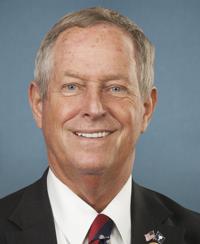
Mr. Speaker, it is an honor for me to be here today with the gentleman from Alabama. I appreciate very much his leadership to promote the ROTC and Military Recruiter Equal Access to Campus Act of…
Mr. Speaker, it is an honor for me to be here today with the gentleman from Alabama. I appreciate very much his leadership to promote the ROTC and Military Recruiter Equal Access to Campus Act of 2004. I have heard the comments by the distinguished chairman of the Committee on Armed Services, the gentleman from California; and I agree with him that this is about providing choices. It is also about providing opportunities.
I know firsthand. I had the opportunity to experience a career of 4 years of ROTC at Washington & Lee University in Lexington, Virginia. From that it led to my ability to serve in the National Guard for 31 years. I am very grateful for what ROTC did for me. Additionally, my oldest son is a graduate of Francis Marion University in Florence, South Carolina, ROTC. He went on to law school and now is serving in Iraq. I am very proud of his service because of ROTC and the opportunities it has provided. And in 5 weeks I am looking forward to attending the graduation of my third son from Clemson University. He is in Army ROTC, as one might expect. I am just really proud of his service and the opportunities that he will have to serve in the military.
I also am aware of opportunities for minorities in the State of South Carolina. A classic case is someone who is known here in Congress, General Abe Turner. General Turner is a graduate of South Carolina State University, which is one of our historically black colleges which is very distinguished. I was with General Turner. He is now the commanding general of Fort Jackson in South Carolina. These are opportunities that have been provided to young people to go to college and have the ROTC experience.
Finally, I want to point out that particularly for law schools, I think it is important to have access. I served in the Judge Advocate General Corps for 29 years. There is no better way to get trial experience, to learn about the law and the laws of the United States than to serve in the JAG Corps. I urge that this bill be passed, that indeed we have access for law schools. I am just grateful for this and urge my colleagues to support this act for ROTC recruitment.

Mr. Speaker, I rise in opposition to the ROTC Campus Access Act. This bill is wrong. It isn't about promoting military recruiting, its about punishing institutions that promote equal access to…
Mr. Speaker, I rise in opposition to the ROTC Campus Access Act. This bill is wrong. It isn't about promoting military recruiting, its about punishing institutions that promote equal access to opportunity.
The fact is this bill will prohibit colleges and universities from applying their same non-discrimination policies to the military that they apply to other employers. And, if they try to do so, it will bar them from receiving federal funding.
Passage of this legislation is not only wrong, it's unnecessary. Current law already provides the federal government the ability to deny federal funding to colleges and universities that refuse to allow military recruiters or ROTC programs access to their campuses.
This bill takes that law a step further by requiring that such access be equal to the access provided to other potential employers seeking to recruit new employees on college campuses.
The problem with taking this extra step is that it would require many colleges and universities to explicitly ignore their own non- discrimination policies or lose their federal funding.
Many colleges and universities require employers to sign a non- discrimination pledge before they recruit on campus. That means employers cannot discriminate against prospective employees on many bases--including sexual orientation. Yet, our Military's ``don't ask, don't tell'' policy is straight-forward discrimination and in direct conflict with college policies of this nature.
If this bill becomes law, and a college or university attempted to downplay the
prominence of the ROTC recruiting effort by placing them in a not-so- central location for their recruiting efforts, they could lose all federal funding. This is draconian, extreme, and wrong.
We ought to be voting today to overturn the military's don't ask don't tell policy and instituting a policy that prohibits discrimination based on sexual orientation. But, this Congress is unwilling to take the right step. They're putting the wrong foot forward on this one.
I urge my colleagues to join me in standing up to oppose discrimination and vote ``no'' on this bill.

Mr. Speaker, I thank the gentleman from Alabama (Mr. Rogers) for yielding time and for his great leadership in bringing this important bill to the floor. Mr. Speaker, it goes without saying that…
Mr. Speaker, I thank the gentleman from Alabama (Mr. Rogers) for yielding time and for his great leadership in bringing this important bill to the floor.
Mr. Speaker, it goes without saying that military service is the greatest form of duty and sacrifice that any American can have for their country. The brave men and women of our Armed Forces selflessly fight day in and day out to protect America from terror and tyranny from every corner of this world. Military service is more than just a job. It is a duty bound calling and every American should have the opportunity to serve their country in this way if they so choose.
That is why it is so important to pass H.R. 3966 today. This bill will give military and ROTC recruiters the opportunity to have the same unencumbered recruitment ability as other prospective employers on college campuses. For too long, military recruiters have been treated like second-class citizens on some college campuses and have been subjected to undue obstacles that no other recruiters have had to endure.
Some colleges and universities, for example, have required military recruiters to set up their recruitment tables off campus, while allowing other employers to recruit on campus. On other college campuses, ROTC recruiters were only given the option of using remote and inaccessible rooms for their recruitment, significantly reducing their ability to reach students. Shockingly, at one of the most prestigious colleges in this country, New York University, potential recruits were harassed and detained by protestors; and their pictures were displayed throughout the school on a poster entitled ``Face of Complicity.'' This is absolutely unacceptable, and that kind of behavior cannot happen again.
Mr. Speaker, our Nation is involved in a global war on terror, and we must have the best and the brightest working on our side to win. Our college campuses are filled with the next Norman Schwarzkopfs and Colin Powells, and we must give them the chance to fulfill their full potential as Americans.
I urge my colleagues to join me in passing H.R. 3966.

Mr. Speaker, I thank the gentleman for yielding me this time. First of all, I want to express my respect for my colleague, the gentleman from Alabama (Mr. Rogers), for bringing this legislation to…
Mr. Speaker, I thank the gentleman for yielding me this time.
First of all, I want to express my respect for my colleague, the gentleman from Alabama (Mr. Rogers), for bringing this legislation to the floor.
I will say this. It is a sad commentary on our time when we even have to have legislation like this. You would not really think in a country that is at war, and we are at war, with soldiers in the field, young men and women risking their lives every day, that such disrespect would be shown to them by men and women their own age.
My son is a Marine. I cannot imagine him being assigned to a college, a university. He has actually left college to go in the Marines. I cannot imagine him coming home from the sacrifice he has made, going on to that college campus and seeing young men and women who, while he was serving in the Marines, were enjoying their college education because he and other young men and women sacrificed for them and served in their place.
The gentlewoman, who I respect from the San Francisco Bay area, and the gentleman from Massachusetts, who I respect, they both said this is about discrimination. I think the gentleman from Iowa said it best when he said it is about discrimination, but it is about discrimination against our military and those that serve in our uniform.
Let us not involve our young men and women who are risking their lives every day. Let us not involve them in some policy discussion. Let us not endanger their lives and the lives of those who serve next to them in this debate.
If law students want to debate this issue, if they want to write in the paper, that is one thing, but when they block military recruiters, as they have done, it is time for us to end this foolishness. It is our responsibility as a Congress. Support this legislation.
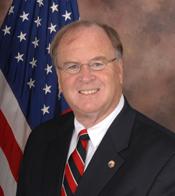
Mr. Speaker, the bill we are debating today, H.R. 3966, purports to provide military recruiters entry to college campuses, and access to students that is equal to what any other employer has.…
Mr. Speaker, the bill we are debating today, H.R. 3966, purports to provide military recruiters entry to college campuses, and access to students that is equal to what any other employer has. However, the military is actually seeking special access that is not afforded to other employers that practice discrimination based on sexual orientation.
Equality was not a concern for the military in 2002 when they discharged 16 Arabic linguists from the Defense Language Institute in my district. Despite the high demand for Arab linguists, the military discriminated against these service members based on nothing more than their sexual orientation.
Schools should not be forced to choose between federal funding and their commitment not to endorse discrimination. The schools' standards of non-discrimination should apply to any organization, be it private sector or public that is seeking access to a campus and its students.
One of the Congressional findings that is incorporated in this bill states that ``the presence of ROTC programs on college campuses benefits even those students who are not enrolled by making them aware of the presence and role of the United States military.''
I wonder what the benefit is to the gay and lesbian students whose talents and skills are utterly disregarded by the military, simply because of their sexual orientation.
I encourage all of my colleagues to vote against this bill and for true equality.
Show 6 more

Mr. Speaker, today we are debating a bill which at first appears to be fairly straightforward. H.R. 3966 would seem to provide the military recruiters the same access to college and university…
Mr. Speaker, today we are debating a bill which at first appears to be fairly straightforward. H.R. 3966 would seem to provide the military recruiters the same access to college and university campuses that other government agencies and private companies are receiving, but the reality is that this bill is not about equal access. It is about discrimination, pure and simple.
If H.R. 3966 passes, then colleges and universities that otherwise adhere to strict antidiscrimination policies will be forced to allow organizations like ROTC to openly discriminate against gays, lesbian and bisexual men and women. The flawed ``Don't ask, Don't tell'' policy that the military has adopted allows the military to discharge any serviceman or servicewoman who is determined not to be straight. In no other field can someone be fired simply for being gay.
H.R. 3966 is nothing short of an open and codified policy of intolerance, intolerance against homosexuals, for the reason of their sexual orientation. Until the incredibly unjust ``Don't ask, Don't tell'' policy is drastically altered, bills like H.R. 3966 will continue to allow for the open discrimination against one group of Americans.
The truth is that H.R. 3966 would unfairly punish those universities who are bold enough to apply the same rules to military recruiters as they do to all other employers, employers who are recruiting on their campuses.
I will vote against H.R. 3966.
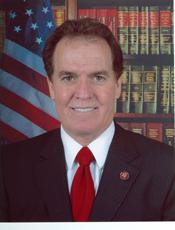
Mr. Speaker, I thank the gentleman from Alabama for yielding me this time and for bringing this bill, H.R. 3966, before us today. Mr. Speaker, I am in strong support of H.R. 3966, which would require…
Mr. Speaker, I thank the gentleman from Alabama for yielding me this time and for bringing this bill, H.R. 3966, before us today.
Mr. Speaker, I am in strong support of H.R. 3966, which would require that colleges and universities give military recruiters the same access to students as other employers.
We as a Nation depend on the brave service of our military to protect our homeland, but do we honestly think that we are going to recruit the best and the brightest young men and women to serve if their schools are not even letting recruiters in the door? And that, Mr. Speaker, is exactly what is happening. That is why we need this bill.
Mr. Speaker, we rely on an all-voluntary force, which means that students choose whether or not to serve in the military or to pursue a civilian career. I hope that we can all agree that for our safety and the safety of our children and our grandchildren we want to have the smartest and the most capable military possible. But, remarkably, some schools choose to leave military recruiters out in the cold. Mr. Speaker, H.R. 3966 will serve to right this terrible policy of excluding military recruiters from our campuses.
Again, I commend the chairman, I commend the gentleman from Alabama (Mr. Rogers), and I rise in 100 percent support of it, and I hope we have bipartisan support and pass H.R. 3966.

Mr. Speaker, I want to commend the gentleman from Alabama. I rise in support of H.R. 3966. This bill is about the war on terror. It is about the obligation that we have to sustain a viable Armed…
Mr. Speaker, I want to commend the gentleman from Alabama. I rise in support of H.R. 3966. This bill is about the war on terror. It is about the obligation that we have to sustain a viable Armed Forces. It is my understanding that the judge in the
FAIR case did not disagree with the Secretary of Defense's obligation to build up our Armed Forces and did not disagree that there should be equal access and treatment of our recruiters, but I think that the findings were that there was not explicit statutory direction or authorization to do so, and that is why we are here.
As the gentleman from California previously stated, this is about abandoning the Vietnam-era rejection of the values associated with service in the military. I find it ironic. There is a lot of discussion today on the floor about these institutions of higher learning that enjoy such a worldwide reputation and a lot of talk about their enjoyment of their freedom of expression and protection of free speech, and at the same time what they are doing is trying to advocate a specific position and denying choice to our students. I commend the gentleman and urge the passage of this bill.

Mr. Speaker, I want to thank the gentleman for his sponsorship of this bill and also the gentleman from California (Mr. Cox) for doing so much work on it, but also just to comment that this is not…
Mr. Speaker, I want to thank the gentleman for his sponsorship of this bill and also the gentleman from California (Mr. Cox) for doing so much work on it, but also just to comment that this is not just for the recruiters, that people go to institutions of higher education to avail themselves of thousands of choices for career paths. As we think about the officer corps that is performing right now in theater in Iraq, for example, and we look at the leadership which not only has fought a war and now is working an occupation but is also standing up governments, people who have never talked, who have never voted together, who have never worked things out in a peaceful fashion, bringing them together and standing up governments and introducing the idea of democracy to those who have not entertained it before, that is an exciting occupation. Bringing the prospects for that occupation to be a leader in the Armed Forces of the United States, to be what most American citizens feel are our finest citizens, is a great opportunity. This bill, the Rogers bill, will ensure that those people have that choice. I thank the gentleman for bringing it up.

Mr. Speaker, I voted against this legislation as it does not seem fair to cut off federal funds to institutions that have policies against allowing recruiters on campus from employers that have an…
Mr. Speaker, I voted against this legislation as it does not seem fair to cut off federal funds to institutions that have policies against allowing recruiters on campus from employers that have an open policy of discrimination. We should not be punishing universities that have legitimate policy differences. As long as the military continues its ill-advised policy of prohibiting service by openly gay members (although it's interesting that, in times of war, gays and lesbians are considered valuable to our country and not forced out of the military) we should not force them to break their non- discrimination policies for the military.
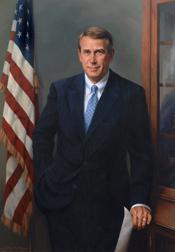
Mr. Speaker, I rise today in strong support of this measure, which shows our Nation's unwavering commitment to both higher education and providing a strong national defense. At no time in recent…
Mr. Speaker, I rise today in strong support of this measure, which shows our Nation's unwavering commitment to both higher education and providing a strong national defense. At no time in recent memory has the United States placed more responsibility on our men and women in uniform. We are fighting a war on terrorism on multiple fronts, in Afghanistan and Iraq, and it is essential, if we are to be victorious in defending our freedom and protecting our homeland, that we promote military service as an option to college students across the
Bill Text
Latest available legislative text
        [Congressional Bills 108th Congress]
[From the U.S. Government Publishing Office]
[H.R. 3699 Introduced in House (IH)]

1st Session
H. R. 3699

To reinstate the safeguard measures imposed on imports of certain steel
products, as in effect on December 4, 2003.

_______________________________________________________________________

IN THE HOUSE OF REPRESENTATIVES

December 8, 2003

Mr. Visclosky (for himself, Mr. Kucinich, Mr. Murtha, Mr. Mollohan, Mr.
Cardin, Mr. Stupak, Mrs. Jones of Ohio, Mr. Strickland, Mr. Levin, Mr.
Oberstar, Mr. Dingell, Mr. Conyers, Mr. Lipinski, Mr. Berry, Mr. Doyle,
Mr. Spratt, Mr. Abercrombie, Mr. Brown of Ohio, Ms. Kilpatrick, Mr.
Rahall, Mr. Gephardt, Mr. Hoeffel, Mr. Holden, Mr. Jackson of Illinois,
Mr. Fattah, Mr. Filner, Mr. Evans, Mr. Cramer, Mr. Costello, Mr.
Ruppersberger, Mr. Sanders, Mr. Baca, Mr. Bishop of Georgia, Mr. Brady
of Pennsylvania, Mr. Cardoza, Mr. Clay, Mr. Davis of Alabama, Mr. Green
of Texas, Mr. Grijalva, Mr. Hinchey, Mr. McGovern, Mr. Pallone, Mr.
Pastor, Mr. Rothman, Ms. Schakowsky, Ms. Carson of Indiana, Mr. Payne,
Mr. Kanjorski, Mr. Lampson, Mr. Ryan of Ohio, Mr. Israel, Mr. Michaud,
Mr. Sandlin, Ms. Berkley, Mr. Capuano, Mr. Delahunt, Ms. Slaughter, Mr.
Thompson of Mississippi, Mr. Boswell, and Mr. McNulty) introduced the
following bill; which was referred to the Committee on Ways and Means

_______________________________________________________________________

A BILL

To reinstate the safeguard measures imposed on imports of certain steel
products, as in effect on December 4, 2003.

Be it enacted by the Senate and House of Representatives of the
United States of America in Congress assembled,

SECTION 1. SHORT TITLE.

This Act may be cited as the ``Keeping America's Promise to Steel
Act''.

SEC. 2. REINSTATEMENT OF SAFEGUARD MEASURES ON CERTAIN STEEL PRODUCTS.

Notwithstanding the proclamation of the President of the United
States of December 4, 2003--
(1) those safeguard measures implemented under Proclamation
7529 of March 5, 2002, with respect to certain steel products,
including the modifications made by Proclamation 7529 to
subchapter III of chapter 99 of the Harmonized Tariff Schedule
of the United States, shall remain in effect during the period
beginning on December 5, 2003, and ending on the applicable
date provided in subchapter III of chapter 99 of such Schedule,
as in effect on December 4, 2003; and
(2) the proclamation of the President of December 4, 2003,
and the modifications to the Harmonized Tariff Schedule made by
that proclamation, shall have no effect.
<all>