Undocumented Alien Emergency Medical Assistance Amendments of 2004
Legislative Activity
Stay on top of the latest movement without scrolling through every action
On motion to suspend the rules and pass the bill Failed by the Yeas and Nays: (2/3 required): 88 - 331 (Roll no. 182). (text: CR 5/17/2004 H3033-3034)
May 18, 2004 • 12:21 PM
View full timeline
Introduced in House
January 21, 2004
Sponsor introductory remarks on measure. (CR H82-87)
January 21, 2004
Referred to the House Committee on Energy and Commerce.
January 21, 2004
Mr. Barton (TX) moved to suspend the rules and pass the bill.
May 17, 2004 • 2:54 PM
Considered under suspension of the rules. (consideration: CR H3033-3044)
May 17, 2004 • 2:54 PM
DEBATE - The House proceeded with forty minutes of debate on H.R. 3722.
May 17, 2004 • 2:54 PM
At the conclusion of debate, the Yeas and Nays were demanded and ordered. Pursuant to the provisions of clause 8, rule XX, the Chair announced that further proceedings on the motion would be postponed.
May 17, 2004 • 3:48 PM
Considered as unfinished business. (consideration: CR H3107)
May 18, 2004 • 12:13 PM
Failed of passage/not agreed to in House: On motion to suspend the rules and pass the bill Failed by the Yeas and Nays: (2/3 required): 88 - 331 (Roll no. 182).(text: CR 5/17/2004 H3033-3034)
May 18, 2004 • 12:21 PM
On motion to suspend the rules and pass the bill Failed by the Yeas and Nays: (2/3 required): 88 - 331 (Roll no. 182). (text: CR 5/17/2004 H3033-3034)
May 18, 2004 • 12:21 PM
Voting History
1 vote recorded • Roll call available
Floor Debate
19 membersWhat members said about H.R. 3722 on the floor
DR FRW
FRW JDH
JDH RR
RR HLS+14
Floor Debate
19 membersWhat members said about H.R. 3722 on the floor
Mr. Speaker, let me first identify myself with the remarks of the gentlewoman from Ohio (Ms. Kaptur) whose very eloquent and heartfelt remarks certainly touched our hearts, and her actions and her…
Mr. Speaker, let me first identify myself with the remarks of the gentlewoman from Ohio (Ms. Kaptur) whose very eloquent and heartfelt remarks certainly touched our hearts, and her actions and her activity and all of the diligence that she has put into this, and the hard work and commitment she has put into this project is to be commended. There are those of us that stand in awe of the gentlewoman from Ohio (Ms. Kaptur) and all the work she has done for this generation.
I take it as a personal favor to my family that the gentlewoman from Ohio (Ms. Kaptur) has been doing this because my father, of course, is part of that generation, and everything she said about those brave men and women applies to my father, who served in the Marine Corps during the Second World War and who left a poverty-stricken-type of family background in North Dakota to walk off, save the world, save the world from the dread and the tyranny of Japanese militarism and Naziism. Certainly this heroism is something that we owe such a great deal to.
So, Mr. Speaker, tonight first let me tip my hat to the gentlewoman from Ohio (Ms. Kaptur) and those who put such a lot of work into this project.
Illegal Alien Invasion
Mr. Speaker, let me just note that the person who alerted me to the subject I will talk about tonight was a World War II veteran. His name was Frank Casado, a very proud Mexican American, who owned and built Lucy's Restaurant in Los Angeles. Frank later became very politically active. He was a Democrat, I might add, but he was a very close friend, and I would go to his restaurant as a young reporter and then as I worked in Ronald Reagan's staff in the White House; and Frank would always pull me aside and say, ``Dana, you have got to do something about the illegal alien invasion of our country. You have got to do something about it.'' If there ever was an American of Mexican descent it was Frank Casado.
Frank joined the Navy in World War II, and he always prided himself that he had been on the boxing team and been one of the contenders of the championship of the fleet, and he was a very, very proud man. He was proud of his Mexican heritage as well, but he knew that the flood of illegal immigrants into our country was bound to bring us down, and if we can do anything to keep faith with those veterans who have sacrificed so much for our country over the years, it is that we should have the courage to face the issue of illegal immigration and to deal with it, to understand that those people who fought and died in World War II and have sacrificed over the years for our country to create this wonderful country of ours, they would be appalled to know that we are afraid to discuss the issue of illegal immigration, afraid to discuss the issue that perhaps is the greatest threat to America's well-being today, and that is an onslaught, an uncontrolled invasion of, yes, good people but people who will have a dramatic impact, negative impact on the American way of life. They did not give their lives in order to make sure that this country could be taken over by anyone who would thwart our laws and basically massively come into our country illegally.
We need to have the courage to face the issue. Frank Casado, as I said, first alerted me to how this major influx of illegal immigration was changing the nature of California as he knew it and as he grew up, because he was a native Californian. He was a man who grew up in Los Angeles and described for me how this massive influx of illegal immigrants was bringing down the people of his community. People who should have been on the upward path instead were being brought down by a flood, an uncontrolled flood of illegal immigration.
Let us keep faith with those people who defended this country and won our freedom and wanted us to live in a high standard of living and wanted our people to have a good country. Let us keep faith with them.
And certainly let us not do one thing, let us not permit the benefits that we give to illegal aliens to have a negative impact on these very same senior citizens, these very same soldiers, whether defeated Hitler or Tojo.
In fact, today we have a very limited amount of health care dollars. At a time when our economy is moving forward, but not as strong as it was, let us say 10 years ago, we need to make sure that every dollar counts. Because if a dollar is not spent most wisely, the people most affected will be our senior citizens and also will be our children. And so, today, I plead a case for these seniors and these children. Let us not dissipate the funds that are available to take care of our seniors and our children in order to provide services for illegal immigrants who have come here thumbing their nose at our law and blatantly and arrogantly breaking the law to come here.
And, yes, these are generally honest, good people, coming here to improve their lives, but we cannot afford to take care of all the good people of the world if it means, and it will mean this, that we will have to cut back on what we give to our own citizens.
I rise tonight to alert my colleagues to a vote that will be taken tomorrow on the floor of this Congress, a vote that will mark a turning point for our country or it will reflect a continued unwillingness by America's elected officials to do anything to protect us from what I am calling, what I believe to be the greatest threat to our national security and well-being.
Now, again, what am I talking about when I say that? Tomorrow morning, there will be a vote on legislation that I have offered, H.R. 3722, which will attempt to protect us from a major decline in our quality of life and a decline in quality, I might add, of the health care we have for our seniors and our children due to the uncontrolled onslaught of illegal immigrants into our country and into our hospitals and into our emergency rooms.
If left unchecked, illegal immigration will destroy everything which those World War II veterans were fighting for: a decent quality of life for our people, a government that is reflective of our values, and a country in which we can take care of those who are in need because they are people of our communities and of our States and of our country who have also served our country, whether they be Mexican Americans, like Frank Casado, or black Americans, or Caucasian Americans, or Asian Americans.
We have a country of rich diversity, but all of us need to stick together and care about each other more than we need to care about people who would come into our country illegally and dissipate the funds that are needed for these other Americans and even our own families to get the education and health care that they need.
It is unforgivable that our government has refused to act when the evidence is so clear. Millions of people are being permitted to get into our country and then to stay in our country illegally. And this is having an horrendous impact on our standard of living, on safety in our country, and on the quality of life of average Americans.
For tens of millions of Americans and local and legal residents, real wages have stagnated over the last 15 years. We have seen a major increase in our standard of living and in the statistics that indicate how much wealth our country is worth; yet we have a huge number of people, citizens and legal residents, who live here and have not seen their standard of living increase. In fact, they see all the time little indications that their quality of life is going down, whether it is the fact they cannot afford to buy tires for the family car, or their children cannot afford to buy a home, so they have to stay at home now because they cannot afford to get a house of their own, or the fact that their kids are not expecting really to have a good job. They see these indications that something is happening to our country, where the middle class and working class people are not living as well as they did before and, in fact, have been cut out of this huge increase in the wealth that has taken place in our society of these last 2 decades.
Well, the answer is very clear. The factor that is intervening is a massive flow of illegal immigration that is undercutting the ability of our own people to have good-paying jobs because we are holding wages down with an influx of illegal immigrants. And we are also taxing all of the services provided to our people, the people who have worked all their life to pay taxes; and sometimes, what is happening is, illegals will come into our country and they will not be paying taxes. They will work at jobs where taxes are not paid, and they will bring their families in to consume those benefits in education, health care, and otherwise that are meant for our own people.
Our education and the education of our children has been undermined. Real wages have stagnated. Our health care resources that are necessary to take care of the health of our people have been depleted and the safety of our streets and neighborhoods, and thus, yes, the safety of our families, has been compromised. This is not a back-burner issue. Illegal immigration and how we solve it, or if we ignore it, will determine what America is going to be like tomorrow.
This deals with a crisis of today. It seems to me that we have political people here whose only real goal is to prevent a crisis of the moment. Let us not have a crisis now; let us put that off. Well, I say, no, we need to deal with the threats to our country, just the way the gentlewoman from Ohio (Ms. Kaptur) was speaking about the threats to the world and to our country that loomed there 50 years and 60 years ago when Hitler and Tojo threatened the world. That generation, the Greatest Generation, did not turn its back and simply say let us try to find a compromise and it will go away. They understood that unless something was done, unless the issue was looked at with courage and with conviction that the United States would cease to be the country that they had inherited from their families and their parents.
So, today, this attitude of elected officials that we should do anything to get away from confronting this issue, let us not have a crisis today, let us not have a confrontation on it today, this works totally contrary to the tradition that we have had that has kept our country free and prosperous. Elected officials have basically remained silent about illegal immigration. Every poll that I have seen, and I include the polls of Americans of Mexican descent, indicates that the vast majority of our people are angry and upset with the fact that illegal immigration is permitted to go uncontrolled and that illegal immigrants are pouring into our neighborhoods and destroying our way of life and the quality of life and the possibility for better jobs for a whole segment of our population. The American people are angry that their elected officials refuse to deal with this issue.
The American people need to ask themselves: Why is it, why is it that elected officials refuse to even think about confronting illegal immigration? Well, a large number of American people, as we know, are deeply troubled and enormously concerned about the onslaught of this massive flow of illegal immigration in the United States. So why are our officials not acting?
First and foremost, I believe that many elected officials have been intimidated from addressing this burning issue. Now, when I say intimidated, what does that mean? Today, in the debate on my bill, 3722, which we will talk about later, one of the Members came forward and said this represents mean-spiritedness. And, of course, that means racism. That is a little catch phrase for racism. And also I was pulled aside by several people after the debate, oh, you should not bring this up, because they think this is a racist attack.
Racism. The elected officials of the people of the United States are afraid to be called racist. They are afraid to be called mean spirited. Well, I can be intimidated in a number of ways, but I can tell you it means a gun or a knife. They can call me all the names they want, but I am confident in my own heart that I am dealing with this issue and other issues based on a love for humanity; and more than that, and I will admit this, a love for the people of the United States of America, in gratitude for the contributions and the sacrifices that people like those people in the Greatest Generation, people like my father and the others the gentlewoman from Ohio was talking about. The sacrifices they made give me strength and give me the willingness to know that I am trying to do things that are positive.
And I will not be intimidated because people are willing to call me, and try to use the tactic of calling me and others, a racist. I will tell you this, the label of racist and hatemonger has caused fear throughout Republican ranks. The liberal left knows this, and they constantly try to play that card. It is time for the American people to totally reject this type of racism in and of itself, the people who bring up racism in order to defend policies that should be discussed on the merit.
Unfortunately, as I say, when someone says you are a hatemonger, most Republicans just wither away because they are afraid to be called hatemongers. They basically know, as I do, that most illegal immigrants, if not all illegal immigrants, are wonderful people. Ninety-five percent, let us say, or ninety-nine percent of illegal immigrants who come to this country are wonderful people. But this is not a debate about whether illegal immigrants are themselves bad people. We can care about them. They are probably good people. And we can care about the rest of the world. But that does not mean that we have infinite resources here in the United States so that we can provide benefits and goods and services and a place to stay for anybody in the world who can make it to the United States.
If we try to do that, if we are cowed from discussing the issue because we are afraid to be called racist because we know we have to draw a line somewhere or it is bound to bring our people down, if we keep doing that, what is going to happen is that our citizens are going to experience a major decrease in their standard of living. A threshold will be reached and the American taxpayer will be spending more and more, and yet our citizens will actually be living lives that are not as high in quality and filled with opportunity as when the tax rates were even lower.
It is not hateful nor is it being racist to use scarce resources, like the amount of tax money we have, the amount of health care dollars we have, the amount of education dollars we have; it is not a racist thing to say we are going to provide for our own people first, realizing that our own people come from every race and every religion and every ethnic group. That is what makes us so proud to be Americans. But if we do not think of our own citizens first, then we have abandoned the one thing that ties our Nation together, and it is a feeling of love and solidarity with all other Americans.
Let me say that I believe even if we take this down to the family level, and we say some family that works hard, saves their money, and spends their money that they have saved on their own family, on their children and on perhaps their father and mother, are these people actually filled with hate, are they hatemongers, do they deserve to be called that simply because they refuse to spend money on the needy people down the street rather than on their children's education or health care? Well, I believe that it is not hateful. It is not negative to try to take care of your family first. And no one should apologize that that is the policy of our government or that that should be the policy of our government, which is what we are advocating today.
That does not mean you do not care about your neighbors or that you do not care about the neighbors down the street. But first and foremost caring for your family is in and of itself an act of charity and love. And let us never forget that charity begins at home. And for us to be giving away the limited dollars available for health care in this country to people who have come here illegally, and taking the money away from that pool of money that should be going to our own citizens, our own children, our own senior citizens, to that great generation that the gentlewoman from Ohio talked about it, is sinful. It is sinful for us to take it and give it to strangers, many of whom have never contributed anything to the country.
Now, yes, some illegal immigrants have contributed, but let me note that many illegal immigrants who come here do not work at jobs where they take the taxes out of their paychecks. Then they bring their families, and so their families are basically being taken care of by the taxes that come out of our pockets, that we gladly gave to take care of our own families and our own fellow citizens, but these other folks who have come here illegally often do not pay any taxes at all.
To make matters worse, the employer that employs them and gives them a job and then pays them under the table more often than not does not give them any health care benefits. Thus, they do not pay taxes, are taking away the benefits, the health care benefits, that should be going to our own people who are paying taxes.
I say this not because I dislike people, but because I do like people from other countries. Our greatest asset is that we are a country that is made up of people of every race and every religion. But I say this, every person who is an American and who is here and conducting him or herself in a legal way and trying to live their life as best they can, these people are part of our American family, and we need to care more about them than we do to take care of someone, even though he might be a good person, or the family that comes from China or Latin America, that we need to take care of our own people first. It has nothing to do with race.
The people that are involved in the United States of America, they are good Americans who come from every race and every religion, but we cannot take care of every wonderful person in the world. If we try to, we will hurt our fellow Americans. We cannot try to do everything for everybody, especially when we mean everybody in the world, and expect that we will be able to do anything for anybody, and that includes anybody in the United States, because our system will break down.
As Members hear this debate about illegal immigration, whenever we try to draw a line, the other side chastises us for it as if we are being mean-spirited. Where do they draw the line? The Members opposed to H.R. 3722 seem to believe we can give unrestricted and unlimited health care benefits to people who have come here illegally and it will not impact the American way of life or quality of life of our own American people. That seems the height of naivete.
But there are other Members who are not naive at all about this issue. While we are proud of Americans, of every race and religion, these other people have another motive on wanting to have illegal immigrants coming into our country, and it is not just to be benevolent.
But let me get to this issue and that is the idea, and we hear this because it is not just racism that is charged, but those of us who want to do something about illegal immigration, we are being charged with the idea that we are anti-immigrant. I believe around 15 percent of the population are immigrants. They are a sizable force in our communities, and they are doing great things for America, great things.
In fact, one of the things we can be most proud of in the United States is that we permit 1 million immigrants to come here every year, along with 400,000 refugees from many of the horrible spots around the world where people live in total desperation. With a population of 280 million people, I believe we can absorb 1 million immigrants a year along with 400,000 refugees. That is our contribution to the world.
That figure represents more legal immigration into our country than is permitted in all the other countries of the world combined. All of the other countries of the world combined do not permit a million immigrants into their country. But just in the United States, we permit a million people to come here, along with 400,000 refugees.
It has worked well for us because people who come here legally must be healthy, they cannot be bringing diseases into the country, they need to be honest, and they need to be self-supporting or they are not permitted to come in. That is a wonderful thing. I think legal immigration is something we can all be proud of because, of course, Americans are immigrants. We are a nation of immigrants, and proud of it.
In fact, every American immigrated here, and that includes Indian Americans who at one point emigrated from the Siberian tundra when there was some sort of ice bridge between Asia and the New World, so we are all immigrants here. But we have come here to prove that we can show people how to
do things and have a better way of life. We did not come here, however, to take responsibility for the health care and the benefits for everyone in the world.
We have people now who are coming and swarming into the United States above and beyond that million people. There are probably 2 or 3 million illegal immigrants that are coming here every year, but that is just a guesstimate. They are coming here without control, so we have no idea whether they are criminals, whether they are bringing diseases to our country, and perhaps they might be terrorists. Perhaps they want to do us great harm because they identify with Islam or some other faith and hate the United States. Maybe they are coming in as illegal immigrants. We do not know. The fact is by bypassing the legal system, they have thumbed their nose at our law and they are putting us in jeopardy because we do not know.
I want to draw my colleagues' attention to the dire consequences of not stemming the uncontrolled flood of illegal immigrants into our country. Every day tens of thousands more illegals arrive in our country. If they are sick or criminals or they are terrorists, we do not know. This is a catastrophe in the making. It will lead eventually, if left uncontrolled, to a destruction of the American way of life or a major crisis in our country in which our people will suffer greatly.
The American people see what is happening. They know, they can see what is happening in our cities and in our communities throughout the country. The American people are seething with anger, and every poll suggests 60 to 80 percent of the American people are outraged that nothing is being done and their country is being taken away from them by an uncontrolled flow of illegal immigrants from other countries. Where is our courage? Where is our tenacity?
Yes, we stood up to the Japanese empire during World War II and the Nazis and the Communists after that, but now we are going to give our country away to other people who come here illegally thwarting our laws, thumbing their nose at our way of life in order to come here and consume the resources that have been put away by our mothers and fathers, and squander all of the institutions that we have invested in for our own children?
I think the World War II generation, and every time I have spoken to them, they are ashamed that we are not doing anything about illegal immigration, and they give the most support of any segment of our society in the demand to do something about illegal immigration.
Every time it comes to a vote, we can see that the American people do not like and are upset about illegal immigration, and they are upset that their elected officials are not doing anything. Elected officials are blowing smoke in the faces of their constituents. They are refusing to be honest about this issue, and we need to have an honest discussion between the elected officials of this country and the American people about illegal immigration.
There was a direct vote by the people about 10 years ago, Proposition 187, in California. Every news media was against it. The establishment of California was totally opposed to Proposition 187. It was going to lose. People were being attacked for being racist. And I know I was attacked as a racist skinhead for supporting Proposition 187. Although you could not tell it from the commentators who were saying what a great disaster it was for the Republican Party, no, Proposition 187 passed in a landslide, a landslide even though all of the major interest groups were against it and all of the major media were trying to bringing it down.
Even though an overwhelming number of voters voted for Proposition 187, it was portrayed immediately thereafter as a loss and something the Republican Party should really worry about. Let me note that 1994 was the biggest year for Republicans to gain seats than in any other election in my memory.
Let me also note, when we examine the issue of illegal immigrants, that Americans of Mexican American descent like my good friend Frank Casado, they are just like other Americans. They believe that illegal immigration is an evil that is doing great harm to our country, and about 50 percent of the Mexican Americans are with us when we want to make a stand because their children and their homes and their families are the ones suffering the most by the negative impact that goes on, economic impact and elsewhere, when our country ends up flooded by illegals.
So the Mexican American community, however, was told afterwards you have to be against 187. That was drummed into their heads. Even today, examine the polls. The majority of people who are Americans of Mexican descent, people who are citizens or who over the years came here legally, those people are with us. A majority of those people are with us.
Let me note that the gentleman from southern California (Mr. Gallegly) has told me over and over again how there are several cities in his congressional district where a majority of their citizens are Americans of Mexican descent, and he is very proud to tell me in those cities Proposition 187 got a very strong showing. It actually won a majority vote in several of those cities. Why is it then that we have conservatives and Republicans who are afraid to lead the charge on this issue and to discuss it openly and bring it up?
Again, they do not want to be called racist, and they do not want to insult their fellow citizens. They actually care about their fellow citizens of Mexican descent, and they are afraid they may be insulting these folks if they bring up the issue of illegal immigration. That is the guilt trip the news media is putting on these people.
Let me just say that Americans of Mexican descent are with us on this. They do not want their families to suffer from being unable to get higher wages for their children or income earners of their family, or education funds to be totally eaten up or health care funds being dissipated by people who have just come here, whether it is from Mexico or anywhere else. These are great Americans and these are Californians.
We Californians understand that. California is itself a name that suggests a past culture, what we think of as sort of a paradise in California.
It is a Hispanic culture. All of us are proud in California of this Mexican heritage. Before our State was a State, there was a proud Hispanic civilization there. California is based on a mythology of an island where there was always milk and honey, and the fruits were always ripe and ready to be eaten. It was a paradise on Earth. We know that. That came from a mythology that was written out in the Spanish language. We understand that, and we Californians are proud of that. We believe we live in that paradise. Yet we will lose paradise if we do not take those steps that are necessary to maintain the quality of life, not just for the upper middle class and the upper class but for all Californians. Illegal immigration is the greatest threat in California to the quality of life of every one of our citizens and legal residents.
Let me note, they know that we are not hatemongers because we are protecting them. We need to join an alliance of all Americans to solve this problem and to speak frankly about it and not worry about being called names. We Americans must stick together. It is our loyalty that creates one Nation, our loyalty to each other; and if we are going to permit half of our population to suffer because we are giving away the benefits that were paid for by tax dollars to people who have come here illegally at the expense of that other half of our Americans who live with us, then we are committing a very sinful act. We are not caring about our fellow Americans and we are showing our disrespect for them by not trying to ensure that someone from the outside, a stranger, does not come in and take away the health dollars and education dollars they need.
Turning one group of honest citizens against another group of honest citizens in order to keep the flow of illegal immigration into our country has worked to intimidate people, but it is a dishonest tactic. We will hear it over and over again. But I hope that the American people are beginning to fine-tune their hearing and their listening of these arguments so that when people start saying, this is mean- spirited, this is racist, that they will know that that
person is insulting them and trying to get them not to look at the issue of the day. I would alert my colleagues and the American people to pay no attention when they are called names.
The real hatemongers and the racists are the ones who would turn Americans against Americans. They are the ones who do not care about us as a people. We care about each other, and let us demonstrate that. I would suggest today that America is so far down the road towards a disaster that we have got to come to grips with illegal immigration, or there is going to be irreparable damage to our country. Already many of our people are suffering, and sometimes they do not even understand why.
What else besides what I just described, this fear of being called a racist, prevents us from dealing with the illegal immigration issue? There is another factor involved. This is also a powerful factor, but it is not quite as visible as the one I just described. Everyone can see that people on the liberal left are calling other people names. They are calling them racist, et cetera. We can see this effort on the left side of the political spectrum to try to unleash and keep the flow of illegal immigrants coming to our country because they want to use them as pawns, political pawns.
But there is another very powerful factor involved and that is there are some enormously powerful and enormously wealthy forces in our society which are benefiting from the massive flow of illegals into our country. Who am I referring to? I am referring to Big Business. I am referring to corporations and Big Business and all those people who would make a profit by keeping wages down. Keeping wages down. That is what is going on. There are some powerful interests in America suppressing wages so that people who are in the middle class and lower middle class, working people, are finding themselves in a trap rather than finding their own standard of living increasing.
As I say, there is the liberal wing of the Democratic Party who wants to exploit illegal immigration for their own political purposes. They want to use them as pawns. Then we have Big Business in an unholy alliance with the liberal left of the Democratic Party. These people are trying to exploit helpless people who come to our shores, of course in order to make a bigger profit, so they will not have to give health care benefits, so they do not have to pay as much; and in fact, the wages of all their other employees are brought down because other employees know they can always hire some illegal immigrants from China or from Mexico or elsewhere to do these jobs if we will not do them for this minimal salary that they are offering.
These powerful forces obviously do not represent the interests of the American people. First of all, let us note this. It is estimated that if illegal immigration goes unchecked, everything else being equal, our population in our country will jump from 280 million people today to 420 million people just a few decades from now. 420 million people. Is that in the interest of the people of the United States? Is that the type of increase in the number of people that we feel comfortable with? Along with that, of course, with this huge increase in our population comes a huge increase in the demand on scarce resources, especially those scarce resources: places to live, good housing, good jobs, good health care, good education. If we let illegal immigration continue, we will have in the blink of an eye a half a billion people living in the United States. Is that what we want? Is that what the American people deserve?
If we leave illegal immigration unchecked, with millions of new people coming to this country illegally every year, if that continues, as I say, we are going to have teeming masses. We will have people who are trapped in situations that are totally inconsistent with the vision of the American dream that has motivated the American people for over 200 years now, the opportunity to dream of a place where people can uplift themselves with hard work, a place where every person willing to work can live a dignified life. If we continue to allow this to go unchecked, all of that will disappear. The American dream will disappear. It will disappear in a mass of faces, of people who are unhappy because they do not have the opportunity that their grandparents had. We will look into the faces of people who are angry. The level of hostility in our society will increase. The America that we know and love will cease to exist.
Were we meant to have an underclass of working people who have no hope for a better life? We are beginning to develop that now. We can see it. Because wages are being held down. There is no doubt about who benefits from low wages. The people who own companies, people who want servants, et cetera, these are people who benefit from illegal immigration. Let me add, there are a lot of upper middle income people, people let us say in the top 20 percent and upper income people who have benefited by illegal immigration. Those people should understand that their whole way of life would not exist if it was not for the people who went out and fought the wars and work hard every day and are honest citizens and are willing to stand up for the principles of America that we respect each other's private property and we respect their rights to live their lives.
These wealthy people would not have that if it was not for all these other Americans who were willing to sacrifice and they do not need as much. They just need a clean and decent place to live. They need to know that their children are going to be educated. They need to have some hope in their lives. This will be taken from them unless we come to grips with a massive flow of people who are coming into this country from every corner of the world and consuming the seed corn necessary to plant the gardens which will give us the food and the benefits and the good life that the American people have worked so hard for.
My dad and mom came from very poverty stricken homes. I used to go there. My dad joined the Marines, but he was there for 20 years. We used to go back to North Dakota in the summers and sometimes in the winters and work on the farm. They were very poor farms. Those people knew that if they worked hard that America had a promise for them. But what about in the future where that promise does not exist because the education level for the children of working-class people, in California we see it, the education level is going down. It is not going down because of anything they have done. It has been going down because our State is being flooded with illegal immigrants, and their children are pouring into the school system, and they cannot even speak their own languages correctly; and thus the teachers are spending all of their time with problem students from other countries whose parents have never paid the price for the education system in the first place. So the working-class families, their children do not get the education they deserve. It is wrong. It is absolutely wrong. We have got to have the courage to face it.
What are we going to say, that every person in the world will be subsidized in their education and their health care and everything else by the American people? Where do you draw the line? If you disagree with what I just said, where do you draw the line? The other side has no answer for that at all except, you are a racist for bringing it up.
Let me note this: we are being told by those captains of industry who are now condemning any effort to try to get illegal immigration under control, we are told that illegal immigrants are taking jobs that Americans just will not take. That is why we have got to let them here, so they can take these jobs that no one else will take. That is not true. The fact is that that is no justification for allowing this massive influx into our country which is bringing down the wages of all of our people. I suggest that Americans are willing to do just about any job, but they are not willing to do any job at the pay level that is being offered.
Yes, if our country was not flooded with illegal immigrants, employers would have to pay more money for the jobs that they need to have done. That is okay. It is a good thing when you have an increasing standard of living or an increasing GNP that working people get their share and that you have higher incomes and that the people are able to own their own home and have a car and treat their kids out to dinner a couple of times a week. That
is okay. But, instead, we are being told, oh, my, we would have to pay them so much money, it would make it impossible. Let us pay 25 cents more for a hamburger if it means that people who work in those shops giving us those hamburgers and that meat have a decent standard of living and can take care of their families.
A good example of what I am talking about and what has happened to our country when we are flooded with illegals who are now living in substandard housing with their whole families and it has sort of brought down the quality of life of whole areas in Southern California, let me mention this. When I went to graduate school, I worked at night as a janitor. Yes, I cleaned toilets and there was nothing wrong with that type of work. Every person who works and sustains himself or herself as an honorable job and as a dignified person, we honor them. When you are taking care of your own needs and you are self-sufficient, that is what it is all about and that is fine. It has been a long time since I was a janitor. I have to admit I was not a very good janitor, but I worked hard. If you look back, 30 years ago when I was a janitor, the gross domestic product of this country has dramatically increased in those 30 years. Yet the money that janitors make in real dollars is about the same. That is it. Our country has had a major increase in wealth, but the janitors make about the same money. It is because our country has been flooded by illegal immigrants who are willing to take those jobs. The people who run the building say, we could not afford to actually hire all these janitors if we had to pay them more money, the market value, without the illegal aliens there. All that would mean if they were paying more money to our own people to clean those toilets, there would be a toilet-cleaning machine and there would be a fellow there, a man or a woman, who could clean 10 times as many toilets with this technology and they would pay him $50,000, $60,000, maybe $70,000 a year. That is a good thing. That is fine.
But, instead, we have had a flood of illegal immigrants and instead of one American earning a decent standard of living and taking care of his family, we have got seven or so illegals who are living substandard, have brought their families in, they are all totally dependent on government benefits, and it is bringing down the quality of our neighborhoods, et cetera; and we have a teeming mass with no hope instead of an American, a proud American being able to take care of his own family and having a decent standard of living. That is what illegals have done to our society. It is a very sinister impact, but it has happened very slowly.
I had an L.A. Times reporter come to my house this weekend looking around, sifting through everything to find out if I had hired any illegals. I did not hire illegals to do my lawn work.
My wife, who just had triplets, as people know here, we did not hire a service unless that service agreed to guarantee that there would be no illegal immigrants in that service. So I try my best.
I try not to buy products from China, because I believe that China is a slave trade state. They use slave labor. But sometimes I end up buying Chinese things unknowingly, as much as I try not to, and I guess sometimes I buy a hamburger from an illegal immigrant.
But let me put it this way. This fellow came to me and said, ``Who takes care of your lawn?'' It just happens to be that the lady I rent from, and I rent a very modest house in Huntington Beach, her brother, who is a senior citizen and is retired now, takes care of the lawn. That is what he does on the side as a side job.
He said, ``All over your neighborhood, your neighbors are using illegal immigrants to do their lawns. Is that bad?''
I said, well, it really is. I will tell you why it is bad. When I was a kid, I did the lawn work. I actually earned all of my spending money by cutting people's lawns, and a lot of my friends did, too.
I think it has a horrible impact on our society that the young people do not cut their own lawns now and earn their own spending money, but instead we let these slave-like laborers come in from different countries and do our lawn work for us. It would be better for our own children to earn their spending money than to pay someone else a pittance so they can live in destitution in our country and then live off of government benefits.
No, that is not the way to a better country. And we have had this impact, and it has been coming on and coming on, and we have not even noticed it, that our kids do not have the dignity now of earning their own spending money by cutting people's lawns.
So that is why we can be such a prosperous country right now, and there can be so much growth in the wealth that is available in our society, yet there is a whole group of people in our country who are being left out. The illegal immigrants are being left out, but so are those people whose wages are being impacted by the illegals' presence here, and it brings down those wages of our average working people. Their share is being gobbled up.
At one end of the spectrum you have got wealthy people. You have got wealthy people over here, they are gobbling that wealth that should go to the middle-class because they are hiring all the illegals and they do not have to pay as much. At the other end of the spectrum it is being gobbled up by bureaucracy and big government.
You have liberals and leftists basically advocating more and more government programs, and what they do, with more and more government programs, they have to tax you more. So what we are doing is taxing the lifeblood and the way of life out of our people in the middle-class, and we are, as well, keeping their wages down and destroying their way of life. They are being attacked by both sides of the political spectrum.
I would say that if it was not for the influx of illegal immigrants today, many of our college students would be out probably doing these jobs during the summer that they say we cannot get Americans to do. I think Americans will take these jobs, if they are given the right kind of pay incentives.
What we have now is a focus tonight on something that I wanted to bring up specifically about the bill that was debated today. My piece of legislation, H.R. 3722, was brought to the floor for a vote.
This piece of legislation is designed to come to grips with a new issue confronting us on illegal immigration, because something happened a few months ago that very few people saw. What I am talking about is the fact that in the Medicare bill, a bill that passed this House, I guess it was 4 or 5 months ago now, when it passed through the House there was not this provision. But when it came back from the Senate, a provision sort of secretly had been inserted by Senator Kyl from Arizona. It was the creation of a $1 billion fund, a $1 billion fund that will be used to pay for the health care of illegal immigrants, a $1 billion for the emergency health care of illegal immigrants. It is the first time we actually have a budget item to legally pay for the services of an illegal immigrant.
What does that do? That means that $1 billion in this fund will go to emergency rooms who take care of illegal immigrants.
Well, what does that mean? That means that in the future, when this is being used, American citizens who do not have health care benefits, and a lot of them do not have health care benefits because the employers will hire illegals if someone demands a health care benefit, an insurance policy, health care insurance, so if they do not have health insurance and then they have to go to the doctor, to the emergency room, what happens? Unless we do something about it, we have set up a perverse priority.
What is going to happen is that the American citizens who do not have health insurance and the legal residents who do not have health insurance are going to be told to go to the back of the line, because we can get the money from the Federal Government to pay for the health care, the emergency health care, of illegals. We quite literally are taking care of foreigners who have come here illegally at the expense of the American people.
My legislation, H.R. 3722, will ensure that the money that we have, the health care that we have, will not be dissipated dramatically by illegals, because what it does is it states very clearly for the hospitals of America, if an illegal immigrant comes to your
emergency room, you do not have to give them extensive treatment for diseases that are not at that moment life-threatening.
Thus, they will take care of an illegal whose life is being threatened, but they will not have to take care and spend $300,000 or $400,000 for cancer treatments, and this happens, for all types of transplants of organs, for hundreds of thousands and millions of dollars worth of health care that illegals are getting right now.
My bill says they do not have to do that. If they want to, they can, but they do not have to do it. This legislation is vital to make sure that the pool of money available to the American people for their health care goes to the American people and not to illegals.
It also says that if someone is illegal and they come in and they are an emergency and they are taken care at the hospital, when they are seeking compensation from the fund, they just have to make that same information that they are collecting in order to be compensated, they have to make that available in a computer for the Immigration and Naturalization Service and the Department of Homeland Security.
What we have heard again are bogus arguments this morning, over and over again, that this is going to increase the paperwork of doctors; it is going to make doctors policemen.
Not true. The bill we are talking about only says the information, that they will collect anyway in order to get compensated by this fund, must be made available to the INS and the Department of Homeland Security. They are not being turned in by anybody, it is just available. The other government agencies at that point have to take over. There is no reporting on the part of the doctors.
So we hear these bogus arguments over and over again, as if people are going to bring some type of contagious diseases into our country if we do not treat every illegal alien that comes into our emergency health care.
Let me note this: If you want to see diseases that will spread in our country being brought into our country from overseas, just make sure that everybody around the world knows that we are now paying for illegal aliens' health care in this country. No matter who gets into the hospital, they will be taken care of. They will bring communicable diseases from all over the world, and that is what is happening right now.
We need to instead come to grips with what my legislation does, that if someone is indeed here illegally and they are dissipating the use and the amount of money that is available for our own citizens or their health care, that illegal alien should be sent home. They should go home to their home country. That is what H.R. 3722 says. The information will be available to the Department of Homeland Security and the Immigration and Naturalization Service, and they will proceed from there.
This is not on the back of the doctors. The doctors are freed from responsibility on that, because they no longer have to treat anything, unless someone's life is threatened at that moment.
Let me add one other thing. If they do treat an illegal immigrant in an emergency situation, my bill insists that we go to the employer, because that is the only question that hospital has to ask, who is your employer? And if that employer has not done due diligence to see if he is hiring an illegal immigrant, that employer has to pay for the emergency health care costs of the illegal immigrant. Do you get that? The taxpayers are off the hook.
What has happened is, this bill, which would be an of incredible importance to the middle-class Americans, this bill, which strives to protect us from having our limited health care dollars being drained away by people who have come here illegally, this bill is being attacked by the Chamber of Commerce. It is being attacked by big business on one end, and being attacked by the liberal left organizations that control the Democratic Party on the other.
I suggest tomorrow the vote on H.R. 3722 is one to watch, and whose side you are on will be determined by how they vote on that issue.
Mr. Speaker, I rise to alert my colleagues to a vote that will be taken on the floor of this Congress next Tuesday. It is a vote that will mark a turning point for our country or will reflect a…
Mr. Speaker, I rise to alert my colleagues to a vote that will be taken on the floor of this Congress next Tuesday. It is a vote that will mark a turning point for our country or will reflect a continued unwillingness by America's elected officials to do anything to protect us from the greatest threat to our national safety and well- being.
What am I talking about? Next Tuesday, there will be a vote on legislation that I have offered, H.R. 3722, which will attempt to protect us from a major decline in the quality of life and the quality of our health care due to the uncontrolled onslaught of illegal immigrants into our country and into our hospitals and emergency rooms. If left unchecked, illegal immigration will destroy the quality of life for many of our people.
It is unforgivable that government has refused to act when the evidence is clear: millions of people are being permitted to stay in our country illegally, and it is having a horrendous impact on the standard of living, safety, and quality of life of average Americans.
For tens of millions of Americans and legal residents, real wages have stagnated. The education of our children has been undermined, our health care resources depleted, and the safety of our streets and neighborhoods and, thus, the safety of our families compromised.
This is not a back-burner issue. It goes to the heart of what America will be like tomorrow and, in some cases, it deals with a crisis of today. Yet, elected officials have remained silent about illegal immigration. Why? The American people need to ask themselves that question, because it is clear that the overwhelming number of the American people are troubled and enormously concerned about this onslaught of this uncontrolled, massive flow of illegal immigration into the United States.
But why are our officials not acting? First and foremost, I believe that many elected officials have been intimidated from addressing this burning issue. When I say intimidation, what is that all about? Is that against the law? Well, no, one can be intimidated in a number of ways. I mean that our elected officials are afraid to address this issue because they are afraid to be called racists. They are afraid to be called hate-mongers.
Let me note for the record today that I have been called many names when addressing this issue, and I believe that I have love in my heart for all of, not just our fellow citizens and legal residents, but I have love in my heart for other people. People who are malicious, people who are doing ill and bad things to other people, of course we do not love them. But the vast majority of people, even illegal immigrants coming into this country are wonderful people, and I have nothing but love in my heart for those people. But that is not the question of the day. We can be very caring about the rest of the world, but that does not mean we do not recognize that we have limited resources and that we can deplete those resources to the point that it will be harmful to our own citizens if we do not act responsibly.
Furthermore, it is not hateful to use scarce resources to provide for one's family. If one is taking care of their family, if one works hard and has a certain amount of money, and even if there are needy people down the street, down the block, it is important to care for your family first. That does not mean you have any less love in your heart for your neighbors and the people down the street; but first and foremost, caring for your family is itself an act of charity and love.
I am committed to doing something about the threat of illegal immigration, not because I dislike people and certainly not because I dislike people from other countries. Most people who come here, as I say, even the ones who come here illegally, are wonderful people. But we cannot take care of all of the wonderful people in the world and expect that it will not hurt our fellow Americans, in the same way that we cannot, as individuals and as members of a family, give away all of the family's money to people down the street
who might need some help and not expect if we give away too many of those resources for it not to have a horrible impact on our own family and, indeed, hurt our family. We Americans, of course, are very proud that our country represents every race and religion. So it would not be that we have in some way something against people who are coming here from another country. In fact, we are all descendant from people who originated in other parts of the world, with the exception perhaps of the American Indians. Yes, we are a nation of immigrants and we are proud of it. And we are proud also that our country today permits more legal immigration into our country than all the other countries of the world combined.
One million immigrants are permitted to come here every year, along with 400,000 refugees. With a population of 280 million people, we can expect that we will absorb this responsible number of immigrants. It has worked out for us well in the past, because the immigrants who come here legally need to be healthy, they need to be honest, and they need to be self-supporting; or they are not permitted to come here. We have no such controls on people who are coming here illegally, perhaps bringing diseases, perhaps criminal elements, perhaps terrorists.
Tonight, however, I want to draw the attention of my colleagues to the dire consequences of not stemming the uncontrolled flood of illegal immigrants into our country. One can be for a responsible and a sizable legal immigration without then compromising a position that puts one totally against a flood of illegals coming into our country, especially the uncontrolled flood of illegals that we have been seeing in the last decade. Millions of illegal new-comers are arriving in our communities. Every day, tens of thousands more of them arrive. If they are sick or they are criminals or they are terrorists, we do not know. This is a catastrophe in the making. It will lead eventually, if left uncontrolled, to a destruction of the American way of life, the very way of life that has attracted all of our forefathers and -mothers here and has attracted the legal immigrants who come to our shores legally and come with respect for our law.
The American people, they see what is happening. They can see what is happening in our cities and in our communities throughout the country. The American people see this, and they are seething with anger. Every poll shows that 60 to 70 percent of the American people are outraged that nothing is being done and their country is being taken away from them by an uncontrolled flow of people from other countries. Every time it comes to a vote, the American people express this cry for help to elected officials to do something about illegal immigration. Proposition 187 was the first time that that really came to a vote; and let me say, 10 years ago, no matter what people have heard about proposition 187, it passed in a landslide. It passed in a landslide when all of the major interest groups were against it, the major news media. All the name-calling you can possibly imagine was thrown at this little band of activists who put proposition 187 on the ballot. But even though an overwhelming number of voters voted for proposition 187, it was portrayed as some sort of a loss for the Republican Party, because Republicans by and large had supported and identified with proposition 187.
Let me note that there are people in this body, such as the gentleman from California (Mr. Gallegly), who represents many areas in which there are Americans of Mexican descent who represent a majority of areas in his district, but the gentleman from California (Mr. Gallegly) tells me that many of the cities where the majority of the population are legal immigrants and where Americans of Mexican descent hold a majority, that many of those communities voted by majority in favor of proposition 187.
Many people are afraid, even with that staring them in the face, the evidence that Mexican Americans, like everyone else, feel that their way of life is being threatened and their standard of living and their families are being threatened by illegal immigration. Many people still hesitate, thinking that they might be insulting our American citizens who happen to be of Mexican descent. Well, there is no Californian that does not respect our Mexican American and Hispanic fellow citizens and legal residents.
California is, by its very name and by the names of our cities and our streets and our culture, deeply influenced by the Hispanic culture and by the Mexican American culture that has been part of our State since before it was a State, and we are proud of that as Californians. We are proud of that. And yet many people are afraid to be called a racist. They are afraid to be called racist or hate-monger; they are afraid that that might make some people who are right down the street from us, our next-door neighbors or others, feel that we have something against them.
Well, turning one group of honest citizens against another in order to keep the flow of illegal immigration into our country has worked to intimidate people, but it is a dishonest tactic; and we will hear it over and over again. I would alert my colleagues and the American people to pay no attention. The real hate-mongers and the real people who are engaged with racism are the ones who would suggest that we cannot deal with problems like illegal immigration unless we can call each other names.
Well, I would suggest that today the situation has gone so far down the road toward disaster that we have got to come to grips with this illegal immigration flow, or there is going to be irreparable damage to our country and to our people.
What else, of course, has prevented us from dealing with illegal immigration? It is not just a fear of being called a name and racist, et cetera; although that is a powerful factor. There is another factor involved, and that is, there are some enormously powerful interest groups who believe they are benefiting from this massive flow of illegal immigration into this country.
Who am I referring to? I am referring to big business who want to ensure that they keep wages down and suppress wages, and I am talking about the liberal left wing of the Democratic party who believes that they will exploit illegal immigrants for their own electoral purposes, that they can politically exploit them.
So we have two groups of people who want to exploit illegal immigrants: big business and the liberal left wing of the Democratic party, both trying to exploit these helpless people who come to our shores.
These powerful forces obviously do not represent the interests of the American people. First of all, let us note this. It is estimated that if illegal immigration is unchecked, and everything else being equal, the population of our country will jump from 280 million people today to 420 million people just a few decades away. Is that in the interest of any American to have that kind of crowding, that type of incredible increase in the number of people that we have to deal with and the demand on our scarce resources? That is what will happen if we leave illegal immigration, with millions of people coming in every year, and let it go unchecked. If that is going to happen we are going to end up with a half a billion people here in the United States of America.
Why are we letting it happen? There has been a lot of other things happening, and people know this is attributed to this massive flow of illegals. Yet we continue to let those things happen. Wages, for example, are being held down. There is no doubt about it; there are some people who benefit from low wages, the people who own the companies, people who want servants, et cetera. But most people, most Americans, are damaged by the product of illegal immigration, and I might add this keeping down of wages is changing the demographics in our society, thus changing the American way of life.
Let me note, it is a big lie that illegal immigrants are only taking jobs that Americans will not do. No, that is the great lie that is being used to justify this influx into our country, which is bringing down the wages of all of our people. No, no. Americans will do just about any job, but they will not do it at the pay level certain people are offering those jobs at. The pay level in our country for certain jobs, yes, Americans will not take that, but if we did not flood our country with illegal immigrants, those jobs would have to pay more money to get them done.
A good example of this is a job that I held when I was in college. When I was in graduate school, I held the job of a janitor. Yes, I cleaned toilets, and there is nothing wrong with that type of work. In fact, it is very honorable work. Any work where you are taking care of your own needs and being self-sufficient is honest work and dignified work.
During this time period after I, of course, got done with that job, that was 30 years ago, the GNP of our country has dramatically increased. We have had a tremendous increase in the GNP of our country, in the wealth of our country. This is a much richer country now than it was when I was cleaning toilets as a janitor, but if you look to see what janitors are making today in real terms, in real money, they are making almost exactly the same pay as I made when I was working as a janitor.
So why is it that the country can be so much more prosperous, there is so much more wealth here but the people working in regular jobs and more lowly jobs are not making anymore money? Where is their share of the prosperity we have enjoyed?
Their share is being gobbled up at one end of the spectrum by wealthy people and being gobbled up by government, I might add, and bureaucracy, and who is not getting it are the average working American people.
They say, well, no one would have taken that job as a janitor now. Yes, they would have taken that job had we not had a major influx of illegals in to take this janitorial work. What would have happened? They would have had to pay someone, like myself when I was in college, more money to do that job, and then you can bet that somebody would have invented a janitor machine, a toilet cleaning machine that would have cleaned the potties, maybe 100 potties. A man or a woman might be earning $50,000 a year to do a janitorial job.
There is nothing wrong with paying someone those type of wages for that type of work. As I say, any honest work is dignity, and the law of supply and demand will determine how much wages are paid, but instead of having one man working a machine, working technology to keen up our buildings and our bathrooms, we instead have opted in the society to bring in illegal immigrants, give them the jobs, but there are now five or six of those people and they are living in substandard housing with families that are deprived and are bringing the standard of living of their neighborhood down. These are people who are not living the American dream but, instead, are living the type of nightmare that they left in their home countries where there are very poor people and very rich people.
So what we have done, instead of giving working people in America an avenue of earning enough money to buy their own home, we have created a new class of poor people. Is that working for the interest of the American people of our country? Is that what we want? This is on top of, I might add, of course, the legal immigrants that we permit in, a million legal immigrants and 400,000 refugees every year.
Pressure is being felt throughout our society because of this massive flow of illegals into our country. I am suggesting millions of people are coming here every year illegally, and we are not doing anything about it, and the pressure is being felt. We can see it. The American people can see it. They can feel it, but nowhere is that more evident than in the providing of health care for our people.
Obviously we can feel it in other areas. We can feel it in the area of education. We have seen that in education, the quality of our education in California is going down. Everyone talks about class size in California. They are taking illegal immigrants out of the equation. In California, class size is not going up. You take the illegal immigrants out of the formula in California, education is doing very well, and our teachers would have time to teach our own students and give them a quality education; but no, we are permitting that to be eroded. For the average person out there who depends on educating their children in the public schools, we have permitted illegals to come in in order to help people who live in gated communities and send their kids to private schools. So education is being affected.
Our criminal justice system is being affected. We can see that throughout California as well, and health care is being affected.
Emergency health care is something that all of us depend on at one time or another. We just heard before us a few minutes ago by some of my Democratic colleagues talking about all these uninsured Americans, and there are uninsured Americans who do not have health care in this country. I have a piece of legislation aimed at trying to make sure that we do not put the status of illegal immigrants above our concerns for our own American citizens who do not have health care. My bill, H.R. 3722, will come to grips with an element that has just been put into our system unbeknownst to most American people.
What we did not know and what most people do not know is that a provision was slipped into the Medicare bill of a few months ago that passed through this House, and this provision established a $1 billion fund to compensate American hospitals for providing emergency health care to illegal immigrants. Let us make this clear: $1 billion of Federal money going to compensate hospitals for providing emergency care to illegals. Thus, we have officially opened the door to our own Treasury and to the taxpayers' money of providing services for illegal immigrants into our country.
We are providing this and it is $1 billion to start off with, and you can imagine that 10 years from now we are talking about 10s of billions of dollars, and we are talking about attracting more and more people here to the United States of America in order to get health care for their families.
We cannot spend money providing health care for people who come here illegally and not expect that we are not going to have even more people come here illegally to get that health care. It does not take a genius to figure that out. We have seen what has happened. We have seen this flow continue. We had an amnesty back in 1986. That amnesty was supposed to say there will be no amnesties after that. What happened? What happened was a dramatic increase in illegal immigration into our country.
The American Hospital Association reports that there were $21 billion in uncompensated health care services provided last year, and illegal aliens amount to 43 percent of those who do not have health insurance in this country. So 43 percent of all these people we are talking about that do not have health insurance are illegal immigrants. That is about $9 billion we are spending already for illegal alien health care. Yet we have established a fund that will provide health care for illegal immigrants' emergency health care.
What does that do? What does that mean? That means that we have created a perverse incentive for our hospitals to take care of the illegals who end up coming to their emergency center and treating the Americans and legal residents who come there, who do not have health insurance, as second class to the illegal immigrants. We have got the priorities totally backwards, but that message is not going to be lost on people overseas. They know they can come here and get that health care.
We all remember Jesica Santillan. She was an illegal alien who died after receiving not one, but two, heart and lung transplants in North Carolina. The Santillan family paid $5,000 to be smuggled across the border to get here to have care, care that they knew would take a long time to get if they could ever get it at all in Mexico.
There are American citizens who desperately need organs, and they are being knocked out of line by a family who broke the law to come here. Yes, that was a nice, little girl and that family's a very nice family. We hear stories in the newspaper every day about people who come here from China and elsewhere in order to get their families treated by America's health care providers. Yes, that touches your hearts, but let us be fair to the American people.
This is depleting our health care dollars that should be going to our own senior citizens. If we cannot provide medical care for our senior citizens, we cannot provide them medicines, how is it that we can provide $1 billion to treat illegal immigrants and then we are going to get more of them?
My bill will come to grips with this particular issue, H.R. 3722. It is meant to deal with this travesty. If passed, it will signal to the leadership that the American people no longer will stand for this type of providing services for illegal immigrants.
What does this bill do? It requires that hospitals ask questions that they are going to ask anyway. The hospitals are opposing my bill because they said it is going to add all kinds of questions that you have got to ask. No, I have got to tell you this. In order to get those funds to get compensated for treating those illegals, what we have got to do is ask questions anyway. My bill provides almost no extra paperwork. When you hear that argument, it is a lie.
What we have done is we have asked for a photo to be taken or a fingerprint, and one other question to be asked: Who was your last employer?
And I might add that my bill also says that if that last employer of this illegal who is now in the emergency room to get care, if he has not taken the due diligence to even make a telephone call to verify that this employee is here legally or not, and that system will be in place in 2005, well then that employer is required to pay the bill, not the taxpayers. The employer will pay that health care bill for being so arrogant as to try to hire a guy, probably not even paying his taxes and not giving him any health insurance.
So, number one, it suggests the hospitals have to take a minimum of attention to collect a fingerprint or a picture of this person, and enough information, as well as a few minor questions that they ask anyway, and that that information be provided to the Immigration and Naturalization Service and the Department of Homeland Security, and that we expedite deportation of that person who is here taking hundreds of thousands of dollars of health care away from our people.
If that person is here illegally, they should be deported; and that information should be available. But the hospitals are not required to do anything else than that which is minimal. It will not cost them time or money. And right now, by the way, these hospitals report abuse, spousal abuse, child abuse. That is all reported. They can do this. And, as I said, we require the employer then to pay for it if he has not taken due diligence.
Most importantly, this bill limits the amount of health care that we are going to provide illegal immigrants if they come to the emergency room and expect treatment. This is the all-important provision. Today, we have people coming from all over the world here illegally. They arrive at the emergency room and they say, you have got to take care of me. I just mentioned this young lady, this young girl from Mexico who we spent millions of dollars on, and then her family ended up suing the hospital for heart and lung transplants. No. Under my bill, the hospitals will not be required to do anything except treat anyone who comes in for a life-threatening condition.
If an illegal immigrant is there and they want to have leukemia treatments or treatments for genetic problems they have been carrying all their life, the hospital only has to treat that patient to the point that that patient then can get to an airport or get to a transportation system that will take them back to their home country to be treated for that disease there. That is where they should be treated, instead of having our hospitals being forced to pay hundreds of thousands of dollars for leukemia treatment, for example.
There was a fellow in my congressional district who came here from El Salvador, and he was dying of leukemia. He received $300,000 worth of treatment for leukemia. That $300,000 comes from the money available to take care of our children. It comes from the money that is available to take care of our seniors. Imagine, $300,000. It is a crime to permit someone who has come here to this country to deplete our resources like that.
Now, we are going to have a chance to vote on this next Tuesday; but it is not going to happen on its own, because H.R. 3722, which is the bill, is going to be the target of every interest group that you can imagine that wants to keep the flow of illegal immigration coming into this country. But the American people need to know that H.R. 3722, my bill, which will be on this floor next Tuesday, is going to be voted on. And the decision that is going to be made is the decision that we have limited health care dollars in this country; so are we going to spend them for illegal immigrants or are we going to try to get control of this situation so our health care dollars are going to our own legal residents and our U.S. citizens.
Is that hateful? Is that racist? Is that a horrible thing for people who care about other people to do? I say that that is the loving thing to do. I say that you can have love in your heart and try to be responsible. We know that if we try to do everything for everybody, we will end up not being able to do anything for anybody. We have seniors right now that cannot afford their medicines, yet we are talking about spending billions of dollars to take care of illegal immigrants.
Now, the only way that I got this vote to the floor, the only way that this bill, H.R. 3722, was permitted to come here to the floor for a vote was that they needed my vote. The leadership in the House needed my vote on the Medicare bill.
I voted for the Medicare bill because I felt that our health care had evolved now so that a lot of people who depended on operations and the type of things covered by Medicare in the past now took care of these problems by using pills and medicine. So we had to evolve so we could help people get those pills and medicine as they get to be older. Well, that bill only passed by one vote as it went through the House. And I voted for that and I am proud of that.
Then it went over to the Senate and that is where they stuck this provision in, this provision of a billion dollars, which is of course an installment. Ten years from now it will be $20 billion. We know that. So they stuck this provision in, and on the way back they did not have enough votes to pass the Medicare bill. That is why there is a miracle that is going to happen here next Tuesday.
They needed my vote in order to get the Medicare bill passed, and I said I cannot vote for this with this provision in here. I already voted for it when it was not in; I cannot vote with it in here. Unless it is mitigated, I cannot vote for this bill, and the bill was going to go down. The leadership said, what do you mean by mitigated. I said, I need to bring a bill to the floor that will undo the negative impact of the money that we are going to provide for illegal immigrants' health care in this bill. They said, you have a deal. We will let you bring this to the floor and the people of the United States will be able to hear the arguments and your colleagues will be able to vote up or down on the legislation that you have in mind.
That is how this bill came to the floor for a vote. The American people have to be involved in deciding this issue when this bill comes onto the floor on Tuesday. H.R. 3722 is very easy to understand. It means limited health care dollars are going to go to illegal immigrants, or it means that we are going to try in some way to restrict the use of our limited health care dollars in the servicing of illegal immigrants.
As I say, we have a situation in this bill that goes to the cost of illegal immigrants as well by making sure that our hospitals no longer feel compelled to provide extensive services, like cancer treatments and genetic engineering and bypasses and things to help people who are not in a life-threatening situation. We cannot afford to do that for illegal immigrants. We cannot afford to do it.
First of all, it is unfair to our own U.S. citizens to have a fund that will compensate hospitals for taking care of illegal aliens who do not have health care insurance, but then we are not doing that for our own citizens who do not have health care insurance. That is wrong. It is immoral, and it is wrong.
We need to make sure when the illegal immigrant is there that we do not end up spending massive amounts of money. The only money that should be spent is in case that person, his or her life is in danger at that moment. We cannot afford anything else. There are some people who believe that we can do everything for everybody. They never vote against any spending in this body.
They vote for any new government program. I do not know how they can think they are being responsible, but they do.
I can tell you right now, we cannot be the HMO of the world. If we try to be the HMO of the world, and we attract people from all over the world, which we are doing now, and taking care of all their maladies and all their health care problems, we will be doing so at the expense of the American people.
Yes, illegal immigration is out of control. It is dramatically hurting our way of life. We have wages that have been kept down so some of our people cannot afford health insurance, and now we are taking care of illegals and not their health insurance. We have people now who come to this country and will work and not pay taxes, so that means they are not getting health insurance, they are not paying taxes, and that means doubly that we end up paying for their bill.
Who are we really subsidizing? We are subsidizing the employers of these people who are basically not only exploiting them, they are exploiting the taxpayers. The people are getting filthy rich by hiring people who have come here illegally and not providing them any health care and not having them pay taxes to make up for the services they are consuming here. This has to be stopped. It is bringing down the wages of our people and it is destroying the American way of life.
We cannot sustain millions of people coming into this country without harming our own people. Wake up, America. We can do something about this, but we have got to take a stand.
Next Tuesday, it will be very easy to understand, except there is going to be all kinds of rhetoric about the burden of paperwork that we are going to put on the hospitals. By the way, there is no burden of paperwork unless the hospital wants to be compensated. H.R. 3722 will not require the hospitals to do anything if they do not want the Federal dollars to compensate them for taking care of that illegal immigrant.
If they want to opt out, there is no burden. But if they want compensation, they are going to have to ask certain questions to prove this person was illegal to get compensation. My legislation requires a minimal amount, maybe an extra 30 seconds, enough to snap a Polaroid shot and ask who the former employer is. That is it. All they are doing is putting this information into a computer that is available to the Immigration and Naturalization Service, and then the legislation requires our government employees at the Immigration and Naturalization Service to look at that information and they will analyze it and they will begin deportation against an illegal immigrant.
Why should we do this? First, some will say it will mean more people are not getting treated in our society. There will be more sickness in our society.
Let me note that if Members want to see sick people coming to America, let everybody in the world know if you get to America, you are going to be treated. You are going to get free health care. They are going to bring their kids here with polio and everything else because they know their family will be treated in the United States of America. If we want to spread disease in our society, let us make our society the HMO of the world, and that is what we are doing here today.
No, this is not an imposition on the hospitals. They can opt out if they want. It is no more bother than what they are already doing. For example, child abuse cases go to the police. They make a report to the police; or some spousal abuse case, they do that already. No one is complaining about that. But let us compare what illegal immigration is doing to those situation.
This illegal immigrant from El Salvador who died with leukemia and taking with him $300,000 of U.S. tax dollars with him, how bad is that? Is that awful? The girl in North Carolina, we spent $5 million on her. Why is that bad?
Today if that guy would have lived and gone into a drugstore or liquor store and stolen a couple hundred bucks, he would be in jail. If one of our people, our citizens, goes into a store and robs it of a couple hundred dollars, that person is going to jail. But instead, we are taking people who have entered the United States illegally or have overstayed their visas and are just here illegally, and we are permitting them to consume hundreds of thousands of dollars, taken directly from our pockets; and the money available for providing services, we are permitting them to take this money. They are stealing from our society, but their accomplices are the people in our government who refuse to come to grips with this grave threat to our society.
We all know that we have a threat here to the institutions, our health institutions and to our schools. We also know that with illegal immigration out of control, we do not know if these people are terrorists, if terrorists are coming here. We have to come to grips with this.
We have to look in the mirror and say we are proud to be a country that is made up of every race and every religion. We are proud to be a Nation of immigrants. We are proud that we have more legal immigration in our society than any other country in the world, but we are not going to be browbeaten and called names in light of our generosity, simply for doing things that are responsible in protecting our own citizens and legal residents.
We have got to watch out for each other. We have to care for our other fellow Americans more than people who have come here illegally. If we do not, no one is going to stand in line and go through the process of legal immigration.
This is a situation that threatens our way of life. We have to proceed with love in our hearts, but we have to proceed with determination to turn the situation around. Next Tuesday, Members of Congress have got to know that their constituents will be judging them on their vote on H.R. 3722. No one should be fooled by any smoke that is blown into the air to try to confuse people on the issue. This is the issue of using scarce health dollars for illegal immigrants versus using those dollars for American citizens and legal residents.
People need to have their voice heard in Washington, D.C. Elected officials need to come to grips on this, and we need to have more votes on this than simply those votes that are required whenever there is some type of arrangement made because votes are needed on another piece of legislation.
There are good people on all sides of this issue. There are good people who are concerned about large numbers of illegals. We have 12 million illegals in this country, but we have to be more concerned with American citizens and legal residents.
Mr. Chairman, will the gentleman yield? Mr. Chairman, I thank the chairman for yielding to me. Mr. Chairman, I just want to inform the House of something that I think is very important. Over the last…
Mr. Chairman, will the gentleman yield?
Mr. Chairman, I thank the chairman for yielding to me.
Mr. Chairman, I just want to inform the House of something that I think is very important. Over the last year, Mr. Chairman, we have watched the horrors of Darfur unfold before our very eyes. President Bush and Secretary Powell, the Congressional Black Caucus, and Members on both sides have focused on this issue and using every tool possible to save life.
Today the United States took the historic step of calling what is occurring in Darfur, Sudan, genocide. In his testimony this morning before the Senate Foreign Relations Committee, Secretary of State Colin Powell stated: ``We concluded that genocide has been committed in Darfur and that the Government of Sudan and the jinjaweid bear responsibility, and genocide may still be occurring. We believe, in order to confirm the true nature, scope and totality of the crimes our evidence reveals, a full-blown and unfettered investigation needs to occur. Sudan is a contracting party to the Genocide Convention and is obligated under the Convention to prevent and punish acts of genocide. To us, at this time, it appears Sudan has failed to do so.'' And then he went on to say what the position is.
I want to thank President Bush, and I want to thank Secretary Powell, and I want to thank the people in the State Department for calling this genocide and to doing everything they can to stop the genocide that is taking place in Sudan.
Remember Rwanda? Nobody would say anything about Rwanda. This administration has said it is genocide, and I say, God bless President Bush and God bless Secretary Powell.
Mr. Chairman, I submit for the Congressional Record the full remarks of Secretary Powell before the Senate Foreign Relations Committee:
The Crisis in Darfur
(By Secretary Colin L. Powell)
Mr. Chairman, members of the committee, thank you for the
opportunity to testify on the situation in Darfur. Let me
start by reviewing a little history.
The violence in Darfur has complex roots in traditional
conflicts between Arab nomadic herders and African farmers.
The violence intensified during 2003 when two groups--the
Sudan Liberation Movement and the Justice and Equality
Movement--declared open rebellion against the Government of
Sudan because they feared being on the outside of the power
and wealth-sharing agreements in the north-south
negotiations. Khartoum reacted aggressively, intensifying
support for Arab militias, the so-called jinjaweid. The
Government of Sudan supported the jinjaweid, directly and
indirectly, as they carried out a scorched-earth policy
towards the rebels and the African civilian population.
Mr. Chairman, the United States exerted strong leadership
to focus international attention on this unfolding tragedy.
We first took the issue of Sudan to the United Nations (UN)
Security Council last fall. President Bush was the first head
of state to condemn publicly the Government of Sudan and to
urge the international community to intensify efforts to end
the violence. In April of this year, the United States
brokered a ceasefire between the Government of Sudan and the
rebels, and then took the lead to get the African Union (AU)
to monitor that ceasefire.
As some of you are aware, I traveled to the Sudan in
midsummer and made a point of visiting Darfur. It was about
the same time that Congressman Wolf and Senator Brownback
were here, as well as Secretary General Kofi Annan. In fact,
the Secretary General and I were able to meet and exchange
notes. We made sure that our message to the Sudanese
government was consistent.
Senator Brownback can back me up when I say that all of us
saw the suffering that the people of Darfur are having to
endure. And Senator Corzine was just in Darfur and can vouch
for the fact that atrocities are still occurring. All of us
met with people who had been driven from their homes--indeed
many having seen their homes and all their worldly
possessions destroyed or confiscated before their eyes--by
the terrible violence that is occurring in Darfur.
During my visit, humanitarian workers from my own Agency--
USAID--and from other Non-Governmental Organizations (NGOs),
told me how they are struggling to bring food, shelter, and
medicines to those so desperately in need--a population of
well over one million.
In my midsummer meetings with the Government of Sudan, we
presented them with the stark facts of what we knew about
what is happening in Darfur from the destruction of villages,
to the raping and the killing, to the obstacles that impeded
relief efforts. Secretary General Annan and I obtained from
the Government of Sudan what they said would be firm
commitments to take steps, and to take steps immediately,
that would remove these obstacles, help bring the violence to
an end, and do it in a way that we could monitor their
performance.
There have been some positive developments since my visit,
and since the visit of Senator Brownback, Congressman Wolf,
and the Secretary General.
The Sudanese have met some our benchmarks such as engaging
in political talks with the rebels and supporting the
deployment of observers and troops from the AU to monitor the
ceasefire between Khartoum and the rebels. Some improvements
in humanitarian access have also occurred through the
government continues to throw obstacles in the way of the
fullest provision of assistance.
The AU Ceasefire Commission has also been set up and is
working to monitor more effectively what is actually
happening in Darfur. The general who is in charge of that
mission, a Nigerian general by the name of Okonkwo, is
somebody that we know well. He is the same Nigerian
general who went into Liberia last year and helped
stabilize the situation there.
The AU's mission will help to restore sufficient security
so that these dislocated, starving, hounded people can at
least avail themselves of the humanitarian assistance that is
available. But what is really needed is enough security so
that they can go home. And what is really needed is for the
jinjaweid militias to cease and desist their murderous raids
against these people--and for the Government in Khartoum to
stop being complicit in such raids. Khartoum has made no
meaningful progress in substantially improving the overall
security environment by disarming the jinjaweid militias or
arresting its leaders.
So we are continuing to press that Government and we
continue to monitor them. We continue to make sure that we
are not just left with promises instead of actual action and
performance on the ground. Because it is absolutely clear
that as we approach the end of the rainy season, the
situation on the ground must change, and it must change
quickly. There are too many tens upon tens of thousands of
human beings who are at risk. Some of them have already been
consigned to death because of the circumstances they are
living in now. They will not make it through the end of the
year. Poor security, inadequate capacity, and heavy rains
(which will not diminish until late September) continue to
hamper the relief effort.
The UN estimates there are 1,227,000 Internally Displaced
Persons (IDPs) in Darfur. In July, almost 950,000 IDPs
received some form of food assistance. About 200,000 Sudanese
refugees are being assisted by UNHCR and partner
organizations in Chad. The World Food Program (WFP) expects
two million IDPs will need food aid by October.
U.S. Government provision of aid to the Darfur crisis in
Sudan and Chad totaled $211.3 million as of September 2,
2004. This includes $112.9 million in food assistance, $50.2
million in non-food assistance, and $36.4 million for
refugees in Chad, $5 million for refugee programs in Darfur,
and $6.8 million for the African Union mission.
The. U.S. also strongly supports the work of the AU
monitoring mission in Darfur. In fact, 23 initiated the
Mission through base camp set-up and logistics support by a
private contractor. The Mission is staffed with 125 AU
monitors now deployed in the field and has completed
approximately 20 investigations of cease-fire violations. The
AU monitoring staff is supported by a protection force of
305, made up of a Rwandan contingent of 155 (they arrived on
August 15) and a Nigerian contingent of 150 (they arrived on
August 30). Recognizing the security problems in Darfur, the
UN and the U.S. have begun calling for an expanded AU mission
in Darfur through the provision of additional observers and
protection forces. Khartoum appears to have signaled a
willingness to consider an expanded mission.
I am pleased to announce, Mr. Chairman, that the State
Department has identified $20.5 million in FY04 funds for
initial support of this expanded mission. We look forward to
consulting with the Congress on meeting additional needs.
As you know, as we watched through the month of July, we
felt more pressure was required. So we went to the UN and
asked for a resolution. We got it on July 30.
Resulution 1556 demands that the Government of Sudan take
action to disarm the jinjaweid militia and bring jinjaweid
leaders to justice. It warns Khartoum that the Security
Council will take further actions and measures--UN-speak for
sanctions--if Sudan fails to comply. It urges the warring
parties to conclude a political agreement without delay and
it commits all states to target sanctions against the
jinjaweid militias and those who aid and abet them as well as
others who may share responsibility for this tragic
situation. Too many lives have already been lost. We cannot
lose any more time. We in the international community must
intensify our efforts to help those imperiled by violence,
starvation and disease in Darfur.
But the Government of Sudan bears the greatest
responsibility to face up to this catastrophe, rein in those
who are committing these atrocities, and save the lives of
its own citizens. At the same time, however, the rebels have
not fully respected the ceasefire. We are disturbed at
reports of rebel kidnappings of relief workers. We have
emphasized to the rebels that they must allow unrestricted
access of humanitarian relief workers and supplies and
cooperate fully, including with the AU monitoring mission.
We are pleased that the Government of Sudan and the rebels
are currently engaged in talks in Abuja, hosted by the AU.
These talks are aimed at bringing about a political
settlement in Darfur. The two sides have agreed on a protocol
to facilitate delivery of much-needed humanitarian assistance
to rebel-held areas, and are now engaged in discussions of a
protocol on security issues. We are urging both sides to
intensify negotiations in order to reach a political
settlement.
At midsummer, I told President Bashir, Vice President Taha,
Foreign Minister Ismail, the Minister of Interior and others,
that the United States wants to see a united, prosperous,
democratic Sudan. I told them that to that end we are fully
prepared to work with them. I reminded them that we had
reached an historic agreement on June 5--an agreement
between the Government of Sudan and the Sudan People's
Liberation Movement (SPLM). That agreement covered all the
outstanding issues in the north-south process.
Since then, the parties have been engaged in final
negotiations on remaining details. However, the parties are
stuck on the specifics of a formal ceasefire agreement and
have not yet begun the final round of implementation
modalities. Special Envoy Sumbeiywo met recently with the
parties, but could not resolve the remaining ceasefire-
related issues. Khartoum appears unwilling to resume talks at
the most senior level, claiming it must focus on Darfur. That
would be fine if its focus were the right focus. But it is
not. The SPLM is more forward leaning, but still focused on
negotiating details. We believe that a comprehensive
agreement would bolster efforts to resolve the crisis in
Darfur by providing a legal basis for a political solution
(decentralization) and by opening up the political process in
Khartoum.
President Bashir has repeatedly pledged to work for peace,
and he pledged that again when we met in midsummer. But
President Bush, this Congress, Secretary General Annan and
the international community want more than promises. We want
to see dramatic improvements on the ground right now. Indeed,
we wanted to see them yesterday.
In the meantime, we are doing all that we can. We are
working with the international community to make sure that
all of those nations who have made pledges of financial
assistance meet those pledges. In fact, the estimated needs
have grown and the donor community needs to dig deeper.
America has been in the forefront of providing assistance to
the suffering people of Darfur and will remain in the
forefront. But it is time for the entire international
community to increase their assistance. The U.S. has pledged
$299 million in humanitarian aid through FY05, and $11.8
million to the AU mission, and we are well on the way to
exceeding these pledges.
SYG Annan's August 30 report called for an expanded AU
mission in Darfur to monitor commitments of the parties more
effectively, thereby enhancing security and facilitating the
delivery of humanitarian assistance. The report also
highlighted Khartoum's failure to rein in and disarm the
jinjaweid militia, and noted that the Sudanese military
continued to take part in attacks on civilians, including
aerial bombardment and helicopter strikes.
We have begun consultation in New York on a new resolution
that calls for Khartoum to cooperate fully with an expanded
AU force and for cessation of Sudanese military flights over
the Darfur region. It also provides for international
overflights to monitor the situation in Darfur and requires
the Security Council to review the record of Khartoum's
compliance to determine if sanctions, including on the
Sudanese petroleum sector, should be imposed. The resolution
also urges the Government of Sudan and the SPLM to conclude
negotiations on a comprehensive peace accord.
And finally there is the matter of whether or not what is
happening in Darfur is genocide.
Since the U.S. became aware of atrocities occurring in
Sudan, we have been reviewing the Genocide Convention and the
obligations it places on the Government of Sudan.
In July, we launched a limited investigation by sending a
team to refugee camps in Chad. They worked closely with the
American Bar Association and the Coalition for International
Justice and were able to interview 1,136 of the 2.2 million
people the UN estimates have been affected by this horrible
violence. Those interviews indicated:
A consistent and widespread pattern of atrocities
(killings, rapes, burning of villages) committed by jinjaweid
and government forces against non-Arab villagers;
Three-fourths (74%) of those interviewed reported that the
Sudanese military forces were involved in the attacks;
Villages often experienced multiple attacks over a
prolonged period before they were destroyed by burning,
shelling or bombing, making it impossible for villagers to
return.
When we reviewed the evidence compiled by our team, along
with other information available to the State Department, we
concluded that genocide has been committed in Darfur and that
the Government of Sudan and the jinjaweid bear
responsibility--and genocide may still be occurring. Mr.
Chairman, we are making copies of the evidence our team
compiled available to this committee today.
We believe in order to confirm the true nature, scope and
totality of the crimes our evidence reveals, a full-blown and
unfettered investigation needs to occur. Sudan is a
contracting party to the Genocide Convention and is obliged
under the Convention to prevent and to punish acts of
genocide. To us, at this time, it appears that Sudan has
failed to do so.
Article VIII of the Genocide Convention provides that
Contracting Parties ``may call upon the competent organs of
the United Nations to take such action under the Charter of
the United Nations as they consider appropriate for the
prevention and suppression of acts of genocide or any of the
other acts enumerated in Article III.''
Today, the U.S. is calling on the UN to initiate a full
investigation. To this end, the U.S. will propose that the
next UN Security Council Resolution on Sudan request a UN
investigation into all violations of international
humanitarian law and human rights law that have occurred in
Darfur, with a view to ensuring accountability.
Mr. Chairman, as I said the evidence leads us to the
conclusion that genocide has occurred and may still be
occurring in Darfur. We believe the evidence corroborates the
specific intent of the perpetrators to destroy ``a group in
whole or in part''. This intent may be inferred from their
deliberate conduct. We believe other elements of the
convention have been met as well.
Under the 1948 Convention on the Prevention and Punishment
of the Crime of Genocide, to which both the United States and
Sudan are parties, genocide occurs when the following three
criteria are met:
Specified acts are committed: (a) killing; (b) causing
serious bodily or mental harm; (c) deliberately inflicting
conditions of life calculated to bring about physical
destruction of a group in whole or in part; (d) imposing
measures to prevent births; or (e) forcibly transferring
children to another group;
These acts are committed against members of a national,
ethnic, racial or religious group; and
They are committed ``with intent to destroy, in whole or in
part, [the group] as such''.
The totality of the evidence from the interviews we
conducted in July and August, and from the other sources
available to us, shows that:
The jinjaweid and Sudanese military forces have committed
large-scale acts of violence, including murders, rape and
physical assaults on non-Arab individuals;
The jinjaweid and Sudanese military forces destroyed
villages, foodstuffs, and other means of survival;
The Sudan Government and its military forces obstructed
food, water, medicine, and other humanitarian aid from
reaching affected populations, thereby leading to further
deaths and suffering; and
Despite having been put on notice multiple times, Khartoum
has failed to stop the violence.
Mr. Chairman, some seem to have been waiting for this
determination of genocide to take action. In fact, however,
no new action is dictated by this determination. We have been
doing everything we can to get the Sudanese government to act
responsibly. So let us not be preoccupied with this
designation of genocide. These people are in desperate need
and we must help them. Call it a civil war. Call it ethnic
cleansing. Call it genocide. Call it ``none of the above.''
The reality is the same: there are people in Darfur who
desperately need our help.
I expect that the government in Khartoum will reject our
conclusion of genocide anyway. Moreover, at this point
genocide is our judgment and not the judgment of the
International Community. Before the Government of Sudan is
taken to the bar of international justice, let me point out
that there is a simply way for Khartoum to avoid such
wholesale condemnation. That way is to take action.
The government in Khartoum should end the attacks, ensure
its people--all of its people--are secure, hold to account
those who are responsible for past atrocities, and ensure
that current negotiations are successfully concluded. That is
the only way to peace and prosperity for this war-ravaged
land.
Specifically, Mr. Chairman, the most practical contribution
we can make to the security of Darfur in the short-term is to
increase the number of African Union monitors. That will
require the cooperation of the Government of Sudan.
In the intermediate and long term, the security of Darfur
can be best advanced by a political settlement at Abuja and
by the successful conclusion of the peace negotiations
between the SPLM and the Government of Sudan.
Mr. Speaker, I yield myself such time as I may consume. Today, Congress has the opportunity to reassure the American people that there are elected representatives on their sides. No vote could be…
Mr. Speaker, I yield myself such time as I may consume.
Today, Congress has the opportunity to reassure the American people that there are elected representatives on their sides. No vote could be more indicative as to the priorities of a Member of Congress.
Is America to have a policy of unrestricted health care for illegal immigrants at the expense of American citizens and legal residents? That is the issue we are discussing today. Voting for H.R. 3722 means that my colleagues are not in favor of spending our limited health care dollars in an unrestricted way to give illegal aliens all the health care that they need in terms of today's standards.
Those Members of Congress voting against H.R. 3722 are draining limited health care dollars that should be going to our own citizens and legal residents.
H.R. 3722 would put some common-sense controls over the $1 billion fund that was created by a rider that was added onto the Medicare bill that passed just a few months ago.
What does H.R. 3722 do? One thing it does not do is add a burden of paperwork to the hospital emergency rooms, and that is a bogus argument. I would warn my fellow constituents that that lie has been spread around this body in order to get people to vote in the wrong way. It is a bogus argument.
To be reimbursed, the hospitals will be asking questions. To get part of that $1 billion fund they will be asking questions anyway. This legislation does not add considerably to any major degree to those questions. It simply adds a following question: Who was the immigrant's last employer or his current employer? Plus, the hospital must then take a photo or a fingerprint, which may be required to get that fund money in the first place. This information would then be available to the Department of Homeland Security and the INS.
This legislation does not require any reporting by the hospitals or the doctors or anyone else to the Department of Homeland Security. That, too, is a bogus argument that is going around, only we will hear it in the debate, I am sure. The hospitals do no investigating, no reporting; they simply have the information that is given to them when the patient is put into the system and that is made available to government agencies. It is the government agencies, the Department of Homeland Security and INS, that do the investigating, that do the rest of the work. Do not fall for bogus arguments.
Our hospitals today feel compelled to provide extensive and even long-term treatment to illegal aliens. That is what our bill, H.R. 3722, does second. It makes sure that our hospitals are relieved of this enormous burden of trying to provide unlimited health care to any illegal that comes into an emergency room.
We have been giving heart bypasses, even transplants. A young girl from Mexico had $5 million worth of expenditures in heart transplants just a few months ago, and then when the transplant did not work, her family, who were here illegally and actually had emigrated here with a $5,000 fee to a coyote, then sued the hospital because the transplant did not work. Well, this cost us billions of dollars a year.
If someone has a genetic disease or something like that, our emergency rooms should not be treating this in the first place; and the fact is, this bill will alleviate that burden by saying that only if a person's life is imminently threatened by that malady do the hospitals have to focus on that and treat someone whose life is immediately being threatened rather than provide hundreds of thousands of dollars of long-term cancer care, genetic problems, et cetera.
This alone will save billions of dollars that should be going to the American people. The doctor will only determine how much treatment is necessary to get this person to a transportation source that will get them back to their home country so their home country can pay for the health care costs, rather than our senior citizens and our young people being deprived of the resources for their health care.
Number three. If it is a life-threatening emergency, the illegal alien will be treated. There is no doubt about that. This bill does not change that. But if he has no insurance, the alien's employer or former employer will be given the bill. Businessmen will be given the bill if they hire illegal immigrants who end up draining away our health care dollars. This makes all the sense in the world.
Now, the businessmen are coming out against this, saying how can we judge? In 2005, there is a system already being worked on and being established that with one phone call they will be able to determine if they are hiring an illegal immigrant. If a businessman has not made that phone call and has hired someone without checking it out, then he will pay for the health care costs rather than having the taxpayer pay for it.
We will hear a lot of people trying to tell us there are a lot of other things in this bill that are not. But it comes down to this: Whose side are we on? Do we care about our own senior citizens more than we care about strangers from overseas? Do we care more about our own people than we care about strangers from overseas?
If we keep trying to provide everything for everybody, our system is going to break down, and it is doing so right now in California. I would urge my colleagues to support 3722 and prove to their constituents just whose side they are on. We could have corrected this a long time ago, but we hear people all the time, and we will hear it today, with every excuse for not doing something. But the fact is some people in our country are benefiting from illegal immigration. They are very powerful. But it is hurting American citizens, and this bill tries to put a stop to that, or at least turn that situation around today with H.R. 3722.
Mr. Speaker, I reserve the balance of my time.
Mr. Speaker, how much time remains on each side?
Mr. Speaker, I yield myself 30 seconds and just note that this fund of a billion dollars that was created that we now have to put some controls on, and that is what 3722 is trying to do, creates a perverse incentive. If we let this go through as it stands, what is going to happen is this: people who come to the emergency rooms who are American citizens or legal residents who have no insurance will be put behind and at the end of the line and the illegal immigrants will be put to the front of the line because the Federal Government is picking up the tab.
This is a perverse priority. We should be taking care of our own citizens before we take care of illegal aliens.
Mr. Speaker, I yield 1\1/2\ minutes to the gentleman from Iowa (Mr. King).
Mr. Speaker, I yield myself such time as I may consume.
What is shameful is how shameful some of my colleagues are getting the facts totally wrong and do not know what they are talking about. Someone must have briefed them with the wrong information.
This bill does not require our hospitals to gather any significant more information. The information that is being gathered that my colleague is complaining about, what we just heard, the great condemnation of all the questions that must be asked and all the information that must be gathered from this U.S. citizen, who might be an illegal, is already required of the hospital in order to get the funding, the billion dollars, that was set aside for them. It is not required by my bill. It is required in order to get reimbursement.
My bill simply says that if they are going to ask those questions, and they are going to expect to get reimbursed, they also have to ask who the employer is and get a fingerprint or a picture, which they are probably going to have to get in order to be reimbursed in the first place. So the gentleman's complaints are not against 3722. His complaints are that the Federal Government is now going to have an unlimited reimbursement for illegal immigrants and they are going to ask some questions for it. Do not blame 3722.
And let me note this also: we have had an example given to us of an American citizen who is there, and he is being threatened because he has to answer whether or not he is an illegal immigrant or not. The greatest threat to the treatment of American citizens and legal residents is that we are going to spend all of our available health care dollars taking care of illegals who should not be getting that money. The greatest threat to our senior citizens, to our young people is that we have a limited amount of health care dollars and my colleagues want to spend it on people who have come here illegally.
My colleague pointed out this will bring tens of millions of more people here and even a greater drain until the system breaks down.
The bottom line is the people who are in favor of spending our limited dollars on American citizens and a very doable system here that is no more complicated than what the hospitals are
going to have to go through to get reimbursement in the first place should be voting in favor of H.R. 3722. If they want to spend their money on people who came here illegally, rather than our own citizens, waste those dollars, make sure more illegals get in, go ahead and vote against H.R. 3722.
Mr. Speaker, I reserve the balance of my time.
Mr. Speaker, I yield myself 30 seconds.
Mr. Speaker, again we hear this bogus argument that this bill is going to create more paperwork. The paperwork and the questions that we are talking about are required by hospitals who are going to be trying to get reimbursement through this billion dollar fund, which was snuck into the Medicare package with a back room deal, I might add. It is not required by my legislation; it is required to get reimbursement. If a hospital does not want to be reimbursed, they do not have to ask any questions, they can do whatever they want.
Let me note, all contagious diseases have been exempted by this legislation.
Mr. Speaker, I yield myself 30 seconds.
Let me note that if we really want to have the spread of disease in this country, let us set ourselves up as the HMO for the whole world. Let us make sure that everybody in the world knows that if they can get their kids to the United States, we will take care of them, and see how many diseases we are going to get.
That is what is happening in California right now. Diseases are beginning to materialize because people have brought their children and brought their seniors as well to come to the United States to be treated. We have got to end that syndrome because the money is coming directly from the health care dollars that should go to our own citizens, and it is luring more people with disease into our country.
This is a catastrophe. The best way to prevent it is to vote yes on
Mr. Speaker, I yield myself 1 minute.
We keep hearing the bogus arguments. This requires the doctors to ask so many questions; we know now that is not true. Only the people who are trying to get reimbursed from that billion-dollar fund are going to ask the questions. This bill has minimal added questions. Two. Who is your employer and then taking a picture or getting a fingerprint which might be required in order to get reimbursed in the first place.
Do my colleagues on the other side of the aisle really believe in unlimited treatment for illegal immigrants without asking any questions? Is that what we are going to do? Who benefits from that? Certainly the illegal immigrant does and the tens of millions of other illegal immigrants who come into our country seeking health care, yes, they are going to benefit.
Who else benefits? The employer who does not want to offer health care to his employees. That is who benefits. That is who is being subsidized here. Behind the scenes when you get to the Chamber of Commerce and these other people opposing this, that is what their motive is. They do not want to offer health care to their employees. This gives the government the subsidy to subsidize them hiring people at below minimum wage level and, in fact, off the books at times. If you want to combat illegal immigration, this is the way to start; and it does not add any new paperwork or any new questions for the doctors.
Mr. Speaker, I yield myself 30 seconds. This bill does not require the first order of business to ask questions. This bill says if you want to be reimbursed from that billion dollar fund, yes, you are going to have to ask some questions, anyway, and adds one other question: Who is your employer? It does not require the doctors to turn anybody into the INS, although we have heard that over and over again in this debate. It does not require that. It requires their files to be available to the INS and to the Department of Homeland Security. It is those agencies that then follow through. The doctors do not have to report anything. It just has to be available on a computer.
Communicable diseases, we keep talking about that, that also is wrong. The bill exempts communicable diseases. Let us talk about the real issue, illegal immigration. How many services are we going to give people until we get tens of millions of more immigrating into our country?
Mr. Speaker, I yield 1 minute to the gentleman from Texas (Mr. Culberson).
Mr. Speaker, I yield myself the balance of my time.
Mr. Speaker, I would ask my colleagues to seriously consider this vote, and I would remind them that there are people all over the United States, especially their constituents, who are looking at this vote as a determinant as to whether or not we believe that illegal immigration is something that should remain uncontrolled and should continue in the years ahead, or whether we should start doing something about it.
There is a seething among the American people, among the working class and middle-class people. They know that illegal immigration has had a horrible impact on their lives. It has brought down wages. We actually had a policy that permitted unlimited illegal immigration into our country, and because of that, working class people do not make as much money as they did before.
Now we have a situation where illegal immigrants who go for emergency treatment, we are being told that we have to give them unrestricted and unlimited treatment, health treatment, and it is going to be paid for by the Federal Government. But that is not true of U.S. citizens. What about those middle-class, working-class people? They are out of work; they do not have insurance.
In this situation today, we have created the perverse priority that our government is reimbursing hospitals and helping illegals, but we will not do it for our own citizens.
We have a horrible problem in this country with illegal immigration. It is hurting many people's lives. Yes, rich corporations in the Chamber of Commerce, they get to hire people who are not even paying taxes half the time. They do not have to provide health insurance anymore because there are all these illegals willing to work anyway. That is very damaging to the American people.
Also we are spending billions of dollars here already on cancer treatments, organ transplants and genetic problems. We are spending about $10 billion on this every year.
This legislation says the only free treatment that somebody gets at an emergency center, illegal or not illegal, is if their life is under a threatening situation. I think even that is very generous of us in the United States. Interestingly enough, if someone goes through the process of being a legal immigrant, they do not get their health care covered, they do not get it reimbursed by the Federal Government.
Mr. Speaker, unless H.R. 3722 passes, we have set up the priority of helping illegal immigrants. Do not think that will not attract tens of millions more illegal immigrants to this country who have diseases that need to be treated. That makes sense. Think about it. This is common sense.
The American people are waiting to see whether or not we are going to use our scarce health dollars to take care of our senior citizens, to take care of our own people, to take care of our own little kids, or whether we are going to attract tens of millions of new people here and give that money away to strangers.
This is not mean-spirited. This is down-in-your-heart. We love everyone in this country. We have a diverse country, every race and religion. It is that love for each other that keeps us together. We have to care more about our own people, and that is not mean spirited, than we do about people that come here illegally.
Mr. Speaker, I would ask my friends and colleagues to support H.R. 3722.
Mr. Chairman, I offer an amendment. Mr. Chairman, I yield myself such time as I may consume. Mr. Chairman, in May of 2004, the National Labor Relations Board overturned 30 years of its own precedent…
Mr. Chairman, I offer an amendment.
Mr. Chairman, I yield myself such time as I may consume.
Mr. Chairman, in May of 2004, the National Labor Relations Board overturned 30 years of its own precedent and ruled that it has jurisdiction over tribal government enterprises located on tribes' own sovereign lands. Where tribal law has governed relations between tribes and their employees, the National Labor Relations Board seeks to replace that law with its regulatory authority in this area. This decision by the NLRB is a frontal assault on tribal sovereign rights.
The National Labor Relations Act expressly exempts States, cities, and local governments from its coverage; and the NLRB has ruled that territorial governments, such as Puerto Rico and Guam, are also exempt from its jurisdiction. But the National Labor Relations Board incorrectly decided that it should exercise its own jurisdiction over tribal governments on their own lands. If this unfair decision stands, the only governments that will be subject to NLRB jurisdiction will be tribal governments.
There is a basic misunderstanding here, Mr. Chairman. The NLRB misunderstands that tribal governments, like State governments, rely upon government-owned enterprises to generate revenue to support governmental purposes, such as reservation law enforcement and fire services, and programs for the health, education and welfare benefit of tribal members. Consistent with the policy behind the NLRA exemptions for governments, private parties such as labor unions should not be able to hold government-owned enterprises hostage where disagreements arise.
Ironically, the NLRB specifically ruled against the San Manuel Band of Mission Indians, a tribe based in Southern California, that has enacted into its tribal law a tribal labor relations ordinance with greater, let me repeat this, with greater labor union rights than the National Labor Relations Act. In fact, the tribe has a collective bargaining agreement with the Communication Workers of America. The heavy-handed, activist NLRB overlaid an incompatible legal regime where a tribal one, agreed to on a government-to-government basis with the State of California, was in place and was, in fact, working. Now, San Manuel and other tribes have conflicting laws and great uncertainty about which law applies.
I strongly support the tribes in their efforts to protect their sovereign rights. Congress should reaffirm these rights and make clear that tribes are exempt from the NLRA, which was the view of the National Labor Relations Board until this misguided decision was promulgated.
There are certainly sound policy reasons for such a fix. Tribes are sovereign governments that exercise jurisdiction over their own territory. Although some Federal laws compel tribes to deal with other sovereigns, such as States, on a government-to-government basis, this NLRB decision would force tribes to deal with private entities, labor unions, for the first time, contrary to long-established Federal Indian policy.
But until Congress can consider a permanent solution to this problem, this amendment, Mr. Chairman, would have the effect of calling a temporary time out to allow this body to more thoroughly consider a more substantive solution, to avoid additional confusion among the tribes and to limit unnecessary conflict between tribes and labor unions.
Mr. Chairman, this amendment enjoys broad-based support from across the width and breadth of Indian Country. The National Congress of American Indians, the oldest and largest intertribal organization in the United States, and the National Indian Gaming Association strongly support this amendment. The San Manuel Band of Mission Indians, along with many other tribes, also have weighed in with strong support for this amendment.
Mr. Chairman, this is a question of sovereignty. We dare not equivocate nor abdicate the role of Congress in dealing with government-to-government relationships and the sovereignty that tribes enjoy. Accordingly, Mr. Chairman, I would urge all to vote in favor of this amendment because it is a vote that supports sovereignty for Indian nations and a vote for the fundamental rights of the first Americans to
maintain their status of sovereignty and their rights as sovereign governments.
Mr. Chairman, I reserve the balance of my time.
Mr. Chairman, I yield myself 1 minute.
Mr. Chairman, I have a great deal of respect for my colleague from Michigan, and it is an honor to cochair with my colleague the Native American Caucus in this body, and listening to his rationale in response, quite candidly, is a bit confusing because on more than one occasion we have stood united on this basic point, that sovereignty is nonnegotiable. Yet the foundation of his argument is that an amicable relationship exists between some in this House and some in organized labor and some in the tribes; and if they only have the time, they can work this out. Mr. Chairman, I find that rationale one that just does not pass muster.
Mr. Chairman, I yield 5 minutes to the gentleman from Ohio (Mr. Boehner), my friend.
Mr. Chairman, I yield 5 minutes to the gentleman from Ohio (Mr. Regula), the chairman of the subcommittee.
Mr. Chairman, will the gentleman yield?
Mr. Chairman, I thank my friend for yielding, and this would make the point. In terms of the negotiations in California, were they not, in fact, conducted on a government-to-government basis?
Mr. Chairman, I yield 30 seconds to my friend, the gentleman from California.
Mr. Chairman, if the gentleman will yield to me for that purpose.
The gentleman talked about the California situation and the negotiations that went on in the gentleman's home State. I would just simply ask: Were not those negotiations conducted with sovereign tribal entities negotiating with the State of California on a government-to- government basis?
Which is exactly my point.
Mr. Chairman, I yield myself 1 minute, and I would simply make the point in response that what we are dealing with here today, contrary to the comments of my friend from Rhode Island, sovereignty was not created in the wake of IGRA. Indeed, a part of the Indian Gaming Regulatory Act was a government-to-government negotiation between sovereign tribes and the respective States.
Now, with reference to what has gone on and what has been described as productive negotiations, yes, indeed, tribes met with several union officials in attempts to negotiate. Our understanding is essentially the negotiations went nowhere. And, Mr. Chairman, the tribes are in no position to negotiate because of this NLRB ruling. This amendment is an immediate solution for now, and it will fix this problem, offering a time out, until a final solution can be crafted.
Sovereignty is not conditional. We cannot accept it in some instances, but then, when it somehow is politically inconvenient, ignore it in others. That is why this amendment should be passed, and I ask my colleagues to join me in this.
Mr. Chairman, I reserve the balance of my time.
Mr. Chairman, I yield myself 1 minute.
It is interesting to listen to my friend, the gentleman from Ohio (Mr. Brown), try to characterize this amendment, when I think more accurately we would characterize this as a choice. And this is the choice to make in this Chamber, and, Mr. Chairman, especially for those who say time and again they are friends of sovereignty.
Are we, in fact, going to respect the provisions in Article I, section 8 of our Constitution that grants sovereign rights and sovereign immunity to Indian tribes in that document of limited and specified powers, or are we going to make a change for political convenience, for political alliances?
And I understand it may be very uncomfortable for some in this Chamber, but are we basically going to say, Mr. Chairman, that the rights of union negotiations supersede the rights of sovereignty?
Make no mistake, Mr. Chairman, in this Chamber, at this time, this decision will be made. And I would offer for
all to note that we should never suborn sovereignty for political convenience. We dare not make that mistake. Support this amendment.
Mr. Chairman, I reserve the balance of my time.
Mr. Chairman, I yield myself the balance of my time.
It is very simple at the end of day. I listened with interest to the gentleman from California (Mr. George Miller), who would not let me answer a question. It had nothing to do with my advocacy of any policy, simply the notion that negotiations take place on a government-to- government basis.
Now, much has been made of the National Labor Relations Act and the National Labor Relations Board; but many in this Chamber, friends who unfortunately line up on the other side of this issue today, often cite the document that trumps all of these organizations, the United States Constitution, article 1, section 8, that Congress shall have the power to regulate commerce with foreign nations and among the several States and with the Indian tribes.
Sovereignty is not situational. The Constitution of the United States trumps the National Labor Relations Act. It trumps any treaty, and tribes, as sovereign governments, should have the freedom to determine if this should go forward. Support this amendment.
Show 8 more
No, I am not. I am going to support the amendment. Mr. Chairman, I just want to rise in support of the amendment. The decision on sovereignty will not be made today, it was made a couple hundred…
No, I am not. I am going to support the amendment.
Mr. Chairman, I just want to rise in support of the amendment. The decision on sovereignty will not be made today, it was made a couple hundred years ago when our forefathers decided they wanted to take these lands, and in the process they granted the Indian tribes sovereignty.
Sovereignty is the issue, and the gentleman's amendment does respect the sovereignty of the tribes that they received in the early years of this Nation.
I yield to the gentleman from Virginia.
(Mr. WOLF asked and was given permission to revise and extend his remarks.)
Mr. Chairman, I yield myself such time as I may consume.
Mr. Chairman, this amendment would forbid the use of CMS funds to administer the undocumented alien program funded in last year's Medicare Modernization bill. I am reluctant to get into this debate because it is the jurisdiction of the Committee on Energy and Commerce, and last year's Medicare bill included funding for this new program intended to provide relief to hospitals in jurisdictions with large numbers of undocumented aliens.
I think the goal here might be to prevent these undocumented aliens from having health care, but the truth of the matter is the hospitals are going to pay the price. They are not going to turn anybody away that comes to the door that needs medical treatment. And if they cannot get reimbursed from CMS, they are going to have to eat it. The hospitals have to do a lot of this as it is with charity patients and so on, and I do not think it is fair to use an amendment like this to put an additional burden on hospitals. While it may seem to preclude undocumented aliens from getting health care, the truth is they are going to get it, and instead of being reimbursed, the hospitals are going to have to eat it and, in effect, pass it on to the rest of their clients.
This was defeated as a proposal to overturn the program by 331-88 last May on H.R. 3722. I understand the feelings of the gentleman from Colorado, but the truth of the matter is I do not think it is a burden we want to shove off on hospitals, and they already have enough outlays for charity patients, for charity work, and let us not add one more set of problems to them.
Mr. Chairman, I reserve the balance of my time.
Mr. Chairman, I yield 2 minutes to the gentleman from Arizona (Mr. Kolbe).
Mr. Chairman, I have no further requests for time, and I yield back the balance of my time.
Mr. Chairman, I reserve a point of order on the amendment.
Mr. Chairman, I continue to reserve a point of order, and I yield myself such time as I may consume.
Mr. Chairman, I am not sure I understand the objective of this amendment, reducing the Office of the Secretary by $84,500 in general departmental management. Here we are talking about a Department with a $60 billion, $60 billion, budget, and to manage that Department efficiently and effectively, we gave a reasonable amount in the bill. And I think it would be a great mistake because the programs that are part of Health and Human Services are very important to people, and if we start debilitating the ability of the Office of the Secretary to manage these agencies well and these programs well, we are not hurting the head of the agency, we are hurting the people who would be benefiting from the programs.
And for this reason I think it is a big mistake, because already, in constructing a bill and because of the constraints, we had a limited amount of additional funding under the Budget Act, and it would be a serious mistake to constrain them even more. And to penalize the Department for a mistake by Tom Scully, and he is no longer there, is not right. It is penalizing the people, tens of thousands of people, that benefit tremendously from the Health and Human Services programs, and to in any way erode the ability to manage these programs on behalf of people I think is a big mistake. And I would, therefore, be strongly in opposition to this proposal.
Mr. Chairman, I reserve the balance of my time.
Mr. Chairman, I yield back the balance of my time.
Mr. Chairman, I rise in opposition to the amendment.
Mr. Chairman, I yield myself such time as I may consume.
Mr. Chairman, I am a little baffled by this, because there is nothing in this bill to establish the universal mental health screening. I do not know what the need for the amendment is. I understand what the concern of the gentleman is if this were the case, but we do not have it. There is no requirement, there is no money, there is no action.
I yield to the gentleman from Texas.
Mr. Chairman, reclaiming my time, I guess you might call this preventive medicine.
Mr. Chairman, I yield myself such time as I may consume.
Mr. Chairman, I think it is a little inflammatory. You do have a lot of people who for, one reason or another, maybe family members, maybe in their own case, they do have problems. I think, in a way, to pass an amendment of this type is sort of putting our thumb in their eye or sort of saying, hey, we do not want any part of this.
What the commission did in their report is say this is a problem we need to be thinking about, that we need to address. But I think it is premature, and it is unfair in a way to identify a segment of the population and say under no circumstances are you going to get any help.
For this reason, I would have to oppose the amendment.
Mr. Chairman, I yield myself such time as I may consume.
Mr. Chairman, I just want to point out that this is the President's new Freedom Commission on Mental Health, and it is titled, ``Achieving the Promise. Transforming Mental Health Care in America.'' But nowhere in this report does it propose universal mental health screening.
So this amendment is totally unnecessary, and I think it is almost a slap in the face to people that have some difficult problems. Therefore, I would be strongly in opposition to it.
I yield to the gentleman from Wisconsin.
Mr. Chairman, I yield 1 minute to the gentleman from Rhode Island (Mr. Kennedy), a member of our subcommittee.
Mr. Chairman, I reserve a point of order against this amendment.
Mr. Chairman, I yield myself such time as I may consume.
Mr. Chairman, I would point out that the gentleman that just spoke is a member of the authorizing committee with jurisdiction, and, therefore, this ought to be handled there.
Mr. Chairman, I make a point of order against the amendment because it is a violation of section 302(f) of the Congressional Budget Act of 1974. The Committee on Appropriations filed a suballocation of budget totals for fiscal year 2005 on July 22, 2004, House Report 108-633. This amendment would provide new budget authority in excess of the suballocation made under section 302(b) and is not permitted under section 302(f) of the act.
I ask for a ruling from the Chair.
Mr. Chairman, I reserve a point of order on this amendment.
Mr. Chairman, I make a point of order.
Mr. Chairman, I commend the gentleman for his concern. We have the same concern in the subcommittee. We have put lots of money in the State grants. We have put $100 million in this program. I think it is important that we prove the efficacy of it, give the agency a chance to demonstrate that it will work.
But in the meantime, we are constrained by parliamentary rules, and under the parliamentary requirements, this does require some additional expenditure.
Therefore, Mr. Chairman, I make a point of order against the amendment, because it provides an appropriation for an unauthorized program and, therefore, violates clause 2 of Rule XXI. Clause 2 of Rule XXI states in pertinent part: ``An appropriation may not be in order as an amendment for an expenditure not previously authorized by law.''
Mr. Chairman, the authorization for this program has not been signed into law. The amendment, therefore, violates clause 2 of Rule XXI, and I ask for a ruling from the Chair.
Mr. Chairman, I claim the time in opposition, and I yield myself such time as I may consume.
I understand my colleague's concern about international travel. I think that Secretary Thompson has done a good job of trying to get guidelines established in the agency. William Steiger, who is the son of one of our former highly respected House colleagues, is a point person in the agency. They are reviewing their travel requirements.
I am not going to object to the amendment, but I think that Secretary Thompson is very much aware of this problem, and I think he will address it certainly in the way in which he administers the Department. He has done a superb job in handling a very difficult agency in HHS. There may be special occasions when it requires more than 50, particularly when many of these meetings are in Canada.
But in any event, we will address this as we go along, and we are not going to object to it today.
Mr. Chairman, I claim the time in opposition.
Mr. Speaker, I yield such time as he may consume to the gentleman from Arizona (Mr. Kolbe). Mr. Speaker, I yield myself 3\1/2\ minutes. Mr. Speaker, I rise in strong opposition to H.R. 3722. I think…
Mr. Speaker, I yield such time as he may consume to the gentleman from Arizona (Mr. Kolbe).
Mr. Speaker, I yield myself 3\1/2\ minutes.
Mr. Speaker, I rise in strong opposition to H.R. 3722. I think this is one of the most outrageous pieces of legislation I have seen this year, and unfortunately I believe it is a misguided bill. I believe that this bill does not stand for all of those that we represent in our districts.
I understand that through the census count we account for everyone in our districts, and that goes for the gentleman from Orange County, California (Mr. Rohrabacher), where I know he has an undisclosed number of people who may not be registered or accounted for; but he gets credit for that. Those numbers are put into place because we represent every single person, whether they are accounted for or not legally.
This bill goes in the wrong direction because it asks for our hospitals to become enforcers of immigration law. I cannot underscore how important it is to discuss this matter. Because as it is now, in California, we have already gone through the battle of 187 and trying to keep health care services and English educational services for children. The courts found that unconstitutional. Do we have to go to battle again?
Why does this bill have to direct our resources that right now are so, so important for every single person in our districts and be used to ask our hospital administrators, doctors, nurses, aides, to now require to have 5 years' worth of records that they must maintain giving some kind of evidence that they serve people who may be undocumented? That, in and of itself, I would say is a waste of time and money, money that should be afforded to sick people.
What happens in a classroom when you have a sick child who may, under no fault of their own, be there and not be a U.S. citizen? When they go to kindergarten, there is nothing that says that the child next to them will not be infected by maybe a contagious disease that they have. Hopefully, that never happens; but the fact that they would be prevented from health care services, and just knowing the fear that that family would have to go through to enter into the doors of a hospital knowing somehow they may not come back; that somehow Homeland Security is going to be there to pick them up and ship them back. And what about a woman going through active labor? She will be deported, because under the gentleman's bill that is what it says. The bill goes in the wrong direction.
I am standing with people in my district. And, in fact, there are several hospitals in the gentleman's own district who are against the bill. Some of the hospitals in Orange County: Garden Grove Hospital Medical Center, Loma Linda University, Queen of Angels Hollywood Presbyterian Hospital, Scripps Mercy Hospital, Suburban Medical Center, Sutter Medical Center in Santa Rosa, and Western Medical Center in Santa Ana.
Throughout the State of California we are finding many of our friends, both in public and private sector hospitals, are against this bill. So I do not think we are standing alone here. I think we are standing very united that we see a very misguided bill, unfortunately, that is being presented to us today.
The Federation of American Hospitals, the American Hospital Association, the Catholic Health Association of the United States, and the National Association of Children's Hospitals are all in agreement that this bill goes in the wrong direction.
I would ask for Members to consider the people who are joining us today that are saying this is the wrong message. We all have an obligation, I believe, to provide under our own laws service to people who come to our hospitals. That is a given. We do that. And maybe it is an unfunded mandate, but it is one we all abide by. I do not think we are in a position to turn people away.
Mr. Speaker, I reserve the balance of my time.
Mr. Speaker, I yield 3 minutes and 20 seconds to the distinguished gentleman from New Jersey (Mr. Menendez).
(Mr. MENENDEZ asked and was given permission to revise and extend his remarks.)
Mr. Speaker, I yield 1\1/2\ minutes to the gentleman from California (Mr. Waxman).
Mr. Speaker, I yield 20 seconds to the gentleman from California (Mr. Waxman).
Mr. Speaker, I yield 1 minute to the gentleman from California (Mr. Dreier).
Mr. Speaker, I yield myself such time as I may consume.
Mr. Speaker, I submit for the Record letters from various hospitals and organizations in opposition to this bill.
May 13, 2004.
RE: H.R. 3722 (Rohrabacher)--Oppose
Dear Congresswoman Solis: On behalf of Private Essential
Access Community Hospitals, Inc. (PEACH, Inc.), representing
37 private safety net hospitals across California, I am
writing to express our strong opposition to H.R. 3722
(Rohrabacher), which would require hospitals to document the
immigration status of those seeking emergency care. We ask
for your NO vote when this measure comes before the House
this month.
In California and throughout the nation, private safety net
hospitals are a vital segment of the safety net, providing
critical health care services to diverse populations within
their communities, including undocumented immigrants. PEACH
hospitals consider it part of their mission to provide
essential services to all who seek care regardless of any
barrier, including ability to pay or immigration status.
We have two primary concerns about H.R. 3722. First and
foremost, our hospitals are in the business, socially,
morally and economically, of saving lives and protecting the
health care of their communities. They are not in the
business of serving as immigration officers. This is neither
the role of hospitals nor an effective use of extremely
limited hospital funds and staff time--particularly in an
emergency department setting.
Second, we believe that H.R. 3722, rather than discouraging
the tide of illegal immigration, would instead have a
negative impact on public health care. Individuals who are in
need of emergency care, including those with contagious
conditions and/or who are seriously ill, would be forced to
avoid treatment in order to avoid the threat of deportation.
This would likely result in the spread of serious and
contagious conditions to the greater community creating a
health care epidemic as well as a secondary wave of patients
needing costly emergency care.
PEACH appreciates the desire to stem illegal immigration,
but H.R. 3722 sets a very dangerous precedent by using health
care providers as adjunct Border Patrol. We urge you to
defeat this ill-advised measure, and appreciate your
consideration of the views of those who are on the front
lines of health care every day.
Sincerely,
Catherine K. Douglas,
President and CEO, PEACH, Inc.
On behalf of:
California Hospital Medical Center, Central Valley
General Hospital, Citrus Valley Medical Center--Inter-
Community Campus, City of Hope National Medical Center,
College Hospital Cerritos, College Hospital Costa Mesa,
Community Hospital of San Bernardino, Community and
Mission Hospitals of Huntington Park, Daniel Freeman
Memorial Hospital, Fountain Valley Regional Hospital
and Medical Center.
Mr. Speaker, I yield 1\1/3\ minutes to the gentlewoman from Guam (Ms. Bordallo).
Mr. Speaker, I yield 1 minute to the gentlewoman from Illinois (Ms. Schakowsky).
Mr. Speaker, I yield 1\1/2\ minutes to the gentlewoman from California (Ms. Linda T. Sanchez).
Mr. Speaker, I yield 1\1/2\ minutes to the gentleman from Texas (Mr. Hinojosa).
Mr. Speaker, I yield 2 minutes to the gentleman from Texas (Mr. Doggett).
Mr. Speaker, I yield 1\1/2\ minutes to the gentleman from New York (Mr. Crowley).
Mr. Speaker, I yield 1 minute to the gentlewoman from California (Ms. Waters).
Mr. Speaker, I yield myself the balance of my time.
In closing, I urge all my colleagues to join the hospitals, doctors, nurses, business owners, women's groups, children advocates, civil rights organizations, and, yes, the U.S. Chamber of Commerce to stand strongly against this bill. We cannot let this bill be the message to send to the American people about what the U.S. Congress thinks about the role of hospitals. We cannot let this bill be the message we send to the American people about what we think about immigrants, hardworking, tax-paying immigrants who come to this country for a better life, just as my parents did some 50 years ago. In fact, the average immigrant contributes about $1,800 more in taxes annually than he or she receives in any form of benefit, because they do not collect. We can do better than this bill. I urge my colleagues to vote against
Mr. Speaker, on that I demand the yeas and nays.

Mr. Chairman, I thank my friend, the gentleman from Wisconsin, for yielding me this time. For the first time, under the San Manuel decision, workers at Indian casinos, Indians and non-Indians alike,…
Mr. Chairman, I thank my friend, the gentleman from Wisconsin, for yielding me this time.
For the first time, under the San Manuel decision, workers at Indian casinos, Indians and non-Indians alike, enjoy the full protection of the NLRA's right to organize and right to engage in collective bargaining. The right to organize and collectively bargain, those rights are internationally recognized ILO human rights.
Many tribes have established tribal labor ordinances pursuant to State gaming compacts. Basic labor rights, including the right to free association, the right to collective bargaining, and labor rights that are reflected in both the NLRA and many tribal labor ordinances, are the rights that we insist on in international trading with our international trading partners, including underdeveloped nations.
We insist that labor rights be enforced in international trade agreements. We include provisions in trade agreements to protect those rights. We debate those rights on the House floor. We insist upon that, yet this amendment denies those rights to workers in the United States.
This amendment leaves workers with no enforceable right to organize or to engage in collective bargaining. So we are saying to other countries, do it there, but in our own country we are not preserving and protecting those labor rights, the rights to organize and the rights to bargain collectively.
Rather than pass this amendment, Mr. Chairman, we should be working with both tribal and labor representatives to discuss solutions to the potential conflict between workers' rights and tribal sovereignty. The Hayworth amendment pits workers' rights against tribal rights. Ultimately, it damages both.
I urge my colleagues to oppose the amendment.
Mr. Chairman, I thank the gentleman from California (Mr. Stark) for yielding me this time.
I rise in support of the Stark amendment. This whole Tom Scully issue is a sorry page in a sordid chapter in congressional history. Think about this whole process of the Medicare bill passing this Congress if this new law that seniors, most seniors I know, think was foisted on them, this bill written by the drug industry and the insurance industry.
The vote to pass Medicare was taken in the middle of the night. The debate started at midnight. The vote was taken at 3 o'clock. The roll call, unprecedented in congressional history, was kept open for 2 hours and 55 minutes until Republican leadership could twist arms all over this House floor back in the cloakroom; waking up the President in the middle of the night; trying to change Republican votes; trying to literally bribe at least one Republican Member of Congress, who talked about it on radio the next day; the millions of dollars in campaign contributions that were used to pass this Medicare bill. Tens of millions of dollars went to President Bush's reelection from the drug industry and the insurance. Tens of millions of dollars went into Republican leadership campaign coffers from the drug industry and insurance industry. And then to top off this sordid chapter in congressional history, Mr. Scully, the gentleman, a good public servant, but the gentleman that was negotiating on behalf of seniors, on behalf of taxpayers, was negotiating this bill, and he was lining himself up for a job soon after the bill was signed by President Bush, a job representing and lobbying for drug companies and for insurance companies. What is wrong with this?
This amendment needs to be passed to at least undo part of this very sordid chapter in congressional history.
Mr. Chairman, I offer an amendment.
Mr. Chairman, I yield myself 3 minutes.
Mr. Chairman, last week, the Bush administration on Friday afternoon when no one was paying attention, right after he made a speech at the convention assuring seniors that Medicare would be strong and prosper, and right as Labor Day weekend began and no one was paying attention, the President announced a dramatic increase, a historically high increase in Medicare part B premiums paid by seniors and the disabled, a 17 percent increase, the single biggest premium hike in Medicare history.
Most seniors rely on the Social Security cost-of-living adjustments, COLAs, to offset Medicare premium increases. Though the administration has not published it yet, the Social Security COLA will be about 3 percent, making the Medicare increase almost six times what the COLA increase for Social Security will be.
Usually they are announced at the same time. This year, because of the election, presumably, the President thought he could sort of quietly do this right before Labor Day. He did not really want to announce them at the same time, presumably because the premium increase for Medicare was five to six times what the COLA increase would be.
Why are those premiums rising so dramatically? The Bush administration spokesman says it is because seniors are going to receive enhanced benefits. He did not acknowledge that the premium increase will help cover enhanced benefits for HMOs, $12 billion worth.
So we have a $130 increase for seniors' premiums, and we have $12 billion more going into HMO pockets. HMO profits already are soaring; they increased 50 percent last year. Yet the Bush administration is tapping the Medicare trust fund and making seniors pay more out of pocket to finance a $12 billion HMO slush fund. That is just the beginning. The total HMO payment changes in last year's law will cost taxpayers $46 billion.
So even as it is emptying the Medicare trust fund, the Bush administration has the audacity to ask the American seniors to pay more. The change would require each of 40 million senior and disabled Americans to pay $139 more next year for Medicare coverage. My amendment would stop the premium increase.
Unfortunately, my friend, the gentleman from Ohio (Mr. Regula), is using his discretion to object to the amendment on procedural grounds. I urge my friend, the gentleman from Ohio (Mr. Regula), to reconsider because we need to look at this bigger picture: how much money are we paying the insurance companies; how much are we telling seniors they have to reach into their pockets.
There is no justification for pouring billions into the pockets of already very profitable HMOs and asking seniors on fixed incomes to absorb a 17 percent increase just to appease a President bent on privatizing Medicare.
Asking seniors to finance the President's privatization agenda is not just unjustifiable; it is, frankly, shameful. If this amendment does not pass, seniors will see their premiums rise sharply while HMOs take billions more in so-called bonus payments.
The chairman can and should permit a vote on this amendment so we can begin to restore the trust of seniors and the fiscal integrity of Medicare.
Mr. Chairman, I have one additional speaker. Is it possible that he can speak before that?
Mr. Chairman, I would like to speak respecting the opinion and statement of the gentleman from Ohio (Mr. Regula) on the point of order.
Mr. Chairman, this is a question of, by and large, moving money from the Medicare trust fund, the money that Congress has decided should go to insurance companies, and, as a result, costing Medicare beneficiaries an additional payment out of their pockets.
It is basically a zero-sum game. Are we in this body going to say insurance companies are going to get the money, or are we going to say we are going to charge beneficiaries for that money? I would appeal based on that.
Mr. Speaker, let me note that this President is taking care of the business of our national security; and, yes, it is a tough and hard job to do, and it is a job that requires tenacity and character.…
Mr. Speaker, let me note that this President is taking care of the business of our national security; and, yes, it is a tough and hard job to do, and it is a job that requires tenacity and character. Our President is providing that leadership. He is not cutting and running. He is not trying to claim that the responsibilities for defending our country should be put off on the United Nations or other organizations.
In fact, if we have to rely on the United Nations for our national defense, as seems to be the Democratic plan, that means that the Communist Chinese and the security council would have veto power over anything done to protect the United States of America. I do not think we want to do that.
I think our President and Secretary Rumsfeld deserve a recommendation for their courage and willingness to stick out a situation until the victory is won, otherwise there would never have been any victories by American forces anywhere.
Tonight, however, I am here to talk about another threat to our national security, and that is the threat of an uncontrolled flow of illegal immigration into our country. On Tuesday, H.R. 3722, that is a piece of legislation that I wrote, will be voted on here on the floor, probably Tuesday. It is designed to control the flow of illegal immigration into our hospitals that is destroying health care in so many of our States. This legislation, H.R. 3722, sets the parameters for the use of a $1 billion fund for illegal alien emergency health care that was allocated in the Medicare bill that passed Congress a few months ago.
If we do not act, this billion dollar fund will create a perverse priority at America's emergency hospitals throughout our country, that is, we will be using this billion dollars to reimburse the hospitals for taking care of illegal immigrants in the emergency rooms, but not for American citizens; illegal immigrants then whose emergency health care costs will be covered by a Federal grant, and will be given priority over uninsured U.S. citizens and legal residents. This is as perverse a priority as I have ever seen. What is wrong with this picture? We have to act to stop that.
We are literally telling our legal citizens and legal residents to sit in a line while illegal immigrants will be taken care of. My legislation, H.R. 3722, will rein in the cost of illegal immigration on our health care in several ways. Number one, it is minimal in paperwork. It is being charged that my bill will create new paperwork. That is a bogus charge. If anyone wants this billion dollars in funds, they will have to fill out the paperwork anyway. Hospitals that are going to get reimbursed for illegal immigration health care are going to have to fill out a couple of forms, not by my bill, but in order to get that money. My bill simply says that information has to be available to the INS and the INS should start proceedings against an illegal alien to get him out of the country if he is sucking up dollars in our health care system that should go to American citizens. It also requires the hospital to take a Polaroid picture or get a fingerprint and ask the illegal who his employer is.
The reason we ask who his employer is is because H.R. 3722 says that if the last employer of that illegal immigrant has not provided health care insurance, it is not the taxpayers who should be paying for the health care of that illegal immigrant; it is that employer. If we cannot show that he has done due diligence, the employer, in trying to find out that he is hiring an illegal immigrant, they will have to pay for that.
H.R. 3722 also sets a limit on health care treatment requirements on illegal immigrants. Only in life-threatening situations do our hospitals have to give treatment to illegal immigrants. Today we see billions of dollars, heart transplants, 12-month long treatments for leukemia, all of these things, we are talking about billions of dollars are being spent for the health care of illegal immigrants. Genetic problems that they brought into the country with them, that is coming right out of the money that is available to take care of our senior citizens and take care of our own young people.
It is a sin that we are letting that go on. My bill takes care of that. It takes care of the mandate on our hospitals saying they have to treat anybody who comes in their door. We only have to treat them if their life is in danger at that moment, otherwise they get sent back to their native country where they can pay for their health care.
This legislation is being attacked from all sides by bogus arguments. Remember, it does not create new paperwork. This bill will be voted on on the floor next week. Everyone needs to hear from their constituents about whether we believe our limited health care dollars should be going to pay for the health care of illegal immigrants. If you think that the money, the limited money we have available to take care of your family should be spent on someone who has come here illegally, then you need to look at who is voting against my bill. But if you think we should make sure that our limited health dollars are put to use for our own citizens and legal residents, then make sure your Congressperson knows, and my colleagues should know that their constituents support the idea of making sure that our limited resources help our own citizens and legal residents, immigrants who have come here
legally, rather than being used by people who thumb their nose at our law and come here anyway.
Limited health care dollars should be used for our own people rather than providing unlimited care for illegal immigrants. That is the issue of H.R. 3722. We will vote on it next week. If you agree with me that this money and these resources are important for the health of our senior citizens and for the health of our young people and should not be dissipated on trying to make America an HMO for the whole world, then please make sure that my colleagues understand how their constituents feel on this issue.
I believe my colleagues should be judged on whether or not they are concerned about illegal immigration and they are protecting the interests of our citizens and legal residents by this vote, H.R. 3722. No matter what type of smoke can be blown in the air to try to confuse the issue, it is clear: limited dollars should go to legal immigrants and citizens. I ask my colleagues to seriously consider the consequences of letting this flow of illegal immigration dissipate all of our money available to us to take care of our seniors in the future.
Mr. Chairman, I offer an amendment. Mr. Chairman, I yield myself 3\1/2\ minutes. (Mr. PAUL asked and was given permission to revise and extend his remarks.) Mr. Chairman, my amendment says that no…
Mr. Chairman, I offer an amendment.
Mr. Chairman, I yield myself 3\1/2\ minutes.
(Mr. PAUL asked and was given permission to revise and extend his remarks.)
Mr. Chairman, my amendment says that no funds in this bill will be permitted to be used to institute system of universal mental health screening. The New Freedoms Commission on Mental Health, a commission established in 2002, has recommended universal mental health screening for all our children in our public schools as well as adults who work in these schools. As a medical doctor, as a civil libertarian, and a strict constitutionist, I strongly reject this notion, this plan, as dangerous and nonproductive.
This type of screening would surely lead to a lot more treatment of hyperactive kids. We already have an epidemic in our schools today that are overtreated. Too often under these conditions, children are coerced into taking medicine. It has been known that parents who have denied medication for their children have been accused of child abuse. There is already tremendous pressure on parents to allow public school officials to put children on medication like Ritalin.
This amendment would not deny, in the routine course of events, medical treatment for those who are suffering from mental disease. What my concern is for a universal screening test of all children for mental illness.
Diagnosis in psychiatry is mostly subjective. It is very difficult to come up with objective criteria. If we wanted psychiatrists to perform the test to make it more objective, it would be impossible. We are talking about an unbelievable number of psychiatrists that are not available, so nonpsychiatrists would be doing this testing.
One of the worst downsides from a program like this would be for a child to be put on a list as having some type of mental disorder.
An unruly child is going to be the first one to be determined as mentally disturbed. It is happening all the time. Those are the individuals that are hyperactive even in a normal sense and end up on Ritalin.
But can you imagine a list of this sort? They claim it will be private, but can you imagine if there is a list that has identified an individual as a possible candidate for violence? And what if he were to be hired by an important industry? What if the post office was to hire this individual and he was on this list and we did not make this information available to the hiring authorities? That means there would be tremendous pressure to make public officials use this list for reasons that I think would be very, very negative.
The whole notion of testing children to me represents a principle even more intrusive than a mandatory blood test. It would make more sense medically to have a blood test for, say, AIDS, if you thought it was the responsibility of the Federal Government to take this job upon themselves. But, no, if we tried to do this in the area of mental diseases, believe me, the criteria would be way too arbitrary. A diagnosis will be too difficult to determine with a set of objective standards.
Mr. Chairman, I reserve the balance of my time.
Mr. Chairman, will the gentleman yield?
Mr. Chairman, that is correct, there is no money specified for this. But on previous legislation, the authority exists for us to be involved in mental health. The particular bill's mental health services, it is on the books. The legislative authority is there. It could be done by regulation.
I am just saying you are correct, it is not on there, so there should be no objection, is my interpretation. It is just a protection, a statement by the House that we do not like this idea because this is a recommendation from a commission set up by the administration, and I would like to cut it off before it gets very far.
I hope the gentleman will join me in this effort for preventive medicine.
Mr. Chairman, I yield myself such time as I may consume.
Mr. Chairman, I think the amendment was misconstrued by the previous speaker, because it would not deny medical care. What it does is it denies the authority to the administration to have universal screening of all children in public school. It does not deny care to any individual that may qualify.
Already the SAT tests have now been changed to incorporate having the students write a paragraph about personal beliefs and their world view. Can you not see the connection? If one has a strange world view or a strange personal belief, if you have a prejudice or whatever one may be deemed mentally ill.
This is a dangerous idea and a notion that has been used by totalitarian societies throughout the ages. Just think of the extreme of this if this is not nipped in the bud, as happened in the Soviet system. People were not always convicted of crimes; but they were put in psychiatric hospitals to be retrained, to be conditioned to think differently and politically correct.
When we see a monopoly school system, a universal school system, talking about standardizing what they think is sound mental health, believe me, we are treading on dangerous ground.
I would like to restate once again, this amendment does not deny treatment to any individual that is pointed out to have medical needs. This goes along with the principles of reasonable cause. They cannot go in and search our houses, or at least they are not supposed to, without a reasonable cause. We should not go into these kids' minds without reasonable cause and sort out this kind of information.
Mr. Chairman, I demand a recorded vote.
Mr. Speaker, we heard earlier from the gentleman from California (Mr. Rohrabacher) his sentiments regarding H.R. 3722. This item is on suspension and will be coming up before us. It is known as the…
Mr. Speaker, we heard earlier from the gentleman from California (Mr. Rohrabacher) his sentiments regarding H.R. 3722. This item is on suspension and will be coming up before us. It is known as the Undocumented Alien Emergency Medical Assistance Amendments. That title is somewhat misleading because, in fact, what it requires is that our local hospitals turn into what I see as law enforcement agencies and INS agents, INS Immigration Service agents that would soon be asking people who may look or appear as though they are undocumented to provide some proof or verification that they are, in fact, full citizens of the United States.
We do not do that in our schools. Why do we have to do that in our hospitals, especially when people are already fearful of coming forward to, say, a local hospital and having to fill out forms and then being told that, well, you do not qualify because you are not a U.S. citizen or you are undocumented therefore we are going to call the INS or Homeland Security and deport you?
What kind of fear does that place in a community?
Well, I can tell you in a community like mine in Los Angeles, California, where the make-up of my district is largely Hispanic or Latino, that is not to say that they are all undocumented and that is not to say that they do not work and pay taxes; in fact, on the average I would say that the local immigrants in our communities pay about $1,300 in taxes. They do not get that money back in some cases because they may not be documented. We know that. That has been happening here in the U.S.
But they pay into our tax base system whether it is to go down and buy a gallon of gas at $2.40 or $2.50 a gallon now in Los Angeles, if they go down and buy goods at the market or Home Depot, they are paying sales tax. All that then goes into our piggy bank, so to speak, for the government. That money then is set aside for public health care institutions and private health care institutions.
I would like to tell you that in my district alone I received letters from some of our private for-profit hospitals that were adamantly opposed to this piece of legislation because they see it again as something that is going to provide another layer of bureaucracy. It will make them become INS agents. They will have to fingerprint, photograph, take digital photos and keep files for 5 years on anyone that they believe may be undocumented.
And I have to tell you that the kind of feeling that I get when I hear about
this type of legislation is one that reminds me of what occurred in California back a few years ago. There was an initiative that was proposed by the governor then, Pete Wilson, Proposition 187, that would bar undocumented families and people, children, from going to school and also receiving health care assistance.
And what that means to many of us in our communities is if a child comes into a classroom and, say, may have an illness or disease, they are not going to be able to get treated. They are not going to be able to go down to the hospital and get immunized and they will not get the kind of treatment that right now they are able to get.
If they do not, what will happen is whatever contagious disease they might have is going to somehow not discriminate against the next student who sits next to him, whether you are a citizen or not, but, in fact, that disease will be spread.
Why is it that we want to move in a direction that would create more fear and anxiety in our communities when I think we have the current tools in place right now that were actually passed by this House that would provide sufficient services for people who need it?
And I just want to clarify one thing. There are many undocumented people in this country, they are not all Hispanic. Many come from Europe, many come from Canada, many come from Asian, Indonesian countries as well. And maybe we do not somehow feel that their presence is well known, but we know that they are there. They clean our houses, they sometimes even clean the hospitals that we go to, they pick our lettuce and our fruits that we eat on the table, they also serve as janitors in our office buildings. And some of them may even work here in Washington, D.C.
But they are people, and people have to be respected. And those people, like anyone else, come to this country believing that they have a dream that can be fulfilled here.
I do not think it is too much to ask for us to say that this law is a bad law, that it would, in fact, demoralize an entire community. I do not believe that the Bush administration is supportive of this piece of legislation because why would he at the beginning of the year say that he would want to open up discussions about immigration reform and allow for people who are currently here who are not documented be given work permits. Why would he open up that discussion and yet the same members of his party are saying no, cast those people out. They cost too much money, and they are, in fact, a burden on our public and private hospitals.
Well, I am here to tell you that there are 43 million people in the U.S. that we can account for that have no health insurance. The problems that we have with health care delivery and service does not have to be blamed on one group of people. And I am here to tell you that we need to oppose this piece of legislation, H.R. 3722, as it comes up today for a vote before the House.
Mr. Speaker, I rise in opposition to this legislation. Seldom has this House had before it a more ill-considered proposal. This legislation purely and simply attempts to turn our frontline medical…
Mr. Speaker, I rise in opposition to this legislation. Seldom has this House had before it a more ill-considered proposal. This legislation purely and simply attempts to turn our frontline medical care providers into Border Patrol police.
Unlike what was just told us by the gentleman from California (Mr. Rohrabacher), this is not their mission. They do not ask these questions now. It is not their professional responsibility. It is not the appropriate role for those committed to saving lives and protecting the health care of our communities.
What does society gain by forcing undocumented aliens to forgo emergency care because, as a practical matter, that will be the result if they are asked these questions on their immigration status? What benefit does it make for a woman in labor not to come in for medical care because she is fearing that she will be deported? And what does society gain by discouraging people with contagious conditions, who may put us all at risk, from going in and getting the diagnosis and treatment they need? Do we want someone who might have SARS to be afraid to go in for treatment?
We need to help our hospitals and emergency systems have the resources to treat all people who are eligible for those services. What we do not need to do is to stretch their resources further on a mission that is not theirs to fill. This is not an appropriate action for Americans or appropriate policy on health care for those in need. That is why all of the hospitals oppose this legislation.
I urge that we oppose this bill.
May 7, 2004.
Dear Member of Congress: We understand that the House of
Representatives is expected to soon consider legislation
(H.R. 3722) proposed by Representative Rohrabacher (R-CA).
The undersigned organizations, representing America's
hospitals and health systems, health care providers, and
safety net systems, are united in our opposition to H.R.
3722, the ``Undocumented Alien Emergency Medical Assistance
Amendments of 2004,'' and urge you to oppose this
legislation. We believe it will severely undermine Section
1011 of the Medicare Prescription Drug, improvement, and
Modernization Act of 2003 (MMA) and create unnecessary
barriers to life saving treatments at hospitals nationwide.
After months of careful deliberation by the Medicare
conferees, the Congress and Administration included essential
resources for hospitals providing life saving emergency are
to undocumented aliens. The undersigned organizations deeply
appreciated the inclusion of Section 1011 in MMA.
We are deeply concerned that H.R. 3722 would weaken Section
1011 by imposing new burdensome requirements on hospitals in
order to receive any of the resources from Section 1011. In
addition, H.R. 3722 would virtually ensure that illegal
immigrants will avoid getting the appropriate and timely life
saving health care they need, when they need it. H.R. 3722
could pose a significant public health threat for entire
communities because the fear of deportation would inevitably
preclude undocumented immigrants from seeking care for
communicable disease until these individuals are extremely
ill.
Hospitals provide care to anyone who walks through their
doors,--regardless of race, ethnicity or citizenship
status,--twenty-four hours each day, seven days a week. That
is the role of community hospitals. Rep. Rohrabacher's
legislation, however, seeks to create a new role for
hospitals in their communities--that of border patrol agents.
In order to qualify for Section 1011 funding, the Rohrabacher
legislation would require that hospitals demand and upload
personal data--including such ``identifiers'' as fingerprints
and digital photographs--on undocumented aliens to an
electronic database set up by the Department of Homeland
Security (DHS) and the Department of Health and Human
Services (HHS) for deportation purposes. Furthermore, the
bill requires hospitals to retain original documents and data
for a period of at least 5 years, thus imposing additional
paperwork on an already overwhelmed system.
We do not believe this is in the best interest of the
patients we serve and the nurses and physicians that provide
emergency care. Today's health care delivery system in very
fast-paced and in an emergency situation, the urgency of
providing life-saving care takes precedence over anything
else. Requiring hospitals to collect these data diverts us
from doing our job of caring for patients. Hospitals do not
have the expertise or the resources to interrogate and
investigate patients in the pressured environment of an
emergency.
We respectfully ask that you oppose this legislation should
it come up for a vote.
Sincerely,
Federation of American Hospitals.
American Hospital Association.
National Association of Public Hospitals and Health
Systems.
Association of American Medical Colleges.
Catholic Health Association of the United States.
National Association of Children's Hospitals.
VHA Inc.
Mr. Speaker, I want to repeat, my good friend from Long Beach and Orange, California, is absolutely incorrect. The hospitals do not have to ask this question of emergency care patients. We do not know what the emergency is when they come in, if it is a communicable disease that they are suffering from such as SARS. Hospitals do not ask this question. They give care to the patients.
Mr. Chairman, I offer an amendment. Mr. Chairman, I yield myself such time as I may consume. My amendment is very simple and straightforward. It would essentially prevent the implementation of…
Mr. Chairman, I offer an amendment.
Mr. Chairman, I yield myself such time as I may consume.
My amendment is very simple and straightforward. It would essentially prevent the implementation of section 1011 of the prescription drug bill passed by Congress earlier this year. That section, as the Members may recall, is a controversial provision of the law that provides $1 billion to cover the health care costs of illegal aliens in the country.
Let me quickly add that what this amendment does not do, because oftentimes we submit an amendment of this nature and there are all kinds of claims made about what dire things would happen if it were to pass. This amendment restricts health care to no one. It has nothing to do with provision of
health care. Health care will still, of course, be provided to people because of EMTALA, because of the requirement of the Federal Government.
Right now we spend upwards of $61 billion a year, Federal dollars, going to hospitals for Medicaid reimbursement. That, by the way, does not cover Medicare payments, but just in Medicaid alone, $61.2 billion. The provisions of EMTALA said that if you accept Federal dollars, you must provide service to people on any basis if they need it. They cannot be refused medical attention for emergency care.
This does not change that in any way, shape or form. The services will still be provided. But recently promulgated rules designed to implement the section fall short of establishing any meaningful accountability measures for the money, and, more importantly, they do not require information-sharing with homeland security officials to ensure that illegal aliens are deported after their condition stabilizes. As a result, the same illegal aliens could conceivably receive medical care at taxpayers' expense over and over and over again.
It is also important to note that many of the States incurring the heaviest costs for treating illegal aliens have helped create their own problems. In many cases they have taken steps to make themselves magnets for illegal immigrants, whose health care costs they are now burdened with, by permitting them to obtain driver's licenses, enroll in higher education at instate rates, obtain public services through the use of consular ID cards. All of these things, of course, attract more people to come who are, in fact, in the country illegally, and then their health care costs become a burden to the taxpayer.
The sad irony is that many of the Americans who are being asked to cough up the $1 billion to fund health care for these illegal aliens do not have health insurance themselves. This giveaway is bad for taxpayers, sends the wrong message to illegal aliens and Americans alike, and comes at far too high a price. It was wrong when we passed it. It is wrong today.
Mr. Chairman, we have more pressing needs in this country than providing a patients' bill of rights for illegal aliens. I hope Members will support my amendment and save American taxpayers $1 billion.
Mr. Chairman, I reserve the balance of my time.
Mr. Chairman, I yield myself such time as I may consume.
I agree with the gentleman when he says that this will not prevent anyone from obtaining services, and it is not my intent to prevent anyone from obtaining services. That is really not the purpose of this. Hospitals, yes, they will provide the services. They must under EMTALA. It is absolutely accurate to say that the burden falls somewhere, taxpayers, somewhere along the line, he is right.
To me it is just peculiar, to say the least, that we actually take part of the law and identify a program for $1 billion for services for people who have broken the law. That is the peculiar aspect of this. If we had to add $1 billion to the $34.6 billion that we give hospitals in order to care for the poor, if that is the place to do it, that is the place to do it. It is this odd identifying in law a provision for services for people who have broken the law, other than incarceration services.
It is also odd, I would say, that there are really only two groups of people in this country that can obtain free medical health care, health services, at any time they want, and that is people who are incarcerated and people who are here illegally. What a strange situation.
I just believe that the $1 billion should be reallocated. There are better uses, or at least better placement of it, than in this bill. That is my only purpose.
Mr. Chairman, I reserve the balance of my time.
Mr. Chairman, I yield myself the balance of my time.
I would just conclude by saying that I certainly agree with the last gentleman and his reference to the fact that this does not solve any illegal immigration problem. It is not designed to do that. That is not the purpose. It is designed to correct what I believe to
be a terrible flaw in the law. We should never, ever put in law that we are, in fact, taking taxpayer money and providing services for people who have broken the law. That is a bad precedent. If you want to add the money, put it into the already $61 billion that we give hospitals for the purpose of treating folks who are in need. That is all I am saying. It has got nothing to do with immigration.
Show 11 more
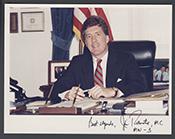
Mr. Chairman, I offer an amendment. Mr. Chairman, I yield myself such time as I may consume. This amendment would fully fund the President's request for the Access to Recovery grant program, which…
Mr. Chairman, I offer an amendment.
Mr. Chairman, I yield myself such time as I may consume.
This amendment would fully fund the President's request for the Access to Recovery grant program, which helps people who need chemical dependency treatment get the help they need from the treatment provider of their choice.
Mr. Chairman, it is time for Congress to get serious about the problem of alcohol and other drug addiction and treat it like the number 1 public health crisis it is. Nearly 1 in 10 Americans today is suffering the ravages of chemical addiction. Twenty-six million Americans are addicted to drugs and/or alcohol, and 156,000 Americans died last year from this fatal disease.
The public costs of untreated addiction are also staggering. A Brandeis University study found that addiction costs the American economy $400 billion a year. That is billion with a B, Mr. Chairman. These criminal justice costs, health care costs, lost productivity in the workplace, and so on are a huge drain on our economy, and there are countless other human costs we cannot even begin to quantify.
At the same time, Mr. Chairman, there is real hope for Americans struggling with the disease, hope through treatment and recovery. We have all the empirical evidence in the world to show that treatment works, and expanding access to treatment, as the President wants us to do, is not only the right thing to do, but it is also the cost- effective thing to do.
The National Institute on Drug Abuse did an exhaustive study and found that every dollar spent on treatment saves $7 in criminal justice costs alone. If savings in health care are factored in, we save $12 for each dollar spent on treatment. A California study found that statewide emergency room admissions dropped by one-third after treatment, and crime declined by two-thirds following treatment.
So the question, Mr. Chairman, is not whether we can afford to provide treatment; the question is whether we can afford not to provide treatment.
Mr. Chairman, I stand here today as a grateful recovering alcoholic of 23 years, 1 month, and 9 days, and I am alive today only because I had access to the treatment that I needed. If fully funded, the Access to Recovery program could extend the same lifeline to 100,000 other Americans who desperately need help, who desperately need treatment.
President Bush proposed the Access to Recovery program last year, and we funded just half of his $200 million request. As a result, 45 States applied for funding; because of the lack of funds, only 14 States and 1 tribal government received any grants. It is clear, Mr. Chairman, the demand far outstrips the supply of these critical funds. The bill before us, once again, contains only one-half the funding that the President requested.
Mr. Chairman, this is a life-or-death issue, and we cannot afford to be half-hearted about it. This amendment would fully fund the President's request by adding $100 million to the Access to Recovery program. It is fully offset with cost-savings for administrative accounts.
Mr. Chairman, President Nixon, when he first declared the war on drugs in the 1970s, directed 60 percent of funding, of Federal funding, to treatment. Today we are down to 18 percent, 18 percent. That is why over half the treatment beds available just 10 years ago are gone. That is why 3.5 million Americans were denied treatment last year alone.
This program, the Access to Recovery program, will not only enable addicted Americans to receive treatment, it will also help increase the number of providers, and the rigorous peer review process at SAMHSA for obtaining the grants and its strong program evaluation requirements will lead us to better performance-based treatment in this country.
I urge my colleagues to support this critical program and provide hope to thousands of Americans who need
treatment for the fatal disease of alcohol and other addiction, alcohol and other drug addiction.
Mr. Chairman, I yield back the balance of my time.
Point of Order
I do, Mr. Chairman.
Mr. Chairman, I understand this amendment is subject to a point of order because it seeks to add funding to an account administered by SAMHSA. Unfortunately, the authorization for SAMHSA did expire at the end of last year.
At the very least, Mr. Chairman, this should be a wake-up call for Congress to reauthorize SAMHSA without further delay. SAMHSA is a critical source of treatment funding for the 45 million Americans suffering from mental illness and the 26 million Americans suffering from chemical addiction.
It is unfortunate this amendment will most likely be ruled out of order because Congress has not acted to reauthorize SAMHSA. However, I look forward to working with the gentleman from Ohio (Chairman Regula) and my other colleagues on the critical mission of expanding access to treatment for people suffering the ravages of chemical addition.

Mr. Chairman, I thank the gentleman for yielding me this time, and I rise in opposition to the Hayworth amendment. I think it is unfortunate, as the gentleman from Michigan (Mr. Kildee) pointed out,…
Mr. Chairman, I thank the gentleman for yielding me this time, and I rise in opposition to the Hayworth amendment. I think it is unfortunate, as the gentleman from Michigan (Mr. Kildee) pointed out, that this amendment is offered here. This amendment will not stop the impact of the NLRB ruling, it will simply stop the enforcement of that act, so those who want to seek to organize under the act will go forward,
and we will find out about penalties for noncompliance or the results of the actions much later, some years from now, if this amendment passes.
But I think it is also important to note the gentleman sort of belittled the efforts of the gentleman from Michigan (Mr. Kildee), myself, the leaders of the tribes, the leaders of the AFL-CIO sitting down together to work this out. And yet he cites that the California arrangement was basically the subject of negotiations where, in fact, the tribes, the labor unions, and Governor Schwarzenegger came up with an arrangement that some say is stronger than the current National Labor Relations Act.
The point is these are good-faith negotiations. We have had several meetings. Many people were surprised that either of those organizations would walk into the same room to sit down and discuss this, but they recognized the problem here. The problem, unlike State governments, is that you have tens of thousands of workers and potentially many tens of thousands of workers working in Indian gaming facilities, who, if they are not properly treated, if they are mistreated, not saying they will be, they are not enrolled members of the tribe, and they really have no recourse. They have no recourse to that activity. They cannot vote against the mayor, they cannot recall the city council, they cannot organize their fellow citizens because they are not members of that tribe.
As my colleague knows, in many of these instances, the size of the tribe may be a couple hundred people. Obviously, they cannot run a casino because the workforce there is several thousand of those individuals. So I do not think it is a matter of national policy. And the Indians have recognized this in our discussions, that you would leave people without some recourse to an ability to organize. That is why they have recognized, at least in these discussions, that we should go forward and try to see whether or not we can develop a system that honors sovereignty and is a parallel system to provide for the protection and the recognition of these workers.
That is, in effect, what we are doing now. And I did not quite understand the previous exchange, because the suggestion is somehow that this is make-work. I hope not, because I, obviously, and many of the people in that room are very prominent people and very busy people. I hope we are not wasting our time.
Now, what has happened since this amendment appeared, those meetings have all been canceled. So I think it has been destructive to that process.
I yield to the gentleman from Arizona.
Mr. Chairman, I thank the gentleman for yielding me this time, and I am sorry, but I will have to ask him to repeat the question.
Reclaiming my time, which the gentleman yielded to me, Mr. Chairman, I would respond that, actually the chairman of the San Manuel Tribe will say no; that that was not the case. But I would tend to agree with the gentleman. Exactly.
That is what we are trying to do here as representatives of the Federal Government, recognizing the doctrine of sovereignty and protecting that with the tribes.
Mr. Chairman, there is a little bit of having it both ways. The gentleman from Arizona says he respects the California compacting process; yet in the 106th and 107th Congress, we debated this amendment when he wanted to prohibit the State of California or any entity negotiating a compact with the Indians from even discussing labor rights. I am a little bit confused here about what it is.
The gentleman does not like the negotiations that were going on because he likes what California is doing, but now we see in fact this amendment is not just about what happened with the National Labor Relations Act, because he has been trying to prevent the tribes or States from engaging in any discussion on terms and conditions of employees. This was long before.
The gentleman does not come here with some pure heart. The gentleman is subsuming what those compacts could be about; and this Congress, recognizing sovereignty, passed legislation to allow for that compacting to take place. That is what the law is, that those arrangements take place between the governors and the tribes.
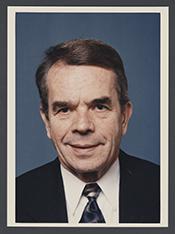
Mr. Chairman, as a Member with a lifelong and established record of being an advocate for protecting the sovereign rights of Indian tribes, I rise in opposition to this amendment. Since first…
Mr. Chairman, as a Member with a lifelong and established record of being an advocate for protecting the sovereign rights of Indian tribes, I rise in opposition to this amendment.
Since first becoming aware of the unfavorable administrative ruling of the National Labor Relations Board that determined it has jurisdiction to regulate the labor practices of on-reservation tribal enterprises under the National Labor Relations Act, I, along with my Democratic colleagues, the gentlewoman from California (Minority Leader Pelosi), the gentleman from California (Mr. George Miller), the gentleman from West Virginia (Mr. Rahall), and others have been participating in ongoing, sincere discussions between tribal representatives and representatives of labor.
The purpose of these discussions is to work out a permanent legislative solution that honors the principles of tribal sovereignty and Labor's traditional role of collective bargaining.
The amendment offered today by my dear friend, the gentleman from Arizona (Mr. Hayworth), undermines the ongoing discussions we have had, because this temporary fix would harm the amicable relationship between the parties involved and would possibly destroy our efforts to seek a permanent legislative solution that is mutually satisfactory to all parties.
I have met with the various parties in my own office. They are in an active discussion trying to seek a permanent solution. I am convinced that this temporary solution will interfere with those negotiations to reach that which the gentleman from Arizona (Mr. Hayworth) and I share in common, some solution and some balance to this very important principle embodied in our Constitution of retained sovereignty and collective bargaining.
I am convinced, or I would not be standing here, that we will get a solution satisfactory to both sides on this issue.
Mr. Chairman, I offer an amendment.
Mr. Chairman, I yield myself such time as I may consume.
Mr. Chairman, my amendment is simple. At a time when students and families are struggling with skyrocketing tuition, we are squandering an opportunity to generate more student aid. This fiscal year alone, nearly $1 billion in special student loan subsidies will be paid by the Federal Government to lenders rather than used for financial aid for students. This subsidy results from an obscure provision in the Higher Education Act and its regulations which provide lenders a 9.5 percent rate of return on certain student loans.
This rate of return is excessive when we consider that lenders are guaranteed approximately a 3.5 percent rate on other student loans. The 9.5 percent guarantee was established in the high interest rate year of 1980. Congress intended for it to be phased out of existence beginning in 1993; but through a regulatory loophole, the guarantee has continued. Both the New York Times and the L.A. Times have reported on this loophole. The Government Accountability Office will soon issue a report which calls for the Department of Education to correct its regulations on this matter.
This special subsidy has caused a loss of financial opportunity for students. Students are bearing the brunt of rising college costs and shrinking grant aid. Today we have an opportunity to correct this problem. Despite this issue being addressed in the last Presidential budget, no action has taken place. Since this subsidy has not been eliminated, it has now tripled in the past 3 years.
It has been publicly announced in our hearings in the Committee on Education and the Workforce and in the press that we will not authorize the Higher Education Act this year. This essentially prevents Congress from addressing this issue in the normal fashion. This amendment is the only recourse left to us today. The amendment ends the special subsidy for new loans which are funded with proceeds from bonds which have been refunded or transferred.
Today, Mr. Chairman, we have an opportunity to curtail the biggest use of this provision to date. I urge Members join me in supporting this amendment.
Mr. Chairman, I reserve the balance of my time.
Mr. Chairman, I yield such time as he may consume to the gentleman from Maryland (Mr. Van Hollen), a cosponsor of the amendment.
Mr. Chairman, I have no further requests for time, and I yield back the balance of my time.
Mr. Chairman, I demand a recorded vote.
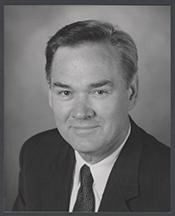
Mr. Speaker, I rise today in opposition to H.R. 3722, which I believe poses a significant threat to the health of all Americans. If H.R. 3722 is enacted, the fear of deportation will inevitably…
Mr. Speaker, I rise today in opposition to H.R. 3722, which I believe poses a significant threat to the health of all Americans. If H.R. 3722 is enacted, the fear of deportation will inevitably discourage undocumented immigrants from seeking care for potentially communicable diseases. As a result, serious health problems will likely go untreated and unreported with serious negative consequences to the health of entire communities.
In addition, numerous hospital and local government organizations have told Congress that the reporting and record keeping requirements included in H.R. 3722 will not only place a serious administrative burden on already overburdened hospitals, but also harm the relationship of trust between health care providers and their patients. This will undermine health care providers' basic and vital mission-- tending the sick and injured. I would like to include in the Record a letter in opposition to H.R. 3722 I received from El Centro, an organization in my district dedicated to family improvement.
Like many of my colleagues, I am dedicated to continuing to seek solutions to the challenges we face in our immigration policy. I have supported multiple efforts to strengthen our immigration and border patrol systems. I do not believe, however, that denying emergency health care to those critically in need is consistent with the successful curbing of illegal immigration.
El Centro, Inc.,
Kansas City, KS, May 7, 2004.
Congressman Dennis Moore,
Cannon House Office Building,
Washington, DC.
Congressman Moore: El Centro, Inc. sincerely hopes that you
will oppose Representative Dana Rohrabacher's (R-CA) extreme
bill threatening access to emergency health care for
undocumented immigrants and, we fear, for many U.S. citizens
living in immigrant families and communities.
Among its provisions, H.R. 3722, the Undocumented Alien
Emergency Medical Assistance Amendments of 2004, would deny
hospitals and other health care providers reimbursement for
uncompensated emergency care they provide to undocumented
immigrants unless they report those immigrants to the
Department of Homeland Security (DHS). As a practical matter,
this would oblige providers to verify the immigration status
of all uninsured patients presenting health care emergencies.
The information health care providers would be required to
transmit to DHS would include their patients' financial data,
identity of employer, and biometric information.
H.R. 3722 would also narrow the scope of emergency health
services available to undocumented persons and make inability
to pay medical expenses a basis for removal from the U.S.
Employers of undocumented workers whose medical expenses are
reimbursed by the federal government would be required to
repay the government for those costs.
This proposal would jeopardize the health of immigrants and
the general public. The threat of separation from their
communities and families would deter immigrants and their
family members from seeking needed health services, including
testing and treatment for communicable diseases. Overburdened
emergency health care providers would be forced to verify the
immigration status of emergency patients, and report those
believed to be undocumented to immigration authorities, in
conflict with patient privacy rights and the fundamental
principle that they refrain from harming their patients. The
bill would impose additional burdens on employers, including
small businesses, who already are required to verify the
citizenship and immigration status of workers. It also would
increase the likelihood of discrimination against persons
assumed to ``appear foreign'' because of their race, accent
or other prohibited factors.
Though Rep. Rohrabacher's intentions may be to contain
emergency health cost and the flow of undocumented immigrants
via this proposal, this is certainly not the way to do it. In
fact, we believe the only possible outcome of the proposal is
the creation of a disastrous and costly public health
scenario. We ask that you oppose attempts to move this
proposal forward.
Most sincerely,
Melinda K. Lewis,
Director of Policy Advocacy and Research.
Mr. Speaker, today the American people should pay close attention to the debate when the House takes up H.R. 3722. If one is concerned about the flood of illegal immigrants pouring into our country,…
Mr. Speaker, today the American people should pay close attention to the debate when the House takes up H.R. 3722. If one is concerned about the flood of illegal immigrants pouring into our country, this is the debate to watch. And H.R. 3722 is the vote on which to judge your Member of Congress.
There has obviously been a conscious decision made by certain powerful people that massive immigration into the United States, legal or illegal, is good for America or at least good for certain friendly interest groups. This vote on H.R. 3722 is clear-cut. The American people can determine who is on their side and who will channel our scarce health care dollars to illegal immigrants, thus encouraging even more illegal immigration into our country.
H.R. 3722, which will come for debate here later today and will be voted on tomorrow, is designed to undo the harm done by an amendment that was slipped into the Medicare bill that was passed just a few months ago. That surprise and somewhat covert amendment established a $1 billion fund to reimburse American hospitals for the emergency care they provide illegal immigrants.
The perverse, unintended consequences of this are easy to predict. Americans and legal residents who lack health insurance will be sent to the back of the line when seeking help for a medical emergency because the hospitals will naturally give primary service to those illegal immigrants whose tab is being picked up by the Federal taxpayers. This is a travesty.
Anyone voting against H.R. 3722 is voting to put our kids, voting to put our seniors, at the end of a long waiting line moving the illegal immigrant to the front of the line. At this time when we cannot afford the money to pay for prescription drugs for our seniors, we are going to be spending $1 billion to treat people who have come here illegally.
Those against H.R. 3722 are voting to spend our limited health care money to make America the HMO of the world. And then they act surprised when even more tens of millions of illegals flood into our country.
Watch the vote on H.R. 3722. Listen to the arguments. The other side will claim that the legislation causes hospitals more paperwork. That is a bogus argument. However, the public will decide when they are listening to the debate whether they are hearing legitimate arguments or whether it is simply noise being generated to confuse people so they will not know who is ripping off their health care dollars and giving it to strangers.
The flood of illegal immigration has already had horrible impacts on our society, on working Americans and middle-class Americans in particular. Wages are being kept down. Our educational and criminal justice systems are deteriorating. And, yes, our health care system is failing.
A government's first responsibility is protecting our citizens and, yes, our legal residents, not to provide benefits and services to anyone in the rest of the world who can get here. Our responsibility is to the people of the United States and the legal residents here of the United States. Our responsibility is not to the rest of the world and to provide any benefits that we can't provide to our American people, to provide them to anyone in the world who can get here. That will break our bank. If we are going to try to do everything for everybody, we are not going to be able to do anything for anybody, even our own people.
H.R. 3722 is the litmus test. There is always a good sounding excuse for voting against any bill that tries to come up and tries to come to grips with the out-of-control flood of illegals coming into our country. But the issue is clear in H.R. 3722: Are America's limited health care dollars going to treat illegal immigrants rather than being used to treat our own people?
Members of Congress need to hear from their constituents. H.R. 3722 is a first good step in stemming the tide of illegal immigrants into our country. It will be debated here in just a few hours. America should pay attention.
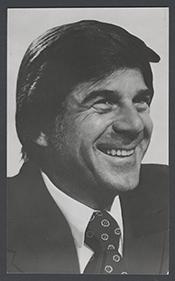
Mr. Chairman, I offer an amendment. Mr. Chairman, I yield myself 3 minutes. Mr. Chairman, this is probably the lowest-priced amendment to be offered to this bill, but what it does basically is takes…
Mr. Chairman, I offer an amendment.
Mr. Chairman, I yield myself 3 minutes.
Mr. Chairman, this is probably the lowest-priced amendment to be offered to this bill, but what it does basically is takes away $84,500 from the Secretary of HHS's management budget. The purpose of the amendment is to establish firmly the rights of Congress in regard to getting information from the administration.
Very quickly, during the course of drafting and debating the Medicare bill that dealt with prescription drugs, the head of CMS Mr. Scully threatened improperly the actuary for CMS and caused this actuary to withhold information from the House of Representatives which would have indicated that the drug bill would not cost $400 billion, but more like $530 or $540 billion. That is a $140 billion difference. It may very well have affected the way many of us might have voted on that bill. It was substantial information. This information was not classified, and it comes under a bill that started back in 1912 when then Senator LaFollette indicated that we should have this information in the normal course of our proceedings available to us. According to GAO, who has recently suggested that the point of this legislation be enacted, never in the history of that legislation since 1912 has anybody violated this law until now. And it was GAO who said that the recourse for violating the law, for preventing a member of the administration from giving us information relative to our business, should be that the salary of the Administrator of CMS was improperly paid during the time from the point he gagged his subordinate until the end of his term when he resigned in December.
So quite simply said once again, it is uncontrovertable that the law was broken by Mr. Scully, that the remedy is that he should not have the salary that he was paid during the period in which the information was withheld from us, and it indeed runs to the prerogative of this House to receive the information that is necessary for us to do our business in the normal course of legislating. And the Secretary can get the $84,500 back if he wants to go after Mr. Scully for it, and it is highly symbolic, but I think it is imperative that we establish our rights to receive information, either side of the aisle, or from any administration in the future.
Mr. Chairman, I reserve the balance of my time.
Mr. Chairman, I yield 2 minutes to the gentleman from Ohio (Mr. Brown).
Mr. Chairman, I yield 2 minutes to the distinguished gentleman from California (Mr. Waxman).
Mr. Chairman, I yield myself such time as I may consume.
I have one more speaker, but I did want to repeat that, as far as this gentleman is concerned, the issue here, I know the dollars are not significant, but I rather suspect that the laws that were violated were written by the Republican Party when it was in the minority, and I do not think it is an issue that is partisan. I really believe this is an issue that does not deal with anything other than the very most basic facts which we need to carry out our duties here. And, yes, the $84,500 is symbolic, but it is the only recourse that we have under the law. The law was clearly broken. It seems to me that we should demand that it be taken and leave it to the Secretary to collect the $84,500 in any manner that he sees fit.
Mr. Chairman, I yield 1 minute to the gentleman from New Jersey (Mr. Pallone).
Mr. Chairman, I would, as a matter of prerogative of the House, encourage us all to support this modest amendment, and I yield back the balance of my time.
Mr. Chairman, I demand a recorded vote.

Mr. Speaker, I rise today to express my opposition to H.R. 3722, the Undocumented Alien Emergency Medical Assistance Amendments of 2004. First and foremost, I oppose the way this bill was brought to…
Mr. Speaker, I rise today to express my opposition to H.R. 3722, the Undocumented Alien Emergency Medical Assistance Amendments of 2004.
First and foremost, I oppose the way this bill was brought to the floor. There have been no committee hearings or markups. Instead, the bill was rushed to the floor under suspension so that no amendments could be offered to. the bill. There has not been any proper debate on this piece of legislation.
Studies have estimated that there are between 8-12 million illegal immigrants in the country. Hospitals throughout the country, but particularly in border states, are overcrowded and often cannot afford to provide vital services to their patients. The Medicare bill which recently became law provided for a total of $1 billion over four years to reimburse hospital expenses incurred by providing medical services to illegal immigrants. While the Medicare bill does not mandate the use of the reimbursement program, many hospitals depend on these funds simply to remain open.
The Undocumented Alien Emergency Medical Assistance Amendments will require further paperwork to be done by doctors and nurses in hospitals who are already overworked and overburdened. These doctors and nurses are not trained to enforce immigration law and should not be expected to do so. We should not use hospitals to fight the influx of illegal immigration but rather should provide more resources to law enforcement so that they can better enforce immigration laws.
This bill also has the potential to discourage illegal immigrants from seeking treatment for life-threatening conditions. Immigrant women who become victims of domestic violence may not seek help for fear of being deported. Pregnant women may not seek prenatal care or even go to the hospital for the birth of their children out of fear of being separated from their families and deported. It is likely that this bill will actually increase the cost of emergency services because illegal immigrants are more likely to wait until their conditions have worsened and require more expensive treatments.
Doctors and nurses create important trust-based relationships with immigrant communities which may be broken if this legislation is enacted. Discouraging immigrants from seeking medical assistance will have ill effects on our public health as well. Without proper treatment, communicable diseases such as tuberculosis are likely to spread and cause a much larger public health hazard.
I also have many concerns about requiring doctors and nurses to ask so many questions of their patients. It is not always possible or practical to ask such questions of every patient who enters the hospital; as a result, doctors and nurses might have to pick and choose those they ask, opening themselves up for accusations of profiling and possible legal recourse. This also may slow the delivery of medical treatment, as patients will have to provide documentation of their citizenship or immigrant status.
These are just some of the concerns this bill raises, and none of them has been adequately discussed. H.R. 3722 clearly is controversial and thus deserves to be properly debated on the floor, with amendments allowed to be offered. For all the reasons I've outlined, I must vote against suspending the rule and passing this bill, and I urge my colleagues to do the same so that H.R. 3722 can be considered under normal procedures.

Mr. Chairman, I wish to thank my colleague from Wisconsin (Mr. Obey) for yielding me this time. I find it very interesting that we hear a lot from the other side today about sovereignty, and they are…
Mr. Chairman, I wish to thank my colleague from Wisconsin (Mr. Obey) for yielding me this time.
I find it very interesting that we hear a lot from the other side today about sovereignty, and they are all very excited about it, as if they have just discovered it. It is interesting to hear about sovereignty from the other side, because where were they when we were trying to get sovereignty included in homeland security? Where were they when we were trying to get sovereignty included into all of the other issues, like the environment? Where were they when we tried to get sovereignty into the welfare reform bill, and tribes had to go through States rather than have that money disbursed to them directly, as they should under the trust responsibility?
There have been many votes that have been cast on this floor, and I would venture to say most of these votes, because they are brought up by the majority, I think give the true explanation as to what this debate is all about. We have seen more votes that are antisovereignty votes on this floor in the last several years than the gentleman from Michigan (Mr. Kildee), who has been here for over 20 years, has ever recalled.
So when some of my friends on the other side call into question the commitment of the gentleman from Michigan (Mr. Kildee), when it was that gentleman who was the author of the IGRA legislation that provided for sovereignty, I find that suspect. When people talk about, oh, it is sovereignty, and yet where were they when it came to the meetings that took place so that we could get a resolution of this issue?
My colleagues, I do not think this is so much about sovereignty as it is election-year politics. That is what this is about, make no mistake about it. If there was a true interest in getting this issue resolved, this issue could be resolved.
Mr. Chairman, I think we have before us a choice between science and stigma. Stigma is the biggest barrier to us making sure millions of Americans gain access to what is fundamentally a physical illness. You do not need to take my word for it. You have every Nobel Laureate, the Surgeon Generals of the United States, all saying this is a physiologically, biologically based illness. So the notion that we are going to shut kids out from being screened so that we can intervene and make a difference in their lives, I do not understand.
I would add one more thing: our colleagues have learned the hard way. Three of our colleagues have lost their children in the last couple of years alone as a result of suicide. We voted on one of those bills on suicide prevention on Senator Smith's son, who died a year ago yesterday as a result of suicide. We know of many others whose tragedies we do not want to go into.
But to think that suicide and mental illness are not scientifically based is to look back and think we are still living in the Stone Age.
Yes, Mr. Chairman, I would like to be heard on the point of order.
I believe that this is an important point that the gentleman from Minnesota (Mr. Ramstad) brought up. I thought it was brought up very poignantly because of the importance of this issue, and I wanted to join him in addressing this issue and to ask my colleagues to acknowledge the real champion on these issues with alcoholism and substance abuse that the gentleman from Minnesota (Mr. Ramstad) speaks so eloquently about and is such a leader on.

Mr. Chairman, I reserve a point of order against the amendment, and I would ask the gentleman from Ohio if he intends to claim the time in opposition to the amendment. If he does not, then I would…
Mr. Chairman, I reserve a point of order against the amendment, and I would ask the gentleman from Ohio if he intends to claim the time in opposition to the amendment. If he does not, then I would like to claim the time.
I do, Mr. Chairman.
Mr. Chairman, I yield 4 minutes to the distinguished gentleman from Michigan (Mr. Kildee), ranking member on the subcommittee with jurisdiction.
Mr. Chairman, I yield 2 minutes to the distinguished gentleman from Rhode Island (Mr. Kennedy).
Mr. Chairman, I yield 3 minutes to the distinguished gentleman from California (Mr. George Miller).
Mr. Chairman, I withdraw my reservation.
Mr. Chairman, I yield 2 minutes to the gentleman from Ohio (Mr. Brown).
Mr. Chairman, I yield 1\1/2\ minutes to the gentlewoman from Nevada (Ms. Berkley).
Mr. Chairman, I yield 1 minute to the gentleman from California (Mr. George Miller).
Mr. Chairman, I yield 1 minute to the gentleman from New Jersey (Mr. Pallone).
Mr. Chairman, I yield myself the balance of my time.
Mr. Chairman, a few years ago I endured efforts to recall me because I steadfastly supported the principle of tribal sovereignty, and I do not regret that. I think I took the right position. But I am opposed to this amendment because of something that happened in Wisconsin several years ago. One of the tribes in my district contracted out for the operation of a casino to a private operator. That private operator had some very strange rules. One of the rules when women were hired was very blunt: Put out or get out. It was an outrageous way to deal with female employees, but we had no way to reach into that situation and protect those women workers because the State compacts did not provide protection under such circumstances.
I do not ever want that to happen again to any woman working anywhere in my State or any other State in the Union. That is why I believe that the correct vote on this amendment is to vote against this amendment because the last time I looked, the United States Constitution guarantees equal protection under the law to every citizen; and I am not about to suggest that in cases of casinos, for instance, on or off reservation, that the people who work for those casinos are not going to be entitled to the protection which they need in order to experience decent working conditions.
I think a Congress that cannot protect women in those circumstances is a Congress that is impotent, and I do not believe Congress ought to be impotent in those situations, so I urge a ``no'' vote on the amendment.
Mr. Chairman, I yield back the balance of my time.
Mr. Chairman, I demand a recorded vote.
Mr. Chairman, will the gentleman yield?
Mr. Chairman, I thank the gentleman for yielding. I certainly agree with the gentleman's comments. I have great respect and affection for the gentleman from Texas. I know that he believes what he believes deeply, and I respect that. But I just would have to say that I wish we were at the stage in this country in terms of our recognition of mental illness, I wish we were at the stage in this country where we could provide every child with the opportunity to be screened, so that we can catch ahead of time developing problems and help families who otherwise have nowhere to turn.
I join with the gentleman from Ohio (Mr. Regula) in opposition to the amendment.
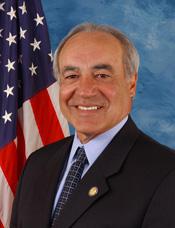
Mr. Speaker, I rise in strong opposition to H.R. 3722, the Undocumented Alien Medical Assistance Amendments of 2004. The Medicare Prescription Drug Act that this Congress passed last year includes $1…
Mr. Speaker, I rise in strong opposition to H.R. 3722, the Undocumented Alien Medical Assistance Amendments of 2004.
The Medicare Prescription Drug Act that this Congress passed last year includes $1 billion to reimburse hospitals for their uncompensated care of undocumented immigrants. We included that funding because we recognized the strain hospitals experience in providing uncompensated emergency medical care to the uninsured. H.R. 3722 undoes this goodwill by requiring hospitals to enforce immigration law, refuse emergency medical treatment to immigrants, and have them deported.
Many American citizen and immigrant families who are living, working and paying taxes in the United States are unable to obtain health care coverage for themselves or their families. At a time when health care has become a national crisis due to the large number of uninsured, we need to take steps to heal more, not less.
Undocumented immigrants are not covered by employer health care plans, and they are systemically excluded from public health insurance programs such as Medicaid and SCHIP. We cannot encourage immigrants to refuse to seek medical care due to fear of deportation. It makes no sense. Do we want outbreaks of tuberculosis and other diseases and epidemics common in the developing world right here in America? That is likely to happen if immigrants are refused emergency medical care. This is why hospitals nationwide, the
American Medical Association, and physicians of all types are urging this Congress to reject this attempt to inject an anti-immigrant agenda into the field of medicine. Besides public health, H.R. 3722 fails on a number of fronts.
For instance, it would force hospitals to choose which law they will violate--the one that requires them to provide medical assistance to anyone that requires it, or H.R. 3722 and its requirement that we even deport women while in labor.
The Emergency Medical Treatment and Active Labor Act requires that any patient, without regard to race, sex, creed, immigration status, or ability to pay, be given appropriate emergency care to stabilize his or her condition. This law is consistent with the Hipprocratic Oath, and is meant to ensure that no person in our country will be denied emergency medical care.
I cannot support legislation that could punish employers that unknowingly hire immigrants with fraudulent green cards by forcing them to pay the medical bills. There is no precedent for holding employers liable for injuries and illnesses that are not work-related. Also, I fear that employers will discourage their employees from seeking treatment for any illness.
Are we prepared to possibly read stories of immigrant laborers found injured or dead on sidewalks? It is not difficult to imagine immigrants being left behind by fearful employers trying to avoid the scrutiny of federal immigration enforcement officials.
Mr. Speaker, H.R. 3722 is a Pandora's box that our Nation cannot open. H.R. 3722 will endanger the health of everyone in America. It will force doctors to violate their oaths and the law, require hospitals to enforce immigration law, and it will encourage employers to force their immigrant laborers to never seek medical treatment.
I urge my colleagues to please oppose this misguided proposal.

Mr. Speaker, I rise in strong opposition to a fiscally irresponsible, unsafe, and discriminatory bill that is only on the House floor due to a back-room deal that was reached late at night to gain…
Mr. Speaker, I rise in strong opposition to a fiscally irresponsible, unsafe, and discriminatory bill that is only on the House floor due to a back-room deal that was reached late at night to gain passage of the Republican Medicare prescription drug bill. That deal was reached at the expense of Americans of Hispanic descent and of other immigrant groups that are now legal and also U.S. citizens, as well as our Nation's health is disgraceful. We continue to see elements of the xenophobic face of the Republican Party.
What does this bill do? If you are rolled into an emergency room and you do not have insurance, then you are to be asked whether or not you are here legally in the United States. Now, I get rolled into an emergency room, Mr. Menendez, or maybe someone who might even be described as more characteristically Hispanic, or maybe Asian, or some other group, and I do not happen to have insurance, as unfortunately 40 million Americans who are here as U.S. citizens do not have, and I get asked whether or not I am a citizen of the United States. That is shameful. You would not ask any other citizen that. But because I happen to have the misfortune of not having health insurance, you ask me. And of course those of us who look a certain way will for sure be asked.
And then what else do you do? While I am suffering, not only do you want that information, but then we are going to go through an Orwellian process of getting some type of digital electronic identifier of this U.S. citizen who does not have insurance but cannot prove that he is or is not a U.S. citizen lying there in that emergency room. That is what the bill of the gentleman from California (Mr. Rohrabacher) does. Do not be deceived.
Now, I know he says there are a lot of lies going on about his bill. I guess the hospitals of the Nation are lying as well. Let me tell you what they say. Here is what the American Hospital Association said. It says,
America's hospitals treat everyone who walks through their
doors, and we are opposed to Mr. Rohrabacher's bill because
it is bad policy, bad policy for hospitals, nurses, doctors,
and other health care personnel who work in hospitals, but
most importantly it is bad policy for patients.
Rohrabacher's legislation is bad policy because it takes
hospitals away from what we do best, caring for and healing
our patients. The requirements for reimbursement under the
legislation would turn hospital workers into border patrol
agents. That is not our jobs. We are caregivers, not cops.
And hospital caregivers are already burdened with paperwork
which requires at least 30 minutes, often an hour for every
patient. The additional burden of policing suspected
undocumented immigrants would take health care workers away
from their primary mission of healing and caring.
And not only that, it hurts everyone else waiting in that emergency room for care. Because as we are trying to get all this documentation, for which we give these hospitals no funding to do it, we are also taking away from the care of everyone else there, and we are allowing communicable diseases to spread in communities like that. That is outrageous.
This bill should be defeated. It is shameful that it is even on the House floor.
Bill Text
Latest available legislative text
        [Congressional Bills 108th Congress]
[From the U.S. Government Publishing Office]
[H.R. 3722 Introduced in House (IH)]

2d Session
H. R. 3722

To amend section 1011 of the Medicare Prescription Drug, Improvement,
and Modernization Act of 2003 to impose conditions on Federal
reimbursement of emergency health services furnished to undocumented
aliens.

_______________________________________________________________________

IN THE HOUSE OF REPRESENTATIVES

January 21, 2004

Mr. Rohrabacher introduced the following bill; which was referred to
the Committee on Energy and Commerce

_______________________________________________________________________

A BILL

To amend section 1011 of the Medicare Prescription Drug, Improvement,
and Modernization Act of 2003 to impose conditions on Federal
reimbursement of emergency health services furnished to undocumented
aliens.

Be it enacted by the Senate and House of Representatives of the
United States of America in Congress assembled,

SECTION 1. SHORT TITLE.

This Act may be cited as the ``Undocumented Alien Emergency Medical
Assistance Amendments of 2004''.

SEC. 2. FINDINGS.

Congress finds the following:
(1) The provision of medical care by public or private
health care providers to undocumented aliens is appropriate
only--
(A) to protect the health and safety of United
States citizens;
(B) to save the life of an undocumented alien in a
life-threatening medical emergency; and
(C) to stabilize an emergency medical condition so
that an undocumented alien can be repatriated for
medical treatment in the alien's own country.
(2) Federal reimbursement of emergency hospital services
furnished to undocumented aliens should be conditioned upon
obtaining sufficient information to promptly remove the aliens.
(3) Employers who employ undocumented aliens without
completing employment authorization verification procedures
should be held liable for uncompensated emergency services
furnished to such aliens.

SEC. 3. CONDITIONS FOR RECEIPT OF FEDERAL ASSISTANCE FOR EMERGENCY
SERVICES FOR UNDOCUMENTED ALIENS.

(a) In General.--Section 1011 of the Medicare Prescription Drug,
Improvement, and Modernization Act of 2003 (Public Law 108-173) is
amended--
(1) in subsection (d)(1), by adding at the end the
following new subparagraph:
``(C) Application of requirement.--Under such
process, the Secretary shall not provide payment under
subsection (c) to an eligible provider that is a
hospital for eligible services for an alien described
in subsection (c)(5)(A) unless the requirements of
subsection (f) are met by that provider with respect to
such alien.'';
(2) in subsection (e)(2), by adding at the end the
following new sentence: ``Such term also includes, with respect
to an undocumented alien described in subsection (c)(5)(A),
costs for emergency medical transportation and evacuation
incurred by a hospital in transferring and removing the alien
to a foreign country for receipt of appropriate health care
services.''; and
(3) by adding at the end the following new subsection:
``(f) Requirement for Collection of Immigration-Related Information
for Undocumented Aliens.--
``(1) In general.--No payment may be made under subsection
(c) to a hospital with respect to the provision of eligible
services to an undocumented alien described in subsection
(c)(5)(A) unless the following requirements are met:
``(A) The hospital has obtained in good faith from
the alien (or a legal guardian or other representative
on behalf of the alien) the following information in a
document that is signed by the alien (or such guardian
or representative) under oath or affirmation and that
is in a form that includes a notice that fraudulent or
false statements constitute a criminal act punishable
under Federal law:
``(i) The citizenship of the alien.
``(ii) The immigration status of the alien.
``(iii) The address of the alien in the
United States.
``(iv) Such personal or financial data
regarding the alien as the hospital routinely
requires of non-indigent patients, including
information regarding health insurance.
``(v) Information on the identity of any
current employer of the alien for whom the
alien has executed an Internal Revenue Service
Form W-4.
A hospital is not liable for the accuracy of the
information provided under this subparagraph so long as
it exercises reasonable care and good faith in
obtaining the information.
``(B) The hospital obtains one or more identifiers
for the alien and records such identifiers in a
digital, electronic format specified by the Secretary
in consultation with the Secretary of Homeland
Security. Such format shall be compatible with at least
one interoperable database maintained by the Secretary
of Homeland Security for the purpose of verifying the
identity and immigration status of aliens.
``(C) The hospital transmits to the Secretary of
Homeland Security, in a digital, electronic format and
manner specified by such Secretary, the information
provided under subparagraph (A) and the identifier (or
identifiers) obtained under subparagraph (B).
``(2) Maintenance of hospital records.--For a period of at
least 5 years, a hospital referred to in paragraph (1) shall
maintain the original documents described in paragraph (1)(A)
on file and makes such documents available for examination by
the Secretary and the Secretary of Homeland Security or their
designees.
``(3) Provision of technical support.--The Secretary of
Homeland Security shall provide hospitals under this section
with software, training, and technical support services, at no
cost to the hospital, to assist and enable hospitals to comply
with the requirements of paragraph (1).
``(4) Prompt action by dhs.--The Secretary of Homeland
Security shall take steps as may be necessary--
``(A) to obtain, process, and promptly review
information transmitted under paragraph (1)(C);
``(B) to determine whether an alien for whom such
information is transmitted is removable under any
provision of Federal immigration law; and
``(C) to initiate removal proceedings under the
relevant provisions of the Immigration and Nationality
Act in the case of any such alien who is identified as
being removable.
``(5) Removability.--An undocumented alien who obtains
eligible services through a hospital and does not provide for
payment for such services and who fails to provide accurate
information described in paragraph (1)(A) or an identifier (as
defined in paragraph (6)) shall be treated as removable on the
ground described in section 237(a)(5) of the Immigration and
Nationality Act (8 U.S.C. 1227(a)(5)).
``(6) Definition of identifier.--In this section, the term
`identifier' means a fingerprint or other biometric identifier
as the Secretary of Homeland Security may require.
``(g) Responsibility of Certain Employers.--
``(1) In general.--In the case of an employer of an
undocumented alien worker described in paragraph (2) for whom
payments are made to a hospital for eligible services under
this section, subject to paragraph (3), the employer shall be
liable to the Secretary for the amount of the payments so made.
``(2) Undocumented alien worker defined.--
``(A) In general.--For purposes of this subsection,
the term `undocumented alien worker' means, with
respect to an employer, an undocumented alien described
in subsection (c)(5)(A)--
``(i) who is an unauthorized alien (as
defined in section 274A(h)(3) of the
Immigration and Nationality Act (8 U.S.C.
1324a(h)(3));
``(ii) who has provided the employer with
an Internal Revenue Service Form W-4; and
``(iii) with respect to whom neither the
conditions described in subparagraph (B)(i) or
the condition described in subparagraph (B)(ii)
have been met.
``(B) Conditions for exemption.--For purposes of
subparagraph (A)(iii)--
``(i) First set of conditions.--The
conditions described in this clause for an
employer and alien are the following:
``(I) The employer and alien have
fully complied with all requirements of
the employment verification system
prescribed in section 274A(b) of the
Immigration and Nationality Act (8
U.S.C. 1324a(b)).
``(II) The employer has enrolled
the alien in a State workmen's
compensation plan.
``(III) The alien is enrolled under
a health benefits plan or health
insurance coverage that provides such
level of coverage with respect to
emergency medical and hospitalization
benefits as the Secretary shall
specify, in consultation with the
Secretary of Homeland Security.
``(IV) The employer has assumed
responsibility for any cost-sharing
(including applicable deductibles and
coinsurance) that applies to the alien.
``(ii) Alternative condition.--The
condition described in this clause for an
employer and alien are that the employer has
verified the employment authorization of the
alien through the voluntary basic employment
verification pilot program under section 403(a)
of the Immigration Reform and Immigrant
Responsibility Act of 1996 (division C of
Public Law 104-208), where available, or by any
other means made available for such
verification purposes by the Secretary of
Homeland Security.
``(3) Limitation on liability.--The liability of an
employer under this subsection shall be limited to an employer
that employs an undocumented alien worker at the time (as
specified under rules of the Secretary of Homeland Security)
the eligible services are provided for which payment may be
made by the Secretary under this section.
``(h) Limitation on Care Required.--Notwithstanding any other
provision of law (including section 1867 of the Social Security Act, 42
U.S.C. 1395dd), a hospital is not required to make available to an
undocumented alien described in subsection (c)(5)(A) care or services
if--
``(1) the alien may be transported to the alien's country
of origin (as determined in accordance with rules of the
Secretary of Homeland Security) without a significant
likelihood of material deterioration of medical condition of
the alien (or, in the case of an alien in active labor, of the
child), within reasonable medical probability, resulting from
the transfer of the alien from the hospital; or
``(2) the care--
``(A) involves organ transplantation or other
extraordinary medical treatment (or other treatment the
estimated cost of which exceeds $50,000); and
``(B) is for treatment of a condition that existed
before the alien entered the United States or is not
required as a direct and immediate result of an
accident in the United States.''.
(b) Effective Date.--The amendments made by subsection (a) shall be
effective as if included in the enactment of the Medicare Prescription
Drug, Improvement, and Modernization Act of 2003.
(c) Regulations.--
(1) In general.--The Secretary of Homeland Security, in
consultation with the Secretary of Health and Human Services,
shall issue interim regulations implementing the amendments
made by subsection (a) no later than 60 days after the date of
the enactment of this Act and shall permit a period of public
notice and comment of at least 90 days.
(2) Final regulations.--The Secretary of Homeland Security,
in consultation with the Secretary of Health and Human
Services, shall issue final regulations implementing such
amendments not later than one year after the date of
publication of such interim regulations.
(d) Annual Report on Implementation.--
(1) In general.--The Secretary of Homeland Security, in
consultation with the Secretary of Health and Human Services,
shall submit to the chairman and ranking minority member of the
Judiciary and Appropriations Committees of the House of
Representatives and the Senate, the Select Committee on
Homeland Security of the House of Representatives, and the
Senate Committee on Governmental Affairs an annual report on
the implementation of section 1011 of the Medicare Prescription
Drug, Improvement, and Modernization Act of 2003, as amended by
this section.
(2) Items to be included.--Each annual report under
paragraph (1) shall include--
(A) a cost analysis of Federal expenditures under
such section 1011;
(B) a description of the assistance provided to
hospitals under subsection (f)(2) of such section;
(C) the number of undocumented aliens removed under
subsection (f)(3) of such section; and
(D) amounts recovered from employers under
subsection (g) of such section.
(e) Feasibility of Effecting Treaties for International Medical
Evacuation.--
(1) Study.--The Secretary of State shall conduct an
analysis of the feasibility and appropriateness of the
following:
(A) Negotiating with foreign states treaties under
which such states provide payment for the cost of
international medical evacuation for their nationals
who require emergency health care in the United States
and who do not otherwise have insurance or other
coverage for the costs of such care.
(B) In the case of nationals of a foreign state for
whom significant costs are incurred under section 1011
of the Medicare Prescription Drug, Improvement, and
Modernization Act of 2003 and for which state a treaty
described in subparagraph (A) is not in effect,
imposing a visa, port of entry, or similar surcharge
the proceeds of which may be used towards such costs
and towards the cost of international medical
evacuation described in such clause.
(2) Report.--The Secretary of State shall submit to the
committees described in subsection (d)(1) a report on the
analysis under paragraph (1).
<all>