United States International Leadership Act of 2004
 Rep. Tom Lantos (D-CA)
Legislative Activity
Stay on top of the latest movement without scrolling through every action
Received in the Senate and Read twice and referred to the Committee on Foreign Relations.
June 24, 2004
View full timeline
Introduced in House
March 29, 2004
Referred to the House Committee on International Relations.
March 29, 2004
Committee Agreed to Seek Consideration Under Suspension of the Rules, by Voice Vote.
March 31, 2004
Ms. Ros-Lehtinen moved to suspend the rules and pass the bill.
June 23, 2004 • 12:05 PM
Considered under suspension of the rules. (consideration: CR H4785-4789)
June 23, 2004 • 12:06 PM
DEBATE - The House proceeded with forty minutes of debate on H.R. 4053.
June 23, 2004 • 12:06 PM
At the conclusion of debate, the Yeas and Nays were demanded and ordered. Pursuant to the provisions of clause 8, rule XX, the Chair announced that further proceedings on the motion would be postponed.
June 23, 2004 • 12:21 PM
Considered as unfinished business. (consideration: CR H4823)
June 23, 2004 • 4:22 PM
Passed/agreed to in House: On motion to suspend the rules and pass the bill Agreed to by the Yeas and Nays: (2/3 required): 365 - 56 (Roll no. 289).(text: CR H4785-4787)
June 23, 2004 • 4:29 PM
On motion to suspend the rules and pass the bill Agreed to by the Yeas and Nays: (2/3 required): 365 - 56 (Roll no. 289). (text: CR H4785-4787)
June 23, 2004 • 4:29 PM
Motion to reconsider laid on the table Agreed to without objection.
June 23, 2004 • 4:29 PM
Received in the Senate and Read twice and referred to the Committee on Foreign Relations.
June 24, 2004
Voting History
1 vote recorded • Roll call available
Floor Debate
24 membersWhat members said about H.R. 4053 on the floor
 +19
+19
Floor Debate
24 membersWhat members said about H.R. 4053 on the floor
Mr. Speaker, I yield myself 3 minutes. (Mr. DINGELL asked and was given permission to revise and extend his remarks.) Mr. Speaker, the House is again considering a bill that has already passed the…
Mr. Speaker, how much time is remaining? Mr. Speaker, I yield myself such time as I may consume. Mr. Speaker, I want to respond to my good friend, the gentleman from Massachusetts (Mr. Markey) and…
Mr. Speaker, this week we are going to be asked to vote--in some cases, for a second time--on a package of misguided and previously discarded energy initiatives we are alternately told will enhance…
Mr. Speaker, today, the House of Representatives will disprove the old saying ``the third time's a charm.'' Three times in the last three years, this House has brought an energy bill to the floor…
Mr. Speaker, our friends on the other side of the aisle may not be writing much environmentally friendly legislation, but they certainly are good at recycling. What we have before us today is a bill…
Show 8 more
Mr. Speaker, I yield myself such time as I may consume. Let me first pay tribute to my dear friend, the gentlewoman from Florida (Ms. Ros-Lehtinen), for her effective leadership on this issue, as…
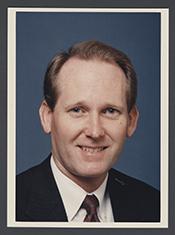
Mr. Speaker, I yield myself such time as I may consume. I try on the floor of the House when I speak to treat all Members of the House, Republican, Democrat, majority, minority with respect, both for…
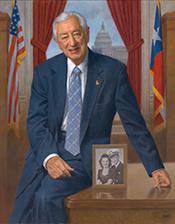
Mr. Speaker, pursuant to House Resolution 671, I call up the bill (H.R. 4503) to enhance energy conservation and research and development, to provide for security and diversity in the energy supply…

Mr. Speaker, I yield myself such time as I may consume under my time. Mr. Speaker, the latest edition of Business Week notes that ``$2 a gallon gasoline have given the oil companies a Mississippi…
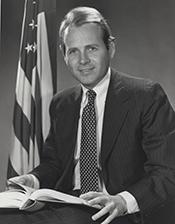
Mr. Speaker, I thank the gentlewoman from Florida (Ms. Ros-Lehtinen) for yielding me this time, and I appreciate the time and effort she has put into this very important effort here. Mr. Speaker,…

Mr. Speaker, I yield myself such time as I may consume. Mr. Speaker, the Energy Policy Act of 2004 protects and strengthens America's economy, our standard of living and our national security by…
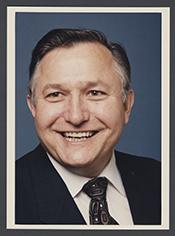
Mr. Speaker, our dependence on foreign energy leaves American consumers at the mercy of events occurring all over the world, from OPEC production decisions to increases in demand in China and India…
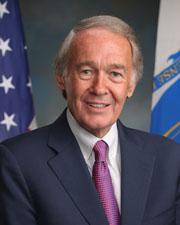
Mr. Speaker, I thank the gentleman for yielding me time. Does the Republican energy bill help the American consumer? Does it have any meaningful help whatsoever? Well, the answer is no. And who do we…
Show 11 more
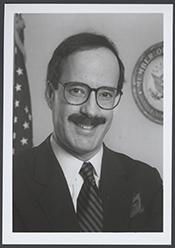
Mr. Speaker, I thank the gentleman for yielding time to me, and I would certainly agree that we are fiddling while Rome is burning. While our people in our districts are disgusted with the high…

Mr. Speaker, once again I rise to oppose the Republican energy bill. The House has passed this bill several times already and now the majority wants to pass it again. It is time for the majority to…
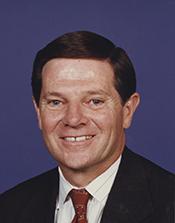
Mr. Speaker, I thank the gentleman for yielding me the time. Mr. Speaker, 3 long years the American people have waited. In fact, some people have been working on a long-term energy policy for 8 to 10…
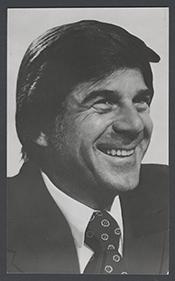
Mr. Speaker, I rise in strong opposition to the Energy Policy Act, the U.S. Refinery Revitalization Act, and the Renewable Energy Project Siting Improvement Act. Billions of dollars in last-minute…
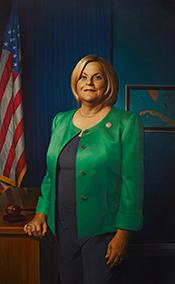
Mr. Speaker, I move to suspend the rules and pass the bill (H.R. 4053) to improve the workings of international organizations and multilateral institutions, and for other purposes. Mr. Speaker, I ask…
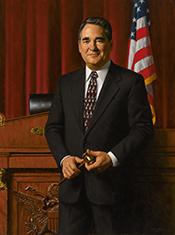
Mr. Speaker, I thank the gentleman from Texas (Mr. Hall) for yielding me time. Mr. Speaker, this will be the second time the House votes on this identical conference report. We have already passed…
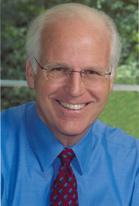
Mr. Speaker, protecting our environment and promoting energy independence are two of the most important jobs I have as a Member of Congress. Unfortunately, the legislation before us today is another…
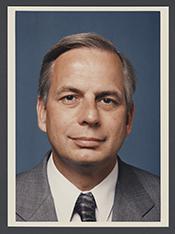
Mr. Speaker, I thank my ranking member and good friend, the gentleman from Michigan (Mr. Dingell), for yielding me this time. I rise again and again in support of a comprehensive energy legislation,…
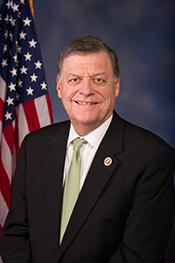
I thank the gentleman for yielding me this time. Mr. Speaker, I am here to talk briefly about the reasons that I support this particular energy bill. I think we ought to talk first about the need,…
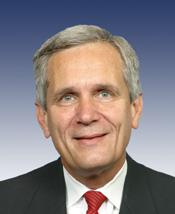
Mr. Speaker, there is a very good reason why we do not have an energy bill: the only bill this House can consider, this one, is a sorry piece of legislation. The only energy bill that we have is one…
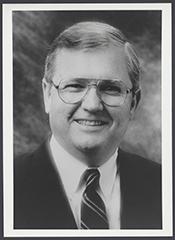
Mr. Speaker, I thank the chairman for his generosity and for yielding me this time. I just would point out that some might think this bill should not deserve to pass for the second time; but it did,…
Bill Text
3 versions available
        [Congressional Bills 108th Congress]
[From the U.S. Government Publishing Office]
[H.R. 4053 Referred in Senate (RFS)]

2d Session
H. R. 4053

_______________________________________________________________________

IN THE SENATE OF THE UNITED STATES

June 24, 2004

Received; read twice and referred to the Committee on Foreign Relations

_______________________________________________________________________

AN ACT

To improve the workings of international organizations and multilateral
institutions, and for other purposes.

Be it enacted by the Senate and House of Representatives of the
United States of America in Congress assembled,

SECTION 1. SHORT TITLE.

This Act may be cited as the ``United States International
Leadership Act of 2004''.

TITLE I--UNITED STATES INTERNATIONAL LEADERSHIP

SEC. 101. FINDINGS.

The Congress makes the following findings:
(1) Decisions at many international organizations and other
multilateral institutions, including membership and key
positions, remain subject to determinations made by regional
groups where democratic states are often in the minority and
where there is intensive cooperation among repressive regimes.
As a result, the United States has often been blocked in its
attempts to take action in these institutions to advance its
goals and objectives, including at the United Nations Human
Rights Commission (where a representative of Libya was elected
as chairman and the United States temporarily lost a seat).
(2) In order to address these shortcomings, the United
States must actively work to improve the workings of
international organizations and multilateral institutions,
particularly by creating a caucus of democratic countries that
will advance United States interests. In the second Ministerial
Conference of the Community of Democracies in Seoul, Korea, on
November 10-20, 2002, numerous countries recommended working
together as a democracy caucus in international organizations
such as the United Nations and ensuring that international and
regional institutions develop and apply democratic standards
for member states.

SEC. 102. ESTABLISHMENT OF A DEMOCRACY CAUCUS.

(a) In General.--The President of the United States, acting through
the Secretary of State and the relevant United States chiefs of
mission, shall seek to establish a democracy caucus at the United
Nations, the United Nations Human Rights Commission, the United Nations
Conference on Disarmament, and at other broad-based international
organizations.
(b) Purposes of the Caucus.--A democracy caucus at an international
organization should--
(1) forge common positions, including, as appropriate, at
the ministerial level, on matters of concern before the
organization and work within and across regional lines to
promote agreed positions;
(2) work to revise an increasingly outmoded system of
regional voting and decision making; and
(3) set up a rotational leadership scheme to provide member
states an opportunity, for a set period of time, to serve as
the designated president of the caucus, responsible for serving
as its voice in each organization.

SEC. 103. ANNUAL DIPLOMATIC MISSIONS ON MULTILATERAL ISSUES.

The Secretary of State, acting through the principal officers
responsible for advising the Secretary on international organizations,
shall ensure that a high-level delegation from the United States
Government, on an annual basis, is sent to consult with key foreign
governments in every region in order to promote the United States
agenda at key international fora, such as the United Nations General
Assembly, United Nations Human Rights Commission, the United Nations
Education, Science, and Cultural Organization, and the International
Whaling Commission.

SEC. 104. LEADERSHIP AND MEMBERSHIP OF INTERNATIONAL ORGANIZATIONS.

(a) United States Policy.--The President, acting through the
Secretary of State and the relevant United States chiefs of mission,
shall use the voice, vote, and influence of the United States to--
(1) where appropriate, reform the criteria for leadership
and, in appropriate cases for membership, at all United Nations
bodies and at other international organizations and
multilateral institutions to which the United States is a
member so as to exclude nations that violate the principles of
the specific organization;
(2) make it a policy of the United Nations and other
international organizations and multilateral institutions, of
which the United States is a member, that a member state may
not stand in nomination or be in rotation for a leadership
position in such bodies if the member state is subject to
sanctions imposed by the United Nations Security Council; and
(3) work to ensure that no member state stand in nomination
or be in rotation for a leadership position in such
organizations, or for membership of the United Nations Security
Council, if the member state is subject to a determination
under section 620A of the Foreign Assistance Act of 1961,
section 40 of the Arms Export Control Act, or section 6(j) of
the Export Administration Act.
(b) Report to Congress.--Not later than 15 days after a country
subject to a determination under section 620A of the Foreign Assistance
Act of 1961, section 40 of the Arms Export Control Act, or section 6(j)
of the Export Administration Act of 1979 is selected for a leadership
post in an international organization of which the United States is a
member or a membership of the United Nations Security Council, the
Secretary of State shall submit to the appropriate congressional
committees a report on any steps taken pursuant to subsection (a)(3).

SEC. 105. INCREASED TRAINING IN MULTILATERAL DIPLOMACY.

(a) Training Programs.--Section 708 of the Foreign Service Act of
1980 (22 U.S.C. 4028) is amended by adding after subsection (b) the
following new subsection:
``(c) Training in Multilateral Diplomacy.--
``(1) In general.--The Secretary shall establish a series
of training courses for officers of the Service, including
appropriate chiefs of mission, on the conduct of diplomacy at
international organizations and other multilateral institutions
and at broad-based multilateral negotiations of international
instruments.
``(2) Particular programs.--The Secretary shall ensure that
the training described in paragraph (1) is provided at various
stages of the career of members of the service. in particular,
the Secretary shall ensure that after January 1, 2006--
``(A) officers of the Service receive training on
the conduct of diplomacy at international organizations
and other multilateral institutions and at broad-based
multilateral negotiations of international instruments
as part of their training upon entry of the Service;
and
``(B) officers of the Service, including chiefs of
mission, who are assigned to United States missions
representing the United States to international
organizations and other multilateral institutions or
who are assigned in Washington, D.C., to positions that
have as their primary responsibility formulation of
policy towards such organizations and institutions or
towards participation in broad-based multilateral
negotiations of international instruments receive
specialized training in the areas described in
paragraph (1) prior to beginning of service for such
assignment or, if receiving such training at that time
is not practical, within the first year of beginning
such assignment.''.
(b) Training for Civil Service Employees.--The Secretary shall
ensure that employees of the Department of State that are members of
the civil service and that are assigned to positions described in
section 708(c) of the Foreign Service Act of 1980 (as amended by this
subtitle) have training described in such section.
(c) Conforming Amendments.--Section 708 of such Act is further
amended--
(1) In subsection (a) by striking ``(a) The'' and inserting
``(a) Training on Human Rights.--The''; and
(2) In subsection (b) by striking ``(b) The'' and inserting
``(b) Training on Refugee Law and Religious Persecution.--
The''.

SEC. 106. PROMOTING ASSIGNMENTS TO INTERNATIONAL ORGANIZATIONS.

(a) Promotions.--
(1) In general.--Section 603(b) of the Foreign Service Act
of 1980 (22 U.S.C. 4003) is amended by striking the period at
the end and inserting: ``, and shall consider whether the
member of the Service has served in a position whose primary
responsibility is to formulate policy towards or represent the
United States at an international organization, a multilateral
institution, or a broad-based multilateral negotiation of an
international instrument.''.
(2) Effective date.--The amendment made by paragraph (1)
shall take effect January 1, 2011.
(b) Establishment of a Multilateral Diplomacy Cone in the Foreign
Service.--
(1) Findings.--Congress finds the following:
(A) The Department of State maintains a number of
United States missions both within the United States
and abroad that are dedicated to representing the
United States to international organizations and
multilateral institutions, including missions in New
York, Brussels, Geneva, Rome, Montreal, Nairobi,
Vienna, and Paris, and which are responsible for United
States representation to the United Nations Economics,
Scientific and Cultural Organization (UNESCO) and the
Organization on Economic Cooperation and Development
(OECD).
(B) In offices at the Harry S. Truman Building, the
Department maintains a significant number of positions
in bureaus that are either dedicated, or whose primary
responsibility is, to represent the United States to
such organizations and institutions or at multilateral
negotiations.
(C) Given the large number of positions in the
United States and abroad that are dedicated to
multilateral diplomacy, the Department of State may be
well served in developing persons with specialized
skills necessary to become experts in this unique form
of diplomacy.
(2) Report.--Not later than 180 days after the date of the
enactment of this Act, the Secretary shall submit to the
appropriate congressional committees a report--
(A) evaluating whether a new cone should be
established for the Foreign Service that concentrates
on members of the Service that serve at international
organizations and multilateral institutions or are
primarily responsible for participation in broad-based
multilateral negotiations of international instruments;
and
(B) provides alternative mechanisms for achieving
the objective of developing a core group of United
States diplomats and other government employees who
have expertise and broad experience in conducting
multilateral diplomacy.

SEC. 107. IMPLEMENTATION AND ESTABLISHMENT OF OFFICE ON MULTILATERAL
NEGOTIATIONS.

(a) Establishment of Office.--The Secretary of State is authorized
to establish, within the Bureau of International Organizational
Affairs, an Office on Multilateral Negotiations to be headed by a
Special Representative for Multilateral Negotiations (in this section
referred to as the ``special representative'').
(b) Appointment.--The special representative shall be appointed by
the President with the advice and consent of the Senate and shall have
the rank of Ambassador-at-Large. At the discretion of the President
another official at the Department may serve as the special
representative. The President may direct that the special
representative report to the Assistant Secretary for International
Organizations.
(c) Staffing.--The special representative shall have a staff of
foreign service and civil service officers skilled in multilateral
diplomacy.
(d) Duties.--The special representative shall have the following
responsibilities:
(1) In general.--The primary responsibility of the special
representative shall be to assist in the organization of, and
preparation for, United States participation in multilateral
negotiations, including the advocacy efforts undertaken by the
Department of State and other United States agencies.
(2) Advisory role.--The special representative shall advise
the President and the Secretary of State, as appropriate,
regarding advocacy at international organizations and
multilateral institutions and negotiations and, in coordination
with the assistant Secretary of State for international
organizational affairs, shall make recommendations regarding--
(A) effective strategies (and tactics) to achieve
United States policy objectives at multilateral
negotiations;
(B) the need for and timing of high level
intervention by the President, the Secretary of State,
the Deputy Secretary of State, and other United States
officials to secure support from key foreign government
officials for the United States position at such
organizations, institutions, and negotiations;
(C) the composition of United States delegations to
multilateral negotiations; and
(D) liaison with Congress, international
organizations, nongovernmental organizations, and the
private sector on matters affecting multilateral
negotiations.
(3) Democracy caucus.--The special representative, in
coordination with the Assistant Secretary for International
Organizational Affairs, shall ensure the establishment of a
democracy caucus.
(4) Annual diplomatic missions of multilateral issues.--The
special representative, in coordination with the Assistant
Secretary for International Organizational Affairs, shall
organize annual diplomatic missions to appropriate foreign
countries to conduct consultations between principal officers
responsible for advising the Secretary of State on
international organizations and high-level representatives of
the governments of such foreign countries to promote the United
States agenda at the United Nations General Assembly and other
key international fora (such as the United Nations Human Rights
Commission).
(5) Leadership and membership of international
organizations.--The special representative, in coordination
with the Assistant Secretary of International Organizational
Affairs, shall direct the efforts of the United States
Government to reform the criteria for leadership and membership
of international organizations as described in section 104.
(6) Participation in multilateral negotiations.--The
special representative, or members of the special
representative's staff, may, as required by the President or
the Secretary of State, serve on a United States delegation to
any multilateral negotiation.
(e) Report.--Not later than 180 days after the date of the
enactment of this Act, the Secretary of State shall submit a plan to
establish a democracy caucus to the appropriate congressional
committees. The report required by section 106(b)(2) may be submitted
together with the report under this subsection.

SEC. 108. DEFINITION.

In this title, the term ``appropriate congressional committees''
means the Committee on International Relations of the House of
Representatives and the Committee on Foreign Relations of the Senate.

TITLE II--MISCELLANEOUS PROVISIONS

SEC. 201. REPORTS RELATING TO MAGEN DAVID ADOM SOCIETY.

(a) Findings.--Section 690(a) of the Foreign Relations
Authorization Act, Fiscal Year 2003 (Public Law 107-228) is amended by
adding at the end the following:
``(5) Since the founding of the Magen David Adom in 1930,
the American Red Cross has regarded it as a sister national
society forging close working ties between the two societies
and has consistently advocated recognition and membership of
the Magen David Adom in the International Red Cross and Red
Crescent Movement.
``(6) The American Red Cross and Magen David Adom signed an
important memorandum of understanding in November 2002,
outlining areas for strategic collaboration, and the American
Red Cross will encourage other societies to establish similar
agreements with Magen David Adom.''.
(b) Sense of Congress.--Section 690(b) of such Act is amended--
(1) in paragraph (3) after the semicolon by striking
``and'';
(2) by redesignating paragraph (4) as paragraph (5); and
(3) by inserting after paragraph (3) the following new
paragraph:
``(4) the High Contracting Parties to the Geneva
Conventions of August 12, 1949, should adopt the October 12,
2000, draft additional protocol which would accord
international recognition to an additional distinctive emblem;
and''.
(c) Report.--Section 690 of such Act is further amended by adding
at the end the following:
``(c) Report.--Not later than 60 days after the date of the
enactment of the United States International Leadership Act of 2004,
and annually thereafter, the Secretary of State shall submit a report,
on a classified basis if necessary, to the appropriate congressional
committees describing--
``(1) efforts by the United States to obtain full
membership for the Magen David Adom in the International Red
Cross Movement;
``(2) efforts by the International Committee of the Red
Cross to obtain full membership for the Magen David Adom in the
International Red Cross Movement;
``(3) efforts of the High Contracting Parties to the Geneva
Convention of 1949 to adopt the October 12, 2000, draft
additional protocol; and
``(4) the extent to which the Magen David Adom of Israel is
participating in the activities of the International Red Cross
and Red Crescent Movement.''.

SEC. 202. VOLUNTARY CONTRIBUTION TO ORGANIZATION OF AMERICAN STATES.

There are authorized to be appropriated $2,000,000 for a United
States voluntary contribution to the Organization of American States
for the Inter-American Committee Against Terrorism (CICTE) to identify
and develop a port in the Latin American and Caribbean region into a
model of best security practices and appropriate technologies for
improving port security in the Western Hemisphere. Amounts authorized
to be appropriated under this section are authorized to remain
available until expended and are in addition to amounts otherwise
available to carry out section 301 of the Foreign Assistance Act of
1961 (22 U.S.C. 2221).

SEC. 203. COMBATTING THE PIRACY OF UNITED STATES COPYRIGHTED MATERIALS.

(a) Authorization of Appropriations.--In addition to such amounts
as may otherwise be authorized to be appropriated for such purpose,
there are authorized to be appropriated for the Department of State,
$10,000,000 to carry out the following activities in countries that are
not members of the Organization for Economic Cooperation and
Development (OECD):
(1) Provision of equipment and training for foreign law
enforcement, including in the interpretation of intellectual
property laws.
(2) Training for judges and prosecutors, including in the
interpretation of intellectual property laws.
(3) Assistance in complying with obligations under
appropriate international copyright and intellectual property
treaties and agreements.
(b) Consultation With World Intellectual Property Organization.--In
carrying out subsection (a), the Department of State should make every
effort to consult with, and provide appropriate assistance to, the
World Intellectual Property Organization to promote the integration of
non-OECD countries into the global intellectual property system.

Passed the House of Representatives June 23, 2004.

Attest:

JEFF TRANDAHL,

Clerk.