





I
108th CONGRESS
2d Session
H. R. 4107
IN THE HOUSE OF REPRESENTATIVES
April 1, 2004
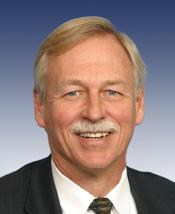
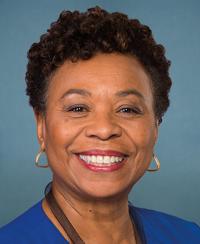
Mr. Boehlert (for himself, Mr. Pascrell, Mr. Weldon of Pennsylvania, Mr. Hoyer, Mr. Smith of Michigan, Mr. Andrews, Mr. Cox, Mr. Turner of Texas, and Mrs. Lowey) introduced the following bill; which was referred to the Committee on Science
A BILL
To reauthorize the Assistance to Firefighters Grant program under section 33 of the Federal Fire Prevention and Control Act of 1974, and for other purposes.
Short title
This Act may be cited as the &short-title1;
.
Findings
Congress finds that—
there are 1,100,000 firefighters serving in over 30,000 fire departments in the United States;
fire departments responded to nearly 1,700,000 fires in 2002;
every 19 seconds a fire department responds to a fire somewhere in the United States;
in 2003, 110 firefighters died in the line of duty;
fires resulted in the deaths of 3,380 civilians in 2002;
nationwide there is a civilian fire death every 156 minutes;
in 2002, 18,425 people sustained injuries from fires;
in 2002 there was an estimated $10,337,000,000 in property damage caused by fires, including $6,055,000,000 worth of property loss to residential properties;
for communities with populations between 10,000 and 1,000,000, it is estimated that approximately 1/4 of emergency responders on a shift lack radios, and this percentage increases as community size decreases;
an estimated one-third of firefighters per shift are not equipped with self-contained breathing apparatus (SCBA);
nearly half of all self-contained breathing apparatus units are at least 10 years old;
nearly half of firefighters on a shift lack personal alert system (PASS) devices;
an estimated 57,000 firefighters lack personal protective clothing;
one-third of personal protective clothing is at least 10 years old;
half of all fire engines are at least 15 years old;
only one-fourth of fire departments have the ability to communicate with Federal, State, and local partners;
only one-fourth of fire departments have thermal imaging cameras;
only one fire department in 28 has mobile data terminals;
only one fire department in 50 has advanced personnel location equipment;
only one fire department in 23 has equipment to collect chemical or biological samples;
an estimated 42 percent of the population is protected by fire departments that do not have a program for free distribution of home smoke alarms;
an estimated 48 percent of the population is protected by fire departments that do not have a juvenile firesetter program;
an estimated 27 percent of the population is protected by fire departments that do not have a fire safety education program based on a national curriculum;
only 11 percent of fire departments can respond to a technical rescue involving emergency medical services at a building collapse with local personnel, and nearly half of all departments consider such an incident outside their scope;
only 13 percent of fire departments can respond to a hazmat incident involving emergency medical services with local personnel, and two-fifths of all departments consider such an incident outside their scope;
only 26 percent of fire departments can respond to a wildland/urban interface fire affecting 500 acres with local personnel, and one-third of all departments consider such an incident outside their scope; and
only 12 percent of fire departments can handle mitigation of a developing major flood with local personnel, and a majority of fire departments consider such an incident outside their scope.
Amendments
Section 33 of the Federal Fire Prevention and Control Act of 1974 (15 U.S.C. 2229) is amended—
by striking Director
each place it appears and inserting Administrator
;
in subsection (b)(1)(A), by inserting and volunteer emergency medical service squads
after fire departments
;
in subsection (b)(1)(B), by inserting and firefighter safety research and development
after fire prevention
;
in subsection (b)(3)(F), by inserting and volunteer emergency medical service squads that are not affiliated with a fire department, hospital, or for-profit entity
after fire departments
;
in subsection (b)(4)—
by inserting and firefighter safety research and development
after prevention
in the paragraph heading;
in subparagraph (A)(ii)—
by inserting that are not fire departments and
after community organizations
;
by inserting and firefighter research and development programs,
after fire safety programs and activities,
; and
by inserting and research to improve firefighter health and life safety
after fire prevention programs
; and
in subparagraph (B), by striking to children from fire
and inserting to high risk groups from fire, as well as research programs that demonstrate the potential to improve firefighter safety
;
in subsection (b)(6)—
in subparagraph (A)—
by striking subparagraph (B)
and inserting subparagraphs (B) and (C)
; and
by striking 30 percent
and inserting 20 percent
; and
by inserting after subparagraph (B) the following new subparagraph:
Fire prevention and firefighter safety grants
There shall be no matching requirement for a grant described in paragraph (4)(A)(ii).
;
in subsection (b)(10)—
by amending subparagraph (A) to read as follows:
Recipient limitations
A grant recipient under this section—
that serves a jurisdiction with 500,000 people or less may not receive grants in excess of $1,000,000 for any fiscal year;
that serves a jurisdiction with more than 500,000 but not more than 1,000,000 people may not receive grants in excess of $2,000,000 for any fiscal year; and
that serves a jurisdiction with more than 1,000,000 people may not receive grants in excess of $3,000,000 for any fiscal year.
;
by redesignating subparagraph (B) as subparagraph (C);
by inserting after subparagraph (A) the following new subparagraph:
Distribution
Notwithstanding subparagraph (A), no single recipient may receive more than one half of one percent of the funds appropriated under this section for a single fiscal year.
; and
by adding at the end the following new subparagraph:
Volunteer emergency medical service limitation
Not more than 4 percent of the funds appropriated to provide grants under this section for a fiscal year may be awarded to volunteer emergency medical service squads.
;
in subsection (b), by adding at the end the following new paragraphs:
Annual meeting
The Administrator shall convene an annual meeting of non-Federal fire service experts, including representatives from a wide range of fire service organizations, to recommend criteria for awarding grants under this section for the next fiscal year and recommend any necessary administrative changes to the grant program.
Guidelines
Each year, prior to making any grants under this section, the Administrator shall publish in the Federal Register—
guidelines that describe the process for applying for grants and the criteria for awarding grants; and
an explanation of any differences between the guidelines and the recommendations made pursuant to paragraph (1).
The criteria for awarding grants shall include the extent to which the grant would enhance the daily operations of a fire department and the impact of such a grant on the protection of lives and property.
Peer review
The Administrator shall, after consultation with national fire service organizations, appoint fire service personnel to conduct peer review of applications received under paragraph (5). In making grants under this section, the Administrator shall consider the results of such peer review evaluations.
Protection of volunteers from discrimination
A fire department receiving funds provided under this section shall not discriminate against, or prohibit its members from engaging in, volunteer activities in another jurisdiction during off-duty hours.
; and
in subsection (e)(1), by striking 2002 through 2004
and inserting 2005 through 2007
.
Reports
Study on need for Federal assistance to State and local communities to fund firefighting and emergency response activities
The Administrator of the United States Fire Administration shall—
reconduct the study required under section 1701(b) of the Floyd D. Spence National Defense Authorization Act for Fiscal Year 2001, in conjunction with the National Fire Protection Association, to—
define the current role and activities associated with the fire services;
analyze the extent to which grant awards fulfill the goals of applicants; and
provide a needs assessment to identify shortfalls;
express the needs assessment under subparagraph (A)(iii) on a national and State-by-State basis; and
measure the impact the Assistance to Firefighters Grant program under section 33 of the Federal Fire Prevention and Control Act of 1974 has had in meeting the shortfalls identified in the original report conducted under such section 1701(b).
Time for completion of study; report
The Administrator shall complete the study under subsection (a), and submit a report on the results of the study to Congress, not later than 18 months after the date of the enactment of this Act.
Authorization of appropriations
There are authorized to be appropriated to the United States Fire Administration $300,000 for fiscal year 2005 to carry out the study required by subsection (a).