Veterans' Compensation Cost-of-Living Adjustment Act of 2004
Legislative Activity
Stay on top of the latest movement without scrolling through every action
Became Public Law No: 108-363.
October 25, 2004
View full timeline
Introduced in House
April 20, 2004
Sponsor introductory remarks on measure. (CR E571)
April 20, 2004
Referred to the House Committee on Veterans' Affairs.
April 20, 2004
Referred to the Subcommittee on Benefits.
April 22, 2004
Subcommittee Consideration and Mark-up Session Held.
May 13, 2004
Forwarded by Subcommittee to Full Committee by Voice Vote.
May 13, 2004
Committee Consideration and Mark-up Session Held.
May 19, 2004
Ordered to be Reported (Amended) by Voice Vote.
May 19, 2004
Reported (Amended) by the Committee on Veterans' Affairs. H. Rept. 108-524.
June 3, 2004
Placed on the Union Calendar, Calendar No. 302.
June 3, 2004
Mr. Smith (NJ) moved to suspend the rules and pass the bill, as amended.
July 20, 2004 • 5:39 PM
Considered under suspension of the rules. (consideration: CR H6078-6080)
July 20, 2004 • 5:39 PM
DEBATE - The House proceeded with forty minutes of debate on H.R. 4175.
July 20, 2004 • 5:39 PM
At the conclusion of debate, the Yeas and Nays were demanded and ordered. Pursuant to the provisions of clause 8, rule XX, the Chair announced that further proceedings on the motion would be postponed.
July 20, 2004 • 5:55 PM
Considered as unfinished business. (consideration: CR H6579)
July 22, 2004 • 12:42 PM
Passed/agreed to in House: On motion to suspend the rules and pass the bill, as amended Agreed to by the Yeas and Nays: (2/3 required): 421 - 0 (Roll no. 408).(text of measure as passed in House: CR 7/20/2004 H6078-6079)
July 22, 2004 • 12:50 PM
On motion to suspend the rules and pass the bill, as amended Agreed to by the Yeas and Nays: (2/3 required): 421 - 0 (Roll no. 408). (text of measure as passed in House: CR 7/20/2004 H6078-6079)
July 22, 2004 • 12:50 PM
Motion to reconsider laid on the table Agreed to without objection.
July 22, 2004 • 12:50 PM
Received in the Senate and Read twice and referred to the Committee on Veterans' Affairs.
September 7, 2004
Senate Committee on Veterans' Affairs discharged by Unanimous Consent.
October 5, 2004
Measure laid before Senate by unanimous consent. (consideration: CR S10459)
October 5, 2004
Senate struck all after the Enacting Clause and substituted the language of S. 2483.
October 5, 2004
Passed Senate in lieu of S. 2483 with an amendment by Unanimous Consent.
October 5, 2004
See also S. 2483.
October 5, 2004
Message on Senate action sent to the House.
October 6, 2004
Mr. Smith (NJ) asked unanimous consent that the House agree to the Senate amendment. (consideration: CR H9027; text as House agreed to Senate amendment: CR H9027)
October 8, 2004 • 11:01 PM
Resolving differences -- House actions: On motion that the House agree to the Senate amendment Agreed to without objection.
October 8, 2004
On motion that the House agree to the Senate amendment Agreed to without objection.
October 8, 2004 • 11:02 PM
Motion to reconsider laid on the table Agreed to without objection.
October 8, 2004 • 11:02 PM
Presented to President.
October 13, 2004
Signed by President.
October 25, 2004
Became Public Law No: 108-363.
October 25, 2004
Voting History
1 vote recorded • Roll call available
Floor Debate
18 membersWhat members said about H.R. 4175 on the floor
CHS SML
SML LE
LE SJL
SJL DD+13
DD+13
Floor Debate
18 membersWhat members said about H.R. 4175 on the floor
Mr. Speaker, I move to suspend the rules and pass the Senate bill (S. 2486) to amend title 38, United States Code, to improve and extend housing, education, and other benefits under the laws…
Mr. Speaker, I move to suspend the rules and pass the Senate bill (S. 2486) to amend title 38, United States Code, to improve and extend housing, education, and other benefits under the laws administered by the Secretary of Veterans Affairs, and for other purposes.
Mr. Speaker, I yield myself such time as I may consume.
Mr. Speaker, I rise in strong support of S. 2486, the Veterans Benefits Improvement Act of 2004. This solid compromise package incorporates 14 benefit bills that have been referred to the House Committee on Veterans' Affairs, this Congress and contains more than 40 substantive provisions. S. 2468 would enhance a wide range of veterans' benefits, including protections for mobilized servicemembers.
I want to draw my colleagues' attention to Title I of this comprehensive bill, which is derived from H.R. 1716, the Veterans Earn and Learn Act. This is a bill that I introduced last year along with the ranking member, the gentleman from Illinois (Mr. Evans), and others.
The Veterans Earn and Learn Act represents the fifth in a series of employment and business opportunities bills that our Subcommittee on Benefits has offered over the last 3 and a half years. The Veterans Earn and Learn Act would significantly update the Montgomery GI Bill on-job training and apprenticeship programs to reflect learning opportunities in American business and industry today. This legislation is Congress's first major rewrite of the on-job training, or OJT, and apprentice policies for veterans since World War II.
Additionally, effective October 1, 2005, Title I includes a 10 percent increase in the monthly educational assistance allowance the VA furnishes to veterans and others pursuing this particular type of training.
The Veterans Earn and Learn Act is timely because almost 200,000 servicemembers and Reservists separate each year, and they would now all be eligible to use these Earn and Learn initiatives to continue to build transferrable skills.
VA's OJT and apprenticeship program is a valuable program for employers as well. Tapping into veterans as a rich resource of skilled and qualified employees is a shrewd business strategy for employers of all sizes. Veterans bring a unique combination of skill, discipline, character and talent to the workplace.
Title II of the compromise focuses on protecting the civilian job benefits of activated Reservists. In light of longer active duty tours, the major provision here would increase from 18 to 24 months the maximum period of employer-sponsored health care coverage that a Reservist-employee may elect to continue to receive.
Title III, Mr. Speaker, focuses on veterans' benefits matters. The key provision of this title is a $250 monthly increase in dependency and indemnity payments for a surviving spouse with children under the age of 18. This increase would be payable for 2 years following the service-connected death of a servicemember or veteran.
Title IV enhances housing benefits for veterans. Among its important provisions is an increase of the maximum VA home loan to 25 percent of the Freddie Mac conforming loan amount for a single family residence. The increase raises from $240,000 to $333,700 the maximum VA home loan guaranty.
I am also pleased that this title makes some needed changes to provide flexibility in VA's administration of Transitional Housing program for homeless veterans. The very first loan under this program should close this month, I would point out to my colleagues, and I am looking forward to several more projects getting under way in the next 6 months.
Title V focuses on protecting some of our most vulnerable veterans and dependents when it is necessary to pay the VA benefits on their behalf to a third party.
This bill also makes improvements to the Servicemembers Civil Relief Act. I am pleased it includes provisions that I had authored, including one to furnish additional protections to servicemembers and their spouses with respect to residential and motor vehicle leases when the servicemember is mobilized or sent to a new duty assignment, sometimes with little advance notice.
Finally, I am especially pleased that one of the sections of Title VIII would allow the principal office of the U.S. Court of Appeals for Veterans Claims to be located at any location in the Washington, D.C., metropolitan area, if that location would allow greater cost efficiencies or a permanent building for the court.
Mr. Speaker, I rise today in strong support of S. 2486, the Veterans Benefits Improvement Act of 2004.
I appreciate the opportunity to work with Arlen Specter and Bob Graham, the distinguished chairman and ranking member, respectively, of the Senate Committee on Veterans' Affairs, in writing this comprehensive legislation. I thank them both for their leadership.
The Veterans' Benefits Improvement Act of 2004 incorporates 14 benefits bills that have been referred to the House Committee on Veterans' Affairs this Congress. S. 2486 contains more than 40 substantive provisions which would enhance programs affecting veterans' education, training, employment, reemployment, compensation and pension, housing, fiduciary, protections for mobilized servicemembers, and other benefits.
Mr. Speaker, I want to draw my colleagues' attention to title one of this comprehensive bill, the Veterans Earn and Learn Act, which is derived from H.R. 1716, introduced by Ranking Member Lane Evans and me and many others.
This section represents the fifth of six measures in a Veterans' Jobs and Business Opportunities package that our Subcommittee on Benefits has authored over the last 3\1/2\ years. I appreciate the vision and bipartisan leadership of Jack Quinn and Bob Filner, followed by J.D. Hayworth and Bob Filner, then Mike Simpson and Silvestre Reyes, and now Henry Brown and Michael Michaud on this package.
Title one of the bill would significantly update the on-job training and apprenticeship programs administered by the Department of Veterans Affairs to reflect learning opportunities in American business and industry today. Indeed, this legislation is Congress' first major rewrite of on-job training, OJT, and apprenticeship policies for veterans since World War II.
Plus, effective October 1 of 2005, the bill would increase by 10 percent the monthly educational assistance allowance that the Department of Veterans Affairs furnishes eligible veterans, dependent widows and children, and Reservists.
The Veterans Earn and Learn title of the bill is timely because 419 military occupational specialties are currently transferable to the civilian economy. Almost 200,000 separating servicemembers per year, including Reservists, would be eligible to use these Earn and Learn initiatives to continue to build transferable skills. This measure represents a unique opportunity for veterans, Reservists, and dependent widows and children to use their VA educational assistance benefits to augment the entry-level wage the employer pays them as they train on the job. As the training wage increases over time, the monthly VA educational assistance allowance decreases.
VA's OJT and apprenticeship program is a valuable program for employers, too. For example, in a 3-year apprenticeship, VA education benefits under this measure would augment the veteran's training wage furnished by the employer by $17,891. In fact, Missouri has documented that VA's on-job training and apprenticeship programs improve employee retention and bring significant federal training dollars to Missouri communities to the tune of $38 million annually. Tapping into veterans as a rich source of skilled and qualified employees is a shrewd business strategy for employers of all sizes, as veterans bring a unique combination of skill, discipline, character, and talent to the workplace.
The monthly OJT/apprenticeship rates vary based on eligibility. But here are some brief examples of the amount of VA educational
program allowances beneficiaries would receive in 1- and 2-year on-job training programs and 3- and 4-year apprenticeships under the Montgomery GI Bill:
A Reservist participating in a 1-year on-job training program as a management trainee in a retail establishment would receive $2,471 over 12 monthly payments.
A widow or dependent child who participates in a 2-year training program as a financial adviser with an investment firm would receive $9,643 over 24 monthly payments.
A veteran who participates in a 3-year apprenticeship program in plumbing would receive $17,891 over 36 monthly payments.
A veteran who participates in a 4-year apprenticeship program as an electrician would receive $22,529 over 48 monthly payments.
Mr. Speaker, it's important to note that on-job training and apprenticeships are excellent, practical ways for veterans to use their VA education benefits, especially for those who are married with families to support. VA education benefits are not limited to classroom training.
Let me now highlight other titles in this comprehensive bill.
Title two focuses on employment matters. A major aspect of this title is a provision to increase from 18 to 24 months the maximum period of employer-sponsored health coverage that an employee covered by the Uniform Services Employment and Reemployment Rights Act of 1994 may elect to continue to receive. This extension of coverage is essential given the longer active-duty tours of our reservists. I commend Representatives Henry Brown and Michael Michaud for their leadership on this issue.
Title three focuses on veterans' benefits matters. A key part of this title is the provision that provides a $250 monthly increase in dependency and indemnity payments for a surviving spouse with children under age 18. These payments are authorized during the 2-year period following the service-connected death of the servicemember or veteran. I commend Chairman Specter and Ranking Member Graham for their leadership on this provision.
Title four enhances housing matters. Among other important provisions, this section of the bill increases the maximum VA home loan to 25 percent of the Freddie Mac conforming loan amount for a single- family residence. It also annually indexes the maximum amount of VA's home loan guaranty for construction or purchase of a home to that Freddie Mac limit. In effect, the increase raises from 240,000 to $333,700 the maximum home loan purchase amount on a VA-guaranteed purchase.
I am also very pleased this section makes some small needed changes the Department of Veterans Affairs has asked for to provide greater flexibility in its administration of the Transitional Housing program. I was pleased to work with VA in this regard so as to make the Transitional Housing program as effective as possible.
Title five focuses on fiduciary matters to protect our more vulnerable veterans and dependents when they require a third party payee to receive VA benefits on their behalf. These provisions are the result of 2 hearings held by the Subcommittee on Benefits, and I commend Representatives Henry Brown and Susan Davis for their work on this section of the bill.
Title six addresses various memorial affairs issues, including designating a monument constructed at the Riverside National Cemetery in Riverside, CA, as a Prisoner of War/Missing in Action National Memorial.
Title seven makes various improvements to the Servicemembers Civil Relief Act. I am very pleased this section of the bill includes the provision I authored to furnish additional protections to servicemembers and their spouses with respect to residential and motor vehicle leases. This provision modifies section 305 of the Servicemembers Civil Relief Act to address the reality of servicemembers having to terminate leases due to longer-term mobilization or deployment. This provision clarifies that if a servicemember terminates a lease entered into jointly with a dependent--usually the spouse--the obligations of both the servicemember and the dependent are terminated. This affords military families the additional protections they need when the servicemember is mobilized to a new duty assignment--sometimes with little advance notice--and the family, too, must relocate.
Lastly, title eight addresses other important matters. I am pleased this section authorizes that the principal office of the U.S. Court of Appeals for Veterans Claims to be located at any location in the Washington, DC, metropolitan area. Another location may furnish greater cost efficiencies for the court.
In closing, I thank Chairman Brown and Ranking Member Michaud for their leadership and continued bipartisan cooperation. I'd also like to thank the staff on both sides of the aisle in the House and Senate Committees on Veterans' Affairs for their diligent work in bringing this bill to the floor.
Mr. Speaker, I urge my colleagues to support S. 2486.
Mr. Speaker, for the benefit of my colleagues, the following is a joint explanatory statement describing the compromise agreement we have reached with the other body and a letter from the Committee on the Judiciary concerning S. 2486 and our committee's response.
Explanatory Statement on Senate Amendments to S. 2486
S. 2486, as amended, the ``Veterans Benefits Improvement
Act of 2004,'' reflects a Compromise Agreement reached by the
Senate and House Committees on Veterans' Affairs (the
Committees) on the following bills reported during the 108th
Congress: S. 2485, as amended; S. 2486, as amended; and S.
1132, as introduced (Senate Bills); H.R. 1716, as amended;
H.R. 3936; H.R. 4175, as amended; H.R. 4345; and H.R. 4658,
as amended (House Bills).
The Senate and House Committees on Veterans' Affairs have
prepared the following explanation of S. 2486, as amended
(Compromise Agreement). Differences between the provisions
contained in the Compromise Agreement and the related
provisions of S. 2485, as amended; S. 2486, as amended; S.
1132, as introduced; H.R. 1716, as amended; H.R. 3936; H.R.
4175, as amended; H.R. 4345; and H.R. 4658, as amended; are
noted in this document, except for clerical corrections,
conforming changes made necessary by the Compromise
Agreement, and minor drafting, technical, and clarifying
changes.
Mr. Speaker, I yield such time as he may consume to the gentleman from South Carolina (Mr. Brown), who has been a great workhorse on this committee. As I indicated earlier, this bill alone has some 40 disparate provisions. It encompasses over 14 bills. The gentleman, as the subcommittee chairman, has walked point on all of this; and I want to thank the distinguished chairman for his very able and very effective leadership as subcommittee chairman.
Mr. Speaker, I yield such time as he may consume to the gentlewoman from Florida (Ms. Ginny Brown-Waite), a distinguished member of our committee.
Mr. Speaker, we reserve the balance of our time.
Mr. Speaker, I yield 2 minutes to the gentleman from Maine (Mr. Michaud), my good friend and colleague, to allocate as he would like.
Mr. Speaker, I reserve the balance of my time.
Mr. Speaker, I continue to reserve the balance of my time.
Mr. Speaker, I yield 2 minutes to the gentlewoman from Texas (Ms. Jackson-Lee) as well.
Mr. Speaker, I yield myself such time as I may consume to say once again that this is a good bill. As a matter of fact, it is a very, very important bill. And I do want to thank my friend, the gentleman from Illinois (Mr. Evans), and the gentleman from South Carolina (Mr. Brown), our distinguished subcommittee chairman, who has done yeoman's work on this, and also the gentleman from Maine (Mr. Michaud), who is the ranking member on that subcommittee. This has been a true bipartisan product. I think when President Bush signs this piece of legislation we can all be very, very proud.
I also want to join my friend from Texas in thanking the gentleman from
Texas (Mr. Rodriguez) for his outstanding and exemplary work in the Congress for the past 8 years, and he certainly has put veterans first. So again I want to thank him for his work as well.
Mr. Speaker, I yield back the balance of my time.
Mr. Speaker, I support this rule. However, I want to make it clear that we do not want this as a precedent that on trade agreements only 2 hours of debate always are allowed. In this case I think 2…
Mr. Speaker, I support this rule. However, I want to make it clear that we do not want this as a precedent that on trade agreements only 2 hours of debate always are allowed. In this case I think 2 hours will be satisfactory. That will not always be true.
There are good reasons to support this FTA, and I do so. There is the historical relationship between our two countries, as mentioned. There are the present realities in our relationship, Morocco's important role in its area and beyond that. Also, there are some important provisions in this agreement; for example, relating to manufacturing goods outside of the textile area. Ninety-five percent of them will become duty-free. There are strong services commitments, strong IPR commitments. So there are good reasons to be supportive of this.
I do want to put in perspective, though, several issues that have come up in our discussion, and these issues really were raised by us on the minority side. The gentleman from California (Mr. Dreier) likes to talk about raising issues as if it is a reflection of economic isolationism. That is the rubric, the mantra, the propaganda of the majority. They try to pin it on Democrats, including John Kerry. It is absurd. We raised several issues because they were legitimate ones, not because we opposed expanded trade, but because we want expanded trade to work for everybody. We want expanded trade to be shaped. We do not think it is some magic bullet that we simply have to shoot and everything will work out. We do not think trade policy should be on automatic pilot. We do not think that what is necessarily appropriate in one trade agreement is appropriate in another. These cookie cutter approaches of this administration are wrong, and surely we do not support this agreement because we think that the economic record of this administration is worthy of support by anybody in this country.
So we raised a couple of issues. And the gentlewoman from New York (Ms. Slaughter) referred to the prescription medicine provision, and I want to talk about it. Before I do that, a brief word and we will have more discussion during the 2 hours about the core labor standard provisions. The gentleman from California said we should not impose U.S. wages, identical laws on other countries. That is not what we are talking about. That again is propaganda from the majority side. What we are talking about are basic core international standards, and countries, including ours, have signed on to a declaration that says that people should have the right to associate, to bargain, to be free from discrimination, there should be no child or forced labor. That is what we are talking about when we say they should be incorporated into free trade agreements.
We asked the question, an important one, where is Morocco? Where is Morocco today in terms of their laws and their enforcement of these core labor standards? And the majority, because of their view that trade always works out for the best, it is always win-win, did not raise any questions about that. In fact, as to the reforms of 2003 in Morocco, there was not even within our government an English translation of these laws. And we asked for one and we looked at them. We talked to the Moroccan government about these laws, and I am pleased to say that we had a very useful discussion, which we initiated and the Moroccan government responded to, regarding the status of these core labor standards in Moroccan law and in Moroccan practice.
The reforms that were inaugurated last year were a major step forward. The Moroccan society has some history of some freedom for workers, and the independent union in Morocco supports this agreement, I think, as a result. But there were issues raised as to the ability of people to associate, to bargain, and to strike, and so we asked the Moroccan government to give us in writing the status, and I want to quote from their letter and I will place that letter in the Record. The letter read this way:
``The government of Morocco is committed to protecting the right to strike in conformance with ILO, International Labor Organization's core principles. In particular, the government will not use Article 288 of our penal code against lawful strikers.''
So I very much disagree with the administration's approach in general. They have in the agreements enforce their own laws. They put these in the agreements regardless of whether the laws incorporate the standards and whether there is implementation of them. And when we have a chance, when we take over, that will change. But in the meanwhile, the question is, is there conformance, is there conformance basically in Morocco with the core labor standards? And I think the realities as we were able to dig them out indicate that they are basically in conformance with the core labor standards.
Now a few words about prescription medicines. Why did we inquire? First of all, there is the same provision here as there is in the previous agreement, including Australia, the general patent provision that could be applied to reimportation of prescription medicines. It turns out in the case of Morocco that that provision is not going to have any potential effect. All of the legislation that has been introduced regarding reimportation does not include Morocco. They have a very small pharmaceutical industry. So I do not think, though I do not like this provision as a general rule, that we should vote against Morocco because of it, but we should make clear that we do not believe these provisions or this provision should be in trade agreements.
Now what about the impact of these provisions not on our important health needs but the important health needs of the people of Morocco? And we were concerned about that. The gentleman from California (Mr. Dreier) talked about AIDS. Look, if we are really concerned, and I think we all are, we need to look at these agreements to see what is the potential impact on the availability of medicines to people in Morocco who are suffering from AIDS and where there is in other cases as well some kind of a health emergency? And there were several provisions in this agreement that raised questions about the accessibility of the people of Morocco in these cases to necessary pharmaceuticals and the ability of the government of Morocco to take the steps necessary to make these drugs available. And these are fairly technical provisions, but they relate to the lives of hundreds of thousands of people. One relates to so-called parallel imports and the other to test data protections.
So I will make a long story short, and, if necessary, we can talk more about this when we have the debate of 2 hours. We entered into discussions with USTR. We on the Democratic side sent a letter to USTR, and they responded. And I include those two letters in the Record. And we said, in a few words, would the provisions in these two cases prevent accessibility to necessary drugs in a real case of emergency or necessity? And essentially what USTR has said: The agreement in the side letters, when read together, would not prohibit action by the Moroccan government to provide access to these drugs. And these side letters do have effect. The USTR has told us the
following, and I want to read them so there is clarity. This is from page 8 of the mentioned letter to me:
``As stated in the side letter, the letter constitutes a formal agreement between the parties. It is thus a significant part of the interpretive context for this agreement and not merely rhetorical.'' And they also then earlier have said: ``Therefore, if circumstances ever arise in which a drug is produced under compulsory license,'' meaning the government of Morocco has given that license to make these drugs available, ``and it is necessary to approve that drug to protect public health or effectively utilize the TRIPS/health solution, the data protection provisions in the FTA would not stand in the way.'' And they say the same as to the parallel import issue.
So I just finish by saying this to make it very clear: We were concerned. There is an AIDS epidemic. There are other health issues of serious import for the lives of children and other citizens of Morocco, and we took the initiative to be sure that this agreement would not prevent the availability of medicines in these circumstances. The Declaration, the language that was worked out in Doha, made it clear as to WTO that countries could protect themselves and their citizens when there was an overriding health need, and we wanted to make sure that nothing in this FTA would override that ability. And I am satisfied because of the exchange of letters. I am satisfied because of what was written to us by USTR. I am now satisfied by their categorical statement at our hearing just a few days ago that there would be nothing that would prevent access to these medicines in the circumstances I mentioned because of the FTA.
For all of those reasons, I believe that the issue for Morocco has been addressed. But I want to make it very clear that when we negotiate these agreements in the first place, as is true for core labor standards, as is true for health needs, as is true for anything else, we should be sensitive to what the possible impact would be. We should not be using cookie cutter approaches when the lives and the livelihoods of people in our country and in other countries are involved.
So I support this agreement. I urge passage of the rule. But I think this has been a healthy process, and I think we have both clarified the meaning of this agreement, and also I think what we have done is to serve notice as to how these agreements should be negotiated in the future.
Embassy of the
Kingdom of Morocco,
Washington, DC, July 14, 2004.
Hon. Sandy Levin,
Rayburn House Office Building,
Washington, DC.
Dear Congressman Levin: I have deeply appreciated the
continuing opportunity to work with you on the U.S. Morocco
Free Trade Agreement. In particular, I welcome your interest
in our nation's labor law, specifically the comprehensive
reforms, passed last year.
I want to address through this letter some of the issues
that have been highlighted in conversations with you and your
staff. Under Moroccan law, it is illegal to fire an
individual because they are a member of a labor organization
or have engaged in labor organizing. To fire someone on these
grounds would be arbitrary under the 2003 law and would make
available the full remedies provided under that law.
Under Moroccan law, it is illegal to refuse to hire an
individual because they are a member of a labor organization
or have engaged in labor organizing. It is also illegal to
refuse to rehire or extend the contract of an individual for
these reasons.
Section 473 is a provision in the 2003 Labor Law and the
provision's intent is to ensure that labor representatives do
not undermine the traditional labor organizations. The
government intends to implement this provision to achieve
that goal, consistent with the core provisions of the ILO.
The right to strike is protected in the Moroccan
constitution. Further clarification of these rights is
underway. The government of Morocco is committed to
protecting the right to strike in conformance with the
International Labor Organization's core principles. In
particular, the government of Morocco will not use Article
288 of our penal code against lawful strikers.
Concerning the questions regarding Labor Representatives,
employers have the obligation to organize the elections for
the labor representatives. Employers cannot vote in these
elections and are not able to choose labor representatives.
Only employees can vote and elect freely the labor
representatives.
Employees can join freely the Union of their own choice.
Unions designate their representatives within the companies.
On the ILO involvement, Morocco has always worked with ILO.
For instance, ILO assisted Morocco to write the Labor Code of
2003 and the new law on child labor. Morocco, as in the past,
will continue to ask the support of ILO and work with this
organization in all labor issues such as new laws and will
ask its help in providing assistance for the implementation
of the current rules.
I look forward to continuing to work with you on these
issues and any others of potential concern. Nevertheless, I
wanted to get back to you in a timely manner on the key
issues addressed in this letter.
Sincerely,
Aziz Mekouar,
Ambassador.
Mr. Speaker, I rise in strong support of S. 2486. This legislation includes a number of measures to improve the lives of this Nation's veterans and their families. I also want to thank the gentleman…
Mr. Speaker, I rise in strong support of S. 2486. This legislation includes a number of measures to improve the lives of this Nation's veterans and their families.
I also want to thank the gentleman from New Jersey (Mr. Smith), the chairman of committee, and the gentleman from South Carolina (Mr. Brown) and the gentleman from Maine (Mr. Michaud), the chairman and ranking member of the Subcommittee on Benefits, and both of their staffs for their hard work in bringing this legislation to the floor.
In particular, I also want to acknowledge the work and contribution of Pat Ryan, who is retiring from the committee after many years of service.
I also want to thank the members of the other body, Senator Specter and Senator Graham and their staffs for the contributions made to this bill.
Mr. Speaker, today, we recognize the sacrifices of the men and women in uniform who served our Nation. By passing this important legislative package, this bill honors their service and provides them with the care that they have earned.
As is the committee's custom, this bill incorporates a large number of provisions from bills introduced by other Members from both sides of the aisle in both bodies. The House Committee on Veterans Affairs has a long-standing record of working in a bipartisan manner, and I am glad that we have the
gentleman from New Jersey's (Mr. Smith's) leadership on his side, who has worked together with us on our side so that we can continue this practice.
I am very pleased to be a sponsor or an original cosponsor of many of the other bills which were incorporated into this package and look forward to their implementation.
Mr. Speaker, we can finalize the committee's work for this Congress. We have many accomplishments that we can be proud of, and I want to thank the chairman and members of the committee for working so hard and dedicating our work to our Nation's veterans. I urge all Members to vote for this legislation.
Mr. Speaker, I rise in strong support of S. 2486, a legislative package encompassing a number of important measures to assist this nation's veterans and their families.
I would like to thank the Chairman of our Committee, Chris Smith, and the Chairman and Ranking Member of the Benefits Subcommittee, Henry Brown and Mike Michaud, and their staffs for their work in bringing this important legislation to the floor.
I also want to thank the Members of the other body, Senator Specter and Senator Graham and their staffs for their contribution to this bill.
Mr. Speaker, it is incumbent upon us to recognize the many sacrifices of the brave men and women in uniform who have so gallantly served our Nation. We do so by passing legislation honoring their service and providing them with the benefits they surely have earned.
As is the Committee's custom, this bill incorporates a large number of provisions, from bills introduced by Members from both sides of the aisle and both bodies. The House Veterans' Affairs committee has a long-standing tradition of working in a bipartisan manner and I am proud that we have continued this practice as exhibited in this bill. I thank the Chairman for his leadership in continuing this tradition. This bill is truly the product of a bipartisan, bicameral effort.
I am very pleased to be a sponsor or an original cosponsor of many of the bills which were incorporated into this measure. These provisions will improve the quality of our life of our Nation's veterans and their families. It honors their service and sacrifice to this country.
Mr. Speaker, Congress has made important strides in providing quality educational assistance to servicemembers, veterans and their families; however, we have not made similar progress with respect to the job training and vocational programs available under the Montgomery G.I. Bill. Accordingly, S. 2486, as amended, is a strong step in the right direction in the job training and economic development area.
Specifically, this bill includes important provisions that would modernize, enhance and encourage greater participation in the on-job training and apprenticeship programs administered by the Department of Veterans Affairs (VA). It is important for veterans to be able to use the Montgomery G.I. bill education benefits for academic courses leading to a degree. I used VA education benefits to further my own education upon leaving military service. It is, however, just as important for the future electricians, plumbers, auto mechanics and other skilled workers to be able to effectively use the Montgomery G.I. Bill to fulfill the training and certification requirements they may need to prepare them to transition to the civilian workforce and contribute to society. The Committee worked diligently to ensure that these provisions accurately reflect contemporary industry and labor practices. We also worked with the VA to address its administrative concerns regarding these provisions. More important, Mr. Speaker, these provisions will provide veterans with improved job-training skills and opportunities under the Montgomery G.I. Bill.
I am pleased to support in the bill a measure brought forth by the other body which will allow an additional 10-year period for those Gold Star Wives and the surviving widowers of men and women who die during military service to use their education benefits. Men and women who die during military service are often in their early twenties and leave behind young children. By providing an additional 10 years, we will allow those surviving spouses an opportunity to raise their children before resuming their education. We have learned that this benefit is underutilized because surviving spouses are reluctant to resume their education while raising young children.
The bill recognizes the need for continued health insurance for those members of the Guard and Reserve who are called up for increasing periods of time. Therefore, a provision is included allowing these reservists to maintain employer-sponsored health insurance for 24 months, 6 months longer than that provided by current law.
I am pleased that a measure introduced by my good friend, the gentleman from Massachusetts, Mr. McGovern, is included. He recognized that one of the biggest obstacles to effective utilization of employment-related rights for returning servicemembers is the lack of information concerning those rights. The bill requires the Department of Labor to provide employers with a notice of employee rights under the Uniformed Services Employment and Reemployment Rights Act, known as USERRA, and requires employers to post those notices.
S. 2486, as amended, also includes a provision requiring a study and report on employment, retention and advancement in employment of former servicemembers. This study and report will provide valuable information and assist Congress in our efforts to do all we can to facilitate the transition of servicemembers to the civilian workforce and promote veterans' employment opportunities generally.
Several years ago, an evaluation of VA's programs for survivors found that surviving spouses of veterans who have children and who receive Dependency and Indemnity Compensation (DIC) need an additional $250 per month to maintain the same standard of living as DIC recipients without children for the first 5 years after the veteran's death. I joined the Ranking Member of the Benefits Subcommittee, Mike Michaud and others in introducing H.R. 1750 to implement that recommendation. I am pleased that the bill will provide the increased benefit to DIC recipients for the first 2 years following eligibility. I regret that funding was not available to provide benefits for a longer period. Nonetheless, this is an important step in implementing the evaluation's recommendations and providing for the widows and widowers who have borne the battle and their children.
I am particularly pleased that included within this bill are provisions that would codify current VA regulations regarding additional cancers recognized as presumptively service connected under the ``Atomic Veterans'' program, and repeal a bar that prevents a veteran or survivor from applying for VA compensation, subject to an offset, if they have already received compensation from the Justice Department under the Radiation Exposure Compensation Act. As the son of a veteran who was exposed to ionizing radiation in the Pacific, I have long been an advocate for the ``Atomic Veterans'' program and will continue my efforts to recognize and honor their often dangerous confidential service in defense of this country.
Additionally, Mr. Speaker, I support the provision of this bill which will exclude VA life insurance proceeds from being counted as income for those very low-income survivors of wartime veterans. Currently, those who have an effective advocate are able to time their request for death pension in a manner which will allow them to give up a few months of death pension benefits in order to keep the veteran's life insurance proceeds. Those without effective advocacy often lose a year of benefits. We care for the widow and widower of those who have borne the battle by providing a simple solution to the problem identified by VA in current law.
Veterans who are disabled by reason of VA medical treatment or vocational rehabilitation activities qualify for cash benefits and grants for specially adapted housing. They are, however, denied grants for automobiles and other motor vehicle adaptations. A provision drawn from a bill introduced by Mr. Reyes and myself will not allow such veterans to obtain an automobile grant.
Veterans who have lost the use of their arms do not currently qualify for specially adapted housing. I joined Mr. Michaud in introducing a bill to permit such veterans to qualify for this benefit and am pleased this bill includes a provision drawn from that bill.
This bill will significantly improve VA's home loan program, including home loans for Native Americans. I am pleased that provision from bills introduced by Mrs. Davis of California and the newest Member of our Committee, Ms. Herseth of South Dakota, are included in the final bill.
VA's most vulnerable veterans are those who require a fiduciary to handle their financial benefits. I joined Mrs. Davis of California in introducing legislation to provide improved protections for beneficiaries whose benefits are misused by fiduciaries. This bill contains a number of important provisions drawn from H.R. 4032.
The bill also makes a number of improvements to the Servicemembers Civil Relief Act which was substantially rewritten in the first session of this Congress.
Mr. Speaker, many provisions from this comprehensive package are drawn from bills which have been considered by the House Committee on Veterans Affairs. The bill has been enhanced and improved by measures considered by the other body. As we finalize the Committee's work for this Congress we have many accomplishments of which we can be proud.
Again, I want to thank Chairman Smith for his leadership and his dedication to serving our nation's veterans. This is an excellent bill which will make a difference in the lives of this nation's veterans and their families. I urge all Members to show their support for the men and women who have worn the uniform in defense of our country by voting to pass this legislative package.
Mr. Speaker, I think this is a very important moment on this floor, and I think that we owe this entire committee a debt of gratitude; the chairman, the gentleman from New Jersey (Mr. Smith); the…
Mr. Speaker, I think this is a very important moment on this floor, and I think
that we owe this entire committee a debt of gratitude; the chairman, the gentleman from New Jersey (Mr. Smith); the ranking member, the gentleman from Illinois (Mr. Evans); certainly to the chairman of the subcommittee, the gentleman from South Carolina (Mr. Brown). I thank the gentleman from Maine (Mr. Michaud) for yielding me this time. And, of course, on the health bills that I will speak very briefly to, our ranking member, the gentleman from Texas (Mr. Rodriguez) and the gentleman from Connecticut (Mr. Simmons).
Mr. Speaker, let me say why I think it is important that Members owe these colleagues a debt of gratitude. There is not one district that does not confront the dilemma of a veteran. There is not one district that does not owe to those veterans appreciation and applause. Many times we find those families and the veterans wondering about the concern and the commitment of this body or of their fellow Americans for the work they have done.
In the backdrop of Veterans Day, I want to acknowledge both the chairman and the ranking member of the full committee, who are always steadfast in reminding us not to forget the veterans. This comprehensive Veterans Benefits Improvement Act is a gift long overdue. And the reason I say that is because I represent the Veterans Hospital in Houston, Texas, and among the issues that we are concerned about, in addition to taking care of the health needs of those veterans, there are the psychological needs and the employment needs.
Americans need to know that this legislation is now going to deal head-on with the large unemployment that we find among veterans, and returning veterans. For a number of years, Mr. Speaker, I have worked with an organization called Stand Down, which works with our communities' homeless veterans. Whenever I go to Stand Down, the veterans simply say, all we want is an opportunity; all we want is to be able to be apprentices, as this particular bill is doing; all we want is to be able to have full-time VA monthly educational assistance, as this bill is doing; all we want is to have competency-based apprenticeships; all we want is for our families to have increased benefits and to show our pride in our Nation and also to make our Nation again proud of us.
So I want to thank my colleagues for this legislation, and I add my appreciation as well as someone who represents the veterans hospitals for the legislation that deals with S. 2484, the Department of Veterans Affairs Health Care Personnel Enhancement Act, and as well the Veterans Health Programs Improvement Act of 2004. What this does is of course say to our veterans that we care.
Let me also say to my colleagues that I spent some time in Iraq just a few weeks ago, and visited, after going to Iraq, the Landstuhl Hospital in Ramstein, where there were a number of injured soldiers, many of them who will be returning veterans. I want my colleagues to know that what they wanted most of all was to return to conflict, to combat, to be with their comrades as soldiers. But they were grateful, as returning veterans, that we would show them that we care, and today we are showing them we do so. We could not have done it without the leaders of this committee.
So, Mr. Speaker, I am today thanking them, and as I close, I want to add a very special appreciation for a dear friend of this House and a dear friend of veterans in the United States of America, and that is our friend and colleague, the gentleman from San Antonio, Texas (Mr. Rodriguez).
I cannot say enough, Mr. Speaker, about the compassion of Ciro Rodriguez. I cannot say enough about the kindness and the caring attitude that he has exhibited to his colleagues and friends on the floor of this body. More importantly, I cannot say enough about his voice of reason when challenging the system for health care for all Americans, but clearly challenging the system for health care for our veterans. He demonstrated such a cooperative spirit with his own chairman, the gentleman from Connecticut (Mr. Simmons), and I know they had a special bond and a special friendship in working together.
We know that health care for our veterans is an indication to their families and an indication to veterans and the enlisted personnel as to how much America thanks them and how much America recognizes their sacrifice. We could not have done it without the face of Ciro Rodriguez going out day after day visiting with his own veterans, speaking across the country, speaking as the chairman of the Congressional Hispanic Caucus, and recognizing the importance of thanking our veterans in a real meaningful way by the legislation he has helped to produce.
Might I also thank him for his support in providing posthumous citizenship to those who lost their lives in Afghanistan and Iraq, to those who were not citizens but who came from our immigrant community. Ciro, we owe you a debt of gratitude. It is my honor and privilege to have served with you. The veterans of America will thank you continuously as they rise again to serve their country and in their daily lives, and their families owe you also a debt of gratitude. Thank you again, my friend. We wish you the very best. We honor you as you honor the veterans.
Mr. Speaker, I thank each and every one of the members of this committee for allowing this body to thank the veterans by this legislation. I ask my colleagues to support all the legislation on the floor for the veterans of America.
I rise today as a strong supporter of S. 2486, the Veterans' Benefits Improvements Act of 2004, which received unanimous approval in the Senate and is now before this body for passage. The Veterans' Benefits Improvements Act would improve and enhance education, housing, employment, medical, and other benefits for veterans.
As a Member of this body I have always been an ardent supporter of our Nation's brave veterans and of the idea that they should receive the best of care and support that our Nation has to offer. I am heartened by this legislation because it takes steps toward improving opportunities that veterans can receive as a condition of their service.
I am especially pleased to find provisions in this legislation that will increase education opportunities for Armed Service members after they leave the Armed Forces. Specifically, the Veterans' Benefits Improvements Act increases the voluntary contribution amount that active duty members of the Armed Forces may make in order to receive increased monthly educational assistance under the Montgomery GI Bill. This additional assistance can very well mean the difference between whether our veterans will be able to afford an education. Furthermore, this legislation excludes veterans' education benefits from the determination of eligibility for, or the amount of, Federal education grants and loans. This is an important distinction because veterans education benefits have been earned through service and should not count against any other aid an individual may be able to receive due to their level of financial hardship. These provisions together will provide more opportunities for our veterans to attend institutions of higher learning and obtain high paying career jobs after they leave the Armed Forces.
The Veterans' Benefits Improvements Act also provides important housing provisions for our Nation's deserving veterans. This legislation calls for increasing the maximum housing loan guarantee amount for which veterans are eligible. As well, the legislation gives power to the Secretary for permanent authority to guarantee adjustable rate mortgages (ARMs) and hybrid ARMs, and to modify interest rates applicable to hybrid ARMs. These important housing provisions will make it easier and more likely for our veterans to purchase suitable housing for themselves and their families.
While The Veterans' Benefits Improvements Act contains a large number of different provisions, this legislation is really about providing our veterans with the ability to improve their lives once they leave the Armed Forces. These men and women left their civilian lives behind to serve our Nation; we owe it to them to allow them to improve their lives once they return to civilian status.
Mr. Speaker, I rise in strong support of the U.S.-Morocco Free Trade Agreement. Let me begin by responding to some of the comments my very good friend, the gentlewoman from Rochester, New York (Ms.…
Mr. Speaker, I rise in strong support of the U.S.-Morocco Free Trade Agreement. Let me begin by responding to some of the comments my very good friend, the gentlewoman from Rochester, New York (Ms. Slaughter), offered. Those have to do with HIV/AIDS and with gender inequality. We are all very concerned about dealing with those very serious crises that are out there. Most of us have come to the conclusion that one of the best tools that we can utilize to deal with those challenges is to encourage greater economic growth. Improving the standard of living for people will dramatically enhance the chance to deal with gender inequality, to deal with the challenge of having the resources to tackle greater education when it comes to the proliferation of HIV/AIDS.
So let me say that this agreement is itself a very, very comprehensive, unique and cutting-edge agreement which will create opportunities on both sides of the Atlantic.
Last week this body overwhelmingly passed the U.S.-Australia Free Trade Agreement. There is certainly a great deal of differences between Australia and Morocco. Australia has an economy which is very much like ours. They are a developed, industrialized nation with stringent labor and environmental standards. And like the United States, they have an economy that is increasingly based on services.
Morocco, by contrast, is a developing country facing many of the challenges that confront nations throughout the developing world. They are working very hard in Morocco to modernize their infrastructure and develop new sectors even as they strengthen the traditional industries like agriculture and textiles. They are aggressively pursuing labor and environmental reforms as well as combating piracy and counterfeiting. In short, Morocco is working diligently to climb higher and higher up that proverbial economic ladder.
The very remarkable thing about trade liberalization is these two trade agreements, with vastly different economies, can both be unequivocally good for all parties involved, making it a win/win. Trade is not only beneficial for big economies like the United States or wealthy economies like Australia, but it is very, very important for small, developing economies like Morocco, and I would argue in many ways because of the contrast that exists, trade agreements like this for developing nations create a potential for an even more dramatic improvement in the quality of life and the standard of living in those countries.
Unfortunately, economic isolationists often hide behind the guise of fair trade, an argument that was just put forth by my colleague from New York. They use fair trade to argue that because some countries lack the resources to pay American wages or enforce identical labor standards that we have in America, the most developed nation in the world, that we should somehow not trade with these countries. This is a tragically misguided argument.
It is precisely because these countries have further to go up that economic ladder that we should and must pursue open trade. Trade liberalization provides the tools for economic growth by opening up new markets, by building the legal framework necessary for a healthy business and investment environment by creating the resources to set high labor and environmental standards. Morocco is a perfect example of just such a country.
Mr. Speaker, for many years Morocco has been working to bring its economy into this new and vibrant 21st century. It has been working to increase its standard of living, and it has been striving to raise its labor and environmental standards. In fact, Morocco's aggressive efforts to reform its labor laws since the start of the free trade agreement process began, culminated in a groundbreaking new labor law that was passed just a few weeks ago.
These reforms address issues ranging from child labor to the minimum wage to nondiscrimination of women and the disabled, leading again to deal with the challenge that the gentlewoman from Rochester, New York (Ms. Slaughter) raised. This new labor code makes Morocco a leader in the developing world, and it is a testament both to Morocco's commitment to high standards and the effectiveness and the importance and the dynamism of economic engagement.
Morocco is living up to its commitments even before implementation of this free trade agreement, but I want to make it very clear, while the FTA is critical to helping Morocco stay on its current path of economic development, it is by no means a mere gift from the United States of America. American businesses, American consumers, American workers and investors will all benefit from this agreement. Mr. Speaker, 95 percent of all trade in consumer and industrial goods will immediately become duty free. American farmers will have a huge advantage as they gain greater access than even Morocco's traditional European trading partners currently enjoy. U.S. service providers will benefit from broad-based liberalization across all service sectors, and American producers will benefit from the highest intellectual property protections ever negotiated in a free trade agreement, and that is particularly of concern to those Members from areas like southern California where our entertainment industry is so important. Setting an example and dealing with this issue of intellectual property is key.
The FTA also grants us an opportunity to strengthen our relationship. I want to say that relationship has been dramatically strengthened from the work that the gentleman from Florida (Mr. Lincoln Diaz-Balart) has done in developing this important relationship we have. He and the gentleman from Pennsylvania (Mr. English) and others he mentioned have been very critical to building this U.S.-Morocco Caucus, and I congratulate them for their hard work in doing what we can to build that relationship which I believe has played a big role in leading us to this point where we, by an overwhelming margin, are going to pass this.
I believe this trade agreement is going to have a chance to deal with one of the challenges that exists in Morocco, and that is dealing with a challenge which has been going on for a long period of time with the Western Sahara. It is my hope that as we strengthen further this relationship between our two countries, we will be able to see a resolution to that.
Mr. Speaker, we know this has been a very important relationship between our two countries. Since 1777, when our
friendship formally began, Morocco has proven to be an important and strategic partner. This friendship has never been more apparent than throughout our recent global efforts to combat terrorism. We all know Morocco has been a critically important ally to us in that effort, and as a Muslim-Arab country, they have been an ardent U.S. supporter in a part of the world where our list of very good friends is not as strong as we would have liked.
Mr. Speaker, on both economic and political fronts, Morocco is making tremendous efforts. Today we are able to strengthen this important relationship while tearing down barriers, creating new opportunities for, as I said, American workers, American investors, American business people, and Moroccans alike. I urge my colleagues to demonstrate their support for our pro-economic growth agenda by voting for this rule and for the underlying measure.
Show 8 more
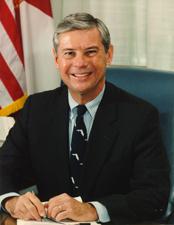
Mr. President, as ranking member of the Committee on Veterans' Affairs, I urge my colleagues to continue to support our veterans and their families by passing the Veterans Benefits Improvement Act of…
Mr. President, as ranking member of the Committee on Veterans' Affairs, I urge my colleagues to continue to support our veterans and their families by passing the Veterans Benefits Improvement Act of 2004.
This bill, which I shall call the Compromise Agreement, is the final version of a veterans omnibus bill. The Compromise Agreement will improve and expand a host of veterans benefits, including: survivors benefits for spouses with dependent children; housing benefits; and educational benefits for Guard and Reserve members, veterans, and spouses of veterans killed on active duty.
It is very appropriate that at a time when our airmen, soldiers, sailors and marines are in harm's way, that we remember the sacrifices that those before them have made on behalf of this great Nation by improving and expanding veterans benefits for our Nation's bravest and their families.
I will briefly highlight some of the more important provisions, and then ask that my colleagues direct their attention to the Joint Explanatory Statement for further explanation of the proposed legislation.
Dependency and indemnity compensation is a monthly benefit paid to eligible survivors of servicemembers who died on active duty, and of certain veterans. A larger monthly benefit is paid to surviving spouses with children under the age of 18. Under this legislation, dependency and indemnity compensation for survivors, with dependent
children, of spouses killed on active duty would be increased by $250 a month, for 2 years, beginning on the date when entitlement to benefits begins. A VA contracted study found that spouses with children had a higher level of unmet need than spouses without children. This provision is included to further aid the transition of surviving spouses with dependent children. We must make every effort to make certain that the families of servicemembers who paid the ultimate sacrifice have their needs met.
Owning a home of one's own is the American Dream. This legislation would make that dream a reality for more of our veterans by increasing the maximum amount of the VA home loan guaranty. The current VA loan limit of $240,000 restricts beneficiaries from using the guaranty because it is insufficient to cover median housing prices in many parts of the Nation. Section 403 of the Compromise Agreement would increase the maximum VA loan amount to $333,700. It would also index the loan limit to 25 percent of the conforming loan limit for a single-family residence as set by Freddie Mac. This would allow the loan limit to continue to rise with the cost of housing inflation automatically. This change, coupled with the reinstatement of the VA adjustable rate mortgage loan program and improvement of the hybrid adjustable rate mortgage loan program will allow many more veterans to be able to purchase a home.
The second half of the American Dream is a college education. Educational assistance is provided to the surviving spouse of a servicemember or veteran who died of a service-connected injury, or the spouse of a veteran who is rated by VA to be totally and permanently disabled. The spouse has 10 years to use the entitlement. However, many surviving spouses, during this difficult transitional period, are busy raising children and working making it impossible to use the education benefit. This legislation would give an additional 10 years to the surviving spouse of a servicemember who died of a service-connected disability to use the benefit.
Under current law, a member of the Selected Reserve or National Guard must contribute a non-refundable $1,200 in order to participate in the Montgomery GI Bill education program. However, a member of the Selected Reserve must spend 1 year on active duty before being eligible for the program. Section 109 of the committee bill would create flexibility and allow the Montgomery GI Bill participation fee to be collected not later than 1 year after the completion of 2 years of active duty, ensuring that the Reserve or Guard has become eligible by satisfying the service requirement.
With the costs of attending college rising, it is important that we do as much for our veterans as possible so that they may reach their academic objectives. This legislation would allow VA to reimburse eligible beneficiaries for the cost of certain national admission tests, such as the Law School Admission Test, Graduate Record Exam, Graduate Management Admission Test, and Scholastic Aptitude Test, and for course credit at institutions of higher learning, such as the Advanced Placement Exam and College-Level Examination Program.
In keeping with this committee's continuing effort to aid veterans in attaining appropriate education and employment opportunities, this legislation improves the full-time apprenticeship and on-job training programs under the MGIB. Section 103 of the Compromise Agreement, for more than a 2-year period, would increase the full-time VA monthly educational assistance allowance payable to individuals participating in these training programs. For the first 6 months of training, the monthly benefit would increase to 85 percent from 75 percent; for the second 6 months, 65 percent from 55 percent; and the remainder of months, 45 percent from 35 percent. Additionally, Section 104 of the Compromise Agreement authorizes VA to pay educational benefits to veterans participating in competency-based apprenticeships, in addition to time-based apprenticeships, bringing the VA program in line with the way most apprenticeship programs are structured today.
These provisions show our veterans America's continuing unwavering support of the service and sacrifice that they have made on behalf of this country. Particularly at a time when we are at war, we must ensure our servicemembers that we will fulfill the commitment promised by Abraham Lincoln, ``to care for him that shall have borne the battle and for his widow and his orphan.''
In conclusion, I would like to specifically thank Senator Specter and his benefits staff for their work on this comprehensive bill, specifically Bill Tuerk, Jon Towers and Chris McNamee, and my staff, Buddy Menn, Mary Schoelen, Dahlia Melendrez, Ted Pusey, Amanda Krohn, and Tandy Barrett, who recently left the committee, for all of their hard work in helping to put this legislation together. I urge my colleagues to support this legislation on behalf of America's veterans and their families.
I ask unanimous consent that the text of the bill be printed in the Record following this statement.
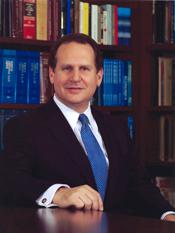
Mr. Speaker, by direction of the Committee on Rules, I call up House Resolution 738 and ask for its immediate consideration. Mr. Speaker, for the purpose of debate only, I yield the customary 30…
Mr. Speaker, by direction of the Committee on Rules, I call up House Resolution 738 and ask for its immediate consideration.
Mr. Speaker, for the purpose of debate only, I yield the customary 30 minutes to the distinguished gentlewoman from New York (Ms. Slaughter), pending which I yield myself such time as I may consume. During consideration of this resolution, all time yielded is for the purpose of debate only.
(Mr. LINCOLN DIAZ-BALART of Florida asked and was given permission to revise and extend his remarks.)
Mr. Speaker, House Resolution 738 is a standard, closed resolution for consideration of the underlying trade legislation that provides for fair and extensive debate on H.R. 4842, the United States-Morocco Free Trade Agreement Implementation Act.
The rule provides 2 hours of general debate evenly divided and controlled by the chairman and the ranking minority member of the Committee on Ways and Means.
Mr. Speaker, the relationship between the Kingdom of Morocco and the United States of America has existed throughout the history of the United States. In December of 1777, when war raged between the American colonies and Britain, Sultan Sidi Mohammed boldly recognized our young, and not yet free, Republic. That magnanimous act of recognition was cemented in a Treaty of Peace and Friendship between our countries, ratified in July of 1878. That enduring document remains the oldest unbroken treaty in the history of the foreign relations of the United States. Quite simply, the Kingdom of Morocco is our most permanent and enduring friend.
The gentleman from Pennsylvania (Mr. English), the gentleman from Tennessee (Mr. Tanner), the gentleman from Louisiana (Mr. John), and I came together to form the Morocco Caucus in Congress to highlight and to further deepen the truly magnificent and critically important relationship between the United States and the Kingdom of Morocco. The United States has no better friend and ally in the Maghreb, in North Africa and in the Arab world than Morocco.
We are cognizant of, and grateful for, the help Morocco provided during the reign of the great statesman King Hassan II in the dangerous and prolonged struggle known as the Cold War and in the initial and ultimately delicate stages of the peace process between Israel and her neighbors.
We are cognizant of, and grateful for, the unequivocal and decisive help Morocco has provided during the reign of another great statesman, King Mohammed VI, in our common war against the forces of international terrorism. Both our peoples have been victims of the scourge of cowardly attacks upon unarmed civilians, and both nations have answered the challenge of this difficult time with strong leadership and decisive action.
The United States must be cognizant and supportive of the wisdom and experience of Morocco, that great influence for stability in North Africa, in the Middle East, regarding issues related to international terrorism. We must understand that Morocco's insistence upon its territorial integrity and its refusal to accept a terrorist state in the Western Sahara is critically important, not only for the national security of Morocco, but also for the security of the United States and of our European allies.
Today, Mr. Speaker, we celebrate another milestone in the wonderful relationship between the United States and Morocco as we prepare to consider H.R. 4842, legislation to implement the United States-Morocco Free Trade Agreement. This agreement will benefit both our peoples as it facilitates and encourages ever-growing commerce between our countries and the creation of many new jobs in Morocco and in the United States. This agreement will help turn an already solid relationship into an even greater friendship.
Mr. Speaker, I would like to take this opportunity to publicly thank a few distinguished leaders for making this important free trade agreement a reality.
Understanding the importance of this agreement and with the August recess quickly approaching, the gentleman from California (Mr. Thomas) made great efforts to expedite the consideration of this agreement in the House. The gentleman from Illinois (Speaker Hastert) has been especially solid in his leadership on this critical issue, as has been the gentleman from Texas (Mr. DeLay), the majority leader, and the gentleman from California (Mr. Dreier), chairman of the Committee on Rules. Ambassador Bob Zoellick has been and continues to be a stalwart, strong advocate on behalf of the economic interests of the United States and especially job creation in America, and President Bush's leadership has truly been the linchpin for great accomplishments such as this.
While we fight terror across the globe, the United States, under this President, has deepened economic and security-based relationships with our friends for the benefit of our protection and our freedom.
Mr. Speaker, I urge my colleagues to support both the rule and the underlying legislation that we bring before the House today.
Mr. Speaker, I reserve the balance of my time.
Mr. Speaker, I yield myself such time as he may consume to the gentleman from California (Mr. Dreier), the distinguished chairman of the Committee on Rules.
(Mr. DREIER asked and was given permission to revise and extend his remarks.)
Mr. Speaker, I reserve the balance of my time.
Mr. Speaker, I yield myself such time as I may consume.
Mr. Speaker, I think the gentleman from Virginia brought up some very important points, and I think they are important to emphasize and not only take note of. This agreement, in addition to the many, many important aspects that it contains for the economy, obviously, of Morocco, and the United States, is a very important agreement politically; and it encourages the extraordinary progress that Morocco has made in the area of labor rights, in the area of a free press, and in the area of democratization.
Morocco has multiple political parties, espousing all conceivable viewpoints. It has an elected parliament and an elected prime minister. It has made commendable progress. It is a great friend and ally of the United States.
For so many reasons, Mr. Speaker, it is important and appropriate for this Congress to be moving forward today passing this implementing legislation for the United States-Morocco Free Trade Agreement.
Mr. Speaker, I yield back the balance of my time, and I move the previous question on the resolution.
The previous question was ordered.
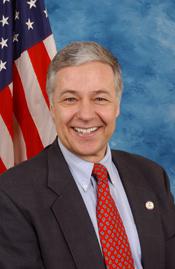
Mr. Speaker, I yield myself such time as I may consume. Mr. Speaker I rise in strong support of S. 2486, the Veterans Benefits Improvement Act of 2004. I would like to thank the ranking member, the…
Mr. Speaker, I yield myself such time as I may consume.
Mr. Speaker I rise in strong support of S. 2486, the Veterans Benefits Improvement Act of 2004. I would like to thank the ranking member, the gentleman from Illinois (Mr. Evans), and the gentleman from New Jersey (Mr. Smith) for their leadership on this legislation and my good friend and colleague on the Subcommittee on Benefits, the gentleman from South Carolina (Mr. Brown). I have enjoyed working with him during this Congress.
I was proud to join Members on both sides of the aisle in introducing provisions to help our veterans and servicemembers and their families. It is good to see that work contained in this final bill.
This legislation demonstrates the bipartisan nature of the Committee on Veterans Affairs and our ability to work together for the good of our Nation's veterans. The Members and staff of both sides of the aisle also should be recognized for their efforts in putting legislation together.
Finally, I would like to acknowledge the good work done by the other body. Senator Specter and Senator Graham and their staffs worked diligently to bring this bill forward. It has been a bipartisan and bicameral effort. Our Nation's veterans and their families would be better off with this legislation.
S. 2486 is a comprehensive bill drawn from a number of provisions that came before our committee. I would like to take a moment to point out just a few.
Many of the provisions in Title I, the Veterans Earn and Learn Act of S. 2486, are drawn from H.R. 1716. Title I will provide improved benefits and job assistance for future skilled workers as they leave military service. The gentleman from South Carolina (Mr. Brown) introduced and I was happy to support a provision to extend eligibility of employer-sponsored health care coverage to Reservists who have been activated for up to 24 months of active service. This provision is found in section 201 of the bill.
Section 2111 drawn from a bipartisan H.R. 4173 provides for a report of employment placement, retention and advancement of recently separated servicemembers.
I am also pleased that the other body included provisions similar to H.R. 1750 to increase by $250 the amount of dependency and indemnity compensation benefits received by surviving spouses with children under age 18 for the first 2 years of eligibility. The ranking member, the gentleman from Illinois (Mr. Evans), has been a long-time advocate for our Nation's disabled veterans and their families.
S. 2486 contains provisions drawn from the Evans bill, H.R. 4172, to codify certain disabilities as presumptive disabilities for atomic veterans and to provide an offset rather than a bar to benefits when an atomic veteran or survivor receives benefits under the Radiation Exposure Compensation Act.
I would like to thank the gentleman from New Hampshire (Mr. Bradley) for the opportunity to join with him in introducing H.R. 2163 to equalize the position of surviving spouses who receive death pension benefits and who are also the beneficiaries of veterans' life insurance. The provisions of H.R. 2163 are contained in section 303 and 305 of this bill.
The Veterans Benefits Improvement Act of 2004 includes a provision that is drawn from my bill, H.R. 2612, to allow veterans who have lost or lost the use of both arms at or above the elbow due to a service- connected disability to receive a special adaptive housing grant. This will provide needed assistance to those veterans currently being disabled in Iraq and Afghanistan as well as veterans of former wars, such as James Moore of Lincoln, Nebraska, who contacted the committee concerning this issue.
The gentlewoman from California (Mrs. Davis) has been a leader on our committee for veterans' housing issues, and her work is reflected in S. 2486. Section 103 is drawn from her bill, H.R. 4616, and provisions from the Senate to extend the authority for hybrid adjustable mortgages.
S. 2486 will also benefit Native American veterans in my State and across the country. The Pleasant Point and Indian Township Passamoquody Tribe of Maine has entered into a memorandum of understanding to participate in the VA's Native America Home Loan pilot project. The newest member of our committee, the gentlewoman from South Dakota (Ms. Herseth), introduced H.R. 5153 to extend this program. That provision is included as section 406 of this bill.
The gentlewoman from California (Mrs. Davis) has also been a leader in working to protect our most vulnerable veterans, and I was pleased to join her in introducing H.R. 4032 to improve protection and remedies in the event of fiduciary misuse. Many of the provisions of H.R. 4032 are included in Title V of the Veterans Benefit Improvement Act of 2004.
Mr. Speaker, as you can see, there has been a great deal of bipartisan support put together in this bill. S. 2486 will improve the lives of veterans of today and provide a sense of security for those servicemembers who are risking their lives all around the world. I urge all Members to support this bill.
Mr. Speaker, I reserve the balance of my time.
Mr. Speaker, I yield 2 minutes to the gentleman from Illinois (Mr. Evans), the ranking member of the committee.
Mr. Speaker, how much time do I have remaining?
Mr. Speaker, I yield 3 minutes to the gentleman from Texas (Mr. Rodriguez).
Mr. Speaker, I yield 3 minutes to the gentlewoman from California (Mrs. Davis).
Mr. Speaker, I yield 2 minutes to the gentlewoman from South Dakota (Ms. Herseth).
Mr. Speaker, I yield 2 minutes to the gentlewoman from California (Ms. Waters).
(Ms. WATERS asked and was given permission to revise and extend her remarks.)
Mr. Speaker, I yield myself such time as I may consume, before yielding to my last speaker, to thank our chairman, the gentleman from New Jersey (Mr. Smith); the subcommittee chairman, the gentleman from South Carolina (Mr. Brown); and our ranking member, the gentleman from Illinois (Mr. Evans), as well as the committee staff on both sides of the aisle for all the hard work that they have done in the Committee on Veterans' Affairs over the last 2 years.
Mr. Speaker, I yield the balance of my time to the gentlewoman from Texas (Ms. Jackson-Lee).
Mr. Speaker, I yield back the balance of my time.
Mr. Speaker, I yield myself such time as I may consume. (Ms. SLAUGHTER asked and was given permission to revise and extend her remarks.) Mr. Speaker, I thank the gentleman from Florida (Mr. Lincoln…
Mr. Speaker, I yield myself such time as I may consume.
(Ms. SLAUGHTER asked and was given permission to revise and extend her remarks.)
Mr. Speaker, I thank the gentleman from Florida (Mr. Lincoln Diaz-Balart) for yielding me the customary 30 minutes.
Mr. Speaker, an important part of our job is to encourage the purchase of U.S. goods and services by others in the international community, especially now when the economy is limping along and failing to replace the 1.1 million jobs lost since the Bush administration took office. Hopefully opening up foreign markets for American products will lead to the creation of good, high-paying jobs here in the United States. However, we must be mindful of the consequences of free trade agreements such as the U.S.-Morocco Free Trade Agreement.
Last week this body considered the free trade agreement, FTA, between the United States and our ally Australia. Serious questions were raised about the impact patent protection language might have on the ability of the United States to reimport lower cost drugs from other countries and the impact on the Australian government's low-cost pharmaceutical drug program.
According to the Wall Street Journal, urged by the drug industry, the U.S. Trade Representative is seeking to strengthen protections for costlier brand-name drugs, defending the U.S. companies from foreign competition of foreign producers of generic drugs. So far the USTR has successfully added this safeguard to the trade agreements with Jordan, Chile, Singapore, Australia, Costa Rica, El Salvador, Guatemala, Honduras, Nicaragua, Dominican Republic, and Morocco.
The U.S.-Morocco agreement contains patent protection language which restricts Morocco for 5 years from approving generic-drug applications if the application is based on the data of the original manufacturer. What impact will this 5-year ban have when enforced? Will this interfere with a developing African nation's ability to get affordable, generic pharmaceuticals to fight public health crises like the HIV infection?
In response to these serious concerns, the USTR points to a letter of understanding between the United States and Morocco. In the letter, both countries agree that the patent provisions ``do not affect the ability of either country to take necessary measures to protect public health by promoting access to medicine for all, and in particular concerning cases such as HIV/AIDS, tuberculosis, malaria, and other epidemics as well as circumstances of extreme urgency or national emergency.''
This mutual understanding is promising. However, it is not directly part of the free trade agreement or the implementing legislation. According to Robert Weissman of Essential Action, ``This statement of understanding expresses noble sentiments, but is unlikely to make much, if any, material difference in the implementation of the agreement.'' I hope Mr. Weissman is wrong.
Approximately 16,000 Moroccans are infected with HIV, and the pandemic of HIV and AIDS is devastating the nations of Africa. Will Morocco be able to purchase or produce less expensive, generic anti- viral and other medications needed to fight HIV infection? Of the 40 million people with HIV or AIDS globally, less than 10 percent have access to drugs that have transformed many cases of HIV infection to a chronic illness, from a death sentence. In most of the developing world, drugs to fight HIV infection and AIDS are far too expensive for most. Any barrier to access to more affordable generic medicine denies essential health care to the poor.
Women are nearly half of the 40 million infected with HIV, and the infection rate of women is climbing faster than the infection rate of men in many regions. Irene Khan, Secretary-General of Amnesty International, told last week's World AIDS Conference that ``gender inequality is driving new infections among women and girls like never before.''
Mr. Speaker, more free trade agreements are in the works. The U.S. Trade Representative has negotiated with six Central American countries and has just initiated negotiations with Thailand. The consequences of trade agreements go far beyond merely eliminating trade barriers, such as tariffs. These agreements enforce significant public policy decisions made not by Congress, but by the Trade Representative. Congress has a narrow role in trade agreements, so I urge my colleagues to carefully consider the language in this and all future agreements. Free trade must be fair trade.
Mr. Speaker, I reserve the balance of my time.
Mr. Speaker, I yield such time as he may consume to the gentleman from Michigan (Mr. Levin), a valued member of the Committee on Ways and Means.
(Mr. LEVIN asked and was given permission to revise and extend his remarks.)
Mr. Speaker, I yield 3 minutes to the gentleman from Virginia (Mr. Moran).
Mr. Speaker, I have no further requests for time, and I yield back the balance of my time.
Mr. Speaker, I object to the vote on the ground that a quorum is not present and make the point of order that a quorum is not present.

Mr. President, I have sought recognition to comment on a substitute amendment I propose to make to S. 2486, the Veterans' Benefits Improvements Act of 2004, as part of my request that the bill, as so…
Mr. President, I have sought recognition to comment on a substitute amendment I propose to make to S. 2486, the Veterans' Benefits Improvements Act of 2004, as part of my request that the bill, as so amended, be approved by the Senate. The underlying bill, S. 2486, was reported by the Senate Committee on Veterans Affairs on July 20, 2004, and is explained in detail in Senate Report 108-352. My comments at this time are limited to explaining how the proposed substitute amendment, which reflects a bipartisan agreement between Senate and House Veterans' Affairs Committees on issues related to veterans' non- medical benefits and services, differ from the provisions of S. 2486, as reported.
Almost all of the provisions set forth in S. 2486, as reported, are included in the substitute agreement that I present to the Senate today. Changes made, for the most part, simply reflect provisions that the House has approved which are acceptable to the Senate. There is, however, one notable excision of material from the Committee-reported bill: a provision crafted by Committee Member Zell Miller that would have increased educational assistance benefits for Reserves who are activated for extended periods. That provision is not included in the substitute amendment. Similar legislation, however, is in the offing via another legislative vehicle.
After S. 2486 was reported by the Veterans' Committee, the President requested that the Armed Services Committees, in the course of their conferencing on the Fiscal Year 2005 Defense Authorization bill, approve enhancements to educational assistance benefits that are substantially the same as those which are included in S. 2486, as reported. I have been given every indication that the President's proposal will be included in the conference agreement on the Defense Authorization bill. Expecting this to be the case, Senator Miller's provision--a provision that was a centerpiece of the Committee-reported bill--has been laid aside. In its place, the substitute amendment includes a provision that would increase benefits to the neediest survivors of service members who are killed in combat or who subsequently die from service-related injuries or illnesses.
Under current law, the surviving spouse of a service member who is killed in service is eligible for dependency and indemnity compensation (DIC) benefits. The new provision, which is drawn from a provision contained in a bill, S. 1132, that I introduced last year, would provide, for a two-year period, an additional $250 per month of DIC to a surviving spouse who has dependent children. VA estimates that approximately 27 percent of service members killed in Iraq and Afghanistan are survived by spouses who have at least one dependent child. These survivors need an additional measure of help; the substitute amendment would provide it.
The substitute amendment also makes substantial improvements, authored by the House, to VA educational assistance benefits provided to service members and veterans who pursue apprenticeship and on-the- job training programs. VA programs for supporting those who pursue such opportunities have not been updated for over 50 years. These amendments are overdue. I applaud Chairman Chris Smith, the author of these provisions, for his efforts to expand employment and training opportunities afforded to veterans.
There are many other fine additions to the reported bill contained in the substitute amendment. They include provisions to strengthen the oversight of VA fiduciaries, to enhance the Servicemembers Civil Relief Act and the Uniformed Services Employment and Reemployment Rights Act, and to improve on a myriad of other veterans' benefits and services. I encourage my colleagues to read the accompanying Explanatory Statement, which I ask be printed in the Record, for a better accounting of these worthy items.
This legislation will affect positively the lives of many deserving service members, veterans, and survivors. It merits the support of my colleagues. I request that support.
I yield the floor and I request the unanimous consent of the Senate that the ``Explanatory Statement'' that accompanies this statement be printed in the Record.
Madam Speaker, I move to suspend the rules and pass the bill (H.R. 4175) to increase, effective as of December 1, 2004, the rates of disability compensation for veterans with service- connected…
Madam Speaker, I move to suspend the rules and pass the bill (H.R. 4175) to increase, effective as of December 1, 2004, the rates of disability compensation for veterans with service- connected disabilities and the rates of dependency and indemnity compensation for survivors of certain service-connected disabled veterans, and for other purposes, as amended.
Madam Speaker, I yield myself such time as I may consume.
Madam Speaker, H.R. 4175, as amended, would provide a cost-of-living adjustment in the same amount as given to Social Security recipients, to disabled veterans and surviving spouses. The committee ordered this bill reported when it met on May 19, 2004. Five other measures were also ordered reported at that meeting of our committee.
All veterans and qualified survivors of veterans who receive disability compensation would receive a full COLA on December 1 of this year. The COLA is actually calculated on September 30; but if calculated today, it would be 2.2 percent.
More than 2.5 million veterans, Madam Speaker, were receiving service-connected disability compensation as of April of 2004. The basic purpose of the disability compensation program is to provide a measure of relief from the impaired earning capacity of veterans disabled as a result of their military service. These benefits are paid monthly, and range from $106 for a 10 percent disability to $2,239 per month for a 100 percent disability. Additional monetary benefits are available for our most severely disabled veterans, as well as for their dependents.
Spouses of veterans who died on active duty or as the result of a service-connected disability likewise are entitled to monetary compensation, as the Nation assumes, in part, the legal and moral obligation of the veteran to support the spouse and the children. Depending on their spouse's rank or grade in service, a spouse receives between $967 and $2,063 monthly. Currently, there are more than 300,000 surviving spouses and more than 29,900 children receiving dependency and indemnity compensation, also known as DIC.
The bill would also expand the list of diseases presumed to be related to a former prisoner of war for which benefits may be paid by adding osteoporosis, an often crippling bone condition. Former prisoners of war are eligible for disability compensation if they are disabled from one of the 16 conditions presumed to be the result of their POW experience.
I want to thank the gentleman from Florida (Mr. Bilirakis), the committee's vice chairman, for working with us to include this portion of his bill, which was H.R. 348.
Finally, the bill would codify the current rates of compensation for service-connected disabilities and the rates of DIC for surviving spouses and children of veterans who die of service-connected causes, which went into effect last December, pursuant to Public Law 108-147.
I urge my colleagues to support this bill. It is a bipartisan bill.
Madam Speaker, I reserve the balance of my time.
Madam Speaker, I yield such time as he may consume to the gentleman from South Carolina (Mr. Brown), the distinguished chairman of our Subcommittee on Benefits.
Madam Speaker, I yield such time as he may consume to the gentleman from Colorado (Mr. Beauprez), a distinguished member of the committee.
Madam Speaker, I yield myself such time as I may consume. We do not have any further requests for time.
I, too, want to thank the gentleman from Maine (Mr. Michaud) and again the gentleman from Illinois (Mr. Evans) and the gentleman from South Carolina (Mr. Brown). This is again a good, bipartisan piece of legislation. It is very significant and will significantly help our veterans and especially those who are service-connected disabled.
Madam Speaker, I yield back the balance of our time.
Mr. Speaker, on that I demand the yeas and nays.
Mr. Speaker, I rise today in support of S. 2486, the Veterans Benefit Improvement Act, and I would like to take this opportunity to thank the gentleman from New Jersey (Chairman Smith), as well as…
Mr. Speaker, I rise today in support of S. 2486, the Veterans Benefit Improvement Act, and I would like to take this opportunity to thank the gentleman from New Jersey (Chairman Smith), as well as the gentleman from Illinois (Ranking Member Evans) and the gentleman from Maine (Mr. Michaud), the ranking member of the Subcommittee on Benefits, for their leadership in this particular issue.
One of the best things about being a member of this committee is the ability to pass a comprehensive bill, a benefits bill, every year while keeping on with the PAYGO provisions.
Although I was worried this particular year that that might not happen, I am glad that our colleagues in the Senate and the staff of our committees worked out this compromise.
Mr. Speaker, this bill has many wonderful provisions that would enhance the benefits of our veterans, National Guardsmen and their families receive, including additional educational benefits.
With passage of this particular piece of legislation, veterans will be able to use their Montgomery GI bill for apprenticeships and on-the- job training, as well as national admissions exams.
I am very pleased that this bill acknowledges the rewards and sacrifices many of our Reservists are making. With the passage of this particular piece of legislation, those men and women, Reservists who are called to active duty for more than 24 consecutive months, will be able to pay into the GI bill and become eligible for benefits.
This bill also includes some enhanced VA home loan language, which I know the gentlewoman from California (Mrs. Davis), my colleague, has been advocating for.
Like all Americans, our veterans dream of obtaining the American dream of homeownership. Our veterans have fought selflessly on behalf of our country and are entitled to the benefits we have promised them, including home loan benefits. Unfortunately, for many, this dream is faced with many obstacles.
The current VA home loan limit of $240,000 prevents many veterans from using their loan benefits to purchase a home in high-cost areas, such as in California or Florida and parts of the State of Texas. This legislation indexes the maximum loan amount to 100 percent of the Freddie Mac conforming loan rate to make the VA home loans compatible with the home loans available to the public nationwide. Additionally, this legislation allows the maximum VA loan amounts to adjust automatically each year to Freddie Mac standards in order to remain compatible with the national housing markets.
This legislation is extremely important. During 2003, 3 million veterans took advantage of the VA home loans, and I am positive more veterans will be able to take advantage of this particular benefit because of the improvements we are making today. As our troops are fighting in Iraq and Afghanistan, we must continue to show them the thanks of a grateful Nation.
I cannot think of a better way of saying thank you than improving the benefits of our soldiers, and so by this particular legislation, although there are many benefits we would like to take advantage of for our veterans, I am glad that the committee has been able to work with the money to make this happen.
Mr. Speaker, I thank the gentlewoman from Rochester, New York for yielding me this time. I rise today in support of the Moroccan Free Trade Agreement because it is an important agreement with a…
Mr. Speaker, I thank the gentlewoman from Rochester, New York for yielding me this time.
I rise today in support of the Moroccan Free Trade Agreement because it is an important agreement with a moderate Muslim country and it represents a vital step towards establishing broader free trade in the Middle East.
Former Clinton administration U.S. Trade Representative Mickey Kantor said, ``Closer and mutually beneficial ties between Morocco and the United States will bolster a country that has for several centuries earned a reputation for moderation, tolerance, and stability. The Moroccans have democratized their political structures. They recently made historic reforms to improve women's rights, and codified new labor rights and protections based upon key International Labor Organization conventions.
Mr. Speaker, the Moroccan Free Trade Agreement is the first trade pact to be negotiated with an Arab and Muslim country since September 11, and it
would permit Morocco to join Jordan in the ranks of countries that have entered into an enhanced partnership with the United States.
This agreement will enhance our foreign policy and diplomatic efforts to bridge greater understanding and cooperation with moderate Arab nations.
This FTA is going to ensure that U.S. businesses and workers have greater access to the Moroccan market by further eliminating trade barriers. It will deepen and expand bilateral commercial ties beyond the average level of $1 billion in current annual two-way trade flows. In fact, the United States enjoyed a surplus of $2 billion between 1999 and 2003. So they are buying more from us than we are buying from them. This is creating more jobs in the United States.
More than 95 percent of bilateral trade in consumer and industrial products will become duty free immediately upon entry into this agreement, with all remaining tariffs to be eliminated within 9 years. It is the best markets access package of any U.S. free trade agreement with a developing country.
It is going to create new opportunities for U.S. banks, insurance, securities and related services and telecommunications. Key U.S. export sectors gain immediate duty-free access to Morocco, such as information technology, machinery, construction equipment, and chemicals. Morocco is going to accord substantial market access across its entire services regime and adhere to strong and detailed disciplines on regulatory transparency, a key factor.
Additionally, Morocco has agreed to strengthen its intellectual property laws, and the agreement is going to help Morocco to further expand its economic and labor reform efforts.
Mr. Speaker, this FTA will expand trade and bring greater economic opportunities for U.S. workers, farmers and businesses, and is going to promote economic development in other nations.
Through this type of economic engagement, we can forge stronger ties with our allies around the world and promote democracy, free markets, and improved labor standards. That is why I support this agreement. I urge my very good friends, particularly on this side of the aisle, to vote in favor of this implementing legislation.
Show 11 more
Mr. Speaker, with another Veterans Day recently passed, we heard much about the incredible sacrifices made by America's veterans and their tremendous bravery. I strongly echo those sentiments.…
Mr. Speaker, with another Veterans Day recently passed, we heard much about the incredible sacrifices made by America's veterans and their tremendous bravery. I strongly echo those sentiments.
Because our courageous military personnel are willing to go into battle and sacrifice on our behalf, America's independence and liberties have remained intact for over 200 years, and we are truly indebted to those who fought in the Armed Forces.
However, Mr. Speaker, I strongly feel that we must honor these brave men and women with more than our words. After risking everything on our behalf, our veterans ask only that we work to improve the services they earned through their dedication and their bravery.
This is why the Veterans Benefit Improvement Act of 2004 before us today greatly enhances the services we provide to our military heroes. It increases the compensation we provide to surviving spouses and their children; gives veterans new opportunities to receive vocational training when leaving the military; and protects the civilian jobs of Reservists deployed overseas.
I was very honored, Mr. Speaker, by the opportunity to contribute directly to this comprehensive benefits legislation.
During my first term in Congress, I became interested in improving the home loan program offered by the Department of Veterans Affairs and introduced H.R. 1735 and cosponsored H.R. 4345, which increases the home loan limit available to veterans. I also introduced H.R. 4616 to offer adjustable-rate mortgages through the VA program.
Our veterans certainly deserve the same opportunity for home ownership as the public at large and the freedom to choose which loan will best meet their needs.
This legislation links the VA home loan amount to the Freddie Mac index to guarantee annual increases, and at the same time, it extends a program offering veterans the freedom to choose a fixed-rate or an adjustable-rate mortgage.
It is particularly helpful and a real victory for those veterans in San Diego because we are a high-cost area.
Additionally, S. 2486 provides new protections from fraud and abuse to a vulnerable class of veterans who require a guardian or fiduciary to oversee their finances and VA payments.
My staff in San Diego tried to assist a veteran who lost out on his VA disability compensation over a long period of time because his fiduciary had withheld payment for herself. Unfortunately, we could not recover the veteran's losses because current law did not provide revenues to recoup stolen payments.
After learning about this abuse, we introduced H.R. 4032 to give the VA the authority to conduct more thorough background checks of fiduciaries and to give veterans who fall victim to this abuse new revenues to recover their losses, and I am pleased these provisions were included in the legislation before us today.
I want to thank the House leadership for bringing this comprehensive veterans benefits package before the Congress and for acting in the interest of our former service members, and I urge my colleagues to support it.
Madam Speaker, I yield myself such time as I may consume. Madam Speaker, I would like to thank once again the gentleman from New Jersey (Mr. Smith); the ranking member, the gentleman from Illinois…
Madam Speaker, I yield myself such time as I may consume.
Madam Speaker, I would like to thank once again the gentleman from New Jersey (Mr. Smith); the ranking member, the gentleman from Illinois (Mr. Evans); and our chairman of the Subcommittee on Benefits, the gentleman from South Carolina (Mr. Brown), for their continued efforts to assure that our veterans' purchasing power is not decreased with the passage of time.
H.R. 4175, the Veterans Compensation Cost-of-Living Act of 2004, will help our service-disabled veterans and their survivors maintain the value of their compensation benefits despite any increase in the cost of living.
Although we will not know the amount of the increase until the consumer price index is computed this fall, I expect this bill will provide an increase in benefits for calendar year 2005.
No amount of money can adequately compensate for the loss of life or limb, but it is important that the compensation that is paid does not lose its value as the cost of living rises. This is particularly important in a rural State like Maine. Some labor market areas in my State have experienced double-digit unemployment. In one labor market alone last year, unemployment was as high as 32 percent.
Veterans benefits help veterans and their families in these areas make ends meet. I am also happy to note that the bill contains a provision adding osteoarthritis to the list of conditions that are presumptively service-connected for veterans who are former POWs.
I am a co-sponsor of H.R. 348, introduced by the gentleman from Florida (Mr. Bilirakis), which contains this provision and more. I regret that the full bill cannot be considered because of the fiscal constraints.
I believe that when men and women suffer disabilities as a result of confinement as prisoners of war, this Nation should compensate them for all the disabilities that result. These disabilities are another cost of war, and they should be recognized and compensated as such. This provision is another small step in the right direction.
H.R. 4175 will receive my full support, and it deserves the support of Members of this House.
Madam Speaker, I reserve the balance of my time.
Madam Speaker, I yield 2 minutes to the gentleman from Illinois (Mr. Evans), the ranking member of the committee.
Madam Speaker, I yield 2 minutes to the gentleman from Texas (Mr. Rodriguez).
Madam Speaker, I yield 3 minutes to the gentlewoman from South Dakota (Ms. Herseth), who has shown her interest in veterans' issues and is very dedicated and will be a hard fighter for veterans' issues.
Madam Speaker, I have no further requests for time, and I yield back the balance of my time.
Mr. Speaker, I thank the gentleman for his kind remarks. Mr. Speaker, I rise today in strong support of S. 2486, the Veterans Benefit Improvement Act of 2004. We have been working on this…
Mr. Speaker, I thank the gentleman for his kind remarks.
Mr. Speaker, I rise today in strong support of S. 2486, the Veterans Benefit Improvement Act of 2004. We have been working on this comprehensive bill throughout the 108th Congress, like our chairman said. I commend the Committee on Veteran's Affairs leadership for bringing it to the floor today.
It incorporates 14 separate House bills and comprises 43 substantive provisions. Countless servicemembers, veterans and their families will directly benefit from S. 2486. Likewise, Mr. Speaker, by significant enhancing and modernizing the VA on-the-job training and apprenticeship programs for veterans, American businesses and industry will feel the positive effects of this bill, as well as 858 civilian occupations offer apprenticeships. These improvements can be especially useful to American small businesses, the bedrock of our economy.
I would like to briefly note Title V of the bill, which addresses the needs of our most vulnerable veterans, those who require a fiduciary to handle monetary benefits received from the VA. It is an unfortunate fact that when someone is responsible for another person's money, temptations may arise to take advantage of that position, ultimately to the detriment of the person being assisted. S. 2486 would add protection for incompetent veterans or dependents when their benefits are misused.
Currently, over 100,000 veterans, widows or adult helpless children and minors have an appointed fiduciary. While VA overall does a good job of protecting this population, S. 2486 addresses many of our concerns with the fiduciary program.
Mr. Speaker, I applaud the gentleman from New Jersey (Mr. Smith), our great chairman, and the gentleman from Illinois (Mr. Evans), the ranking member, for their continuing foresight and leadership, as well as my great friend, the gentleman from Maine (Mr. Michaud), the ranking member of the Subcommittee on Benefits.
In addition to the Subcommittee on Benefits as a whole, I thank the members of the committee who worked with the gentleman from Maine (Mr. Michaud) and myself for bringing the bill forward.
The full committee's vice chairman, the gentleman from Florida (Mr. Bilirakis), the gentlewoman from Florida (Ms. Ginny Brown-Waite), the gentlewoman from California (Mrs. Davis), the gentleman from New Hampshire (Mr. Bradley), the gentleman from Texas (Mr. Reyes); indeed, this has been a team effort.
I also want to thank the Subcommittee on Benefits staff on both sides of the aisle.
Mr. Speaker, I urge my colleagues to support the Veterans Benefit Improvement Act of 2004.
Mr. Speaker, I rise in support of the veterans bills being considered today and to thank and congratulate my colleagues, especially the gentleman from New Jersey (Chairman Smith), the gentleman from…
Mr. Speaker, I rise in support of the veterans bills being considered today and to thank and congratulate my colleagues, especially the gentleman from New Jersey (Chairman Smith), the gentleman from Illinois (Ranking Member Evans), the gentleman from South Carolina (Mr. Brown) and the gentleman from Maine (Mr. Michaud) and their staff for their hard work and commitment to these important bills. I want to commend the gentleman from Texas (Mr. Rodriguez), my colleague and friend, as well for his distinguished service on the Committee on Veterans Affairs.
I express my strong support today for the Veterans Benefits Improvement Act which includes two measures I introduced earlier this year to extend important veterans programs scheduled to expire.
The first of these measures is a provision to extend to 2010 the Veterans Administration's Native American Home Loan pilot program. This program directs home loans to eligible Native American veterans who wish to purchase, construct or improve a home on tribal trust lands. This extension will allow more veterans living on tribal trust lands to take advantage of this important benefit over the next 6 years.
Since the inception of this pilot program in 1992, the Department of Veterans Affairs has made more than 400 direct loans to Native American veterans, including loans to 17 veterans from my State of South Dakota. These loans are important tools for helping Native Americans purchase, construct or improve homes in Indian country.
The second measure which I introduced extends to 2009 the requirement that the Advisory Committee on Former Prisoners of War submit biennial reports to the Secretary of Veterans Affairs on the programs and activities of the Department of Veterans Affairs that pertain to former prisoners of war.
The Advisory Committee on Former Prisoners of War reviews Department policies and makes suggestions to improve compensation, rehabilitation programs and health care benefits for former POWs. Passage of the Veterans Benefits Improvement Act would require reports from the Advisory Committee on former POWs every 2 years through 2009, a 5-year extension of current law.
Thanks again to my fellow members of the Committee on Veterans Affairs and all staff for their work on these important bills. At a time in our Nation's history when we are asking men and women in our Armed Forces for greater sacrifices, we must make sure we provide the services promised to our veterans. I look forward to supporting these measures and continuing to work with my colleagues to ensure they receive the benefits they have earned and deserve.
Mr. Speaker, I thank the gentleman very much for the time. I am very pleased to support Senate 2486, the Veterans Benefit Improvement Act of 2004, and I am glad we got it finished this year. I know…
Mr. Speaker, I thank the gentleman very much for the time.
I am very pleased to support Senate 2486, the Veterans Benefit Improvement Act of 2004, and I am glad we got it finished this year. I know that there was some question about whether or not we would have time to get this very important bill up, and I certainly commend the gentleman from New Jersey (Mr. Smith), the chairman, and the gentleman from Illinois (Mr. Evans), the ranking member, for their efforts on behalf of veterans, along with all the members of the committee who are truly dedicated to America's heroes.
This bill includes an expansion of educational benefits for veterans and clarifies protections to servicemen and -women under the Servicemember Civil Relief Act, and it also improves the housing benefit available to veterans through the VA home loan.
It is the last provision of this bill that I would like to elaborate on as it is the product of a bipartisan collaboration between the gentlewoman from California (Mrs. Davis) and myself. Certainly, the chairman of the committee was very, very generous in working so hard on the bill and all the provisions of the bill, but this particular provision is one that will certainly impact our young men and women returning from Iraq.
Like so many other aspects of a soldier's life, many soldiers postpone homeownership until after they are out of the service. For these soldiers, as housing prices increase, the VA home loan value actually decreases in real terms.
The rising housing market erodes the purchasing power of the VA home loan. Depending on where the veteran lives, the current maximum of $240,000 is simply insufficient to meet their housing needs.
The bill, which encompasses a bill which the gentlewoman from California (Mrs. Davis) and I had worked on, which passed this House, indexes the maximum VA guarantee amount to 25 percent of the Freddie Mac conforming loan rate. The prevailing VA loan under this new change would be $333,700 in 2004, and it would continue to adjust as housing market needs increase.
We are all very proud of the young men and women who serve our Nation, past and present, and I am sure that the Members will agree that the value of their benefit should not vary depending on where they live or where they choose to purchase a home.
This legislation is very important and timely, and I urge my colleagues' support. I urge all the Members to support this.
Again, I commend my colleagues and especially the chairman for working so hard on this, what could very easily be called an omnibus, comprehensive bill to benefit our Nation's veterans.
Mr. President, I have sought recognition to comment briefly on legislation which was reported, after a unanimous affirmative vote, by the Committee on Veterans' Affairs on July 20, 2004, and which is…
Mr. President, I have sought recognition to comment briefly on legislation which was reported, after a unanimous affirmative vote, by the Committee on Veterans' Affairs on July 20, 2004, and which is the subject of my request today that the bill be unanimously approved by the Senate. S. 2483 would grant to nearly 3 million beneficiaries who receive certain ``cash-transfer'' payments from the Department of Veterans Affairs, VA, a cost-of-living adjustment, COLA, increase in their benefits effective with checks received on or after January 1, 2005, and thereafter.
An annual cost-of-living adjustment in veterans benefits is an important tool which protects veterans' cash-
transfer benefits against the corrosive effects of inflation. The principal programs affected by the adjustment that would be made by S. 2483 would be compensation paid to disabled veterans, and dependency and indemnity compensation, so-called ``DIC,'' payments made to the surviving spouses, minor children and other dependents of service members who died in service and to the survivors of former service members who died after service as a result of service-connected injuries or disease.
The impact of the COLA which would be enacted here is outlined in detail in Report 108-351 which accompanied the Committee on Veterans' Affairs approval of the bill on July 20, 2004. In summary, this legislation would grant to VA compensation and DIC beneficiaries the same percentage increase in benefits that will be granted to recipients of Social Security benefits in 2005--that is, an increase equal to the percentage increase in the consumer price index, CPI, for fiscal year 2004 as measured and reported by the Department of Labor's Bureau of Labor Statistics later this year. The President's proposed budget for fiscal year 2005 requested such an increase, then estimated to be 1.3 percent, and the Senate has already concurred with the committee's judgment that such an increase is appropriate with its approval earlier this year of a budget resolution which assumes that such an increase will be enacted and which sets aside the funds necessary to finance the COLA increase envisioned by this legislation.
I urge my colleagues to support enactment of this vital legislation and that they ``clear'' the bill for passage today. The bill still must clear the House of Representatives before it is presented to the President. As my colleagues fully understand, the days remaining for the House to take this action are dwindling.

Mr. Speaker, I am very pleased to join with my colleagues today in support of veterans. On Veterans Day, I visited a program in my district known as U.S. Vets. This is a program that houses veterans…
Mr. Speaker, I am very pleased to join with my colleagues today in support of veterans. On Veterans Day, I visited a program in my district known as U.S. Vets. This is a program that houses veterans in transition. They really work with the homeless. They have a huge residential complex, and the veterans are able to stay at this complex while they get job training leading to a job. In addition to that, they have a central facility there where they prepare meals for the veterans. They also have a wonderful computer room where veterans are learning computer skills.
And while I was very pleased to be there on Veterans Day with them, I was reminded of all those things we need to do for veterans that should have been done a long time ago. This bill goes a long way to attending to some of those things that we should have done.
For example, surviving spouses can now get $250 in dependency and indemnity compensation. Veterans who were exposed to radiation can now be eligible for VA compensation. We increase the educational assistance by 10 percent, allowing veterans to pursue a full-time apprenticeship program, or on-the-job training. There are other benefits in this bill.
We can all be proud on both sides of the aisle that we are finally paying attention in a real way. I know that there has been a lot of debate about the cost of some of the things we would like to do, but I do not think at a time in particular where we are at war and where veterans are coming back with the loss of a limb, with health impairments and other kinds of deficiencies that they are now confronted with that we can talk about not being able to afford to pay in order to make their lives comfortable when they return from war.
So I am very pleased, and I wish to commend all my colleagues on both sides of the aisle for pursuing this bill that will help our veterans.

Mr. Speaker, today I missed a series of votes due to the visit of the President to my district. Had I been present, I would have voted in the following way: ``Yes'' on rollcall No. 407, H. Res. 738,…
Mr. Speaker, today I missed a series of votes due to the visit of the President to my district. Had I been present, I would have voted in the following way:
``Yes'' on rollcall No. 407, H. Res. 738, the rule providing for the Morocco Free Trade Agreement.
``Yes'' on rollcall No. 408, H.R. 4175, Veteran's Compensation COLA Act of 2004.
``Yes'' on rollcall No. 409, H. Res. 728, sense of Congress on Presidential election postponement.
``No'' on rollcall No. 410, H.R. 3313, Marriage Protection Act of 2003.
``Yes'' on rollcall No. 411, H.R. 4056, Commercial Aviation MANPADS Defense Act.
``Yes'' on rollcall No. 412, H. Res. 652, urging the Government of the Republic of Belarus to ensure a democratic, transparent, and fair election process for its parliamentary elections in the fall of 2004.
``Yes'' on rollcall No. 413, H.R. 4842, United States-Morocco Free Trade Implementation Act.
``Yes'' on rollcall No. 414, H. Con. Res. 436, celebrating 10 years of majority rule in the Republic of South Africa.
``Yes'' on rollcall No. 415, H. Con. Res. 418, recognizing the importance in history of the 150th anniversary of the establishment of diplomatic relations between the United States and Japan.
``No'' on rollcall No. 416, motion to recommit H.R. 4837, Military Construction Appropriations Act for fiscal year 2005.
``Yes'' on rollcall No. 417, H.R. 4837, Military Construction Appropriations Act for fiscal year 2005.
``Yes'' on rollcall No. 418, conference report on H.R. 4613, Department of Defense Appropriations Act for fiscal year 2005.
``Yes'' on rollcall No. 419, H. Con. Res. 469, condemning the attack on the AMIA Jewish Community Center in Buenos Aires, Argentina.
``Yes'' on rollcall No. 420, H. Con. Res. 467, declaring genocide in Darfur, Sudan.
``No'' on rollcall No. 421, motion to instruct conferees on H.R. 1308.
Madam Speaker, I rise today in support of H.R. 4175, the Veterans' Compensation Cost-of-Living Adjustment Act of 2004. I would also like to take this opportunity to thank the gentleman from New…
Madam Speaker, I rise today in support of H.R. 4175, the Veterans' Compensation Cost-of-Living Adjustment Act of 2004.
I would also like to take this opportunity to thank the gentleman from New Jersey (Mr. Smith), the chairman of the Committee on Veterans Affairs, and of course, the gentleman from Illinois (Mr. Evans), our ranking member, for their leadership and advocacy for our Nation's veterans. I also would like to thank the gentleman from Maine (Mr. Michaud) for his efforts and his leadership as the ranking member of the Subcommittee on Benefits, as well as the gentleman from South Carolina (Mr. Brown).
Every year Congress does a small yet much welcomed cost-of-living adjustment to increase the rates of disability compensation for veterans with service-connected disabilities. This legislation, similar to those we have passed before, would authorize the cost-of-living adjustment on December 1, 2004, based on the same formula for our Social Security users. Additionally, it would increase the rates of dependency and indemnity compensation for survivors of certain service- connected disabled veterans.
Our disabled veterans are some of our country's greatest assets.
The Disabled American Veterans say it best: ``Treaties are signed and the battles of nations end, but the personal battles of those disabled in war only begin when the guns fall silent.'' These men and women must struggle to regain health, to reshape lives shattered by disability, learn new trades or professions, and rejoin the civilian world. At each step, they need help to help themselves.
Madam Speaker, I know that this is just a small increase for our veterans and their survivors, but I know that they appreciate it. I encourage all my colleagues to vote in favor of this particular piece of legislation.
Madam Speaker, I rise in support of H.R. 4175, the Veterans' Compensation Cost-of-Living Adjustment Act of 2004. Congress acts annually to provide a cost-of-living adjustment in VA disability…
Madam Speaker, I rise in support of H.R. 4175, the Veterans' Compensation Cost-of-Living Adjustment Act of 2004.
Congress acts annually to provide a cost-of-living adjustment in VA disability compensation and survivors benefits. Congress has provided increases in these rates for every fiscal year since 1976, and the administration's fiscal year 2005 budget includes the cost for this increase.
As well as providing the cost-of-living adjustment effective December 1, 2004, and codifying the current dollar amount for veterans and survivors benefits, H.R. 4175, as amended, would add osteoporosis to the list of diseases presumed to be service-connected for former prisoners of war. This particular provision is derived from H.R. 438, which the gentleman from Florida (Mr. Bilirakis) introduced in January of 2003. The vice chairman has long been a champion for former POWs, and I regret that due to budgetary obstacles we were not able to consider his bill in its entirety. I appreciate his understanding in that regard.
Madam Speaker, I note that last year the Secretary of Veterans Affairs convened a work group comprised of officials from the Veterans Health Administration, Veterans Benefits Administration and the Office of General Counsel, to develop a methodology for a fair and balanced assessment of medical conditions identified and associated with POW detention. This summer, the workgroup will recommend to the Secretary any conditions it believes warrant either presumptive status or further study. I look forward to meeting with the Secretary upon the work- group's findings.
I want to thank the gentleman from Maine (Mr. Michaud), the ranking member of the Subcommittee on Benefits, for his efforts on this bill and urge all my colleagues to support it.
Mr. President, as ranking member of the Committee on Veterans' Affairs, I urge my colleagues to continue to support our veterans and their families by passing H.R. 4175, the proposed Veterans'…
Mr. President, as ranking member of the Committee on Veterans' Affairs, I urge my colleagues to continue to support our veterans and their families by passing H.R. 4175, the proposed Veterans' Compensation Cost-of-Living Adjustment Act of 2004.
The Veterans' Compensation Cost-of-Living Adjustment Act would increase the rate of disability compensation for veterans with service- connected disabilities and the rate of dependency and indemnity compensation for surviving spouses with minor children. This bill requires, effective December 1, 2004, that the Secretary of Veterans Affairs increase the rates of compensation by the same percentage provided to Social Security recipients.
In keeping with the commitment to care for the brave men and women who have served this great Nation, we must make every effort to continue to meet their needs. This legislation ensures that veterans and their families will be able to adjust their incomes to keep pace with inflation and is vital to the financial stability of many veterans and their families who are struggling with the rising costs of goods and services. Our veterans and their families depend on the cost-of- living increase for their livelihood, therefore, it is important that we swiftly move this legislation.
We must demonstrate our commitment to those who have already paid a great price through their selfless service to our Nation. At a time when our airmen, soldiers, sailors, and marines are in harm's way, we must remember the sacrifices that those before them have made on behalf of this grateful Nation by providing this cost-of-living adjustment.
Bill Text
7 versions available
        [Congressional Bills 108th Congress]
[From the U.S. Government Publishing Office]
[H.R. 4175 Enrolled Bill (ENR)]

H.R.4175

One Hundred Eighth Congress

of the

United States of America

AT THE SECOND SESSION

Begun and held at the City of Washington on Tuesday,
the twentieth day of January, two thousand and four

An Act

To increase, effective as of December 1, 2004, the rates of disability
compensation for veterans with service-connected disabilities and the
rates of dependency and indemnity compensation for survivors of certain
service-connected disabled veterans, and for other purposes.

Be it enacted by the Senate and House of Representatives of the
United States of America in Congress assembled,

SECTION 1. SHORT TITLE.

This Act may be cited as the ``Veterans' Compensation Cost-of-
Living Adjustment Act of 2004''.

SEC. 2. INCREASE IN RATES OF DISABILITY COMPENSATION AND DEPENDENCY AND
INDEMNITY COMPENSATION.

(a) Rate Adjustment.--The Secretary of Veterans Affairs shall,
effective on December 1, 2004, increase the dollar amounts in effect
for the payment of disability compensation and dependency and indemnity
compensation by the Secretary, as specified in subsection (b).
(b) Amounts To Be Increased.--The dollar amounts to be increased
pursuant to subsection (a) are the following:
(1) Compensation.--Each of the dollar amounts in effect under
section 1114 of title 38, United States Code.
(2) Additional compensation for dependents.--Each of the dollar
amounts in effect under sections 1115(1) of such title.
(3) Clothing allowance.--The dollar amount in effect under
section 1162 of such title.
(4) New dic rates.--The dollar amounts in effect under
paragraphs (1) and (2) of section 1311(a) of such title.
(5) Old dic rates.--Each of the dollar amounts in effect under
section 1311(a)(3) of such title.
(6) Additional dic for surviving spouses with minor children.--
The dollar amount in effect under section 1311(b) of such title.
(7) Additional dic for disability.--The dollar amounts in
effect under sections 1311(c) and 1311(d) of such title.
(8) DIC for dependent children.--The dollar amounts in effect
under sections 1313(a) and 1314 of such title.
(c) Determination of Increase.--(1) The increase under subsection
(a) shall be made in the dollar amounts specified in subsection (b) as
in effect on November 30, 2004.
(2) Except as provided in paragraph (3), each such amount shall be
increased by the same percentage as the percentage by which benefit
amounts payable under title II of the Social Security Act (42 U.S.C.
401 et seq.) are increased effective December 1, 2004, as a result of a
determination under section 215(i) of such Act (42 U.S.C. 415(i)).
(3) Each dollar amount increased pursuant to paragraph (2) shall,
if not a whole dollar amount, be rounded down to the next lower whole
dollar amount.
(d) Special Rule.--The Secretary may adjust administratively,
consistent with the increases made under subsection (a), the rates of
disability compensation payable to persons within the purview of
section 10 of Public Law 85-857 (72 Stat. 1263) who are not in receipt
of compensation payable pursuant to chapter 11 of title 38, United
States Code.

SEC. 3. PUBLICATION OF ADJUSTED RATES.

At the same time as the matters specified in section 215(i)(2)(D)
of the Social Security Act (42 U.S.C. 415(i)(2)(D)) are required to be
published by reason of a determination made under section 215(i) of
such Act during fiscal year 2005, the Secretary of Veterans Affairs
shall publish in the Federal Register the amounts specified in
subsection (b) of section 2, as increased pursuant to that section.

Speaker of the House of Representatives.

Vice President of the United States and
President of the Senate.