Department of Veterans Affairs Nurse Recruitment and Retention Act of 2004
Legislative Activity
Stay on top of the latest movement without scrolling through every action
Received in the Senate.
September 30, 2004
View full timeline
Introduced in House
April 28, 2004
Sponsor introductory remarks on measure. (CR E701-702)
April 28, 2004
Referred to the House Committee on Veterans' Affairs.
April 28, 2004
Forwarded by Subcommittee to Full Committee by Voice Vote.
May 13, 2004
Committee Consideration and Mark-up Session Held.
May 19, 2004
Ordered to be Reported in the Nature of a Substitute by Voice Vote.
May 19, 2004
Reported (Amended) by the Committee on Veterans' Affairs. H. Rept. 108-538.
June 9, 2004
Placed on the Union Calendar, Calendar No. 312.
June 9, 2004
Mr. Smith (NJ) moved to suspend the rules and pass the bill, as amended.
September 29, 2004 • 5:31 PM
Considered under suspension of the rules. (consideration: CR H7797-7802)
September 29, 2004 • 5:32 PM
DEBATE - The House proceeded with forty minutes of debate on H.R. 4231.
September 29, 2004 • 5:32 PM
At the conclusion of debate, the Yeas and Nays were demanded and ordered. Pursuant to the provisions of clause 8, rule XX, the Chair announced that further proceedings on the motion would be postponed.
September 29, 2004 • 5:53 PM
Considered as unfinished business. (consideration: CR H7887-7888)
September 30, 2004 • 12:37 PM
Passed/agreed to in House: On motion to suspend the rules and pass the bill, as amended Agreed to by the Yeas and Nays: (2/3 required): 411 - 1 (Roll no. 483).(text: CR 9/30/2004 H7797-7798)
September 30, 2004 • 12:45 PM
On motion to suspend the rules and pass the bill, as amended Agreed to by the Yeas and Nays: (2/3 required): 411 - 1 (Roll no. 483). (text: CR 9/30/2004 H7797-7798)
September 30, 2004 • 12:45 PM
Motion to reconsider laid on the table Agreed to without objection.
September 30, 2004 • 12:45 PM
Received in the Senate.
September 30, 2004
Voting History
1 vote recorded • Roll call available
Floor Debate
16 membersWhat members said about H.R. 4231 on the floor
 CHS
CHS TMR
TMR PAD
PAD JLO
JLO JPM+11
Floor Debate
16 membersWhat members said about H.R. 4231 on the floor
Mr. Speaker, I move to suspend the rules and concur in the Senate amendments to the bill (H.R. 3936) to amend title 38, United States Code, to authorize the principal office of the United States…
Mr. Speaker, I move to suspend the rules and concur in the Senate amendments to the bill (H.R. 3936) to amend title 38, United States Code, to authorize the principal office of the United States Court of Appeals for Veterans Claims to be at any location in the Washington, DC, metropolitan area, rather than only in the District of Columbia, and expressing the sense of Congress that a dedicated Veterans Courthouse and Justice Center should be provided for that Court and those it serves and should be located, if feasible, at a site owned by the United States that is part of or proximate to the Pentagon Reservation, and for other purposes.
Mr. Speaker, I yield myself such time as I may consume.
Mr. Speaker, I rise in very strong support of H.R. 3936, the Veterans Health Programs Improvement Act of 2004. The bill, as amended, represents a compromise agreement between the House Committee on Veterans' Affairs and the Senate on these matters.
Mr. Speaker, I want to thank the gentleman from Illinois (Mr. Evans), the committee's ranking member, for his work on this. I especially want to thank the gentleman from Connecticut (Mr. Simmons) for his admirable leadership as chairman of the Subcommittee on Health, where most of these measures originated. He has done a tremendous job as chairman. As a 37-year Army veteran, he has put veterans first and has done so in a way that is extraordinary.
Again, I want to thank him for his work and his meticulous attention to detail. It has made the difference. This bill, regrettably, went through a lot of difficulties and travail, and yet he persevered. And I want to thank our chairman of that subcommittee for his leadership. It has been extraordinary.
I also want to thank the gentleman from Texas (Mr. Rodriguez), the ranking member of that subcommittee. Again, these bills are bipartisan. We have worked together very closely, and it is a pleasure to bring this before the body today.
Mr. Speaker, H.R. 3936 contains more than 33 measures that would improve the management and the administration of veterans health care programs. I want to highlight just a few of those provisions that are contained in the bill.
The VA's homeless grant and per diem program is an economical, flexible, and innovative approach to housing and supportive services for thousands of homeless veterans. The compromise agreement would increase the
fiscal year 2005 authorization level for VA's grant and per diem program from $75 million to $99 million. The Department requested this increase because it has received far more requests for funding from meritorious potential grantees than it can support under existing funding limits.
Another important provision compromise would direct the Secretary to make payments to assist the 128 State-operated nursing homes in hiring and retaining nursing personnel. These homes provide long-term care to over 38,000 veterans annually in an excellent partnership with the VA, and this provision encourages their efforts to keep highly qualified staff caring for these veterans.
Mr. Speaker, today we are at war overseas. We know war can produce terrible physical injuries, and we must do everything possible for wounded servicemembers. This compromise agreement would authorize the VA to establish, in conjunction with the Department of Defense, a limited number of new centers for research, education, and clinical care to improve rehabilitative services for complex traumatic injuries, such as those being suffered by our brave soldiers and Marines in Iraq. These centers will be a Godsend for these wounded war veterans and for their families.
This bill provides VA authority to enter into a 75-year lease to acquire a medical facility on the new Fitzsimons Campus of the University of Colorado. It is anticipated this Federal-State health sciences campus would share many high-cost specialized services and provide expanded access for Air Force beneficiaries at the nearby Buckley Air Force Base.
I want to recognize and thank the gentleman from Colorado (Mr. Beauprez) for his leadership on this important provision and the chairman of the Committee on Standards of Official Conduct, who has also done yeoman's work on this as well.
Mr. Speaker, our compromise agreement would improve the process for disposing of unneeded VA properties and authorize the proceeds from property transfers to be deposited into a new VA capital asset fund.
The new fund would facilitate transfers, leases and adaptive uses of VA properties, including historic properties. This compromise agreement also includes authorization for naming five VA medical centers, including one in Illinois to be named for the distinguished House minority leader, Bob Michel. Having served with Bob and having great respect for him, I am grateful that this provision is in here, and I want to thank my colleagues for their support for it. It also names facilities in Texas and New York for two heroic Marines who gave their lives for freedom in Vietnam.
Mr. Speaker, the staff of the Committee on Veterans Affairs has worked hard in this Congress to examine ways to provide the best possible health care to those who have earned the honored title of ``veteran.'' I would like to recognize the staff of the Subcommittee on Health: John Bradley, staff director; Dolores Dunn and Kathleen Greve, professional staff members; Susan Edgerton, Democratic staff director; and VA detailee Rosalind Howard. I would also like to thank our full committee staff, Pat Ryan to my left, chief counsel and staff director; Kingston Smith, deputy chief counsel; Jeannie McNally, legislative coordinator; and Jim Holley, Democratic staff director.
I also thank the Senate committee staff director, Bill Tuerk, and Bill Cahill, III, professional staff member. I also thank Kim Lipsky, Alexandra Sardegna and Amanda Krohn of the Democratic professional staff for their contributions. This has been a true collaborative effort.
Again, I thank all who have participated in shaping, crafting and making this an extremely valuable bill that will soon be on the desk of President Bush for his signature.
Mr. Speaker, I move that the House suspend the rules and concur in the Senate amendments to H.R. 3936.
Mr. Speaker, I rise in strong support of H.R. 3936, the Veterans Health Programs Improvement Act of 2004.
H.R. 3936, as amended, represents a compromise agreement between the Committees on Veterans' Affairs of the House and Senate.
Mr. Speaker, I want to thank the gentleman from Illinois, Mr. Evans, Ranking Member of the Veterans' Affairs Committee, who has helped to shape this particular legislation. Also, I want to thank the gentleman from Connecticut, Mr. Simmons, for his outstanding leadership as Chairman of the Subcommittee on Health, where most of these measures originated. Finally, I thank the gentleman from Texas, Mr. Rodriguez, the Ranking Member, who has worked in a bipartisan effort to help craft this and numerous other important veterans' health bills during his time in Congress.
Chairman Specter and Ranking Member Graham of the Senate Veterans' Affairs Committee also contributed to the legislation before the House today.
Mr. Speaker, VA's homeless grant and per diem program provides competitive grants to community and faith-based organizations that offer transitional housing or comprehensive service centers for homeless veterans. This program is an economical, flexible and innovative approach to housing and supportive services for homeless veterans in all 50 States and in the District. Over 6,000 beds are now available nationally to veterans through this vital community network. In 2003, 66 percent of the veterans discharged from these VA-funded programs went on to either independent living or residential-program housing. The compromise agreement will increase the fiscal year 2005 authorization level for this key program from $75 million to $99 million. The department requested this increase because it has received far more requests for funding from meritorious potential grantees than it can support under existing funding limits.
Another important provision in this compromise agreement would direct the Secretary to make payments to assist states in hiring and retaining nursing personnel at State-operated nursing homes for veterans. The 128 State veterans' homes collectively represent the largest institutional provider of long-term care to elderly veterans, now caring for over 38,000 veterans annually in 47 States. I am personally aware of staffing difficulties that the three New Jersey State veterans' homes in Vineland, Paramus and Menlo Park have faced over the past several years in their efforts to recruit and retain quality nursing staff to those homes. We need this new incentives program all across the country. It would allow State homes currently receiving per diem payments from VA with established employee-incentive programs to apply for assistance to retain and recruit their nurses. This provision encourages their efforts to keep highly-qualified staff caring for veterans.
Another provision affecting the State home programs would specify that per diem payments made by VA to States for the care of veterans in these homes may not be used to offset or reduce third party payments made to assist veterans, whether from private, State or other Federal sources.
There is well established history of partnership between the Federal and State governments providing care for veterans. This originated with the first Federal law in 1888, providing $100 per year in aid to States to help alleviate the burden of caring for sick and disabled soldiers. This partnership and the first annual payments preceded the advent of the Veterans Administration and the State Home program as we know them today--but Congressional intent has remained constant and clear. Since 1960, Congress has taken an active role in expanding the State home programs to include four levels of care, increased per diem payments and grant funding for construction of facilities. The Congress and its Veterans' Committees are adamant that this partnership and the mutual reliance by VA and the States should not be inadvertently affected by the rules of any other program which is not specifically targeted at caring for aged and infirmed veterans.
Mr. Speaker, 12 years ago, with Public Law 102-585, it was acknowledged that women who experienced sexual trauma while on active military duty may undergo a variety of psychological and physical health effects requiring special counseling. This law authorized VA to provide mental health counseling for these women veterans. Two years later, eligibility for VA sexual trauma counseling and treatment was broadened in Public Law 103-452 to include veterans of either gender who experience sexual trauma while serving on active duty. H.R. 3936 would make permanent VA's authority to provide sexual trauma counseling to veterans.
Mr. Speaker, the shortage of nurses throughout the United States is well documented and VA must position itself to take advantage of all opportunities available to deal with this shortage. H.R. 3936 would establish a pilot program to evaluate the use of proven private sector techniques, such as employer branding, interactive advertising, automated staffing systems and the use of outside recruitment agencies and online technologies to improve VA's program for recruiting nursing personnel.
Mr. Speaker, how well we know that we are at war overseas. We know war can produce
terrible physical injuries. In previous wars, many soldiers did not survive the very serious injuries of the kind being seen in Iraq and Afghanistan today. The means were not available for quick evacuation to sophisticated medical treatment. Today military medical treatment capabilities have greatly improved for complex traumatic injuries.
However, Mr. Speaker, this success creates new challenges for the caregivers who have patients with complex traumatic injuries. The compromise agreement will authorize VA to establish in cooperation with the Department of Defense a limited number of new centers for research, education and clinical activities to improve rehabilitative services for these veterans. I particularly want to thank Senator Bob Graham, Ranking Member of the Senate Veterans' Affairs Committee, for his work in helping us reach agreement on this provision. These centers will be a godsend for these wounded war veterans and their families.
Mr. Speaker, the delivery of health care in this country and in the VA system has undergone a profound transformation over the last decade. Once a hospital based health care system, today's VA has made a significant shift from inpatient to outpatient services, with tremendous growth in the number of enrolled veterans. Yet, much of VA health care bricks-and-mortar infrastructure was designed and built decades ago--some parts of it over a century ago--in a bygone era of health care delivery when long stays in the hospital were the norm.
In 1999, a General Accounting Office report not surprisingly found that VA's cost of operating and maintaining its large inventory of old buildings was a huge and avoidable drain on resources. In the years since that GAO report, VA has undergone a major initiative referred to as the Capital Asset Realignment for Enhanced Services (CARES) initiative, to assess the best use of VA's capital assets for the veteran population to be served, and to use resources more effectively to improve health care delivery to these veterans.
While awaiting the CARES recommendations, little was done by the Department to upgrade VA's physical plants. This legislation is consistent with the CARES recommendations and would provide VA the needed authority to execute leases for 16 community-based outpatient clinics at a cost of approximately $24.4 million, in fiscal year 2005, in the States of California, Colorado, Florida, Indiana, North Carolina, Ohio, Tennessee, Texas and Virginia. Most of these leases will upgrade existing clinic locations. All of these leases were requested by the VA.
Mr. Speaker, this bill also provides VA authority to enter into a 75- year lease to acquire a medical facility on the Fitzsimons Campus of the University of Colorado in Aurora. It is anticipated that a new federal-state health sciences campus would share many high cost and specialized services, and also would provide expanded access to care for Air Force beneficiaries from nearby Buckley Air Force Base. I want to recognize and thank the gentleman from Colorado, Mr. Beauprez, for his leadership in developing this good Federal health policy to serve the people of Colorado.
Mr. Speaker, our compromise agreement would improve the process for disposing of unneeded VA properties and authorize the proceeds from these property transfers to be deposited into a new VA Capital Asset Fund. The new fund would defray VA's cost of transferring property including demolition, environmental restoration, historic preservation and establishment of new health facilities. This bill would authorize appropriations of $10 million in seed money to launch the fund to support these initiatives.
Mr. Speaker, the VA has one of the largest federal inventories of properties with significant historic value. In fact, 24 VA medical center campuses are already listed on the National Register of Historic Places, and even more are eligible for this designation. This compromise agreement would allow the Secretary to enter into new partnerships or agreements with entities dedicated to historic preservation, and to use the funds in the Capital Asset Fund to facilitate transfers, leases or adaptive uses of those historic properties that are no longer useful for VA health care. Thus, this compromise agreement would protect history and at the same time the way to new uses of structures that have served their purposes for veterans.
Mr. Speaker, this compromise agreement includes authorization to name VA facilities to honor two heroic Marines who gave this country the greatest measure of their personal devotion, giving their lives in combat to save others in Vietnam. Lance Corporals Thomas E. Creek of Texas and Thomas P. Noonan, Jr. of New York were each posthumously awarded the Nation's highest military decoration, the Congressional Medal of Honor, for their selfless deeds.
The late James J. Peters of New York, a war hero in Vietnam, and a leader of paralyzed veterans after his service, would also be honored by our naming a VA outpatient clinic in the Bronx in his memory.
Further, Mr. Speaker, a VA facility in Illinois will be named in honor of our distinguished former House Minority Leader, Bob Michel, and a facility in Texas will be named in honor of the public service of another former Member of this House, Charles Wilson.
Mr. Speaker, under current law, VA must comply with a variety of Federal, state and local laws and regulations relating to the collecting, handling and disposing of medical waste. Failure to adhere to these laws and regulations could place patients, VA employees and their communities in hazardous situations, as well as subject VA to civil or criminal penalties. This bill would provide a means for Congress to evaluate the effectiveness of VA's medical waste management policies and determine whether additional procedures are needed to reduce environmental and heath risks. The costs of waste disposal would be assessed as well. The bill would require VA to establish and maintain an inventory of medical waste management activities in VA facilities and report to Congress on its inventory, regulatory compliance, and violations of record, along with plans for management improvements.
Mr. Speaker, the staff of the Veterans' Affairs Committee has worked hard in this Congress to examine ways of providing the best possible health care for those who have earned the honored title of ``veteran.'' I would like to recognize the staff of the Subcommittee on Health: John Bradley, Staff Director, Dolores Dunn and Kathleen Greve, professional staff members; Susan Edgerton, Democratic Staff Director, and VA detailee Rosalind Howard. I'd also like to thank our full Committee staff: Patrick Ryan, Chief Counsel and Staff Director; Kingston Smith, Deputy Chief Counsel; Jeannie McNally, our Legislative Coordinator; and Jim Holley, Democratic Staff Director.
Finally, I want to compliment the Senate Veterans' Affairs Committee staff: Bill Tuerk, Staff Director and Chief Counsel; and Bill Cahill III, professional staff member. I also want to recognize Kim Lipsky, Alexandra Sardegna and Amanda Krohn, of the Democratic professional staff, for their contributions to this bill.
For the benefit of my colleagues, I include at this point in the record a joint explanatory statement describing the compromise agreement we have reached with the other body.
Mr. Speaker, I ask unanimous consent to revise and extend my remarks and that all Members may have 5 legislative days in which to revise and extend their remarks, and include extraneous material on H.R. 3936, as amended.
Mr. Speaker, one final word on homeless veterans: these veterans who need services and a place to lay their heads have difficult problems. VA's programs and the hundreds of community and faith-based programs that serve in partnership with VA work miracles with many of them. The continuation and expansion of these programs with the goal of eradicating chronic homelessness in the veteran population has been one of my top goals as Chairman of this Committee. I intend to further address this program in the next Congress, so that those who once wore the nation's military uniform and who are now homeless. These veterans need a hand up to turn their lives around, and we should provide that hand.
I urge my colleagues to support this measure to enhance health care for veterans.
Mr. Speaker, I reserve the balance of my time.
Mr. Speaker, I yield such time as he may consume to the gentleman from Connecticut (Mr. Simmons).
Mr. Speaker, for the benefit of my colleagues, I include at this point in the Record a joint explanatory statement describing the compromise agreement we have reached with the other body.
Mr. Speaker, I yield 3 minutes to the gentleman from Florida (Mr. Stearns), the author of the law, the Millennium Health Care Act, which has made a tremendous difference on behalf of our seniors who are veterans who need long-term health care.
(Mr. STEARNS asked and was given permission to revise and extend his remarks.)
Mr. Speaker, I yield 3\1/2\ minutes to the gentleman from Indiana (Mr. Souder).
Mr. Speaker, I reserve the balance of my time.
Mr. Speaker, I yield back the balance of my time.
Mr. Speaker, I move to suspend the rules and pass the bill (H.R. 4231) to provide for a pilot program in the Department of Veterans Affairs to improve recruitment and retention of nurses, and for…
Mr. Speaker, I move to suspend the rules and pass the bill (H.R. 4231) to provide for a pilot program in the Department of Veterans Affairs to improve recruitment and retention of nurses, and for other purposes, as amended.
Mr. Speaker, I ask unanimous consent that all Members may have 5 legislative days within which to revise and extend their remarks and include extraneous material on the bill under consideration.
Mr. Speaker, I yield myself such time as I may consume.
(Mr. SMITH of New Jersey asked and was given permission to revise and extend his remarks.)
Mr. Speaker, I rise in very strong support of H.R. 4231, as amended, the Department of Veterans Affairs Nurse Recruitment and Retention Act of 2004. I want to thank the gentleman from Connecticut (Mr. Simmons), the chairman of our Subcommittee on Health, my friend and colleague, for introducing this legislation, and for his astute judgment and perseverance that was essential in bringing this bill before the House today. I also want to thank the gentleman from Texas (Mr. Rodriguez), as well the gentleman from Illinois (Mr. Evans), because, again, that partnership is so important in bringing these veterans bills to the floor; and I want to thank them for their leadership as well.
As amended, H.R. 4231 would authorize several new and innovative approaches to help the VA maintain the quality of its workforce in all VA health care facilities. The bill would establish a pilot program to use outside recruitment agencies with interactive and online technologies to improve VA recruitment of vital nursing personnel. It would also allow the VA to offer three alternative work schedules for nurses so that employment in VA can be more sensitive to family and personal needs for scheduling flexibility and career development.
It also contains a provision to aid State veterans homes which care for thousands of veterans in need of nursing home care each and every year.
One measure in the bill as reported deserves a moment of discussion, because it caused some concern for members of the committee and organizations whose members might be affected. As reported, the bill would have prohibited VA from denying employment to a State-licensed registered nurse whose educational preparation was other than a baccalaureate degree. There is a well-documented shortage, Mr. Speaker, of trained, registered nurses in the United States. Community colleges in every State have stepped forward to offer professional nursing careers through associate degree preparation. Their success in preparing their students is reflected in the rate at which associate degreed nurses pass required State registered nurse examinations.
Associate degree nurses are systematically and vigorously recruited in almost every health care institution in the United States. In the VA, there is a preference in hiring baccalaureate graduates and a policy of excluding associate degree nurses from internal VA promotions. At a time when nurses are in short supply and when community colleges are the primary source of new nursing graduates, should the VA be emphasizing baccalaureate degrees to the exclusion of others who are fully qualified as professional nurses? We think not.
The committee is concerned that these current VA hiring practices and the variation in these practices noted in the recent report of the VA's National Commission on VA Nursing discouraged nurses with associate degrees from even seeking VA employment. VA's practice of exclusion in the face of high demand and scarcity of nursing personnel discourages qualified nurses from seeking VA employment. This practice also adversely affects VA's ability to retain current nurses.
Following extensive discussions after this bill was ordered reported, the bill before the House today does not include section 4 of the bill as ordered reported. Section 4 was designed to keep the VA competitive with the private sector and to clarify that the lack of a baccalaureate degree could not be the basis to deny nurse employment in a VA facility. However, the aim of the provision was misread by some who believe that the best qualified nurses are those who have a bachelor's degree or some advanced degree in nursing.
Most of us who seek health care look to providers who are competent, compassionate, critical thinkers, good communicators, and who are dedicated to expanding their knowledge of human
susceptibility to disease. None of those qualities are guaranteed to be present in a particular graduate of any health care profession from any school. In the case of nurses, competence is tested by State licensing exams, and only those who pass the exam are licensed to practice in a State or in the VA. The other qualities I mentioned are acquired from associating with and learning from other professionals who possess them. There is no guarantee that any particular licensed professional possesses all of them.
Mr. Speaker, VA's own hiring policy requires that persons with associate degrees in nursing be considered at entry-level positions. The committee supports the underlying premise of this policy, and there should be no discrimination based against persons who demonstrate competence by passing a State examination. Unfortunately, the committee has gathered irrefutable evidence that some VA medical centers did violate VA's hiring policy and discriminated against prospective employees who possessed an associate degree in nursing.
The committee has recently received assurances, however, from the acting Under Secretary for Health that the VA will correct these improper practices. He has pledged that the VA will continue to adhere to its policy of considering appointment of licensed, registered nurses to entry-level positions without regard to the institution that granted them their nursing degree. In addition, the Under Secretary promised to undertake a number of significant steps to address any lingering effects from the improper recruiting practices which the committee discovered.
In light of this commitment and the VA's concern about the potential inadvertent effect of this language, the bill before us today does not contain the nursing qualification provision as ordered by the committee.
The committee looks forward to full reports on the execution of the several commitments made in a letter signed by Under Secretary on September 21 of this year, and I will include the letter at this point in the Record.
Department of Veterans Affairs,
Veterans Health Administration,
Washington, DC, September 21, 2004.
Hon. Christopher H. Smith,
Chairman, Committee on Veterans' Affairs,
House of Representatives, Washington, DC.
Dear Mr. Chairman: This letter provides the Veterans Health
Administration (VHA) position regarding H.R. 4231, Section
4--Appointment of nurses who do not have Baccalaureate
Degrees.
VHA is committed to hiring all levels of licensed nurses
including Bachelors prepared and registered nurses who have
associate degrees or diplomas. In calendar year 2000, VHA
appointed 815 associate degree nurses; in calendar year 2004
to date, VHA has appointed 1,337 associate degree nurses.
Given the national nursing shortage, VHA cannot afford to
overlook associate degree nurses. We recognize and value
their contributions.
In order to further enhance recruitment of associate degree
nurses, VHA is taking the following actions:
1. Instruct Department of Veterans Affairs (VA) facility
managers and human resources staff to no longer include in
vacancy announcements language limiting applicants to those
who hold a Bachelor of Science in Nursing (BSN) degree or
convey a preference for a BSN for ``Nurse I'' positions.
2. Continue working with the American Association of
Community Colleges (AACC) to augment our marketing and
recruiting efforts to associate degree nursing graduates. The
Office of Nursing Services in Washington, D.C., will meet
with the AACC on a quarterly basis and will present a
marketing and recruiting strategy to them. An acceptable
plan, including a commitment of VA resources, shall be in
place by June 30, 2005.
3. The Health Care Staff Development and Retention Office
will visit at least one community college nursing program
affiliated with the AACC in each Veterans Integrated Services
Network (VISN) in the coming year, and VA will ensure local
facilities conduct outreach to community college programs. VA
will provide information regarding employment opportunities,
promotion policies, and scholarship and loan repayment
programs available from VA. The first cycle of visits will be
completed by December 31, 2005. In addition, to accomplish
this goal, VISN staff will conduct many of the visits in
coordination with the Health Care Staff Development and
Retention Office.
I hope this information is of assistance to you. Should you
need additional information, a member of your staff may
contact Nevin Weaver, Director, Management Support Office at
202-273-5805.
Sincerely,
Jonathan B. Perlin, MD,
PhD, MSHA, FACP,
Acting Under Secretary for Health.
The last provision in the amended bill I want to mention incorporates the provisions of a bill that I introduced earlier this year, H.R. 4020. That bill would direct the Secretary of Veterans Affairs to make increased grants to assist States in hiring and retaining their own nursing personnel at State-owned operating nursing homes for veterans. State homes that currently receive per diem payments from the VA and have established employee incentive programs would be eligible to apply for incentive assistance and could receive up to 50 percent of the annual cost of the incentive program.
Mr. Speaker, in the wake of the Civil War, State veterans homes began caring for veterans and are now the largest provider of long-term care to our Nation's veterans. Today, over 16,000 veterans are being cared for in 128 State veterans homes in 47 States in the key partnership between the States and the VA.
The Department of Health and Human Services in 2002 surveyed the 50 States and Puerto Rico to learn how States are responding to the needs of health care workers. Ninety percent reported a shortage of nursing staff as a major concern in their responses. In efforts to respond to these nursing and other health care worker shortages, 44 of the 50 States reporting established task forces and commissions to study and seek solutions. The focus of the task forces or commissions in 25 States was to study shortages in the long-term health care force.
I am aware of difficulties that the three New Jersey State veterans homes in Vineland, Paramus, and Menlo Park have faced over the past several years in recruiting and retaining nursing staff. We can address this effort with new Federal incentives that supplement and assist State initiatives in providing long-term care to veterans. I think this legislation provides a sound blending of authorities to help maintain quality nursing personnel for veterans cared for in both the VA and State-run facilities.
Mr. Speaker, I rise in strong support of H.R. 4231, as amended, the Department of Veterans Affairs Nurse Recruitment and Retention Act of 2004.
I want to thank the Chairman of our Subcommittee on Health, my friend the gentleman from Connecticut, Mr. Simmons, for introducing this legislation and for his astute judgment and perseverance that was essential to bringing this bill before the House today. I also want to thank Mr. Evans, the ranking member of the full committee, and Mr. Rodriguez, the ranking member of the Health Subcommittee for their leadership on this measure.
As amended, H.R. 4231 would authorize several new and innovative approaches to help the VA maintain the quality of its workforce in all VA health care facilities.
The bill would establish a pilot program to use outside recruitment agencies, with interactive and online technologies, to improve VA recruitment of vital nursing personnel. It would also allow VA to offer three new alternative work schedules for nurses so that employment in VA can be more sensitive to family and personal needs for scheduling flexibility and career development. It also contains a provision to aid State veterans homes which care for thousands of veterans in need of nursing home care each year.
One measure in the bill as reported deserves a moment of discussion because it caused some concern by Members of the Committee and organizations whose members might be affected. As reported, the bill would have prohibited VA from denying employment to a State-licensed registered nurse whose educational preparation was other than a baccalaureate degree.
There is a well-ducumented shortage of trained registered nurses in the United States. Community colleges in every state have stepped forward to offer professional nursing careers through associate degree preparation. Their success in preparing their students is reflected in the rate at which associate degree nurses pass required state registered nurse examinations. Associate degree nurses are systematically and vigorously recruited in almost every health care institution in the United States.
In the VA there is a preference in hiring for baccalaureate graduates, and a policy of excluding associate degree nurses from internal VA promotions. At a time when nurses are in short supply and when community colleges are the primary source of new nursing graduates, should VA be emphasizing baccalaureate graduates to the exclusion of others who are fully qualified as professional nurses? We think not.
The Committee is concerned that these current VA hiring practices, and the variation in these practices noted in the recent report of
VA's National Commission on VA Nursing, discourage nurses with associate degrees from even seeking VA employment. VA's practice of exclusion in the face of high demand and scarcity of nursing personnel discourages qualified nurses from seeking VA employment. This practice also adversely affects VA's ability to retain current nurses.
Following extensive discussions after this bill was ordered reported, the bill before the House today does not include section 4 of the bill as ordered reported. Section 4 was designed to keep VA competitive with the private sector, and to clarify that the lack of a baccalaureate degree could not be the basis to deny that nurse employment in a VA facility. However, the aim of the provision was misread by some who believe that the best-qualified nurses are those who have a bachelor's degree or some advanced degree in nursing.
Most of us who seek health care look for providers who are competent, compassionate, critical thinkers, good communicators, and who are dedicated to expanding their knowledge of human susceptibility to disease. None of those qualities are guaranteed to be present in a particular graduate of any health professions school. In the case of nursing, competence is tested by State licensing exams, and only those who pass that exam are licensed to practice in a State or in the VA. The other qualities I mentioned are acquired from associating with and learning from other professionals who possess them. There is no guarantee that any particular licensed professional possesses all of them.
VA's own hiring policy requires that persons with associate degrees in nursing be considered for entry-level positions. The Committee supports the underlying premise of this policy--that there should be no discrimination against person who demonstrate competence by passing a State examination. Unfortunately, the Committee has gathered irrefutable evidence that some VA medical centers did violate VA's hiring policy and discriminated against prospective employees who possessed an associate degree in nursing.
The Committee has recently received assurance from the Acting Undersecretary for Health that VA will correct these improper practices; he has pledged that VA will continue to adhere to its policy of considering appointment of licensed registered nurses to entry-level positions without regard to the institution that granted them their nursing degree. In addition, the Under Secretary promised to undertake a number of significant steps to address any lingering effects from the improper recruiting practices which the Committee discovered. In light of this commitment, and the VA's concerns about the potential inadvertent effects of this language, the bill before the House today does not contain the nursing qualification provision as ordered reported by the Committee.
The Committee looks forward to full reports on the execution of the several commitments it made in a letter signed by the Under Secretary on September 21, 2004. I ask unanimous consent to insert a copy of that letter in the Record at this point.
The last provision in the amended bill I want to mention incorporates the provisions of a bill I introduced earlier this year, H.R. 4020. That bill would direct the Secretary of Veterans Affairs to make increased grants to assist States in hiring and retaining their own nursing personnel at State-operated nursing homes for veterans. State homes that currently receive per diem payments from VA and have established employee incentive programs would be eligible to apply for incentive assistance and could receive up to 50 percent of the annual cost of the incentive program.
In the wake of the Civil War, State veterans' homes began caring for veterans and are now the largest provider of long-term care to our Nation's veterans. Today, over 16,000 veterans are being cared for in 128 State veterans' homes in 47 States in a key partnership between the States and the VA.
The Department of Health and Human Services (HHS) in 2002 surveyed the 50 States and Puerto Rico to learn how States are responding to needs for health care workers. Ninety percent reported a shortage of nursing staff as a major concern in their responses. In efforts to respond to these nursing and other health workforce shortages, 44 of 50 States reported establishing task forces and commissions to study and seek solutions. The focus of the task forces or commissions in 25 States was to study shortages in the long-term care work force.
While the HHS study documented the extent of the problems nationally, I am aware of difficulties that the three New Jersey State veterans' homes in Vineland, Paramus and Menlo Park have faced over the past several years in recruiting and retaining quality nursing staff. We can address this effort with new Federal incentives that supplement and assist State initiatives.
State homes are important partners in providing long-term care to veterans. I think this legislation provides a sound blending of authorities to help maintain quality nursing personnel for veterans cared for in both VA and State-run facilities.
Finally, H.R. 4231 would reform the qualification requirements for candidates for the position of Under Secretary for Health. Current law requires the Under Secretary for Health to be a doctor of medicine, limiting the pool of candidates that VA may consider for this vital executive position. Executives in the American health care industry who present exceptional credentials and experience, but did not receive a medical degree as a part of their preparation, are excluded by law from consideration. In fact, of the 62 top hospital, health insurance and managed care organizations in the United States, only five CEOs hold the doctor of medicine degree. H.R. 4231 would repeal the requirement for VA's Under Secretary for health to be a doctor of medicine. This change would allow a future Administration to consider candidates from the widest spectrum of executive talents, including doctors of medicine, nurses, dentists, health academics, health economists, insurance executives and other qualified candidates with the demonstrated abilities to fill such a key leadership role in veterans' affairs.
Mr. Speaker, this is a carefully crafted bill that will advance measures that are important to providing our veterans with quality health care services.
Mr. Speaker, I reserve the balance of my time.
Mr. Speaker, I ask unanimous consent that the remainder of our time be controlled by the gentleman from Connecticut (Mr. Simmons), the distinguished chairman of the Subcommittee on Health, and just say how grateful I am for his sponsorship of this very important piece of legislation.
Mr. Speaker, by direction of the Committee on Rules, I call up House Resolution 811 and ask for its immediate consideration. Mr. Speaker, for the purpose of debate only, I yield the customary 30…
Mr. Speaker, by direction of the Committee on Rules, I call up House Resolution 811 and ask for its immediate consideration.
Mr. Speaker, for the purpose of debate only, I yield the customary 30 minutes to the gentleman from Massachusetts (Mr. McGovern), pending which I yield myself such time as I may consume. During consideration of this resolution, all time yielded is for the purpose of debate only.
(Mr. REYNOLDS asked and was given permission to revise and extend his remarks.)
Mr. Speaker, House Resolution 811 is a closed rule that provides for consideration of H.R. 5183, the Surface Transportation Act of 2004. The rule waives all points of order against consideration of the bill and provides 1 hour of debate in the House equally divided and controlled by the chairman and ranking minority member of the Committee on Transportation and Infrastructure. The rule further provides one motion to recommit.
Mr. Speaker, the Committee on Transportation and Infrastructure currently has under its consideration the multiyear reauthorization of the Transportation Equity Act. The current authorization expires at midnight tonight and the bill before us today provides funding for essential programs for an additional 8 months, through May 31, 2005. This extension is necessary to give the authorizing conferees additional time to agree on a larger reauthorization bill.
This Congress recognizes the many needs of our Nation and is answering the call by diligently working through its process to produce a bill that deals with the Nation's priorities in a whole host of areas.
The final authorization bill will ensure that we have a reliable and stable transportation infrastructure from Federal highways and highway safety to public transportation and motor-carrier safety programs.
In the meantime, the extension before us today authorizes $24.5 billion for the Federal Aid Highway program for highway and bridge construction and safety-related infrastructure improvements. Mr. Speaker, $5.2 billion is authorized for the Federal Transit Administration for grants to State and local transit agencies to reduce congestion and ensure mobility for all Americans in urban and rural areas.
Additionally, the bill authorizes $200 million for highway safety programs, including programs to encourage seatbelt use and prevent drunk driving. The $287 million is authorized for the Federal Motor Carrier Safety Administration for truck and bus-related safety programs.
Mr. Speaker, the underlying bill also releases the final portion of contract authority and obligation authority for
the highway program in fiscal year 2004. This funding was reserved until the end of the fiscal year and is now being used to ensure that States receive at least a 90.5 percent minimum guaranteed rate of return on their Highway Trust Fund contributions.
Without our action today, vital programs and projects under the jurisdiction of the Department of Transportation will be put on hold. States will not be reimbursed with the Federal share of projects. Safety grants will not be provided to States, and transit construction will be halted, all of which puts jobs at risk.
Mr. Speaker, we simply cannot allow States and transportation projects to suffer. I urge my colleagues to support this rule and the underlying extension.
Mr. Speaker, I reserve the balance of my time.
Mr. Speaker, I yield myself such time as I may consume.
It is now almost October 1, and we are getting into the election season. I expect the gentleman from Massachusetts to have some finger- pointing going on. But I was here, as he was, when the debate occurred on transportation, and I would say that the authorizers had some pretty good, wholehearted debate that seemed to almost be on the same page between Republicans and Democrats, the majority and the minority of this House.
I would remind all of us that while we had some harmony passing that legislation in the House and apparently in the other body, they had some harmony on what they passed, we have, as we well know as students of government, to pass an identical piece of legislation in the House, in the Senate and the President to sign it, or if he vetoes it, it would require a two-thirds vote in both of the bodies of Congress.
Now, what we have seen, because the other body has publicly debated some of their positions, is that we have disagreements between the House and the other body and we have some from the White House on just what the spending will be. But while we are in an election year, we need to make sure we also get some of the facts back here. And that is that my understanding of this extender, is that the 2005 authorization is using the 2004 levels, and there is absolutely zero loss of anything, that each State will have their money. As a matter of fact, in the underlying legislation, it is my understanding that we will see that the $2 billion that Members on both sides of the aisle worked hard to achieve for their districts will also be distributed to those States under the current formula.
Now, I cannot speak for Massachusetts, but I know, in New York, number one, that is going to be fair and equitable money. Number two, it is still a jobs bill that is keeping my people working across my State and, quite frankly, I think across the 50 States. So when we look at this, we also need to come to terms with a funding level of transportation authorization in a future 6-year bill that is equitable for all of us. And we know that different regions of the country have different viewpoints, and we know that non-mass-transit States have different views than those who are in high-growth States looking to develop further road infrastructure in their communities. It is not an easy bill to put together to get a 6-year consensus in this body, let alone between the House, the Senate, and the White House.
But the important thing that is to be noted today as we preserve those jobs, those jobs are working, and a ``yes'' vote today keeps these projects moving forward and protects those jobs. A ``no'' vote puts people out of work. I will willing to predict, Mr. Speaker, that we will have strong bipartisan support for the extension over the next 8 months.
Mr. Speaker, I reserve the balance of my time.
Mr. Speaker, I yield myself such time as I may consume.
Mr. Speaker, I respect the gentleman and what his view is, but I come from a State that has some complex transportation, from new to old aging infrastructure, to mass transit, to ports, to motor carriers, to dealing with buses and transit systems.
As I look at this, if we keep this moving forward by passing this extender, we are going to keep those projects moving forward to protect jobs. A ``no'' vote puts people out of work. It stops transit.
I have taken great care to listen to the transportation experts, and they assure me of the following. We came here with such great spirit in the House to pass this legislation, and it was bipartisan work. We certainly lauded both the chairman of the full Committee of Transportation and Infrastructure and the subcommittee chairs who put together this complex bill and in a bipartisan fashion. Yes, there certainly are differences of agreement to different aspects of what I see in the other body just from public statements of negotiation. We have also seen that the White House and Department of Transportation has some of their opinions on this bill as well.
I accept the fact that we are getting into the election season, and we are going to have all sorts of consumption going on back home as to what this means. But what my transportation experts of New York say, as well as talking to experts in this body, they tell me that if we do this extension, it is going to maintain the spending in the 2005 authorization and 2004 funding levels and that basically no one will lose any money at all in any of our States or, for the most part, in our districts unless some of the Members do not have a relationship with their State transportation people on some of the priorities that they might be looking for in their State.
It is important to understand, for those who are listening to this debate, that this maintains the spending of a multiyear plan in the extension of 8 months, and it does in the 2005 authorization as well as looking at the 2004 funding levels that are currently available.
My local folks in New York, the State commissioner and his people, tell me that we will be able to continue in the continuity of a complex transportation system by being able to count on this extension and the funding to continue the multiyear projects.
So I do not quite understand the gentleman's aspect of where it starts and stops maybe as he sees the view, because I have been assured that we have continuity of transportation services in a multiyear fashion by extending this.
Again, I must say to my colleagues, a ``yes'' vote today keeps those projects moving forward and protects jobs and protects the work and plans that are in our respective States, and a ``no'' vote just plain stops that or puts people out of work.
I yield to the gentleman from Oregon for a question.
I said I yield for a question. I do not want to hear the gentleman's debate on my time.
I thank the gentleman for his question, and what I understand is as follows. Sure, I have projects; I think most Members of this body have specific projects earmarked in our legislation. It is my understanding that the other body would not consider earmarks that we would like to begin in the 2005 project year. Therefore, the compromise of extension, because we have had disagreements between the two bodies and we also have the White House in consideration of getting a final bill, was that we would take $2 billion of funding of Member- earmarked items of 2004 and roll them into our respective States on the existing formulas. That is what makes the States content to have that money back into their aspect of continuing in the projects.
The gentleman's influence, as a member of the Oregon delegation, might put an opportunity where the gentleman could talk to the DOT commissioner and begin their projects based on some of the monies they will receive.
Mr. Speaker, I reserve the balance of my time.
Mr. Speaker, I yield myself such time as I may consume.
It is a well-known fact in the House that the Committee on Transportation and Infrastructure is probably the largest of membership in our great body. It amazes me when I look at the members of the committee, that might share from the other side of the aisle, kind of going back and forth between an extension and the 6-year bill, kind of mixing it up.
I just want to make sure we have the record straight, although I have said it so many times in this debate already. The extension does not prejudice the 6-year bill. It actually keeps a continuity of funding levels at the authorization of our budget resolution.
The gentleman is actually continuing, as previous speakers have, to go back and forth between a simple extension that guarantees all States their money and some planning purposes over the next 8 months versus trying to get to a 6-year bill.
I am used to a situation where legislation does not come to the floor as
fast as some Members would want, that there is finger-pointing. I also acknowledge that we have disagreements between the other body, the White House and this on getting a conclusion of a 6-year bill.
But the Chairman of the Committee on Transportation and Infrastructure has made sure, with his subcommittee chairmen, that we have an 8-month extension that guarantees each State their money so they can continue in their planning purposes. As I have said before, it clearly says a ``yes'' vote today keeps those projects moving forward and protects jobs. A ``no'' vote puts people out of work and brings that construction to an end.
I also want to make sure that some of these alarmist accusations, that there is clear, on-the-record information so that they do not get caught up without a response. As the previous gentleman talked about the fact of money going all over the place, this bill includes an extension of the budgetary firewalls and spending guarantees for the highway category and transit category. These firewalls and guarantees protect the integrity of the Highway Trust Fund to ensure the highway user-related fees are used exclusively for highway transit and highway safety programs.
I want to just let America know that we extend those protections in this extension of 8 months, just as it was in underlying legislation in the past.
Mr. Speaker, I reserve the balance of my time.
Mr. Speaker, will the gentleman yield?
Mr. Speaker, I was listening carefully to the comments of the gentleman, but I was at the point where I wondered if the gentleman intends to vote for the extension or not to vote for the extension, based on your remarks.
Mr. Speaker, I yield myself the balance of my time.
Mr. Speaker, my colleague said it well, we should vote for this rule and then the underlying legislation. As I opened my remarks, I commented that I understand it is the election season. So many of us have to get up and try to say something for back home on whatever that may be.
I have talked to planners in my years of service, and some planners I know would like to have an exact fund for the entire length of their career in planning. But the reality is that this bill is going to provide an extension and continuity in both planning and money to our respective States. My State, as I outlined earlier, has a complex transportation network and understands that this extension keeps the funding levels the same as it has been. As a matter of fact, the opportunity of all States will have the same funding levels. So we have continuity of our programmatic services and dollars to the States and for them to also distribute as they see fit the monies that will come in this 8-month extension.
It is not easy to formulate an agreement of an extension, and I laud Chairman Young of the Committee on Transportation and Infrastructure and his subcommittee chairman in working with the other body to get a compromise of extension that works so well for our States as we continue this continuity of transportation projects and creating and maintaining the jobs that these construction opportunities exist through the transportation bill. But as we also look here, it is an opportunity for us to continue to get an agreement that both bodies and the White House will look to be a 6-year plan following the extension that is here.
My colleague, the gentleman from Massachusetts (Mr. McGovern), has been clear. A ``yes'' vote today keeps the projects moving and keeps and protects jobs. A ``no'' vote puts people out of work. The extension will do the job and we can continue in having a multi-year plan of the future based on the results of our actions today. So I call upon my colleagues to support this rule and the underlying extension.
Mr. Speaker, I yield back the balance of my time, and I move the previous question on the resolution.
The previous question was ordered.
Mr. Speaker, I thank the gentleman for the time. October 1, 2003: What is important about that date? That is the date that the last highway bill expired. Here we are, almost a year later, legislation…
Mr. Speaker, I thank the gentleman for the time.
October 1, 2003: What is important about that date? That is the date that the last highway bill expired. Here we are, almost a year later, legislation that sets the course of all spending on roads, bridges, highways, mass transit in the United States of America has been in suspended animation working under a 7-year-old law for the last 11 months.
I guess if the Republicans controlled things, things would not be like that; that is the kind of thing we hear around here all the time. They control the White House, the Department of Transportation, the House and the Senate. The White House is low-balling the number and underinvesting in America. They only want to spend $259 billion. They want to take our gas tax money and spend it on other things instead of transportation.
The House did a little better, $283 billion, not enough, but they did better. But they do not want to confront the President in an election year. We could roll them easily. It would be embarrassing, though, just before the election for him to be against jobs and investment in America and spending gas taxes on the purposes for which it was collected. The Senate did a lot better yet, $318 billion.
Then, of course, there was the unanimous bipartisan vote of the Committee on Transportation and Infrastructure, on which I serve, where we voted unanimously for $379 billion, $120 billion more than the President is willing to spend, because that is what the President's Department of Transportation said is necessary to take care of the problems in New York and other States. We need another $120 billion over what the President's asking for to deal with those problems.
It is disingenuous to get up here and say, oh, if we follow these lower numbers, nothing is being hurt. We are foregoing new starts. We are foregoing new investments. We are foregoing additional investments that the President's own Department of Transportation says is necessary. Why? Why are we doing that? We collect gas taxes from each and every American every time they fill up their car, a bunch of them, and that money is supposed to be spent on roads, bridges and highways. We have seen the potholes. I have got failing bridges in my district. We could put hundreds of thousands of people to work tomorrow if we had more investment and more spending.
I cannot understand why they will not spend our gas tax money to put people to work and meet needed investment in our infrastructure. So I stand here saying we should be doing more than just this continuing resolution, obviously. We should have sometime in the last 11 months. The Republicans should have been able to get their act together and agree on a highway bill. That has not happened. Well, if we cannot do that, at least let us put a little more money in there, put a few more people back to work, begin to address some of these problems that are out there, begin to take care of some of the new starts that New York has asked for that cannot go forward under this legislation.
My colleagues cannot say, oh, the transportation experts in New York say this is going to take care of all the problems. It is not. It is not even beginning to address the backlog of problems of failing roads and bridges.
Another interesting statistic from the President's own Department of Transportation is that, for every $1 billion we spend on roads, bridges, highways, mass transit, we create 47,500 jobs; not just construction jobs, but those are good jobs and good wage jobs. And guess what? They cannot be outsourced to another country. That is a really good thing about those jobs, but what it also does is it spills over into communities and small businesses. The suppliers, the contractors, the equipment operators, they are all local. They are locally based. It helps our local communities who need more jobs and investment. It helps small businesses, 47,500 jobs.
So, that means by walking away from the higher numbers proposed by the Senate, that is $318 billion, that we are foregoing $34 billion of investment that is needed to repair our failing bridges, roads, highways and our mass transit inadequacies, new starts in New York and other States. I cannot do the math quite here, but 34 times 47 sounds like a heck of a lot of jobs to me, somewhere around 1.5 million jobs. This country could use another 1.5 million jobs. In fact, if the President would sign a bill at that higher number, then he could say he delivered on his promise of creating 2 million jobs during his presidency. Right now, he is kind of short on that.
This is at best an absolutely minimal stopgap that is not meeting the real needs of Americans, that is not putting people back to work, that is not spending their gas tax money in the manner in which it was intended when it was collected and extracted from them, when they bought gas at the pump.
I would say we have apparently no alternative but to support this inadequate level of funding, but the American people should be aware it is inadequate. It does mean no new starts. It does mean that we are not going to address a whole bunch of problems all around the country, and we can do better.
Mr. Speaker, I would like to thank the gentleman from Illinois (Mr. Lipinski) for his tireless work because this will be his last action on this legislation. I would like to thank my colleagues on the committee and the chairman of the committee for their work. If we ran things, we would have already completed a much more robust investment in our roads, bridges, highways and mass transit here in the United States, putting millions of people to work and beginning to deal with the backlog of projects.
Unfortunately, we not only have to deal with the House, the other body, the Senate and the White House; in this case the White House has been the big problem. What we are doing here today will mean no increase. This will be the second year in a row with no increase in transportation infrastructure spending, even with the accelerating rate of deterioration of our bridges, even with growing congestion, no new starts. This does not get anywhere near what we would consider a good push toward dealing with those problems and putting people back to work. But the White House has chosen this extraordinarily low number, $256 billion. They would essentially underspend the highway trust fund. They collect gas tax from Americans and they would divert some of that money to other purposes by borrowing from it instead of fully investing it in roads, bridges, highways and mass transit. That means we are walking away from a lot of jobs. For every $1 billion we invest in transportation, the estimates are that we create 47,500 jobs, not just direct construction jobs which are good jobs which cannot be outsourced out of the United States, but also spill over into communities, small businesses, equipment providers, suppliers; all those people would benefit dramatically.
If we were to adopt the numbers proposed by the Senate at $318 billion, we would create nearly another 2 million jobs. We could use those jobs. It would also help the President, who is dragging his feet on this, to deliver on his promise of creating 2 million jobs, which he has not done yet and is unlikely to be able to accomplish before November except with the stroke of a pen and signing a bill and showing that he will create them in the future. But he is refusing to do that.
Unfortunately, there is hesitation with going forward with a more robust level and challenging the President. Someone spoke earlier about how the system works, and we have to deal with the Senate and White House, but we have the power to send something to the White House, allow him to veto it, and then override. The first vote I cast in the United States Congress was to override a much more popular President's veto of a highway bill, Ronald Reagan.
This is not only good for the transportation infrastructure, the economy, just-in-time delivery, small businesses, construction workers, it would be of tremendous benefit to the entire economy.
In closing, I want to thank the gentleman from Illinois (Mr. Lipinski). He has been a great mentor and friend to me. I will miss him. I am sure that we will take care of him when we do the highway bill next year. Although we do not know how much money we will have, but if we have lots of money, he will still do well, I am sure, and his State will do well.
Mr. Speaker, I offer motion to recommit.
I am, Mr. Speaker, in its present form.
Mr. Speaker, this is a straightforward motion within the parliamentary constraints of the House. Some might say, because we would ask the bill to be sent back promptly, that we are dooming it to death.
We have been waiting 11 months for a highway bill, 11 months since the last one expired. Give us 2 hours, and we will give them a lot more investment
and a lot more jobs. We can deliver this bill back within 2 hours. The House could pass a bill at the Senate levels this evening.
All across America that would make a big difference. Across the entire country, that would mean that we would have, if we adopted that level ultimately for 6 years, an increase of $37 billion in spending. That is 1.7 million jobs; 1.7 million jobs could be created. We could begin to deal with the 161,000 bridges in this country that are structurally deficient, one in four. My own little State has a $4.7 billion bridge problem.
We are trying to do our own part, as the chairman asked. We have raised registration and other fees. But we need a little bit of help because this is Interstate 5, the federal highway that goes between Canada, Mexico and includes Oregon, Washington, and California. There is some federal obligation, I believe, to help maintain that highway.
This has been a maddening process for those of us who care about transportation, who care about our failing bridges and the potholes and our congestion and the lack of new starts and mass transit, all those things. If we had our way, we would have significantly more investment, according to a unanimous vote of the committee on which I serve, bipartisan. We voted for the number which has been outlined by the President's own Department of Transportation, $375 billion over 6 years. And even that would not take care of all the problems, but it would sure be a lot more to address them. But the President has taken a hard line at $259 billion, far below the number passed by the House, way below the number passed by the Senate, and about one-third below the number recommended by his own experts. This is inexplicable. This is investment. This is paid for out of gas taxes, which each and every American pays every time they tank up their car. We owe them an obligation to make this investment, not to stick with the levels of that are now 6 years out of date under the old legislation but to look at something that will spend more, begin to deal more with the backlog, put more people to work. We could help the President deliver on his own promise. This would create 1.7 million jobs. The President could sign a bill which we could have back and have ready for consideration by five o'clock tonight. He could sign it tomorrow in the Rose Garden, and he could refute the claims of his opponent that he had lost 1.7 million jobs because he would just have signed a bill to create 1.7 million jobs.
For the life of me, I do not understand the reluctance at the White House to invest the people's tax dollars paid for every time they tank up their car in investment in the people's infrastructure, the infrastructure that will benefit not only individuals but businesses all across America who depend upon just-in-time delivery. Just-in-time delivery is pretty hard when they have got to detour a truck over the Cascade Mountains in Oregon, down the far side and then back down again to I-5 because of failed bridges. And that is unique. That kind of thing takes place all across America. Trucks are detouring hundreds of miles out of their way, wasting fuel, wasting time, making us less efficient because the Federal Government says we do not have the money to catch up with this backlog on bridges.
Well, we do have the money. We are taxing the people. We should adopt a more robust level. We should deal with some of the problems and the disparities among the States, the whole issue that States give a whole bunch more in than they get back. But we cannot do that unless we have higher levels of funding. It is impossible.
And that is what this amendment does, very simply. It would bring the bill back later this evening, spending at the levels of the Senate bill, which would put over 6 years, if finally adopted, 1.7 million people to work, 20,000 people in my State, and begin to defray that backlog.
I would hope that we will pass this motion unanimously and make the investment that we need. And I think the President will sign it. I doubt very much he will see fit to veto the bill.
Mr. Speaker, I yield back the balance of my time.
Mr. Speaker, will the gentleman yield?
Mr. Speaker, I thank the gentleman for yielding to me.
My staff says that they can do the computer runs and have the numbers within 2 hours, which would give us ample time to get the bill faxed before the President for signature before midnight tonight.
Mr. Speaker, on that I demand the yeas and nays.
Mr. Speaker, I demand a recorded vote.
Mr. Speaker, I thank the gentleman for yielding me this time. Here we are again doing an extension. In the famous words of President Reagan, there you go again, doing another extension. But, frankly,…
Mr. Speaker, I thank the gentleman for yielding me this time.
Here we are again doing an extension. In the famous words of President Reagan, there you go again, doing another extension. But, frankly, you might just call this a no-fault divorce. We tried. The other body tried. The two parties in the other body tried. They could not come to a meeting of the minds. They could not come to a meeting of the minds with the White House. The only body that has its act together is this body. The only group that has its act together is this Committee on Transportation and Infrastructure. We have worked shoulder to shoulder and, may I say, kneecap to kneecap across the table to fashion a bill that is good for America, to move transportation ahead, that would address congestion and safety and mobility of all things in America.
We introduced that bill a year ago at a time when gasoline prices were $1.34 a gallon. They are now consistently well over $2 a gallon all across the country and that 70-plus cents of increase in fuel price, about 60 percent of it, 70 percent of it, is going overseas to OPEC. We are not getting any transportation benefit of that increase in fuel price. Not a penny of that increase in fuel price is going to fill pot holes, build new bridges, improve safety on our highways, build more bicycle lanes.
Incidentally, I must say to the chairman of our committee and ranking member, I thank the ranking member of the subcommittee for managing this bill. It is his last hurrah, if you will, on the House floor in a management position. But I was out on my bicycle doing what I thought was going to be a 20-mile ride this morning, and I got the message that this bill was being called up. It seems the leadership over here just sort of all of a sudden decides in a big rush, this is the time to do this thing without any advance notice. That is not particularly useful. In fact, I was dodging pot holes, cursing the road conditions as most travelers are doing.
But we need to do this. I want to take this opportunity to express my great appreciation to the gentleman from Illinois for his 2-decade tenure in this House, for the partnership that we have had, on aviation, on surface transportation, on railroads, on water resource issues, everything that has affected this committee. He has really devoted his career to the work of this committee. The gentleman has absorbed the subject matter and made it a core of his service in the Congress. He has not only served his district well and his State well; he has served the Nation well. I salute the gentleman from Illinois on this, his last opportunity to manage a major transportation bill.
Perhaps there may be another opportunity. We never know. But it may be the last. One never knows what happens in this body. Winds blow. Conditions change. The barometer rises. The barometer falls. Something happens. It can all happen in the blink of an eye, and we could have a major bill back on the House floor yet before this Congress adjourns.
I regret, frankly, that we are here with an extension, that we are not here doing the TEA-LU bill that the chairman of the full committee and I and the gentleman from Wisconsin (Mr. Petri) and the gentleman from Illinois (Mr. Lipinski) and our committee staff and members have worked so hard to fashion, because we know that at $375 billion, that is the level of investment America needs to move this country ahead, at a time when global mobility at home is a cornerstone of our global presence in international competition in the marketplace.
About 6 months ago, I visited China to speak at an aviation conference and traveled to the city of Laiwu, which is the home of a steel mill which is a part owner in an iron ore mine in my district. I traveled from Jinan 2 hours to Laiwu. Jinan is a city of 6 million people. Laiwu is a city of 1.2 million people. They have a six-lane divided, controlled-access superhighway connecting these two cities, the vanguard of the equivalent of our interstate highway system which China is planning to build in the next 15 years to invest well over $200 billion in improving their mobility, their ability to move goods to market and people to their destinations; and they are doing it with the savings of the Chinese people who have a savings rate of over 60 percent.
They are investing $200 billion in modernizing their ports, they are halfway through a $100 billion airport modernization plan, and we are sitting here, standing here, advancing the cause of transportation by taking the 6-year-old TEA-21 and moving it incrementally forward and saying, sorry, folks, this is the best we can do. That is not right. This committee knows what is right.
Members of this committee have worked hard. They understand transportation problems. They understand what America needs. They understand the needs of mobility. They understand the needs of safety and investment in America. Yet because of ideological
hard-and-fast positions by the White House and divisiveness over in the other body, we cannot move the agenda ahead.
I say, let us pass this bill. Let us inch forward. Let us come back after this Congress has concluded its business and into the next Congress and do the right thing for America. Make the right investments. Let us move America ahead in the way we know it needs to move, keep our mobility, keep our marketplace production and productivity and reduce the cost of moving people and goods in America.
Exactly 1 year ago today we ended an era: The era in which our Nation's transportation policy was governed by legislation establishing a multiyear plan with the funding needed to implement the plan.
During the past year, our national transportation policy has gone forward in fits and starts, by extensions of a month or two.
Just over a year ago, on September 24, 2003, when this House was considering the first surface transportation extension bill, I stated: ``I am afraid . . . we will be back here on this floor once again pleading for another extension of time to keep transportation programs from once again expiring. . . . I do not want to be back on this floor saying again what I said 6 years ago, time is running out.'' What I predicted then has repeatedly proven correct--we have had 5 additional extensions since that day. And here we are today pleading once again for a temporary extension of authorization for highway construction, highway safety, and public transportation funding.
Our inability to enact legislation to reauthorization surface transportation programs is caused by an administration guided by ideology rather than good transportation policy and by the unwillingness of the Republican leadership in Congress to let the people's branch of government work its will.
Analysis by the U.S. Department of Transportation shows that we need to invest $375 billion to maintain and improve our aging infrastructure. On November 19, 2003, the Committee on Transportation and Infrastructure introduced H.R. 3550, authorizing that same amount-- $375 billion for the highway, transit, and transportation safety programs for the next 6 years. The T&L Committee marked up that legislation and unanimously voted it favorably to the House, but the Republican leadership blocked its consideration because of objections from the administration to the funding level. But that funding level was derived from the administration's own analysis, and the bill, included proposals to fully fund the investments. Nevertheless, our committee was prevented from moving the bill through the legislative process.
That 1-year delay has been costly to our Nation. AASHTO, the American Association of State Highway and Transportation Officials, estimated when the first extension was about to expire early this year that failure to enact a long-term reauthorization would mean a $2.1 billion increase in project costs and a loss of more than 90,000 jobs that could have been created a long-term authorization bill.
Today, we continue our muddling through, debating on a measure that would temporarily extend funding authorization for another 8 months before the current extension expires at midnight. This is no way to do business, especially when we are dealing with costly, multiyear transportation projects that require long-term certainty in planning, development, and financing. I can only imagine what further damage we have now done, and at what new financial cost due to another year of inadequate funding levels.
The extension bill now before us provides some modest increase in the investment levels of a number of the highway and transit programs, other programs are less fortunate. Their funding is held constant at the FY 2003 levels. Moreover, the insistence on passing ``clean'' extension bills, Congress has not been able to modify or update current surface transportation programs and policies that are in need of such adjustment.
Overall, this bill would provide $24.5 billion in contract authority for the 8 months ending on May 31, 2005, for highway programs. This is based on $36.76 billion for the entire fiscal year 2005. Of these amounts, $21.3 billion for 8 months is guaranteed. For transit programs, this bill would provide $5.17 billion guaranteed funding for 8 months.
Despite the fact that the funding levels included in our original bill were derived from the Department of Transportation's highway and transit needs report, the administration has strongly opposed additional infrastructure investment. The President's budget to Congress flat-lined the highway and transit programs. The President's bill did not include one additional dollar for highway and transit investment, nor would it produce one additional job in the transportation construction sector, over the next 6 years.
But what's worse is the mess we have created in the last year. The lack of vision, the lack of a clear plan, the continual struggle to give States scraps from the table. We should do better.
Show 8 more
Mr. Speaker, I thank the gentleman from New York (Mr. Reynolds), my good friend, for yielding me the customary 30 minutes, and I yield myself such time as I may consume. Mr. Speaker, this rule and…
Mr. Speaker, I thank the gentleman from New York (Mr. Reynolds), my good friend, for yielding me the customary 30 minutes, and I yield myself such time as I may consume.
Mr. Speaker, this rule and the underlying bill are for an 8-month extension of the Transportation Equity Act for the 21st century, TEA 21. It marks the sixth extension of that landmark legislation since it expired last year and reveals, once again, the rank and utter incompetence of the Republican leadership to get a transportation reauthorization bill. This extension, while absolutely necessary to keep the Nation's highway and transportation agencies running is, simply stated, another glaring failure of the Republican leadership in this session of Congress.
Mr. Speaker, let us pause for a moment to remind everyone of the facts. They are in charge of the White House. They are in charge of the Senate, and they are in charge of the House of Representatives. The transportation reauthorization bill is one of the most strongly supported, popular and bipartisan measures to be considered in the House. The programs authorized in this bill touch every American and affect their lives every single day. There are probably only a handful of Members who do not want to see a transportation bill reauthorized for another 6 years. Nevertheless, this President and the Republican leadership, which have presided over a historic loss of more than 2 million American jobs, are stonewalling a transportation bill which will create 47,000 new jobs for every $1 billion of investment.
The refusal of this leadership to work in good faith with the other body is costing our economy precious jobs, while the condition of our roads and bridges continue to deteriorate. Instead of providing real leadership, the majority party and the President have let the conferees twist in the wind while we continue to pass short-term extension after short-term extension of these important programs. The States, which we were elected to represent, are left to guess at when we will have a transportation bill, as they endeavor to undertake critically important public works projects. According to the American Association of State Highway Transportation officials, 33 States say that a short-term extension rather than enactment of a 6-year bill will mean $2.1 billion in project delays and the loss of over 90,000 jobs.
Now, I understand that the gentleman from Alaska (Chairman Young) and the gentleman from Minnesota (Mr. Oberstar) and the gentleman from Illinois (Mr. Lipinski) and everybody on the committee are doing the best they can given the Draconian allocations set by the Republican leadership. The members of that committee, the bipartisan cooperation of that committee deserves to be praised by all of us, and it should be an example to the rest of this body. I support these extensions because we cannot afford to let these programs expire. But it is important to know that the leadership of this House and the administration have not done all they can to ensure that the full reauthorization is completed and signed before the programs expire.
Mr. Speaker, as I said before, the President is the leader of his party. Where is the leadership? The transportation bill will provide every American with the roads and bridges that they need. It will provide economic stimulus across the country with various projects that are written into it. And, most importantly, this bill will create new jobs at a time when new jobs are desperately needed. But instead of looking out for the American public, the leadership and the President have held on to their ideology to the detriment of this country.
So, Mr. Speaker, I want to say again that while I support this extension, I am disappointed and discouraged by the way the leadership has so profoundly mismanaged this process, and I hope that we can do better next year.
Mr. Speaker, I reserve the balance of my time.
Mr. Speaker, I yield myself such time as I may consume. I thank my colleague, the gentleman from New York, for his comments. I always enjoy listening to his interesting spin on things.
The fact of the matter is, the problem is not with the authorizers. The authorizers have done a great job. As I said, we need to praise, in a bipartisan way, the members of the Committee on Transportation and Infrastructure. But the problem is with the leadership, and the problem is with the White House who is insisting on unbelievably low numbers for the reauthorization of this bill.
As a result of not having a 6-year bill, there are a number of States that have put projects on hold, and that means that these projects are not being built. They are not going forward. The jobs are not being created. We should have done better.
We are all going to support this extension. We have to. We have no
choice. This is the right thing to do. I am just lamenting the fact that we should have had a 6-year bill, and I regret that the White House and the leadership were not able to get together and make this a priority, especially at a time when there is record job loss.
Mr. Speaker, I yield 5 minutes to the distinguished gentleman from Oregon (Mr. Blumenauer), a member of the Committee on Transportation and Infrastructure.
Mr. Speaker, I yield myself such time as I may consume.
Let me be clear to everybody here, because the gentleman from New York keeps on talking about this in terms of a ``yes'' or ``no'' vote. We are all going to vote for it because there is no other choice. Nobody is opposing the extension here. What we are simply saying is they have mismanaged this process.
He talks about jobs that could be maintained. Well, we want to not only maintain jobs, we want to create them.
Let me repeat to him, according to the American Association of State Highway Transportation Officials, 33 States say that a short-term extension rather than enactment of a 6-year bill will mean $2.1 billion in project delays and the loss of over 90,000 jobs. If we did our job right in this House, then this would not be the case. There would be more jobs coming.
I would remind the gentleman, again, I am pretty sure that one party, one party, controls the House and controls the Senate and controls the White House. Contrary to what the gentleman says, this is not about finger-pointing to point out that you guys cannot get your act together.
Mr. Speaker, I yield 5 minutes to the gentleman from Oregon (Mr. DeFazio).
Mr. Speaker, I yield 3 minutes to the gentleman from Tennessee (Mr. Davis).
Mr. Speaker, I yield myself the balance of my time, and let me just conclude for our side here by saying that this debate is not about whether or not we are going to support this extension. We are all going to support it. That is not the issue.
What we are expressing here is a frustration that we do not have a 6- year bill. And contrary to what the gentleman from New York says, most transportation planners that I have talked to, and I am sure he has talked to, if he has listened to them, would tell him that a 6-year bill is better than an 8-month extension for this reason: that many transportation programs require long-term planning. It is not a quick one-time investment. With an 8-month extension there is not the certainty of what happens after 8 months.
My point earlier was simply that this is another missed opportunity by this leadership. The Republicans control the House, they control the Senate, and they control the White House. Surely, surely they could have worked out a deal. Surely they could have helped accomplish a 6- year extension. That is what the frustration is on this side.
Our Governors and our mayors and our town managers and our city planners are all looking for a long-term guarantee of funding, and they are not going to get that. They are going to get an 8-month extension. And, yes, that is better than nothing. We need to keep this funding going. But the fact is they cannot plan long term; and as a result of that, we are not going to create as many jobs. The future for some of the economic development that we all hoped for that will come from some of these projects will have to be put on hold, and I think that is a shame.
So I want to commend the Committee on Transportation and Infrastructure, the chairman, the gentleman from Alaska (Mr. Young), and the ranking member, the gentleman from Minnesota (Mr. Oberstar), and all the Members who have worked hard in a bipartisan way. I only wish that their spirit of cooperation would have translated to the leadership of this House and the other body and the White House. We should be doing so much better than this. We should be passing a 6-year extension right now.
So I urge my colleagues to vote for the rule, and I urge them to vote for the extension; and, hopefully, we will, sooner rather than later, get a 6-year bill.
Mr. Speaker, I yield back the balance of my time.
Mr. Speaker, pursuant to House Resolution 811, I call up the bill (H.R. 5183) to provide an extension of highway, highway safety, motor carrier safety, transit, and other programs funded out of the…
Mr. Speaker, pursuant to House Resolution 811, I call up the bill (H.R. 5183) to provide an extension of highway, highway safety, motor carrier safety, transit, and other programs funded out of the Highway Trust Fund pending enactment of a law reauthorizing the Transportation Equity Act for the 21st Century, and ask for its immediate consideration.
Mr. Speaker, I yield myself such time as I may consume.
(Mr. YOUNG of Alaska asked and was given permission to revise and extend his remarks.)
Mr. Speaker, much has been said during the rule about the obvious need for this extension, and I will agree with those who say we need a finalization of the 6-year
bill; but this extension gives us time to allow the States to go forth with their construction, with their projects that are necessary, and to keep some stability in our continued efforts to improve the transportation system in this great Nation of ours.
I truly believe this will be the last extension. I have endeavored and will continue to work until we sine die to try to make a finalization of the 6-year bill. I want to make sure everybody understands that just because this is an 8-month extension, it does not mean we have to wait 8 months to get it done. If I can get it done next week, we are going to get it done. If I can get it done the week after that, if we are not here, I cannot do that, but if we can get it done during the lame duck, we can do it then. Or we can do it in February, March, April, May, June, July, or in that period of time. Whatever we have to do, we will do to continue to improve our transportation system in our great Nation.
May I suggest, respectfully, since some have spoken on this bill about the reauthorization, our committee has done its work. The gentleman from Illinois (Mr. Lipinski), I see, is managing the bill today instead of the gentleman from Minnesota (Mr. Oberstar). We are going to miss him. He is no longer going to be with us next year, but he has done his work as the ranking member of the Subcommittee on Highways, Transit and Pipelines. The gentleman from Minnesota (Mr. Oberstar) has done his work; the gentleman from Wisconsin (Mr. Petri) has done his work. We have done our work, and we have passed this legislation over to the other body.
Now, we can point a lot of fingers and we can say this guy, that person, this other person in the other body did not do it; but in reality there is a difference of philosophies. I personally will say that when we passed this bill in the House, I had $375 billion. That is the number I would like to have. Well, a lot of us would like to have some things which we cannot achieve. We have agreed and we have worked with the other body, and we did reach a number that, to me, was a great victory, $299 billion of contractual authority, $284.3 as obligated dollars, real dollars, with policies and philosophies in the bill. We reached those agreements. But, unfortunately, on both sides of the aisle there are some people in the other body that desire more, and we were unable to reach that agreement because it was not there.
I would have liked to have had what we agreed to, because I think it was the appropriate way to go. It did not mean it would be the final number, but we did not and were not able to achieve that. Consequently, we are here for this extension. As they said in the rules debate, this extension is badly needed to continue the stability of our transportation system.
But I will commit to this House and to this Nation that this committee will continue to work to finish this job and to work with the other body to arrive at a conclusion that I think is long overdue.
In closing, Mr. Speaker, I would suggest to this body that we are on the cusp of a disaster in transportation if we do not act soon. We are gathering in population more each day. We are importing more each day, we are exporting more each day, and we are becoming more congested each day. I am hoping that my State Governors, my State legislators, my State department of transportation and my mayors, all those people understand they too have to participate in solving this problem. It just cannot come from this body. They too must participate with ambitious and visionary ideas in helping to solve our transportation problems.
We all must work together. If we do not, we do not leave the appropriate legacy behind us so this country can continue to grow. I will say, Mr. Speaker, there are some in this country that do not want to improve the transportation system, because they realize if they do not improve upon it, then our ability to be competitive and to be the leaders of the free world will not occur. So I suggest to this body we must awaken the people and make sure they understand the effect upon them and they must respond and ask us, and, yes, their local legislators, their Governors, their mayors, and those people who lead them to say yes to participate together with us so we can solve this problem.
Mr. Speaker, this extension is necessary, and I urge passage of the extension.
Mr. Speaker, I yield such time as he may consume to the gentleman from Wisconsin (Mr. Petri).
Mr. Speaker, I reserve the balance of my time.
Mr. Speaker, I yield myself such time as I may consume.
In closing, this is a time that is always difficult for someone who has served with something for so long, but I will tell the gentleman from Illinois (Mr. Lipinski) we are going to miss him. We are going to probably see him. But as Members leave this body that have contributed to not only their districts but the Nation, it is a loss. We know that. I know he knows that. But I also respect his desire to go and do bigger and greater things. But I look forward to seeing him back on the Hill during this period of time in the near future so that we can communicate and work together on a cause that he has great feeling for, and that is transportation. And he can be assured that I will always be there to hear his wisdom, and he can be sure that I and the gentleman from Minnesota (Mr. Oberstar) are going to accomplish the goals along with our subcommittee chairman on this transportation bill, I hope in the near future. If we cannot, it will be, not in the far future, but in the close future. So, again, I wish him Godspeed and be well on his travels. We will miss him.
Mr. Speaker, I yield 1\1/2\ minutes to the gentleman from Wisconsin (Mr. Petri).
Mr. Speaker, I rise in opposition to the motion to recommit.
I know my good friend from Oregon is a good soldier, and I understand what he is trying to do, but I hope no one takes it too seriously because this would kill this legislation that we have today for an extension of our highway program which would cost us about 150,000 immediate jobs, disrupt all State programs, all projects in districts and, in fact, create chaos. And there is a time problem because the reality is that this has to be signed by the President tonight or it does come to a halt. And so what we have to do now is pass this legislation, vote against this motion to recommit, pass this legislation and send it over to the Senate. And I am not speaking too broadly about the Senate because we do not control it, and I know I am not supposed to mention it. But the other body must also act. And then it has to get on an airplane and be flown to Florida because there is the big debate tonight. And he has to sign it. I am sure it is not a big deal with the President, but it is necessary for highway projects.
And just tongue in cheek, to the gentleman from Oregon, the way his motion to recommit is that each number in the bill would have to be raised 12.84, 12.85 percent, and that means that H.R. 5183 would no longer be H.R. 5183, it would be, I guess, 52.6 or something, and all the numbers in the bill, instead of section 22, it would have to be section 22.8 and on down the line.
I understand the reasoning why, but I do urge my colleagues to think very seriously about it. Let us keep the course. Vote against the motion to recommit and then pass this legislation so we can continue our transportation needs in this country, not to the degree we want but what is necessary at this time.
Mr. Speaker, I yield back the balance of my time.
Mr. Speaker, I yield myself such time as I may consume. Mr. Speaker, I rise in support of H.R. 3936, the Veterans Health Programs Improvement Act of 2004. I want to take this opportunity to thank the…
Mr. Speaker, I yield myself such time as I may consume.
Mr. Speaker, I rise in support of H.R. 3936, the Veterans Health Programs Improvement Act of 2004. I want to take this opportunity to thank the gentleman from New Jersey (Mr. Smith) for his efforts, the ranking member, the gentleman from Illinois (Mr. Evans) also, as well as the gentleman from Connecticut (Mr. Simmons) of the Subcommittee on Health, and the House and Senate committee staffs for addressing some of the concerns raised in earlier pieces of this legislation. We now have a bill which I am pleased to lend my support to.
The bill includes provisions from a bill I introduced, H.R. 3849, the Military Sexual Trauma Counseling Act of 2004 to permanently extend VA's authority to provide counseling and treatment for the women and men who have experienced sexual trauma during their service in the military. Current authority for the program expires at the end of this year. Therefore, it is critical that we pass this legislation today.
Overwhelming demand has been demonstrated for this program. Thousands of veterans, in addition to Reservists and National Guardsmen, have taken
advantage of the resources available to them.
As the number of women serving in the military continue to grow, the need for the program is sadly more evident. Already we hear media reports that more than 100 troops returning from both Iraq and Afghanistan have stated that they were raped during their service.
Although it is unfortunate that we need this particular program, I am pleased we are now on the road to ensuring that we will have these services for current and future veterans.
Again, I would like to thank the gentleman from Connecticut (Mr. Simmons) for his leadership and cooperation in including the Military Sexual Trauma Program in this bill. I also thank the gentleman from New Jersey (Mr. Smith) and the gentleman from Illinois (Mr. Evans), the ranking member, for their support.
I am also supportive of the provisions to increase the funding levels available for the homeless grant and the per diem programs from $75 million to $99 million for 2005. We still have a very long way to go in meeting the Congress's goals to eliminating chronic homelessness by 2011, and this bill can help us get there.
This particular legislation also includes a provision that will require the Secretary of the VA to establish and maintain an inventory of the medical waste management activities in VA facilities, including inventory, regulatory violations and plans for management improvements. We believe the VA should be on the frontline of environmental protection policies, and these provisions help to make that happen.
There are provisions also from our Senate counterparts in this bill, including a requirement that the VA report annually through 2007 on veterans waiting more than 3 months for scheduled appointments in specialty care and the reasons for these delays.
This measure also requires the Secretary of the VA to establish a pilot program to study innovative recruitment tools to address the nursing shortage within the VA. We must be able to recruit and retain well-qualified nurses to care for our veterans. This pilot will help the VA Health Administration identify and adopt the best practices of private industries in hiring of well-qualified nurses.
Now the largest provider of long-term care to our Nation's veterans, the State veterans' home system plays a vital role in caring for the growing number of aging veterans.
This bill will authorize VA to make payments to assist State veterans' homes in hiring and retaining nurses, to help care for our aging veterans, and adds a clarification that per diem payments made by the VA to State veterans' homes are not to be used to offset or reduce third-party payments, such as Medicaid, made to assist veterans.
There are a high number of veterans returning home that have injuries from the war in both Iraq and Afghanistan. This measure authorizes the establishment of four cooperative centers for research, education and clinical activities to improve the rehabilitation services available to veterans suffering from complex multi-trauma associated with combat injuries. These centers build on the Veterans Health Administration's nationally recognized care for special populations such as post- traumatic stress disorders, spinal cord injuries, traumatic brain injuries, as well as visual impairment, and will prove to be most valuable in providing future combat injury rehabilitation.
While the CARES process was under way, the VA health care system has managed within infrastructure that is in sore need of repair and upgrade. This bill establishes a VA Capital Asset Fund that will help strengthen our funding flow to assist the VA in developing and improving its properties. These funds will allow the VA to improve properties for disposal as well as future disposal and for minor construction. These funds also will allow the VA to use funds for improving properties.
The Secretary of Veterans Affairs will be given the flexibility in using funds to develop advance planning for major construction projects previously authorized and additional authority to transfer unneeded real property and retain the proceeds from the transfer. The bill authorizes $10 million to be appropriated to the Capital Asset Fund where it can be used for these purposes.
Mr. Speaker, 16 major new leases are authorized in this bill, including leases throughout this country. Because many of the VA important historic buildings are poorly maintained or falling apart, I am pleased that the Committee on Veterans' Affairs concluded that the VA should use funds to preserve historic properties. It is the committee's intent for VA to provide a series of reports to address its large inventory of these registered assets.
This legislation will extend the VA authority to provide care to the veterans participating in long-term care pilot programs which were previously authorized until December, 2005.
This is a bill that we all should be very proud of.
Mr. Speaker, I reserve the balance of my time.
Mr. Speaker, I yield 2 minutes to the gentleman from Illinois (Mr. Evans), ranking member of the Committee on Veterans' Affairs.
Mr. Speaker, I yield 4\1/2\ minutes to the gentleman from California (Mr. Filner), a member of the Committee on Veterans' Affairs and an activist in pushing forward on issues regarding veterans.
Mr. Speaker, I yield 2 minutes to the gentlewoman from California (Ms. Waters).
Mr. Speaker, I yield 2 minutes to the gentlewoman from California (Ms. Solis).
Mr. Speaker, I yield myself such time as I may consume.
Let me say that this particular piece of legislation is extremely important. I know, as has been mentioned, the importance of the number of veterans that are still estimated to be homeless, some 299,000 veterans out there that sleep under the bridges, and I know that our efforts in this area will help begin to continue to decrease the number of those homeless veterans that are out there.
According to the VA, 45 percent of the homeless veterans also suffer from mental health disorders. We know the importance of coming forth on post-traumatic stress disorder and how critical that is. And I also want to just emphasize how key and how important it is for the sexual trauma situations where we have improved in increasing the number of women in the military, and as we do that, we need to make sure that we have a good safe place for a work environment where they can feel comfortable in addition to the services that are needed.
Mr. Speaker, I yield back the balance of my time.
Mr. Speaker, I yield myself such time as I may consume. (Mr. LIPINSKI asked and was given permission to revise and extend his remarks.) Mr. Speaker, on September 29, the bipartisan leadership of the…
Mr. Speaker, I yield myself such time as I may consume.
(Mr. LIPINSKI asked and was given permission to revise and extend his remarks.)
Mr. Speaker, on September 29, the bipartisan leadership of the Committee on Transportation and Infrastructure introduced H.R. 5183, the Surface Transportation Extension Act of 2004. H.R. 5183 would extend our Nation's surface transportation programs for an additional 8 months, through May 31, 2005. While I fully support this extension, I am certainly not pleased that we need to consider such a measure once again. This is the fifth such extension we are considering since our highway and transit programs expired exactly 1 year ago.
Earlier this year, my colleagues in this body labored long and very hard to pass H.R. 3550. In writing TEA-LU, our committee considered the interests and needs of almost every single Member of this body.
We held dozens of hearings and we heard from many Members. We heard about their needs in their districts that they represent. Most importantly, we listened. We tried to accommodate the needs of every Member within the $275 billion bill. All in all, I think that the gentleman from Alaska (Chairman Young), the ranking member, the gentleman from Minnesota (Mr. Oberstar), the gentleman from Wisconsin (Mr. Petri) and myself on the Committee on Transportation and the Infrastructure did a good job. I believe we wrote a good bipartisan bill.
This body passed TEA-LU by a vote of 357-65. But now many, many months later, this measure is stalled in conference. Let me be clear, the leadership in this body has worked long and hard to negotiate an increase in the funding level from $275 billion to $299 billion. I believe that this is a good funding level. We would all like to have more, but democracy is compromise and we have all had to compromise.
My understanding is that most of my colleagues in this Chamber will accept the $299 billion funding for this bill. The leadership of this body should be commended for their efforts. Unfortunately, the conference is still stalled due to opposition from some Members of the other body.
We simply cannot continue to allow our highway and transit programs to limp along, extension after extension. States and localities are bearing the brunt of this inaction. State DOTs are flatlining their capital budgets. Critical transportation projects are not getting completed. Congestion problems are getting worse.
However, hope springs eternal. I, for one, believe we can get it done. Much like Ronald Wilson Reagan, I am an eternal optimist. I also have faith in our democratic process, and I have faith in our leadership on the committee and in this body. We still have an opportunity to finish negotiations on the highway conference, but to do so I would urge the other body to put aside partisan differences and think about the Nation, and we simply need to get this job done. But for now I urge my colleagues to support the extension.
Mr. Speaker, I reserve the balance of my time.
Mr. Speaker, I yield 2 minutes to the gentlewoman from the District of Columbia (Ms. Norton).
Mr. Speaker, I yield 3\1/2\ minutes to the gentleman from Oregon (Mr. DeFazio).
Mr. Speaker, I yield 2 minutes to the gentlewoman from Florida (Ms. Corrine Brown).
Mr. Speaker, I yield 4 minutes to the gentleman from New Jersey (Mr. Pascrell).
I thank the gentleman from New Jersey very much.
Mr. Speaker, I yield such time as he may consume to the gentleman from Minnesota (Mr. Oberstar), the ranking member of the full committee.
(Mr. OBERSTAR asked and was given permission to revise and extend his remarks.)
Mr. Speaker, I thank the gentleman from Minnesota for those words, particularly those kind words about myself.
Mr. Speaker, I yield 3 minutes to the gentlewoman from Texas (Ms. Eddie Bernice Johnson).
Mr. Speaker, I yield myself the balance of my time.
First of all, I want to once again say that I appreciate the kind words the gentleman from Minnesota had to say about me. I would like to say that I learned a great deal from him over the course of my time here in the House of Representatives. Oftentimes I refer to him as Mr. Transportation, and I sincerely mean that. He probably knows more about transportation than anyone I have met in the 22 years I have been in the House of Representatives and he has certainly been enormously helpful to me in my career here. I also want to thank Chairman Young and Chairman Petri for including me as much as they have in the deliberations on this bill, through the subcommittee, the full committee, the House floor, and in the conference committee. I have really felt like a partner in this legislation. If I had been in the majority, I do not think that I could have been treated any better than I was by Chairman Young and Chairman Petri, and I sincerely appreciate that.
It has been very enjoyable working on this bill. I have been very pleased, as I say, with the participation that we have been given by the majority. There has been a lot of talk here today about this bill not becoming law and us not getting out of conference. I simply want to say, and I will preface this for the benefit of the few people who do not know, the Speaker of the House and I have a very good relationship and we have had for a long time. So I say that because I want to say that no one has worked harder to get this bill passed into law than Denny Hastert. I know that Chairman Young has had many, many meetings with him.
I know that the Speaker has gone to the White House on countless occasions. I know he has talked to the Senators, the Senate conference committee members. I know that the gentleman from Alaska (Chairman Young); the gentleman from Minnesota (Mr. Oberstar), ranking member; the gentleman from Wisconsin (Mr. Petri) have worked very hard on this bill. But I do not think they worked any harder on getting this bill passed than the gentleman from Illinois (Speaker Hastert) has, and I want to make sure everyone understands that in this body. Yes, we have problems. Yes, the Republicans control the White House, the Senate, and the House. But as I know from Illinois, where the Democrats control the governorship, the Senate, and the House, sometimes when one party controls everything, they do not quite get along as well as they would have if they were in the minority. So I appreciate that. I understand that.
I would also like to say in conclusion that there have been people who have helped our staff and helped the Democratic side considerably. That is, people from the House Legislative Counsel, Dave, Curt, and Rosemary; from DOT, Megan, Brigham, Jim, Gary; from NHTSA, Scott, Brian, Marlene; from FTA, William, Kris, Rita; from FHWA, Ross, Sue, Carolyn, and Susan. And certainly, David and Ward on our staff here have put an awful lot of work into this bill.
I am still hopeful that when we get back from our recess during the course of the election period of time that we will be able to pass this bill so that I will still be here in the House of Representatives when this bill becomes law. I am for the extension. Let us move on it. Let us get back to work trying to be bring this bill to conference.
Mr. Speaker, I yield back the balance of my time.
Mr. Speaker, I move to suspend the rules and pass the Senate bill (S. 2484) to amend title 38, United States Code, to simplify and improve pay provisions for physicians and dentists and to authorize…
Mr. Speaker, I move to suspend the rules and pass the Senate bill (S. 2484) to amend title 38, United States Code, to simplify and improve pay provisions for physicians and dentists and to authorize alternate work schedules and executive pay for nurses, and for other purposes.
Mr. Speaker, I yield myself such time as I may consume.
(Mr. SIMMONS asked and was given permission to revise and extend his remarks.)
Mr. Speaker, today the House considers S. 2484, the Department of Veterans Affairs Personnel Enhancement Act of 2004. This legislation is designed to improve VA's ability to recruit and retain physicians and nurses. The bill represents a compromise agreement between the two bodies and is supported by the administration.
The Department of Veterans Affairs has almost 1,000 vacancies for full-time physicians, particularly specialists. Inadequate salaries are one of the biggest obstacles to filling these physician vacancies. Because VA is not able to hire the physician it needs, it will spend over a billion dollars this year for non-VA physicians to care for veterans under contractual agreements.
Thirteen years have passed since Congress last made changes to the VA
physician and dentist compensation system. Last year, VA submitted a legislative proposal to allow VA to be more competitive in physician recruitment. After receiving that proposal, we worked with our Senate counterparts, the VA and interested organizations to craft the compromise legislation before the House today.
The largest component of physician compensation for most physicians would be fixed in statute and adjusted annually. A second component, market pay, would be determined through an open three-step process. VA's Under Secretary for Health in formulating recommendations on pay to the Secretary would solicit the views of concerned employee representatives and professional organizations. The Secretary would then provide notice in the Federal Register with a 60-day waiting period before adjustments to pay bans would be finalized.
Further, the compromise agreement would require VA to provide each physician and dentist written notice of any decisions made by the VA concerning their pay.
This compromise agreement would also provide a third component of compensation that addresses the issue of performance pay for physicians and dentists. Any award of performance pay would be made on the basis of an individual physician's or dentist's achievement of specific goals agreed upon in advance. This provision is very important because it would ensure that performance payments serve as incentives for good performance rather than as penalties for lack of performance.
The compromise we are considering today is supported by the VA employee representatives and professional organizations and is a very much needed change that should enhance health care for our veterans. The compromise agreement also includes provisions that would ensure proper retirement credits to physicians and dentists during the transition from the current pay system to the new system. It provides a total VA compensation paid to a physician or dentist in a given year would not exceed the salary of the President, and the compromise agreement would also make the new compensation system effective the first pay period following January 1, 2006.
Our compromise agreement includes several provisions from H.R. 4231, which was a bill I introduced earlier this year, to authorize alternative tours of duty for VA registered nurses. This bill passed the House on September 30, 2004, and the provisions are intended to make VA's scheduling of nurse duty hours more flexible and more family- friendly while enabling VA nurses to pursue their careers in VA health care.
Mr. Speaker, this is a good bill that ought to pass.
Mr. Speaker, I reserve the balance of my time.
Mr. Speaker, I yield such time as he may wish to consume to the gentleman from New Jersey (Mr. Smith), my friend and colleague and the distinguished chairman of the Committee on Veterans' Affairs.
Mr. Speaker, I yield myself such time as I may consume.
I want to thank Chairman Specter and Ranking Member Graham of the Senate Committee on Veterans' Affairs for their diligence on this important piece of legislation. Again, I thank our very distinguished chairman, the gentleman from New Jersey (Mr. Smith); our committee ranking member, the gentleman from Illinois (Mr. Evans); and my colleague and ranking member on the Subcommittee on Health Care, the gentleman from Texas (Mr. Rodriguez), for all of their hard work on bringing this legislation to fruition.
I would also like to recognize the Senate Committee on Veterans' Affairs Staff Director Bill Tuerk and Bill Cahill, health counsel to the Senate committee, without whose hard work this compromise simply would not have been possible. Finally, I want to acknowledge the excellent staff work conducted by our own committee staff, Pat Ryan, our committee chief counsel; staff director Kingston Smith, Jeannie McNally, John Bradley, and Dolores Dunn of the committee staff.
Finally, I would like to associate myself with the remarks made by the chairman on Pat Ryan. I had the honor a number of years ago to serve as staff director of a committee, regrettably on the Senate side; but what I learned from those 4 years was how difficult it is sometimes to accommodate the differing views of Members, all of whom argue in good faith for their points of view; and observing Pat over the 4 years that I have served on this committee, I think he has done an excellent job. He has been very professional. He has kept his cool under some difficult circumstances. I wish him all the best in his future endeavors.
Again, Mr. Speaker, I urge my colleagues to support this reform.
Mr. Speaker, I yield back the balance of my time.
Mr. Speaker, I rise to add my strong support to H.R. 3936, the Veterans Health Programs Improvement Act of 2004. I want to acknowledge what some of my colleagues have already said. I want to…
Mr. Speaker, I rise to add my strong support to H.R. 3936, the Veterans Health Programs Improvement Act of 2004.
I want to acknowledge what some of my colleagues have already said. I want to acknowledge the committee leadership for its commitment to our veterans under the direction of our very able and very courageous chairman, the gentleman from New Jersey (Mr. Smith). The gentleman from New Jersey has been a remarkable leader over the last 2 years. He has been a courageous leader. He has stood up in this body and leadership councils for our veterans, and I look forward to his continued leadership as our chairman in the 109th Congress.
I also recognize the work of the ranking member, the gentleman from Illinois (Mr. Evans), who also serves with me as co-chairmen of the U.S. Vietnam Caucus. He has made extraordinary contributions to our veterans in this legislation and in other bills we have taken up before this body.
Finally, I want to express very special words of gratitude to my colleague and ranking member on the Subcommittee on Health, the gentleman from San Antonio, Texas (Mr. Rodriguez).
Let me just share with the body two anecdotes. One, I traveled to San Antonio to chair a field hearing with the gentleman from Texas (Mr. Rodriguez), and we studied how the Department of Defense in that community and how the Veterans' Administration interact to provide health services not only for active troops but for our veterans. What was immediately apparent to me was the warmth with which his local constituents treated him because of his long interest in veterans, an interest that extends back at least 8 years as a member of this body.
But then I invited the gentleman from Texas up to the lovely, warm, pleasant weather of Connecticut, where we spent some time at Newington, Connecticut, at a VA facility. Not only did we have a hearing at that facility but then the gentleman from Texas (Mr. Rodriguez) went to the State Veterans Home at Rocky Hill and spent many hours looking at that facility to see how the VA and the Connecticut State Department of Veteran Affairs interacted once again to provide these services. This shows a very genuine interest on his part in veterans not only in his own State but in Connecticut and elsewhere throughout the country.
We are going to miss that genuine interest in our veterans. I thank the gentleman for his service to the subcommittee, to the committee and to our Nation's veterans.
Our chairman has summarized many of the provisions of this bill. What I would like to do is just point out a couple of features that I think are particularly important.
First and foremost, America has a tradition of caring for her veterans dating back to the Plymouth Colony where the Pilgrims enacted laws to assist sick and disabled soldiers. In 1811, our young country established the first domiciliary and medical facility for veterans that was authorized by the national government and today the Veterans' Administration has stewardship over the fourth largest real estate inventory in the Federal Government, over 20,000 buildings and tens of thousands of acres of land.
One of the provisions of this bill allows the Secretary of the Veterans' Administration to get his arms around
this huge inventory through the CARES project, a master plan for realigning the VA's inventory of capital assets in response to GAO findings and our committee oversight that some of these facilities were underutilized and that some dollars could be saved.
In addition, what this legislation does is provide language for the reuse of historic properties. On the one hand, properties that can be adopted to new uses but, secondly, properties that are truly historic and ought to be preserved and protected, for example, the Eisenhower Recovery Room at the Fitzsimmons Hospital in Colorado. We are engaged in a major effort to build a state-of-the-art facility at Fitzsimmons. It will be co-located with the State university hospital system, but that historic room in Fitzsimmons will be preserved and protected into the future.
Furthermore, the hiring and retraining of nursing staff in VA and State veterans homes, this legislation provides provisions that will address that challenge, the challenge of the almost 100,000 vacant nursing positions and a growing need for health care workers nationwide. It allows the VA to look outside for recruiting and advertising these positions and using interactive and online technologies to improve their exposure in today's recruiting market.
It also allows the State veterans homes to apply for a new grant program to serve as an incentive to attract nurses to State homes for their employment there with a 50-50 split between the VA and the State homes.
I have spent a long time at the Connecticut State home at Rocky Hill. This is a successor to the first State home built in America which was built just after the Civil War. They provide a wonderful service, but if they could work interactively with the VA in Connecticut, they could enhance that service, both in providing more nurses and also in providing better services for our veterans. That is what this legislation attempts to do.
Mr. Speaker, H.R. 3936 was carefully crafted to give the VA the flexibility and authority it needs to manage its capital assets. At the same time, it holds VA accountable for protecting the public interest of the United States as stewards of the valuable inventory of structures and lands held in trust by the VA. Finally, it provides the VA with the resources needed to enhance nurses and other professionals within the system so that they can better provide the services that we need. I urge my colleagues to support this legislation.
Mr. Speaker, I yield myself such time as I may consume. Mr. Speaker, I rise in support of S. 2484, the Department of Veterans Affairs Health Care Personnel Enhancement Act of 2004. I am pleased that…
Mr. Speaker, I yield myself such time as I may consume.
Mr. Speaker, I rise in support of S. 2484, the Department of Veterans Affairs Health Care Personnel Enhancement Act of 2004. I am pleased that this bill is the result of the collaboration of the House and Senate Committee on Veterans' Affairs' staff working with the representatives from the VA, the National Association of VA Physicians and Dentists, and the American Federation of Government Employees.
This legislation has been a long time coming and provides much needed updated improvements in how the VA physicians and dentists are compensated. The VA's current system of pay for physicians and dentists has not been modified since 1991 and has not kept up with the compensation for doctors in the private and academic sectors. According to the testimony from the VA in June of this year, the effects of the noncompetitive pay and benefits are reflected in the dramatic increases in the VA's reliance on expensive, scarce medical specialist contracts and fee-based care.
This bill establishes two components that make up the physician's total salary and also incorporates additional performance pay.
Under this new system, base pay for doctors is comprised of 15 steps.
Physicians automatically move up one step every 2 years, so a doctor's base pay is based on the number of years he or she has worked in the VA health care system. Step increases in base pay are another way of rewarding the VA doctors for their long-term commitment to caring for our veterans.
The second component of this particular bill is market pay as set by the Secretary of Veterans Affairs and will be determined according to geographic areas, specialty or assignment, board certifications, and experience.
The VA will rely on national surveys to establish market pay comparable bands, which are then to be published in the Federal Register. Market pay helps the VA achieve comparability with the private sector.
Performance pay makes up the final tier of this new system and is a result of the VA physicians' annual performance reviews measuring achievement as well as attainment of VA ``corporate'' goals. This bipartisan bill also contains special pay for the VA nurse executives, a bonus of between $10,000 and $25,000, which is based on several descriptive factors.
This will also help further the VA's ability to recruit and retain highly qualified nurse executives and adds incentive for those nurses to move into managerial positions within the VA health care system.
Since one of the major causes of dissatisfaction in the nursing workforce is inflexible work schedules, a more flexible work schedule for VA nurses is also provided in this piece of legislation.
This new system of pay for VA physicians and dentists and the provisions for the nurses greatly improves the VA's ability not only to recruit, but also to retain top-quality doctors and nurses to care for our veterans.
I ask my colleagues to join me in supporting this piece of legislation.
I also want to take this opportunity to thank the gentleman from Connecticut (Mr. Simmons) for his leadership in this area and also personally thank him for his kind words. It has been rewarding working with him on this particular piece of legislation.
Mr. Speaker, I reserve the balance of my time.
Mr. Speaker, I yield 2 minutes to the gentleman from Illinois (Mr. Evans), our ranking member.
Mr. Speaker, I yield myself such time as I may consume.
Let me take this opportunity also just to thank the gentleman from New Jersey (Chairman Smith) for his leadership and the bipartisan manner in which we have conducted this piece of legislation and during the last 8 years. I want to personally thank the gentleman from New Jersey (Chairman Smith) for his hard work and for reaching out on behalf of all veterans in this country. I also wanted to take this opportunity to thank the gentleman from Connecticut (Mr. Simmons), whom I have enjoyed working with, and I want to personally thank him also for all his hard work and for coming down to San Antonio also.
In the same light, I also want to thank Pat Ryan. I know that a lot of times the Members get all the credit and the staff does all the work. And I do want to thank the staff from both sides of the aisle and thank them for their hard work in a bipartisan manner.
Mr. Speaker, I also want to take this opportunity to thank our ranking member, the gentleman from Illinois (Mr. Evans). From the very beginning when I first got elected, he came forth to my district in San Antonio and was there with my veterans, one of the first times; and he has helped to educate me on a lot of the issues in my district. So I want to personally thank the gentleman from Illinois (Mr. Evans) for the opportunity of working with him, and thank him, as well as all the other veterans here for their service to our country.
Mr. Speaker, I yield back the balance of my time.
Mr. Speaker, I listened to the explanation of my friend, the gentleman from New York, and I agree with a number of the things he said. There will be a large, bipartisan majority supporting this…
Mr. Speaker, I listened to the explanation of my friend, the gentleman from New York, and I agree with a number of the things he said. There will be a large, bipartisan majority supporting this extension, but the notion that somehow there are not problems associated with the repeated failure of Congress to pass, despite what my friend from New York says, what should be one of the easiest bills. We can take the bill that passed the Senate and put it on the floor of the House, and I am quite confident that it would pass with an overwhelming majority. It passed the other body with some 72 or 73 votes. The Committee on Transportation and Infrastructure offered up an approach to the Floor of the House that was substantially above that level. We have assembled the broadest coalition in the history of infrastructure legislation. We have interests ranging from the Sierra Club to the Chamber of Commerce, from the Women's Federation Garden Club of America to the cyclists, to the people who put down asphalt, who all agree on the basic structure of this legislation.
There has been a lot of hard work on behalf of the gentleman from Alaska and the gentleman from Minnesota to try and craft a piece of legislation that is acceptable. I see on the floor here my friends, the gentleman from Wisconsin and the gentleman from Illinois, who have been working, chairing the subcommittee, trying to put something forward underneath these artificial restrictions.
But the point is that it is not a failure of agreement between the Members of the two bodies of Congress. We are substantially in agreement, and we are in agreement with the vast majority of the American public. And the failure to allow that agreement to be fully and fairly debated on this floor and enacted means that we are holding in suspense important transportation priorities.
Yes, we are going to allow the spigot to be opened, or rather, we will avoid slamming the spigot closed at midnight tonight. I do not think anybody in their right mind thinks that we would or should do that. But that does not mean that there are not negative problems associated with it. We have projects in the Pacific Northwest that were slated to go forward that are multiyear in nature, and because of the uncertainty, these are on hold; significant problems that speak to economic development, that speak to environmental protection, to reducing congestion. And it is not just in the northwest. It is New York. It is in Massachusetts. It is Florida and Texas.
If we talk to any of the transportation officials, they will tell us that we are not well served having to repeatedly come to the floor with a short-term extension. But I am going to argue in support of this 8- month extension because, frankly, it is better to kick the can down the road past the election. We have shown that we are not really capable of doing that in an election year. With a new Congress, maybe with a new administration, without the pre-election posturing, I think we will, in fact, have a better piece of legislation. Were we to enact a flawed piece of legislation, it would not just be a problem for today or tomorrow; we would be crippling our transportation initiatives for the entire 6-year period of the authorization, and it would establish an artificially low standard for subsequent reauthorizations. We would be severely penalizing transportation for a generation to come.
I hope that, in the course of the next 8 months, but particularly in the course of the next 5 weeks, the American public takes the time to pin down the politicians in the House, in the Senate, running for President, about where they stand on transportation infrastructure. This is the most important transportation piece of legislation for the next 6 years. It is also the most important economic development legislation, and done right, it is the most important environmental legislation.
This should have been the easiest piece of legislation for this Congress to pass. Sadly, we are seeing today that it has proven that we are not up to the challenge. I hope we can take these next 8 months and do better by the American public.
Mr. Speaker, will the gentleman yield for a question?
Mr. Speaker, I appreciate the gentleman's notion about having the funds flow.
Mr. Speaker, I am seeking not to debate. I was just trying to establish a context for a question.
Is it not true that, in both the House and the Senate version of the transportation reauthorization, there are a vast number of specific projects, new starts, that are multiyear in nature and that cannot proceed in the absence of their being reauthorized, and that this extension has no bearing on those longer-term, complex, important projects in the gentleman's State and in mine?
Show 11 more
Mr. Speaker, I thank the gentleman for yielding me the time, I thank him for his leadership, and I thank the ranking member, the gentleman from Texas (Mr. Rodriguez), for all of his hard work. Mr.…
Mr. Speaker, I thank the gentleman for yielding me the time, I thank him for his leadership, and I thank the ranking member, the gentleman from Texas (Mr. Rodriguez), for all of his hard work.
Mr. Speaker, I yield myself such time as I may consume. I just want to take a few moments to focus on a couple of points that the chairman raised with regard to this legislation. Since 1966, the number of patients treated annually by the VA has risen by 70 percent.
During this same period of time of a growing demand for VA health services, the number of nursing program graduates nationwide began to fall. So at a time when the demand for services went up, the supply of nurses has been going down. The latest U.S. Health Resources and Services Administration report projects that the shortage of nurses this year will reach approximately 138,000 nurses.
We have received testimony before the Subcommittee on Health that the nurse vacancy rate at VA is currently at 9 percent and rising, in excess of 4,500 positions. In addition, the report found that the average VA nurse was nearly 49 years old, ahead of the national average for nurses, which is 42 years old. Now, while 49 years old may be young compared to my age and the age of some of my colleagues, I think that we have to see that there is a serious trend here when it comes to VA nurses. The VA is falling behind in its effort to staff these critical positions.
This legislation before us today would establish a pilot program within the VA to study the use of outside recruitment, advertising and communications techniques. Online technologies that are currently being used by 100 percent of the Fortune 500 companies to attract people into Fortune 500 companies, well, it can attract people into VA nursing.
Furthermore, the legislation includes provisions that allow nurses to have more control over their schedules and their private lives so their work schedules are less inflexible and the working conditions that they have are more congenial.
Another important provision is that the VA will be allowed to assist State nursing homes, that is, veterans facilities managed by States, to reduce shortages at long-term-care facilities operating under the authority of the VA but managed by the State. For example, in my home State of Connecticut, the Rocky Hill Home for veterans is engaged in a major program with the Veterans Administration to provide long-term care. This will include the construction of a 250-bed long-term-care facility, but it also includes partnering between the VA and the Connecticut Department of Veterans' Affairs so that the cost of that long-term nursing care is distributed between the State and the Federal Government.
Mr. Speaker, I want to express my appreciation to our chairman, to our ranking member, the gentleman from Illinois (Mr. Evans) and to our staffs on the majority and minority staff, and to my colleague, the gentleman from Texas (Mr. Rodriguez), and all the members of the committee and subcommittee for operating in a bipartisan fashion to bring this legislation forward for the benefit of our veterans.
Mr. Speaker, I see that there are no further speakers on my side, and I would be prepared to yield back, but I will give my colleague the opportunity to speak.
Mr. Speaker, I reserve the balance of my time.
Mr. Speaker, I ask unanimous consent that all Members may have 5 legislative days within which to revise and extend their remarks and include extraneous material on H.R. 4231, as amended.
Mr. Speaker, I yield myself such time as I may consume.
(Mr. SIMMONS asked and was given permission to revise and extend his remarks.)
Mr. Speaker, this bill is responsible legislation that will advance quality health care for veterans, and I urge my colleagues to support H.R. 4231 as amended.
Mr. Speaker, I have no further requests for time, and I reserve the balance of my time.
Mr. Speaker, I yield myself such time as I may consume.
There may not be another opportunity with this session coming to a close to thank my colleague on the floor in the context of doing a bill for our veterans. His leadership in Veterans' Affairs has been extraordinary. The impact of his service on this committee will have a beneficial effect on millions and millions of veterans for many, many years to come, and I thank him for all of his hard work.
Mr. Speaker, I yield back the balance of my time.
Mr. Speaker, on that I demand the yeas and nays.
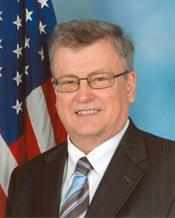
Mr. Speaker, I first want to thank the gentleman from New Jersey (Mr. Smith) for his leadership and advocacy on behalf of veterans. No one has worked harder for veterans than he has. I appreciate his…
Mr. Speaker, I first want to thank the gentleman from New Jersey (Mr. Smith) for his leadership and advocacy on behalf of veterans. No one has worked harder for veterans than he has. I appreciate his commitment not only on this bill but across the board in working to improve veterans health care and the benefits for veterans in the United States. I also want to specifically thank John Bradley on the gentleman from New Jersey's committee staff for his willingness to work with my staff on matters of concern to veterans in my district.
The bill before us contains many important provisions related to veterans health care and facilities management. Particularly, section 414 is of specific interest to veterans in my district, and I appreciate the inclusion of this language to force additional reporting to Congress as far as informing us of changes or closure of veterans hospitals.
In May of this year, Secretary Principi issued his decision on the CARES Commission recommendations for veterans health care. Among the slated changes was a mission change for the Fort Wayne veterans hospital located in my district. The decision called for closure of the hospital's inpatient beds and a transfer of those patients to either a community hospital in the local area or the Indianapolis veterans hospital. Fort Wayne is the largest veterans hospital and city in the United States affected by this bill. It is the second largest city in Indiana. The northern Indiana hospital covers an area larger than 2 million people who live 2 to 4 hours from Indianapolis and have no desire to go to Indianapolis, especially for continuing outpatient care; or for some inpatient care; or far away from their doctors where they have to get motels, where their spouses have to come, far away from their families, where their children will not visit them. They have no interest in this process.
Fort Wayne is one of the top military recruiting areas in the United States. In addition, our Guard and Reserve units are regularly serving on the front lines. Currently, I have a Reserve unit of over 200 men and women in Afghanistan for a year. I just had an Air Guard unit return to Fort Wayne from the Middle East. I have another large Reserve unit that just returned from a year down in Guantanamo. This spring, I had an Army Guard unit of 700 return from 14 months in Iraq. None of this was considered in the CARES Commission report.
In Congress, we are asked to repeatedly support, which I support as well, actions in Afghanistan, actions in Iraq and other parts of the world. But we cannot ask men and women in our Guard and Reserve to repeatedly be called up and then not have health care in the districts that they live in.
The CARES Commission assumed retirement communities, and where the military bases were, were where the future demand was going to be. But if we are going to use the Guard and Reserve in the way we are using them, we are going to provide them health care because if they are on the frontline in combat, they are going to be treated like other military personnel. And if they get called up a second time and third time around, the health care system is going to be revolutionized in the United States, and these people do not retire in Florida. They do not live there. They do not go where the bases are. They live in the communities they work in, in the Guard and the Reserve. And we have to factor this in as we look at the health care system.
Obviously, population shifts have occurred. Obviously, modernization is needed in our veterans hospitals. Obviously, outpatient services are the growing category in all kinds of health care, and we do not need more input. But what I fear when we look at the obvious trends that are occurring is, this is a back-door way to actually reduce benefits for many veterans and people in the Guard and Reserve in areas where they have been loyal patriotic Americans risking and dying, as many have in my district already in these wars, and they do not deserve to have their health care diminished dramatically.

Mr. Speaker, as a member of the VA Subcommittee on Health, I also rise in support of H.R. 3936 which includes, as we have heard, a lot of provisions to enhance services to our Nation's veterans. We…
Mr. Speaker, as a member of the VA Subcommittee on Health, I also rise in support of H.R. 3936 which includes, as we have heard, a lot of provisions to enhance services to our Nation's veterans. We have thanked the gentleman from New Jersey (Mr. Smith), the gentleman from Illinois (Mr. Evans) and the gentleman from Connecticut (Mr. Simmons).
I would particularly like to just thank the gentleman from Texas (Mr. Rodriguez), the ranking member, for his service. I always say, when I get to the committee meetings, ``Ciro, you're my hero.'' The gentleman from Texas, for the 8 years he has been here, has fought steadfastly for his veterans not only in San Antonio but in the United States as a whole. He has done a tremendous amount for health care for our veterans in this Nation, and we thank him for his service. We are going to miss him.
One of the important provisions of this bill is to set up a pilot program to study new and innovative ways to improve the recruitment and retention of nurses at the VA. We all know about the shortage of nurses in our Nation, and we cannot rely on the old methods of recruitment. The use of online technology, for example, can be a valuable tool in finding nurses who are interested in serving the country through their work at a VA medical facility.
Likewise, we have to find ways to keep the nurses that we recruit. A second bill that is before us after this has a provision in fact for alternative work schedules for nurses. Allowing nurses to work these flexible hours to accommodate personal and family needs is a sure way to improve their lives and to encourage them to continue working at the VA center. In addition, this bill provides payments to States to assist State veterans homes in their hiring and retention of nurses.
I think we all know that funding for grants is vital for homeless veterans. That program will be authorized in this bill at a level of $99 million, an increase of $24 million. Although we all know that even more funding is needed to assist the homeless veterans of our Nation, this authorization is a welcome increase. Homelessness among veterans is a national disgrace. I know we are all firmly behind the gentleman from New Jersey's goal of eliminating chronic homelessness within the veterans population in 10 years. This bill will help us reach that goal.
The bill also gives permanent authority to the VA Secretary to continue the military sexual trauma counseling program that was established in 1992. As we have heard, this program provides counseling and treatment for the men and women who have experienced sexual trauma or harassment while in the military service. Again, the gentleman from Texas was a major supporter of this program, and we thank him for his leadership once again.
Funding to open several new outpatient clinics is included in this bill, including two in San Diego County, a portion of which I represent. The VA's move to open clinics near veterans' homes has been overwhelmingly successful.
I will also continue work for a full outpatient health clinic in Imperial
County, which is also in my congressional district.
I should add that, as we look at the ways we fund outpatient clinics, the formulas used involve only population. We ought to also, I think, include ``isolation'' of a county or an area because that is also important, not just the numbers.
These are a few of the provisions in H.R. 3936. Health care of our veterans has to be a priority all the time but especially at this time when we have so many active duty soldiers fighting for this Nation. Whether they are from World War II or from the present conflicts in Afghanistan and Iraq, they are looking to us to meet their needs. Morale in active duty depends on how we are going to treat our soldiers when they come home, so I hope everyone supports H.R. 3936.
Mr. Speaker, I thank the gentleman for yielding me this time. Mr. Speaker, after 22 years on the House Committee on Veterans' Affairs, Pat Ryan, our chief counsel and staff director, is retiring from…
Mr. Speaker, I thank the gentleman for yielding me this time.
Mr. Speaker, after 22 years on the House Committee on Veterans' Affairs, Pat Ryan, our chief counsel and staff director, is retiring from government service. I want to take this opportunity to pay tribute to his extraordinary career and his many, many accomplishments.
For over 2 decades, Pat Ryan has made tremendous contributions to many of the most important new veterans laws that have been approved by Congress. He worked on numerous bills to expand services for aging veterans and those in need of long-term health care.
He was instrumental in helping to establish domiciliaries for homeless veterans and was the principal drafter of legislation to authorize VA's transitional housing guarantee program to benefit homeless veterans. Pat played an essential role in helping to establish the Department of Veterans Affairs and in creating the Court of Appeals for Veterans Claims.
Pat has been deeply involved in numerous successful committee initiatives that expanded and strengthened programs to assist surviving spouses and children of servicemembers killed in action or who later died of service-related causes. Over the past 20 years, Pat has helped to increase the Montgomery GI Bill benefit for qualified veterans from $300 per month when he joined the committee to over $1,000 per month today.
Using his budget expertise gained from 10 years working for the VA early in his career, Pat has been an extraordinarily valuable person in helping the Congress to ensure that the VA's budget has been both appropriate and responsive and that all funds are well spent. His extensive knowledge of the law and the inner workings of the VA greatly aided our committee in its work to create exemplary oversight of veterans programs.
From managing the committee's professional staff, to drafting legislation, to overseeing VA's programs and services, Patrick Ryan is the consummate
professional. I consider him to be a great friend and a great partner in all that this committee has accomplished during our time together, and it has been an honor to work side by side with him.
On a personal level, Pat Ryan has lived his life in a way that has truly made a difference and has walked to the beat of our Lord's drummer when He said whatever you do to the least of my brethren, you do likewise to me. For Pat, that means always looking out for the little guy. I have such respect and admiration for that character trait, and it is very strong in Patrick Ryan. What motivates him more than anything else, and it is first and foremost in his life, is his love for his wife, Kathy, and their three children: Kerry, Dan, and Julia. For Pat Ryan, family always comes first.
Pat is ever proud of his father who has passed, William Everest Ryan, who was a proud Marine and who saw combat during World War II in the South Pacific where he was wounded and won the Purple Heart award. He later joined the Justice Department while continuing in the Marine reserves as an officer in the JAG, retiring with the rank of colonel in 1964. Pat Ryan has spent his entire career in Congress, defending the same values his father defended on the battlefield and in the courtroom.
Mr. Speaker, on behalf of his colleagues in the House and members of the Committee on Veterans' Affairs who know and admire him so much, and other Members who have known and worked with him, and on behalf of millions of veterans who have benefited from his work, but have never known his name, I want to thank Pat Ryan for a distinguished career of faithful public service. It has been an honor to work with him.
Mr. Speaker, I yield myself such time as I may consume. Mr. Speaker, I rise in support of H.R. 4231, as amended, the Department of Veterans Affairs Nursing Recruitment and Retention Act of 2004. This…
Mr. Speaker, I yield myself such time as I may consume.
Mr. Speaker, I rise in support of H.R. 4231, as amended, the Department of Veterans Affairs Nursing Recruitment and Retention Act of 2004. This act has a variety of innovative approaches designed to assist the VA in managing its nursing workforce. The VA nurses are significantly older, on average, than nurses in other sectors; and more than one-third of the VA nursing staffs would be eligible for retirement in the next 5 years. Those are substantial figures.
In the meantime, fewer students are training for careers in nursing care, while the need for those professions is growing. This will make the VA effort to retain and recruit nurses critical in ensuring that it is able to maintain high-quality and accessible services.
This bill contains provisions to address the projected nursing shortage, including a pilot project to examine the effectiveness of new recruiting techniques and, in addition, new flexible work schedules that may be attractive to nurses with young children or those who are interested in full-time employment with seasonable breaks. State veterans homes, an important partner to our veterans health system, may also offer new educational opportunities to their nurses.
I want to take this time, Mr. Speaker, to recognize the gentleman from New Jersey (Chairman Smith) and thank him and acknowledge the leadership of the chairman of our Subcommittee on Health, the gentleman from Connecticut (Mr. Simmons), in his efforts. I want to thank him and his staff in drafting this piece of legislation and working with me and us and all of us together to consider improvements to this particular bill.
I also once again want to thank the gentleman from New Jersey (Chairman Smith) and the gentleman from Illinois (Ranking Member Evans), who continues to be at this present time in the Committee on Armed Services as we speak. I urge my colleagues to support this bill.
Mr. Speaker, I reserve the balance of my time.
Mr. Speaker, I yield 3 minutes to the gentleman from California (Mr. Filner), my friend and fellow colleague, a member of the committee who has been a staunch supporter of veterans.
Mr. Speaker, I yield myself such time as I may consume.
Let me first of all take this opportunity to thank the chairman, the gentleman from Connecticut (Mr. Simmons) for his efforts on this particular piece of legislation, and one of the beauties of this particular piece of legislation also is that it sets a trend. There is no doubt that in this country, and just like the VA's having difficulty with nurses, the entire country is having difficulty in getting nurses.
In addition to that, in the area of health professions, there will be a need for us to look at doctors. I know that we have a large number of slots in the area of doctors in the VA that have also not been filled. For some reason, this country has not produced the number of doctors that we need. We continue to produce 12,000 to 15,000 and bring in about 5,000 from abroad each year. In fact, right prior to 9/11, we brought in some 300,000 professionals from abroad, of which, in that category, was a little less than 5,000 doctors.
So we need to really begin to look, especially in the health profession and how it impacts the VA and these other areas, both these specialties, as well as physicians and the other health professionals that are needed.
So, once again, I want to thank everyone.
Mr. Speaker, I yield back the balance of my time.
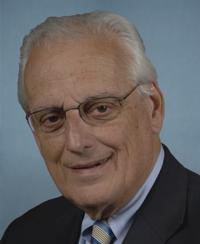
Mr. Speaker, the fact is that the importance of infrastructure investments to my home State of New Jersey and our Nation cannot be overstated. More resources are desperately required to satisfy unmet…
Mr. Speaker, the fact is that the importance of infrastructure investments to my home
State of New Jersey and our Nation cannot be overstated. More resources are desperately required to satisfy unmet needs, to improve livability, to alleviate congestion, to build safer roads, to upgrade and expand our mass transit system, to facilitate commerce, and create good-paying local construction jobs. Every $1 billion invested in Federal highway and transit spending means over 40,000 jobs are created or sustained.
Why do we only have an extension on the floor today rather than a good 6-year bill, a full 6-year bill that can benefit all of our States? The administration has been one of the biggest roadblocks in our path. For months, the administration would stonewall on supporting the funding necessary to get a right-sized bill. Their original proposal actively ignored new needs, choosing to keep the status quo. They did not want to make the tough choices in an election year to do what is right. The gentleman from Alaska (Mr. Young), the gentleman from Minnesota (Mr. Oberstar), the gentleman from Illinois (Mr. Lipinski), the gentleman from Wisconsin (Mr. Petri), et cetera know what is right. They put a lot of hours into this legislation. Both sides of the aisle.
The President has been deafening in his silence on the importance of a highway bill. They choose to hold the highway bill hostage as a credit to their ideology of fiscal responsibility. That is a laugh. It is a joke. Everybody knows it is. This ignores the reality that we are running up record deficits. It ignores the reality that the interest we are paying on the debt, $300 billion this year, is equal to the entire government outlay in 1974.
So it cannot really be an issue of fiscal responsibility. It is just politics, plain and simple. I support the extension because we need to keep the funding flowing to the States, or we will stop those projects right in their tracks. Chairman Young and Ranking Member Oberstar understand that we need to keep our States working. They have understood it too well. Our committee to its credit always works in a bipartisan manner. At one point, 74 members of our committee supported a bill which actually provided the level of funding that our own Department of Transportation recommended. Imagine that, actually passing a bill based on need, not politics.
We need to keep up with aging roads and bridges and transit systems. Rather than sitting in traffic, we need to get parents home after work on time to take care of their families. But leadership has held down the investment and is holding back trust fund dollars which would alleviate congestion. Folks are paying gas taxes, user fees, and not spending that money as we should. 1998 was a long way off, the last time we passed this legislation. This is terrible. But we need to do this to keep the projects that are in the ground already working.
I welcome and congratulate the gentleman from Illinois (Mr. Lipinski) for the fantastic job that he has done, not on our side of the aisle but for the United States Congress, not only for the people in his district but for all Americans; and we thank him today.
Mr. Speaker, I thank the distinguished chairman of the Committee on Veterans' Affairs, and also I want to thank the gentleman from Connecticut who chairs the Subcommittee on Health for what an…
Mr. Speaker, I thank the distinguished chairman of the Committee on Veterans' Affairs, and also I want to thank the gentleman from Connecticut who chairs the Subcommittee on Health for what an outstanding job he has done, having served as the chairman of that committee with the very, very good staff that he has. I think it is a credit to him what we are accomplishing.
I think all of my colleagues know that Florida has one of the largest growing populations of veterans. So many of us in Florida have to be particularly sensitive. We need new facilities down there. That is why I am very supportive of H.R. 3936, the Veterans Health Programs Improvement Act. I especially appreciate that it incorporates provisions of H.R. 4768, the Facilities Management Act of 2004, of which I was an original cosponsor. I thank the chairman for including that in H.R. 3936. This will authorize projects which the CARES (Capital Asset Realignment for Enhanced Services) Commission recommended to the Secretary of Veterans Affairs. He based his recommendations last May upon that, and that is included in this bill.
Mr. Speaker, under CARES, the VA reviewed all of its facilities systematically to consider where resources might be reallocated for optimal service to veterans. I think the veterans should realize that this was a systematic study. As more veterans have relocated to the Southeast over the years, it appears the VA has insufficient clinic room in the Southeast, particularly in my State of Florida. Accordingly, the majority of the leases which this legislation would authorize are facilities to be located in the South. The aim has been to match the assets with the veterans, and this bill does just that. Florida, as we know, has the second largest veterans population and the number one oldest.
Obviously, I am pleased to see a lease for a regional health care facility in South Marion County, my home county, Summerfield, Florida. The plans are for this clinic to offer comprehensive services to veterans, including audiology, which is very important; ophthalmology; dermatology, particularly in Florida; minor surgery; and complete imaging services. It is going to be housed in a 75,000-square-foot building and provide more services and greater resources for the veterans than the existing VA outpatient clinics that we have throughout my congressional district. Even better, while this clinic is predicted to be opened in the summer of 2007, appropriations willing, the generous, resourceful people of north central Florida have indeed offered the VA the use of free space for an interim clinic, so that should expedite it. So our ever-increasing veterans population can see immediate relief for their long health-care waits in the winter when they come down will be decreased, and this more comprehensive specialty clinic which the act authorizes will be built and in the long run will help everybody. I am very enthusiastically supporting this bill.
I want to thank both the Democrats and Republicans on the Committee on Veterans' Affairs and particularly the gentleman from Connecticut (Mr. Simmons) and the gentleman from New Jersey (Mr. Smith) for their support.
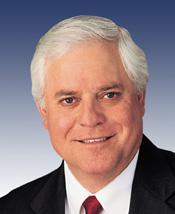
Mr. Speaker, as I look at this particular road bill, the reauthorization, I think of comments made back home, where it is called road kill. In essence, what is happening with this legislation and the…
Mr. Speaker, as I look at this particular road bill, the reauthorization, I think of comments made back home, where it is called road kill. In essence, what is happening with this legislation and the reauthorization, quite frankly our folks back home will call it road kill; and let me explain why.
We have individuals this morning that got up in my district and districts throughout this country and they have traveled to work at the factory or at their workplace, and in many cases in my district, on unsafe roads. So this legislation will provide, if enacted, as it should have been, will provide a safe way for working moms and dads to go to work and return to their families later that afternoon, and in many cases working at low-wage jobs.
We have also heard that maybe we can pass this legislation in a lame duck session. Well, that obviously is not going to happen. But I submit to you that is what we have been doing the past year and a half: we have been having a lame duck session. And quite frankly with the lame duck session we have been having concerning transportation needs, we have provided an avenue for many of our folks back home to be sitting ducks, sitting ducks that unless we pass this legislation and fully fund it, as many of us on this side of the Chamber have asked for, it may bring about a situation where the American public and the jobs that we have will bring about an economy that will create a dead duck scenario.
It is my hope that we realize, as we engage in the next 8 months, and I am sure that is what is going to happen, that for the American public and the safety of the American public and the American workers, that we pass an adequately funded reauthorization bill that will help build roads to many of our rural areas; that will help the inner cities with mass transit; and will bring about safe traveling as well as providing an economic boost.
Many years ago, Mr. Speaker, when our interstate systems were built, it helped bring about what we called ``just-in-time manufacturing.'' Small rural areas could in fact become the suppliers for the assembly lines of American manufacturers. As a result of that, we were able to move from small rural areas the products being built there, or that portion of it, to the larger manufacturing companies and create jobs in rural areas. We, in fact, by languishing and not fulfilling our responsibilities are bringing about a situation and circumstance for many of our workers and many of our families and our economy that will not be able to compete should, say, China decide to do as we did in the 1950s and the 1960s.
I yield to the gentleman from New York.
Mr. Speaker, reclaiming my time, I would say to the gentleman from New York that my intention is to vote for a reauthorization bill adequately funded. Unfortunately, we do not have that option.
Mr. Speaker, my hope is that we do what is right and that we put first the safety of the American public and pass the reauthorization bill at the level it should be.
Mr. Speaker, I thank the gentleman for the time, and Mr. Speaker, I also rise in support of this bill, H.R. 4231, to provide for nurse recruitment and retention for our Department of Veterans'…
Mr. Speaker, I thank the gentleman for the time, and Mr. Speaker, I also rise in support of this bill, H.R. 4231, to provide for nurse recruitment and retention for our Department of Veterans' Affairs.
We have heard that the VA is currently the largest employer of nurses in the United States, and with the growth in the number of veterans using the VA for their health care, the increase in the number of aging veterans and the projected national shortage of registered nurses, we must keep the VA competitive in the recruitment and retention of nurses.
So we have this bill, what we have heard described, establishing a pilot program that would study the use of outside recruitment, advertising and online technology to make the VA more competitive. We also know that the bill provides flexible work schedules to be more family-friendly and to allow nurses to take care of their family needs and personal needs and give them more control over their own schedules.
I thank very much the chairman of the committee for his strong statement on the provision that was in the original bill but is not now, but how we will go about making up for that; in the early drafts of the bill, an important provision clarified the status of nurses who meet the VA's qualification standards but do not have a baccalaureate degree. The National Council of State Boards of Nursing reports that the pass rates for licensing of nurses trained with associate and baccalaureate degrees are virtually identical. So to discriminate against nurses with 2-year degrees makes no sense and, of course, is counterproductive to our needs today.
As first drafted, H.R. 4231 committed to hiring nurses with associate degrees. It is not in the bill now, but as the chairman pointed out, a letter by the acting Under Secretary of Health at the VA, Mr. Perlin, and is now in the record to the Committee on Veterans Affairs' chairman and ranking member, outlined the plans of the VA to enhance the recruitment and hiring of associate-degree nurses. Committee on Veterans' Affairs members will be monitoring their progress.
Of course, the next step we need to take is to fix the promotion requirements for nurses in the VA so nurses with those associate degrees are eligible for promotions based on their competency, not their degree. This is a vital change that must be made in order to retain VA nurses, and I appreciate the gentleman from New Jersey's (Chairman Smith's) strong statement of the need for competency-based promotion and not on the kind of degree.
All of us here today have made clear that health care for our Nation's veterans must be a high priority. This bill is a step forward in those efforts to provide the VA with the tools to recruit qualified nurses to care for our veterans, whether they are from World War II or to the present conflicts in Afghanistan and Iraq.
I urge support of H.R. 4231.
General Leave

Mr. Speaker, I rise as a strong supporter of H.R. 3936 the Veterans Health Programs Improvement Act of 2004 which would increase the authorization of appropriations for grants to benefit homeless…
Mr. Speaker, I rise as a strong supporter of H.R. 3936 the Veterans Health Programs Improvement Act of 2004 which would increase the authorization of appropriations for grants to benefit homeless veterans, would improve programs for management and administration of veterans' facilities and health care programs. I want to thank Chairman Smith and Ranking Member Evans for bringing this necessary piece of legislation before this entire body.
Veterans are some of America's most valued members of society. These are people who served our Nation in a time of need, people who risked their lives to protect our own. Yet, it pains me to say that many of these same veterans who fought so bravely and risked so much in lands far abroad have come back to their nation and are now homeless. The problem of homeless veterans is far more prevalent than we would like to believe. About one-third of the entire adult homeless population has served their country in the Armed Services. On any given day, as many as 250,000 veterans, both male and female, are living on the streets or in shelters, and perhaps twice as many experience hopelessness at some point during the course of a year. Many other veterans are considered near homeless or at risk because of their poverty, lack of support from family and friends, and dismal living conditions in cheap hotels or in overcrowded or substandard housing.
This legislation is necessary not only because this problem is so devastating and prevalent, but also because homeless veterans have special needs that are unique from those faced by the rest of the homeless population. Almost all homeless veterans are male, with three percent being female, the vast majority are single, and most come from poor, disadvantaged backgrounds. Homeless veterans tend to be older and more educated than homeless non-veterans. But similar to the general population of homeless adult males, about 45% of homeless veterans suffer from mental illness and slightly more than 70% suffer from alcohol or other drug abuse problems. Roughly 56% are African American or Hispanic.
I believe that the Veterans Health Programs Improvement Act will help make an impact in helping homeless veterans and ensuring that they have a viable future. This legislation has a number of important provisions, but in my mind none is more important than the issue of homeless veterans. If we cannot even provide our brave veterans with basic necessities then where are we as a Nation? Our Nation's veterans did not risk their lives abroad so that they could come home and feel a cold shoulder. We must all have outrage that so many of our Nation's veterans live this way; only then can we find a way to correct this injustice.
Mr. Speaker, I rise today as a strong supporter of S. 2484 the Department of Veterans Affairs Health Care Personnel Enhancement Act of 2004 which received unanimous approval in the Senate and is now…
Mr. Speaker, I rise today as a strong supporter of S. 2484 the Department of Veterans Affairs Health Care Personnel Enhancement Act of 2004 which received unanimous approval in the Senate and is now before this body for passage. The Veterans Affairs Health Care Personnel Enhancement Act would set forth important new pay provisions for physicians and dentists employed by the Veterans Health Administration.
These physicians and dentists represent the lifeblood of the services provided by the Veterans Health Administration. There are over 26,550,000 veterans in the United States, the great majority of whom rely upon these services to maintain a healthy standard of living. In the 18th Congressional District alone there are more than 38,000 veterans and they make up almost ten percent of the district's civilian population over the age of 18. These veterans rely upon the great services offered at the Michael E. DeBakey VA Medical Center in Houston. Of course any great medical facility is only as good as its health care personnel, which is why this legislation is so necessary to correct any pay inequities.
The Veterans Affairs Health Care Personnel Enhancement Act includes three different components. The first calls for base pay that is uniform nationwide; which will ensure that entry level personnel will not be taken advantage and paid lower wages than their counterparts in other facilities. The second component institutes market pay that varies based on geographic area, specialty, assignment, personal qualifications, and individual experience. This component will allow for varying pay grades based on each individuals experience and circumstance as opposed to fixed pay rates that do not properly reflect each individual's contribution to the Veterans Health Administration. The final component calls for performance pay linked to the achievement of specific corporate goals and individual performance objectives. Again, this component will allow individual health care personnel to be rewarded based on their level of service and it will encourage others to raise their level of performance in order to collect performance bonuses. These three components as a whole will provide a more equitable and just pay scale physicians and dentists employed by the Veterans Health Administration. As a Member in this body I have always insisted on our brave veterans receiving the best of care in the finest health care facilities that we can provide. The Veterans Affairs Health Care Personnel Enhancement Act will allow those who provide these
vital health care services to be properly compensated and motivated to stay within the Veterans Health Administration.
Bill Text
4 versions available
        [Congressional Bills 108th Congress]
[From the U.S. Government Publishing Office]
[H.R. 4231 Received in Senate (RDS)]

2d Session
H. R. 4231

_______________________________________________________________________

IN THE SENATE OF THE UNITED STATES

September 30, 2004

Received

_______________________________________________________________________

AN ACT

To provide for a pilot program in the Department of Veterans Affairs to
improve recruitment and retention of nurses, and for other purposes.

Be it enacted by the Senate and House of Representatives of the
United States of America in Congress assembled,

SECTION 1. SHORT TITLE.

This Act may be cited as the ``Department of Veterans Affairs Nurse
Recruitment and Retention Act of 2004''.

SEC. 2. PILOT PROGRAM TO STUDY INNOVATIVE RECRUITMENT TOOLS TO ADDRESS
NURSING SHORTAGES AT DEPARTMENT OF VETERANS AFFAIRS
HEALTH-CARE FACILITIES.

(a) Pilot.--(1) Not later than 90 days after the date of the
enactment of this Act, the Secretary of Veterans Affairs shall
designate a health-care service region, or a section within such a
region, in which health-care facilities of the Department of Veterans
Affairs are adversely affected by a shortage of qualified nurses.
(2) The Secretary shall conduct a pilot program in the region or
section designated under paragraph (1) to determine the effectiveness
of the use of innovative human-capital tools and techniques in the
recruitment of qualified nurses for positions at Department health-care
facilities and for the retention of nurses at such facilities. In
carrying out the pilot program, the Secretary shall enter into a
contract with a private-sector entity for services under the pilot
program for recruitment of qualified nurses.
(b) Private-Sector Recruitment Practices.--For purposes of the
pilot program under this section, the Secretary shall identify and use
recruitment practices that have proven effective for placing qualified
individuals in positions that are difficult to fill due to shortages of
qualified individuals or other factors. Recruitment practices to be
reviewed by the Secretary for use in the pilot program shall include--
(1) employer branding and interactive advertising
strategies;
(2) Internet technologies and automated staffing systems;
and
(3) the use of recruitment, advertising, and communication
agencies.
(c) Streamlined Hiring Process.--In carrying out the pilot program
under this section, the Secretary shall, at health-care facilities of
the Department in the region or section in which the pilot program is
conducted, revise procedures and systems for selecting and hiring
qualified nurses to reduce the length of the hiring process. If the
Secretary identifies measures to streamline and automate the hiring
process that can only be implemented if authorized by law, the
Secretary shall submit to the Committees on Veterans' Affairs of the
Senate and House of Representatives recommendations for such changes in
law as may be necessary to enable such measure to be implemented.
(d) Report.--Not later than one year after the date of the
enactment of this Act, the Secretary shall submit to the Committees on
Veterans' Affairs of the Senate and House of Representatives a report
on the extent to which the pilot program achieved the goal of improving
the recruitment and retention of nurses in Department of Veterans
Affairs health-care facilities.

SEC. 3. ALTERNATE WORK SCHEDULES FOR NURSES.

(a) Enhanced Shift Flexibility.--Chapter 74 of title 38, United
States Code, is amended by inserting after section 7456 the following
new section:
``Sec. 7456a. Alternate work schedules
``(a) Applicability.--This section applies to registered nurses
appointed under this chapter.
``(b) 36/40 Work Schedule.--(1) Subject to paragraph (2), if the
Secretary determines it to be necessary in order to obtain or retain
the services of registered nurses at a Department health-care facility,
the Secretary may provide, in the case of registered nurses employed at
that facility, that such a nurse who works three regularly scheduled
12-hour tours of duty within a workweek shall be considered for all
purposes (except computation of full-time equivalent employees for the
purposes of determining compliance with personnel ceilings) to have
worked a full 40-hour basic workweek. Such a schedule may be referred
to as a `36/40 work schedule'.
``(2)(A) Basic and additional pay for a registered nurse who is
considered under paragraph (1) to have worked a full 40-hour basic
workweek is subject to subparagraphs (B) and (C).
``(B) The hourly rate of basic pay for such a nurse for service
performed as part of a regularly scheduled 36-hour tour of duty within
the workweek shall be derived by dividing the nurse's annual rate of
basic pay by 1,872.
``(C)(i) Such a nurse who performs a period of service in excess of
such nurse's regularly scheduled 36-hour tour of duty within a workweek
is entitled to overtime pay under section 7453(e) of this title, or
other applicable law, for officially ordered or approved service
performed in excess of--
``(I) eight hours on a day other than a day on which such
nurse's regularly scheduled 12-hour tour falls;
``(II) 12 hours for any day included in the regularly
scheduled 36-hour tour of duty; and
``(III) 40 hours during an administrative workweek.
``(ii) Except as provided in clause (i), a registered nurse to whom
this subsection is applicable is not entitled to additional pay under
section 7453 of this title, or other applicable law, for any period
included in a regularly scheduled 12-hour tour of duty.
``(3) A nurse who works a 36/40 work schedule described in this
subsection who is absent on approved sick leave or annual leave during
a regularly scheduled 12-hour tour of duty shall be charged for such
leave at a rate of ten hours of leave for nine hours of absence.
``(c) 7/7 Work Schedule--(1) Subject to paragraph (2), if the
Secretary determines it to be necessary in order to obtain or retain
the services of registered nurses at a Department health-care facility,
the Secretary may provide, in the case of registered nurses employed at
such facility, that such a nurse who works seven regularly scheduled
10-hour tours of duty, with seven days off duty, within a two-week pay
period, shall be considered for all purposes (except computation of
full-time equivalent employees for the purposes of determining
compliance with personnel ceilings) to have worked a full 80 hours for
the pay period. Such a schedule may be referred to as a `7/7 work
schedule'.
``(2)(A) Basic and additional pay for a registered nurse who is
considered under paragraph (1) to have worked a full 80-hour pay period
is subject to subparagraphs (B) and (C).
``(B) The hourly rate of basic pay for such a nurse for service
performed as part of a regularly scheduled 70-hour tour of duty within
the pay period shall be derived by dividing the nurse's annual rate of
basic pay by 1,820.
``(C)(i) Such a nurse who performs a period of service in excess of
such nurse's regularly scheduled 70-hour tour of duty within a pay
period is entitled to overtime pay under section 7453(e) of this title,
or other applicable law, for officially ordered or approved service
performed in excess of--
``(I) eight hours on a day other than a day on which such
nurse's regularly scheduled 10-hour tour falls;
``(II) 10 hours for any day included in the regularly
scheduled 70-hour tour of duty; and
``(III) 80 hours during a pay period.
``(ii) Except as provided in subparagraph (i), a registered nurse
to whom this subsection is applicable is not entitled to additional pay
under section 7453 of this title, or other applicable law, for any
period included in a regularly scheduled 10-hour tour of duty.
``(3) A nurse who works a 7/7 work schedule described in this
subsection who is absent on approved sick leave or annual leave during
a regularly scheduled 12-hour tour of duty shall be charged for such
leave at a rate of eight hours of leave for seven hours of absence.
``(d) 9-Month Work Schedule.--The Secretary may authorize a
registered nurse appointed under section 7405 of this title, with the
nurse's written consent, to work full-time for nine months with three
months off duty, within a fiscal year, and be paid at 75 percent of the
full-time rate for such nurse's grade for each pay period of that
fiscal year. A nurse working on such a schedule for any fiscal year
shall be considered a \3/4\ full-time equivalent employee for that
fiscal year in computing full-time equivalent employees for the
purposes of determining compliance with personnel ceilings. Service on
such a schedule shall be considered to be part-time service for
purposes of computing benefits under chapters 83 and 84 of title 5.
``(e) Regulations.--The Secretary shall prescribe regulations for
the implementation of this section.''.
(b) Clerical Amendment.--The table of sections at the beginning of
chapter 74 of such title is amended by inserting after the item
relating to section 7456 the following new item:

``7456a. Alternate work schedules.''.

SEC. 4. TECHNICAL CORRECTION TO LISTING OF CERTAIN HYBRID POSITIONS IN
VETERANS HEALTH ADMINISTRATION.

Section 7401(3) of title 38, United States Code, is amended--
(1) by striking ``and dental technologists'' and inserting
``technologists, dental hygienists, dental assistants''; and
(2) by striking ``technicians, therapeutic radiologic
technicians, and social workers'' and inserting
``technologists, therapeutic radiologic technologists, social
workers, blind rehabilitation specialists, and blind
rehabilitation outpatient specialists''.

SEC. 5. ASSISTANCE FOR HIRING AND RETENTION OF NURSES AT STATE VETERANS
HOMES.

(a) In General.--(1) Chapter 17 of title 38, United States Code, is
amended by inserting after section 1743 the following new section:
``Sec. 1744. Hiring and retention of nurses: payments to assist States
``(a) Payment Program.--The Secretary shall make payments to States
under this section for the purpose of assisting State homes in the
hiring and retention of nurses and the reduction of nursing shortages
at State homes.
``(b) Eligible Recipients.--Payments to a State for a fiscal year
under this section shall, subject to submission of an application, be
made to any State that during that year--
``(1) receives per diem payments under this subchapter for
that fiscal year; and
``(2) has in effect an employee incentive scholarship
program or other employee incentive program at a State home
designed to promote the hiring and retention of nursing staff
and to reduce nursing shortages at that home.
``(c) Use of Funds Received.--A State may use an amount received
under this section only to provide funds for a program described in
subsection (b)(2). Any program shall meet such criteria as the
Secretary may prescribe. In prescribing such criteria, the Secretary
shall take into consideration the need for flexibility and innovation.
``(d) Limitations on Amount of Payment.--(1) A payment under this
section may not be used to provide more than 50 percent of the costs
for a fiscal year of the employee incentive scholarship or other
incentive program for which the payment is made.
``(2) The amount of the payment to a State under this section for
any fiscal year is, for each State home in that State with a program
described in subsection (b)(2), the amount equal to 2 percent of the
amount of payments estimated to be made to that State, for that State
home, under section 1741 of this title for that fiscal year.
``(e) Applications.--A payment under this section for any fiscal
year with respect to any State home may only be made based upon an
application submitted by the State seeking the payment with respect to
that State home. Any such application shall describe the nursing
shortage at the State home and the employee incentive scholarship
program or other incentive program described in subsection (c) for
which the payment is sought.
``(f) Source of Funds.--Payments under this section shall be made
from funds available for other payments under this subchapter.
``(g) Disbursement.--Payments under this section to a State home
shall be made as part of the disbursement of payments under section
1741 of this title with respect to that State home.
``(h) Use of Certain Receipts.--The Secretary shall require as a
condition of any payment under this section that, in any case in which
the State home receives a refund payment made by an employee in breach
of the terms of an agreement for employee assistance that used funds
provided under this section, the payment shall be returned to the State
home's incentive program account and credited as a non-Federal funding
source.
``(i) Annual Report From Payment Recipients.--Any State home
receiving a payment under this section for any fiscal year, shall, as a
condition of the payment, be required to agree to provide to the
Secretary a report setting forth in detail the use of funds received
through the payment, including a descriptive analysis of how effective
the incentive program has been on nurse staffing in the State home
during that fiscal year. The report for any fiscal year shall be
provided to the Secretary within 60 days of the close of the fiscal
year and shall be subject to audit by the Secretary. Eligibility for a
payment under this section for any later fiscal year is contingent upon
the receipt by the Secretary of the annual report under this subsection
for the previous year in accordance with this subsection.
``(j) Regulations.--The Secretary shall prescribe regulations to
carry out this section. The regulations shall include the establishment
of criteria for the award of payments under this section.''.
(2) The table of sections at the beginning of such chapter is
amended by inserting after section 1743 the following new item:

``1744. Hiring and retention of nurses: payments to assist States.''.
(b) Implementation.--The Secretary of Veterans Affairs shall
implement section 1744 of title 38, United States Code, as added by
subsection (a), as expeditiously as possible. The Secretary shall
establish such interim procedures as necessary so as to ensure that
payments are made to eligible States under that section commencing not
later than January 1, 2005, notwithstanding that regulations under
subsection (j) of that section may not have become final.

SEC. 6. TECHNICAL CLARIFICATION.

Section 8111(d)(2) of title 38, United States Code, is amended by
inserting before the period at the end of the last sentence the
following: ``and shall be available for any purpose authorized by this
section''.

SEC. 7. UNDER SECRETARY FOR HEALTH.

Section 305(a)(2) of title 38, United States Code, is amended--
(1) in the matter preceding subparagraph (A), by striking
``shall be a doctor of medicine and''; and
(2) in subparagraph (A), by striking ``and in health-care''
and inserting ``or in health-care''.

Passed the House of Representatives September 30, 2004.

Attest:

JEFF TRANDAHL,

Clerk.