To amend the Internal Revenue Code of 1986 to allow the Hope Scholarship Credit to cover fees, books, supplies, and equipment and to exempt Federal Pell Grants and Federal supplemental educational opportunity grants from reducing expenses taken into account for the Hope Scholarship Credit.
Legislative Activity
Stay on top of the latest movement without scrolling through every action
Referred to the House Committee on Ways and Means.
January 29, 2003
View full timeline
Introduced in House
January 29, 2003
Sponsor introductory remarks on measure. (CR E109)
January 29, 2003
Referred to the House Committee on Ways and Means.
January 29, 2003
Floor Debate
10 membersWhat members said about H.R. 442 on the floor
 MMH
MMH BL
BL RC"
RC" SF
SF NA+5
NA+5
Floor Debate
10 membersWhat members said about H.R. 442 on the floor
Mr. Speaker, I ask unanimous consent that all Members may have 5 legislative days within which to revise and extend their remarks on the subject of my Special Order, recognizing Asian Pacific…
Mr. Speaker, I ask unanimous consent that all Members may have 5 legislative days within which to revise and extend their remarks on the subject of my Special Order, recognizing Asian Pacific American Heritage Month.
Mr. Speaker, I rise today to speak on the significance of Asian Pacific American Heritage Month. The push for designating an APA Heritage Month started 26 years ago by visionary APA community leaders and also was led from this House by retired Congressman Robert Horton of New York and the current Secretary of Transportation, Norman Y. Mineta.
This year's Heritage Month theme, a Salute to Liberty, is an especially timely theme as our Nation is faced with conflict and tension. We must remember that in the fight to protect our national security, we must also preserve our civil liberties and individual rights. During this month, it is also imperative that we utilize this opportunity to reflect upon and understand our past so we can successfully build for our future. This is a moment of teaching and learning. There have been many histories of Asian Pacific Americans in this country, Mr. Speaker, their origins, their barriers, the barriers that they have overcome in the pursuit to seek the American Dream in this country.
Mr. Speaker, I would like to take a moment and sort of share with the community the history of the bill that was passed in 1992, eventually, to recognize the month of May as an official
Asian Pacific American Heritage Month.
In 1977, Representative Frank Horton, a Representative from New York, and Norman Y. Mineta, from California, introduced the Asian Pacific Heritage Week, House Resolution 540, in the House of Representatives, which called upon the President to proclaim the first 10 days of May as Pacific Asian Heritage Week. The joint resolution did not contain an annual designation, so in 1978, President Jimmy Carter signed the joint resolution put forward by both Representatives Horton and Mineta.
Then, in 1990, Asian American leaders around the country gathered at the White House to witness the signing of a proclamation by President George Bush declaring May to be Asian Pacific Heritage Month. So we went from a week to a month. In 1992, President Bush signed legislation into law designating May of each year as Asian Pacific American Heritage Month.
Mr. Speaker, it is apropos since this is the month of May we do take some time to recognize those who were important in designating Asian Pacific Heritage Month.
First, why is it important? As a schoolteacher, if we do not teach our history and understand the members of our community's contributions to this country, our children, be they Asian Americans or not, will be less educated and less informed and less appreciative of not only their culture but the cultures of other people.
The growth of the Asian Pacific population from 1980 to 1990 doubled from 3.7 million to approximately 7.3 million. This increase is remarkable when compared to the total increase in the U.S. population of 9.8 percent during that same period.
Then the growth continued to rise another 43 percent from 1990 to 1999. Currently, APAs comprise 4.5 percent of the U.S. population; and by 2050 APAs are expected to comprise 9 percent of the U.S. population. However, in the State of California, the APA population already comprise 11 percent of the general population and grew 34 percent in the past decade, from 2.8 to 3.8 million. This growth, although largely attributed to immigration patterns, is also indicative of more defined data collection methods which has always been a problem in our communities. So the last census it was critical that the census taken was accurate and was as precise as possible.
Data is a cross-cutting issue. Lack of data impacts our understanding of the health problems in our communities, as well as the problems in access and quality. Adequate data collection continues to be a challenge for the APA community.
Although we are often mistaken to be a homogeneous group and sometimes considered perpetual foreigners, APAs in this country encompasses 49 ethnicities speaking over 100 languages and dialects. Aggregating such a large and diverse group makes it difficult to understand the unique problems faced by the individual ethnicities it encompasses.
So when we aggregate Asian Americans as a population, when we look at programs and policies in this country, it is critical that we disaggregate the information so that we are able to be more precise in our policies and programs that we want to target for our communities.
Let me just share a little bit of historical time line. Historically, in 1763 the very first settlement that we know of were some escaped prisoners aboard the Spanish galleons, and they were Filipinos jumping ship in New Orleans. They fled into the bayous of Louisiana, and they established a community called Saint Malo, the first APA settlement in the United States, fleeing the Spanish galleons and seeking freedom in this country.
In 1882, this country saw fit to pass the Chinese Exclusion Act. The Exclusion Act ends most immigration from China until 1943 and denied citizenship to those already present, many of whom were drawn by the gold rush and the Central Pacific Railroad.
As a sideline, we have found out through our research that there have been many Chinese Americans who fought in the Civil War. Upon their petition to become citizens after serving in the military, they were denied citizenship because of the Chinese Exclusion Act.
In 1868, the Japanese settled in California, first in a community called Alameda in the San Francisco Bay area and secondly in El Dorado County near Sacramento. That colony was name Wahamatsu Colony.
An interesting story of the Wahamatsu Colony, the first colony in this country, was that they first came as refugees from Japan led by a gentleman who was a gunrunner in Japan, Mr. Schell. He had a choice of either facing death or being deported. So he left with his contingent of folks from Japan and established this colony. This colony did not last very long, but it is important to note that the last surviving members of the first colony in the State of California are not Japanese Americans but families of African Americans and Chinese.
So it shows that ethnic groups in this country, when they come to this country, they may be disallowed from intermarrying with the mainstream white groups of this country, but they found ways to raise families and find their way through this country until such time that laws were passed to allow people to earn their citizenship in this country.
In 1912 at the Stockholm Olympics, swimmer Duke Kahinomoku became the first APA to win a Gold Medal. He was later credited with introducing the sport, a sport that is endearing to the gentleman from California (Mr. Rohrabacher), the sport of surfing in the United States.
In 1913, the Alien Land Act was passed, and this was specifically in California. The Alien Land Act forced immigrants, primarily Japanese and other APAs, from owning or leasing land; and similar laws were passed in other States throughout the Nation. Subsequently it was rescinded later on in the 1950s.
In 1942, the Japanese American internment occurred. This was following the United States' declaration of war against Japan when Franklin D. Roosevelt signed Executive Order 9066 authorizing the forced relocation and detention of 120,000 Japanese Americans, as well as over 2,000 Japanese Latin Americans. And also in this country it is not well-known that over 7,000 Italian Americans were affected personally, their families, and over 30,000 German Americans were affected.
In 1943, the Japanese American battalion, the 442nd, which was comprised of some 12,000 Japanese Americans, many of them from internment camps, responded to the War Department's call for volunteers for an all-Japanese combat unit. It was not unusual at that time that we had segregated combat units. We had combat units of Indians; we had combat units of blacks and African Americans. At that time around 32,000 were inducted to form the 442 regimental combat team, and we had Members of this House who served in the Regimental Combat 442, the past Congressman Sparky Matsunaga and the current Senator from Hawaii, Mr. Inouye.
This combat team became legendary for its success, and it is probably the most decorated military men in the United States history. Their average Purple Heart that this combat unit had inflicted upon them, they had earned almost three Purple Hearts per person, meaning they had to be injured. Each member had to be injured at least three times, so close to 9,000 Purple Hearts were granted recognizing their injuries in the effort to fight the war in Europe.
In 1946, the first Chinese American, Wing F. Ong of Arizona, becomes the first APA to be elected to State office. Asian Americans, we are still looking at firsts. Some day we hope that we will go beyond the first and become a rule rather than an exception.
In 1956, after the first congressman, an Indian American businessman Dalip Singh Saund of Westmoreland, California, became the very first Asian Pacific American elected to Congress, he, however, wanted to become a citizen and could not become a citizen prior to 1952 because there was still a law on the books that disallowed Asian to become citizens. When that law was rescinded, he was able to participate in the halls of Congress.
In 1964, the first congresswoman, Patsy Takemoto Mink is the first woman of color and the first Asian Pacific congresswoman to represent Hawaii in the halls of Congress. We know
that we lost her just recently, and it was a terrible loss to not only Asian Americans but Americans throughout this country and to all those who believe that those who have never forgotten their roots and their past come to Congress making sure that the idea that equality and opportunities for all Americans, regardless of their background, must be met and must be respected.
In 1965, a labor activist named Philip Vera Cruz organizes a successful strike of fellow Filipino grape pickers in Coachella, California. This gentleman began the movement that leads to the formation of the United Farm Workers of America where eventually Cesar Chevaz became the head leader and recognized for his work and his philosophy of peace and nonviolent activism.
In 1968, there was an ethnic studies strike. Students of color from San Francisco State University and UC Berkley organize a Third World strike. Their efforts led to the creation of ethnic studies departments at both campuses and eventually across this country.
I have to say that because of the work of folks in ethnic studies, which was a movement that did not have much support among the scholastic circles until recently, that we found all this information that would lead to children, present and in the future, being able to understand that Asian Americans are not recent immigrants and Asian Americans have contributed to the development of this country.
Further, the most valuable player in 1969 was a Filipino American. He played for the Los Angeles Rams as a quarterback, and his name was Roman Gabriel. He was recognized as the league's Most Valuable Player.
The first governor in 1974 was a Japanese governor named George Ariyoshi; and he was elected governor of Hawaii, the first APA governor in the United States.
And in 1981, a Chinese American architecture student, Maya Lin, her design was chosen for the Vietnam Veterans Memorial in a national competition. She becomes one of the most widely recognized architects in the United States, and her work can be seen here in Washington, D.C., at the Vietnam Memorial.
In 1982, a young man, Vincent Chin, who was celebrating the event of his marriage, was murdered. He was murdered in Detroit, Michigan. Two white auto workers mistook Chin for Japanese and blamed him for the auto industry's woes and the downturn in the economy. He was bludgeoned to death with a baseball bat. The courts were lenient on the killers, and none of them served a day in jail. This incident became a rallying point for the national APA community. His mom went across this country seeking justice and eventually had some justice through the civil rights law.
Mr. Speaker, I yield to the gentleman from Virginia (Mr. Scott).
I thank the gentleman.
Mr. Speaker, if I may continue my sharing of information on the chronological order. After the American internment, in 1990 we had a gentleman by the name of Chang-Lin Tien who became the first APA to head a major university in the United States when he was appointed chancellor of the University of Berkeley. He distinguished himself not only because he led the campus as a chancellor but he also became known by the students on that campus, which is quite rare. He also allowed the students to feel that they were part of a community. He was a great proponent of affirmative action. He was a great proponent of making sure that he modeled what it is that he believed by his own personal life. He also was probably the most prodigious and prolific fund-raiser that university system has ever seen. He just passed away a year ago from brain cancer. We shall miss him dearly; but his work and his model, his expectation continues to live in that system and in the State of California.
In 1992, Mr. Speaker, the Los Angeles uprisings took place. The L.A. uprisings followed the verdict in the Rodney King trial. Property loss was valued at $1 billion with Korean American businesses bearing half the damage. Relations between Korean Americans and African Americans became a focal point of community activism. Today when visiting Los Angeles, one will find that the two communities are working hand in hand to make sure that they learn from each other and can grow with each other and that neither one is targeted in times of tension.
In 1996 there was a victory for Asian immigrant women workers. After a 3\1/2\ year national campaign, APA immigrant women and Asian immigrant women advocates reached a historic agreement with clothing manufacturer Jessica McClintock to protect garment laborers.
Mr. Speaker, in 1996 something happened in the State of Washington. Not only can Hawaii boast of an Asian American Governor but also the State of Washington elected its first Asian American Governor, Gary Locke from the State of Washington. He enjoys quite a bit of leadership. Today he is the chair of the Governors association. In 1996, AIDS research reached a point of distinction. A gentleman by the name of David Ho was named Time Magazine's Man of the Year for his work in AIDS research. He developed the protease inhibitor cocktail treatment which adds years to the lives of many AIDS patients. David Ho.
In 1997, there was a woman in space. She was an Asian Pacific American. Astronaut Kalpana Chawla became the first Indo-American and APA woman in space. She died in the breakup of the Columbia Space Shuttle returning to Earth this year, in February 2003.
The first APA man in the Cabinet was selected by President Bill Clinton when he appointed former Congressman Norman Mineta Secretary of Commerce. He is the first APA member of the Presidential Cabinet. Earlier in his career, Mineta was the first APA mayor of a major metropolitan city, San Jose. Then in the next administration under George Bush, George Bush saw fit to ask Norm Mineta to serve as Secretary of Transportation. We are enjoying his leadership currently as Secretary of Transportation.
In 2002, an APA woman legislator by the name of Wilma Chan of Alameda, California, is a State legislator but she rose to the Democratic majority leader of the California State Assembly. There are other firsts, Mr. Speaker. The first Hmong attorney. The Hmongs came from Southeast Asia after the Vietnam War. The Hmongs were scattered throughout this country but eventually assembled both in Fresno, California, and in Minnesota. Mee Moua was a young woman who was an attorney and became the first woman and first Hmong attorney and first member of the Hmong community to be elected to the Minnesota State Senate. Shortly after that, Cy Thao became the first Hmong assemblyman in the State of Minnesota. There is also in the State of Minnesota the first Indo-American, Satveer Chaudhary. He hails from Minnesota, also.
There was the first APA woman in the Cabinet. President George W. Bush appointed Elaine Chao to be Secretary of Labor. She is the very first APA woman to hold a Presidential Cabinet post.
Mr. Speaker, in this country there are many firsts. We have John Liu who is the very first Asian American to sit on the City of New York's city council representing the 20th district.
Mr. Speaker, I yield to the gentlewoman from California (Ms. Lee).
Mr. Speaker, I thank the gentlewoman from California (Ms. Lee). And I yield, Mr. Speaker, to the gentlewoman from Texas (Ms. Jackson-Lee).
Mr. Speaker, I thank the gentlewoman from Texas (Ms. Jackson-Lee) for her words and her support not only here in the halls of Congress but also back home in Houston and Texas in general. Her work and the work of the gentlewoman from California (Ms. Lee) really just show that there is power in collaboration and being able to work together not only as individuals but as a coalition for the betterment of every American in this country.
Mr. Speaker, I would like to touch a little bit on the internment story of the Japanese Americans in this country. It is a story that needs to be told over and over again because it is not a Japanese American history lesson. It is not a Japanese American experience only. It is not a Japanese American lesson, but it is really rooted deeply in what I would consider an American lesson.
Mr. Speaker, this year marks the 61st anniversary of President Franklin Delano Roosevelt's signing of Executive Order 9066 on February 19, 1942; and it is the 15th anniversary of the Civil Liberties Act of 1988.
In 1942, President Roosevelt signed Executive Order 9066 pursuant to which 120,000 Japanese Americans and legal resident aliens were incarcerated in internment camps during World War II. Many of these families lost their property and possessions during the several years they were jailed behind barbed wire.
On February 19, 1976, President Gerald Ford formally rescinded Executive Order 9066; and July 21, 1980, became the beginning of reconciling our past to the present. Congress adopted legislation signed by President Jimmy Carter on July 31, 1980, establishing the Commission on Wartime Relocation and Internment of Civilians to investigate the claim that the incarceration of Japanese Americans and legal resident aliens during World War II was not justified by military necessity. The outcome of that commission, Mr. Speaker, the commission had held 20 days of hearings and listened to testimony of over 720 witnesses, and published its findings in a report entitled ``Personal Justice Denied.'' The principal finding in 1982 was that the promulgation of Executive Order 9066 was not justified by military necessity and that the decision which followed from it, detention, ending detention and ending exclusion, were not driven by analysis of military conditions, but rather the causes that shaped these decisions were race prejudice, war hysteria, and a failure of political leadership.
With a strong bipartisan vote, Congress passed H.R. 442, the Civil Liberties Act, which states in part: ``For these fundamental violations of the basic civil liberties and constitutional rights of these individuals of Japanese ancestry, the Congress apologizes on behalf of the Nation.'' President Ronald Reagan signed the Civil Liberties Act into law on August 10, 1988, at which time he proclaimed: ``This is a great day for America.''
In 1998, as a member of the California State Assembly, I authored the State version of the Civil Liberties Act, understanding that the work was still not done once the Civil Liberties Act of 1988 had expired.
I mention these dates and this timing, Mr. Speaker, because today it is even more important, more important than ever, to speak up against unjust policies. It is also more important than ever to educate Americans of the Japanese American experience during World War II, as well as the experience of other groups like Japanese Latin Americans who were expatriated from their country at the request of our government; and then while they were on the ships on their way to the United States to be interned in Crystal City, Texas, they were stripped of all their papers and became people without a country. And certain German and Italian Americans in this country were also mistreated, many of whom were forced in the middle of the night to leave their homes and pledge allegiance to the Flag in the middle of the night in order to show that to their neighbors, who forced them out, to prove that they were loyal and patriotic Americans during that time.
It is also important to learn the important lessons from our own history in the resolution I introduced, H.R. 56, the Day of Remembrance resolution, which is still in the Committee on the Judiciary. Teaching the lessons of those dark days is more important today than it ever was. By remembering, Executive Order 9066 that was signed on February 19, 1942, does not become an anniversary just on February 19 but is an anniversary that must be remembered and lived and understood every day of the year, every year for the future of this country, because the lessons that were learned were lessons that were principally rooted in the Constitution of this country, the Constitution which was a contract between our government and the people who are here in this country, a contract that is signed on paper called the Declaration of Independence, a contract that is immutable and cannot be
changed and should not be changed, a contract that promises everyone who is in this country due process and the protection of their civil liberties. It is a contract that has been protected. It is a contract that has been fought for and a contract which members of this country who served in the military have shed their blood overseas for, who left their limbs in the islands of the Pacific and on the European continent.
These Americans must be remembered as part of the lessons that we learned from the Japanese American experience that the Constitution is a contract worth protecting and dying for. We must remember that this Constitution was written back in 1776, but yet it is an evolving, growing Constitution that over time has included not only white men with properties but those who used to be slaves; those immigrants whose laws were passed against them which eventually were rescinded became citizens of this country; those immigrants who came just recently after the Vietnam War, and even today people are still seeking to find refuge in this country even at times when we seem to appear to be inhospitable to the immigrants.
Mr. Speaker, the lessons learned during the internment when we thought that we were protecting Japanese Americans for their own safety was actually a myth because if it were true, then as my father used to tell me, he wondered why if we were here for our protection, why would the barbed wires be around us, the machines pointing in on us. And my father used to still tell me, though, that, as I grew up, to be 110 percent American; that we must also remember that the contributions that have been invested in this country of our parents and grandparents are well worth it, that we must also learn that even though this country is faced with challenges since 9-11 that in spite of the war on terrorism that we still have to remember the constitutional principles by which we live.
When 9-11 occurred, the ugly head of racial prejudice appeared again as it did in 1942. Hysteria started to take over some hearts in this country, and as a result people like Balbir Singh Sodhi, an immigrant and a Sikh American from Fremont, California, moved to Mesa, Arizona to start a business there and because he looked like the enemy to the perpetrator, he was murdered and shot there in his store. And then coincidentally another year later, his brother Sukhpal Singh Sodhi was a taxi driver in San Francisco who was shot and murdered in San Francisco merely because he appeared to be a Middle Easterner and those who murdered him thought that they were vindicated because they played upon and acted upon their prejudice and their hysteria and their hatred.
It did not become a wave of murders and hangings here in this country, for I believe that, because of the history that we have been able to share, that many of us checked our fears and checked our emotions and made sure that we did not respond or succumb to our base fears.
Mr. Speaker, I believe that Members of this Congress also participated in making sure that the people of our country remembered and learned from the history of the internment, that racial profiling is unacceptable, and although we are in the throes of fear and the issues of national security that we must exercise our common sense, our good sense, and exercise our understanding of the principles of the Constitution.
We know that after 9/11 and after certain acts were passed, such as the PATRIOT Act, that we must seek the critical balance between civil liberties and private liberties with national security; and the Constitution continues to be tested as we move along, looking towards a possible second PATRIOT Act.
Mr. Speaker, it is my prayer, my hope, that Members of this body remember that Asian Americans were pioneers establishing this country. The Asian Americans were laborers building this country. The Asian Americans are doctors, lawyers, teachers and politicians, providing for the health and welfare of this Nation; and we, like every other American, are red-blooded Americans.
Mr. Speaker, I would like to close with a couple of comments that became a lesson for me personally as I have been here my third year and my experience and seeing the works of the halls of Congress here in Washington, D.C.
I believe that the very basic lesson I have learned is not only from the experience that my community has had in 1942, the kinds of lessons we learned since then and the kinds of teachings that we have learned, but I also started to understand that the last century was a century of wars, a century of conflict, a century of trauma, and that the promise that we have in this new century should be the century of reconciliation and peace.
Now that the Cold War is gone, we have a challenge of facing conflicts in other ways. A wise man once said to me that peace, Mike, is not an absence of conflict, but a way, a manner, in which you can deal with conflict.
So, in closing, the primary lesson I have learned these past few years, Mr. Speaker, is that our Constitution is never tested in times of tranquility, but our Constitution is sorely tested in times of trauma, terror and tragedy, and that the very fiber of the American character and this country should be embodied and should be learned from the very words and the principles and the rights embodied in the Constitution and Bill of Rights.
Mr. Speaker, I thank you for the opportunity to utilize this time to share some of the information that we have had, share some of the information with the general public, and hopefully the records would reflect that Asian Americans in this country came with a dream, they worked hard and participated, they faced barriers and overcame them, and that can only happen over time in a country and a democracy like ours, where evolution and evolving sentiments and policies in this country only lead us forward, that we learn from our mistakes, and that only makes us stronger and better Americans and a greater America.
I thank the gentleman for yielding and for his leadership of the Asian Pacific American Caucus and our tri-caucus, actually, because it is really a privilege to belong to the tri-caucus, the Asian…
I thank the gentleman for yielding and for his leadership of the Asian Pacific American Caucus and our tri-caucus, actually, because it is really a privilege to belong to the tri-caucus, the Asian Pacific American Caucus, the Hispanic Caucus, and the Congressional Black Caucus. We join the gentleman today in celebrating Asian Pacific American Heritage Month. In my district, the Ninth Congressional District of California, the east bay of Northern California, Asian Pacific Americans have long played a very crucial role in the life and in the history of the east bay and the region's identity has been deeply shaped by its place on the Pacific Rim. I am proud again to join him tonight in celebrating Asian Pacific American Heritage Month. The contributions to our country by Asian Pacific Americans are numerous, and we are a much better country as a result. However, today Asian Americans confront a wide variety of challenges, including access to educational opportunities, language access issues, and health problems and disparities.
Specifically, I would just like to talk this evening about health care issues, immigration and civil liberties issues and about the work being done in my own district by the Asian Health Services organization and the Asian Law Caucus. Asian Health Services is a comprehensive community health center based in Oakland, California. It provides medical care, health education, insurance counseling, and client advocacy. They reach out into the underserved Asian and Pacific Islander population in Alameda County. Its staff members offer its services in nine languages. They provide almost 60,000 medical visits to some 14,000 patients each year. And they are doing this on minimal resources. In the process, they are helping to tear down language and economic barriers that separate far too many Asian Americans and Pacific Islanders from quality health care.
As we all know, there are vast health disparities in this country. Asian and Pacific Americans are disproportionately affected by cancer and other serious diseases. Asian and Pacific Americans have a tuberculosis rate that is 15 times higher than that of whites. They have cervical and liver cancer rates that are five times the national average. These disparities we must erase, and we must commit ourselves to do that tonight as we celebrate Asian Pacific American Heritage Month.
Recent immigrants also face many challenges from language barriers to medical bureaucracy. Organizations like Asian Health Services are helping their clients conquer their challenges through community outreach, education, and patient care. In recent years, AHS has also opened a very badly needed dental clinic. As part of Asian Pacific American Heritage Month, I want to salute the contributions tonight of the Asian Health Services. In this age of State and Federal budget deficits and Federal tax cuts, their commitment is needed now more than ever. Immigrants are especially at risk during these perilous times.
As part of Asian Pacific American Heritage Month, I believe that it is very important to call to the attention of the country a hero for many of us who I am privileged to say lives in my district and is a constituent, Mr. Fred Korematsu. During World War II when thousands of Japanese Americans were unjustly interned in camps, Fred Korematsu refused to go and took his case all the way to the Supreme Court. Mr. Korematsu stood up not only for his own rights but for civil liberties for all of us. Racial profiling really was not a word or a concept in 1942, but it was practiced with vengeance. The internment of Japanese Americans during World War II represents one of the darkest chapters in our Nation's history. Tens of thousands of people were imprisoned not because of disloyalty, but because of ethnicity; and the President, the Congress, and the Supreme Court all conspired in this act of fear and prejudice.
When Fred Korematsu took his case to the Supreme Court in 1944, the Court ruled in favor of the government and thus in favor of racism and oppression. But by exposing the truth, Fred Korematsu exposed for all of the world to see the utter hypocrisy of fighting for democracy abroad while rationing it here at home. And although it took many, many decades, Fred Korematsu finally won when President Reagan apologized for the internment and Congress finally offered compensation.
I am very proud to say that the Asian Law Caucus fought for Fred Korematsu as it has fought for many Asian Americans. For 31 years, the Asian Law Caucus has advanced the legal and civil rights of the Asian and Pacific Islander communities. Now those communities and our society unfortunately as a whole need that advocacy even more. As attorneys and as legal professionals, we need the skills and the energy and the commitment of lawyers associated with the Asian Law Caucus. Educational opportunities and legal support services are both shrinking under this current administration.
The representation provided to hundreds of low-income clients and the advocacy of the caucus is really making an impact in both high-profile litigation and in the lives of families and individuals each and every day. By fighting for housing, fairness in employment, and the rights of seniors; by stopping unlawful evictions and helping immigrants navigate, and really they have to navigate, the citizenship process, the Asian Law Caucus is strengthening democracy and carrying out the legacies of the civil rights movement of the last century.
So as a proud member of the Congressional Asian Pacific American Caucus, I am proud to join with the gentleman from California (Mr. Honda) tonight to make sure that our entire country understands why we are celebrating Asian Pacific American Heritage Month. Let
us make sure that we represent Asian Pacific Americans every month, each and every day as we develop our policies and our legislation that ensure liberty and justice for all.
Mr. Speaker, I rise today to honor the eight years of service Paul Igasaki provided to the United States Equal Employment Opportunity Commission (EEOC). Mr. Igasaki's tenure as a commissioner and…
Mr. Speaker, I rise today to honor the eight years of service Paul Igasaki provided to the United States Equal Employment Opportunity Commission (EEOC).
Mr. Igasaki's tenure as a commissioner and Vice Chair of the EEOC started in 1994, when he was nominated by President Clinton and confirmed by the United States Senate, and his second term began in 1998. During his nearly 1 year as acting Chair, Mr. Igasaki convinced Congress to pass one of the largest increases in funding for the EEOC. This increase allowed the perpetually underfunded agency to fill staffing needs throughout its regional offices, implement mediation programs, extended outreach to underserved communities and begin creating a national networked information system.
At the EEOC, Paul Igasaki was one of the architects in creating the EEOC's more strategic approach in taking on cases, which prioritizes the most egregious cases as well as those that may prevent future cases of employment-related discrimination. Mr. Igasaki's recommendations to overhaul the EEOC's case processing system and create the National Enforcement Plan helped reduce the agency's backlog of cases by 70 percent.
The EEOC was extremely fortunate to have someone with Paul Igasaki's experience serve on the Commission. As executive director of the Asian Law Caucus in San Francisco, one of the Nation's premier Asian American and Pacific Islander legal advocacy organizations, Mr. Igasaki spent several years handling issues such as employment discrimination and sexual harassment cases, as well as wage and hour issues, hate crimes, voting rights, housing, immigration and immigrant rights and other civil rights concerns. Litigating these issues at the Asian Law Caucus prepared him for the work that he would do with the EEOC.
Mr. Igasaki enhanced his Congressional advocacy skills with the Japanese American Citizens League serving as their Washington, D.C. Representative. Clearly, the major legislative victory for the Japanese American community was the passage and signing into law of H.R. 442, the Civil Liberties Act of 1988. This measure provided an apology and symbolic payments from the U.S. government to Japanese Americans for the wrongful deprivation of their civil liberties during World War II.
Serving as Washington Representative, Mr. Igasaki advocated for the appropriations to fund payments promised in the Civil Liberties Act of 1988. Without these symbolic payments to individuals who suffered the loss of their civil liberties, many would view the Civil Liberties Act as a hollow gesture. Among other critical issues, Mr. Igasaki also worked with Congressional offices, the Department of Transportation and the White House to resolve unequal enforcement of antiquated maritime law against Vietnamese American fishermen in California.
While I think of my friend Paul Igasaki as a Californian, he truly learned the art of politics and its role in improving people's lives in his hometown of Chicago, Illinois. In the Windy City, he served as executive director of the Commission on Asian American Affairs; prior to that position, he was legal counsel and advisor to the Mayor on Asian American community affairs.
After receiving his Juris Doctor, from University of California, Davis and his Bachelor of Arts from Northwestern University, Evanston, Mr. Igasaki was the first staff director of an American Bar Association project that increased private sector civil legal services to poor clients in Chicago. This service came at a time when federal funding for such services was greatly reduced.
Mr. Speaker, I am honored to pay tribute to my good friend Paul Igasaki for his great service to this nation and look forward to his continued success in the fight to protect our civil rights and civil liberties.
Mr. Speaker, I want to thank the gentleman for leading the effort to commemorate Asian Pacific American Heritage month. During this month-long commemoration, Americans of Asian Pacific heritage…
Mr. Speaker, I want to thank the gentleman for leading the effort to commemorate Asian Pacific American Heritage month.
During this month-long commemoration, Americans of Asian Pacific heritage celebrate achievements and major contributions for almost 12 million American citizens of Asian and Pacific heritage. Whether we are seeking of arts, education, government, business, athletics, medicine, law, or the military, Asian Pacific Americans have not only contributed but excelled.
Several congressional organizations reflect this unique relationship between Congress and Asian Pacific Americans.
I recently joined my distinguished colleagues, Representative Issa, Representative Filner and Representative Rohrabacher, in founding Friends of the Philippines. The bipartisan membership comprises Members who are working to promote better relations with our longstanding ally, the Philippines. I am also a member of the India Caucus, which similarly works to promote a better relationship with India.
The bicameral and bipartisan Congressional Asian Pacific American Caucus was created by Congressman Norman Mineta, who is now Secretary of Transportation, and Congresswoman Patsy Mink in 1994. Both have served as Chair of the caucus. In the 108th Congress, this Congress, Congressman David Wu serves as Chair and Congressman Honda serves as vice Chair of that caucus. 115 Members of Congress have joined the caucus and work together on policies and legislation that are of concern to Asian Pacific Americans. The caucus is working hard not only to educate other Members about the history and contributions of Asian Pacific Islanders but also to protect and advance the constitutional rights of all Americans.
My connection with the celebration begins with my maternal grandfather who was born in the Philippines. Around 1900 he immigrated to the United States aboard a naval vessel at an early age. He landed in Raleigh, North Carolina, and was adopted by a family in Raleigh. He became a pharmacist but unfortunately died before I was born.
The historic significance of this month involves two events that occurred in May which determined why this month was chosen to celebrate a week, and now a month, for Asian Pacific American heritage contributions. The first occurred on May 7, 1843, when the first Japanese immigrants arrived in the United States. The second occurred on May 10, 1869, known as Golden Spike Day, when the first transcontinental railroad in the United States was completed with significant contributions from Chinese immigrants.
Before Asian Pacific American Heritage Month was signed into law in 1992, it began as a week-long observance of Asian Pacific Americans' contributions to this country. In 1977, Congressman Horton introduced H.J. Res. 540, legislation to authorize the President to proclaim annually the first 10 days in May as Asian Pacific American Heritage Week. Congressman Mineta led the efforts to enact H.J. Res. 1007, which in 1979 began as an annual celebration of Asian Pacific American Heritage Week. In 1989, legislation was introduced to convert the week into a month, and in 1992 legislation was enacted to make the annual month an annual commemoration.
Mr. Speaker, I join the gentleman from California tonight as we urge all Americans to learn the history of Asian Pacific Americans and to celebrate their contributions to the culture and heritage of our Nation. I want to thank the gentleman from California for leading the effort to make sure that this was properly commemorated.
Mr. Speaker, I rise today to celebrate Asian Pacific American Heritage Month, which honors Asian Pacific Americans throughout our history. From the early reaches of our Nation's history to the…
Mr. Speaker, I rise today to celebrate Asian Pacific American Heritage Month, which honors Asian Pacific Americans throughout our history.
From the early reaches of our Nation's history to the present day, Asian Pacific Americans have played a crucial role in the development of the United States. Asian Pacific Americans have contributed to explorations of places as far away as the depths of outer space, and places as near as the inner vessels of the human body. They have served as generals in our military, builders of our great transcontinental railroads, and athletes without peer.
But I rise today not to merely tout the accomplishments of this storied group of people, but to speak specifically about the uplifting account of two amazing families, one Asian Pacific American and one Caucasian. I want to relate to my colleagues the amazing and unique friendship that developed between the Tanimura and Antle families over impossible odds.
George Tanimura, a second-generation Japanese American, grew up spending his weekends working on his father's lettuce farm in Castroville, California, in my congressional district. Both of George's parents died before he completed high school, so George, the oldest of 12 siblings, along with his brother Charlie, managed the farm. The family business was kept afloat during the troubled times of the Great Depression, only to be devastated by the forced internment of more than 120,000 Japanese Americans after the attack on Pearl Harbor. While brothers Charlie and John joined the U.S. Army, George and his other siblings were inhumanely forced into internment camps. By the time the Tanimura family was released after World War II, it had lost all its previous land holdings. Slowly and painstakingly the Tanimuras regained their agricultural footing, farming onions and lettuce on 20 acres of land.
The Antle family migrated west from the Oklahoma Dust Bowl in the late 1800s, arriving in Salinas, California, to find work in the iceberg lettuce industry. Bud Antle joined his father Lester as a lettuce packer in Salinas. In 1942, after years of hard work, Bud and Lester created their own lettuce-packing company, Bud Antle, Inc. The company grew quite rapidly, starting with 60 workers and quickly increasing to 300 workers.
The Tanimura family soon began growing lettuce only for Bud Antle, Inc. It was a natural marriage of lettuce growers and lettuce packers, and the Tanimuras and Antles soon became close friends. The Antles treated the Tanimura family as equals in a time rife with discrimination. In turn, Bud's son Bob worked closely with the Tanimura family and quickly learned the industry. In 1982, after years of trusted friendship, these two families formed Tanimura & Antle, one of the largest lettuce producers in the world.
The story of the Tanimuras and the Antles is one of uplift beyond all possible odds. Both families built their companies from the ground up, and with an understanding of and appreciation for human rights when such a concept was in short supply. I commend these two families for serving as a heartening reminder of all that is good about America. I can think of no finer time to recognize their mutual achievements than during this special Asian Pacific American Heritage Month.
Show 6 more
Mr. Speaker, I am pleased that this House is marking Asian Pacific American Heritage month. For those of us from the State of Hawaii, there is something missing in this year's Heritage Month…
Mr. Speaker, I am pleased that this House is marking Asian Pacific American Heritage month. For those of us from the State of Hawaii, there is something missing in this year's Heritage Month celebration--the dynamic presence of our colleague, Patsy Takemoto Mink. I would like to take this opportunity, therefore, to reprise the tribute to her that I delivered on this floor last October.
We were devastated by the sudden loss of this irreplaceable woman.
Patsy Mink was the first Asian American woman to serve in Congress. But she was much more than that. She was our friend and colleague. She was a true daughter of Hawaii. She was a person of enormous spirit and tenacity and inner strength. This House is much the poorer for her loss. We especially miss her wisdom, her energy, her readiness to fight for principle.
As evidence of the high esteem in which she was held in Hawaii, she was elected over and over by the voters of Hawaii, and she was re- elected posthumously after she passed away just before the 2002 election.
Patsy fought all her life for social and economic justice. Throughout nearly 50 years of public service, she championed America's most deeply held values: equality, fairness, and above all . . . honesty.
Her courage, her willingness to speak out and champion causes that others might shun resulted in tremendous contributions in the fields of civil rights and education.
She has earned an honored place in the history of the United States House of Representatives as the co-author of title IX, which guarantees equality for women in education programs.
Every single woman in this Nation who today access to equal opportunity in education, and by extension in virtually every other field of endeavor, owes a debt to Patsy Mink.
She was one of the pioneers who transformed Hawaii and transformed this Nation. Her legacy lives on in every campus in America and in the heart of every American woman who aspires to greatness. Most profoundly, it lives on in the spirit of hope, hope for the millions of lives that she touched. Patsy Mink knew first hand the power of hope, the power of perseverence, the power of dreams.
She was turned down for medical school, discriminated against because she was female, because she was Japanese American, because she came from an unknown territory out in the Pacific.
That is why she went to law school, fought her way into law school so that she could achieve a degree that would enable her to fight against the discrimination she had suffered. She was a champion then. We all recognized it. She was smart and she was tough and she was articulate and she would not quit. She was an inspiration then and now. Whenever any of us felt some sense of discouragement, whenever any of us felt some sense of despair or feeling that we could not succeed, it was only required for Patsy to come in the room to change the atmosphere.
Patsy Mink had the capacity to make dead air move. Patsy Mink, this little lady from Hawaii, was a giant in her heart and in her commitment.
With every breath that she took, she championed those who had no one to stand up and speak out for them. A little lady with a big heart, a lioness.
We will not see her like again.
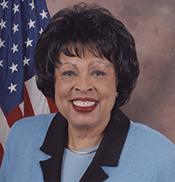
Mr. Speaker, I rise today to commemorate the Asian Pacific American Heritage Month and to celebrate the lives and accomplishments of Asian Pacific Americans in our history. In particular, I want to…
Mr. Speaker, I rise today to commemorate the Asian Pacific American Heritage Month and to celebrate the lives and accomplishments of Asian Pacific Americans in our history. In particular, I want to recognize the contributions of Korean Americans to my district and commend them for their tireless work in improving the city of Los Angeles.
Mr. Speaker, as you may know, Los Angeles is home to the largest concentration of Koreans outside of Korea, roughly 160,000. Located in my district, Koreatown is the hub of the Korean community and vital to our local economy. The rich and diverse history of Korean immigration is carefully documented by the Korean American Museum, from the first Korean arrival in the United States at the turn of the 20th century for agricultural production, to the most recent wave of Korean immigration marked by the passage of the 1965 Immigration Act.
Just a few weeks ago I had the opportunity to attend the Congressional Asian Pacific American Caucus kick-off event and hear from many of the Asian American leaders in my district and beyond who discussed their community development projects. I want to take this opportunity to recognize some of the groups I met that day and the contributions they continue to make to our communities: the Korean Resource Center, the Korean Youth & Community Center, the Korean Churches for Community Development, the Thai Community Development Center, and the Asian American Healthcare Venture. I want to reiterate one of the key concerns expressed to me by some of those community leaders at the forum, which is the need for community and economic development projects that are geared toward Asian Pacific Americans. The diversity of the APA population presents unique challenges for housing and community development systems, and we must look for ways to better allocate scarce resources to deliver linguistic and culturally appropriate services.
I strongly believe community development organizations must be sensitized to the history and experiences of the communities they serve in order to produce services that are linguistically and culturally appropriate. To that end Congress should look into federally designated funding for the APA community and economic development programs. We also need to look into better data collection and research at the national level to further understand the unique needs of the Asian American communities.
I want to thank Congressman Wu and Congressman Honda, Chair and Vice Chair of the Congressional Asian Pacific American Caucus, for organizing this special order. As we commemorate and celebrate the crucial role Asian Pacific Americans have played in the development of this Nation, we must also recognize the unique needs and challenges the 12.5 million Asian Pacific Americans in the U.S. face today and work towards improving their future and the future of our country.
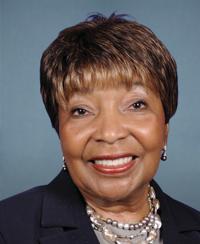
Mr. Speaker, I rise in homage of Asian Pacific American Month to honor our nation's Asian Pacific American communiy. I am honored to share in the occasion of the 25th Anniversary of such a special…
Mr. Speaker, I rise in homage of Asian Pacific American Month to honor our nation's Asian Pacific American communiy. I am honored to share in the occasion of the 25th Anniversary of such a special month.
The beauty of our nation comes from the diversity of its colorful fabric, which includes the Asian Pacific American community. More than 12.5 million APAs make up one of the fastest growing segments of the United States population. I am certainly grateful for all of the countless contributions Asian Pacific Americans have made to our society.
Asian Pacific Americans have blazed trails in a myriad of professions including academics, science, business, music, technology, sports and, of course politics. Mr. Speaker, I would be remiss if I mentioned great Asian Pacific Americans and not mention my good friend former Representative Patsy Mink of Hawaii. Although she is no longer with us, her presence is still felt, here in the halls of Congress. Patsy was a knowledgeable, courageous woman--committed to people.
In April of 2002, with the help of my colleagues in the Congressional Asian Pacific, Black, and Hispanic caucuses, we established the Tri- Caucus, a collective caucus with the purpose of addressing issues of mutual concern. This group is dedicated to many issues that affect our diverse constituency. Specifically, the Tri-Caucus focuses on immigration, health care, education, and economic development issues. One year after the September 11th tragedy, the Tri-Caucus participated in the historic Commemorative Joint Session of Congress in New York City and held a Business Roundtable that assembled a host of leaders in the business community to explore economic development strategies. The Tri-Caucus also presented a joint statement on the affirmative action case at the University of Michigan.
Mr. Speaker, APAs have contributed to this nation since their first settlement was established in the bayous of Louisiana in 1763. In the midst of World War II, more than 12,000 Japanese Americans volunteered for an all-Japanese combat unit, many of them came from mainland concentration camps after President Franklin Roosevelt signed an Executive Order authorizing the forced relocation
and detention of 120,000 Japanese Americans, as well as Japanese Latin Americans. The Legendary 442nd Regimental Combat Team went down in history as one of our nation's most decorated military units. To date, there are more than 284,000 Asian American military veterans.
Mr. Speaker, in closing, I would like to encourage my colleagues in the House of Representatives and citizens around the nation to explore the rich culture, achievements and contributions of the Asian Pacific American community.
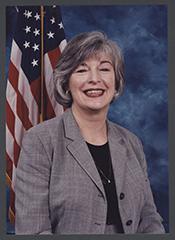
Mr. Speaker, I am pleased to join my colleagues tonight honoring the many contributions of Asian Pacific Americans. In particular, I wish to honor one of my greatest heroes and long time friend,…
Mr. Speaker, I am pleased to join my colleagues tonight honoring the many contributions of Asian Pacific Americans. In particular, I wish to honor one of my greatest heroes and long time friend, former Congresswoman Patsy Mink.
Mr. Speaker, I am proud to stand here tonight and recognize the many contributions that Patsy Mink made to the people of this country, particularly to the girls and women of this country.
I was privileged to serve with Patsy while working with her on the House Education and the Workforce Committee since the beginning of my tenure in 1992. She served as a mentor and friend to me while I have worked in Congress and I miss her very much.
Besides being the first woman of color to serve in the House of Representatives, Patsy Mink helped craft landmark legislation for women across the country during her 24 years in Congress. In the early 1970s Patsy played the key role in the enactment of Title Nine, which prohibits gender discrimination by federally funded institutions.
When most people think of Title Nine, they think of women's sports and, the impact of Title Nine of women's sports can be clearly seen. Title Nine has increased the numbers of girls and women who participate in sports in high school and college.
Even beyond school, we can see the impact of Title Nine in the impressive accomplishments of American female athletes at the Olympics, and when we turn on the TV to watch professional women's basketball and soccer games.
But, we shouldn't forget that Title Nine has also been a major tool for increasing women's participation in other aspects of education, as well.
Even as we stand here on the floor today Title Nine is being used to make sure that girls have equal access to classes which teach the skills that lead to high-wage jobs that women need to support themselves and their families.
But, Title Nine was not Patsy's only contribution to the girls and women of America.
Patsy also authored the Women's Educational Equity Act, which is still the primary resource for teachers and parents seeking information on proven methods to ensure gender equity in their schools and communities.
The Women's Educational Equity Act represents the Federal commitment to ensuring that girls' future choices and successes are determined not by their gender, but by their own interests, aspirations and abilities.
There has been no stronger voice in Congress for girls, women, and minorities than Patsy's, and it will do Congress proud to remember and honor her not only for her heritage but also for the enormous impact she made while she was here in Congress.
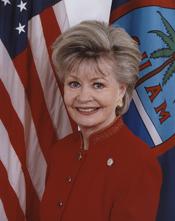
Mr. Speaker, I am pleased to join my colleagues this evening to commemorate Asian Pacific American Heritage Month and I want to thank the Chairmen of the Congressional Asian Pacific American Caucus,…
Mr. Speaker, I am pleased to join my colleagues this evening to commemorate Asian Pacific American Heritage Month and I want to thank the Chairmen of the Congressional Asian Pacific American Caucus, Mr. Honda and Mr. Wu, for their leadership of the caucus. I would especially like to thank Mr. Honda for organizing this special order which seeks, not only to recognize the contributions of Asian Americans and Pacific Islanders to our Nation, but also to educate our citizens on the uniqueness of our people.
Asian Pacific Americans are a rapidly growing group made up of 49 different ethnicities speaking over 100 different languages and dialects representing 4.5 percent of our population today.
Asian Pacific Americans have much to be proud of. In every aspect of American life--business, education, government, the military, in media, sports, entertainment and the arts--you will find prominent Asian Americans and Pacific Islanders.
Here in Congress, more than 30 members past and present have been of Asian and Pacific Island descent representing backgrounds such as Chamorros, Samoans, Native Hawaiians, Japanese, Filipino, Korean, Indian and Chinese.
As we celebrate the contributions of Asian Pacific Americans in this ``Salute to Liberty'' and with the approach of Memorial Day, it is fitting that we reflect of the thousands of Asian Pacific Islanders who have served in our armed services. In World War II, Korea, Vietnam, the Persian Gulf and, most recently, the
war in Iraq, Asian Pacific Islanders have served with honor and distinction.
I am honored by Guam's record of service to the Nation. Men and women from Guam have served in all wars, and they have served in disproportion to their small numbers.
Today, let us again acknowledge the sacrifice of Asian Pacific Americans in defense of our country.
Common to the Asian and Pacific Island heritage is the sense of family and community. Our concern for our immediate as well as extended family is what encourages us to work harder and strive for a better life for everyone in our community. It is our sense of family that strengthens our commitment to fight against racism, discrimination and injustice, not just of our people, but of all people.
Historically, Asians and Pacific Islanders have known much war and strife. They have survived and they have thrived to the benefit of America. So today, as we celebrate Asian Pacific American Heritage Month, let us honor all they have done to enrich our lives.

Mr. Speaker, for more than two centuries, America has been enriched by our diverse and rapidly growing Asian American and Pacific Islander communities. Generations of immigrants and refugees from…
Mr. Speaker, for more than two centuries, America has been enriched by our diverse and rapidly growing Asian American and Pacific Islander communities. Generations of immigrants and refugees from Asia and native peoples from Hawaii and the Pacific Islands have enhanced our nation by preserving and sharing their unique cultures and values.
Asian Pacific American Heritage Month provides a special opportunity for all Americans to pay tribute to Asian Americans and Pacific Islanders whose countless contributions--in science and technology, arts and media, business and social work, politics and more--have left a lasting legacy on American culture and society.
Moreover, these communities serve as a living example of the critical role that equal opportunity, social justice, and civic participation play in making the American Dream a reality. In the face of prejudice and poverty, internment and exclusion, Asian Americans and Pacific Islanders have fought for the right to call America their home. This month, we thank them for their perserverance, we applaud them for their achievements, and we proudly recognize them as fellow countrymen in our common homeland.
Bill Text
Latest available legislative text
        [Congressional Bills 108th Congress]
[From the U.S. Government Publishing Office]
[H.R. 442 Introduced in House (IH)]

108th CONGRESS
1st Session
H. R. 442

To amend the Internal Revenue Code of 1986 to allow the Hope
Scholarship Credit to cover fees, books, supplies, and equipment and to
exempt Federal Pell Grants and Federal supplemental educational
opportunity grants from reducing expenses taken into account for the
Hope Scholarship Credit.

_______________________________________________________________________

IN THE HOUSE OF REPRESENTATIVES

January 29, 2003

Mr. Camp (for himself, Mr. McGovern, Mr. Foley, Mr. Matsui, Mr.
Ramstad, Mr. Neal of Massachusetts, Mr. English, Mrs. Jones of Ohio,
Mr. Houghton, Mr. Hinchey, Mr. Rogers of Michigan, Mr. Evans, Mr.
Petri, Mr. Tierney, Mr. Hoekstra, Mr. Stupak, Mrs. Miller of Michigan,
Mr. Frank of Massachusetts, Mr. McInnis, Mr. Waxman, and Mr. Weller)
introduced the following bill; which was referred to the Committee on
Ways and Means

_______________________________________________________________________

A BILL

To amend the Internal Revenue Code of 1986 to allow the Hope
Scholarship Credit to cover fees, books, supplies, and equipment and to
exempt Federal Pell Grants and Federal supplemental educational
opportunity grants from reducing expenses taken into account for the
Hope Scholarship Credit.

Be it enacted by the Senate and House of Representatives of the
United States of America in Congress assembled,

SECTION 1. EXPANSION OF EDUCATIONAL EXPENSES ALLOWED AS PART OF HOPE
SCHOLARSHIP CREDIT.

(a) Qualified Tuition and Related Expenses Expanded to Include
Books, Supplies, and Equipment.--Paragraph (1) of section 25A(f) of the
Internal Revenue Code of 1986 (defining qualified tuition and related
expenses) is amended by adding at the end the following new
subparagraph:
``(D) Additional expenses allowed for hope
scholarship credit.--For purposes of the Hope
Scholarship Credit, such term shall include fees,
books, supplies, and equipment required for courses of
instruction at the eligible educational institution.''.
(b) Hope Scholarship Credit not Reduced by Federal Pell Grants and
Supplemental Educational Opportunity Grants.--Subsection (g) of section
25A of such Code (relating to special rules) is amended by adding at
the end the following new paragraph:
``(8) Pell and seog grants.--For purposes of the Hope
Scholarship Credit, paragraph (2) shall not apply to amounts
paid for an individual as a Federal Pell Grant or a Federal
supplemental educational opportunity grant under subparts 1 and
3, respectively, of part A of title IV of the Higher Education
Act of 1965 (20 U.S.C. 1070a and 1070b et seq.,
respectively).''.
(c) Expanded Hope Expenses not Subject to Information Reporting
Requirements.--Subsection (e) of section 6050S of such Code (relating
to definitions) is amended by striking ``subsection (g)(2)'' and
inserting ``subsections (f)(1)(D) and (g)(2)''.
(d) Effective Date.--The amendments made by this section shall
apply to expenses paid after December 31, 2002 (in tax years ending
after such date), for education furnished in academic periods beginning
after such date.
<all>