Access to Rural Physicians Improvement Act of 2004
Legislative Activity
Stay on top of the latest movement without scrolling through every action
Received in the Senate.
October 7, 2004
View full timeline
Introduced in House
May 20, 2004
Referred to the Subcommittee on Immigration, Border Security, and Claims.
June 2, 2004
Subcommittee Consideration and Mark-up Session Held.
June 3, 2004
Forwarded by Subcommittee to Full Committee by Voice Vote.
June 3, 2004
Committee Consideration and Mark-up Session Held.
September 30, 2004
Reported (Amended) by the Committee on Judiciary. H. Rept. 108-730.
October 5, 2004
Placed on the Union Calendar, Calendar No. 450.
October 5, 2004
Mr. Sensenbrenner moved to suspend the rules and pass the bill, as amended.
October 6, 2004 • 2:38 PM
Considered under suspension of the rules. (consideration: CR H8237-8239)
October 6, 2004 • 2:38 PM
DEBATE - The House proceeded with forty minutes of debate on H.R. 4453.
October 6, 2004 • 2:38 PM
Passed/agreed to in House: On motion to suspend the rules and pass the bill, as amended Agreed to by voice vote.(text: CR H8237)
October 6, 2004 • 2:49 PM
On motion to suspend the rules and pass the bill, as amended Agreed to by voice vote. (text: CR H8237)
October 6, 2004 • 2:49 PM
Motion to reconsider laid on the table Agreed to without objection.
October 6, 2004 • 2:49 PM
Received in the Senate.
October 7, 2004
Floor Debate
8 membersWhat members said about H.R. 4453 on the floor
 SJL
SJL DMC
DMC FJSJM
FJSJM EP+3
EP+3
Floor Debate
8 membersWhat members said about H.R. 4453 on the floor
Mr. Speaker, I yield myself such time as I may consume. Mr. Speaker, I thank the distinguished chairman. This might be the last time the Subcommittee on Immigration is on the floor, possibly, in the…
Mr. Speaker, I yield myself such time as I may consume.
Mr. Speaker, I thank the distinguished chairman. This might be the last time the Subcommittee on Immigration is on the floor, possibly, in the 108th Congress; and I want to thank the full Committee on the Judiciary staff, and I want to particularly offer my appreciation to the Democratic staff of the Committee on the Judiciary for their very fine work during this Congress and their efforts toward bipartisanship, and thank Nolan Rappaport on the Subcommittee on Immigration for his work on this legislation and others dealing with immigration concerns.
Let me share with my colleagues from an Associated Press article dated August 24: ``Before doctors like Mircea Rachita from Romania arrived in town, patients in this small town had to wait months for doctors' appointments. Now, underserved communities are finding good doctors easy to come by due to a visa waiver program which creates incentives for foreign-born physicians to work in communities American doctors may shun.''
Clearly there is room and need for a bill to improve access to physicians in medically underserved areas, and S. 2302 is the embodiment of that bill, along with a similar House bill.
The purpose of this bill is to make it possible for foreign doctors to provide medical services in geographic areas which have been designated by the Secretary of Health and Human Services as having a shortage of health care professionals. S. 2302 is almost identical to H.R. 4453, which I cosponsored with my colleague, the chairman of the subcommittee, the gentleman from Indiana (Mr. Hostettler).
H.R. 4453 passed the House on October 6 on the Suspension Calendar. The Senate bill has an additional provision which ensures that specialists sponsored by Federal and State agencies are placed in areas that have a shortage in that specialty. The additional provision requires the sponsoring agency to determine criteria for demonstrating a specialist shortage and to meet that criteria in order to sponsor the specialist, a way of broadening access to health care and recognizing the 44 million uninsured Americans who need access to sometimes public facilities that utilize these foreign doctors.
Aliens who attend medical school in the United States on J exchange program visas are required to leave the country afterward and reside abroad for 2 years before they can receive their visas to work here as physicians.
In 1994, Congress created a new temporary waiver of this 2-year foreign residence requirement which allowed States as well as Federal agencies to sponsor the doctors. It applied to foreign doctors who would commit to practicing medicine for no less than 3 years in a geographic area designated by the Secretary of Health and Human Services as having a shortage of health care professionals.
This program has been successful for 10 years in bringing highly qualified physicians to medically underserved areas. It sunsetted on June 1 of this year and created a chasm between the needs of those who need health care and the regulations of the Federal government. We now have brought those pieces together.
The first physician recommended for a waiver in Texas was Dr. Maria Camacho, a pediatric intensivist. Her services to the residents of Harlingen in Cameron County provide a level of health care to children that was previously unavailable in that county.
Dr. K.M. Moorthi is a nephrologist who was recommended for a waiver to serve at a facility in Pecos, Texas, in Reeves County. He works at a dialysis center. Patients requiring dialysis three times per week in that part of Texas used to have to travel more than 70 miles each way for the treatment. Now it is available in this county.
The bill will provide a 2-year extension for this waiver program. We started out with 1 year. I asked for 5 years. We compromised on 2 years. We have made progress.
It will also establish a pilot flexibility program which will allow a State agency to place a doctor at a location that has not been designated as underserved if the doctor, nevertheless, will serve patients from an underserved area. That is a very effective compromise to ensure that the patients, no matter where they are, get served whether they are in an underserved area or those patients that reflect that community.
The exception is limited to five doctors in each State. It targets rural underserved areas that typically get specialty medical care from a major medical facility that is not itself located within an underserved area.
Finally, the doctors who receive a waiver to come here with H-1B visas will not count toward the H-1B cap.
I urge my colleagues to consider this legislation as a very positive step for good health care in America and support it enthusiastically.
Mr. Speaker, I reserve the balance of my time.
Mr. Speaker, I yield such time as he may consume to the gentleman from Michigan (Mr. Conyers).
Mr. Speaker, I yield 3 minutes to the gentleman from North Dakota (Mr. Pomeroy), who I think understands the need for health care in rural America.
Mr. Speaker, how much time remains?
Mr. Speaker, I yield myself such time as I may consume.
In conclusion, I am very glad that the point that was made by the distinguished ranking member and the gentleman from North Dakota (Mr. Pomeroy) is that this is both a medical
bill, a health care bill, and it is an immigration bill. And is it not interesting that we can find an opportunity for bipartisanship around two very key issues.
I think it is also important to reemphasize the fact that we promote and encourage the education and training of individuals here in America in the medical professions, nurses, nurse practitioners, physicians, physician assistants and others that are the cornerstone of our health care system. But we know our hospital systems are overburdened. We know there are many, many people that are underserved. This bill serves a very valuable purpose.
Might I reemphasize the fact that we will give opportunities to hospitals that are located or designated as not an underserved area? It reaches out to serve the underserved, which is something we try to encourage our teaching hospitals to do, who typically are not in areas that can be considered that, so that the individuals get high-quality service. They will be able to utilize this legislation.
Mr. Speaker, in my concluding remarks, I think it is important to note that we do have before us an immigration bill. I was hoping before the conclusion of the 108th Congress we might be in a better position to really attack the question of comprehensive immigration reform. Many of us have had initiatives that have languished for a very long time. I cite for this body the Comprehensive Immigration Fairness Reform Act that really looked at immigration in a very comprehensive manner.
Probably over the next couple of months we will hear a raging debate on immigration, those for it, those against it. The debate on immigration can be a very tense and conflicted debate. It raises some of the most unpleasant aspects of many of those who are pro and con, in many instances, not being able to find common ground. I would encourage my colleagues to look at this forthrightly and understand that we can no longer turn the lights out and close the curtains on this very important issue.
We can no longer have a temporary guest program, albeit how well- intentioned this administration may be, the Flat Earth Theory that allows people to come in for 3 years and then suggest to them that they must then leave the country in order to, if you will, remain in a position to possibly have another job again. The guest worker program proposed by President Vincente Fox and this administration will not work. You will not get 8 million illegal immigrants in this country to accept that philosophy. Nor will you get to a point where you would like to be, a secure America, because we are not focusing on securing our borders. We are focusing on what I think is misdirected in a temporary guest worker program.
Comprehensive reform allows us to allow individuals to earn access to legalization, to document those who are here, and be able to be safe from terrorists by distinguishing those who have come here for economic opportunity as opposed to those who have come to do us harm. Why can we not understand that in a bipartisan way?
Now, let me say also, if we are going to do anything in the last hours of this session, make sure that we do something that helps legal immigrants who are here who for years who have been trying to reunite their families. We have passed out of the House in a bipartisan manner 245-I which would allow legal immigrants to reunite with mothers and fathers, husbands and wives or children. That would be a fair approach, and the Senate needs to help us, the other body, if I might say, needs to help us in that. Any discussion about H-1Bs clearly should be a discussion in recognizing that we must protect American jobs. We must protect American jobs in order to have an open and adequate discussion on immigration.
In conclusion, let me say this, Mr. Speaker, I would hope that our good friends who are dealing in the conference on issues of immigration reform would not pursue these in the 9/11 intelligence bill. Allow us to have a full, comprehensive debate and a full, comprehensive bipartisan approach to immigration reform that will last and will be invested in America and will make America work and comply with our principles of democracy and empowerment and equality.
Putting poison pills on an intelligence bill that deals with fixing the intelligence system is no way to go forward on a vital question of how we bring America together and answer the questions of those who say, what do you do about those illegal immigrants? Are you just going to affirm them for doing the illegal wrong thing? No, we are not. We are going to give them the opportunity to earn access to legalization while they are already here paying taxes, children in school, building houses and contributing to this economy.
Let us wake up America and stop the divisive debate on immigration and stand up for what we believe in.
This country was founded on immigration. How many of us can forget the early pinnings of this Nation; the turn of the century and the 1900s and immigrants coming from Europe? This is the very same.
Protect the borders, respond to those in Arizona and California and Texas who are concerned about the constant flow of illegal immigrants and the large deaths in the deserts. We do that by securing the borders, working with our friends in South and Central America, providing economic opportunity there, and working on a real immigration reform bill.
It saddens me that we come to the close of the 108th Congress when we could have sat down, looked each other in the eye, sat around the table and done the right thing.
I can only say that I applaud the J-1 visa legislation, a good sign of working together. It will help people in America, and I hope it will help us improve our health care system, but we can also heal a broken immigration system by doing the very same thing, looking each other in the eye and sitting around and putting the doctors to work, the political doctors to work, of good mind and good faith and make this country what it is, a country that believes in the Statue of Liberty's words: Bring us your poor and oppressed.
I thank the distinguished Speaker, and I ask my colleagues to support this legislation, and I hope the charge is that we will face immigration the way it should be, in a fair, equitable and balanced way.
Mr. Speaker, I yield back the balance of my time.
Mr. Speaker, I yield myself such time as I may consume. Mr. Speaker, I want to acknowledge again the chairman of the Committee on the Judiciary and the ranking member, along with the chairman of my…
Mr. Speaker, I yield myself such time as I may consume.
Mr. Speaker, I want to acknowledge again the chairman of the Committee on the Judiciary and the ranking member, along with the chairman of my subcommittee, the gentleman from Indiana (Mr. Hostettler), and also the gentleman from Kansas (Mr. Moran), for the work on this legislation, and again cite this is an immigration bill. It is a health care impact bill, but it is a bill that we have been able to work on from the perspective of benefits again, and I think that this is truly how we should be approaching this question, to take away the fear and address the problem and resolve it.
Let me first of all acknowledge that this bill has good support in the other body. But as we were deliberating on the bill and it came to a point where we were talking about extensions, frankly, Mr. Speaker, I wanted to extend this particular bill, that I will begin to detail the rights of, for physicians to remain in the United States for 5 years. The proposal was for 1 year.
Interestingly enough, out of that negotiation and in a bipartisan effort, coming from the Texas Medical Center, being housed in Houston, knowing the great need of physicians and also the great need of underserved areas, I thought the 5-year extension would have been the best. We wound up in a bipartisan effort in negotiations to work on a 2-year extension.
So let me rise to support H.R. 4453, the Access to Rural Physicians Improvement Act of 2004, which makes it possible for foreign doctors to provide medical services in a geographic area which has been designated by the Secretary of Health and Human Services as having a shortage of health care professionals.
Aliens who attend medical schools in the United States on ``J'' exchange program visas are required to leave the country afterwards and reside abroad for 2 years before they can receive a visa to work here as physicians. In 1994, Congress created a temporary waiver of this 2- year foreign residence requirement. It applied to foreign doctors who would commit to practicing medicine for no less than 3 years in a geographic area designated by the Secretary of Health and Human Services as having a shortage of health care professionals. This program has been successful for 10 years in bringing highly qualified physicians to medically underserved areas. It sunsetted on June 1 of this year.
The first physician recommended for a waiver in Texas was Dr. Maria Camacho, a pediatric internist. Her services to the residents of Harlingen in Cameron County provided a level of health care to children that was previously unavailable in that county.
Dr. K.M. Moorthi is a nephrologist who was recommended for a waiver to serve at a facility in Pecos, Texas, in Reeves County. He works at a brand new dialysis center. Patients requiring dialysis three times per week in that part of Texas used to have to travel more than 70 miles each way for treatment. Now it is available in Pecos.
The Access to Rural Physicians Improvement Act will provide a 2-year extension for this waiver program. It also will establish a pilot flexibility provision which will allow a State agency to place a doctor in an area that has not been designated as underserved if the doctor will nevertheless serve patients from an underserved area. This exception is limited to five doctors in each State. Finally, the doctors that receive a waiver to come here with H-1B waivers will not be counted toward the annual H-1B cap.
Mr. Speaker, I ask my colleagues to support this legislation.
The Access to Rural Physicians Improvement Act of 2004, H.R. 4453, makes it possible for foreign doctors to provide medical services in a geographic area which has been designated by the Secretary of Health and Human Services as having a shortage of health care professionals.
Aliens who attend medical school in the United States on J exchange program visas are required to leave the country afterwards and reside abroad for 2 years before they can receive a visa to work here as physicians. In 1994, Congress created a temporary waiver of this two- year foreign residence requirement. It applied to foreign doctors who would commit to practicing medicine for no less than three years in a geographic area designated by the Secretary of Health and Human Services as having a shortage of health care professionals. This program has been successful for ten years in bringing highly qualified physicians to medically underserved areas. It sunsetted on June 1st of this year.
The first physician recommended for a waiver in Texas was Dr. Maria Camacho, a Pediatric Intensivist. Her services to the residents of Harlingen in Cameron County provide a level of health care to children that was previously unavailable in that county.
Dr. K.M. Moorthi is a Nephrologist who was recommended for a waiver to serve at a facility in Pecos, Texas, in Reeves County. He works at a brand new dialysis center. Patients requiring dialysis 3 times per week in that part of Texas used to have to travel more than 70 miles each way for the treatments. Now it is available in Pecos.
The Access to Rural Physicians Improvement Act will provide a two- year extension for this waiver program. It also will establish a pilot flexibility provision which will allow a State agency to place a doctor in an area that has not been designated as underserved if the doctor will nevertheless serve patients from an underserved area. This exception is limited to five doctors in each state. Finally, the doctors who receive a waiver to come here with H-1B visas will not count towards the annual H-1B cap.
I urge you to vote for H.R. 4453.
Mr. Speaker, I reserve the balance of my time.
Mr. Speaker, I yield myself such time as I may consume.
Mr. Speaker, but let me just thank the gentleman from Kansas and as well mention the gentleman from Texas (Mr. Stenholm) who is a strong, strong supporter of this legislation.
Mr. Speaker, a few years ago, before coming to Congress, I was named to a committee, appointed by the attorney general of the State of Texas, talking about the closing of hospitals in the State of Texas, particularly because of the lack of physicians. So this legislation for our rural communities is extremely important, primarily because we are even seeing, today, hospitals and facilities being closed. This legislation will go a long way, and I particularly want to bring attention again to the idea that even if a physician goes to a served area, we have the flexibility now potentially to allow five doctors to serve in a served area but as well be able to serve in an underserved area, and that flexibility, I am delighted to indicate, is part of this legislation.
So you may be at the Texas Medical Center, but you may be able to go and serve in rural areas at places outside of that particular jurisdiction.
I rise in strong support of H.R. 4453, which I have been pleased to work on and cosponsor with the gentleman from Kansas (Mr. Moran). I thank the gentleman from Wisconsin (Mr. Sensenbrenner) for bringing the bill to the floor today.
Mr. Speaker, H.R. 4453 reauthorizes and expands the State Conrad 20 program. The 2-year reauthorization allows States to continue to act as an interested government agency in order to sponsor foreign-born doctors to practice in medically underserved areas. The number of doctors that can be sponsored per State is expanded from 20 to 30.
Since the mid-1990s, the J-1 Visa Program has helped numerous rural counties and underserved communities meet the health care needs of their community.
Nonetheless, the demand for doctors continues to grow. Despite a continuing population migration to urban and suburban communities throughout the State, the vast majority of Texas remains rural, posing unique challenges to the delivery and accessibility of high-quality health care. Not only are health care services likely to be unevenly distributed, but many rural residents do not even have access to a local doctor, primary care provider, or hospital.
Regrettably, a doctor would diagnose the health care problems in rural communities as chronic and persistent. The issues are not new, and we have tried a variety of medicines to remedy these problems, but we still have a long way to go before we achieve a healthy rural America.
Access to primary care promotes appropriate entry into the health system and is vital to ensure the long-term viability of rural health care delivery.
Without access to local health care professionals, rural residents are frequently forced to leave their communities to receive necessary treatments. Not only is this a burden to rural residents, who are often older or lack reliable transportation, but it drains vital health care dollars from the local community, further straining the financial well- being of rural communities.
It is imperative that we identify and expand those programs that provide physicians, pharmacists, nurses, dentists, and physician assistants incentives to practice in rural areas.
The J-1 visa waiver program was expanded in 1995, allowing medical exchange graduates in U.S. residency training to extend their stay for 3 years, provided they practice in an underserved community.
For certain rural--as well as urban--areas in the United States, the J-1 doctors have been key providers.
In rural West Texas, the area I represent, residents are benefiting directly from the services of J-1 visa physicians.
The cities of Rotan and Winters, Texas are two communities in my district that continue to rely on the care of these health care professionals.
The City of Abilene, Texas intends to use the J-1 Visa Program next year after they have exhausted all other avenues to pursue a psychiatrist.
The city is ``medically underserved'' in the area of psychiatry and faces extreme difficulties in attracting a mental health professional. The J-1 Visa Program may be their best solution.
Since 1995, Texas alone has received the services of 400 J-1 physicians. This represents service to a population of over 1 million people. One million people have received health care that they would not otherwise have received, or at least it would have been more difficult to receive, as a result of this program that we reauthorize today.
This isn't the final answer to our health care shortage problems but it certainly is an important part of that answer and I commend Congressman Moran for his leadership on this issue.
I urge my colleagues to support H.R. 4453, the Access to Rural Physicians Improvement Act.
Mr. Speaker, I ask my colleagues to support this legislation, and I yield back the balance of my time.
Mr. Speaker, I rise today to join my fellow colleagues in support of S. 2302, also known as H.R. 4156. I first would like to thank Senator Conrad and Congressman Jerry Moran for sponsoring this…
Mr. Speaker, I rise today to join my fellow colleagues in support of S. 2302, also known as H.R. 4156. I first would like to thank Senator Conrad and Congressman Jerry Moran for sponsoring this important piece of legislation. I would also like to thank the committees jurisdiction for their quick actions in allowing this bill to come to the floor.
Mr. Speaker, over the tenure of my congressional career I have come to the floor repeatedly to demand that Congress act to address the needs of the medically underserved and to ensure that we do everything possible to eliminate arbitrary barriers which give rise to healthcare disparities.
As there is a vast amount of research on the subject of rural physician recruitment and retention, this bill is by no means a comprehensive policy. Rather, the purpose is to be a temporary stop gap measure to allay the crisis of rural health and healthcare providers.
Mr. Speaker, more than 51 million Americans live in areas classified by the U.S. Office of Management and Budget (OMB) as nonmetropolitan. They comprise one-fifth of the U.S. population. Rural populations are found to be older, poorer, sicker, less educated and to have a perception of worse health status than their urban counterparts.
They also have higher infant mortality and injury-related mortality rates, fewer hospital beds and physicians per capita, and are much less likely than urban residents to have private or public health insurance. Moreover, while the number of individuals living below the poverty line is disproportionately high in rural areas, the number receiving Medicaid benefits is disproportionately low.
In a study of the utilization rates of 28 categories of medical services, found that, with the exception of major surgical procedures, urban residents received between 20 percent and 30 percent more of each type of service than did rural residents.
With at least 20 percent of the population living in rural areas, less than 11 percent of the Nation's physicians are practicing in nonmetropolitan areas. Today, more than 2,500 physicians were needed in nonmetropolitan areas to remove all nonmetropolitan health professional shortage area (HPSA) designations for primary care. More than twice that number are needed to achieve a 2,000-1 ratio in those HPSAs. This is the current situation and does not factor in the aging physician population serving rural areas, nor does it factor in the statistical designation dealing with counties as the main reference point.
As a medical doctor, I understand that nonmetropolitan physicians derive a larger share of their gross practice revenue from Medicare and Medicaid patients than metropolitan physicians. These public programs pay physicians at lower rates than private insurers. There is a decreased ability in nonmetropolitan areas to perform economically enhancing procedures (hospitals with decreasing obstetrical and surgical units, etc.), which further decreases relative reimbursement rates. Thus, nonmetropolitan physicians, on average, work more and earn less than their metropolitan counterparts.
Rural Health Clinics (RHCs), Federally Qualified Health Centers (FQHCs) in designated HPSAs and medically underserved areas (MUAs), and differential Medicare payments to qualifying rural areas have helped to enhance reimbursement. But currently, the mandate that States pay RHCs and FQHCs their reasonable costs under Medicaid is being phased out. Medicare managed care program reimbursement to RHCs has threatened to be lower than the current reimbursement. Both of these payment changes will put providers in jeopardy.
Mr. Speaker, I along with my Congressional Black Caucus counterparts have consistently pushed the Congress for more equitable fee reimbursement and to fully fund Title VII and Title VIII health profession training program. We have also called for the strengthening, expansion, and reauthorization of these programs in our minority health bill H.R. 3459, the Healthcare Equality and Accountability Act, which I look forward to moving on the 109th Congress.
S. 2302/H.R. 4156 acknowledges that international medical graduates, through State initiated J-1 visa programs, have initially met some unmet needs of rural areas. But Mr. Speaker, I would like to highlight a recent study published by the Council on Graduate Medical Education that stated that although international medical graduates have made an important contribution to the provision of medical care in some rural areas, training these graduates is an inefficient way to expand physician supply in rural areas. Although many inner city hospitals are dependent on international medical graduates for providing care to underserved urban populations, more direct avenues exist for meeting the needs of these hospitals. The funds would be better targeted to programs that increase the flow of U.S. health professional graduates to underserved rural areas.
Therefore, Mr. Speaker while I strongly support the underlying bill, I again call on Congress to move legislation in the 109th that will do the following.
Increase ORHP funding for research related to physician recruitment, retention and networking should be supported and enhanced.
Reevaluate how designation of HPSAs and MUAs are given so the designated areas accurately reflect underserved status.
Increasing the Title VII funding for AHECs and health education training centers should be supported and enhanced.
Encourage and mandate that medical schools confront their obligation to target admissions and training to underserved populations, both rural and urban, in the primary care professions.
Encourage medical school environments to encourage individuals into primary care and encourage early and long-term rural exposure to positive rural physician role models, and such educational programs should be adequately funded.
Increase scholarship programs to place medical students with mentoring physicians in rural or remote practices during an elective or vacation period should be encouraged.
Support medical schools' and residencies' efforts to integrate community orientation and a team approach to health care. To achieve the full benefit of this effort, there needs to be further infrastructure building of rural allied health teams and rural communities' commitment to meeting the challenges of a changing health care system.
Encourage family practice residencies to offer rural electives, rural emphasis and rural training tracks.
Direct the Bureau of Health Professions (BHP) funding for residencies that are building rural-based programs and funding for those programs that have a history of producing
rural physicians should become a staple rather than be at the mercy of national budget politics. An aggressive plan to increase funding should be sought.
Increase support by the BHP to primary care residencies to be continued and enhanced.
Decrease professional isolation by supporting teleinformatics and outreach education programs of states and by the use of nonphysician providers.
Increase retention through more appropriately rural-trained candidates.
Identify care needs at the community level. Use state and federal funds to assist rural hospitals where access to care would be threatened by hospital closure and physicians would be further deprived of opportunities to utilize their professional skills.
Develop and use innovative delivery systems that emphasize coordination and cooperation among providers, institutions and communities.
Develop programs allowing rural clinicians to undertake periodic rotations through academic hospital services (with locum tenens backup) in order to learn or update procedures.
Provide for those areas that do not qualify for RHC or FQHC status but still are faced with the disproportionate numbers of Medicare and Medicaid patients, there should be enhanced Medicare and Medicaid payments to rural providers.
Evaluate the enhanced reimbursement available through RHC and Community Health Center designations needs to be adequately maintained to retain providers and avoid decertification as the area's needs are met. If the same level of Medicare and Medicaid and uninsured patients persists and the area is decertified because of an adequate supply of physicians, a cycle will develop leading to economic unfeasibility, provider dissatisfaction and lower retention rates.
Mandate the States to pay RHCs and FQHCs reasonable costs under the State's Medicaid program.
Ensure that Medicare managed care reimbursement must equal or exceed the RHC and FQHC Medicare reimbursement.
Increase the supply of primary care providers in rural areas by lessening speciality and geographic differentials in physician income.
Establish relocation grants, especially for remote areas, to defray the costs of moving and setting up a practice.
Mr. Speaker, in the 109th Congress I will introduce a bill that codifies these recommendations among others and will hopefully begin the process of ensuring that we provide healthcare for all Americans within or close to current expenditures.
Mr. Speaker, I move to suspend the rules and pass the Senate bill (S. 2302) to improve access to physicians in medically underserved areas. Mr. Speaker, I ask unanimous consent that all Members may…
Mr. Speaker, I move to suspend the rules and pass the Senate bill (S. 2302) to improve access to physicians in medically underserved areas.
Mr. Speaker, I ask unanimous consent that all Members may have 5 legislative days within which to revise and extend their remarks and include extraneous material on S. 2302, the bill currently under consideration.
Mr. Speaker, I yield myself such time as I may consume.
Mr. Speaker, I rise in support of S. 2302. This legislation will extend the program under which alien doctors can avoid having to return home for 2 years by agreeing to practice in medically underserved areas here in America.
Aliens who participate in medical residencies in the United States on a ``J'' visa program visa must generally leave the United States after the completion of their residencies to reside abroad for 2 years. The intent behind the policy is to encourage American-trained foreign doctors to return home to improve health conditions that advance the medical profession in their native countries.
In 1994, Congress created a waiver of the 2-year foreign residence requirement. State departments of public health may request a waiver for foreign doctors who commit to practicing medicine for no less than 3 years in geographic areas designated by the Secretary of Health and Human Services as having a shortage of health care professionals. The number of foreign doctors who can receive the waiver is limited to 30 per State each year. The waiver has proven to be an important means of ensuring quality medical care in areas of the United States with physician shortages.
S. 2302 is substantially similar to H.R. 4453, a bill introduced by the gentleman from Kansas (Mr. Moran) that this body passed by voice vote on October 6. It will extend the waiver program to June 2006. It will also allow each State to place five of the doctors it sponsors each year in areas not designated by HHS as physician shortage areas. The bill continues the practice of allowing foreign doctors receiving waivers to receive H-1B visas regardless of the annual H-1B visa quota. Finally, the bill clarifies that doctors receiving waivers can practice specialty medicine. However, when a doctor works in a specialty, there must exist a shortage of health care professionals able to provide services in that specialty to the patients he or she will serve.
I urge my colleagues to support this bill.
Mr. Speaker, this time I will insert into the Record an exchange of jurisdictional letters between the chairman of the Committee on Energy and Commerce, the gentleman from Texas (Mr. Barton), and myself.
U.S. House of Representatives,
Committee on Energy and Commerce,
Washington, DC, November 16, 2004.
Hon. F. James Sensenbrenner, Jr.,
Chairman, Committee on the Judiciary, U.S. House of
Representatives, Rayburn House Office Building,
Washington, DC.
Dear Chairman Sensenbrenner: This week the House is
scheduled to consider S. 2302 under suspension of the rules.
S. 2302, as passed by the Senate, contains language, which
provides for exemptions to section 214(l)(1)(D) of the
Immigration and Nationality Act, involving the Secretary of
Health and Human Services. As you know, Rule X of the Rules
of the House of Representatives gives the Committee on Energy
and Commerce jurisdiction over public health.
I recognize your desire to bring this legislation before
the House in an expeditious manner. Accordingly, I will not
exercise my Committee's right to a referral. By agreeing to
waive its consideration of the bill, however, the Energy and
Commerce Committee does not waive its jurisdiction over S.
2302. In addition, the Energy and Commerce Committee reserves
its right to seek conferees on any provisions of the bill
that are within its jurisdiction during any House-Senate
conference that may be convened on this legislation. I ask
for your commitment to support any request by the Energy and
Commerce Committee for conferees on S. 2302 or similar
legislation.
I request that you include this letter and your response in
the Record during consideration of the bill. Thank you for
your attention to these matters.
Sincerely,
Joe Barton,
Chairman.
Mr. Speaker, I yield such time as he may consume to the gentleman from Kansas (Mr. Moran), the author of the House counterpart to this bill.
Mr. Speaker, I yield myself the balance of the time.
Mr. Speaker, lest anyone be confused as a result of the previous speaker that this is a wide-ranging, overall immigration bill that deals with amnesty and guest workers and all of those very contentious issues, let me lay that impression to rest. This bill does not do that, and I fear that the previous speaker's statement ends up hurting the support for this bill that is broad and bipartisan.
All this bill does is allow a foreign national who is a graduate of an American medical school and who has completed his residency in an American hospital to practice in a medically-underserved area, somewhere in the United States, and the request would have to be made by a State Department of Public Health and limited to no more than 50 doctors per State.
Now, this is not what the gentlewoman from Texas is talking about. We will deal with that in due course, but let us make sure that this bill is not confused with the other more broad and contentious bills.
This bill has to pass because it extends a program that expired in June of this year, and if we vote this legislation down, then we are not going to have those doctors in the medically-underserved areas.
We should keep the discussion and bills like this confined to what is in the bill, rather than a wide-ranging overall debate on immigration policy.
Mr. Speaker, I yield back the balance of my time.
Mr. Speaker, on that I demand the yeas and nays.
Mr. Speaker, the purpose of this bill is to make it possible for foreign doctors to provide medical services in geographic areas which have been designated by the Secretary of Health and Human…
Mr. Speaker, the purpose of this bill is to make it possible for foreign doctors to provide medical services in geographic areas which have been designated by the Secretary of Health and Human Services as having a shortage of health care professionals. S. 2302 is almost identical to H.R. 4453, which I cosponsored with my colleague, Mr. Hostettler. H.R. 4453 passed the House on October 6 on the suspension calendar. The Senate bill has an additional provision which ensures that specialists sponsored by Federal and State agencies are placed in areas that have a shortage in that specialty. The additional provision requires the sponsoring agency to determine criteria for demonstrating a specialist shortage and to meet that criteria in order to sponsor the specialist.
Aliens who attend medical school in the United States on J exchange program visas are required to leave the country afterwards and reside abroad for two years before they can receive a visa to work here as physicians. In 1994, Congress created a new temporary waiver of this 2- year foreign residence requirement which allowed states as well as federal agencies to sponsor the doctors. It applied to foreign doctors who would commit to practicing medicine for no less than 3 years in a geographic area designated by the Secretary of Health and Human Services as 2 having a shortage of health care professionals. This program has been successful for 10 years in bringing highly qualified physicians to medically underserved areas. It sunsetted on June 1 of this year.
The first physician recommended for a waiver in Texas was Dr. Maria Camacho, a Pediatric Intensivist. Her services to the residents of Harlingen in Cameron County provide a level of health care to children that was previously unavailable in that county.
Dr. K. M. Moorthi is a Nephrologist who was recommended for a waiver to serve at a facility in Pecos, TX, in Reeves County. He works at a dialysis center. Patients requiring dialysis 3 times per week in that part of Texas used to have to travel more than 70 miles each way for the treatments. Now it is available in Pecos.
The bill will provide a 2-year extension for this waiver program. When it was marked up by the Subcommittee on Immigration, Border Security, and Claims, the extension was only for one year. Although I had sought a 5-year extension at that 3 markup, I subsequently accepted a compromise of 2 years. I also negotiated a flexibility provision which will allow a State agency to place a doctor at a location that has not been designated as underserved if the doctor will nevertheless serve patients from an underserved area. The exception is limited to five doctors in each state. It targets rural underserved areas that typically get specialty medical care from a major medical facility that is not itself located within an underserved area. The bill also provides that the doctors who receive a waiver to come here with H-1B visas will not count towards the annual H-1B cap.
I urge you to vote for S. 2302.
Show 8 more
Mr. Speaker, on October 5, 2004, the Committee on the Judiciary filed its report on H.R. 4453, the ``Access to Rural Physicians Improvement Act of 2004.'' At that time, the Committee had not received…
Mr. Speaker, on October 5, 2004, the Committee on the Judiciary filed its report on H.R. 4453, the ``Access to Rural Physicians Improvement Act of 2004.'' At that time, the Committee had not received a Congressional Budget Office cost estimate for the bill, and it filed the report with a committee cost estimate as provided in clause 3(d)(2) of Rule XIII of the Rules of the House of Representatives. Subsequently, the Committee received the CBO cost estimate on H.R. 4453, and I am submitting it here for the record.
October 15, 2004.
Hon. F. James Sensenbrenner, Jr.,
Chairman, Committee on the Judiciary, U.S. House of
Representatives, Washington, DC.
Dear Mr. Chairman: The Congressional Budget Office has
prepared the enclosed cost estimate for H.R. 4453, the Access
to Rural Physicians Improvement Act of 2004.
If you wish further details on this estimate, we will be
pleased to provide them. The CBO staff contact is Mark
Grabowicz, who can be reached at 226-2860.
Sincerely,
Douglas Holtz-Eakin.
Enclosure.
Congressional Budget Office Cost Estimate H.R. 4453, Access to Rural
Physicians Improvement Act of 2004, As passed by the House of
Representatives on October 6, 2004
CBO estimates that implementing H.R. 4453 would result in
no significant net cost to the federal government. The act
would affect direct spending, but we estimate that any
effects would be insignificant. H.R. 4453 contains no
intergovernmental or private-sector mandates as defined in
the Unfunded Mandates Reform Act and would impose no costs on
state, local, or tribal governments.
Until June 1, 2004, foreign students attending medical
school in the United States were permitted to remain here
after graduation if they agreed to work for at least three
years in certain regions considered to be underserved by
physicians or if they accepted employment with certain
federal agencies. That program was limited to 30 individuals
a year for each state that participated in the program. Under
current law, such individuals must return to their native
countries. H.R. 4453 would make several changes to that
program and would reestablish it through June 1, 2006.
Based on the participation of foreign medical students in
those employment programs in recent years, CBO expects that
the act's provisions would affect no more than 2,000 persons
annually. The Bureau of Citizenship and Immigration Services
(CIS) would collect fees to provide work permits for those
individuals. CIS fees are classified as offsetting receipts
(a credit against direct spending). The agency is authorized
to spend such fees without further appropriation, so the net
impact on CIS spending would be insignificant.
The CBO staff contact for this estimate is Mark Grabowicz,
who may be reached at 226 2860. This estimate was approved by
Robert A. Sunshine, Assistant Director for Budget Analysis.
Mr. Speaker, I thank the gentleman from Wisconsin (Chairman Sensenbrenner), and I thank the gentlewoman from Texas for her remarks in support of this legislation. It has been adequately described and…
Mr. Speaker, I thank the gentleman from Wisconsin (Chairman Sensenbrenner), and I thank the gentlewoman from Texas for her remarks in support of this legislation.
It has been adequately described and well-defined.
This is an important program that serves both rural America and the core center of cities. It brings rural and urban America together. But as a Member of Congress from Kansas who cares greatly about the future of rural communities across my State, I recognize this is a significant component to meeting the needs, the health care needs of our communities. I know that should we lose our physicians, should we lose our hospitals, our doctors, our home health care agencies, the ability to keep those communities together, to keep our communities alive and well for the future dissipates quickly.
So this is one way in which we have been successful in Kansas and many communities across the country in attracting and retaining physicians.
The good news about the program is, there is a 3-year commitment that the physician remain in that underserved community for a 3-year period of time but, in reality, nearly two-thirds of all physicians in Kansas who participate in this program remain longer. They become an integral part of the community and an integral part of the health care delivery system. Jewell County, Kansas, population 3,791, has two J-1 physicians in their community. They are the only two physicians in the county, Dr. Kalderon and Dr. Meena. They have brought a breath of fresh air to Jewell County and to its hospital. Absent physicians, we cannot keep our hospital doors open, and this program has made it possible for the citizens, the residents of Jewell County to access health care. The great news is that these people become so important to not only the delivery of health care, but components of the community that make a huge difference in the future of that community.
So once, when there was despair and concern as to whether or not we would be able to access health care, whether or not the community hospital would stay alive and well, and whether or not people could be able to afford to live, because rural folks live in that community, senior citizens, young families, the question was answered when the J-1 physicians arrived and stayed.
So, Mr. Speaker, this issue is important. It matters to the future of our country, and it matters especially to the future of rural communities. I thank the gentlewoman from Wisconsin (Mr. Sensenbrenner) as well as the gentlewoman from Texas (Ms. Jackson-Lee) for their support today, and I ask my colleagues in Congress to quickly pass this bill, let the Senate act quickly and keep this program, this highly- valuable program, in place.
Mr. Speaker, I thank the gentlewoman for yielding me time. I am pleased to associate myself with the ranking member on the Committee on the Judiciary, the gentleman from Michigan (Mr. Conyers), as…
Mr. Speaker, I thank the gentlewoman for yielding me time.
I am pleased to associate myself with the ranking member on the Committee on the Judiciary, the gentleman from Michigan (Mr. Conyers), as well as my former co-chairman with the Rural Health Care Coalition, the gentleman from western Kansas (Mr. Moran).
Truly, we have a growing problem relative to the delivery of rural health care, and that is we do not have enough professionals to deliver the care required. As we look at the pipeline, those coming along compared to those nearing the end of their practice years, we realize that we are working ourselves into a pretty serious problem here and that is especially so when you consider the aging of the population. So I agree with the gentleman from Michigan (Mr. Conyers). We need to look at this systemically, why this is happening, and address it. But in the near term, we need to take the step that offers a Band-Aid solution but an important Band-Aid at that, and that is the legislation before us.
North Dakota receives about a dozen doctors a year through this important visa waiver provision. Twenty-six cities in the State I represent have participated in this program. We would have a situation where failure to authorize this would create immediate problems in six or seven small towns. They would face the departure of critical medical personnel under the loss of this visa waiver.
With the passage of it, conversely, we will have opportunities to continue to build capacity. I have one city that has been going through an incredibly expensive proposition of hiring an anesthesiologist on a Locum Tenens basis. This is a temporary hire coming in from other parts of the country, and it costs a fortune. We hope to move through a resident hire through the application of this visa waiver provision.
So, bottom line, while this is an immigration bill, it is all about making sure health care services for peoples' needs in rural areas and underserved communities are available, and I urge its adoption.
I yield to the gentleman from Michigan.
I thank the gentleman very much.
Senator Conrad has done very good work on this, as has the gentleman from Kansas (Mr. Moran) in the House and others. I am very pleased, as the gentleman mentioned earlier, a bipartisan moment on health care. This is a good bill. Let us pass it.
Mr. Speaker, I move to suspend the rules and pass the bill (H.R. 4453) to improve access to physicians in medically underserved areas, as amended. Mr. Speaker, I ask unanimous consent that all…
Mr. Speaker, I move to suspend the rules and pass the bill (H.R. 4453) to improve access to physicians in medically underserved areas, as amended.
Mr. Speaker, I ask unanimous consent that all Members may have 5 legislative days within which to revise and extend their remarks and include extraneous material on H.R. 4453.
Mr. Speaker, I yield myself such time as I may consume.
Mr. Speaker, H.R. 4453, introduced by the gentleman from Kansas (Mr. Moran), would extend the program under which foreign doctors can avoid having to return home for 2 years by agreeing to practice in medically underserved areas here in America.
Aliens who participate in medical residencies in the United States on the ``J'' exchange program visas must generally leave the U.S. after the completion of their residencies and reside abroad for at least 2 years. The intent behind the policy is to encourage American-trained foreign doctors to return home to improve health conditions and advance the medical profession in their native countries.
In 1994, Congress created a waiver of the 2-year foreign residence requirement. State departments of public health may request a waiver for foreign doctors who commit to practicing medicine for no less than 3 years in geographic areas designated by the Secretary of Health and Human Services as having a shortage of health care professionals. The number of foreign doctors who can receive this waiver is limited to 30 per State each year.
The waiver program has proven to be an important means of ensuring quality medical care in areas of the United States with physician shortages. This bill would extend the program to June 2006. It would also allow each State to place five of the doctors it sponsors each year in areas not designated by HHS as physician-shortage areas.
The bill continues the practice of allowing foreign doctors receiving a waiver to receive an H-1B visa regardless of the H-1B visa quota and will allow doctors receiving waivers to practice specialty medicine.
I urge my colleagues to support this bill.
Mr. Speaker, I reserve the balance of my time.
Mr. Speaker, I yield 3 minutes to the gentleman from Kansas (Mr. Moran), the author of the bill.
Mr. Speaker, I yield back the balance of my time.
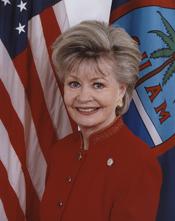
Mr. Speaker, I rise today in support of S. 2302, which would reauthorize the ``Conrad 30 J-1 Visa Waiver Program.'' Reauthorization of this important program will help districts that experience…
Mr. Speaker, I rise today in support of S. 2302, which would reauthorize the ``Conrad 30 J-1 Visa Waiver Program.'' Reauthorization of this important program will help districts that experience shortages with respect to health care professionals, such as Guam, by allowing certain U.S.-trained foreign doctors to remain in the United States to practice medicine in these underserved areas.
Like many rural and insular areas, Guam experiences great difficulty attracting and retaining qualified health professionals. The cost of providing health care is higher in Guam
than in many areas on the mainland, and incidents of chronic disease are above national averages. The Conrad 30 J-1 visa Waiver Program is an important tool that allows poor, rural and insular areas to meet the health care needs of their communities by permitting International Medical Graduates to maintain their work visas in the United States if they agree to remain in areas defined by the Department of Health and Human Services as Health Professional Shortage Areas or Medically Underserved Areas or Populations. Normally, these foreign physicians would have to return to their respective home countries for 2 years before they could return to the United States to again practice medicine.
While I believe priority should always be given to American doctors and health professionals for local hiring, it is clear that there are simply not enough health care professionals to meet demand in underserved areas such as Guam. Without the services of skilled foreign physicians from countries such as the Philippines, it would be difficult for Guam's public health care system to meet the medical needs of our community. S. 2302 reauthorizes a program that has been successful in addressing the issues of recruitment and retention of qualified health professionals in these areas, and I urge my colleagues to support its passage.
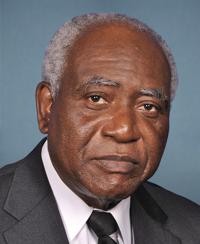
Mr. Speaker, I rise in support of S. 2302. The state of health care is one of the most critical issues facing this Nation. As the world's most powerful and wealthy country, our health care system is…
Mr. Speaker, I rise in support of S. 2302. The state of health care is one of the most critical issues facing this Nation. As the world's most powerful and wealthy country, our health care system is unacceptable. According to the Health Resources and Services Administration, there are 62 designated Health Professional Shortage Areas in Cook County, Illinois, alone. It is unacceptable that 49 out of the 102 counties in Illinois lack hospitals with any obstetrical services. It is unacceptable that 49 of the 102 counties in Illinois lack hospitals with any psychiatric services. S. 2302 would help address the Nation's health care crisis by encouraging qualified medical professionals to serve in medically underserved areas. Increasing access to primary care providers and specialists would benefit the citizens of Illinois and the country as a whole.
Therefore, this bill is a step in the right direction. However, much work remains to be done to reform our health care system as a whole. We need to ensure that no American is left behind in preventative care. We need to ensure equal access to medical treatments. We need to ensure affordable health insurance. We need to erase the vast disparities in the incidents of illness and death among minorities compared to the overall U.S. population. African-American and Native-American babies die at a rate that is 2 to 3 times higher than the rate for white Americans. African Americans are 1.7 times as likely as white Americans to have diabetes; Latino Americans are twice as likely to have diabetes as their white counterparts.
Mr. Speaker, the state of one's health sets the precedent for everything else in our lives. If we are not in good health, we cannot perform our jobs well or do well in school. We must work toward making quality healthcare accessible and available to all regardless of age, race, or economic status.
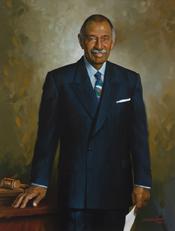
Mr. Speaker, I am so happy that we are working together on a health care issue. They are critical to the United States where we have so many people without the ability to get health care. Against…
Mr. Speaker, I am so happy that we are working together on a health care issue. They are critical to the United States where we have so many people without the ability to get health care. Against that background and this positive attitude, someone in this body must say, well, why are we bringing doctors in from out of the country to the most affluent nation on planet Earth, and they are providing very important necessary care? I think that is a question that will be taken up in the following upcoming session, but it is one that is troublesome.
Right now I join with the gentlewoman from Texas (Ms. Jackson-Lee), our ranking member, in proudly supporting the work that has taken place to expand the boards. There are places where, for example, Indian reservations, technically not within the jurisdiction, will now be able to receive help. And even more important is the ability now to bring in specialists, pediatric specialists, diabetes specialists, to work in areas where, without this intervention, patients would be hundreds and hundreds of miles away from the proper medical treatment.
This is an excellent bill. It is a product of bipartisan work in the committee, and I am happy to be a part of it. I thank the gentlewoman for yielding me time.
Mr. Speaker, will the gentleman yield?
Mr. Speaker, I want to commend the gentleman, because it was the senior Senator from North Dakota that put this program together almost a decade ago, and I commend both of the gentlemen.
Mr. Speaker, I thank the chairman for yielding me time. I am here only once again in a series, it seems like, of a number of years in which I have been on the floor to support the provisions…
Mr. Speaker, I thank the chairman for yielding me time.
I am here only once again in a series, it seems like, of a number of years in which I have been on the floor to support the provisions contained in this legislation. I commend the chairman and the ranking member in the Committee on the Judiciary for their work in getting this resolved this year.
The J-1 visa program expired on May 31 of this year. It is a program that is so important to many areas of the country. Once again, I am here to express my support for the legislation and indicate that in many places across rural America and the core of our cities, absent this program, Americans will not be served with a physician. It is important. It needs to be passed. I thank the chairman for his leadership in seeing that that occurred.
Bill Text
3 versions available
        [Congressional Bills 108th Congress]
[From the U.S. Government Publishing Office]
[H.R. 4453 Received in Senate (RDS)]

2d Session
H. R. 4453

_______________________________________________________________________

IN THE SENATE OF THE UNITED STATES

October 7, 2004

Received

_______________________________________________________________________

AN ACT

To improve access to physicians in medically underserved areas.

Be it enacted by the Senate and House of Representatives of the
United States of America in Congress assembled,

SECTION 1. MODIFICATION OF VISA REQUIREMENTS WITH RESPECT TO
INTERNATIONAL MEDICAL GRADUATES.

(a) Extension of Deadline.--
(1) In general.--Section 220(c) of the Immigration and
Nationality Technical Corrections Act of 1994 (8 U.S.C. 1182
note) (as amended by section 11018 of Public Law 107-273) is
amended by striking ``2004.'' and inserting ``2006.''.
(2) Effective date.--The amendment made by paragraph (1)
shall take effect as if enacted on May 31, 2004.
(b) Exemption From H-1B Numerical Limitations.--Section
214(l)(2)(A) of the Immigration and Nationality Act (8 U.S.C.
1184(l)(2)(A)) is amended by adding at the end the following: ``The
numerical limitations contained in subsection (g)(1)(A) shall not apply
to any alien whose status is changed under the preceding sentence, if
the alien obtained a waiver of the 2-year foreign residence requirement
upon a request by an interested Federal agency or an interested State
agency.''.
(c) Limitation on Medical Practice Areas.--Section 214(l)(1)(D) of
the Immigration and Nationality Act (8 U.S.C. 1184(l)(1)(D)) is amended
by striking ``agrees to practice medicine'' and inserting ``agrees to
practice primary care or specialty medicine''.
(d) Exemption From Geographic Limitations.--Section 214(l)(1)(D) of
the Immigration and Nationality Act (8 U.S.C. 1184(l)(1)(D)), as
amended by subsection (c), is further amended--
(1) by striking ``except that,'' and all that follows
through the period at the end and inserting ``except that--'';
and
(2) by adding at the end the following:
``(i) in the case of a request by the Department of
Veterans Affairs, the alien shall not be required to
practice medicine in a geographic area designated by
the Secretary; and
``(ii) in the case of a request by an interested
State agency, the head of such State agency determines
that the alien is to practice medicine under such
agreement in a facility that serves patients who reside
in one or more geographic areas so designated by the
Secretary of Health and Human Services (without regard
to whether such facility is within such a designated
geographic area), and the grant of such waiver would
not cause the number of the waivers granted on behalf
of aliens for such State for a fiscal year (within the
limitation described in subparagraph (B)) in accordance
with the conditions of this clause to exceed 5.''.

Passed the House of Representatives October 6, 2004.

Attest:

JEFF TRANDAHL,

Clerk.