Mr. President, it should be our common purpose to guarantee the promise of a good education to all from birth through college. The strength, security, and future of our Nation lie in the education…
Mr. President, it should be our common purpose to guarantee the promise of a good education to all from birth through college. The strength, security, and future of our Nation lie in the education and character of our people.
In recent years, on a bipartisan basis, we have been working to improve pre-school, elementary, and secondary education. We should move forward in the same bipartisan way on higher education.
Last year, on a bipartisan basis, we passed the No Child Left Behind Act to raise standards for students in elementary and secondary schools to hold schools and states accountable for results. These worthwhile school reforms deserve to be well-funded, so that all public school students will have a fair chance to succeed.
Last year, Senator Gregg and I also introduced a bipartisan bill to improve the quality of early childhood education in the states, and help ensure that young children begin school ready to learn.
This year, in the Education Committee, again on a bipartisan basis, we have worked to strengthen the Individuals with Disabilities Education Act (IDEA) and ensure that special needs children receive a quality education. I hope we can pass that legislation soon, to assure that the federal government meets its full obligation to children with disabilities.
The next great challenge we should confront on a bipartisan basis is to ensure that every student with the talent, desire, and drive to go to college is able to afford to go to college. Education is the golden door of opportunity, but for too long, the door of higher education has been closed to many students, because of their inability to pay. Surely, we have reached a stage in America where we can say it and mean it--cost will never be a barrier to a college education.
Just as Social Security is a promise of retirement security to senior citizens, just as Medicare is a promise of health security to senior citizens, so we should make ``Education Security'' a promise to every young American. If you work hard, if you finish high school, if you are admitted to a college, we should guarantee that you can afford the cost of the four years it takes to earn a degree.
As we move forward on the reauthorization of the Higher Education Act, let us come together again on a bipartisan basis to make college affordable to all qualified students. No students should have to mortgage their future to obtain a college degree.
At other times in our nation's history, we have acted boldly to extend college opportunity. In 1862, a year after the Civil War began, President Abraham Lincoln signed into law the Morrill Land Grant Colleges Act which set aside at least 90,000 acres in each Union State--30,000 acres for each of the state seats in Congress. The Act was named for Congressman Justin Morrill from Vermont, and the funds from sales of the land were to be used for public colleges and universities in the fields of engineering, agriculture, and military science. In the following years, over 70 colleges were established, and in 1890, the Morrill Act was extended to Southern and Western States. Today, over 3.5 million students are educated in public colleges and universities first created under the Morrill Act.
The next great benchmark in higher education came in 1944 when President Franklin Roosevelt signed the GI Bill to help the vast number of veterans who would be returning to civilization when World War II ended. The nation embraced the transforming principles that became a cornerstone of our democracy, that the benefits of college education should be available to all in our society, not just the elite, the wealthy or the white. In less than a decade, 8 million veterans benefitted from the GI Bill, and the immense success of that bill is in no small measure the reason why the World War II generation is now called the Greatest Generation.
In the half century since the GI Bill was enacted, we have made ongoing efforts to make college a reality for as many young men and women as possible. In 1972, we created what we now know as Pell Grants to make college affordable for low and middle income families. Since then, over 79 million students have attended college with the assistance of a Pell Grant, which are named for our distinguished colleague Claiborne Pell, who served as Chairman of the Senate Committee.
In 1993, we created the Direct Loans to make inexpensive student loans available to college students. In the same year, we created AmeriCorps to encourage young people to serve their communities and pursue their education.
Now, in this new century, in this new century, it is essential for Congress to take new steps to make the dream of a college education a reality for all.
Men and women with a college degree now earn 75 percent more than those without it--a million dollars more in earnings over their lifetime. Those who use computers on the job earn 43 percent more than those who do not. Jobs requiring at least some post-secondary education are estimated to account for over 40 percent of total employment growth over the next decade.
The need for a college education is greater that ever, but so is cost, and the soaring cost today is often pressing college education out of reach for qualified students. Last year, tuition and fees at four-year public colleges rose an average of 14 percent, and the year before, 10 percent. For families in the lowest quartile of income average public university costs now consume over 62 percent of their income--compared to 42 percent in the early 1970's.
It is shameful that federal aid has not kept pace with rising tuition. Twenty years ago, a Pell Grant covered over 80 percent of four-year college costs. Today, it covers less than 40 percent. Twenty years ago, the typical package of student financial aid had 60 percent in grants and 40 percent in loans. Today, the ratio is reduced the typical package now has 40 percent in grants and 60 percent loans--and the grant-loan imbalance is getting worse.
Each year, over a half a million high school graduates who are qualified for college do not go to college full-time, because they cannot pay the bill. The average low-income, college student has an average of $3,800 a year in college costs not covered by grants, loans, work, or family savings.
Students who begin college have trouble staying in college and graduating from college. Only 48 percent of students from upper-income families graduate from college by age 24, and that figure is seven times the graduation rate of students from low-income families. Only 7 percent--7 percent--of low-income students graduate from college by age 24. Students from minority backgrounds and those who would be the first in their family to achieve a four-year college degree are 33 percent more likely to drop out of college.
Only forty percent of all whites in ages of 18 to 24 attend college. Only 30 percent of African-American and only 16 percent of all Latinos are enrolled in college. Four in ten Latino college students drop out within three years of their enrollment.
We cannot allow these unacceptable percentages to continue. We must do more to help students attend and finish college, and do more to help colleges train more teachers and better teachers for our public schools so that more young men and women will be able to go to college and earn their degree, and fulfill their role in the nation's future.
It is a privilege today to join our Democratic colleagues on the Education Committee, in introducing the College Quality, Affordability, and Diversity Improvement Act of 2003 to improve college opportunity for qualified students. We know that too many families and students across the country are struggling to afford the cost of college and we should do all we can to
help them. The bill will improve access to college in six key ways. It helps students pay for college by providing more financial aid. It slows the excessive increases in college tuition. It makes the repayment of students loan less costly. It encourages and rewards students working their way through school. It help minority and low- income students go to college and finish college. It improves the recruitment and training of public school teachers who will prepare the next generation of college students.
In compliance with the Congressional Budget Act of 1974, the cost of our bill is offset by eliminating windfall profits to banks that participate in the student loan program.
Fulfilling a pledge of ``Education Security'' requires renewed resolve by everyone--students, families, colleges, states, and the federal government. Students should work to save money for college. Families should pay what they can afford. Colleges should commit to reducing increases in tuition. States should continue as much support as they can for students. Federal support should fill the gap that remains.
Under our bill, $1,500 more in student aid will be available to hard- pressed, middle-class families and $3,800 to lower income families.
We increase the maximum Pell grant by nearly $500, from $4,050 to $4,500, in order to keep pace with rising costs of tuition in public colleges; 4.8 million lower income and working class students will get larger Pell grants and 200,000 middle-class students will get Pell grants for the first time.
The Act makes $3,000 in HOPE tax credit aid available to low-income families who currently do not receive this aid, in part because the tax credit is not refundable, and doubles the $1,500 HOPE scholarship tax credit that middle-class families currently receive. Over 4 million Pell grant students in families with a median income of $15,200 a year will receive the HOPE tax credit for the first time. For 3.2 million middle-income families, their tax credit will double in size.
The bill increases campus-based financial aid programs such as College Work-Study and the Supplemental Education Opportunity Grants, which means $200 more in aid to needy students on average.
The bill eliminates $100 in annual student taxes (also called ``origination fees'') on federal need-based loans. Over 5 million students will no longer have to pay these up-front fees for the privilege of borrowing tens of thousands of dollars.
For needy families struggling to send their children to college, these changes will provide $3,800 in additional college aid each year-- $500 in increased Pell aid, $3,000 in HOPE tax benefits, $200 more in campus-based aid, and $100 in waivers of student loan fees.
The rising cost of college is an increasingly serious problem for the nation. Students need more financial aid each year. Families need protection from tuition increases that year after year are in the hundreds, or even thousands of dollars. We have ignored the tuition increase problem in higher education for too long.
In fact, few students actually pay ``sticker price'' tuition at private colleges, since many get a discount. At private universities, 8 out of every 10 students receives a discount from the published tuition cost, and those discounts average 40 percent of the sticker price.
The sticker price of college tuition is rising for many reasons. Public colleges are dependent on state funding that has been declining with the struggling national economy. As states cut back their support for higher education, tuition rises. Colleges can reduce some costs in order to limit tuition increases, and we can help them do so.
Tuition is rising in general because colleges believe that in the constant competition for students and faculty, it is necessary for each college to have the best facilities and programs. In effect, and because of this, a ``higher education arms race,'' colleges are constantly striving to be ahead of the competition.
This bill rejects the price controls on college tuition that some have suggested. Instead, it creates incentives for colleges to reduce costs. It reduces regulatory costs for colleges and supports voluntary limits on cost growth. It requires states to do their part in supporting higher education. It ensures that families obtain better information about the true cost of college. And importantly, it rejects the idea of withholding federal student aid for students who attend colleges with excessive tuition costs, because doing so would hurt the neediest students.
Our bill supports the creation of college consortiums that will jointly buy in bulk and share the costs of health care, libraries, faculties, and other needs, so that they achieve economies of scale. It reduces regulatory burdens on colleges. When we lower the operating costs of colleges, we make it easier for them to restrain tuition increases.
The bill requires the Secretary of Education to convene a ``higher education arms control'' summit. Groups of competing colleges will be convened by the Secretary to negotiate limits on future growth in tuition. The Secretary will be given the authority to waive anti-trust protections, when the waiver is needed to achieve reduced tuition growth.
States and colleges must do their part to make college affordable. The bill insists that states must not treat college students like piggy banks to balance state budgets. The bill offers a new partnership to States, under which additional federal resources will be available to states that invest in higher education. States that dramatically cut higher education will be limited to current levels of aid.
Finally, our bill requires schools to publish their true tuition: the extent and average amount of discounts offered to students. Families should know how much school really will cost and how possible it is to bargain for the best deal.
No matter what we do on grants and college costs, loans will continue to be a large part of college aid, but that debt should not be excessive. Today, the average debt on student loans is $17,000, but it can exceed $100,000 for graduate students and professional students. This bill makes it easier to repay student loan debt or work it off. It creates a new refinancing option for borrowers now saddled with consolidated loans at high interest rates. It saves taxpayers money by rewarding student and school participation in the Direct Loan program.
The Act converts the current tax deduction for interest tax on student loans into a tax credit. This bipartisan proposal of Senator Snowe and Senator Schumer will provide low-income graduates with up to $1,500 in reimbursement for interest in student loans.
To encourage public service, the Act forgives the debt on Direct Loans for remaining after ten years for students in certain public sector jobs. Currently, student loan debt is often so large that it prevents students from accepting public interest jobs and forces them to look for higher paying jobs in the private sector. The bill rewards those who choose lower paying public interest jobs in sectors where the need is great, such as public safety, law enforcement, teaching, and public interest legal services.
In addition, the Act enables all college graduates to refinance their student loans, just as their families would refinance a home mortgage. Under current law, graduates who make payments on multiple variable interest rate student loans can consolidate their loans today into a single fixed rate loan at the relatively low interest rate of 3.42 percent. But over 5 million borrowers consolidated their student loans years ago at higher interest rates. The bill enables them to refinance that consolidated loan at today's prevailing interest rate.
The availability of new Refinanced Direct Loans will dramatically reduce student loan repayment for millions of college graduates. A middle-class borrower, for example, with $60,000 in student loan debt at 7 percent interest will save $1,200 a year, or more than $10,000 over the life of the loan, if they refinance under this proposal.
Further, the bill rewards schools and students that save taxpayers money by participating in the federal Direct Loan program. For every dollar borrowed through the Direct Loan program instead of the traditional private FFEL program, taxpayers save approximately fourteen cents. Our bill offers schools that participate in the Direct Loan program a percentage of the federal savings earmarked for student
aid. Taxpayers will save money and students will receive more financial aid, as a result of this ``Direct Loan Reward Program.'' It's a win-win proposal.
In light of the growing need today, current law imposes too heavy a penalty on students who work their way through college. Their financial aid is reduced by 50 cents for every after-tax dollar they earn.
This bill exempts from penalty the first $9,000 earned by traditional college students and the first $18,000 earned by adults attending college. Those students who work to support their college education deserve this additional assistance.
This bill includes a series of proposals to enable larger numbers of minority first-generation college students to go to college and graduate from college. Our national commitment to diversity in college education has been re-affirmed earlier this year by the Supreme Court. A major part of that commitment is preparing all young persons to approach the doors of higher education, making sure the gates are fully and fairly open to them, helping students to pay the costs, and enabling them to stay in college and graduate from college.
The Act increases funding for the successful TRIO and GEAR UP programs that provide information and counseling about college preparation, financial aid, and admissions.
It increases the access of low-income students to college preparation and tutoring programs for the Scholastic Achievement Test and American College Test that have been proven to be effective.
In addition, it assists students in making well-informed decisions on college applications and enrollments, encourages colleges to act on their own to modify policies that make it more difficult for already disadvantaged students to apply or enroll.
The Act supports partnerships between community colleges and four- year colleges, and it encourages them to provide targeted assistance in the form of tutoring, financial aid, child care, counseling, mentoring, and innovative course schedules, all with the goal of improving the admission, retention and graduation rates of low-income students, and non-traditional students.
Increased funding will be available for Hispanic-Serving Institutions and Historically Black Colleges and Universities. These colleges are the source of an extraordinary proportion of minority graduates from college and they deserve greater support.
The federal government must do its part in strengthening further diversity in higher education and colleges and individual students must do their part as well. Diversity is our nation's strength, and all of us have an obligation to support it.
The Act includes a series of initiatives to help recruit and retain high-quality teachers for the nation's public schools. A fundamental aspect of preparing students for college means making sure they have a good teacher in every classroom.
The shortage of such teachers is increasingly severe. America will need more than 2 million new teachers in the next decade. Today, approximately one in every three teachers leaves teaching within the first three years, and almost half leave within the first five years. The No Child Left Behind Act has set a goal of a highly-qualified teacher in every classroom by 2006. Clearly, it is time for the nation to make teacher training a priority.
The Higher Education Act Amendments of 1998 included a new title II program to respond to the teacher shortage. The Act scales up the current title II ``pilot program'' and strengthens and expands it, so that every State will receive funds every year, in order to assure that as many children as possible are taught by highly qualified teachers.
The Act authorizes additional for State Grants and Partnership Grants, with the goal of establishing formula grants for every State. We need to train teachers more effectively, attract more men and women to the field of teaching, and encourage them to continue in the field. These grants will improve preparation, recruitment, and retention of teachers, and help States and schools put a highly qualified teacher in every classroom.
By increasing the accountability of teacher preparation programs, the Act strengthens teacher preparation courses, so that teachers will have the skills and support they need to succeed in the classroom. The bill creates a new national database to provide accurate information on the quality of these preparation programs.
In addition, the Act establishes innovative programs to attract and retain teachers. A mentoring program will help train new teachers and provide professional assistance from more experienced teachers. A new home-ownership program will provide teachers in high-need districts with funds to afford the purchase of a home. A separate initiative will develop links between community colleges and four-year colleges in teacher preparation programs, and help train teacher aides in high-need communities to become teachers.
The Act also helps attract teachers to high-need areas in high-demand subjects, by increasing the amount of student loan forgiveness from $5,000 to $15,000, for teachers who teach math, science, special education, bilingual education, or early education in these areas.
Good teachers in our schools are essential for preparing students to enter college. We must do all we can to support them and give them the training necessary to enable all students to achieve.
In total dollars, the size of this legislation is approximately $15 billion a year. For a sense of context, I would note that we have just approved an $87 billion package for Iraq, have a $786 billion annual discretionary budget, and a $2.3 trillion annual mandatory and discretionary budget. This legislation is comparatively small.
There are three types of cost included. First, there are the tax provisions that total approximately $9.2 billion a year--the same size as the President's tax breaks on dividend and capital gain income. We should replace those dividend and capital gains cuts for the very wealthy instead with the education tax benefits included in this legislation for families trying to pay for college.
Second, there are about $1.3 billion in annual changes to the student loan program for which this legislation fully pays. The bill eliminates windfall profits to lenders in the loan program in order to pay fully for the elimination student loan origination fees and to enable borrowers out of school to refinance their consolidated loans.
In particular, this bill closes a loophole in the student loan program whereby taxpayers subsidize a small minority of lenders to the tune of over $400 million a year in order to assure them a 9.5 percent rate of return. 9.5 percent is too much in today's interest rate environment. All lenders should receive the same guaranteed market rate of return for participating in the student loan program and no more.
Finally, the legislation includes approximately $4.5 billion in annual increases in discretionary education spending. That amount equals one half of one percent of the discretionary budget and is the same amount that education funding increased last year. It is a modest proposal, frankly.
In the past, higher education policy helped the poor and the middle class together. In recent years, though, we have developed separate approaches for these two groups--grants for the poor, and tax benefits for the middle class. The median family income of recipients of Pell grants is $15,000 a year. The HOPE Scholarship tax credit is available only to families with more than $40,000 in income.
Because of the high cost of higher education for everyone, and because each student's own interest in a college education is also in our common interest, this bill will help both hard-pressed low-income and hard-pressed middle income families to send their children to college and prepare them for the future.
Our bill has the support of a variety of national groups: the United States Students' Association, the United States Public Interest Research Group, the Direct Loan Coalition, the National Council for Community and Education Partnerships, the Council for Opportunity in Education, the College Migrant Association, the National Association of Secondary School Principals, the American Federation of Teachers, the National Education Association, and Kaplan, Inc.
Quality, affordability, and diversity--these are the focus of this act because these are the three great challenges we face today in higher education policy and each closely related to the others. Together, we can meet these new challenges in this new century and make the promise of Education Security a reality not just a reality for some of our citizens but a reality for all of our citizens.
I ask unanimous consent that the text of the bill be printed in the Record.
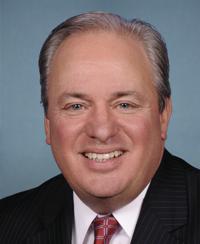 Rep. Michael F. Doyle (D-PA)



 +5
+5