Social Security Fairness Act of 2003

Legislative Activity
Stay on top of the latest movement without scrolling through every action
Referred to the Subcommittee on Social Security.
March 14, 2003
View full timeline
Introduced in House
February 5, 2003
Referred to the House Committee on Ways and Means.
February 5, 2003
Referred to the Subcommittee on Social Security.
March 14, 2003
Floor Debate
14 membersWhat members said about H.R. 594 on the floor
 GG
GG ECS
ECS SJL
SJL RTM
RTM KB+9
KB+9
Floor Debate
14 membersWhat members said about H.R. 594 on the floor
Mr. Speaker, I thank the gentleman from California (Mr. Matsui), our ranking member on the Subcommittee on Social Security, for yielding me this time. One thing I do agree with the chairman of the…
Mr. Speaker, I thank the gentleman from California (Mr. Matsui), our ranking member on the Subcommittee on Social Security, for yielding me this time.
One thing I do agree with the chairman of the Subcommittee on Social Security about is that we should reform the government pension offset. Instead of talking about technicalities or ways that people have figured a way around it, we ought to look at the whole issue. There has been legislation cosponsored by the majority of this House for 3 years, but we have not had a hearing yet on dealing with that. That is what is frustrating.
So instead of dealing with the big issue, they are going to say, okay, for those teachers or firefighters or police officers in Texas or Georgia or whatever other States, they are going to punish those because they found a way under current law to be able to receive their widows' benefits. We are talking about widows benefits. I do not know about the GAO study or whatever they wanted to talk about, but I do know that we are talking about widows' benefits.
Let me give an example. I have a lady in my own district in the Aldine School District; her husband passed away 10 years ago. She has been receiving his Social Security widow's benefits. She teaches school. She is 73 years old now. After decades of teaching math, she is ready to retire; but if she retires, she will have her widow's benefits under Social Security reduced so substantially that there will almost be nothing left, because of her teacher retirement under the State of Texas.
Now, again, I do not know how the request was made for these GAO studies, but I do know that the facts on the ground show something different than what my colleagues say. This teacher will have to wait to retire. She would have to go to work for 5 years at a school that has Social Security. Well, she does not have that choice. We have some districts in Texas who do, some who do not. Very few actually do. So she would have to be 78 years old under the bill to be able to continue receiving her widow's benefits. That is wrong. That has been wrong, and it is affecting so many people. That is why we have an amendment, and I thank the Committee on Rules for giving us an opportunity to strike that section.
We have an opportunity through that amendment that will do it. Let us deal with the whole issue, but let us also support the amendment that will leave this provision in here for people who need it.
Mr. Speaker, I think the debate has been good because it has talked about what the concern is, that we really need to deal with government pension offset.
I know there has been legislation introduced now for a number of years and that there is a commitment to have a hearing on it, but we have a bill right now; the latest legislation, H.R. 594, has at least 50 Republican Members and in a very short time has received almost 200 co-sponsors of it, that would eliminate the controversial government pension offset. And I guess that is what is frustrating because we have so much support to eliminate it or at least, as had been earlier talked about, let us moderate it. Do not punish widows that are public employees, two-thirds. Let us make them only pay one-third. Sure, they only worked a day maybe, but they are not getting it for their work under Social Security.
They are getting it because they were married to their spouse for at least 10 years and, in some cases, 30 and 40 years; and yet, because they were public schoolteachers, they had to take advantage of that loophole because, otherwise if their husband died before they were 62, they did not receive anything. So they found a way under current law to seek redress, and this bill is going to close that loophole, supposedly.
Again, maybe it should be, if my amendment is adopted, I would like the committee to really bring out a reform during this Congress because, again, we have been waiting now for many years. In fact, my colleague from Arizona (Mr. Hayworth), I remember 3 years ago he and I stood at a press conference with lots of Members talking about we need to reform the government pension offset, and that is what ought to be done, but do not punish the States of Georgia or Texas or whatever other jurisdiction said, well, wait a minute, we know it is wrong, we know it is wrong to penalize a widow who teaches school.
For example, a colleague of mine from Texas has a military base, Fort Hood, with a lot of his constituents now in the Persian Gulf. They said we have a program that is called Troops to Teachers. Our armed services pay Social Security so they retire from the military, and yet they are going to go back to teach and they are going to be penalized for the Social Security they earned in the military if they retire in Texas from the teacher retirement system and they do not work for a school district that has Social Security.
The system is wrong, and my colleagues are making it worse by changing it by this bill; and this is what is so bad. My colleagues can show me all of the studies, but I cannot explain those studies to my constituents who are teachers who said you mean to tell me I have been married 30 years to my husband and everything because we are talking about 80 percent of these people are women, and we know nationally the retirement income for women is so much lower than men. We have teachers who have been married all these years, and sure, they are going to take advantage, but that is because they have been married to someone who paid into Social Security for at least 10 years, in some cases 3 or 4 decades.
Mr. Chairman, I offer an amendment in the nature of a substitute.
Mr. Speaker, I yield myself such time as I may consume.
(Mr. GREEN of Texas asked and was given permission to revise and extend his remarks.)
Mr. Speaker, we have had a great deal of debate already on the general debate, but I rise in opposition to the legislation in support of my amendment, and it is frustrating because there are some good things in this legislation, but I guess what is really frustrating is that why should a section of this bill be addressed to public educators, firefighter and police officers that happen to be in Texas or Georgia, and yet, in another section, we are trying to combat fraud by felons.
I agree, we should combat fraud by felons; and if we have felons who are receiving Social Security, felons who are absconding, I do not mind. In fact, why are we waiting this long to keep them from getting their Social Security? Do not go after widowed teachers, whose spouses paid into Social Security.
Eighty percent are women who receive fewer retirement benefits than men, and it is not just for teachers, firefighters in the same legislation. It just seems like it is wrong to put that issue in the same legislation due to felons receiving Social Security benefits.
In fact, I had a constituent last night say, you mean to tell me all these years I have taught and I am in the same legislation trying to close a loophole for fugitive felons receiving Social Security? I said, I am sorry, ma'am, but that is what it has. The bill has some other good things in it; but we have this amendment, and I appreciate the Committee on Rules providing this.
It is called a loophole, but it is really not. There are lots of loopholes in our laws, but it is called laws; and I know on our side of the aisle we have talked about corporate loopholes for a long time. Let us close up the corporate loopholes, but why are we closing up one for the widowed teachers, again, who their only punishment is they worked as a public schoolteacher and was married to someone who paid into Social Security at least 10 years and, again, in some cases, many more years?
When the House first considered this legislation, it failed because of a controversial provision that we have, and the bill ought to pass, but it ought to be passed without this provision, and let us come back, get our Ways and Means subcommittee and the Committee on Ways and Means to deal with the government pension offset as a separate bill.
Last session, this legislation passed out of the House with, I do not think, any dissenting votes. It went to the Senate; and on a technicality, they added this back in, and it was stopped in the House when they tried to pass it on unanimous consent last fall and when most of us were in our districts.
In States where some public employees are not covered by Social Security, such as in Texas, this does reduce the spousal benefits by two-thirds, and in some cases, it can eliminate all of them, all their benefits. It is a problem for many public servants, but it is especially, again, bad for women, and, again, since 80 percent of the Texas schoolteachers and retirees are women. Sixty percent of that group is married, and again, I think it is interesting on the floor of the House because I always heard the statement, consistency is the hobgoblin of little minds, but here we have bills that can enforce marriage, why are people on social services, that encourage them to get married, and here we have teachers who are married for all these years, and yet we are punishing them under the pension government offset.
Mr. Speaker, I reserve the balance of my time.
Mr. Speaker, I yield myself such time as I may consume to say that I realize my colleague from Texas did not have time to yield, but let me just say that these teachers do not make the choice between the teacher retirement systems and Social Security. The choice is made by the local school districts. That is why 50 school districts in Texas pay into both.
We have more than 1,100 school districts in the State of Texas where those local school board members, not those employees, those local school board members make that decision.
Mr. Speaker, I yield 2 minutes to the gentleman from Texas (Mr. Lampson).
Mr. Speaker, I yield myself such time as I may consume to comment that having the chairman of the Committee on Ways and Means calling this ``scamming the system'' is like the pot calling the kettle black. We have provisions in our Tax Code for individuals, one person. We have Tax Code provisions for one company or groups of companies. Yet it is a scam system if we are going to protect public school educators.
Mr. Speaker, I yield 2 minutes to the gentleman from Texas (Mr. Edwards), my colleague from Texas.
Mr. Speaker, I yield myself such time as I may consume.
Mr. Speaker, I respect the gentleman from Georgia (Mr. Collins) with whom I have gone on trips to see our military, and this issue is also about the military. As the gentleman from Texas (Mr. Edwards) who represents Fort Hood pointed out, this will impact them unless we reform the government pension offset.
Mr. Speaker, I yield 1 minute to the gentleman from Texas (Mr. Reyes).
Mr. Speaker, I yield 2 minutes to the gentleman from Texas (Mr. Turner).
Mr. Speaker, I yield such time as she may consume to the gentlewoman from Texas (Ms. Jackson-Lee.)
(Ms. JACKSON-LEE of Texas asked and was given permission to revise and extend her remarks.)
Mr. Speaker, I yield 1 minute to the gentleman from Texas (Mr. Ortiz).
(Mr. ORTIZ asked and was given permission to revise and extend his remarks.)
Mr. Speaker, I yield 2 minutes to the gentleman from Texas (Mr. Sandlin), a member of the Committee on Ways and Means.
Mr. Speaker, I yield myself such time as I may consume.
Mr. Speaker, let me say they are not receiving the benefits because of that 1 day, they are receiving them because they were married for at least 10 years to someone who paid into Social Security. That is the reason that they are receiving it. It is not hypothetical. We have people who have paid into Social Security for 40 years, and their spouses have received nothing. That is wrong.
Mr. Speaker, I yield 1 minute to the gentleman from Texas (Mr. Edwards).
Mr. Speaker, I yield myself such time as I may consume.
To my really good friend and neighbor, that is the whole point of the debate. We should reform the government pension offset and not punish those who have found a way to deal with it.
Mr. Speaker, I yield 1 minute to the gentlewoman from Dallas, Texas (Ms. Eddie Bernice Johnson).
(Ms. EDDIE BERNICE JOHNSON of Texas asked and was given permission to revise and extend her remarks.)
Mr. Speaker, I think I have the right to close, and I reserve the balance of my time.
Mr. Speaker, I yield myself such time as I may consume.
The reason I am offering this amendment is because the underlying bill provides for this section 418. There are a lot of good provisions in the underlying bill, and people can vote for my amendment and still vote for the bill. There are other States with public employees like Texas. It just impacts Texas more than I guess other States, maybe Georgia or somewhere else, that reduces our spousal benefits because we have local governments that do not participate in Social Security. Only 50 of our school districts, the gentleman
from Texas (Mr. Sam Johnson), participate; but we have over 1,100 school districts, and that is a local decision. My wife as a teacher did not decide she would go to work for someone who paid Social Security. She went to work because she wanted to be a teacher, and that is the frustration because no one thinks about it until they realize later in their careers, wait a minute, I have been married for all these years and I am going to get penalized if my husband passes away?
Marriage is a contract. It is also a contract that says they have worked together for all those years and yet if they happen to be a public school teacher, tough luck for that marriage contract. They do not benefit. They get punished because they worked as a teacher and they did not pay into Social Security, but their spouse did, their husband did. Again, we are talking about 80 percent of the public schoolteachers in Texas and I am sure nation-wide, and I am sure this is a nation-wide problem. It is just that Texas has found a way around it, and yet you are going to punish Texas, and yet Georgia and other States have the same problem. Almost all these people are eligible for Medicare through their husbands, but none of them are eligible for their spousal benefit because of the government pension offset. The GPO is wrong, and I would not be here today if we had a bill come out to deal with the GPO on a fair basis, the government pension offset; but we are not.
I do not want to keep this loophole. I want it to treat fairly all the government employees who are being treated badly, but it affects teachers because they are the most in population. It affects firefighters and police officers also; but after a lifetime of being underpaid and they depend on their husband's Social Security or widow's benefits if they pass away and yet we take it away, and it is just frustrating to see that happen and to punish people. Yes, in Texas we found a way to deal with this wrong and you are punishing teachers because we have dealt with it instead of dealing with it in Congress, and that is what is wrong.
Mr. Speaker, I object to the vote on the ground that a quorum is not present and make the point of order that a quorum is not present.
Mr. Speaker, I offer a motion to recommit.
Yes, Mr. Speaker.
Mr. Speaker, I know a lot of Members thought that last battle was just because of Texas teachers, firefighters, or police officers; and it is, but simply because Texas has found a way to deal with the government pension offset. Another State, Georgia, has tried and is doing the same thing.
We need to reform the government pension offset. A lot of Members have told me, we are going to vote for you, we are going to vote against you, but we need to reform it. This is what this motion to recommit says, to report back. It instructs the Committee on Ways and Means with instructions to report the same back to the House promptly with an amendment addressing the concerns of Federal, State, and local employees about the government pension offset under title II of the Social Security Act.
During the last 3 or 4 years, there have been bills introduced in this House that have been bipartisan. We have had at times 218 cosponsors of legislation to reform the government pension offset and have not had a hearing.
We have a bill right now, H.R. 594, that has at least 50 Republican cosponsors, and has about 175, and I think it has only been out for a few weeks for cosponsorship, to reform the government pension offset. This is our way to use our rules to be able to say to one of our committees, whether it is my Committee on Energy and Commerce or something else, to say we want to reform the government pension offset. That is why we want to send this bill back. They can reform it and send it back to us. That is what this is about.
If Members want to reform the government pension offset, if they want to take a benefit for not only teachers in Texas but teachers all across the country, Federal employees, military, because the government pension offset affects everyone who is a public employee, then we need to reform it. That is the job of our committee, the Committee on Ways and Means.
I would hope that Members would vote for this motion. That way, we would actually see this vote on the floor of the House that I have not seen until the last few weeks dealing with the government pension offset.
Mr. Speaker, I yield 1 minute to my colleague, the gentleman from Texas (Mr. Doggett).
Mr. Speaker, it is frustrating, because a lot of us have heard from our public employees across the country and in our districts. They are frustrated when they find out they get penalized, even though they did pay into Social Security. Or in the case of teachers in Texas who do not have the option because of their local school district decision, they do not even receive their widow's benefits without such a penalty. That is what is frustrating.
We need to reform the government pension offset. That is what the committee should do, and that is what this motion to instruct would do. I urge an ``aye'' vote.
Parliamentary inquiry, Mr. Speaker.
I do not know about a $3 bill, but maybe the Committee on Ways and Means could get one printed.
Mr. Speaker, it is my understanding that under our House rules that we are required to use the word ``promptly'' instead of ``forthwith'' because we now have had a budget resolution. I would ask, is that correct?
I withdraw the parliamentary inquiry, Mr. Speaker.
Mr. Speaker, I demand a recorded vote.
Mr. Speaker, pursuant to House Resolution 168, I call up the bill (H.R. 743) to amend the Social Security Act and the Internal Revenue Code of 1986 to provide additional safeguards for Social…
Mr. Speaker, pursuant to House Resolution 168, I call up the bill (H.R. 743) to amend the Social Security Act and the Internal Revenue Code of 1986 to provide additional safeguards for Social Security and Supplemental Security Income beneficiaries with representative payees, to enhance program protections, and for other purposes, and ask for its immediate consideration.
Mr. Speaker, I yield myself such time as I may consume.
This afternoon I am pleased to present to the House for its consideration the Social Security Protection Act of 2003, which is bipartisan legislation that fights fraud and abuse in Social Security programs.
First, this bill protects nearly 8 million beneficiaries who cannot manage their own affairs and rely on representative payees appointed by the Social Security Administration. It does this by raising payee standards and by imposing stricter penalties on those who mismanage the benefits they are entrusted to administer.
Second, this bill denies Social Security benefits to fugitive felons and probation and parole violators. Third, the Protection Act provides tools to further safeguard Social Security programs including new civil monetary penalties.
Finally, this bill helps people with disabilities by giving greater access to legal representation when applying for benefits by improving work incentive programs and by expanding eligibility for the Work Opportunity Tax Credit to encourage more employers to hire individuals with disabilities.
Despite the fact that a majority of the Members voted to pass this bill last month, the needed two-thirds approval
required under suspension of the rules was not achieved. That is because special interest groups betrayed Social Security and America's seniors to appease the few who believe they could get special treatment and be allowed to exploit an unintended loophole that presently exists in the law. These groups misinformed both public and the Congress by falsely claiming that teachers and other public servants who pay into a public employee pension plan instead of Social Security are being singled out for unfair treatment. According to the General Accounting Office and the Social Security Administration, these claims are false.
In fact, government workers who do not pay Social Security taxes receive higher spouse or widow benefits than workers who do, given equal retirement benefits from work. By taking advantage of the loophole, a select group of public employees receives full Social Security spouse and widow benefits that no other working spouse in America receives, including other teachers who pay into Social Security for their entire career.
I want to share this example provided by the Social Security Administration because it shows so well that assertions of targeting public servants for unfair reduction in spousal benefits are just simply incorrect.
As this placard will show, we are comparing two working couples, the Bakers and the Smiths. They have equal retirement benefits from their work. In both cases the husband receives a Social Security work benefit of $1,200 per month, and the wife receives $300 per month based on her work. They are equal in every way except that Mrs. Baker paid Social Security taxes and receives her benefits from Social Security, but Mrs. Smith paid into a public pension plan instead of Social Security and receives her benefits from that plan.
Both Mrs. Baker's and Mrs. Smith's spouse benefits are reduced. Mrs. Baker's spouse benefits of $600, which is one half of her husband's benefit amount, is reduced $1 for every dollar of her Social Security benefit, providing her with a $300 spouse benefit. Mrs. Smith's spouse benefit, also $600, is reduced $2 for $3 by her public pension benefit, providing her with a $400 spouse benefit.
The end result, Mrs. Smith's benefit is $100 higher than Mrs. Baker's, even though Mrs. Baker paid her whole career into Social Security. Clearly, Mrs. Smith is not being discriminated against because she paid into a public pension plan instead of Social Security.
Mrs. Smith has a twin sister, Mrs. Jones, who is also a teacher; but Mrs. Jones was a teacher in Texas who switched to a school cafeteria job on the last day and paid Social Security taxes in for that last day. Mrs. Jones has an advantage over every other working spouse in America. She receives both her worker's benefit and full spousal benefit. As a result her spousal benefit would be $300 higher than Mrs. Baker's and $200 higher than her twin's. Clearly, for someone who worked 1 day under Social Security, that is just plain unfair.
Every Member of Congress deeply appreciates the valuable contribution of teachers and public servants and all workers, whether they be in Texas, Georgia, Florida, or New York. However, no single group of workers should have an unfair advantage over workers in other school districts, in other pension systems, or all across this Nation.
We absolutely need a full discussion of all Social Security provisions affecting public employees, which is why the Subcommittee on Social Security will have a hearing on these issues and legislative opportunities in the coming weeks. While we want to make Social Security fair for all workers, we must take care not to worsen Social Security's already bleak fiscal picture or undermine the principle of Social Security as an earned benefit. It is an earned benefit. That would negatively affect both government workers and all Americans who depend on Social Security.
This bipartisan bill does the right thing and has the support of many organizations. It was developed using recommendations from and in cooperation with the Social Security Administration and the Social Security Inspector General. It is also supported by the AARP, Citizens Against Government Waste, the National Conference of State Social Security Administrators, the Consortium for Citizens with Disabilities, the National Alliance for the Mentally Ill, the Association of Administrative Law Judges, the National Organization of Social Security Claimants' Representatives, and numerous other national and local law enforcement agencies and organizations.
We should protect senior citizens from unscrupulous representative payees skimming off of the top. We should prevent fugitive felons and probation or parole violators from using Social Security dollars to finance their illegal activity. We should pass H.R. 743 to stop this fraud and abuse in Social Security and in the process save the taxpayers $655 million over the next 10 years.
Mr. Speaker, I reserve the balance of my time.
Mr. Speaker, I yield myself such time as I may consume. Very, very briefly, what the gentleman from California said about people receiving bad information from the Social Security Administration is absolutely correct, and we are working on that. This came out at the hearing that we had, and this is something that our committee will be addressing.
Now, the reason that the correction, as far as the unfair benefits being paid out to people who never really paid into Social Security more than one day of their working life, that information did not come out from the General Accounting Office until after we passed our bill last June.
The Democrat-controlled Senate, however, did have the benefit of the General Accounting Office study when they passed their bill, and they passed it by unanimous consent and they attached this provision to it.
This is not a partisan issue. I understand the problems within certain States and those are only two States, by the way, Texas and Georgia. However, for the rest of this country, it is looking at Georgia and Texas as an unfair abuse of the Social Security system because of the inartful drawing of that one provision. This is what we are trying to correct here this afternoon.
Mr. Speaker, I would say to the gentleman from California (Mr. Matsui) that at this particular time I do not expect to use all of our time on general debate. We have already been through this on suspension. I would invite the gentleman to put a couple of speakers up at this time.
Mr. Speaker, I reserve the balance of my time.
Mr. Speaker, I yield such time as he may consume to the gentleman from Texas (Mr. Brady), a member of the Subcommittee on Social Security.
Mr. Speaker, I yield myself such time as I may consume.
Mr. Speaker, I must say, and be sure that all the Members that are listening to this debate know, this debate has nothing to do with the Government Pension Offset that the last speaker was referring to. That particular provision has a price tag of $9 billion.
As chairman of the Subcommittee on Social Security, I would like to correct that, or at least go halfway towards correcting that. But part of my job as chairman of this subcommittee is also to protect the integrity of the Social Security program itself. To go off willy-nilly and start throwing dollars out means the demise of the Social Security system. It will come up short well before 2016, which is the day on which the cash coming into the system is not enough to pay the benefits. We have to be concerned about that.
We are going to have hearings on the Government Pension Offset, and try to find ways to pay for it. But we have to pay for it within the system. To do otherwise would be just plain reckless.
Mr. Speaker, I yield 3 minutes to the gentleman from Missouri (Mr. Hulshof), a distinguished member of the subcommittee.
Mr. Speaker, I yield 30 seconds to the gentleman from Missouri (Mr. Hulshof).
Mr. Speaker, I yield 2\1/2\ minutes to the gentleman from Arizona (Mr. Hayworth), a distinguished member of the committee.
(Mr. HAYWORTH asked and was given permission to revise and extend his remarks.)
Mr. Speaker, I yield 2 minutes to the gentleman from California (Mr. Herger), a member of the committee.
At this particular time I may close, depending on what I hear from the other side.
Mr. Speaker, I yield myself such time as I may consume.
(Mr. SHAW asked and was given permission to revise and extend his remarks, and include extraneous material.)
Mr. Speaker, I place in the Record a large number of letters in support from police groups, fire groups, AARP, and a number of other letters.
Mr. Speaker, I yield back the balance of my time.
Mr. Speaker, I claim the time in opposition, and I yield 7 minutes to the gentleman from Texas (Mr. Sam Johnson), a valuable member of the Subcommittee on Social Security of the Committee on Ways and Means.
Mr. Speaker, I yield such time as he may consume to the gentleman from California (Mr. Thomas), the distinguished chairman of the Committee on Ways and Means.
Mr. Speaker, I yield myself such time as I may consume to comment that I think the gentleman is figuring that all those soldiers are going to come back to Texas. That is nonsense. This has nothing to do with our soldiers.
Mr. Speaker, I yield 2 minutes to the gentleman from Georgia (Mr. Collins), a distinguished member of the Committee on Ways and Means.
Mr. Speaker, I yield myself such time as I may consume.
Mr. Speaker, I would point out to the gentleman that if somebody is enjoying a private pension in the private sector, they also paid into Social Security, which is something that the teachers that the gentleman is referring to are not doing.
Mr. Speaker, I yield 3 minutes to the gentleman from Texas (Mr. Brady).
Mr. Speaker, I yield 1\1/2\ minutes to the gentleman from Missouri (Mr. Hulshof).
Mr. Speaker, I yield 30 seconds to the gentleman from Texas (Mr. Brady).
Mr. Speaker, I reserve the balance of my time to close.
Mr. Speaker, I yield myself the balance of my time.
Mr. Speaker, people watching this debate may have noticed that the only speakers in favor of the gentleman from Texas's amendment are Members from the State of Texas. We have seen even Jessica Lynch, an American hero who has just been freed as a prisoner of war, brought into this debate. Jessica is going back to West Virginia to teach, and she is not going to get this loophole. We need to wipe it out. It is unfair, and it is gaming the system.
We have heard about people in the private sector, employees of HMOs, employees of automobile companies and all, they do not have the pension offset. They do not have it because they paid into Social Security. Why should they have an offset if they have paid into Social Security?
We have heard about the soldiers coming home. What type of a desperate argument is this? This has nothing to do with the soldiers anymore than someone right now who is struggling to get through college to go to teach themselves. Ladies and gentlemen, I will tell it to the 48 other States other than Texas and Georgia that you would be giving public employees in two States an advantage that they do not receive in the rest of the country. You will be giving to these teachers and these firefighters something that their teachers and their firefighters will not have. This is basically unfair. We are going to correct it.
We have heard about the pension offset. All of us have been talked about that. Our Federal employees, our retired Federal employees, they have all been into our office talking about the pension offset. That is going to cost us $9 billion if we are able to do something with it, and I would like to address that; and Mr. Matsui and I have agreed to have hearings on it, and we are going to look to ways in order to try to do that, but that has nothing to do with this vote, absolutely nothing to do with it. This has only to do with a handful of public employees who are gaming the system in the State of Texas and even a smaller number in the State of Georgia. Vote ``no'' on the Green amendment. Vote ``yes'' on the bill. It is a good bill, and it is time that we clean this up.
Mr. Speaker, I demand a recorded vote.
Mr. Speaker, it is interesting, this is a good bill. I am frankly appalled that we have a situation where we have to fix the question of fugitive felons receiving Federal dollars, and I believe we…
Mr. Speaker, it is interesting, this is a good bill. I am frankly appalled that we have a situation where we have to fix the question of fugitive felons receiving Federal dollars, and I believe we should fix it. That is the point I rise to make, Mr. Speaker.
Forgive me for talking in a second-level voice, but this could have been a bill that all of us supported. My good friend from Arizona (Mr. Hayworth) stood a couple of years ago disagreeing with opposing the government pension offset. What we are trying to do is to fix it to make it work.
We offered, I understand, I am not on the committee but I understand that the gentleman from Connecticut's (Mr. Shays) legislation that could have fixed this question that we are concerned with about teachers and police and firefighters was offered in committee and was rejected along a party line vote.
Mr. Speaker, this is legislation that should be supported by all. We should have a 100 percent vote on the Green amendment, which I am supporting, for these teachers and widows that we are talking about. This is a simple amendment because what it does is this amendment works to correct the problem, and that is in 418.
This amendment is important to have. The legislation does nothing to remedy the GPO to make it fair to public servants. This amendment strips this one hidden offensive provision in this otherwise noncontroversial bill that deals with prohibiting a widow to be eligible for a pension based upon State, local, or Federal jobs, that is ridiculous, or requiring them to work an extra 5 years.
Now why, Mr. Speaker, we could not work together to ensure that we had a bipartisan bill. My voice is weak, it is broken, but I could not miss talking about this inequity.
Why are we here fighting about a bill that has some very good elements? Why are we here fighting over the Green amendment? It should be under unanimous consent, because it makes sense for people not just in Texas but in New York. And I think it is important, Mr. Speaker, to say here we go again, dividing unnecessarily along party lines on what is good for America. And frankly, I think we got a whole lot of work to do with our troops in Iraq in terms of benefits that they need and veterans benefits that they need and tax changes that they need. We could do this in a bipartisan way.
So I hope, Mr. Speaker, that we will find a way to unanimously support this Green amendment that will strike this language that puts elderly people back to work, and I hope we will find a way to correct this legislation so we have a bill that will have the support of all Members.
Mr. Speaker, I am saddened to have come to the floor today to speak out yet against H.R. 743. The Social Security Protection Act of 2003. This bill was broken last time it came up on the floor. Many public servants in our districts noticed that. We noticed it was broken and voted the bill down. But, here it is again--and it still has not been fixed. There is much good in this bill. If the Majority Leadership would take out the small error that will hurt our teachers and firefighters and police, this bill could be in front of the President soon. That would be a great service.
Social Security represents a covenant between the U.S. Federal Government and the American people. It is a promise that if a person works hard, and contributes into this investment program, that when it comes time for them to retire--their government will ensure that a fair benefit is there for them. It seems that too often, criminals take advantage of the trust between the Social Security Administration and the seniors and disabled Americans it serves. They misuse Social Security benefits. Such activity is worse than just stealing, because it threatens the confidence that the American people have in the government. That confidence is the foundation of our democracy.
So last Congress, I joined with every voting Member of this House in support of The Social Security Act of 2002. It was an excellent piece of bipartisan legislation, which would have made great strides towards cutting down on the abuse of the Social Security system. Most of the major provisions of that bill are reflected in the bill before us today, and I still support them. The bills would both protect Social Security recipients by mandating reissue of funds when their payments are misused. Representative payees who misuse a person's benefits would be forced to reimburse those funds, plus would be subject to fines of up to $5000 if they knowingly provided false or misleading information.
For further protection, representative payees for over 15 individuals would be required to be licensed and bonded, and would be subject to periodic reviews. The bills would allow the Commissioner to withhold benefits from fugitive felons, and persons fleeing prosecution. The bills also provide for numerous improvements to the present system, which would reduce fraud and abuse of the program.
The bill passed unanimously in the House last Congress, and similar legislation cleared the Senate. But unfortunately this important legislation got hung up at the end of last year. With such support and progress, this should have been an easy piece of work to get through this year, and a score for the American taxpayers. Instead, a wrench has been thrown into the works, through the addition of a small section that has provoked a deluge of phone calls into my office from, it seems like, every schoolteacher in my district.
The Texas branch of the American Federation of Teachers describes Section 418 as ``poison for Texas school employees.'' That section relates to the Government Pension Offset. At present, if an individual receives a government pension based on work that was not covered by Social Security, his or her Social Security spousal or survivor benefit is reduced by an amount equal to two-thirds the government pension. This provision of current law is called the Government Pension Offset (GPO). However, under the ``last day rule,'' an individual is exempt from the GPO if he or she works in a job covered by Social Security on the last day of employment.
Many school disticts offer teachers non-Social Security government pensions, so till now many teachers have been forced to take advantage of the ``last day'' loophole. Just before they retire, they get a job in a business with a Social Security pension for a day, in order to receive their deserved benefits. This is a ridiculous system, and the appropriate way to fix it would have been to repeal the GPO. In fact, I have co-sponsored H.R. 594 with my colleague from California, Buck McKeon, and 132 others to do just that.
Instead, the bill before us today closes the loophole. I am usually all for getting rid of loopholes, but now is no time to be ``sticking- it'' to teachers--just as we are trying to leave no child behind, just as we have a shortage of qualified teachers in many areas. This could drive many people away from careers in teaching.
For example, last month I received a call from one woman in my District who was a teacher earlier in her life. Her husband recently passed away and she has been contemplating going back into teaching. But she has been warned that she could actually jeopardize her financial future by going to work. As a widow, she will be entitled to her husband's social security benefits. However, if she starts to teach in a school district with a government non-Social Security pension, she could lose $360 per month in retirement benefits--over $4000 per year.
Why should she risk it? If H.R. 743 passed today, it won't be only she that loses. It will be our Nation's children who lose--an experienced, intelligent teacher.
The GPO issue needs to be addressed, but not today. Right now, we are giving money to criminals who are beating our system and undermining confidence in the future of Social Security and the government as a whole. We need to protect Social Security, and we need to do it soon. But I will wait until we can do it without attacking our teachers, and penalizing our children.
I will vote ``no'' on H.R. 743 unless the offending provision is taken out, and urge my colleagues to do the same.
Mr. Speaker, because I support teachers, firefighters, police, and the United States military, I rise in support of this amendment.
Mr. Speaker, the Social Security Protection Act of 2003 was broken last time it came up on the floor. Many public servants in our districts noticed that and called and emailed and faxed us. We in Congress realized indeed it was broken and voted the bill down. But, here it is again--and it still has not been fixed. There is much good in this bill. If the Majority Leadership would take out the small error that will hurt our teachers and firefighters and police, this bill could be in front of the President soon. That would be a great service.
I commend my colleague and neighbor from Houston for his work in addressing the needs of our teachers--who are some of the hardest hit-- in Texas. The Green Substitute will preserve all the good in the Social Security Protection Act, that so many of us have worked together in bipartisan fashion, to create. It will simply remove a single offensive provision, that was added in at the eleventh hour, and hits hard a group of people that I can't imagine anyone wanting to hit right now-- when we are trying to improve our schools, when we are trying to bolster our first response capabilities, and when economic uncertainty abounds.
The Government Pension Offset (GPO) reduces or eliminates a Social Security widow's benefit if the widow is eligible for a pension based on a state, local or federal job that was not covered by Social Security. The GPO affects many individuals, but is especially harmful for teachers, police officers, and firefighters, and is particularly burdensome for lower income workers and women. A provision in current law, however, allows some state and local government employees to escape the application of the GPO if they switch jobs at the end of their government careers.
It is sad that we make dedicated employees jump through such hoops to get the benefits they deserve. I would like to totally revisit the GPO, but know that today is not the day to do it. Today, the best we can do is to keep this small loophole open and allow good people to continue to go into public service. I usually appreciate closing loopholes, but this one is too valuable to our schools and first responders.
As it stands, H.R. 743 modifies the last-day-exemption clause by requiring public servants to work an additional five years in order to receive a full spousal benefit. This legislation does nothing to remedy the GPO to make it fairer for public servants. There are many people who are interested in going into public service as a second career, but may not be able to work and then switch employment for five years. These people may not then be able to afford to serve. This is ridiculous at a time when needs are so great in our society.
The Green amendment strips this one, hidden, offensive provision in this otherwise non-controversial bill. I urge my colleagues to support teachers, firefighters, police officers, and other public servants by supporting the Green amendment.
For example, last month I received a call from one woman in my District who was a teacher earlier in life. Her husband recently passed away and she has been contemplating going back into teaching. But she has been warned that she could actually jeopardize her financial future by going to work. As a widow, she will be entitled to her husband's social security benefits. However, if she starts to teach in a school district with a government non-Social Security pension, she could lose $360 per month in retirement benefits--over $4000 per year.
Why should she risk it? If H.R. 743 passes today as is, it won't be only she that loses. It will be our nation's children who lose--an experienced, intelligent teacher. The Green Substitute will allow her to help leave no child behind.
I will support the Green Substitute to H.R. 743, and urge my colleagues to do the same.
Mr. Speaker, I yield myself such time as I may consume. Mr. Speaker, I would like to commend my colleague from the State of Florida (Mr. Shaw), the Chair of the Subcommittee on Social Security of the…
Mr. Speaker, I yield myself such time as I may consume.
Mr. Speaker, I would like to commend my colleague from the State of Florida (Mr. Shaw), the Chair of the Subcommittee on Social Security of the Committee on Ways and Means. We entered into a bipartisan discussion, and we have a bipartisan bill at this time.
The gentleman mentioned the Inspector General of the Social Security Administration. The Social Security Administration and the beneficiary community all came together last year to put this piece of legislation together. It was essentially the same bill that passed last year, and just 2 weeks ago it came again before the House Committee on Ways and Means and passed on a 35 in favor of to two against vote count. So this is a good bill. I hope we have final passage in favor of this piece of legislation.
I might just very briefly go over the points of the legislation. One, it deals with representative payees; and basically what this means is that when we have a person who is perhaps mentally disabled, a minor, or somebody who is a frail elderly, they may not be able to collect the benefits themselves or know how to handle their benefit, Social Security benefits, that is. So we have a representative payee that will take the money and make sure that proper accounting of the money is taken care of. Essentially in some cases we have had representative payees where they have actually absconded with the money. This would tighten up the laws on representative payees and, secondly, would make sure that beneficiaries are held harmless and receive the full benefits even when the representative payee takes the money from them. It also would provide a greater legal representation for SSDI recipients, those people that are seeking disability benefits under Social Security, by providing for greater legal representation by changing some of the requirements for lawyers under the Social Security Administration Act.
Lastly, it would deny benefits to fugitive felons. Right now under the law, through the quirk in the law, unfortunately, fugitive felons are able to receive Social Security benefits, and this would deny those benefits to fugitive felons.
There are a number of other technical provisions in the legislation. One area I might just spend a few moments on is the one that my colleague from Florida talked about, and that is the government pension offset issue. As the Members know, this legislation was passed in 1976. It did not take place until the mid-1980s. It was not fully put in place until the 1980s. It was basically to take care of the disparity where one of the spouses has two employments over a period of their lifetime of work, one in the local or State government and one in the private sector. So one would then be eligible for both Social Security benefits and also eligible at the same time for a government pension.
Under the law that currently is in place, a surviving widow or widower in this circumstance would have a reduction in their benefit level, depending upon the size of their pension. It was a law to try to correct an inequity. Unfortunately, the government pension offset has in some cases been fair but in many case has been unfair. One, many of the recipients do not know until actually their spouse dies that they are subject to that rule, in which case all of a sudden their lives have become totally disruptive. In fact, we
have calculated, and studies have shown this, that when one spouse dies, it still requires 80 percent of the former income that the couple had in order to live comfortably, and this in many cases drops that income level down to 30 or 40 percent of what they received when they were both alive. So there is a problem with this piece of legislation.
What the gentleman from Florida (Mr. Shaw) and I have attempted to do was strengthen the potential loopholes that some call it loopholes and some say it is only a way to make sure their benefits are collected properly.
The gentleman from Florida (Mr. Shaw) has indicated that he intends to hold hearings on the government pension offset issue, and we really appreciate that because I believe that some action should be taken in this Congress on that issue.
Obviously, we cannot reinstate full benefits, but perhaps there is some way we can at least help these recipients that are subject to this rule so that they will be able to continue on when one of the spouses passes away.
It is, however, a situation now where some of my colleagues feel that they have a problem with this particular provision. This provision was not in the bill last year to close this provision on the government pension offset; it was added to the bill in this Congress, and many of my colleagues have questions about it.
It would have been my hope that we would have dealt with this issue and the larger issue of trying to deal with the government pension offset, because in this situation it would put pressure on all of us to try to deal with this comprehensively. But we do have it before us at this time, and as many of us know, the gentleman from Texas (Mr. Green) will have an amendment in which he will move to strike that one provision out of this legislation.
I intend to support his motion to strike this by way of an amendment but, at the same time I would hope that my colleagues on both sides of the aisle would support the final passage of this legislation, because it is a good bill and certainly we do believe that the other provisions of this legislation must move forward.
Mr. Speaker, I reserve the balance of my time.
Mr. Speaker, I yield 2 minutes to the distinguished gentleman from Texas (Mr. Green).
Mr. Speaker, I yield 2 minutes to the distinguished gentleman from California (Mr. Becerra), a member of the Committee on Ways and Means.
Mr. Speaker, I yield 2 minutes to the distinguished gentleman from Texas (Mr. Rodriguez).
Mr. Speaker, I yield 4 minutes to the distinguished gentleman from Texas (Mr. Doggett), a member of the Committee on Ways and Means.
Mr. Speaker, I yield myself 2 minutes.
Mr. Speaker, I would like to just make a couple of observations, if I may. I appreciate the Chair of the subcommittee on Social Security of the Committee on Ways and Means, his discussion.
I just want to point out, the President had said during the campaign of 2000 that he wanted to reform Social Security. He came up in 2001, December of 2001, with a commission report and three recommendations all dealing with privatization of Social Security. The gentleman himself has come up with a privatization plan. We still have not seen Social Security reform in the committee, nor have we seen it on the floor of the House.
Initially, I was hoping to take care of the GPO under Social Security reform. Obviously, we cannot do it because there is no intention of bringing Social Security reform to the House floor until after the 2004 election, after the President presumably is reelected. So it is unfortunate we have to deal with this issue now.
I also want to say that with respect to the gentleman from Texas (Mr. Doggett), he was trying to deal through the whole issue of corporate shelters with things like the Bermuda inversion issue, in which companies in the United States went offshore in order to avoid U.S. taxes, thereby increasing taxes for individual citizens. These are the things that he has been working on.
Lastly, this is about the government pension offset, to a large extent; it is not about loopholes. The reason I say this, just 3 weeks ago the gentleman voted, the gentleman who just spoke voted in committee on a piece of legislation actually in which we were going to try to give benefits to our young men and women overseas, in the Persian Gulf at this time, by adding little provisions like eliminating taxation on foreigners who actually bet on U.S. gaming and horse races.
These are the kinds of things that are real loopholes. These are the things that are loopholes. These are ordinary citizens who are just trying to deal with their own livelihood when one of their spouses dies.
Mr. Speaker, I yield 1 minute to the gentleman from Texas (Mr. Doggett).
Mr. Speaker, I yield 2 minutes to the distinguished gentleman from the State of Maine (Mr. Allen).
Mr. Speaker, I yield 2\1/2\ minutes to the distinguished gentlewoman from the State of Texas (Ms. Jackson-Lee).
(Ms. JACKSON-LEE of Texas asked and was given permission to revise and extend her remarks.)
Mr. Speaker, I yield 2 minutes and 10 seconds to the distinguished gentleman from the State of Texas (Mr. Hinojosa).
If the Speaker may inquire whether the gentleman from Florida (Mr. Shaw) has any further speakers?
Mr. Speaker, how much time remains?
Mr. Speaker, I yield 3 minutes to the gentleman from the State of Texas (Mr. Green).
Mr. Speaker, I yield myself the balance of my time.
This is a good bill. I want to commend the gentleman from the State of Florida, the Chair of the subcommittee. We put together a bipartisan bill. Obviously with the Social Security Administration, with the beneficiary groups and certainly with the Inspector General's office, and certainly this is a good piece of legislation.
I hope that each of my colleagues, as I, will vote for final passage of this legislation. Obviously, we do have one controversy here, and it is the government pension offset issue; and the gentleman from Florida has indicated he
will address this issue through a hearing of the subcommittee sometime in the near future, I believe after the April recess; and so I look forward to working with him with the idea of perhaps given the time constraints and other problems that we might have that we can really address this issue in a comprehensive way.
I do hope that there will be some way that we can vote in favor of the gentleman from Texas's (Mr. Green) amendment when it is offered in about 40, 45 minutes because I think that will keep the pressure on the institution, both bodies and the executive branch of government, to address this issue.
There is no question that many people are caught unaware when one spouse dies that they did not know about the government pension offset. It results in a reduction of their level of income by 40, 50, even in many cases 60 percent, and secondly, we do have to deal with the inequalities of the proposal. There is no question that in some cases it does actually help and it creates inequality in terms of people that have multiple jobs.
On the other hand, it does create some inequality, and as a result of that, we really need to address this issue in a comprehensive way; and given the fact we probably will not deal with Social Security reform in this Congress, it is incumbent on us at least to address this issue and perhaps a few other issues, as well, as long as they are not extremely costly.
Mr. Speaker, I urge a ``yes'' vote on final passage, a ``yes'' vote when the gentleman from Texas (Mr. Green) offers his amendment.
Mr. Speaker, I yield back the balance of my time.
Madam Speaker, I move to suspend the rules and pass the bill (H.R. 743) to amend the Social Security Act and the Internal Revenue Code of 1986 to provide additional safeguards for Social Security and…
Madam Speaker, I move to suspend the rules and pass the bill (H.R. 743) to amend the Social Security Act and the Internal Revenue Code of 1986 to provide additional safeguards for Social Security and Supplemental Security Income beneficiaries with representative payees, to enhance the program protections, and for other purposes, as amended.
Madam Speaker, I yield myself such time as I may consume.
Madam Speaker, Social Security, as everyone in this Chamber knows, touches the lives of virtually every American and serves as a vital safety net for those who retire, become disabled or die. Nearly $500 billion in Social Security and supplemental security income benefits were paid last year to about 50 million retired and disabled workers their families and SSI recipients. These costs represent close to one- fourth of all Federal outlays last year. More importantly, as baby boomers approach retirement age, Social Security's and SSI's combined benefit outlays are expected to double by the time children born this year finish high school. Programs as important, as comprehensive as these require our constant vigilance. We must act today to address inadequate protections for beneficiaries and the programs in order to avoid potentially tragic consequences in the future.
This is why I urge all Members to support the Social Security Protection Act of 2003. This is a bipartisan bill introduced earlier this month by myself and the gentleman from California (Mr. Matsui) along with other Members of Congress. The Protection Act will give the Social Security Administration the additional tools needed to fight activities that drain resources from Social Security and undermine the financial security of beneficiaries.
First, this bill protects the one in eight Social Security and SSI beneficiaries who cannot, for physical or mental reasons, handle their own funds. For these persons, the Social Security Administration appoints an individual or organization called a representative payee to manage their benefits. While most representative payees are conscientious and they are honest, some violate the trust placed in them.
The Social Security Inspector General reported that in the late 1990's over 2,400 representative payees missed about $12 million in benefits. This bill raises the standard for persons and organizations serving as representative payees and imposes stricter regulation and monetary penalties on those who mismanage benefits.
Second, this bill picks up where legislation enacted in 1996 let off in ending benefit payments to those who committed crimes. That legislation denied SSI benefits to fugitive felons. However, these criminals are still allowed to receive Social Security benefits. The Congressional Budget Office estimates that they will pay $526 million out of the Social Security trust fund to these law-breakers over the next 10 years. This is not right, and this legislation denies them these benefits.
The Protection Act also provides tools to further safeguard Social Security programs. Our goals are to help shield Social Security employees from harm while conducting their duties, expanding the Inspector General's ability to stop perpetrators of fraud through new civil monetary penalties, and prevent people from misrepresenting themselves as they provide Social Security-related services.
On top of this, the bill helps individuals with disabilities by, one, making it easier for them to obtain legal representation while applying for benefits by improving the attorney fee withholding process; two, enhancing provisions of the Ticket to Work Program; and, three, encouraging more employers to hire individuals with disabilities by expanding eligibility for the Work Opportunity Tax Credit.
Finally, the bill contains several provisions aimed at correcting inequities in the law regarding benefit coverage and receipt, as well as making technical corrections to the law.
It is our and the agency's duty to protect Social Security programs and the beneficiaries. This bill is the accumulation of bipartisan efforts towards that, and as well as the cooperation and support of the Social Security Administration and the Social Security Inspector General. That is why the 107th Congress's version of the bill, the Social Security Protection Act of 2002, passed this House by an overwhelming bipartisan support of 425 to 0 and passed the Senate as amended under unanimous consent.
I urge the Members today to finish the good work begun in the 107th Congress and vote in favor of the Social Security Protection Act. We must enact these changes quickly to protect the most vulnerable beneficiaries and to stop Social Security from hemorrhaging precious dollars through fraud and benefit misuse.
Mr. Speaker, I reserve the balance of my time.
Mr. Speaker, I insert for the Record two documents. The first is bipartisan summary report language, including a detailed summary of current law and an explanation of each provision and the reasons for the change. The second is a list of organizations, including AARP, that provided letters of support for this bill, with those letters attached.
``The Social Security Protection Act of 2003'' Summary
Mr. Speaker, I yield 2 minutes to the gentleman from California (Mr. Herger), a valued member of the subcommittee.
Mr. Speaker, I yield 2 minutes to the gentleman from Arizona (Mr. Hayworth), another valued member of the Subcommittee on Social Security of the Committee on Ways and Means.
Mr. Speaker, I yield myself such time as I may consume to say to the gentlewoman from Texas that this levels the playing field and treats the people, or the teachers in Texas as other teachers throughout the entire country.
Mr. Speaker, I yield 3 minutes to the gentleman from Missouri (Mr. Hulshof), another valued member of the Committee on Ways and Means.
Mr. Speaker, I yield myself 1 minute.
Mr. Speaker, I remind Members who are going to vote on this issue who are zeroing in on this one small part of this bill, where we have a two-worker family both paying into Social Security, one dies, the survivor either gets their earned benefit or the survivor benefit, whichever is greater.
But in Texas where you have one spouse who has paid nothing into Social Security but paid all into their pension plan, they would receive, if they worked 1 day under the Social Security system, they would receive their full pension and survivor benefits. All we are trying to do is to say if someone works 5 years under Social Security, they can get both. But if they work 1 day, they cannot get both.
This is trying to level the playing field for the millions of teachers, firefighters and others across this country who have paid into Social Security, to level the playing field so the people who never paid into Social Security are not getting a better deal. It is as simple as that.
Mr. Speaker, I reserve the balance of my time.
Mr. Speaker, I yield 4 minutes to the gentleman from Texas (Mr. Brady), a valued member of the Ways and Means subcommittee.
Mr. Speaker, I would remind the other speaker that what we did was picked up the language that the Democrat-controlled Senate passed by unanimous consent in the last Congress and put it in this bill and now have brought it to the floor.
Mr. Speaker, I yield 30 seconds to the gentleman from Texas (Mr. Brady).
Mr. Speaker, I yield myself the balance of my time.
Mr. Speaker, I would like to remind the House, even though we have been talking about the Texas situation over most of the time that has been allocated to this bill, exactly what this bill does and exactly why it is and does receive such high bipartisan support. This holds representative payees accountable for mismanaging benefits and increases representative payee oversight. We support that and you support that. It denies Social Security benefits to fugitive felons. That is right. I support that. You support that. It deters fraud by creating new civil penalties for Social Security fraud. All of us agree to that. It helps individuals with disabilities gain access to representation. These are the people that need it most. We agree with that. You agree with that. It helps disabled beneficiaries return to work. This is something that I think that this Congress has done with a ticket to work, and I think have done it in the best tradition of this House, in a very bipartisan way.
Now we come to a little bump in the road. It does involve Texas. I think the gentleman was quite right to put the sign up, ``Don't Mess with Texas,'' because that is a Texas problem. But Texas has discovered a loophole which folds into their pension plan which is unfair to the rest of the country. The General Accounting Office has told us that this is going to amount to about a half a billion dollars in savings once this goes into place, just simply by treating Texas like the rest of the country.
This is not anti-Texas, and it is not intended to punish anybody. As a matter of fact, those that are already receiving those double benefits and the disability benefits as well as their earned pension plans will continue to do so. They plan for their retirement. So we do not take that away; but we do put fairness into the law, and we say that people who do not pay into Social Security should not get a better deal than those who did pay into Social Security.
With that, Mr. Speaker, I ask for a ``yes'' vote.
Mr. Speaker, I yield back the balance of my time.
Show 8 more
Mr. Speaker, I support this bill. Let me address my remarks toward the teacher loophole portion of this, because this is what we are discussing the most. I admire teachers. They are hardworking and…
Mr. Speaker, I support this bill. Let me address my remarks toward the teacher loophole portion of this, because this is what we are discussing the most.
I admire teachers. They are hardworking and incredibly dedicated, as we all know. They are my friends, my sister-in-law, and my next-door neighbor, literally. But keeping open the Texas teacher loophole is terribly unfair.
The loophole practice was first reported to the fraud hotline of Social Security a few years ago. A subsequent investigation by the General Accounting Office followed and, upon their finding that millions of dollars were being siphoned from Social Security, the recommendation was made to Congress to close it. The Senate voted 99 to 0 to close it. But that is why we are here today in the House, to preserve the integrity of Social Security.
This is how the loophole works in Texas, in my State. Teachers in the State retirement system do not pay into Social Security. They have opted out. They pay instead into a substitute retirement plan, the teacher retirement system of Texas. As they near retirement, a Texas teacher resigns from her school district. She pays then another school district that is in Social Security; she pays them between $200 and $500 to work for them 1 day, in the cafeteria, doing maintenance, or as a clerical aid. Typically, for that 1 day of work, the teacher contributes $3 into Social Security and thanks to the loophole, collects nearly $100,000 in Social Security benefits over her retirement. That is $3 into Social Security, $100,000 taken from Social Security. This is terribly unfair. It is unfair to all of the teachers in other States who have no loophole. It is unfair to all the working families in Texas, in America, who have no loophole, including our soldiers overseas; and it is certainly unfair to our elderly who, even if we close the loophole today, will see $450 million drained from their Social Security Trust Fund.
On the Web site for the Texas Federation of Teachers, their President, John Cole, describes the loophole as a trick and proudly proclaims the gimmick is perfectly legal. The gimmick is perfectly legal.
Well, the gimmick may be legal, but is it right? Virtually no other worker in Texas or America can take a job in a school cafeteria for a day, contribute $3 into Social Security, and walk away with nearly $100,000 more than their next-door neighbor. How do we justify this? We would not allow someone to spend 1 day as a substitute teacher and take home $100,000 in teacher retirement, so why would we allow a teacher to work 1 day in Social Security and take home $100,000 they did not earn?
Alarmingly, this 25-year-old obscure loophole just recently discovered is now being institutionalized. In Texas, in my home State, teachers groups regularly hold retirement seminars to instruct their members on how to take advantage of the loophole. Some school districts make as much as $280,000 a year. That is a quarter of a million dollars a year, charging fees to teachers to work for them for just a day. During the General Accounting Office investigation, they even discovered one Texas university has gone so far as to regularly schedule 5 days per year where university professors can work their last day as a janitor under Social Security, contribute $3, and receive an extra $100,000. That is $100,000 that university professors in other States cannot earn, because they do not have a loophole. And it is $100,000 the janitor they worked alongside of cannot earn either, because they do not have a loophole.
We are not going to create two classes of citizens in America, those who have loopholes and those who do not. Congress has a clear choice. We can keep open this lucrative loophole for a few that is draining $450 million from everyone else's Social Security, or we can stand up for our seniors, stand up for our elderly, stand up for the 99 percent of America's workers who are playing by the fair rules.
If we insist on keeping this loophole open, Congress, I think, has forfeited any future credibility to claiming to protect Social Security for our seniors. We will rightly be labeled hypocrites.
What can we do to help our teachers, but still be fair to America? The question has been raised today, and it is a fair one. I am convinced the answer lies in repeal or at least modification of the windfall elimination provision, which docks workers who have earned both the Social Security retirement and the government pension. I think the principle we should be applying is this: if you have earned two pensions, you should receive two pensions.
I have asked the chairman of the Subcommittee on Social Security, the gentleman from Florida (Mr. Shaw), to hold hearings on the windfall provision; and he has agreed. I appreciate his willingness to promptly study the impact and fairness of the windfall provision as it relates to today's retirees.
I think we will find when we do study it, and I am in total agreement with
our teachers on this, that the windfall makes it much more difficult to recruit into teaching the professionals who have had other careers. I think it penalizes educators who held a second job in order to make ends meet. Teachers tell me this would go a long way towards helping them. And best of all, it is not a gimmick. It is fair for them, and it is fair to the rest of America.
I urge the House to pass H.R. 743 without amendment. We must not allow our precious Social Security to be drained away; and most importantly, we cannot create two classes of citizens in America, those who have loopholes and those who do not.
Mr. Speaker, there is a great deal of misinformation being spoken today. This has nothing to do with our soldiers overseas, because they do not have a loophole; or our firefighters or police officers, because they do not have a loophole. This does have a lot to do with the widows in America who do not have a loophole and are losing $450 million of their Social Security because one group has a loophole that no one else in America has.
Let us look at the average family in Texas because we have heard a lot of these examples. This is where the husband has made $1,000 a year as his retirement and the wife's retirement is $700. When he passes away, what happens? For almost everyone in America where both people work in Social Security, that benefit is $1,000. For other families that work and have a government pension, like our firefighters and policeman, or Federal workers, for example, who paid into their own private plan, they keep more, $1,233. They get more than most families in America.
But look at our Texas teacher. Because we have a loophole where they can go to work 1 day in Social Security and contribute $3 and collect over $100,000 more, they pull down $1,700 a month for widow's benefits that no one else in America can achieve. Not other teachers in other States, not the elderly in other States, no one in America. And because of this, this is draining not just $450 million now, but if we keep this loophole open, we will do more and more damage to everyone else in America who pays into Social Security.
Let me make a final point about this. Everyone's Social Security is offset. Members have what is called a dual-entitlement offset. That is 100 percent. Government workers is less, only 66 percent, two-thirds. Texas teachers, no offset whatsoever, so they receive many more benefits than the next-door neighbor who works hard, than Texas nurses, store clerks, the woman who takes care of our elderly in nursing homes, they do not have a loophole.
We are not going to have an America where there are two classes of citizens, those who have loopholes in Social Security and those who do not. This is about protecting the integrity of our Social Security system for every generation. If we do not close this loophole, we have lost all claim to protecting Social Security for the future.
Mr. Speaker, others may not like the facts either. My younger brother has been deployed as an Army medic in the 67th Brigade. He will be watching out for the 4th Infantry Division in the Persian Gulf, his second tour of duty. He does not have a loophole. He cannot work 1 day and collect $100,000. Yes, he has an offset like the rest of America has an offset. When we hear this said no one else has an offset, it is absolutely untrue. What we are trying to defend here is some of America that has a loophole and all the rest of us, firefighters, widows, the elderly have no loophole. We are protecting the security of Social Security.
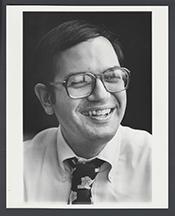
Mr. Speaker, I yield myself such time as I may consume. (Mr. FROST asked and was given permission to revise and extend his remarks.) Mr. Speaker, my fellow Texas Democrats have joined me here today…
Mr. Speaker, I yield myself such time as I may consume.
(Mr. FROST asked and was given permission to revise and extend his remarks.)
Mr. Speaker, my fellow Texas Democrats have joined me here today on an issue of fairness. Will this House be fair to those who stand to lose a Social Security pension that has been fairly paid into and is fairly deserved, or will they vote to drive valuable public servants out of a system that desperately needs them?
Some Members believe that the Texas teachers and other public employees want some sort of special treatment. They do not. Their spouse correctly and completely paid into the Social Security system. And if they were just not teachers, policemen or firefighters, then they would receive their spousal benefit. Is this the message that we want to send, that the Social Security system will treat everyone honestly except those who are most valuable to our society?
Every Member here today supports the underlying bill, the Social Security Protection Act. Its main provisions would deny Supplemental Security Income, SSI, to fugitive felons, make it easier for seniors to get a lawyer for the complicated disability process, and reform the representative payee program so that seniors are not defrauded.
In fact, the House considered all of these reforms during the 107th Congress in a bill that passed the House unanimously. Unfortunately, that bill, H.R. 4070, was not conferenced before the end of the Congress, and it has returned in this much more controversial form.
I support all the reforms in this bill, Mr. Speaker; and if the bill consisted of just these provisions, we would again pass this bill unanimously. But the same bill that helps protect our seniors from Social Security fraud hurts our teachers, firefighters, police officers and other public servants around the country, including in my home State of Texas. Specifically, section 418 of this bill would prevent those hard-working public servants from protecting their retirement benefits from the harsh impact of the Government Pension Offset.
Mr. Speaker, this issue may appear complicated to some, but it is very clear to the thousands and thousands of dedicated teachers and other public servants who are affected by it. So clear, that both the National Education Association and the American Federation of Teachers are opposed to this bill.
Many teachers in this country have pension plans that are not covered under Social Security, but they have spouses who are working in jobs that do pay into Social Security. Under normal circumstances, a surviving spouse, such as a teacher, would be eligible for spousal or survivor's benefits if their spouse, who paid into Social Security, dies. But under current law, the Government Pension Offset reduces or eliminates the spousal or survivor's benefits for teachers and others who pay into pension plans that are not covered by Social Security.
Fortunately, there is a provision in the law right now that helps some people in this situation. It allows you to protect your retirement by switching jobs at the end of your career. This ``last day exemption,'' as it is called, has helped many teachers in Texas and other States protect the Social Security benefits they deserve and that they now need to retire. However, section 418 of the underlying bill would eliminate this exemption. Instead, it would force teachers, police officers, firefighters, and other public servants to work 5 additional years before receiving full spousal benefits.
Mr. Speaker, that is no way to treat hard-working people who have dedicated their entire lives to serving their communities and this Nation. It hurts real people, especially women and lower-income individuals. That is why I will ask Members to defeat the previous question on this bill today. If we do, then I will do something that 285 of our colleagues have asked this Congress to do, and that is to eliminate the Government Pension Offset.
Our colleague, the gentleman from California (Mr. McKeon), has a bill, H.R. 594, which 285 of us have cosponsored, which calls for the elimination of the GPO. If we defeat the previous question, then I will attach that bill to H.R. 743 without section 418 and then
bring the measure before the House for its immediate passage so that teachers and other public servants can continue to protect their retirement benefits.
Mr. Speaker, there should not be a Texas Member in this House who does not vote to defeat the previous question. I would hope others would join us. I urge my colleagues to support Social Security fairness for teachers, firefighters, and police officers by voting to defeat the previous question.
Mr. Speaker, I reserve the balance of my time.
Mr. Speaker, I yield 3 minutes to the gentleman from Texas (Mr. Green).
Mr. Speaker, I yield 4 minutes to the gentleman from Texas (Mr. Sandlin).
Mr. Speaker, I yield 3 minutes to the gentleman from Texas (Mr. Edwards).
Mr. Speaker, I yield 2 minutes to the gentleman from Texas (Mr. Green).
Mr. Speaker, I yield 3 minutes to the gentleman from Texas (Mr. Rodriquez).
Mr. Speaker, I yield 3 minutes to the gentleman from Texas (Mr. Ortiz).
(Mr. ORTIZ asked and was given permission to revise and extend his remarks.)
Mr. Speaker, I would ask the gentleman if he has any other speakers.
Mr. Speaker, I yield myself such time as I may consume.
Mr. Speaker, it makes no sense to me to reduce the Social Security of a retiree simply because the spouse of that person happens to be a teacher or firefighter or police officer. These jobs are not high- paying jobs. Those who chose this path have done so because they
want to make life better for all of us. And what do we do? We deprive them of a significant portion of their hard-earned retirement benefits just because one spouse works for a government entity instead of a private company. That is just wrong.
I urge a no vote on the previous question. If the previous question is defeated, I will offer an amendment to the rule that will do two things.
First, it will strike Section 418, the portion of the bill that prevents certain public employees from receiving the full amount of their deceased spouse's Social Security survivor benefits, benefits to which they are otherwise entitled.
It will also add to the base bill, H.R. 743, the text of H.R. 594, the Social Security Fairness Act which will once and for all eliminate the pension offsets that so unfairly diminish all the retirement benefits of our valued public employees.
I want to point out that H.R. 594 is a broadly bipartisan bill and has the support of 285 co-sponsors, nearly two-thirds of the membership on the House.
Vote no on the previous question so we can help all of those who were unfairly penalized in their pension benefits simply because their spouse is a government employee and one works for the private sector.
Let us support those who go into the public service. Let us support our teachers, our policemen and our firemen, not penalize them.
Mr. Speaker, I ask unanimous consent that the text of the amendment in the nature of a substitute be printed in the Record immediately before the vote on the previous question.
Mr. Speaker, I yield back the balance of my time.
Mr. Speaker, I object to the vote on the ground that a quorum is not present and make the point of order that a quorum is not present.
What a truly disappointing presentation. Mr. Speaker, this is not about ``gimmicks,'' and it is not really even about Texas teachers. It is about whether this Congress will have on the floor of the…
What a truly disappointing presentation. Mr. Speaker, this is not about ``gimmicks,'' and it is not really even about Texas teachers. It is about whether this Congress will have on the floor of the House its first ever vote in recent memory on correcting the Government Pension Offset and Windfall Elimination Provision.
Last year, when the constituents of the gentleman from Texas (Mr. Brady) contacted him about this, he said that these provisions seemed to be ``most unfair.'' He pointed out, quite correctly, that ``about 40 percent of the total number of affected beneficiaries are widows and widowers''; that ``240,000 affected beneficiaries are women.''
I think that we need an opportunity in this Congress to address the Government Pension Offset. When the gentleman from Florida (Mr. Shaw) released the GAO report to which he has referred today, although he and the gentleman from Texas (Mr. Brady) use terms like ``fraud'' and attack the professional associations of our teachers in Texas, although he even has the audacity today to invoke our soldiers overseas against our police officers and our firefighters and teachers who deserve a GPO correction, when the gentleman from Florida (Mr. Shaw) introduced the GAO report, he said ``The apparently growing use'' of what he calls a loophole ``is only a symptom of general concern about whether the GPO itself is fair. . . . That is why my plan . . . would reduce the Government Pension Offset.'' [Aug. 15, 2002 press release]
His plan that he refers to is the one that he and the gentleman from Texas (Mr. Brady) voted against when we presented it in the Committee on Ways and Means. It is the plan which the Committee on Rules made out of order today. Not Texas teachers, not ``gimmicks,'' not the Texas Federation of Teachers, but police officers in New York City and firefighters in San Francisco, and everyone in between who has been a public servant and who has suffered as a result of this Windfall Elimination Provision, they are the ones that they are standing against today.
``GPO'' stands for ``Government Pension Offset.'' It cuts into the retirement security of dedicated public servants, like firefighters, police officers, and teachers who provide us physical and economic security and who need retirement security. ``GPO'' really means ``gouge police officers,'' and it gouges our teachers and firefighters seeking their well-earned retirement security.
GPO also stands for ``good photo opportunity.'' That is what is involved here. Whether it is police officers, firefighters, or teachers, Members are eager to stand with them and get their picture taken. But when it comes time to vote with them and protect their retirement security, they come up with one excuse after another.
This provision dealing with the self-help provisions that Texas teachers have used, and used in accordance with the letter of the law as written, specifically as written by this Congress, was buried on page 70 of the original bill. They did not even have the courage to bring it up for a vote in the committee at that point, or to wait until our Texas teachers could be here.
An apt analogy to what is happening here today is to find oneself driving down a highway and seeing a senior citizen, a retired teacher, pulled off along the side of the road with a flat tire.
The reaction of most folks is to stop and help. Well, the Congress comes along and it stops to help. It tells the retirees, ``You cannot fix this problem yourself,'' the way our Texas teachers have done, ``that is our job.'' Then, while the senior waits for help, the Congress gets back in the car and drives off, leaving them stranded beside the road.
That is exactly what has happened here as this Republican Congress refuses to address the problem that our Texas teachers and our firefighters are rightly concerned about. Instead, they pick up a tire iron all right, but they are using it on our retirees, not the flat.
The GPO bills introduced and never set for a hearing or never voted on will never provide retirement coverage, only political coverage. When Members pose with public servants for a good photo opportunity, a ``GPO,'' they hope those employees will not notice that: When they smile, the real message is, ``I am standing with you, but I am not voting with you.''
Mr. Speaker, I am so pleased that the last speaker raised this issue of corporate loopholes, because it is the same crowd that stood in the Committee on Ways and Means repeatedly and on the floor of this House and has defended corporations that renounce their citizenship and head off for tax havens like Bermuda. They say that this is fine, that this is legal, and that we do not need to do anything about it.
As to the Government Pension Offset and the issue of the alleged ``loophole'' in Texas, what the gentleman failed to mention is that we offered in committee to close the alleged ``loophole'' for Texas teachers, but to do it in connection with reforming the GPO problem that they have consistently refused to correct all this time. Fix the two together.
We make them that same offer today. This is not about gimmicks in Texas, it is about people that file bills, as the gentleman from Florida (Mr. Shaw) has done, that they never intend to move through the Congress; file bills they do not even get a hearing on, and say they are on the side of the firefighters, police officers, and teachers while doing nothing for them.
Mr. Speaker, about 200 of us have regularly signed on as cosponsors to the legislation of our colleague, the gentleman from California (Mr. McKeon), to repeal the Government Pension Offset. In the Committee on Ways and Means, a more modest proposal would simply cut the government pension offset in half. It is authored by the gentleman from Florida (Mr. Shaw) and was joined by a number of Republicans on that committee.
In the committee, we sought not to leave some special provision that Texas teachers have used to protect themselves. We said instead, ``solve that problem.'' We did not use our language to correct the government pension offset; but we took verbatim the language of the gentleman from Florida (Mr. Shaw), his words, joined by four or five Republican members of the Committee.
This motion would permit us to go back and get the correction that all of us have said we want. I do not believe those who suffer from this offset want merely a promise in every pot. They do not want just a committee hearing; they want action. With this motion to recommit, we would get that action and get it promptly for all the firefighters, police officers, and teachers in all the 50 States who deserve to have that done.
Mr. Speaker, pursuant to House Resolution 520, I call up from the Speaker's table the bill (H.R. 743) to amend the Social Security Act and the Internal Revenue Code of 1986 to provide additional…
Mr. Speaker, pursuant to House Resolution 520, I call up from the Speaker's table the bill (H.R. 743) to amend the Social Security Act and the Internal Revenue Code of 1986 to provide additional safeguards for Social Security and Supplemental Security Income beneficiaries with representative payees, to enhance program protections, and for other purposes, with a Senate amendment thereto, and ask for its immediate consideration.
Mr. Speaker, I offer a motion.
Mr. Speaker, I yield myself such time as I may consume.
Mr. Speaker, I am pleased to present to the House the Social Security Protection Act of 2003, bipartisan legislation that fights fraud and abuse in the Social Security programs.
In April, the House overwhelmingly passed this bipartisan bill by a vote of 396 to 28. In December, the Senate passed an amended version of the Protection Act unanimously. They did this by unanimous consent. Today, we have an opportunity to pass this essential legislation so that it be sent to the President and made law.
Workers, retirees, individuals with disabilities, survivors and their families have paid for and deserve better protection under Social Security and the enhanced vigilance against waste, fraud and abuse this bill provides.
First, this bill protects nearly 7 million beneficiaries who cannot manage their own affairs and rely on representative payees appointed by the Social Security Administration. It does this by raising payee standards, increasing oversight, and imposing stricter penalties on those who would mismanage the benefits entrusted to their care.
Second, this bill denies Social Security benefits to fugitive felons and probation/parole violators.
Third, it provides tools to further safeguard Social Security programs, including new civil monetary penalties for those who withhold information to get benefits and improving collection of overpaid benefits.
Fourth, this legislation closes a loophole in the law that has allowed an isolated group of public employees to receive full Social Security spouse and widow benefits that no other identical working spouse in America receives even when both pay into the Social Security program.
Finally, the bill helps people with disabilities by giving greater access to qualified representatives when applying for benefits, by improving work incentive programs, and by expanding eligibility for the Work Opportunity Tax Credit to encourage more employers to hire individuals with disabilities.
And, accompanying all of this, the taxpayers will save $800 million over the next 10 years.
I thank Senators Grassley and Baucus of the Senate Finance Committee who offered to work with the Committee on Ways and Means and, of course, the gentleman from California (Mr. Matsui) as we have done this on a bipartisan basis as they developed their amendments to the House- passed bill.
This amendment made a number of enhancements to the bill.
First, it increased overpayment collection by authorized recovery across Social Security and Supplemental Social Security Income program lines.
It provides for a 5-year nationwide demonstration project providing direct fee withholding for qualified nonattorneys who help individuals through the complex disability application process.
It provides additional time for the Social Security Administration to test initiatives to help individuals with disabilities return to work as well as extended funding for services that help individuals with disabilities return to work and keep working.
It provides for the ability to restart disability benefits based on their parent's work if an individual disabled in childhood tries to work but must later stop.
Lastly, enhancement and simplification of the Supplemental Security Income program, especially for members of the military and their families.
This bipartisan legislation has support of many organizations because it does what is right for the Social Security program, the people who pay into it and the people who benefit. It was developed in cooperation with the Social Security Administration and the Social Security Inspector General. It is also supported by AARP, Citizens Against Government Waste, the National Conference of State Social Security Administrators, the Consortium for Citizens with Disabilities, the National Alliance for the Mentally Ill, the Association of Administrative Law Judges, and the National Organization of Social Security Claimants' Representatives.
This bill probably will not make the front page of your newspaper on kitchen tables tomorrow morning. That is unfortunate, as Social Security is one of our Nation's most important programs and constitutes our government's largest expense, consuming approximately one-quarter of our Federal budget and growing. It deserves our Nation's attention.
Protecting the most vulnerable beneficiaries and stopping Social Security from hemorrhaging precious dollars through fraud and benefit misuse is important and serves as a shining example of what Members of Congress can achieve for the American people when we work together.
I strongly urge my colleagues to vote ``yes'' and give workers and beneficiaries the protections that they deserve.
Mr. Speaker, I reserve the balance of my time.
Mr. Speaker, I yield 2 minutes to the gentleman from California (Mr. Herger), a member of the Committee on Ways and Means.
Mr. Speaker, I yield myself such time as I may consume.
I would like to point out at this time that even under this bill, the offset is only $2 for every $3 of pension received, whereas those of us who are going to depend on Social Security, those that depend on Social Security, the offset is a dollar for dollar. So the teachers that people are talking about and public employees that this might affect, they are still getting a much better deal than people who have paid into Social Security.
Mr. Speaker, I yield 1 minute to the gentleman from Texas (Mr. DeLay), the majority leader.
Mr. Speaker, I yield myself such time as I may consume.
I tell the gentleman from Texas that I know he feels passionate about this and I can agree with his motivation with regard to this, but the simple fact arises that there is an offset for those where we have a spouse and a worker both paying into Social Security. We simply bring them pretty close down to where some people who are paying into Social Security and work every single day and pay under the Social Security program, and still we give the people he is talking about a better deal than the people who have really labored under Social Security only.
Mr. Speaker, I yield 10 minutes to the gentleman from Texas (Mr. Brady).
Mr. Speaker, I yield myself such time as I may consume. Today, we have before us the Social Security Protection Act. This legislation was developed over several years in conjunction with the Social…
Mr. Speaker, I yield myself such time as I may consume.
Today, we have before us the Social Security Protection Act. This legislation was developed over several years in conjunction with the Social Security Administration, its Inspector General, beneficiary representatives and others. The bill reflects a preconference agreement negotiated with the other body on a bipartisan basis and is supported by the Consortium for Seniors With Disabilities, the National Alliance for the Mentally Ill, the Association of Administrative Law Judges, the National Organization of Social Security Claimants' Representatives and others.
I would like to take a few moments to highlight several items in this bill. The first deals with representative payees. Nearly 8 million Social Security and SSI beneficiaries who are unable to manage their own benefits have representative payees, including children, the mentally impaired and the very frail elderly. Most payees work hard to ensure that the benefits are spent to meet the beneficiary's needs. However, in some instances SSA's screening process for determining who should serve as a payee has failed to prevent the misuse of these benefits. This legislation gives SSA the tools it needs to reissue benefits that are misused. It provides for penalties for those who would take advantage of some of our most vulnerable citizens. It also strengthens Social Security's oversight of these payees.
Second, the bill helps individuals with disabilities gain greater access to legal representation when filing for benefits. Social Security disability insurance beneficiaries already have this access, and the bill extends it to SSI claimants, as well, so they can get the needed help and ensure that their applications are fully considered.
Finally, and very importantly, the bill prohibits paying Social Security benefits to fugitive felons and to those who have violated probation or parole. It is my strong belief that we should not be supporting fugitives who are fleeing the law, and this bill will help bring them to justice.
Now, I would like to mention one provision in the bill that has generated some controversy. This is the provision that would modify an exemption to the government pension offset, or known as GPO, that is being used by some workers but is not available to all. My colleagues from Texas have discussed this specific provision in more detail during the debate on the rule and will discuss it further on this bill, but the larger issue here itself is the GPO. Across the country, people who have worked hard all their lives are unexpectedly faced with the loss of Social Security benefits that they had been counting on because of the GPO. The GPO, which was created in the 1970s and phased in during the 1980s, was designed to provide roughly equal treatment between people who work under Social Security and pay into the system and those who do not. It was designed to end a disparity between couples where in one couple, both members paid into the Social Security system and in another when one spouse paid into the system and the other spouse paid into a State retirement system. Unfortunately, we now know that the GPO often produces unfair results. It is a rough tool that clearly needs adjustments.
Let me illustrate my point. Research shows that a widow needs 80 percent of the income needed to support a couple. Because of the GPO, the couple's income from Social Security can drop to zero when the husband dies. On average, the reduction caused by the GPO is $421 per month, which cuts the average widow's benefit in half, jeopardizing her ability to keep up with fixed costs of housing, health care and others that still exist after the death of her spouse.
We tried to address some of these problems with the GPO during the committee markup last year, but we were rejected on party-line votes. We were also denied the opportunity to address the larger GPO problem in the Rules Committee when the bill came before the House last April. Finally today, my good friend from Texas (Mr. Frost) attempted to bring forward for debate a bill that would fully repeal the GPO, and he was denied that opportunity.
The will to solve the problem with the GPO is clearly an issue of priorities. My Democratic colleagues and I have been prevented from bringing this issue before the Congress over and over again, while my friends on the other side of the aisle have continued to push policies that benefit the wealthy at the expense of this important issue.
For example, the GPO affects 400,000 hardworking Americans every year and eliminating it would cost $31 billion over 10 years. Not $800 billion, not $1 trillion, but it would cost $31 billion over 10 years. In contrast, the 200,000 households that make more than $1 million each year will see $90 billion in tax cuts over that same period. That is half as many people being benefited at three times the cost. There are other examples of misplaced priorities. Congress could and should close corporate tax shelters and prevent companies from incorporating offshore. That would save $30 billion over a 10-year period and that amount would actually take care of dealing with the 10-year period of eliminating the GPO completely.
This is an issue that should not go unaddressed any longer, and I hope that the Congress will make it a priority for consideration this year. While I am disappointed that we are not addressing this important issue today, there are many other provisions in this bill that I mentioned that will strengthen the Social Security system, and I intend to support this bill; but it is my hope that we do address the issue of the government pension offset because it is creating a great deal of consternation and damage to many people who obviously lose their spouse. I support the legislation, but I just hope that we can take some action on the GPO in the future.
Mr. Speaker, I reserve the balance of my time.
Mr. Speaker, I yield 3 minutes to the gentleman from Texas (Mr. Hinojosa).
Mr. Speaker, I yield 2 minutes to the distinguished gentleman from the State of Texas (Mr. Green).

Mr. Speaker, this is a terrible amendment. What I am rising for is to support equality for 95 percent of working Americans who pay into Social Security. Today's debate is about fairness, a need to…
Mr. Speaker, this is a terrible amendment. What I am rising for is to support equality for 95 percent of working Americans who pay into Social Security.
Today's debate is about fairness, a need to bring equity to a system under scrutiny. This amendment concerns Texas teachers. This bill concerns equality, fairness and equity.
Texas is home to great students and great schools, thanks in part to great Texas teachers. Educated in Texas schools myself, I put my kids through Texas schools, and my grandkids are attending Texas schools; but there is a lot of misinformation out there about Texas teachers and their retirement plan.
Before I get too far into the details of this issue, I want to explain some of the fundamentals of Social Security. When the Social Security System was created, the workforce was made up largely of men whose wives stayed home. Spousal benefits were created for these women. Social Security spousal benefits are for the nonworking spouse of a worker covered by Social Security. Generally, we think of this as a stay-at-home mom and a working dad. Social Security retirement benefits are for those who work and pay Social Security taxes. Ninety-five percent of working Americans are covered by this program.
The situation is very different today from when Social Security was created in the 1930s. The majority of families today have two earners supporting the family. A primary rule of Social Security is that everyone is able to collect either their own retirement benefit from Social Security or their spousal benefit, whichever is higher. Let me repeat that. It is one or the other, not both.
The Texas teacher retirement system is a substitute for Social Security. A person can participate in one system or the other, but not both. Most school districts in Texas have chosen to stay out of Social Security; yet they have always had the chance to join the system. In fact, fifty school districts in Texas have entered into Social Security, and they can have their own 401(k)-type program also. Again, at any time school districts can leave the Texas teacher retirement system and enter into Social Security, but they cannot do both because the retirement system was a substitute for Social Security.
Back to Social Security. Whether a married couple works in a job such as a nurse and a small business owner, Social Security-covered teacher and an accountant or a lawyer or an engineer, they both pay into Social Security and both are subject to this rule. A husband and wife are each able to collect either their retirement benefits earned through their own hard work or they are able to collect spousal benefits, i.e., 50 percent of retirement, whichever is higher. They cannot collect both.
It is very possible that if one spouse earns significantly less than the other, for example, that nurse and a small business owner, then the nurse is going to have higher spousal benefits than her own retirement. In that case, the nurse will collect the higher spousal benefit but may ask herself why she paid all those Social Security taxes all those years. If a retirement benefit is $600, for example, for the nurse, and her spouse benefit is $800, she would collect $800 but not $1,400 which is what her husband would have collected.
Again, this is how the system works for 95 percent of all Americans. This bill concerns some teachers in Texas who have questioned the system because they want both Social Security
spouse benefits and their Texas retirement. Again, the Texas teacher retirement system is a substitute for Social Security. A person can do one or the other, but not both.
I want teachers to understand that the government pension offset actually only reduces their spousal benefit by two-thirds of their State retirement benefit rather than dollar for dollar as in the case for other working spouses.
Teachers right now get a better deal and more bang for their buck than 95 percent of the American public. They get one-third more of their spousal benefits than 95 percent of working Americans.
The so-called ``loophole'' that is being closed here today is one small part of the government pension offset meant to encourage entire school districts to join the Social Security system. If an entire school district, such as the Plano Independent School District, were to decide to enter Social Security and get out of State retirement, then every teacher in that school district would then be subject to all Social Security rules, even for a teacher who only works 1 day.
Roughly 4,800 teachers in Texas have found a way as individuals to leave their regular teaching job covered by State retirement and move, for 1 day, to a school district that does pay Social Security taxes and then retire. An example is a teacher from Plano who is covered by the State retirement system. If she transfers her last day of work from Plano to Ponder, Texas, which does pay Social Security, she is paid roughly $6 per hour. She might pay a total of $3 into the Social Security fund, but because of this final day of work in Ponder, paying Social Security taxes, she is able to collect the higher of either her benefit or full spousal.
Of course, because she only paid $3 in, she would collect the spousal benefits based off her husband's work, plus she collects her Social Security substitute; that is, her Texas teacher retirement money. She can double dip, when 95 percent of the American public cannot. This costs the Social Security System thousands of dollars.
The General Accounting Office has estimated that $450 million is being paid in benefits under this loophole, and that number could increase tenfold if the loophole is marketed to other people throughout the country.
I am pro-teacher, and in Texas they have a great State retirement system. Mr. Speaker, this is not how Social Security operates for 95 percent of working Americans and we are going to break the Social Security System.
Mr. Speaker, I must begin by saying that I find the comments of the last speaker, the gentleman from Texas (Mr. Brady), to be very troubling. Each of the three organizations that he identified, the…
Mr. Speaker, I must begin by saying that I find the comments of the last speaker, the gentleman from Texas (Mr. Brady), to be very troubling. Each of the three organizations that he identified, the Association of Professional Texas Educators, the Texas State Teachers Association, and the American Federation of Teachers, oppose this bill. They have submitted written testimony when at least one of those organization's representatives was stranded in Austin because of an ice storm.
It is fine to talk about teachers; this Republican leadership though has a chance to act. Today they talk about leveling the playing field. It is just that they want to level the playing
field down instead of leveling the playing field up. The Texas teachers who have tried to protect themselves from this terrible government pension offset have confronted a Republican leadership that has been in control here for the last eight years. What have they done about the windfall elimination provision or the government pension offset during that time? They filed a bill that a lot of us have cosponsored. They could have had a hearing in the subcommittee last week on that bill. But what did they choose to do? They took a bill that passed unanimously, that I voted for, that the gentleman from California (Mr. Matsui) voted for, that every Member of this Chamber voted for last year, and they added a provision to it, on page 70 of the bill, section 418, a provision that is not even clearly identified in the summary of the bill. This bill has the effect of taking away a right that Texas teachers and teachers in other parts of this country have utilized and which they enjoy a perfect right to utilize.
It is legal and proper for teachers to do this, and the reason they must act for themselves is that this Congress, under Republican leadership, has failed to act for them. This self-help should be of little surprise when all they hear is talk up here and when the Republican leadership will not even set this for a hearing.
Yes, they had a hearing on a bill that passed unanimously last year. They just tucked in a little provision they did not tell us about that hurts the teachers of Texas and many other States. Then what did they do after they held a hearing when our teachers were stuck in an ice storm but they were so eager to move forward that they would not wait for them to get to Washington? Did they bring it up for a vote in the subcommittee? No, they did not. Did they bring it up for a vote in the full committee on Ways and Means? No, they did not. Instead they brought it directly to the floor today in a surprise move announced only a couple of legislative days after this was taken up in committee. Now they propose to bring it up under a procedure where debate is limited and we cannot even offer an amendment to take out this offending provision.
Yes, I think we should do something about felons getting Social Security checks. I am ready to vote for that. But why do we have to treat our teachers like felons and deny them the benefits that they have rightly earned?
The loss of a spouse is difficult enough to bear. But when a widow or a widower has devoted their lifetime to public service as a teacher often at low wages, they get another cruel surprise. When these former educators lose their husband or wife, the Social Security Administration does not send them a letter to console them in their mourning, it reduces the spousal Social Security benefit by two-thirds of the teacher's pension. That is what these teachers are concerned about.
To the average retired teacher in Texas, or anywhere else, this means a loss of about $360 a month. For an elderly retiree, you can call it an ``offset,'' but for them it is mighty upsetting. Confronted with this unfair offset and the technique that teachers have had to rely on as self-help to fix this injustice, the Republican leadership has not been willing to correct the problem. Instead, they want to target the cure. What a contrast, too, with the rest of their legislative package.
The Republicans could have fixed this injustice in a separate bill or they could have fixed this injustice in the bill that they are going to be taking up tomorrow, that began as a very appropriate, unanimously supported bill much like this one. It is called the ``Armed Forces Tax Fairness Act,'' and it is designed to treat our Armed Forces fairly as they serve in harm's way throughout the world.
But what began as a bill to help our Armed Forces has been debased with measures that would allow foreigners to bet on horse races tax- free, certainly good news to the Turks and the French; it would exempt fishing tackle boxes from an excise tax; and exempt bows and arrows from a similar tax.
I support tax fairness for our military because they secure our country. But I also support retirement security for our teachers because they build the foundation upon which our democracy rests. The Republican leadership is today tackling the issue of tackle boxes, but it tells our teachers to ``Go fish.'' They will cut bow and arrow taxes but put a bulls-eye on teachers. Surely we can also fix the injustice that this offset inflicts on America's educators.
We ask for a ``no'' vote on this bill and we have a message to this entire Congress that has not been heard, apparently by even some of our own representatives, but certainly not by the sneaky tactics that got this provision in the bill. That message, is, ``Don't mess with Texas.'' [Doggett holds bumper sticker] Don't mess with Texas teachers. Vote ``no'' on this bad bill.
Mr. Speaker, I object to the vote on the ground that a quorum is not present and make the point of order that a quorum is not present.
Mr. Speaker, I thank the gentleman for yielding me this time. Prior to being elected to Congress, some of us were actually in the profession of teaching. I was, for a number of years, and I paid into…
Mr. Speaker, I thank the gentleman for yielding me this time.
Prior to being elected to Congress, some of us were actually in the profession of teaching. I was, for a number of years, and I paid into the California State Teachers Retirement System. I can tell my colleagues right now that in California, no serious and responsible professional teacher would think that their 20 or 25 years devoted to the classroom should be capped off by scurrying to another school district where there is clear collusion between the districts to allow for 1 day, 1 week, or 1 month of employment so that they can scam the system. Now, that is basically what the Green amendment asks us to continue to allow; fortunately not in California, but unfortunately in Texas and perhaps in Georgia.
Let me get my colleagues to really understand what is going on here. Is there a problem with the offset? Of course there is. We just had a colloquy on the floor with the chairman of the Subcommittee on Social Security and the ranking member of the Subcommittee on Social Security and there was agreement that we will seriously address the pension offset. I have friends of mine who are still in teaching who have implored me to address that. We are in the process of addressing it.
The whole point of the Green amendment is do we allow something to continue which goes something like this: Let us take a teacher in Texas, Mrs. Brown or a Mrs. Green, and say she is employed in Dallas or Houston. And let us say she has worked for a number of years and has successfully put a significant amount of money in the Texas State Teachers Retirement System. She is now ready to retire. She finds another district. And it is true that the local district officials choose whether their employees are in the Social Security System or in the State teachers system. That is a local choice.
But what happens is those board members are in collusion with other districts when they allow a 20-plus year career teacher to work, perhaps in areas not directly to their certificate of teaching credential but simply a job. And let us say they work there for as much as, oh, a month. They may have paid into Social Security, oh, maybe $100. And according to the Social Security actuaries, that 1 month, after those distinguished years of teaching, could produce as much as $93,000 of taxpayers' money going to this person who put a blemish on their professional teaching career to play an angle.
The Green amendment says let us allow these folks to continue to play this little game of collusion to raid the Social Security System under the guise that we should take care of these people. If we vote for the Green amendment what we are doing is relieving pressure to address the real problem.
I would urge all my colleagues to understand a ``yes'' vote on the Green
amendment slows down the addressing of the pension offset. A ``no'' vote on the Green amendment puts all Americans in the same position, pressuring us to do something about the pension offset. Please, do not remove the pressure by voting ``yes'' on the Green amendment. Vote ``no'' on the Green amendment and all Americans will feel the pressure, rather than just a few who distinguish themselves at the end of their teaching career to go clip lawns, sweep up paper, or maybe even latch on to a substitute position to scam the system.
Mr. Speaker, will the gentleman yield?
Mr. Speaker, I thank the gentleman for yielding to me so that I might inform my friend, the gentleman from Texas (Mr. Green), that I am doing everything I can to fix the loopholes in the Tax Code. He is well aware that his party was in the majority for 40 years and they punched an awful lot of holes in that Tax Code. We are trying to plug it up just as rapidly as we can, but it will take a few more years to clean up 40 years of a mess
Mr. Speaker, I rise in opposition to the motion to recommit.
Mr. Speaker, the gentleman from California who is interested in dealing with the teachers' issues is named Buck McKeon. We have talked about him as a good $1 bill, the gentleman from California (Mr. McKeon).
I want Members to know this motion to recommit is a $3 bill. If Members have never seen a $3 bill, all Members have to do is look at this motion to recommit. As we all know, there is no such thing as legal tender that is a $3 bill.
What this motion to recommit does is it kills the bill. I ask the freshmen to listen carefully. If this motion to recommit said ``report the same back to the House forthwith,'' a little word, ``forthwith'', what the gentleman from Texas (Mr. Green) was talking about could possibly occur. But he used the word ``promptly'' knowingly, because they know that a motion to recommit with the word ``promptly'' in it kills the bill.
Let me tell the Members what this motion to recommit really does: it says that the Social Security Administration cannot withhold tax refunds of people who cheat other taxpayers. It
says that the Social Security Administration cannot impose monetary penalties on those who mismanage benefits. If says that we cannot create new civil monetary penalties for Social Security fraud.
In other words, if people are for the good stuff that is in the bill, they are against this motion to recommit. The motion to recommit cannot add what they said it does because of the way it is written, it is very simple.
There was not a lot of honest debate on the amendment, and this motion to recommit is not an honest amendment to recommit. It is a motion to kill. Let us vote ``no'' on this so we can get on to the basic business of passing a very important and helpful bill. Vote ``no'' on this $3 bill, the motion to recommit.
parliamentary inquiry
Show 11 more
Mr. Speaker, I want to thank my colleague from Texas for his hard work on this issue and urge my colleagues to oppose this rule and support his amendment. Mr. Speaker, if cosponsoring a bill is any…
Mr. Speaker, I want to thank my colleague from Texas for his hard work on this issue and urge my colleagues to oppose this rule and support his amendment.
Mr. Speaker, if cosponsoring a bill is any indication of support for an issue, then the Frost amendment should pass by a minimum of 285 votes to 150. That is because 285 Members of this House have cosponsored H.R. 594, which is the underlying bill that the Frost amendment would add to H.R. 743. But now it is time to put our money where our mouth is. I am afraid that the so-called supporters of the GPO repeal are going to turn their back on the hundreds of thousands of public servants who are affected by the Government Pension Offset.
As we have heard, the Government Pension Offset unfairly reduces an individual's Social Security spousal benefit if he or she receives a government pension from employment not covered by Social Security. This is unfair and arbitrary and affects individuals at the Federal, State, and local level. Most often it hurts teachers, anyone who works for a school district, firefighters, police officers and other public servants.
Our office hears more about the GPO than practically any other issue. Teachers, firefighters, police officers, and civil servants are finding out every day that their Social Security spousal benefits are being reduced by the Government Pension Offset.
These are people who have dedicated their lives to making America better. When it comes time to retire, they lose out. That is because the GPO unfairly reduces Social Security spousal benefits by two- thirds, regardless of how much your government pension is. This is particularly unfair to low-income folks and widows, the very people Social Security was designed to protect. The Frost amendment would give us a chance to correct this serious problem and make sure that public servants receive a fair spousal benefit.
Like I said earlier, this is clearly a good idea, because 285 Members of the House have cosponsored this legislation, and that is why I urge support of the Frost amendment.
It is interesting to note we have someone, for example, in my own district who is a teacher for 30 years and has been married for 30 years; and when she retires, when her husband passes away, she is penalized for her spousal benefit under Social Security because she worked at a public school system, not by her choice; but they decided not to pay into Social Security because in 1983 that was one of the groups left out.
They did not pay into it, rightfully so, but under Social Security, under our law, if they are married 10 years to an individual, they have a right to those benefits, a spousal benefit.
It is interesting that our law punishes a group of teachers, for example, in Texas and Georgia who have said, okay, the law says I have to work 1 day; I will go work 1 day somewhere that pays both the teacher retirement and the Social Security. Is that right? Sure, it is not, but neither is the GPO, and that is why the Frost amendment is so important.
We need to reform the Government Pension Offset, and the best time is today, not waiting until the end of this year. We have been waiting for 15 years to reform the Government Pension Offset. So by voting for this legislation today, we are making the Government Pension Offset even worse. That is why the Frost amendment is so important.
Mr. Speaker, I apologize for not being able to ask a question to the chairman of our Subcommittee on Social Security, but all of Texas educators, teachers, administrators, custodial, cafeteria workers, everyone is affected by this bill. It moves it to be qualified to 5 years.
But let me explain the reason. They are not paying into Social Security now. They do not receive anything for what they pay into Social Security. It is for them as being a widow of someone who paid into Social Security.
The best example is that someone in my district works at a machine shop for 40 years and they are married to someone who works in a public school system in Texas, that the vast majority of the Texas school districts are not
participants in Social Security by law from this Congress. That widow, that person dies, the person who paid in their whole work life into Social Security, their widow is penalized by this legislation. So Texas has found a way around it by letting them go to find a school district and work 1 day. Well, it is a loophole, but, in all honesty, it is a loophole that benefits widows.
It is interesting. I want to deal with the big issues in Social Security, but, in all honesty, we need to deal with it without punishing the widows of people who have paid into Social Security their whole work life and may have been married for 40 years and then they get penalized by the Government Pension Offset.
This legislation may have good parts in it, but the GPO part is wrong. We ought to deal with the Frost amendment so we can have reform of GPO on this House of Representatives floor without waiting for the Committee on Ways and Means to deal with it.
Mr. Speaker, I yield to the gentleman from Texas (Mr. Rodriguez).
Mr. Speaker, I have yielded my time to the gentleman from Texas (Mr. Rodriguez). I would have gladly asked a question, and we would not have had to have this debate if we could have asked the question earlier.
Mr. Speaker, we are right to be concerned about our teachers. They are overworked. They are underpaid. We are concerned about them. I think had it not been for study over the last year or so, I would…
Mr. Speaker, we are right to be concerned about our teachers. They are overworked. They are underpaid. We are concerned about them. I think had it not been for study over the last year or so, I would be giving the exact same speech today as my Democratic colleagues from Texas because we are all concerned. It turns out this is not exactly the case I thought it was.
Recently we held a hearing on this legislation. We wanted to hear from our Texas teachers, so we requested the chairman invite our Texas State Teachers Association, our Texas Federation of Teachers and the Association of Texas Professional Educators to testify. Unfortunately, they were not able to because of various reasons, the snow being one of them, but we submitted their testimony on their behalf and urged members of the subcommittee to study it.
During the hearing, it was shown that teachers in government pensions are not being singled out. They are not. The government pension offset affects more than just teachers. It affects more than 5 million people in all sorts of State, local and Federal Government pensions who do not pay into Social Security. This is important to know because a lot of my teachers feel like they are being targeted, being singled out.
My main concern during the hearing that I expressed that my teachers are so upset about, that a widower who has worked a lifetime to earn their government pension, like a Texas teacher, will keep less of their deceased spouse's Social Security than a widower who has worked and paid into Social Security. The Social Security Administration conclusively proved this is not the case. It turns out it is just the opposite.
Teachers in TRS are able to keep the same, or more, of their spouse's Social Security benefits than other widowers who have worked, like nurses or waitresses. That is because the government pension offset law reduces their husband's or their deceased spouse's Social Security by two-thirds of their pension. But for other widowers, for waitresses, nurses and others who paid into Social Security, their husband's benefits are reduced even more, 100 percent of their own benefit.
What I think confuses teachers and many is that if someone has not worked, they have worked inside the home all their life, have not earned Social Security, they keep all of their husband's or their deceased spouses's benefits because they depend upon it more. Social Security is extremely complicated. There is a great deal of misinformation going around the Internet and by well-meaning individuals and organizations these days.
What frustrates me most is that teachers were not told about this situation years ago. They feel they have paid into Social Security for years and they do not get the help when they need it the most. It would have been so much better if this would have been reformed years ago, where you put aside your own contribution to Social Security into a traditional retirement account, where that money grew for you over the years, you could take it with you, it was yours to own and you would not be surprised by some government formula done 20 years ago. That is where we need to head.
How we can help teachers today and others I think is to focus on the windfall elimination provision. It sounds complicated, but the principle is, for me, if you have worked hard and paid into Social Security and you have worked hard and paid into a government pension, you should receive more of both. I am thinking here of teachers who have contributed their hard-earned pay into Social Security through a second job, teachers who have contributed to Social Security in another State before moving to Texas or Georgia, thinking of future teachers who already have a career, we would like to get them into the classroom to help but they are afraid of losing their retirement benefits. I believe the best and the most timely solution to help these people, these teachers, and others who have earned two pensions, is to modernize the windfall elimination provision to make it more fair.
I have asked our subcommittee chairman, the gentleman from Florida (Mr. Shaw), to hold hearings on the windfall elimination provision. This is where I think we can take a formula that is outdated, I think a bit arbitrary, and focus on the principles if you have paid into Social Security and you have paid into your government pension, that you keep more of the Social Security that you have paid into.
Mr. Speaker, clearing up a couple of misconceptions there, I would love to be able to tell my Texas teachers, whom I love, what they want to hear. But I respect them too much to do that. I want to tell them the truth. The fact of the matter is, this was not snuck in. This was passed in the Senate last session. And this Republican House, with Texas lawmakers from both sides said, let us discuss this in open debate and make sure it is the right way, which is exactly what we are doing. Both parties have had a chance to work on this issue since 1983. We have not come up with a solution yet. We are working to do that.
Finally, I want our Texas teachers to be treated fairly. I want our Texas waitresses and nurses and other moms to be treated fairly, too.
Mr. Speaker, I thank the gentleman for yielding me this time. This is an issue so important to some of us who represent districts in Texas and Georgia, and it is important nationwide because there…
Mr. Speaker, I thank the gentleman for yielding me this time.
This is an issue so important to some of us who represent districts in Texas and Georgia, and it is important nationwide because there has been legislation in the last 4 years that had a majority of the U.S. House of Representatives as cosponsors to repeal the offset for public employees, for teachers, firefighters and police officers. The gentleman from Arizona (Mr. Hayworth) was a cosponsor of the bill 2 years ago, and now we are gathering signatures again. It is a system that is wrong, and it needs to be changed; but in my 5 years, we have not had a chance to address it on the floor of the House of Representatives.
I know my colleagues talk about the 1 day as a loophole. Well, it may be a loophole, but it is also complying with the law. It is interesting, we are going to close a loophole and allow firefighters, police officers and teachers to go to work 1 day in a system that has Social Security and their retirement system and be eligible for Social Security. Yet we are willing to open up millions of loopholes for corporations to be able to walk through.
I regret to say Enron is from the area I am from in Houston, and they have not paid Federal taxes in 6 years. We do not mind opening loopholes big enough for corporations to drive trucks through, but for a school teacher who wants to get her husband's Social Security benefits because she has taught for 30 years teaching our children, we are closing up that loophole. They get penalized on their widow's benefits. We are talking about widows' benefits and not somebody that is double dipping, and I know previously that is what the committee wanted to do.
Mr. Speaker, I am opposed to H.R. 743, and I hope that Members will look at it to change it. Some public employees are not covered by Social Security, and in Texas it is particularly our police officers, firefighters and teachers. Our school districts can be part of Social Security or not. The individual employee, whether they are a cafeteria worker or custodian or a teacher, they do not have a choice. All they want to do is serve our children, and yet they are getting penalized.
My example is the best one I can think of. My wife and I have been married 33 years. She has been a teacher in Texas for 26 years. If I died tomorrow, she would be penalized on all the benefits that I have put into Social Security. I have paid the maximum for I-do-not-know- how-many years. She would be penalized because she is a public schoolteacher in Texas.
H.R. 743 has a great many good things in it, but this is so bad we ought to have enough votes on the floor to be able to defeat it and bring it back without this provision in it, or at least bring it back and debate it fully on the floor with an opportunity to amend it.
Full spousal benefit ought to be if I paid into Social Security, my wife as a widow when I pass away ought to get the same benefit no matter whether she is a stay-at-home housewife or actually worked as a schoolteacher. We should not punish teachers and firefighters and police officers by stripping away this right unless we address the underlying problem of the government pension offset.
Closing a loophole, that is what the current law is. And in Texas I have a good example. I have a teacher in my wife's school district who was 73 years old. Her husband died in her early sixties. She was receiving his Social Security widow's benefit. She could not retire because of the cut she would take in her Social Security benefit from her husband. They were married many years so she was entitled to it. What she did, she went and worked in a school district that had Social Security and teacher retirement for that 1 day at 73 years old. How long do we want people to have to work?
It is just outrageous what the law has made people have to do. Teachers across our country are chronically underpaid. We give lots of lip service on the floor. Yesterday we passed a resolution about Lutheran educators. I am talking about public school teachers who teach our children every day. Is it perfect? Of course not. But this is the only thing we can do on the Federal level because teachers' salaries are set by the school districts and by the States. But this is something we can do to say we are not going to slap them in
the face. We are going to make sure that if someone is a teacher and has taught all those years, and their husband has been under Social Security and they pass away, and I say husband because most of the teachers are women. They are the ones in their retirement years who have less than we do as men, and yet we are taking that away from them. Again, that is just outrageous.
We find it harder and harder to attract teachers. Let us make sure if teachers are married to someone who pays into Social Security, they can get their widow's benefit without being punished for it. This issue is close to the heart for a lot of us in Texas.
Mr. Speaker, I rise on behalf of the 99 percent of the seniors in America who do not have a special loophole. I rise on behalf of the 99 percent of the widows in America who do not have a special…
Mr. Speaker, I rise on behalf of the 99 percent of the seniors in America who do not have a special loophole. I rise on behalf of the 99 percent of the widows in America who do not have a special loophole.
What we are discussing today is a situation where a very select few in America, sort of a second class, a higher class of citizens in America, get to keep a lot of Social Security, where their next-door neighbor who has paid into Social Security all their life get to keep much less.
What we are talking about here is a special loophole. The way it works today is that most of us pay into Social Security. My wife pays into Social Security. The husband pays into Social Security. But there are some who work for local governments or who are teachers like in Texas where they do not contribute to Social Security at work. They have a substitute, in this case a teacher retirement system. That is where their payroll taxes go. And very few of them have found a loophole in the law from 25 years ago that allows them to escape the formula that everyone else in America is applied to and receive much more in benefits than we will ever dream of receiving.
Here is the way the loophole works. In Texas, a teacher works their whole life, but they do not contribute to Social Security. Under this loophole, if they will take their last day and go to another school district and pay that school district to work for them, think about it, they pay $500 so they can work one day at minimum wage for a school district. And, in return for working that one day at minimum wage, contributing about $3 into Social Security, they receive on average $93,000 of Social Security retirement that no one else in America gets, literally no one else in America gets, the teacher in New York does not get, the nurse in Iowa does not get. The cleaning lady in our offices up here does not get this.
Let us compare how it works in real life so we can all see how it affects us and just what this loophole means. Take a look at the average Social Security recipient in America. The husband is getting about $1,000 a month for Social Security; the wife's monthly retirement is $700. For most of us, almost everyone who pays into Social Security, when that husband dies and the widow has her benefits, for 99 percent of America her benefits are going to be $1,000 a month, using this example, which, by the way, is exactly the average for Americans. For those who are in government pensions, the ones who do not pay into Social Security, they receive more. Those widows receive $1,233 more. They keep more of Social Security, having not paid into it, than those who have paid their whole life into it. That is the way the formula works.
But under the loophole we are closing today, it is even more outrageous. If we leave this loophole open, the teacher who only worked one day in Social Security will receive $1,700 in monthly benefits, far greater than the widow who worked her whole life in Social Security. Amazingly, the loophole permits a spouse who only contributed to Social Security for one day to receive so much more than the widow who worked her whole life in Social Security, her whole life, and who receives a pittance of what this loophole provides for \1/100\ of 1 percent of all Americans.
We cannot have two classes of families in America, those who have loopholes for Social Security and those who do not. This loophole is unfair to working families. It drains hundreds of millions of dollars from the Social Security Trust Fund, which is why senior groups say close this loophole now. And it deserves to be closed.
Let me make a final point here. Under this loophole in Texas today, we have great teachers. We have wonderful teachers. My sister-in-law is one. We are here because of our teachers. But teachers are inherently fair, I think, like the rest of Americans; and if we look at loophole today, this college professor who worked one day in Social Security receives a ton of the money, but the cleaning lady in our offices receives a small fraction of it. If we leave the loophole open, the school superintendent who makes $200,000 a year keeps a ton of Social Security. The checkout lady at the grocery store who has worked her whole life and still working now, she gets a pittance of it. The teacher in Texas gets a ton of money. The teacher in Iowa and Ohio and New York and California gets a pittance.
Those who want to keep this loophole open want to create two classes in America. It is inherently unfair to do that. It is right to close this loophole. It is wrong to have two classes of families in America. It is time to make Social Security fair.
I yield to the gentleman from Texas.
The husband.
Yes.

Mr. Speaker, I thank my colleague for yielding me this time. Mr. Speaker, today the House stands to make a choice. We can choose to support our widowed teachers or we can choose to oppose them. The…
Mr. Speaker, I thank my colleague for yielding me this time.
Mr. Speaker, today the House stands to make a choice. We can choose to support our widowed teachers or we can choose to oppose them. The choice is ours. It is as simple as that.
I am appalled that our friends on the other side of the aisle would take a stand against our teachers and claim, as they have, that the teachers are engaged in a gimmick or a trick or a fraud. That is absolutely insulting to America's teachers. Obtaining spousal benefits is not a trick or a fraud. It is a payment for an entire lifetime of work by a spouse. It is a payment for an entire lifetime of a man and woman working together.
Saying that teachers receive Social Security for working 1 day is simply not true, and our friends on the other side of the aisle know it. It is embarrassing for them to say that. The real fraud is that the Republicans have failed to address the GPO.
Here is the way the Republican plan works. If someone works for an insurance company, there is no offset. If someone works for a pharmaceutical company, there is no offset. If someone works for an HMO, there is no offset. But if that person elects to be a teacher and educate our children, there is an offset and their spouse's lifetime of work is absolutely meaningless under the Republican plan.
At least our friends on the other side of the aisle are consistent. They believe that neither veterans nor teachers should receive benefits they have earned. Teachers work hard. They follow the rules. They deserve their earned benefits.
Section 418 was not included in the version of this legislation that the House passed with my support during the 107th Congress. I support other provisions of this legislation but cannot support H.R. 743 as introduced. Allowing section 418 to remain will strike at the very heart of public schoolteachers in Texas and at the very heart of our children.
The greater issue of this bill is the failure of Congress to address the Government Pension Offset. Our Republican leadership stood on this very floor during consideration of H.R. 743 last April and testified to their commitment towards ending the GPO. The gentleman from Texas (Mr. Doggett), a representative of Congress and a supporter and champion of Texas teachers, read an excerpt from a letter of the Majority Leader to a constituent stating, ``I strongly believe that the GPO is an unfair and misguided piece of legislation. It undercuts the people who have spent their entire working life paying into the Social Security system by denying them their fair share of the hard-earned money they contributed. Married couples should be able to share those benefits with their spouses.''
The chairman of the Committee on Ways and Means: ``Is there a problem with the offset? Of course there is. We just had a colloquy on the floor with the chairman of the Subcommittee on Social Security and the ranking member of the Subcommittee on Social Security, and there was an agreement we will seriously address the pension offset.''
The chairman of the Subcommittee on Social Security of the Committee on Ways and Means: ``We absolutely need a full discussion of all Social Security provisions affecting public employees, which is why the Subcommittee on Social Security will have a hearing on these issues and legislative opportunities.''
Well, enough is enough, Mr. Speaker. Talk is talk. Enough hearings. This is an example of actions speaking louder than words. Surely the leadership, who only scheduled four suspension bills and H.R. 743 for this entire week, can find the time to vote to repeal the GPO and the windfall elimination provision. All they have to do is call up a vote on H.R. 594, a piece of legislation that has 285 bipartisan cosponsors.
Here is the deal. Either we support the teachers, we support first responders, we support firefighters, we support police, we support public employees, or we do not. That is it. It is that simple. Put up or shut up. That is the deal.
Until we vote on H.R. 594 to repeal the GPO, we cannot allow H.R. 743 to pass. We cannot be involved in changing the rules of the game right in the
middle of the game. And truthfully, Mr. Speaker, this is no game. This is our retired teachers' livelihood. Our teachers should be rewarded, not punished. Let us stand up for teachers today. Let us vote for the Frost amendment and let us vote ``no'' on H.R. 743.
Mr. Speaker, I thank the gentleman for yielding time to me. The gentleman from Texas (Mr. Doggett) who spoke last has regaled us on a number of occasions with some interesting and I would say…
Mr. Speaker, I thank the gentleman for yielding time to me.
The gentleman from Texas (Mr. Doggett) who spoke last has regaled us on a number of occasions with some interesting and I would say provocative speeches over the last couple of years about the use and abuse of tax shelters. He has proclaimed himself, Mr. Speaker, the defender of the individual taxpayer against abusive corporate tax shelters. He has often cited Enron when that issue was before Congress. He has railed against the expansion of the business meal deduction, saying taxpayers would subsidize $400 bottles of wine, a thinly-veiled swipe at the former Speaker.
In the immediate aftermath of September 11, in the committee he went as far as to say that Republicans on the committee were looking for tax cuts for Osama bin Laden. Now he attempts to wrap himself into the fireman's coat and shield himself with the policeman's shield. It is just not so.
Section 418 of the Social Security Protection Act closes a loophole. The General Accounting Office says this about that loophole: ``4,819 individuals from Texas and Georgia have performed work in Social Security-covered positions for short periods, and in fact even for a day, in order to offset'' or get away from this government pension offset in this exemption.
This is a loophole, a loophole that is being exploited. In 2002, one- fourth of all the public education retirees in the State of Texas took advantage of this loophole.
Let me give an example of an egregious type of way that this is being exploited, and unfortunately, much to the chagrin of other hardworking Social Security payees across the country. School officials reported individuals were taking, or one individual traveled 800 miles one way, 800 miles, a two-day trip, to be employed for a single day, traveling back 800 miles back to that person's home in order to get away from this loophole.
As my friend, the gentleman from Texas (Mr. Brady), noted, a lot of these school districts are seeing the money flow in because they are charging these retirees, these teachers, a processing fee for their school districts. Ultimately, what it means is that
these workers are seeing their annual pensions increased by the tune of about $5,000 a year to which they are not entitled.
So we can talk about the government pension offset all we would like, or the windfall elimination provision. Yet what we are trying to do is root out waste, fraud and abuse. The General Accounting Office has told us clearly and unequivocally this is a loophole that is being exploited, and it is time that this Congress acted to close this loophole, because other retirees are the ones that are losing the advantage of their social security.
Mr. Speaker, again I would say to the gentleman who just spoke, who has self-proclaimed his time here as far as trying to shut down these corporate abusive shelters, in existing law that the Social Security Protection Act attempts to protect is a loophole that is being exploited, a single-day exception where workers attempt to get around this law.
Perhaps if the gentleman's constituents had set up post office boxes in Bermuda, perhaps we would see some righteous indignation in favor of this legislation instead of opposed.
Mr. Speaker, I would say to the gentleman from Texas (Mr. Turner), that tearful constituent of his is probably not scheming to game the system.
I would say to the gentleman from Texas (Mr. Edwards), I think it is a bit disingenuous to invoke our troops and our firefighters.
I would say to the gentleman from Texas (Mr. Green) who offers the amendment, the amendment would strip section 418 out of the underlying bill.
And I would again say to the gentleman from Texas (Mr. Sandlin) who just spoke, would the following hypothetical be considered a gimmick, trick or fraud: A university professor who works his entire life as a university professor, works a single day as a janitor making $6 an hour, an 8-hour day, $48, and out of that paycheck, there is a $3 FICA withholding, is it a gimmick, a trick or a fraud for that $3 FICA withholding to then translate into roughly $100,000; $5,000 a year for 20 years of retirement?
Unfortunately, Mr. Speaker, that is not a gimmick, trick, or fraud. It is not even a hypothetical. It is a real-life example of something that has occurred that needs to be changed. A real janitor would not see that $100,000.
Mr. Speaker, by direction of the Committee on Rules, I call up House Resolution 520 ask for its immediate consideration. Mr. Speaker, for the purpose of debate only, I yield the customary 30 minutes…
Mr. Speaker, by direction of the Committee on Rules, I call up House Resolution 520 ask for its immediate consideration.
Mr. Speaker, for the purpose of debate only, I yield the customary 30 minutes to the gentleman from Texas (Mr. Frost), pending which I yield myself such time as I may consume. During consideration of this resolution, all time yielded is for the purpose of debate only.
Mr. Speaker, House Resolution 520 provides for the consideration of a motion offered by the chairman of the Committee on Ways and Means or his designee to concur in the Senate amendment to H.R. 743. The rule provides for 1 hour of debate in the House on the motion, equally divided and controlled by the chairman and the ranking minority member of the Committee on Ways and Means.
H. Res. 520 provides that the Senate amendment and the motion shall be considered as read. It waives all points of order against consideration of the motion to concur in the Senate amendment, and it provides that the previous question shall be considered as ordered on the motion to final adoption without intervening motion.
Mr. Speaker, the purpose of H. Res. 520 is to expedite the final consideration of H.R. 743, the Social Security Protection Act of 2003. Adopting this rule will allow the chairman of the Committee on Ways and Means to offer a motion to concur in the Senate amendment to the House- passed version of H.R. 743, which, if approved by the House today, will clear this bill for the President's signature. I urge my colleagues to join me in supporting this rule.
Last April, the full House of Representatives approved H.R. 743 with a 396 to 28 vote. The overwhelmingly bipartisan vote on House passage was preceded by the House rejecting the Green amendment. The Green amendment sought to maintain the so-called ``last day rule,'' which is a loophole that a small number of workers in certain States have exploited in the past. To its credit, the underlying legislation before us closes down that loophole. Last December, the U.S. Senate approved its amendment to H.R. 743 by unanimous consent.
Let us be clear: H.R. 743 is noncontroversial legislation that has wide bipartisan support in both the House and Senate, and promptly adopting the Senate amendment to H.R. 743 will enable the President to sign this legislation into law this month.
The Committee on Rules approved this rule by voice vote yesterday, and I urge my colleagues to support it so we may proceed with debate and consideration of the underlying, bipartisan bill.
Mr. Speaker, I reserve the balance of my time.
Mr. Speaker, I am pleased to yield 1 minute to the gentleman from Michigan (Mr. Smith).
Mr. Speaker, I am pleased to yield 5 minutes to the gentleman from Florida (Mr. Shaw), the chairman of the Subcommittee on Social Security of the Committee on Ways and Means.
Mr. Speaker, I yield 1 minute to the gentleman from Florida (Mr. Shaw) for more illumination on this exciting subject which will be covered at great length in the next hour.
Mr. Speaker, I have no further speakers.
Mr. Speaker, I yield myself such time as I may consume.
Mr. Speaker, I urge my colleagues to support this rule and to vote against the previous question.
This is a more complex bill than we have heard in the last 40 minutes. This bill protects beneficiaries from representative payees who misuse benefits. It denies Social Security benefits to fugitive felons and probation parole violators. It deters program waste, fraud, and abuse on a much broader scale than that dealing just with the Texas schoolteachers. It helps individuals with disabilities gain access to representation and encourages disabled beneficiaries to return to work.
It improves and simplifies the SSI program, especially for members of the military and their families. It has bipartisan support and the support of key stakeholders and actually saves money; and, yes, it does close the loophole that enables some teachers in Georgia and Texas to contribute just a few dollars to Social Security to receive nearly $100,000 in additional lifetime spousal benefits.
Mr. Speaker, I yield back the balance of my time, and I move the previous question on the resolution.
Mr. Speaker, I rise today in support of the Green Substitute amendment to H.R. 743. This amendment would result in removing Section 418 from the bill. This section negatively affects teachers and…
Mr. Speaker, I rise today in support of the Green Substitute amendment to H.R. 743. This amendment would result in removing Section 418 from the bill. This section negatively affects teachers and other public servants in my state of Texas. This is unacceptable. Our hardworking teachers deserve more.
I know full well the effort and hard work that teachers dedicate to their students. My wife was a teacher for many years and my daughter, who just completed her doctorate degree in education, is currently an administrator at a local school district. I believe that teaching is
one of the most honorable professions. I credit our teachers with laying the foundation for the future of our country and the world. In addition to teaching children the basic skills they need, teachers are an important guiding force for our children. After parents, they are one of the greatest influences on children. We therefore need to make sure we have well-qualified and well-paid teachers educating students.
As you know Mr. Speaker, passage of this bill before us would reduce the spousal Social Security benefits for countless teachers. H.R. 743 also affects school support personnel, police officers, firefighters, and other public servants. At a time when multi-billion dollar tax breaks are being given to our country's top income earners, our teachers and other public servants would be penalized through this bill. These are people we should be protecting and rewarding. We should not make them pay for the tax cuts we give those who are more fortunate. For this reason I cannot support the original version of this bill.
Mr. Speaker, I have co-sponsored H.R. 594, a bill introduced by my colleague, Mr. McKeon, that will eliminate the Government Pension Offset and the Windfall Elimination Provisions that target our teachers and other public servants by denying them the opportunity to retain their full spousal Social Security benefits. This bill would be a more appropriate permanent solution to the unfair treatment of teachers' social security benefits. However, until we can pass that bill, I strongly urge my colleagues to support the Green Substitute, oppose H.R. 743 unless it is amended, and continue to support our teachers. I yield back the balance of my time.
Mr. Speaker, I rise today in support of the Green substitute for H.R. 743. This substitute amendment contains all of the good elements of H.R. 743, and eliminates one very negative element, section 418, which negatively affects teachers and other public servants in my district of El Paso, Texas. I have heard from countless teachers in my district regarding this bill who will have their Social Security widow's benefit reduced so severely that their financial well- being will be devastated. The Green amendment fixes this.
Mr. Speaker, in addition, H.R. 743 also affects school support personnel, police officers, firefighters, and other public servants. At a time when multibillion-dollar tax breaks are being offered to our country's top income earners, our teachers and other public servants should not be penalized. These are the very people we should be protecting.
Finally, Mr. Speaker, I want to speak to our veterans. If this issue sounds a lot like their concurrent receipt issue, that is because it is. And it is interesting that it is the Republican leadership that opposes both of these issues. Too bad it is okay to pass billions in tax relief to the wealthy but continue to undermine our working families. I urge my colleagues to show support for our teachers and vote in favor of the Green substitute amendment.
Mr. Speaker, I thank the chairman for yielding me this time, and I rise in support of H.R. 743, the Social Security Protection Act. There are a lot of issues that are addressed that are important to…
Mr. Speaker, I thank the chairman for yielding me this time, and I rise in support of H.R. 743, the Social Security Protection Act.
There are a lot of issues that are addressed that are important to Americans with disabilities that depend upon Title II and Title XVI. Individuals facing the challenges of life with a disability need these protections that are proposed on the representative payee provisions.
There are about 6 million Americans that receive Social Security and supplemental security income. These beneficiaries often have family members or loved ones who act on their behalf, and yet there are some of those receiving these benefits that go to services, a fee for this service of being a representative payee. If someone receives a fee for this service, now they must be bonded and licensed. And if this representative payee chooses to pray on the disability or the elderly, society's most vulnerable, then tough civil monetary penalties will result. These changes are important and necessary.
Another provision deserving mention, Mr. Speaker, is contained within section 401 through 405. In 1999, this body enacted some breakthrough changes for individuals with disabilities, specifically the Ticket to Work and Work Incentive Improvement Act. The Ticket to Work rolled over barriers that prevented countless employable individuals with disabilities from rejoining the workforce.
Yet now we need to make some technical corrections. For instance, one of the things in the original Ticket to Work bill was a demonstration project which allowed the commissioners of Social Security to look at other ways to employ those that want to rejoin the workforce. One of the technical corrections is that we extend the 5-year limit on designing and implementing these worthy demonstration projects.
I am especially interested personally in abolishing this so-called ``income cliff.'' That is, if an individual is employable and works and achieves earnings up to a certain amount, if that individual makes $1 more than that, they fall off the cliff and lose all of their Social Security disability benefits. I encourage this sliding scale, for every $2 earned, maybe losing $1 of disability benefits. Yet we need to make those technical corrections to the bill so employer networks will accept these beneficiaries that are participating in this $1 for $2 offset demonstration project. So these are worthy changes.
Let me quickly address the issue of my colleagues from Texas. There was a recent study that the General Accounting Office came back to our committee in August of last year with, at the request of the chairman, and found this last-day exemption, this loophole, found that nearly 5,000 individuals in two States were taking advantage of this loophole in order to get around the requirements of law.
What we do is simply implement the changes of the GAO. What the General Accounting Office found was that we were allowing, current law was allowing a select group of individuals with really a small investment of work time and only minimal Social Security contributions to really gain access to potentially many years of full Social Security benefits. I recognize this is a tough situation for those Members from those particular States; but as the chairman alluded after the last speaker, this is something that brings those States in line with the other 48 States. Again a difficult but necessary, important change. These changes are overdue. I urge adoption of H.R. 743.
Mr. Speaker, I yield myself 2 minutes. Mr. Speaker, first of all, I wish to commend the Chair of the Subcommittee on Social Security, the gentleman from Florida (Mr. Shaw), for the bipartisanship in…
Mr. Speaker, I yield myself 2 minutes.
Mr. Speaker, first of all, I wish to commend the Chair of the Subcommittee on Social Security, the gentleman from Florida (Mr. Shaw), for the bipartisanship in which we were able to put this legislation together. As many know, and as the gentleman from Florida (Mr. Shaw) mentioned, we passed this bill last year, in the last Congress, but unfortunately, it was dropped during the waning hours of the joint House-Senate conference committees in the month of October. So now we are bringing the bill back.
It essentially has four parts to it. We added one provision which has become somewhat controversial. As the gentleman from Florida (Mr. Shaw) says, it has strengthening of the representative pay provisions of the law. Obviously, when someone is mentally disabled or one is a child, one needs a representative payee. This bill strengthens that law to protect the recipient, the beneficiary.
Second, it provides anti-fraud provisions in the legislation, including denying benefits to fugitive felons and also those who have violated their parole.
Thirdly, it provides for SSI recipients more of the advantages of having a lawyer or others represent that person as they are going through the administrative process, essentially by creating the same kind of withholding of benefits by the attorney or other representative of the claimant as we currently have in the Social Security System. So SSI beneficiaries will have the same kind of rights as the Social Security recipients. And, in addition, it caps attorneys' fees, the processing fees, to $75. So it will make it much easier for people to actually go through the administrative procedures.
It has 18 technical provisions in the legislation, or in the bill last year. The one area in which we have added to it is it closes a loophole in which some have attempted to get around the GPO, the government pension offset provisions that are currently in the law. The gentleman from Florida (Mr. Shaw) has indicated to me and to others that he intends to have hearings on the whole
issue of the government pension offset issue. And as a result of that, I am very satisfied with this legislation.
As I indicated, Mr. Speaker, many of my colleagues have problems with it on my side of the aisle. They intend to speak on this issue today. I would urge a ``yes'' vote on it, but I certainly can understand some of those that might have some differences of opinion on that one provision.
Mr. Speaker, I reserve the balance of my time.
Mr. Speaker, I yield 1 minute to the gentleman from Texas (Mr. Sandlin), a member of the Committee on Ways and Means.
Mr. Speaker, I yield 1 minute to the gentlewoman from the State of Texas (Ms. Jackson-Lee).
(Ms. JACKSON-LEE of Texas asked and was given permission to revise and extend her remarks.)
Mr. Speaker, I yield 2 minutes to the gentleman from Texas (Mr. Lampson).
Mr. Speaker, I yield 2 minutes to the gentleman from Texas (Mr. Turner).
Mr. Speaker, I yield 6 minutes to the gentleman from Texas (Mr. Green).
Mr. Speaker, I yield 1 minute to the distinguished gentlewoman from Ohio (Mrs. Jones), a member of the Committee on Ways and Means.
Mr. Speaker, I yield the balance of my time to the distinguished gentleman from Texas (Mr. Doggett), a member of the Committee on Ways and Means.
Mr. Speaker, I take offense to the words that were used by the chairman when he talked about fraud and abuse when you talk about the widows of these individuals. Their husbands have worked 30, 40…
Mr. Speaker, I take offense to the words that were used by the chairman when he talked about fraud and abuse when you talk about the widows of these individuals. Their husbands have worked 30, 40 years of their life.
Mr. Speaker, I rise today to discuss my disappointment with the provisions of this bill that affect many of the public service employees in Texas. Although the legislation has a number of good provisions, and I agree there are some good provisions in it, it does not correct the injustice that is hurting many of the firefighters, the policemen, officers and our teachers.
This act fails to correct the unjust Government Pension Offset, the windfall elimination provisions in the Social Security Act. These two sections of the Federal law take billions of dollars in earned Social Security benefits away from public service employees that have dedicated their lives to our communities; and often it is not until retirement age that these employees find out that their Social Security benefits will be cut, in some cases even eliminated.
Currently, the Government Pension Offsets can completely wipe out the amount these public service employees expect to receive based on Social Security contributions made by their spouses. In addition, the windfall elimination provision can dock their retirement benefits and their Social Security by as much as $303 dollars a month.
The original intent, Mr. Speaker, of the GPO was not to hurt public service employees. Rather, its purpose was to prevent higher paid workers from reaping extra benefits, and it was not the intent to have such a drastic effect on low-paid workers. Health insurance premiums and other out-of-pocket health costs alone can easily eat up more than half of a retiree's State retirement annuity. In some circumstances, it is sufficient to throw the worker into poverty. So we have got to look at this issue. It is critical.
By targeting the pensions of teachers and other school employees, the offset discourages qualified individuals from serving in our public schools, precisely at a time when our Nation faces a severe shortage in teachers. This is going to discourage someone who has worked out there for 20, 30 years in one job and chooses to go into education on the offset because they know that they are going to lose money because they have earned that Social Security. This is not the way to go about it.
Mr. Speaker, I am not alone in expressing my opposition to the Government Pension Offset; and my Republican friends know this. In fact, 285 House Members on both sides of the aisle have added their support to the legislation which would repeal their unjust provisions. So they know that if it is allowed most people will support it and vote for it. The thing is that they are not allowing this to occur, which is unfortunate.
If you agree that this provision is unfair, which 285 people have indicated that it is, then I would strongly urge you to vote in favor of the amendment that will be brought forth.
In addition, let me say we have an opportunity to take care of this. Let us take care of it. We are only working with the Republican leadership two days out of the week. My God, we can at least take care of this issue.
Bill Text
Latest available legislative text
        [Congressional Bills 108th Congress]
[From the U.S. Government Publishing Office]
[H.R. 594 Introduced in House (IH)]

108th CONGRESS
1st Session
H. R. 594

To amend title II of the Social Security Act to repeal the Government
pension offset and windfall elimination provisions.

_______________________________________________________________________

IN THE HOUSE OF REPRESENTATIVES

February 5, 2003

Mr. McKeon (for himself, Mr. Lynch, Mr. Filner, Mr. Boehlert, Mr.
Berman, Mr. Rodriguez, Mr. Simmons, Mr. Baird, Mr. McGovern, Mr.
Holden, Mr. Strickland, Ms. Woolsey, Mr. Frost, Mr. Hall, Mr. Souder,
Mr. LoBiondo, Mr. Stark, Mr. Green of Texas, Mr. Stupak, Mr. George
Miller of California, Mr. Lipinski, Mr. Turner of Texas, Mr. Costello,
Mr. Hinchey, Ms. Solis, Mr. Gillmor, Ms. Jackson-Lee of Texas, Mr.
Weldon of Pennsylvania, Mr. Waxman, Mr. Cunningham, Mr. Jenkins, Mr.
McHugh, Mrs. Capps, Mr. Markey, Mr. Lantos, Mr. Hinojosa, Mr. Schiff,
Mr. Whitfield, Mr. Lincoln Diaz-Balart of Florida, Mr. Sherman, Mr.
Baker, Mr. Isakson, Mr. LaHood, Mr. Weller, Mr. Shimkus, Mr. Paul, Mr.
Doolittle, Mr. Calvert, Mr. Wilson of South Carolina, Mr. LaTourette,
Mr. Abercrombie, Ms. Baldwin, Ms. McCollum, Mr. Gibbons, Mr. Platts,
Mr. Israel, Mr. Michaud, Mr. Combest, Mr. Bereuter, Mr. Doyle, Mr.
Frank of Massachusetts, Ms. McCarthy of Missouri, Ms. Watson, Mr.
Olver, Mr. Carson of Oklahoma, Ms. Schakowsky, Mr. Neal of
Massachusetts, Mr. Lampson, Ms. Hooley of Oregon, Mr. Stenholm, Ms.
Millender-McDonald, Mr. Pallone, Ms. Harman, Mr. Kennedy of Rhode
Island, Ms. Roybal-Allard, Mr. Wu, Mr. Gordon, Mr. Edwards, Mr. Brown
of Ohio, Mr. Honda, Ms. Lee, Mr. Sandlin, Mr. Lewis of California, Mr.
Allen, Mr. Lucas of Kentucky, Mrs. Napolitano, Mr. Bonilla, Mr.
Blumenauer, Ms. Linda T. Sanchez of California, Mr. Payne, Ms. Loretta
Sanchez of California, and Mrs. Davis of California) introduced the
following bill; which was referred to the Committee on Ways and Means

_______________________________________________________________________

A BILL

To amend title II of the Social Security Act to repeal the Government
pension offset and windfall elimination provisions.

Be it enacted by the Senate and House of Representatives of the
United States of America in Congress assembled,

SECTION 1. SHORT TITLE.

This Act may be cited as the ``Social Security Fairness Act of
2003''.

SEC. 2. REPEAL OF GOVERNMENT PENSION OFFSET PROVISIONS.

(a) Wife's Insurance Benefits.--Section 202(b) of the Social
Security Act (42 U.S.C. 402(b)) is amended--
(1) by striking ``and paragraph (4) of this subsection'' in
paragraph (2); and
(2) by striking paragraph (4) and redesignating paragraph
(5) as paragraph (4).
(b) Husband's Insurance Benefits.--Section 202(c) of such Act (42
U.S.C. 402(c)) is amended--
(1) by striking paragraph (2) and redesignating paragraphs
(3) through (5) as paragraphs (2) through (4), respectively;
and
(2) by striking ``and paragraph (2) of this subsection'' in
paragraph (2) as so redesignated.
(c) Widow's Insurance Benefits.--Section 202(e) of such Act (42
U.S.C. 402(e)) is amended--
(1) by striking ``, paragraph (7) of this subsection,'' in
paragraph (2)(A); and
(2) by striking paragraph (7) and redesignating paragraphs
(8) and (9) as paragraphs (7) and (8), respectively.
(d) Widower's Insurance Benefits.--
(1) In general.--Section 202(f) of such Act (42 U.S.C.
402(f)) is amended--
(A) by striking paragraph (2) and redesignating
paragraphs (3) through (9) as paragraphs (2) through
(8), respectively; and
(B) by striking ``, paragraph (2) of this
subsection,'' in paragraph (2) as so redesignated.
(2) Conforming amendments.--
(A) Section 202(f)(1)(B) of such Act (42 U.S.C.
402(f)(1)(B)) is amended by striking ``paragraph (5)''
and inserting ``paragraph (4)''.
(B) Section 202(f)(1)(F) of such Act (42 U.S.C.
402(f)(1)(F)) is amended by striking ``paragraph (6)''
and ``paragraph (5)'' (in clauses (i) and (ii)) and
inserting ``paragraph (5)'' and ``paragraph (4)'',
respectively.
(C) Section 202(f)(5)(A)(ii) of such Act (as
redesignated by paragraph (1)(A) of this subsection) is
amended by striking ``paragraph (5)'' and inserting
``paragraph (4)''.
(D) Section 202(k)(2)(B) of such Act (42 U.S.C.
402(k)(2)(B)) is amended by striking ``or (f)(4)'' each
place it appears and inserting ``or (f)(3)''.
(E) Section 202(k)(3)(A) of such Act (42 U.S.C.
402(k)(3)(A)) is amended by striking ``or (f)(3)'' and
inserting ``or (f)(2)''.
(F) Section 202(k)(3)(B) of such Act (42 U.S.C.
402(k)(3)(B)) is amended by striking ``or (f)(4)'' and
inserting ``or (f)(3)''.
(G) Section 226(e)(1)(A)(i) of such Act (42 U.S.C.
426(e)(1)(A)(i)) is amended by striking ``and
202(f)(5)'' and inserting ``and 202(f)(4)''.
(e) Mother's and Father's Insurance Benefits.--Section 202(g) of
such Act (42 U.S.C. 402(g)) is amended--
(1) by striking ``Except as provided in paragraph (4) of
this subsection, such'' in paragraph (2) and inserting
``Such''; and
(2) by striking paragraph (4).

SEC. 3. REPEAL OF WINDFALL ELIMINATION PROVISIONS.

(a) In General.--Section 215 of the Social Security Act (42 U.S.C.
415) is amended--
(1) in subsection (a), by striking paragraph (7);
(2) in subsection (d), by striking paragraph (3); and
(3) in subsection (f), by striking paragraph (9).
(b) Conforming Amendments.--Subparagraphs (C) and (D) of section
202(e)(2) of such Act (42 U.S.C. 402(e)(2)(C), (D)) are each amended by
striking ``section 215(f)(5), 215(f)(6), or 215(f)(9)(B)'' and
inserting ``paragraph (5) or (6) of section 215(f)''.

SEC. 4. EFFECTIVE DATE.

The amendments made by this Act shall apply with respect to
monthly insurance benefits payable under title II of the Social
Security Act for months after December 2003. Notwithstanding section
215(f) of the Social Security Act, the Commissioner of Social Security
shall adjust primary insurance amounts to the extent necessary to take
into account the amendments made by section 3.
<all>