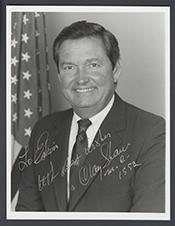
Trade Laws Modification
Mr. Speaker, I reserve the balance of my time. Mr. Speaker, at this time I yield 2 minutes to the gentleman from California (Mr. Rohrabacher). Mr. Speaker, I yield myself such time as I may consume. I think it is very clear that we clarify…
Mr. Speaker, I reserve the balance of my time.
Mr. Speaker, at this time I yield 2 minutes to the gentleman from California (Mr. Rohrabacher).
Mr. Speaker, I yield myself such time as I may consume.
I think it is very clear that we clarify exactly what we are talking about with Vietnam. We are simply making what we have been doing every year as a permanent-type position so we don't have to come back and vote on it every year. And what do we get for it? We get access to their markets. So this is something that is to the benefit of the United States, and it is not giving any free trade agreement or any special deal to Vietnam. And I think people that are watching this debate tonight should be very much aware of that.
Mr. Speaker, at this time I yield 3 minutes to a valued member of the Ways and Means Committee, the gentleman from Minnesota (Mr. Ramstad).
Mr. Speaker, at this time, I am pleased to yield 2 minutes to the gentleman from California (Mr. Herger), a distinguished member of the Ways and Means Committee.
Mr. Speaker, I yield 2 minutes to the distinguished gentleman from North Carolina (Mr. Hayes).
(Mr. HAYES asked and was given permission to revise and extend his remarks.)
I don't have it.
Mr. Speaker, I yield myself such time in order to read a paragraph into the Record. This is a letter dated December 8 from the United States Customs and Border Protection.
Mr. Speaker, the commissioner in this letter says: ``As the customs and border protection official ultimately charged with our trade facilitation and enforcement efforts, including protecting United States industry against unfairly traded textile imports, we can and will enforce this legislation, if enacted. I was disturbed to learn that some interests are characterizing the Customs and Border Protection's position as opposed to the package of legislation. That is not the case.''
Of course, he was referring to the legislation that is before the body at this time.
U.S. Department of
Homeland Security,
Washington, DC, December 8, 2006.
Hon. Bill Thomas,
Chairman, Committee on Ways and Means,
Washington, DC.
Dear Chairman Thomas: Thank you for contacting us with an
opportunity to clarify the views of U.S. Customs and Border
Protection (CBP) on H.R. 6346 and its predecessor H.R. 6142
which contain various free trade agreement provisions related
to Permanent Normal Trade Relations (PNTR) for Vietnam,
Generalized System of Preferences (GSP), the Andean Trade
Promotion and Drug Eradication Act (ATPDEA), the African
Growth and Opportunity Act (AGOA), the Haitian Hemispheric
Opportunity through Partnership Encouragement (HOPE) Act, and
various tariff measures.
As the CBP official ultimately charged with our trade
facilitation and enforcement efforts, including protecting
U.S. industry against unfairly traded textile imports, we can
and will enforce this legislation, if enacted. I was
disturbed to learn that some interests are characterizing
CBP's position as opposed to the package of legislation. That
is not the case.
Every major change to trade laws poses enforcement
challenges for our agency, and this legislation is no
different. Simply acknowledging these challenges however does
not constitute agency opposition to the legislation as a
whole nor to the underlying agreements nor do they pose
insurmountable obstacles to textile enforcement. I want to
assure you that CBP remains committed to enforcing all
textile trade laws that impact the domestic industry.
I appreciate the opportunity to respond and clarify the
agency's position, please do not hesitate to contact me if I
may be of further assistance.
Sincerely,
W. Ralph Basham,
Commissioner.
Mr. Speaker, I yield 2 minutes to the gentleman from Texas (Mr. Brady), a distinguished gentleman of the Ways and Means Committee.
I yield 2 minutes to the gentleman from Georgia (Mr. Deal).
Mr. Speaker, I yield to the gentleman from Connecticut (Mr. Simmons), who will certainly be missed next year.
Mr. Speaker, I yield myself such time as I might consume.
Mr. Speaker, at this time I do rise in very strong support of H.R. 6406, which is a shining example of how international trade can help the world's poorest people by creating jobs in impoverished nations, also bettering the lives of Americans by reducing costs, creating export opportunities for United States business, and offering United States consumers more choices at lower prices.
Living in Florida, I am especially sensitive to the plight of the Haitian people. This legislation includes the Haitian Hemispheric Opportunity through Partnership Encouragement, also known as the HOPE Act, which is aimed at helping our desperately poor neighbors. This is an act that was created in a bipartisan way with many Members on each side of the aisle participating, and I was very, very pleased to be a part of that.
This HOPE Act contains modest provisions to allow Haiti's struggling apparel sector to create jobs and to better integrate the United States and other hemispheric textile industries, such as in Central America. This legislation is critical to help Haiti build an economy to sustain its very young and very fragile democracy and give the Haitian people hope and purpose to cease conflict and embrace a better tomorrow.
In this way, the benefits included in the HOPE Act could have a tangible and meaningful impact on the people of Haiti, but would have a very minimal, even, I might say, trivial impact on the United States markets.
For example, Haiti's benefit in the first year capped at 1 percent of the United States apparel imports, 1 percent of the imports, a level less than the current 1 percent of the current apparel imports from Haiti. I think one thing is abundantly clear, and we can see it all over the globe, whether you look in Haiti. You cannot sustain a democracy without an economy. That is black letter law as far as I am concerned. In order for this democracy to flourish, it is going to be absolutely necessary that we do help them as best we can to build their economy.
I also draw the Members' attention to the short-term extension of unilateral trade benefits for Peru, Colombia, Ecuador, yes, and even Bolivia. The United States signed bilateral trade promotion agreements with Peru and Colombia, and I would greatly prefer that we were approving these bilateral agreements today rather than simply extending the current benefits. But the administration did not submit the implementing packages for these agreements for congressional consideration before the preferences expired, so we must ensure that our allies are not harmed economically while the Congress completes its process, and, hopefully, this will be early next year.
This bill provides a seamless tradition for extending the trade preferences for 6 months, yet it maintains an incentive for everyone to quickly approve and implement the trade agreements by providing an additional 6 months of benefits only if the legislatures here and there approve their respective agreements. This approach also encourages Ecuador and Bolivia to follow the lead of Peru and Colombia to include comprehensive and commercially meaningful trade promotion agreements within that year.
I certainly support this bill, and if I may, as a point of personal privilege, want to thank all that I have had the privilege of working with throughout so many years on the Ways and Means Committee. It has been an honor, not only to serve in this body, but particularly to serve on this particular committee.
The gentleman from Maryland and I have been close friends for many, many years, as I have with soon-to-be Chairman Rangel on the other side of the aisle. We have had our differences here on the floor, but never off of the floor, and it has been a tremendous, tremendous opportunity for me to be able to work. And also to watch the skilful work of Chairman Thomas. Sometimes he gets a little prickly and a little hard to work with, but he always ends up doing the right thing, and it has been a privilege to serve with him too.
This will be the last time that I will be able to appear on this floor, but thank you for the great opportunity to serve the people of the 22nd Congressional District of Florida and the people of the United States of America, the greatest country on the face of this Earth.
Mr. Speaker, I yield the balance of my time to the gentleman from California, Chairman Thomas.